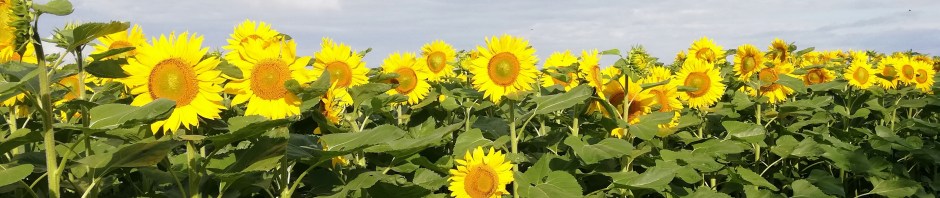
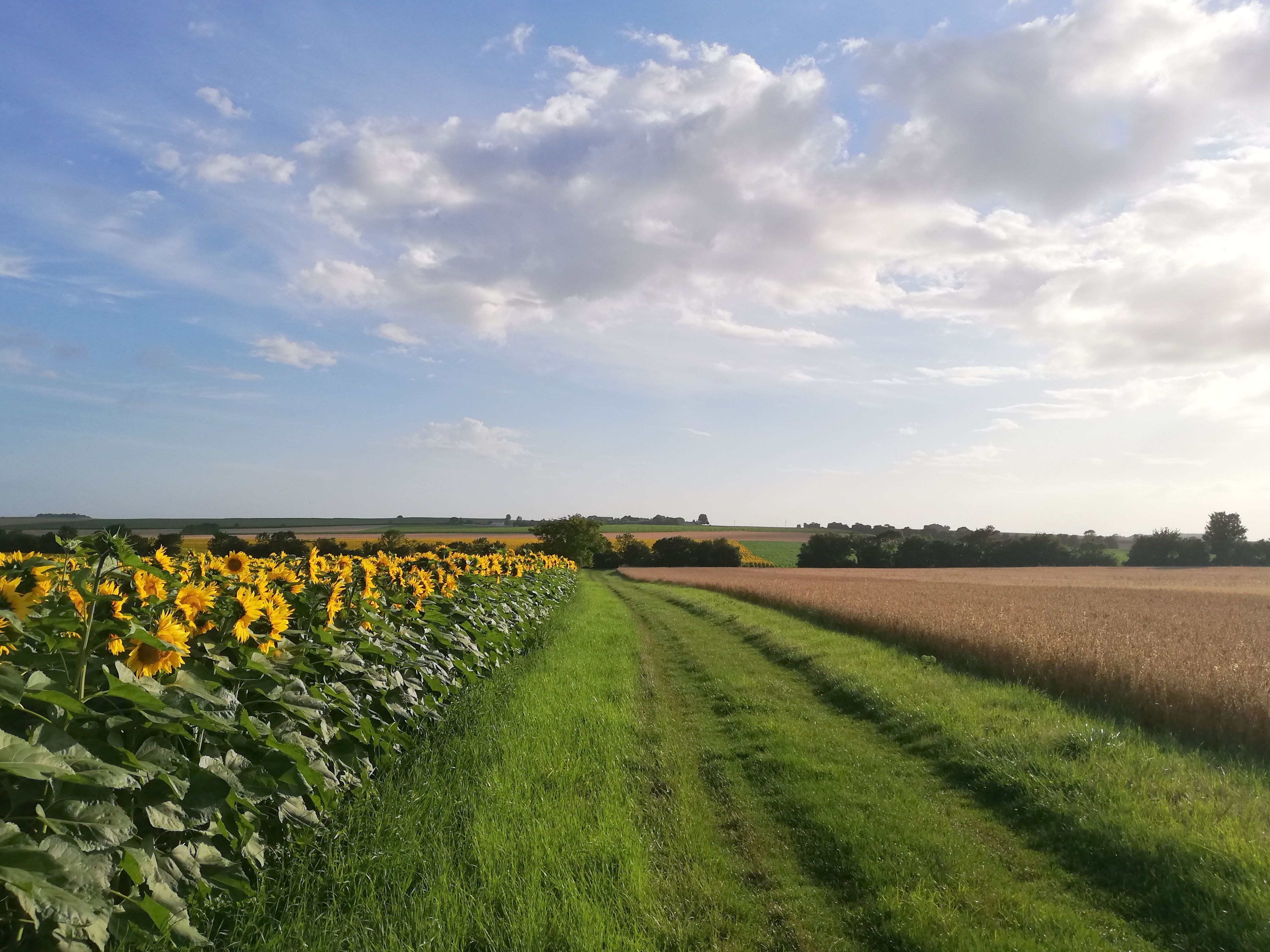
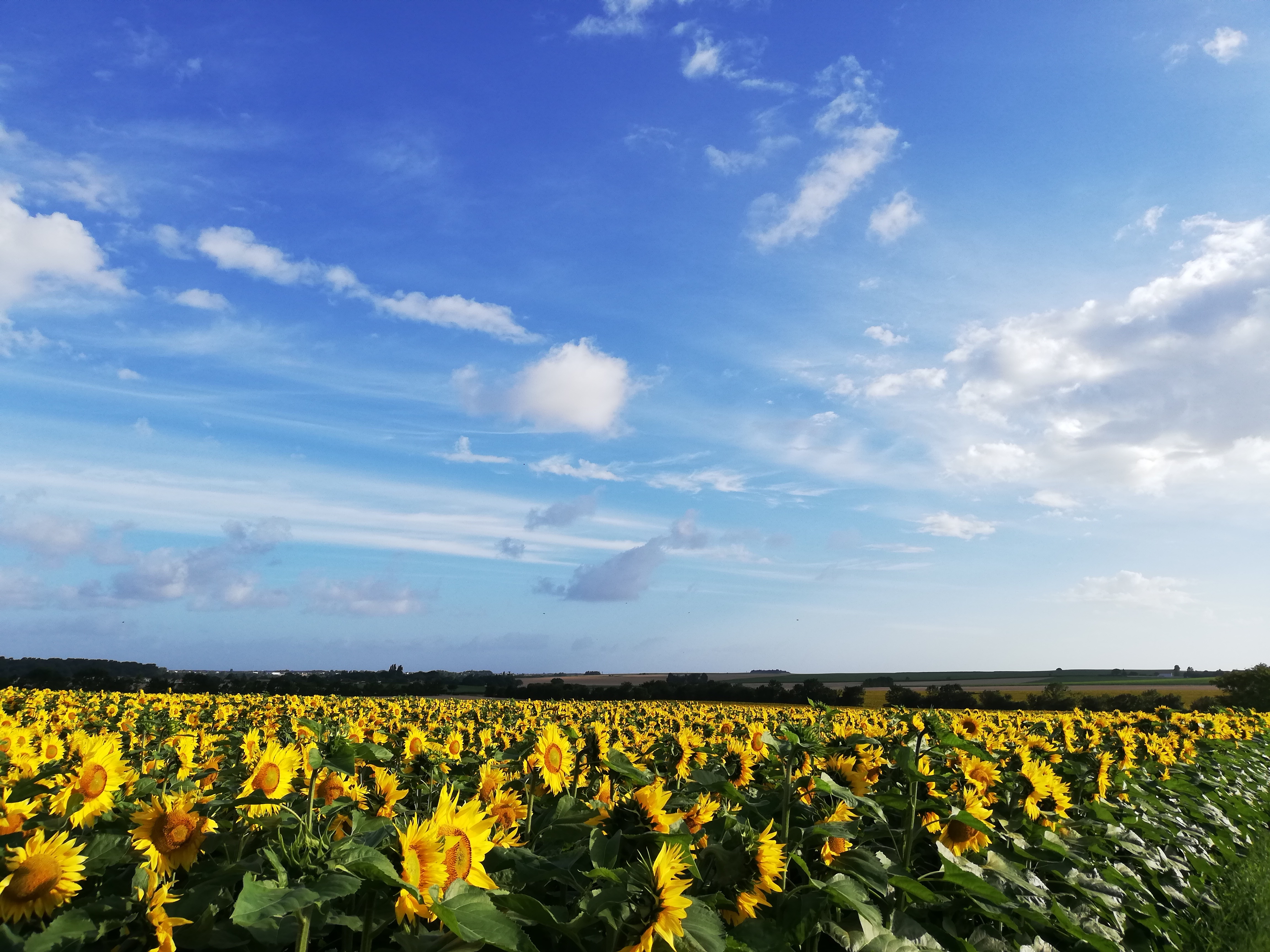
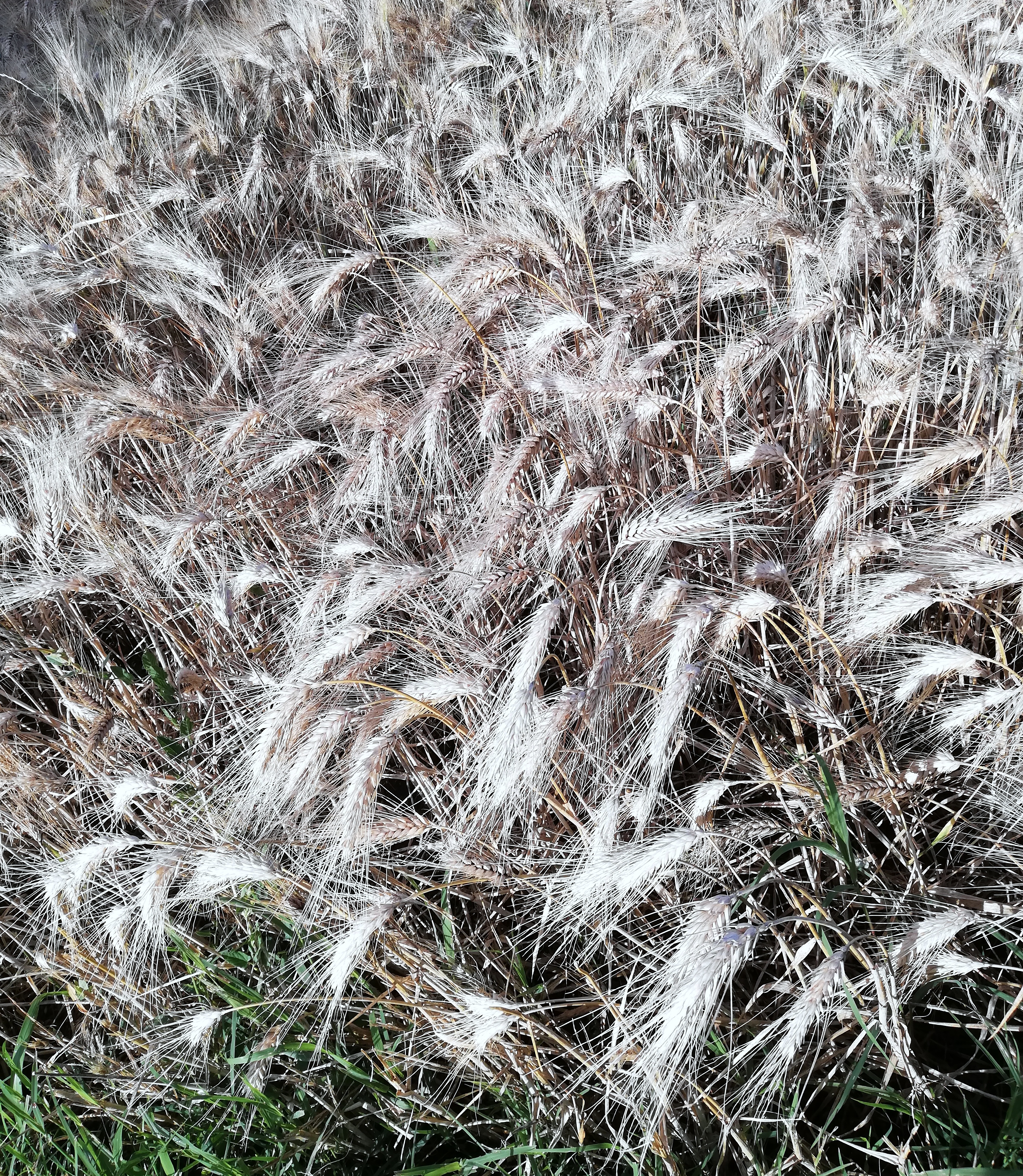
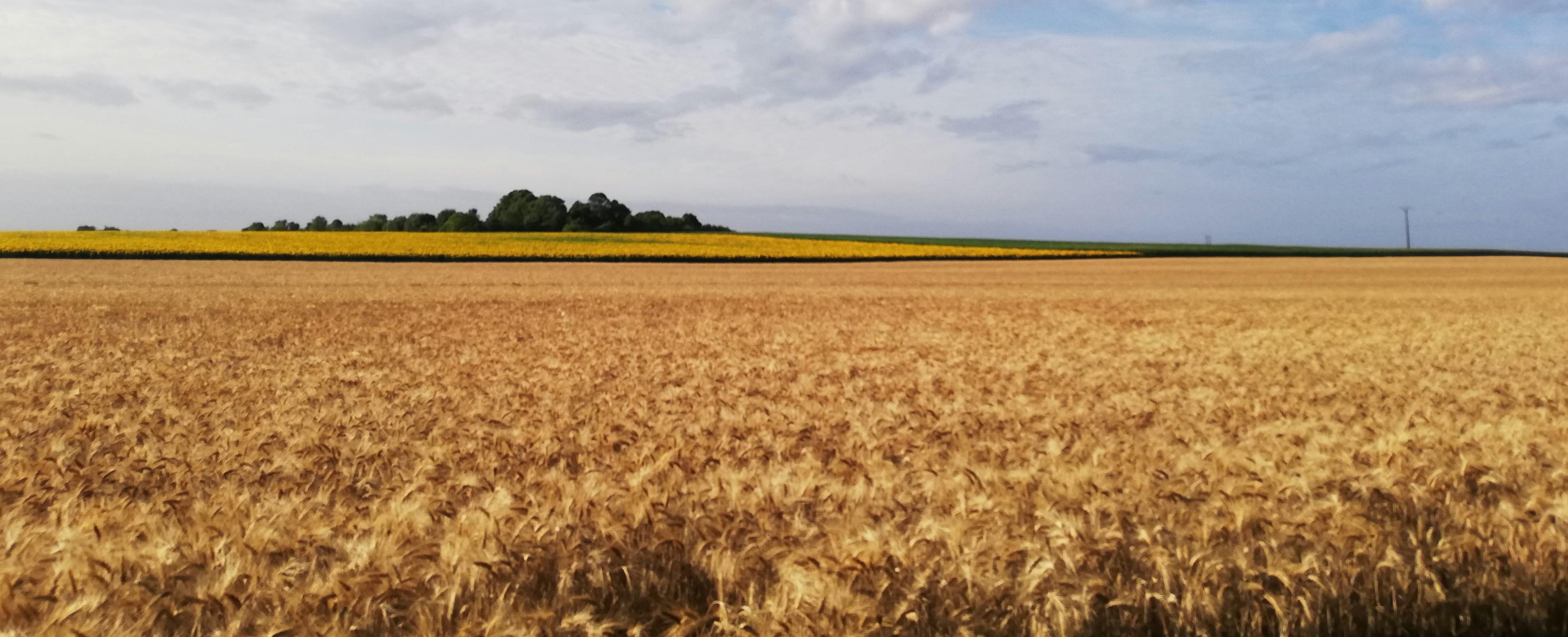
1st. The recent weather of lots of unseasonable rain interspersed with Sunny, warm weather has meant that the sunflowers, above, have come into full bloom earlier than usual and the same applies to the growth spurt of the meallies (maiz for the non South African followers) and the ripening of the cereal crops including the one behind my house.

It will have to have the chance to dry out though before they can harvest it.
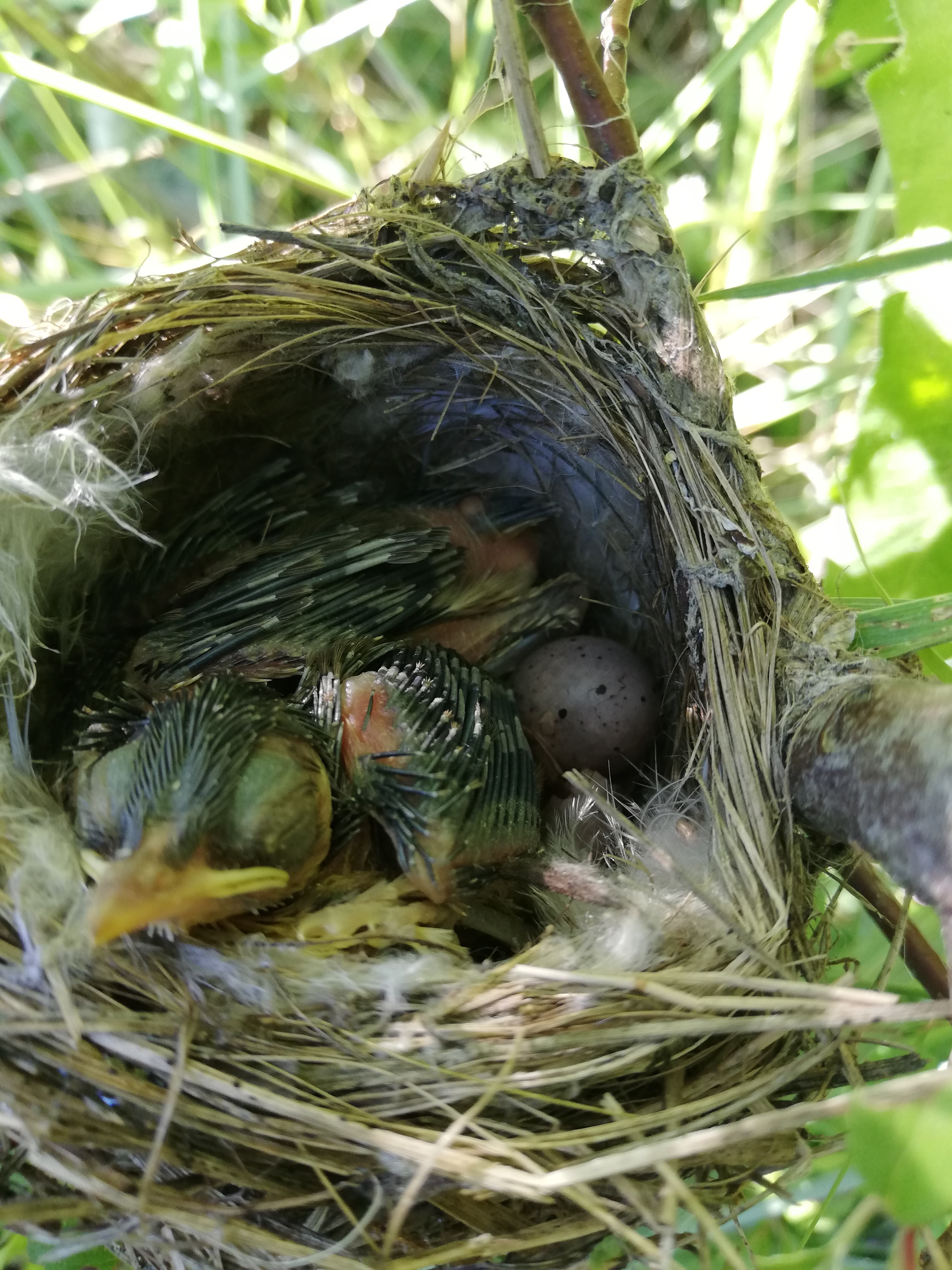
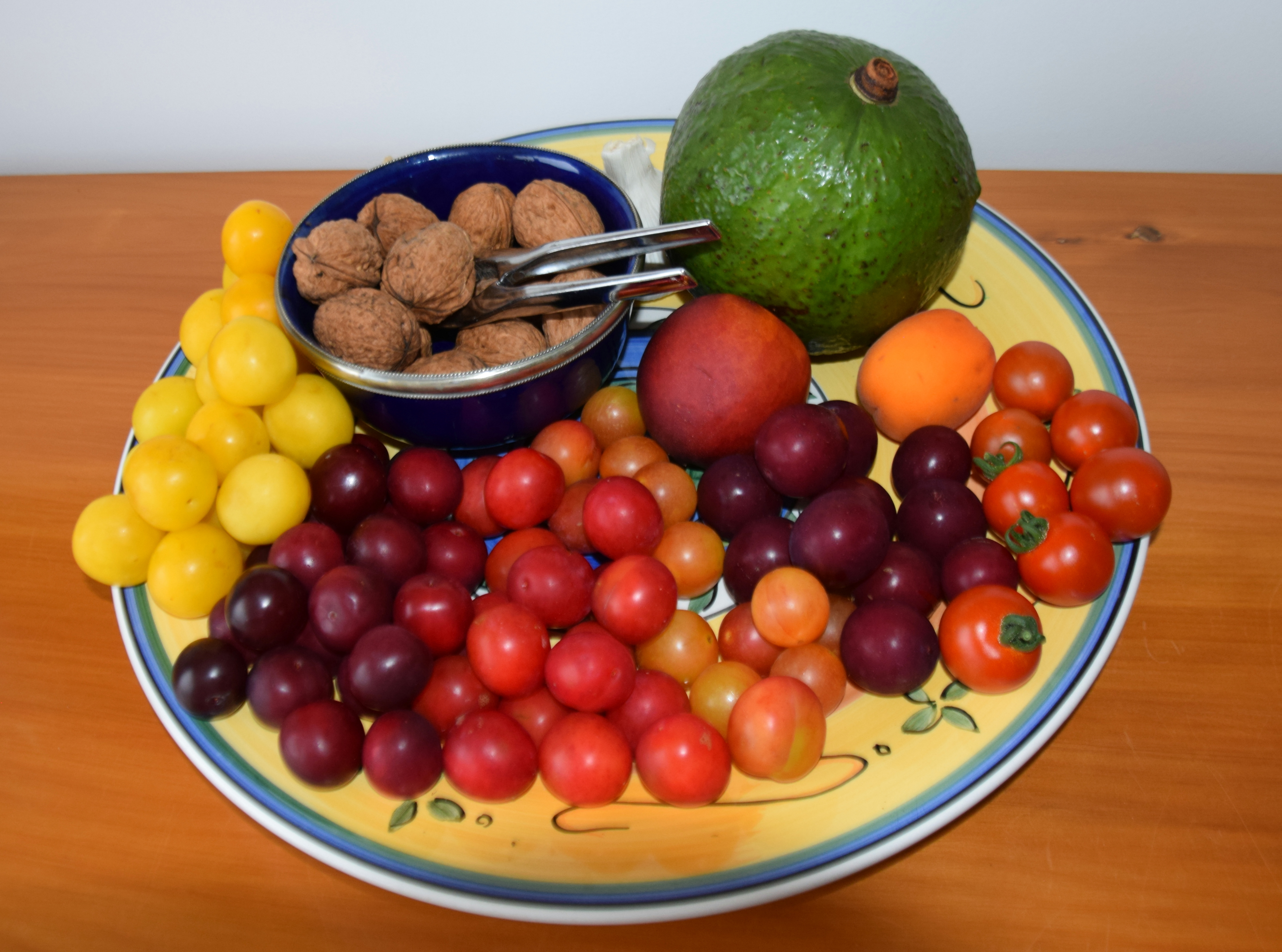
2nd. The plumbs on the trees bordering the fields are ripening fast too so today I harvested a good crop of 5 different types that are ripe for eating and looking good in the fruit bowl. At the mirabelle tree (small round pale yellow plumbs) at about knee level there was a small cup shaped bird’s nest with one egg and one newly hatched chick. I do not know what type of bird it is.
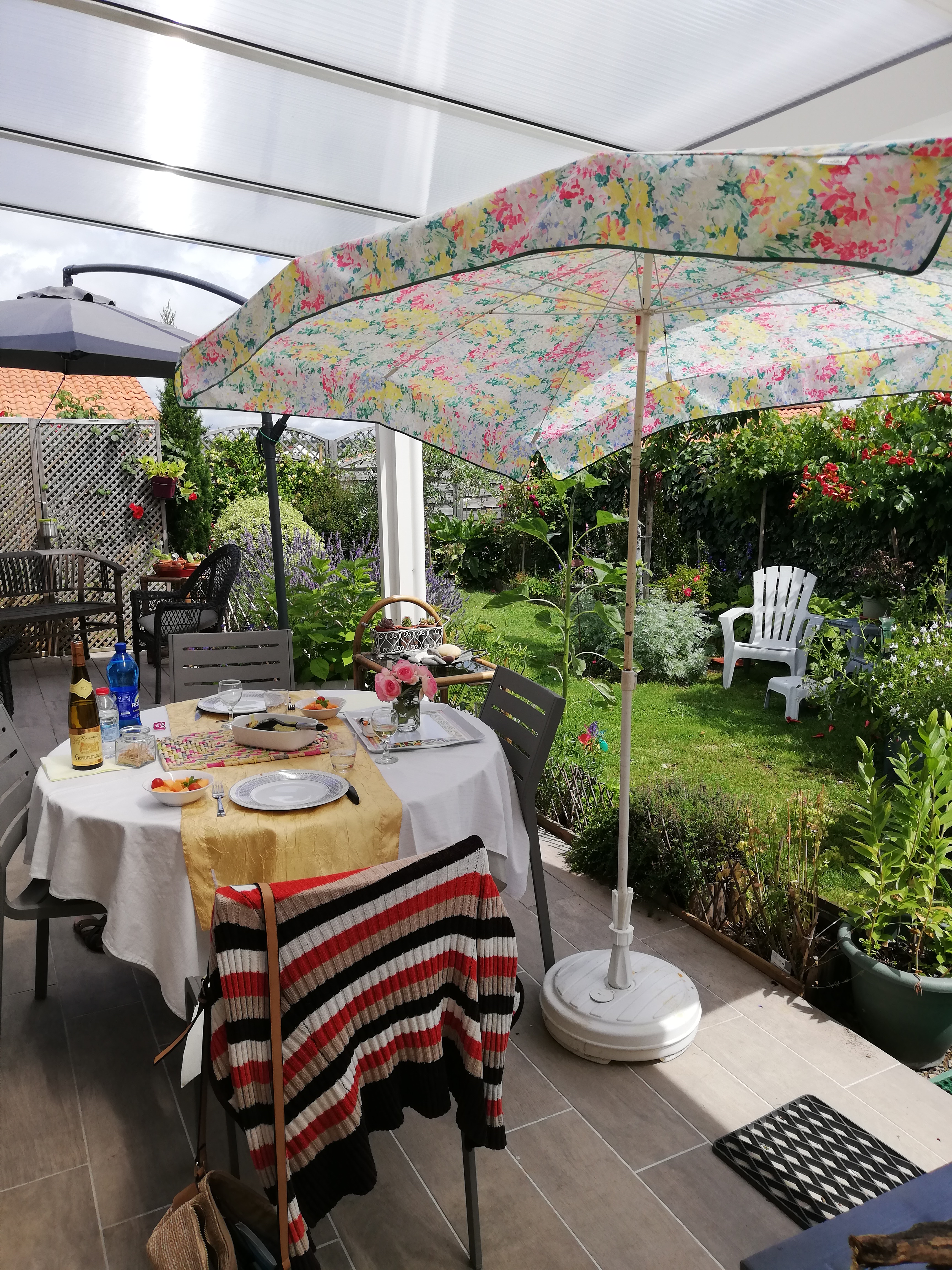
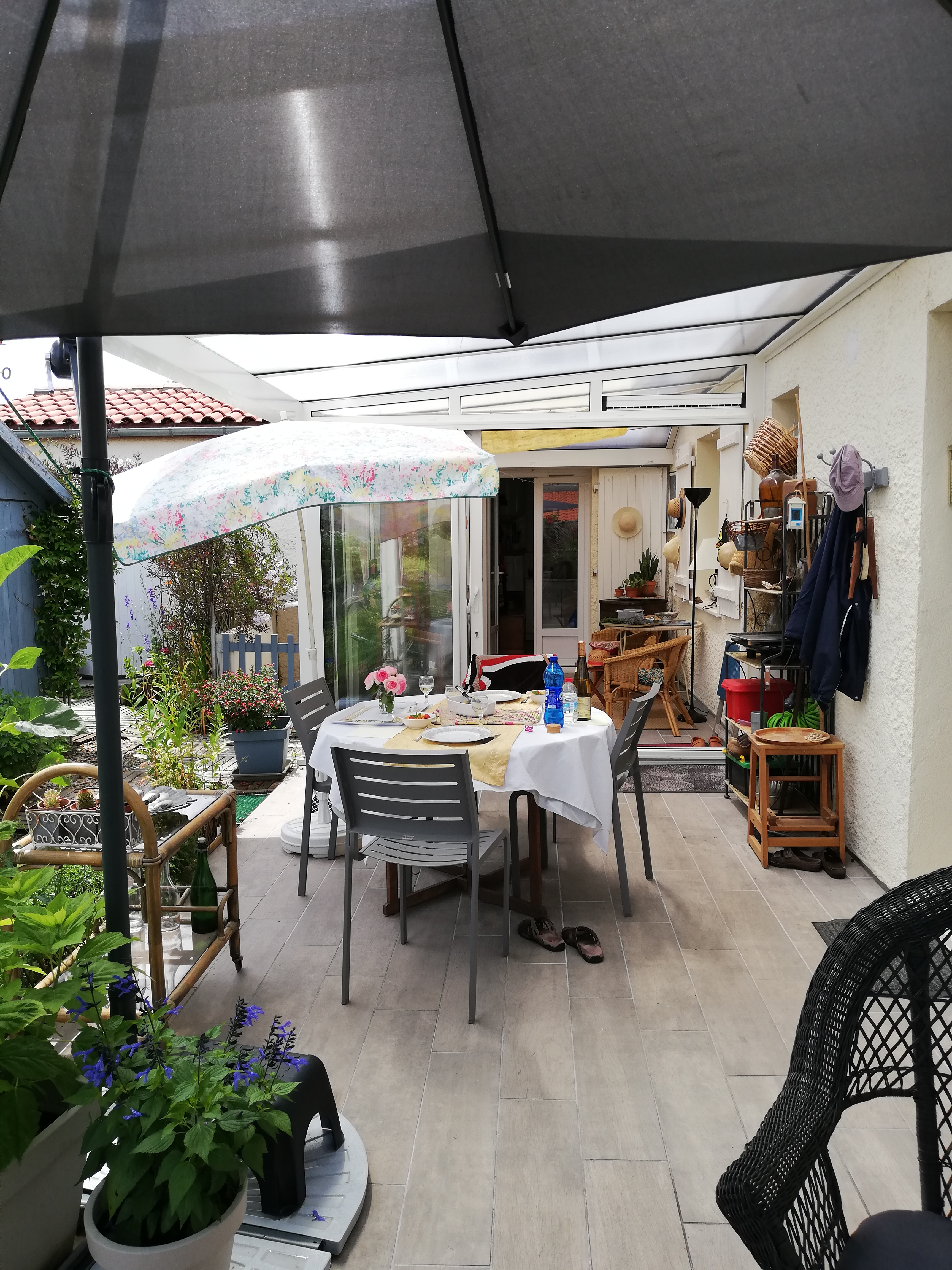
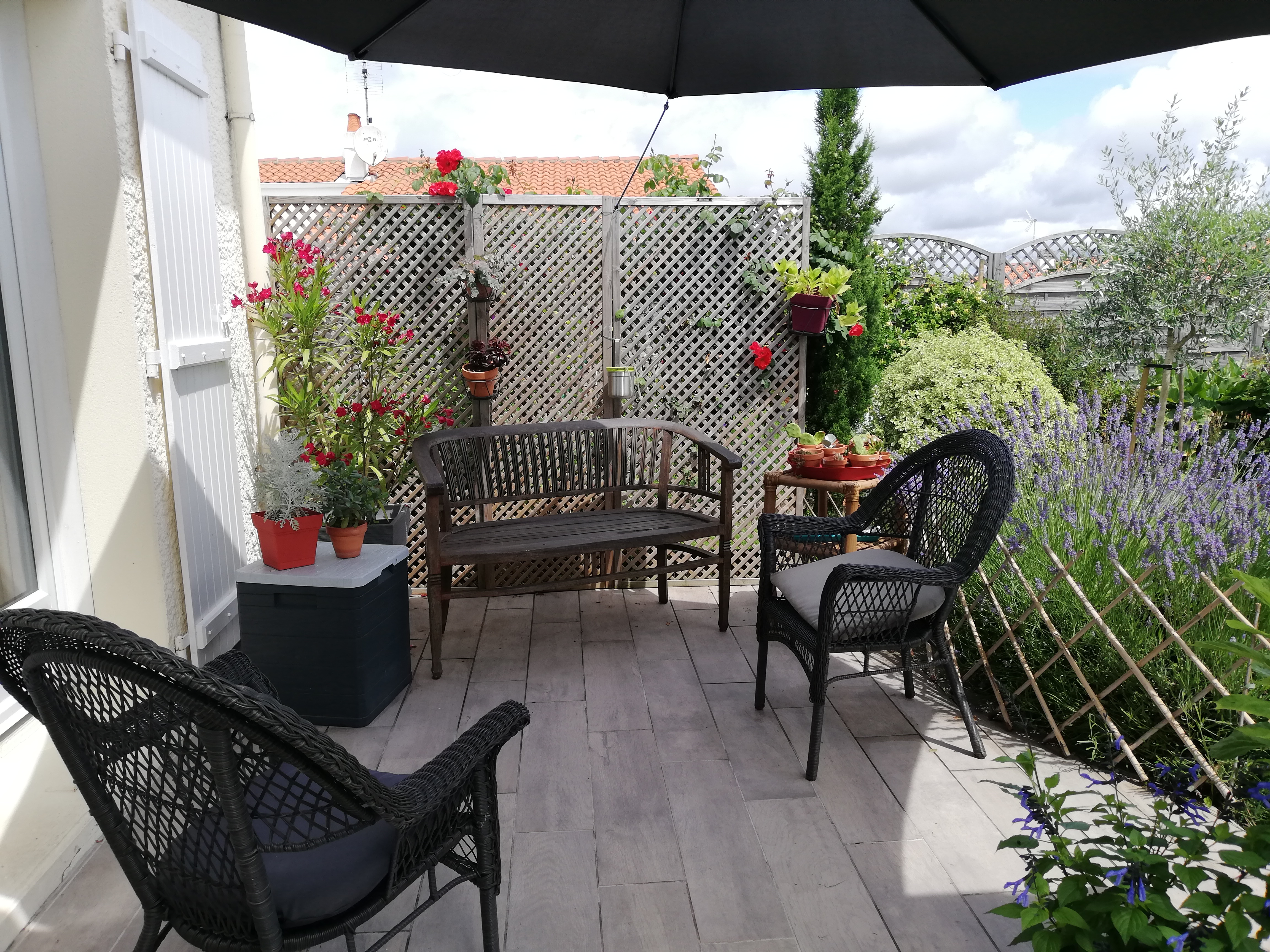
3rd. I had a lovely lunch today with Michelle in her beautiful garden on her new verandah which she has furnished and decorated in a delightful country cottage style.
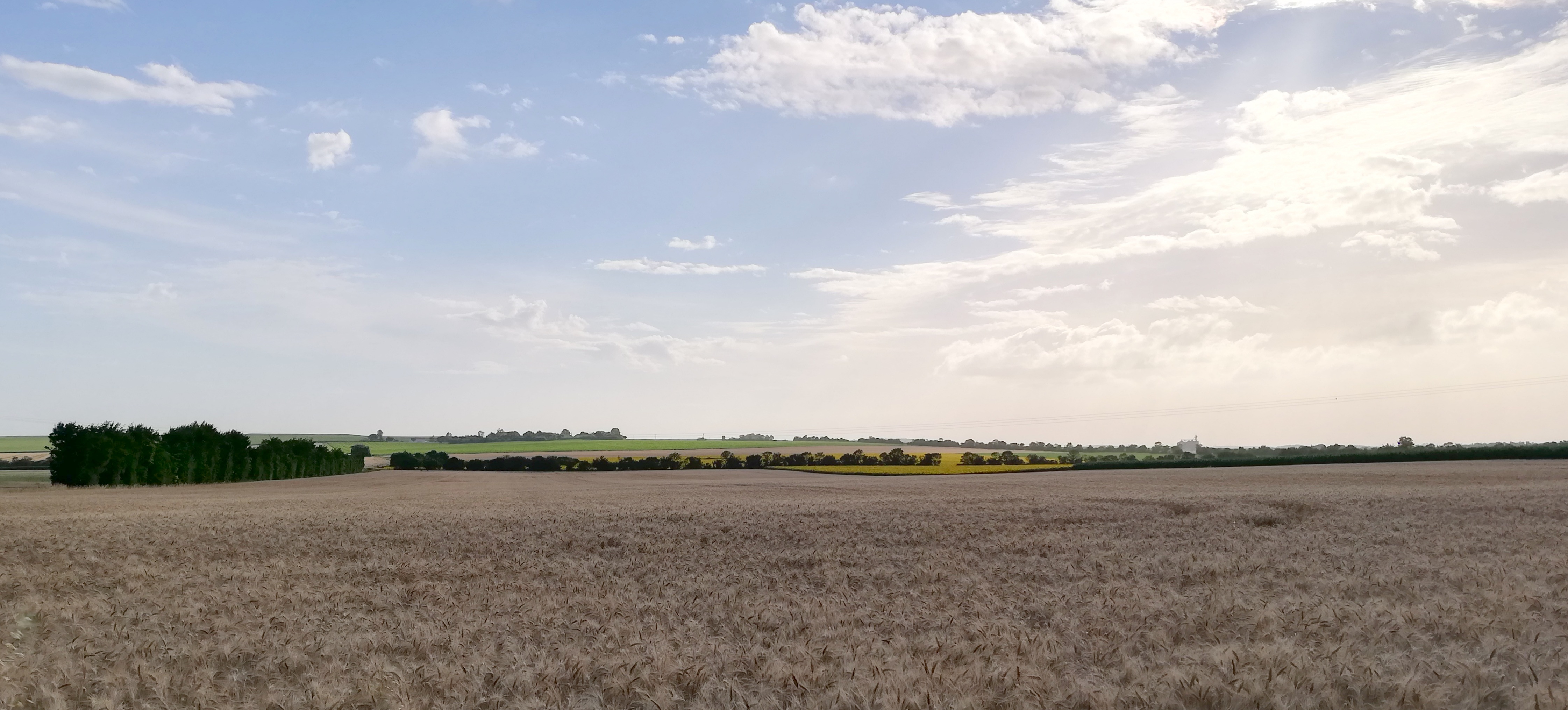
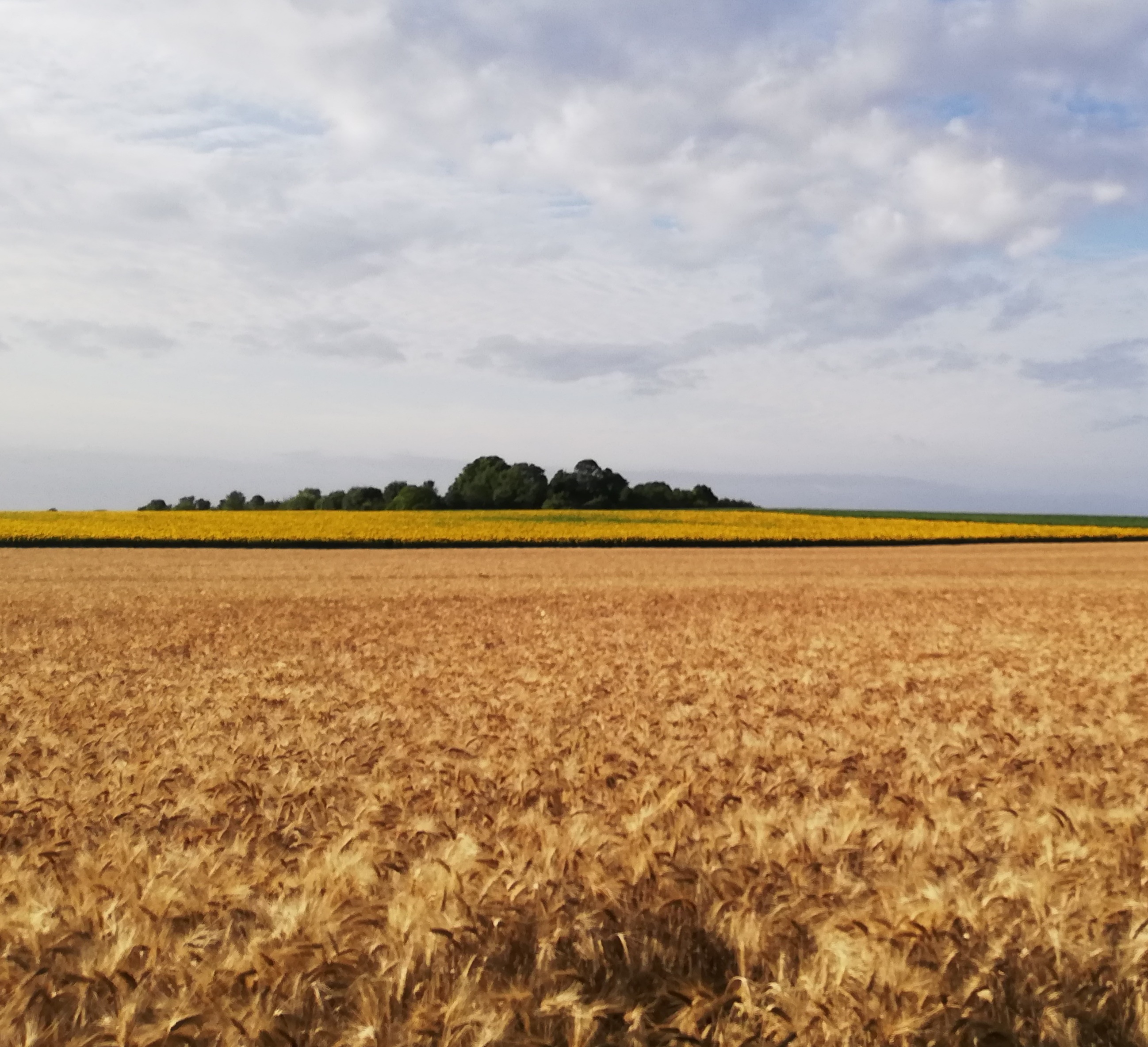
5th. The fields are a patchwork of the green maize, yellow sunflowers and the golds of the cereal crops.

6th Finished off the last of my projects for the time being as I hope to head off for a few days at the weekend. I made a stand for my garden fireplace that I am very pleased with because ity incorporated my brass Indian tray which was destined for the dump. It fits the fireplace perfectly, the catsors will make it easy to move about and the tray will elevate the fire to a good height for warming and protect the wood from the heat.
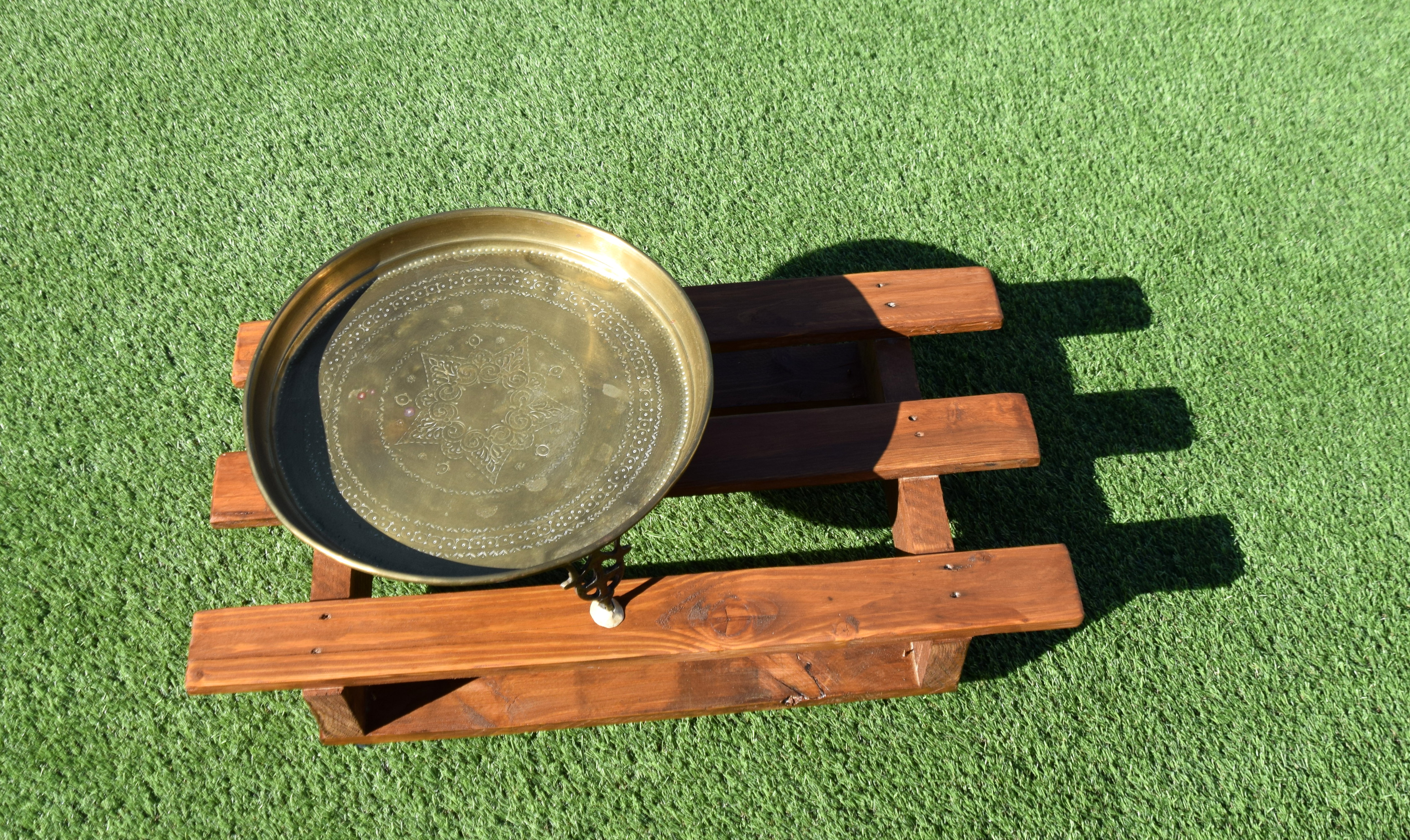
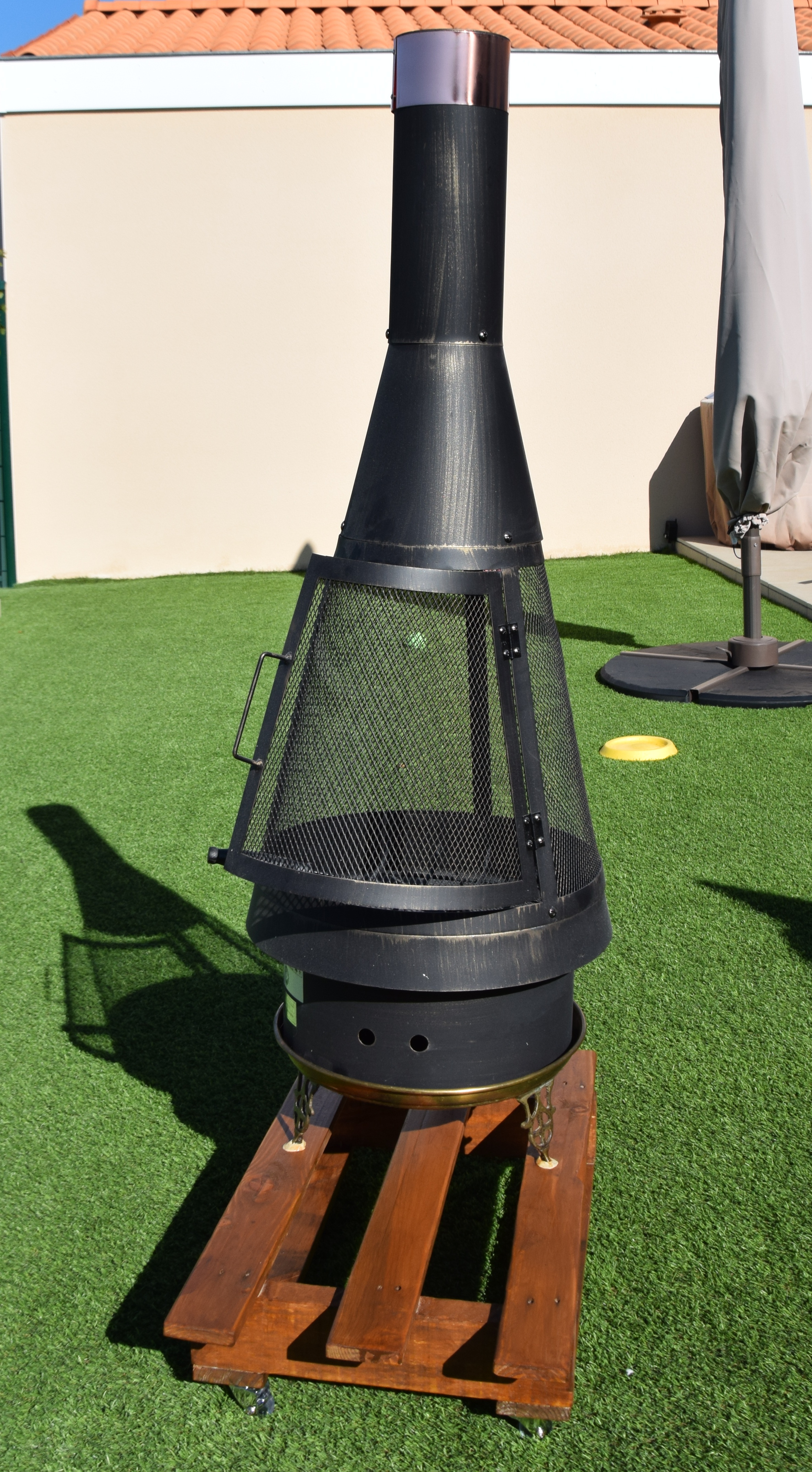
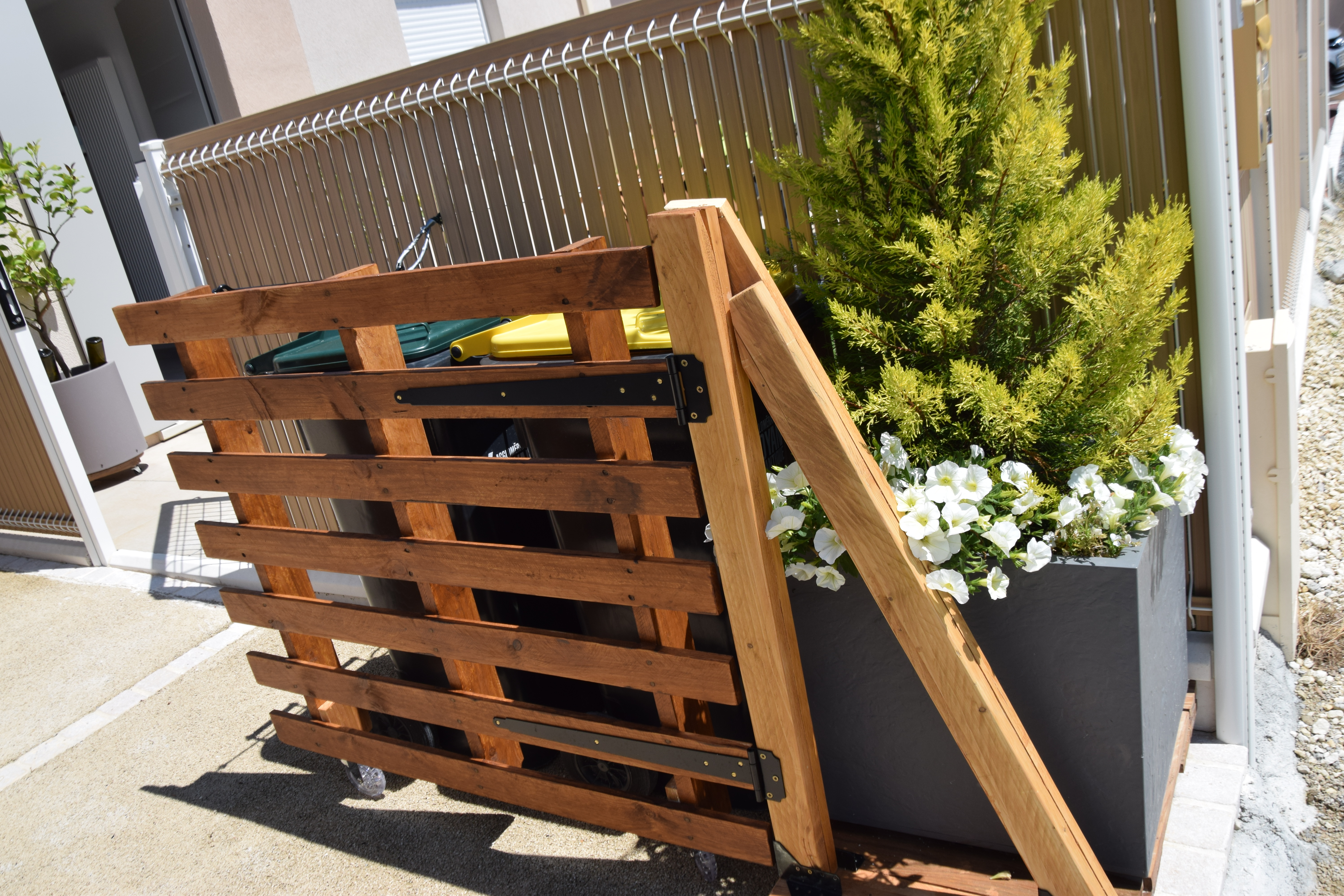
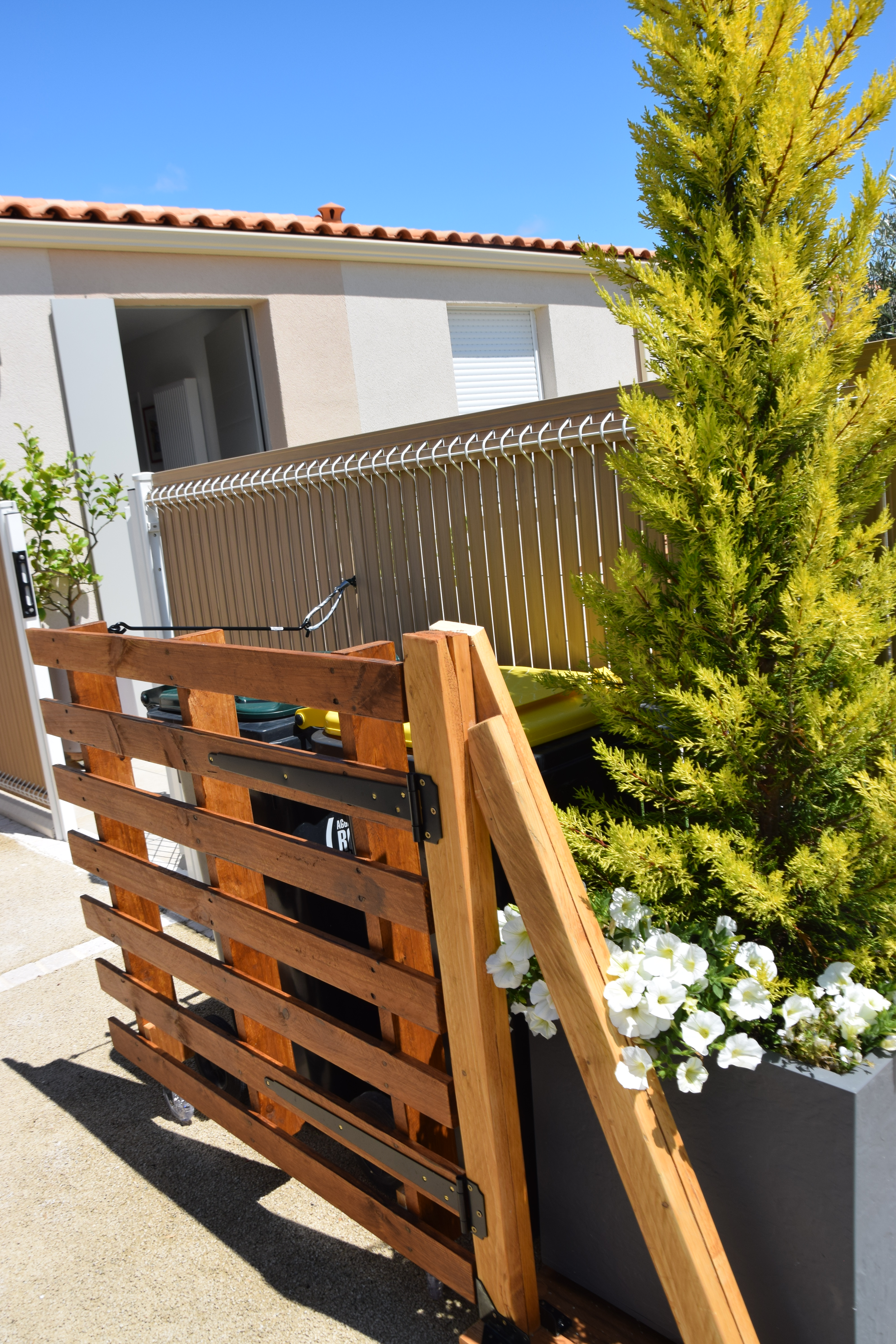
The second project was to build a movable screen to hide the dustbins on the driveway. Both of these projects, along with most of the others involving the use of wood, have been executed using pallets liberated from the building site!
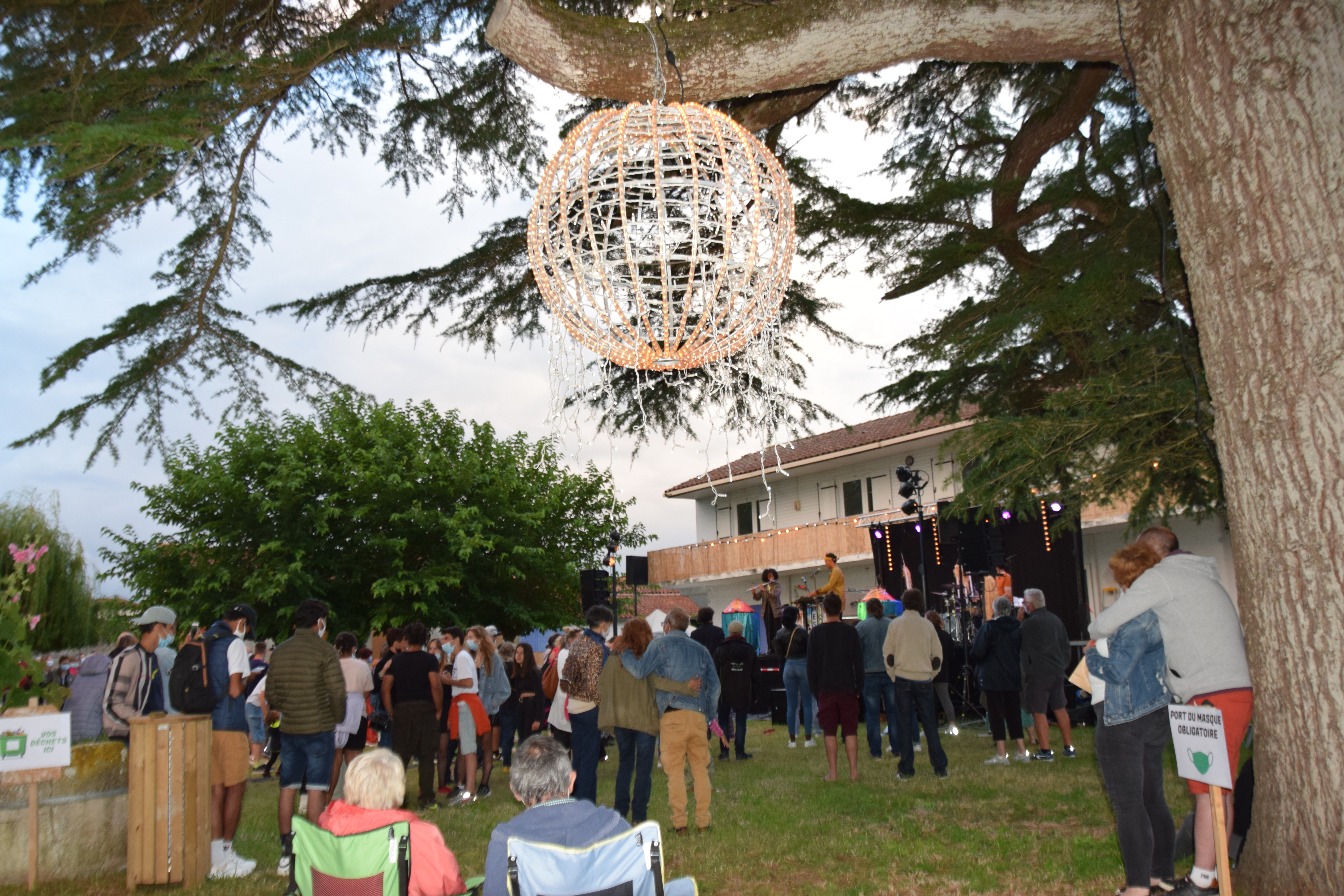
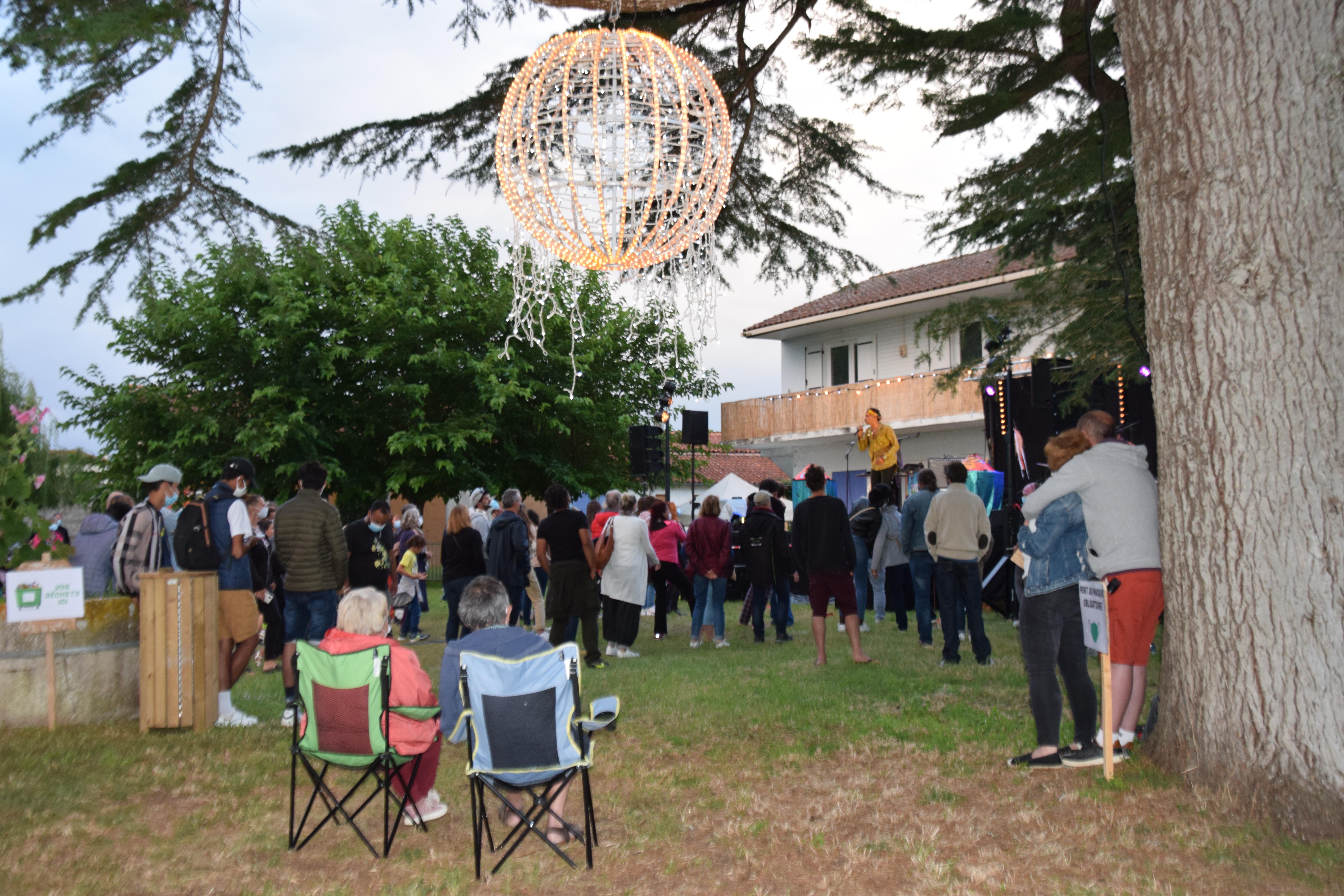
7th. This evening is the first of my village’s summer events, a free open air concert. I went along with Martine, Catherine and Monique, all of whom live on the development.
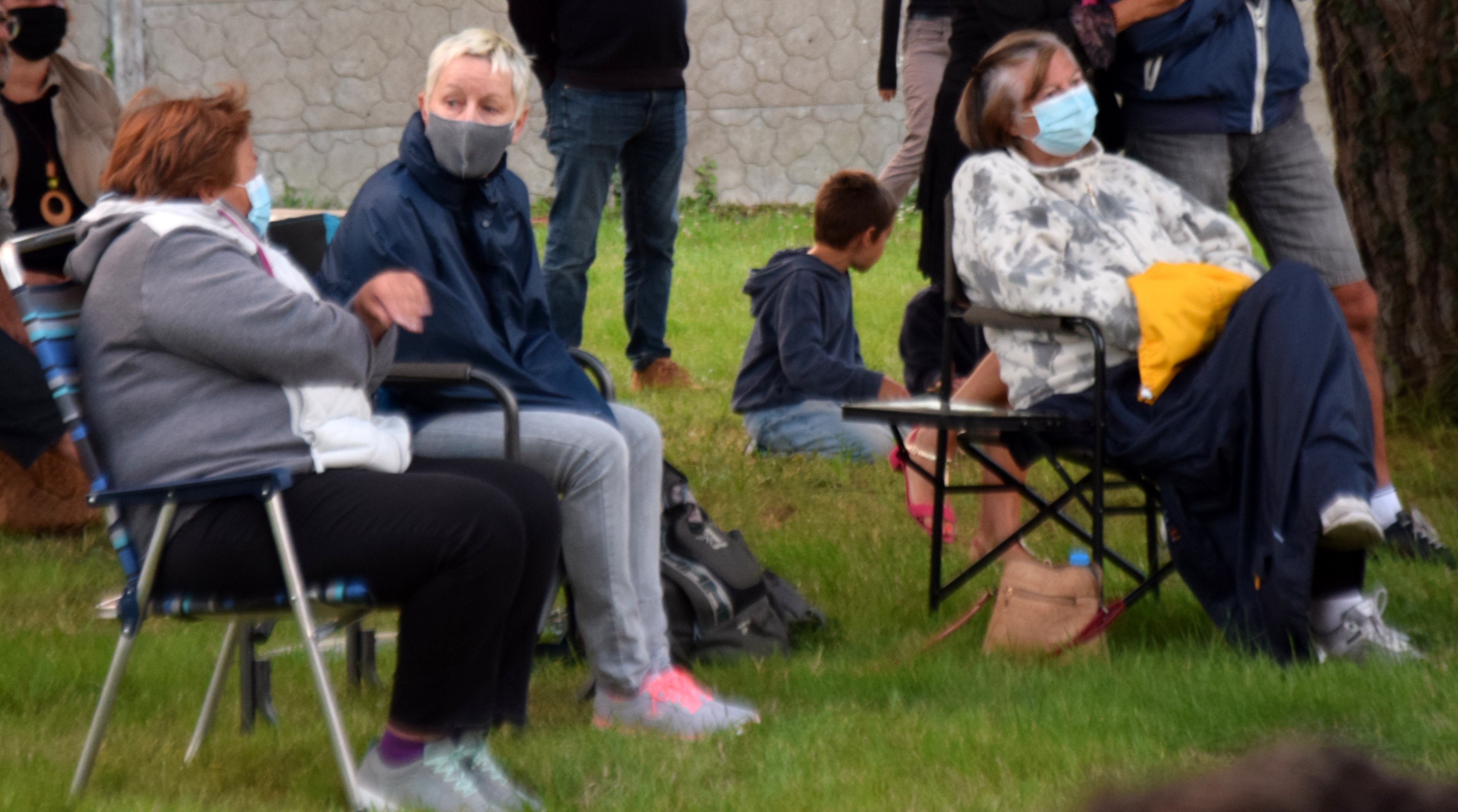
The music was not really to my taste but was OK. What does impress me though it the huge effort that this little village of just over 3000 souls is making. Their summer program is crammed with concerts, exhibitions, markets, historical re-enactments and theatre. It also includes a selections of events for children from story telling at the library, to beach combing and rock pool exploration and theatre. All of it free.
BTW and just FYI, not gloating, well not that much – We do have a female mayor!!!!!! Ha! Ha!


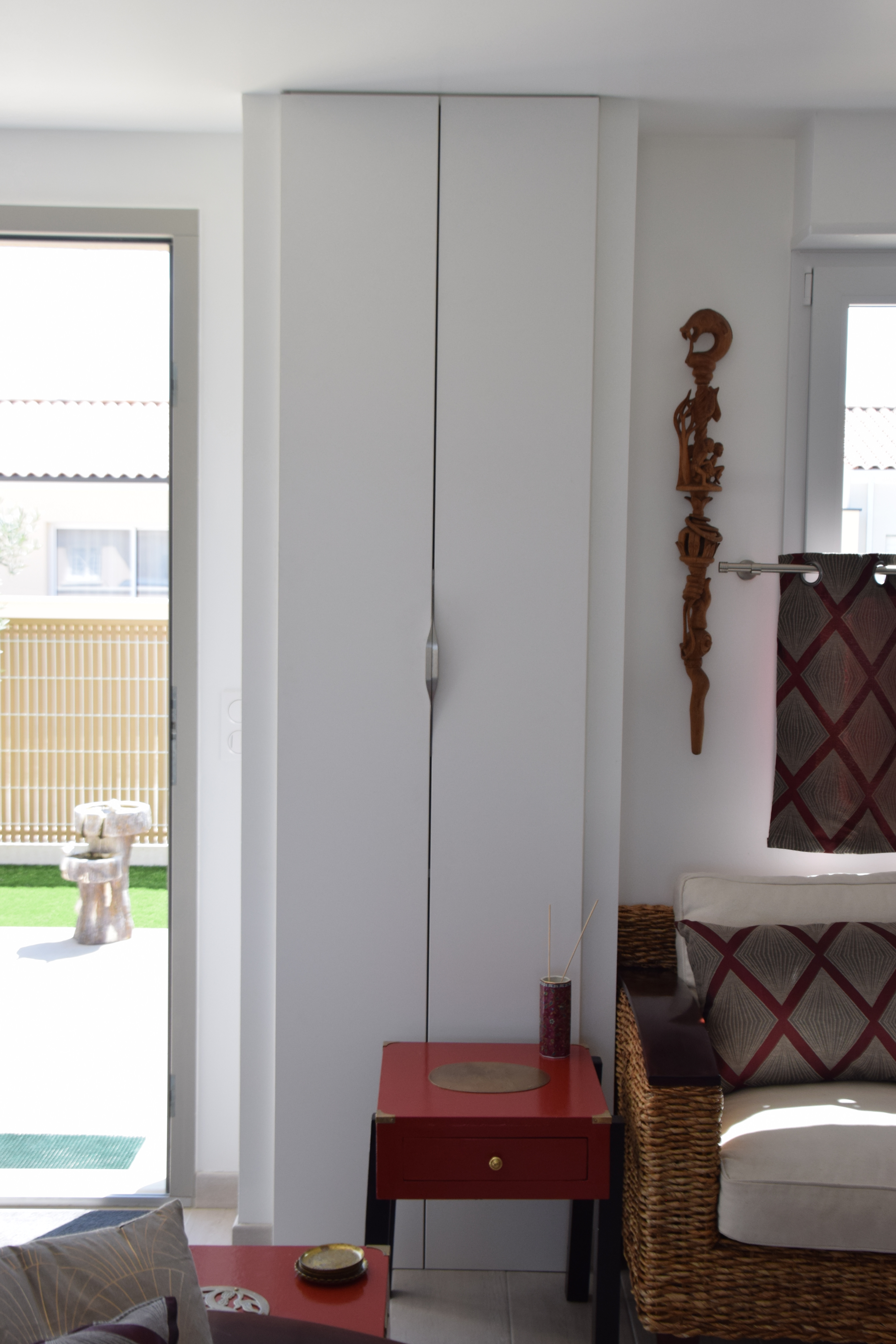
8th. The fitter arrived this morning to fit cupboard doors on the alcove housing the electricity board. It looks much neater and gives storage for the cushions for the garden chairs out front and to hang guest’s coats.
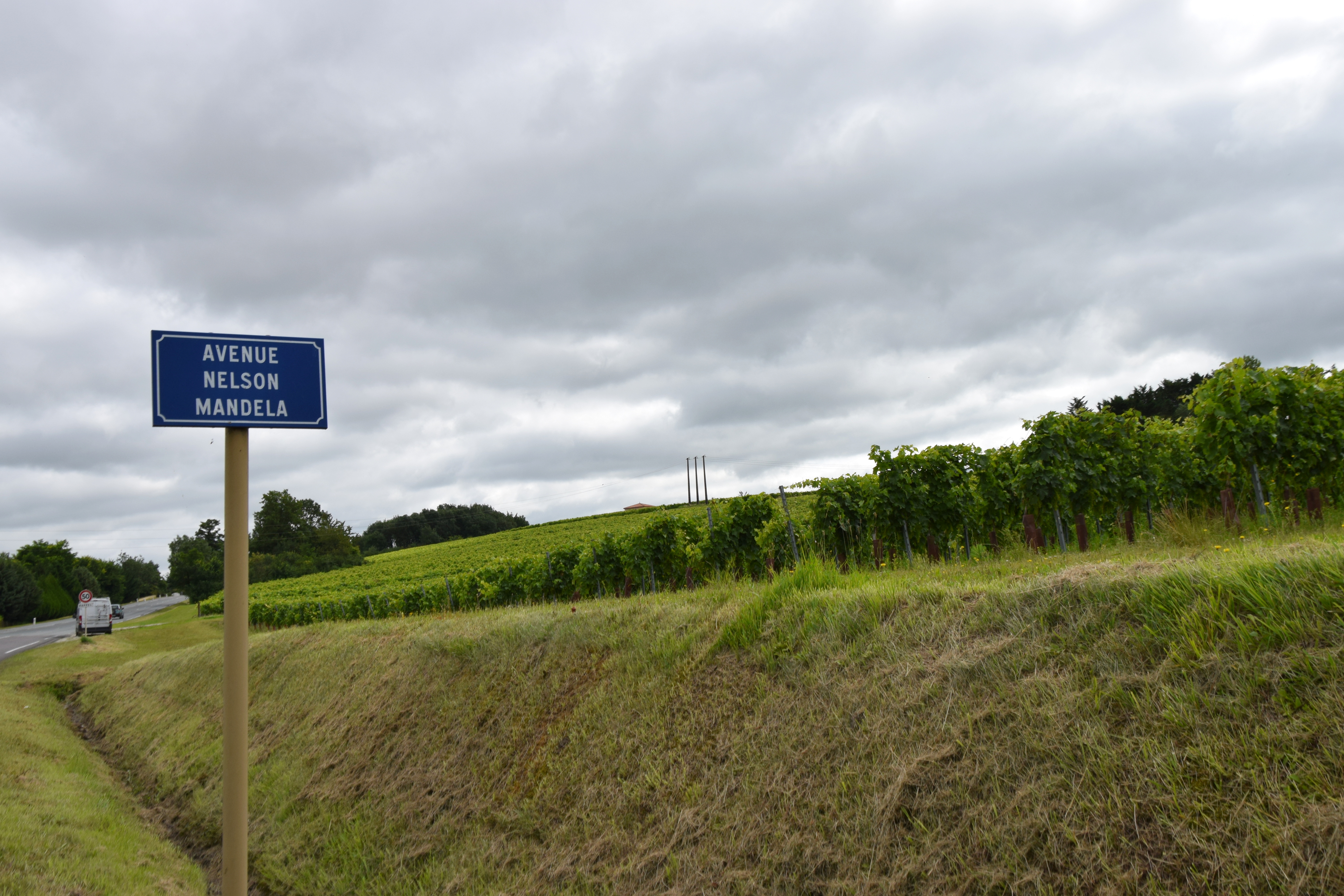
11th. Set off at 9.00 and not being under any time pressure stopped whenever something caught my eye. The first of which was this street name just on the edge of Barbezieux.
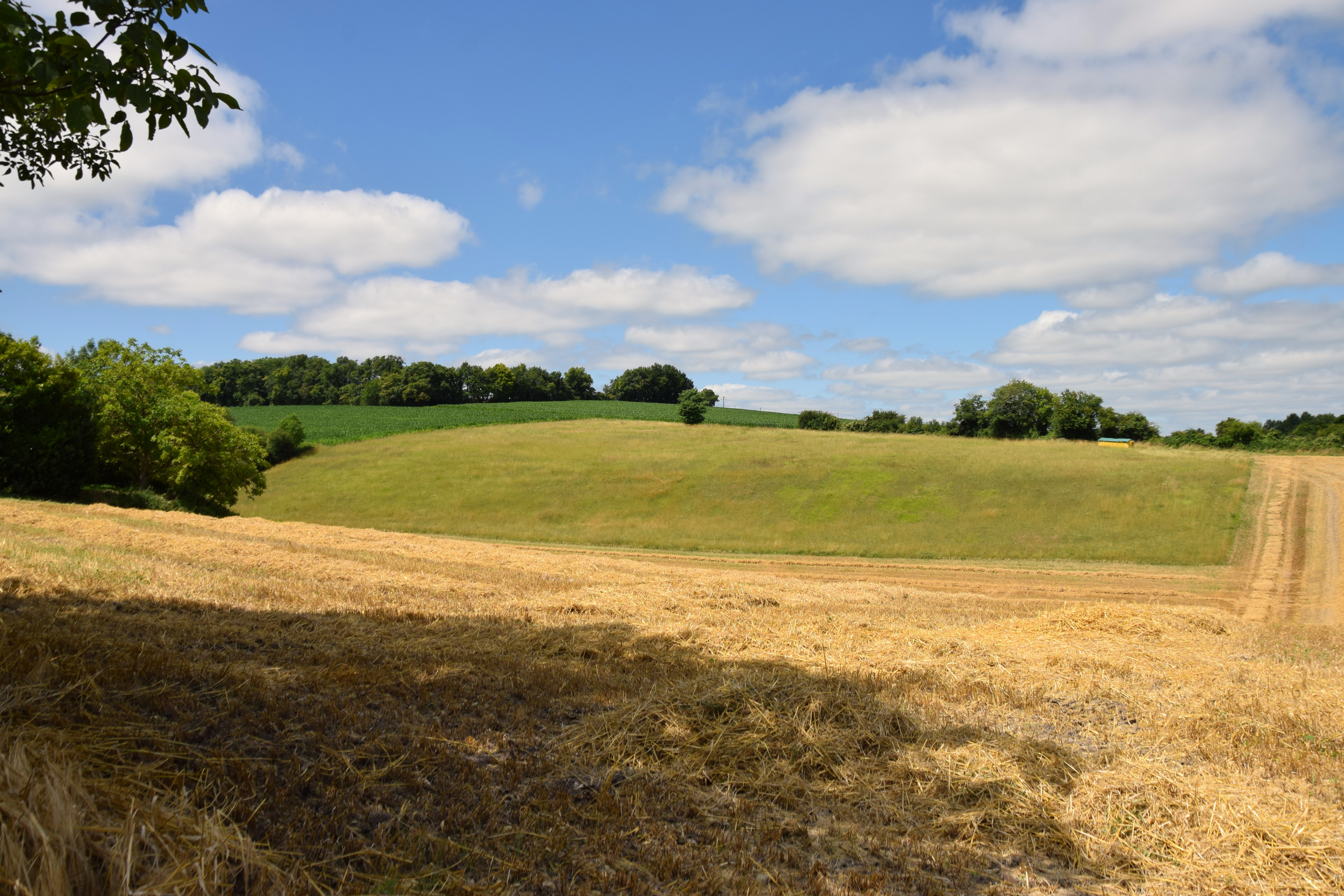
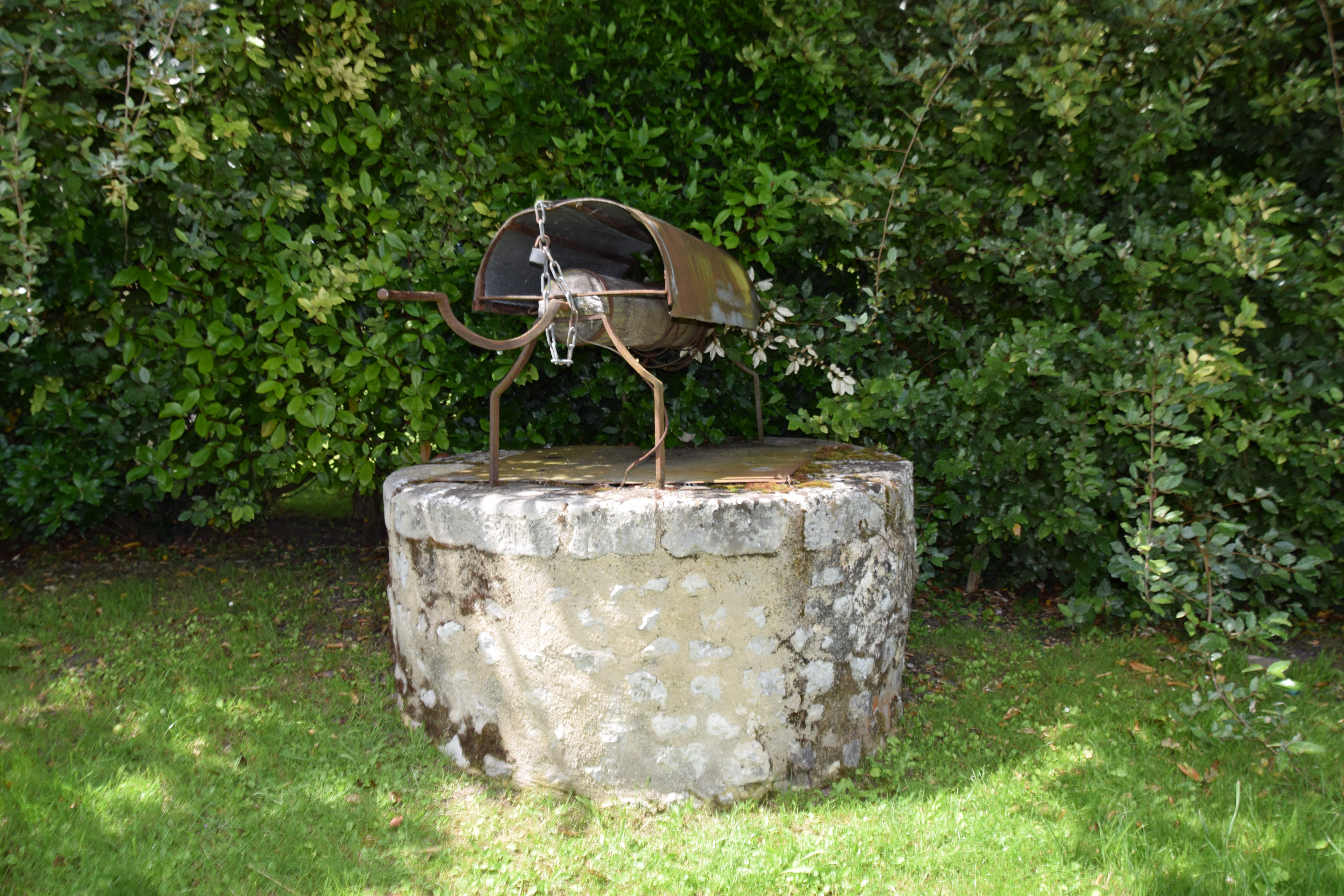
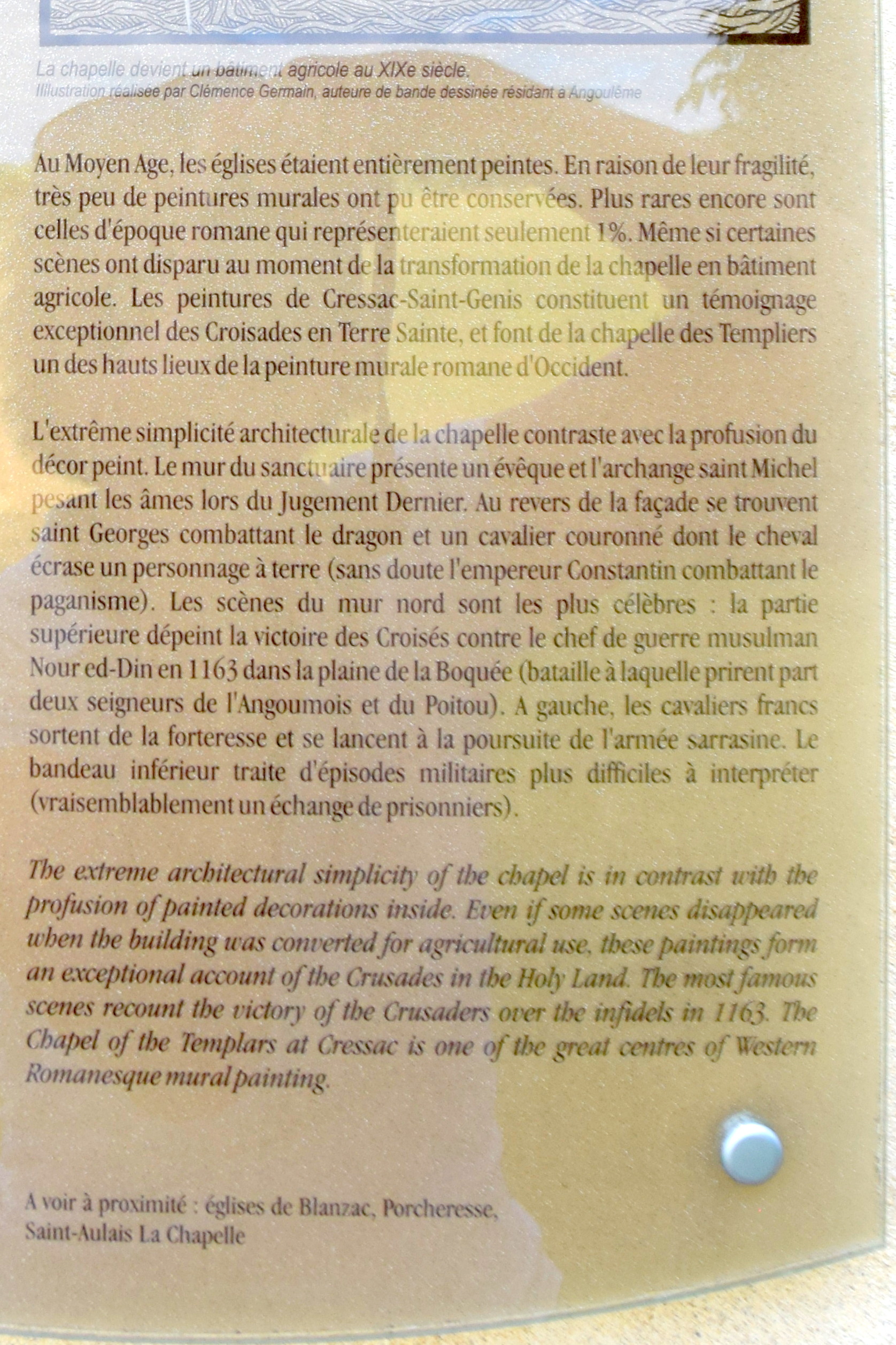
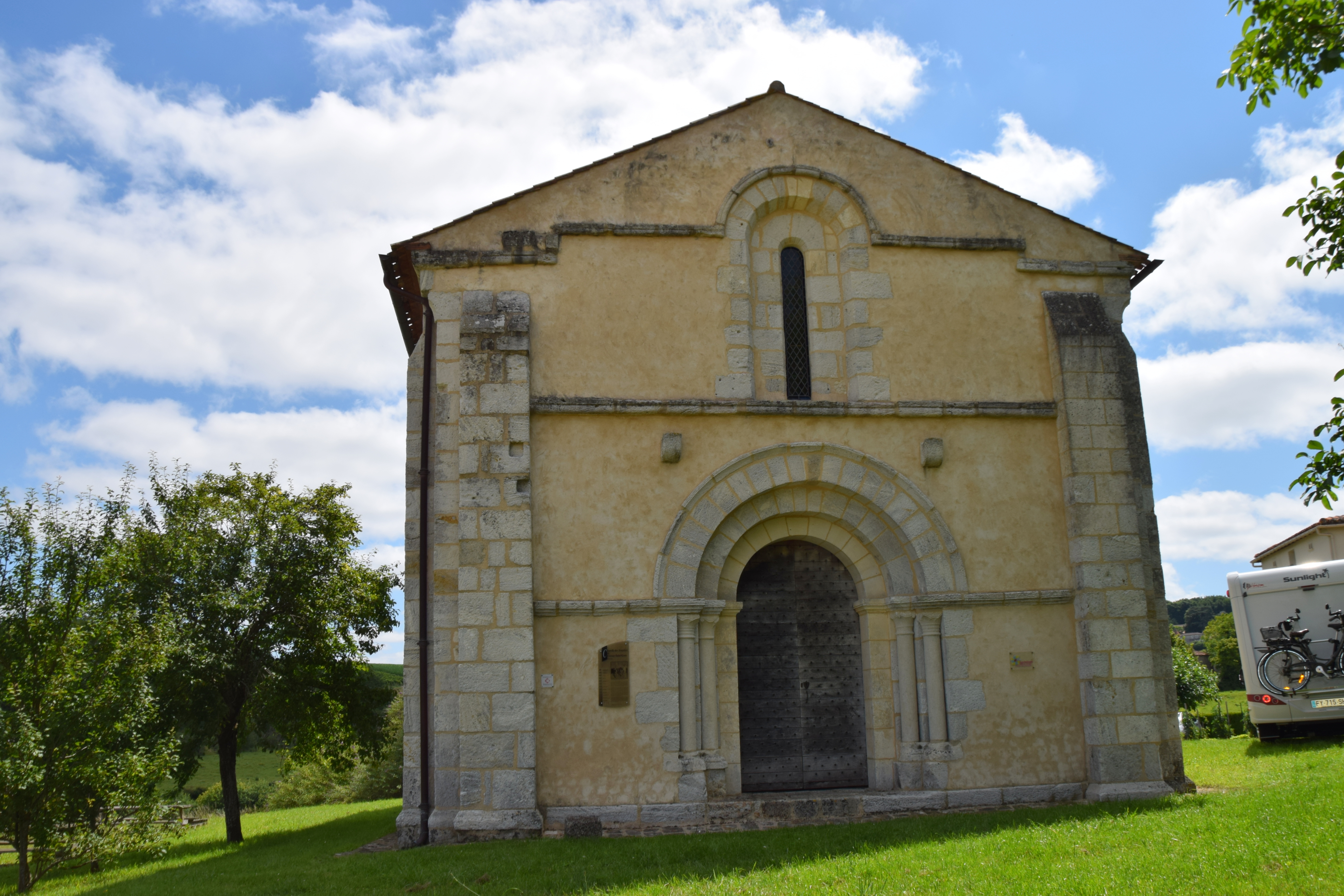
Next was a detour to Cressac St Genis to view the Knight’s Templar Chapel, set in a lovely hamlet, in an area of rolling hills and with picnic tables and its own well.


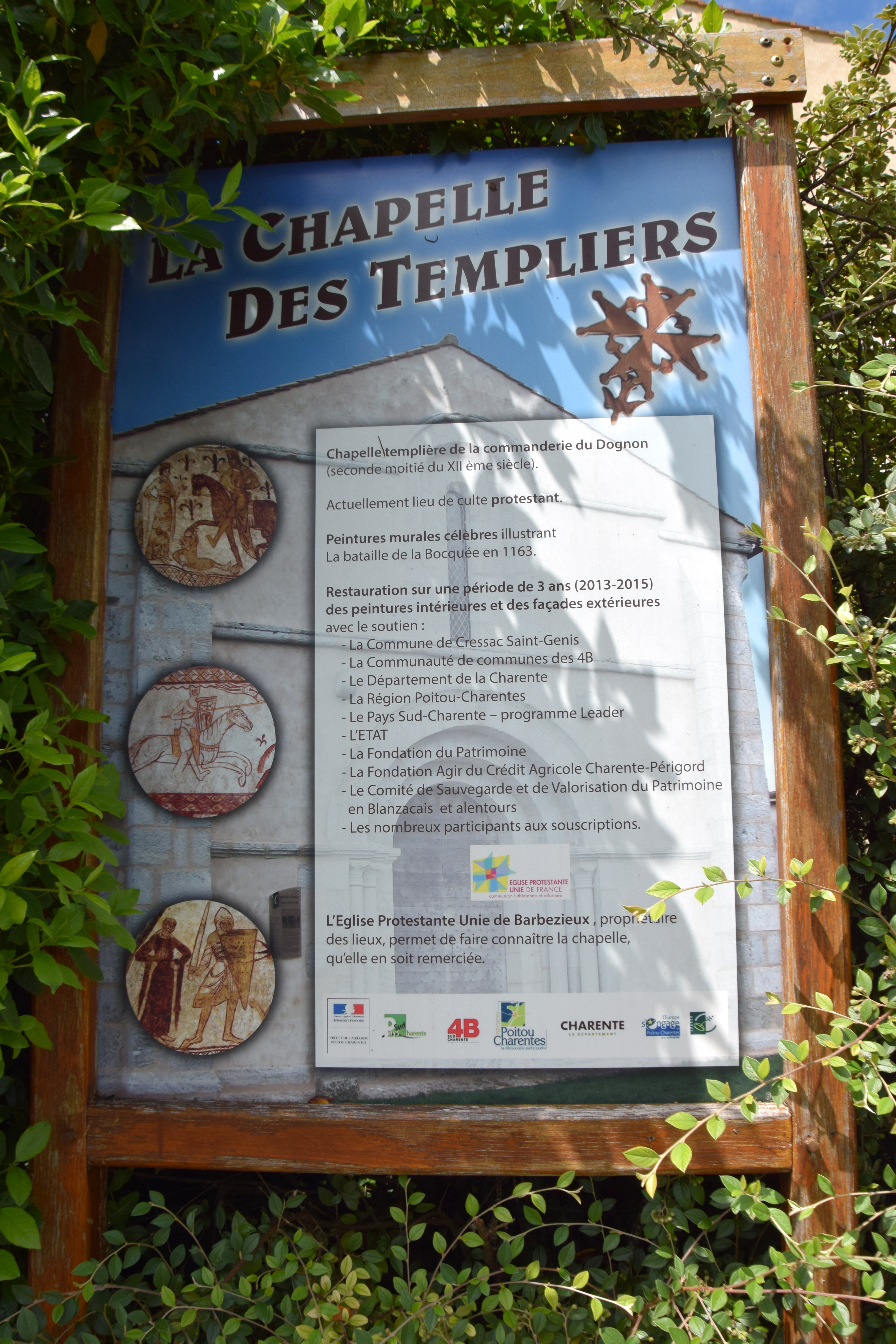
The blurb tells one that the wall painting in the interior are the best of their time and depict the progress of the crusades. Unfortunately the door was locked so we have to take their word for it!

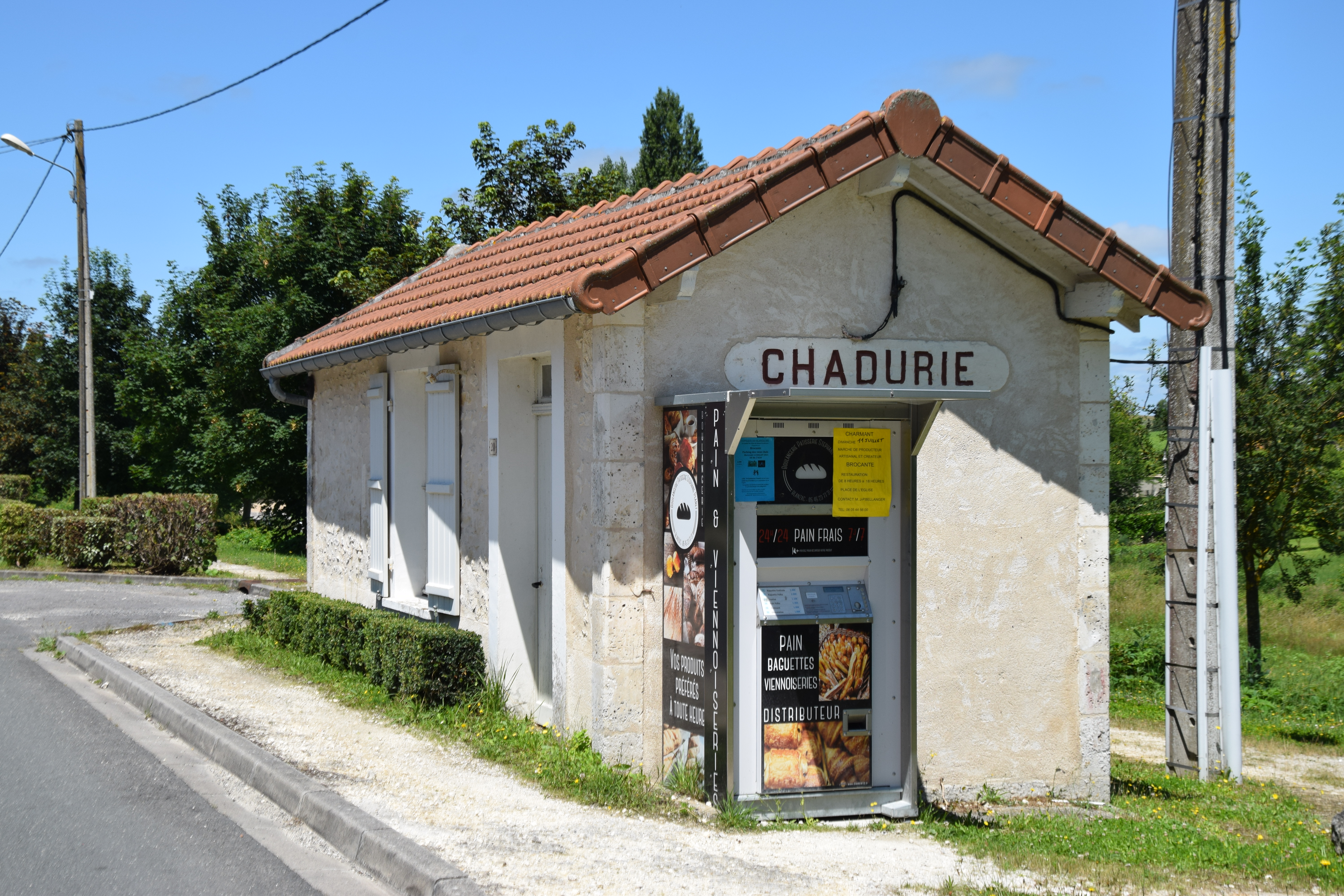
Next followed a quick stop at Chadurie Gare. It is clear that this was once a railway stop building but all trace of the railway line is long gone. There is a lovely little lavoir.


Next stop La Rochebeaucourt on the river Nizonne, which boasted many handsome town houses.

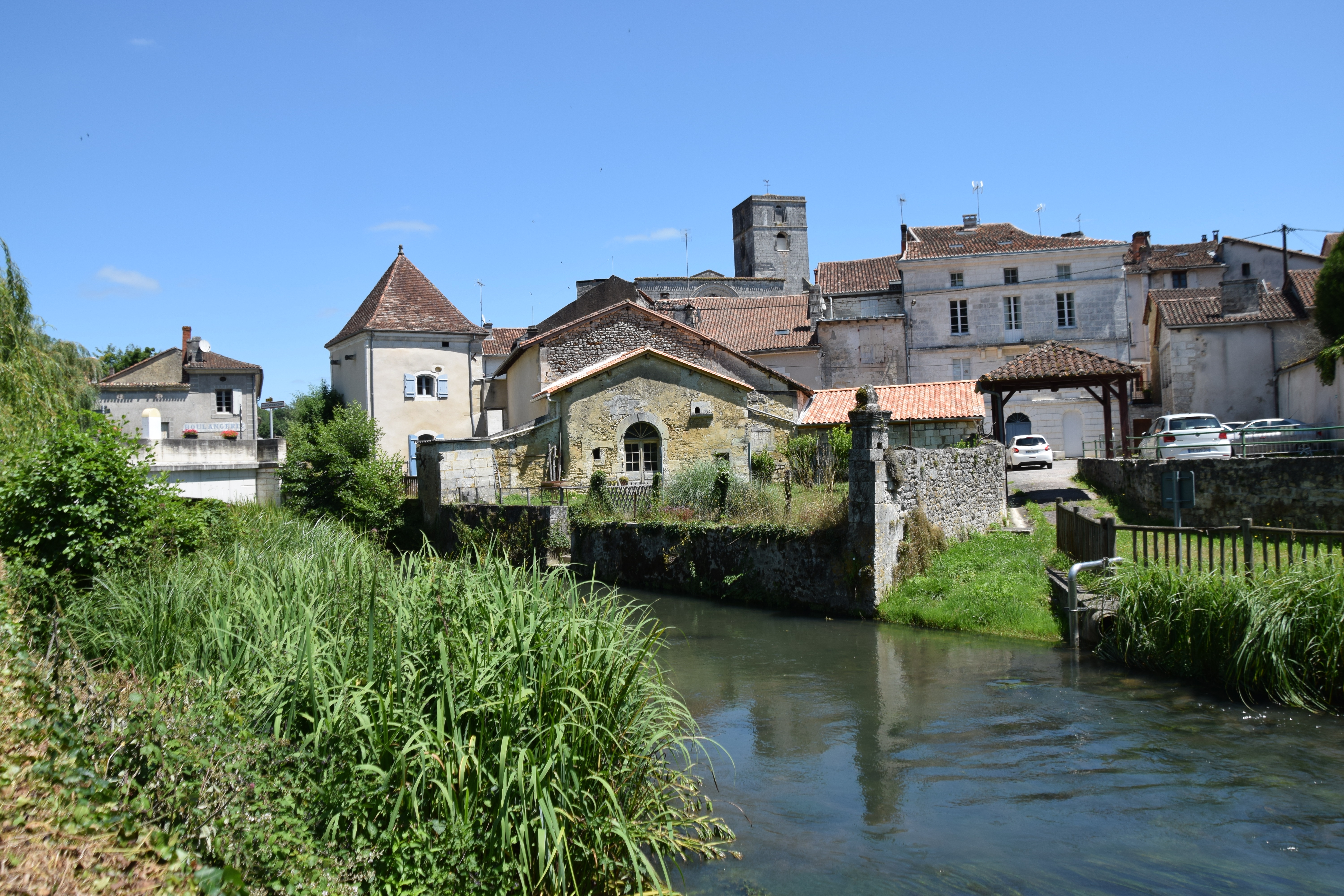
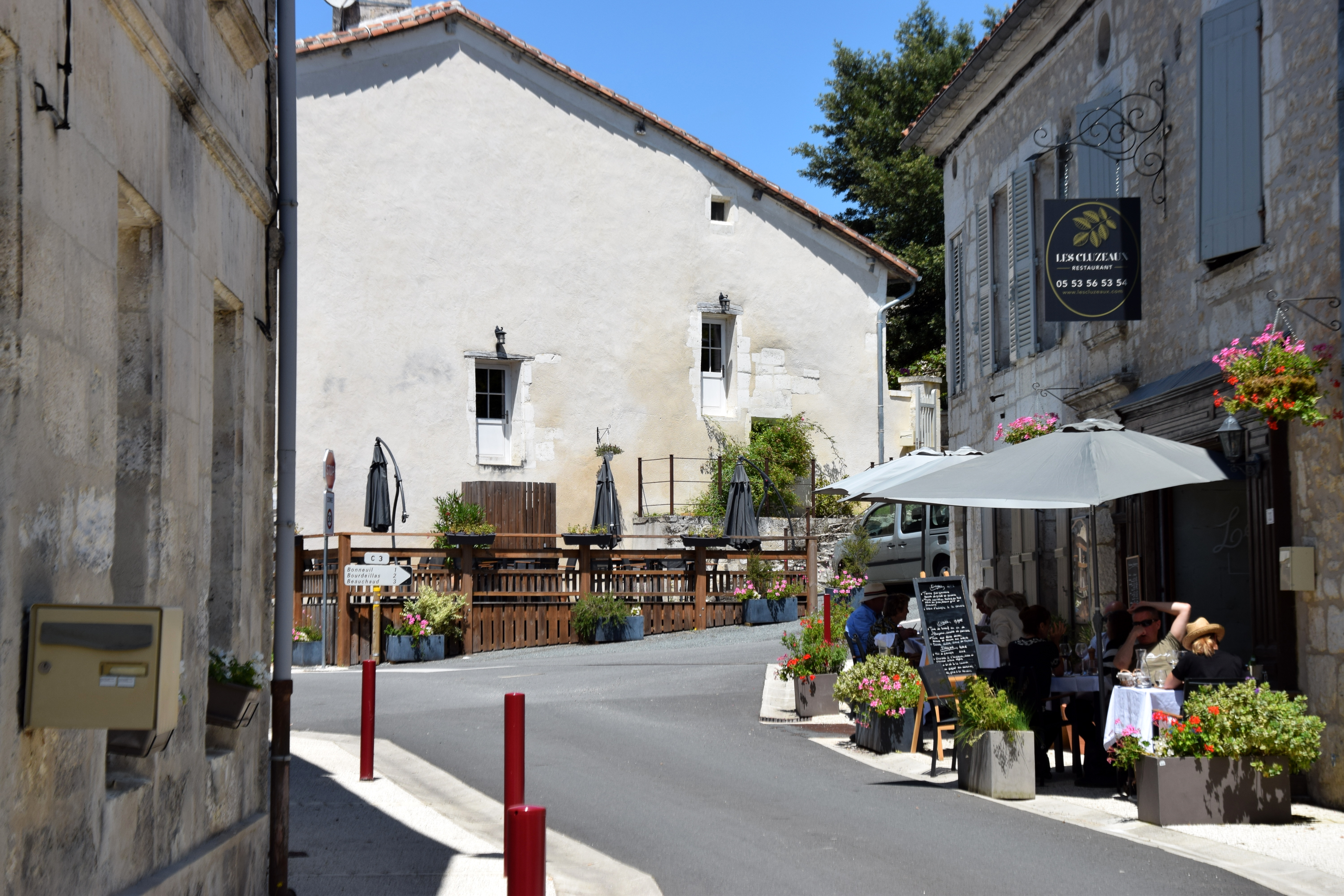


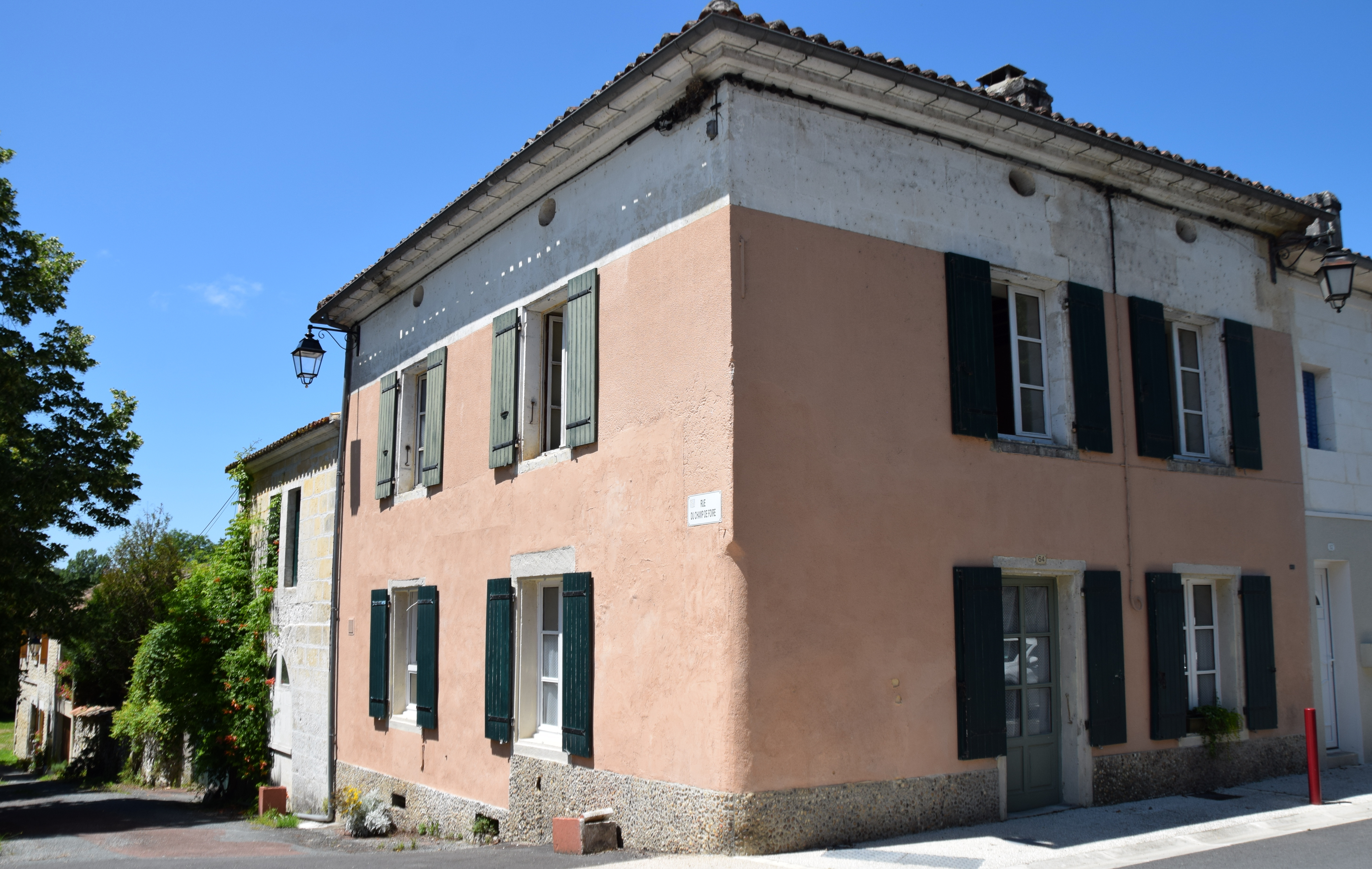
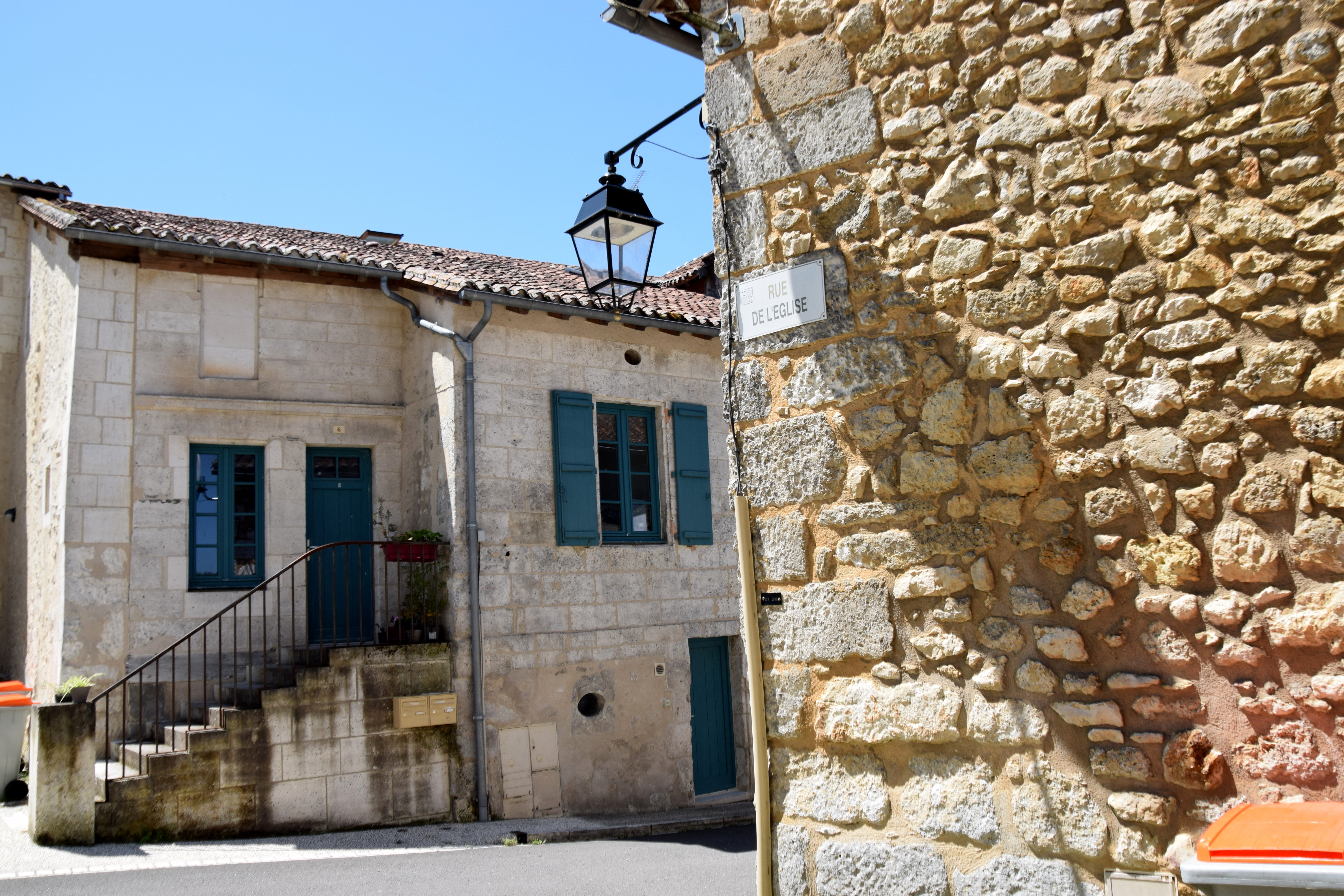
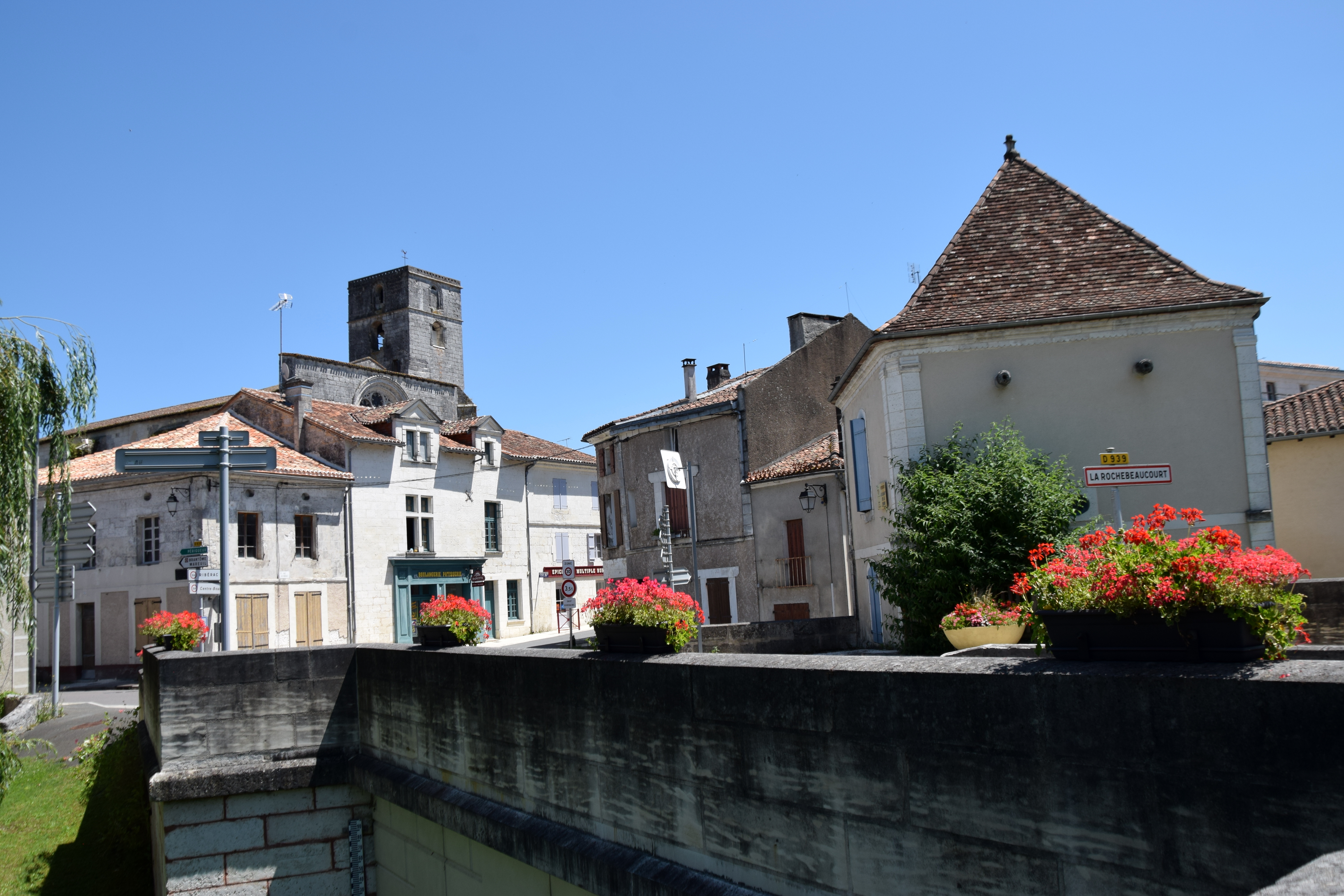
There is an elegant Romanesque church and water pumps along the length of the main street.
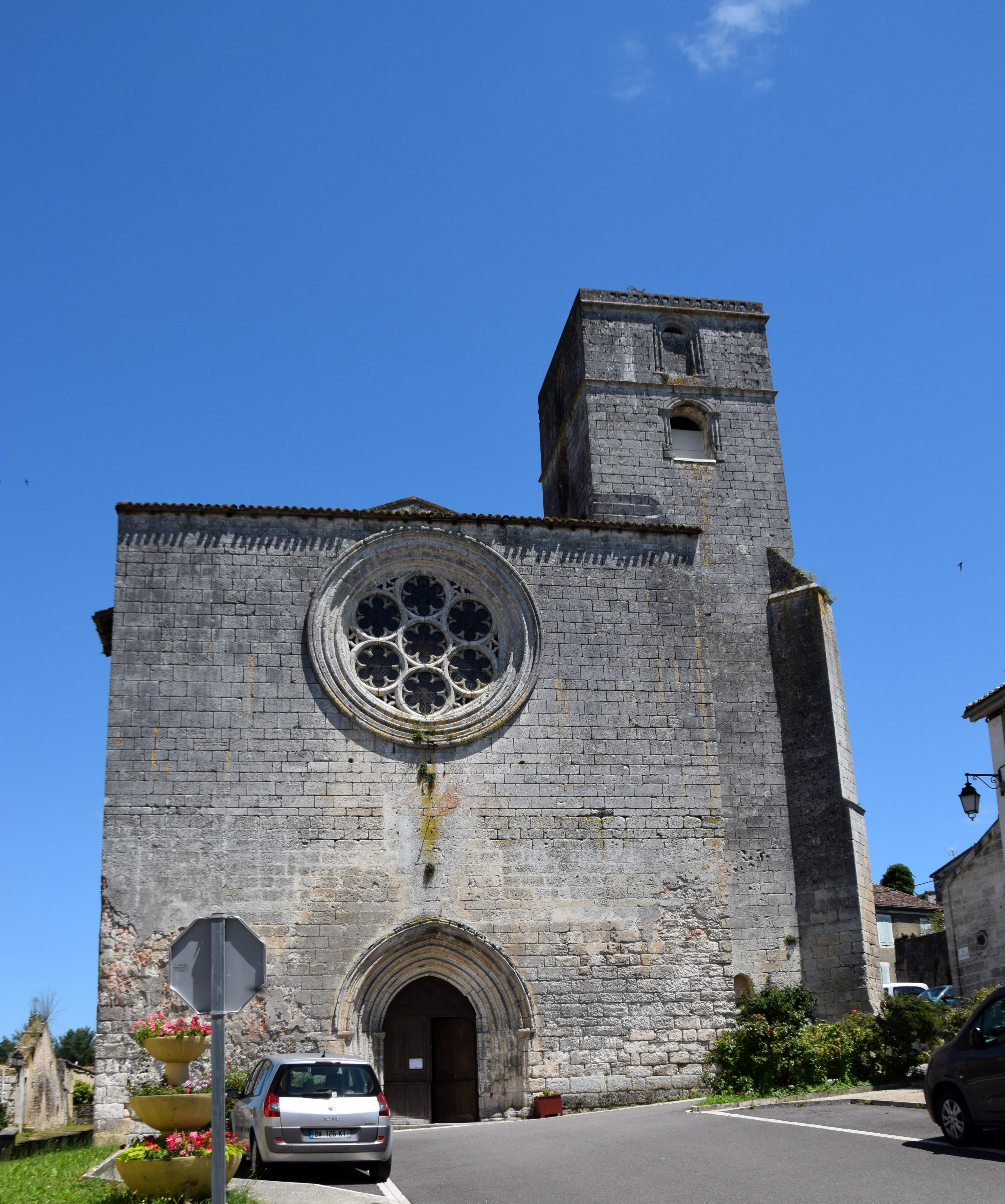

On the edge of town was an intriguing ruin. An initial look bought to mind a dressage training ring with stables along the two arms.
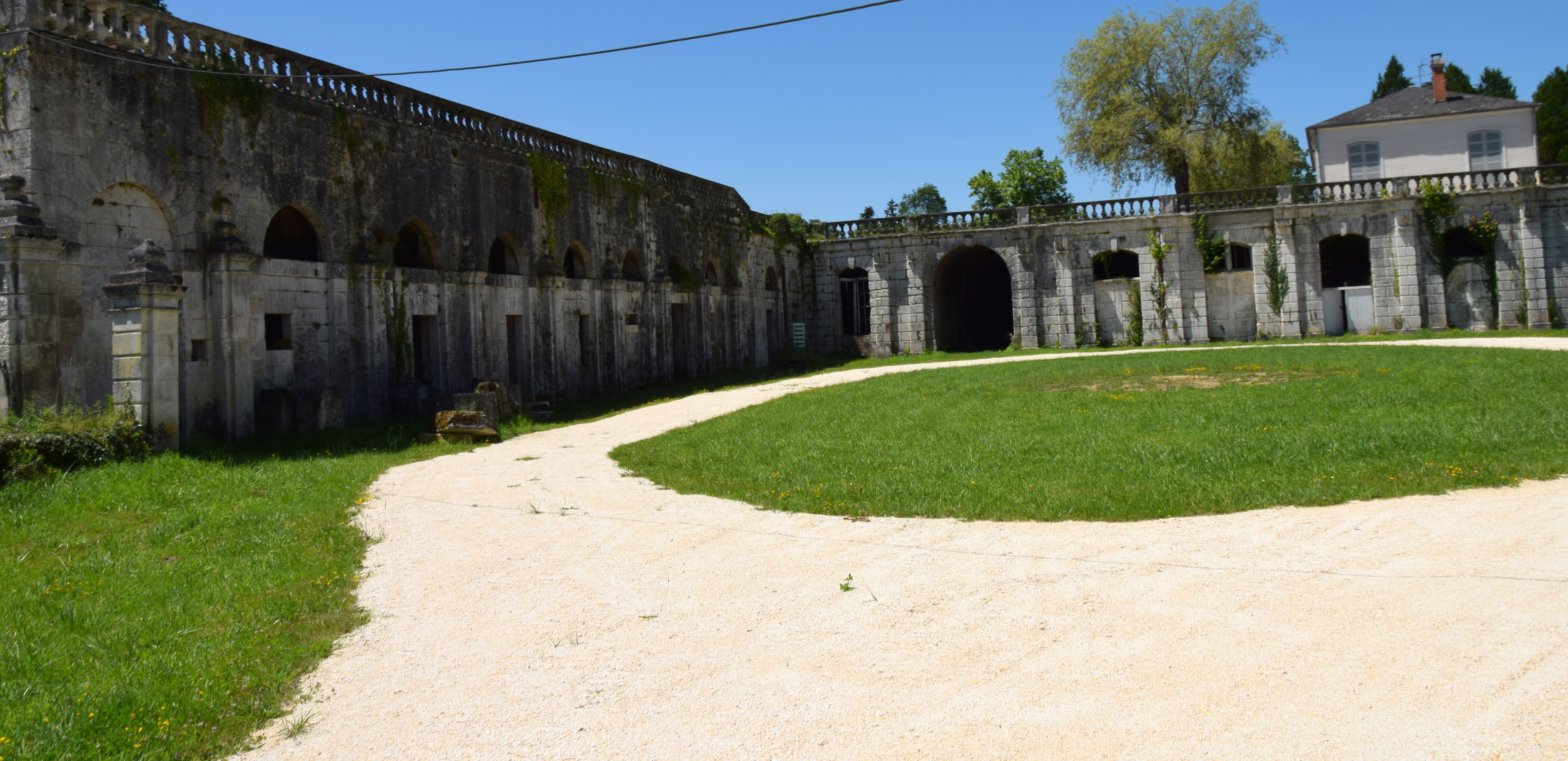
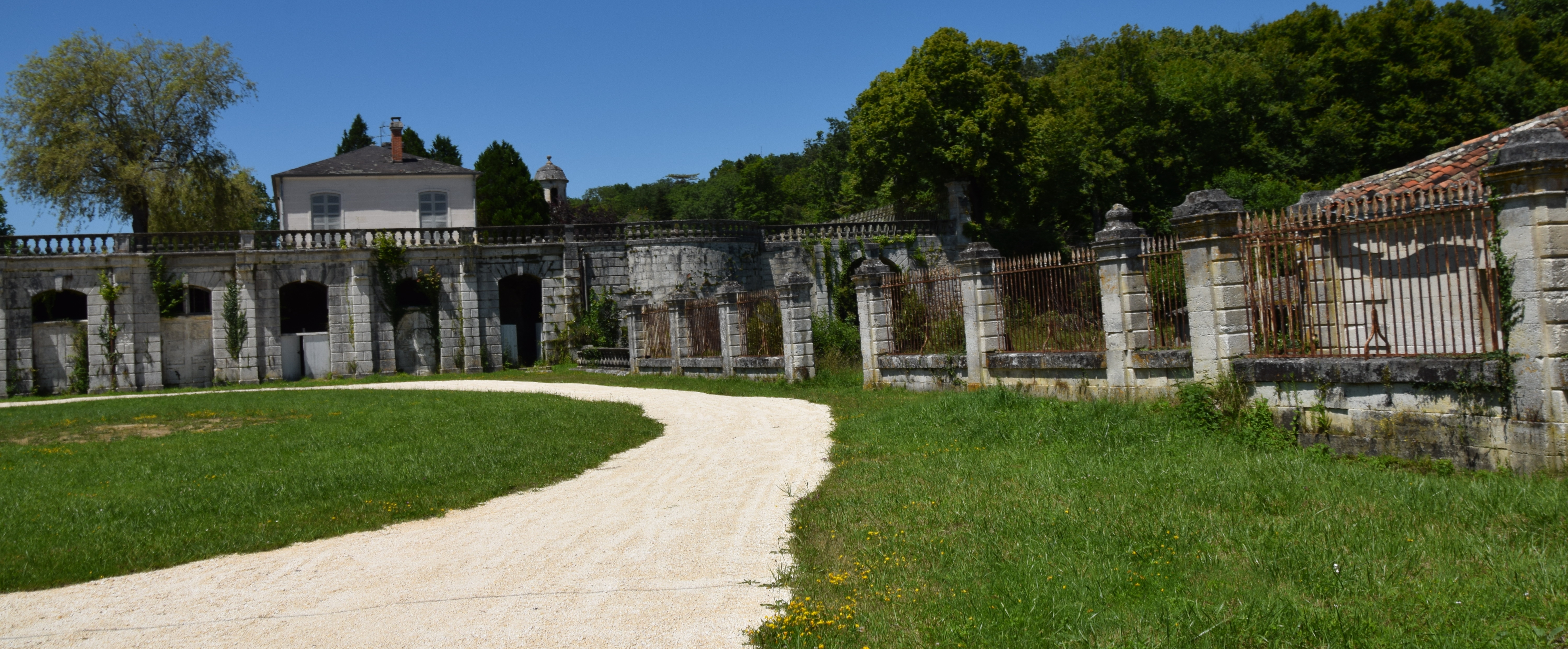

However, a look into the openings on the left hand arm revealed that it was unlikely that these were stables On entering the central arch a huge, ornate staircase let up to a balcony above leaving more unanswered questions.
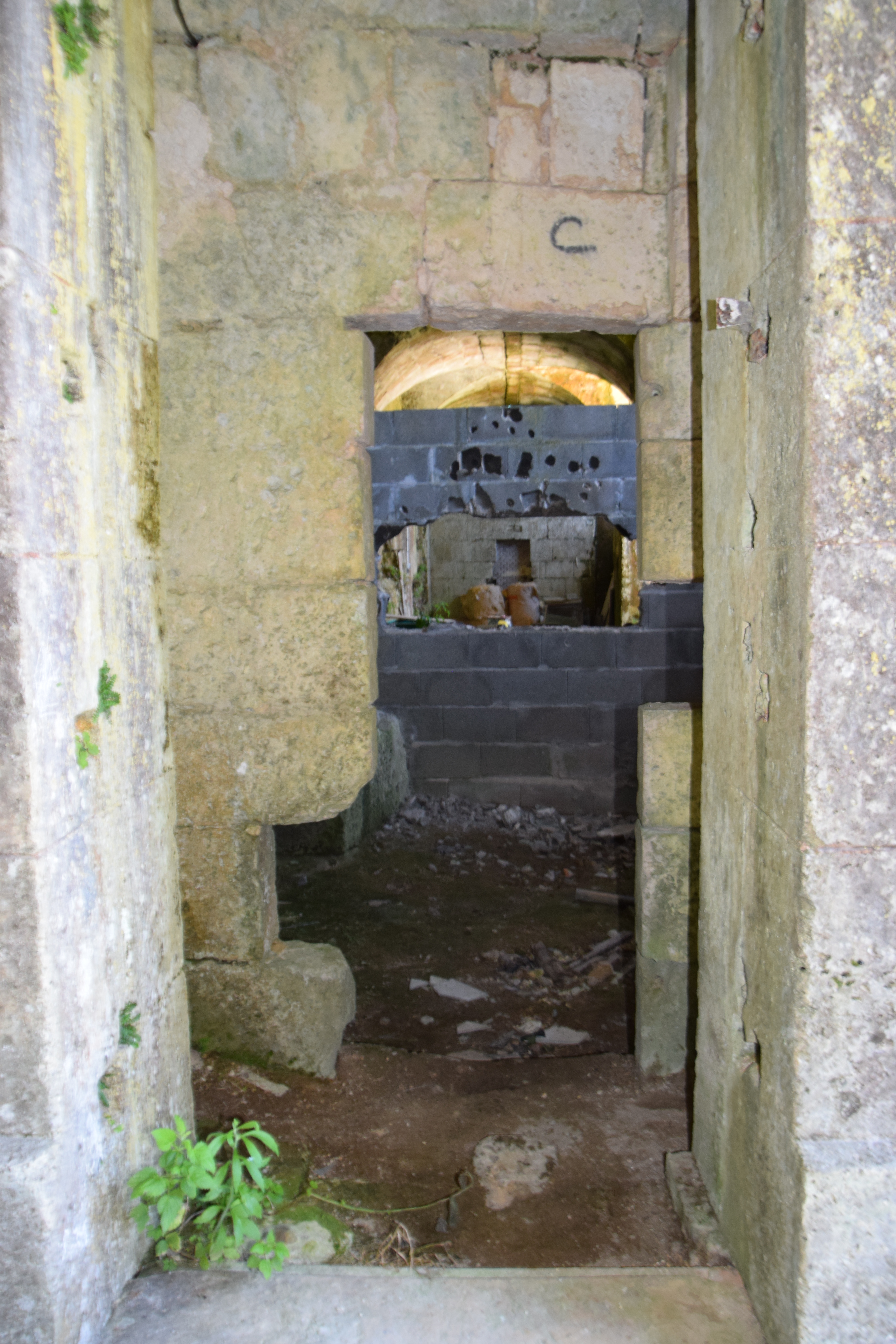


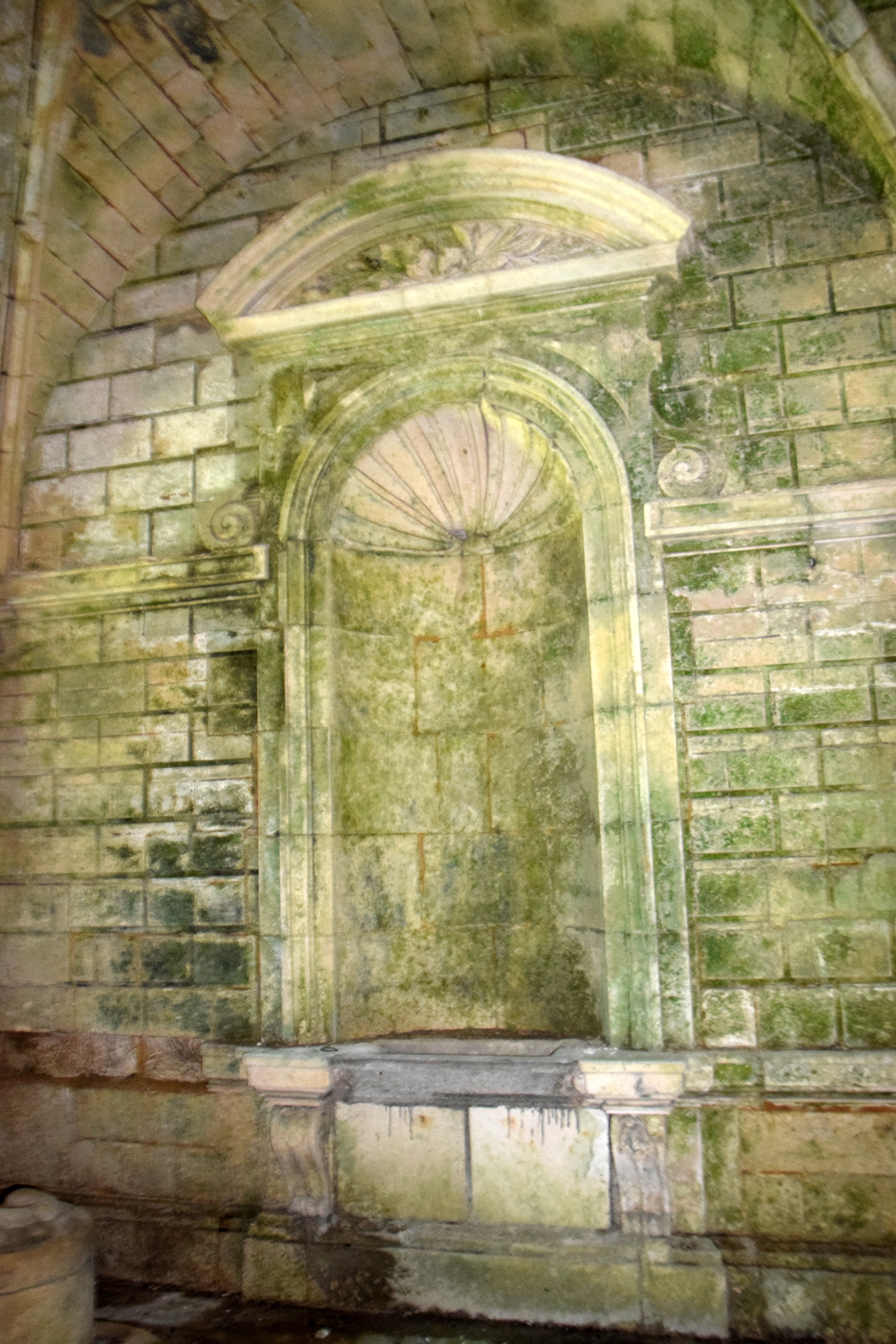
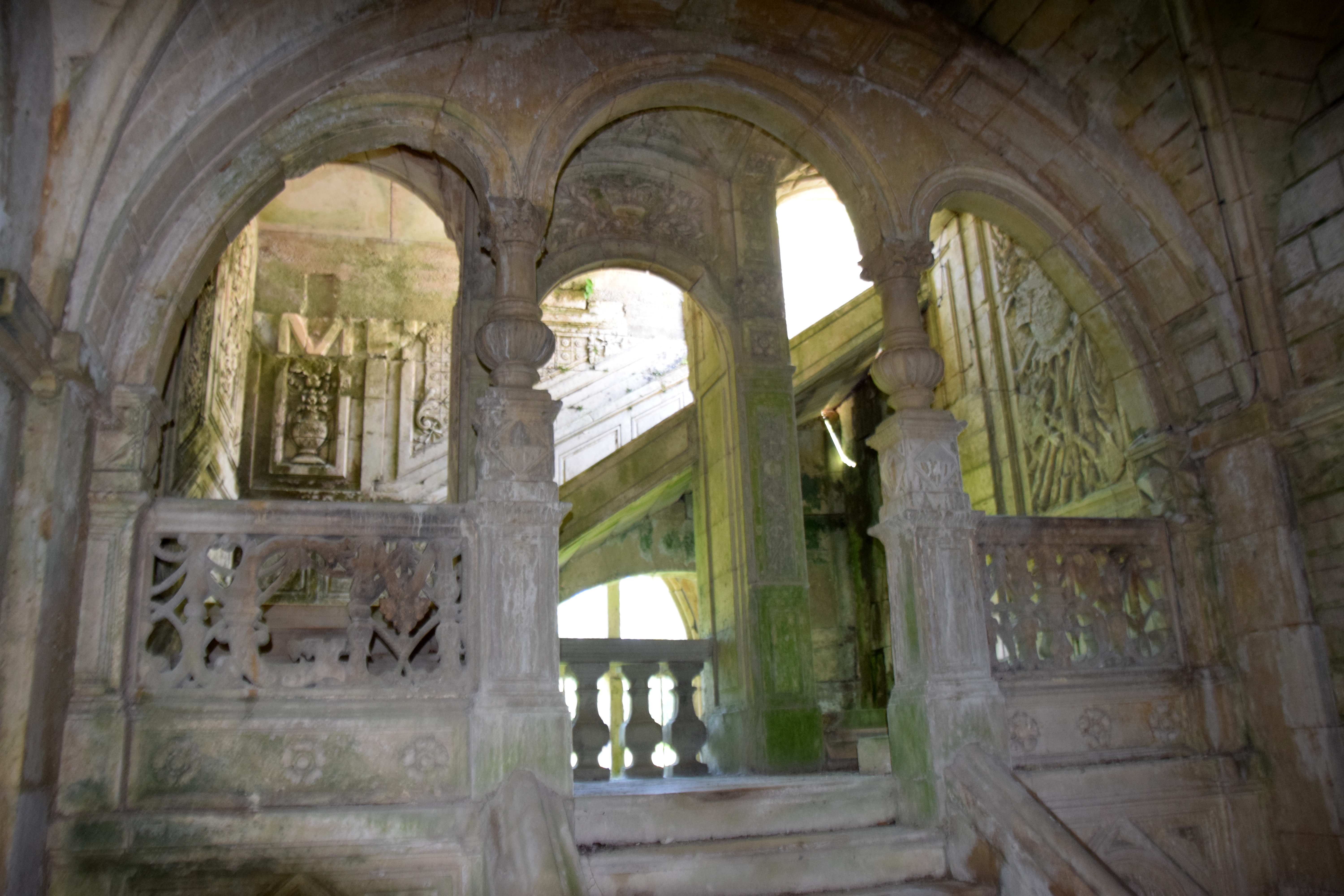
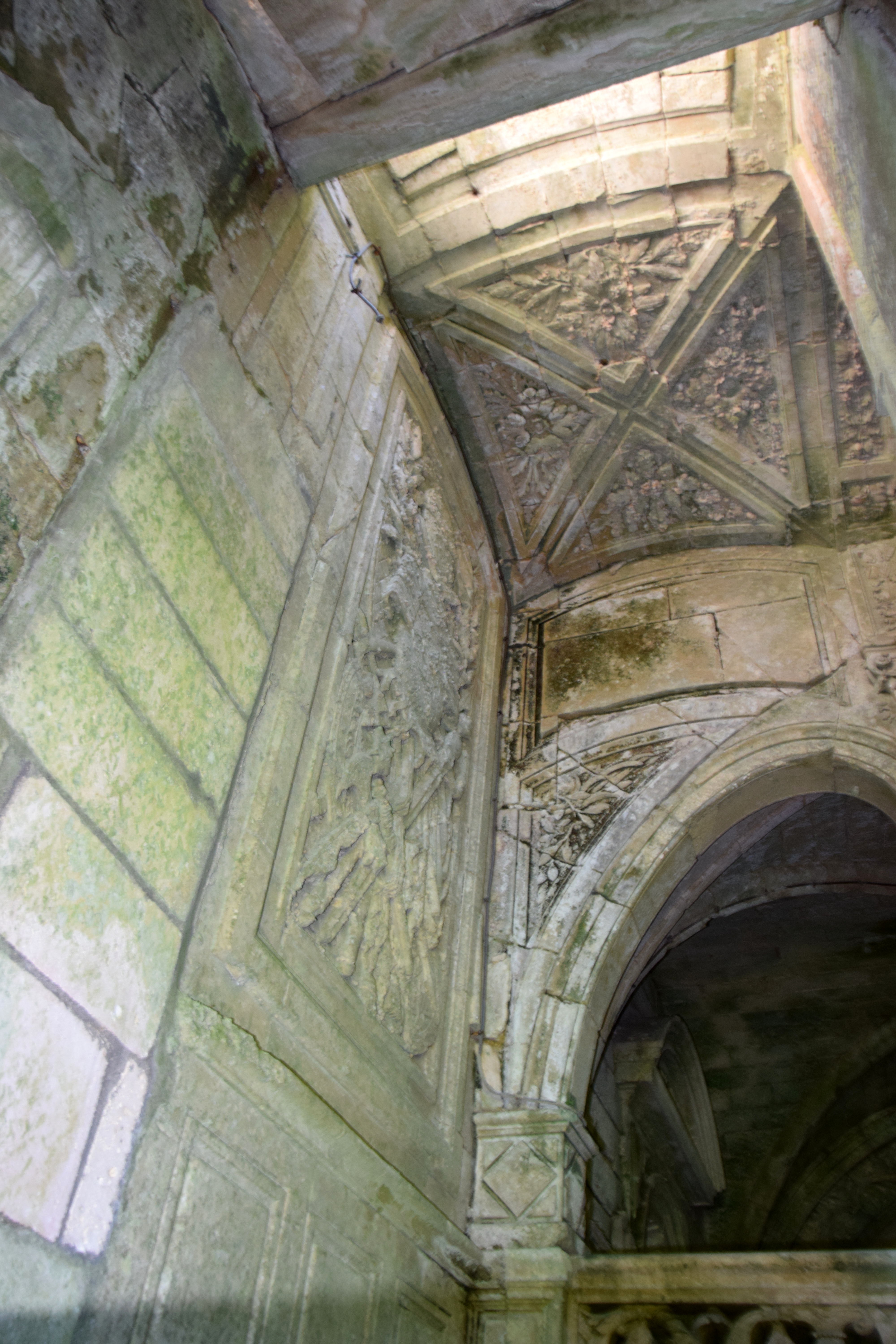
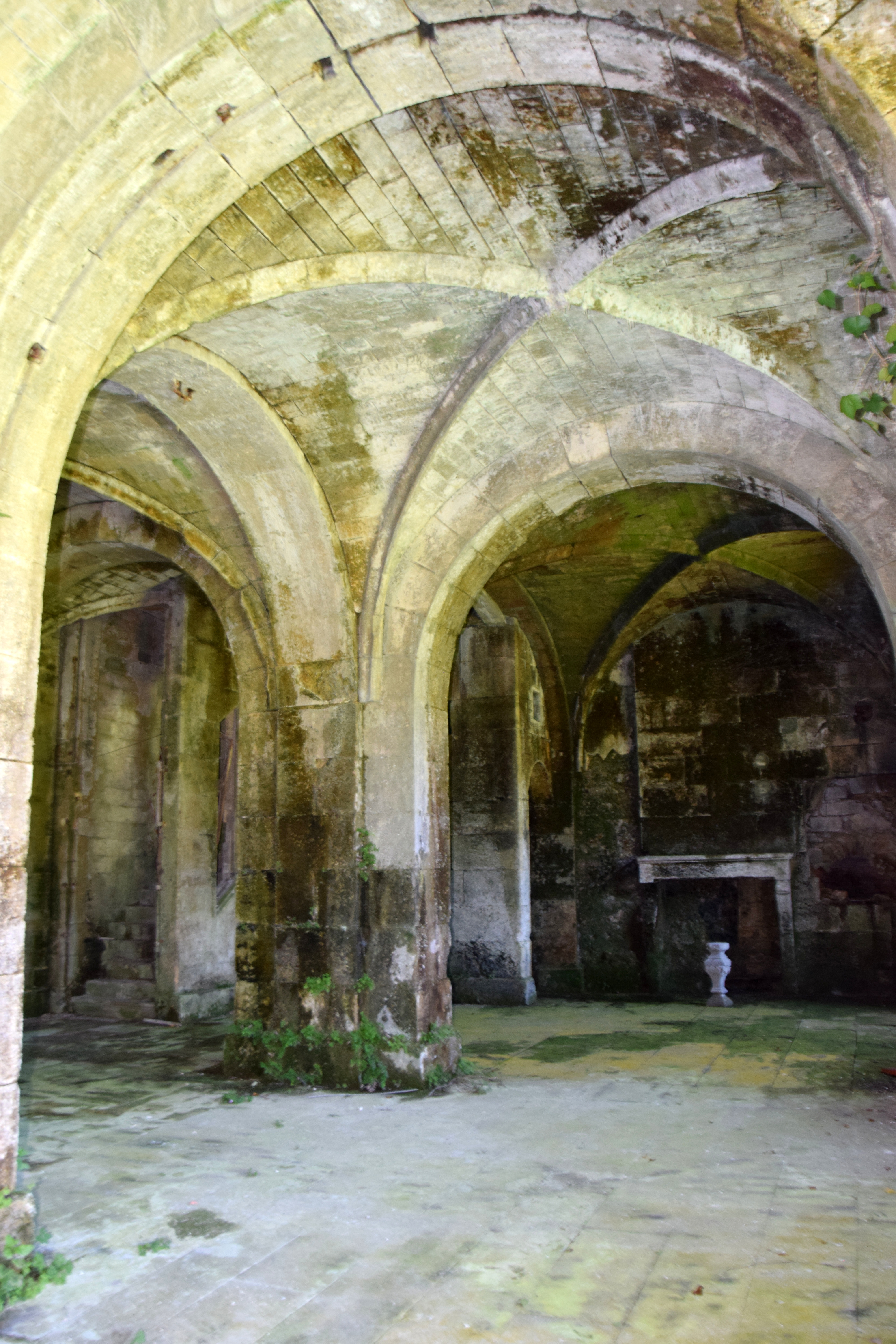
This together with the vaulted ceilings of the adjoining salon suggested something altogether much grander. But as I walked out round the right hand arm I found the industrial remains of a very large mill, the mill stream could be heard rushing by underneath.
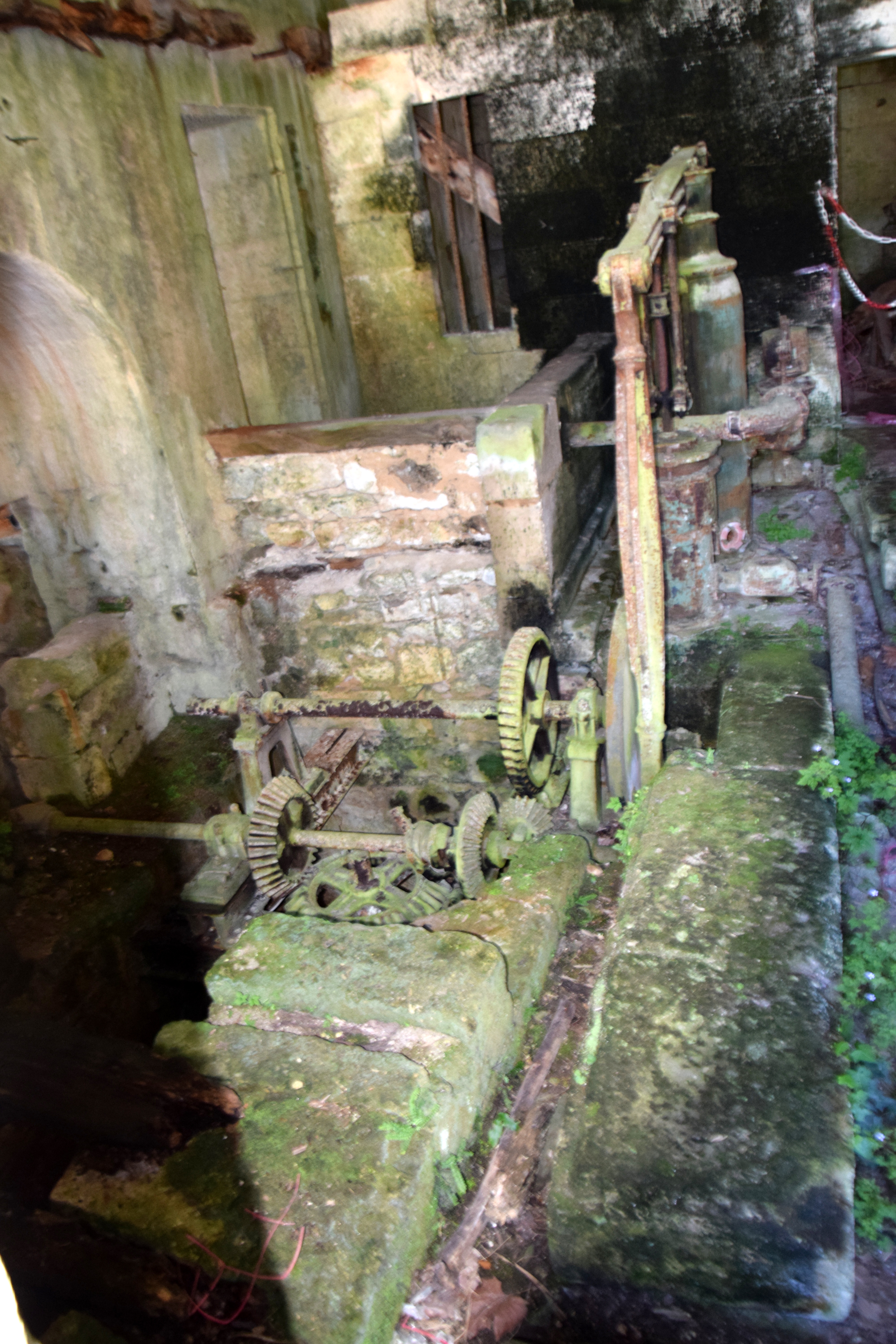
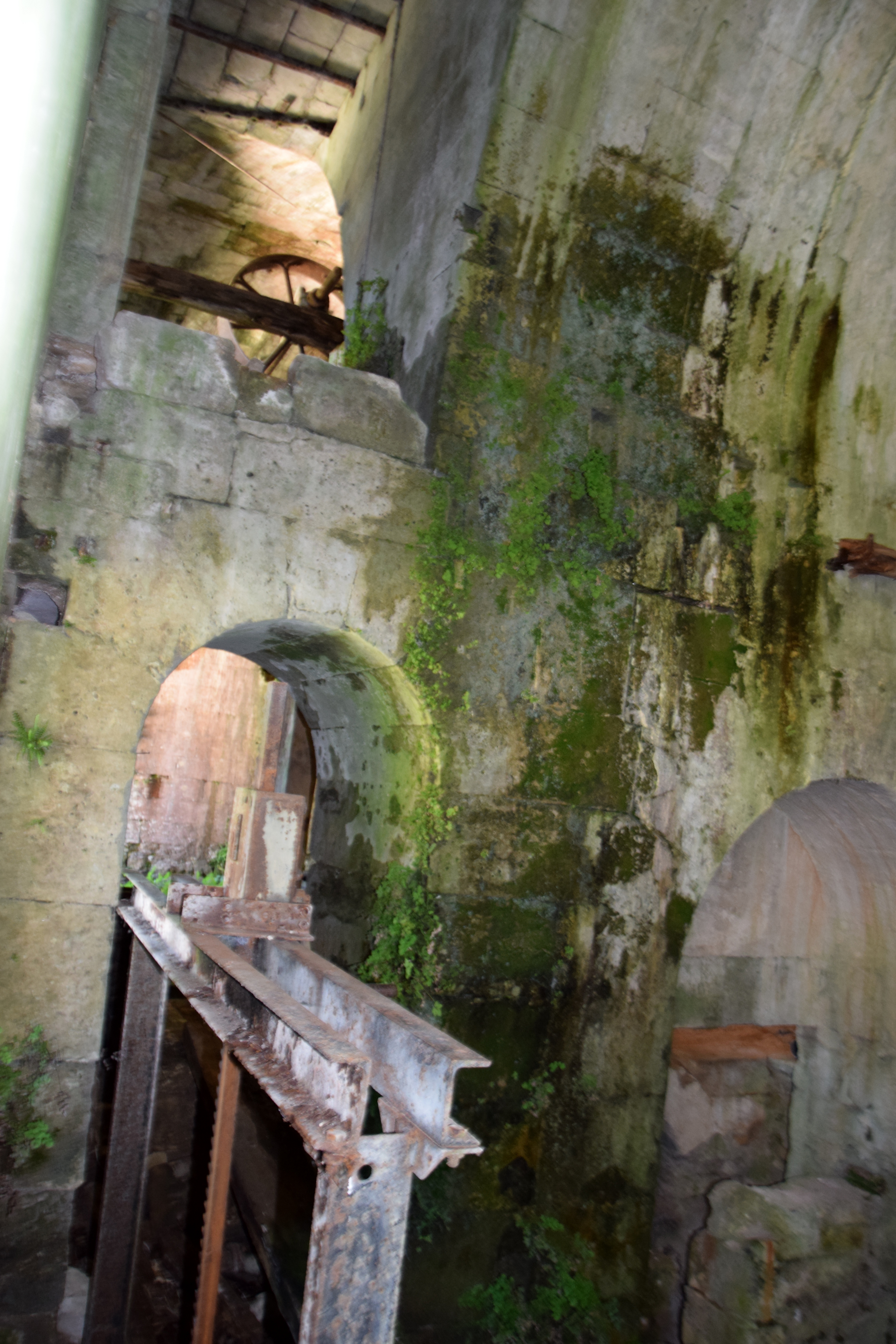

As there was absolutely no signage I left the site in a state of confusion. Back in the van later, the Wikipedia site, that was very informative across a range of areas, said nothing about an equestrian center or a substantial milling project. But did mention a huge and beautiful castle which was burnt down by the Germans in 1941 during WW2.It must have been very impressive in its day.
Arriving in Nontron, a town on two levels, a lower one and the high town,
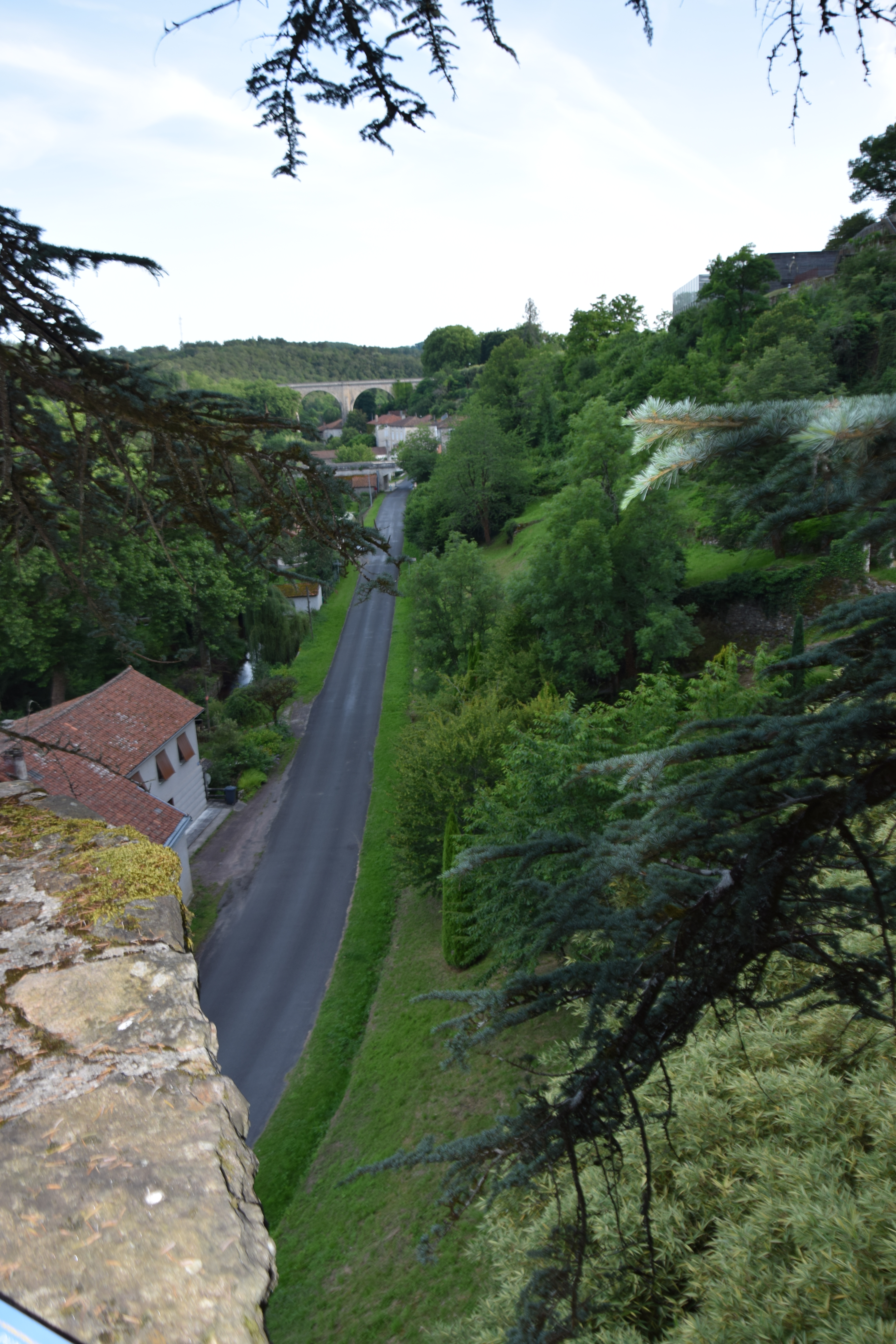
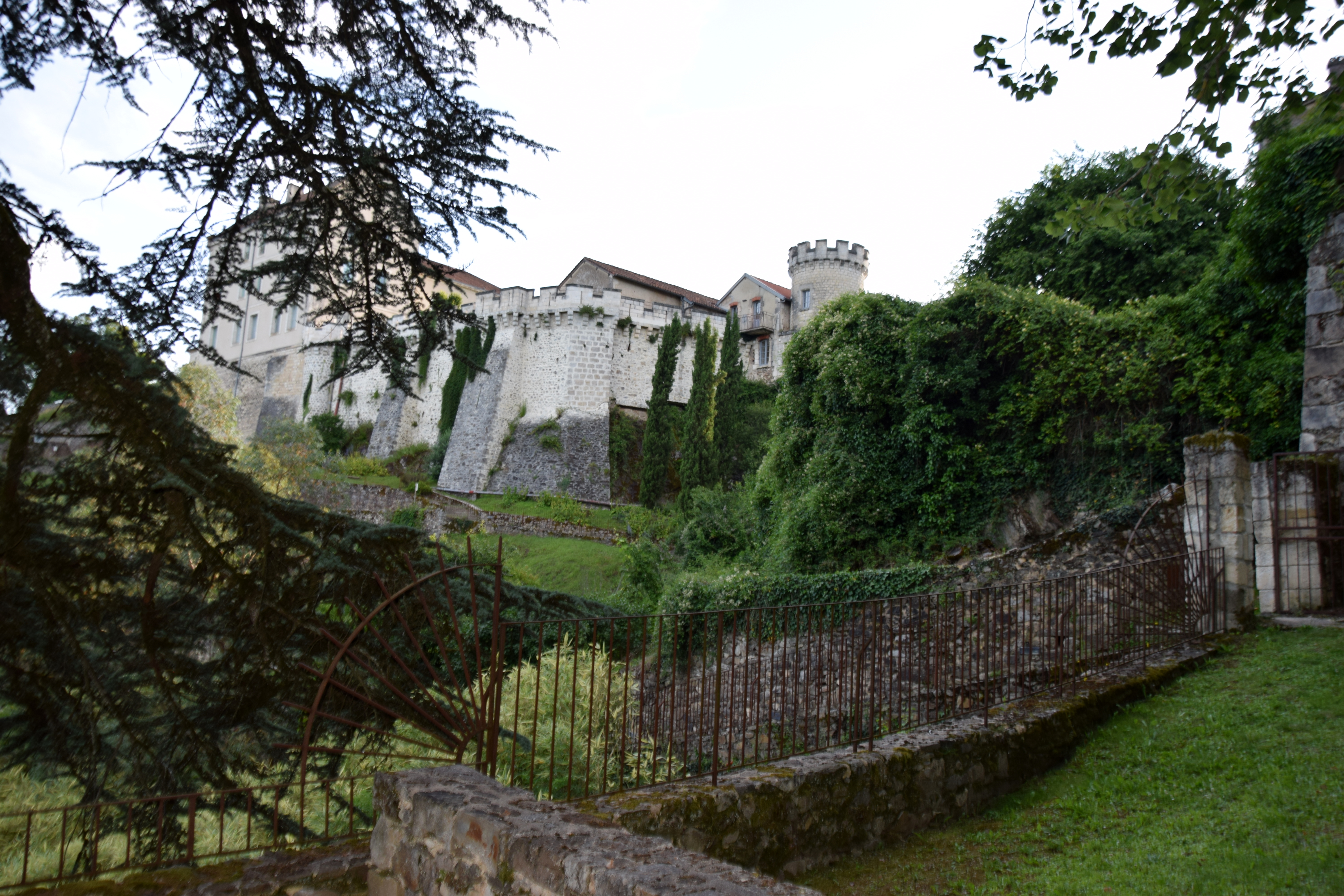
By and large the lower town, closer to the river, seems to be older with a jumble of rooftops and narrow alleyways, lined with old timbered houses.
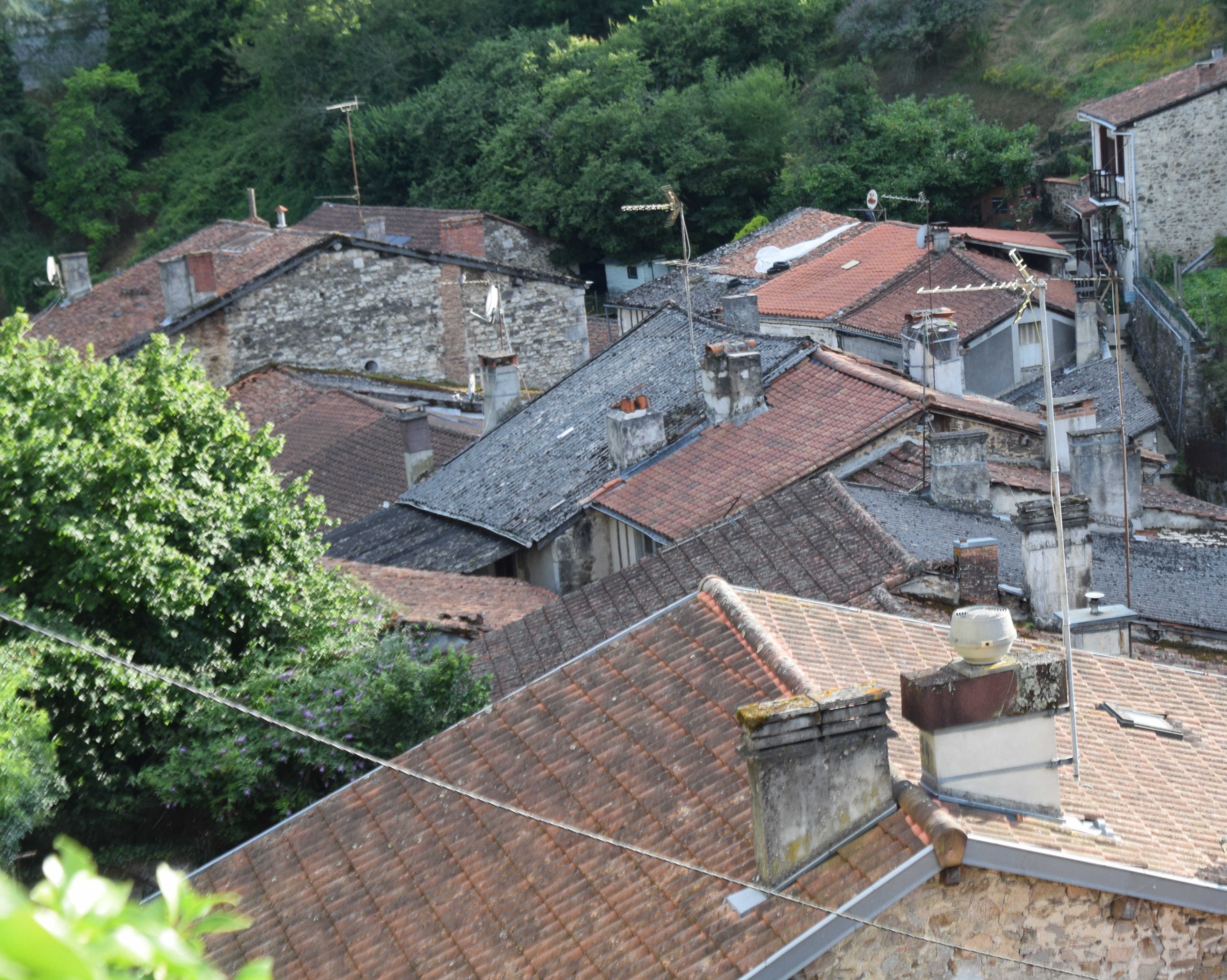
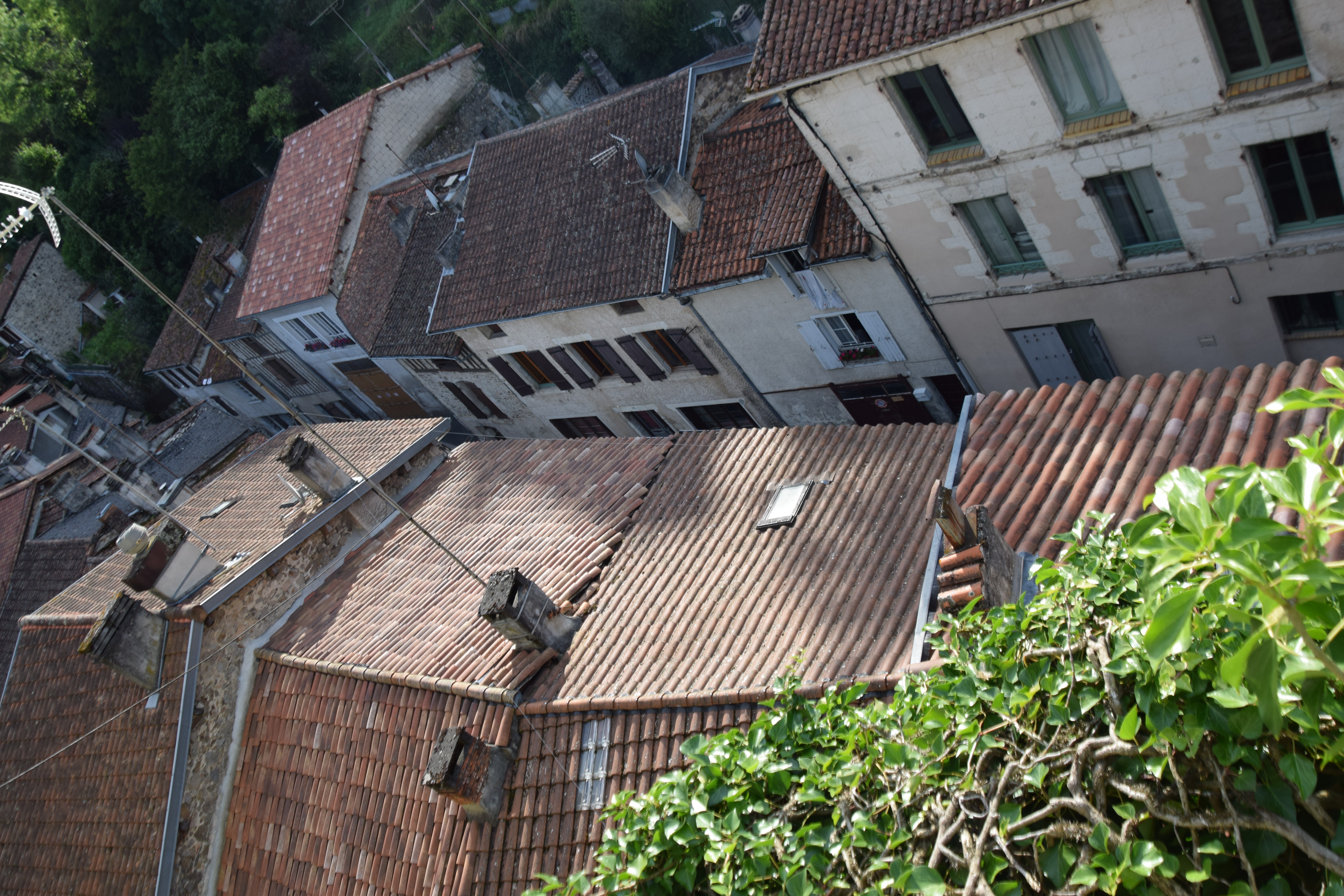
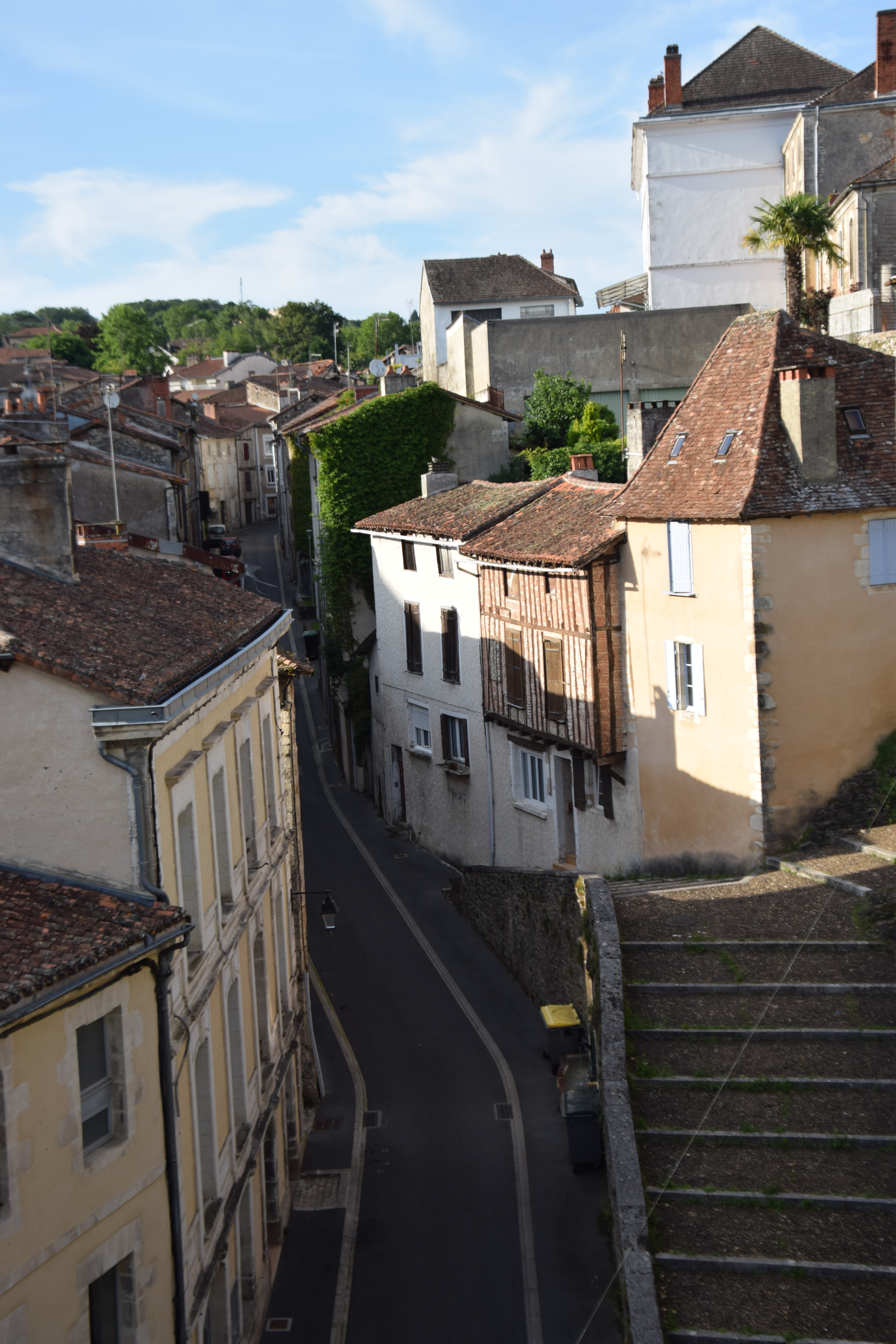
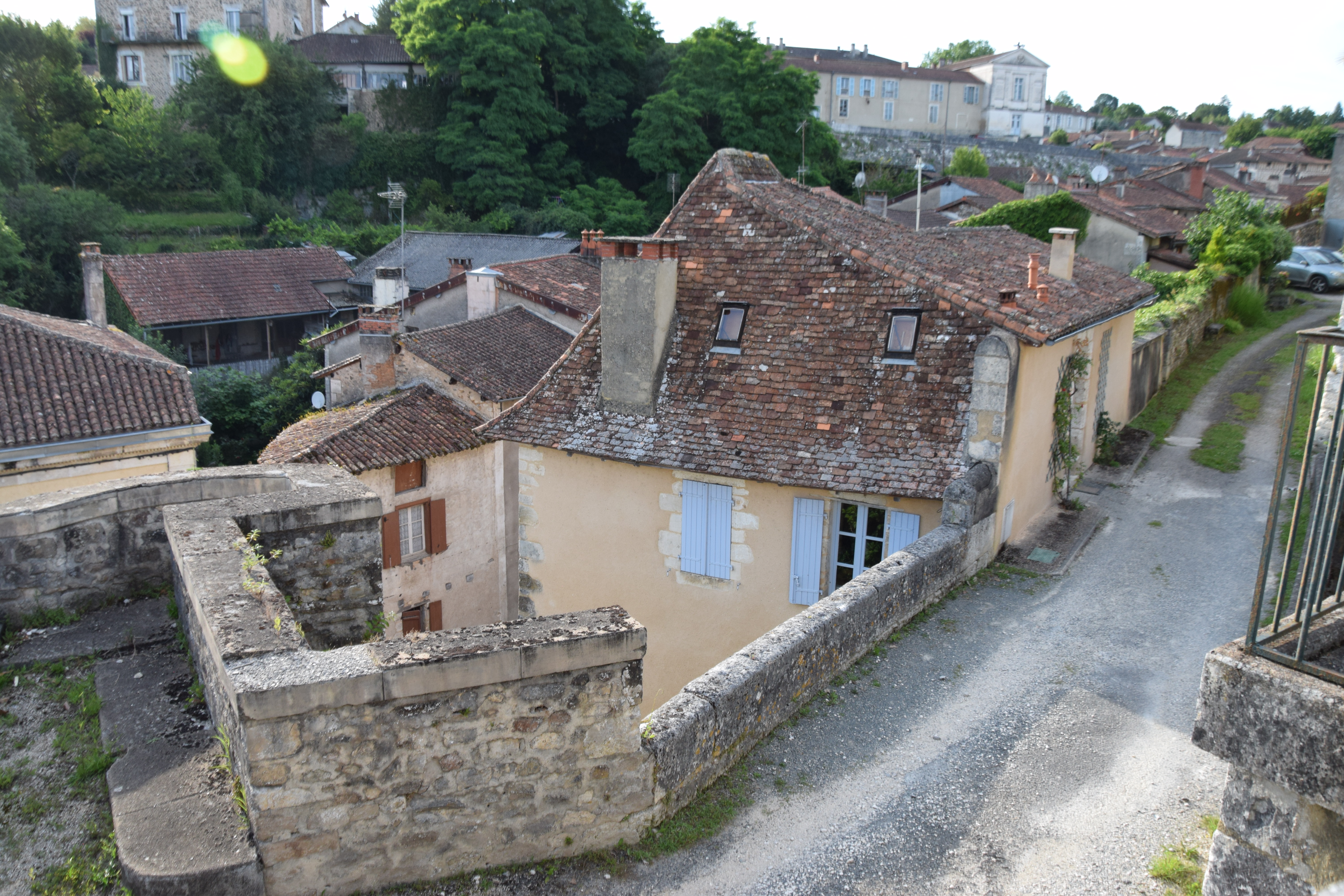
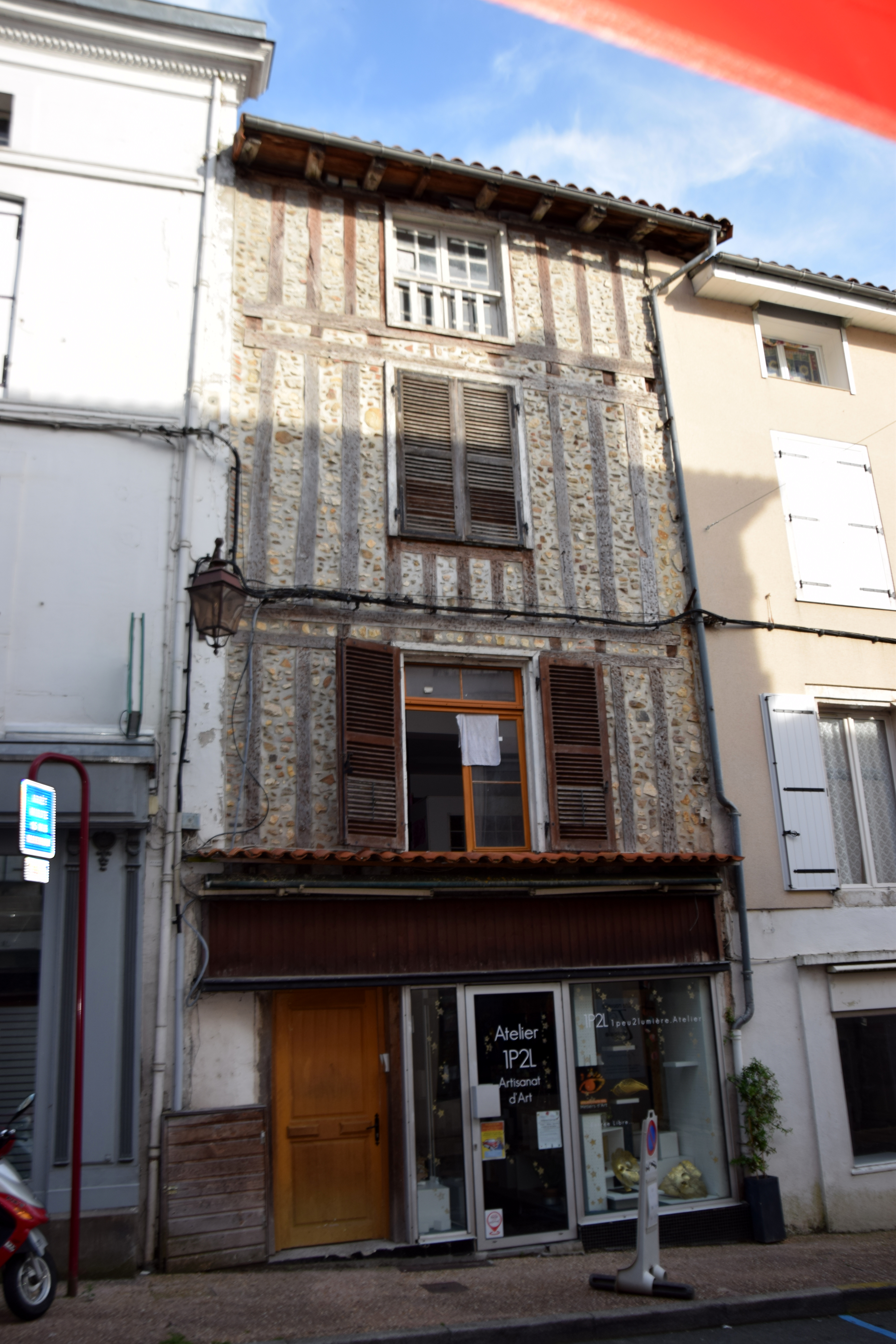
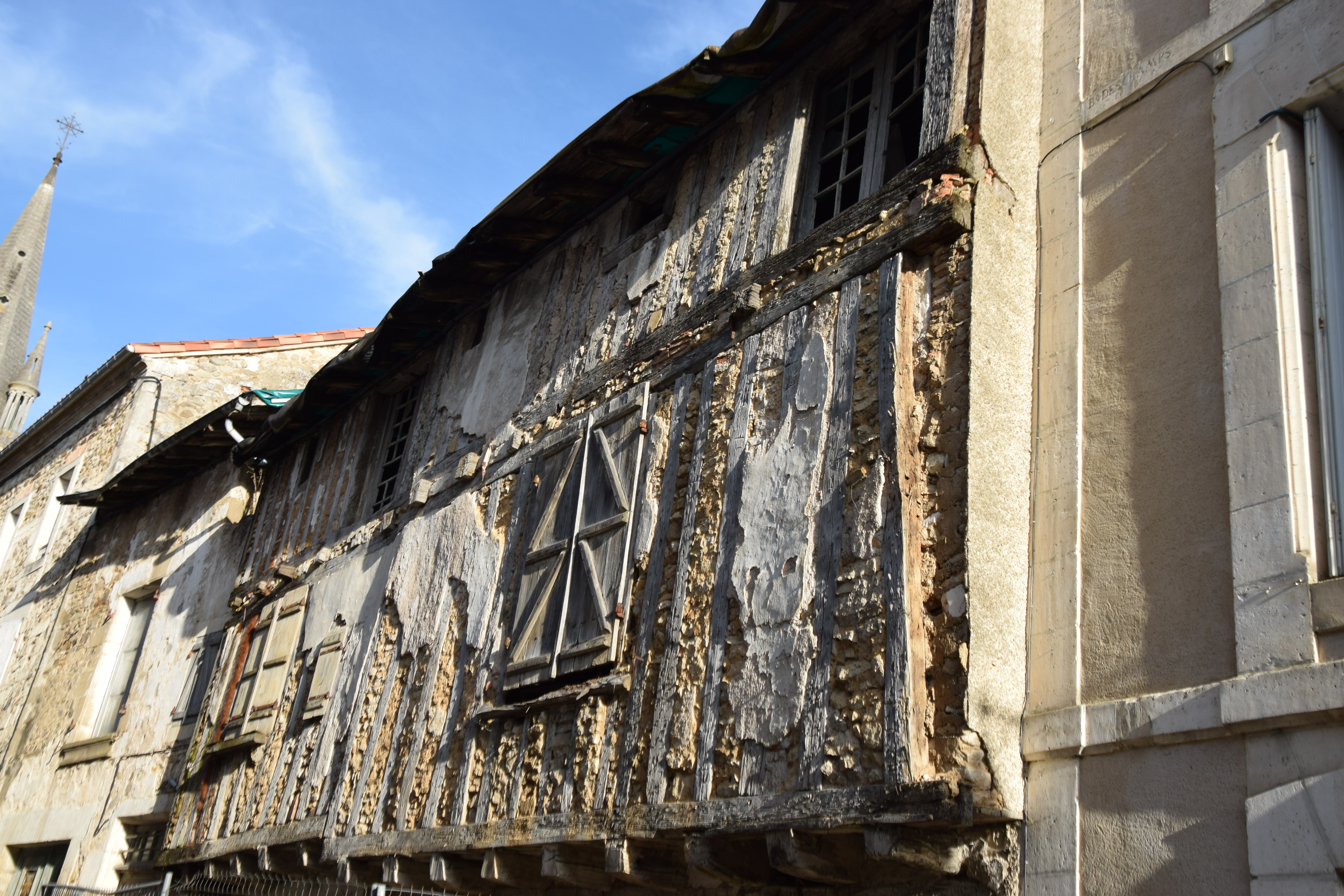
There is a leafy walk along the contour between the upper and lower towns that takes you past the ramparts. Rain prevented further exploration. Next time.
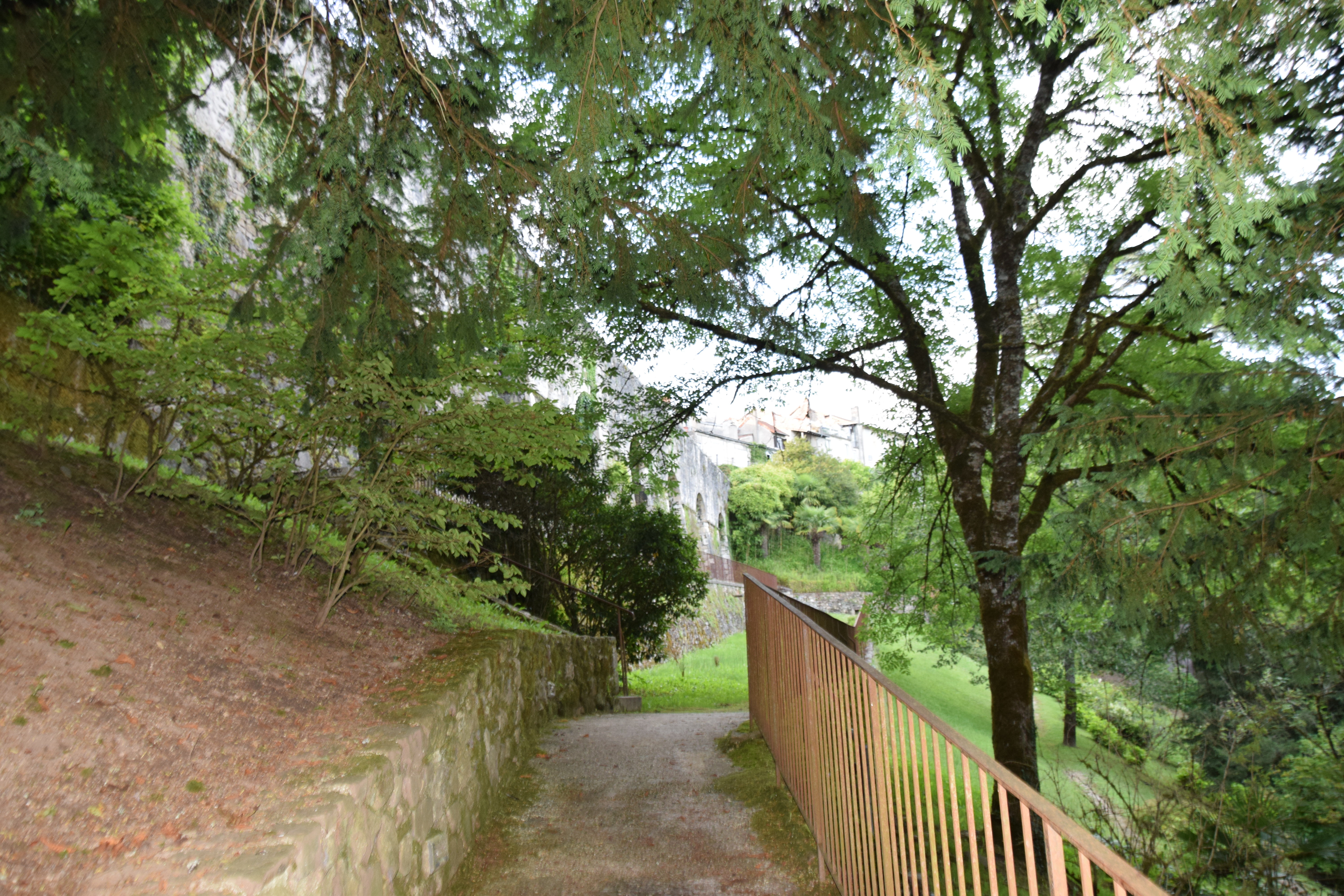
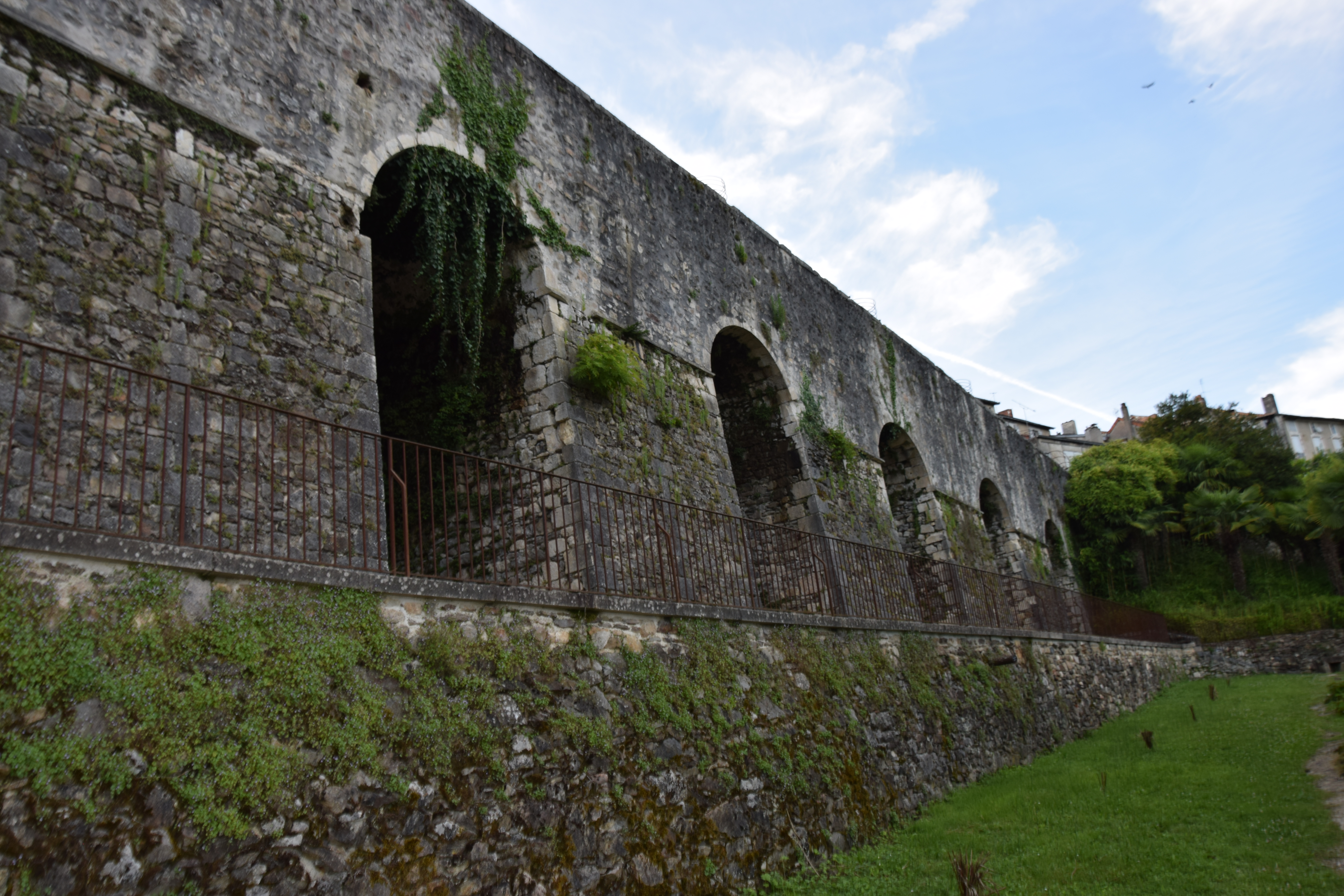
12th, Continual rain since the wee hours making further exploration of the town impossible. Visited Patti in the afternoon then drove on to an Aire with electricity, at St Front-la-Riviere. Set in a park backing onto the river with play grounds, basket ball court, dog agility arena, picnic tables and backing onto the river Dronne.
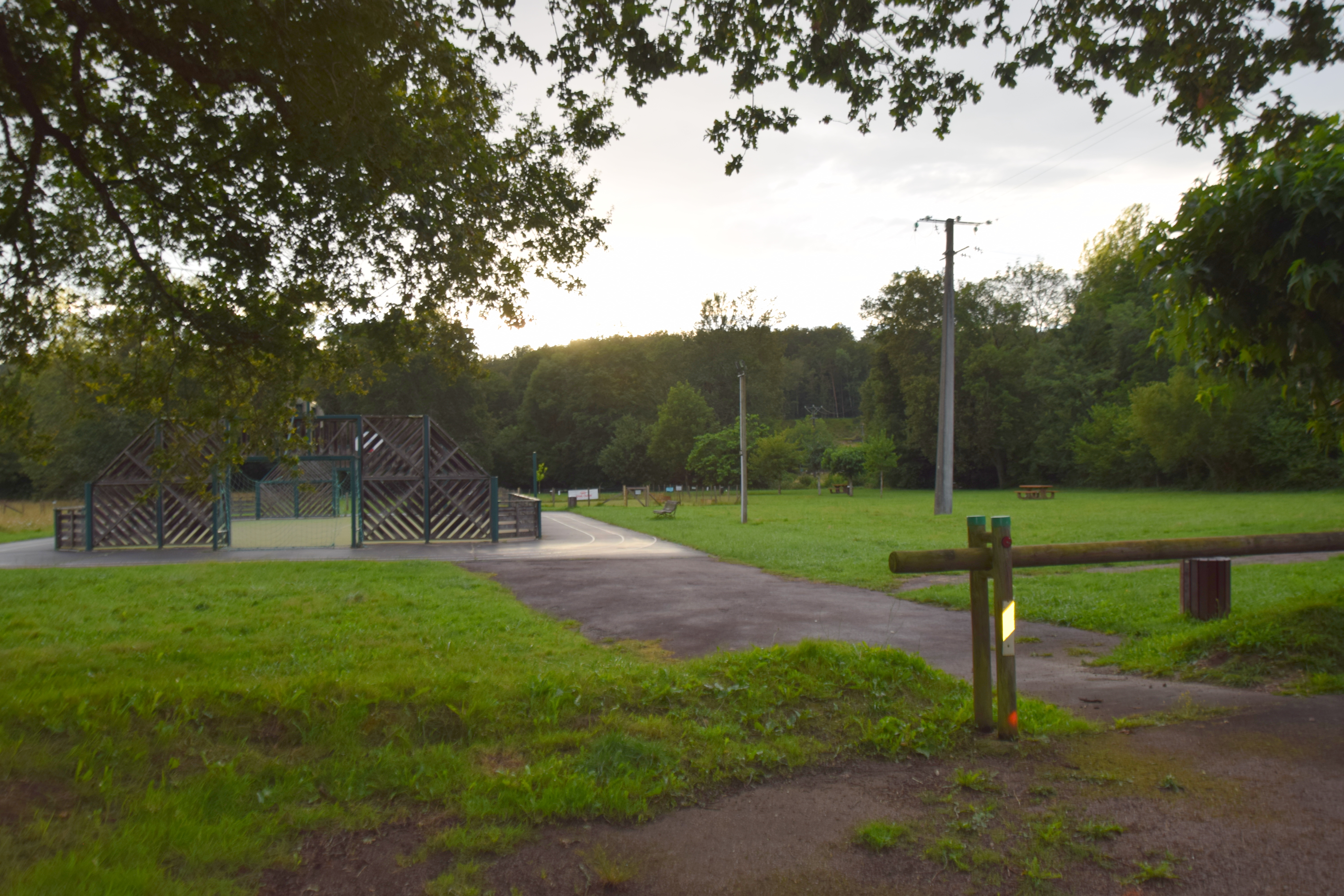
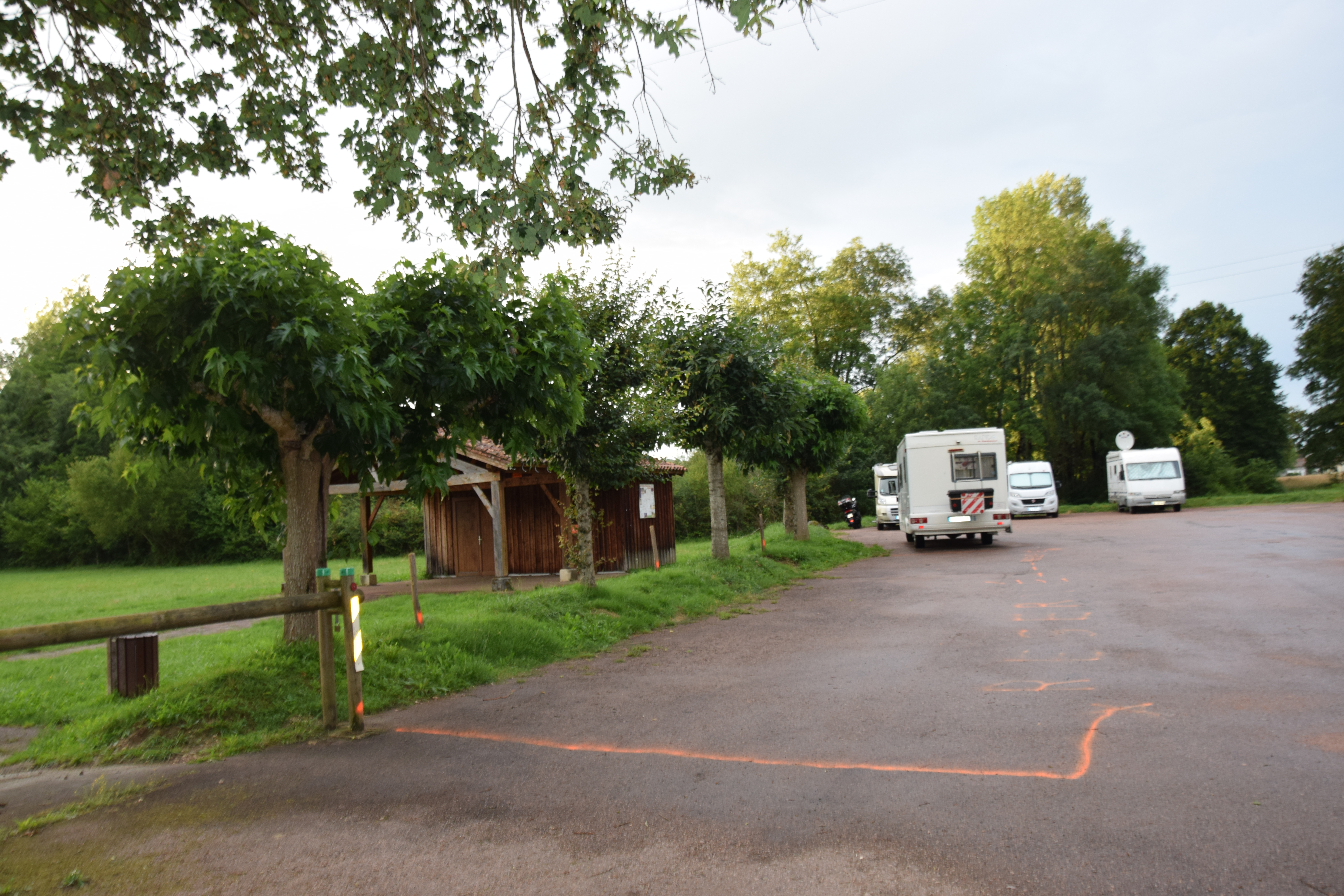
13th. As it is forecast to rain on and off all day I have decided to stay where I am. I have work to catch up on.
An early morning walk through the village was very pleasant. St Front is, a rarity in France, a true “chocolate box” village. There is the small and attractive Moated Castle, Chateau Saulnier, built in the C13 -C14 and now in private hands.
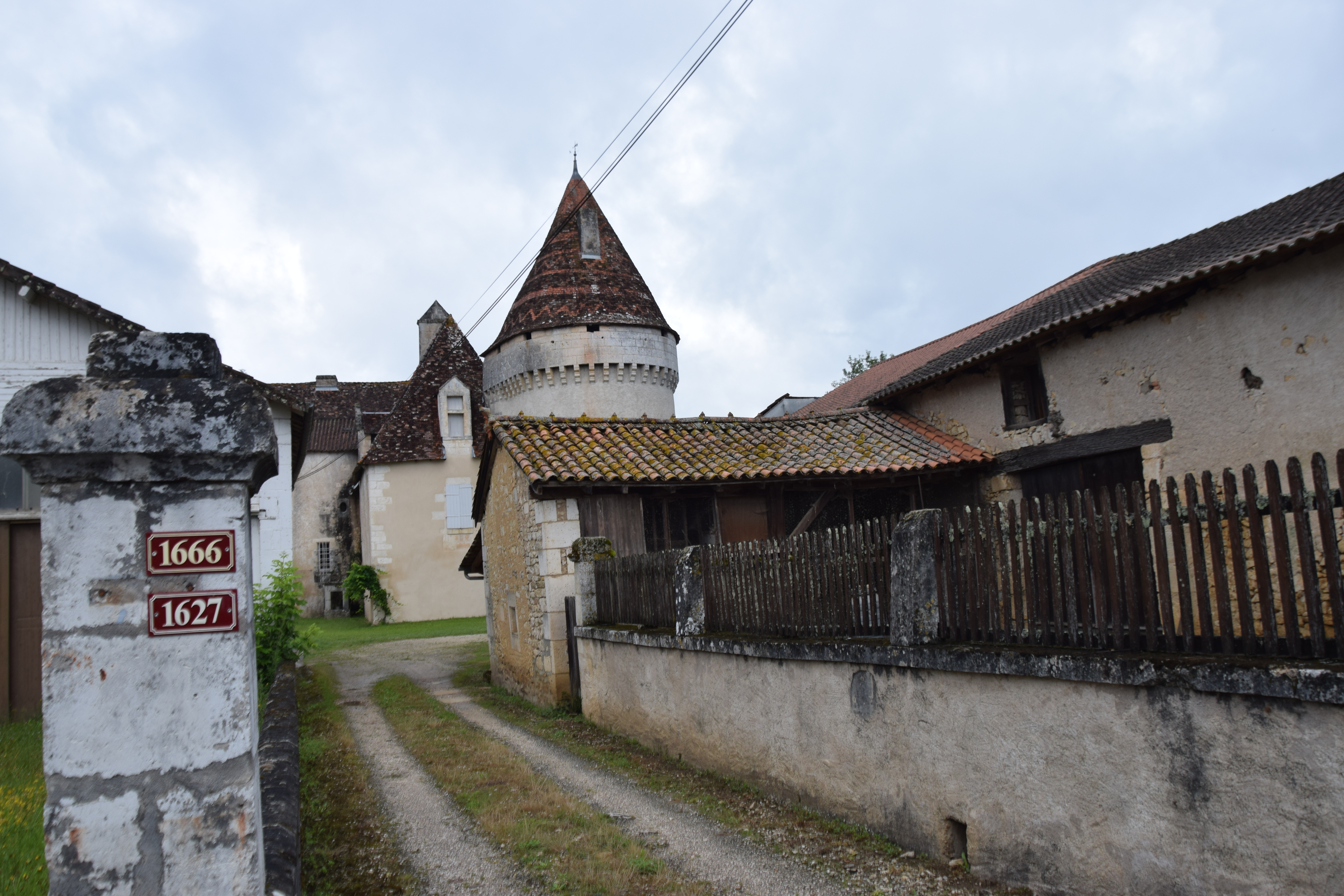
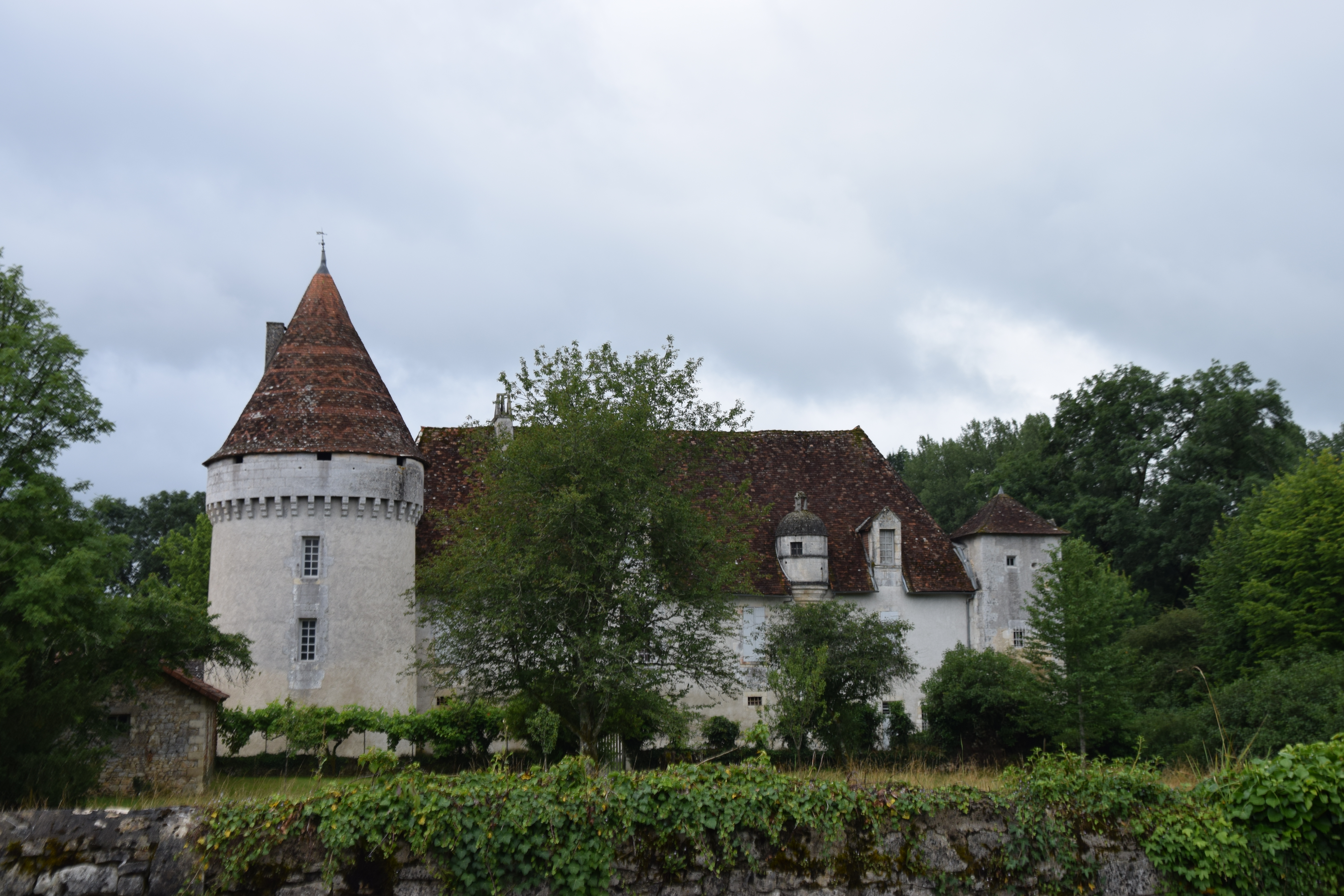
There is a Church which was started in the C12 and added to.
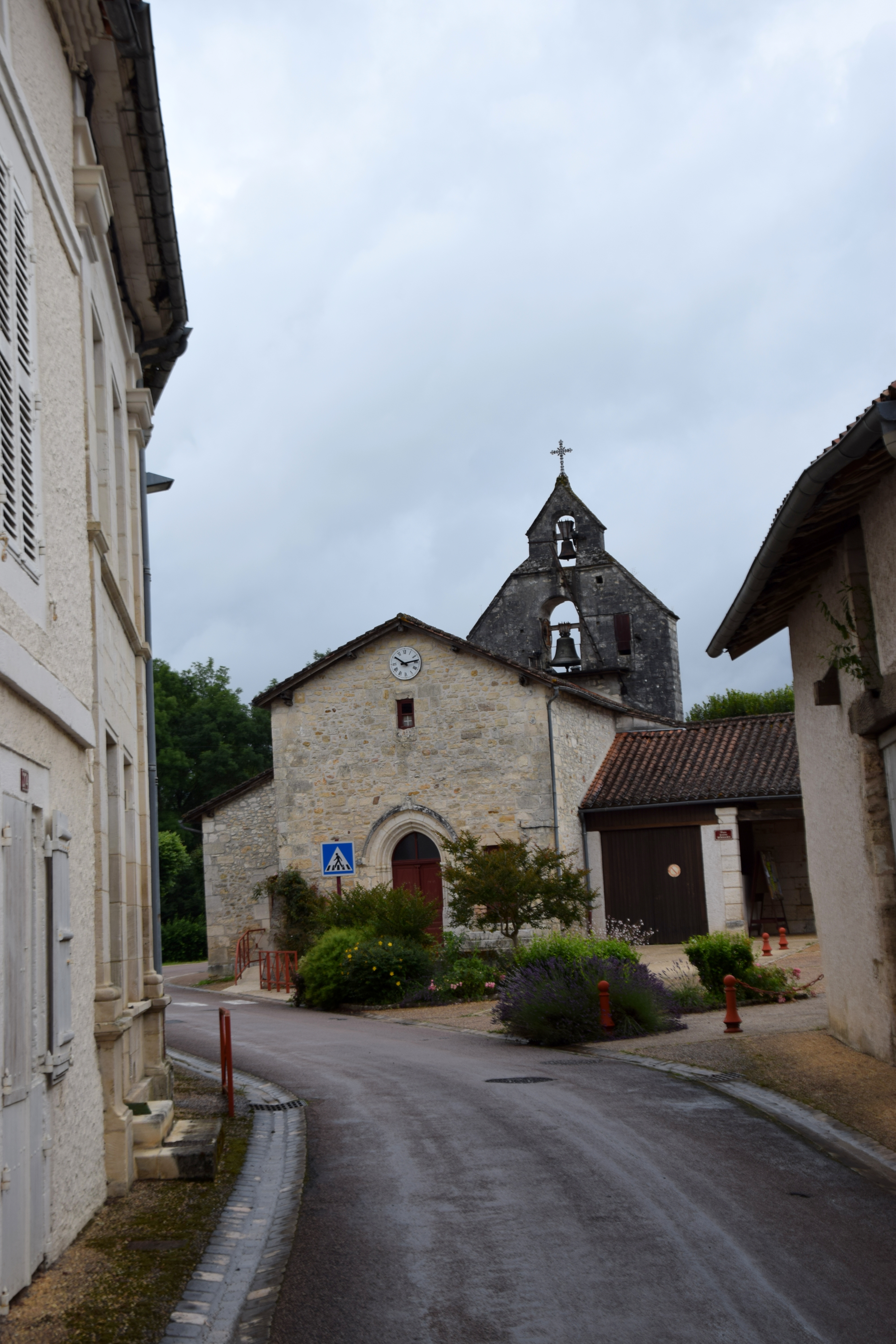

There is a large Dove Cote in the grounds opposite the castle which was probably within the Castle walls at one time.
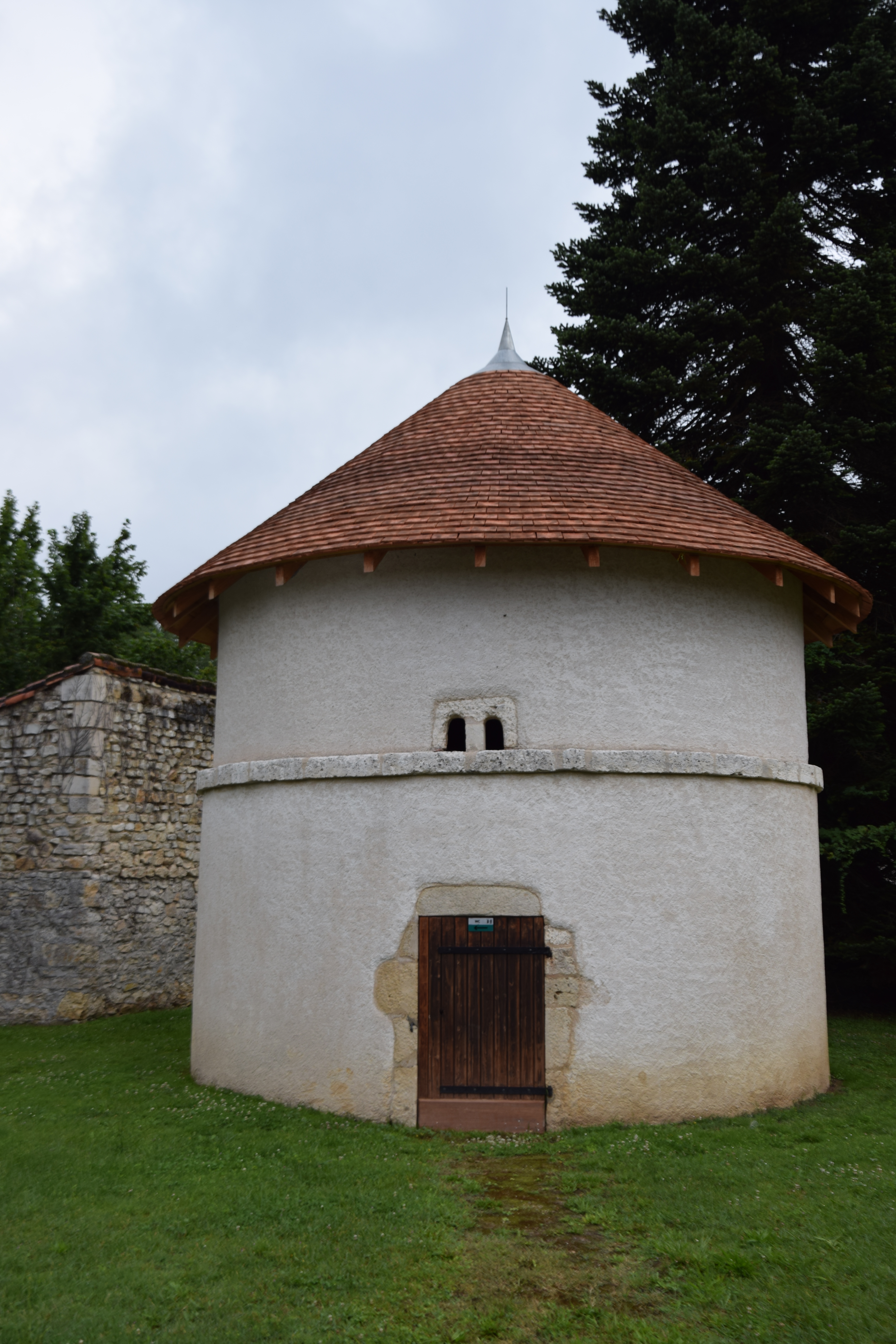
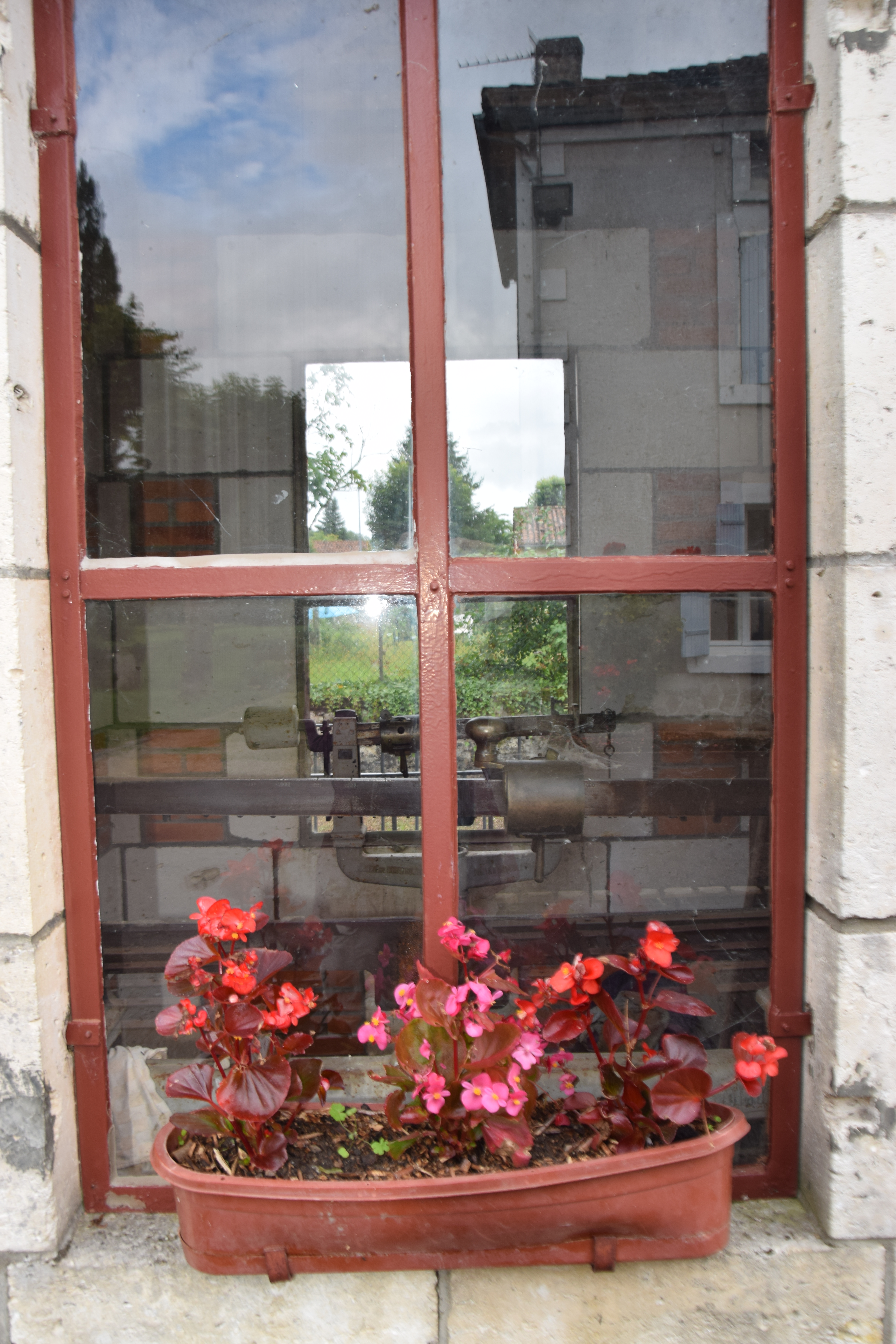
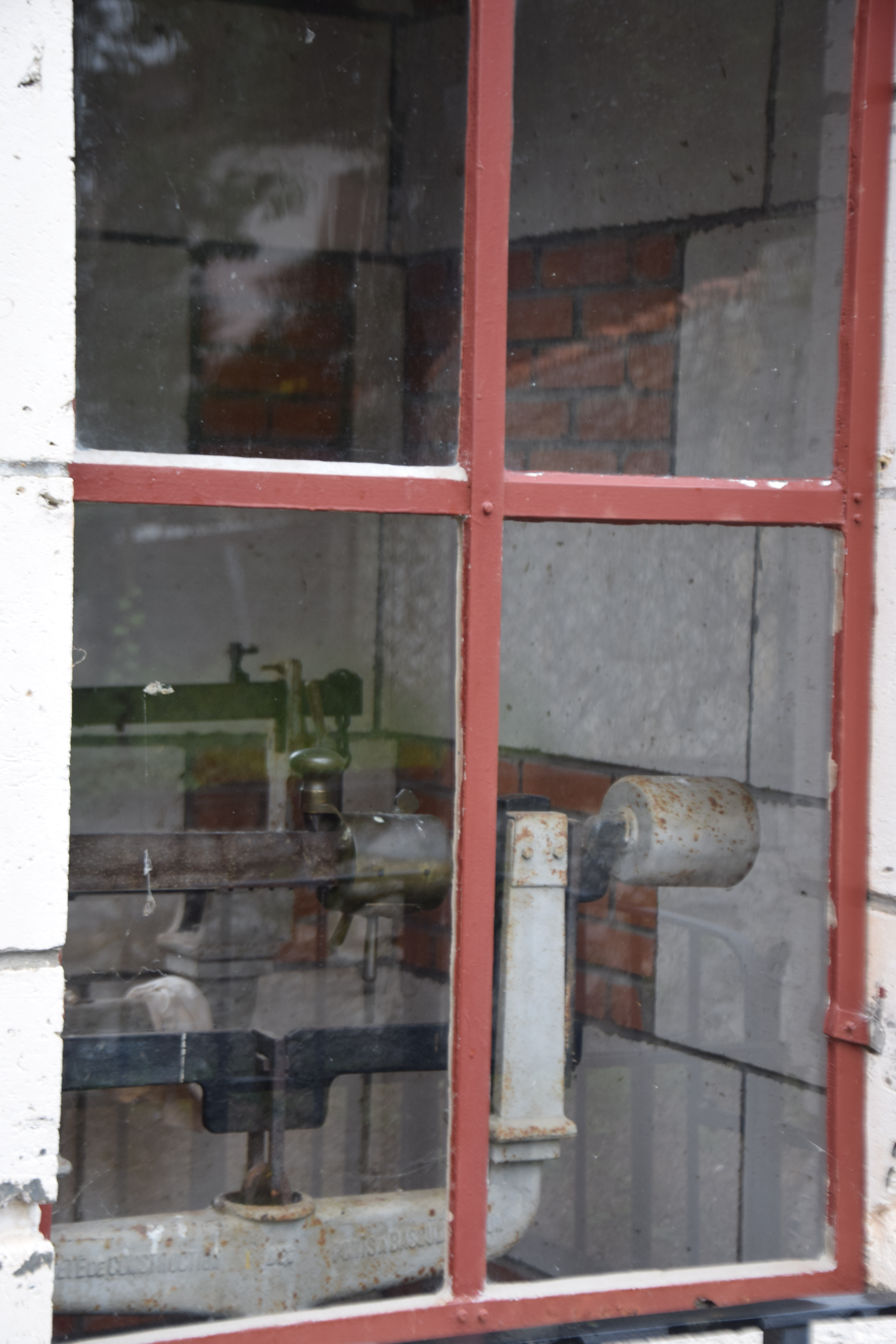
An old out of use weighbridge is preserved as a monument. The scales can be seen through the windows.

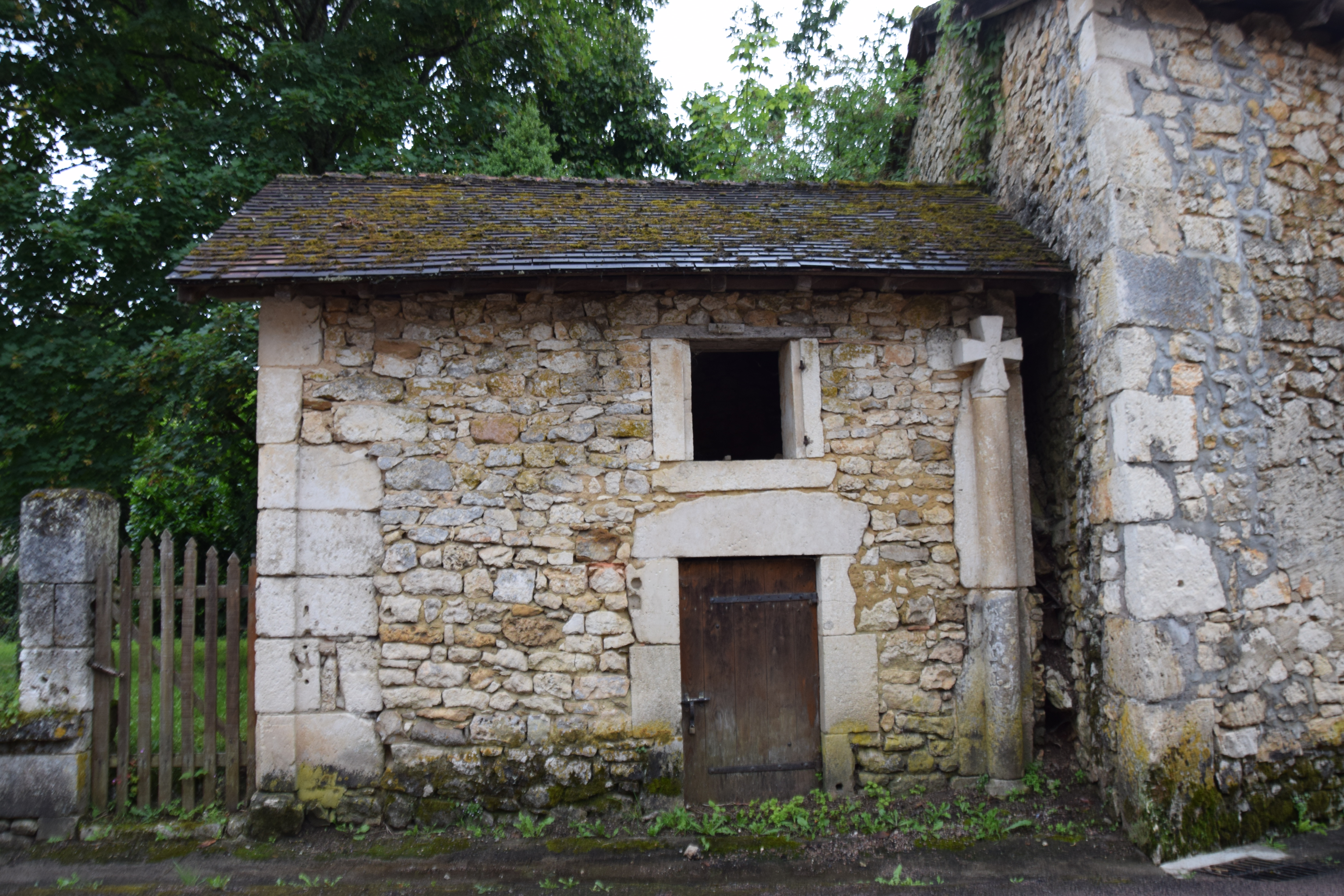
There was an intriguing little building that was not labeled and which I was not able to find out any information on. I am guessing a refuge for passing pilgrims!?
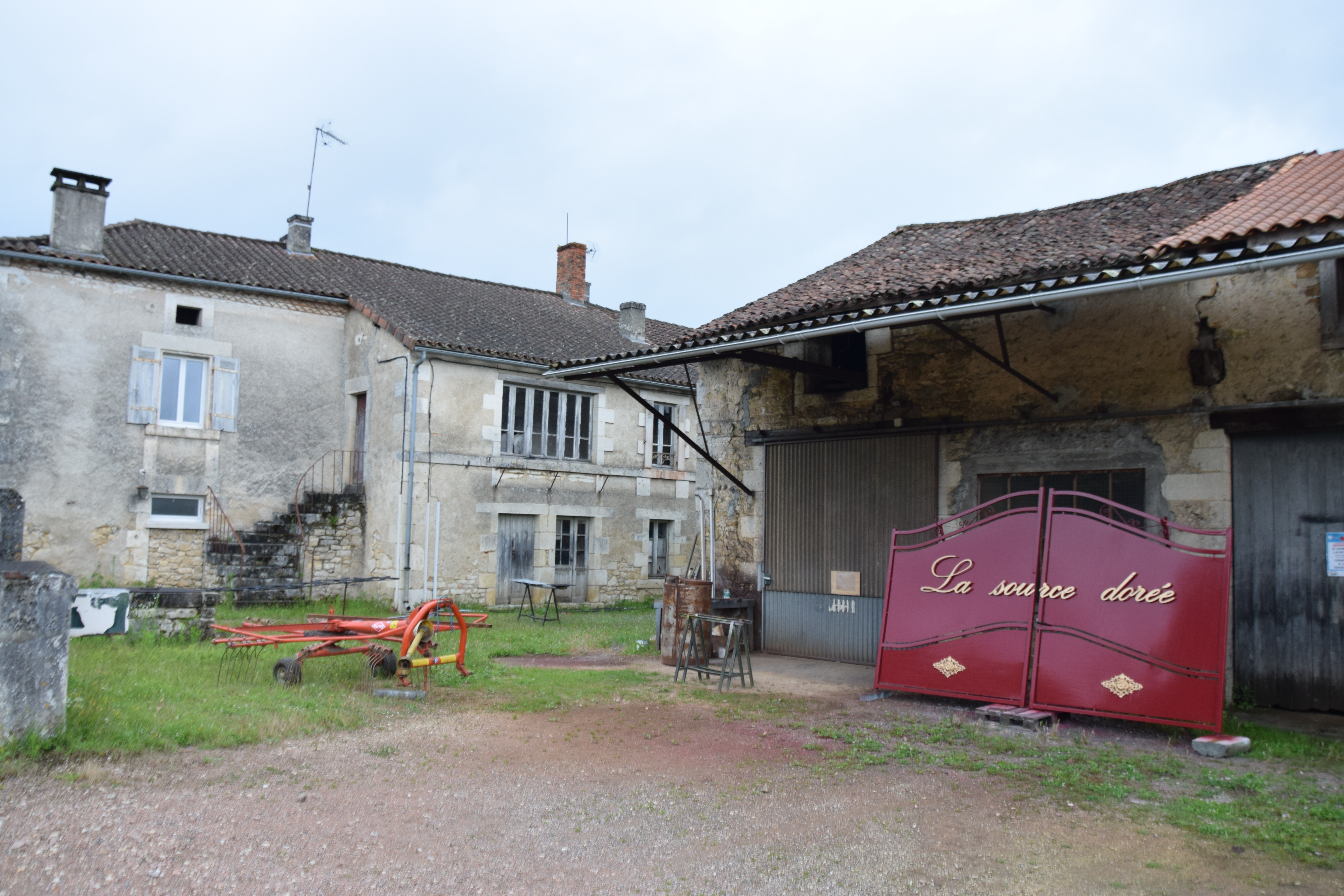
There was one indication of local industry in the form of an iron foundry which it would seem lends its talents to agriculture and art.
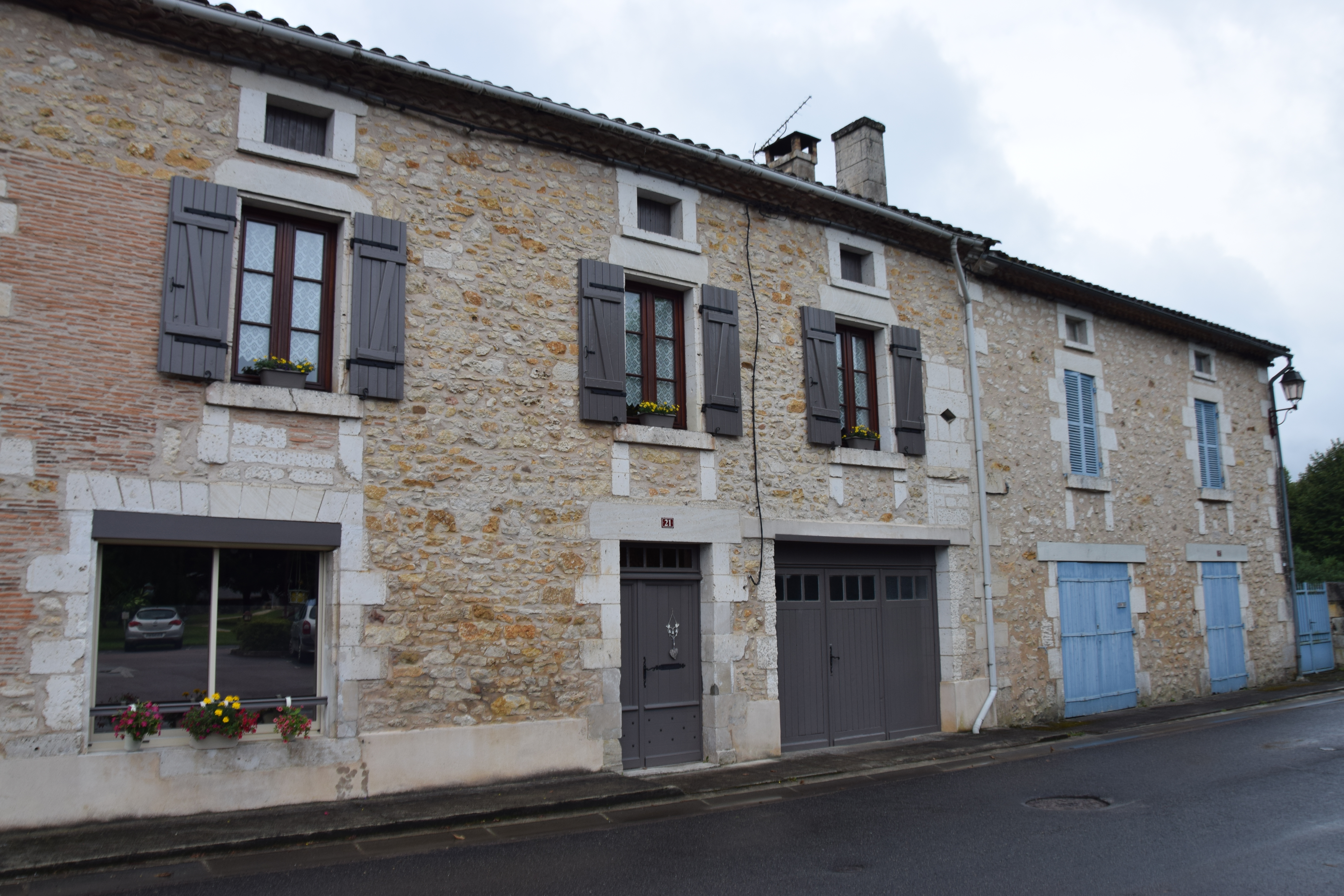
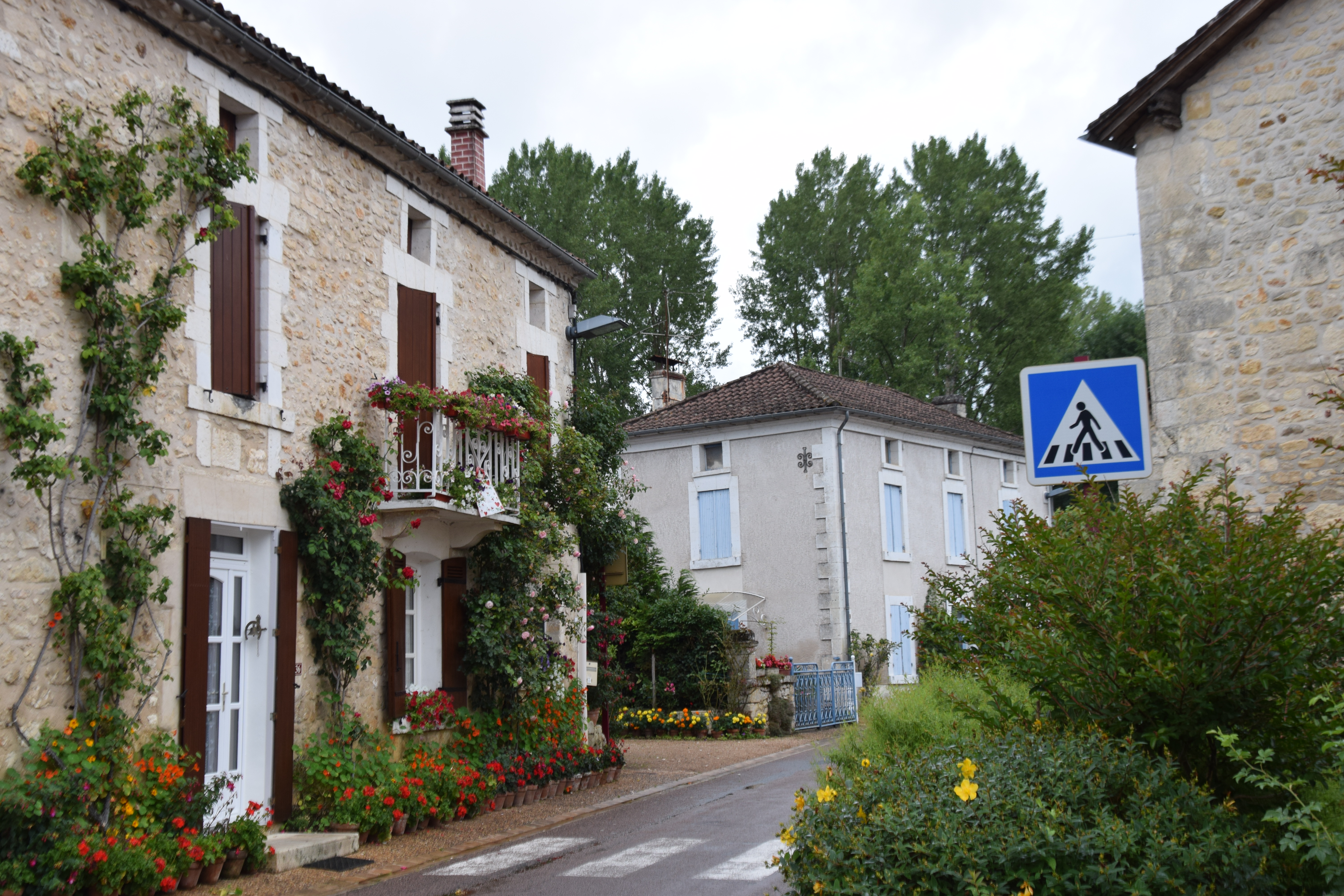
And the village is full of really beautiful stone cottages.
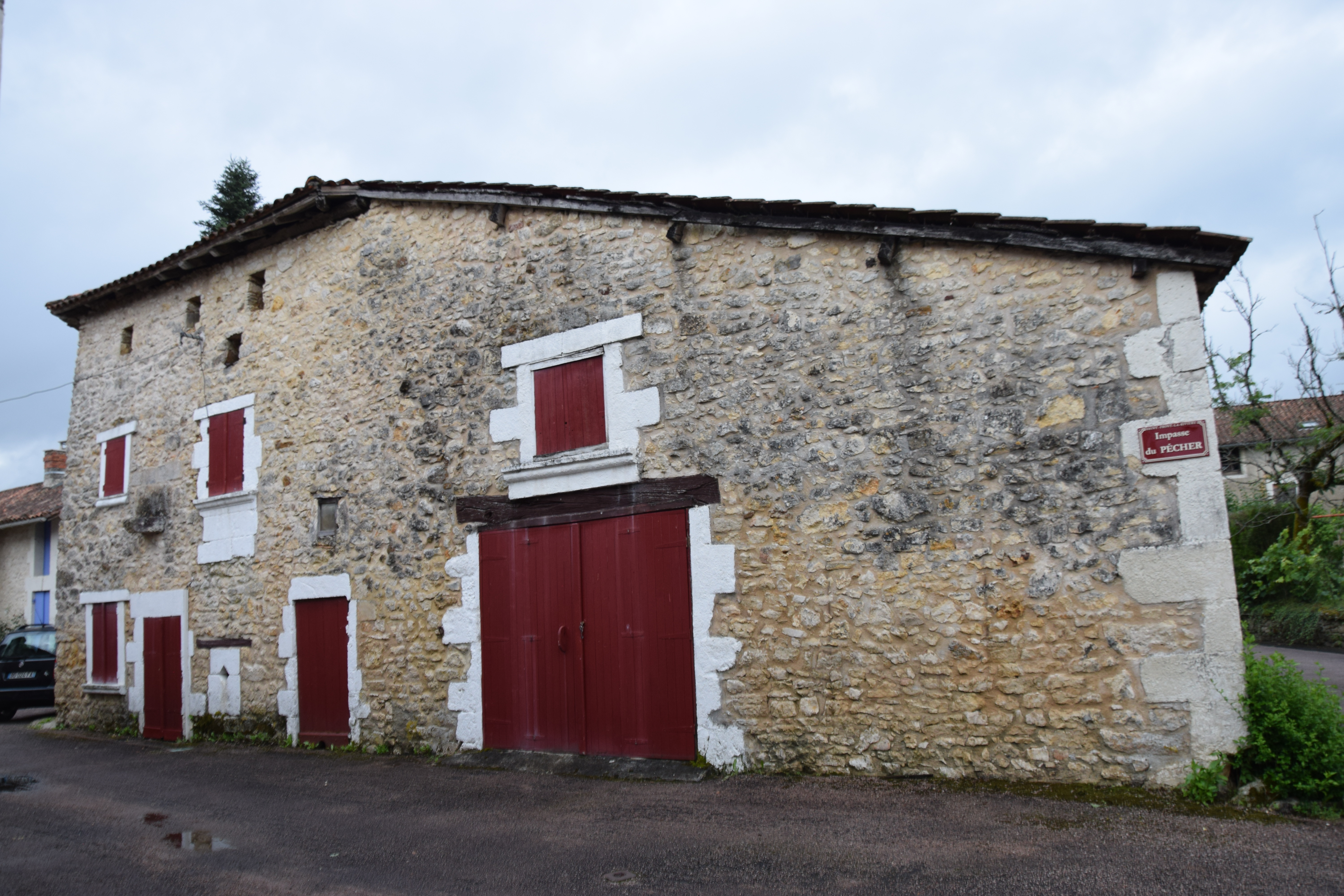

And another station building. This time it was confirmed following a conversation with the manager of the driving school that now occupies the premises along with my suspicion that the railway line ran along the path of the current road.
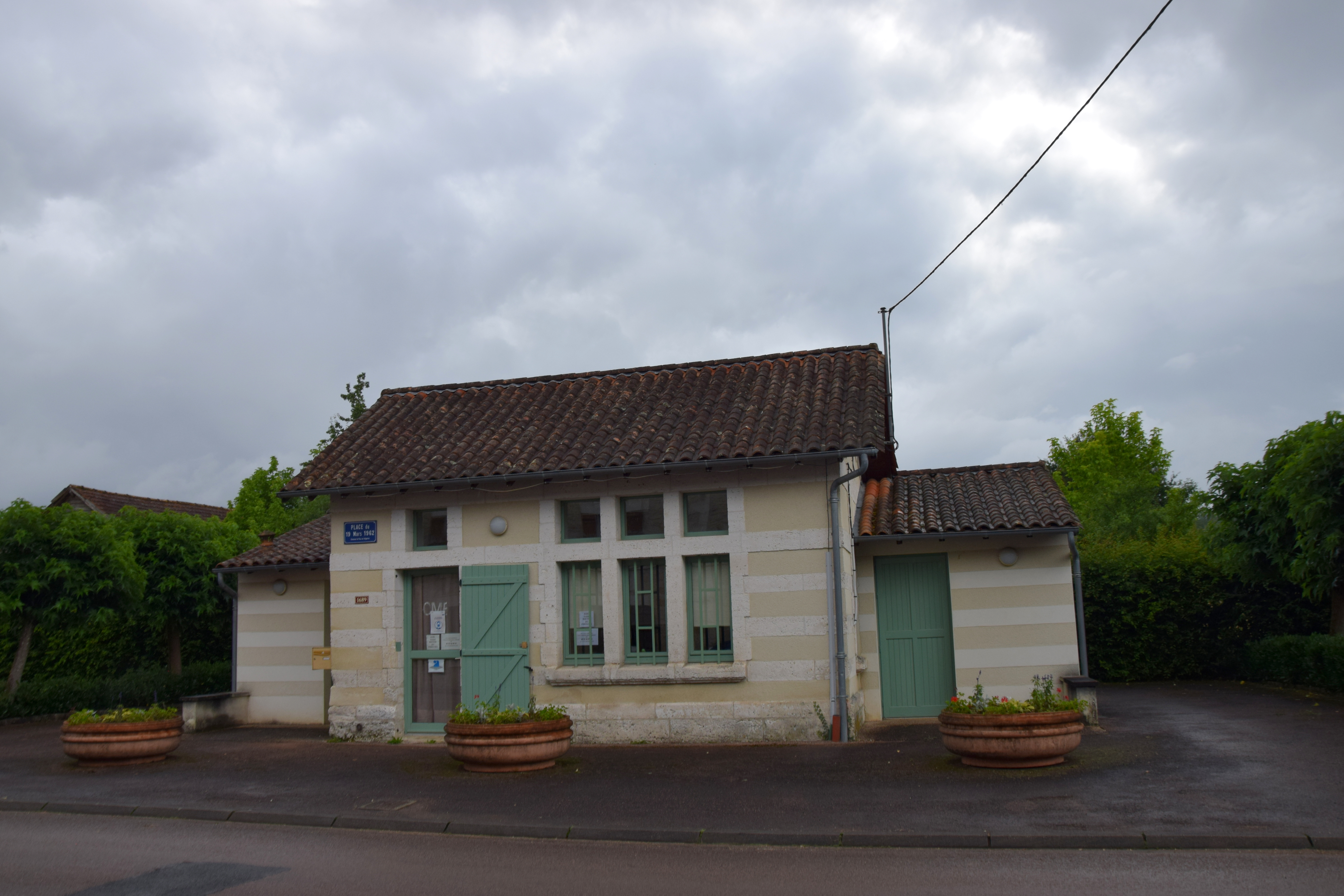
14th. It poured again most of the night and there is certainly a leak (right above my bed) which is not the fan light. I had to set up my semi water proof picnic blanket as a “tent” to drain the water away from my bed.

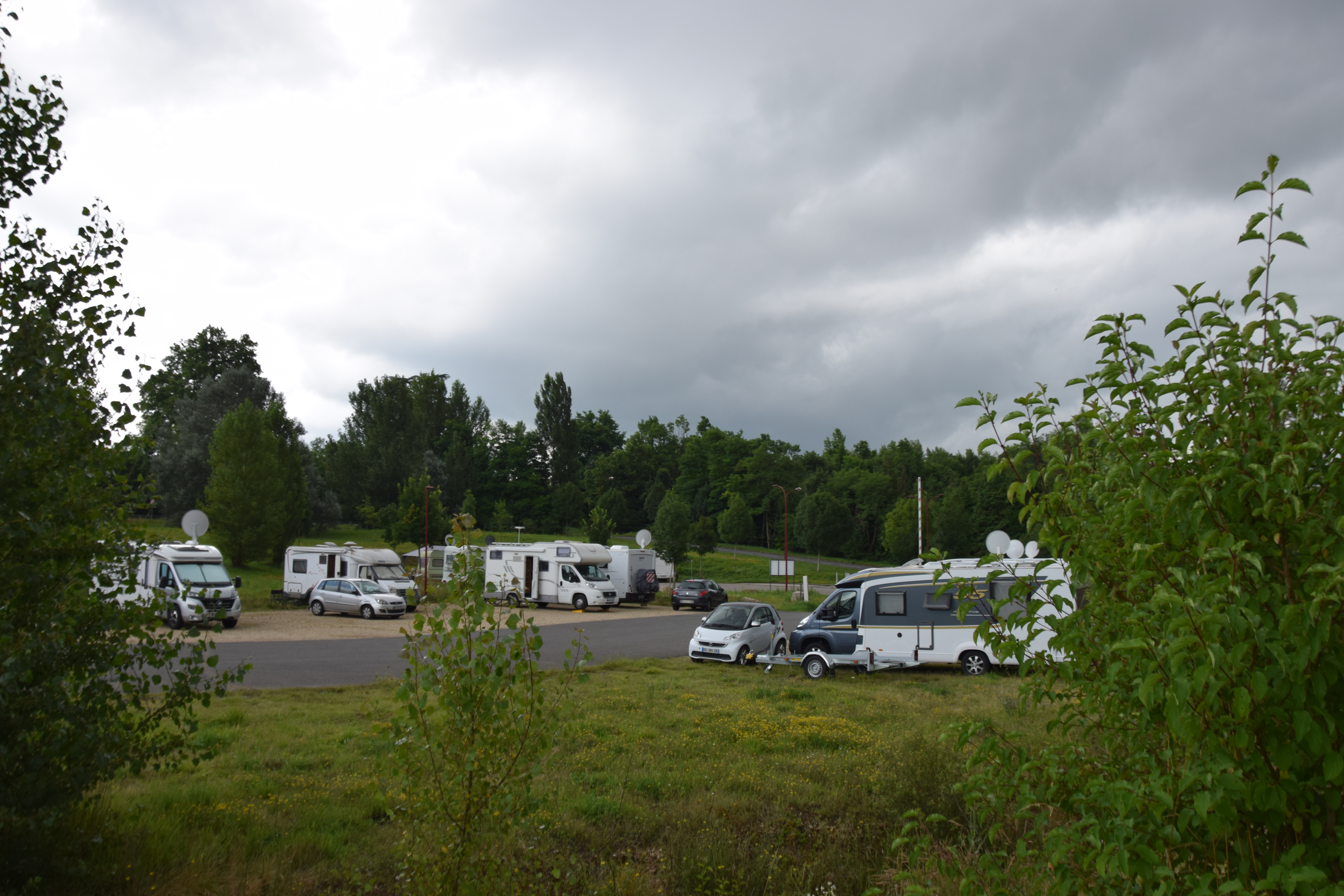
Set off towards Bergerac and stopped at the very empty looking Lidl car park before I remembered that it was Bastile Day and everything would be shut! Found a good Aire with individual electricity points in a park setting.

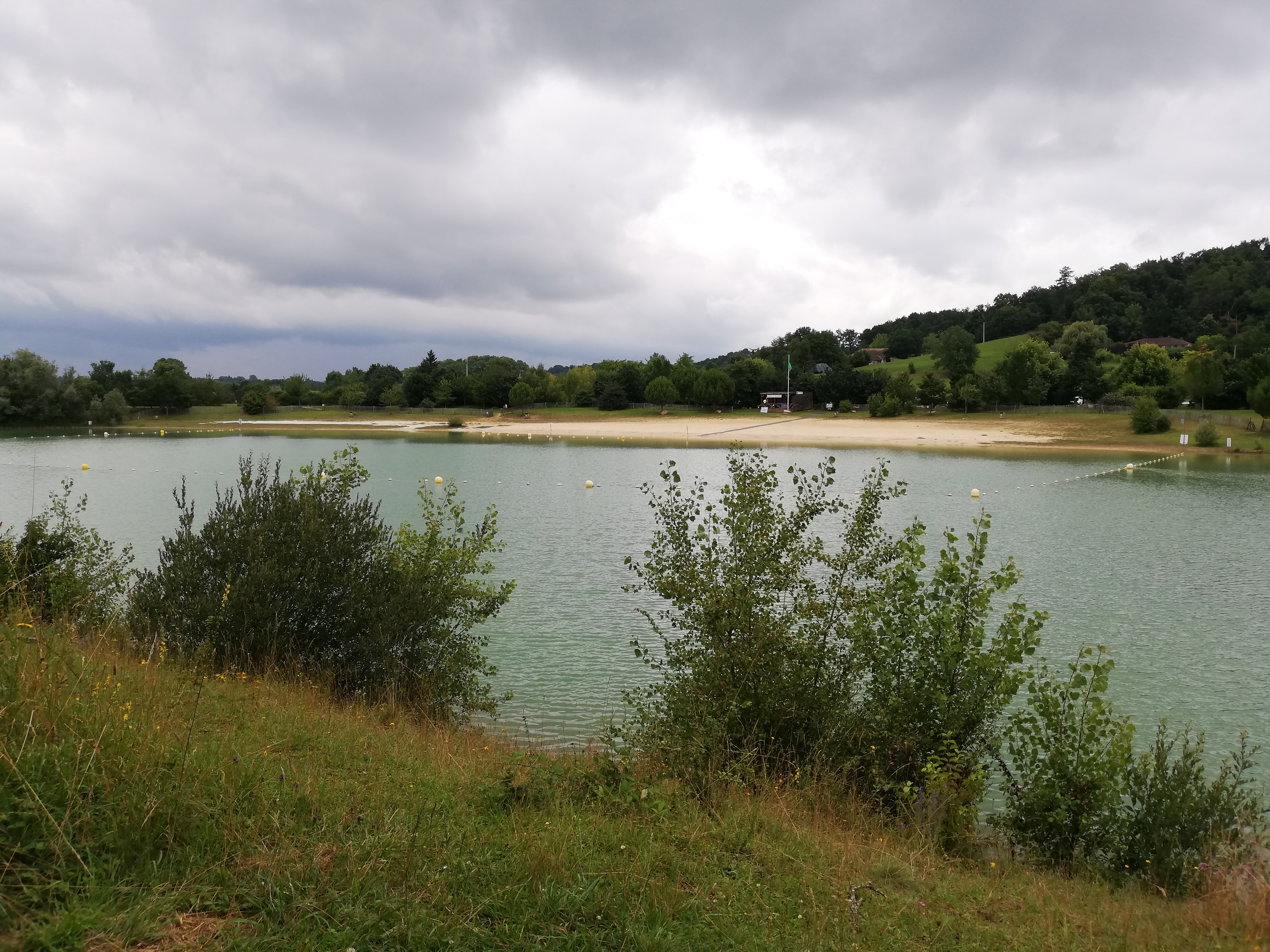
Cassidy and I took a walk in the lovely wild parkland that had good paths, lakes with a swimming beach, good kids adventure playground and a restaurant.


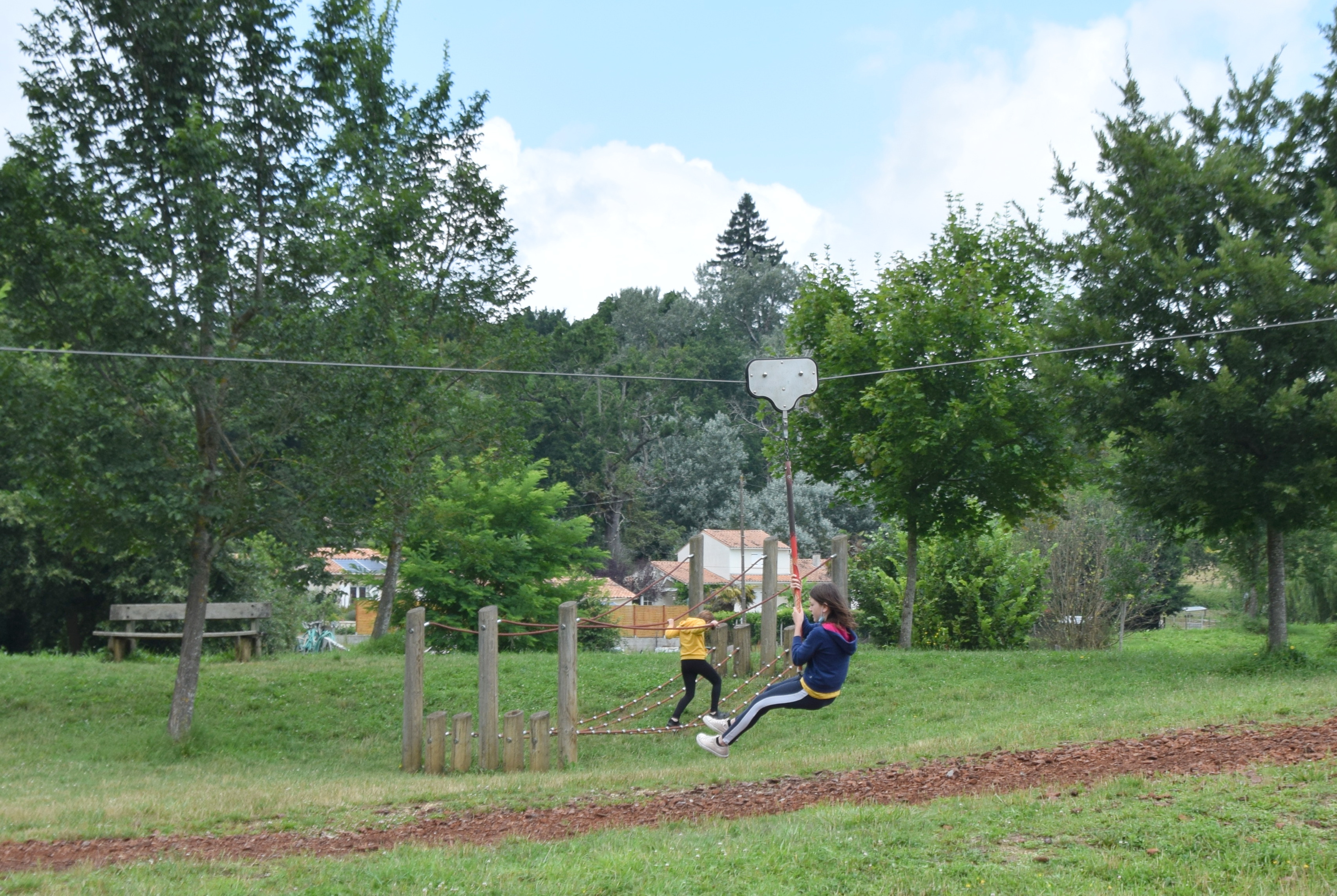
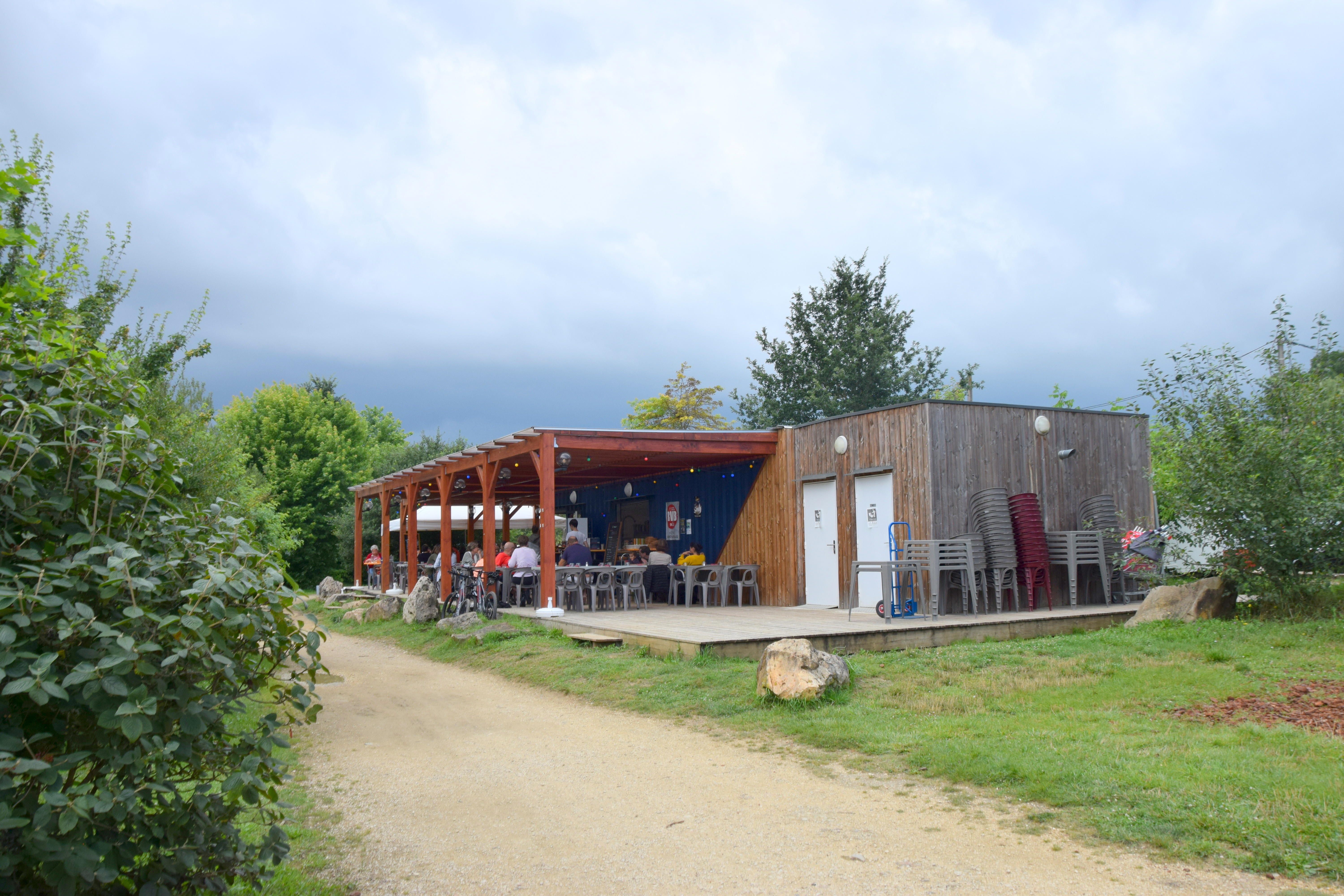
In the afternoon we walked to town, 6klm round trip. We didn’t get right down to the Cyrano (as in “de Bergerac”) quarter because there were suddenly just too many people on the streets. I have decided not to hang around here tomorrow but rather to head off into the countryside again.
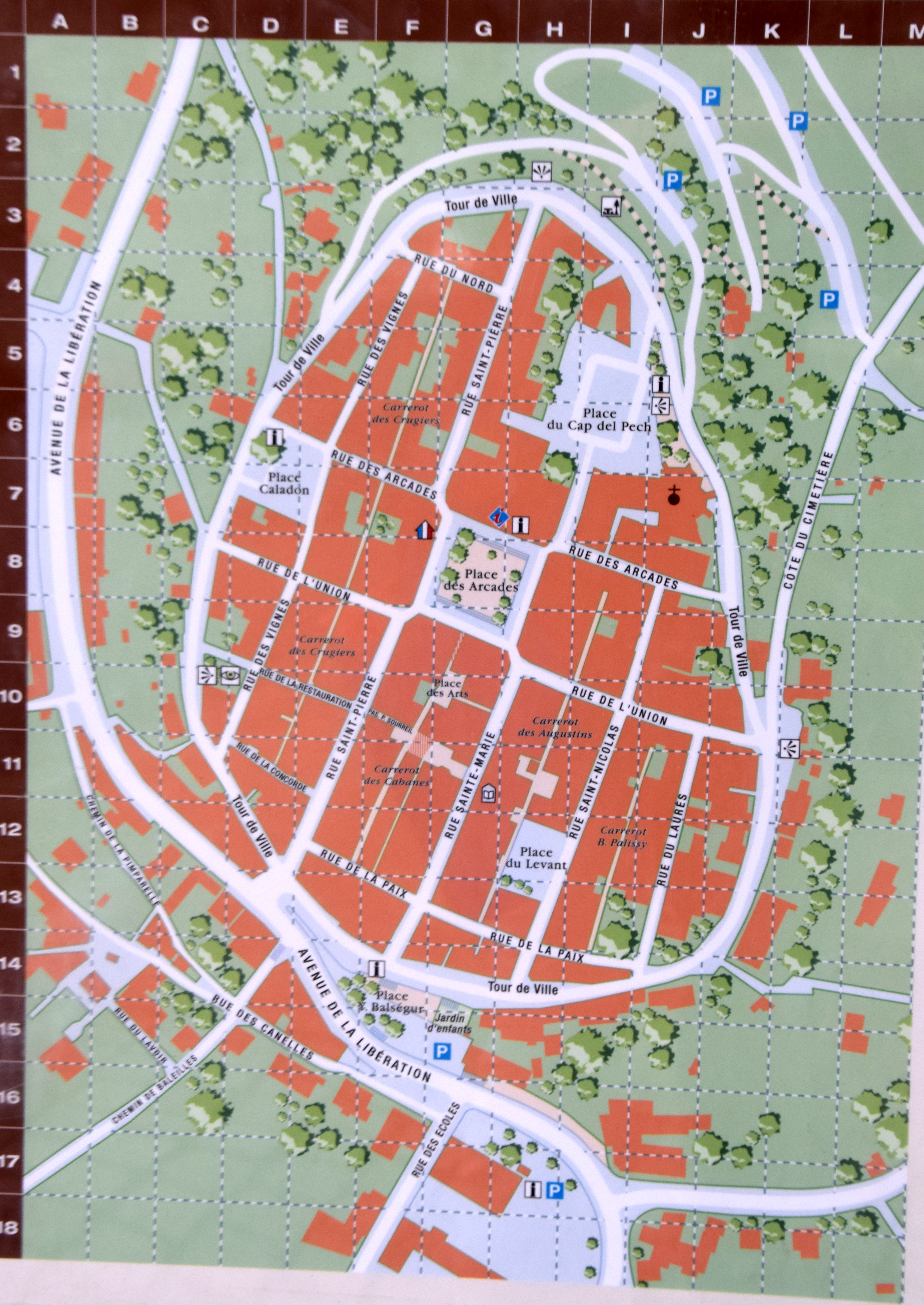
15th. Having decided to leave Bergerac the plan for the day is whimsical wanderings around the various Bastides in the area. A Bastide is a fortified “new Town” built in Medieval Languedoc, Gascony, Aquitaine, England and Wales during the C13th & C14th. Some authorities count Mont-de-Marsan and Montauban both of which were founded in the C12th as the first Bastides. They are also located in what is known as the prune et noix, or plum and wallnut, area.
They are typically built on hill tops for the obvious defensive advantages. They also seem to have central squares with arcaded buildings round the perimeter. This is the town plan of Montflanquin which is typical of the genre.
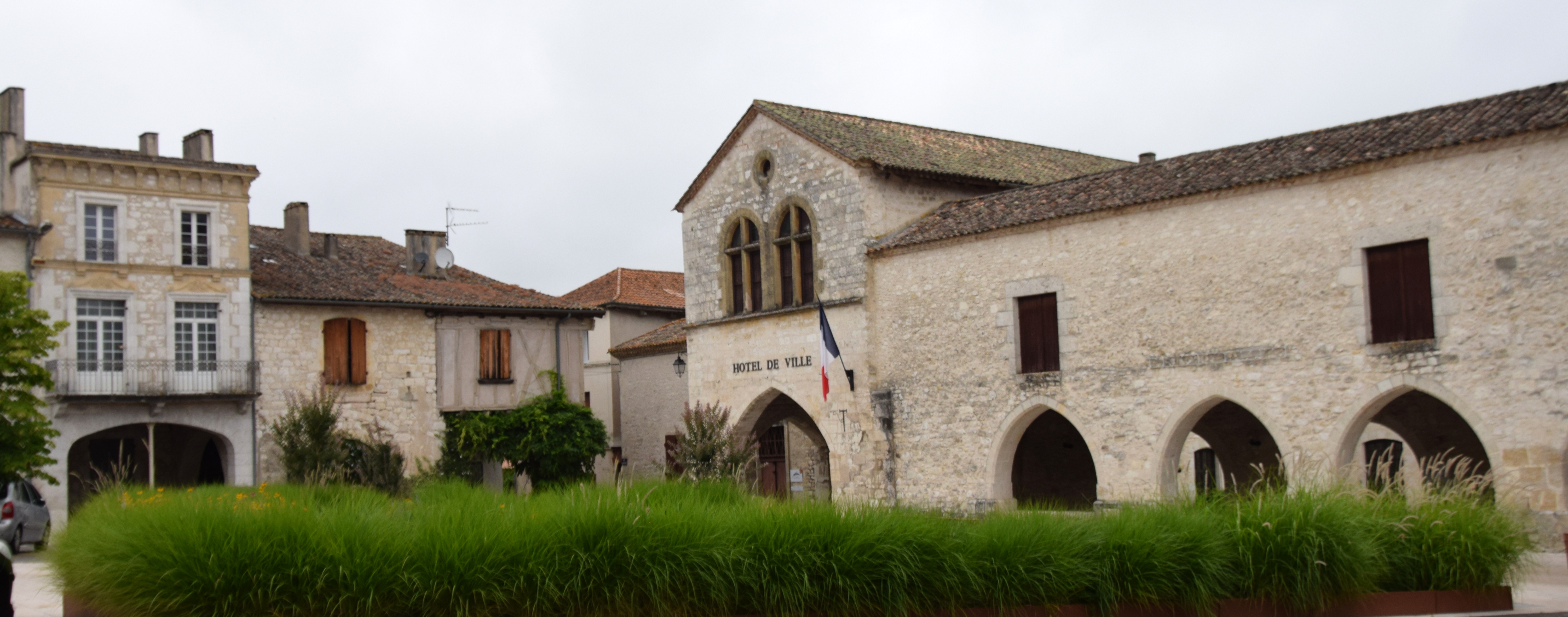
My first was Castillonnes.
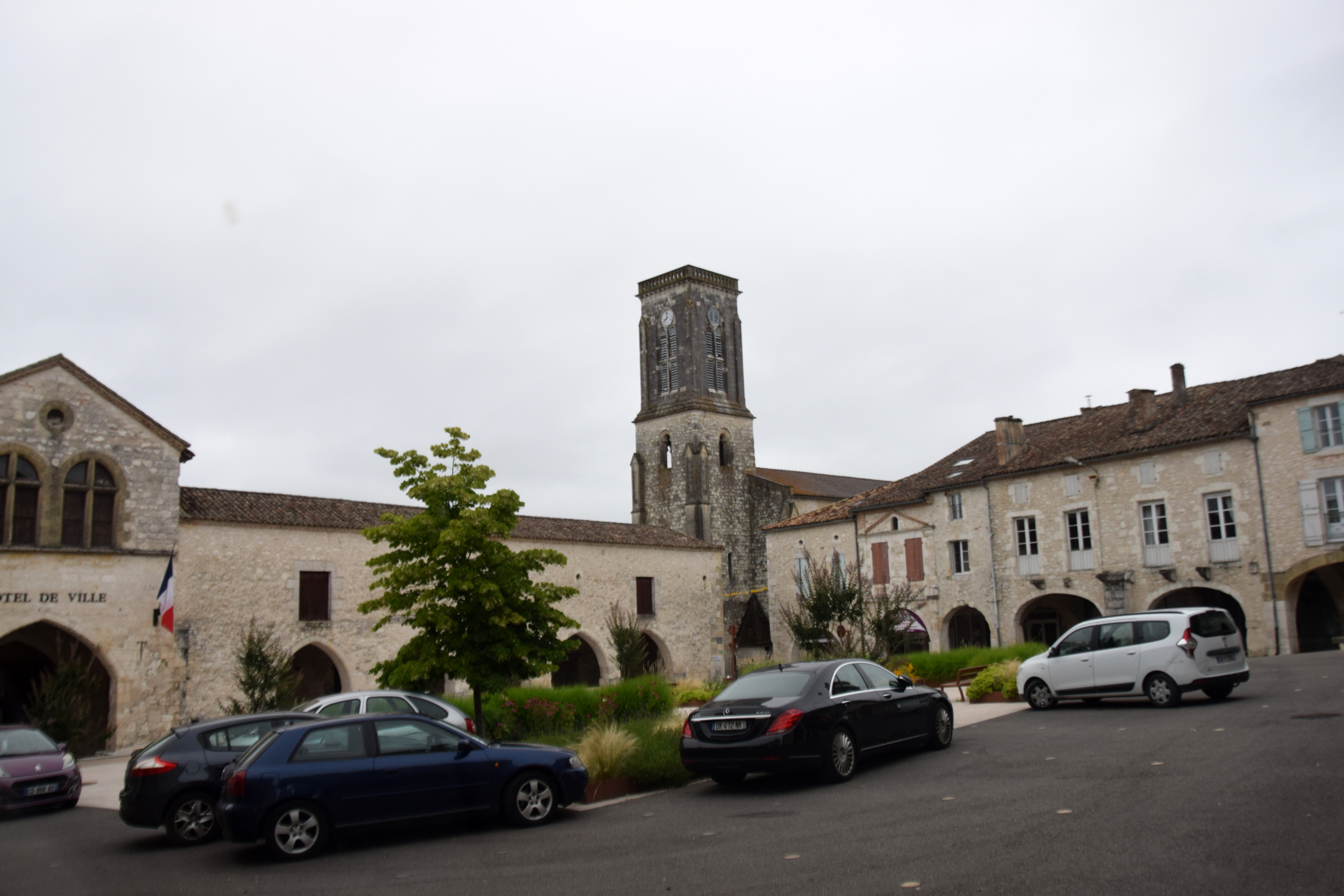
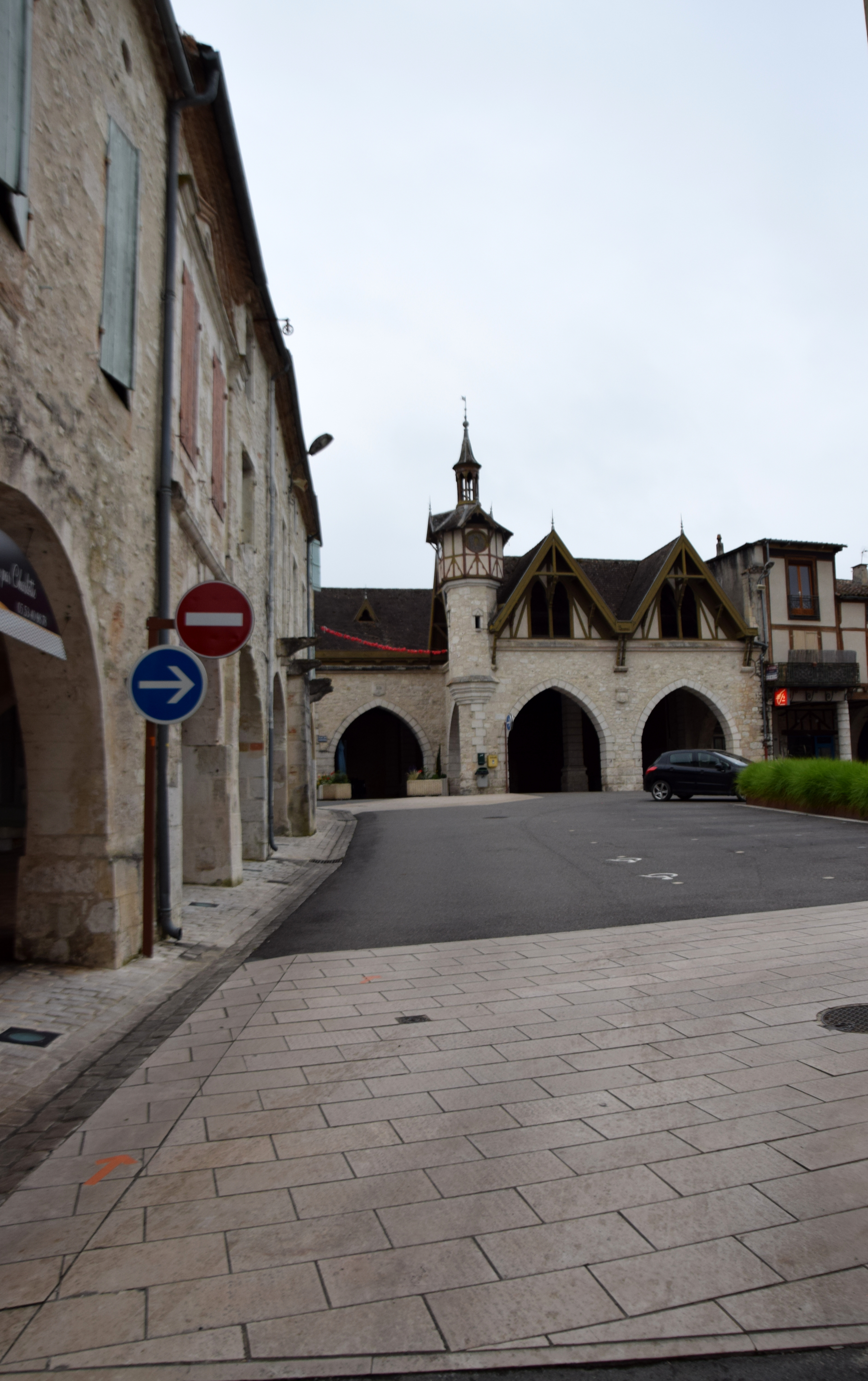
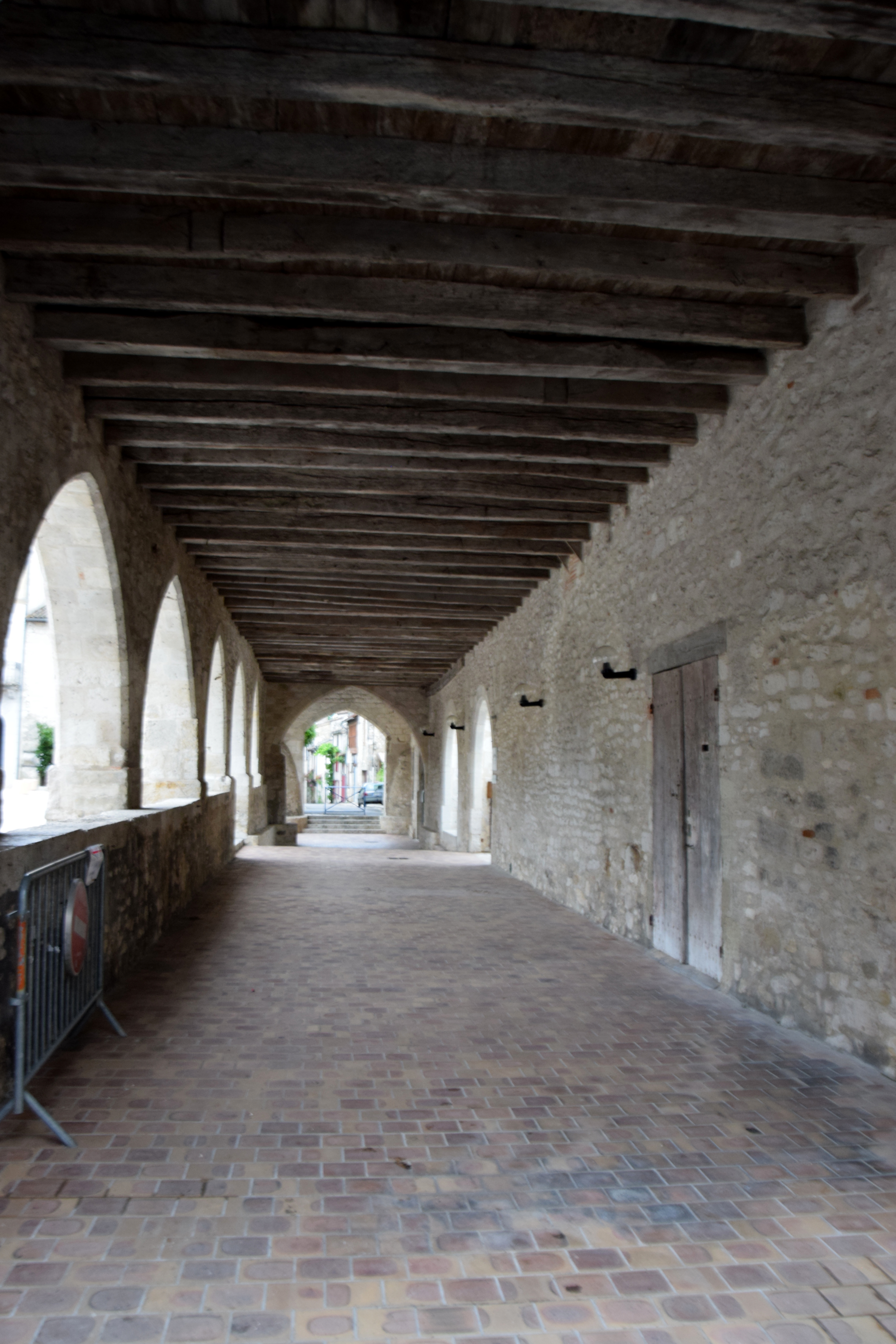

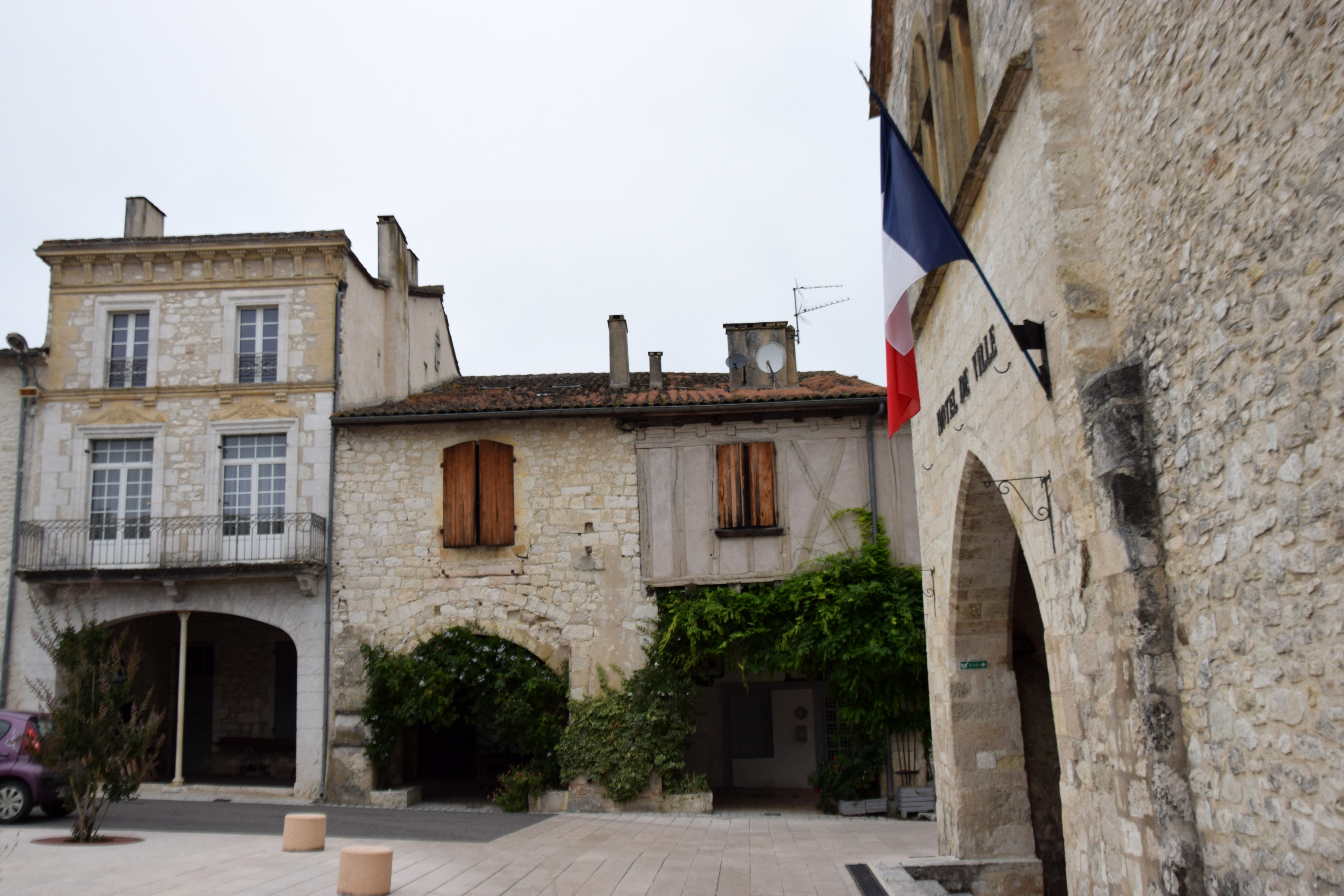
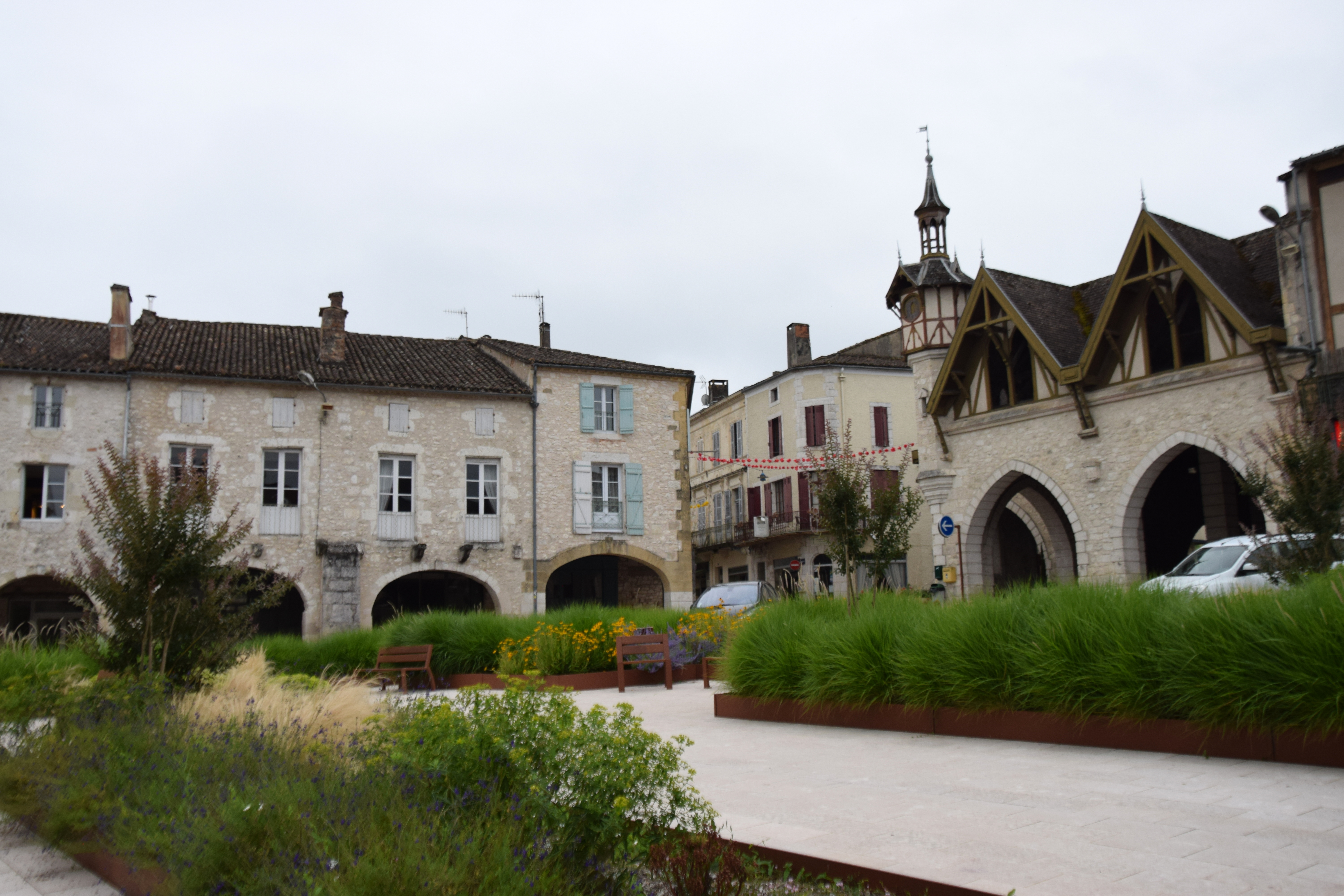
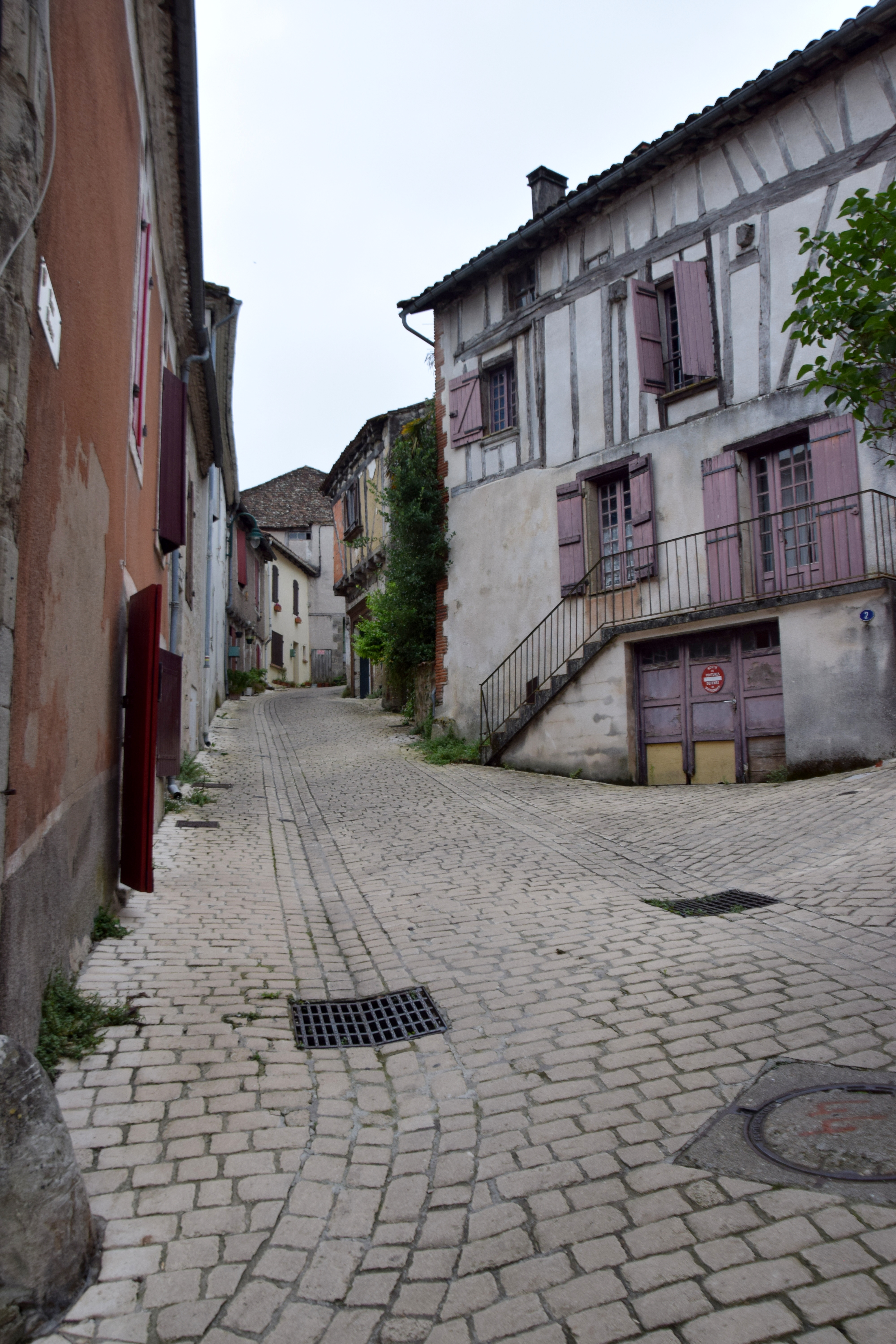
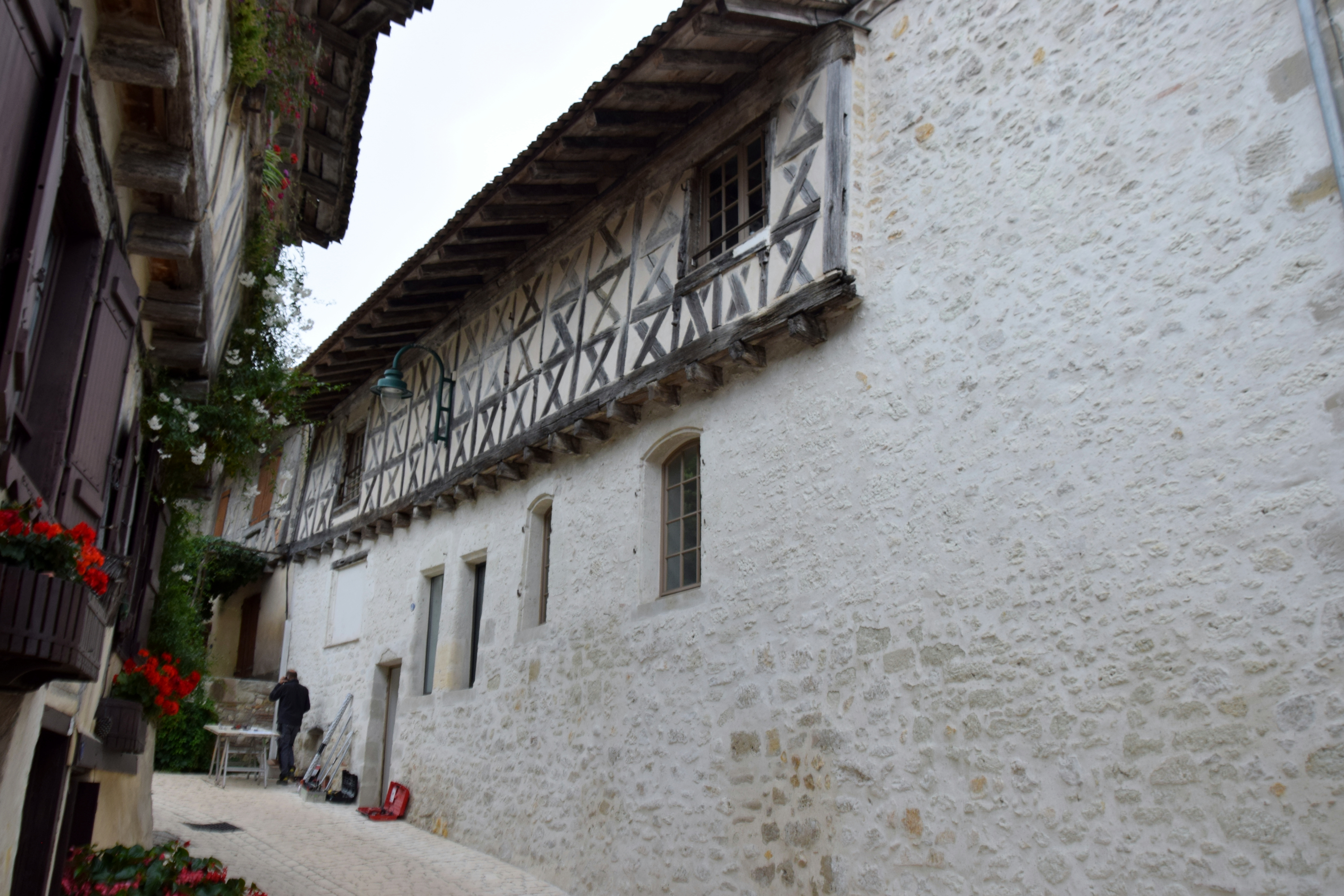
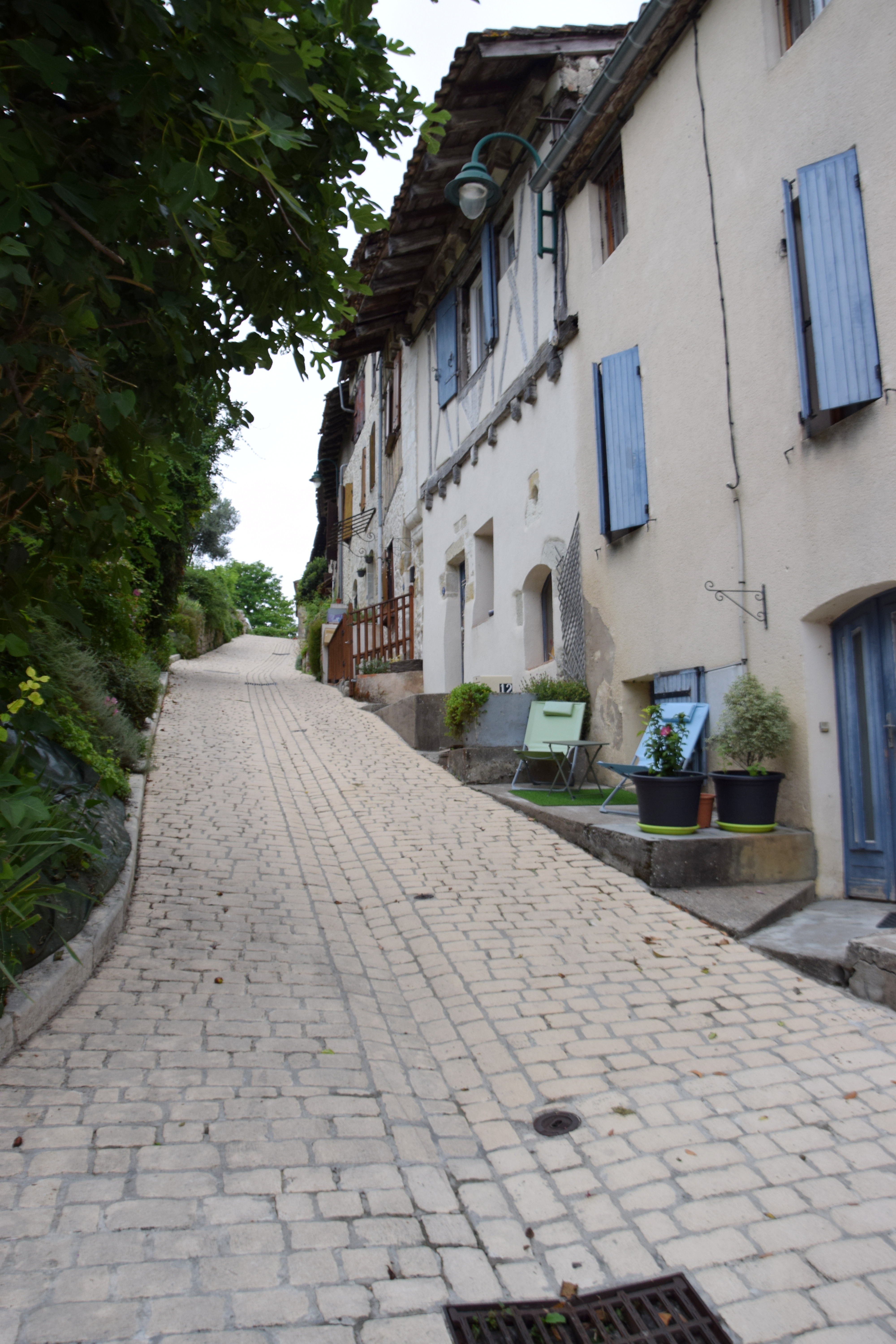
Then followed Cancon, where I was going to base myself in the local Aire which had electricity, important for me with my dodgy domestic batteries, but the Aire had closed down.

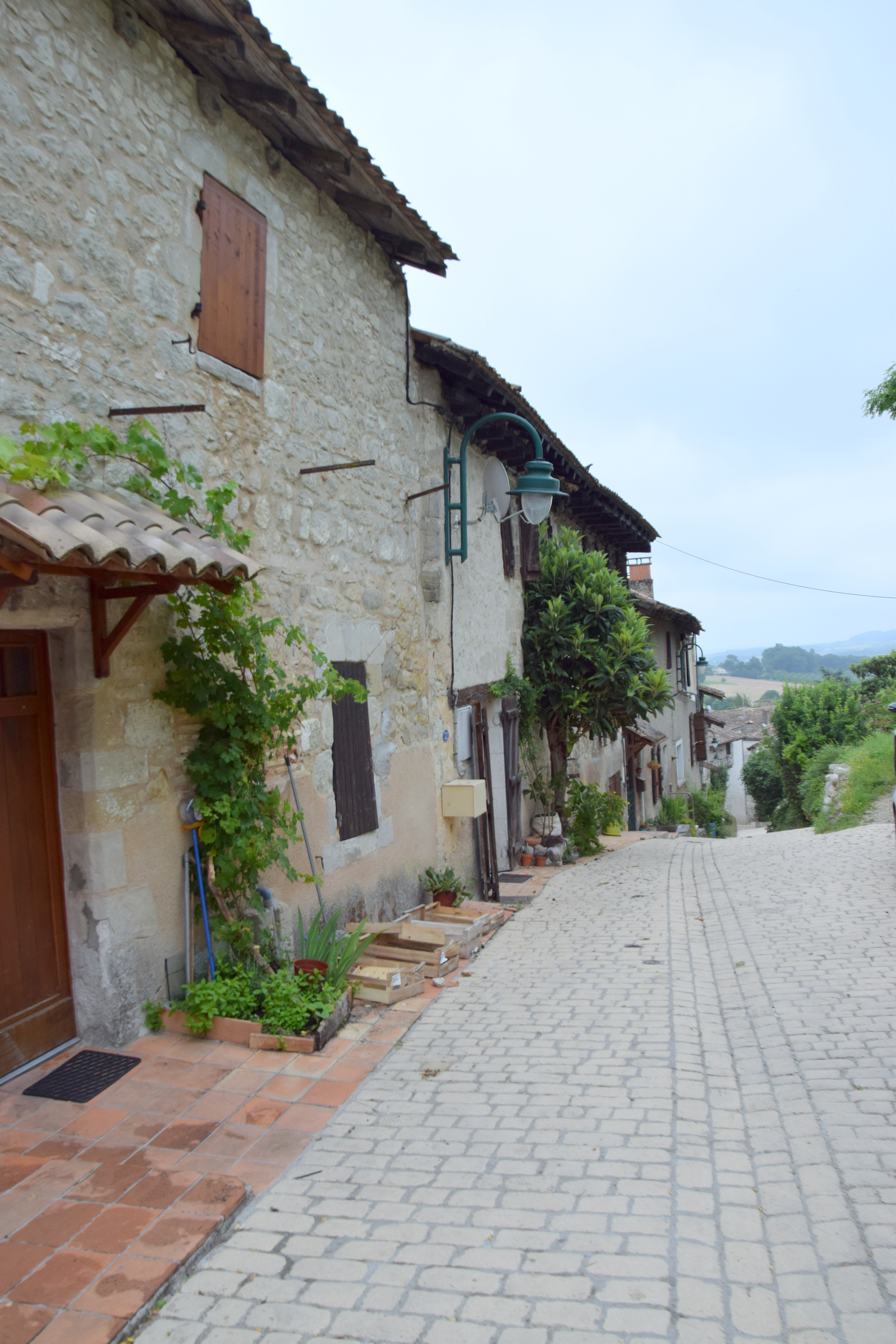
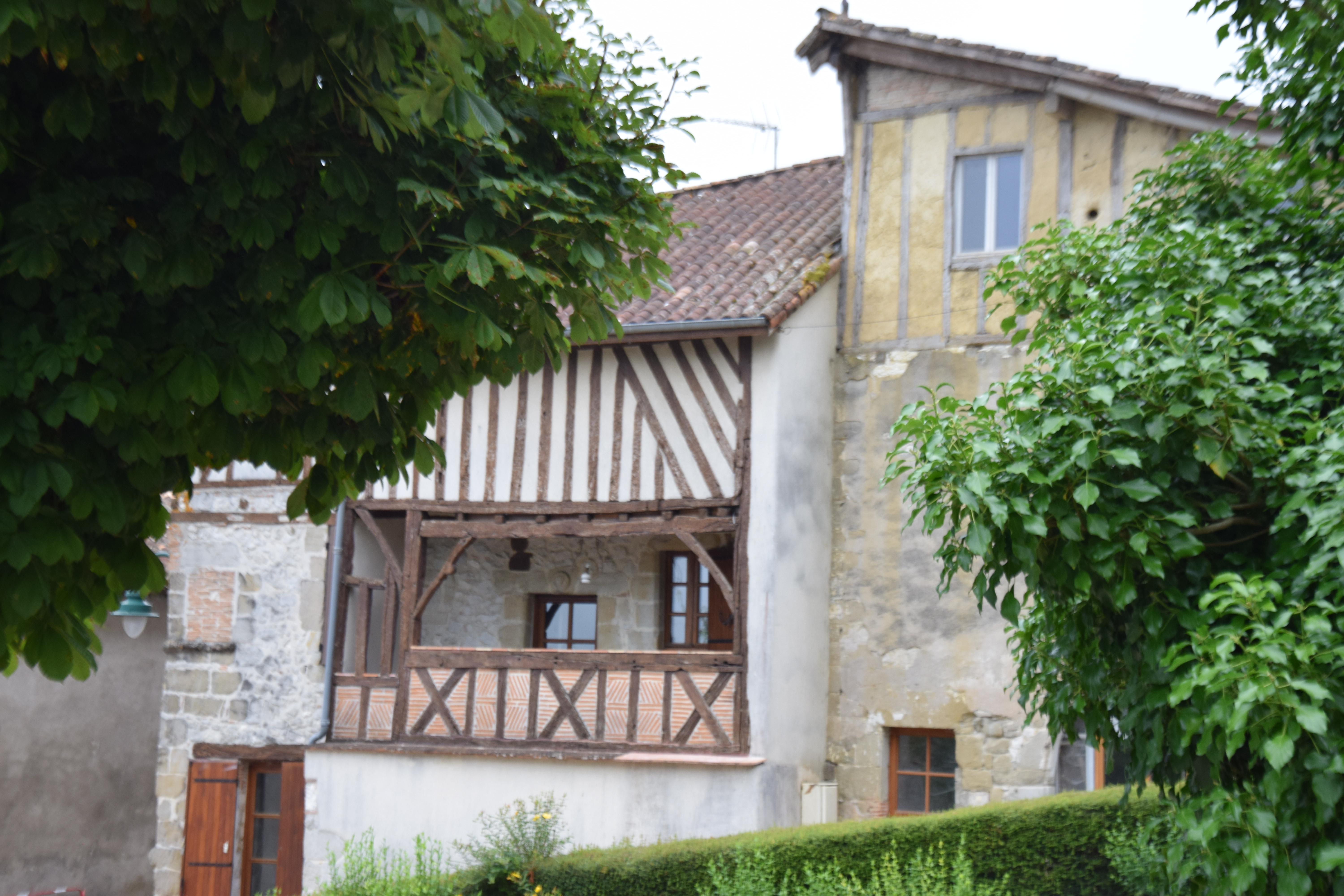
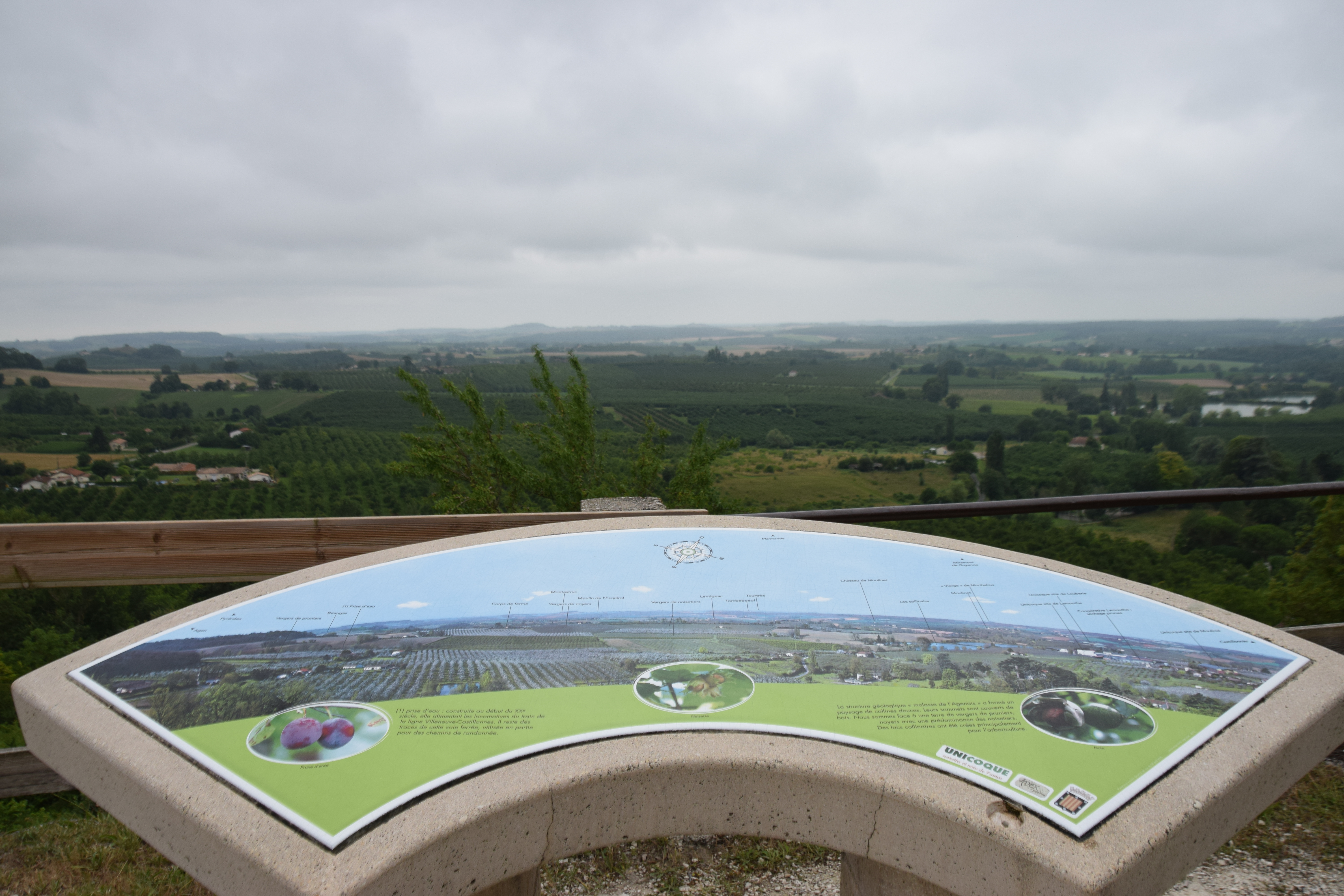
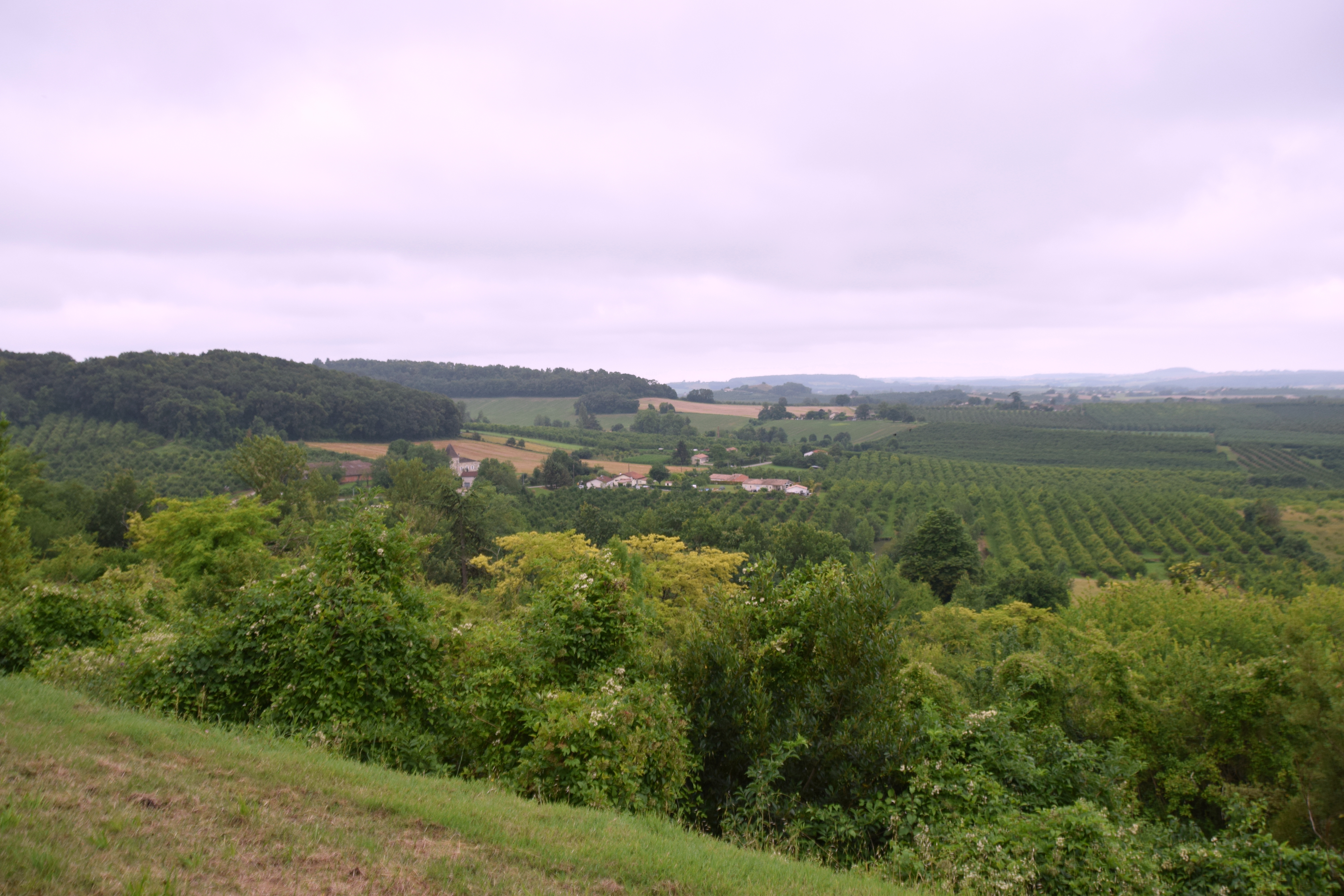
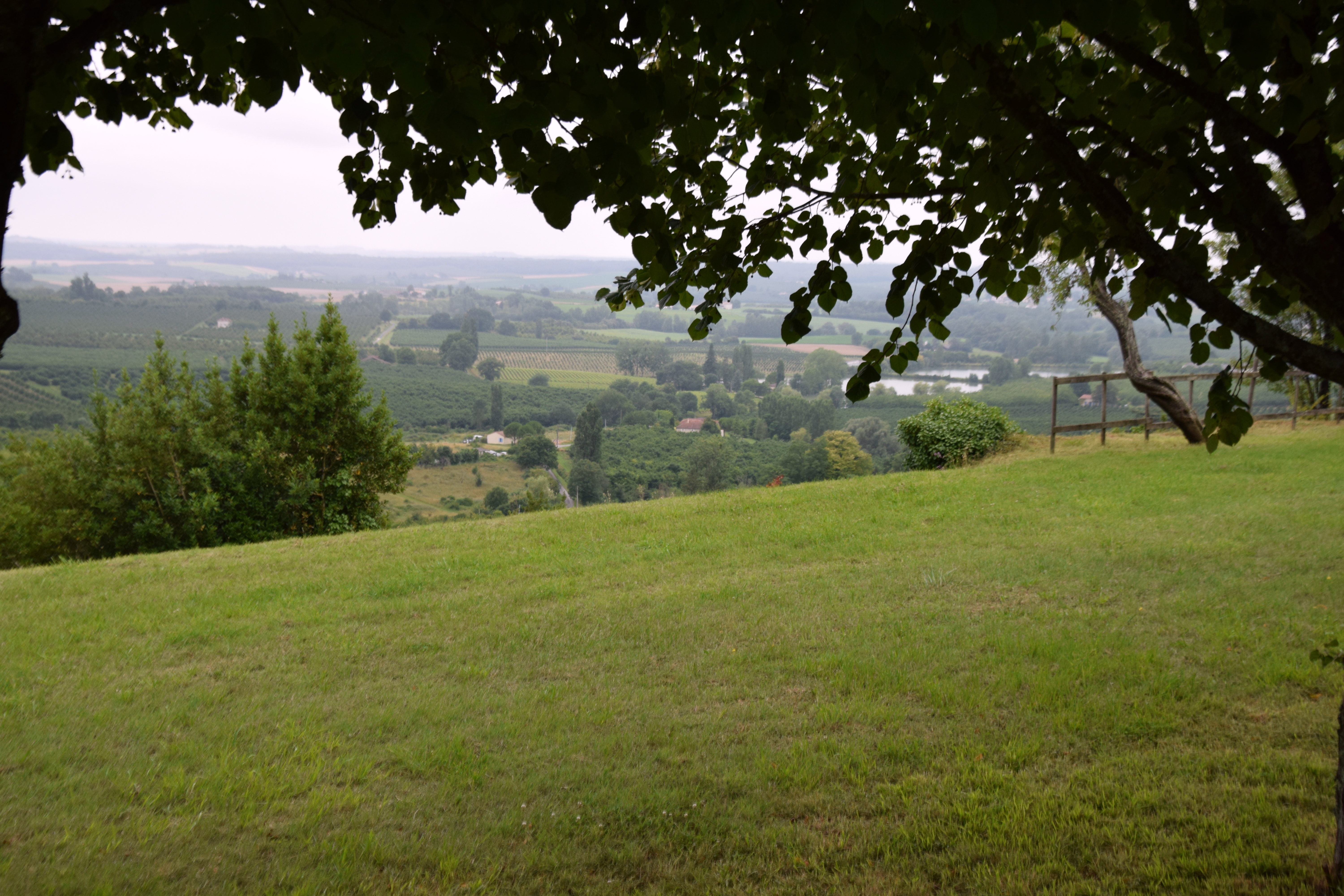
The view point has panoramic views over the plume orchards spectacular on a clear day no doubt but today is anything but.
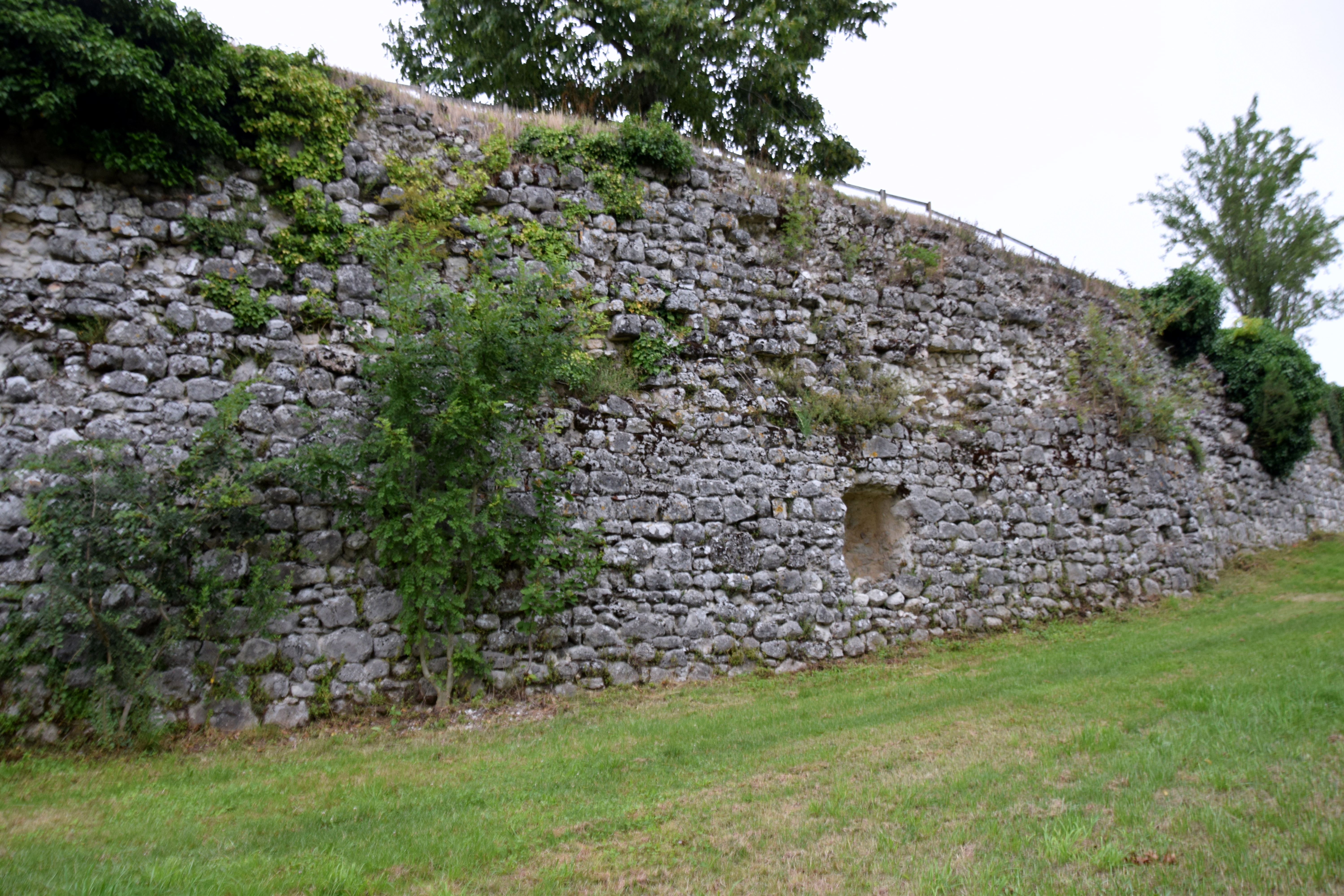
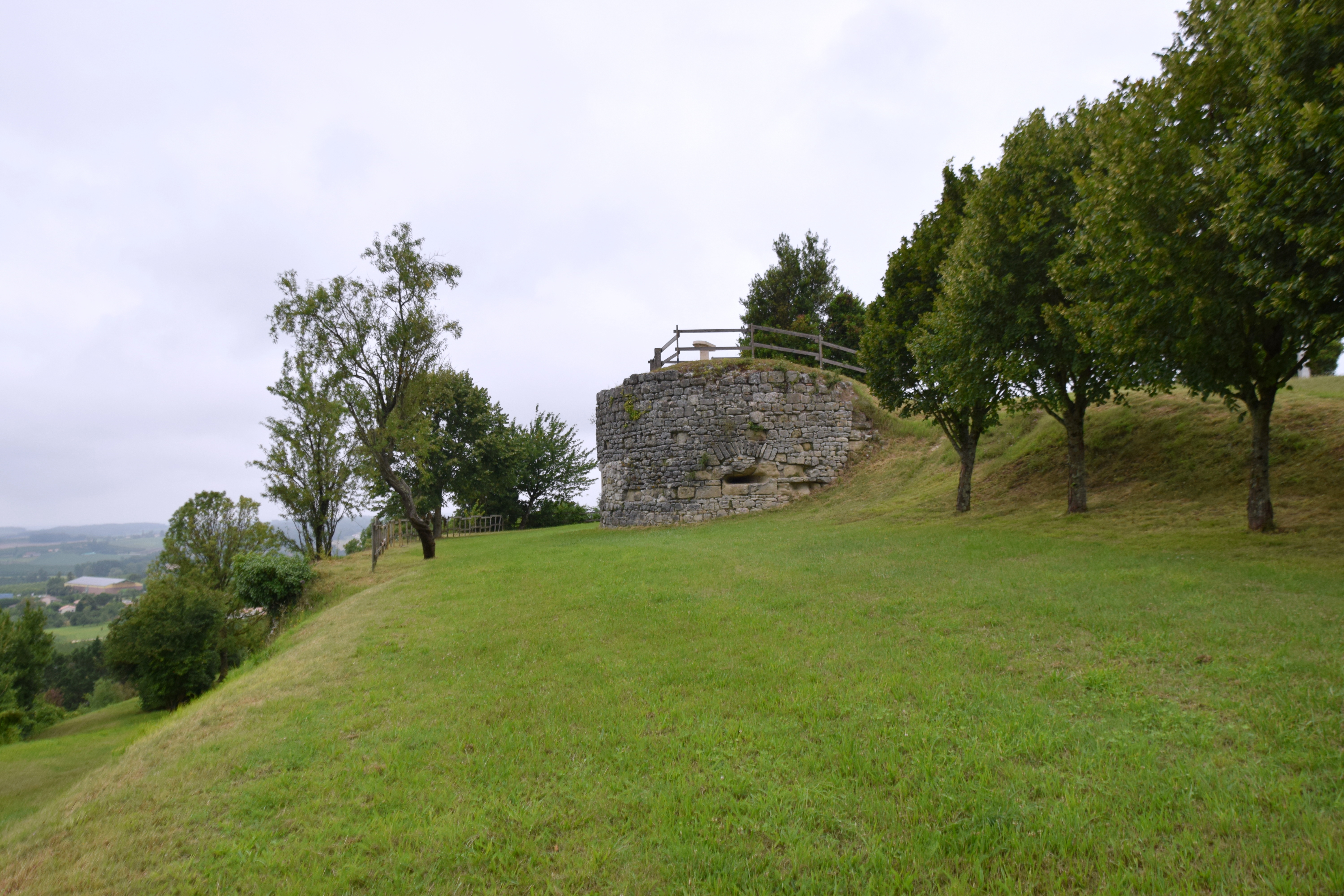
The remnants of the ramparts.
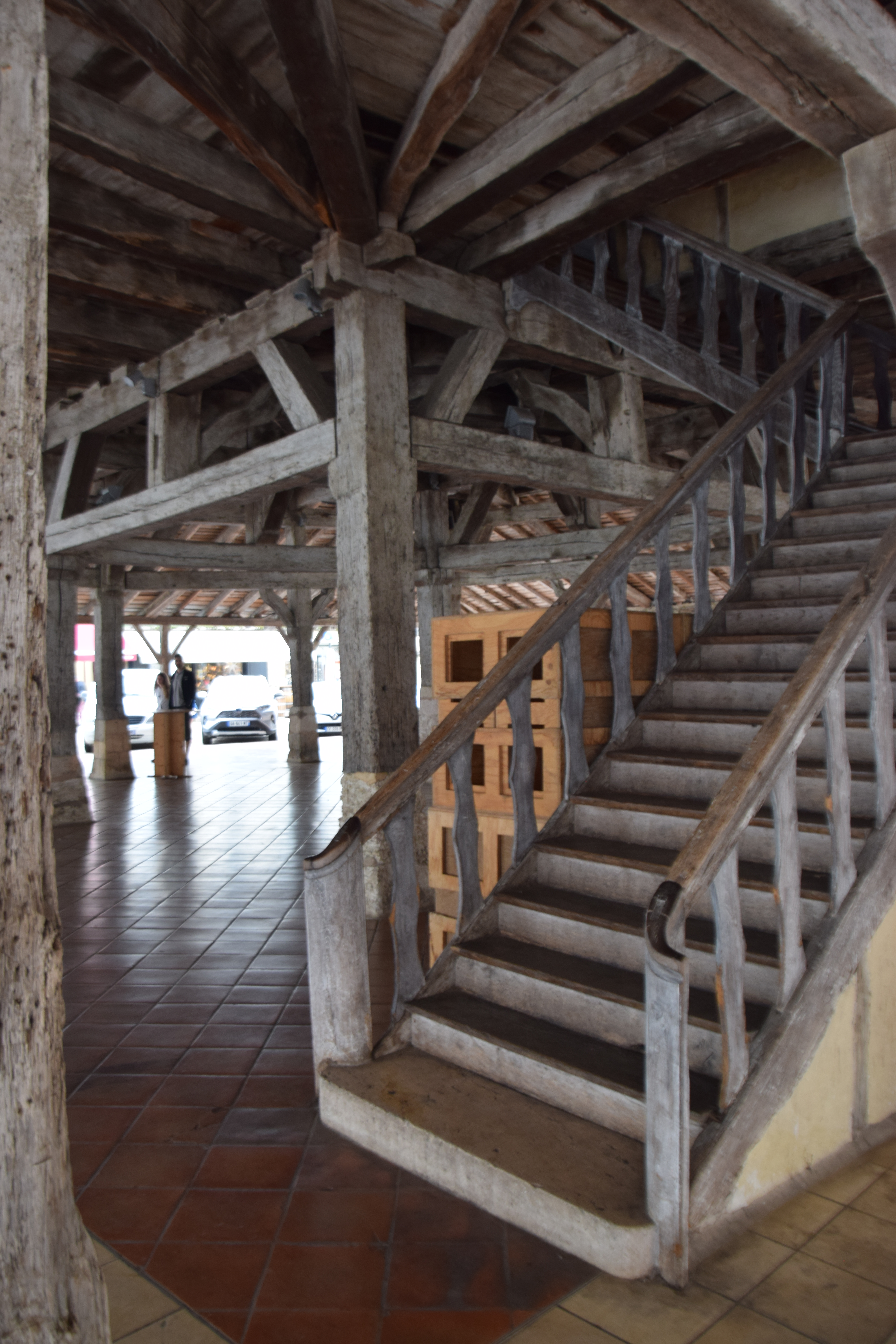
Next stop Villereal with its covered market on 2 levels and the traditional arcade.


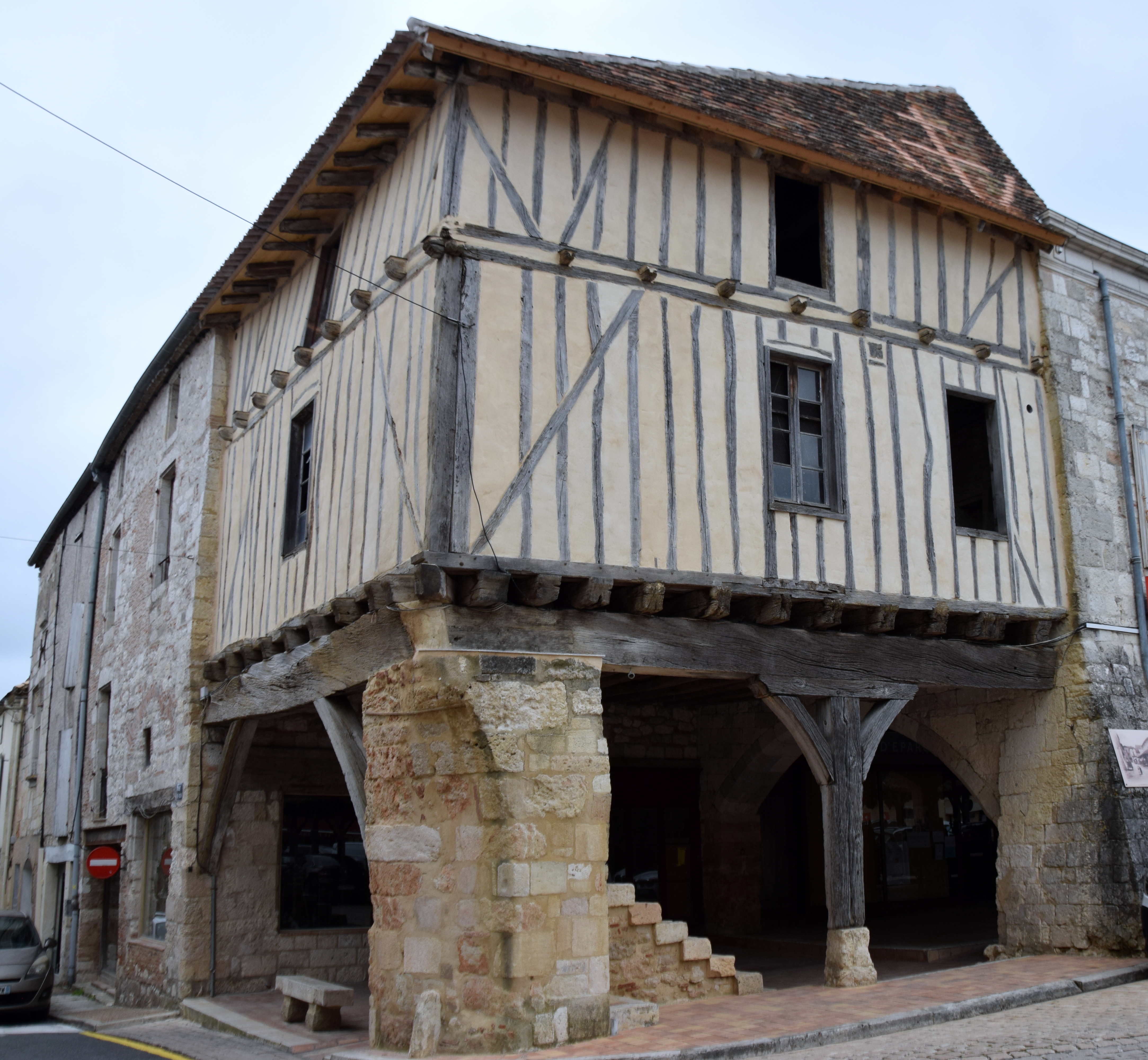

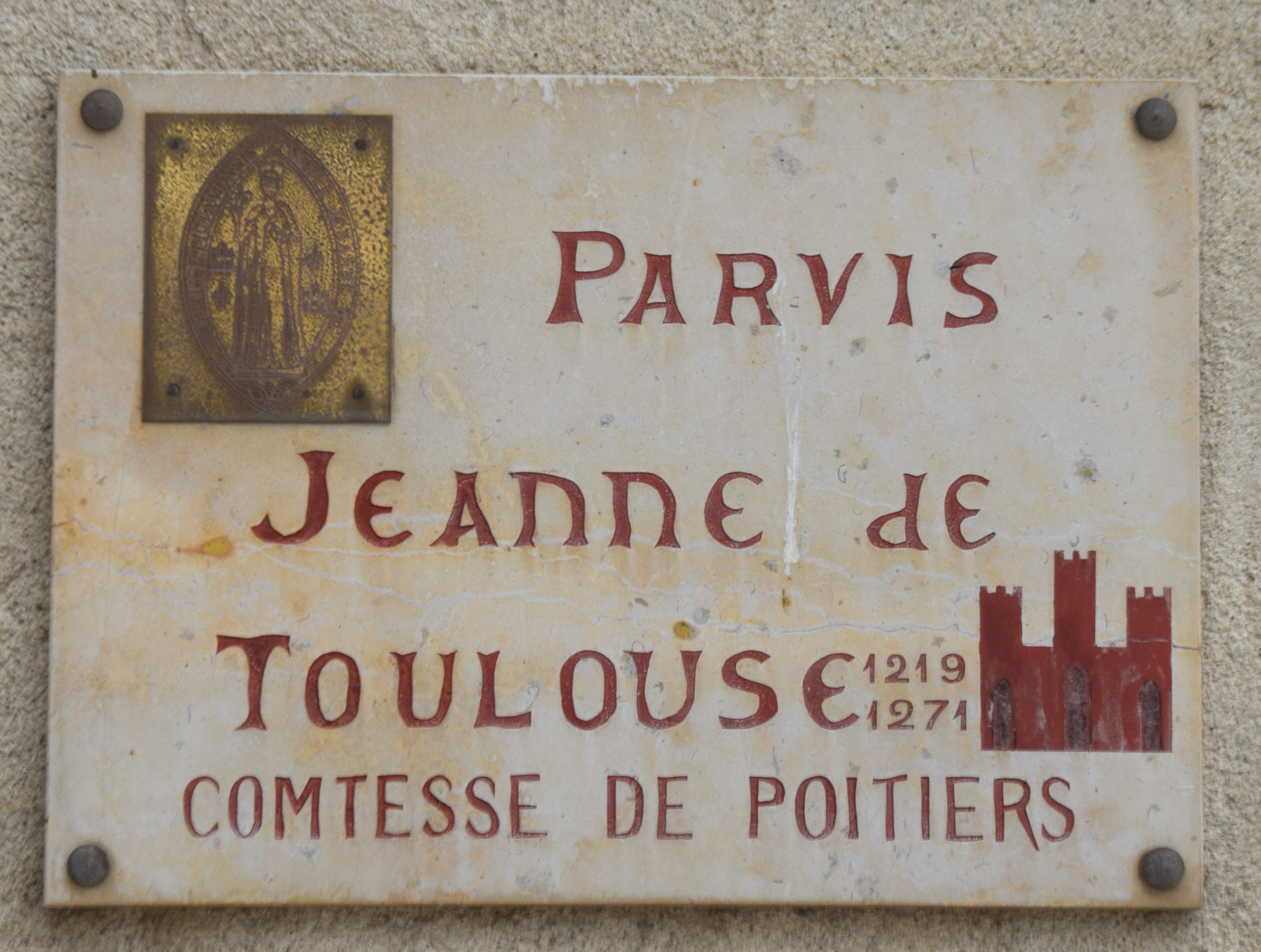
Church, street sign and local artists work.
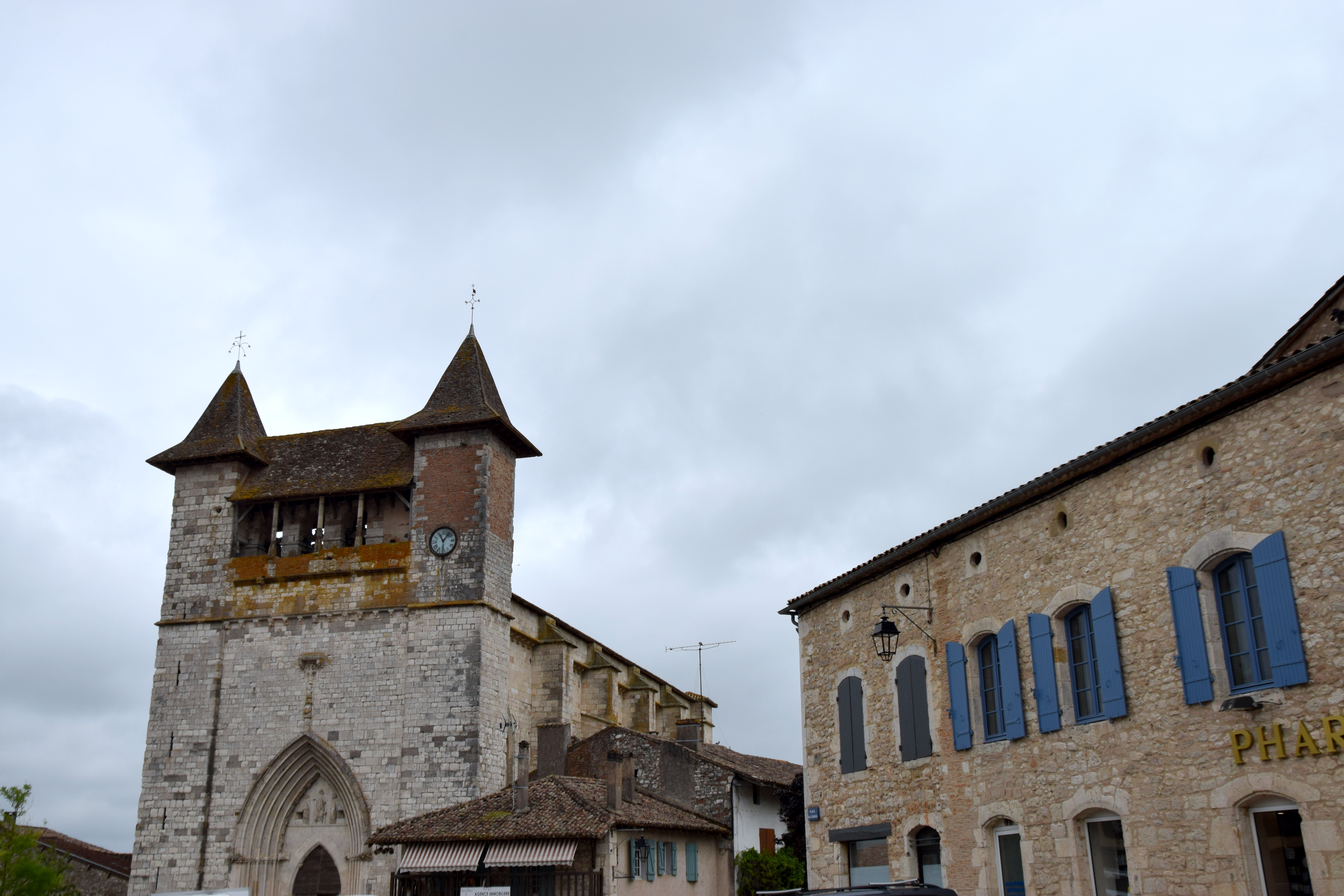
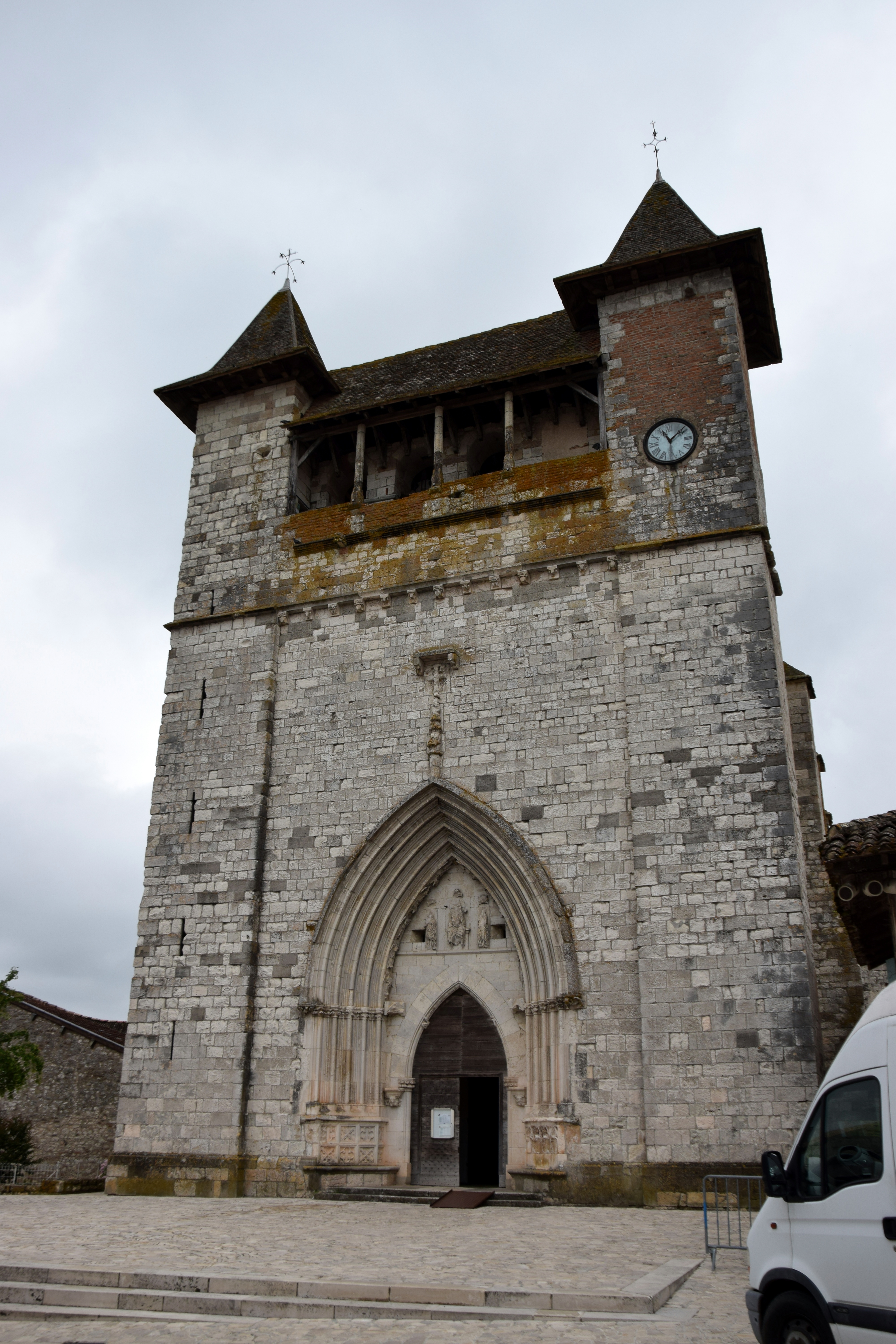
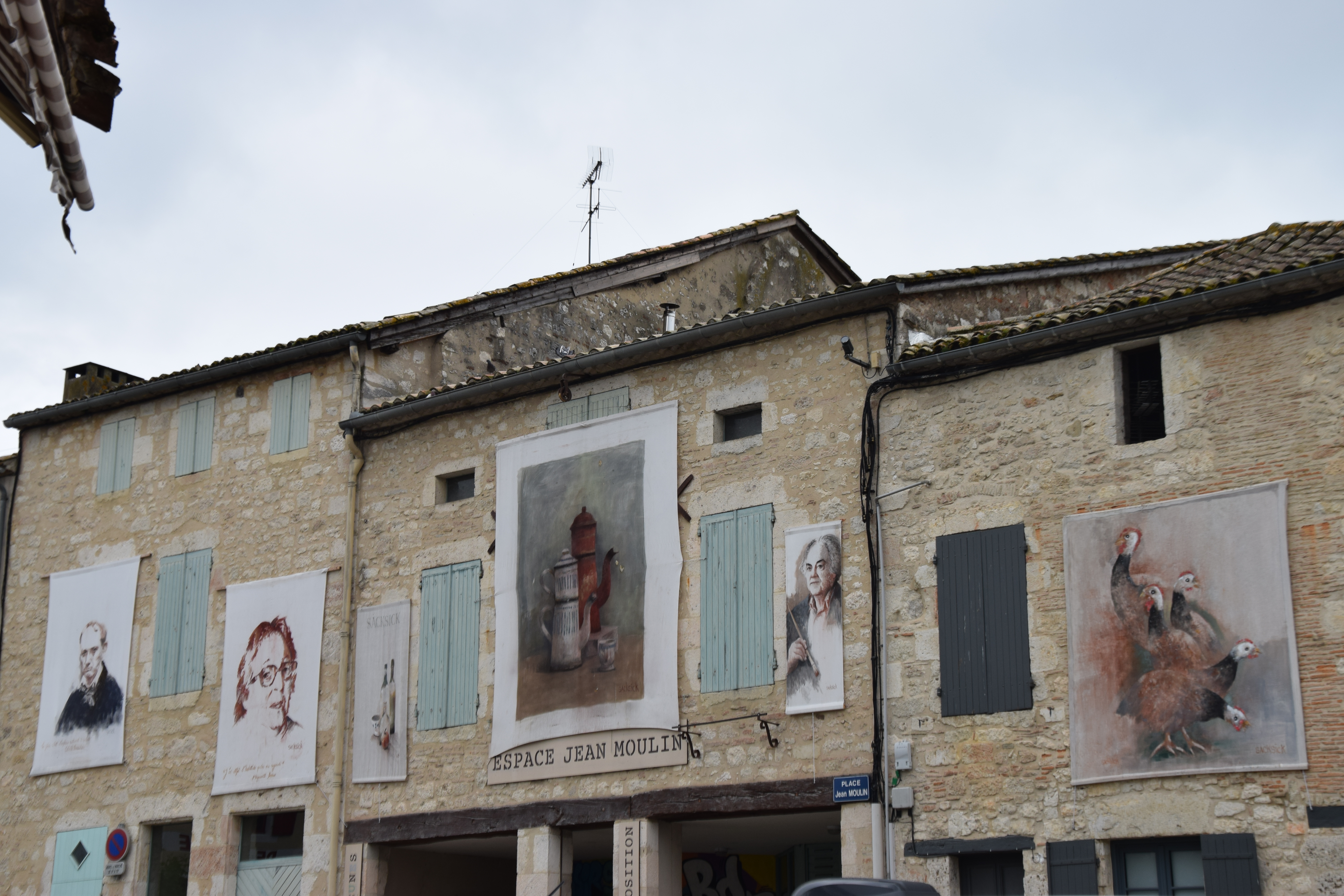
And finally the prettiest of them all, Montflanquin via secret alley ways,

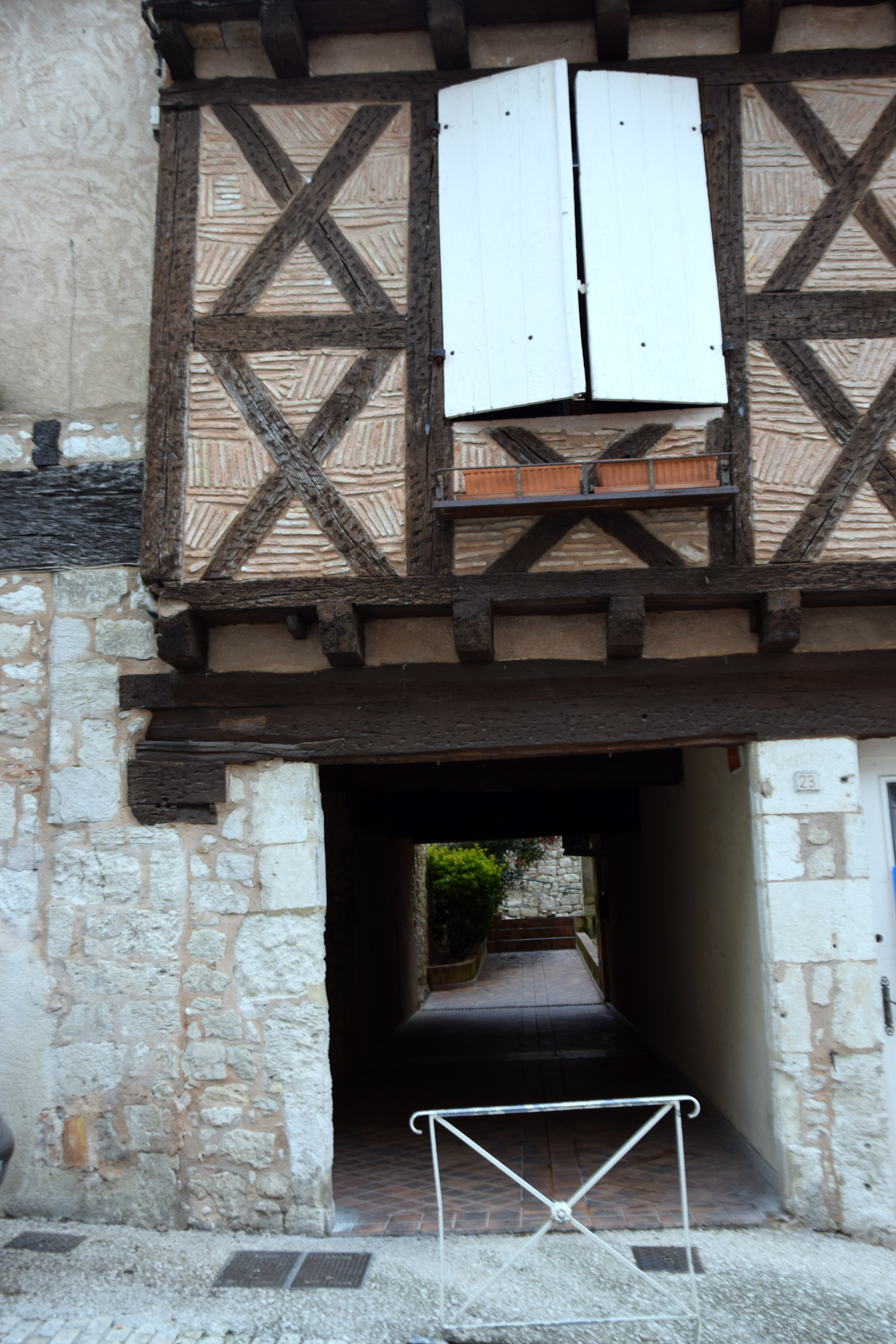
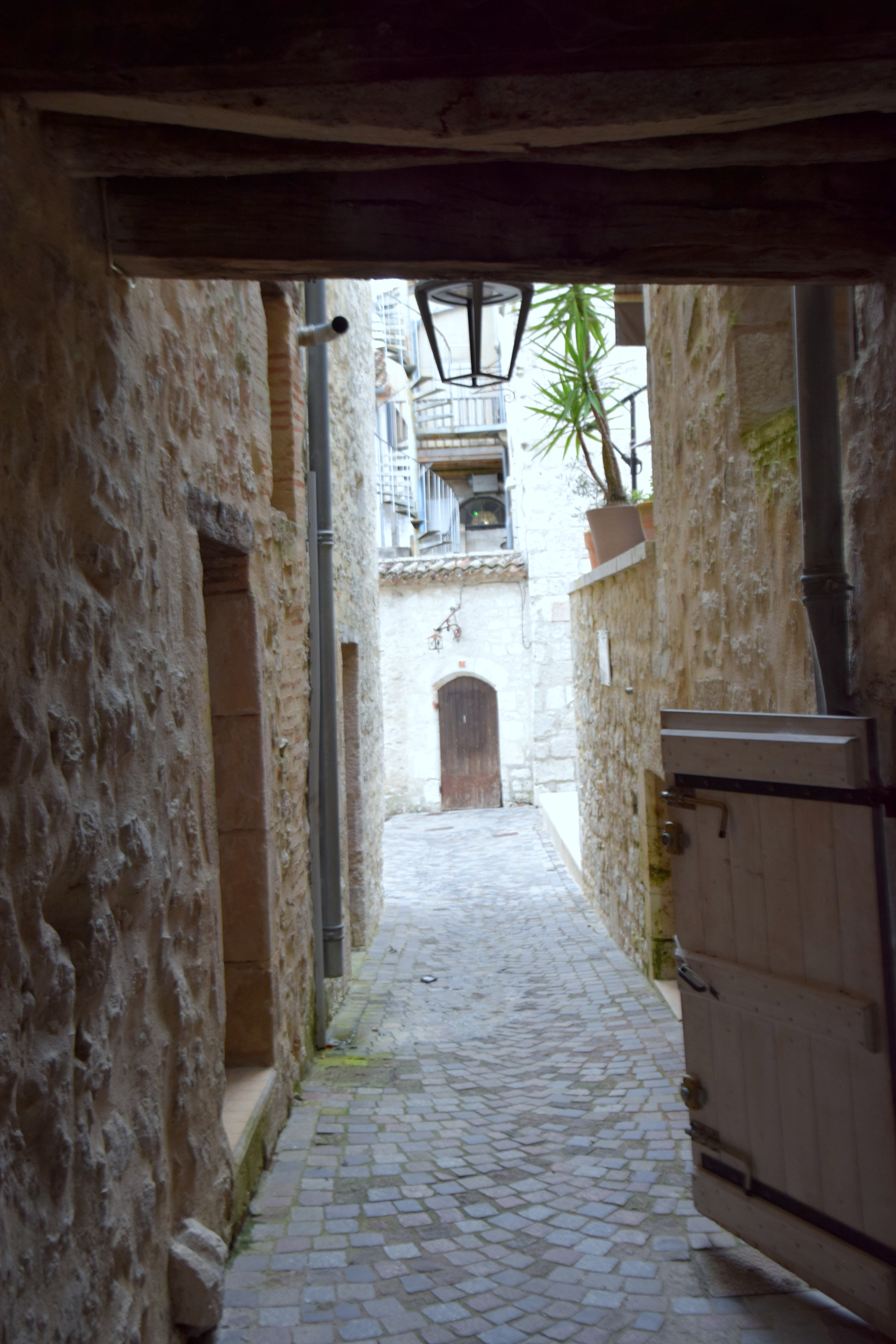
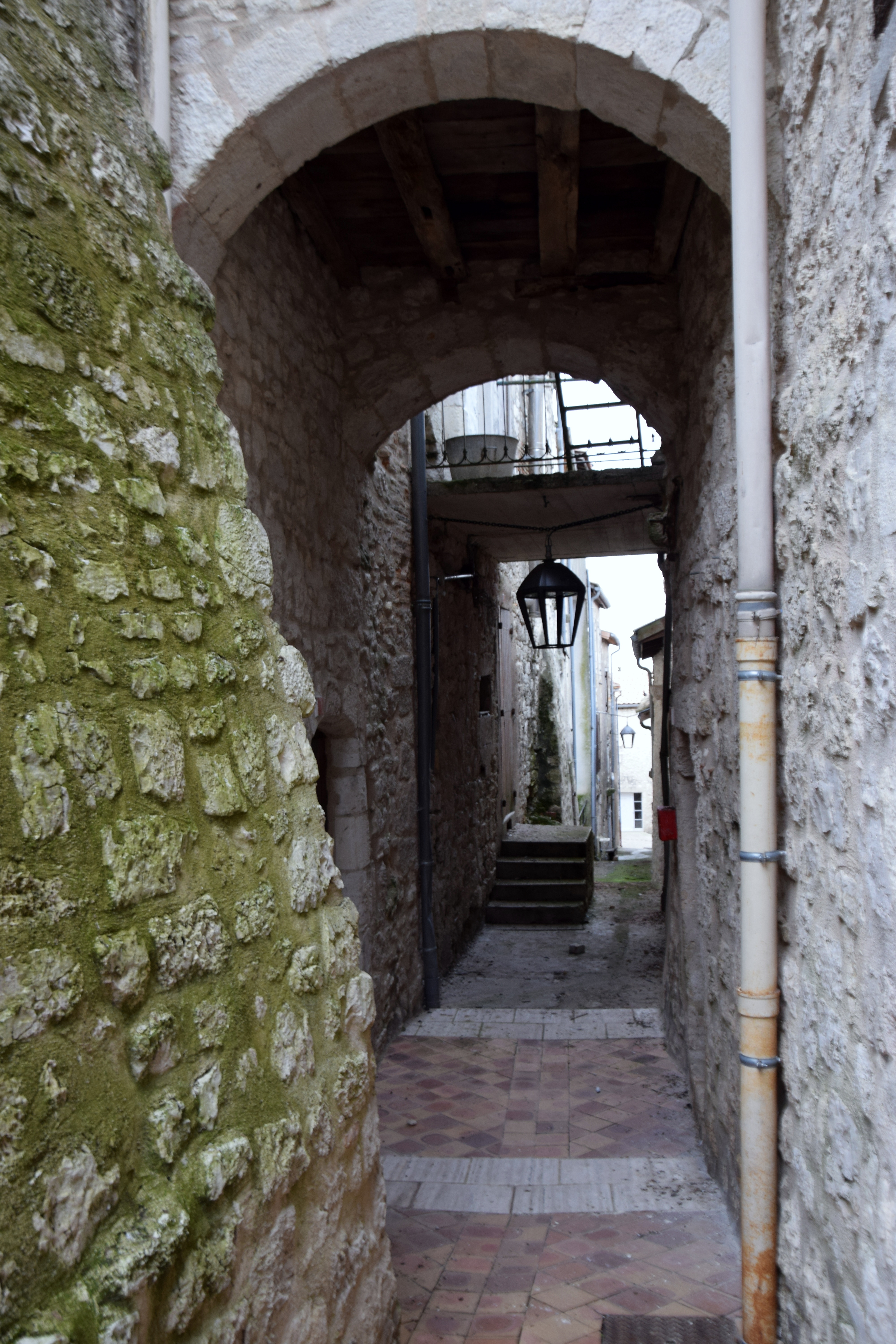

and quaint streets
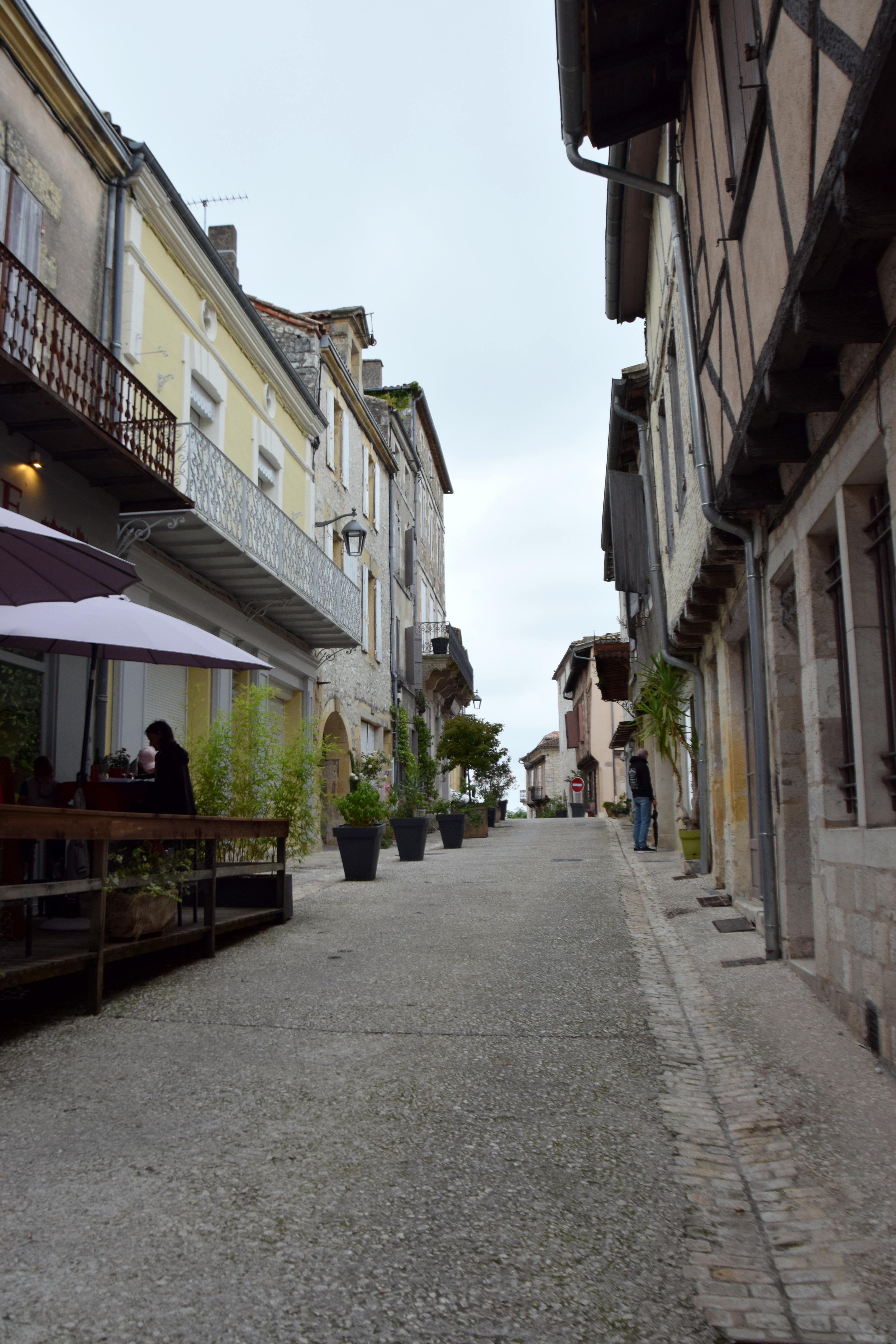
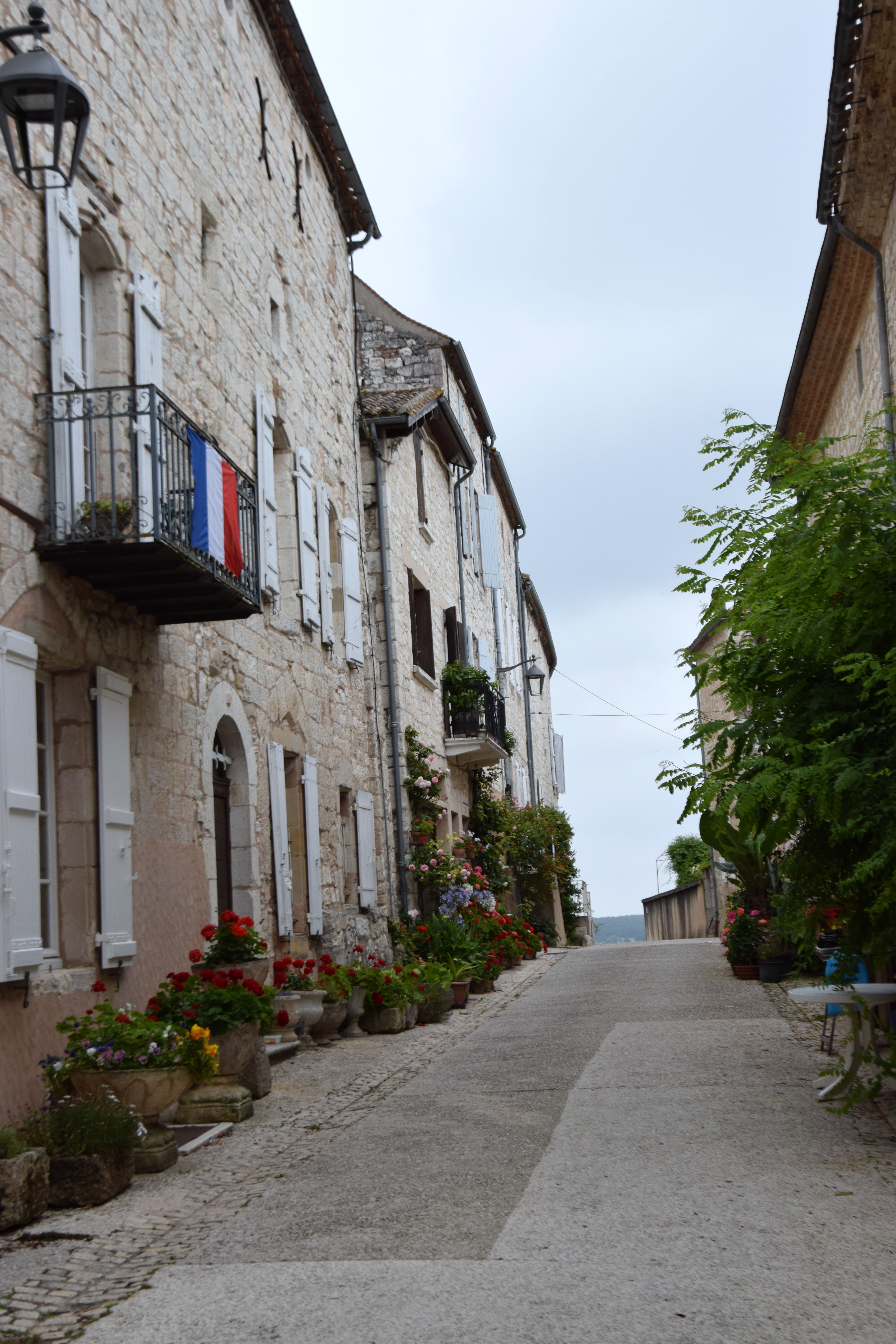
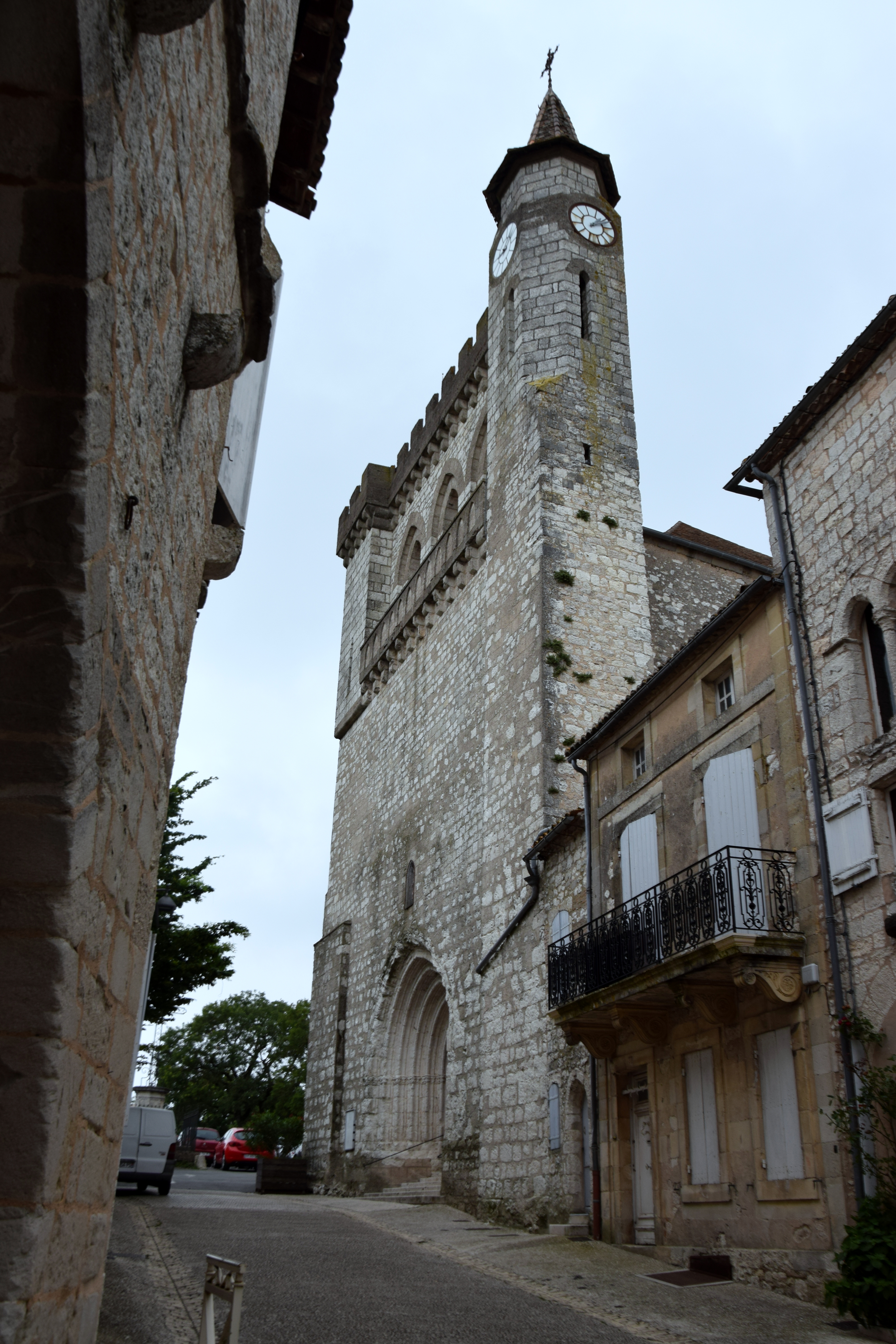
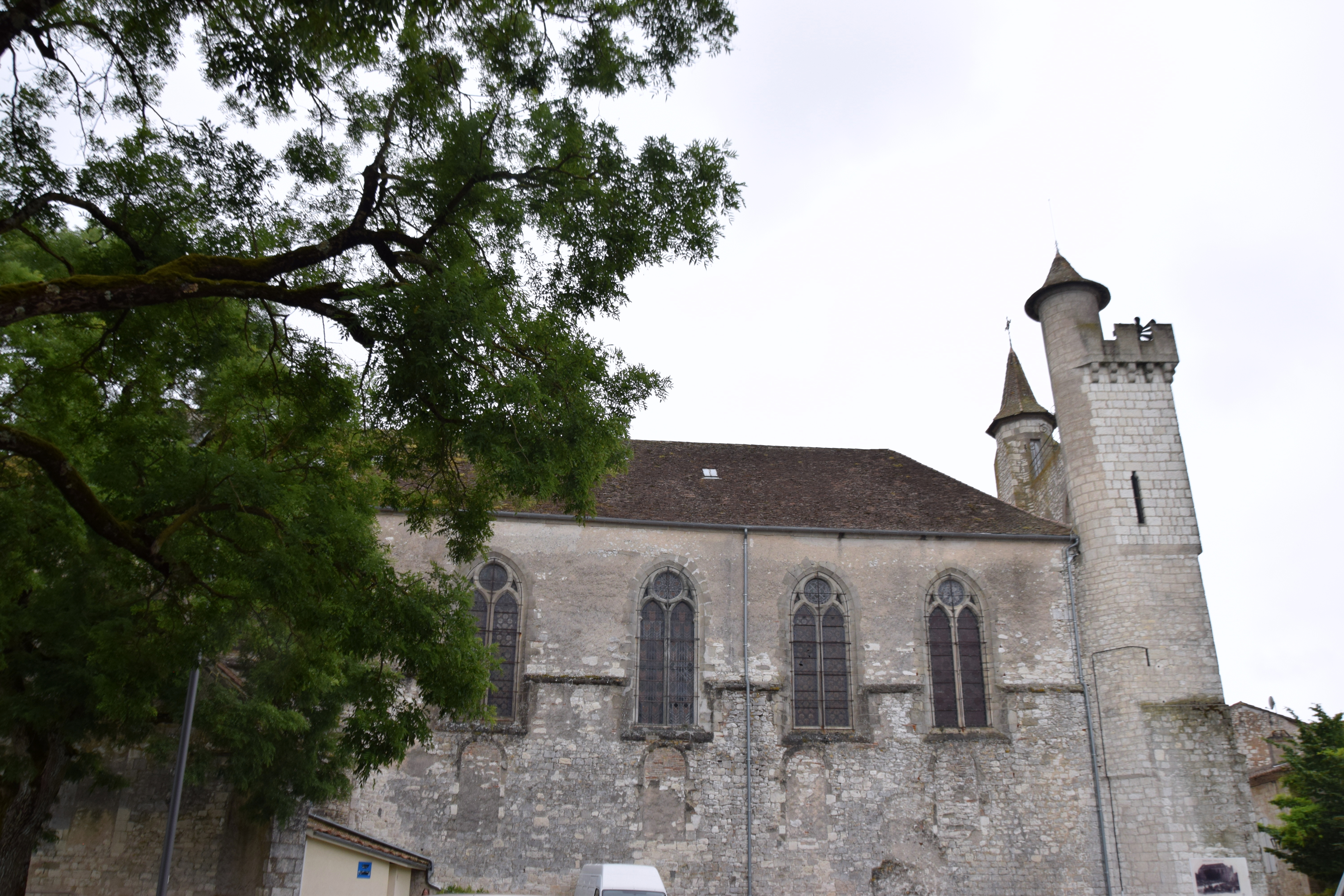
The church, with the similar square towered frontage as one finds in other Bastides
The town square with its arcades and, as today is market day, the market stalls.
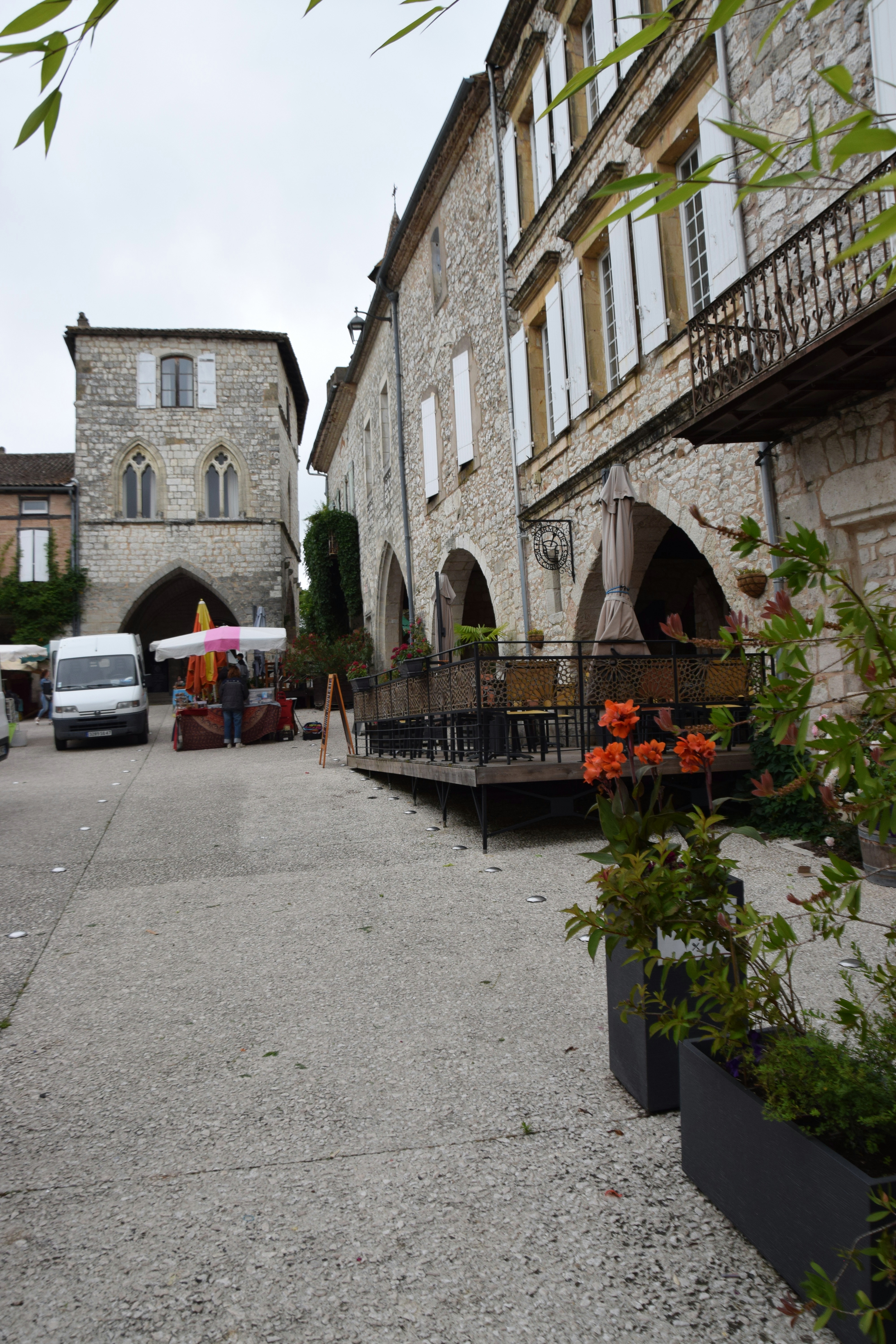
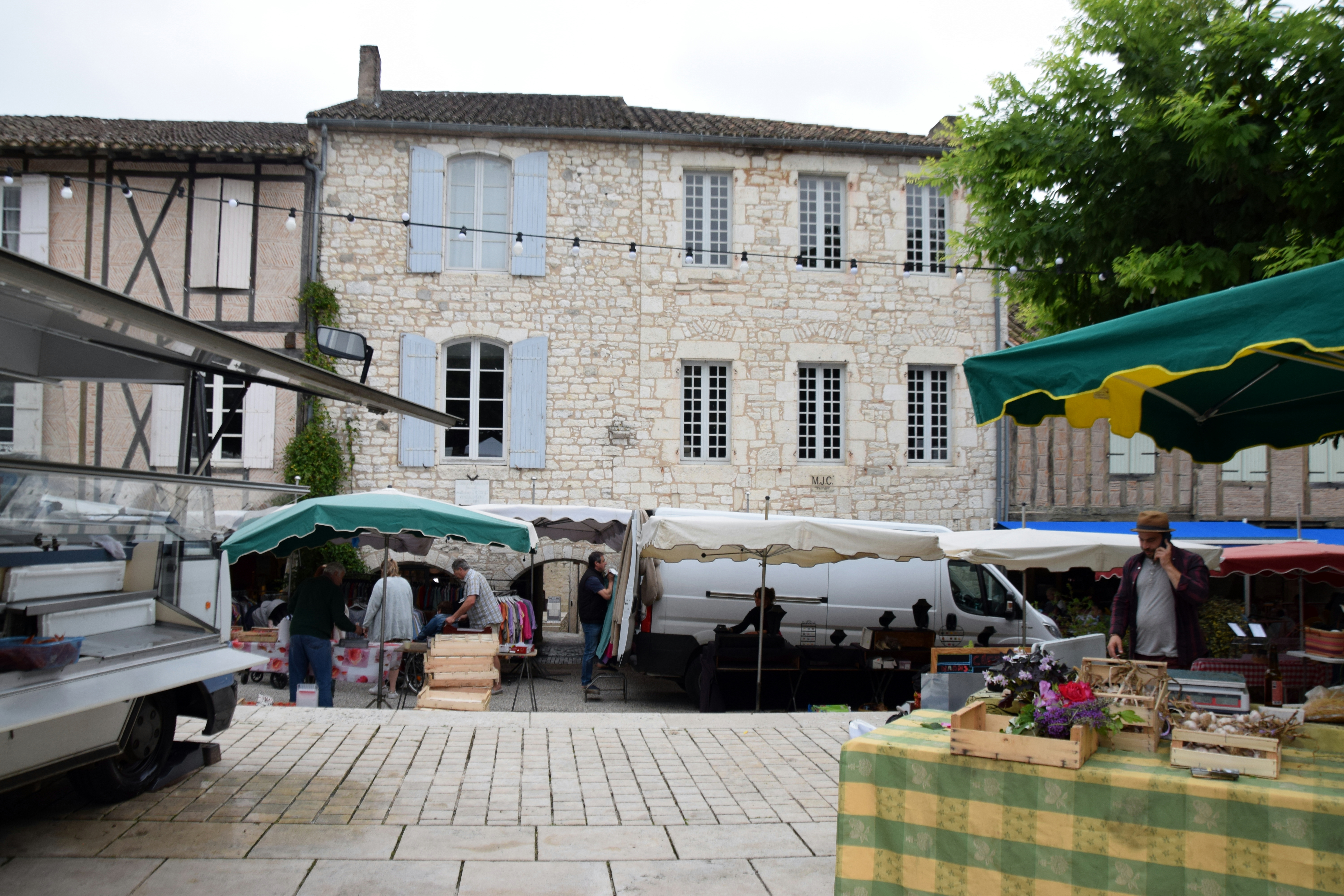

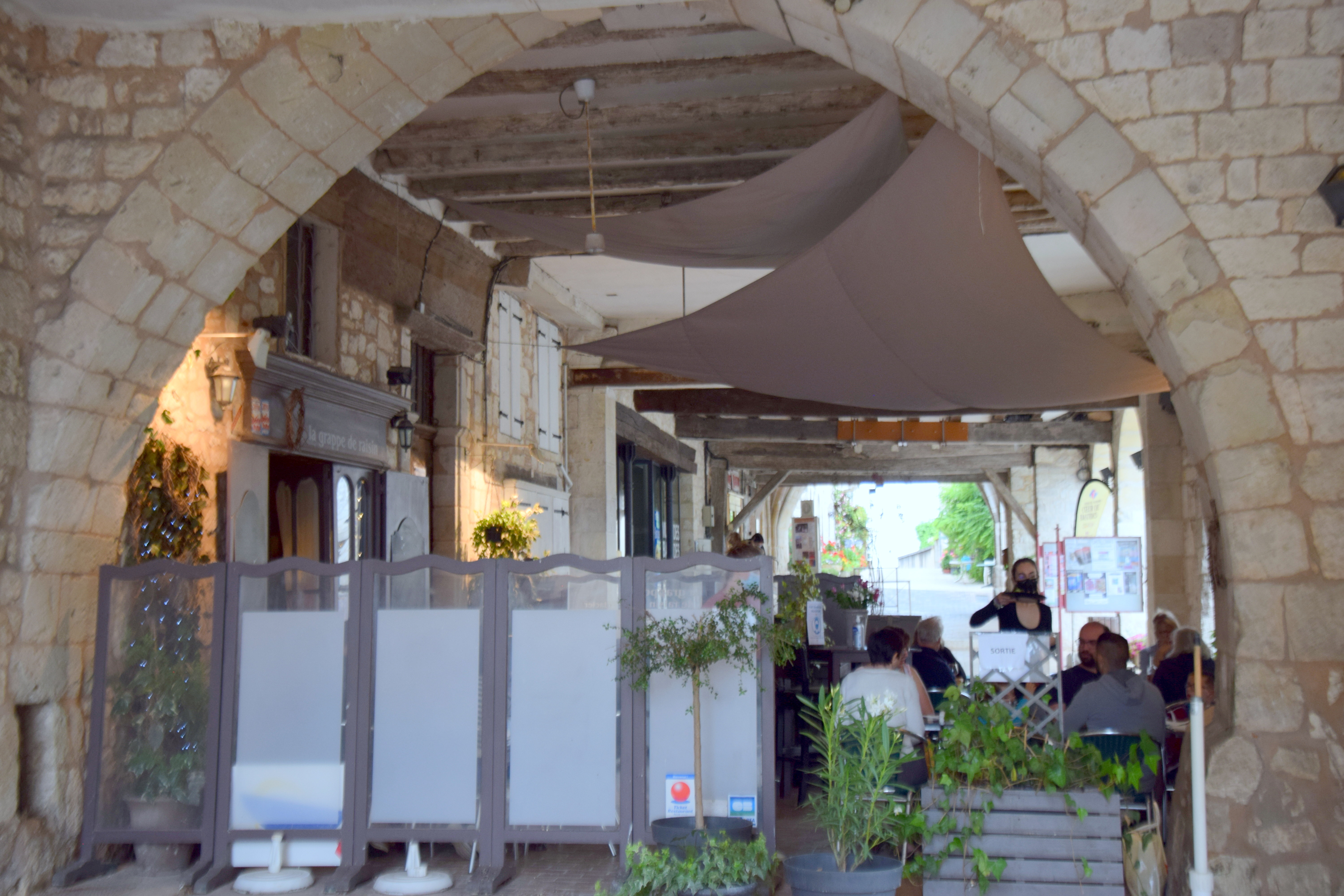
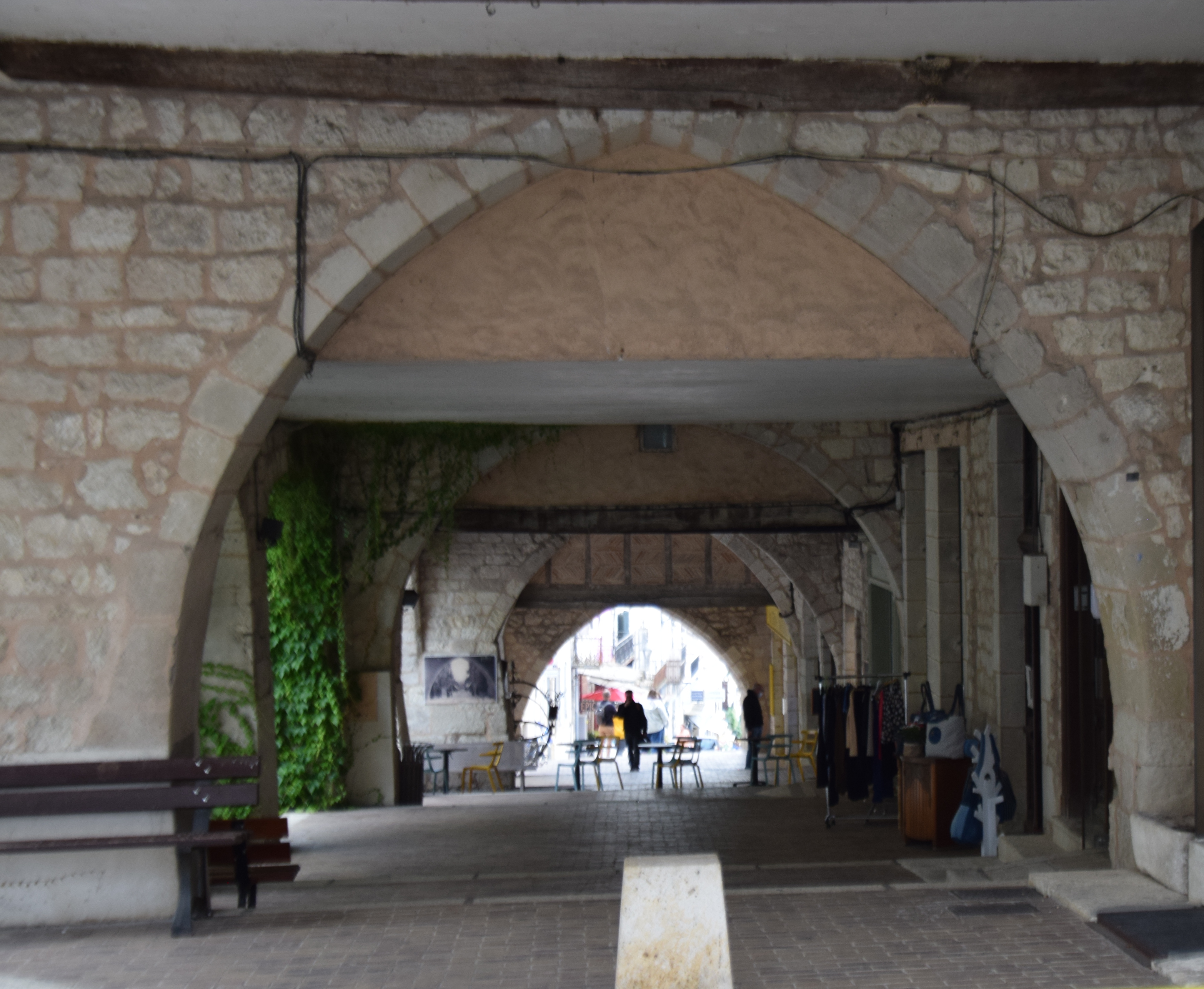
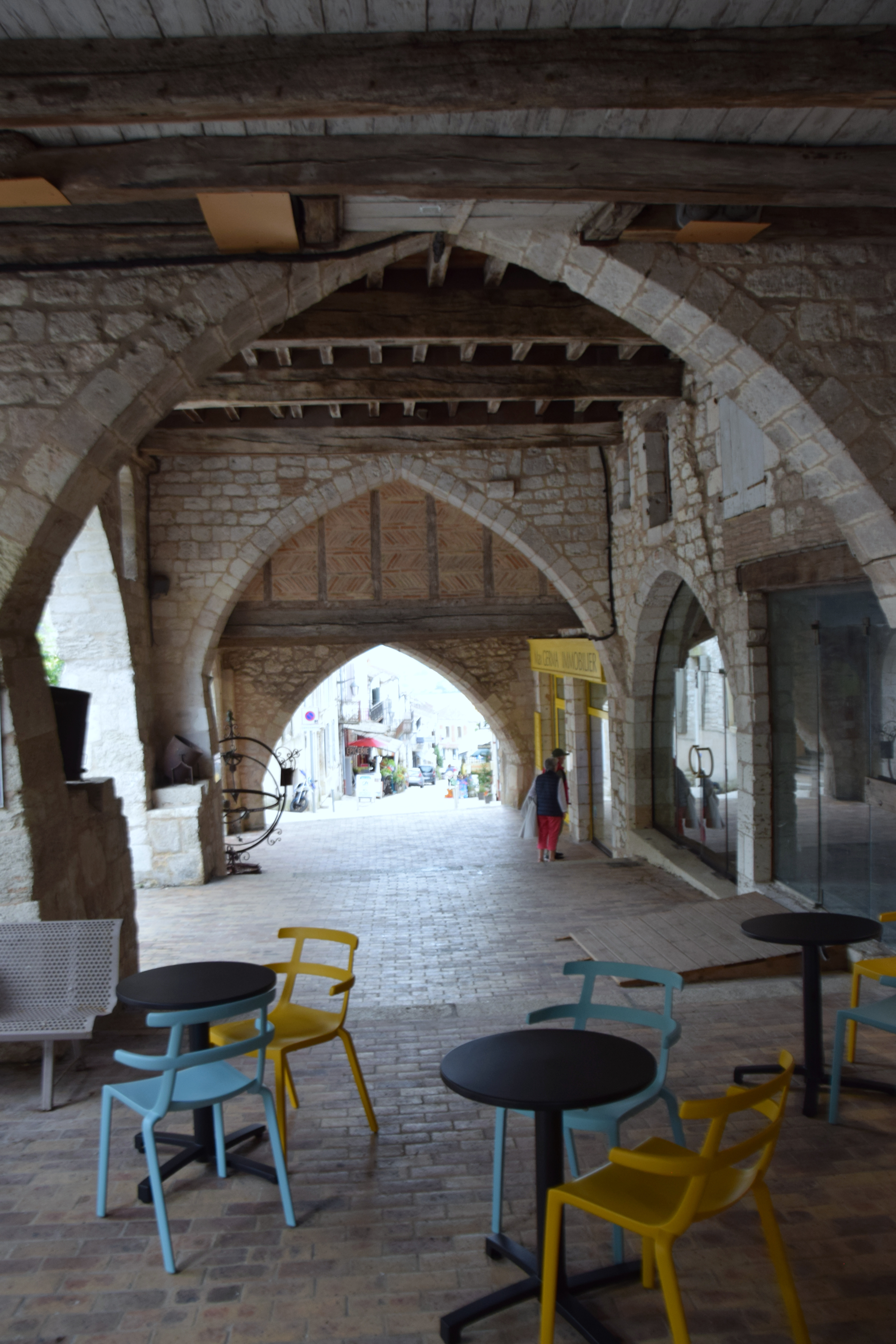
On my way to the Air at St Georges which is free and has free electricity I passed a Fiat franchise and decided to take my chances with the possibility of getting the domestic batteries replaced and the leak traced and mended. I came up trumps with “Fernandes” who installed two new batteries at a good price but between us we were unable to locate the source of the leak. So, not wanting to waste his time, which he was not charging me for, I told him not to waste anymore time and will cross my fingers that the worst of the rain is over.
An evening walk around the village of St Georges revealed that it was as well kept and attractive as the Aire.
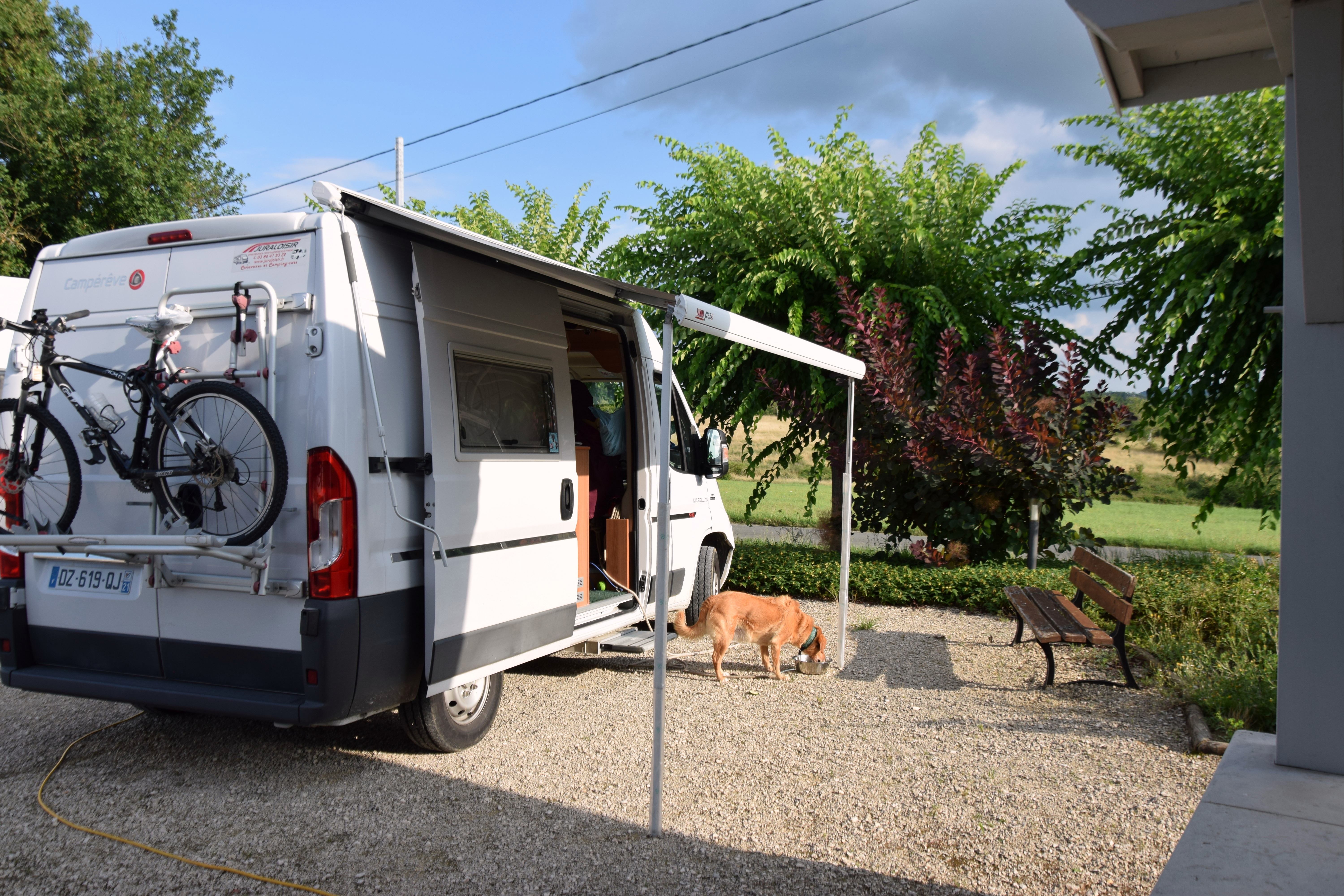
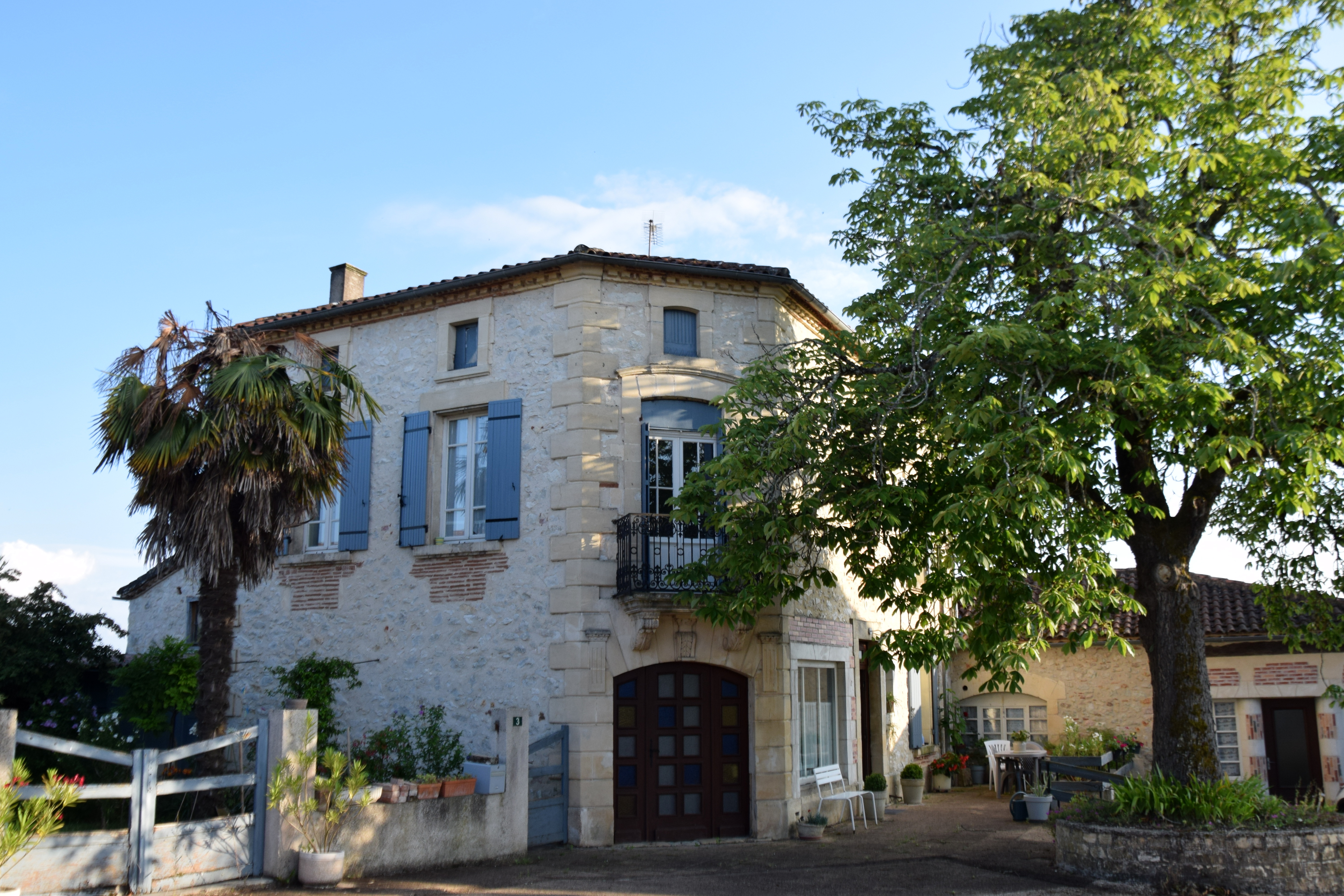
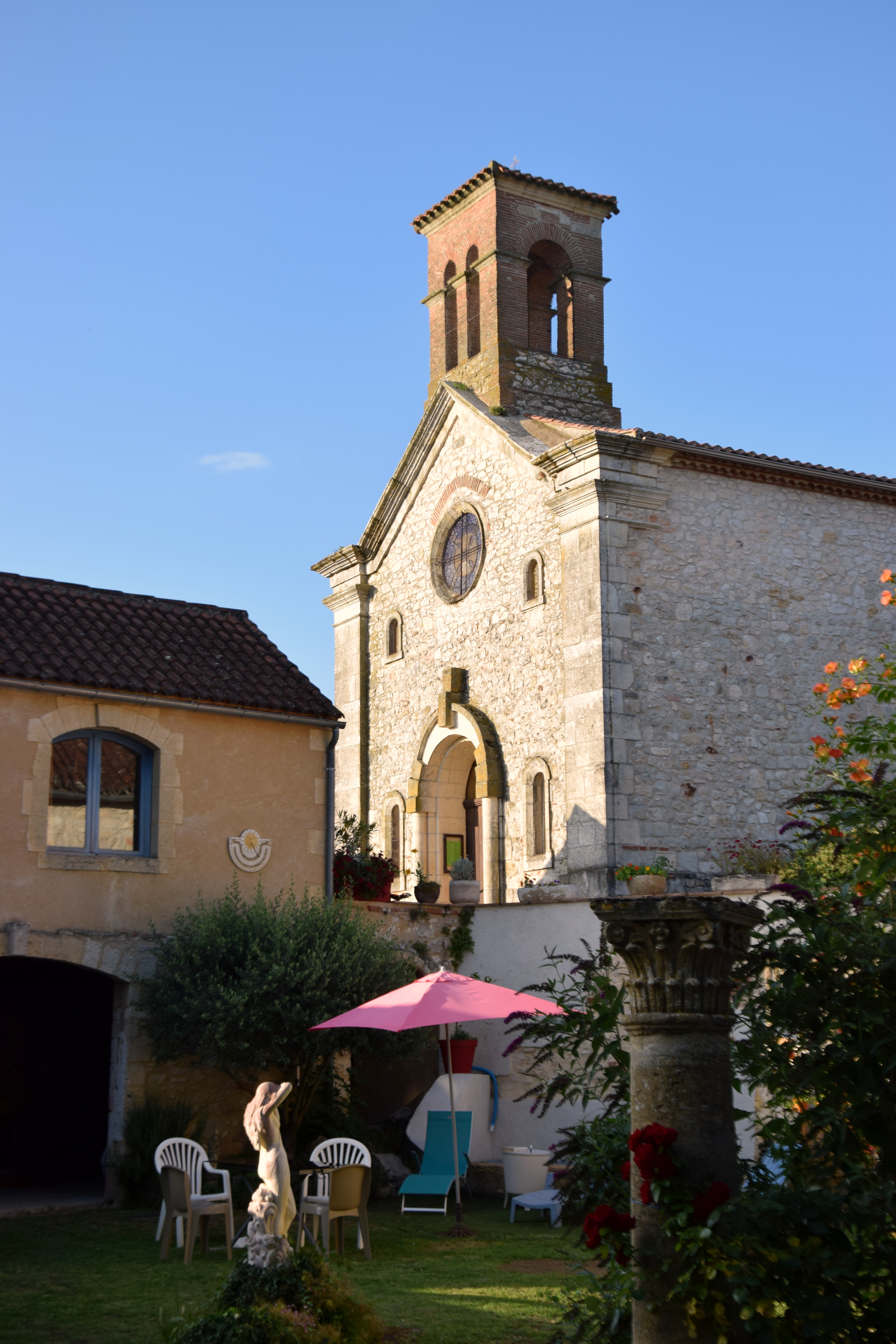
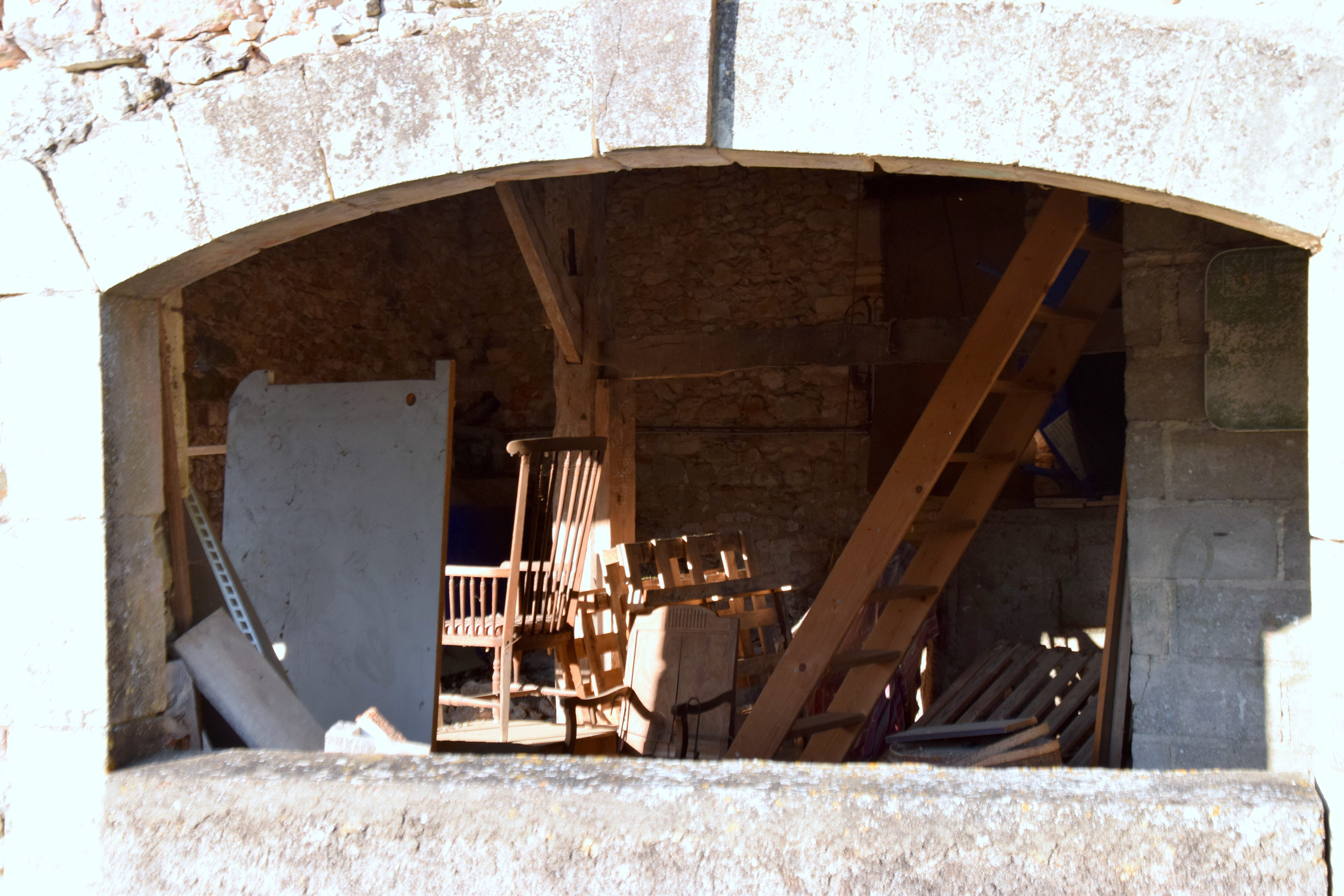
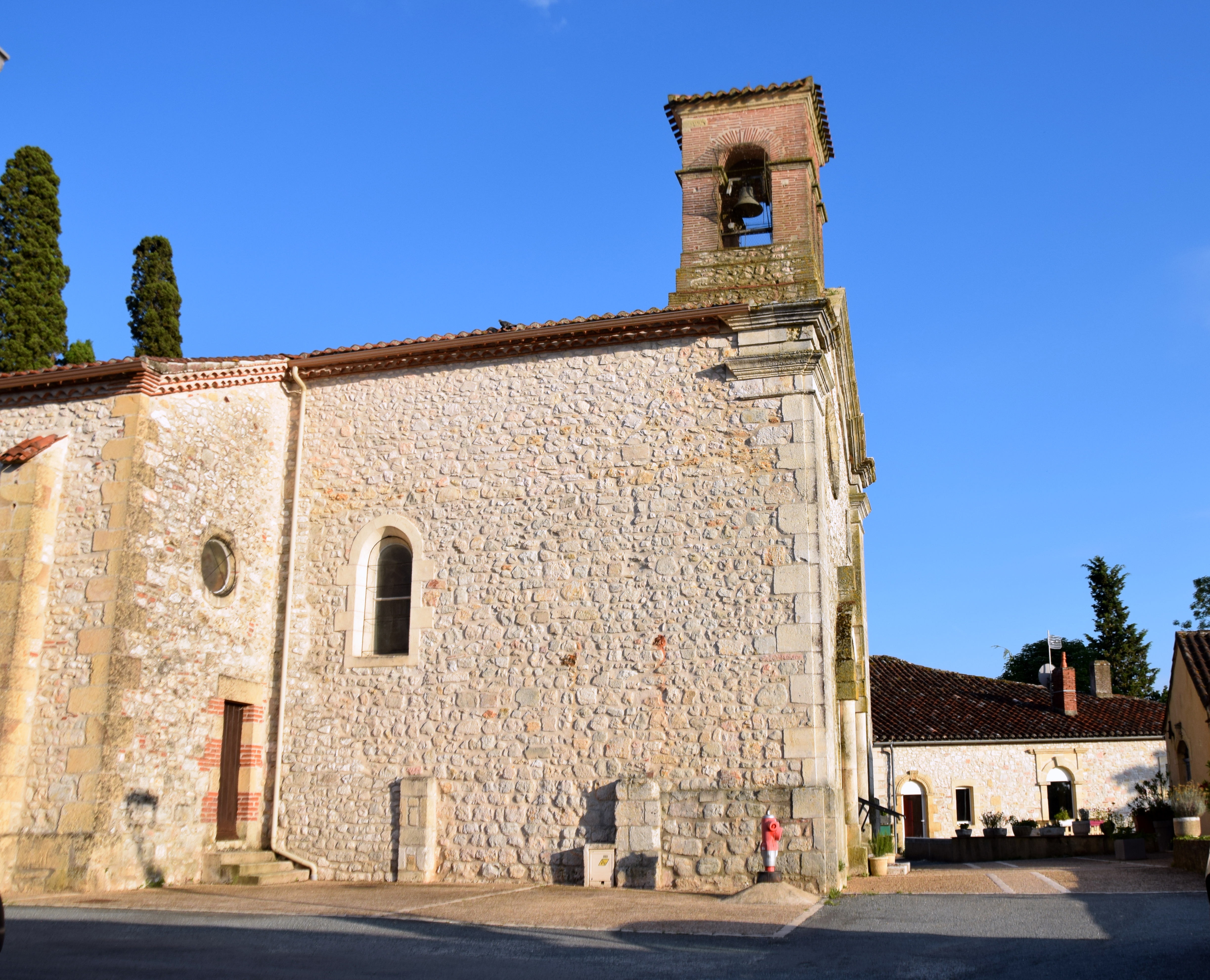
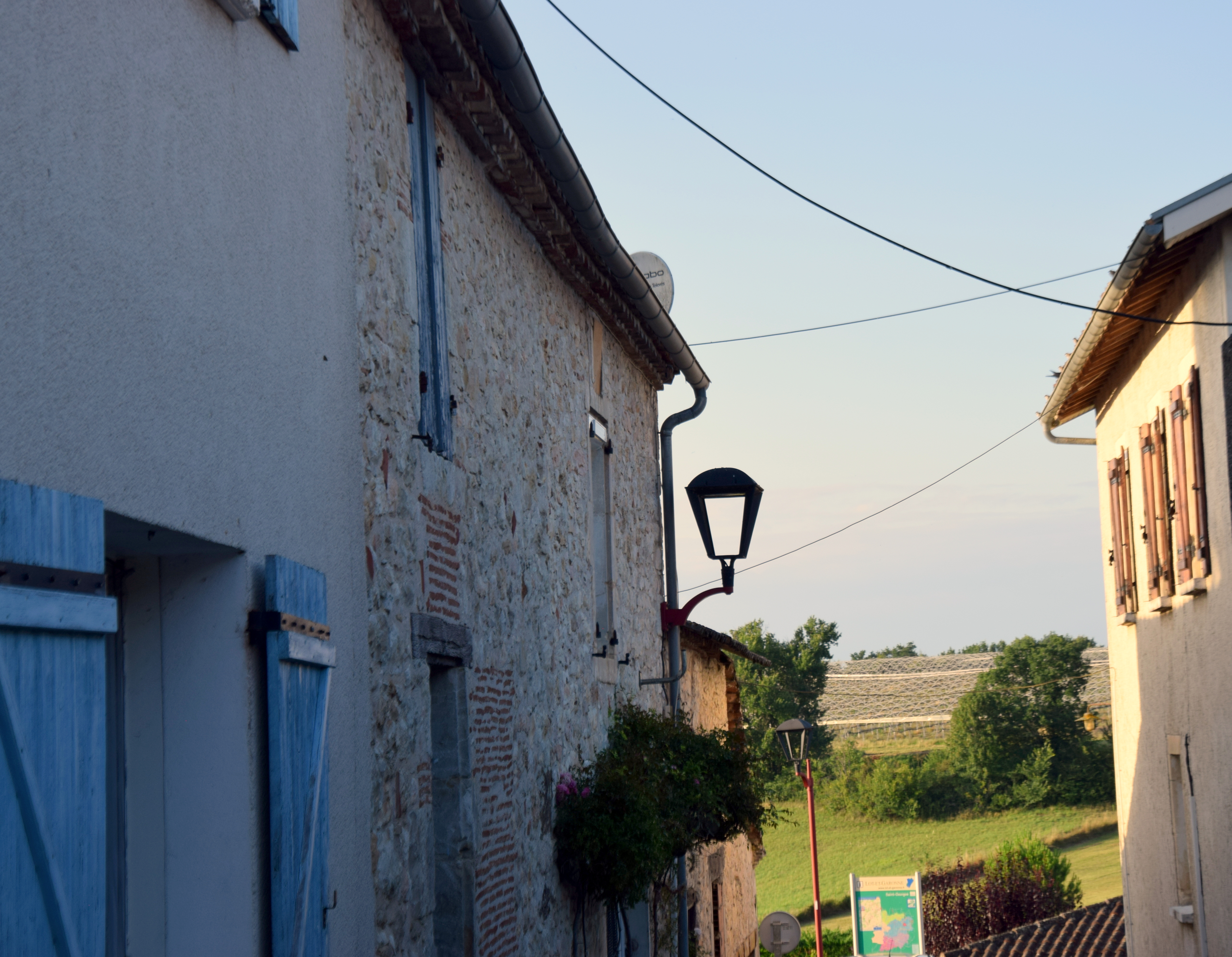
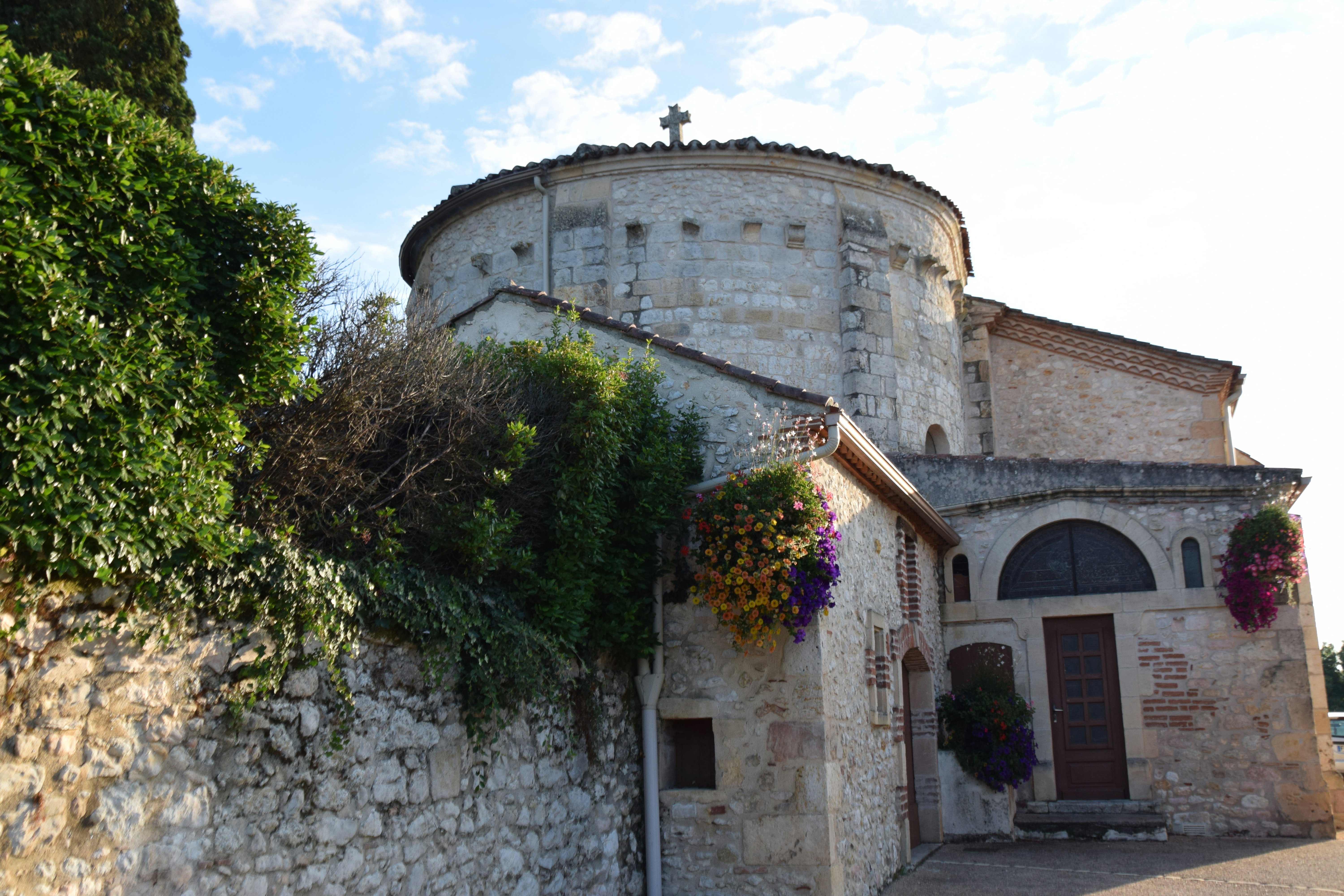

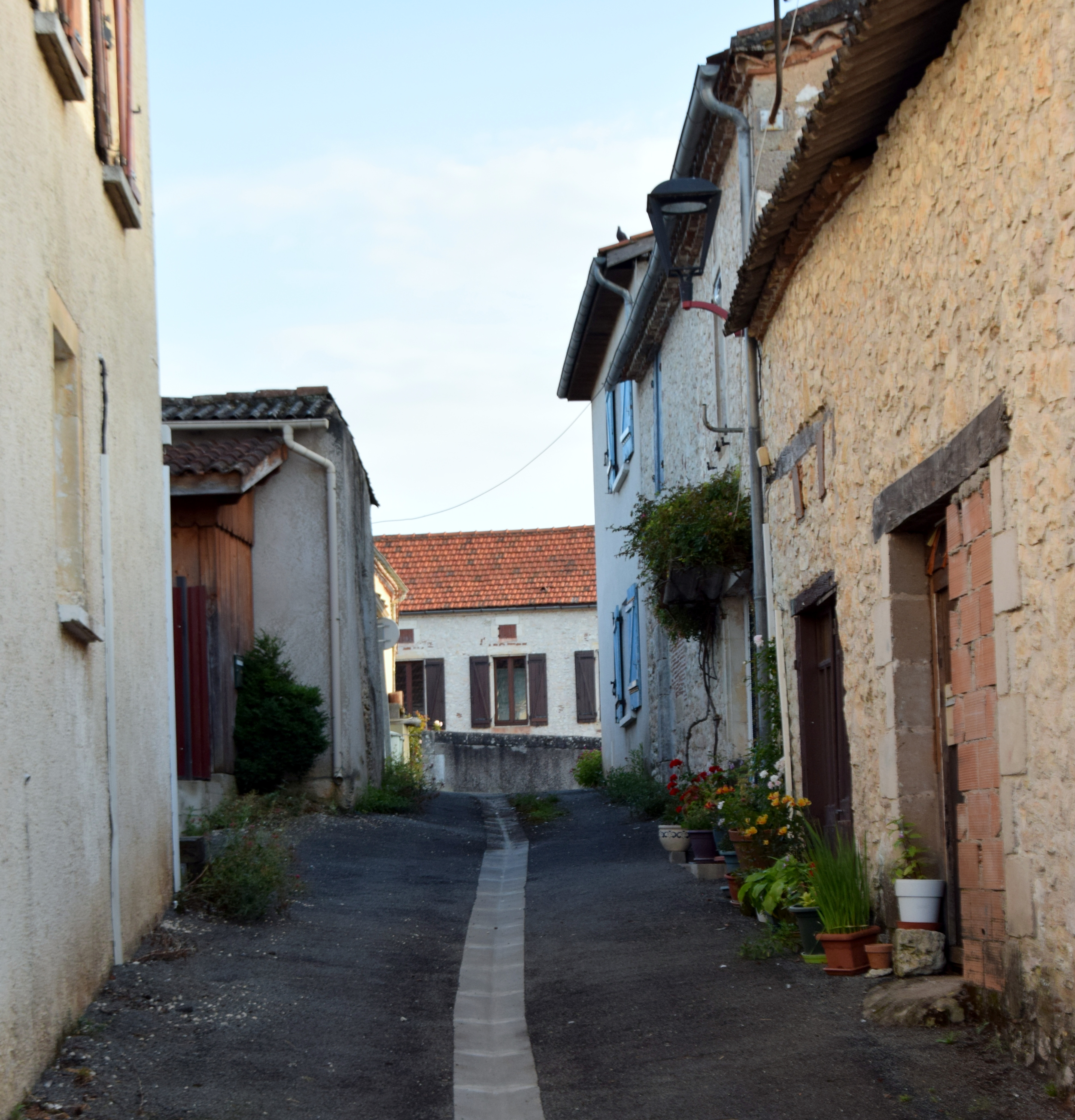

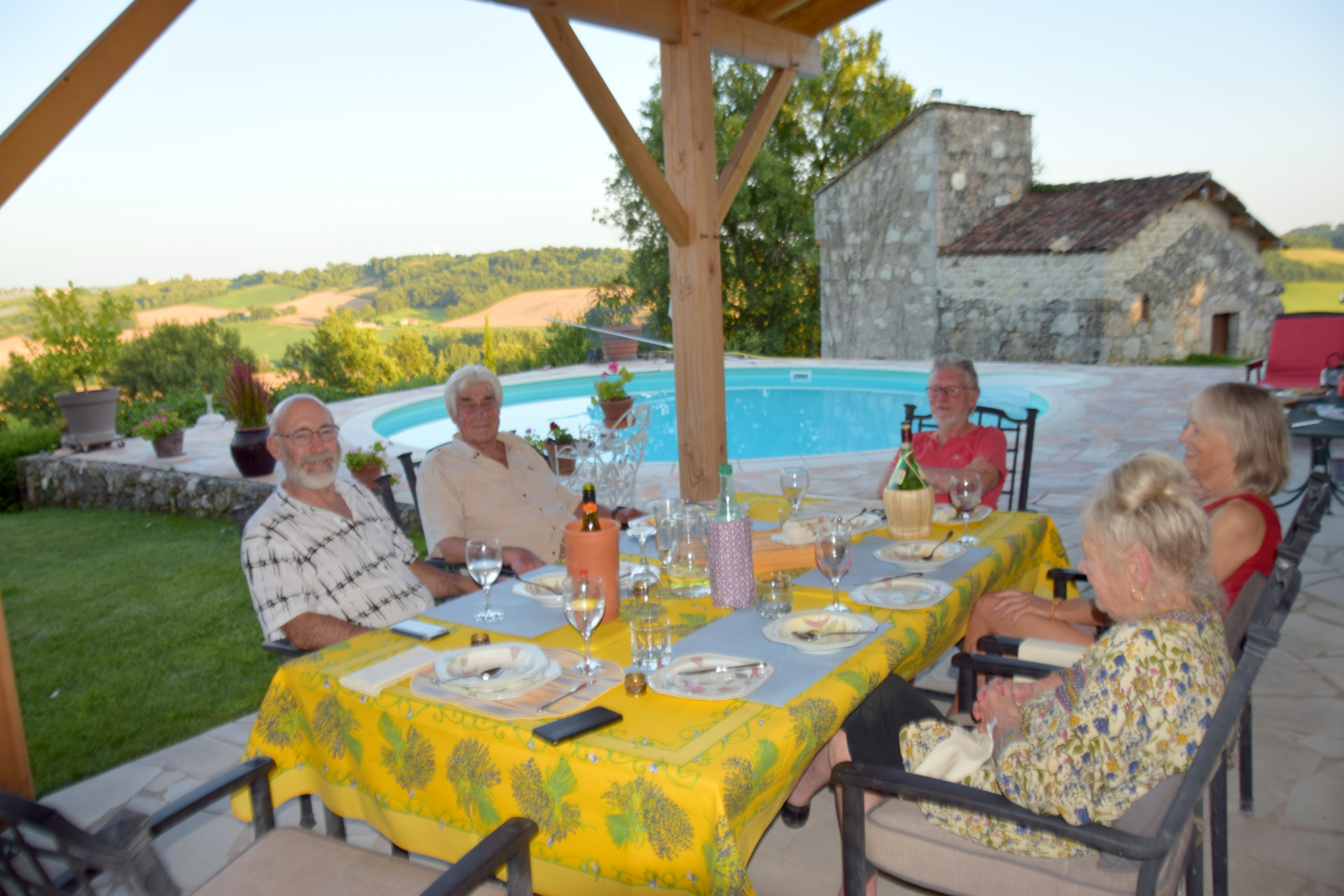
We arrived at Mike & Jane’s place mid afternoon and I got the tour of the section of the house that is being renovated and parked the van in some all day shade. Almost level with the help of some large ramps that Mike has. Mike was flying commercially for Air Botswana in the years when I was flying (as a private pilot) there too.


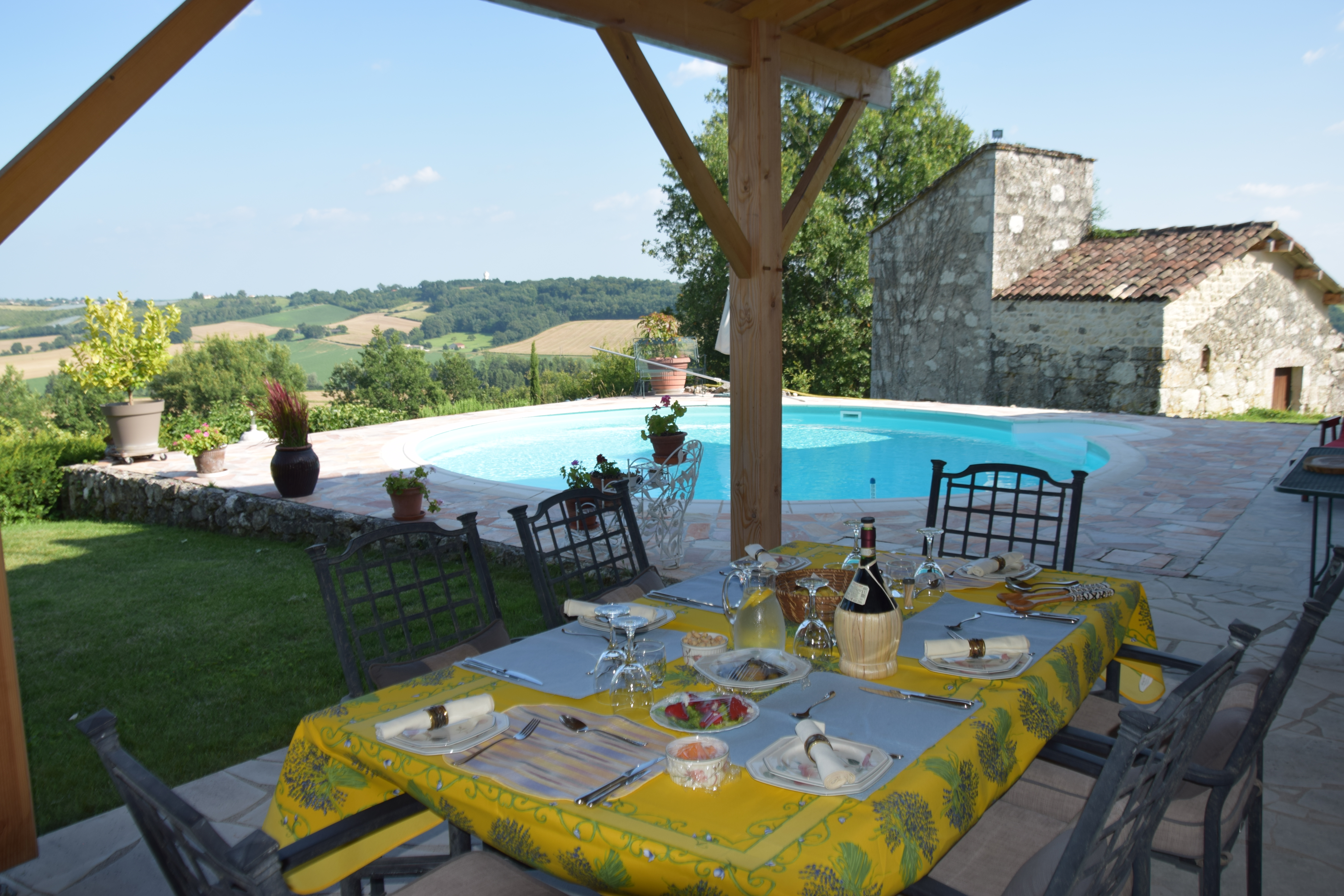
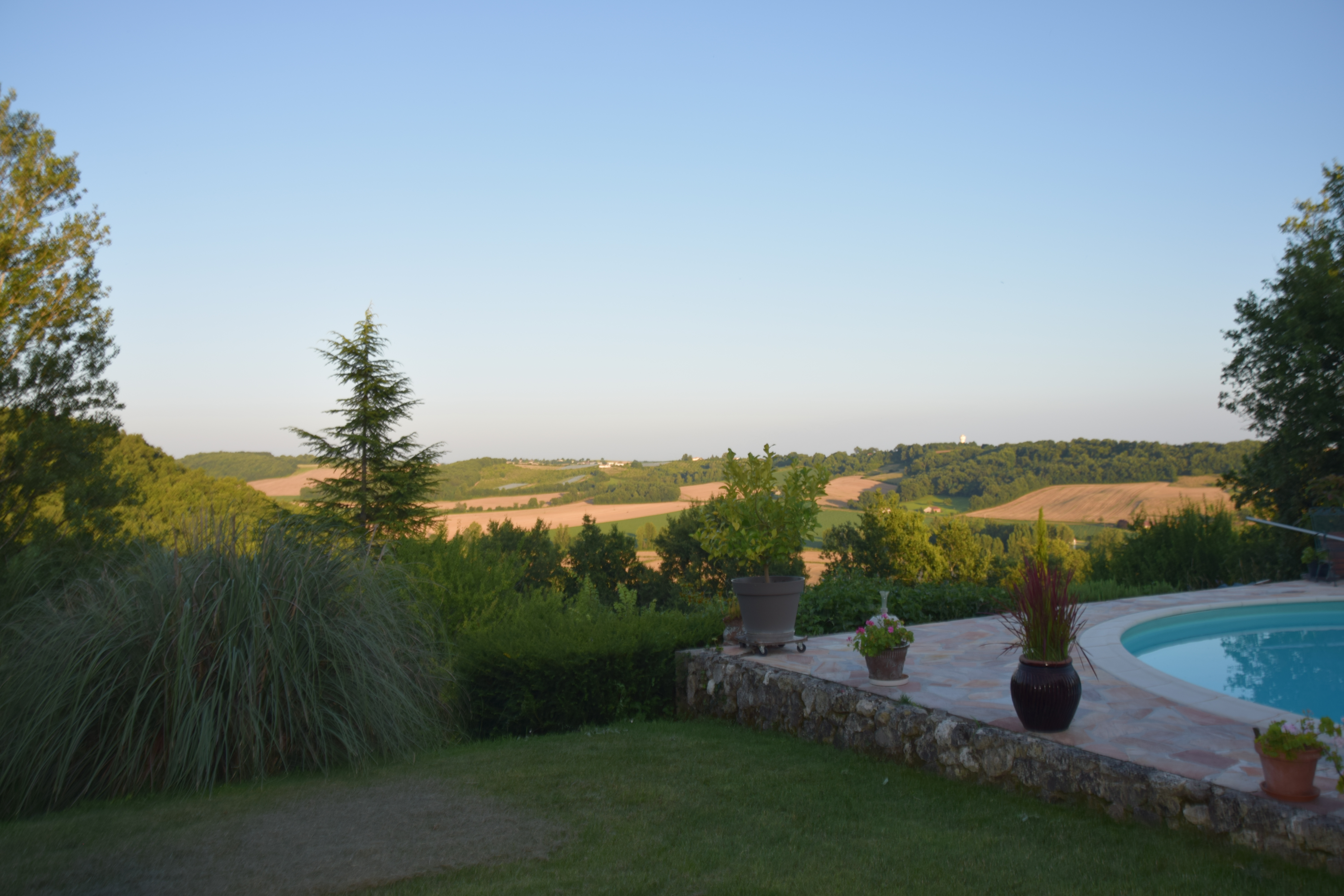
We had dinner on the terrace later and the views were stupendous. These taken early the next morning with the mist in the valley.
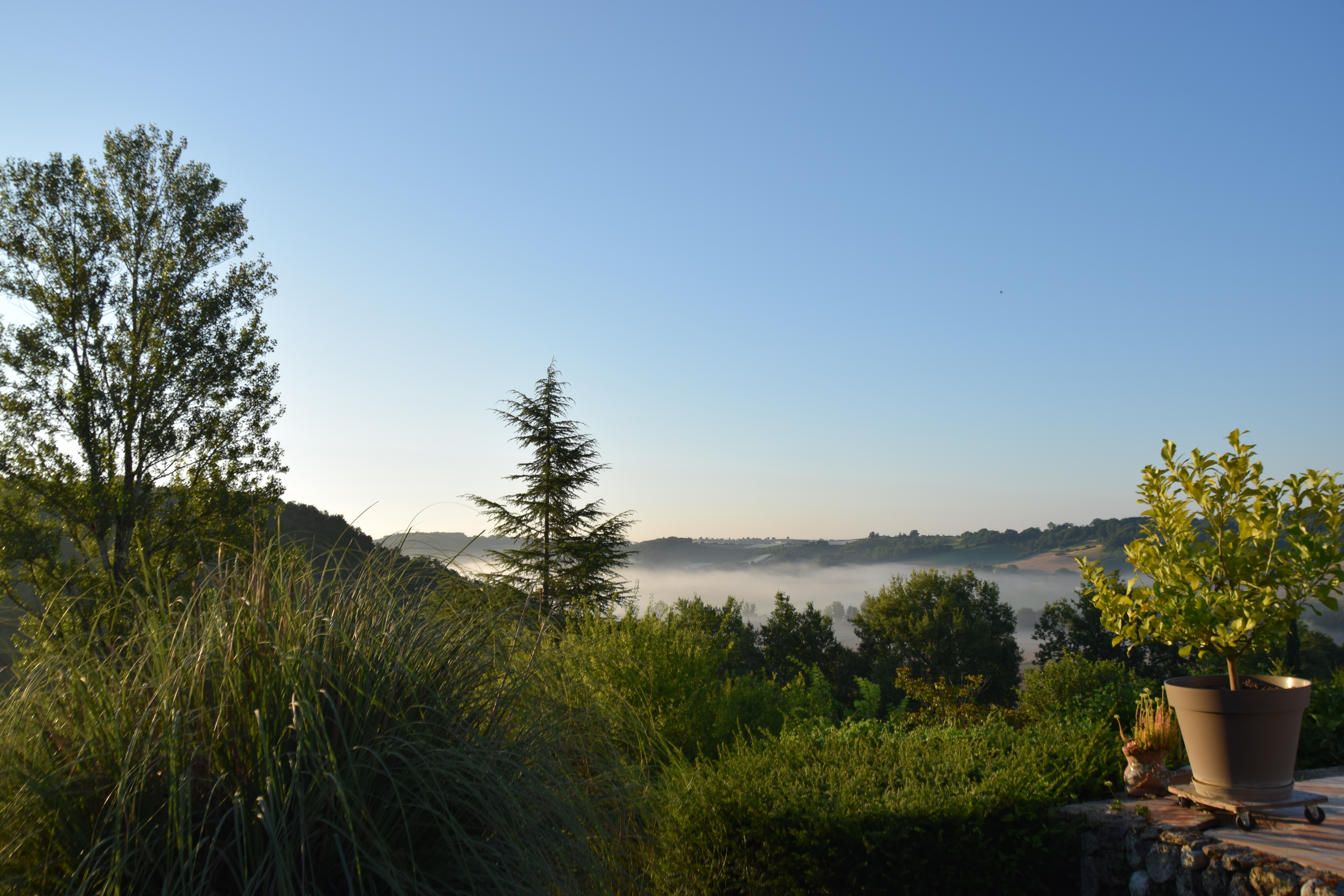
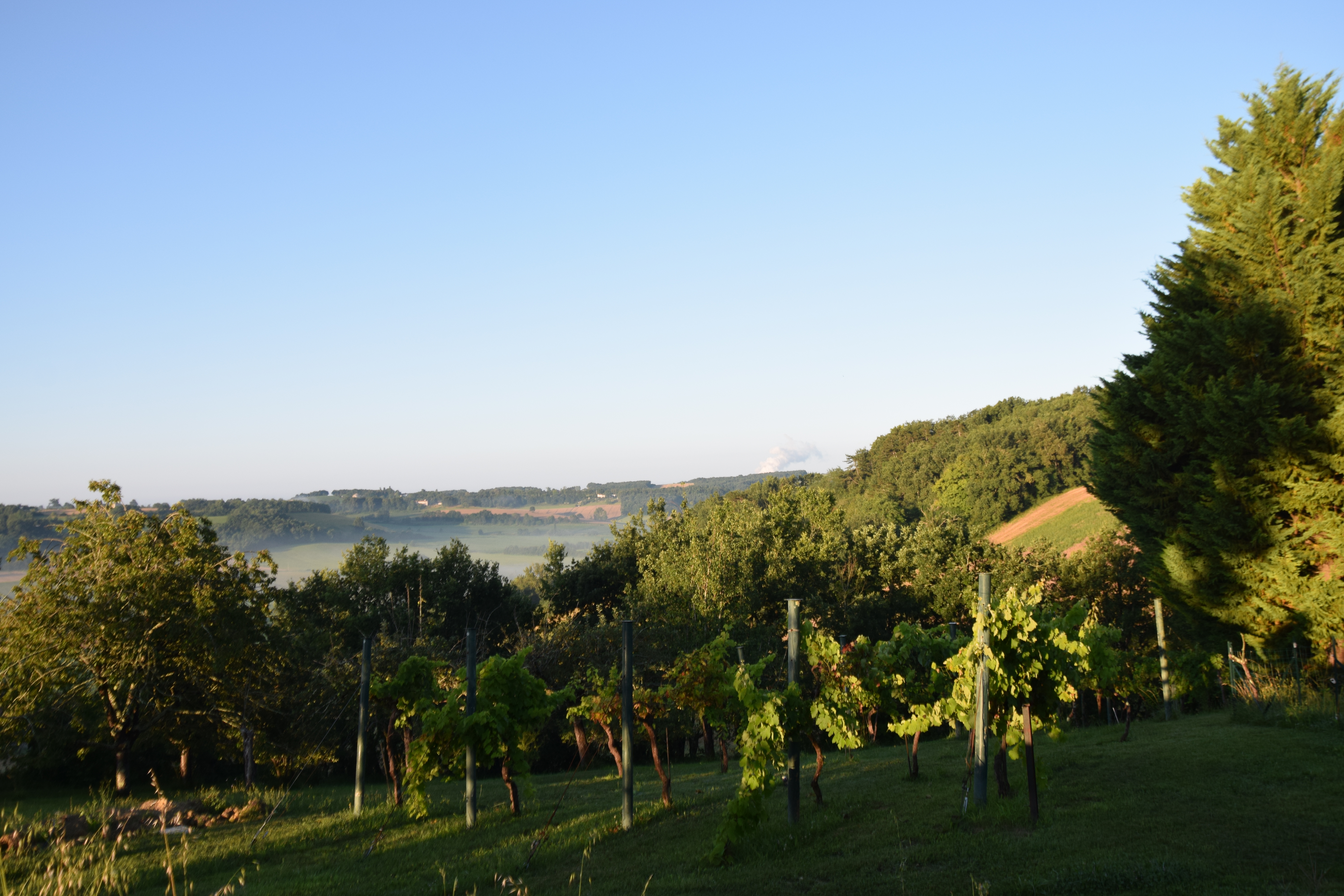
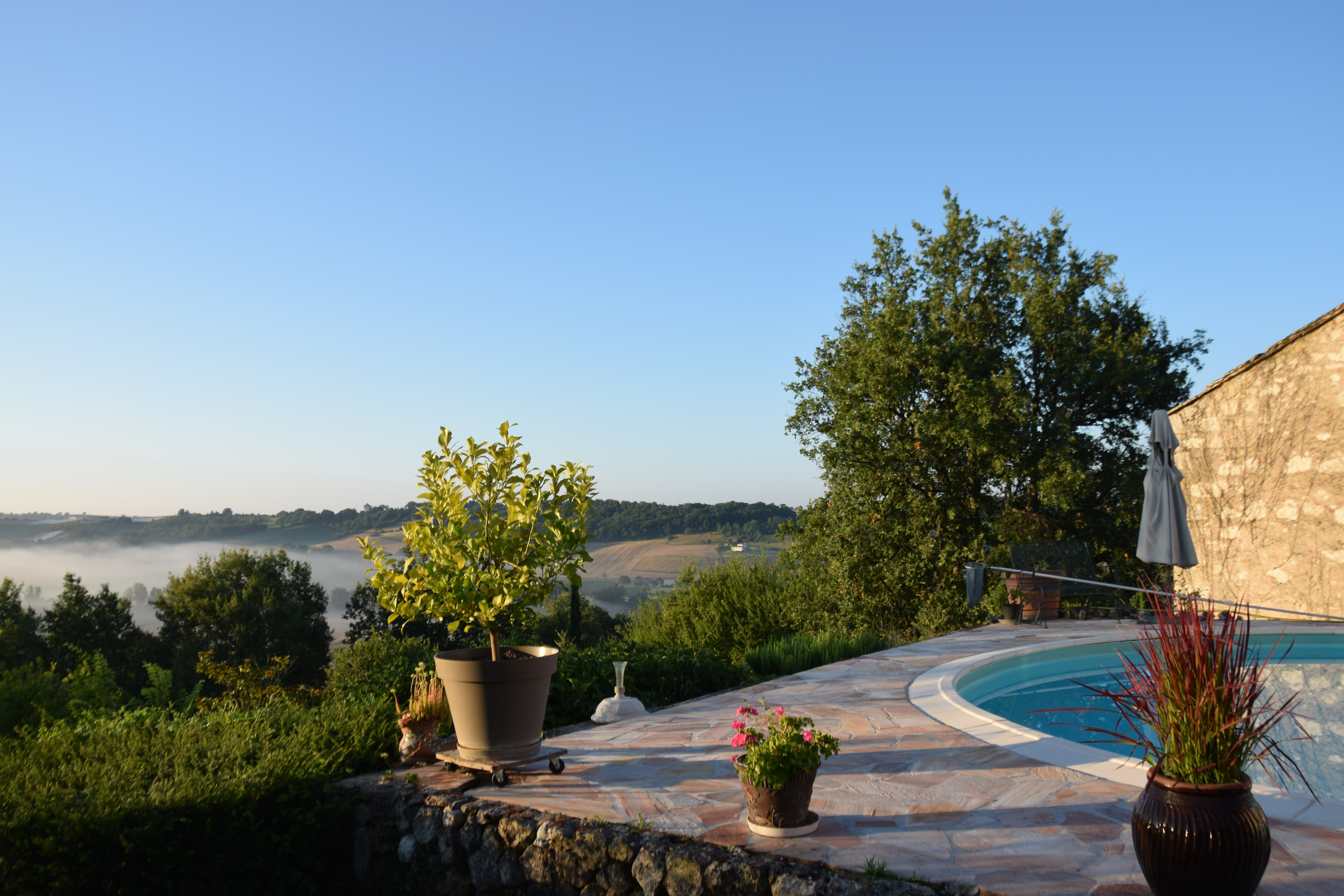
17th Cassidy and I took an early morning walk to the village which was formally walled. The “new” C18th church, constructed after the original one burned down, and the Lavoir are outside where the walls would have been.
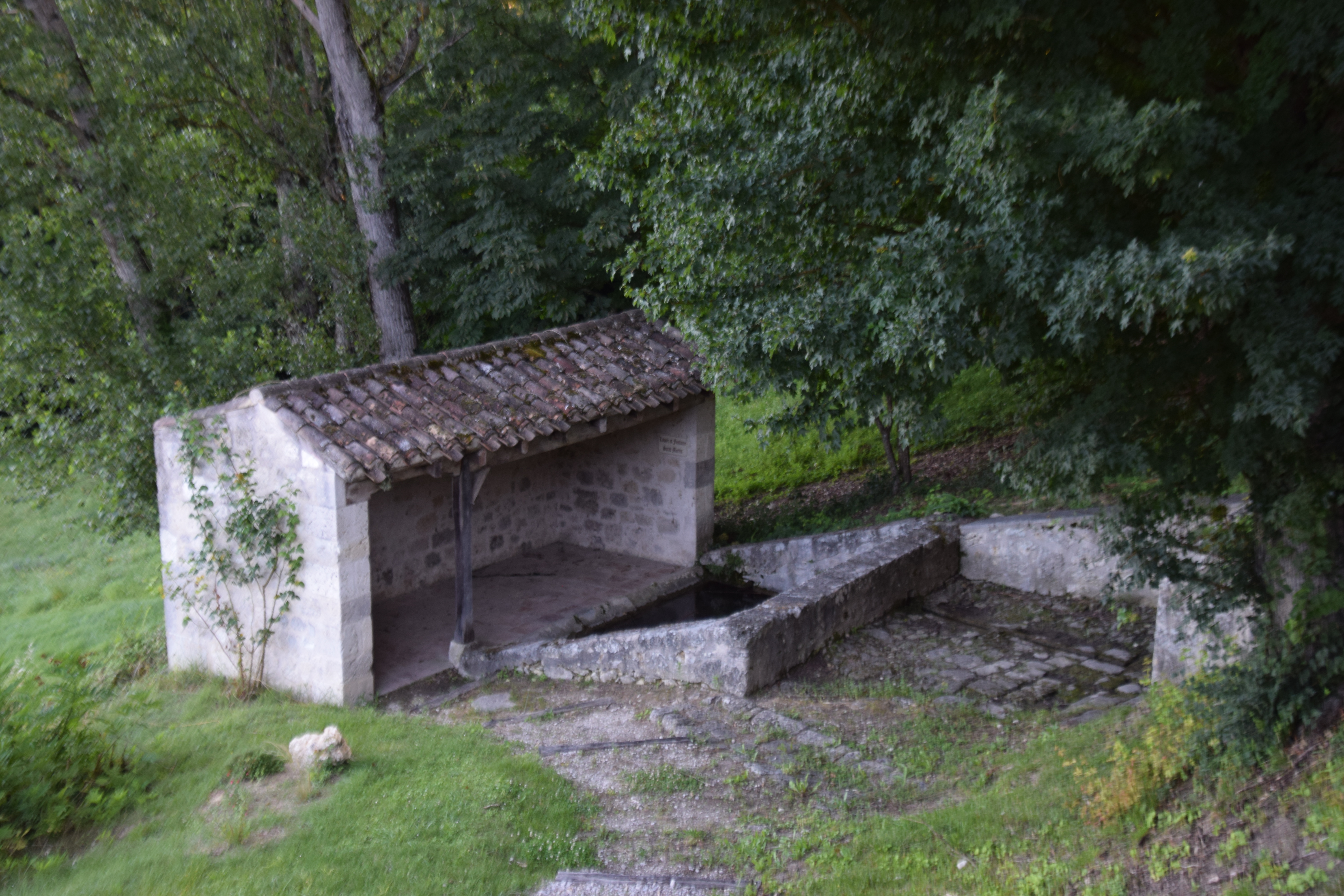

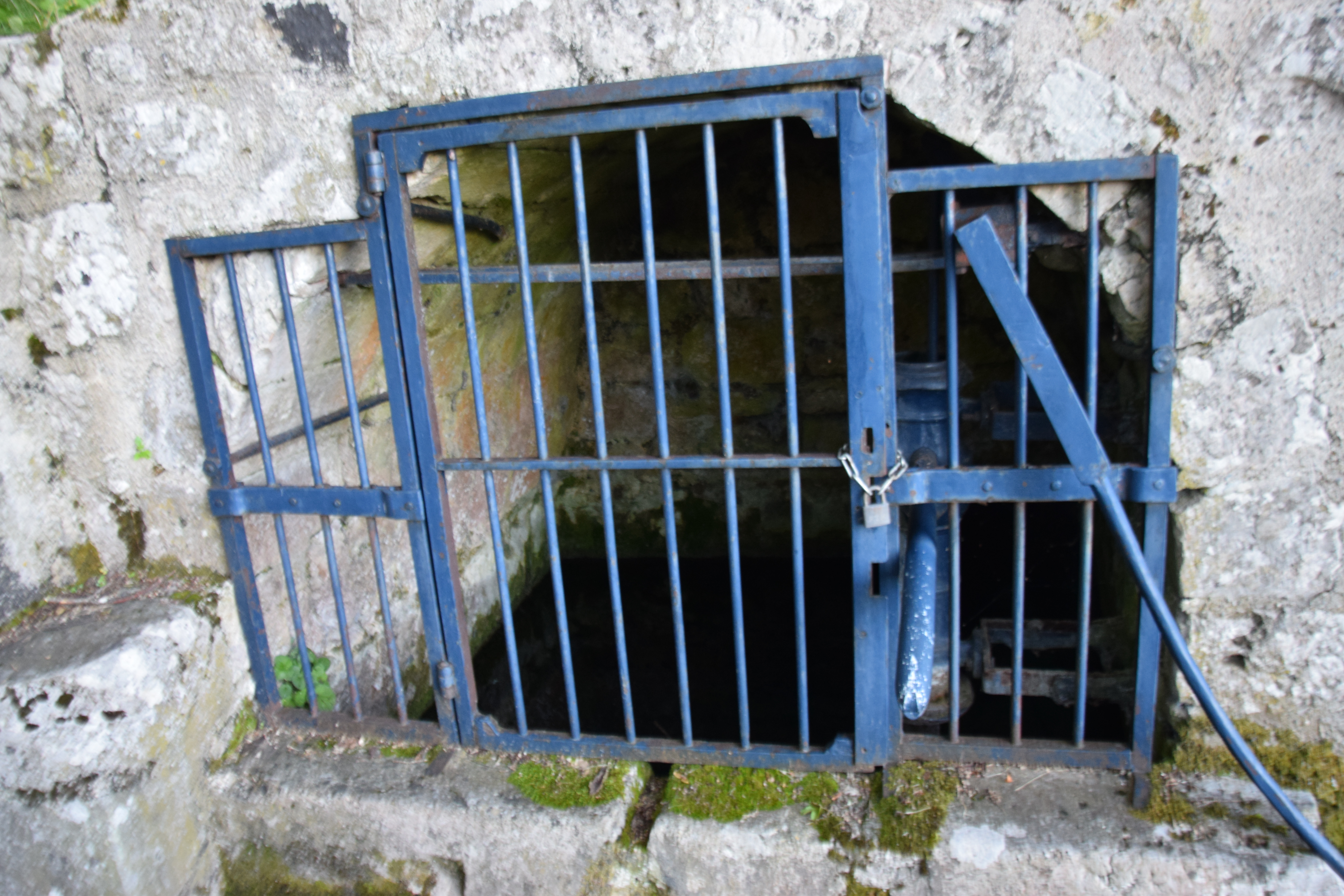

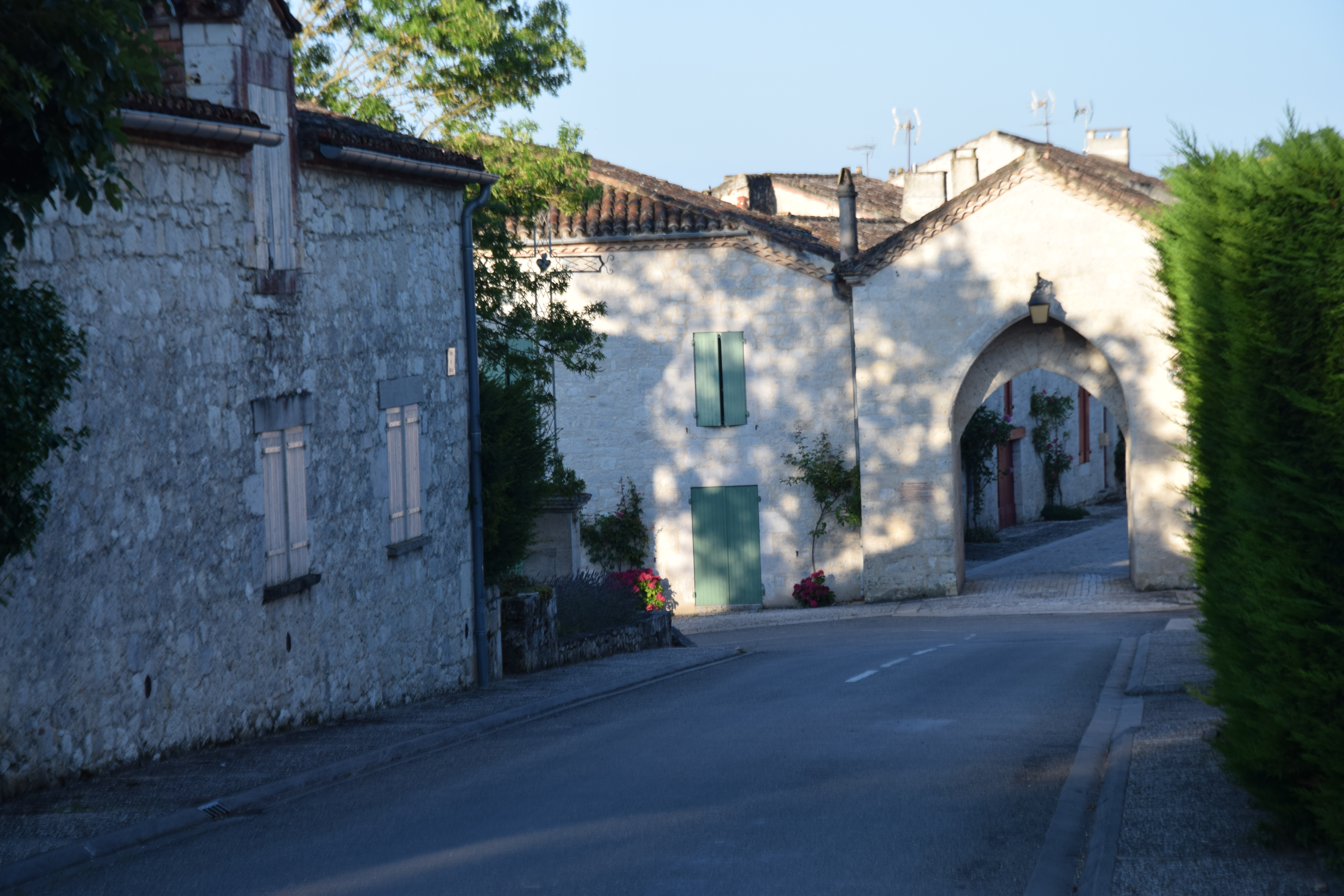
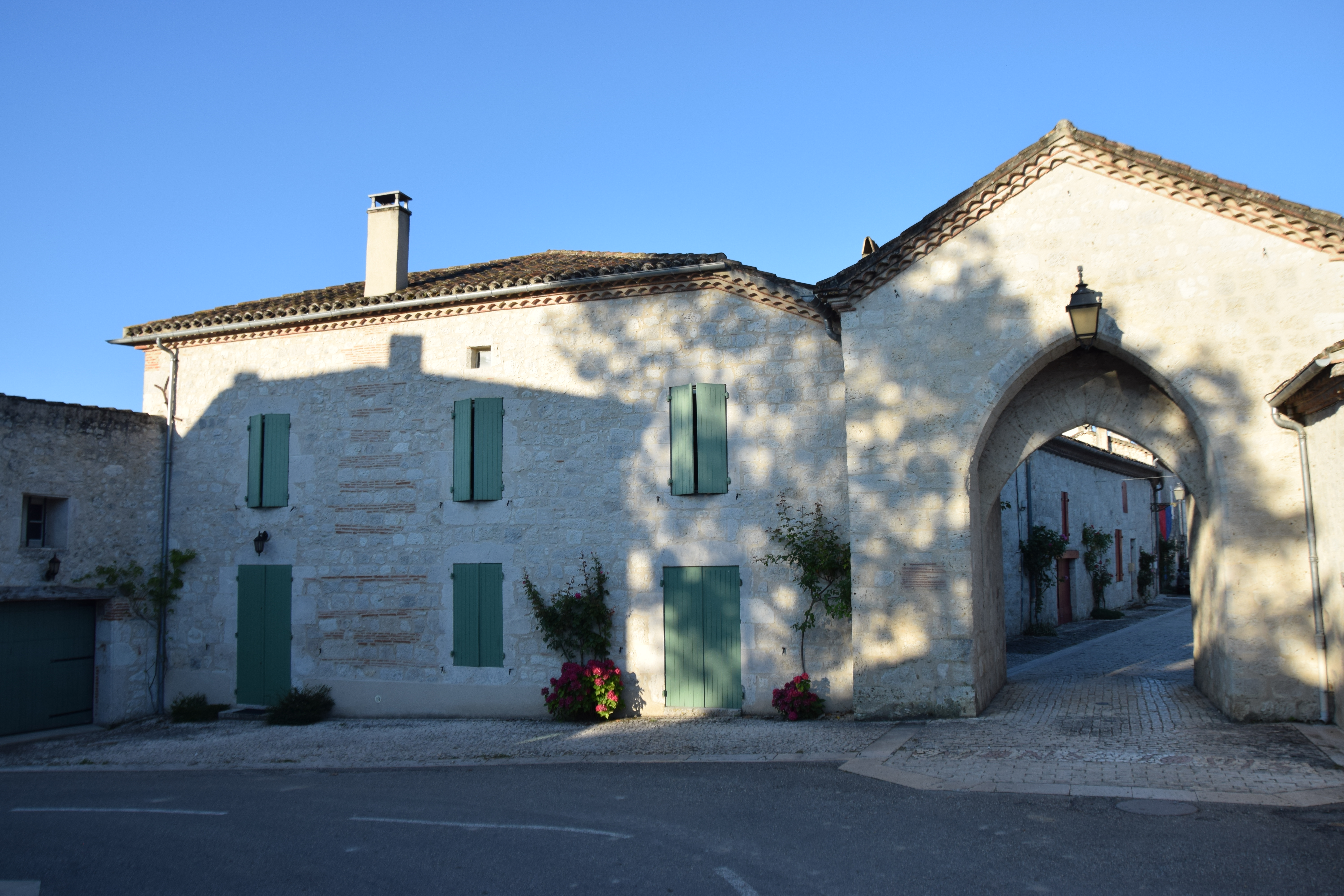
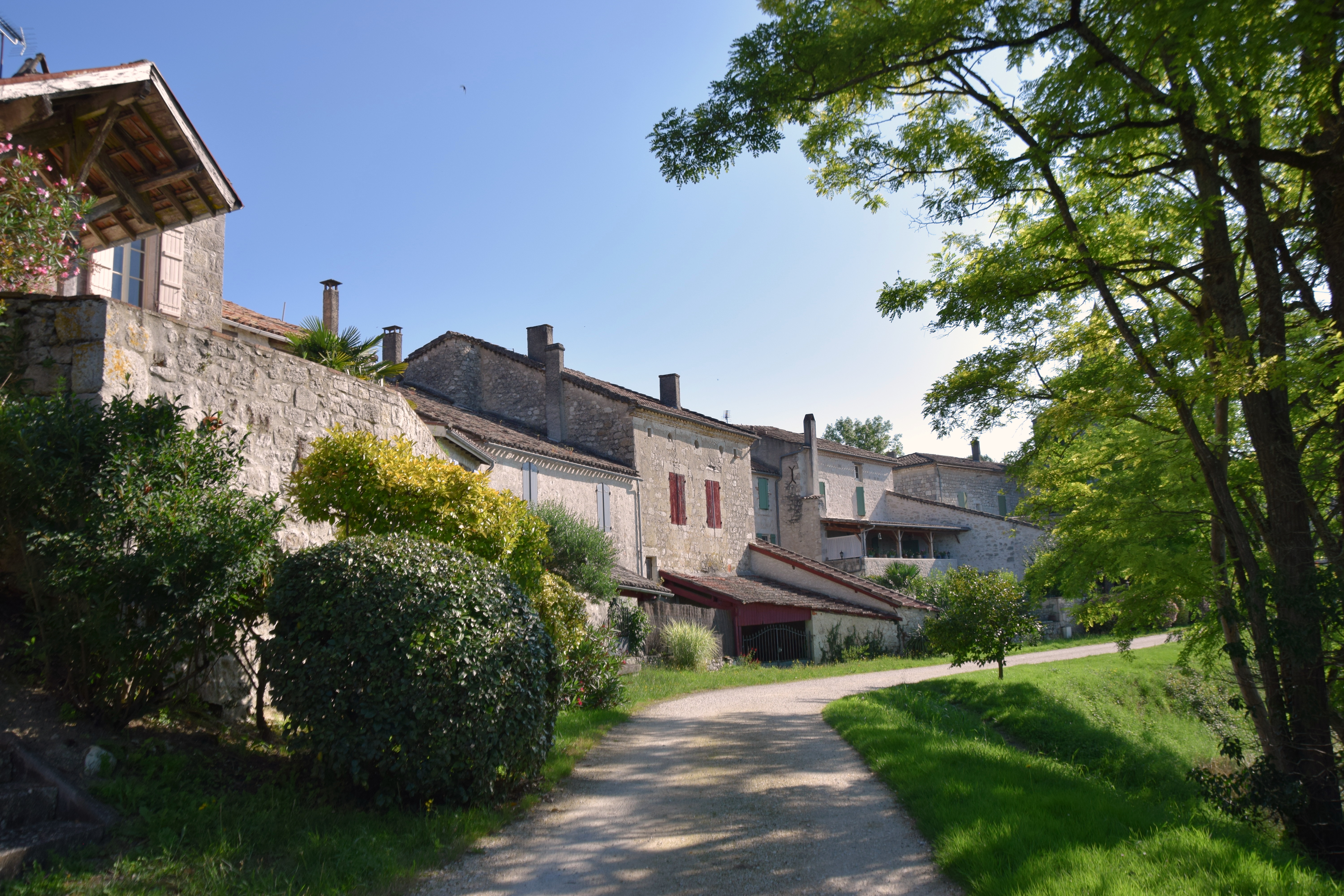
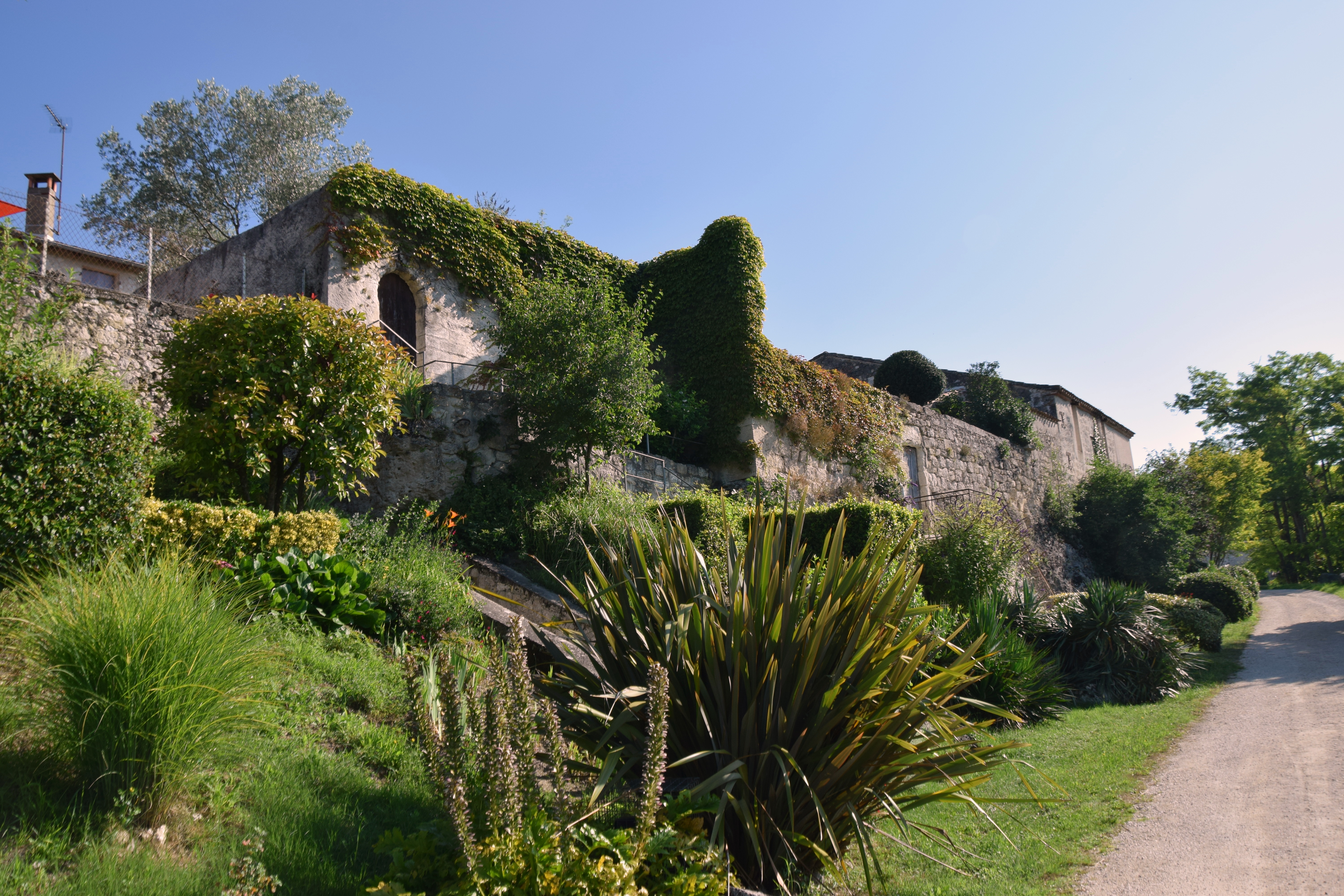
The village is entered by and arch and is composed of two streets that lead off from the arch, [part and rejoin again at the end of the village. It is well kept and the old houses are charming. Another “chocolate box” village.
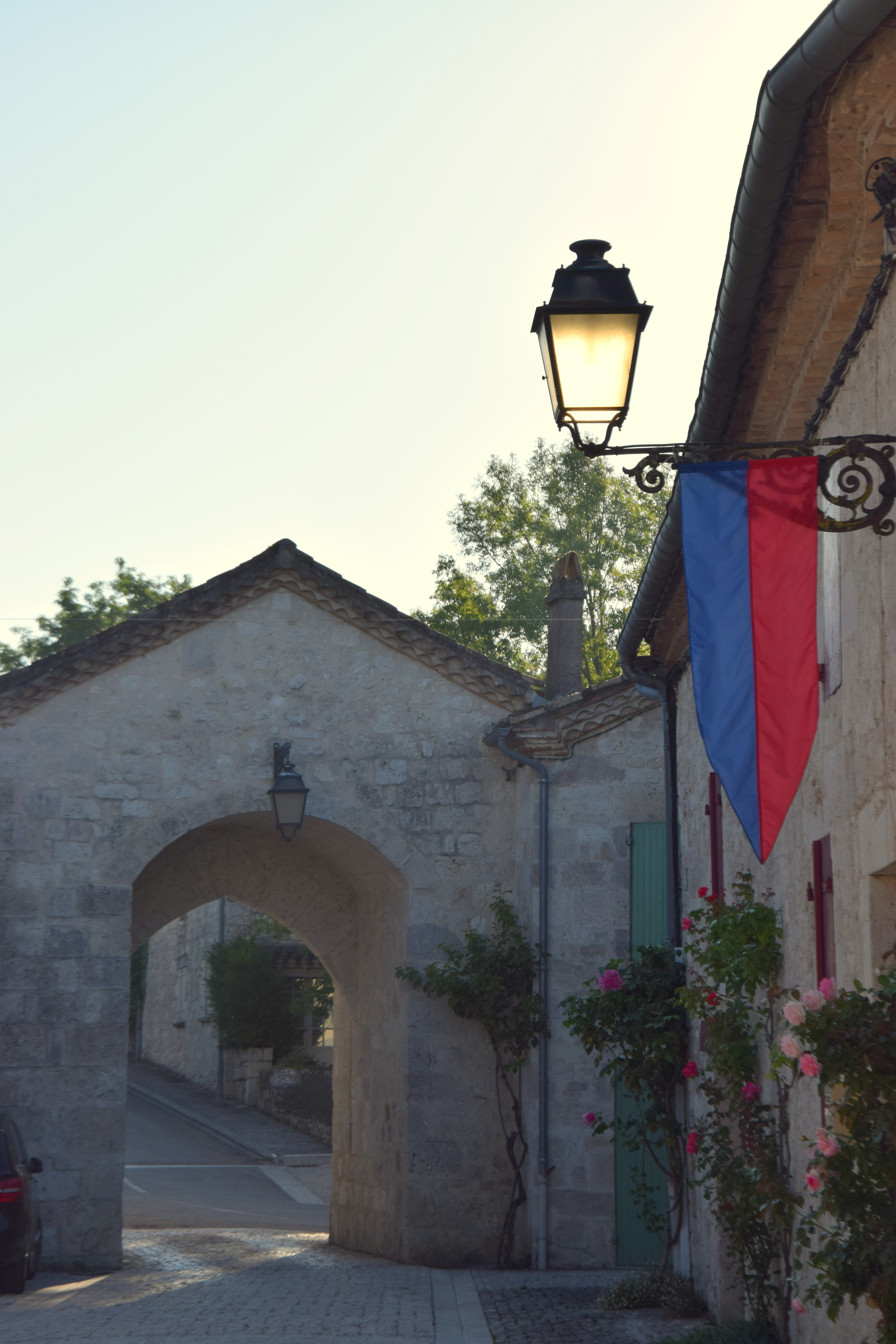

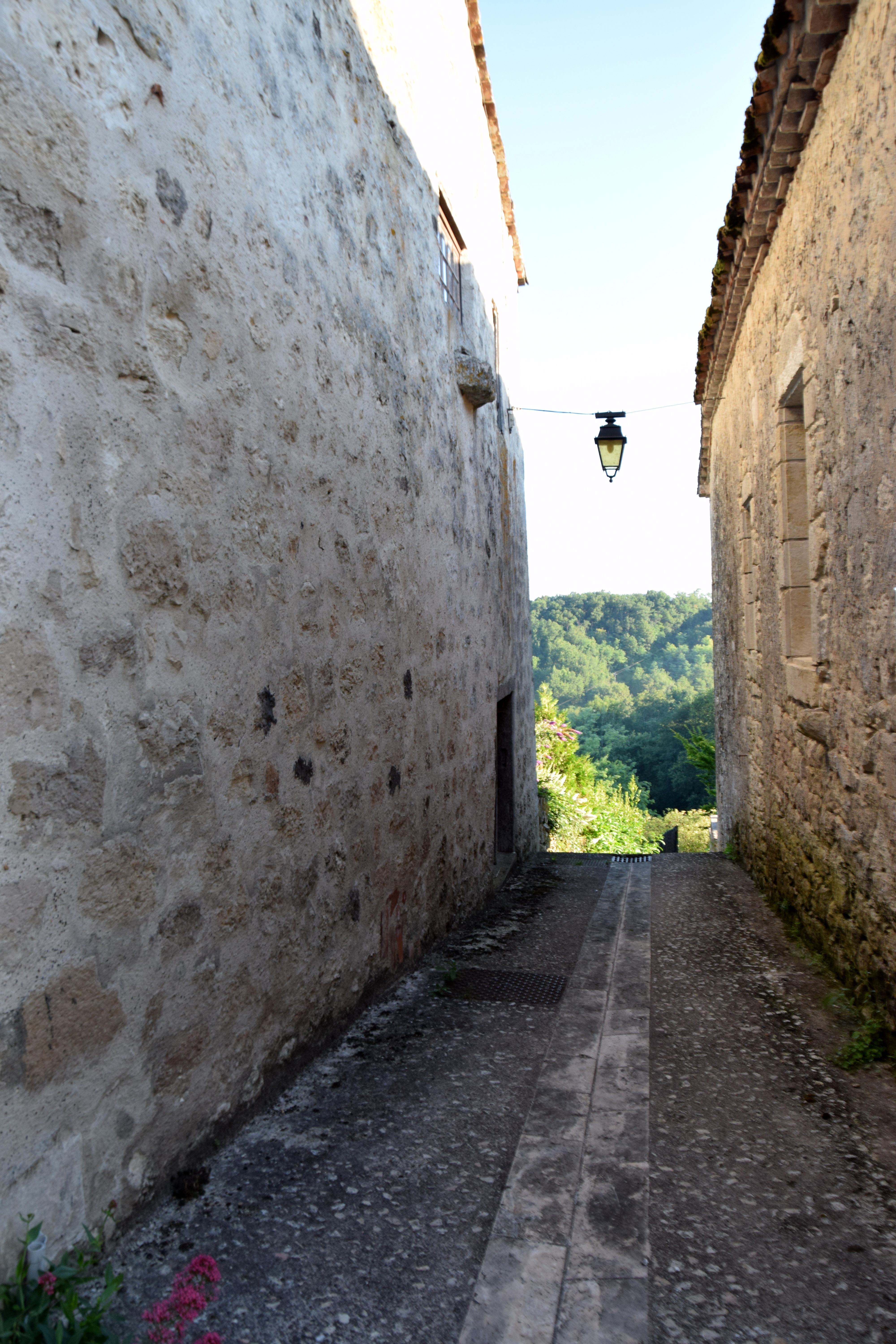

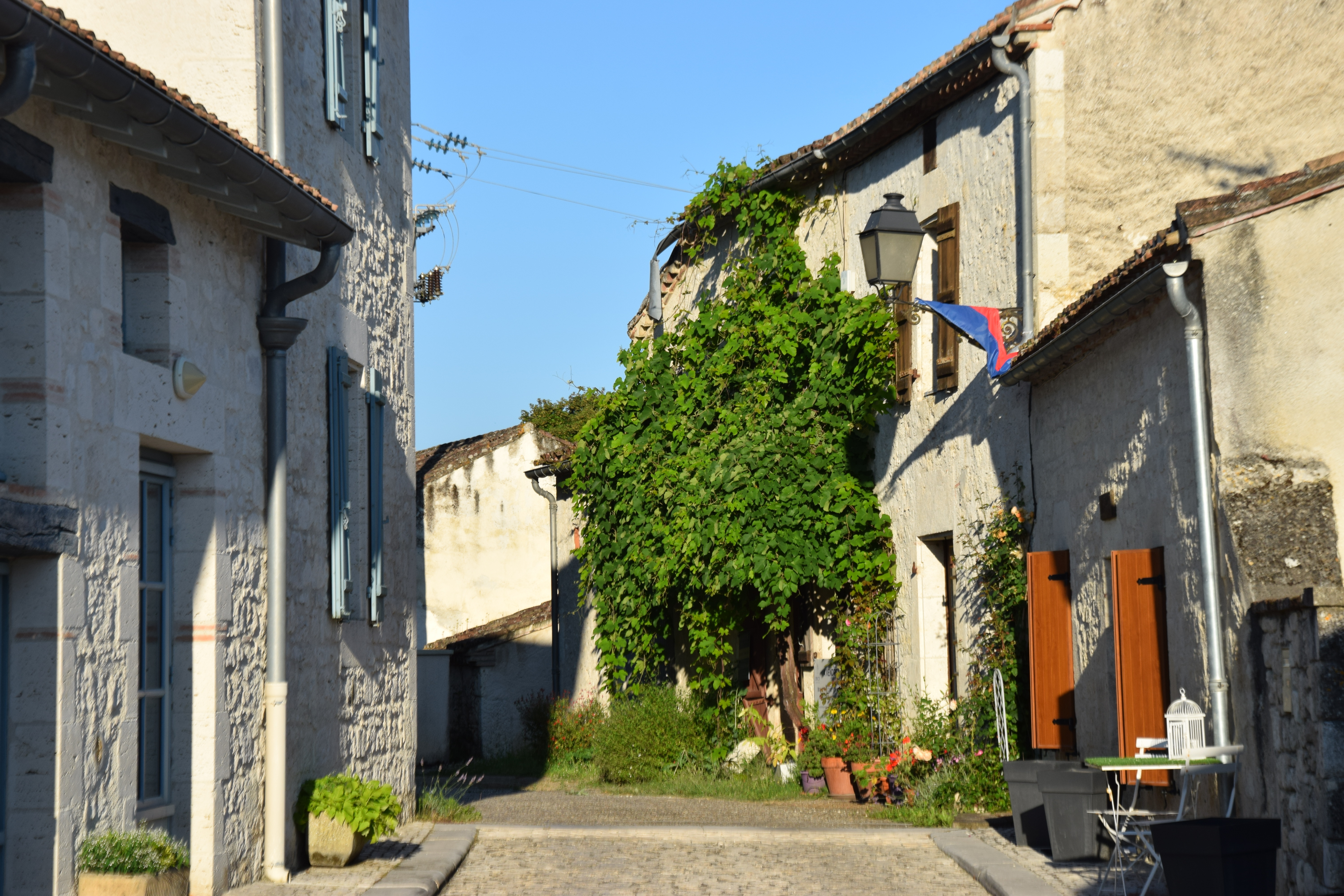

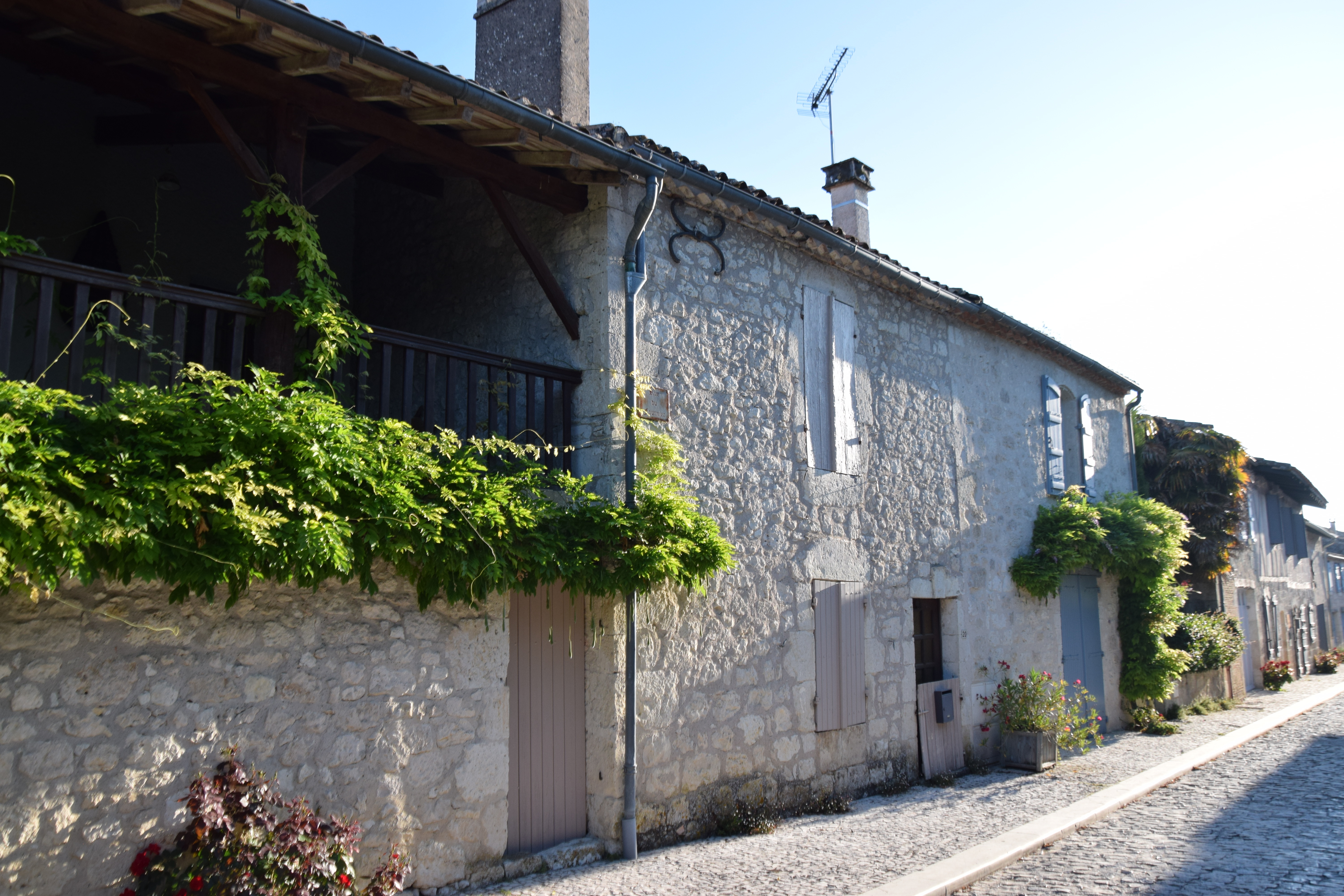
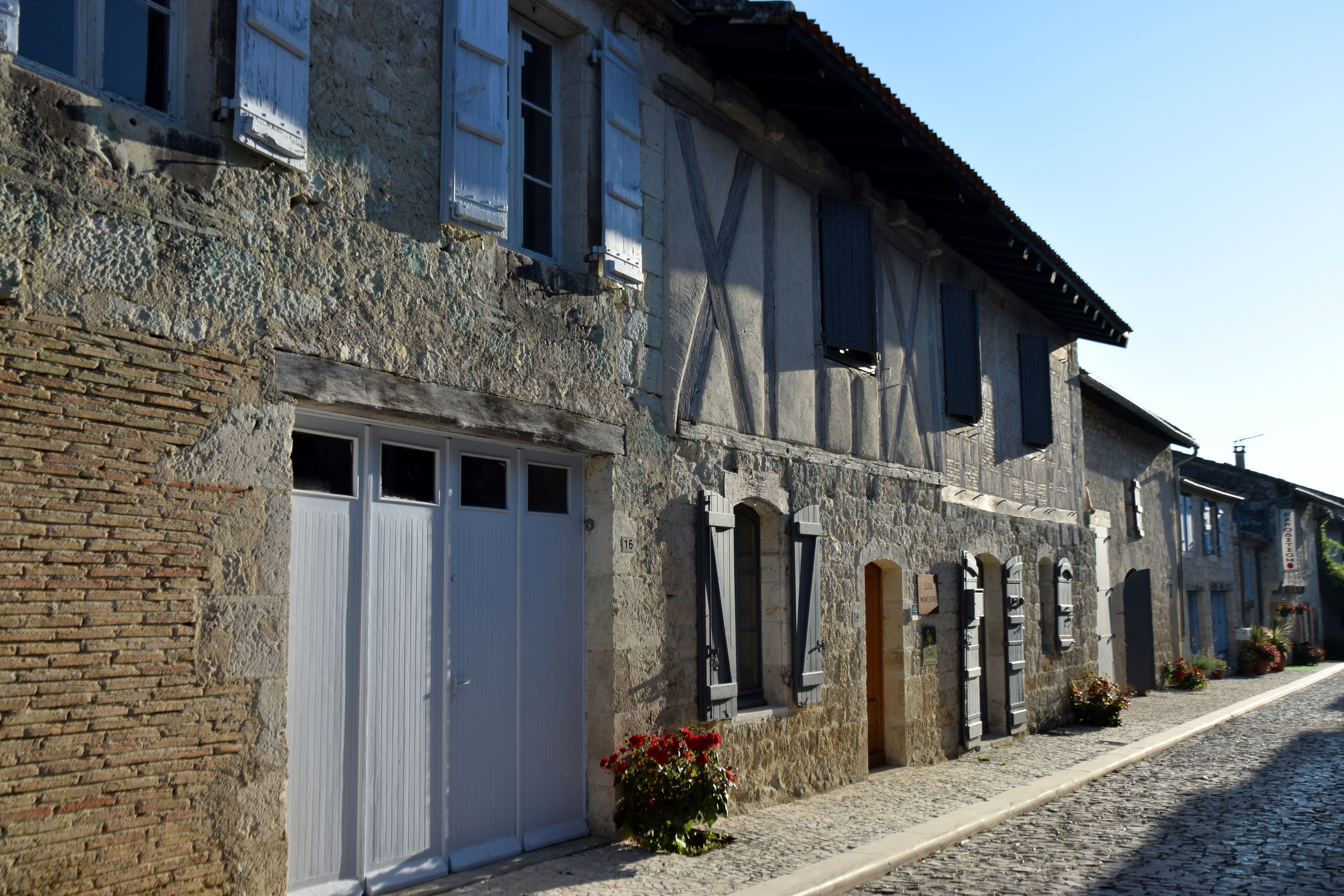
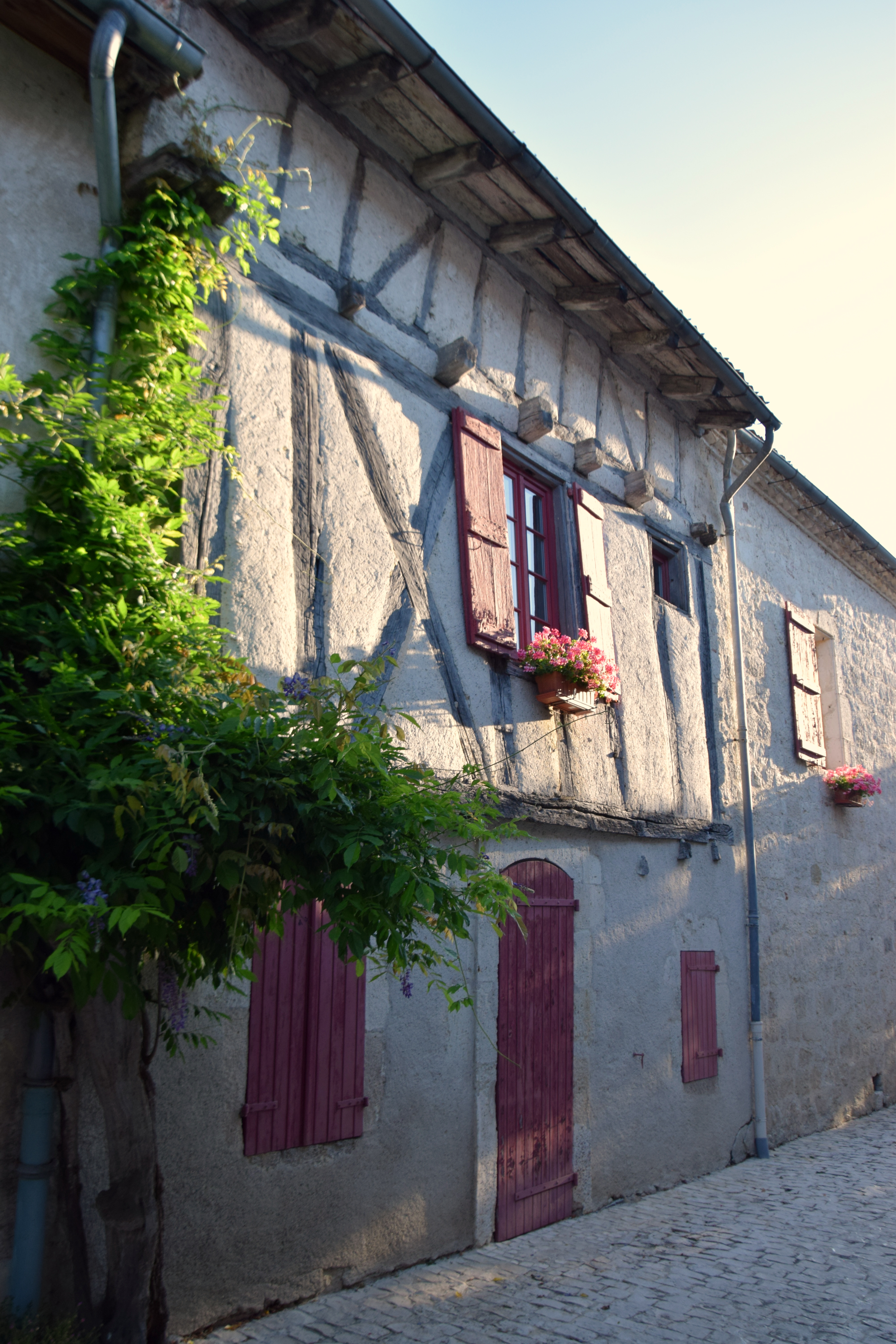

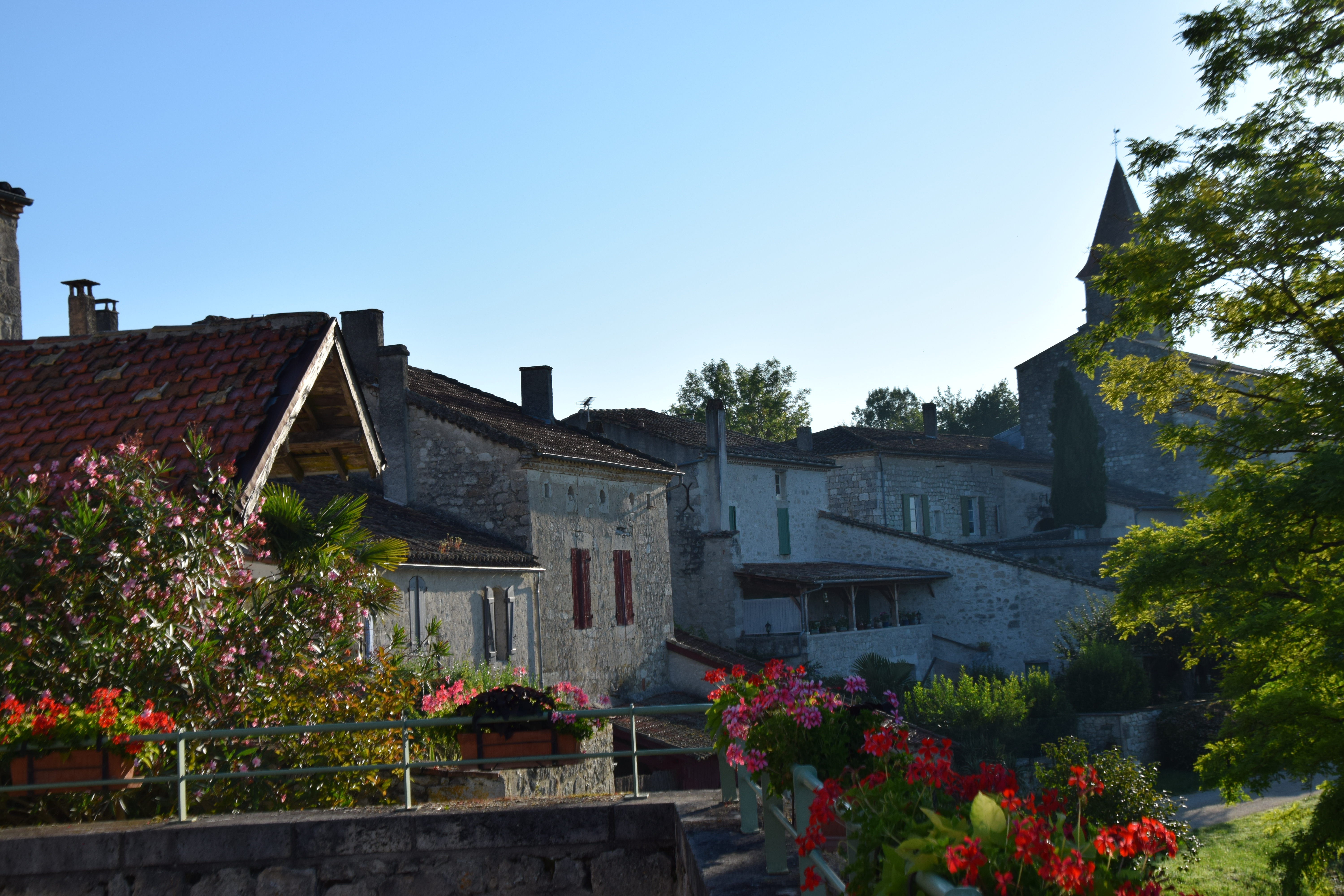
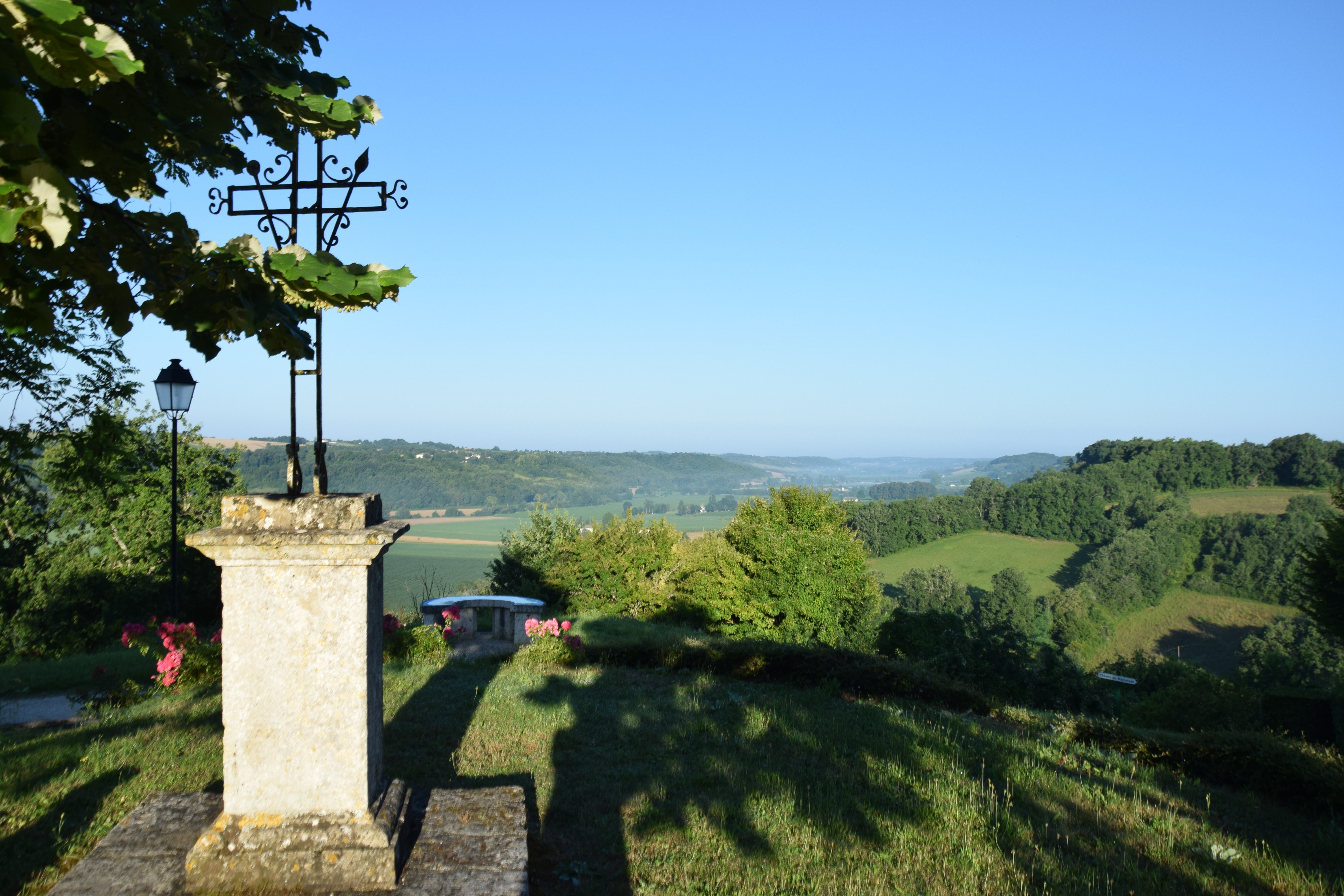
From the end of the village there is a view down to the valley 170m below
In the afternoon Mike took me to Valence to see the two lavoirs there. It is perhaps worth going over again the basis for my lavoir fetish. Lavoirs are constructed over a spring or stream where the fresh water comes in one side and goes out the other after passing through one or a series of basins. There purpose is to act as a public washing facility. Some in rural areas were still in use in the 1950’s. They were used by individual women for their household laundry and for women who took in laundry from the “Big House” in the area. Traditionally men and children were banned from the lavoirs and they were a space where women could gossip and be as bawdy as they wished in an uninhibited way. No wonder I find them fascinating!
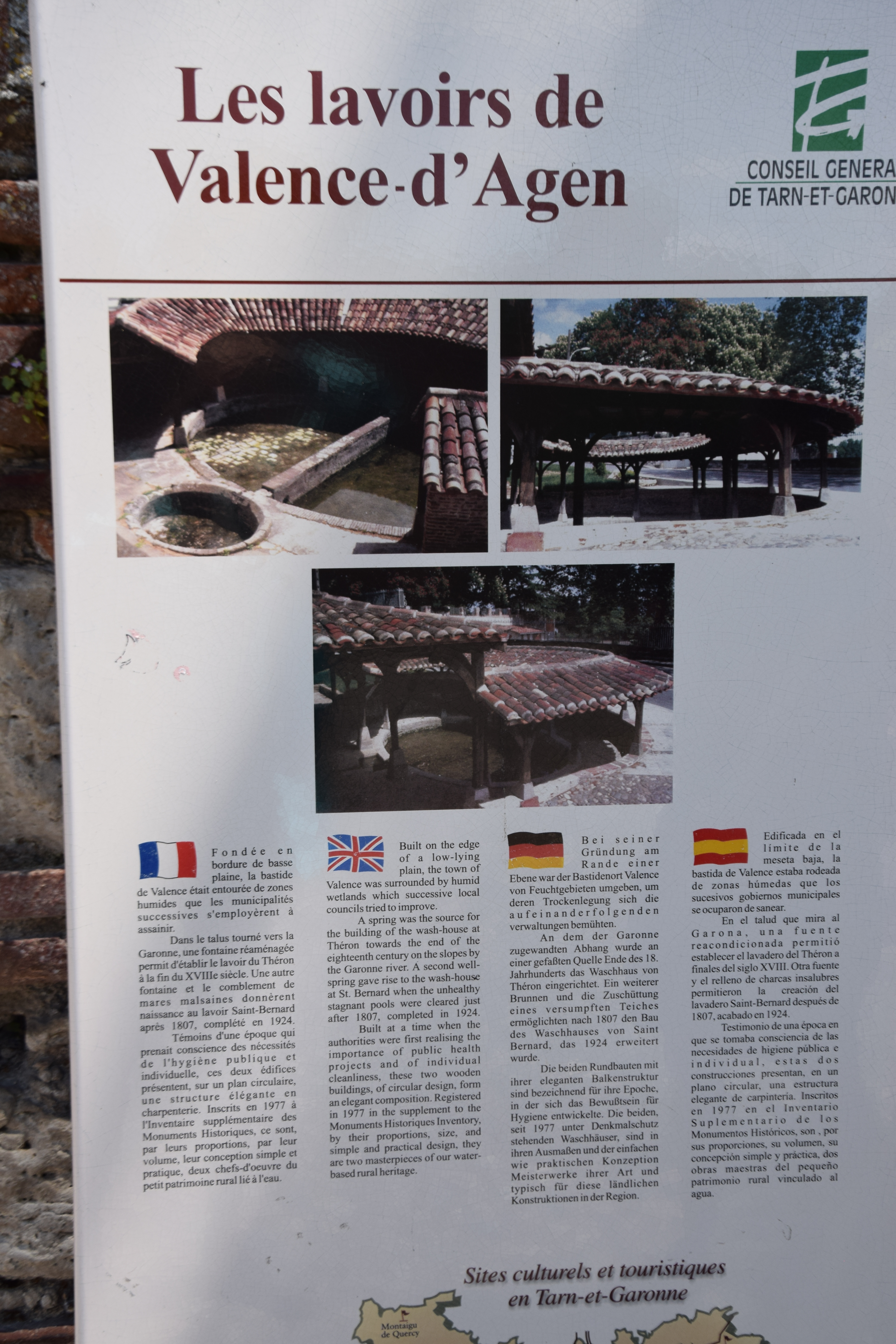
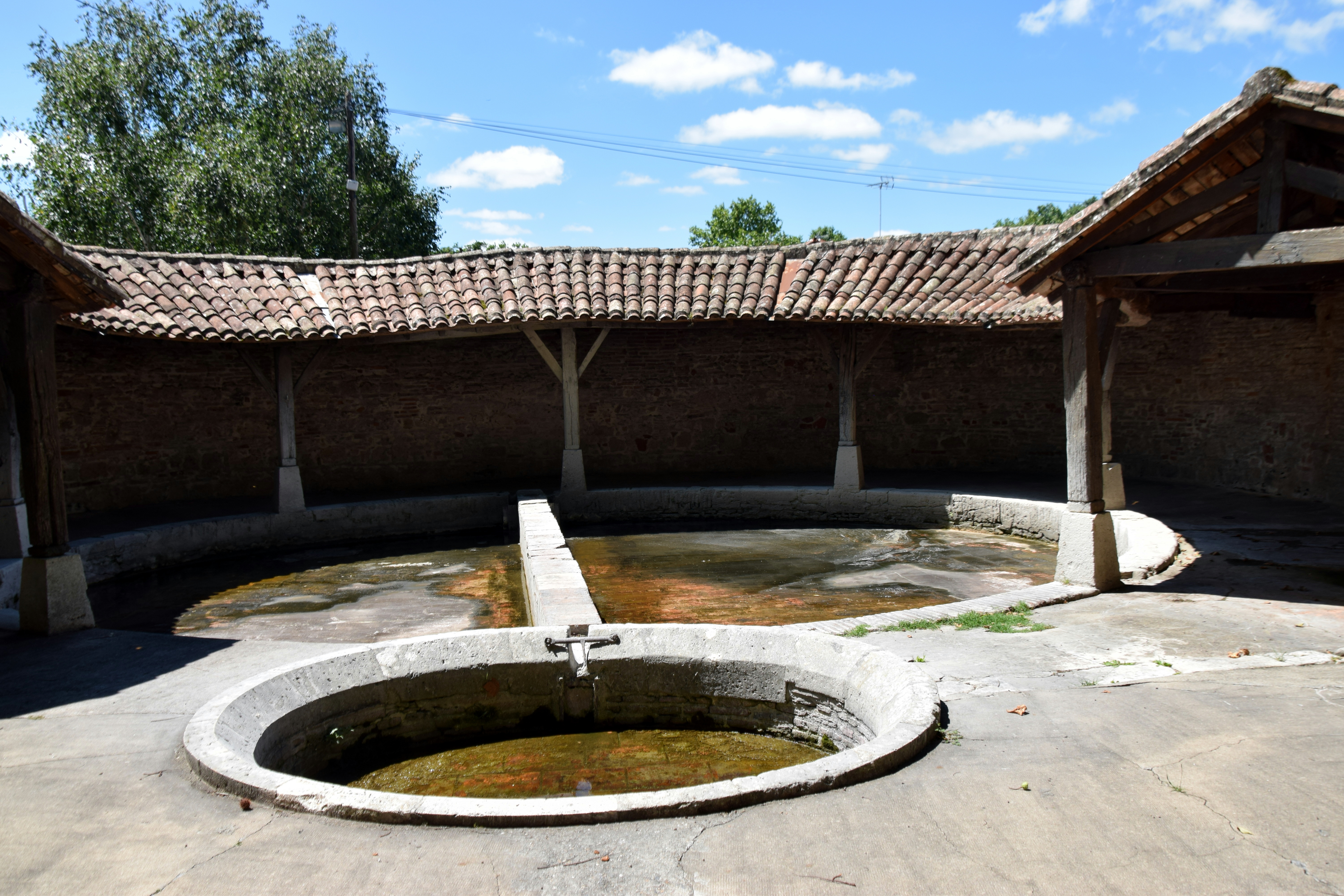

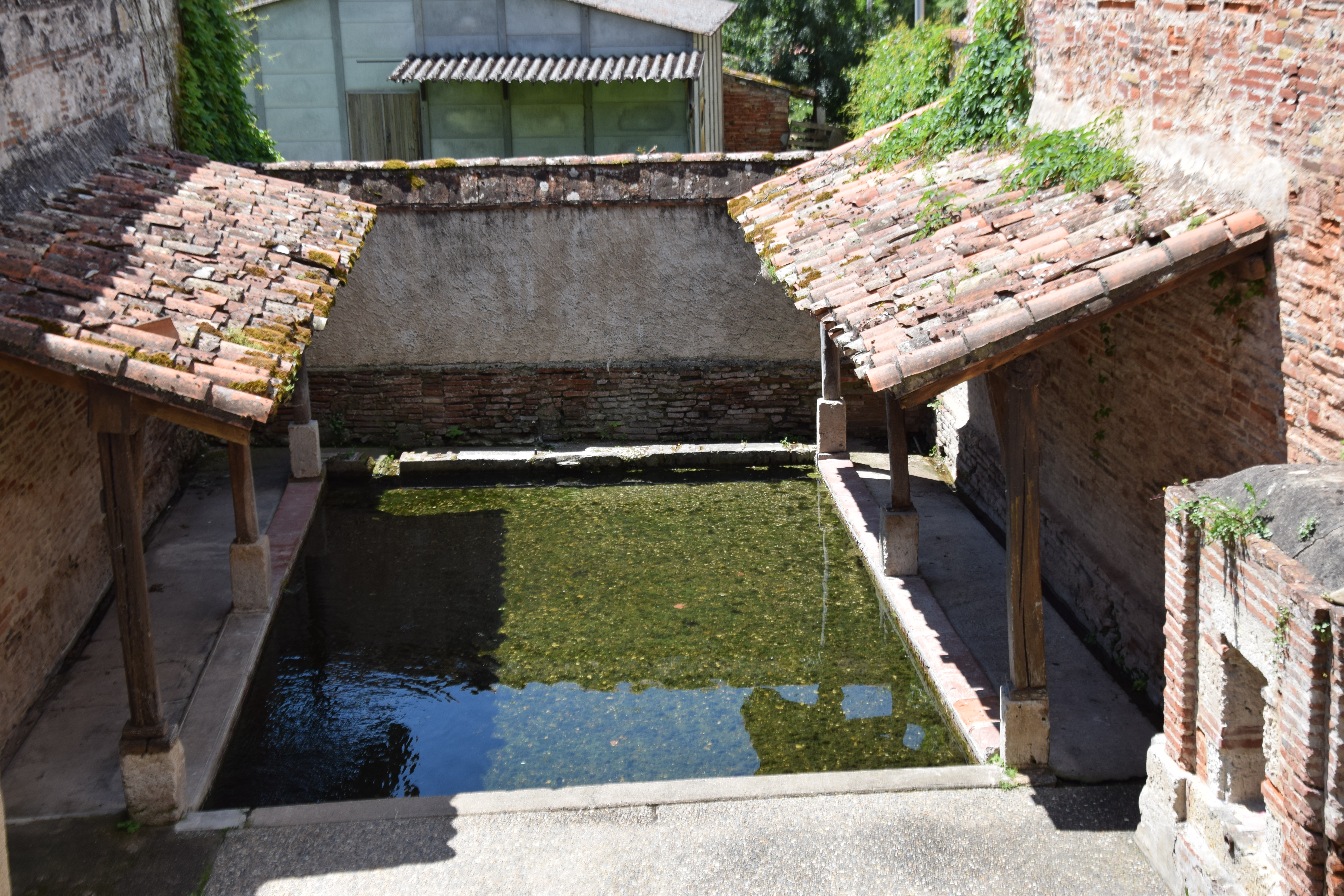

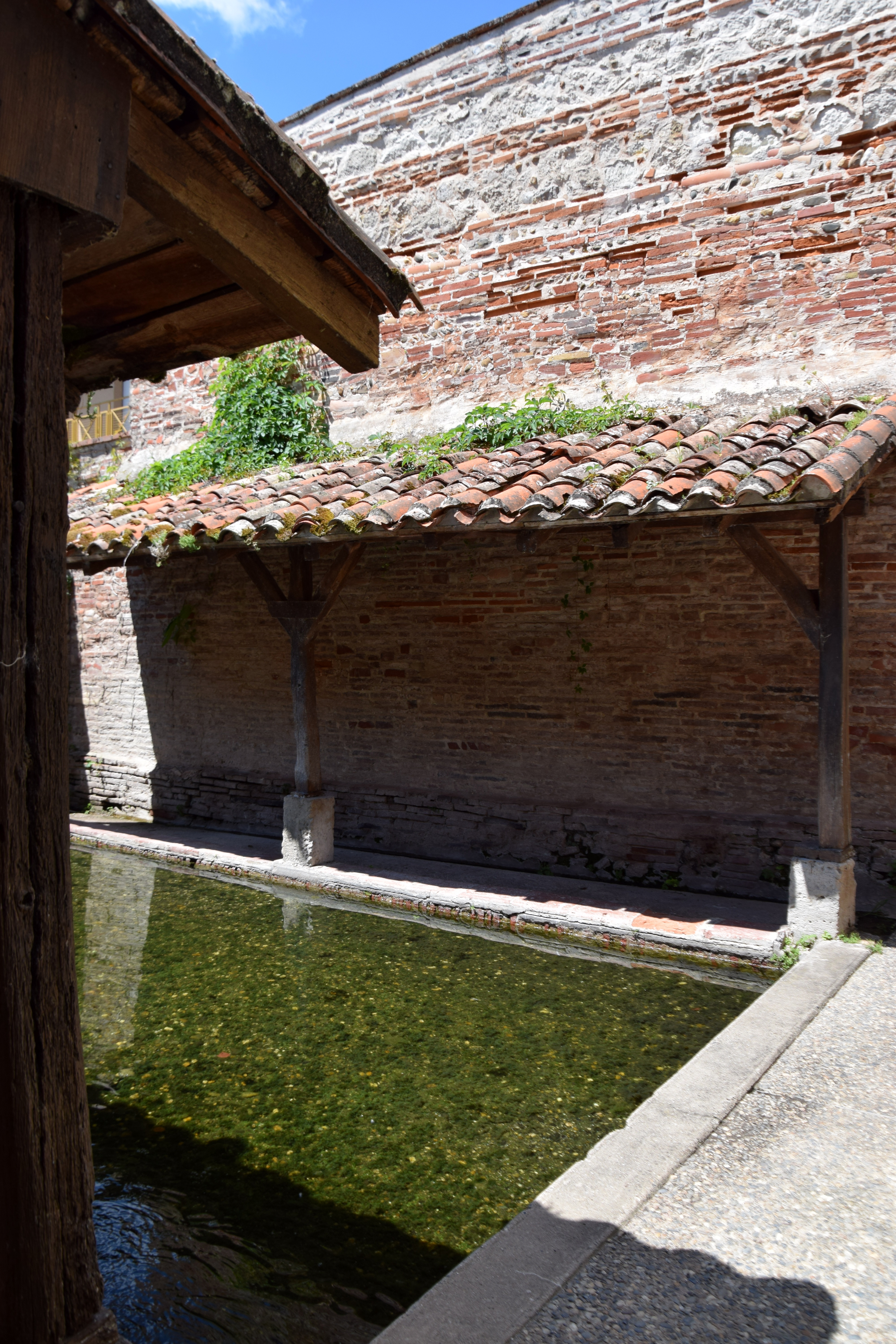
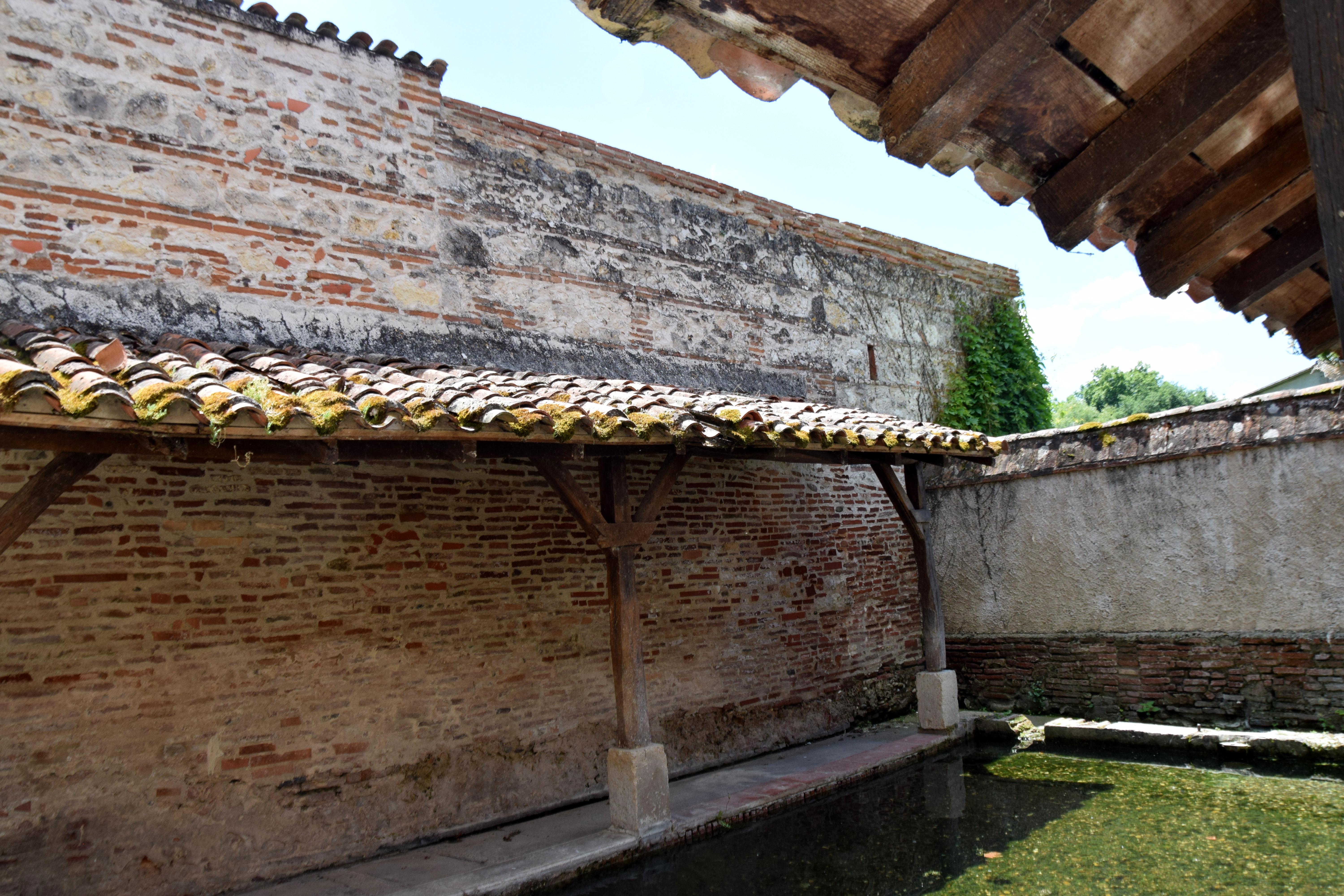
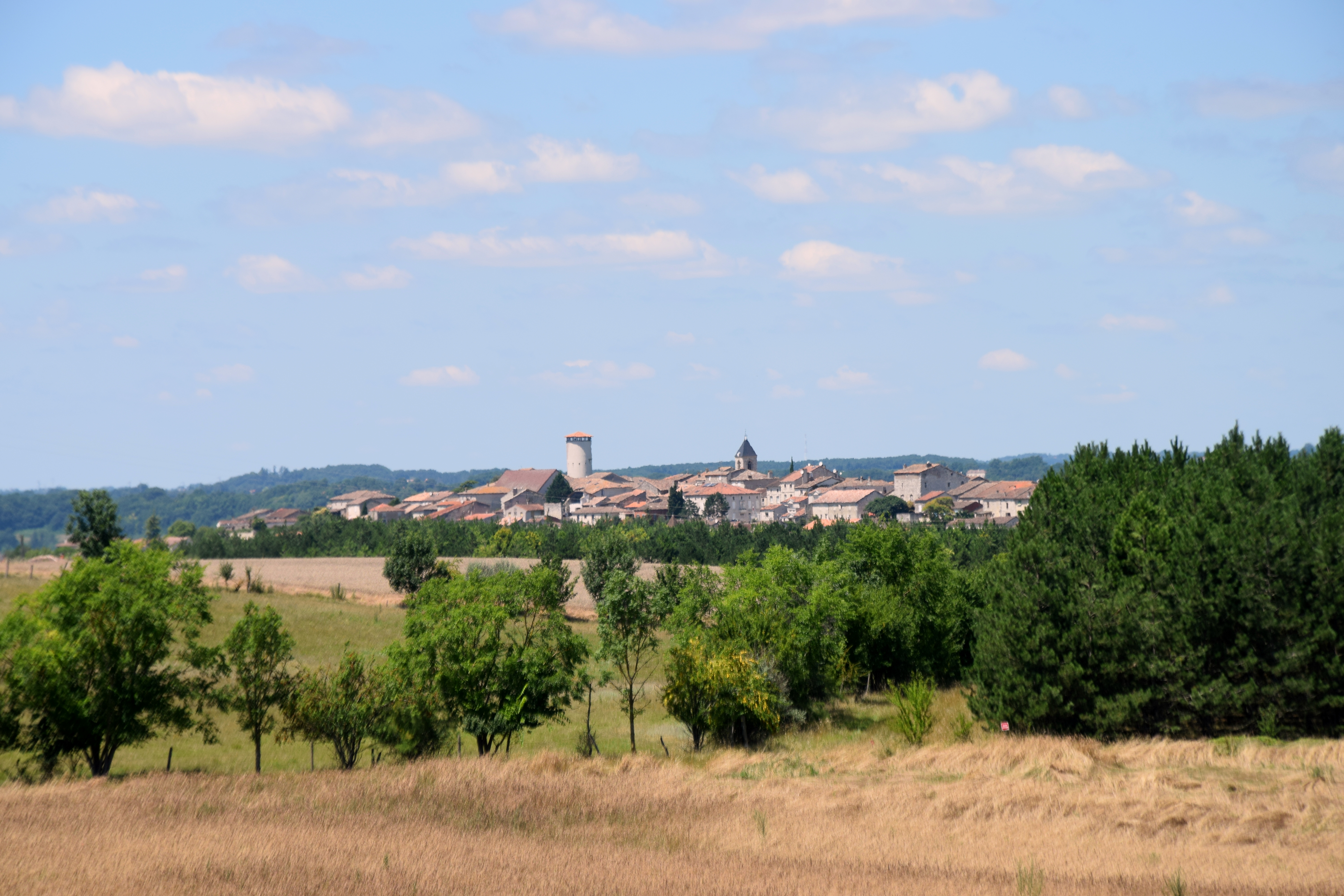
We drove back via the villages of Claremonth-Soubiran and Puymirol.


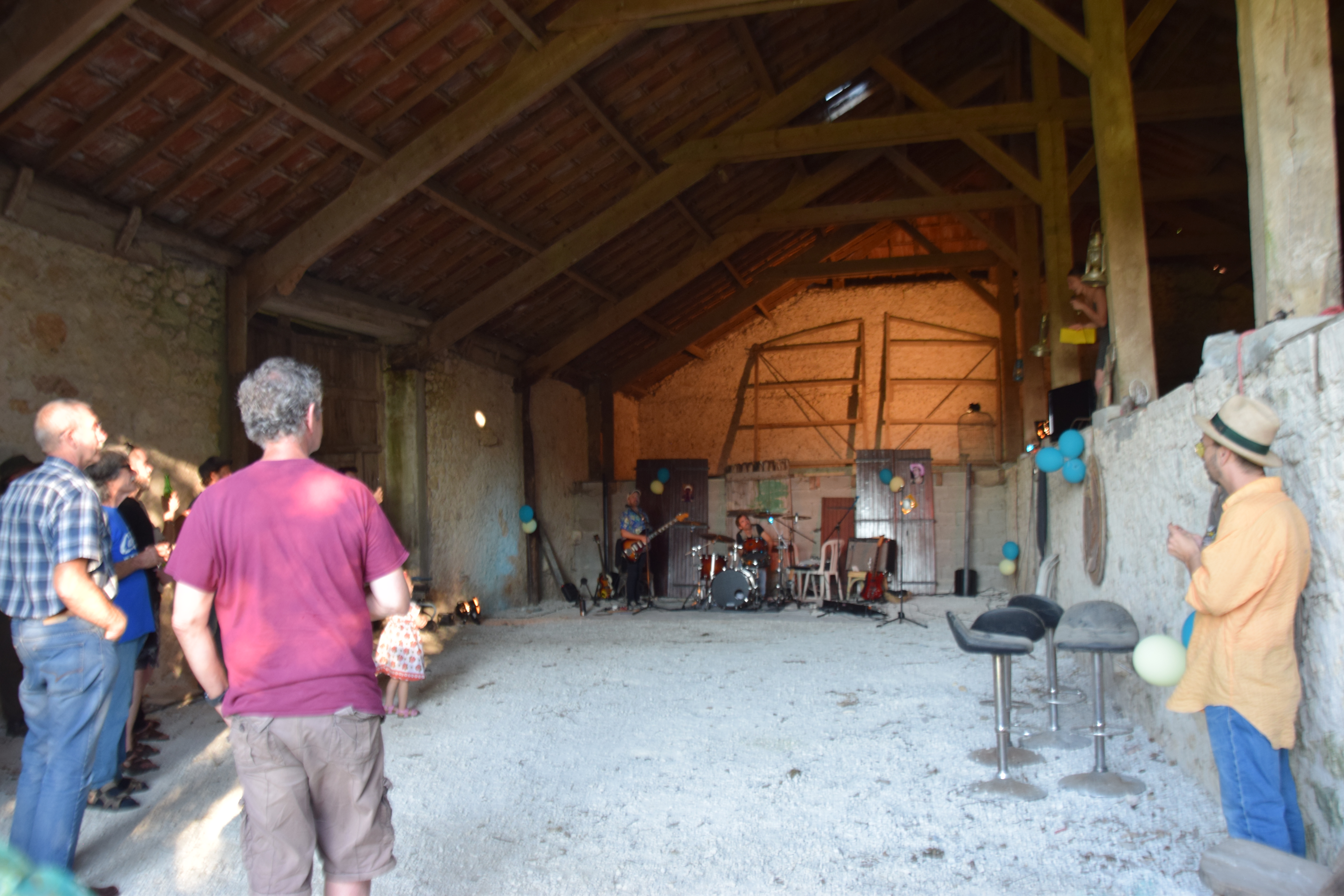
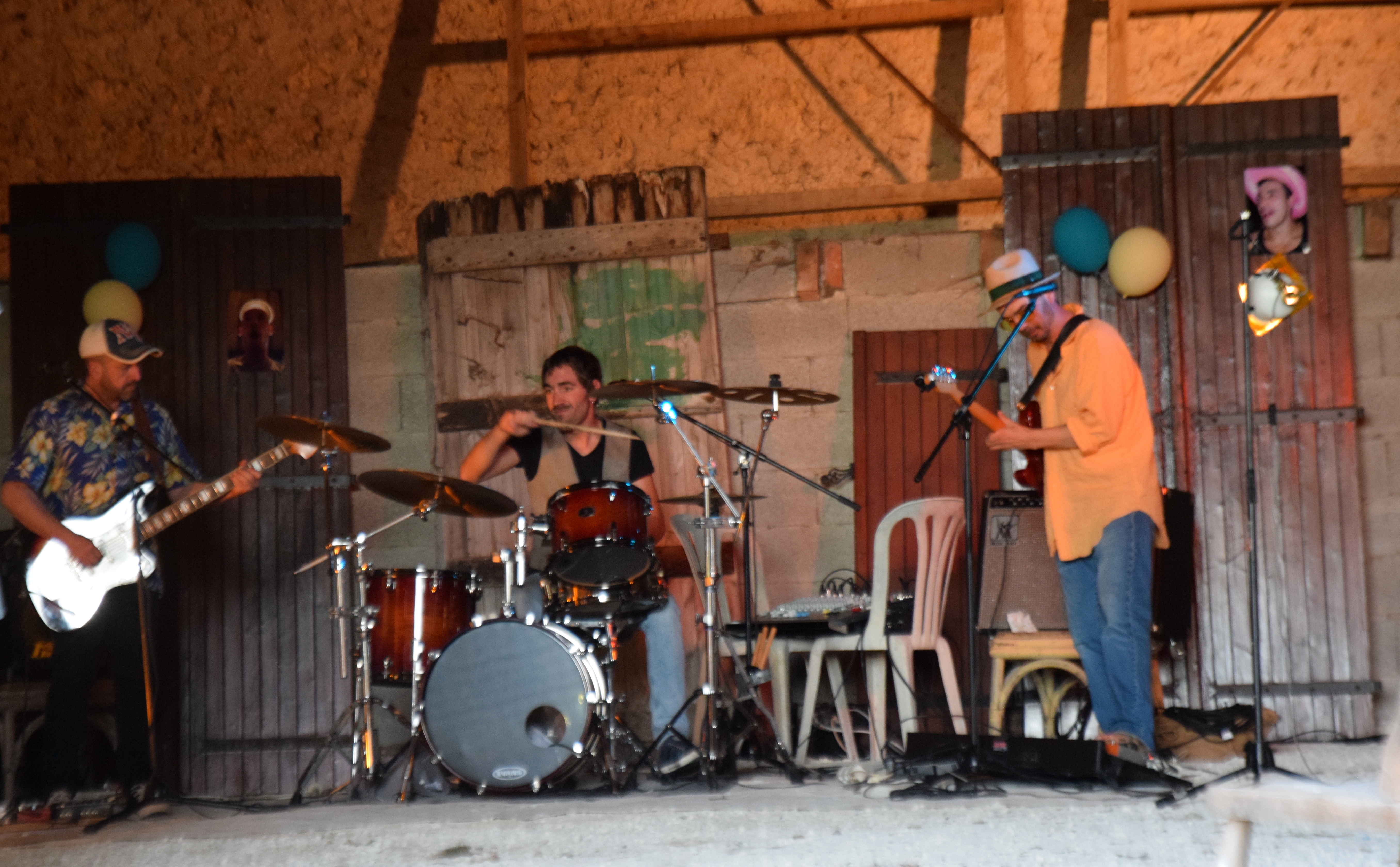
This evening we are going to the old family home of friends of theirs for a picnic and music. Glen, another pilot from Botswana days will be joining us there. The house has been in this English family since the “children” (currently in their 30’s) were small. The two boys were part of the roofing team that put on Mike’s new roof. The family now find that the house has become too big for the family and so it has been sold. In the meantime the boys have had, band in the barn, parties for years and this is the last of them. The party started with a little video composed of clips sent in by old friends and family members who could not be there tonight. A very pleasant evening out.

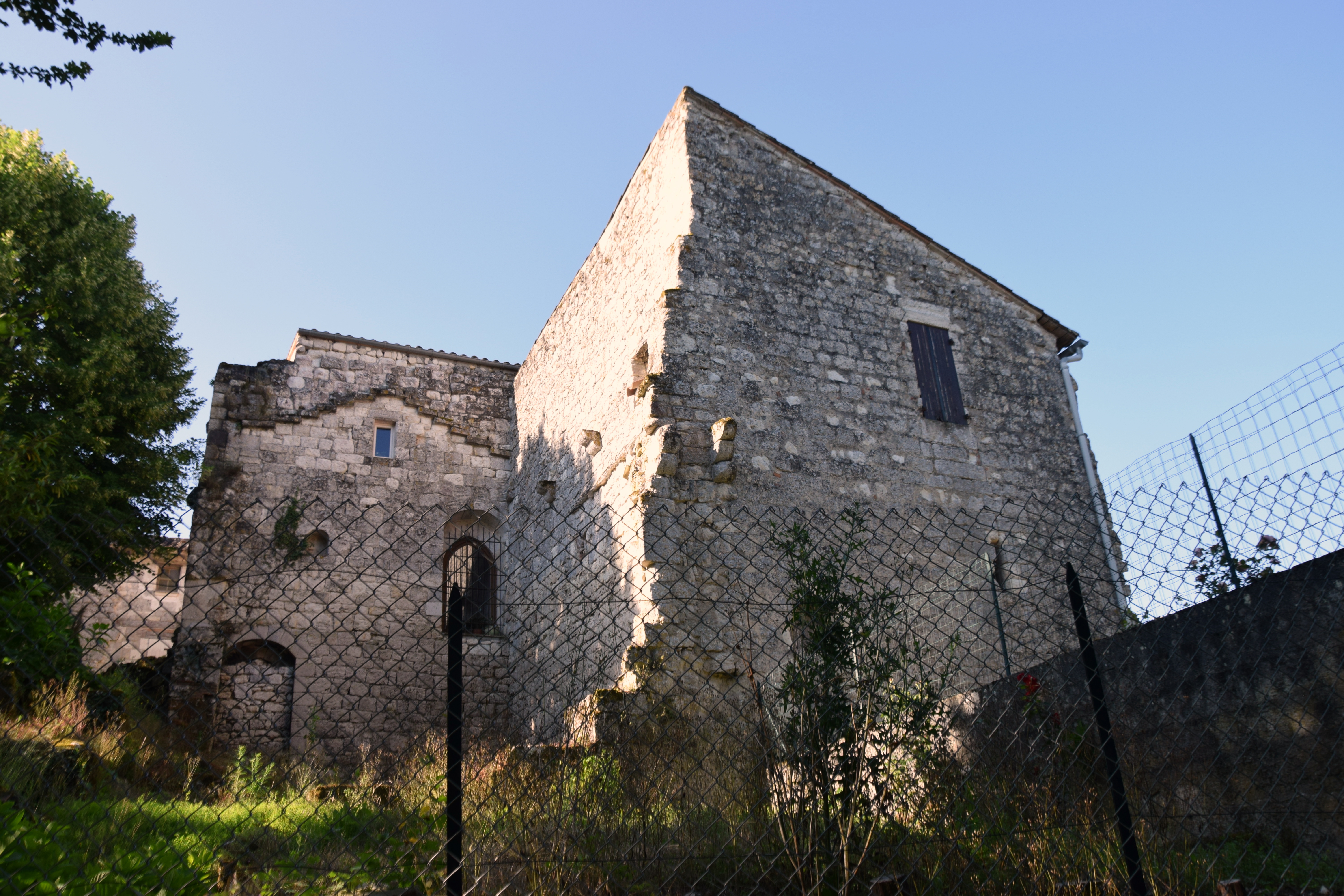
18th. I took the walk round the perimeter of the village this morning. Like the rest of the village it is well maintained and looks onto the backs of the houses. I may have identified the location of the original church.

In the evening Jane and Mike threw a dinner party at which Glen was also to be one of the guests and another couple who had spent time in South Africa. It was a delightful evening.
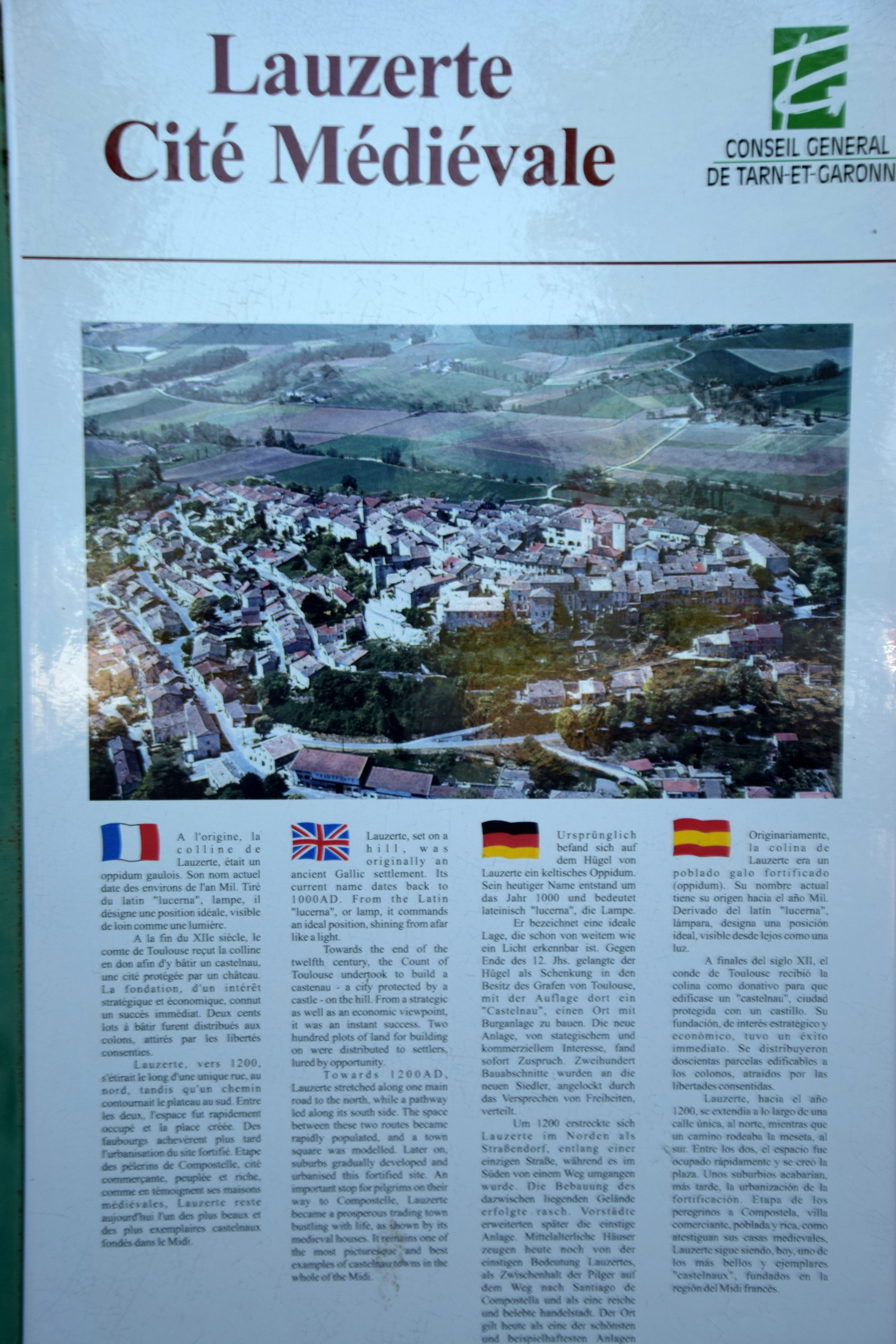
19th. Set off this morning in the direction of Cahors. Stopped first at the “Bastide” village of Lauzerte.

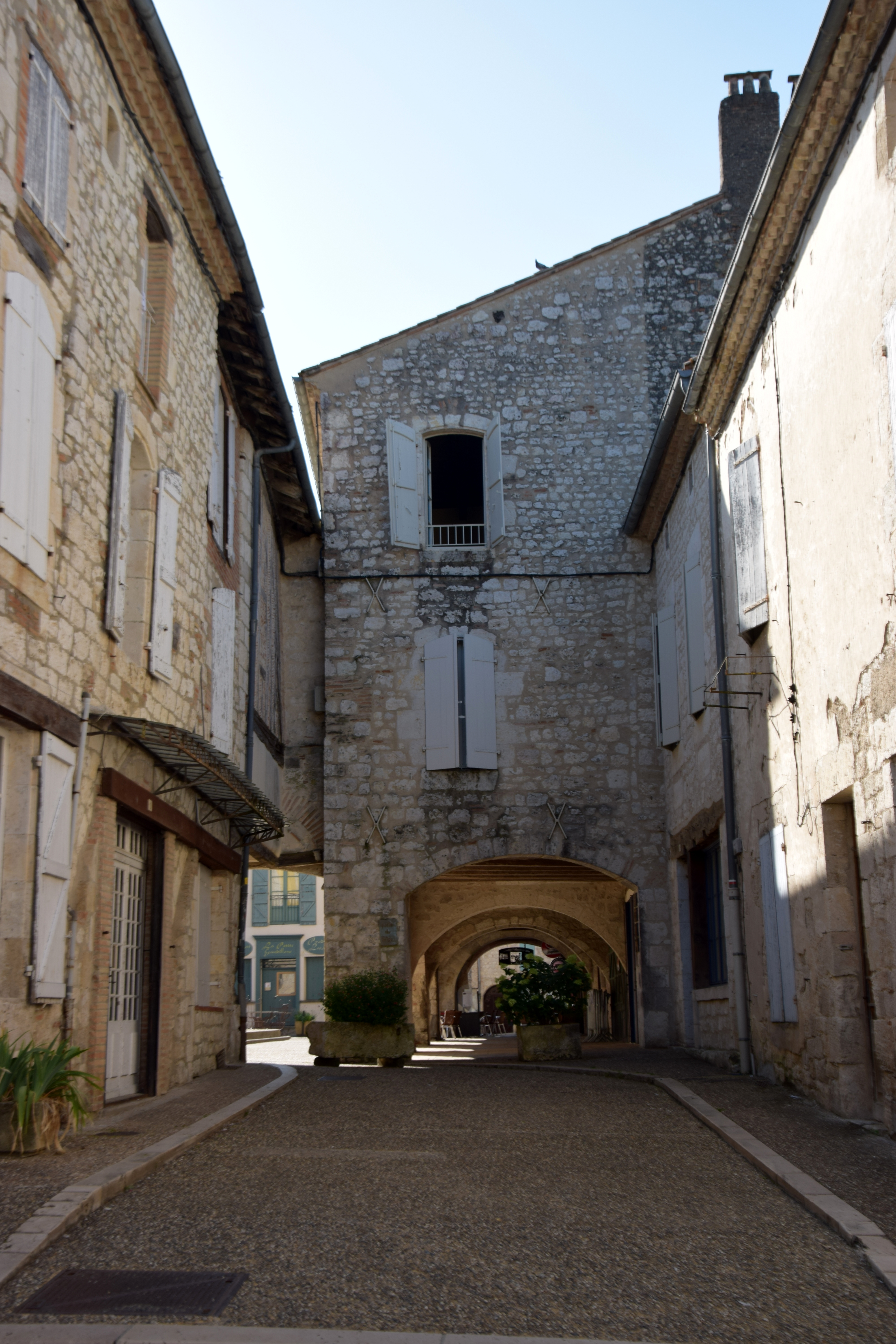
Again the lovely old buildings in the narrow streets and the arcades.
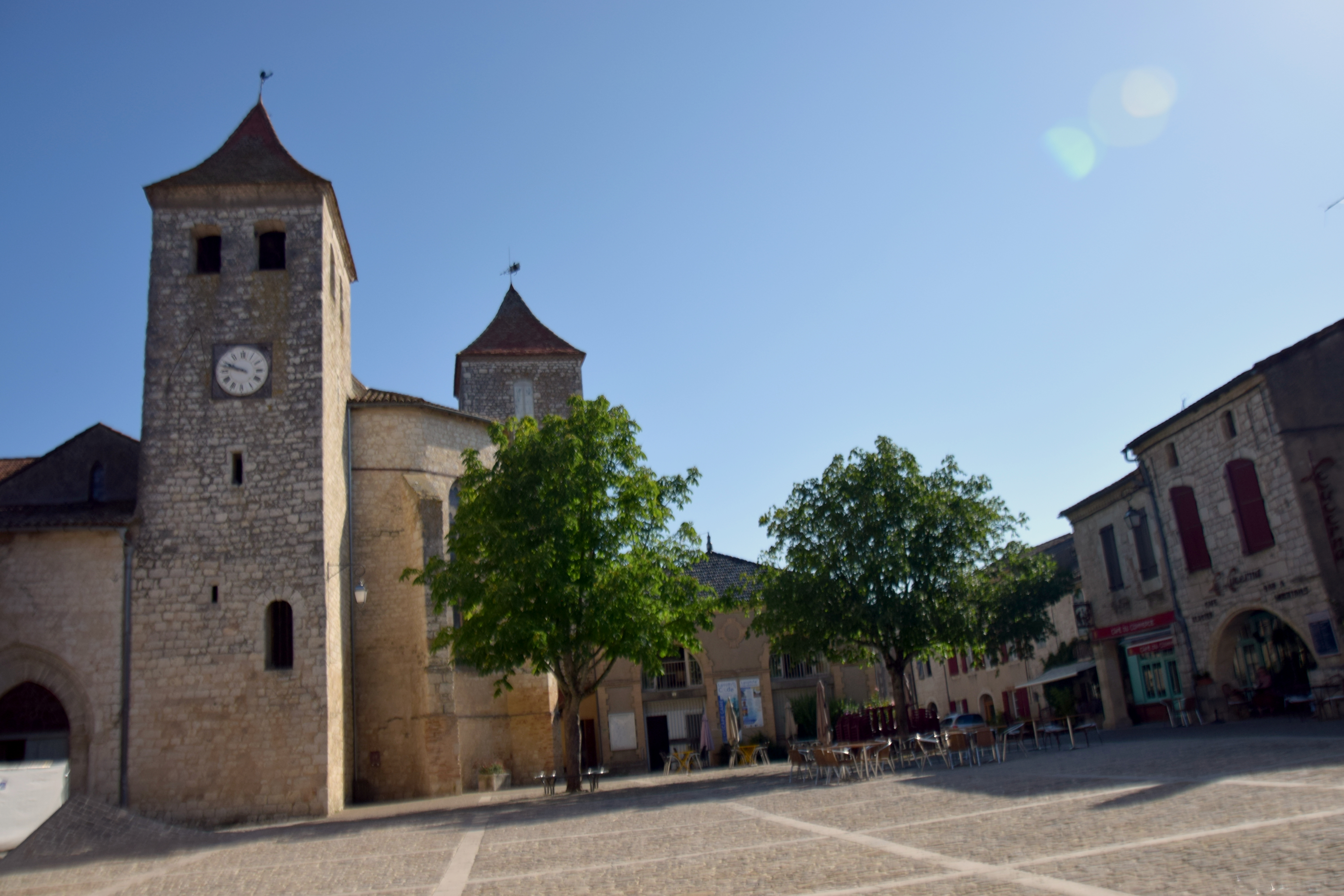
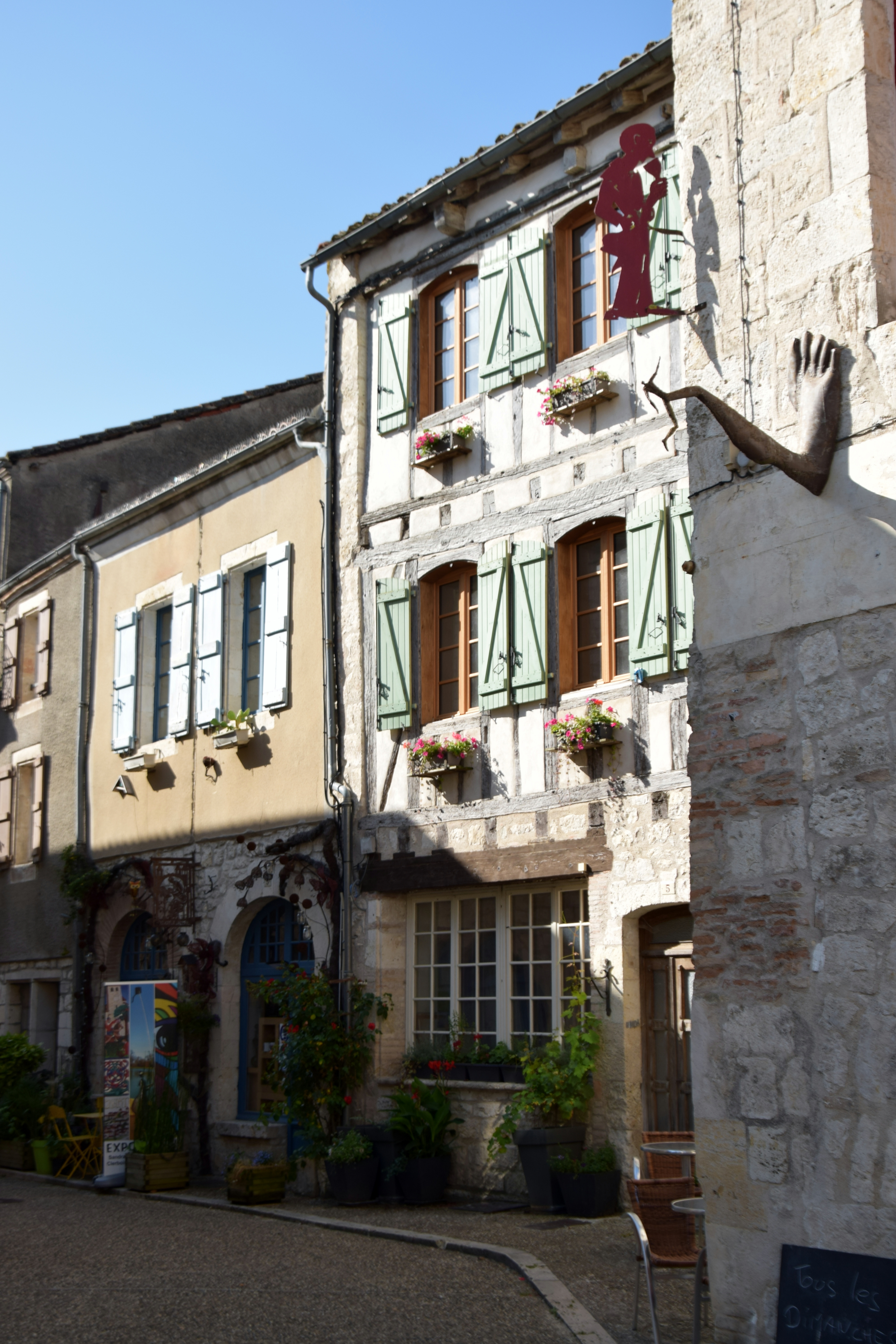
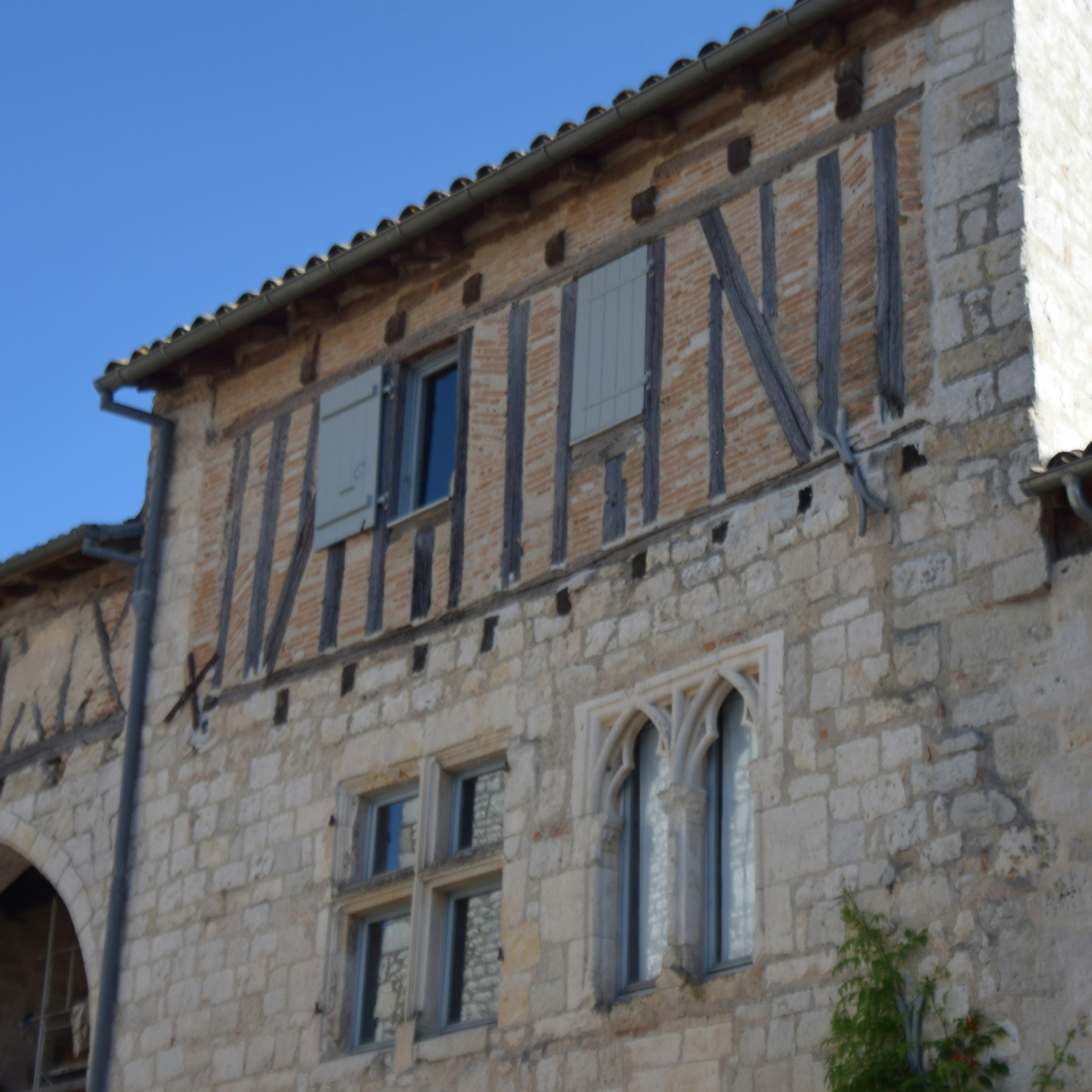
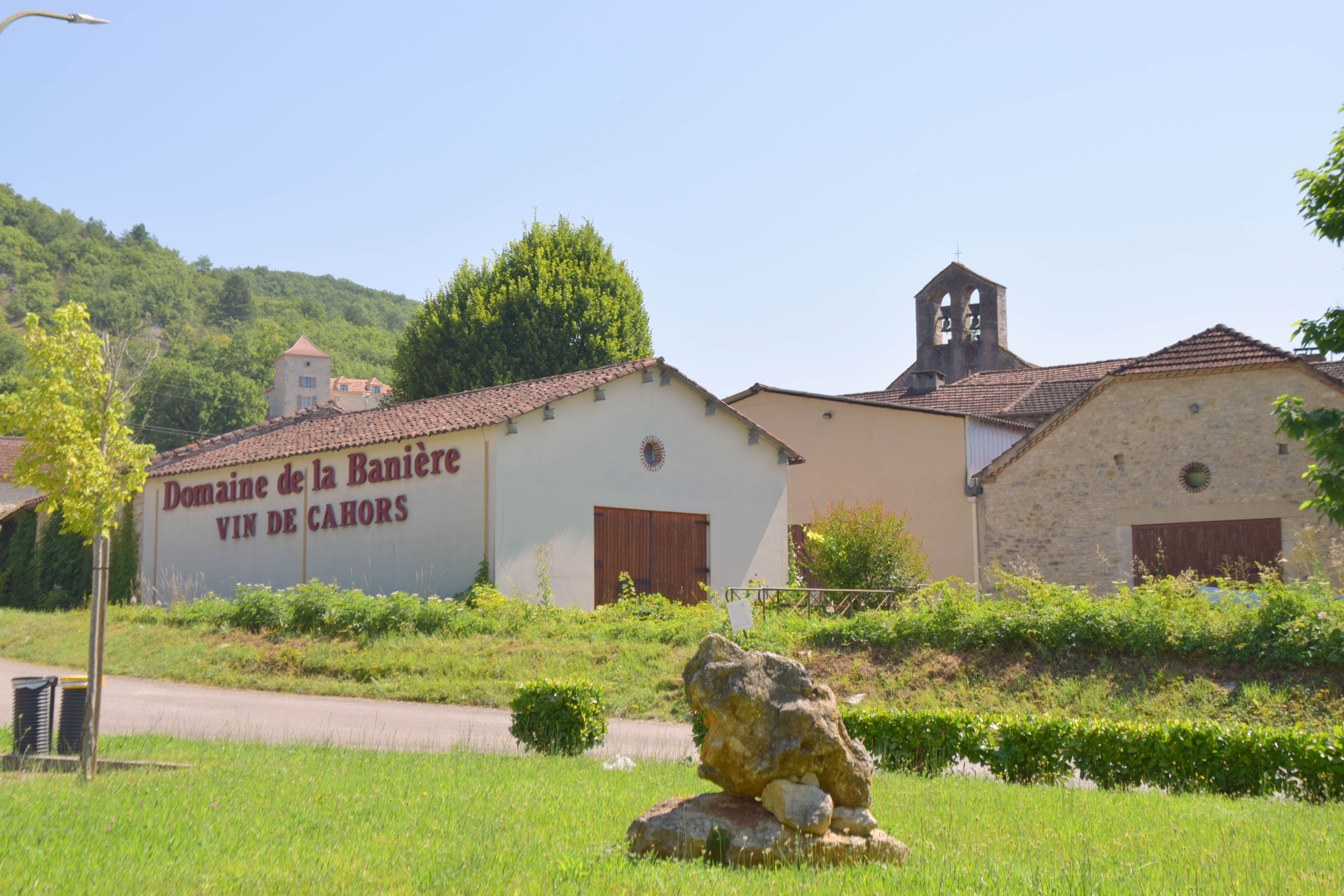
I stopped off at a vineyard on the way to Cahors and bought a couple of bottles of the local Malbec as recommended by Jane & Mike.
Cahors is situated on the peninsular created by an Oxbow in the river Lot so has a number of bridges into the city.

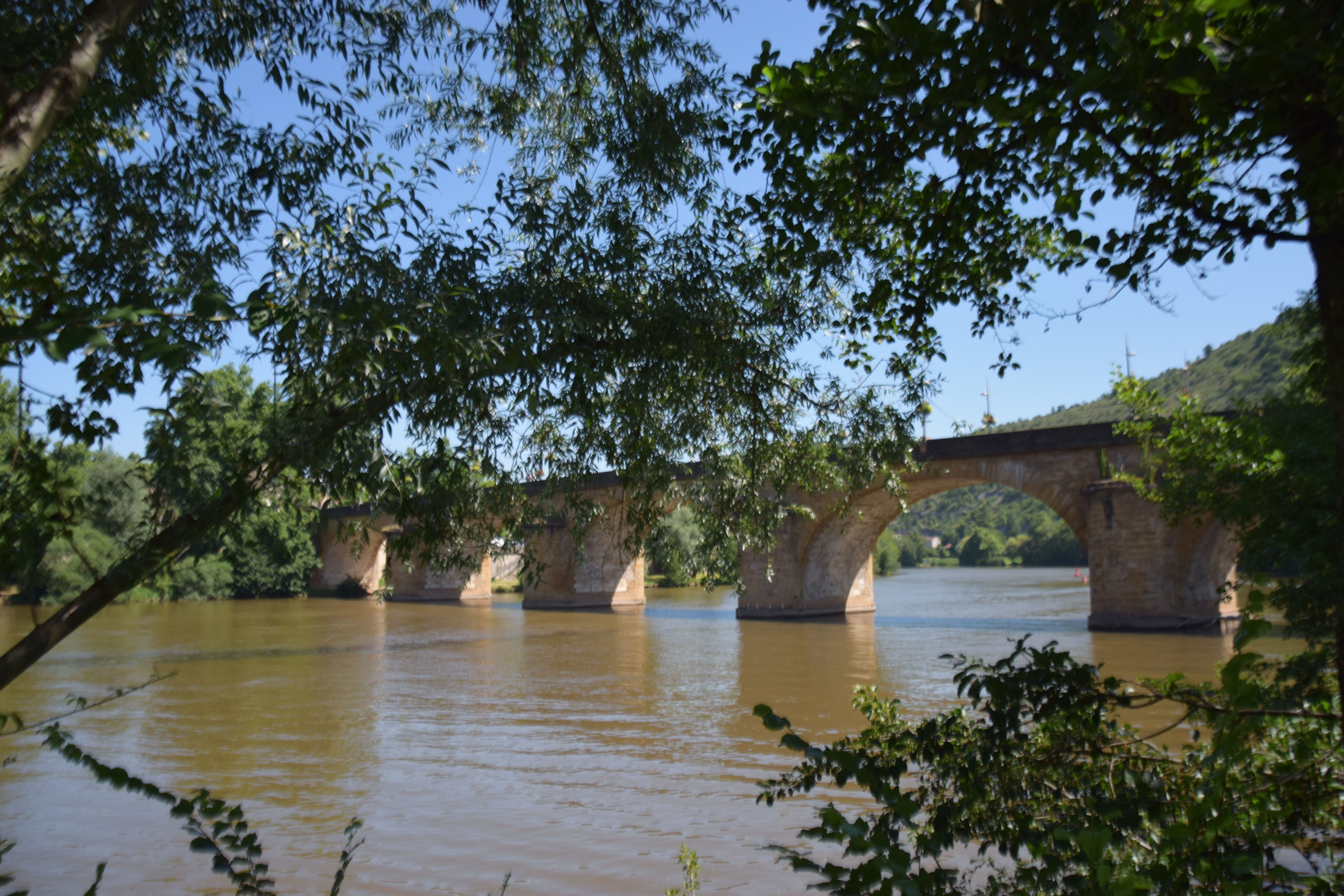

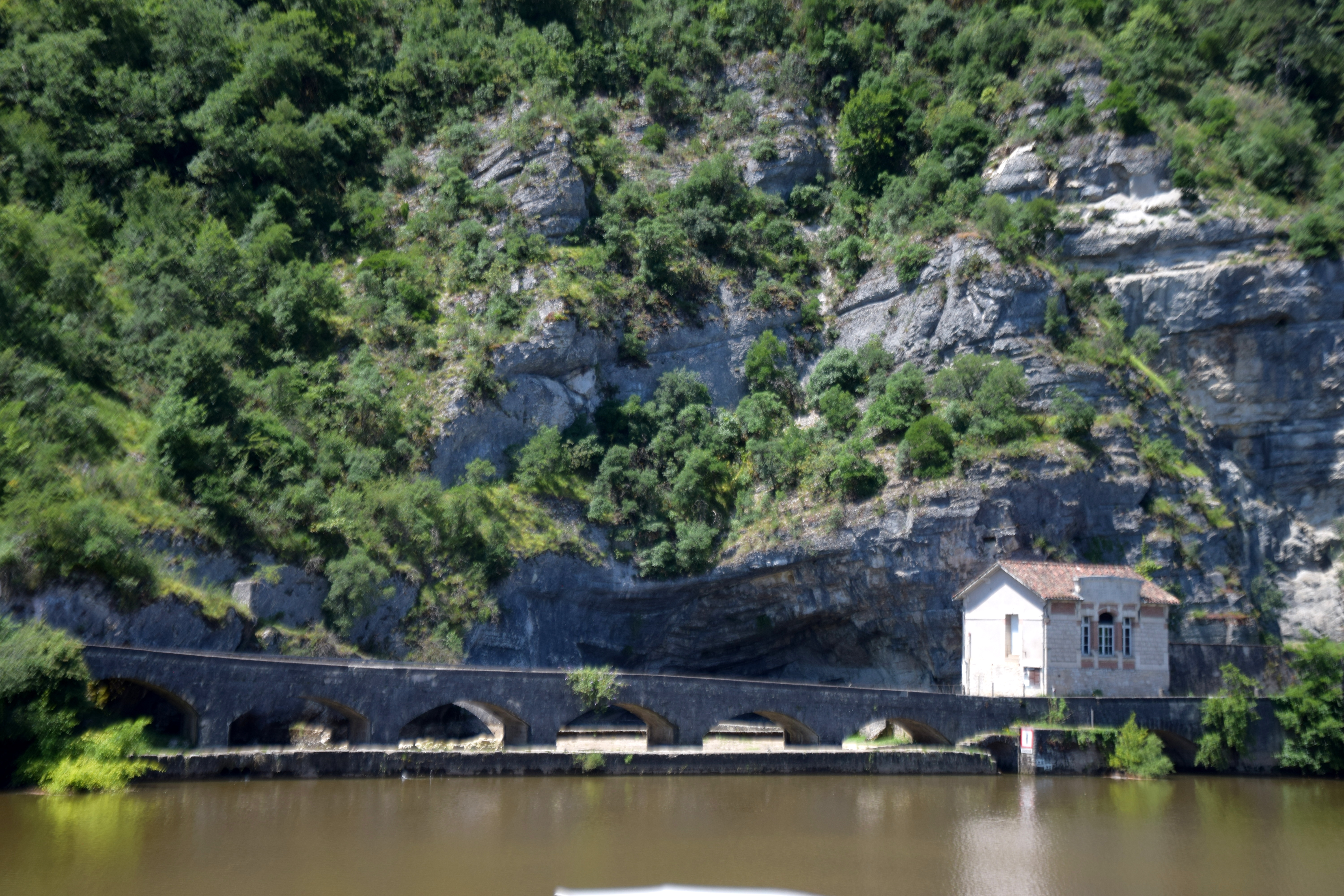
the most famous of these is the Valentré bridge.
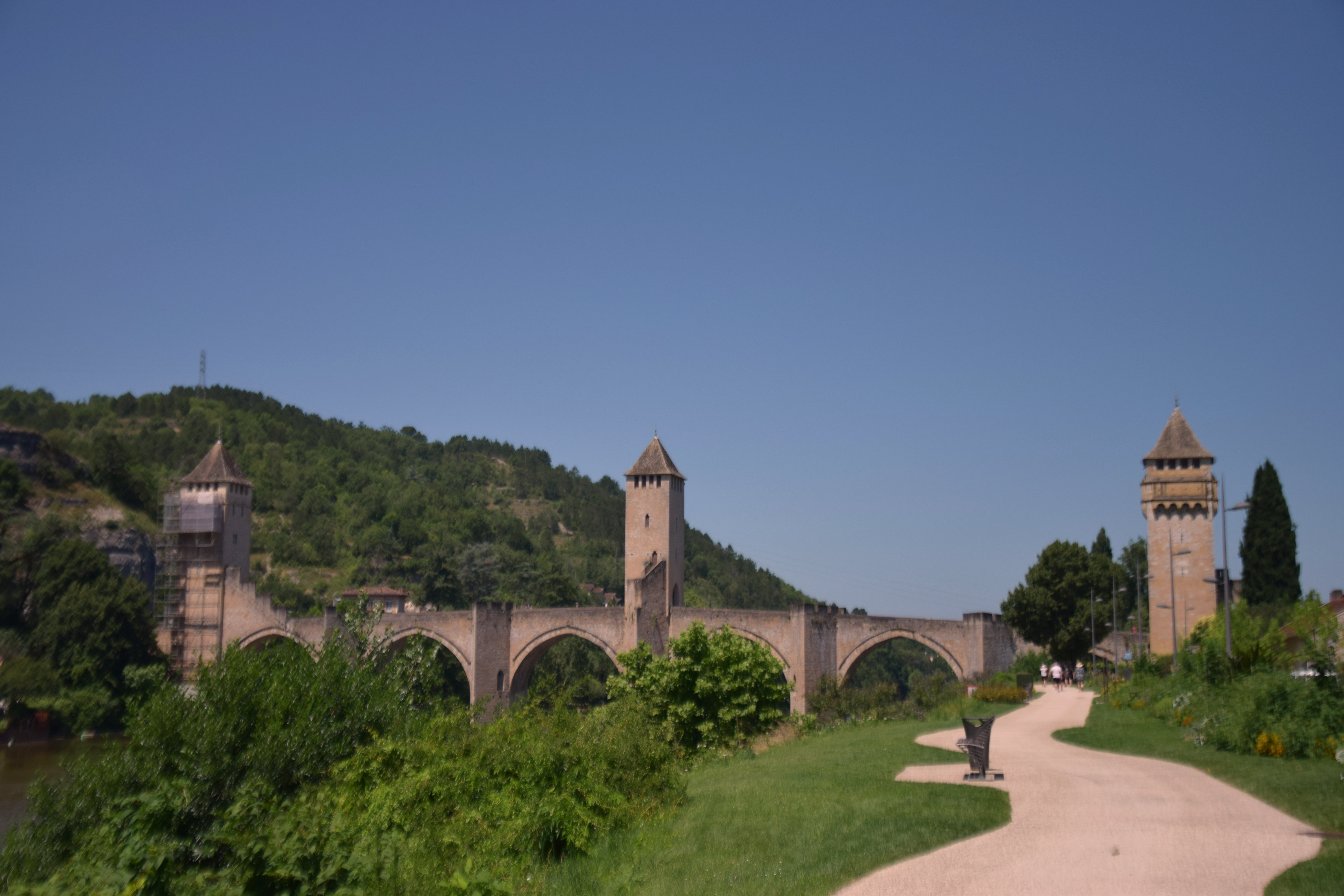
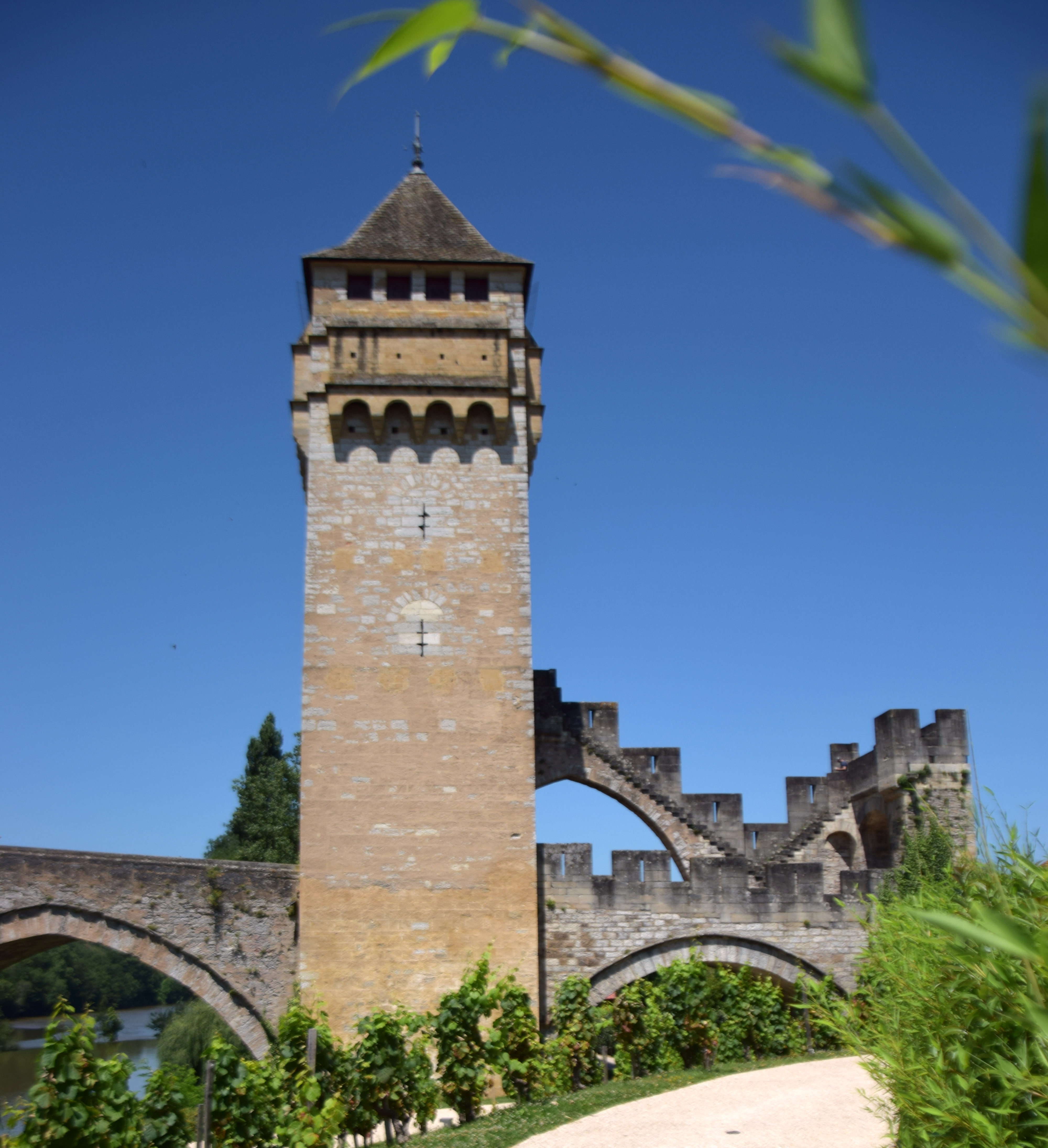

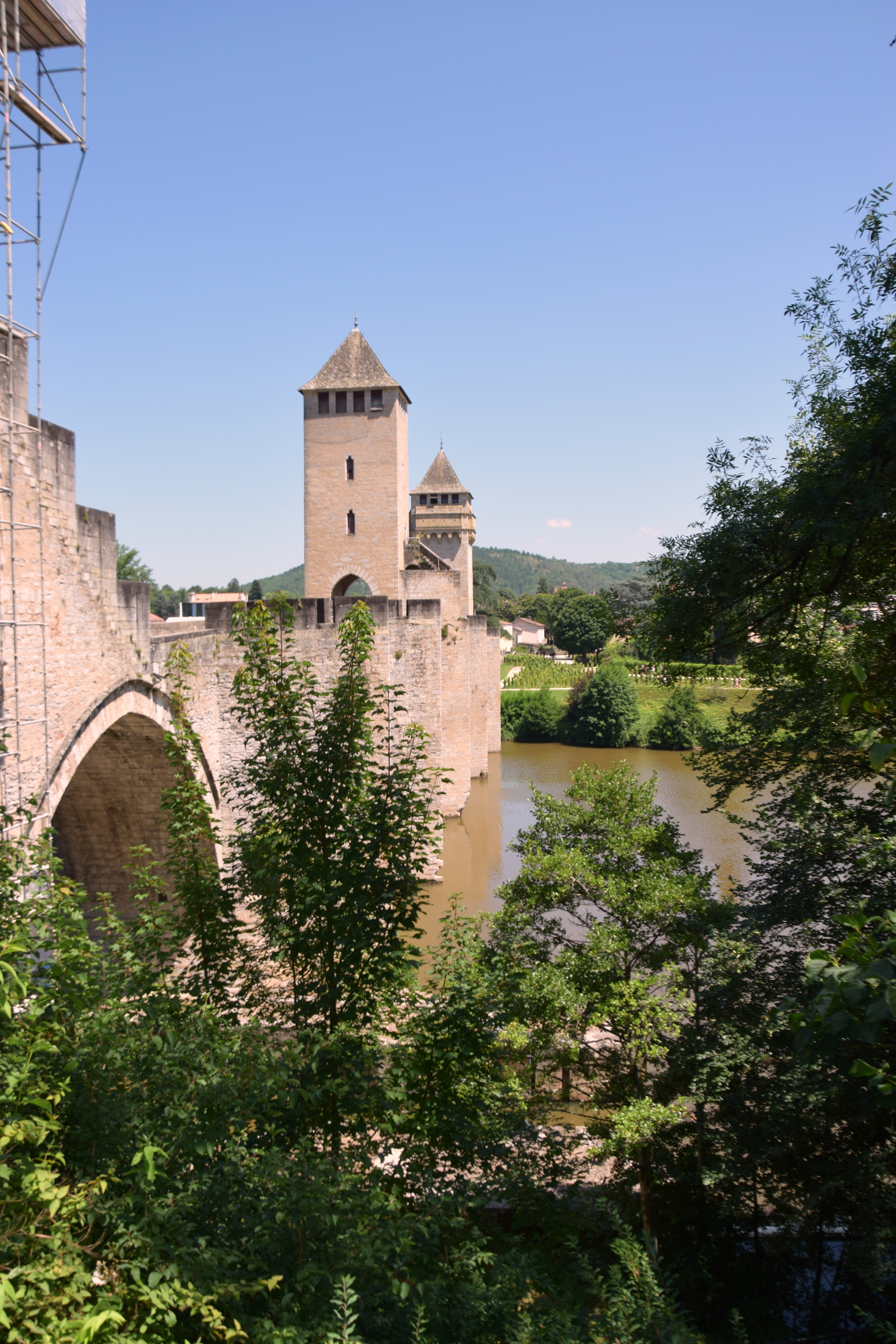
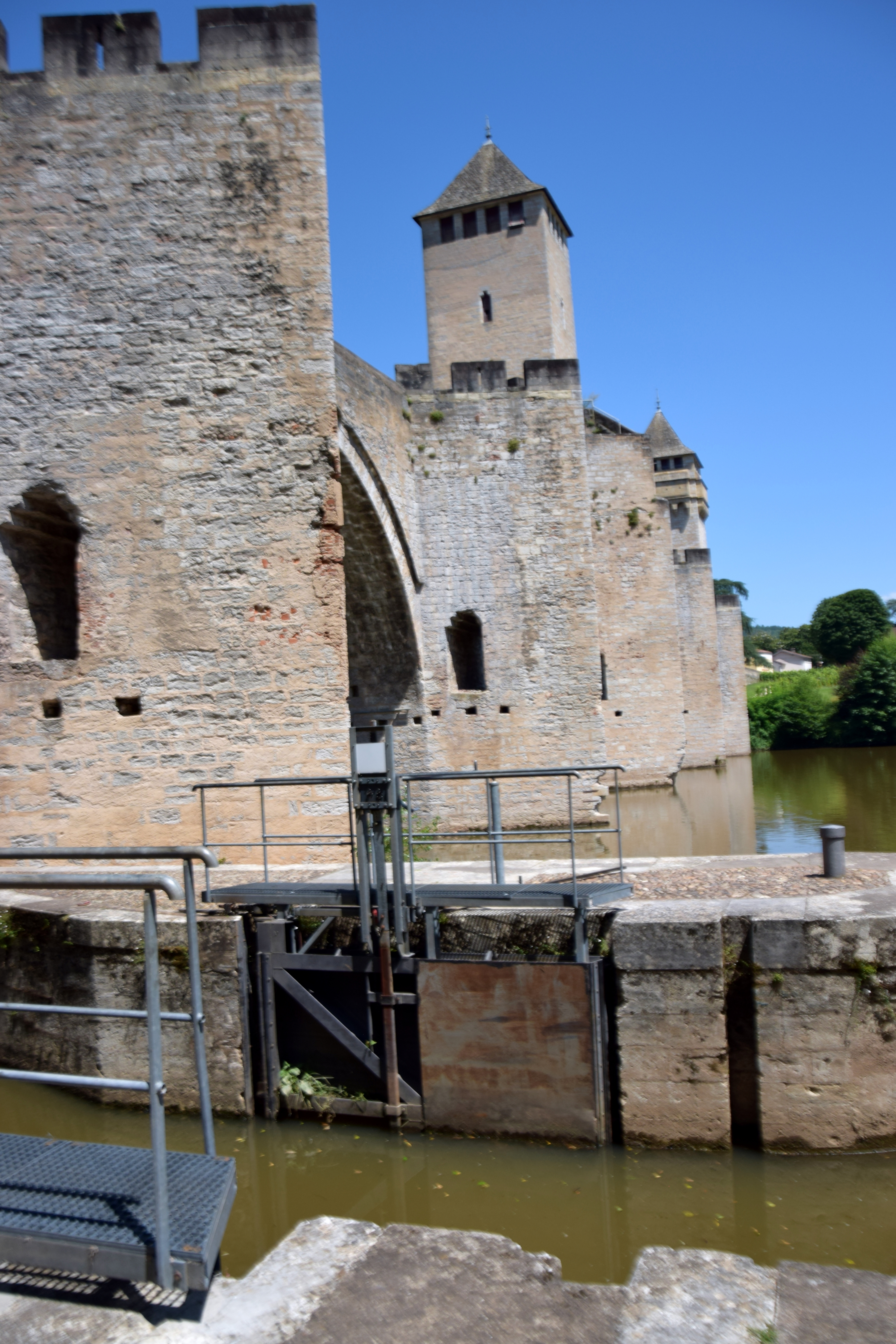

This C15th bridge was so admired that it was never attacked in any of the various wars that took place in the area. There is a weir and a lock adjacent to the bridge.

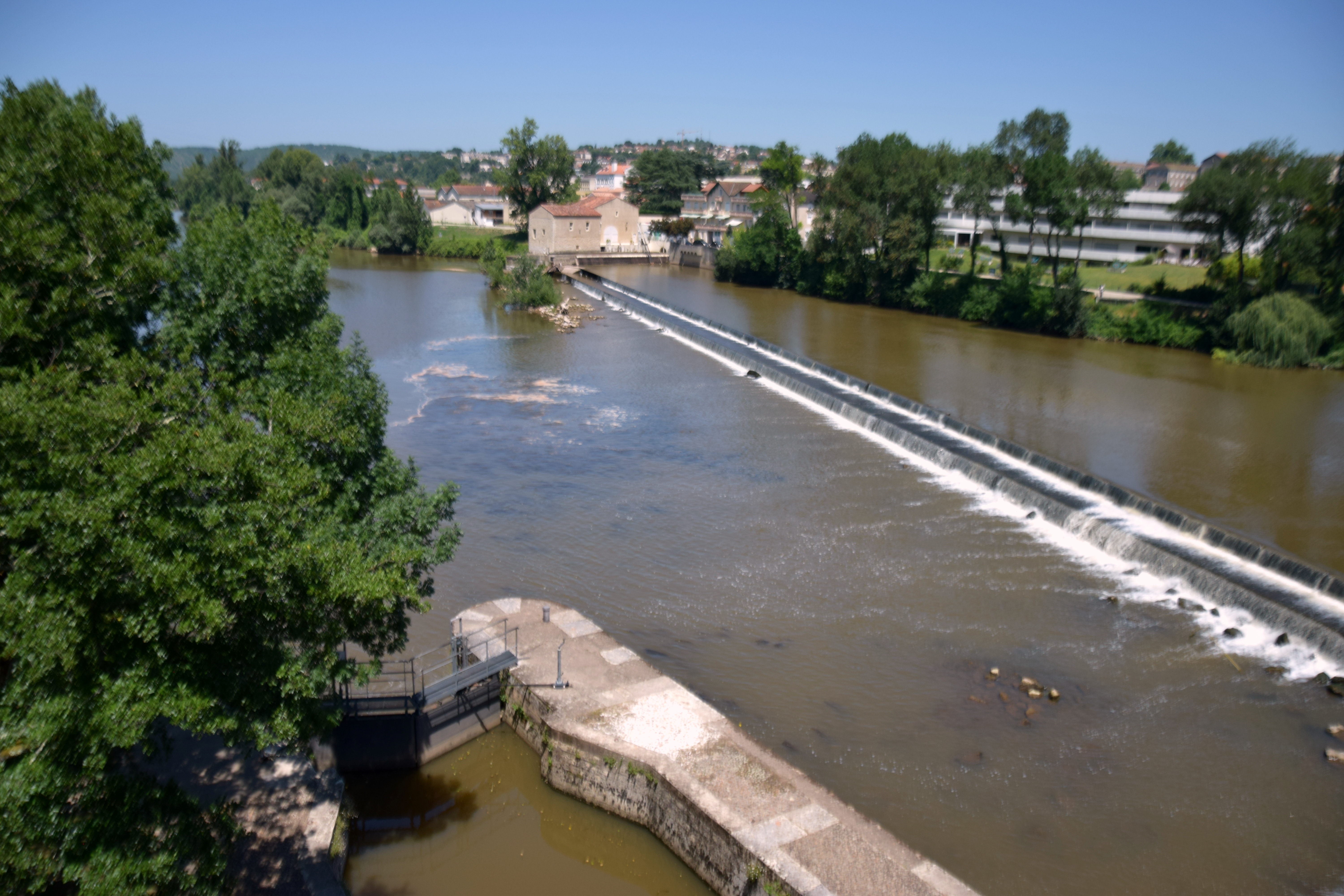
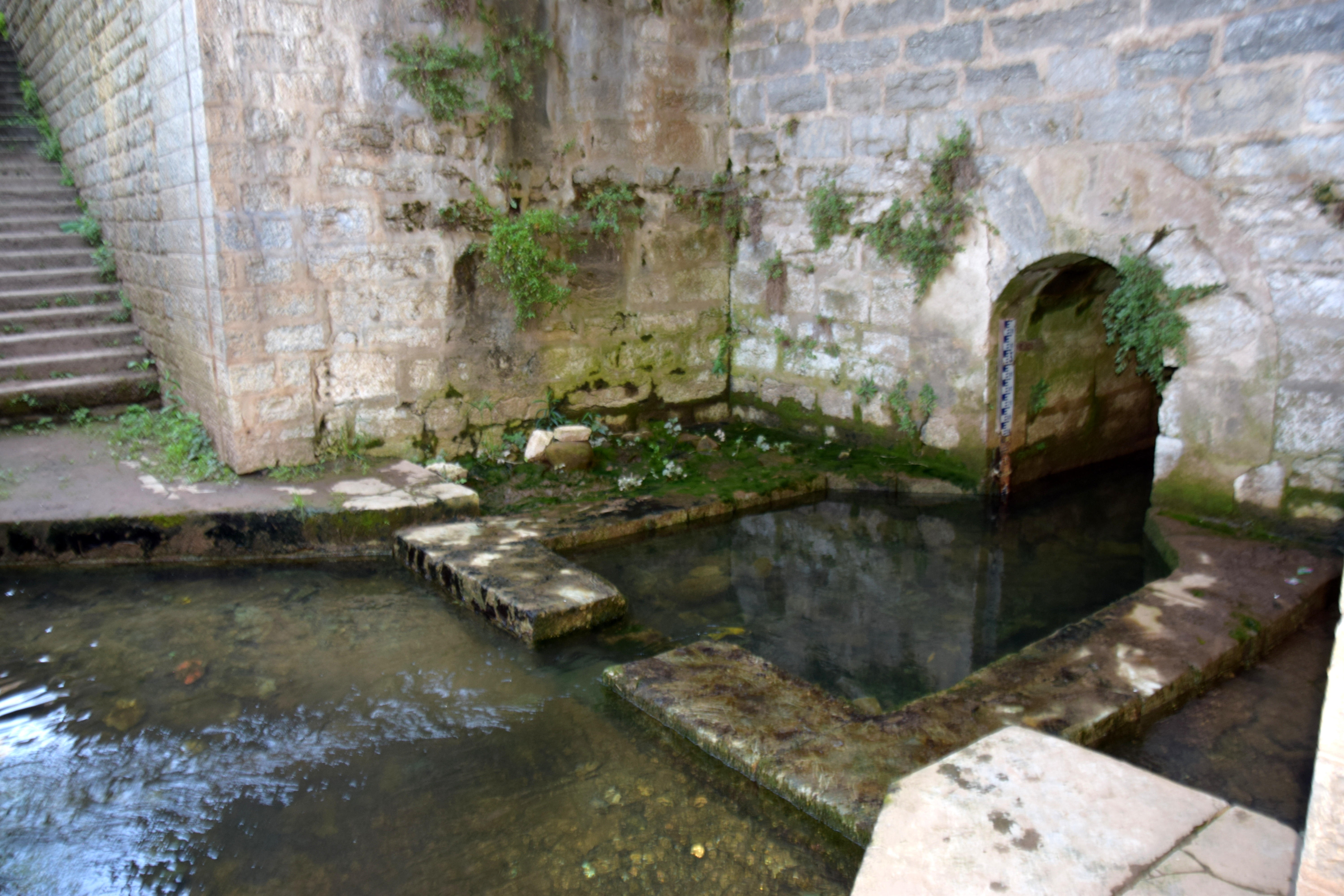
Next to the Louis-Phillip bridge there is a large lavoir.

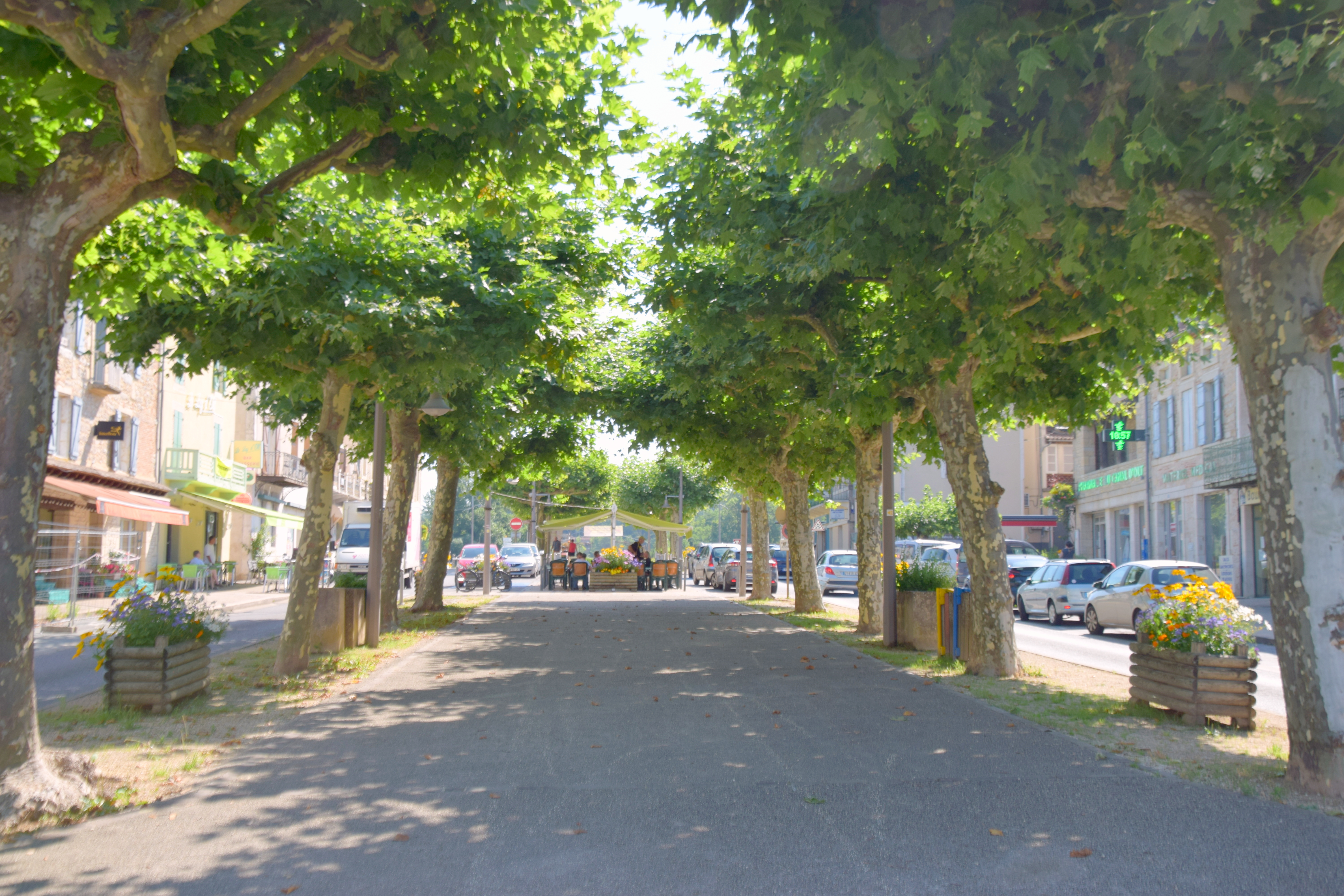
The old town had interesting buildings on a larger scale than the medieval villages and many very narrow passages between streets but it lacked the quaintness and charm of the smaller towns and villages.
20th. Drove through the hilly countryside and vineyards on some very narrow roads to the small town of Luzech which spans the 100M wide neck of an isthmus caused by a loop in the river. Thus the 100, long main street runs between the road bridges that cross each arm of the loop.
There is an old town area with charming old houses and churches


The DonJon and old bridge dominate the approach to the town
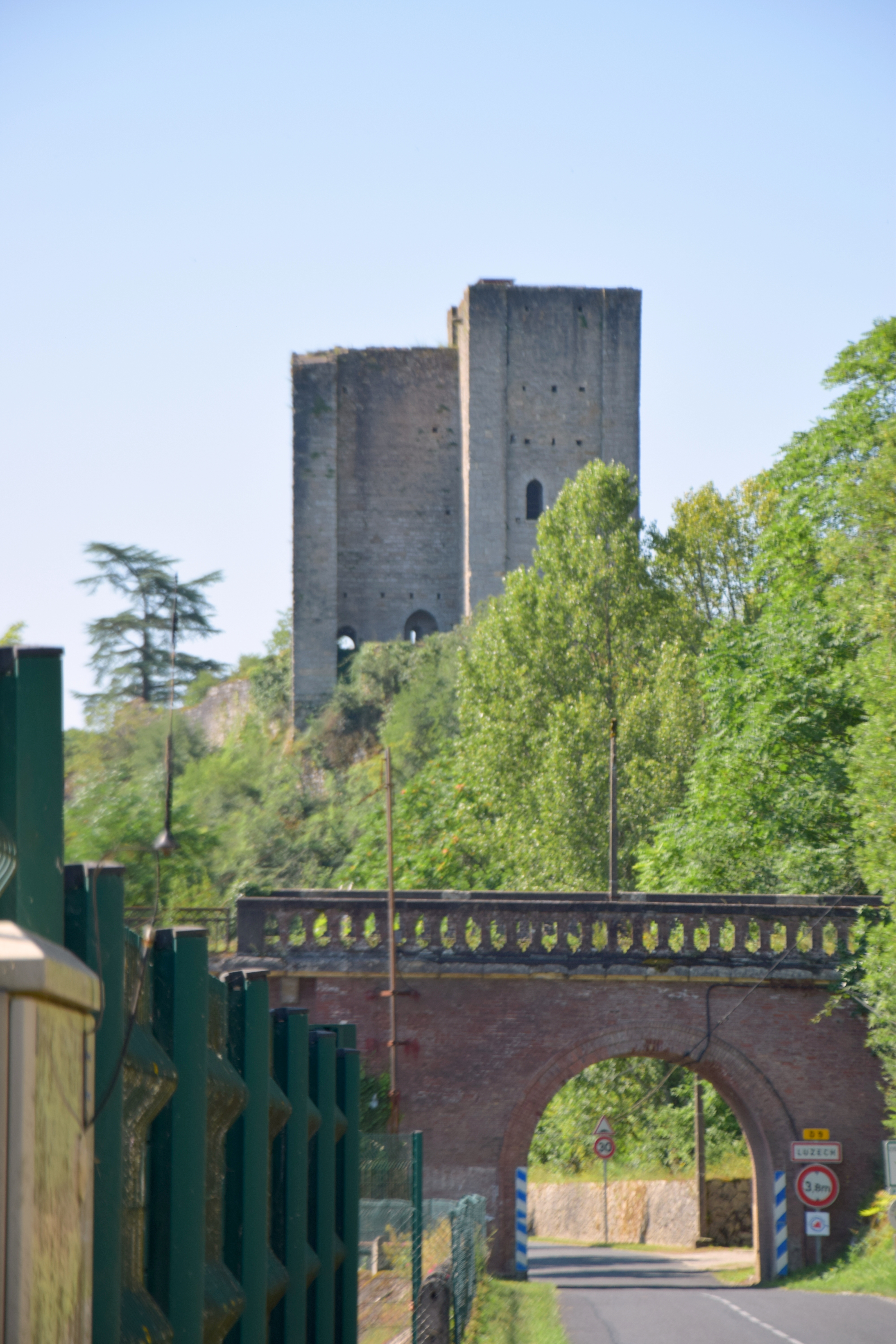
But the most outstanding feature is the hydoelectric barrier on one arm of the loop tunneling the water power through to the other arm, which is lower, where the turbines are housed.
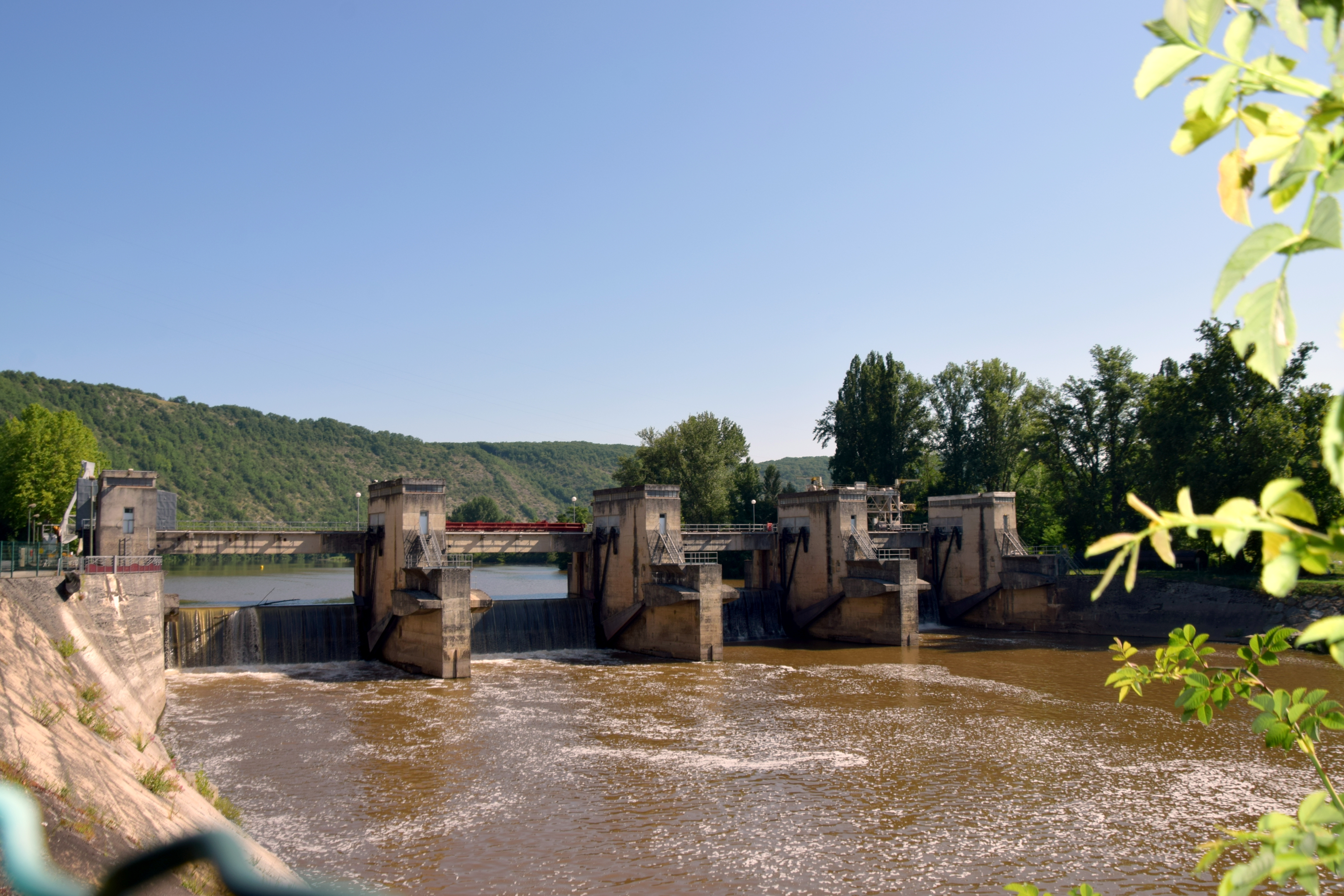
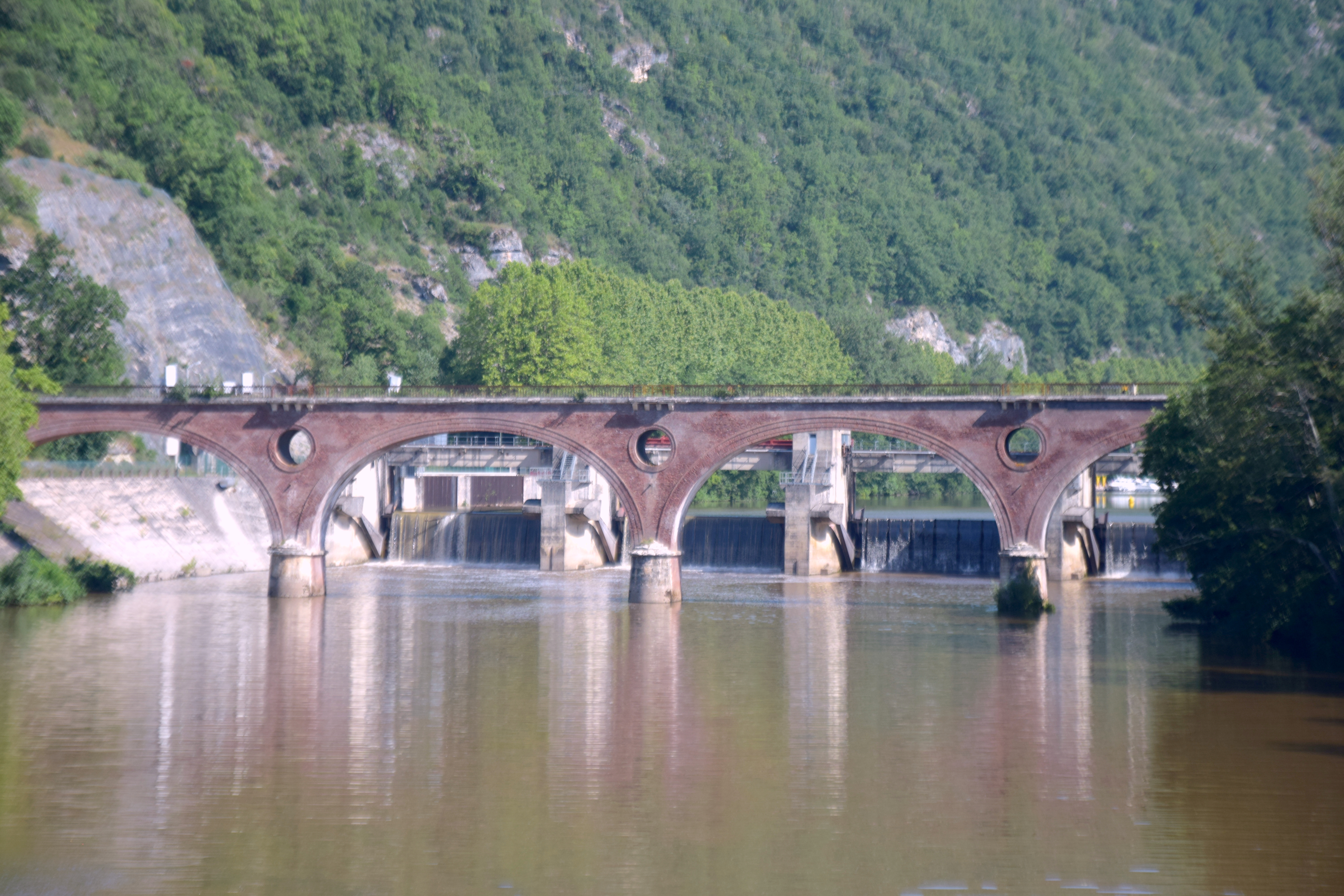
The camping car Aire is on the banks of the river just outside in Luzech-Caix where there are a couple of sales points for local vineyards and where I obviously did a tasting and made a purchase!

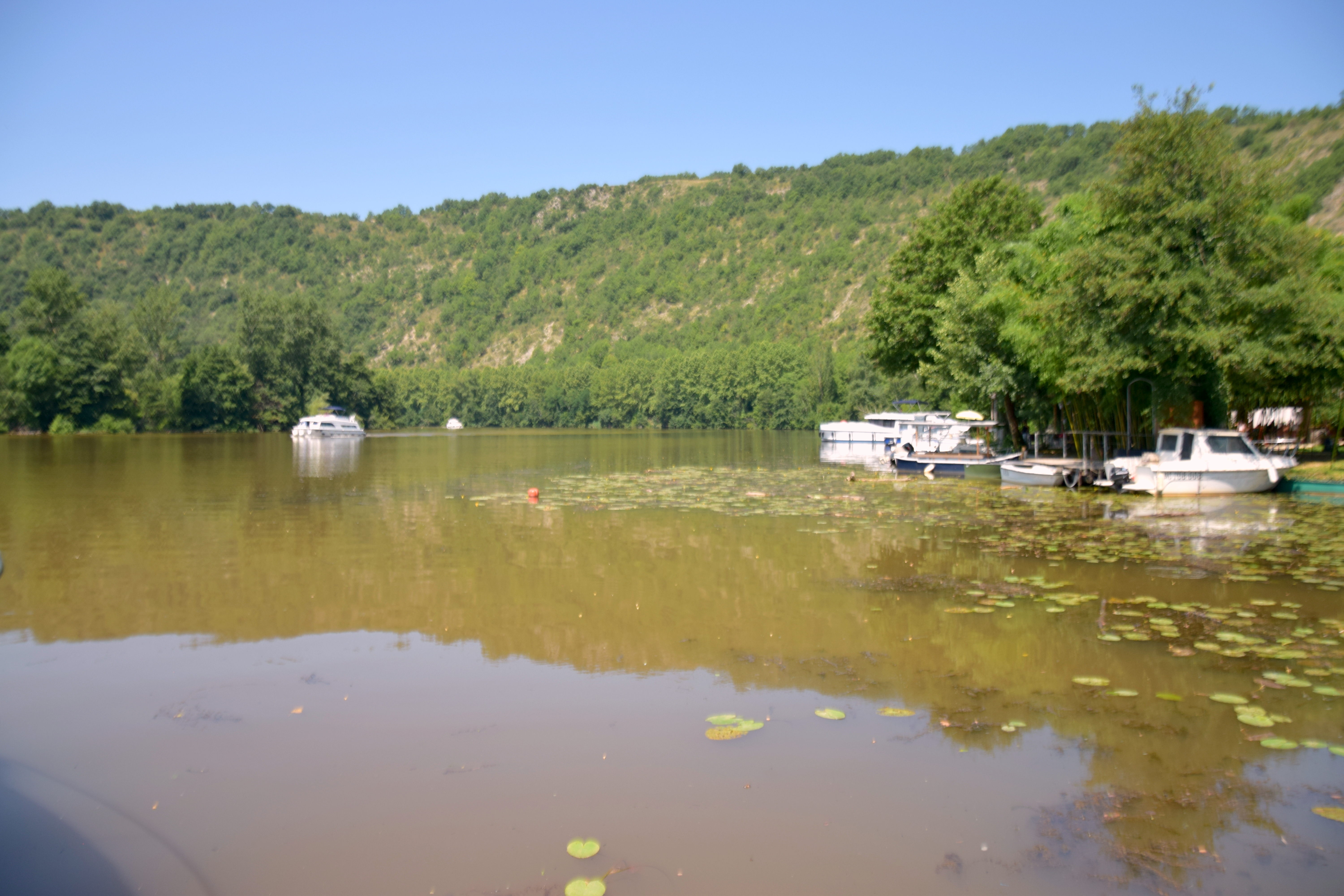
21st. Got off on my way to the Dorgogne with overcast skys, that did nothing for the photography, but did mean it was blessedly cool. The early start was to facilitate dropping in and out of the villages on the route.
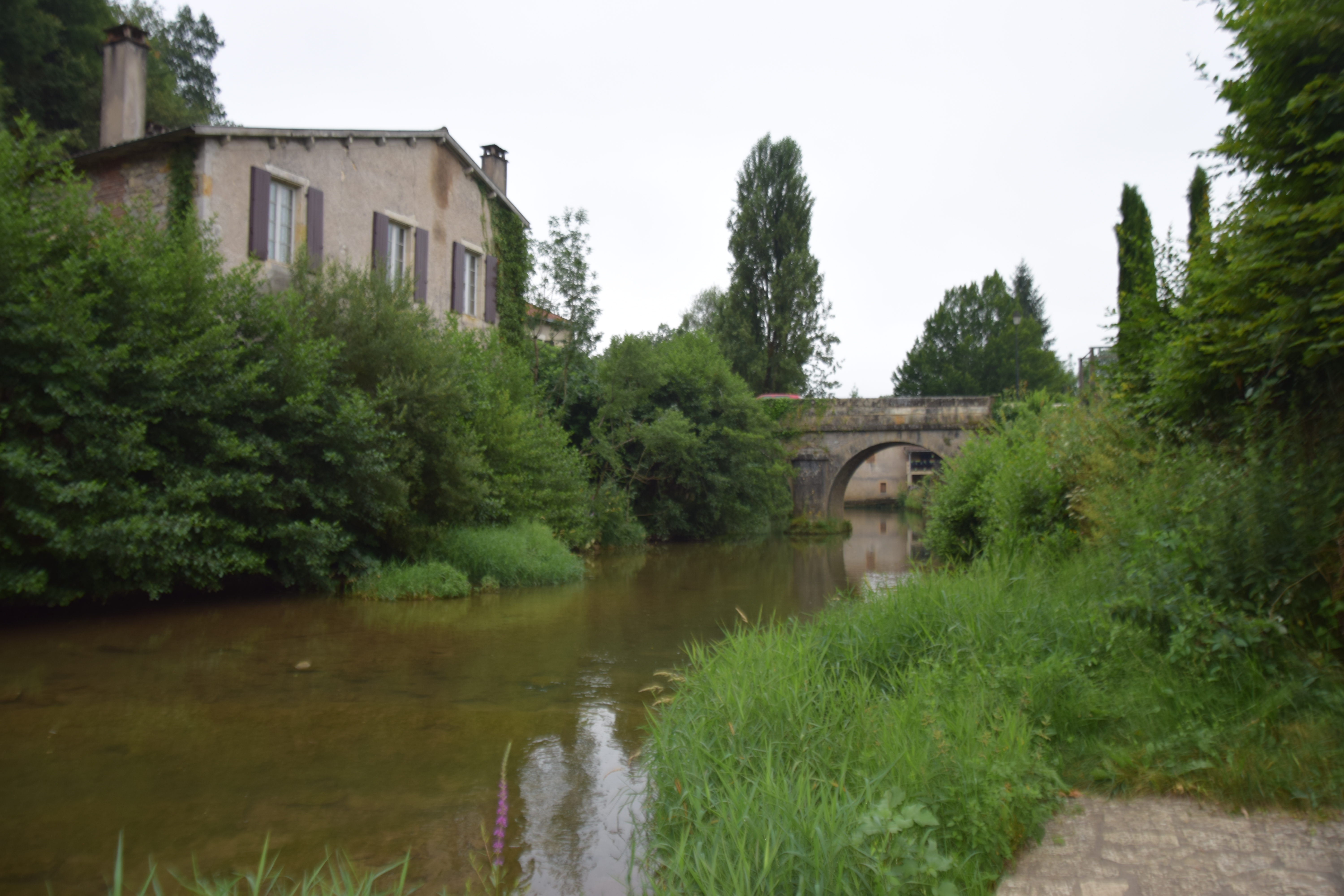
First stop the village of Castelfranc with its little river and mini lavoir

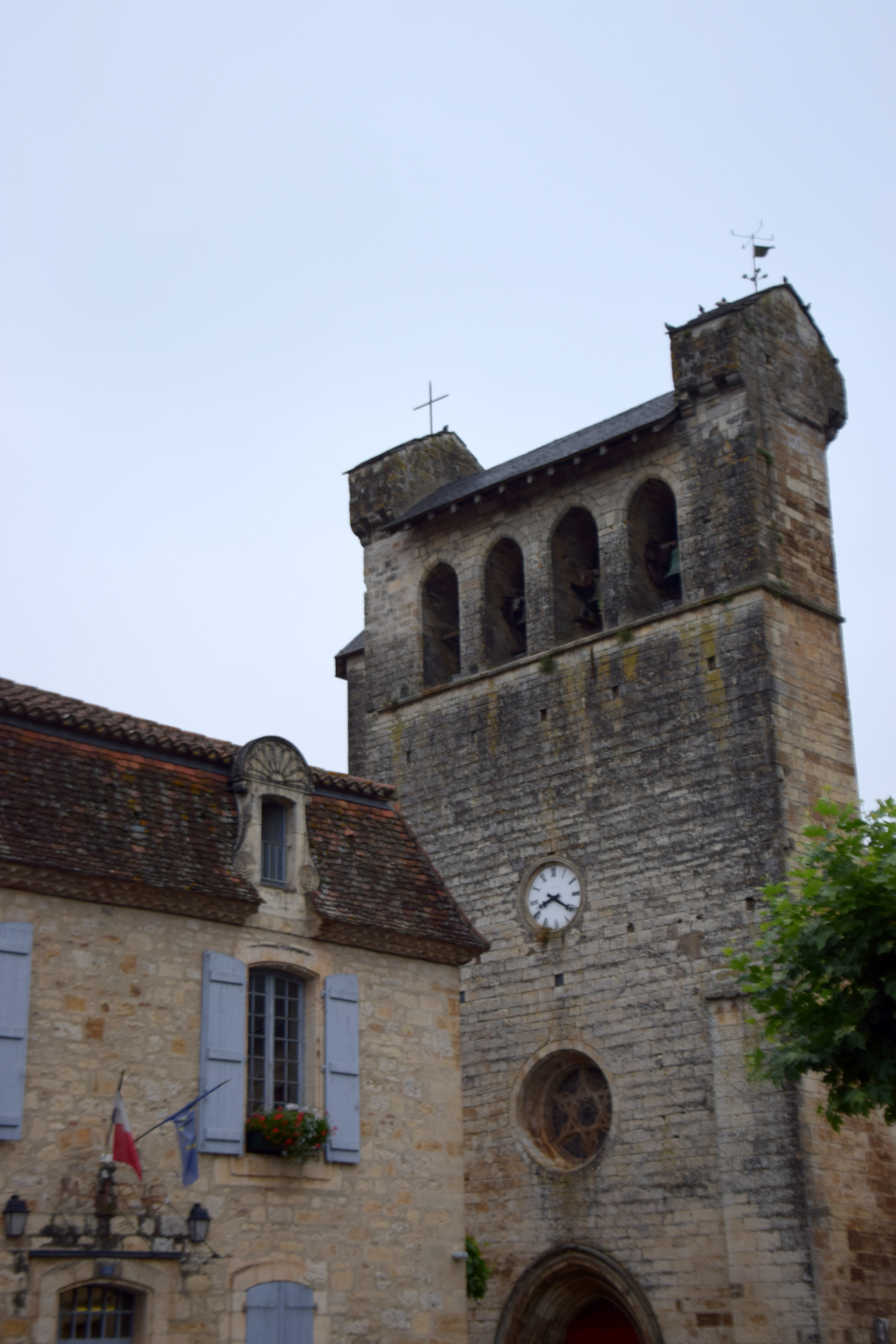
Town Square and church with the square bell tower so typical locally

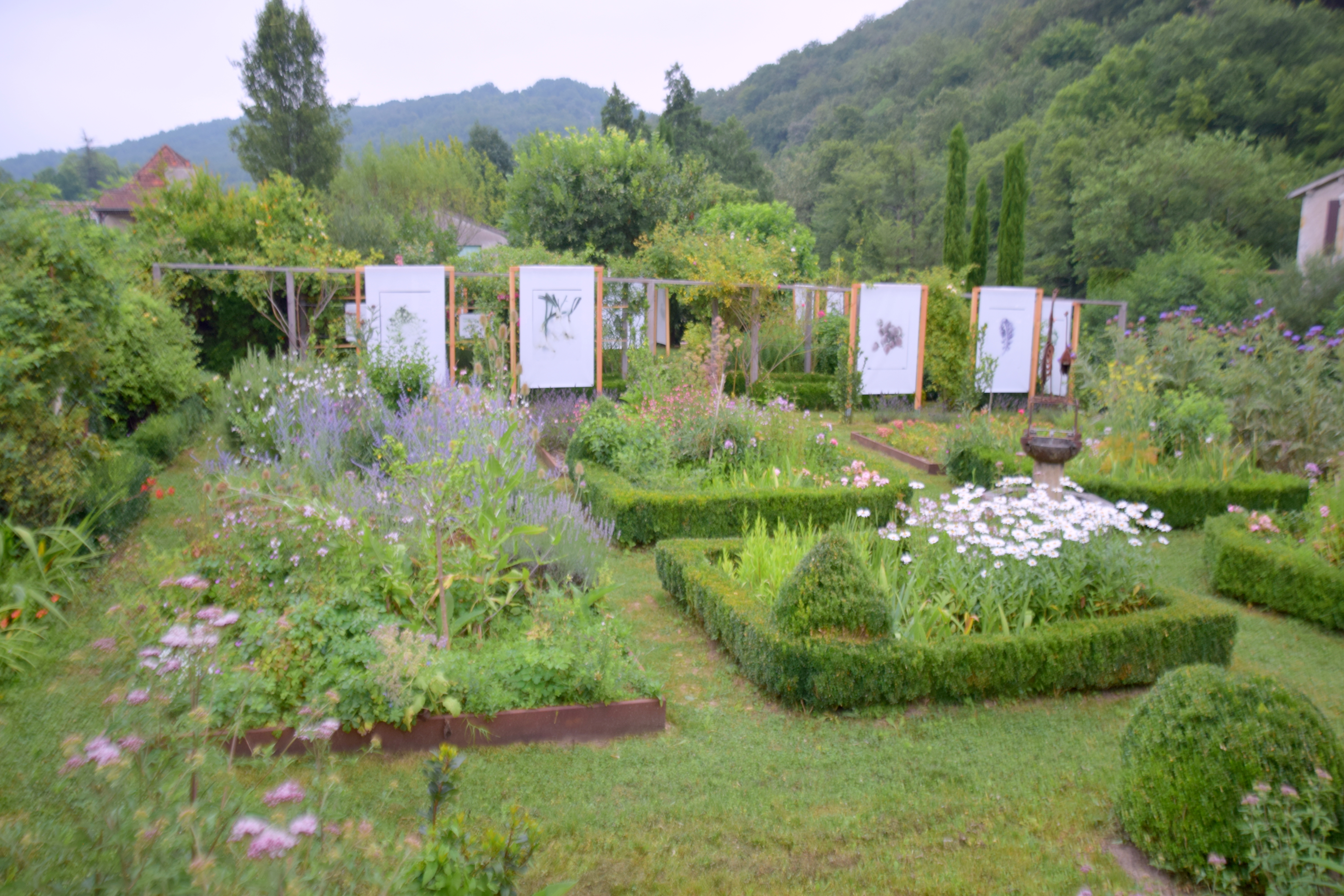
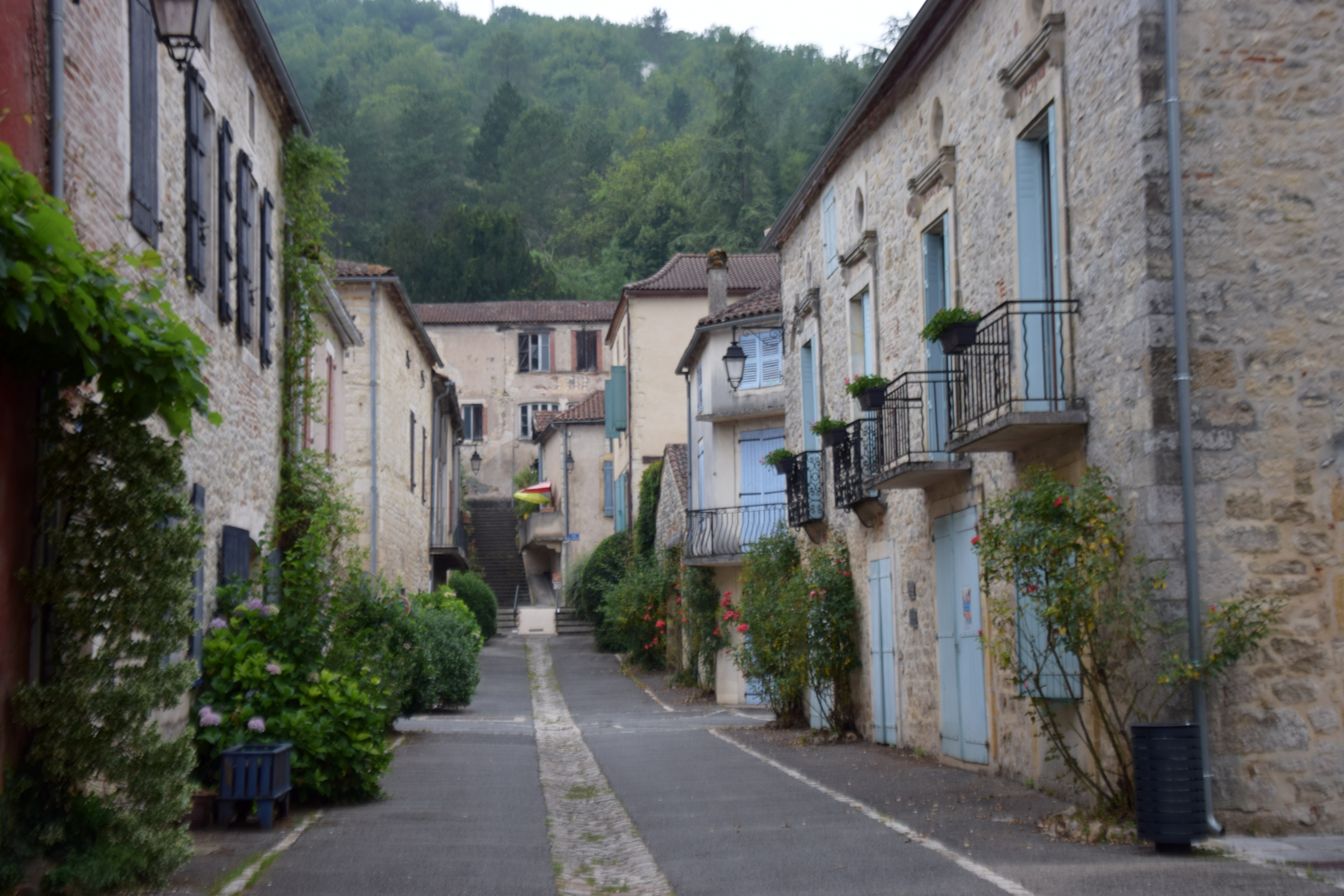
Pretty streets and gardens
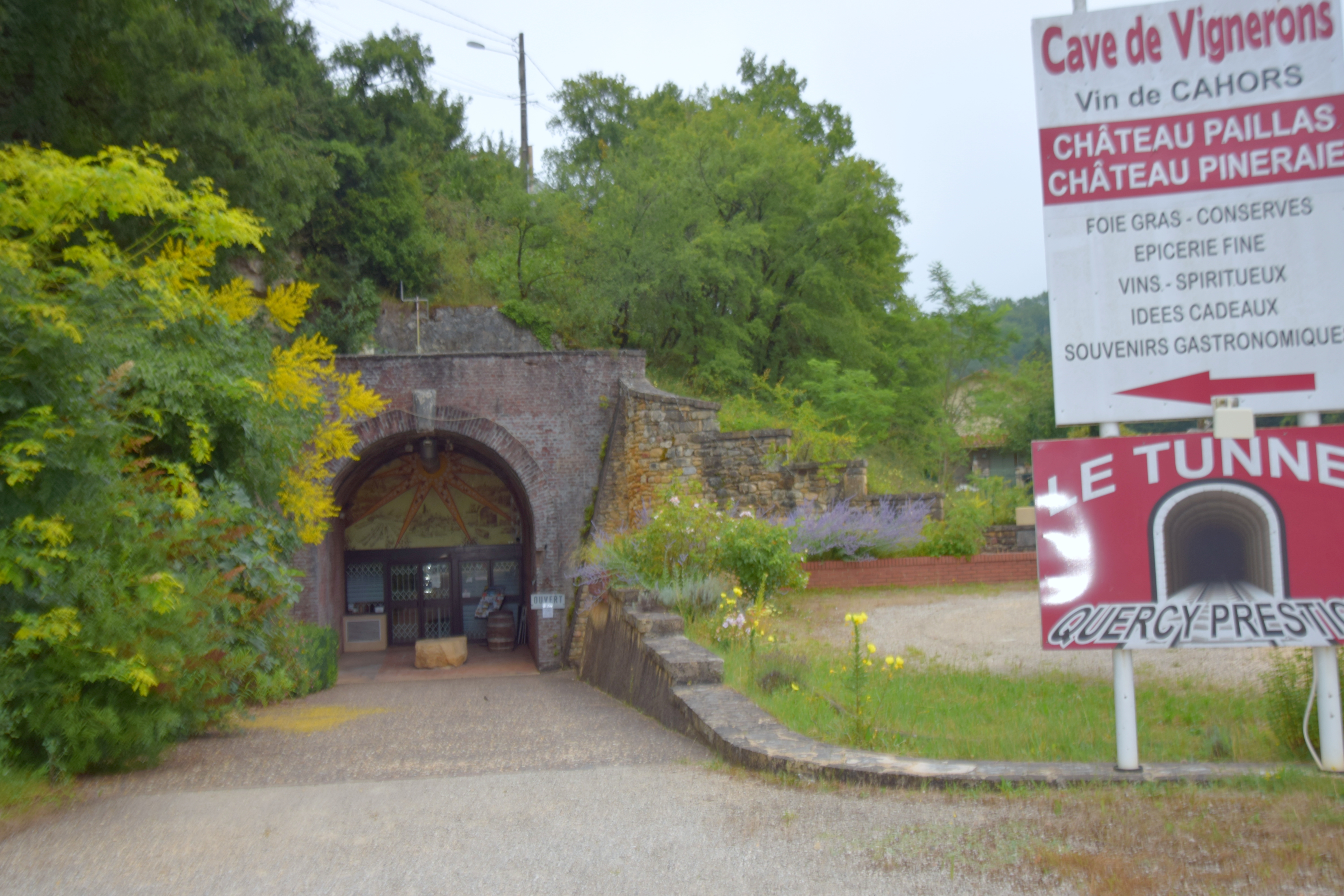
Next stop Prayssac, where at the entrance to the town an old railway tunnel has been put to new use as a “cave”. What better environment for storing wine, both cool and dark!
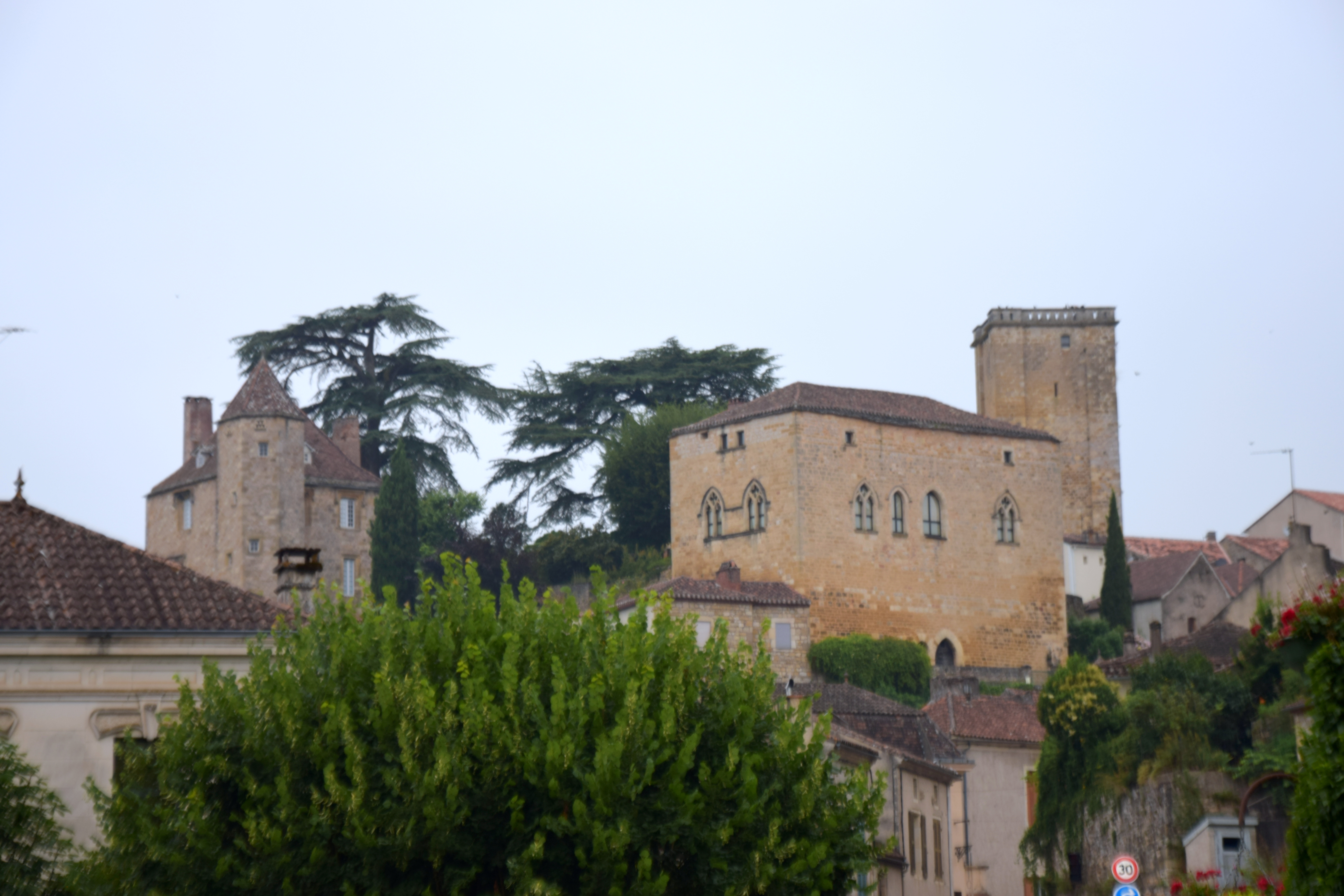
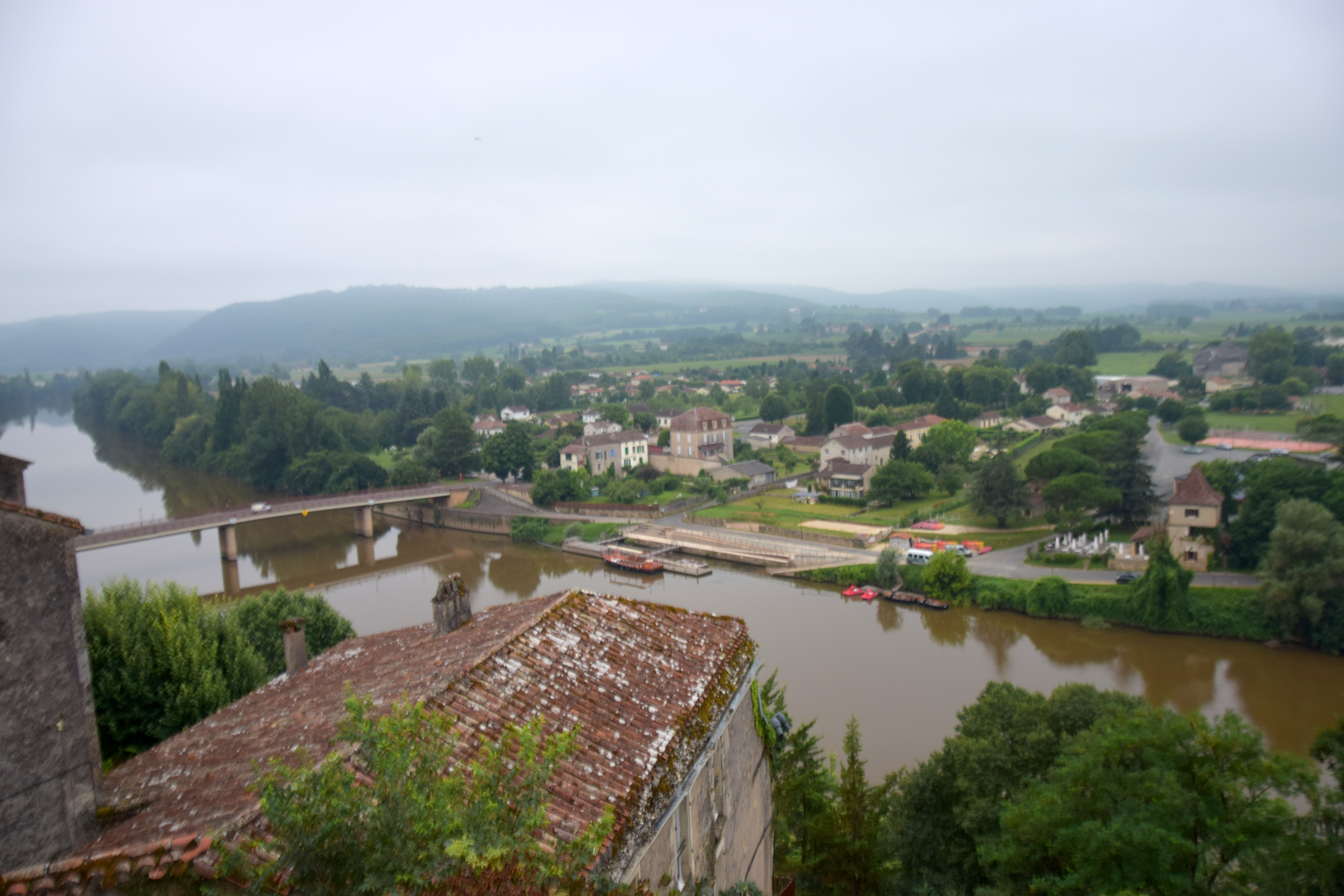
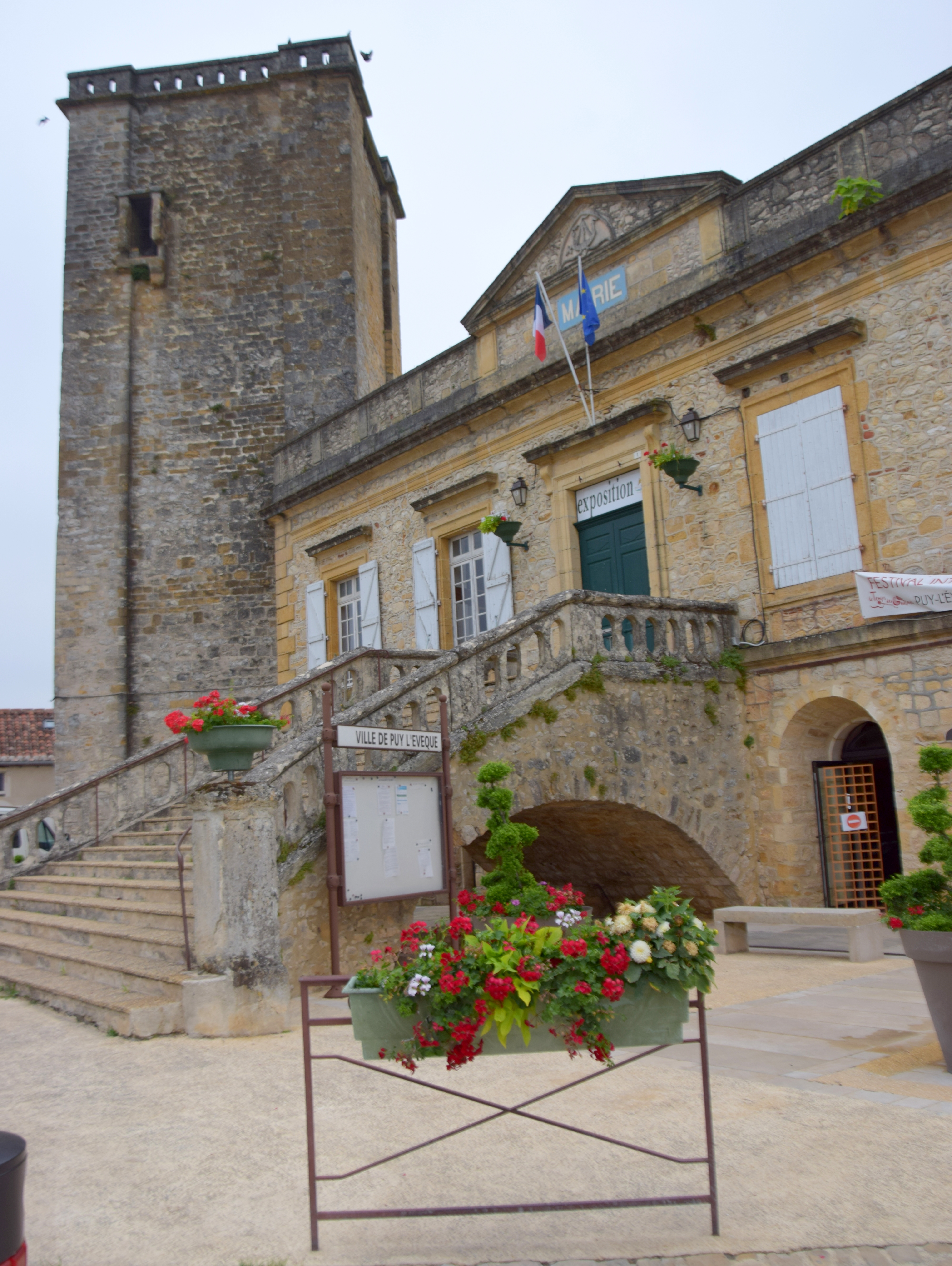
Puy-L’Evêque is perched high above the Lot and on a clear day……which this is not, would be offering great views”

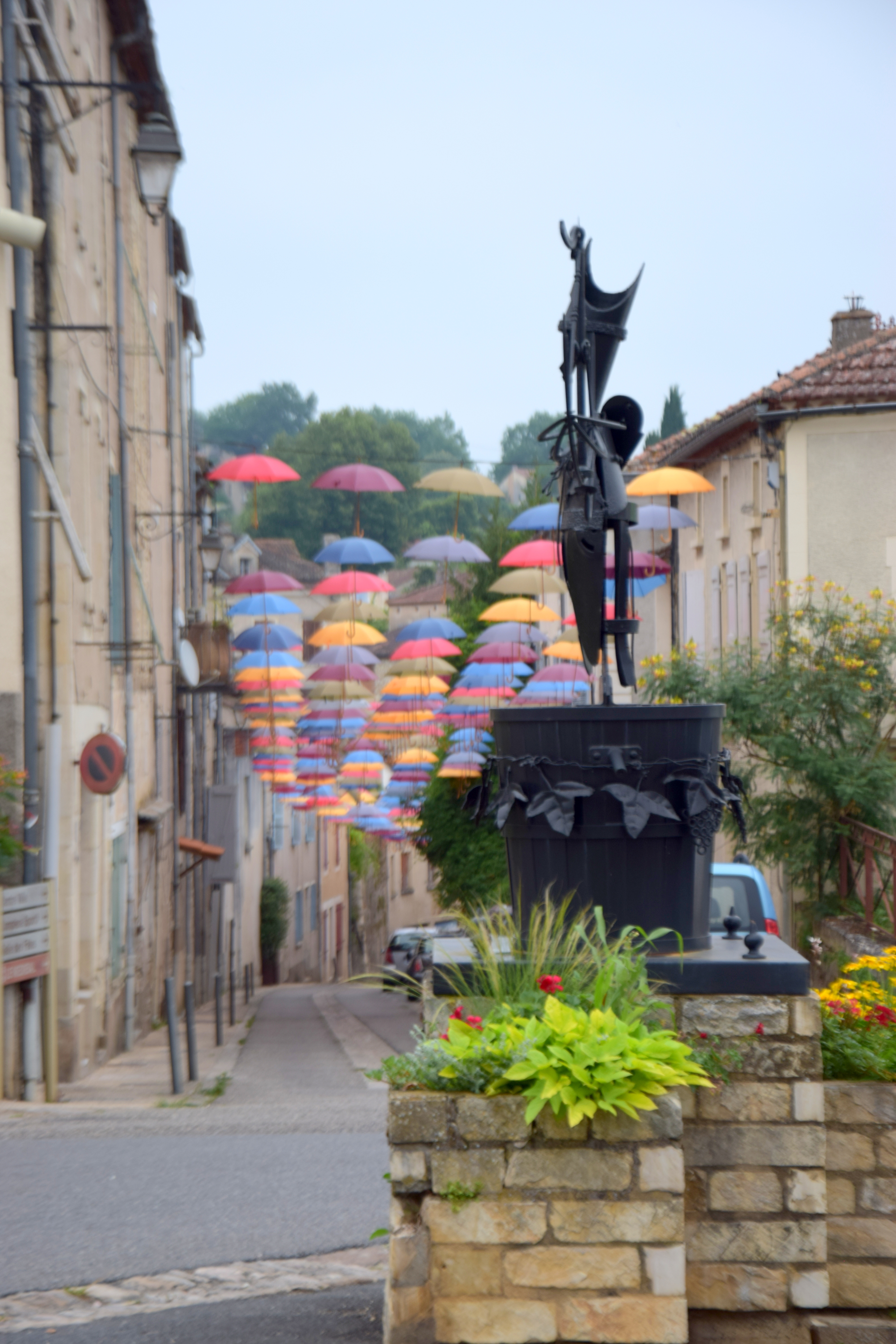
The town hall is in the square at the top of the town next to the DonJon from there the festively decorated main street leads down to the commercial centre.
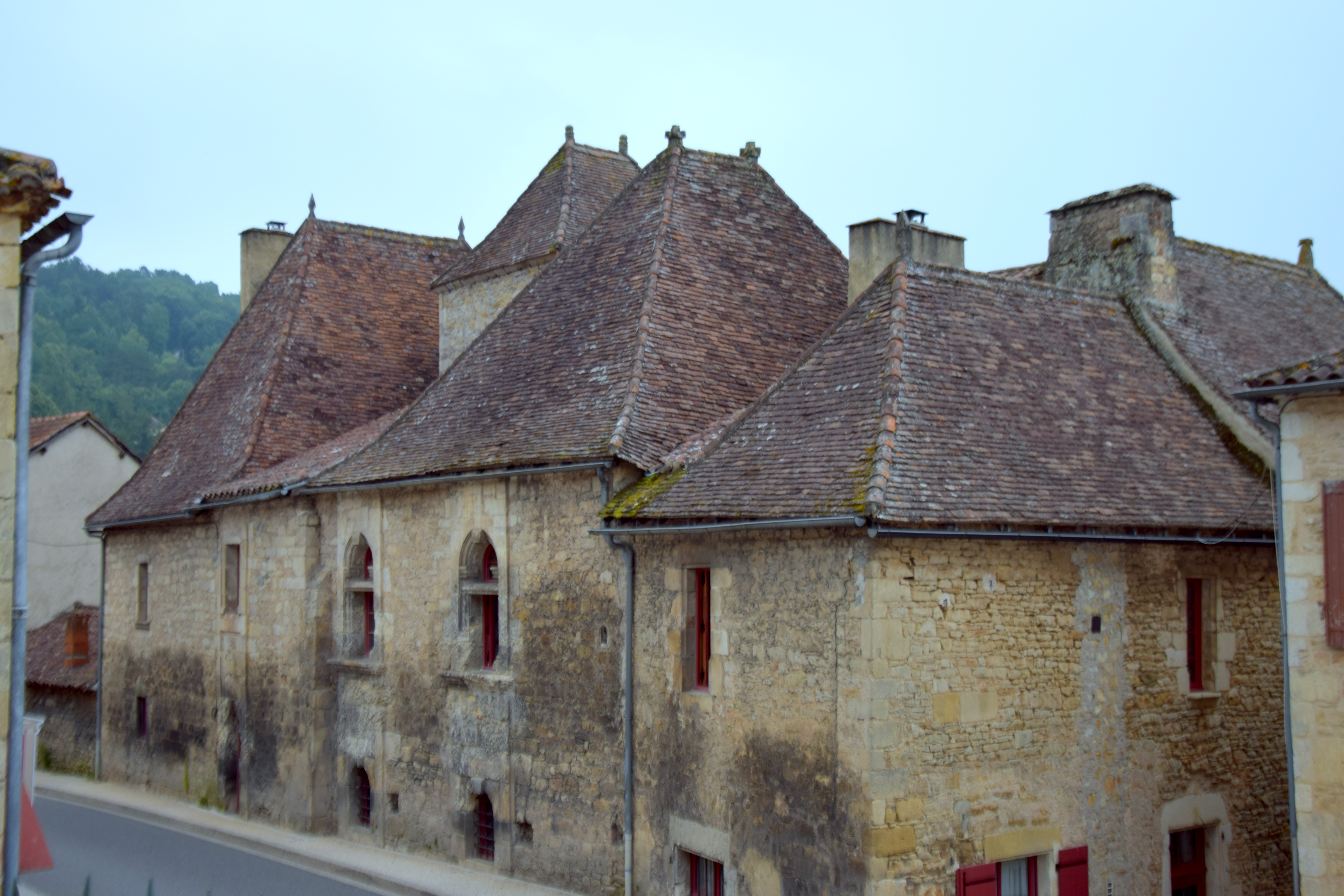
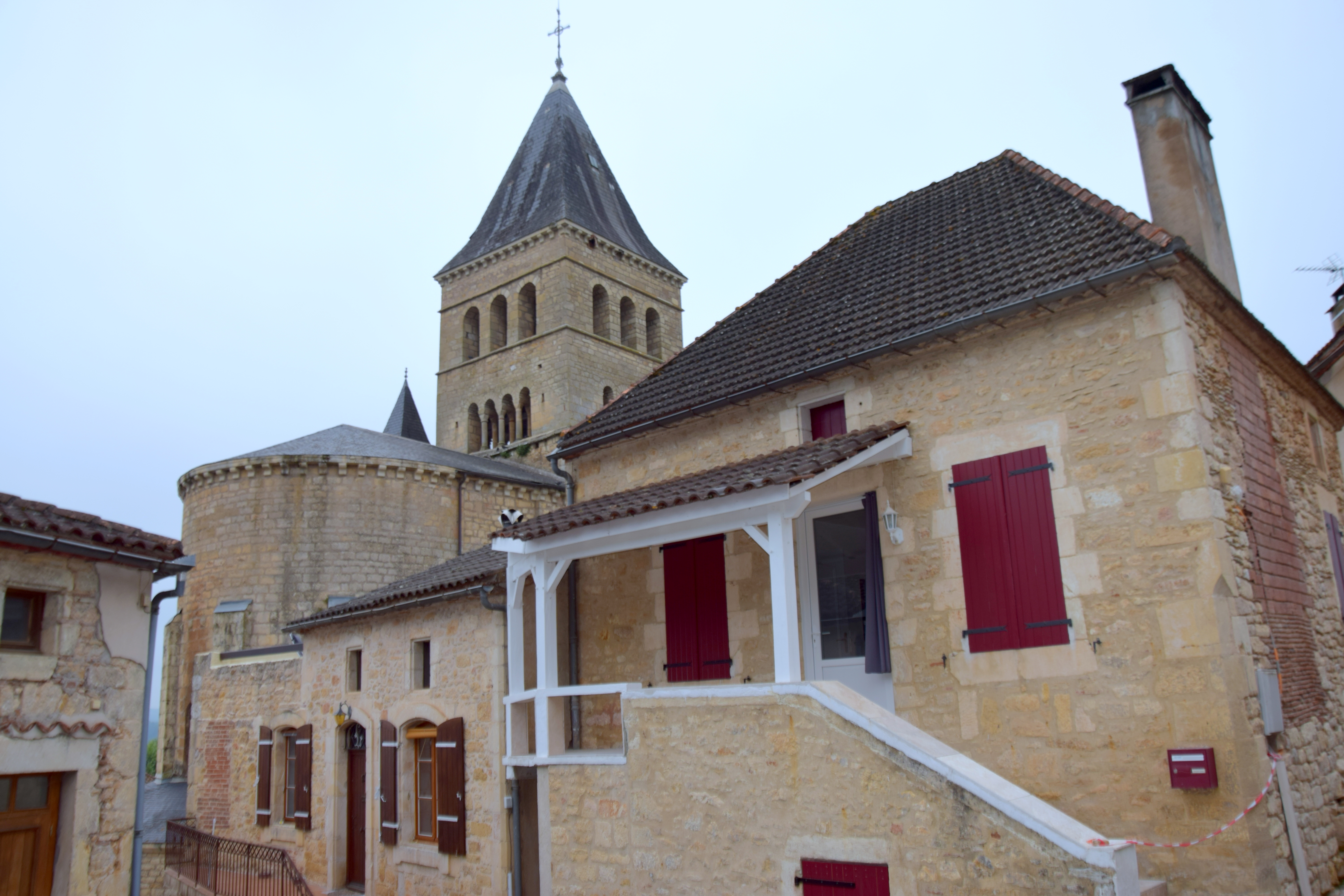
At Durval there were one or two interesting old buildings
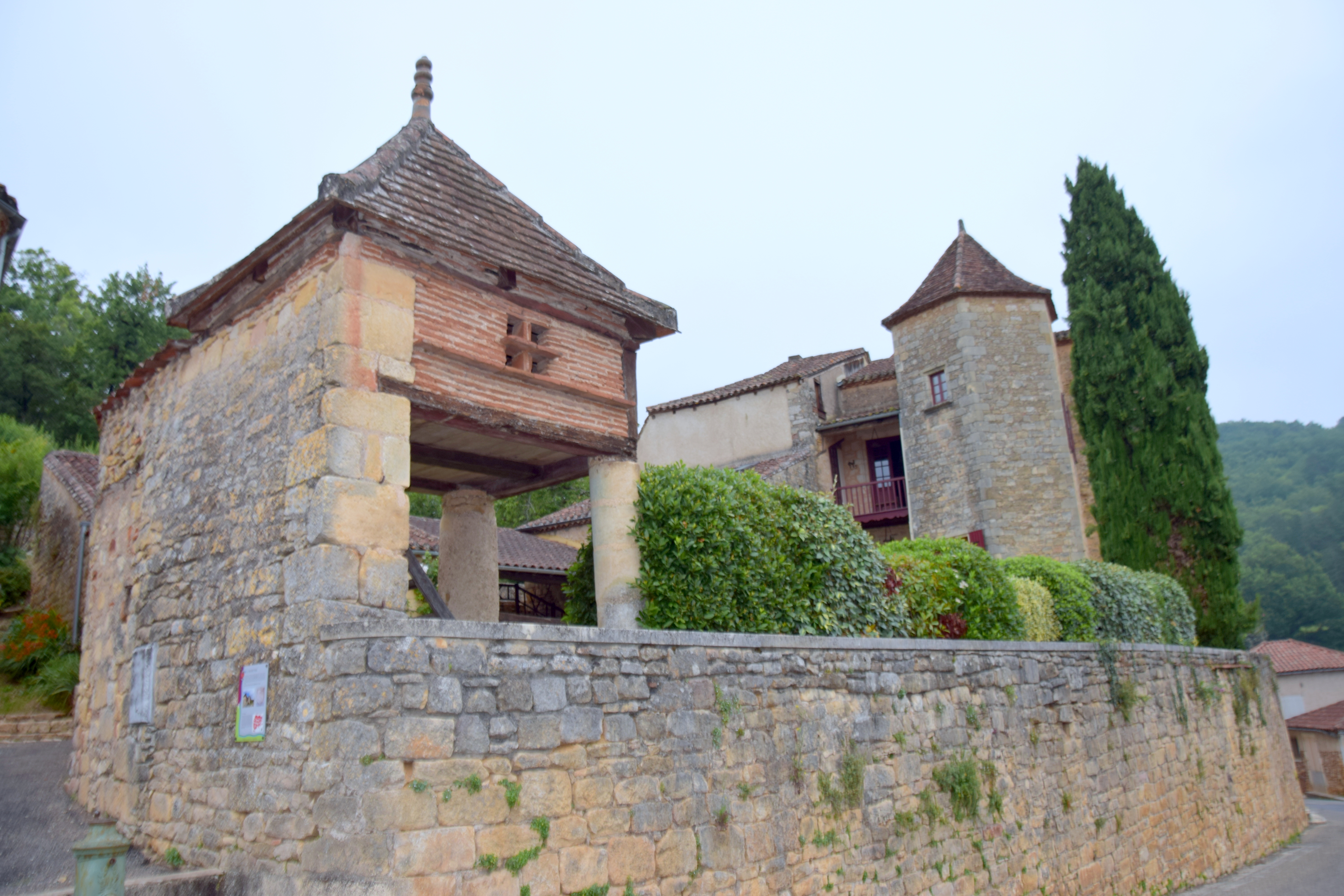
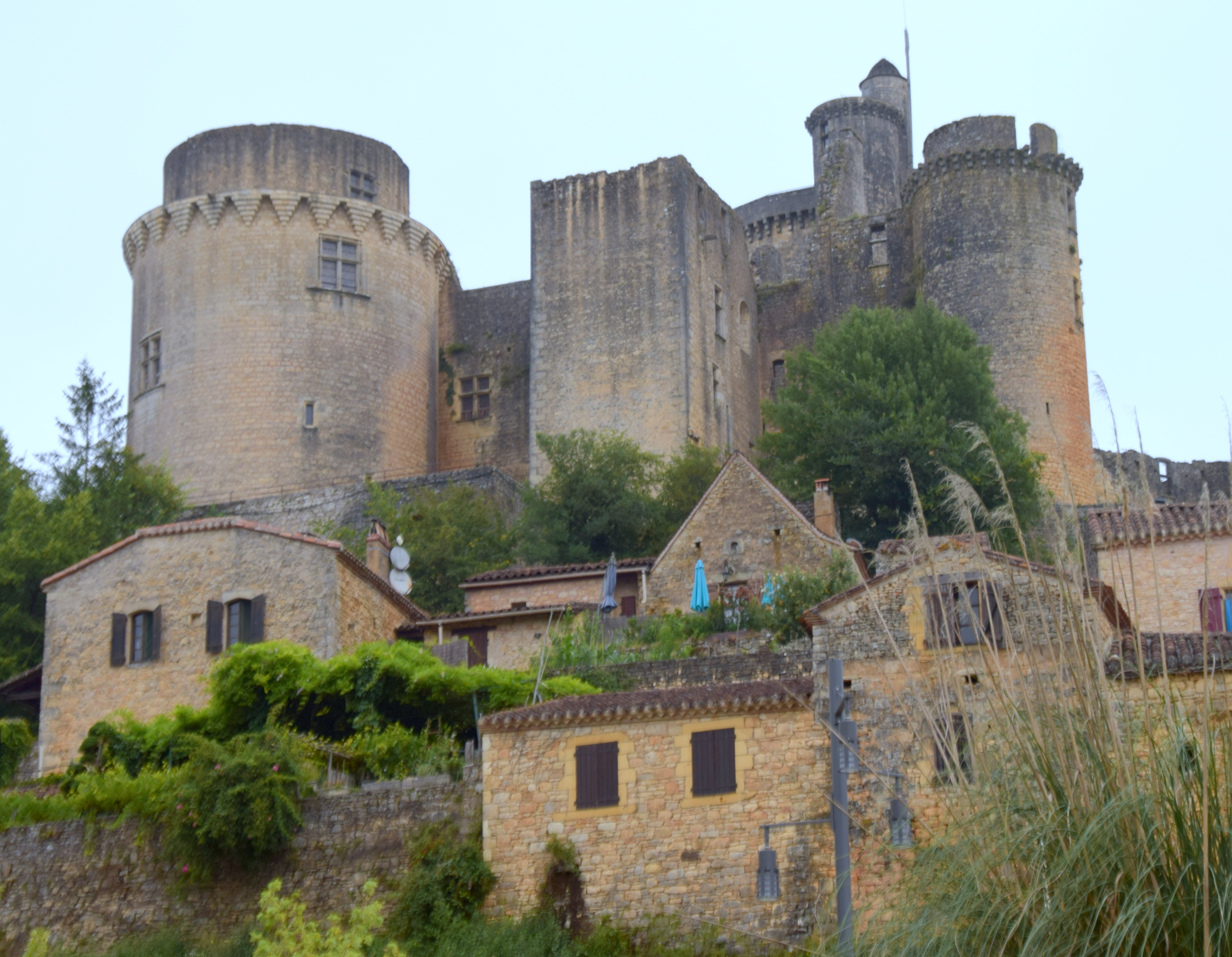
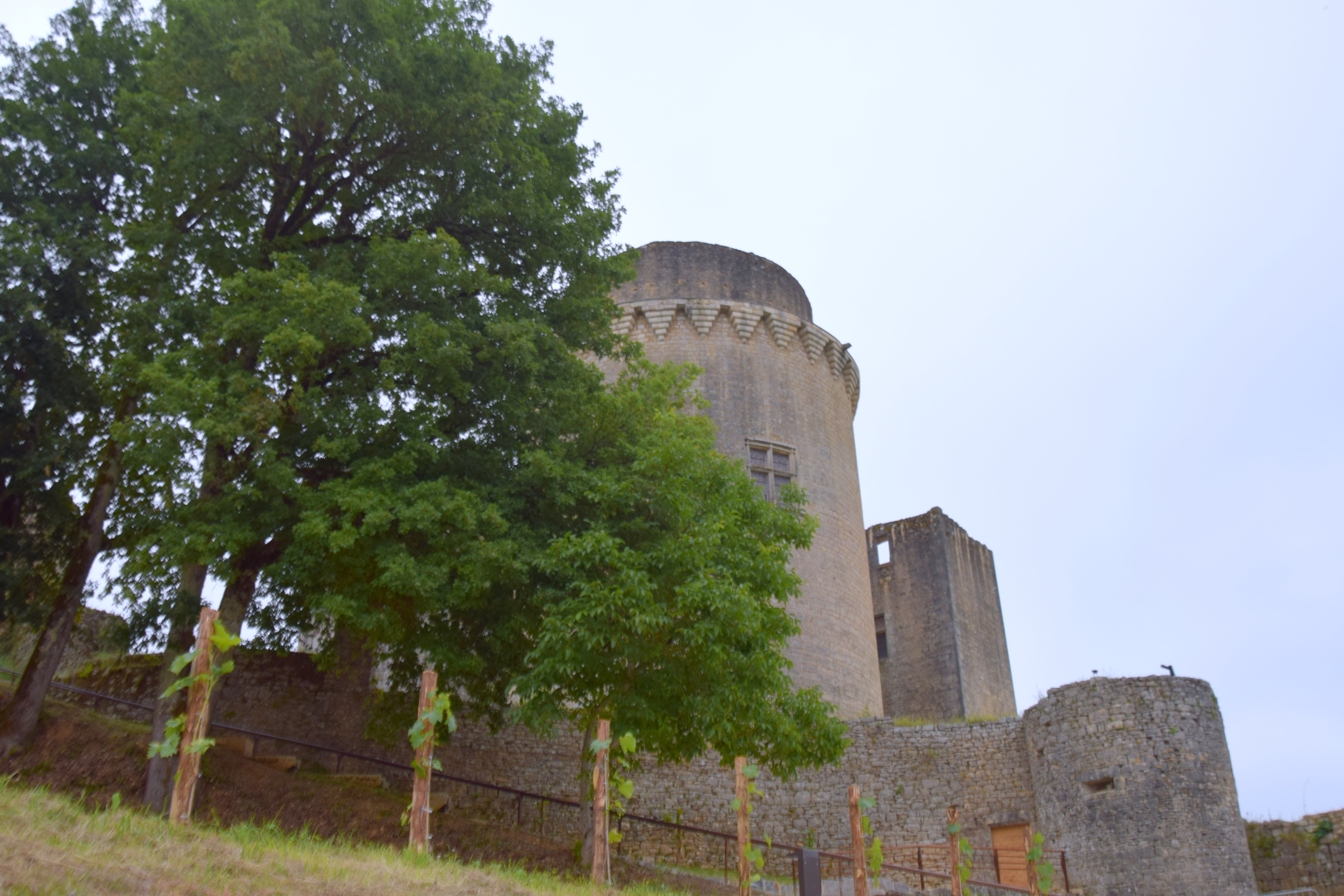
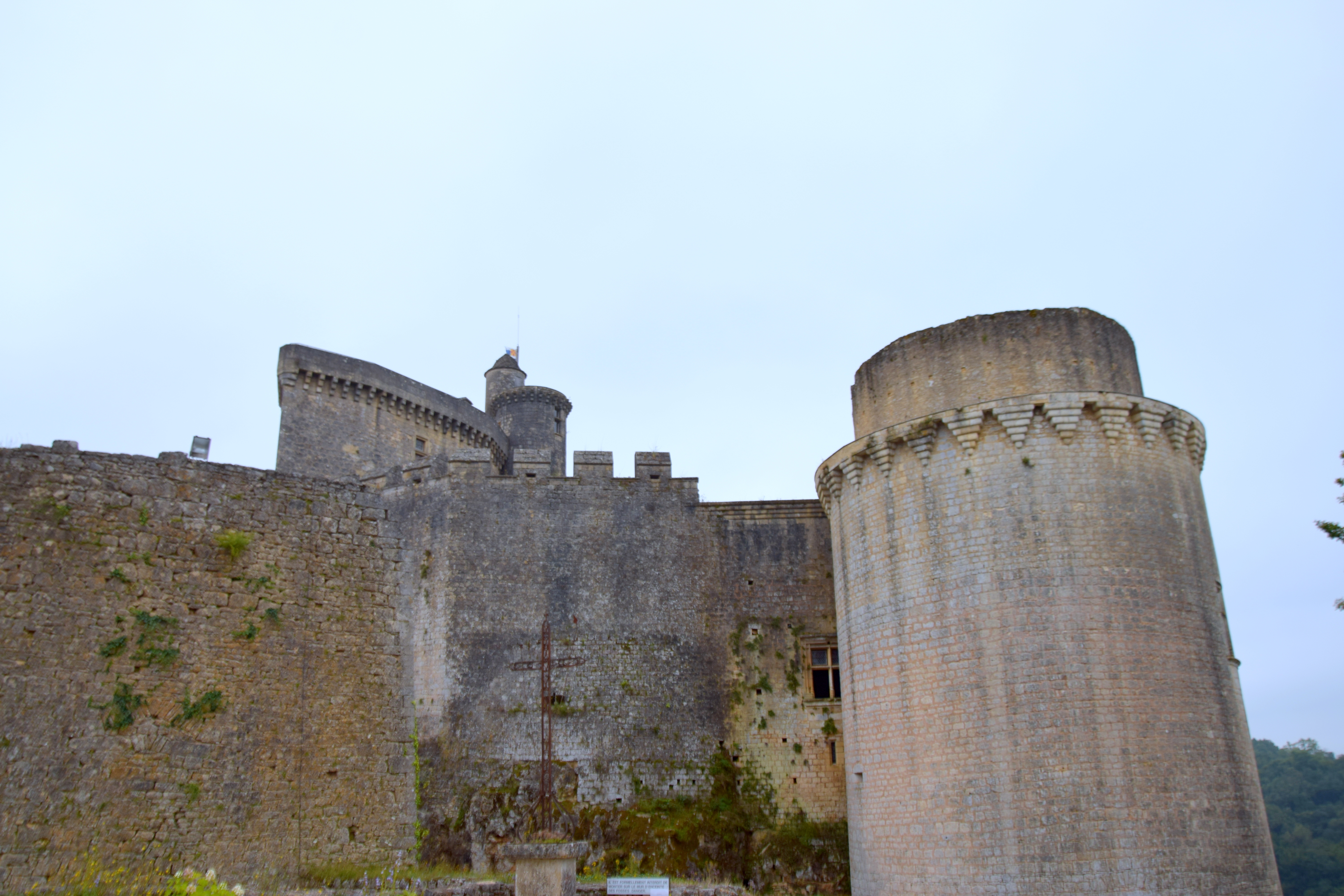
The Chateau Bonaguil turned out to be a short 4k detour off my route, so I took it. The castle is by my taste a bit brutish but I expect it serves its defensive purposes. I did not go inside.



By now the sky was beginning to clear and I headed into Gourdon to spend the lunch break in the Aire. It very quickly became to hot to contemplate the climb into the old town so I satified myself with a photo from the Aire and headed off towards Cenac-et-St-Julien and the Dordogne River.
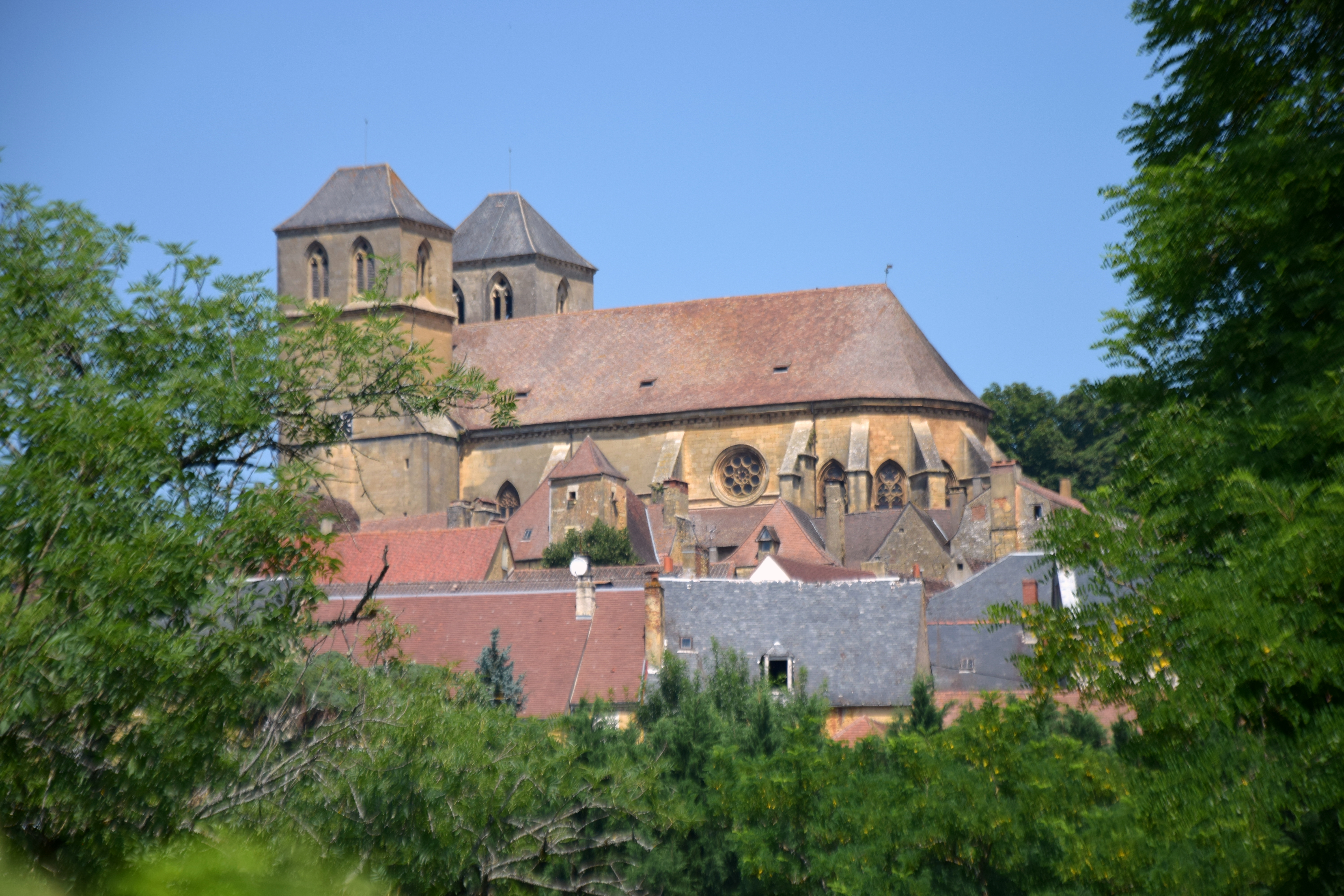
We settled into the Aire and walked down to the river where quite a few people were cooling off in the fast flowing steam.

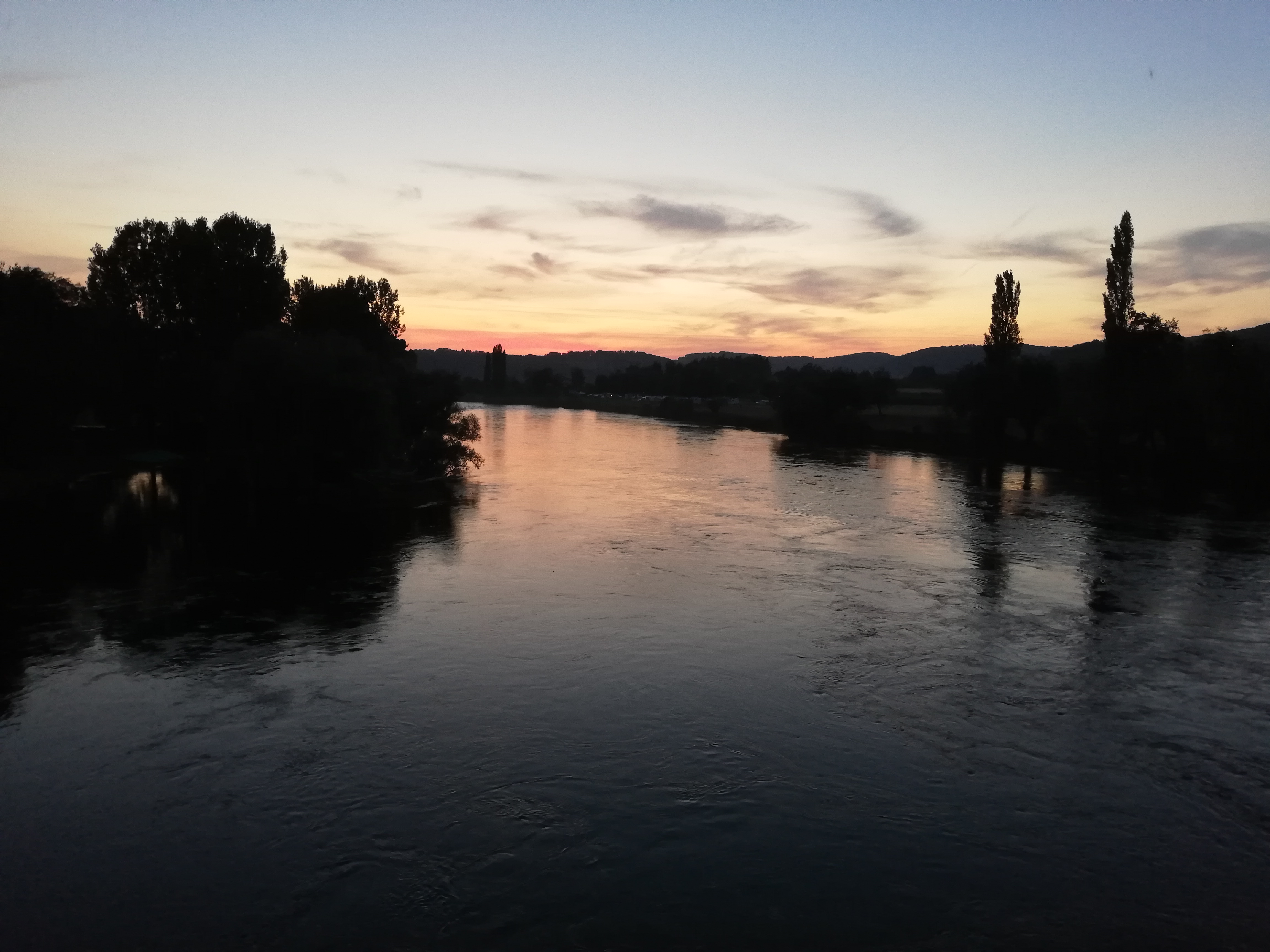
In the evening we walked through the village then stopped on the bridge to capture the last of the sun.

22nd. Another early start to try and get up the hill to Domme and off on the road again before the traffic. Domme is a pristine, chocolate box, tourist trap, but certainly pretty and best captured before it becomes too crowded.
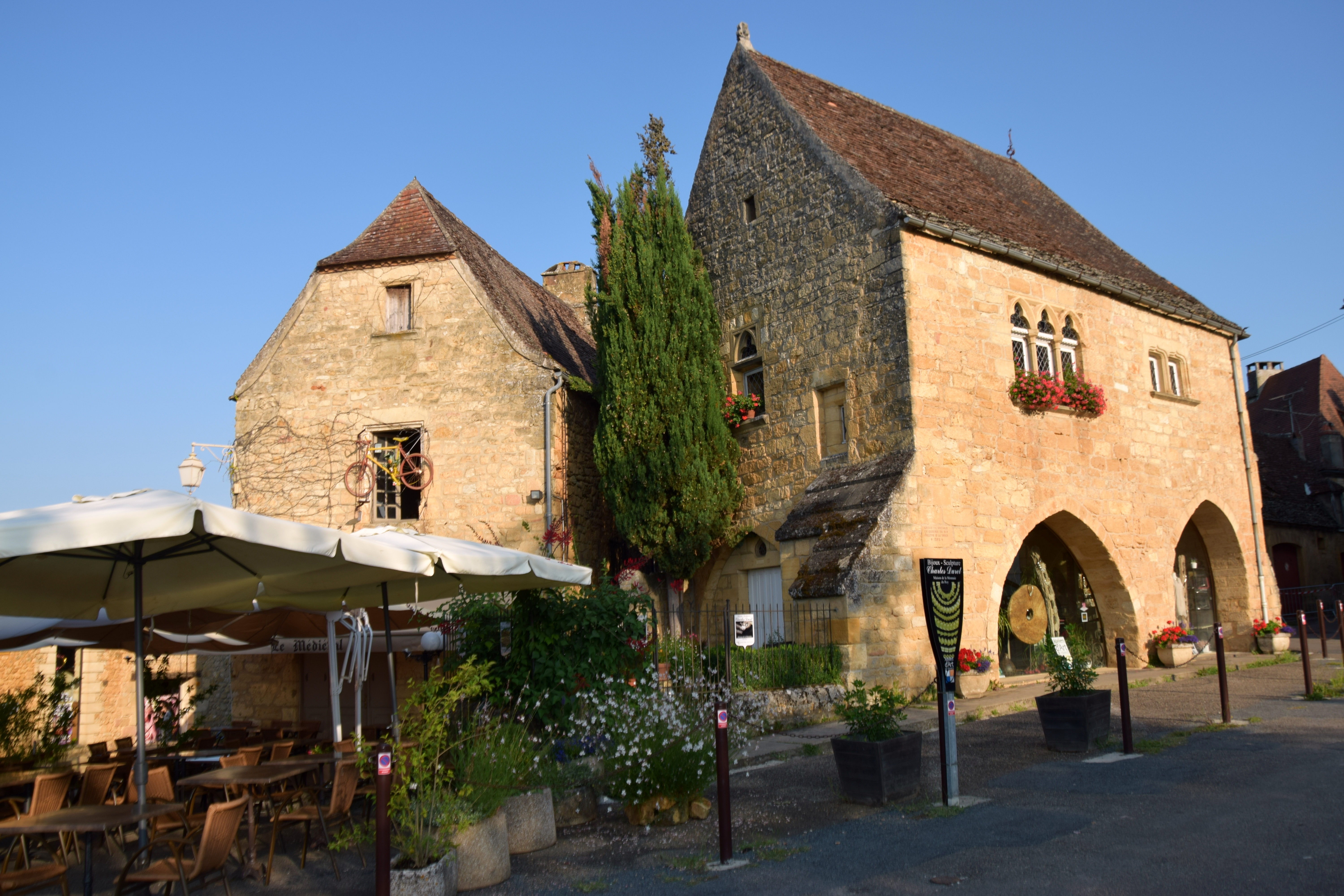
The streets either go up or down from the main square.
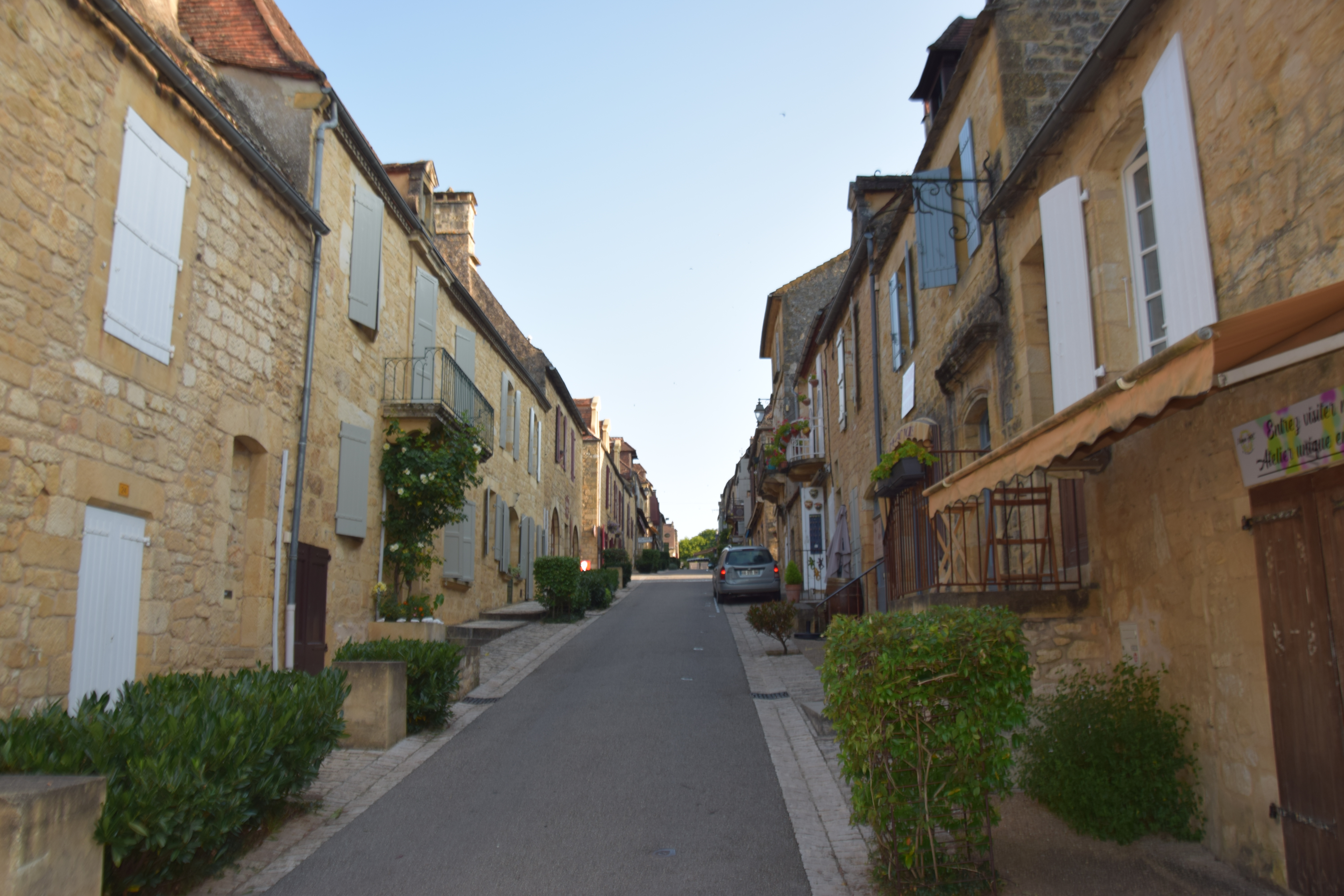


In the main square it was Market Day. The stall owners must have got up the hill even earlier than I did.
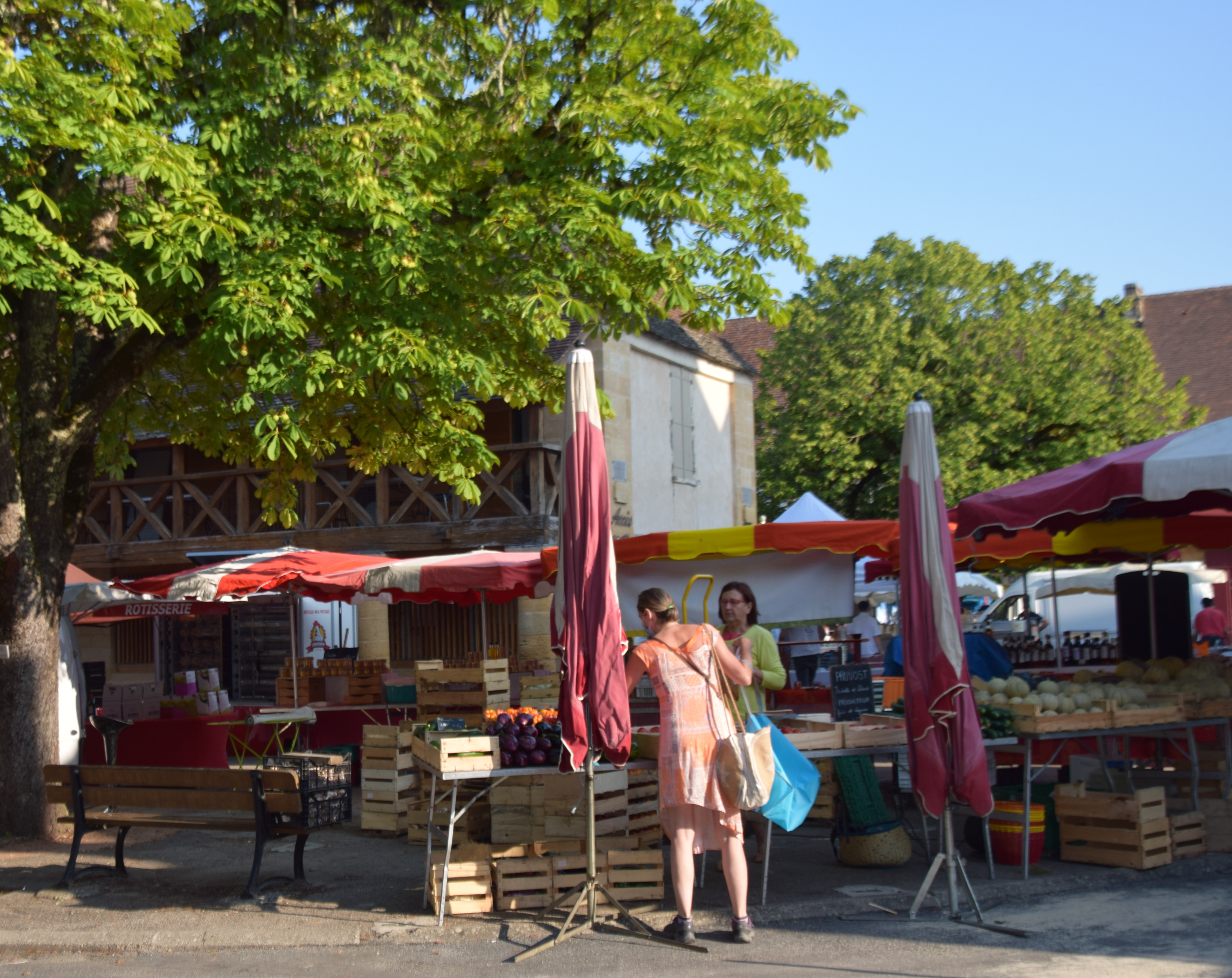


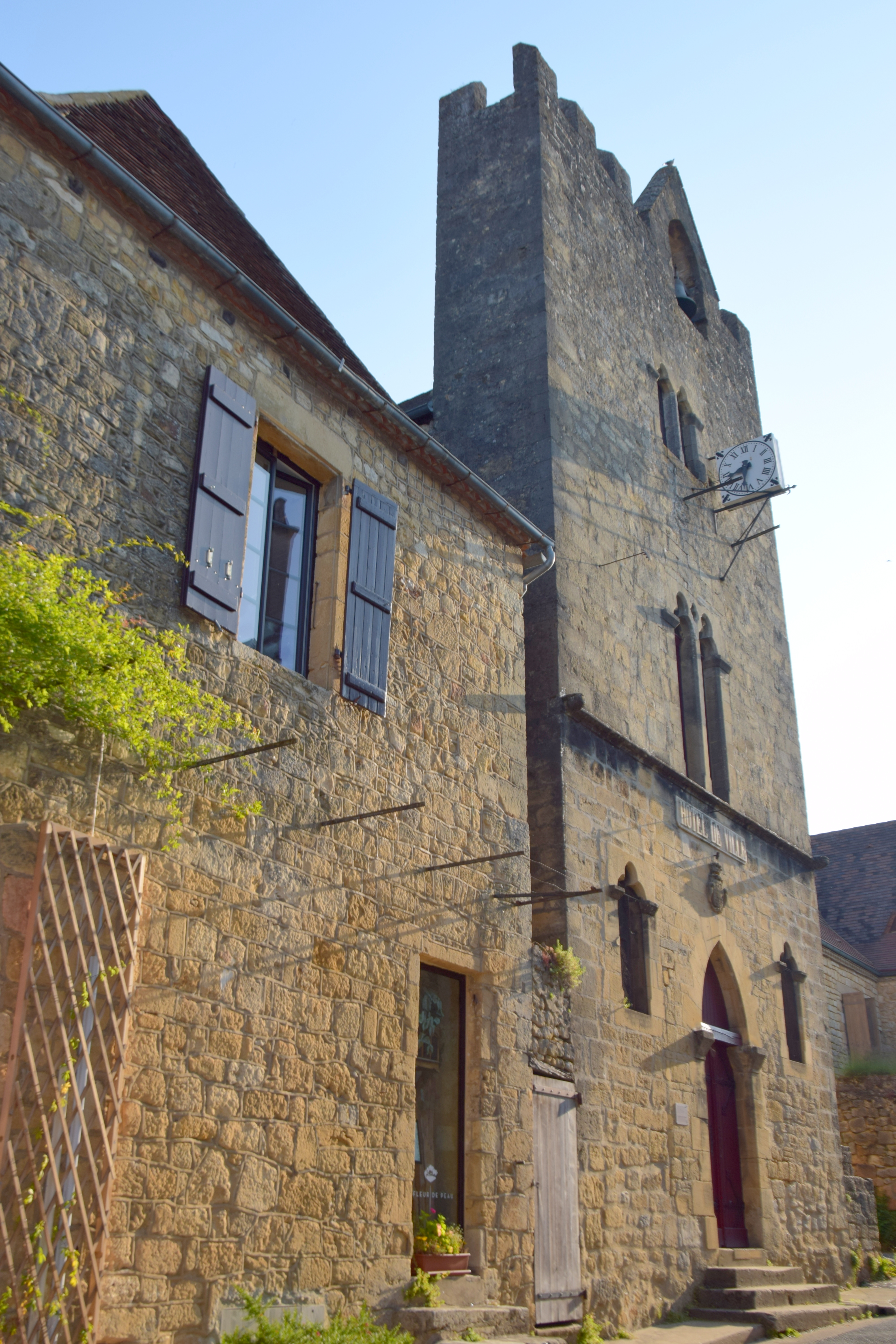
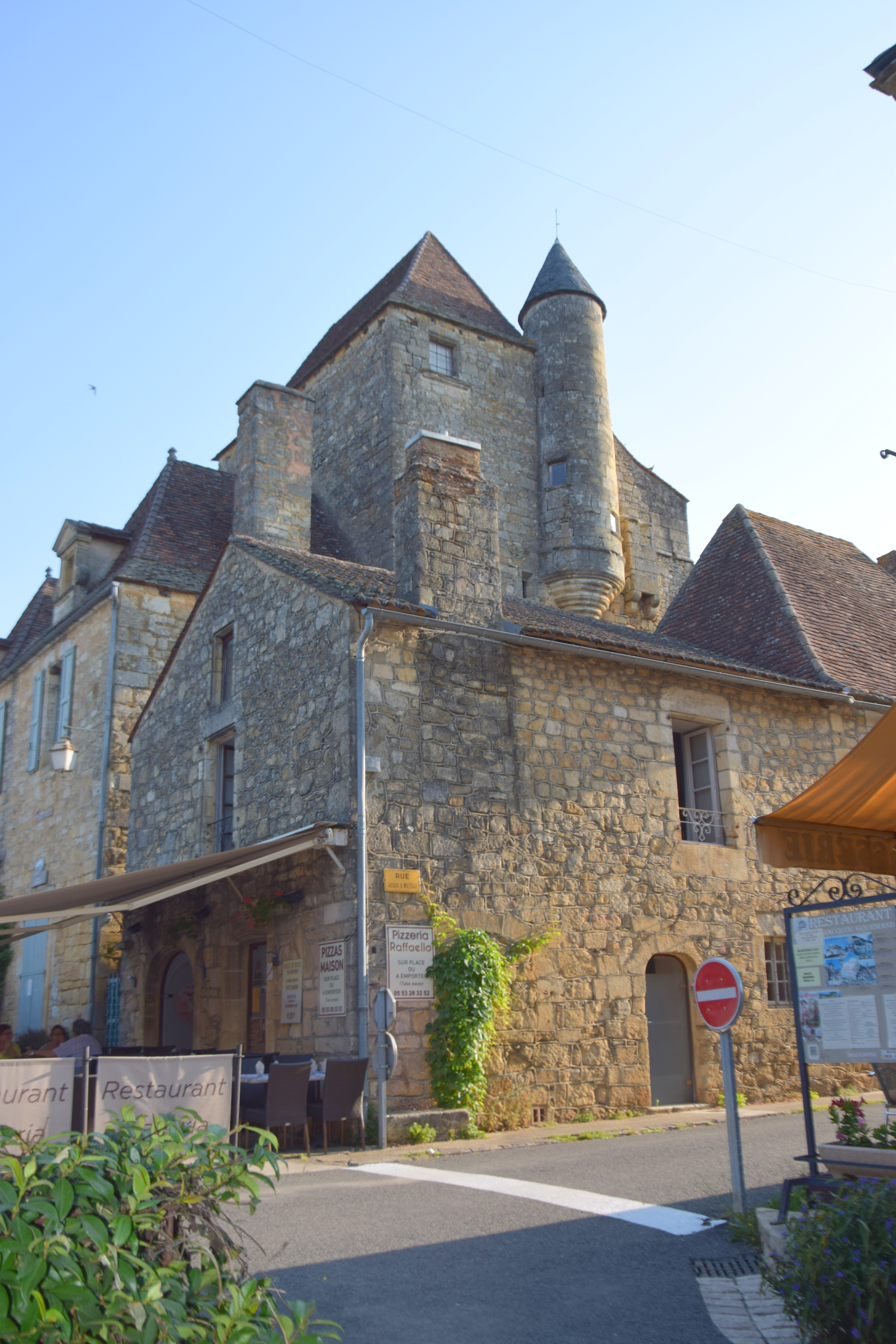
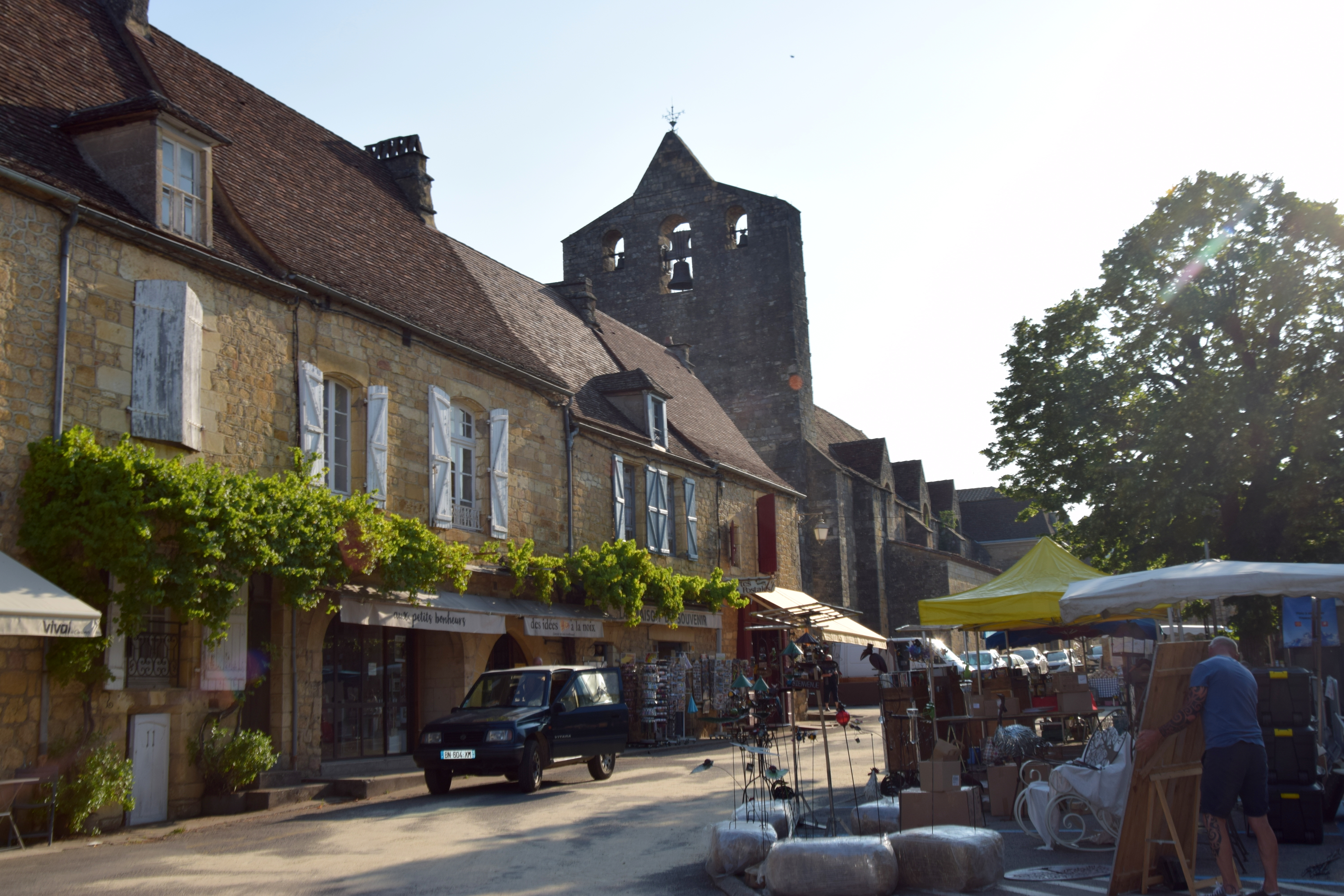
Domme certainly has a good vantage point, perched as it is high above the river on a very steep sided hill.
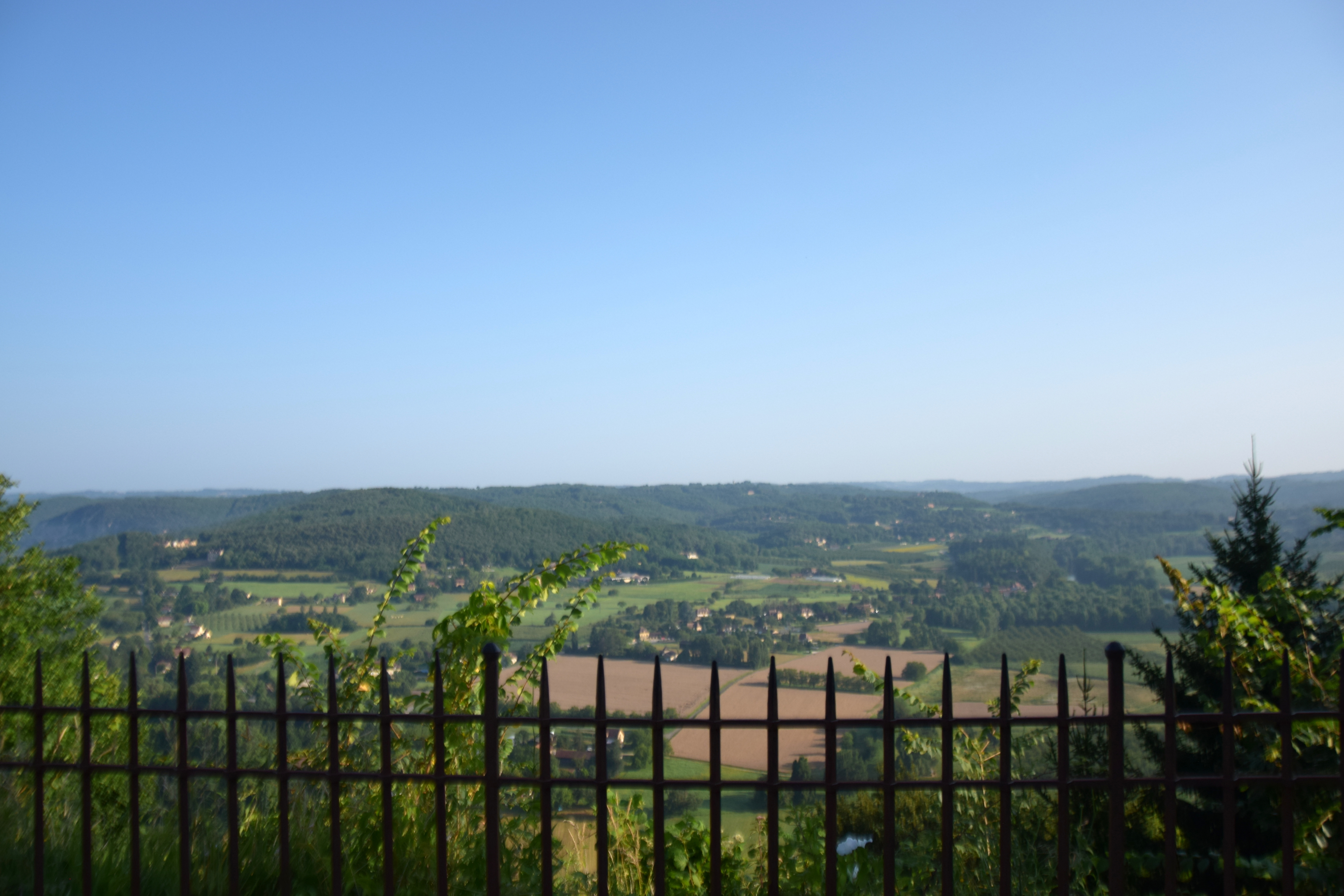
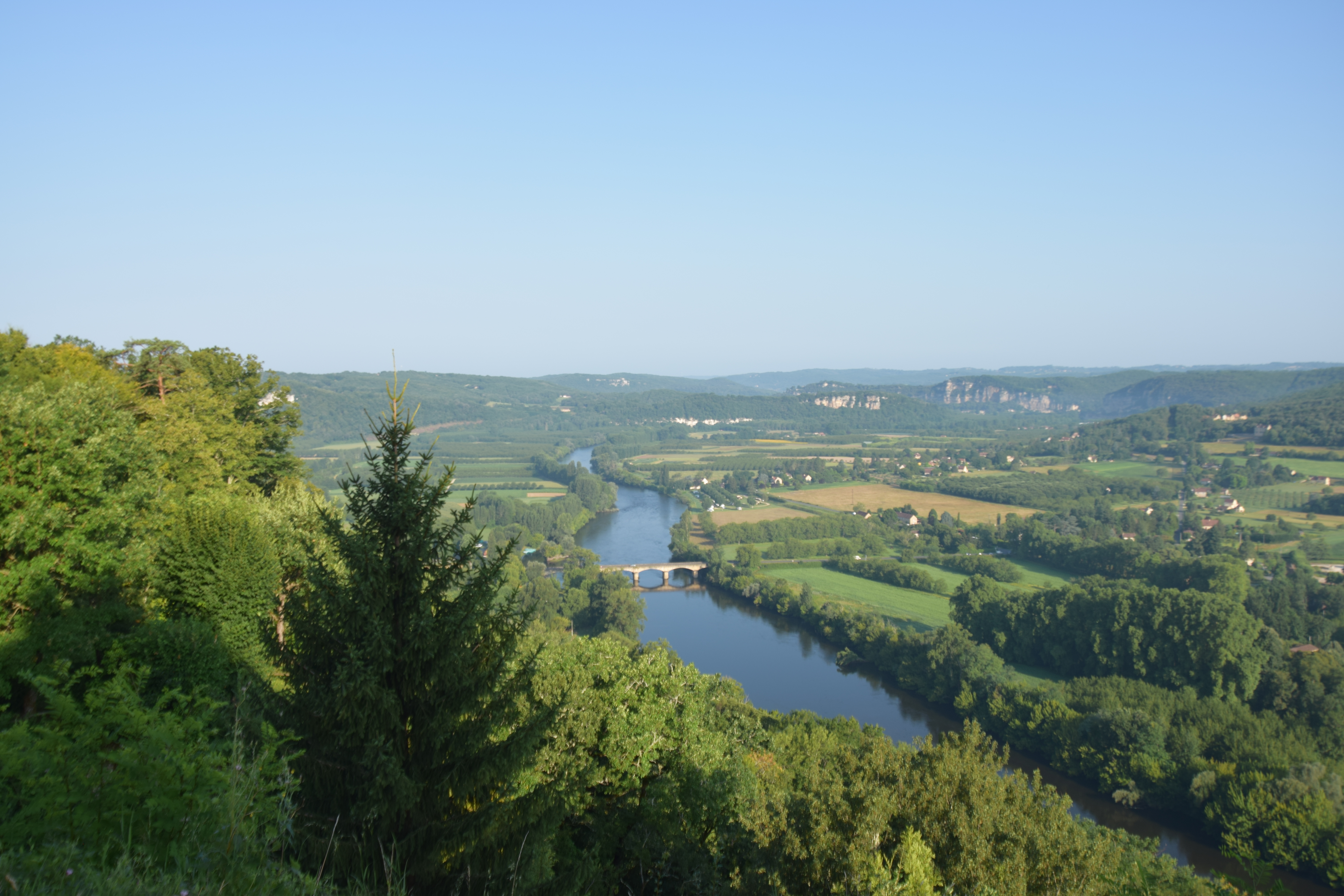
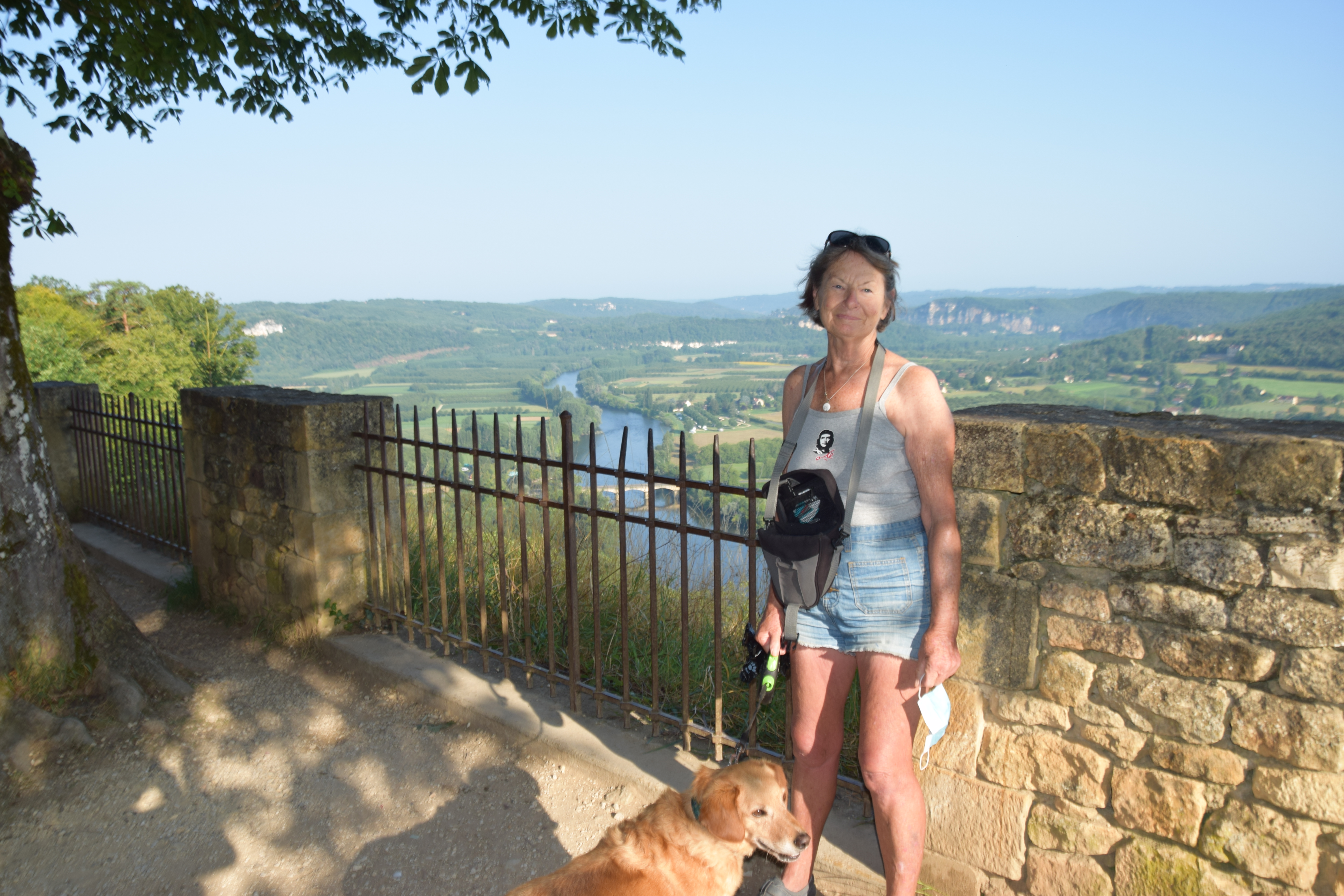
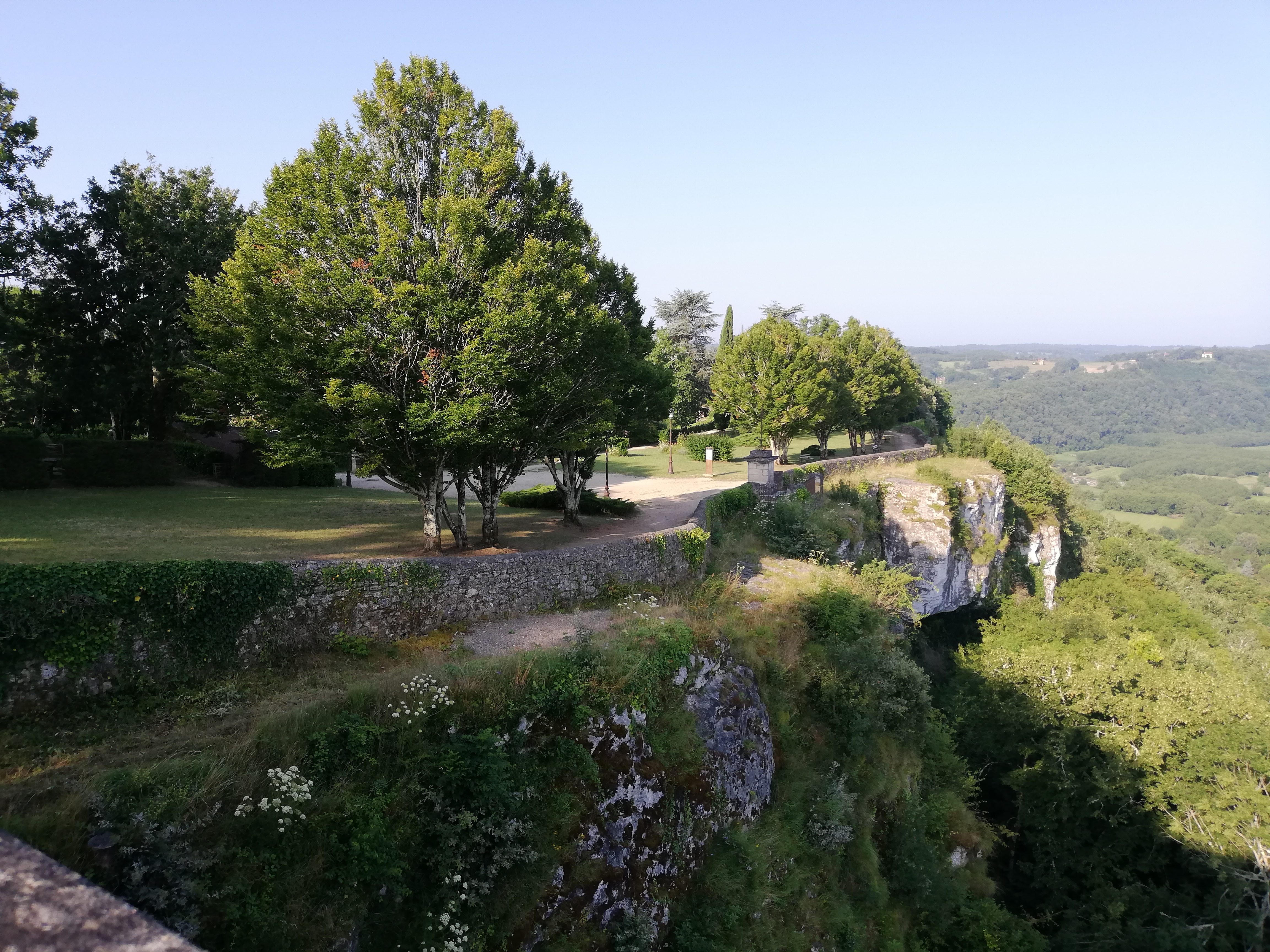
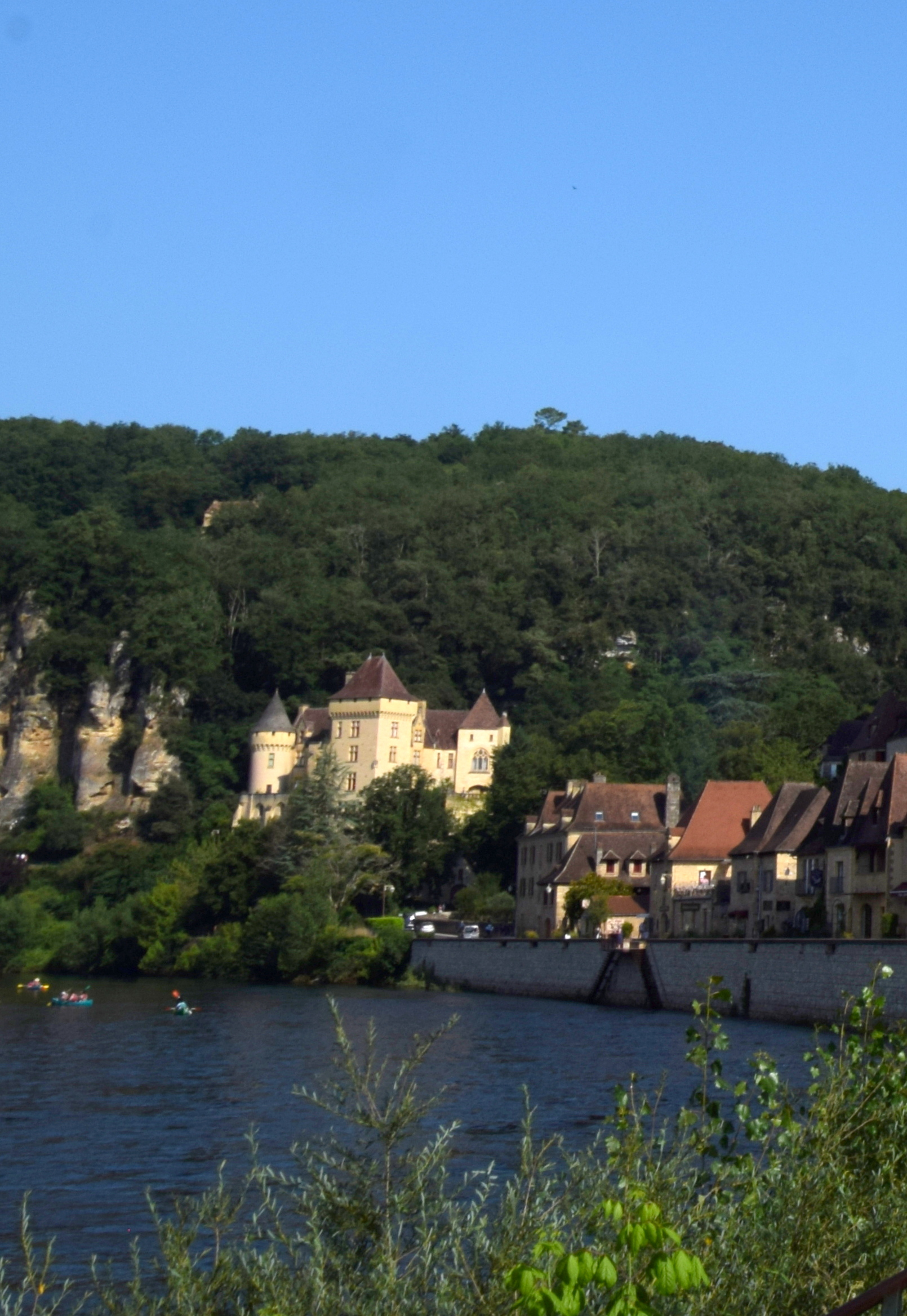
The next stop was La Roque-Gageac basically built into the cliff face which rises above the river.Another beautifully maintained tourist trap where I was again glad to have got in early before the arrival of the madding crowds.
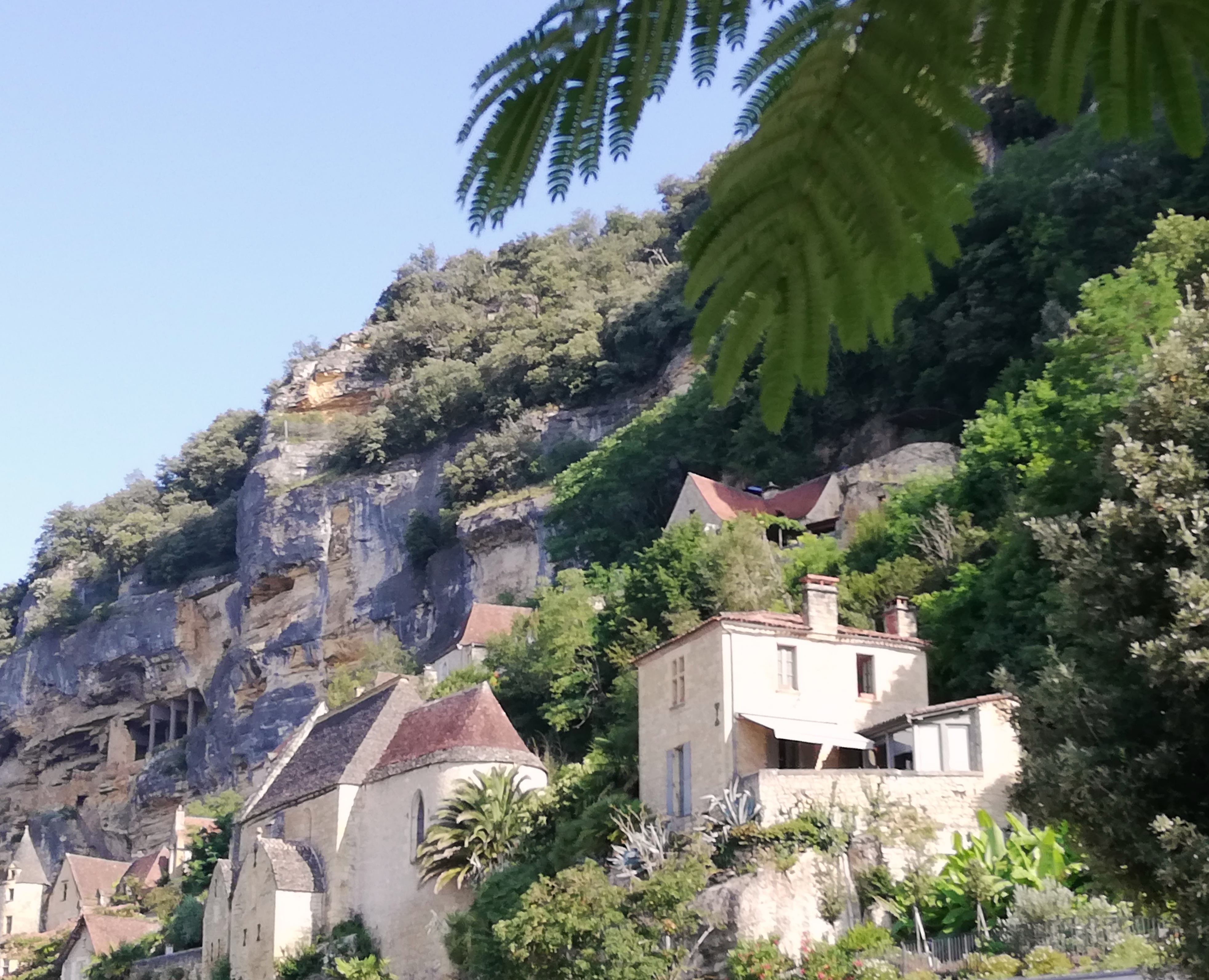

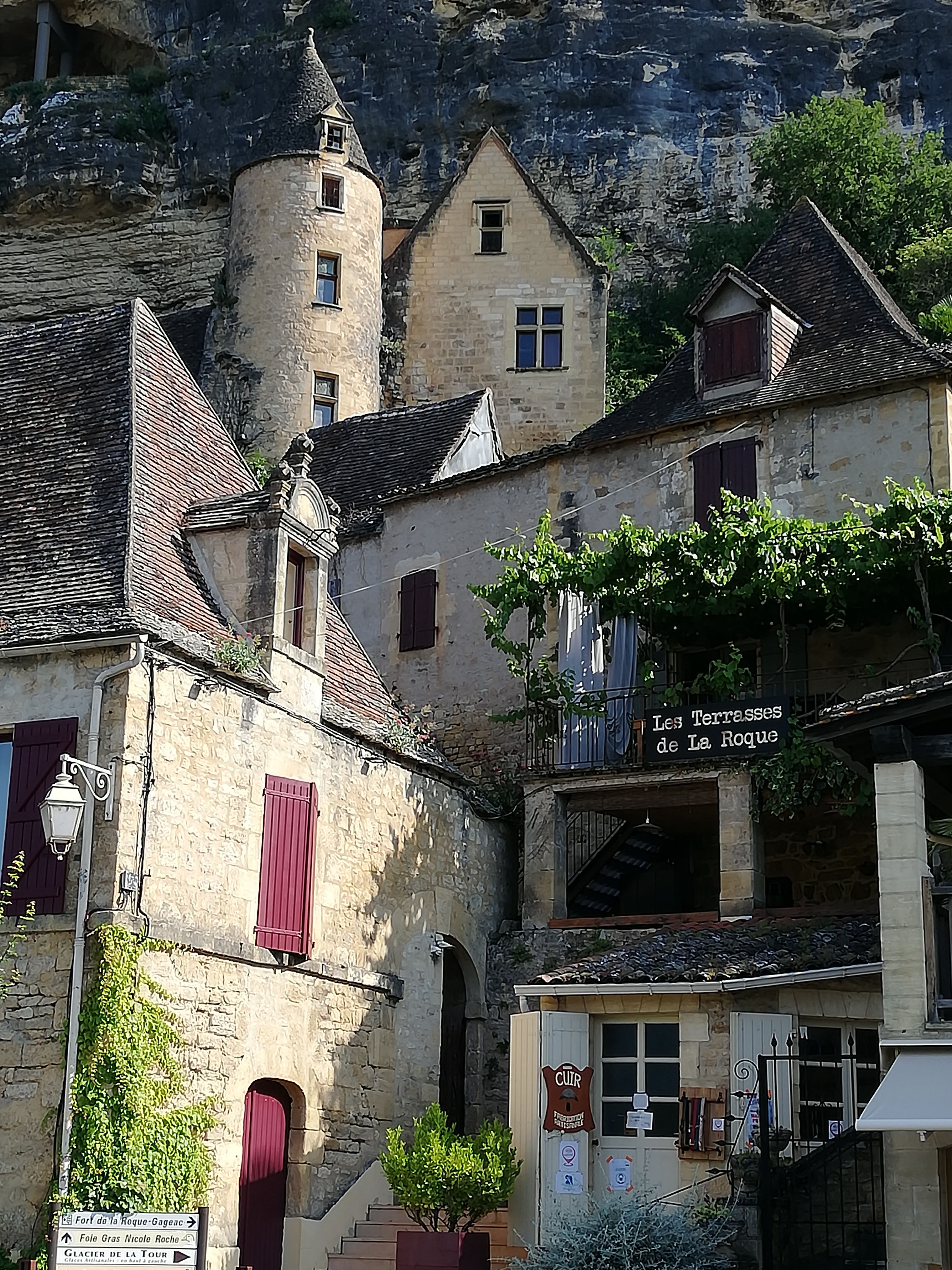

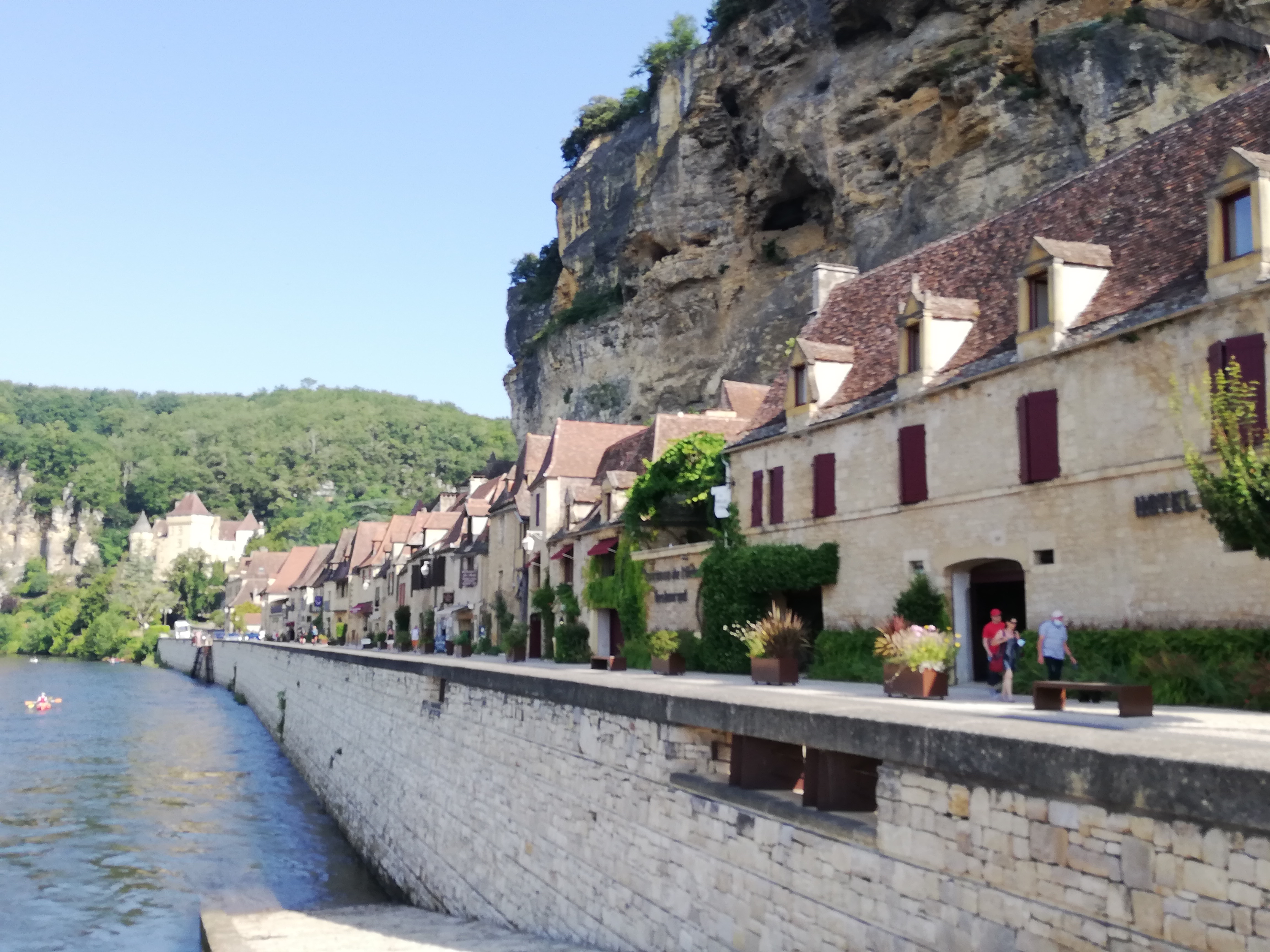
A lot of activity takes place on the water with trips offered in peculiar craft that are either replicas of something that plied the waters historically or the product of someone’s imagination!
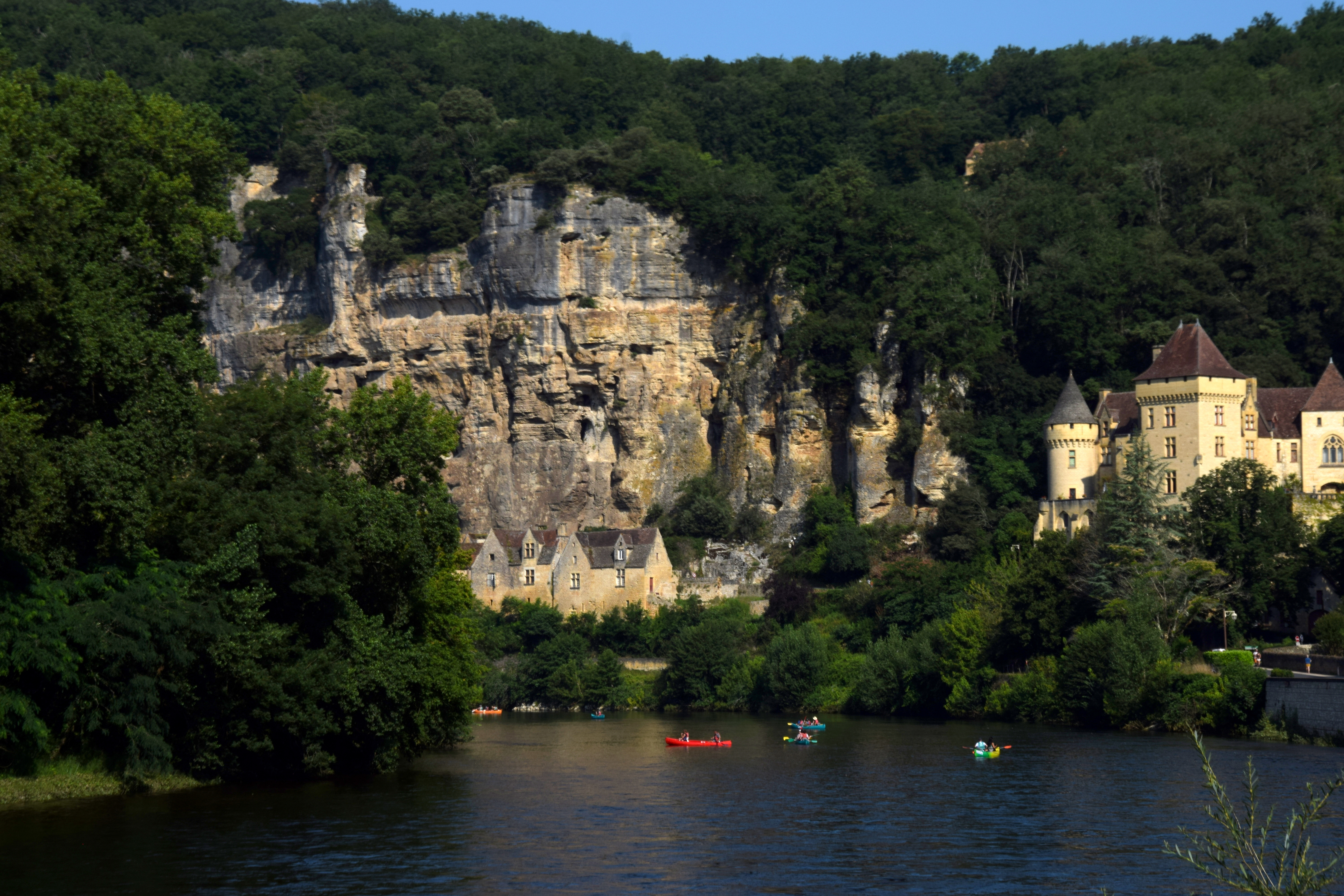
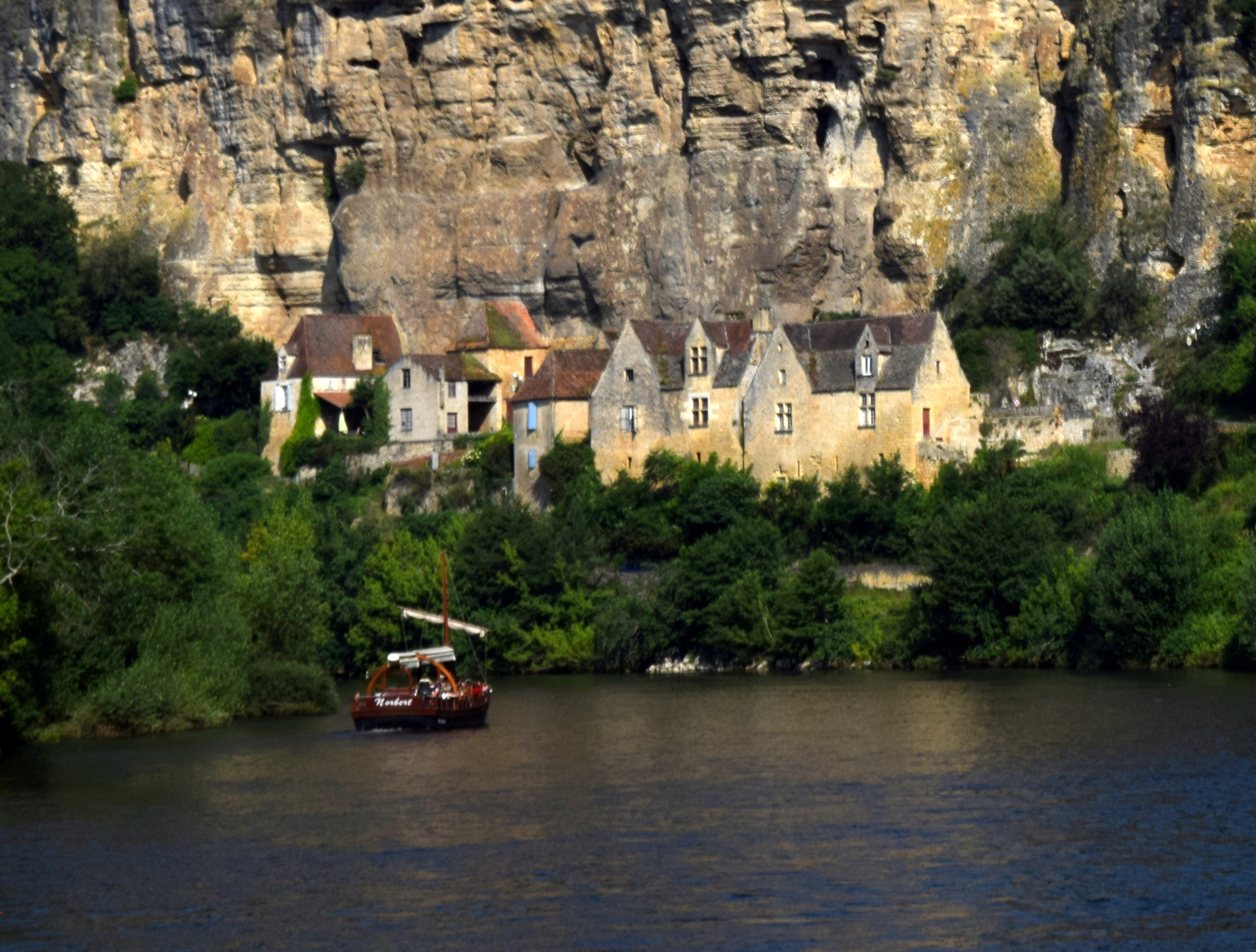
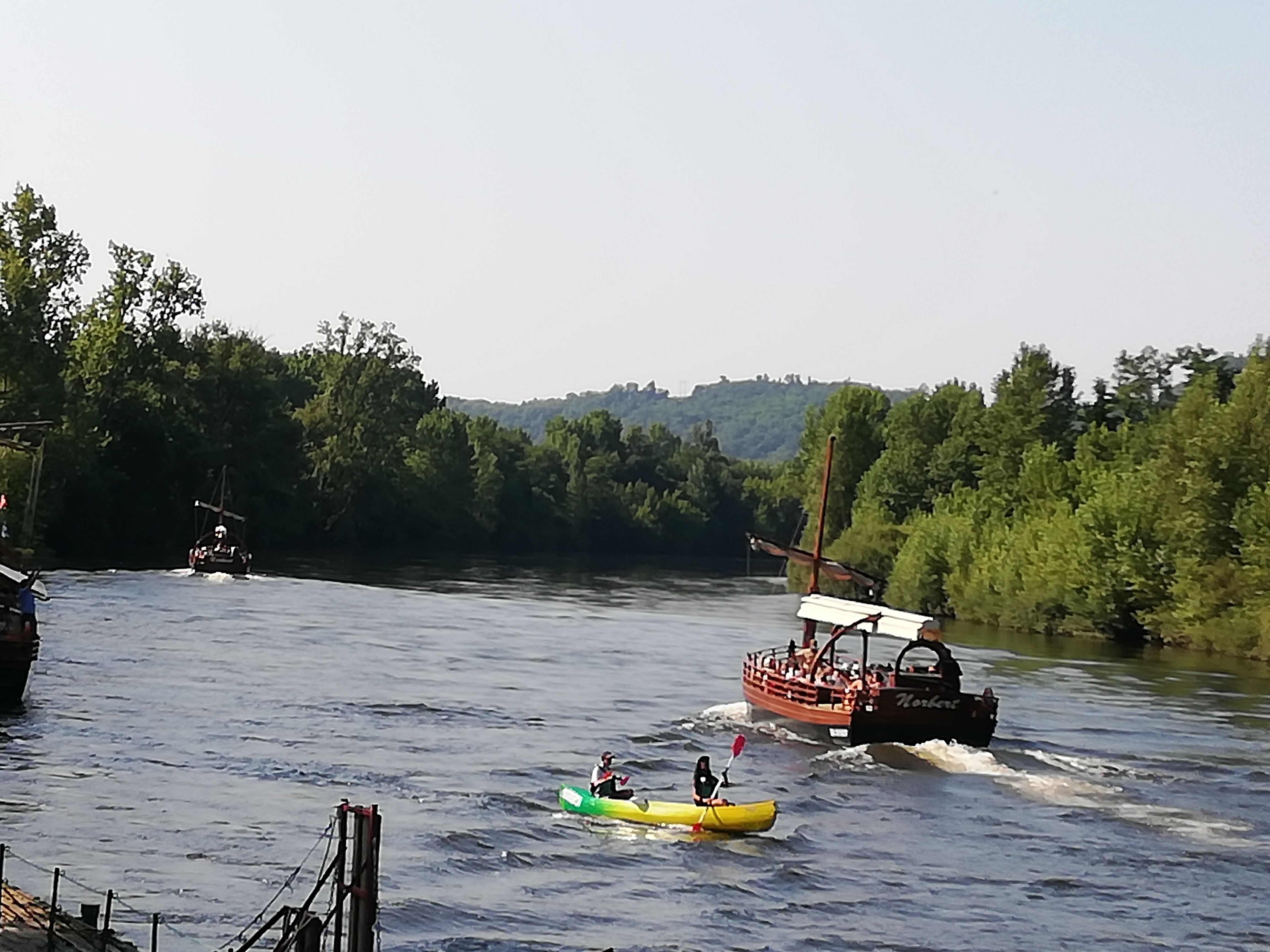
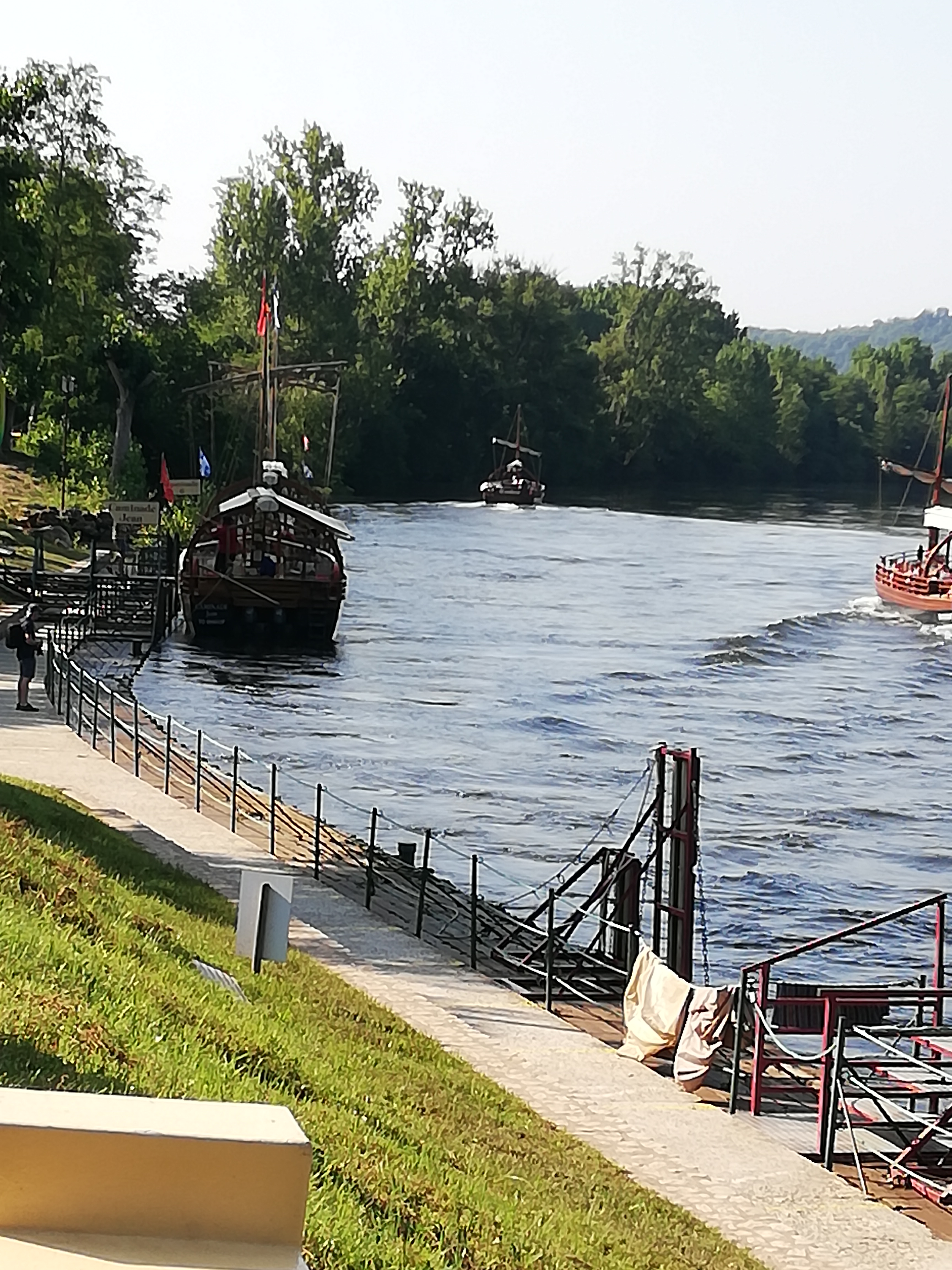
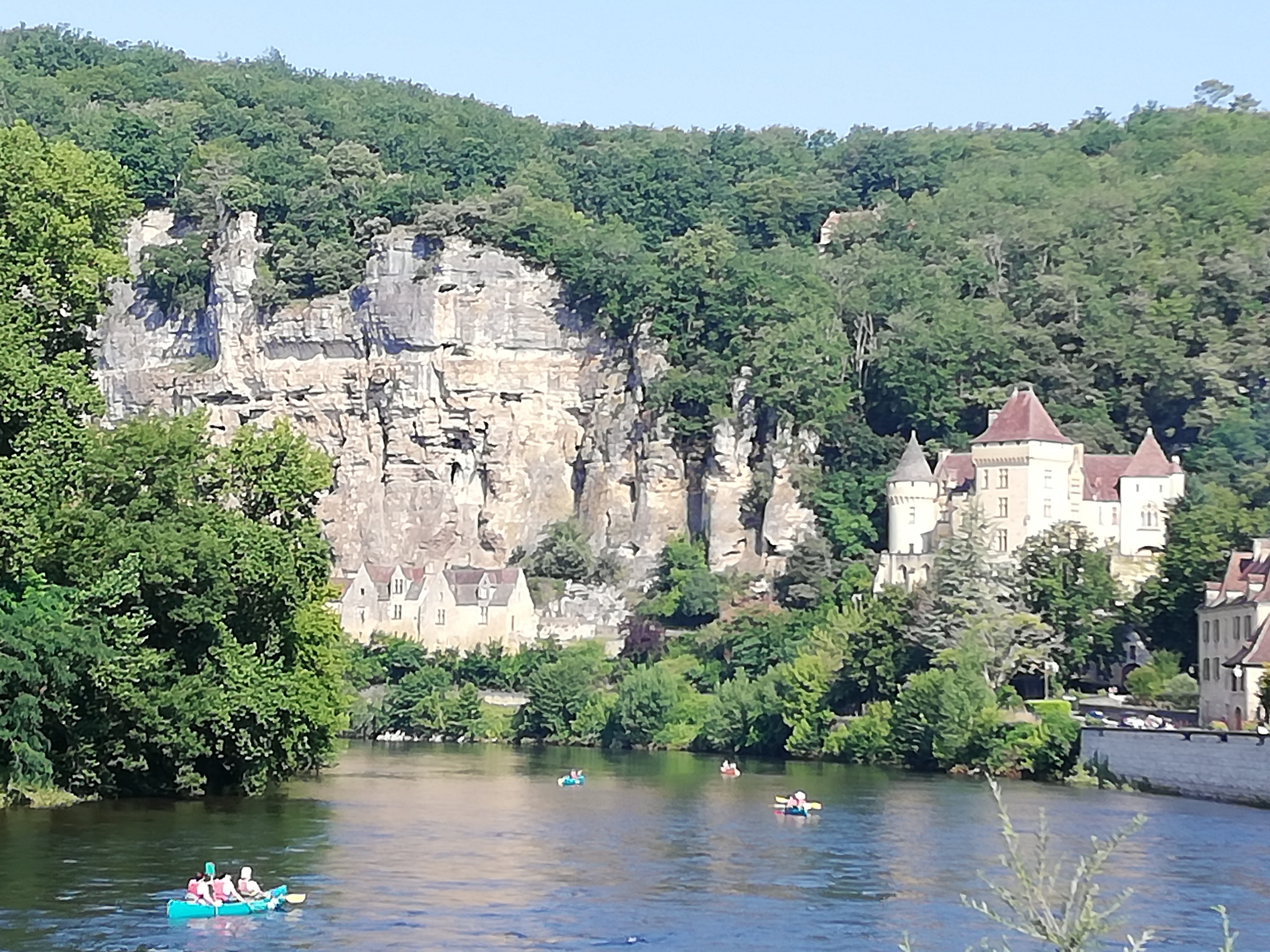
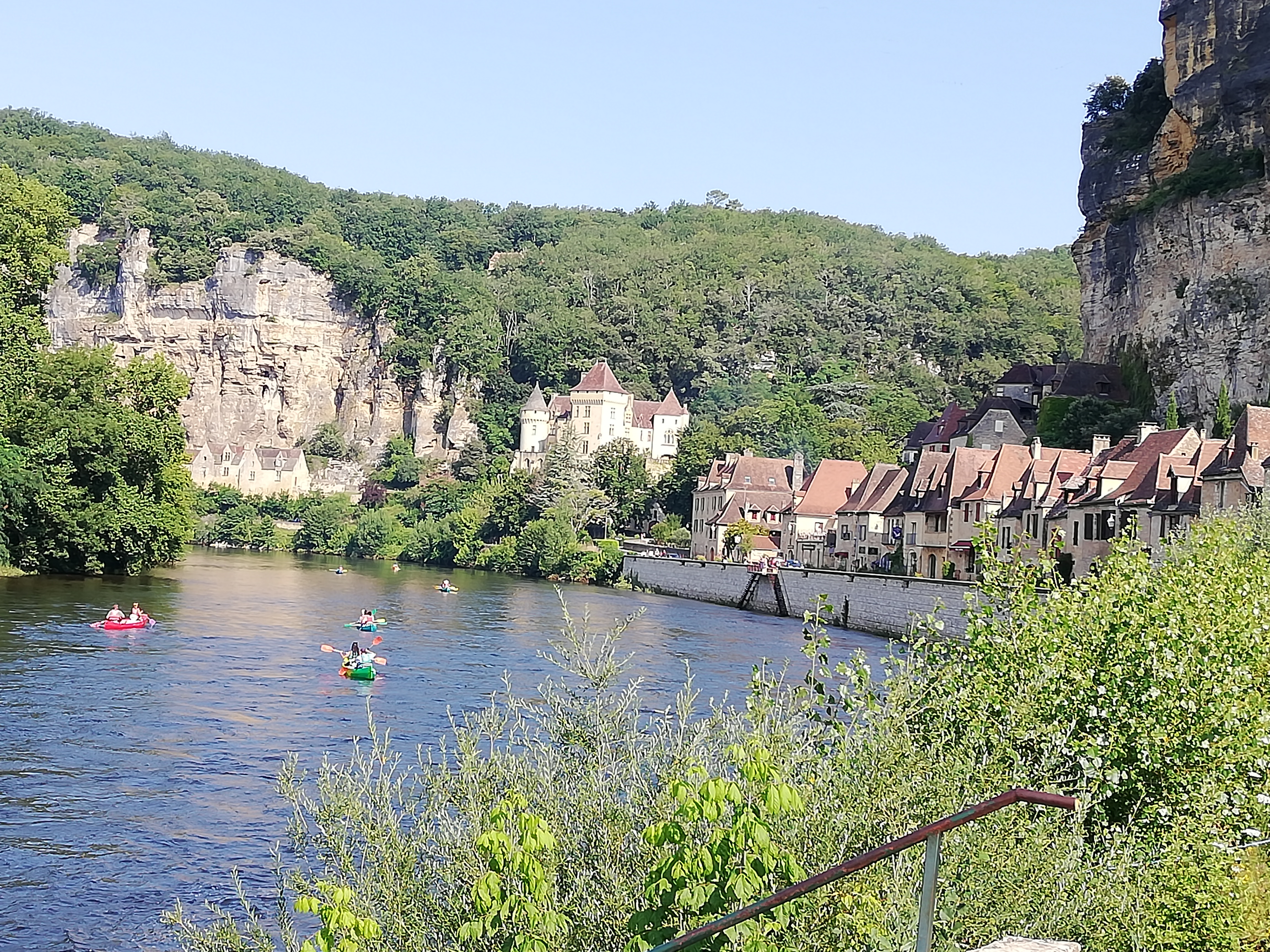
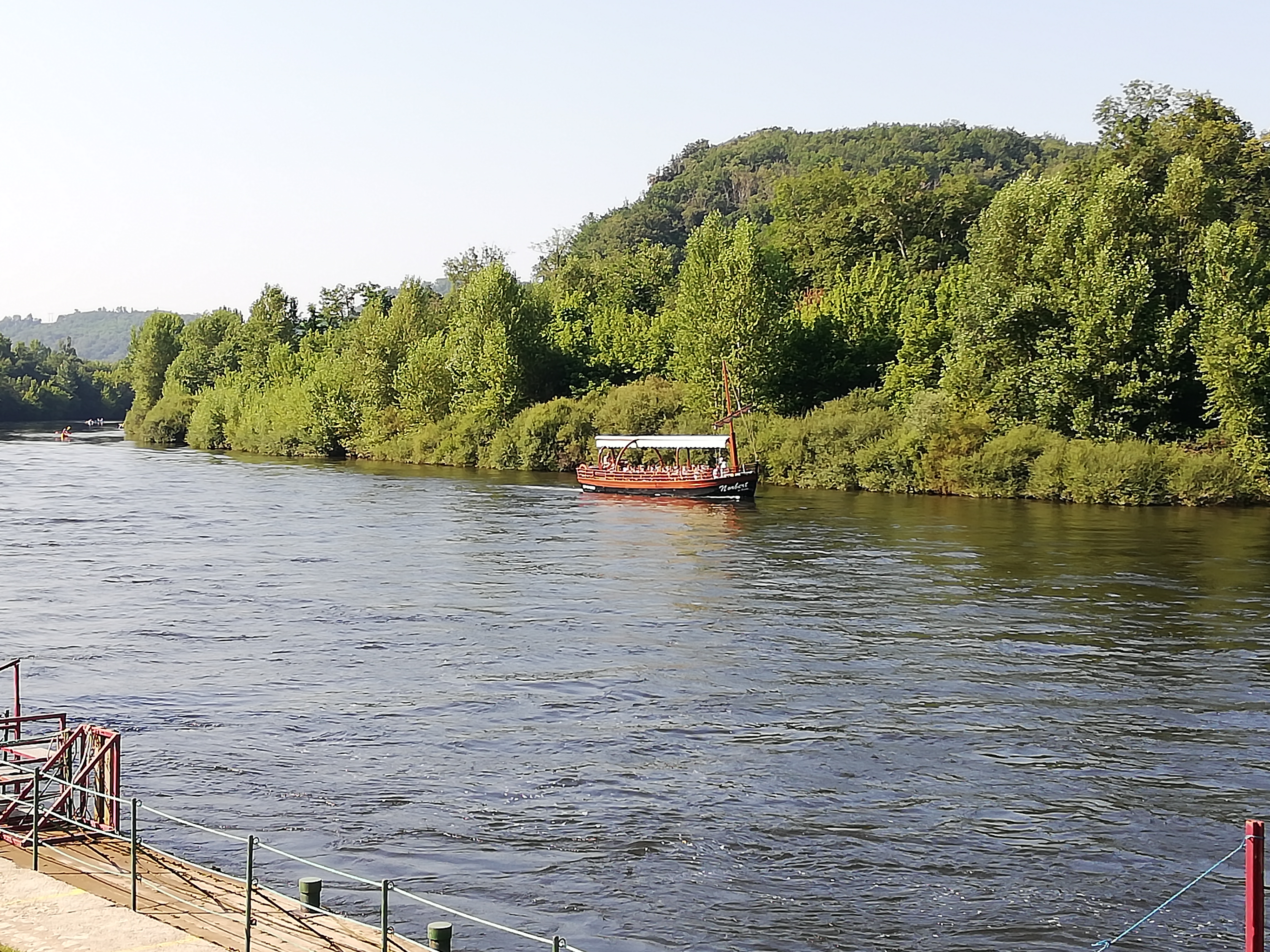

There is a little lavoir in the middle of the village

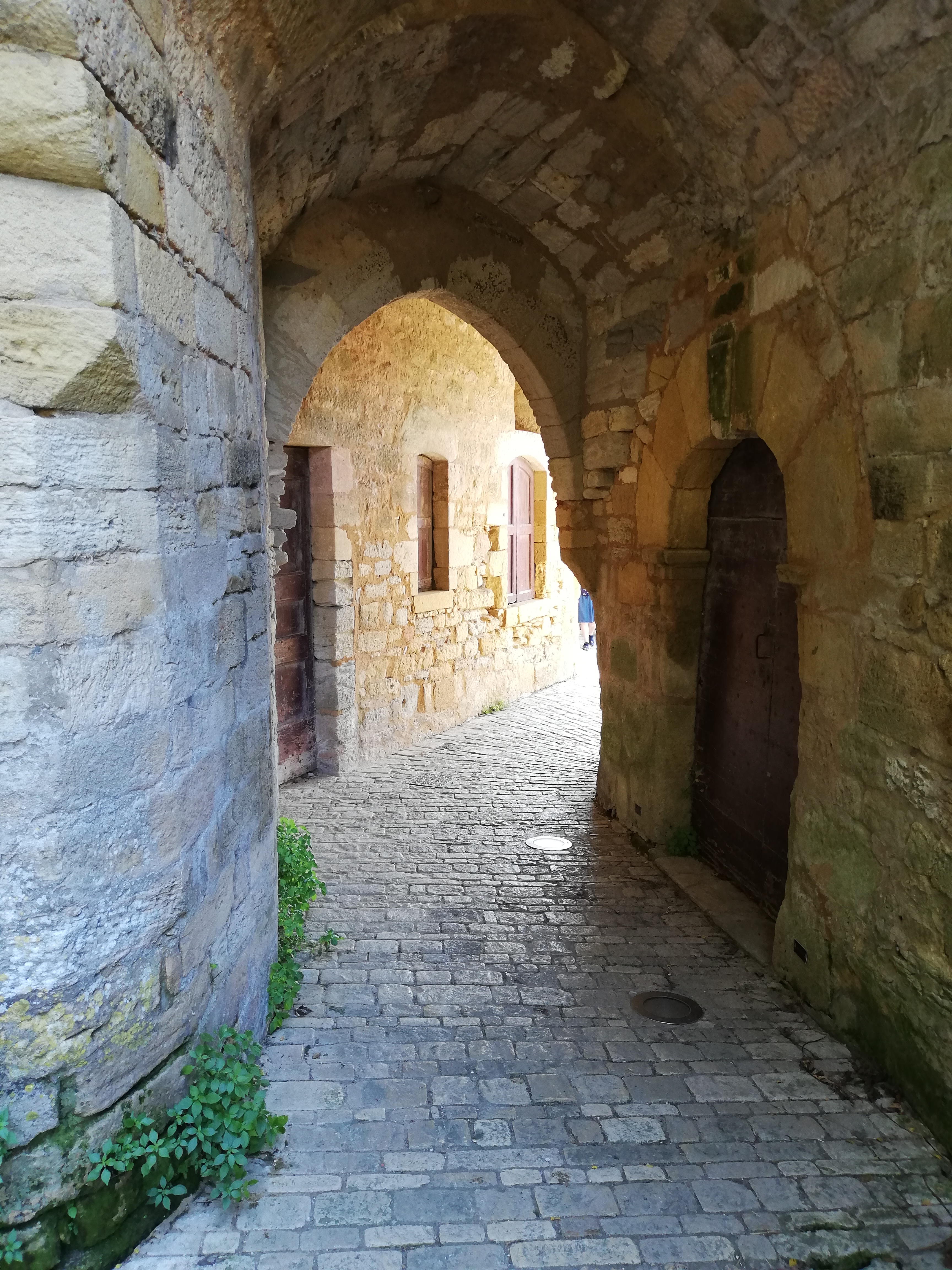
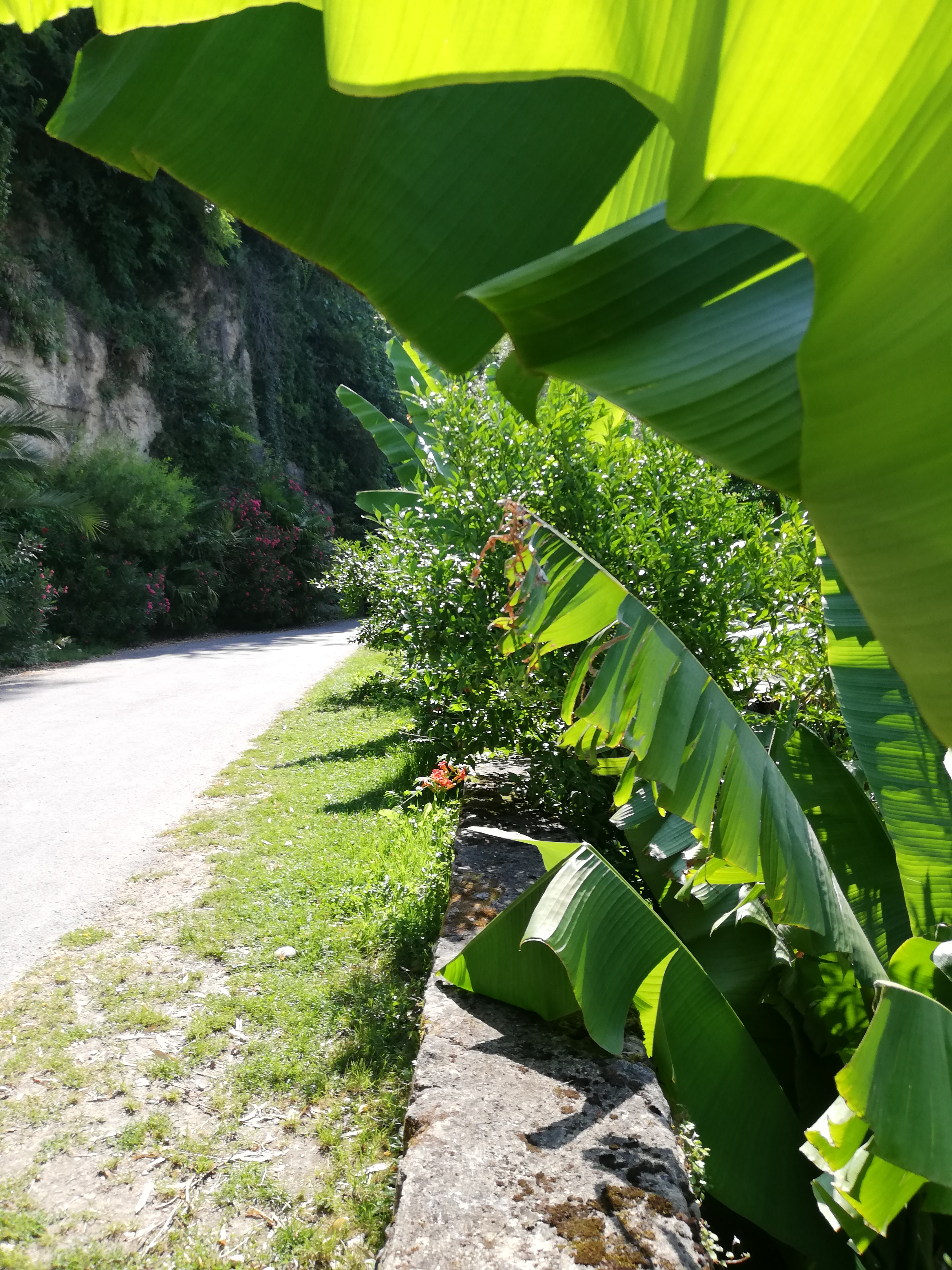
The High road above the front line gives access to the fort and other troglodyte habitations in the cliff. The vegetation indicates a micro-climate with cacti, bananas, yuccas, palms and other exotics
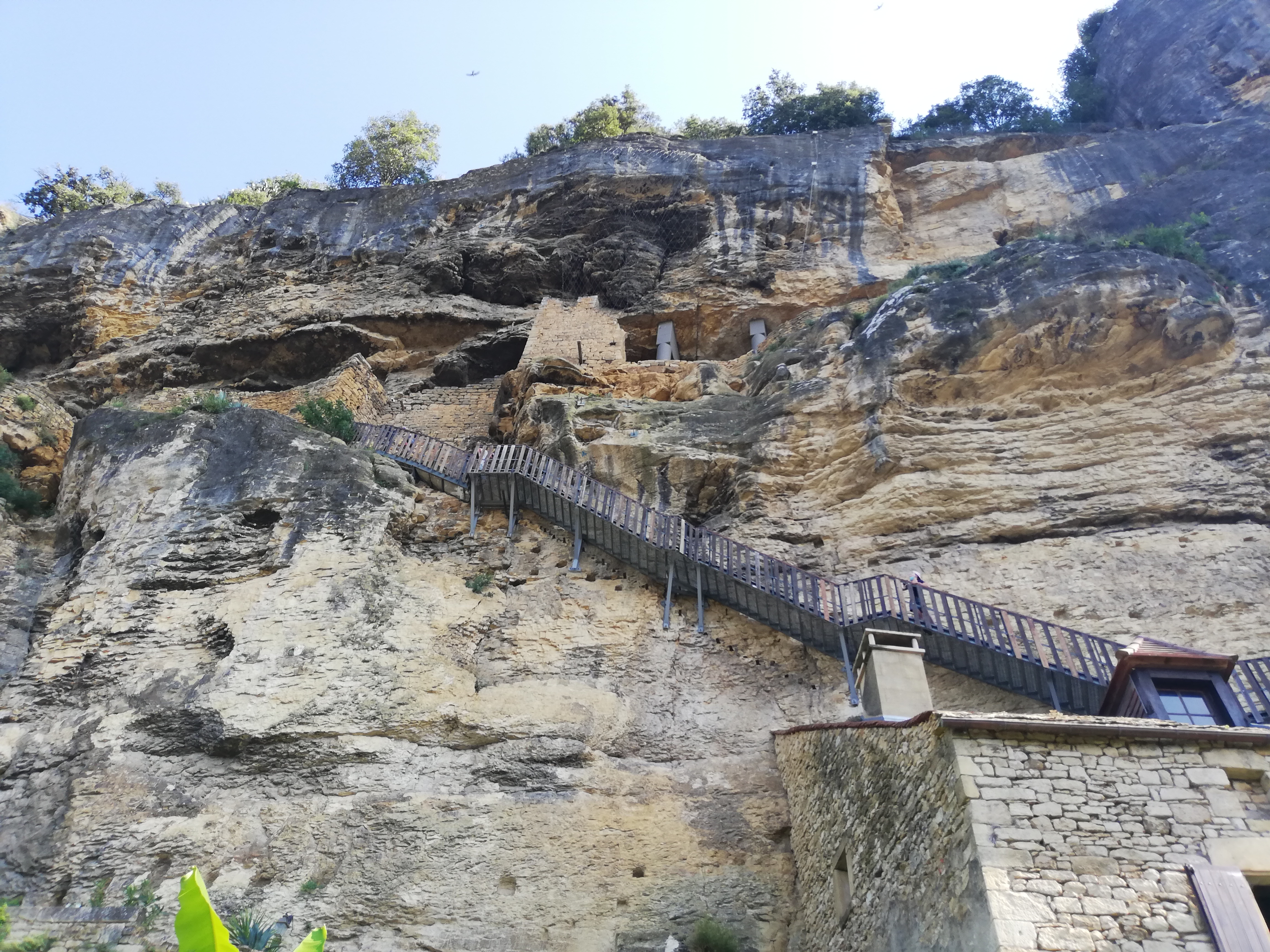

The next point of interest was the Chateau Beynac perched high above the valley I was driving through.

There followed stops at two other villages that do not benefit from the same level of tourism and this shows.
St Cyprien
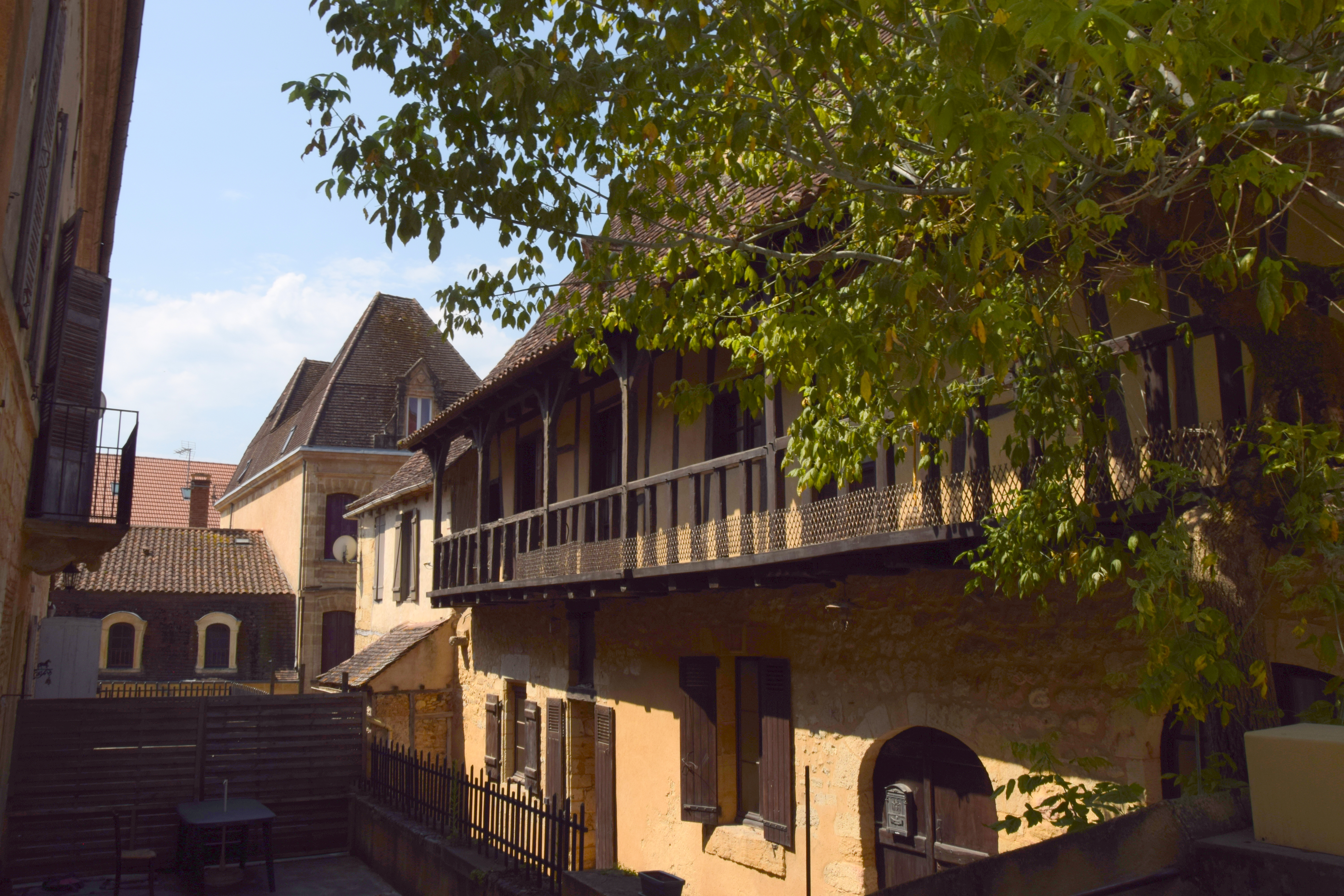
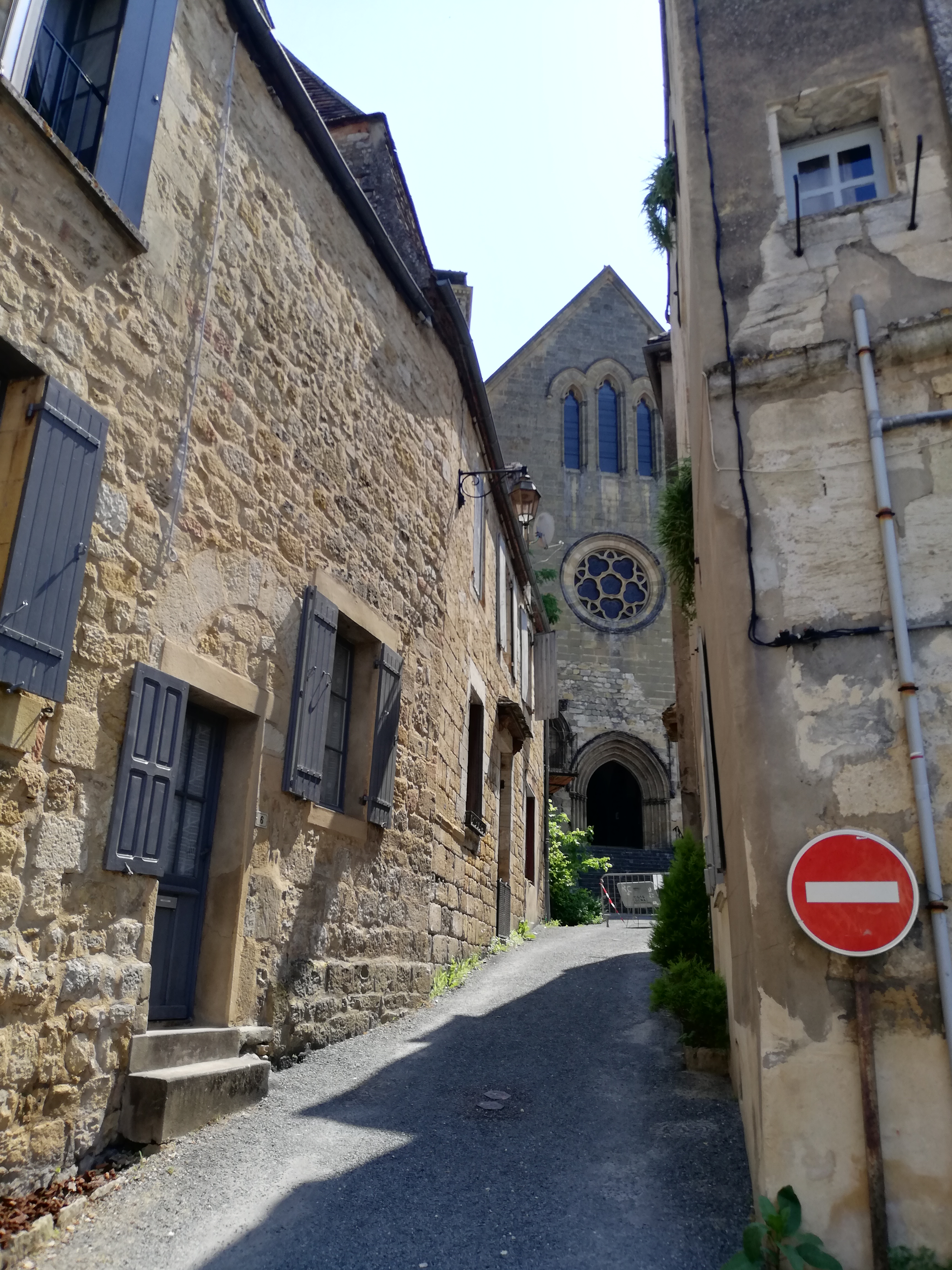
and Buissen-de-Cadourin which has an imposing fortified Abbey
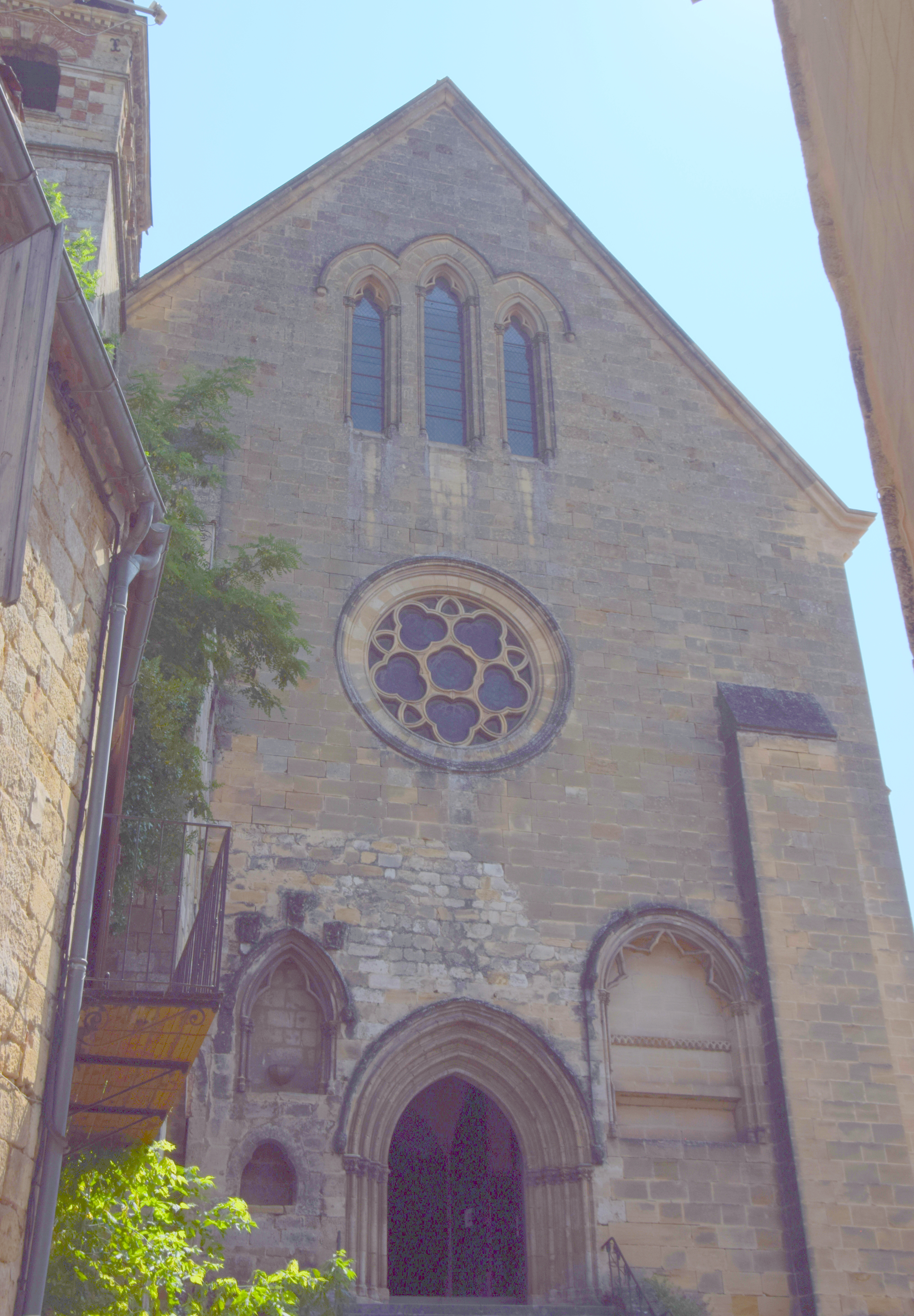
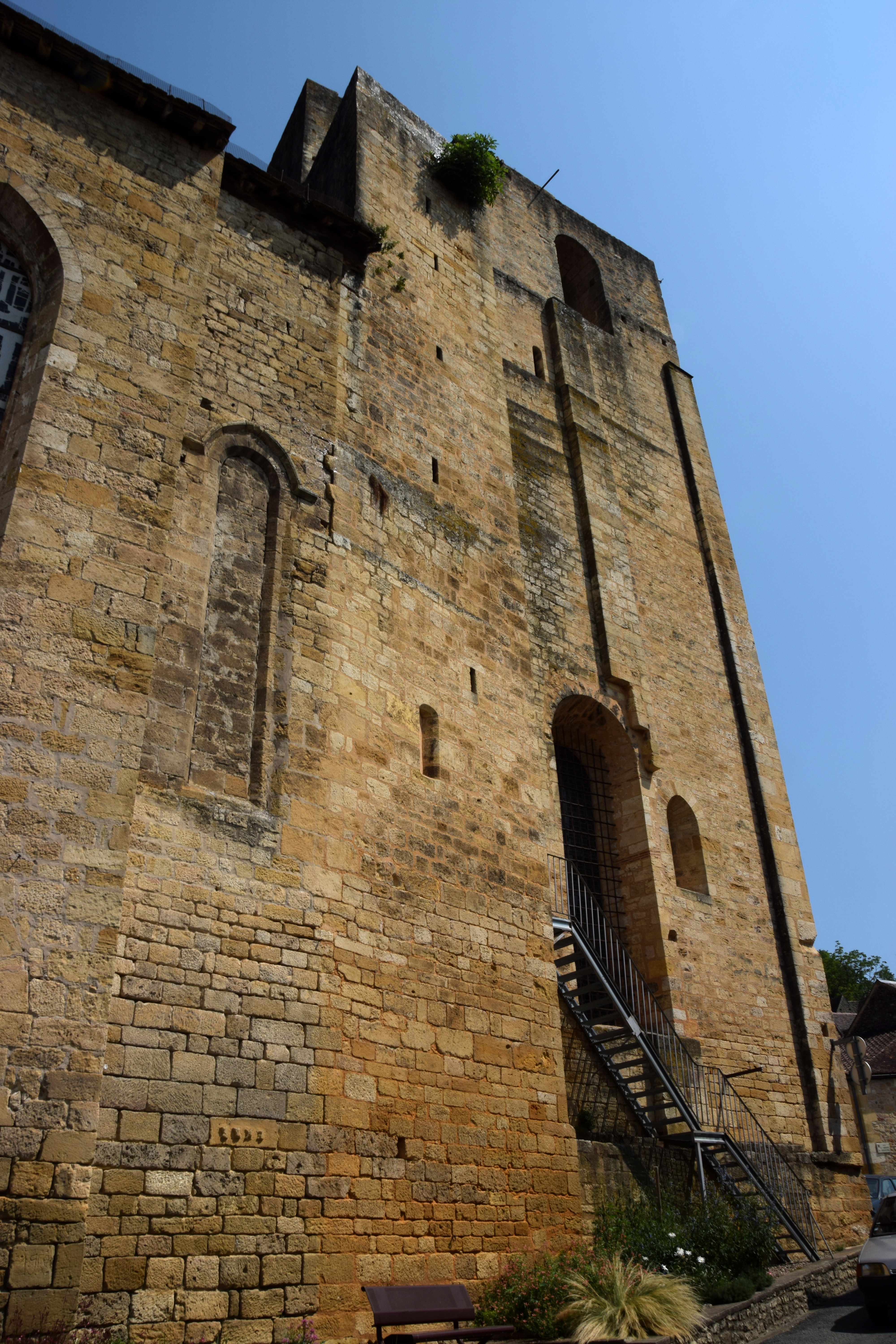


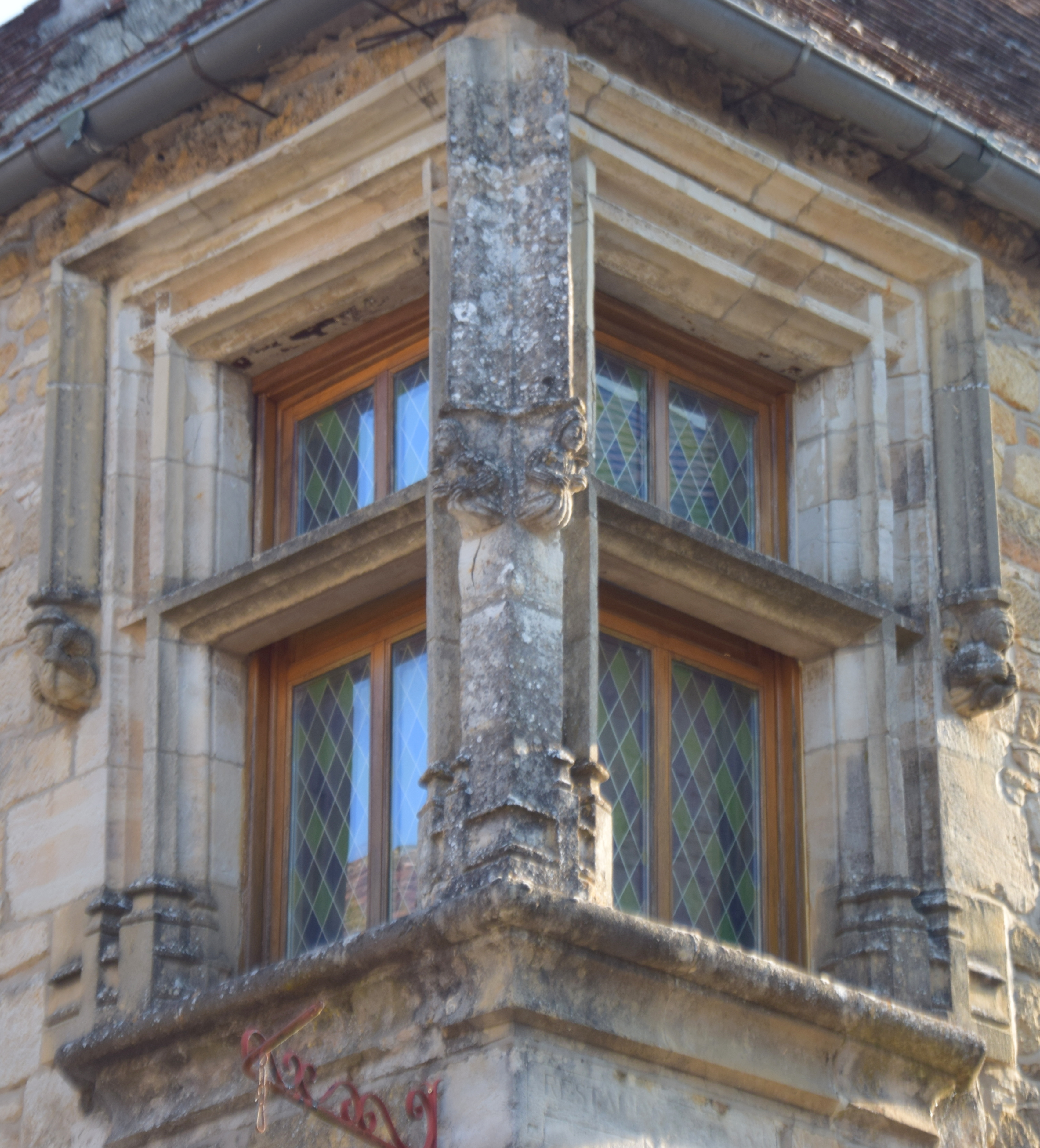
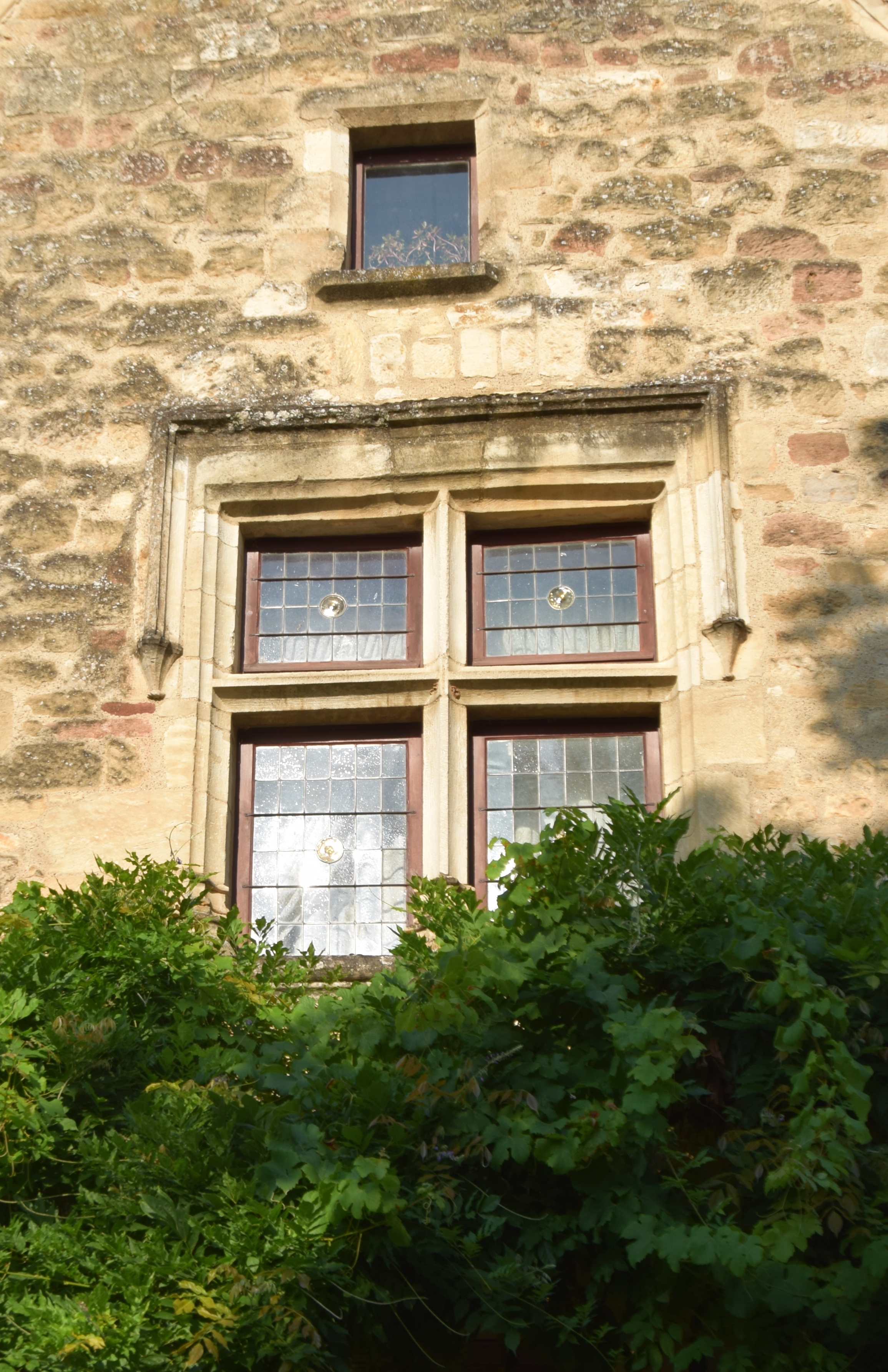
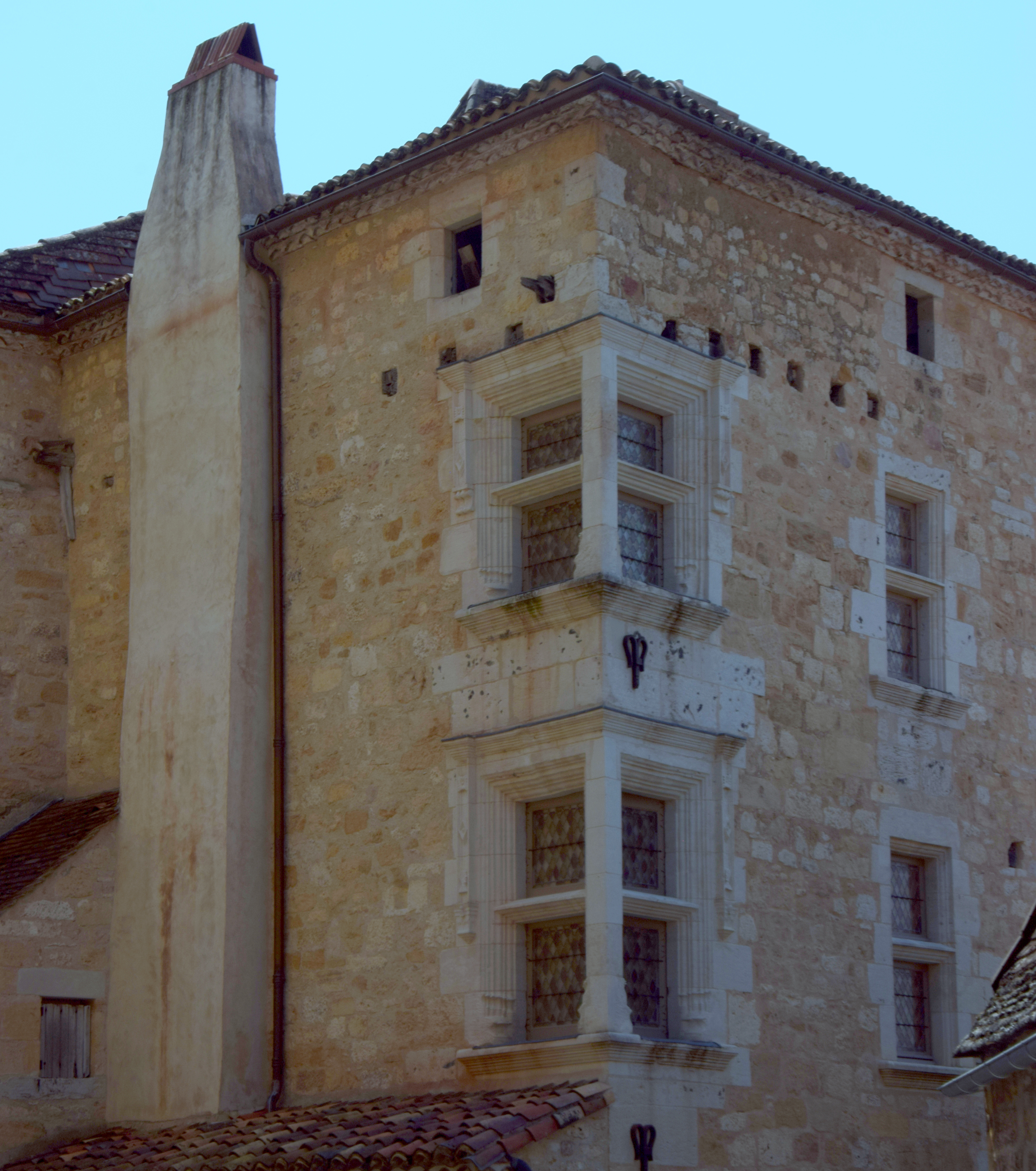
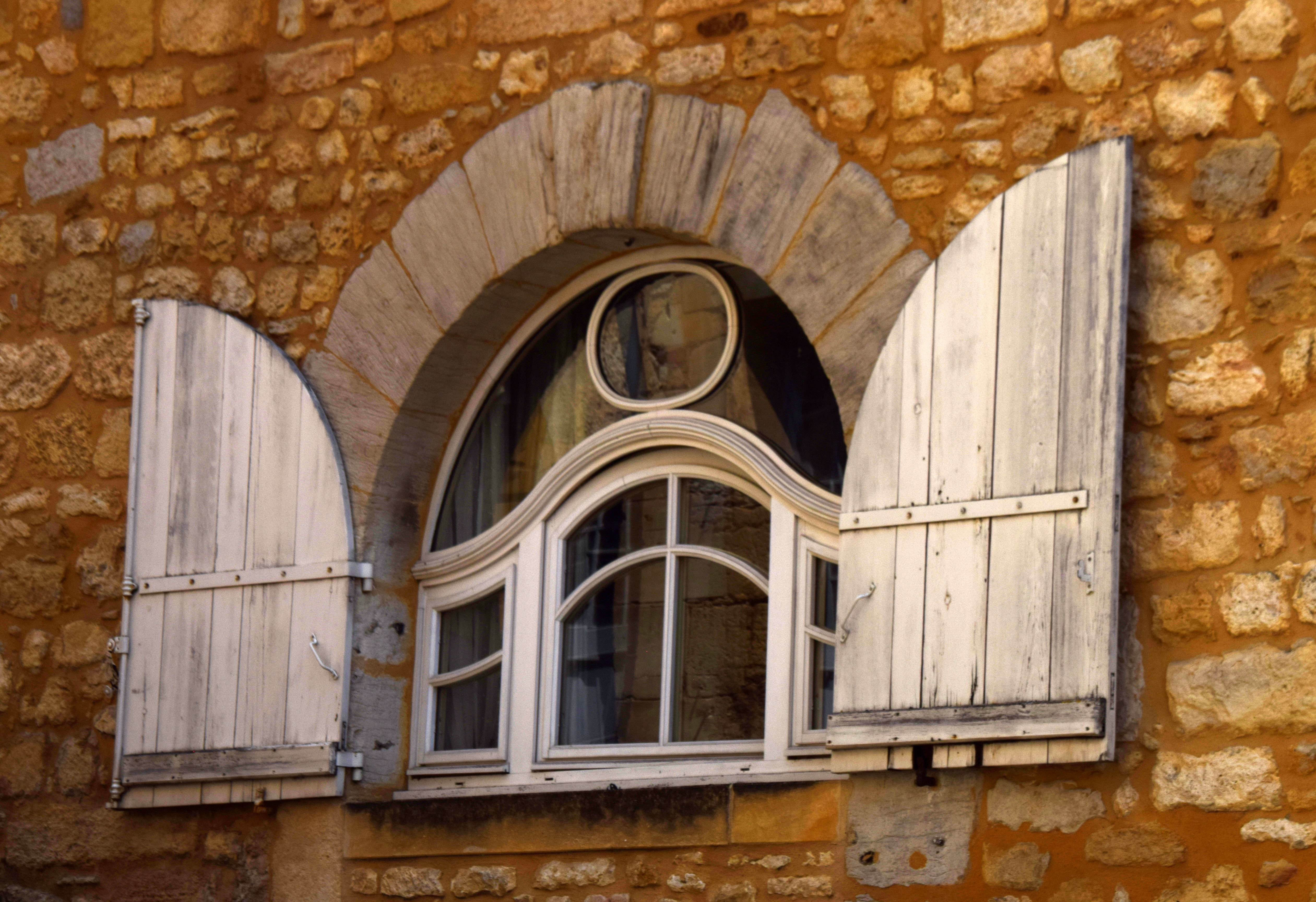
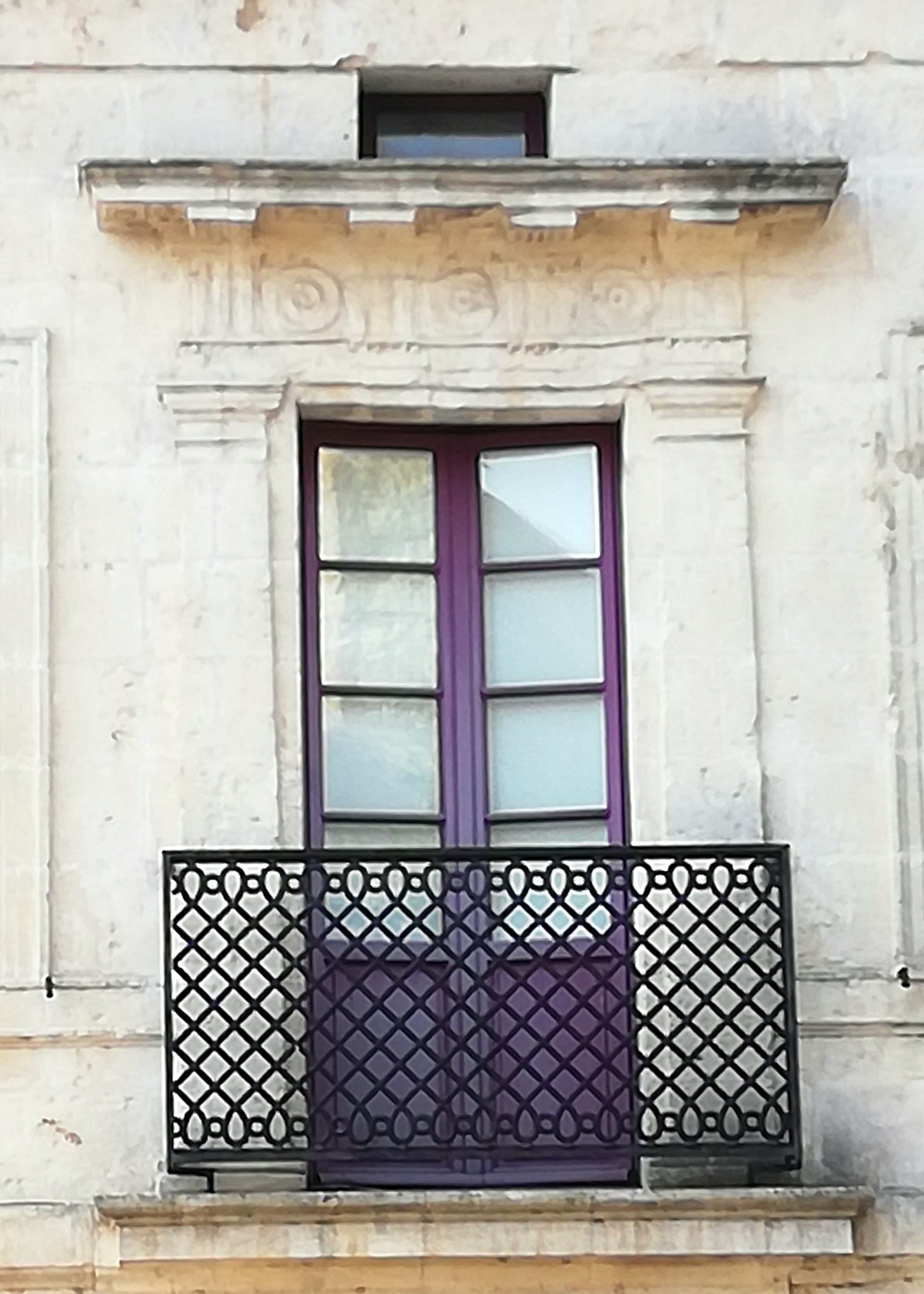
Some architectural flourishes (including beautiful stone mullioned window frames)
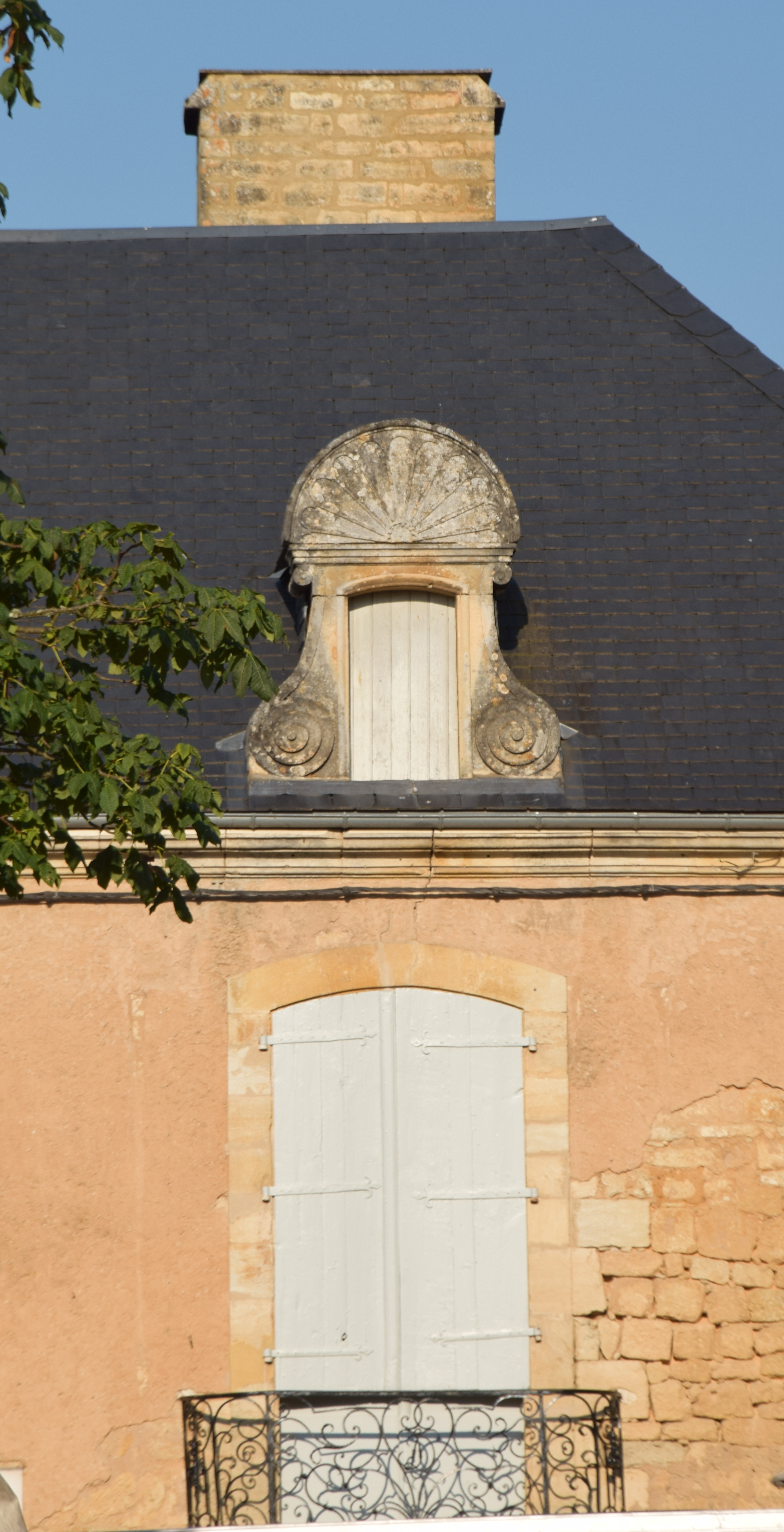
Some observations
Geographically the area is interesting. The major rivers dissect the country running roughly parallel East/West from the Charrente southwards to the l’Isel, the Dordogne, la Garonne and its tributary le Lot. To the north the soils are mostly chalk and clay giving rise to Marais and wetlands in the more of less flat terrain. Between le Lot and la Garonne the situation becomes more complicated with little rivers running in close parallel roughly SW/NE. these are frequently connected in NW/SE direction by other streams leading to a patchwork of valleys and plateau. This dissection obviously took place millennia ago and what we observe as small rivers and streams today may well have been much bigger water courses in the distant past. The same would seem to be true of the bigger rivers where the historical bank, often in the form of landlocked cliffs are km away from their current banks. Some of the plateau in the Lot et Garonne are perfectly formed to offer an easily defensible base for a fortified town (or Bastide) and the area abounds with them.
Church towers in the area are mainly either square with 3-4 bells in line or triangular with two lower bells and a single bell at the apex. These latter are very much in the Spanish style.
Most “Bastides” have a central square ( or triangle) composed of buildings that open into the interior and are lined with broad arcades.
23rd. Set off with a pre-worked plan of my route to the destination town of Aubeterre-sur-Dronne but was quickly distracted by a road side Abbey.
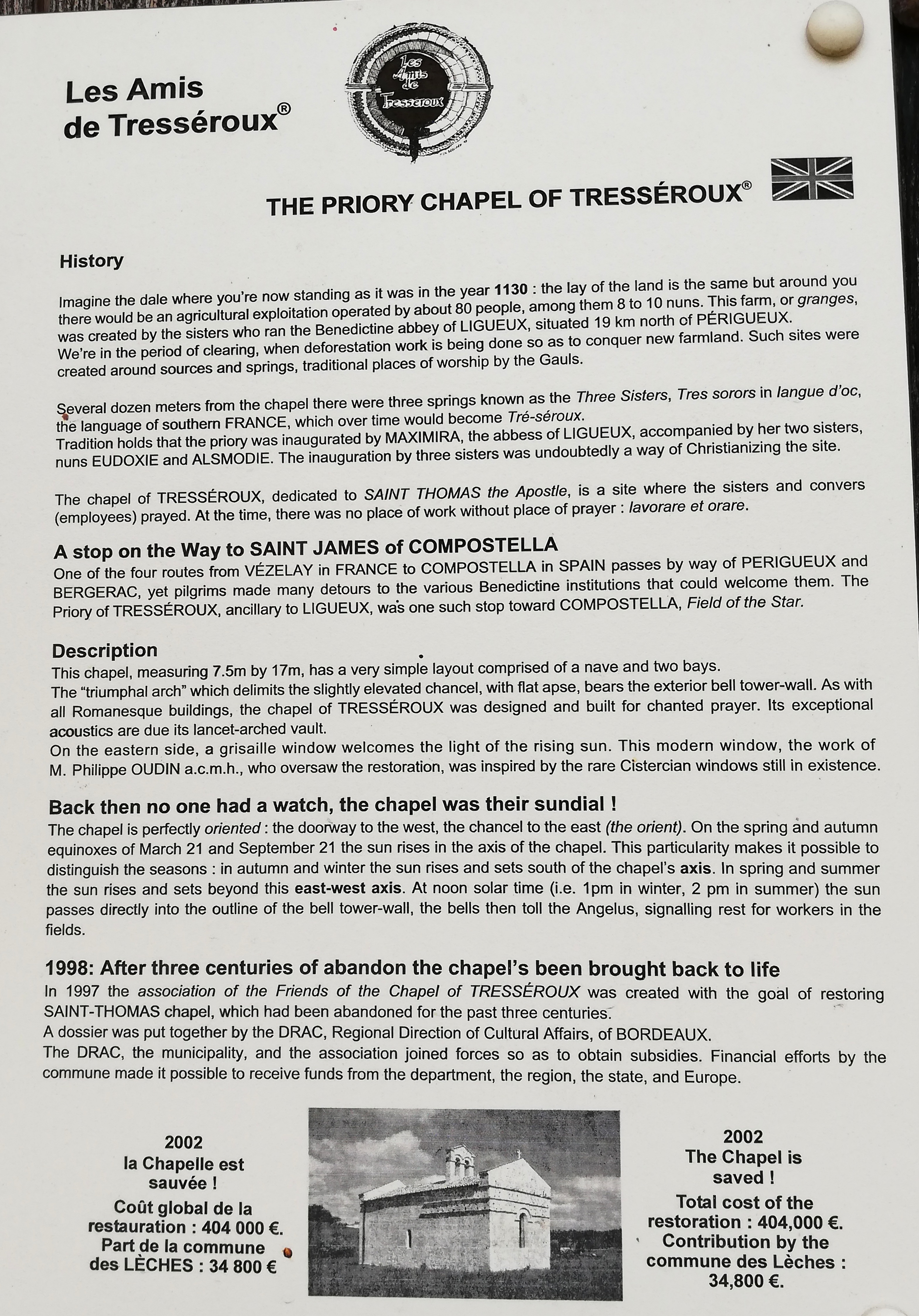
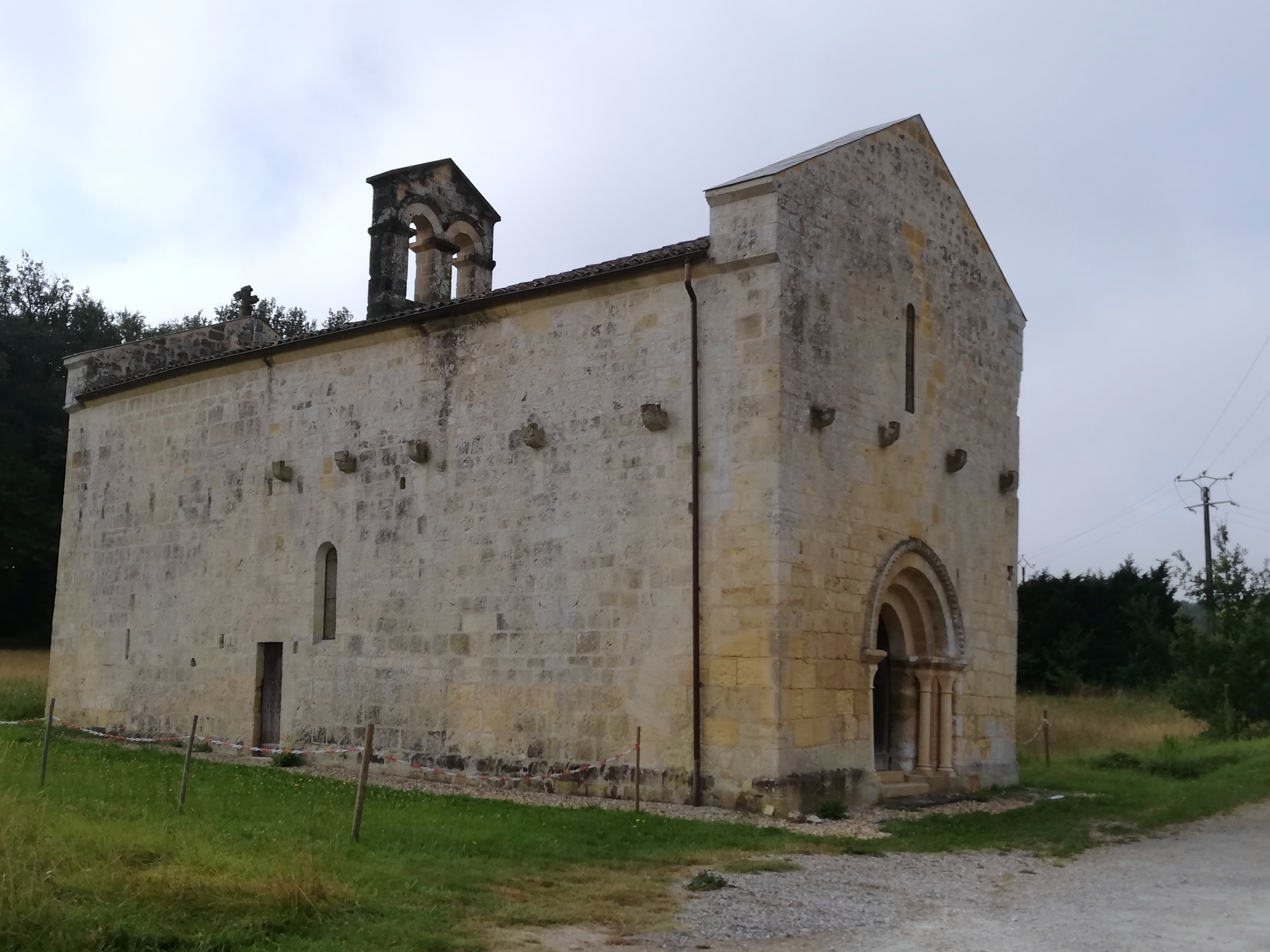
If you click on the script above and enlarge it you will be able to read the history of the Abbey which was founded by three sisters. Monasteries are for Monks (male) and Abbeys are for Nuns (female). I will come back to some irritating nomenclature later.
Having left the planned route I allowed myself to be lead further astray by a sign post to Issacs New Church which stood in a tiny hamlet which non the less boasted a “Marie”

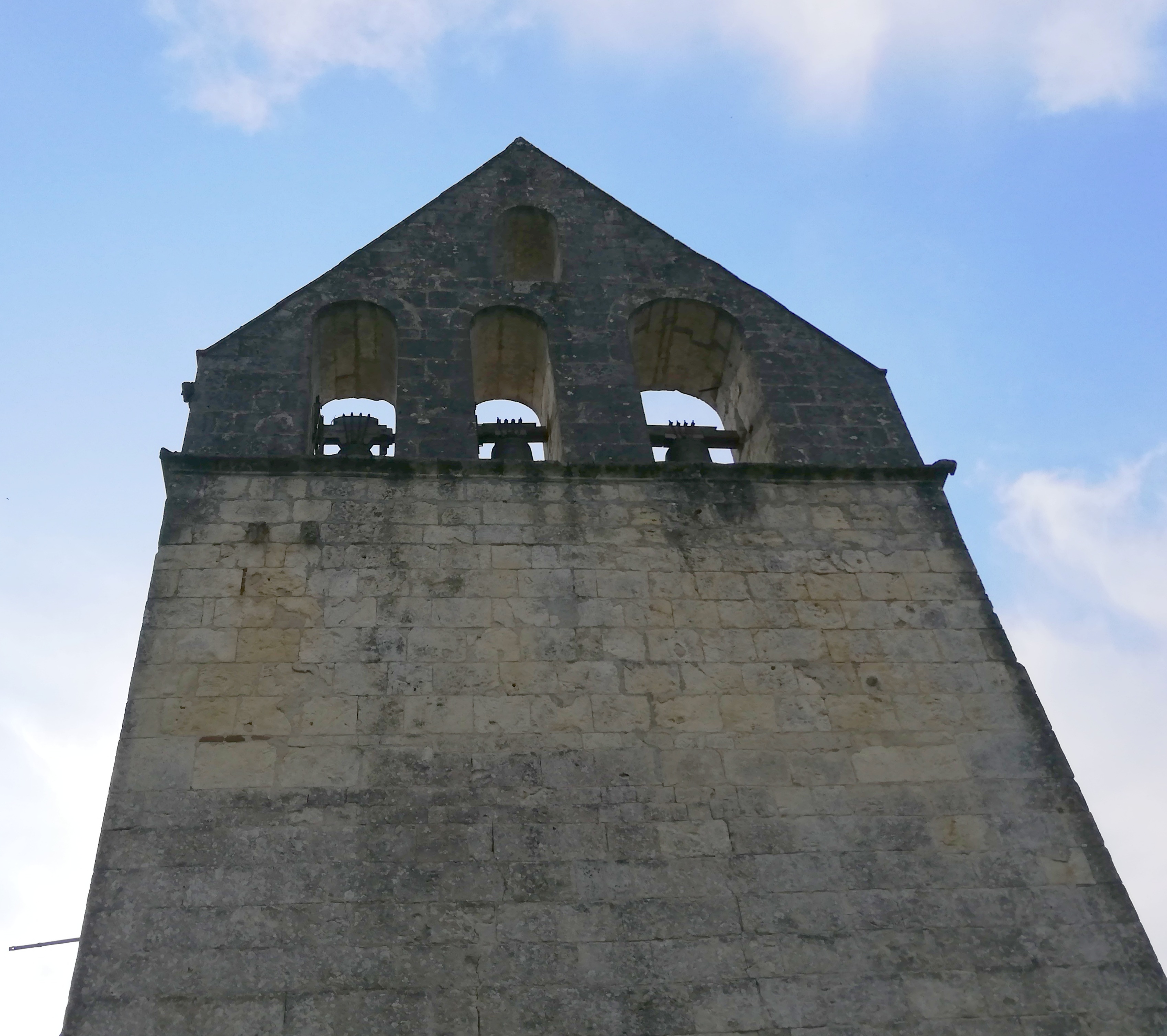
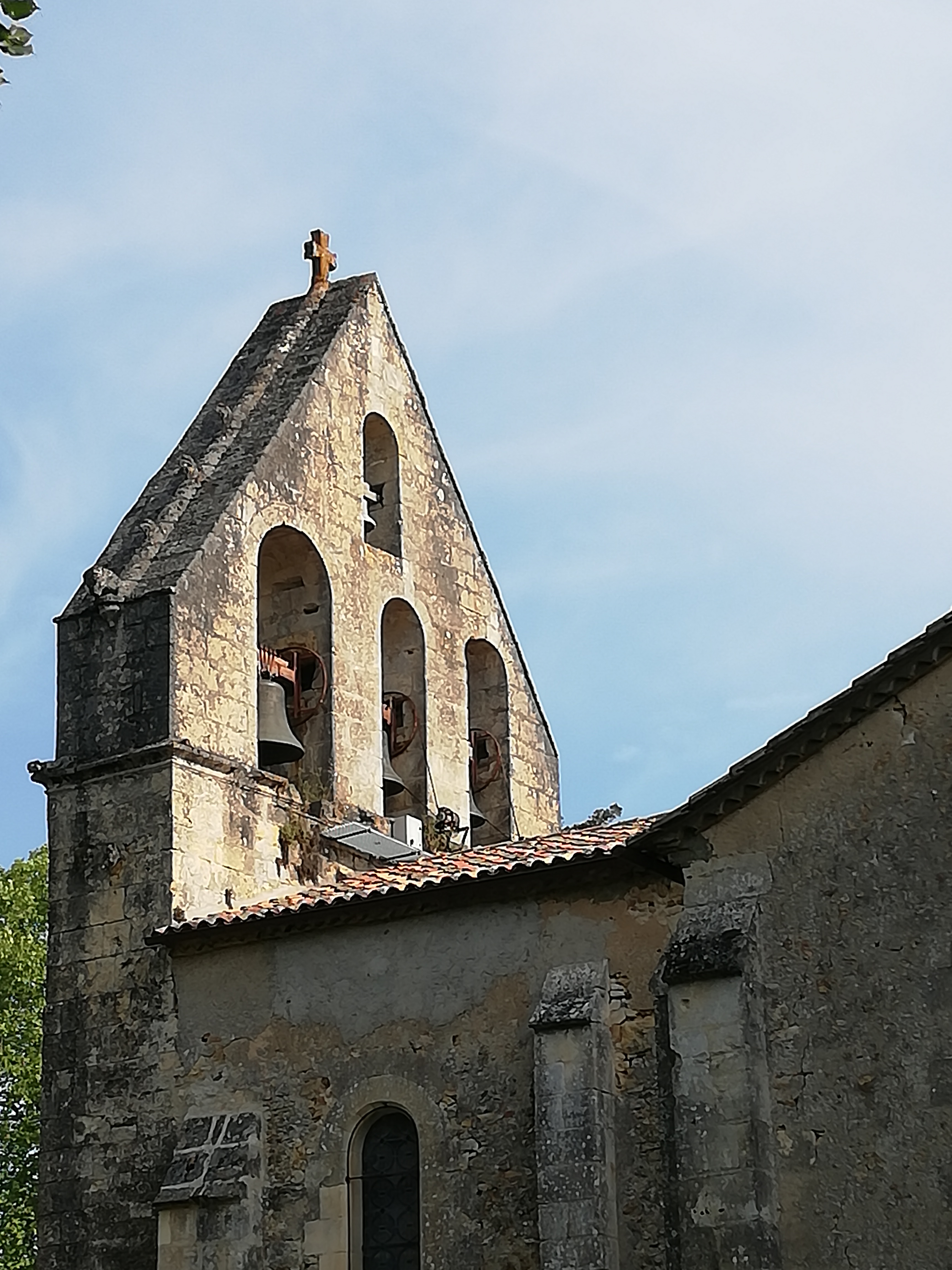
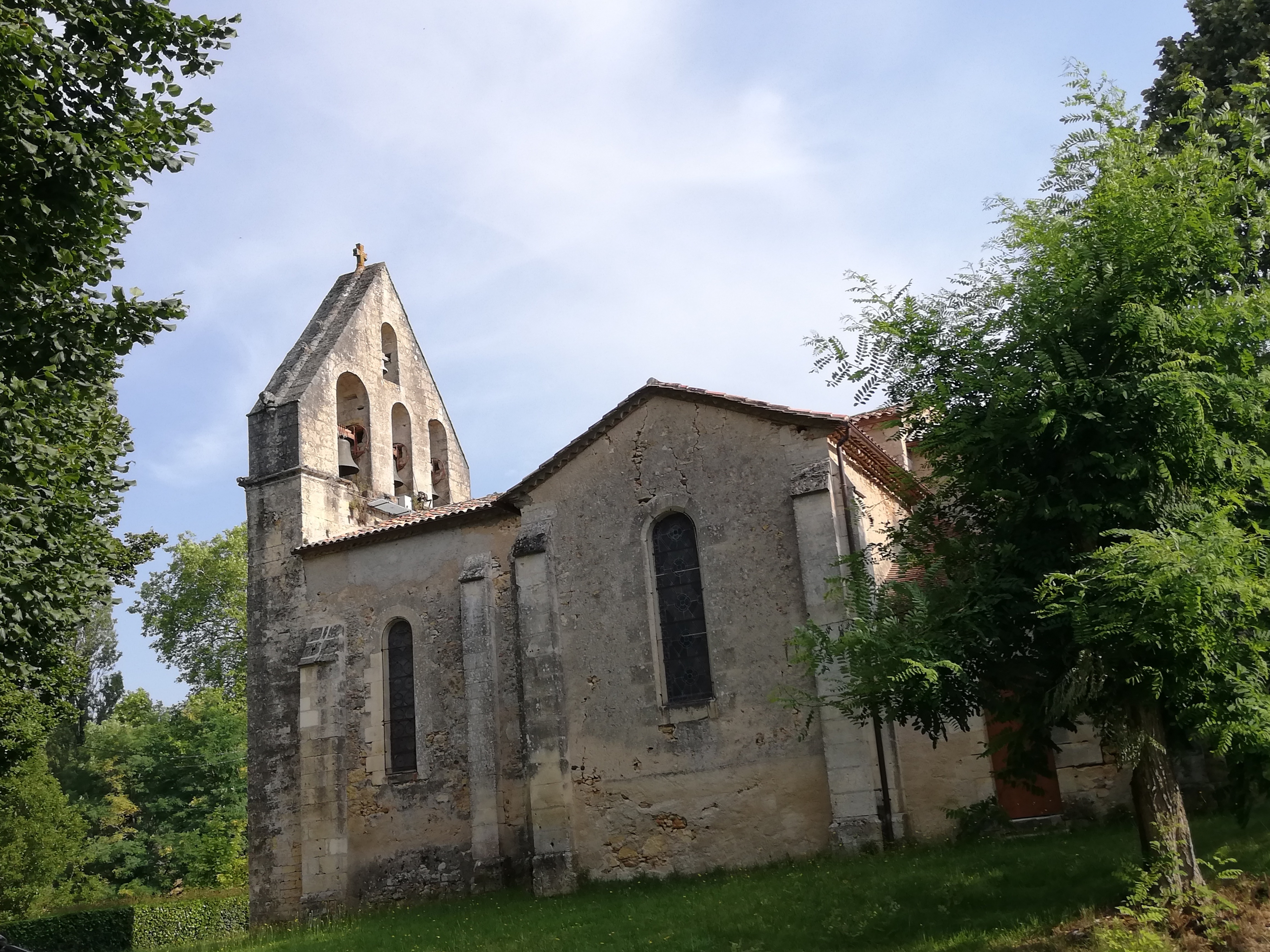
The natural progression from here was to “Issacs” to see what the earlier church looked like!
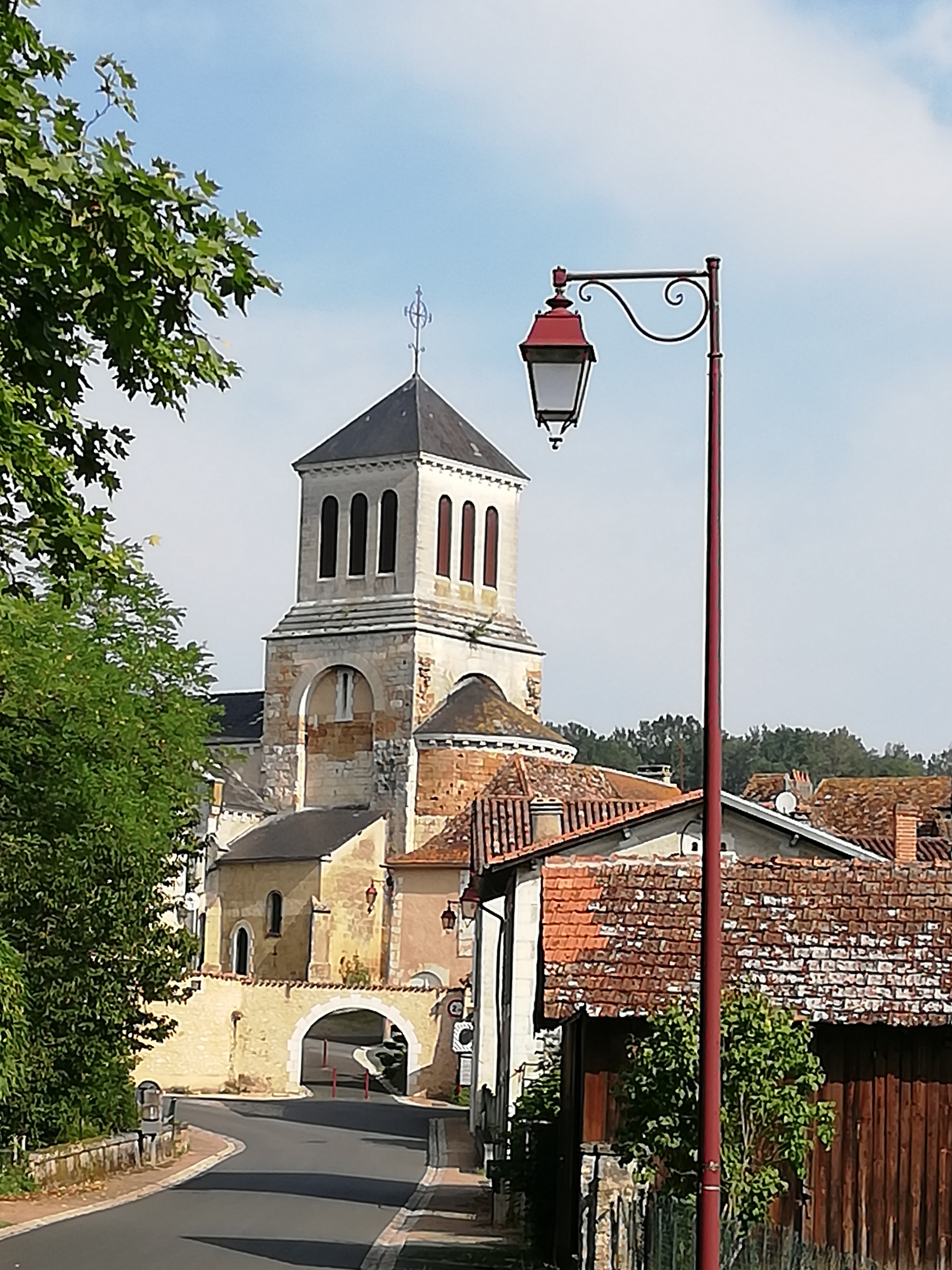
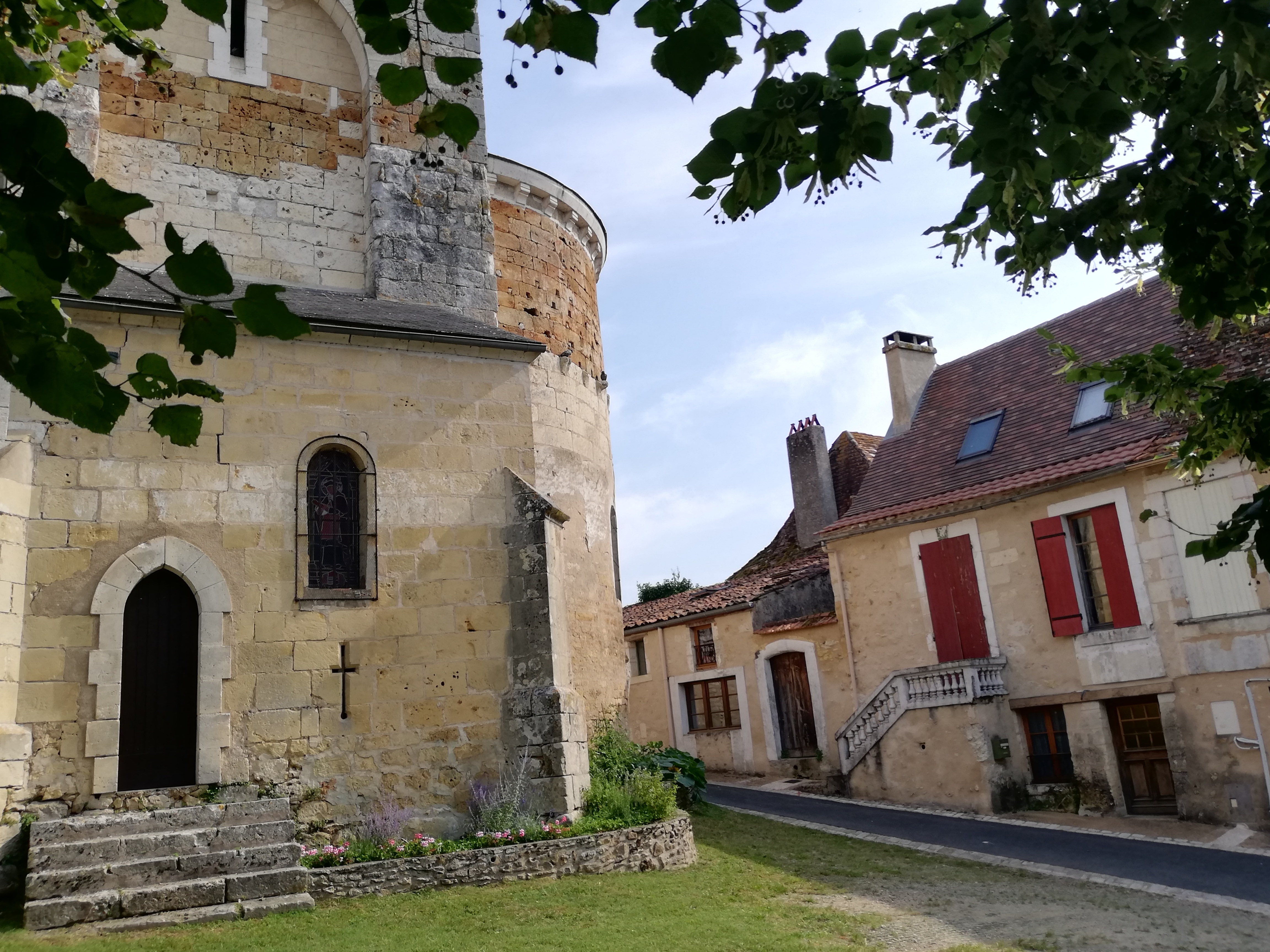


There has obviously been a lot of restoration work in this hamlet but perhaps the round tower in the third photo above could be older that the “New Chruch”?
There was a nice lavoir which Cassidy gave a sip of approval to.


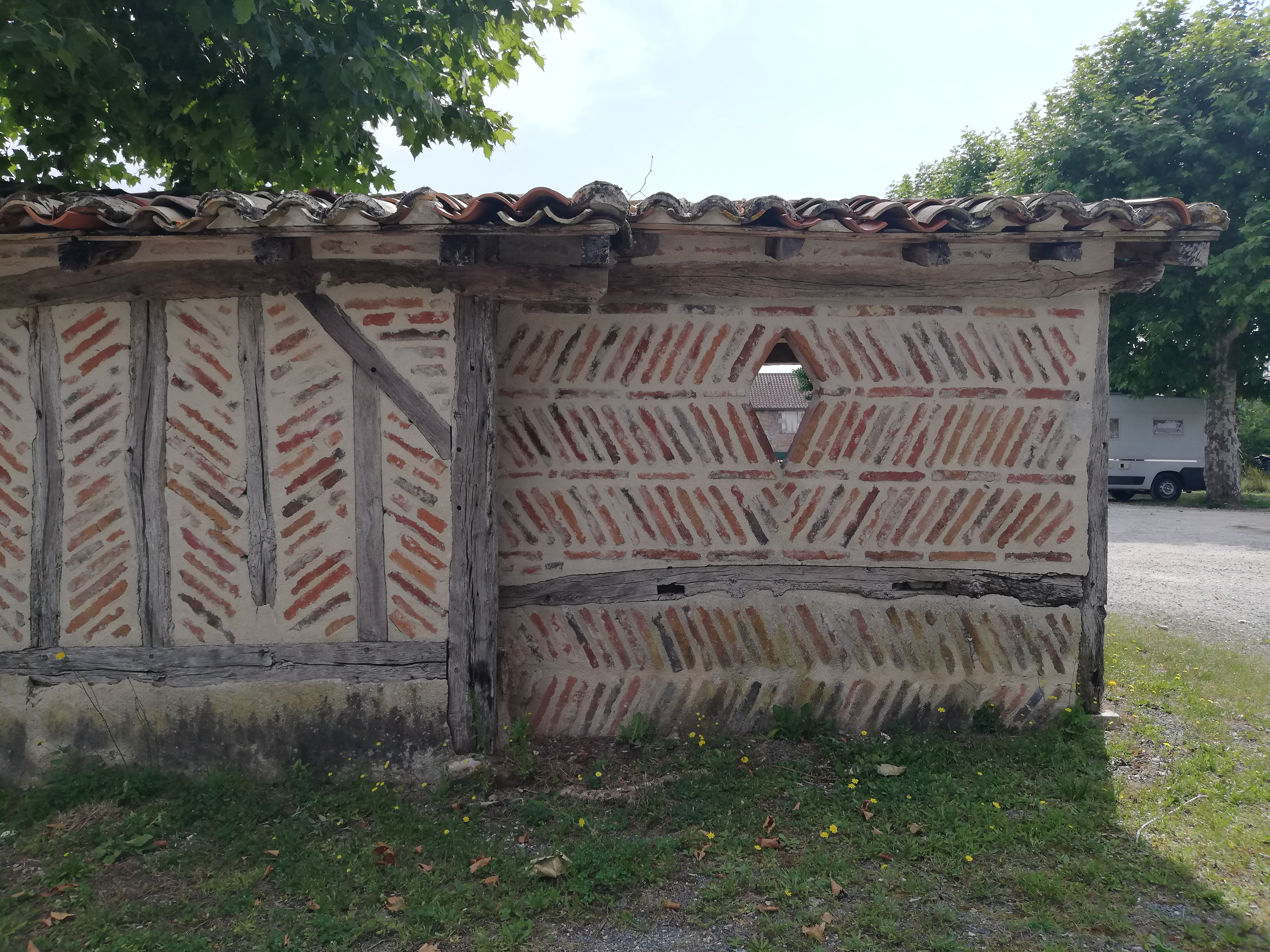
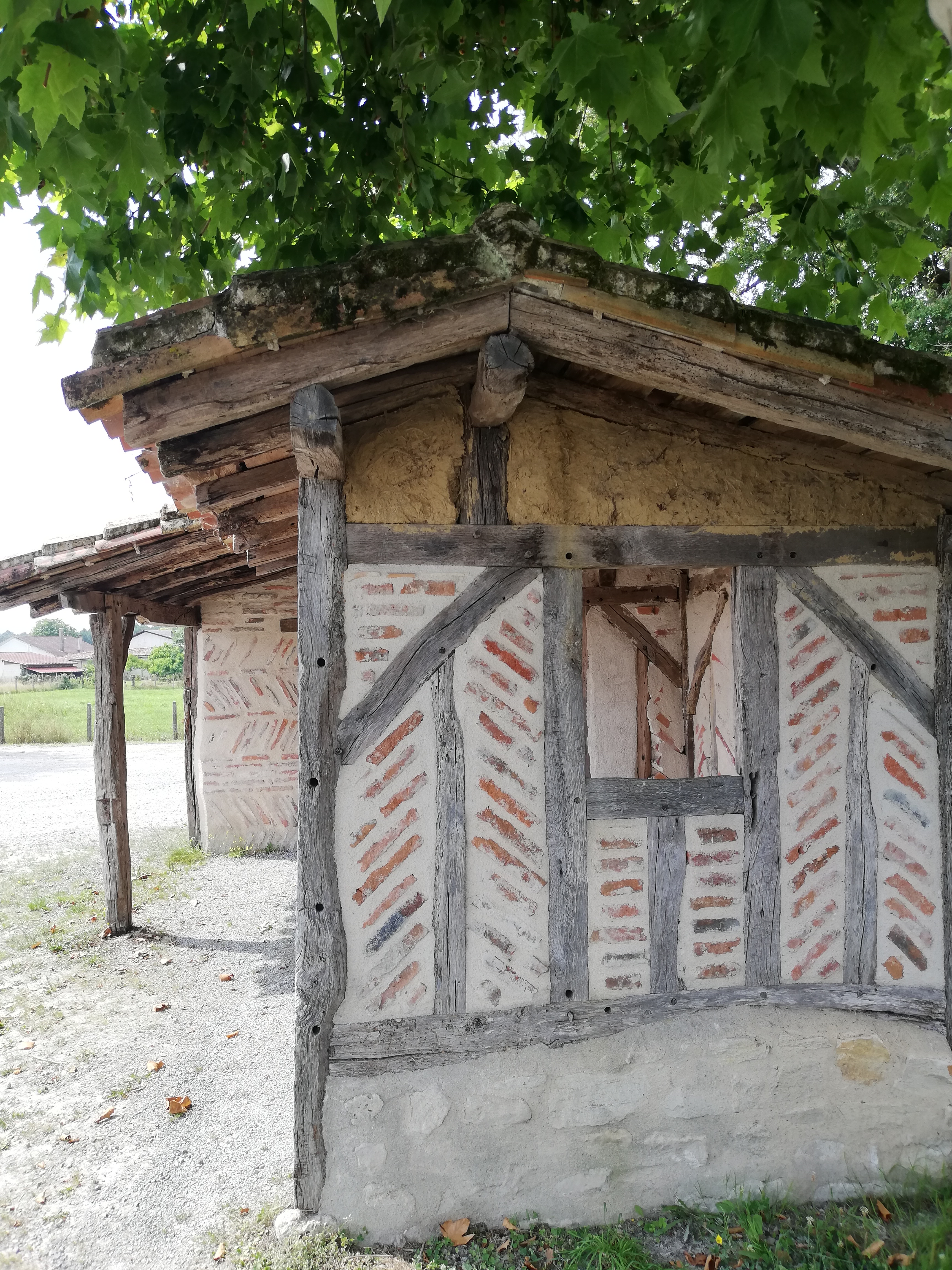
In Echougnac I came across this Arbre with interesting brick work

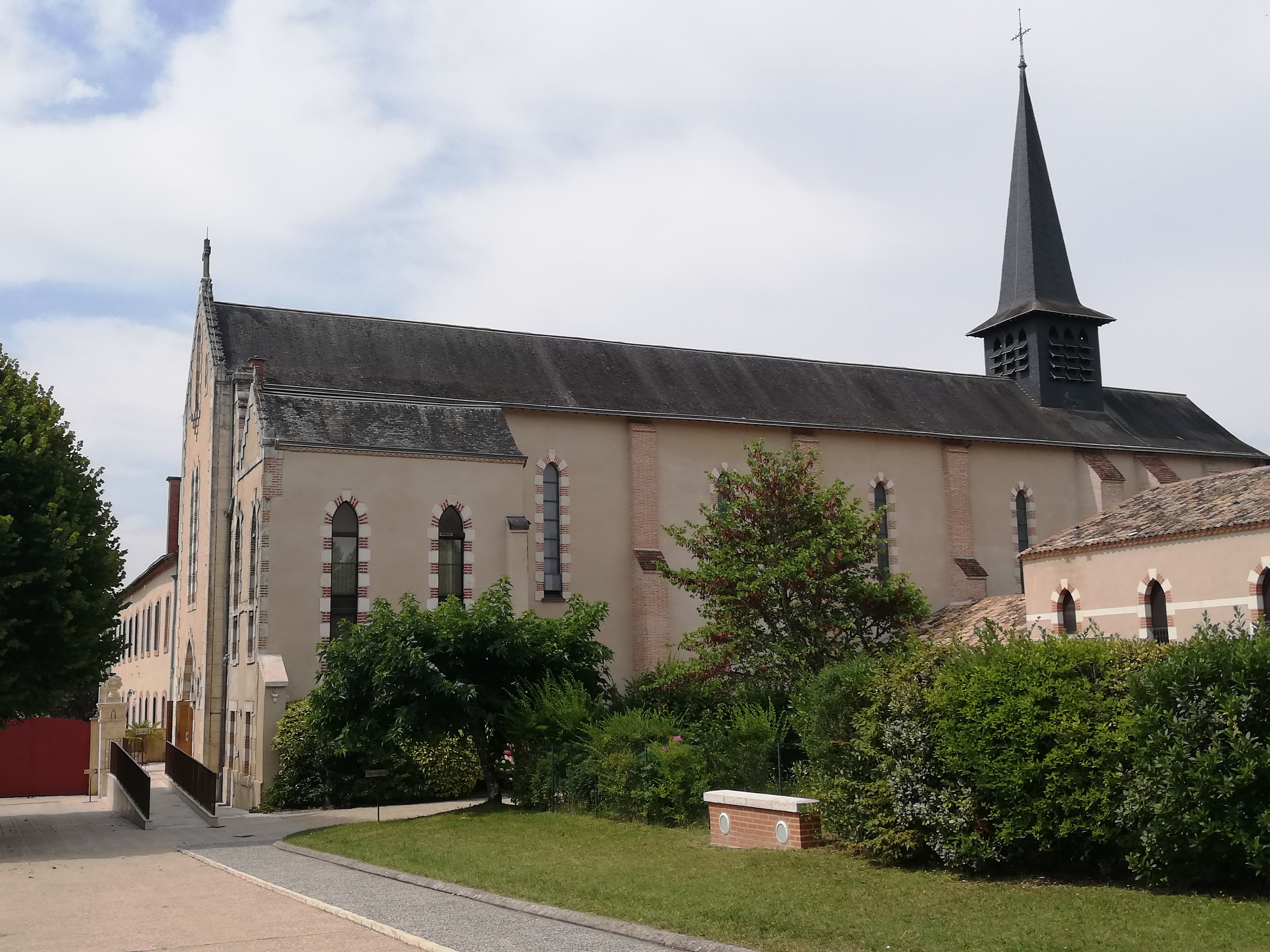
The Abbey was less interesting to me as it was only constructed in the C19th. However there was a major irritant in the signage.
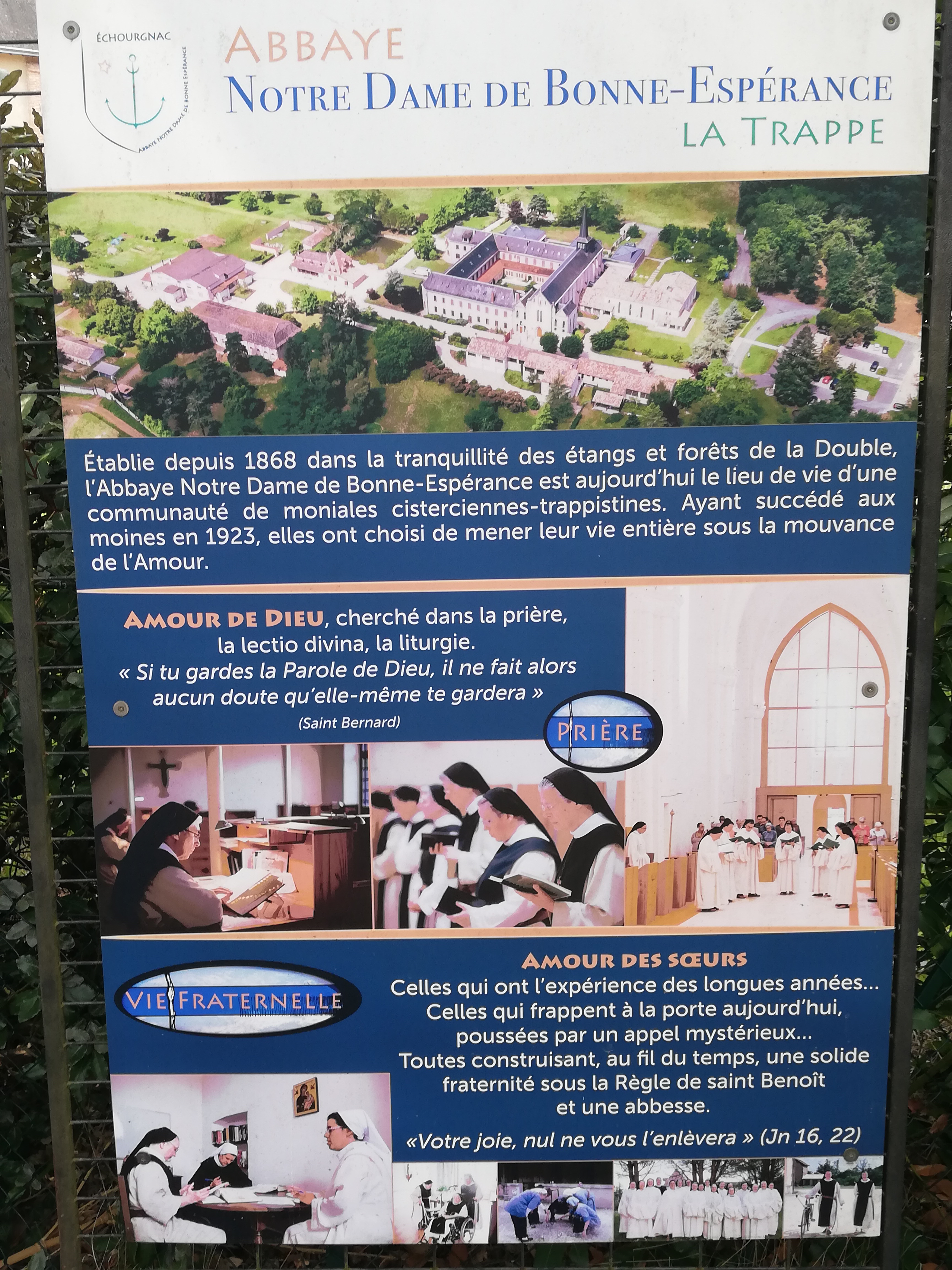
It refers to building a community of “fraternité” which is the French female equivalent of the masculine for Fraternity or brotherhood. This French word has its roots in the Latin “fratri & fraternitatis” = “brother & brotherhood”. The latin for “sister & sisterhood” is “soro & sororum”. It is pretty obvious that the French sister “Soeur” is derived from the Latin. So why do they not use the already existing Latin routed word “sorority” for sisterhood instead of palming us (women) off with a “é” added to the masculine word for brotherhood. OK rant over but you have to admit I have a point here!.
The town of Aubeterre is walled and fortified. It is attractive in its own right with a treed central square, lots of “antique” shops and a tradition of wooded balconys overlooking the impressive vista from their elevated position.
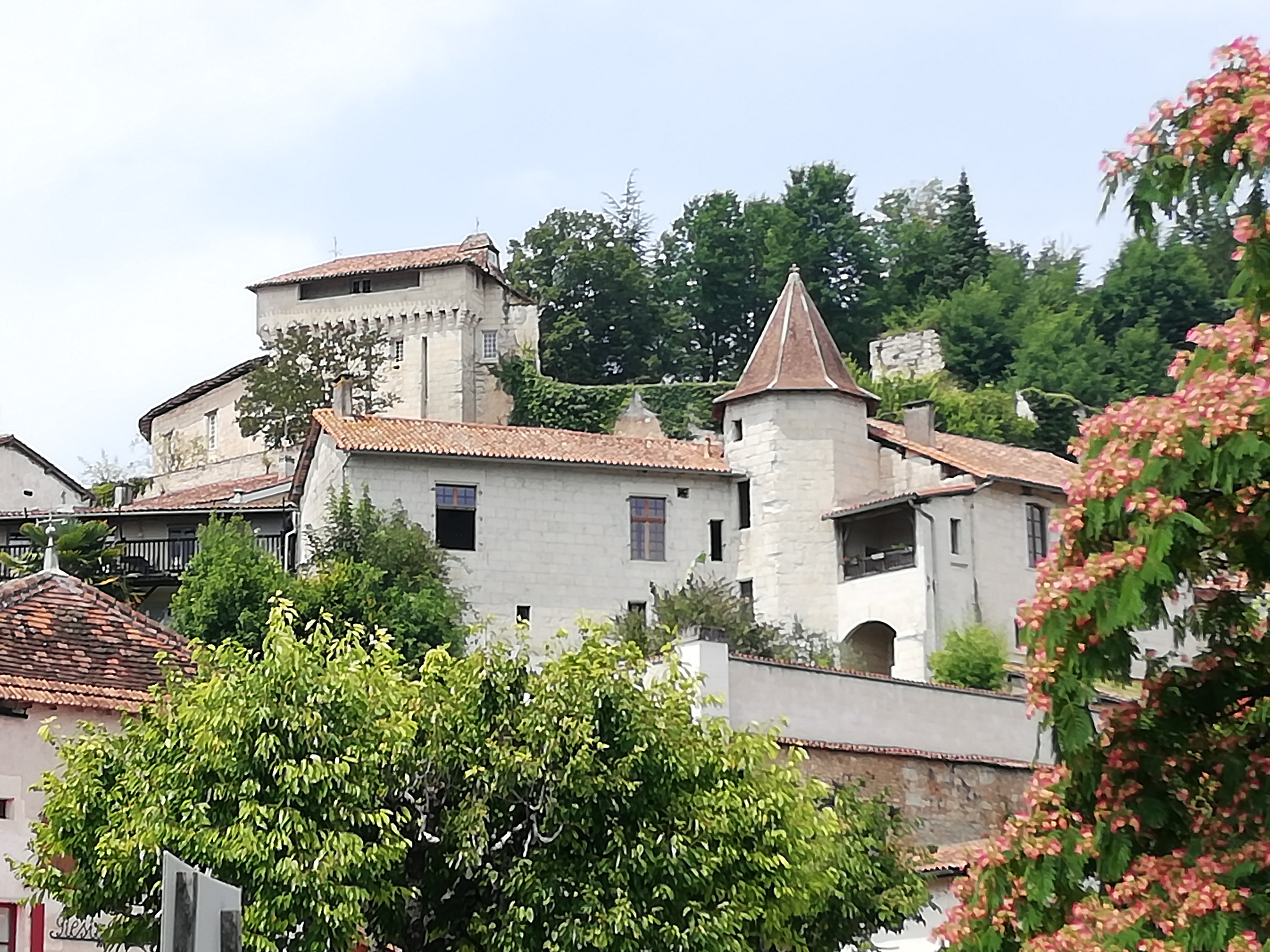
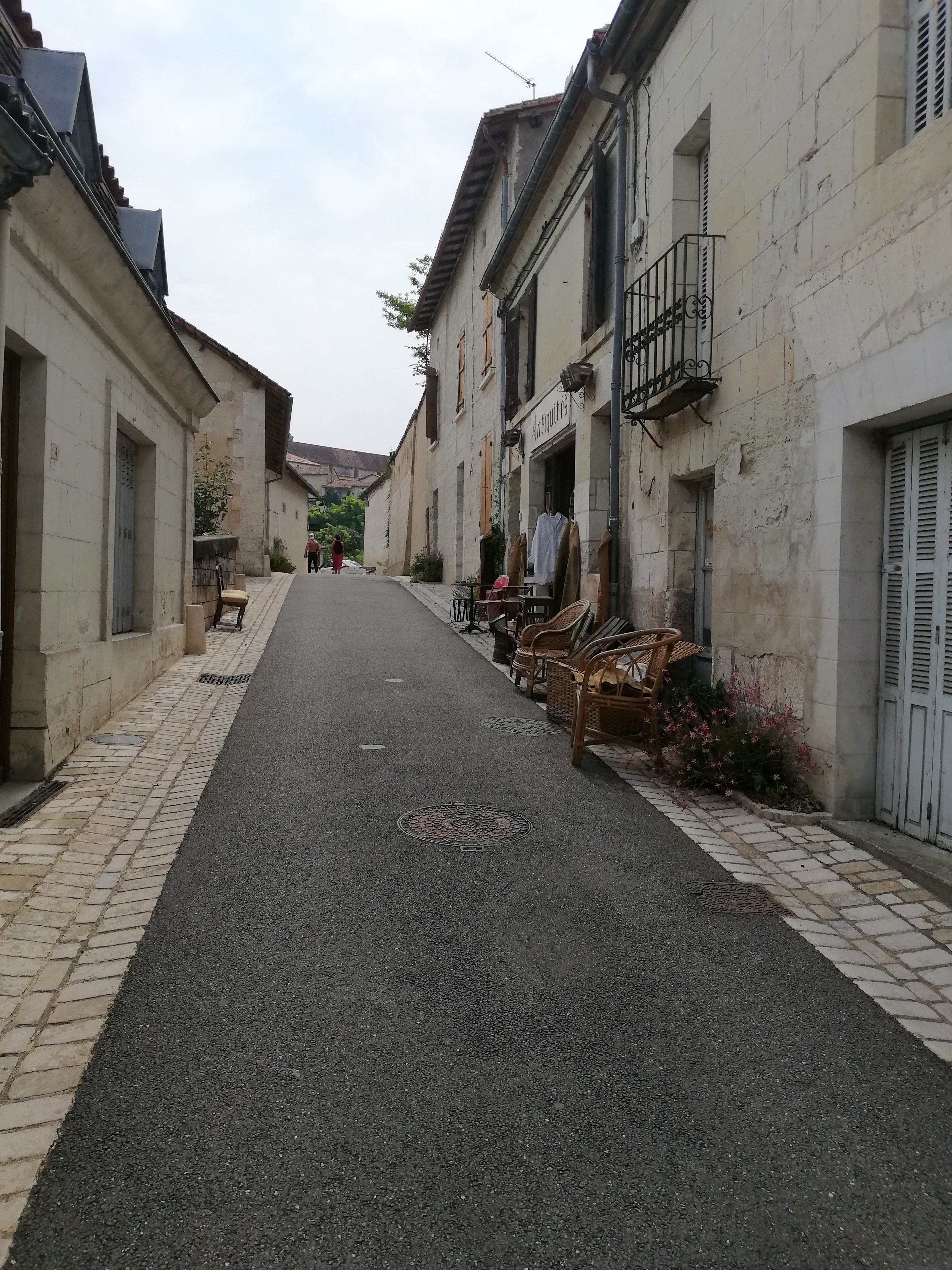

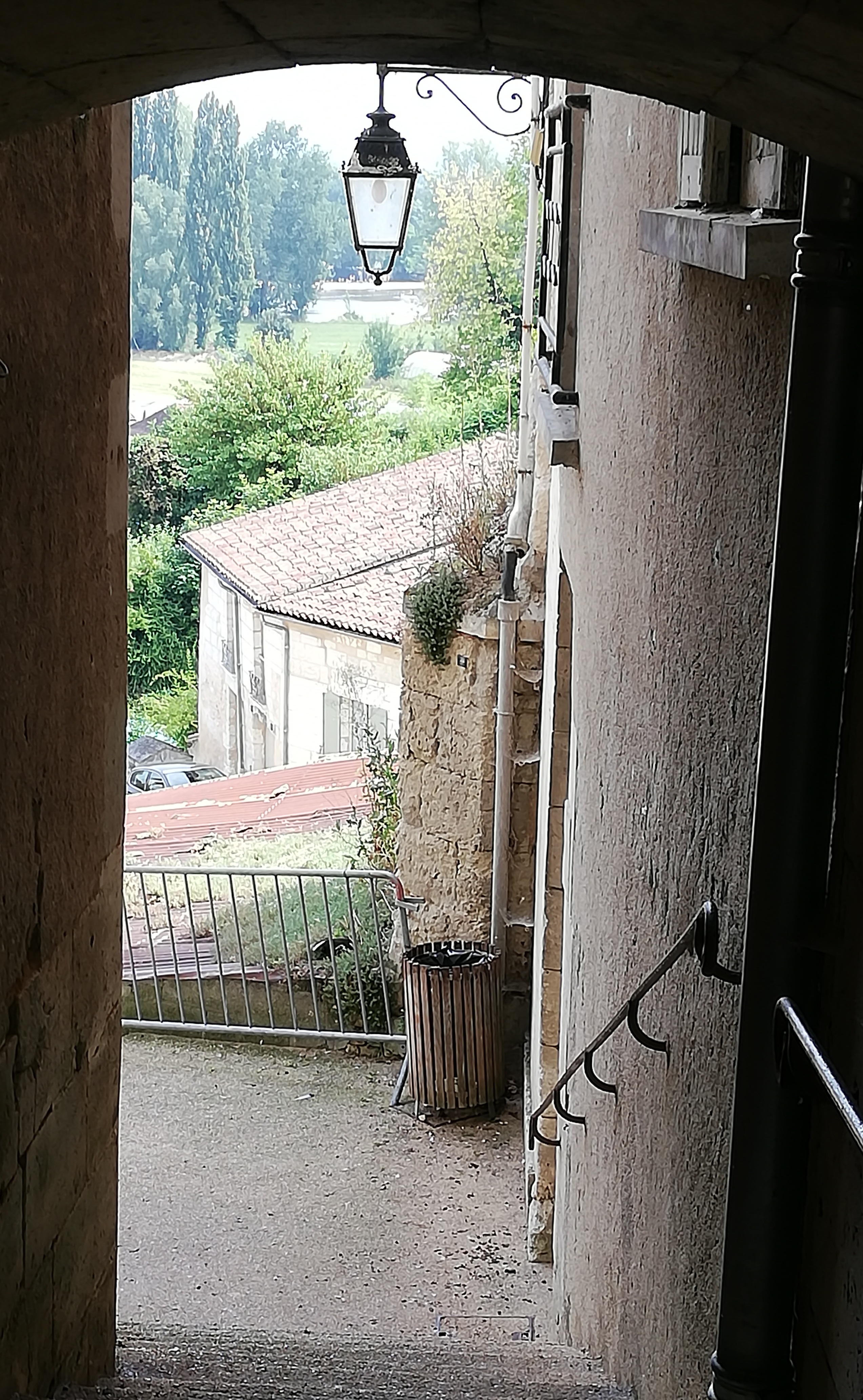
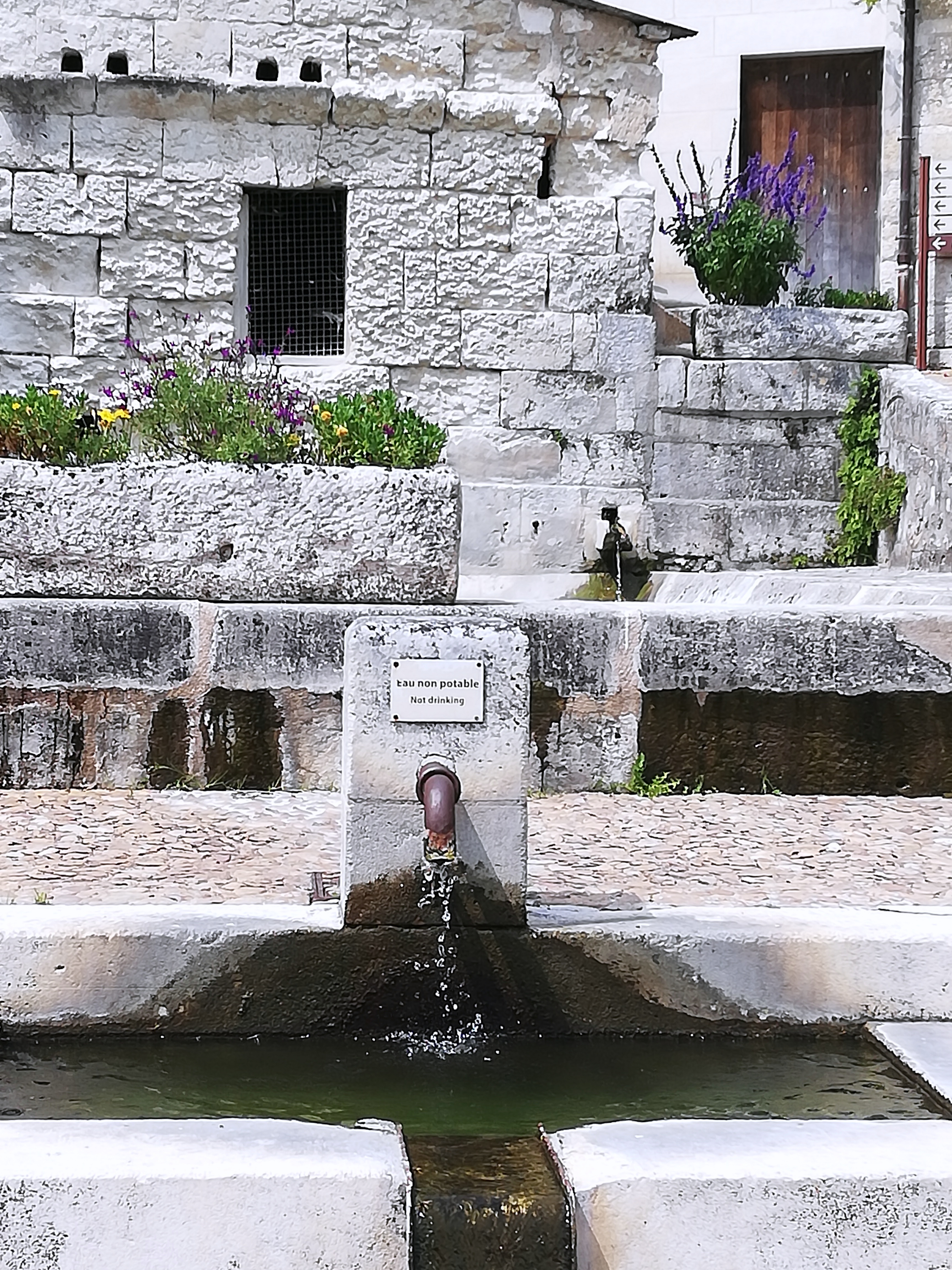

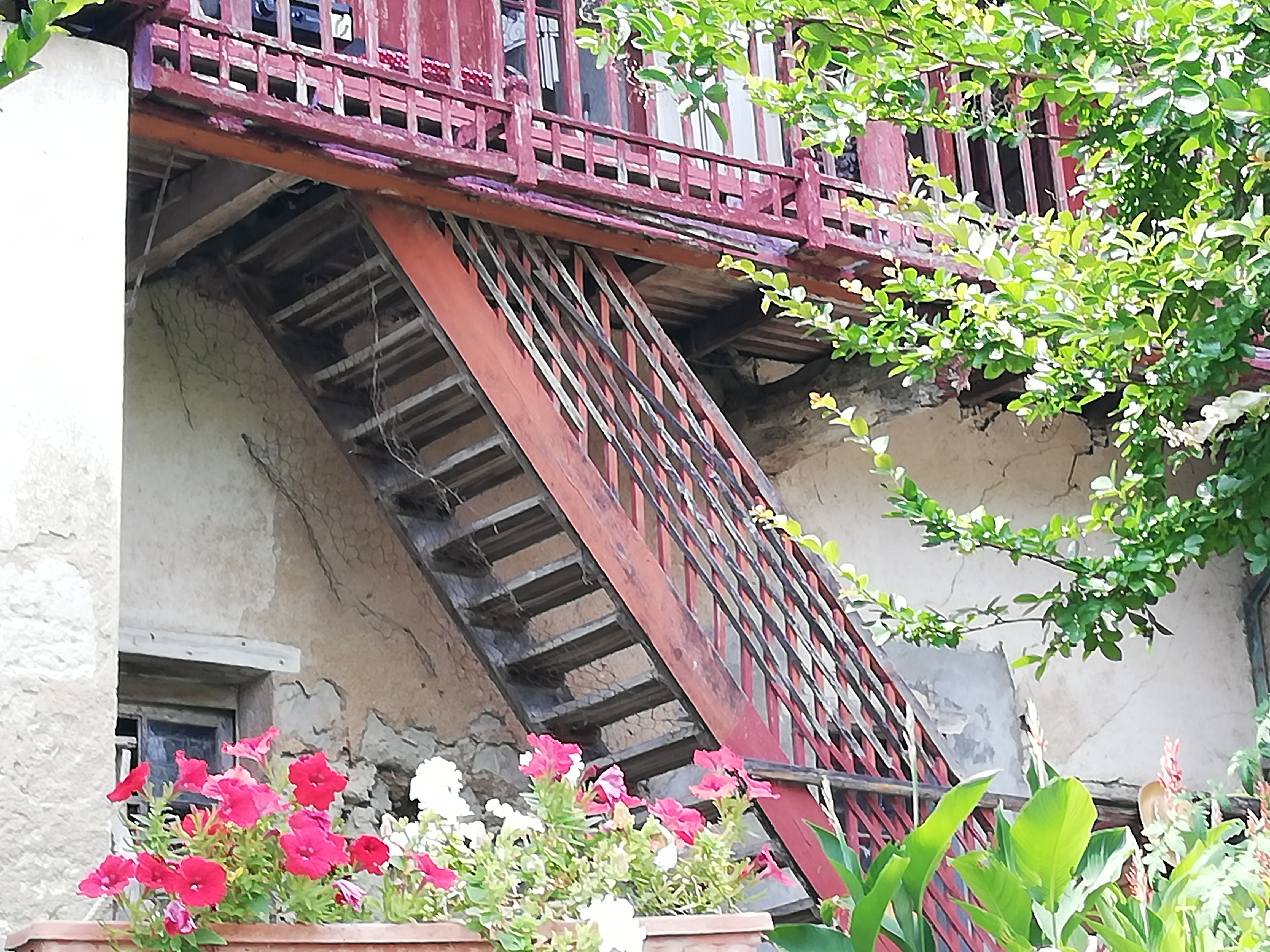
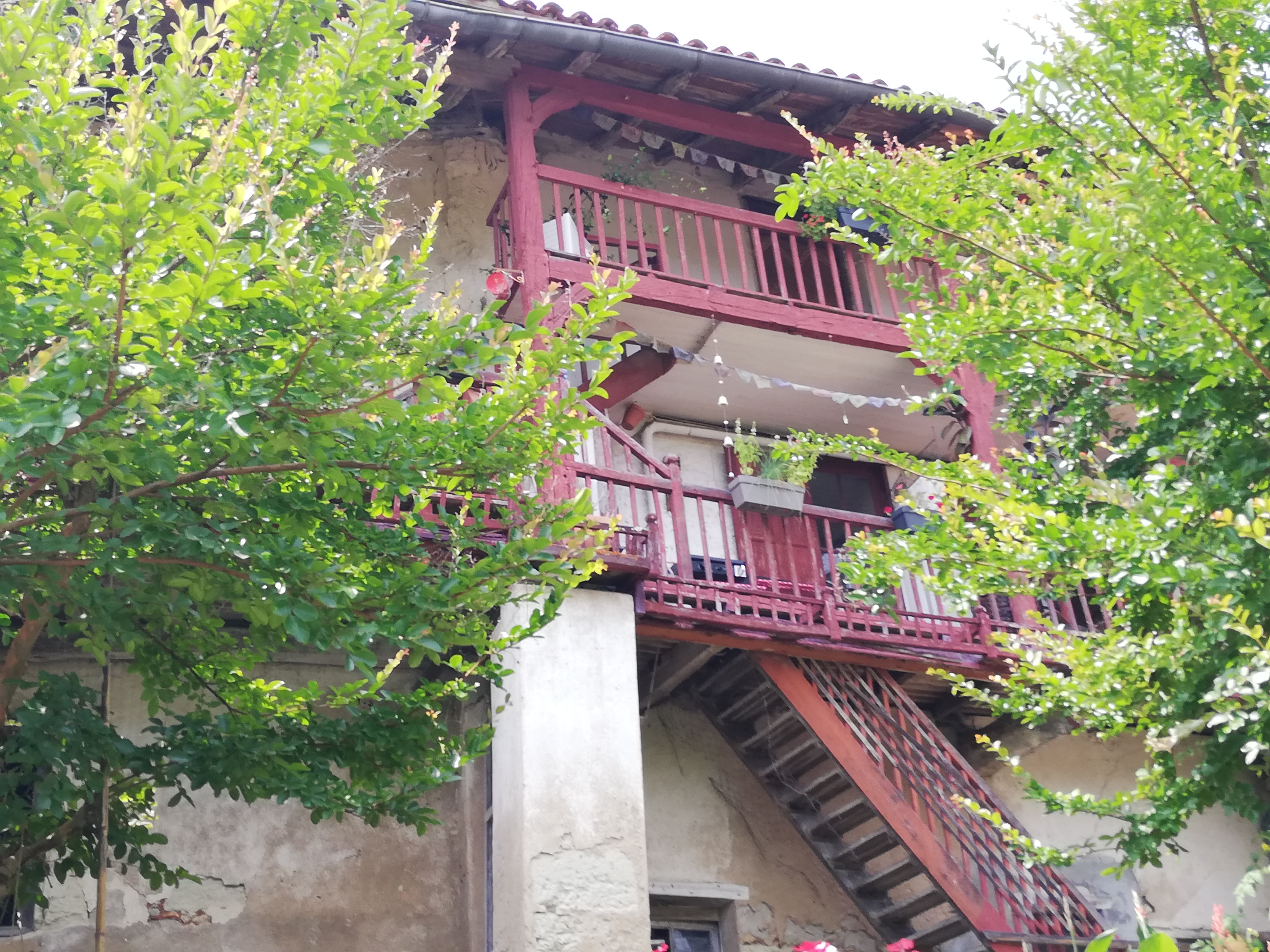
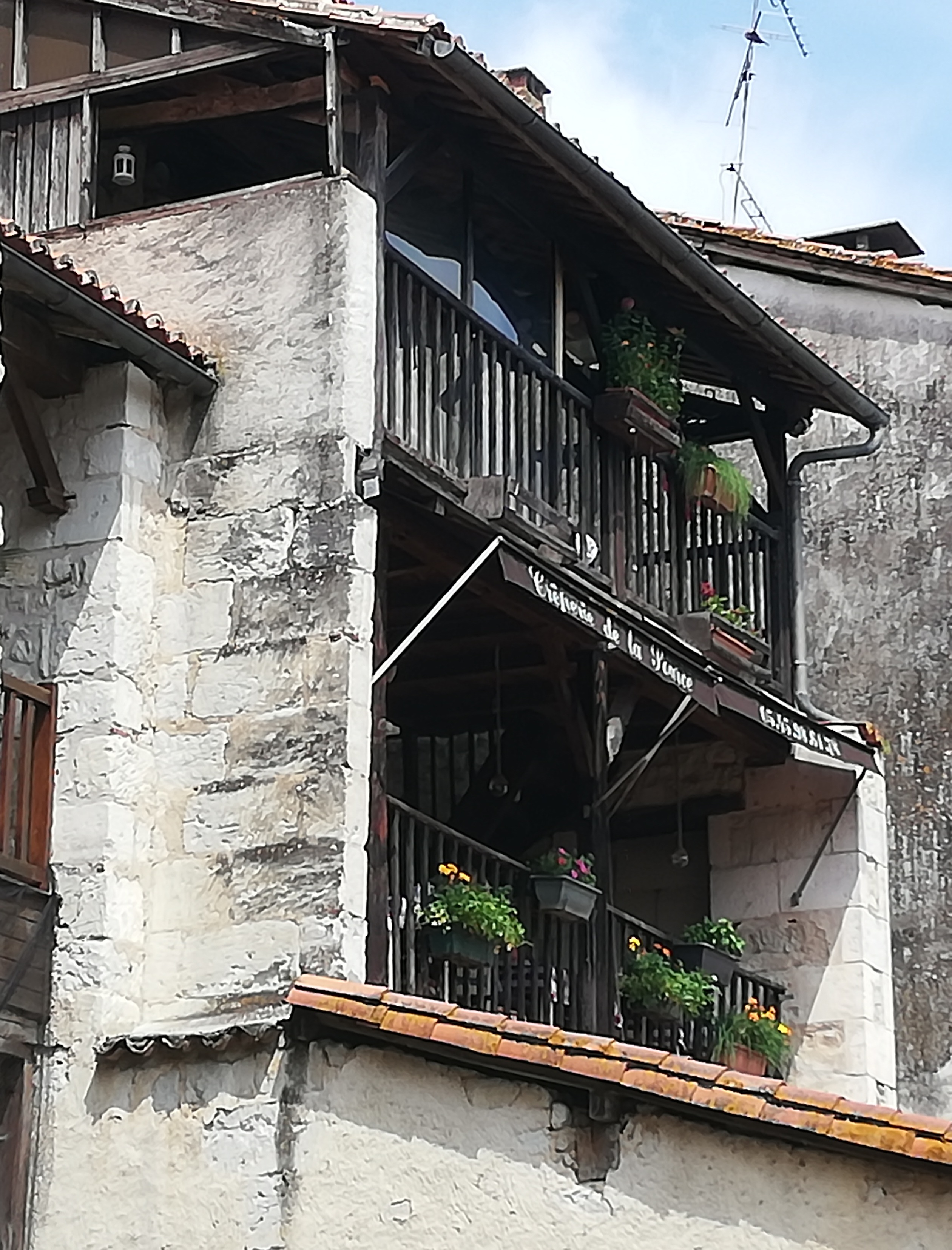
However the main attraction was the underground church which I had tried and failed to visit five years ago. Nothing prepared me for the proportions that were Cathedral like and which my photos do not do justice to. Remember as you view them that this was hand hewn in the cliff face in the C12th. It certainly gives Anatolia a run for its money.
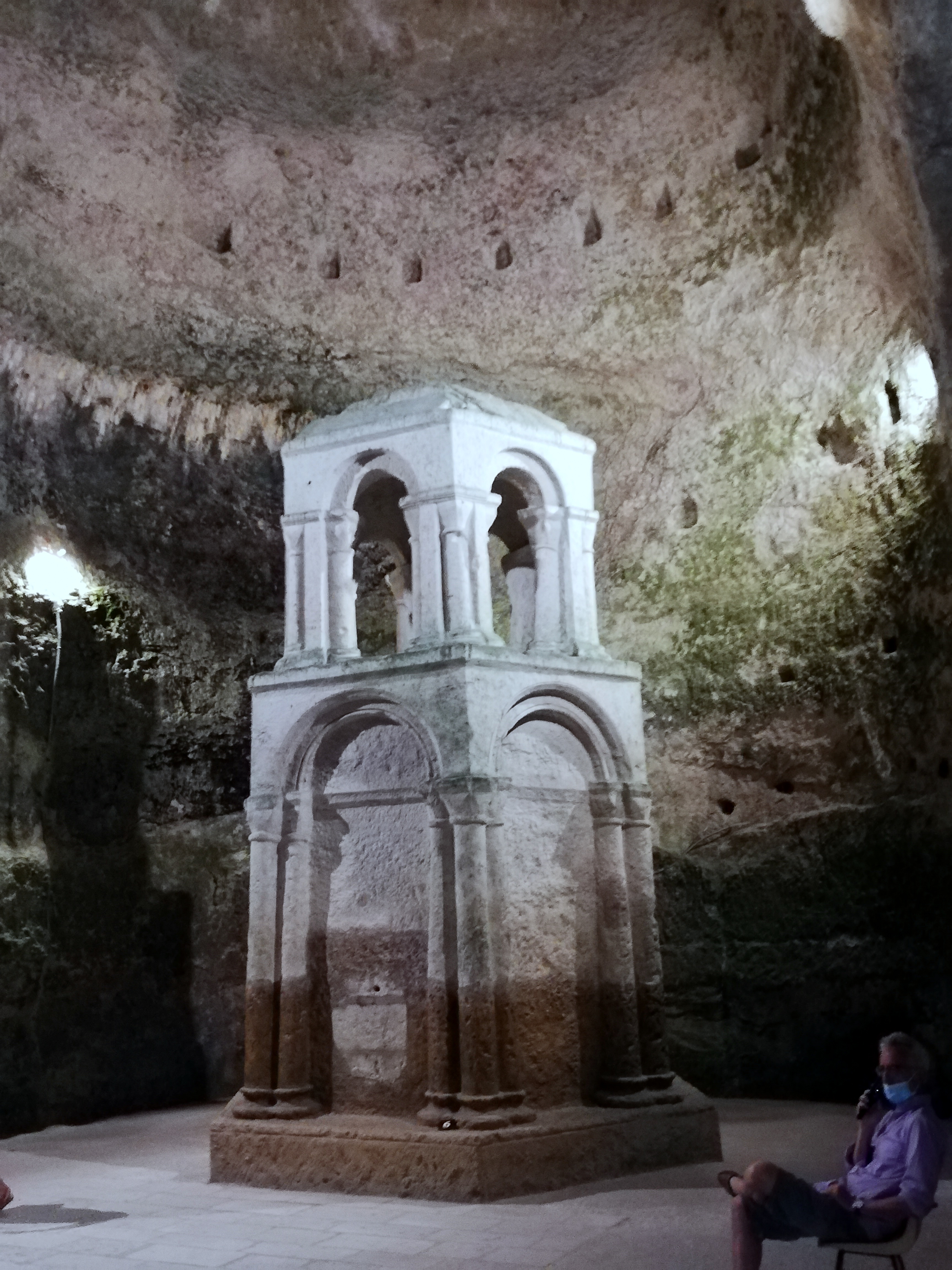
Above is the relique where the relics, like bits of wood from Christ’s cross, (if you can believe it) were stored. It is carved from a single piece of rock. The roof of the “church” soars above it.
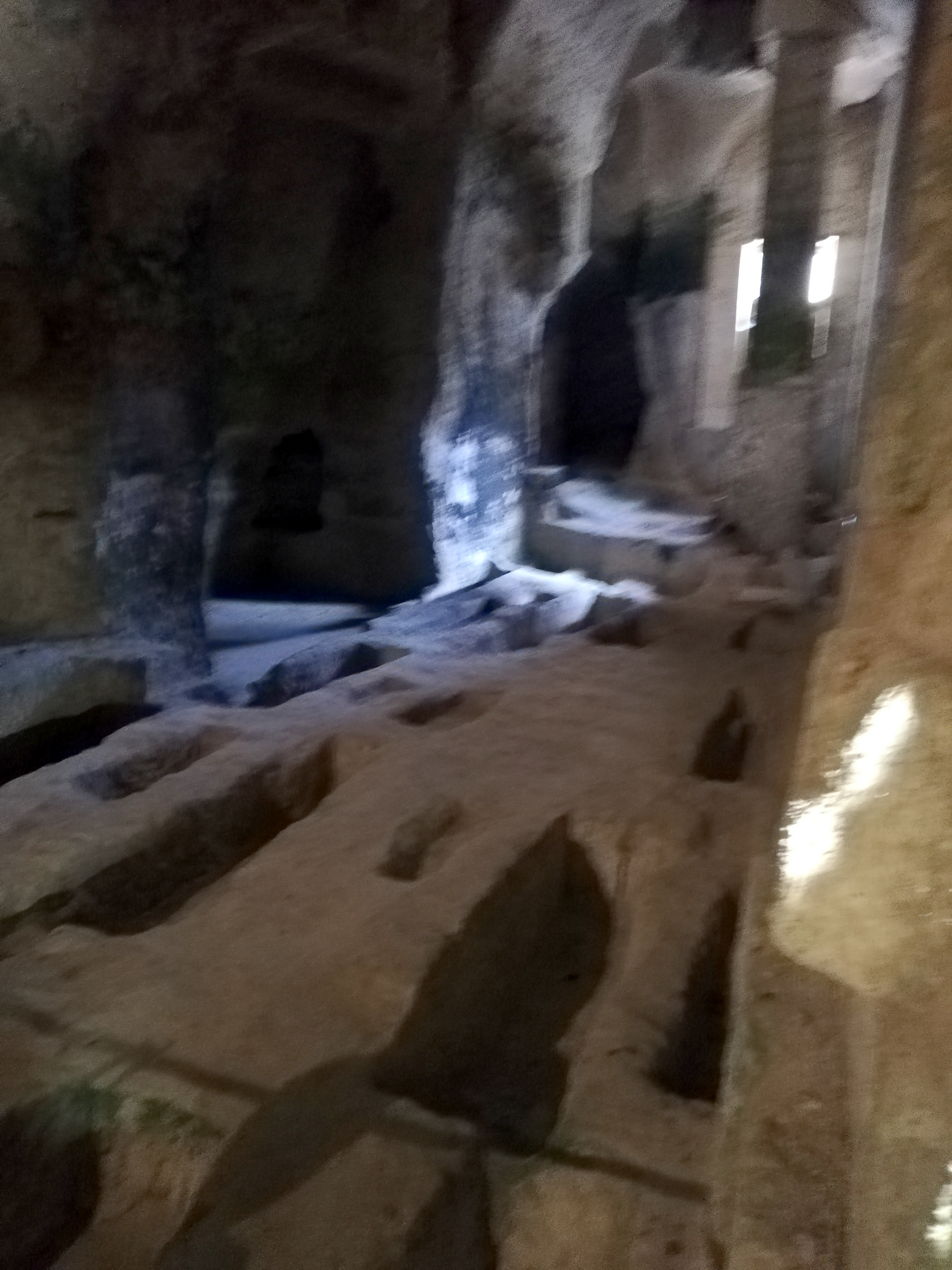
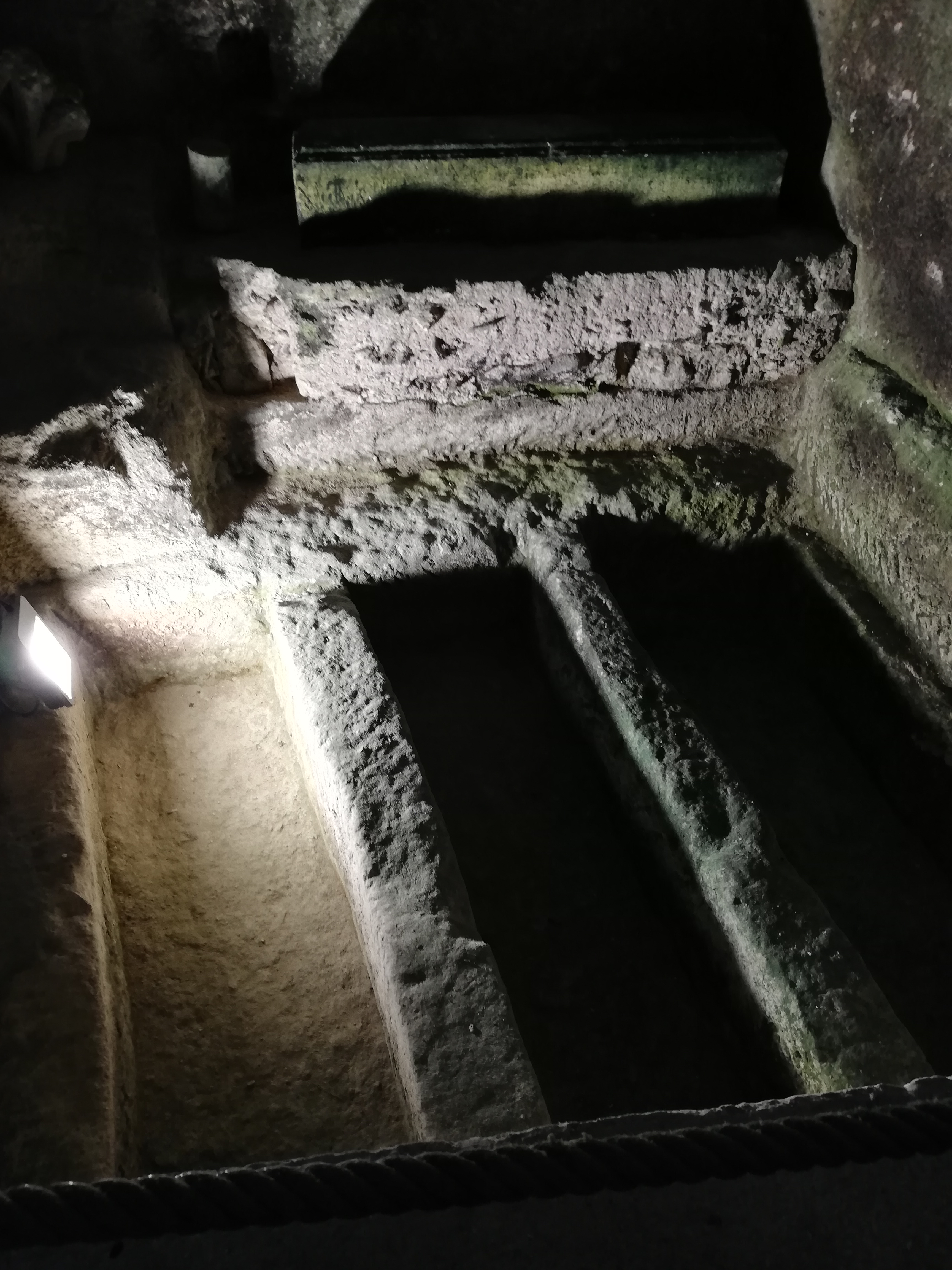

There are many graves in the church the site of which is marked by a cross.
In the centre at this level is a hole in the ground which is said to replicate a similar hole in the Temple of Jerusalem that is said to mark the birth of Christianity. (and we think we have marketing sussed, we have nothing on these guys!)


A clever piece of engineering takes water running off the rock, along a channel in the upper gallery that transports it to a point above the collecting well on the ground level.

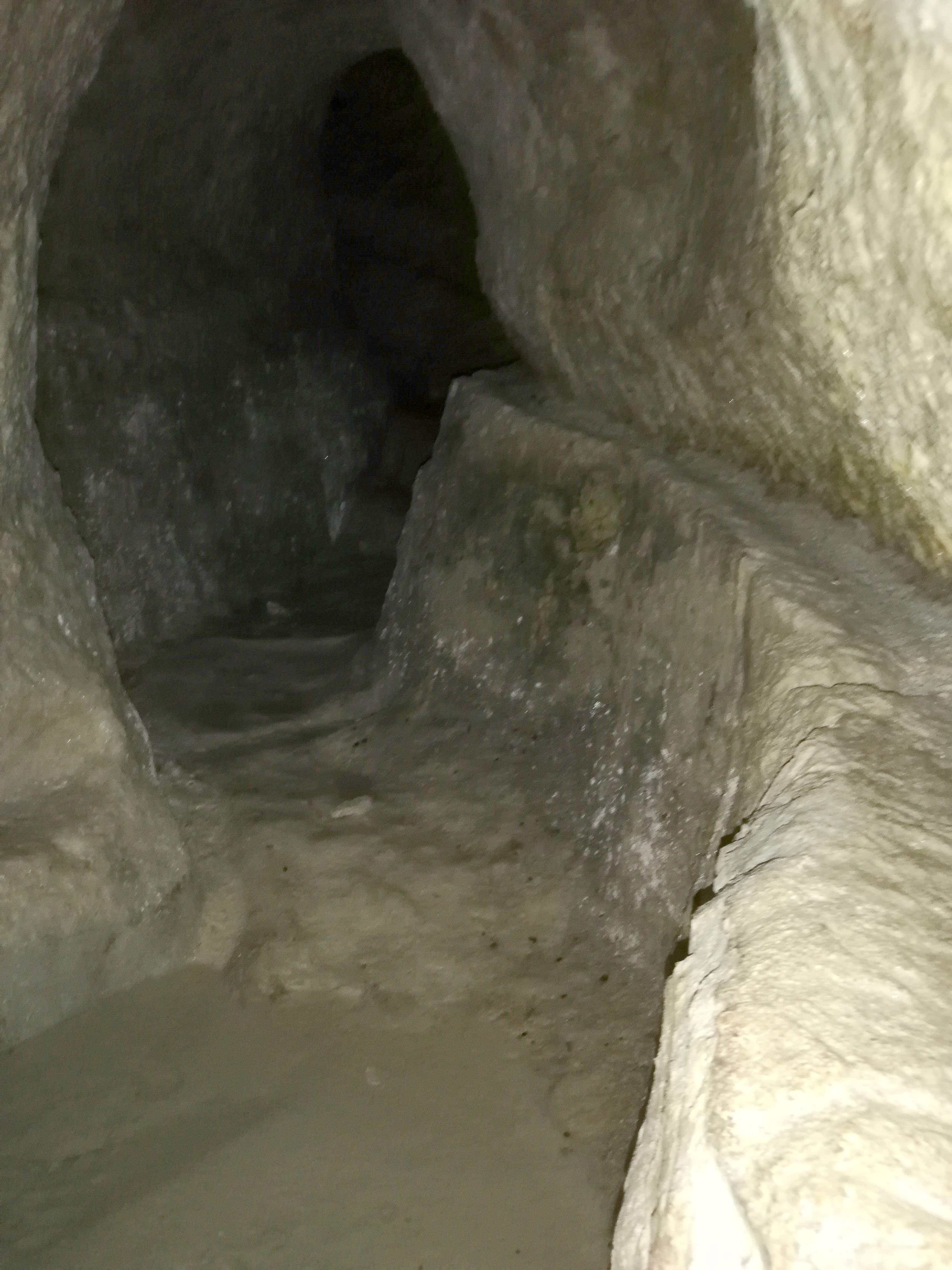
The upper galleries and views from there.
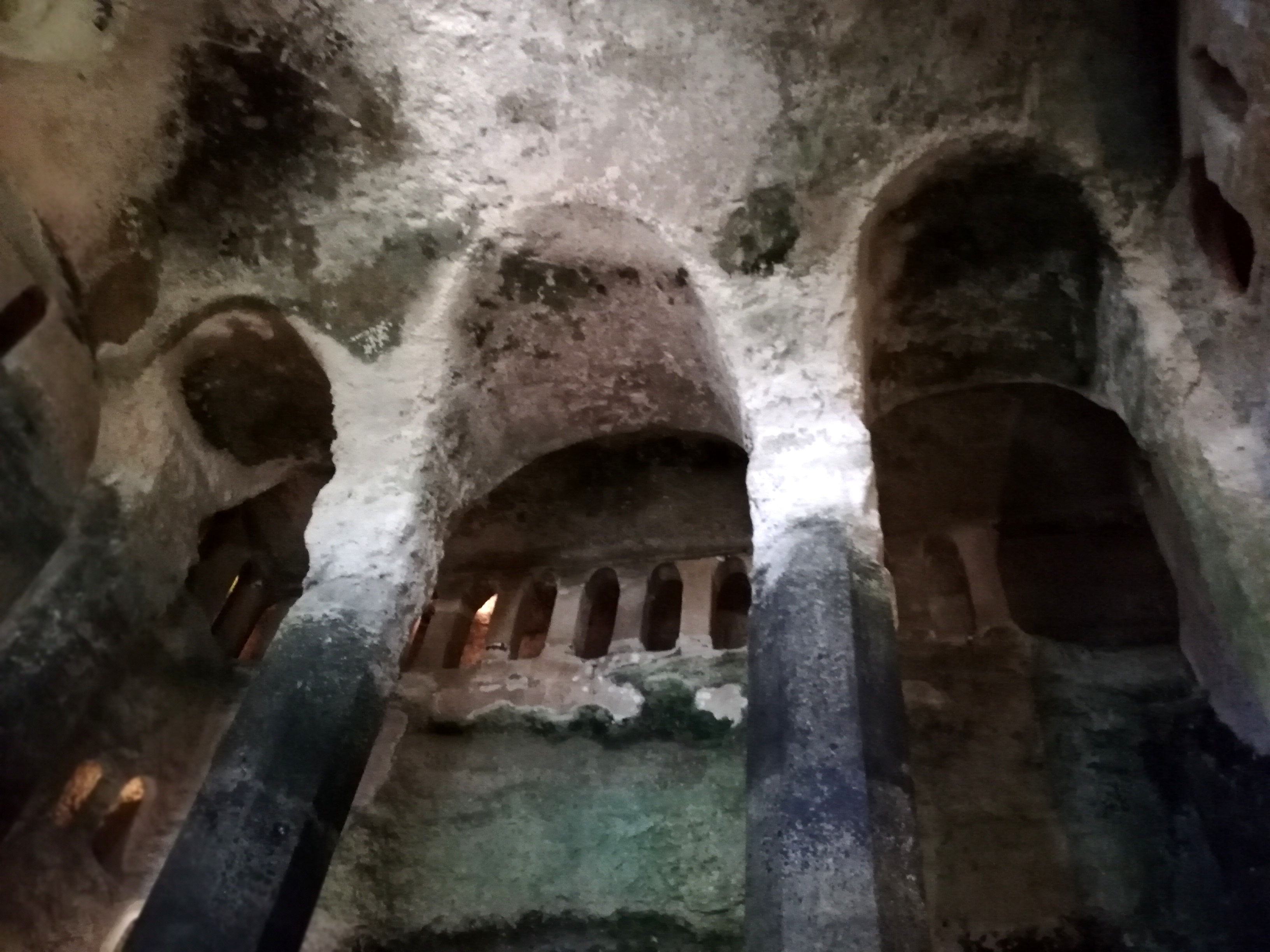

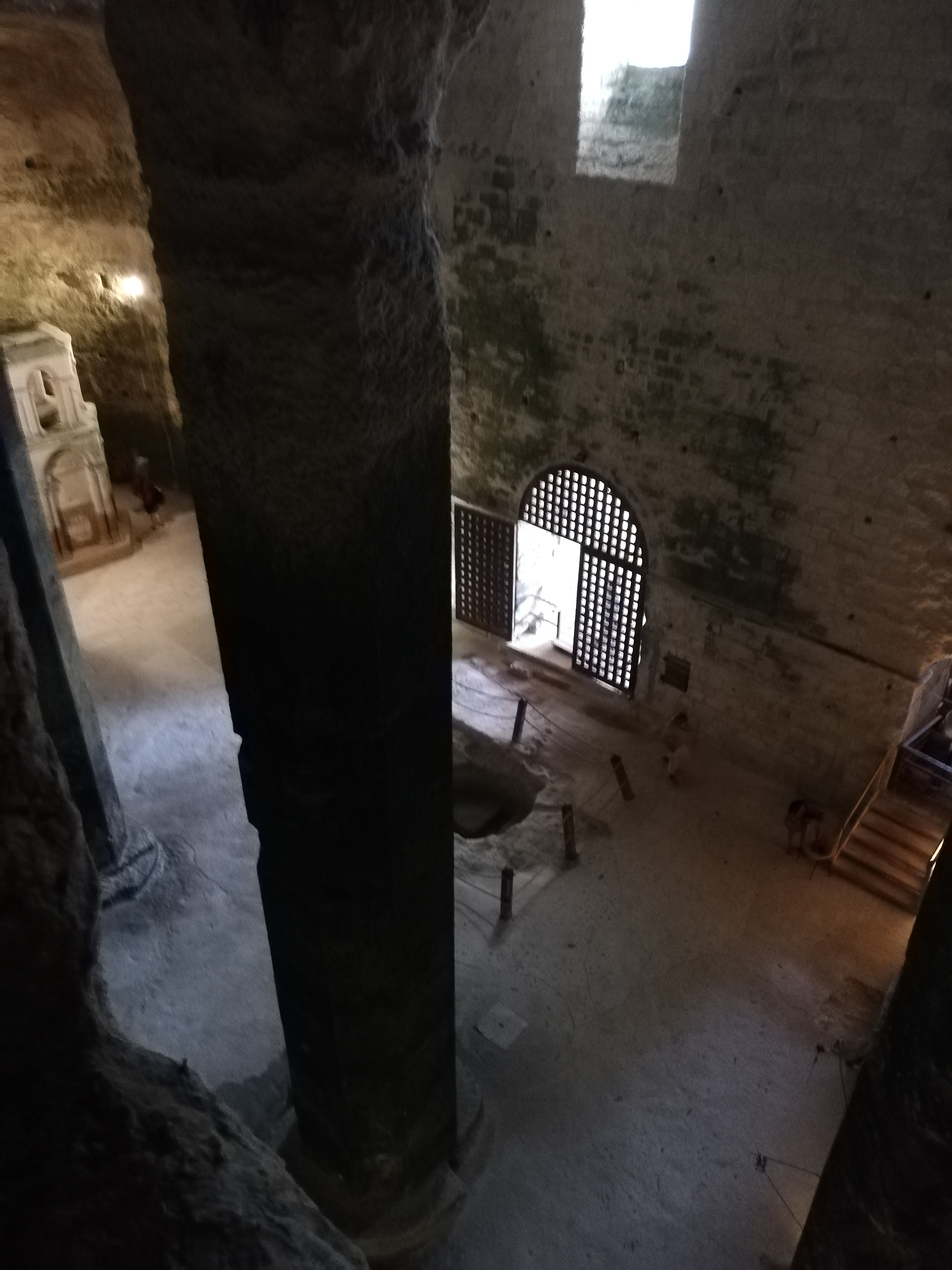
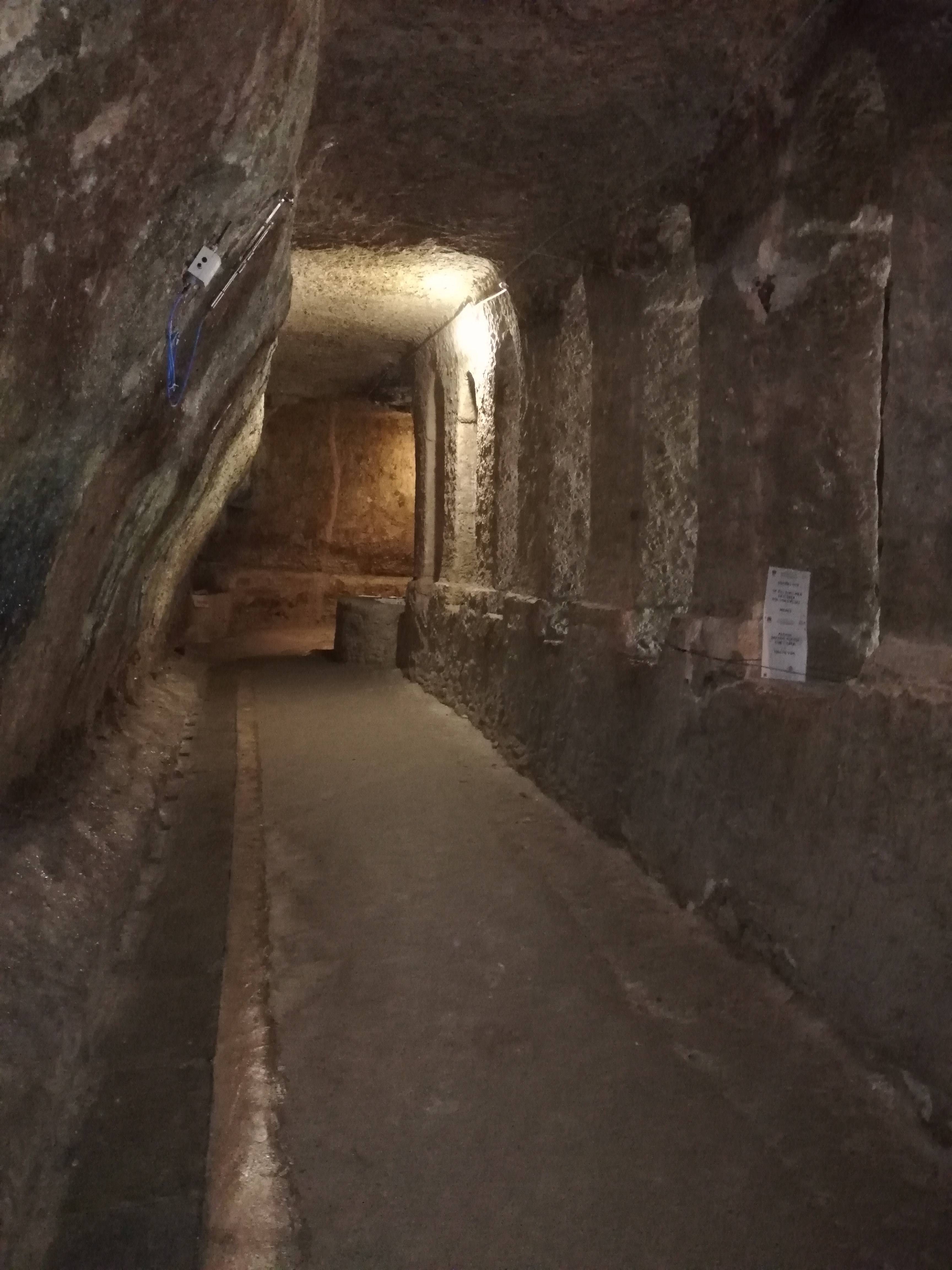


The scale was mind blowing and a testament to the, frequently underrated achievement of previous centuries. I understand that there is a similar edifice at St Emilion near Libourn and am determined to make it the goal of my next trip south.
All in all a memorable day terminating in a return to the hamlet of Lignieres Sonneville and its pleasant Aire that I had visited five years ago on my first trip west from St Jean de Losne. There is a moated Chateau, more in the style of a Manor House where the moat is certainly more for decoration than deffence. It now houses the Marie (town hall).
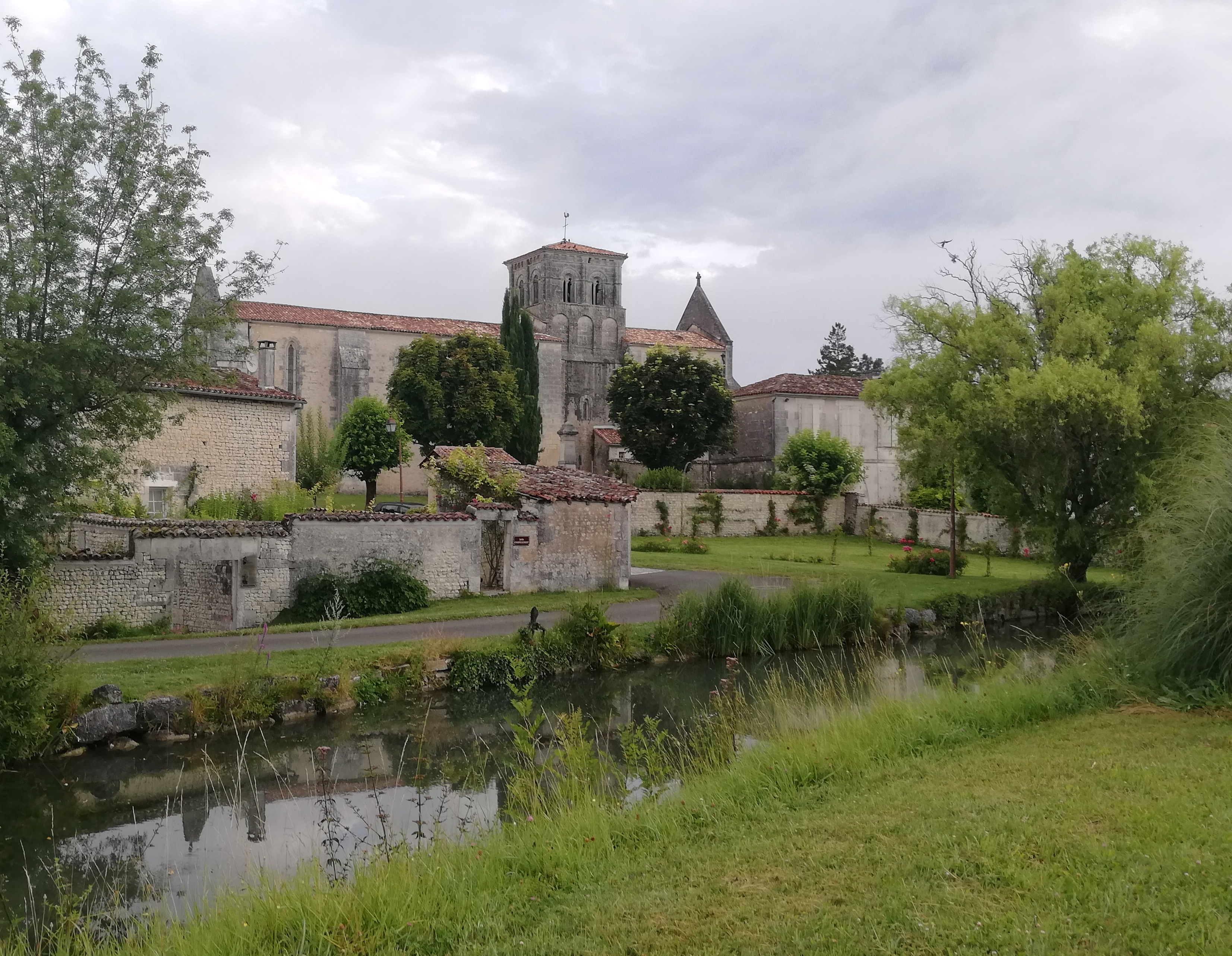

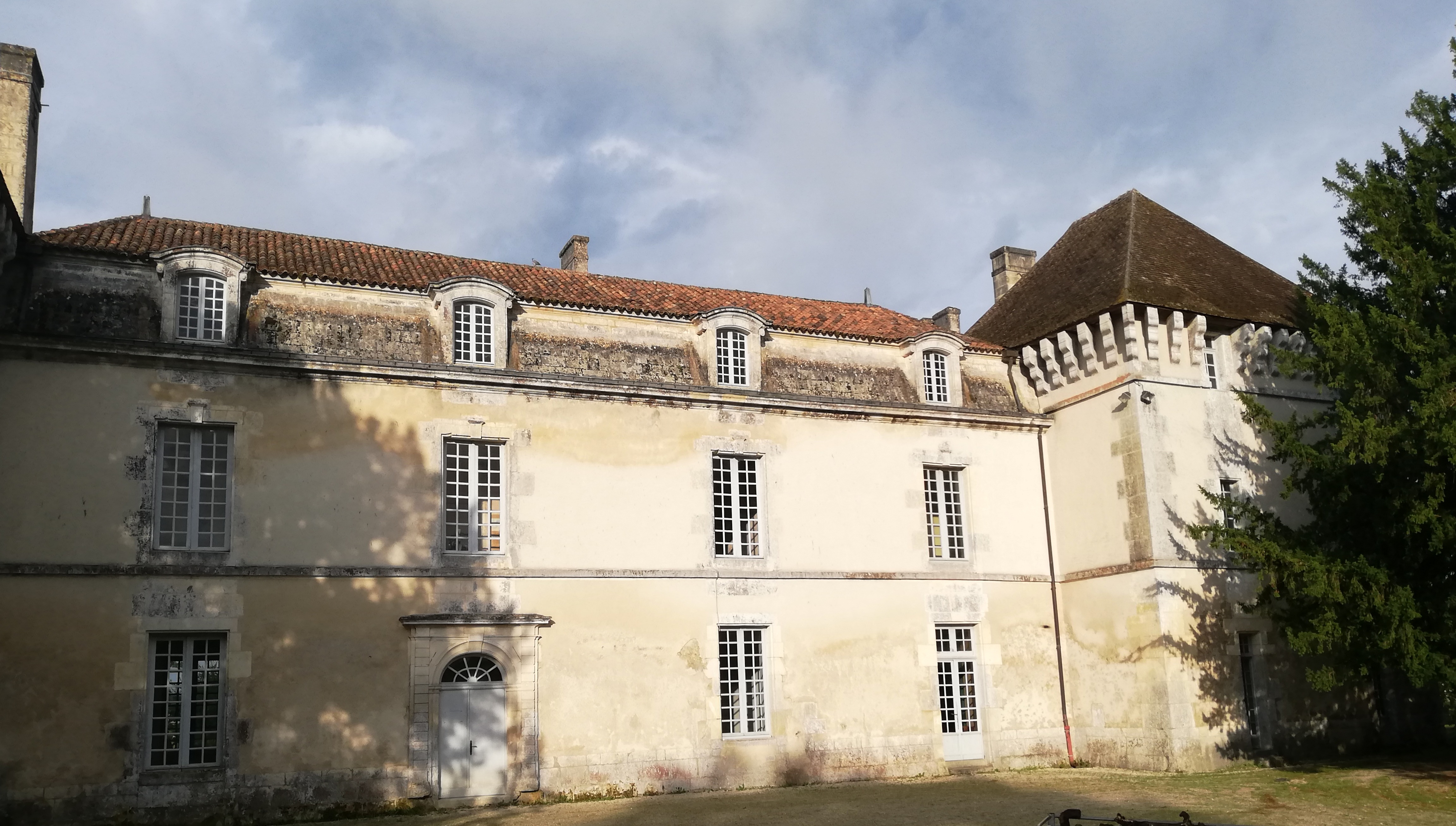
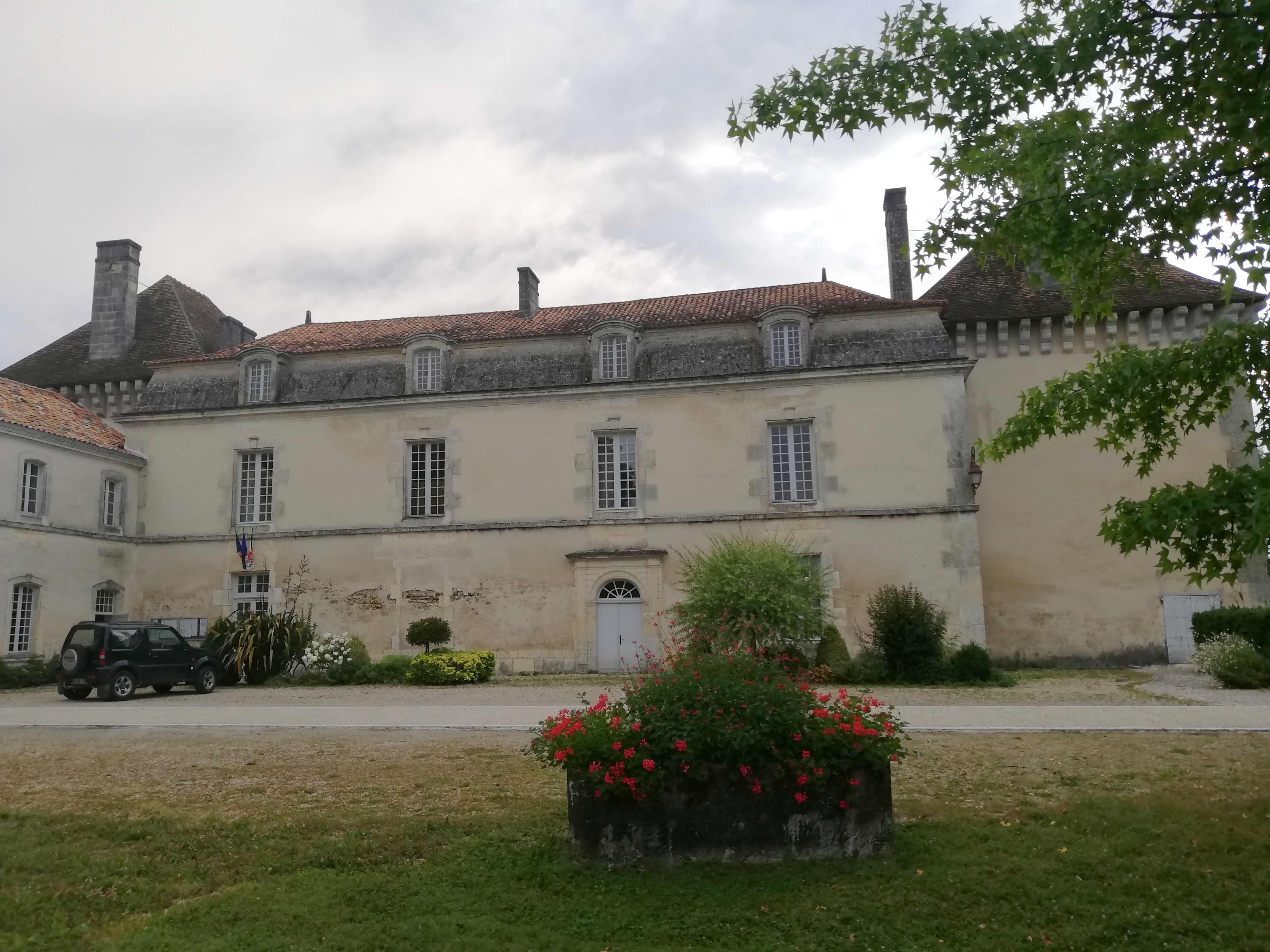
The courtyard area, bordered by outbuildings, at the rear of the chateau is used for events. A stage has been erected for a concert due tomorrow evening.

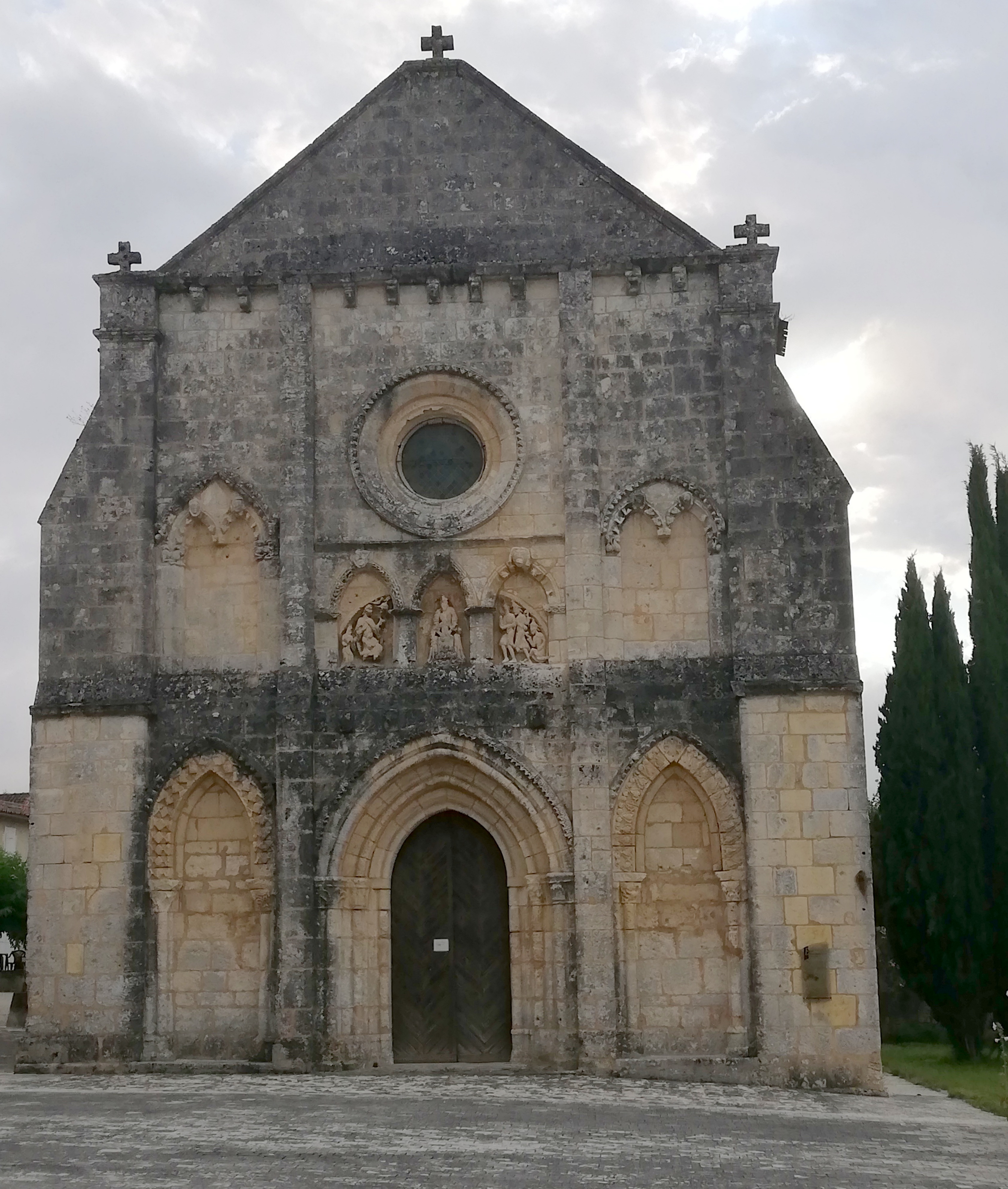
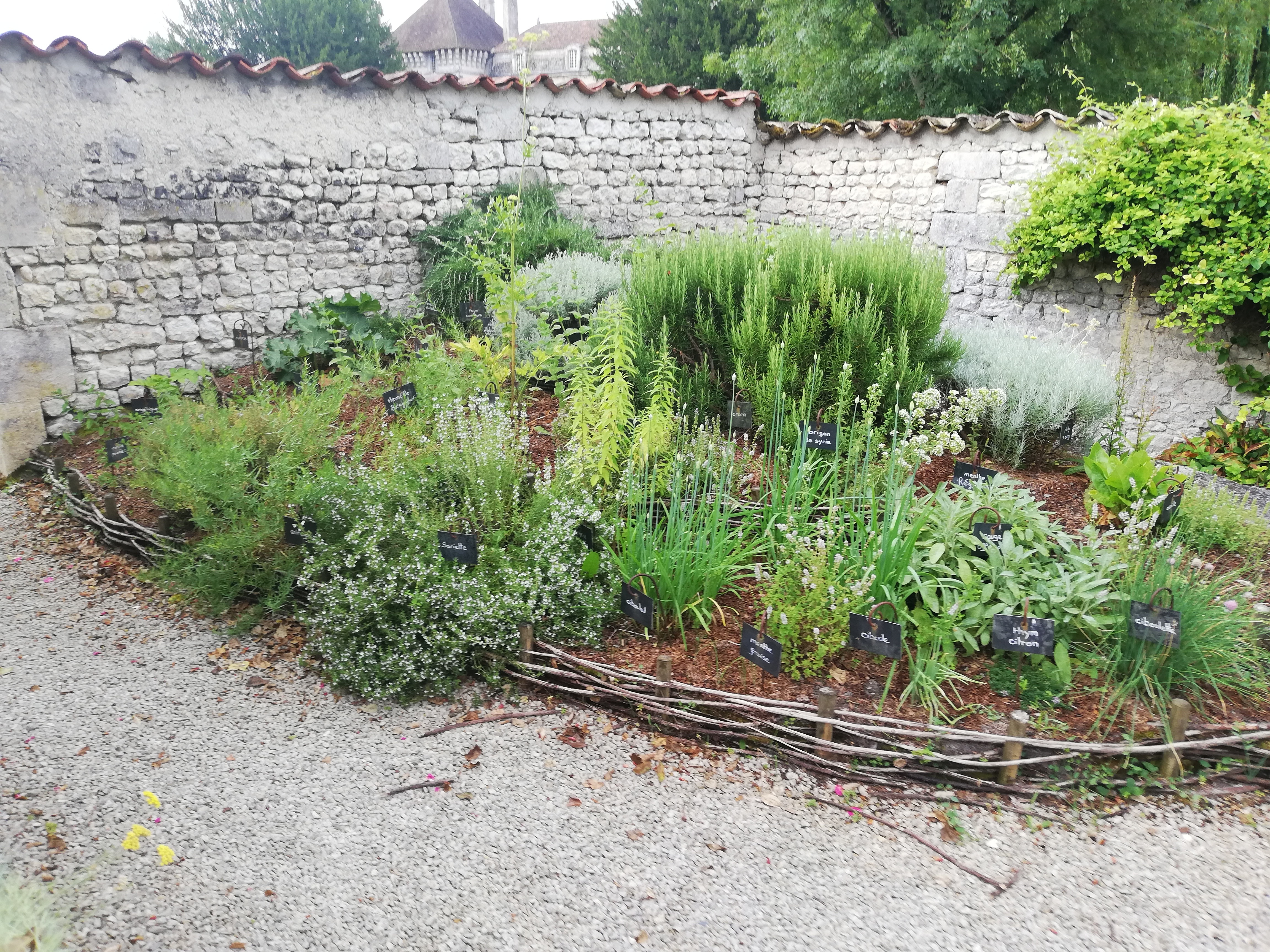
There is a handsome little Romanesque church with Adjoining presbytery and a well set out and labeled herb garden in the public space.

There is obviously money about as there are many fine houses. This close to Cognac it is probably wine wealth. They are mostly set back behind handsome walls, fences, gates and doors.
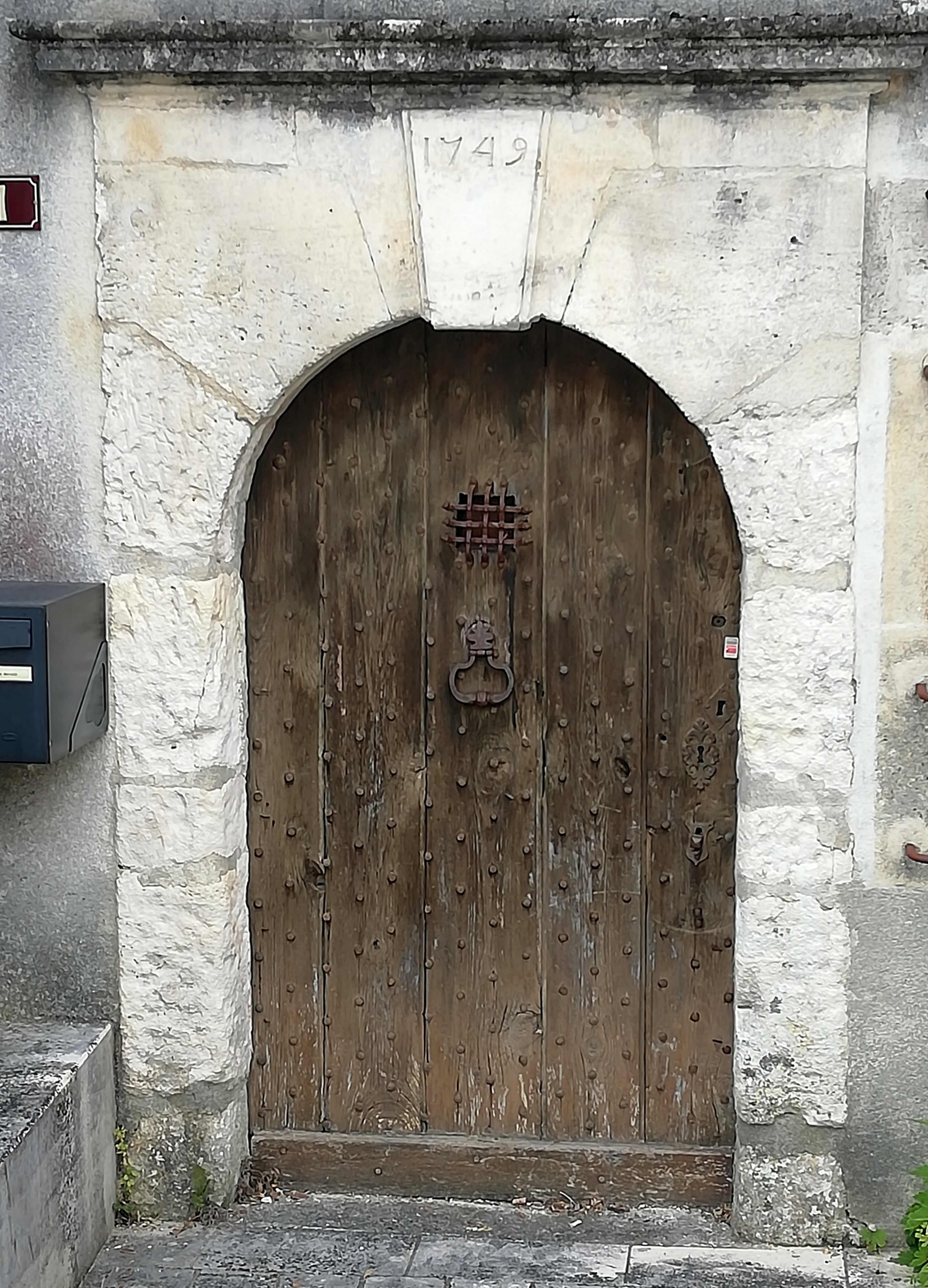

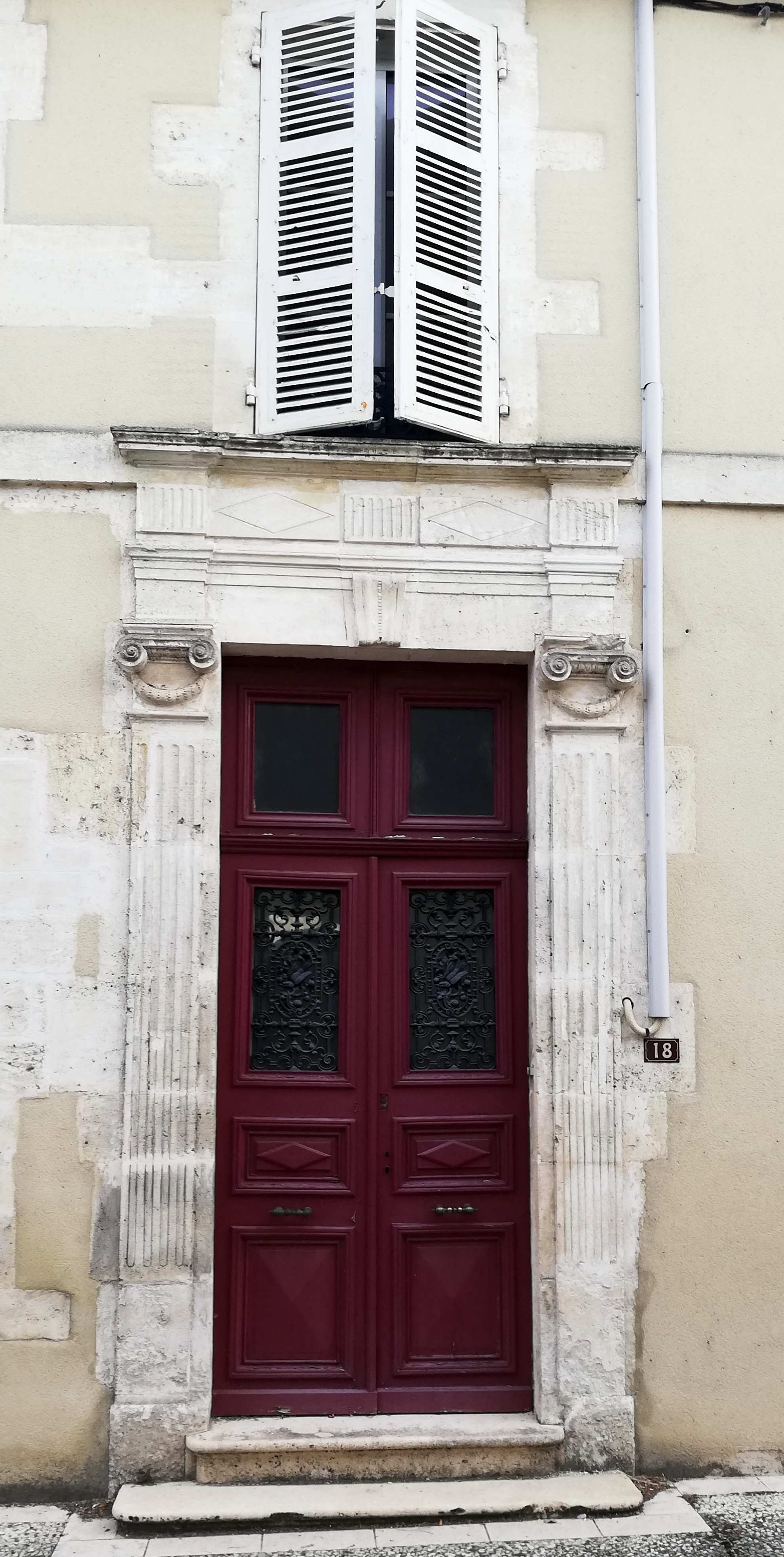
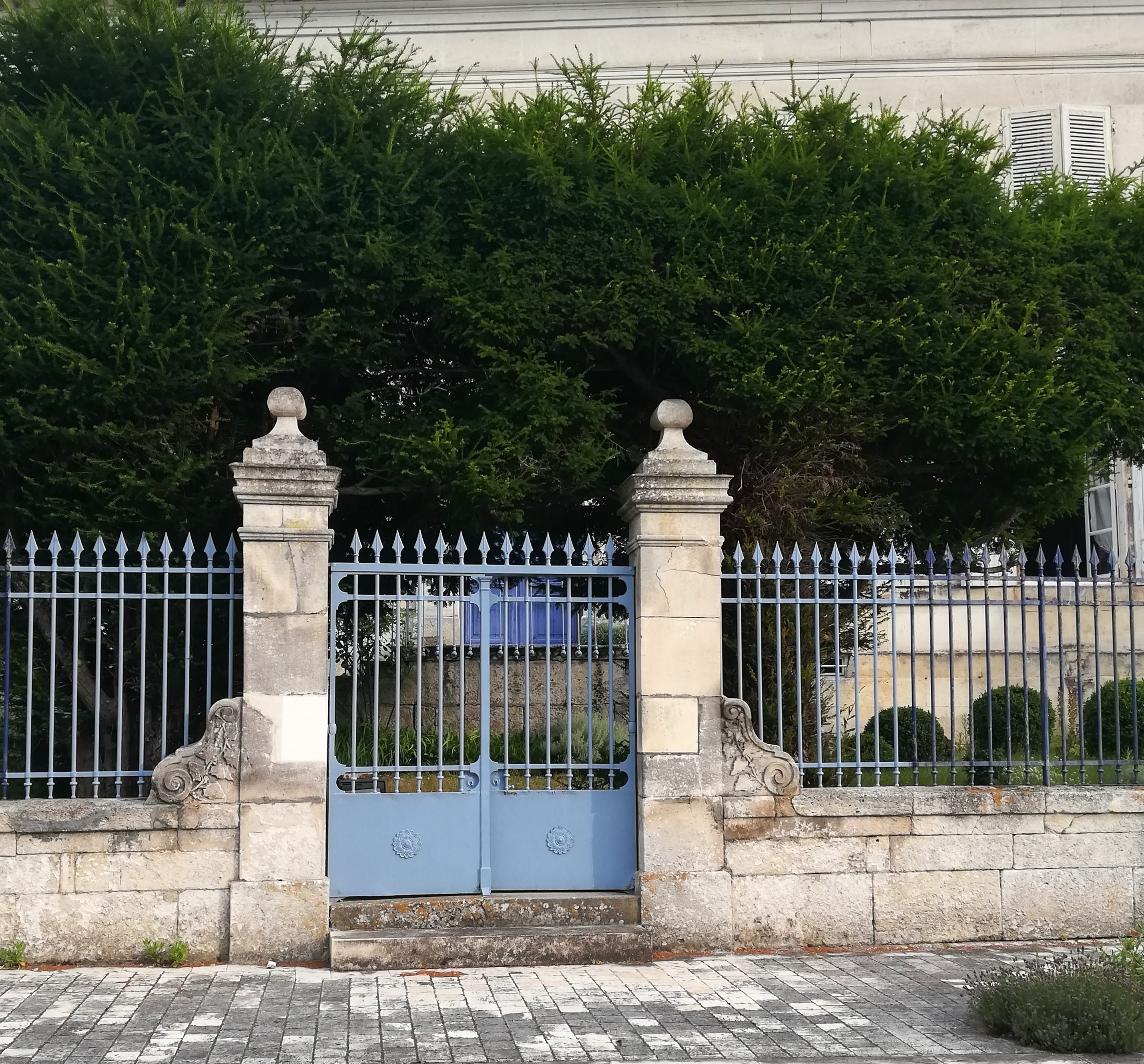
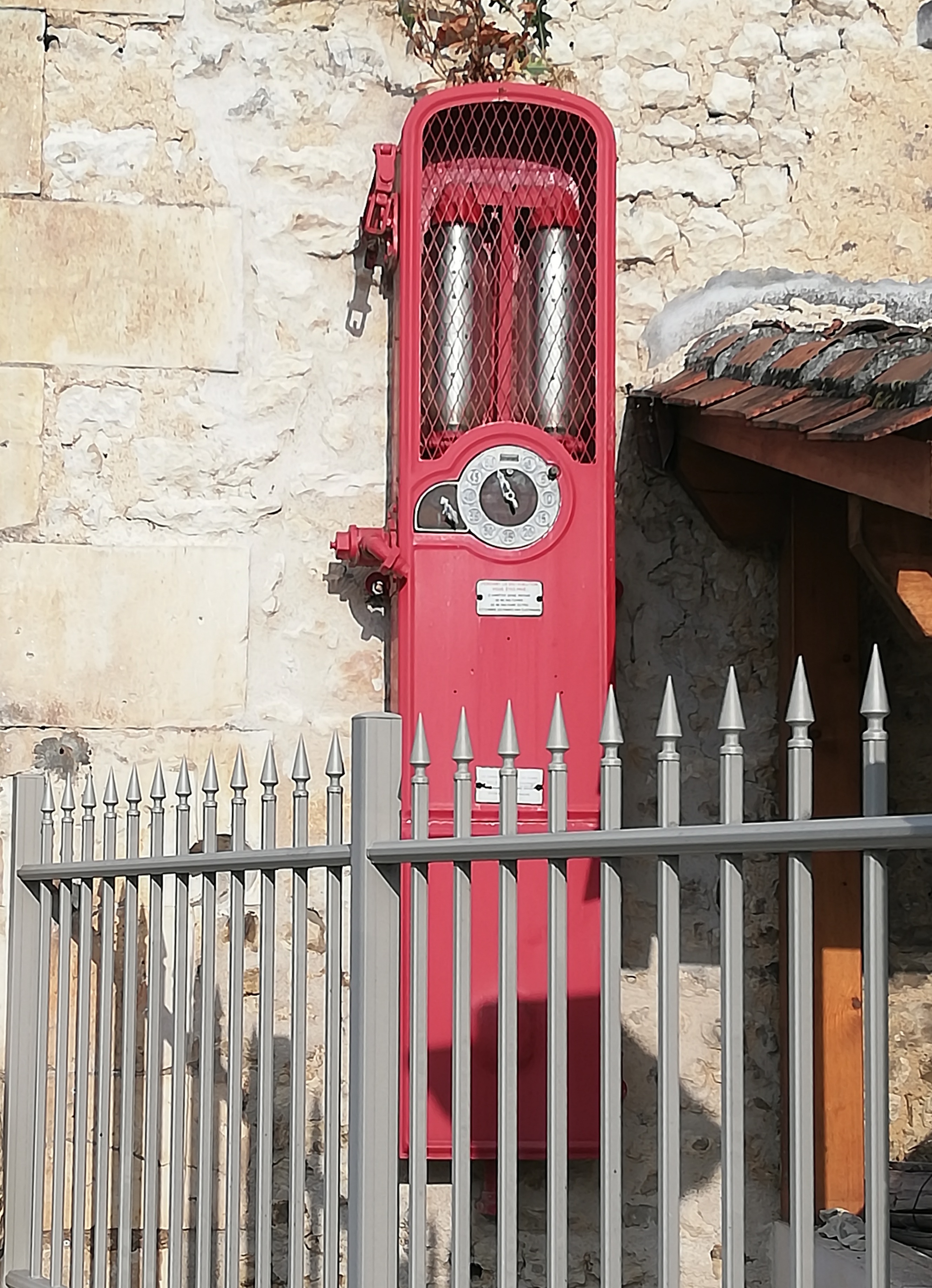
One had a vintage petrol pump displayed with a plaque advising you to turn off your motor during delivery!
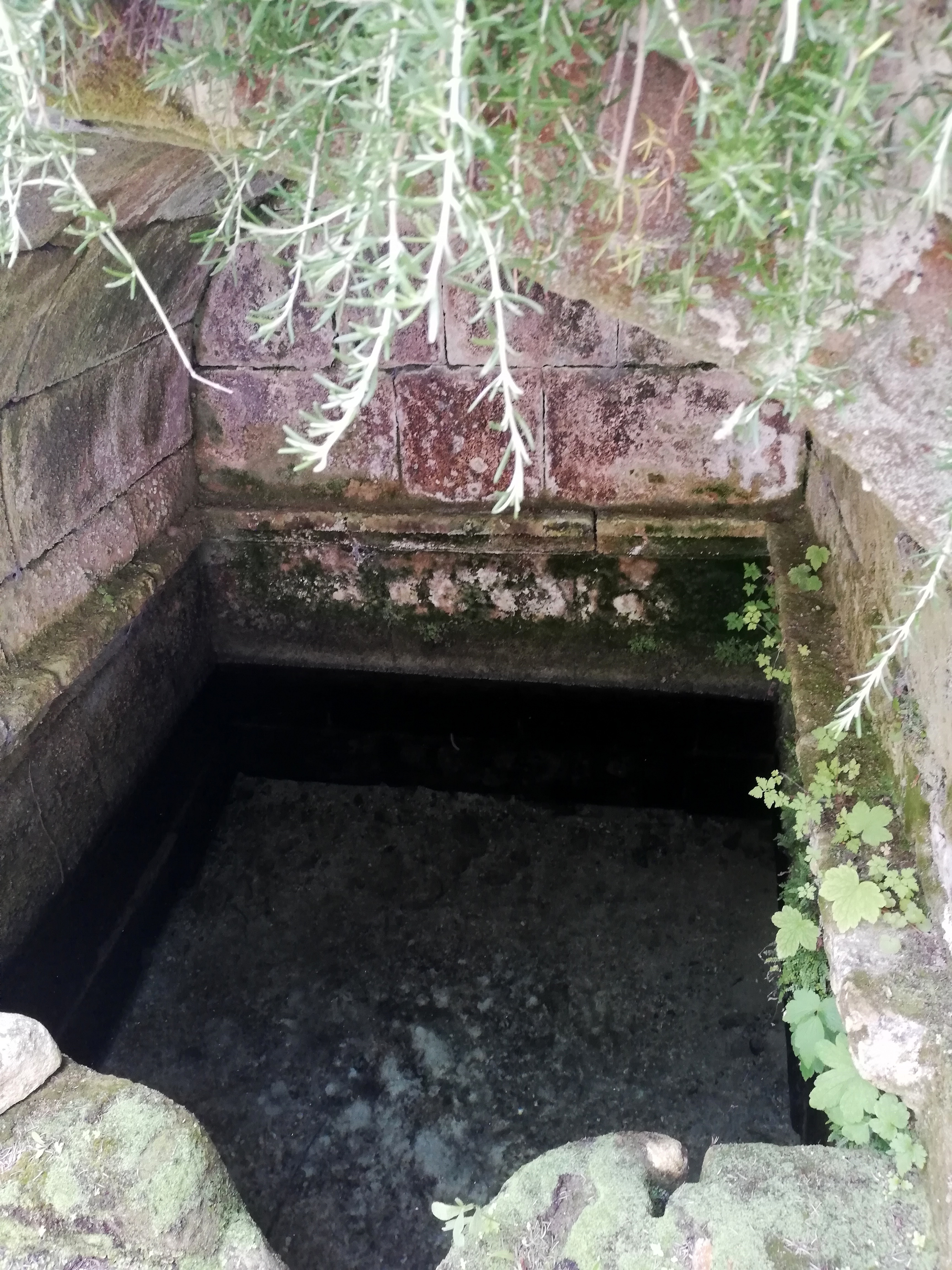
For a person with a lavoir fetish such as me the system here was a joy.


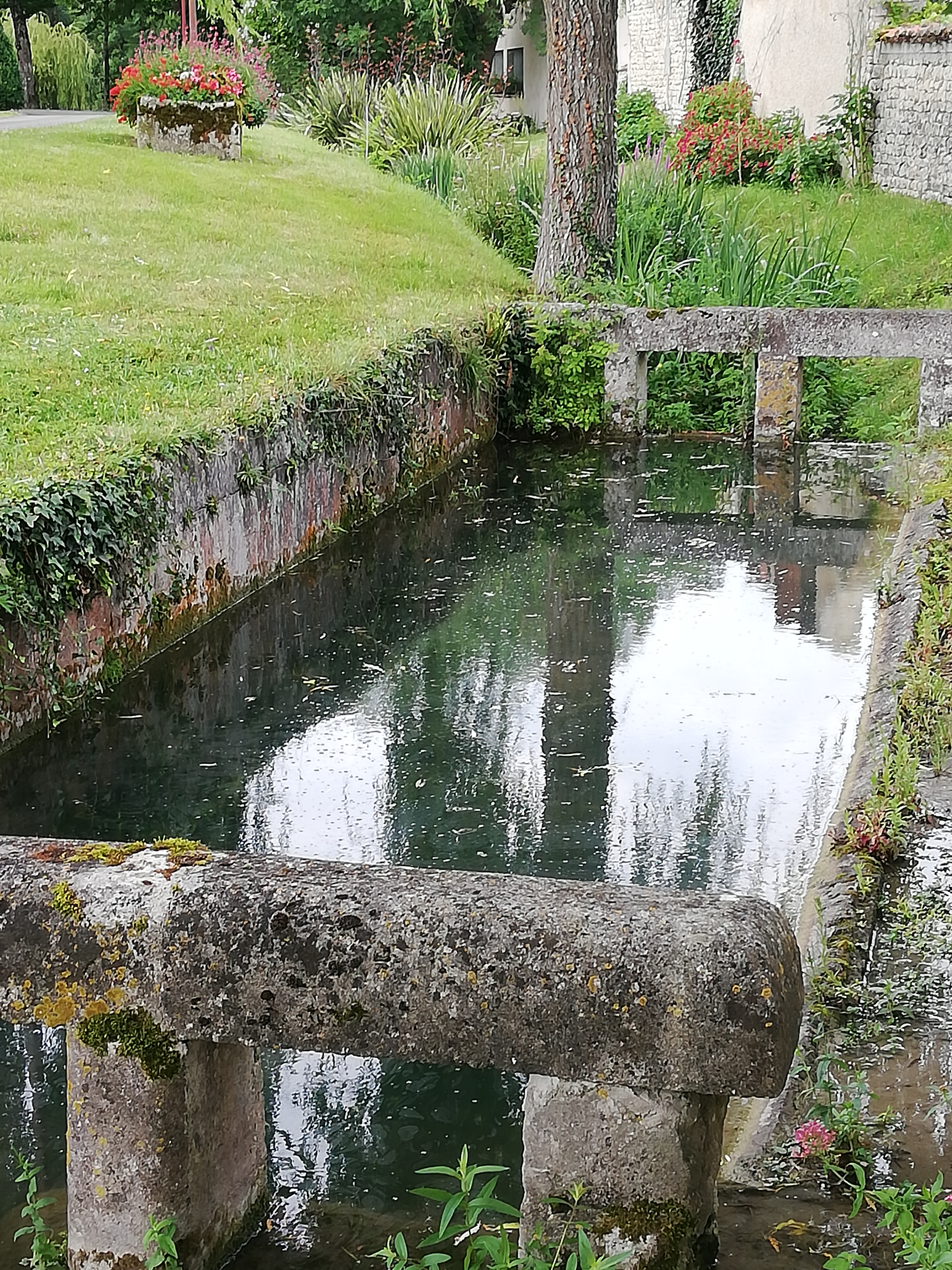
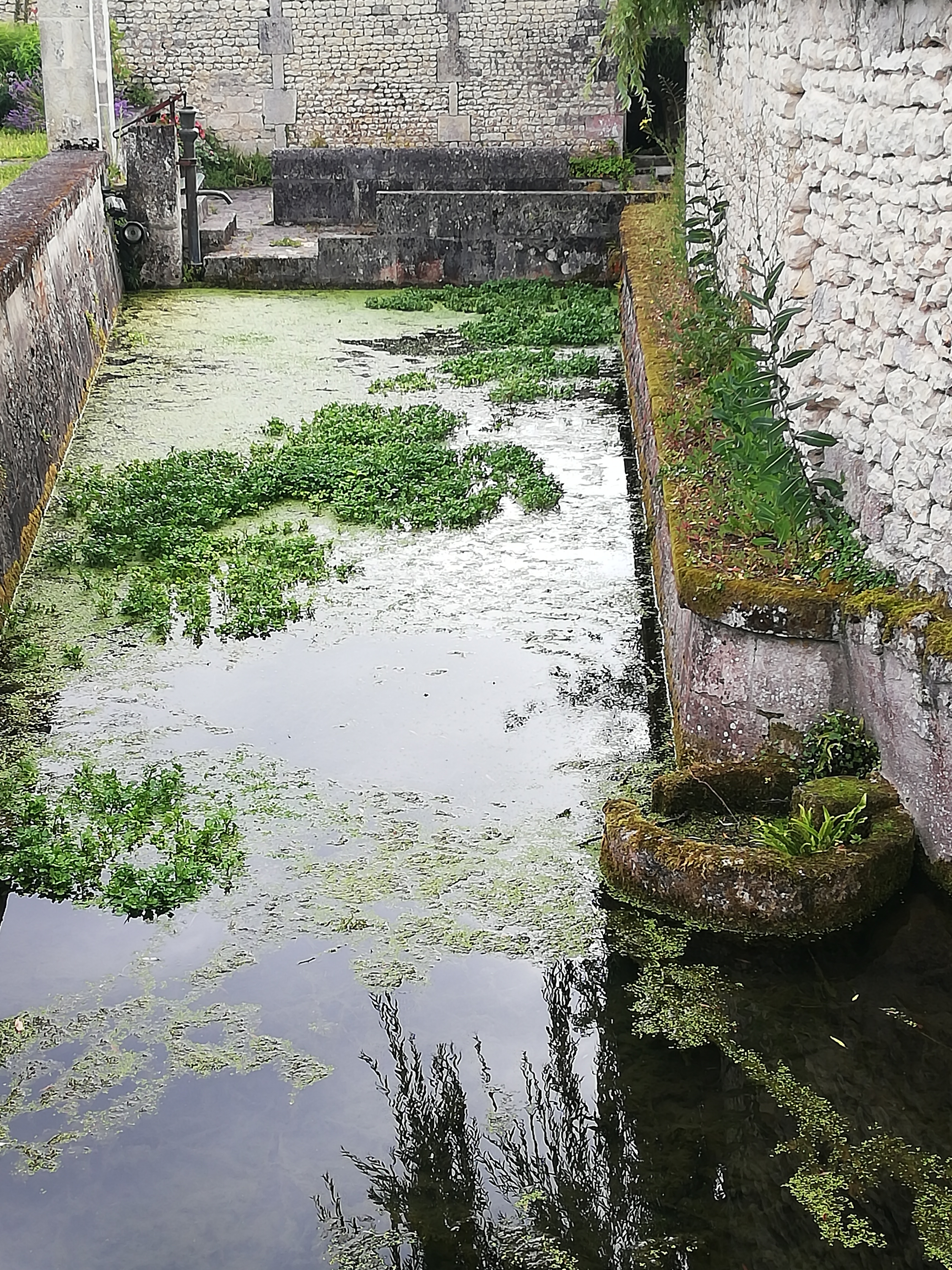
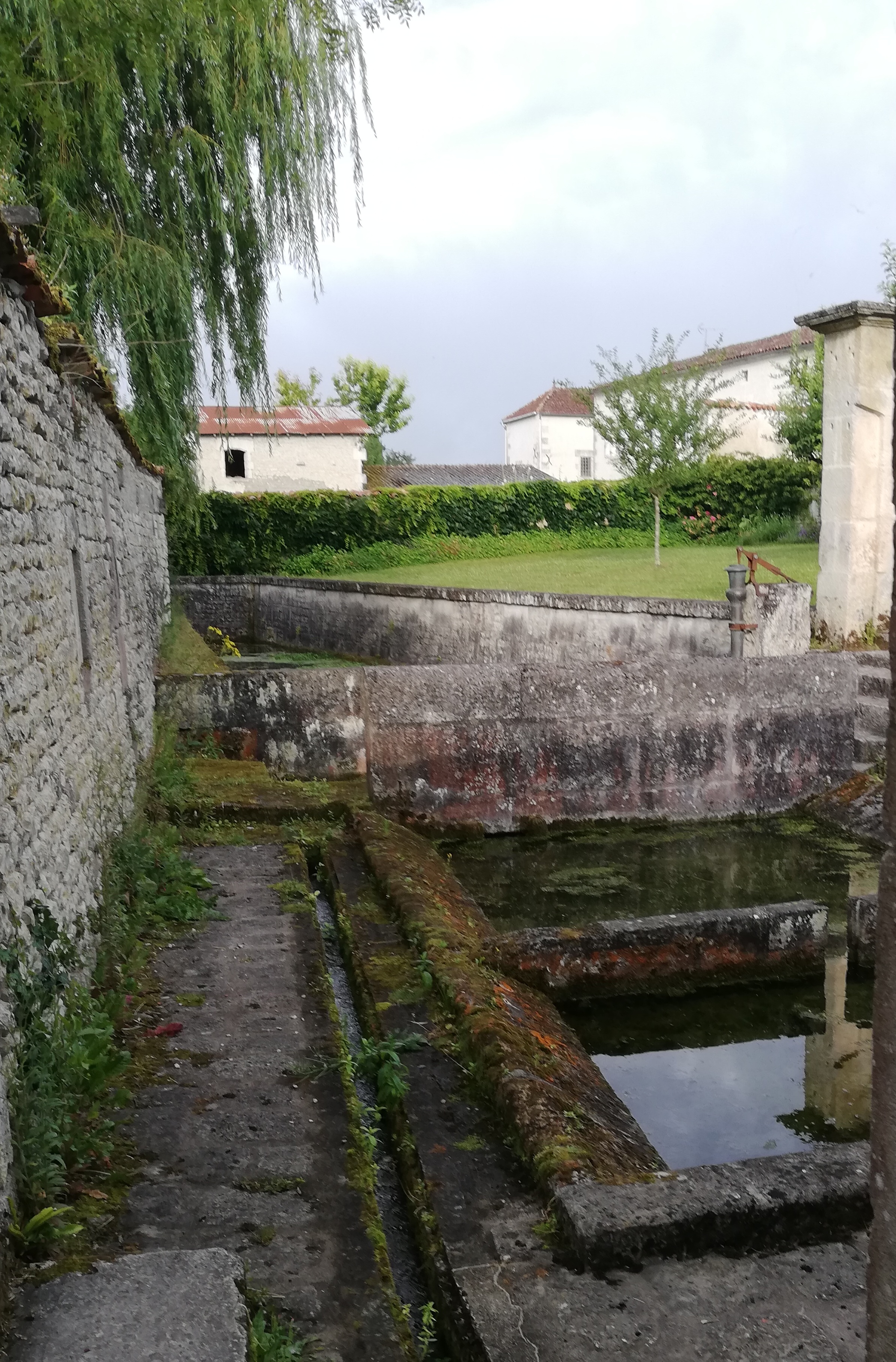
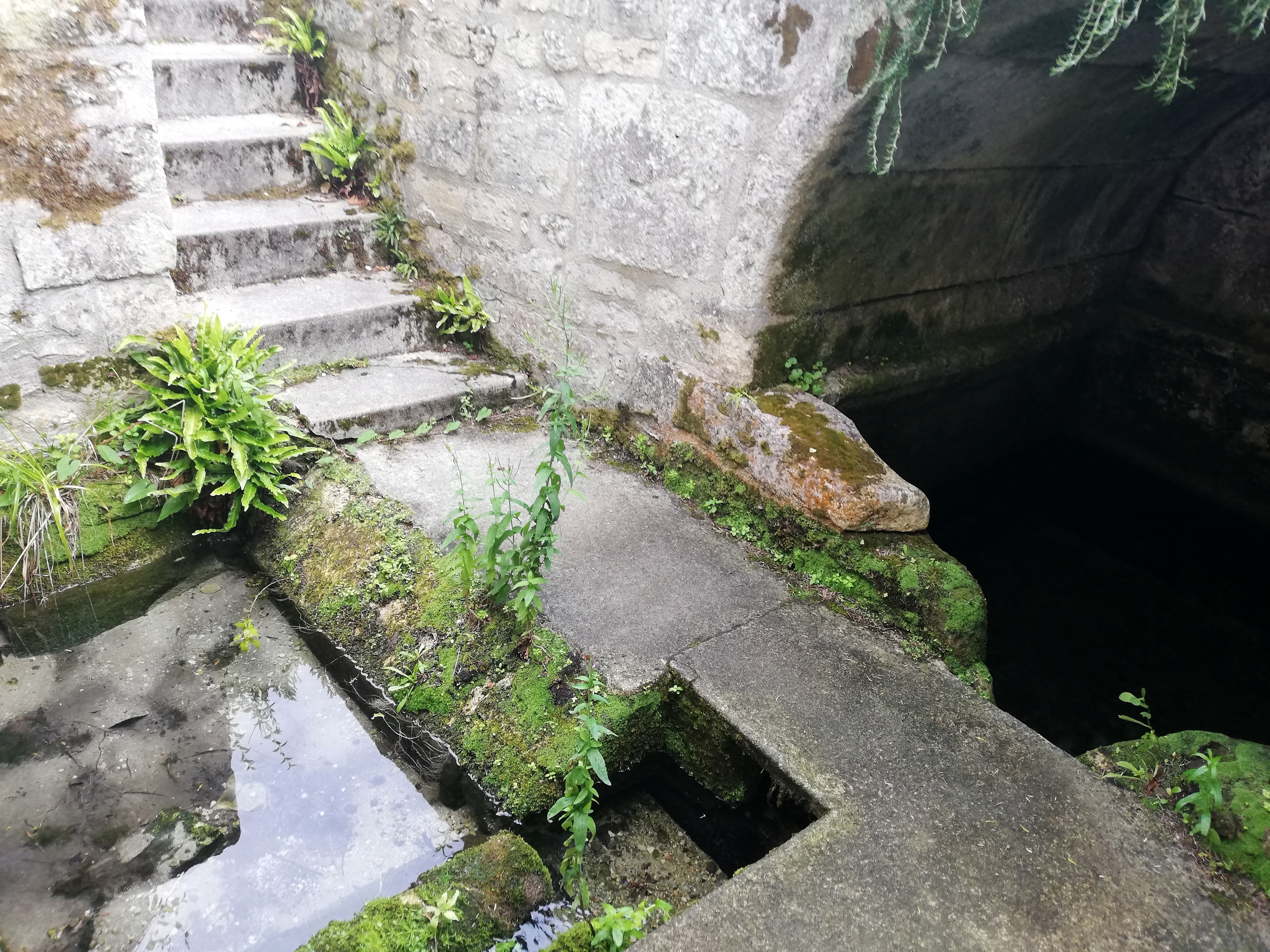
24th. Following a good walk and a leisurely breakfast, Cassidy and I set off for home.
The garden had survived the heat thanks to Monique’s ministrations and I harvested a bumper crop of green beans for lunch and freezing.

28th. I went into Royan this morning to try and get my camera fixed. It is going to cost about Euro 500 to get it fixed while a more up-to-date replacement will cost Euro 750 so I have ordered a new one. On the way home I stopped in St Georges to go to the chemist.
I mention this because it is the first time I have been into either towns since the opening up. What was very interesting was that in both towns mask wearing is mandatory even outside on the street. Int Royan there are large stenciled notices on the pavements at regular intervals.

 capetocarpe