
1st. Today was a non day! pouring with rain – still. We headed for Narbonne. Being Labour Day and a public holiday there were a number of vendors selling Mugget (lilly-of-the-vally) and the streets of the town were narrow and crowded. Having had lunch in the van we took tea, mainly to use the toilets, and headed back to the van. There is no Aire in Narbonne so we headed to Frontignan but found the Aire shut down and the adjacent campsite would not take campingcars. We found another small private Aire with a gate half closed. We opened it and were about to wake up the owner when he came out and berated us for not realizing he was closed. He told us it was due to the floding and that everywhere was closed! Beginning to feel like a “no room at the Inn” scenario. By now we are tired and fed up! It was getting dark so we settled for a parking on the side of the road.
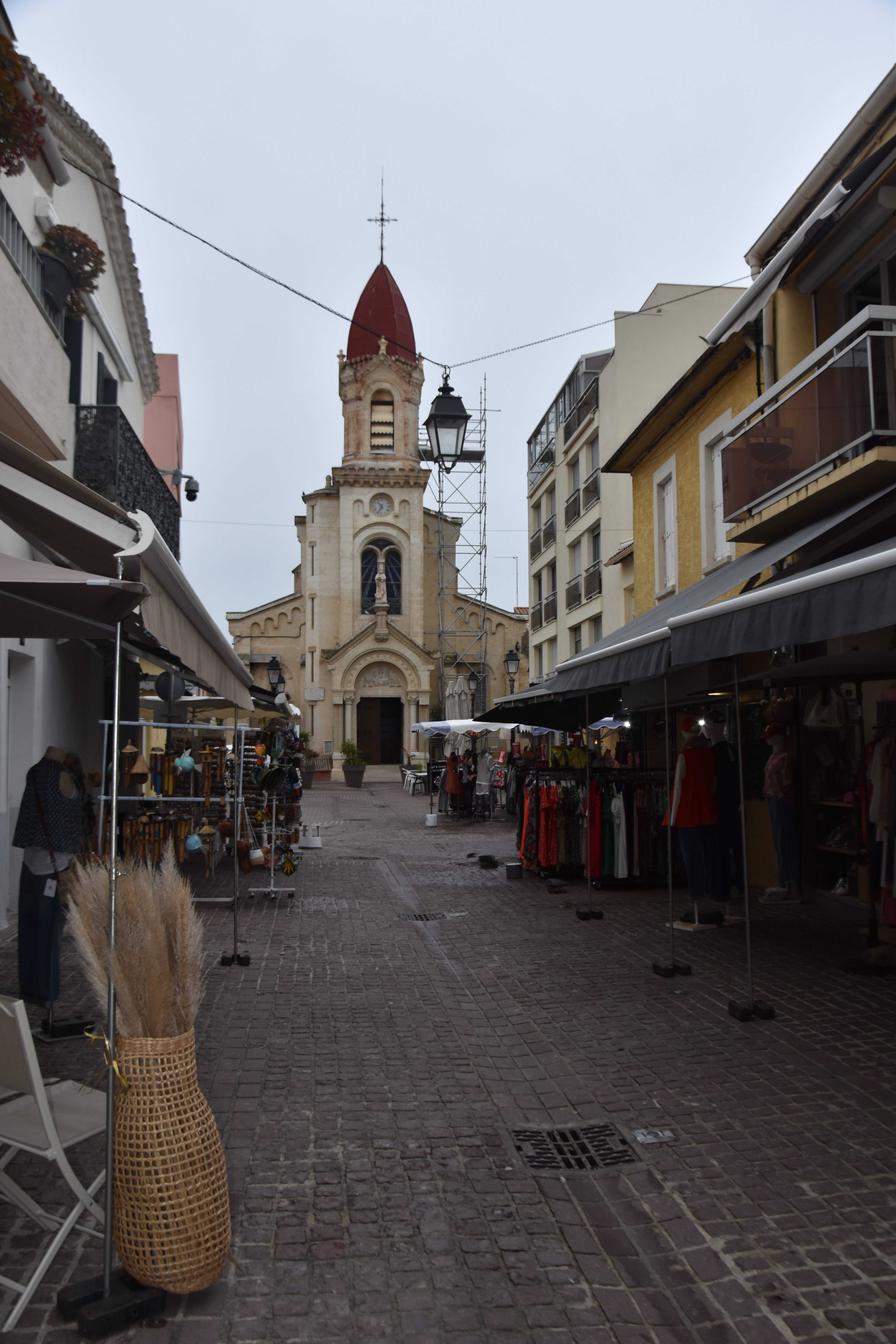
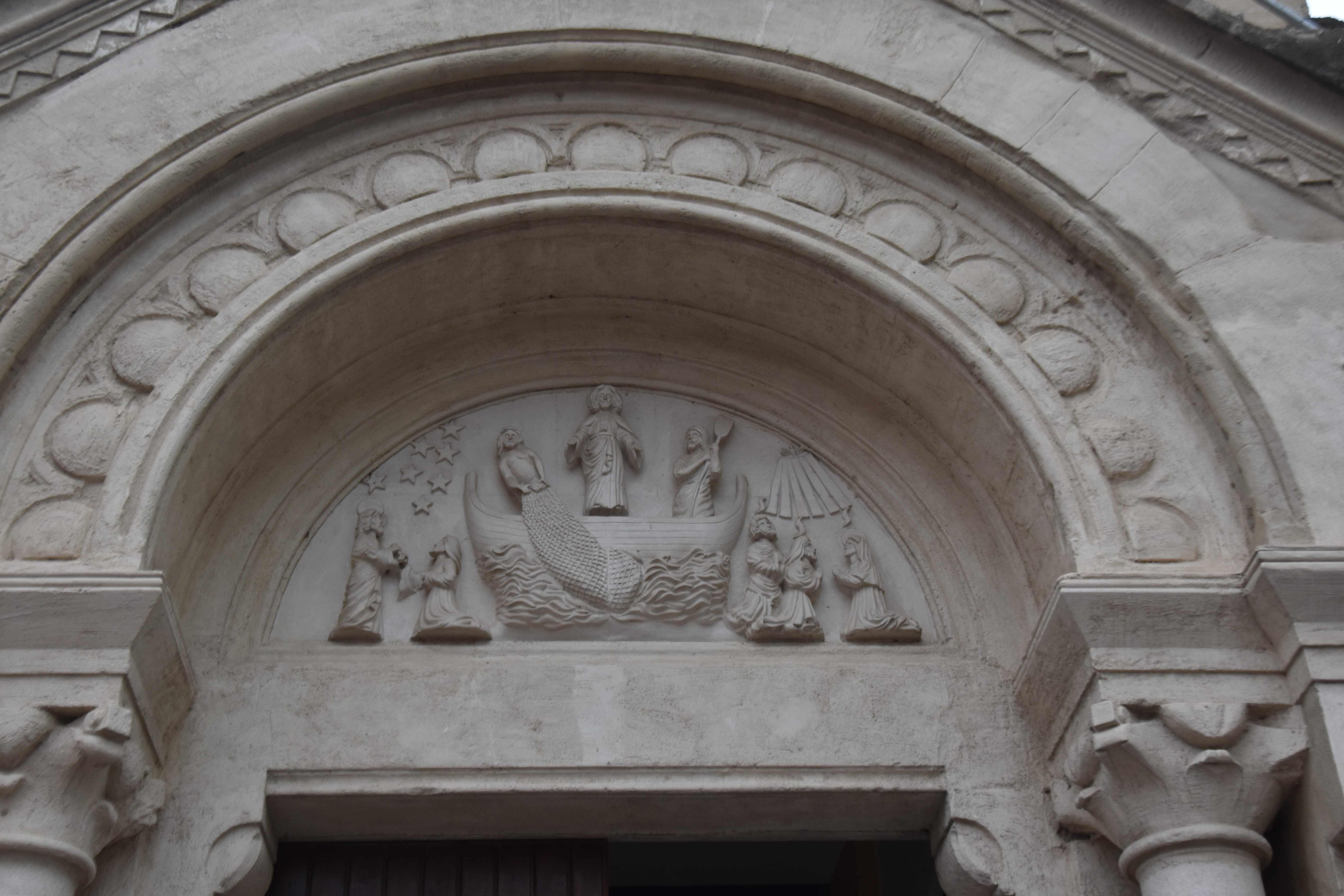
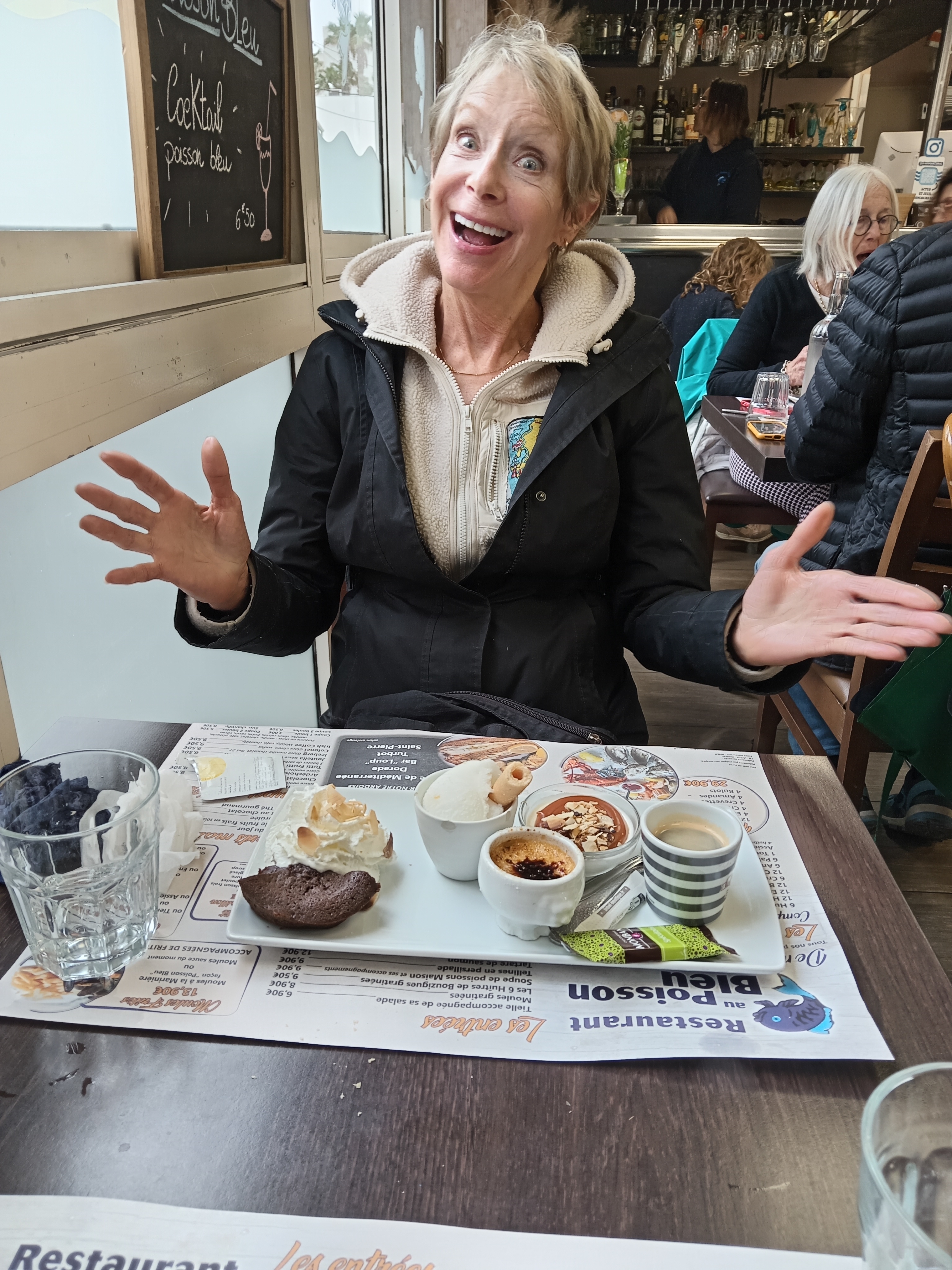
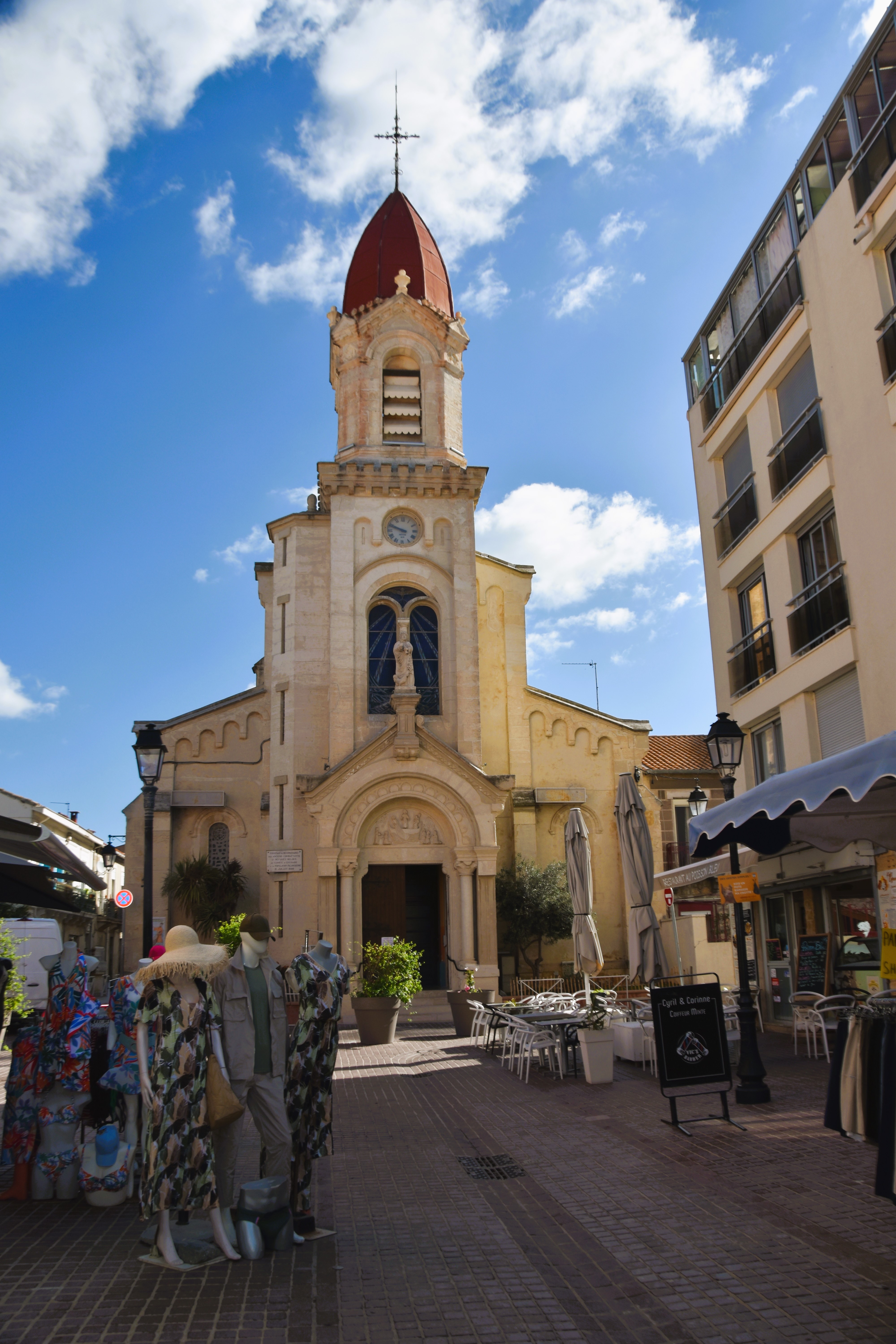
2nd. We headed on up the coast after breakfast and stopped at Palavas-les-Flots, a delightful fishing town with narrow cobbled streets, many canals lined with small fishing boats or liesure boats and a bullring. We stopped for a lunch of Moulle Frits followed by a Càfe Gorments at a colourful little cafe by St Peter’s church, it had to qualify as the best lunch yet. Just goes to show that price and poshness is not always best! On our afternoon walk round town we saw that the baracades were up for the running of the bulls which unfortunately is not taking place till the 8th, the day Vicki leaves.


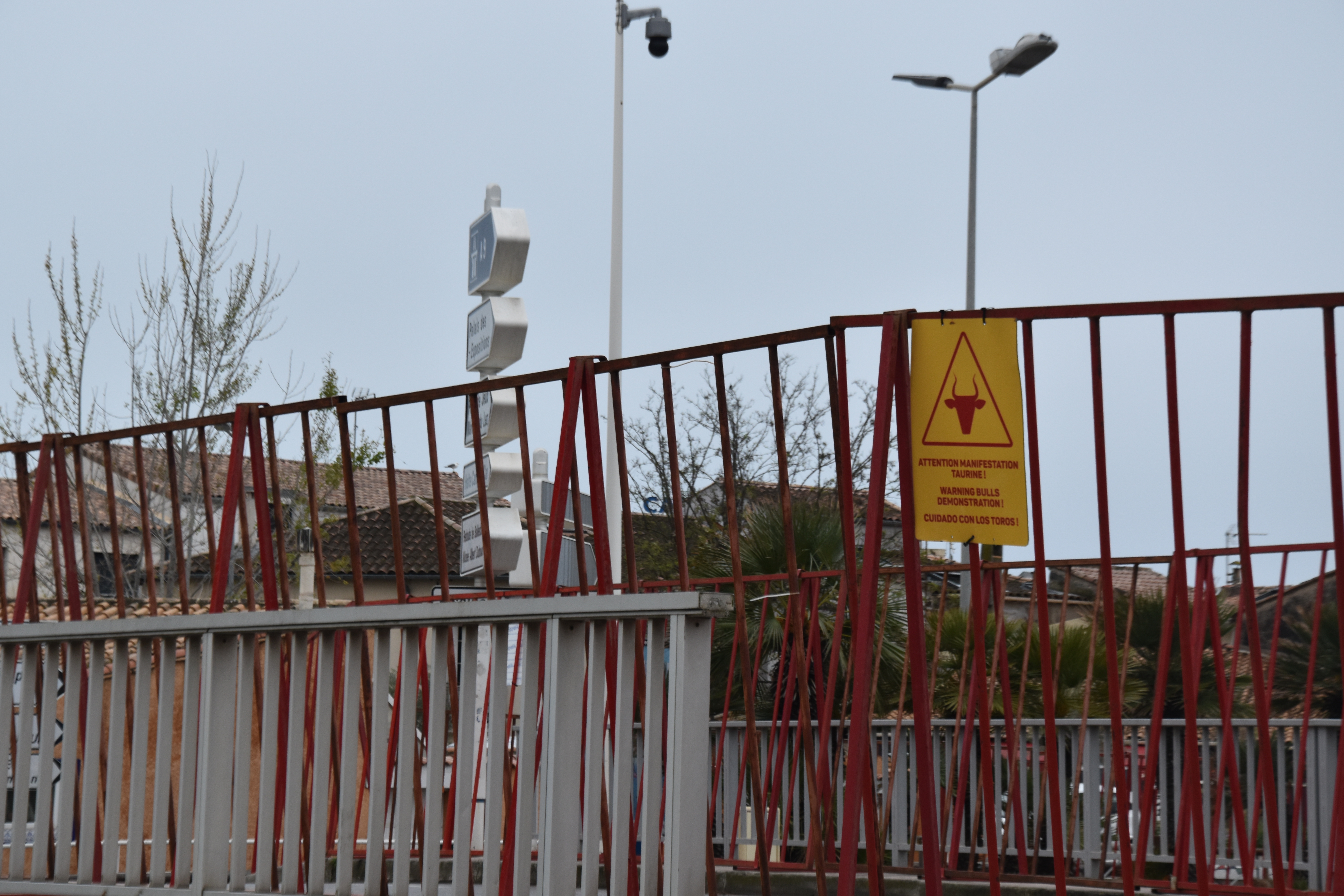
A serious Bull gaurd!
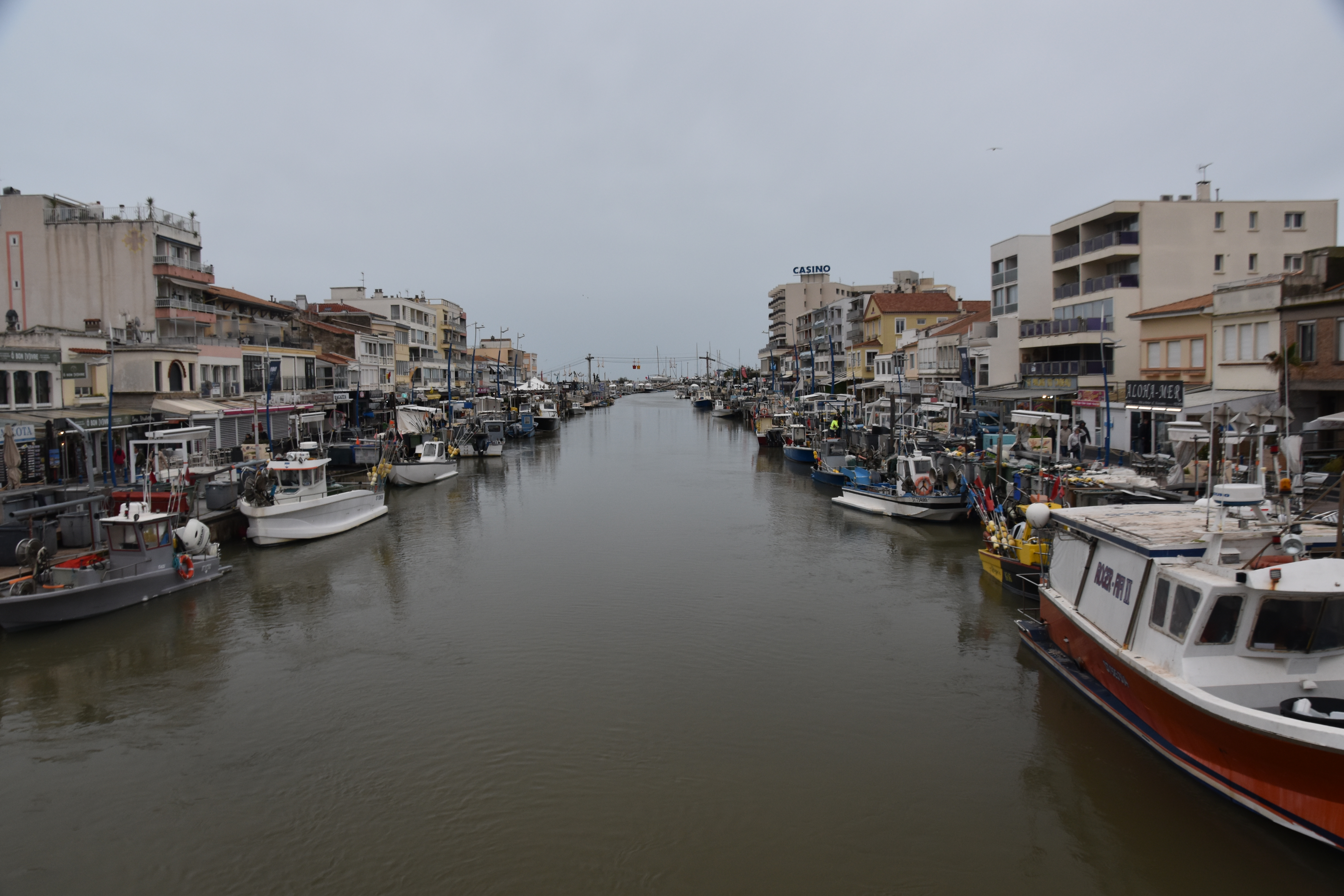

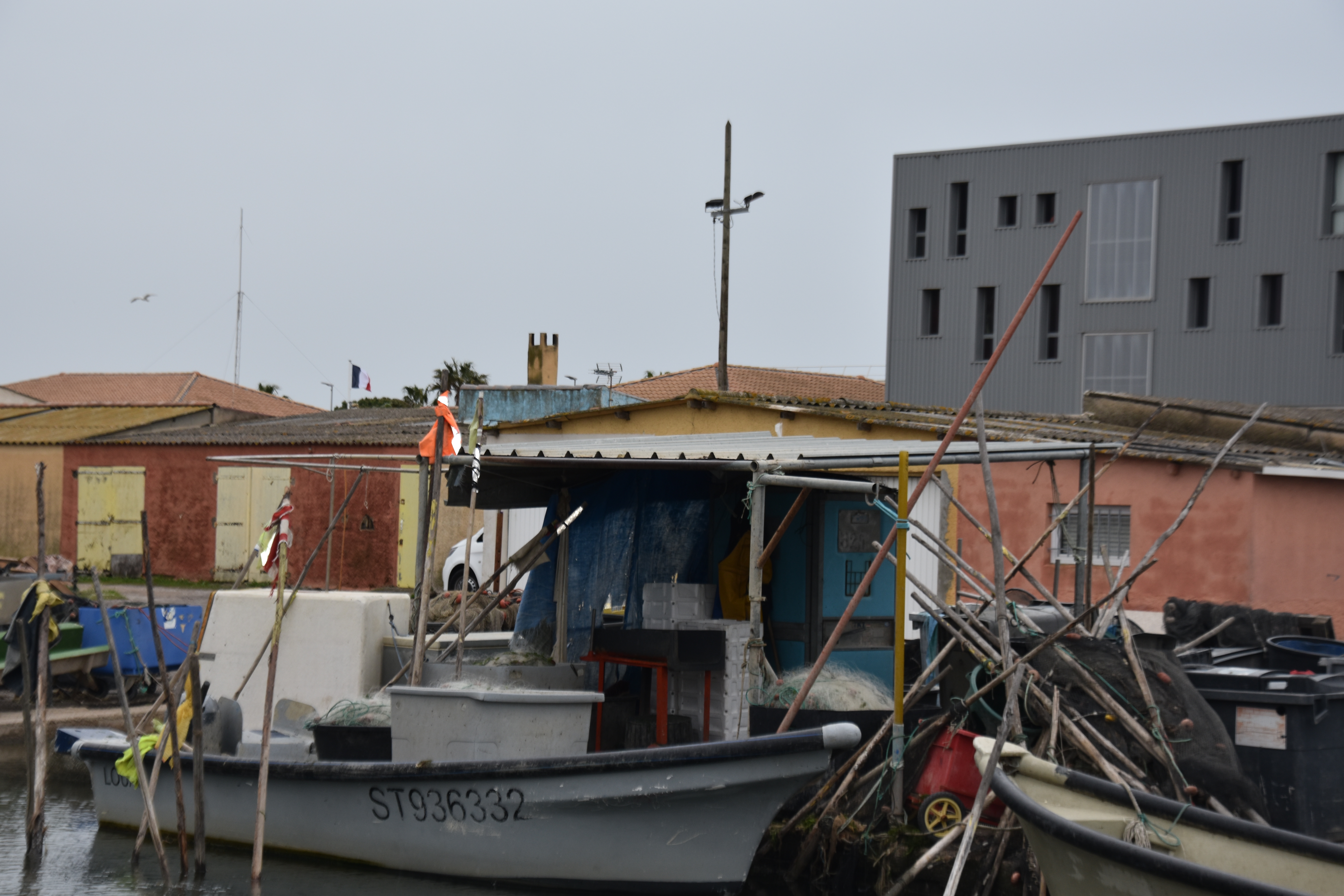
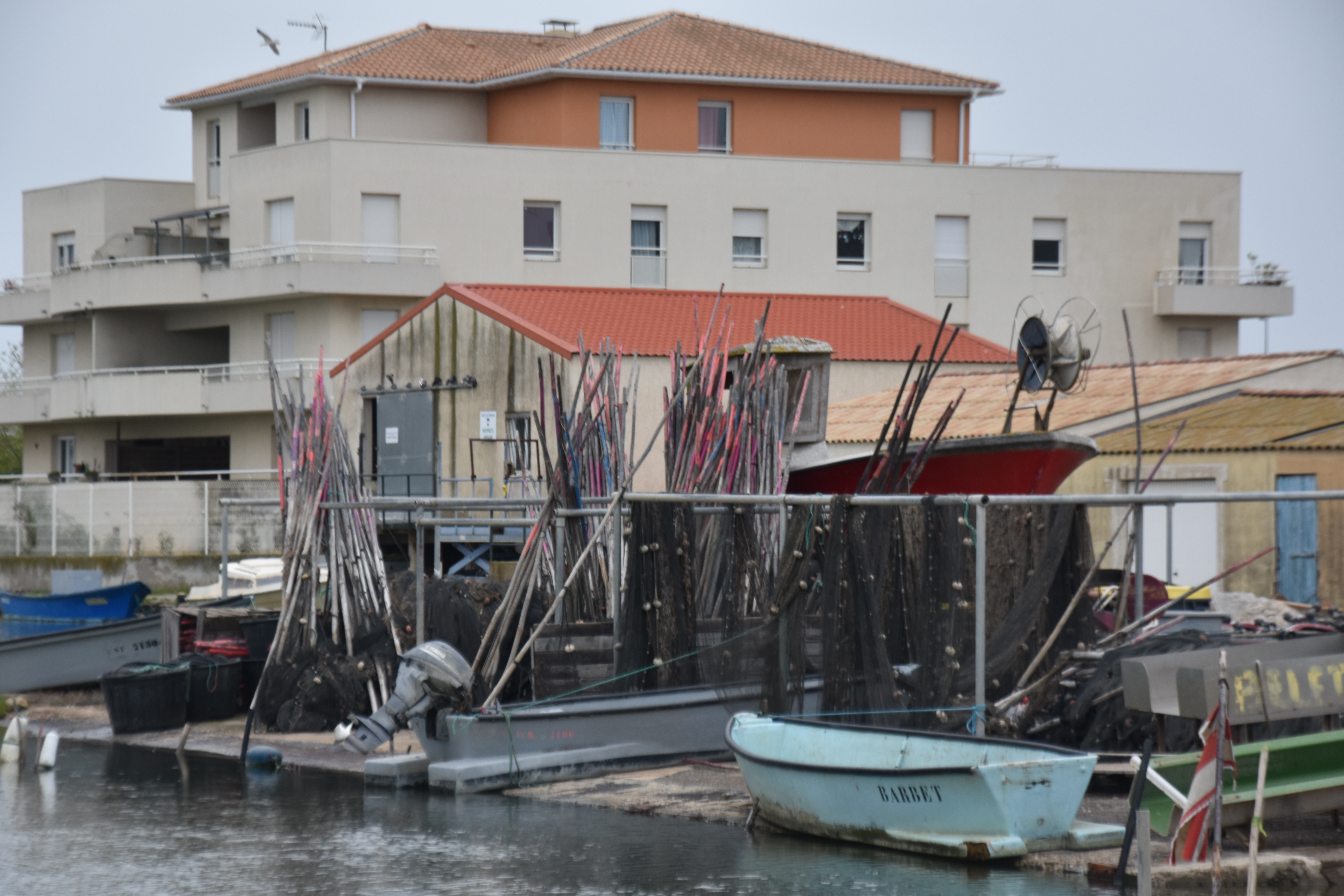
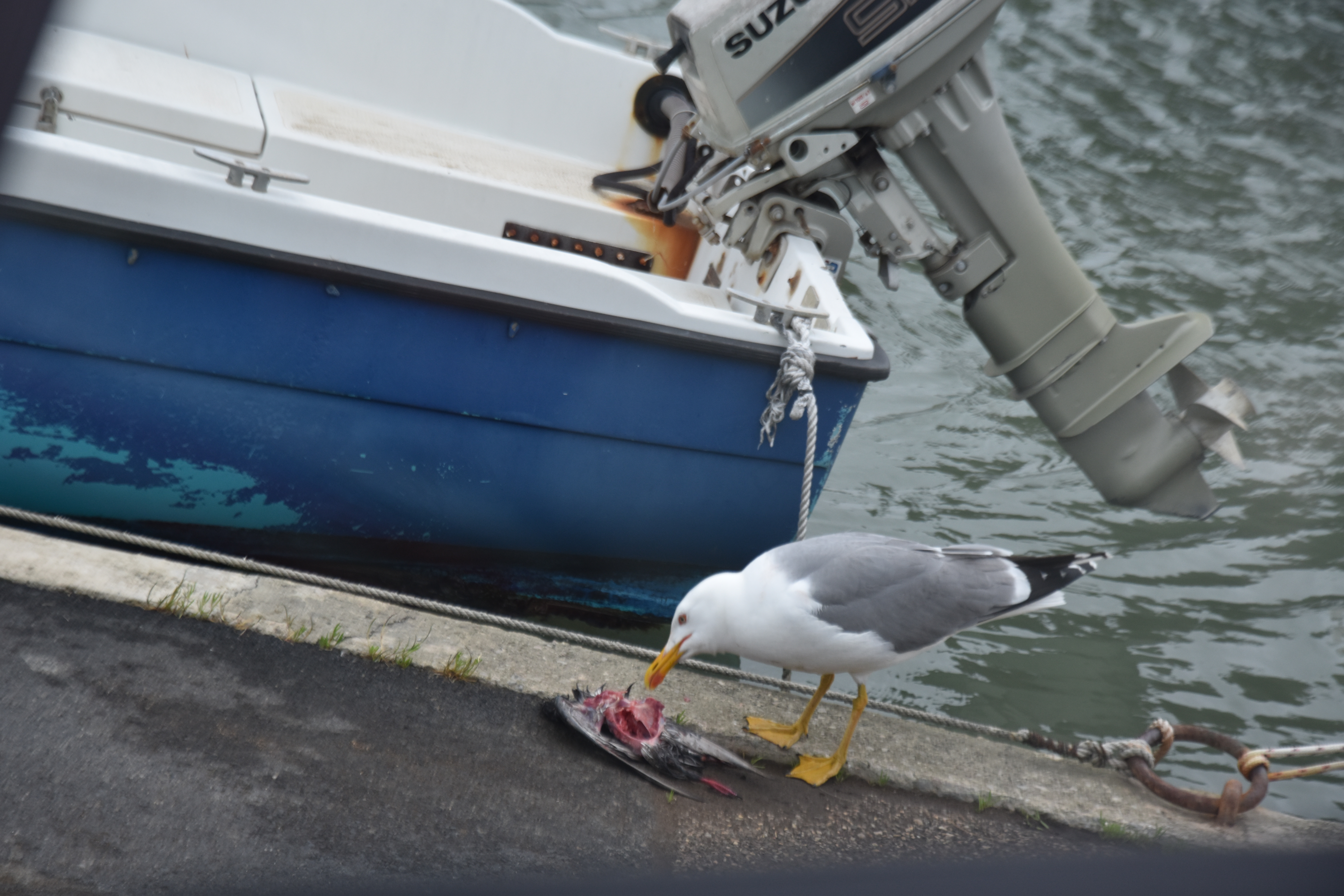
It is a good job we spotted this greedy Gull, red in tooth and claw!!! after lunch

We tried and failed to get into a good Aire at Le Grau-du-Roi as it was full so rather than have another camp by the road night and as we also had to empty the toilet casset we headed inland to Str Martin-de-Londres and settled into the Aire.
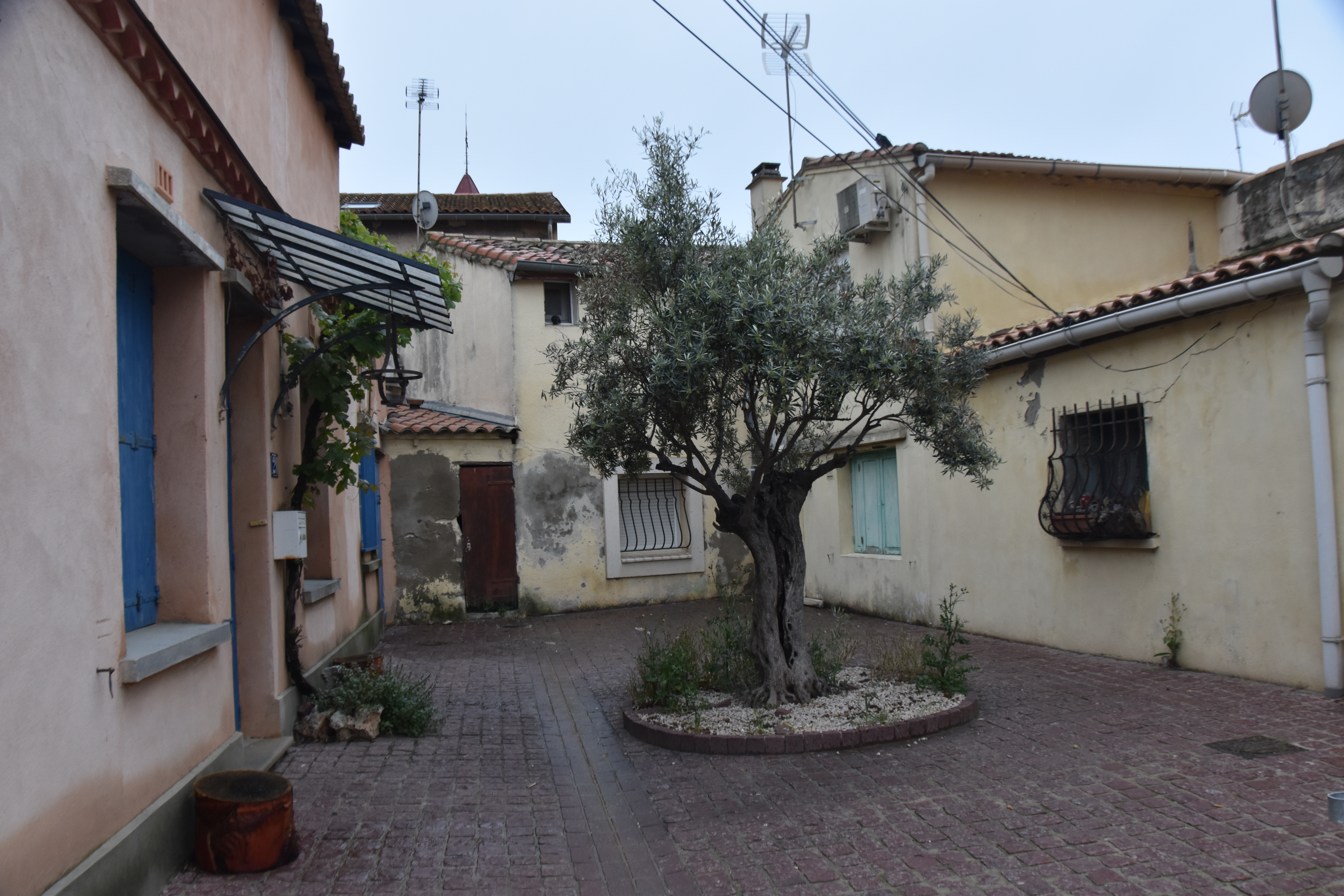
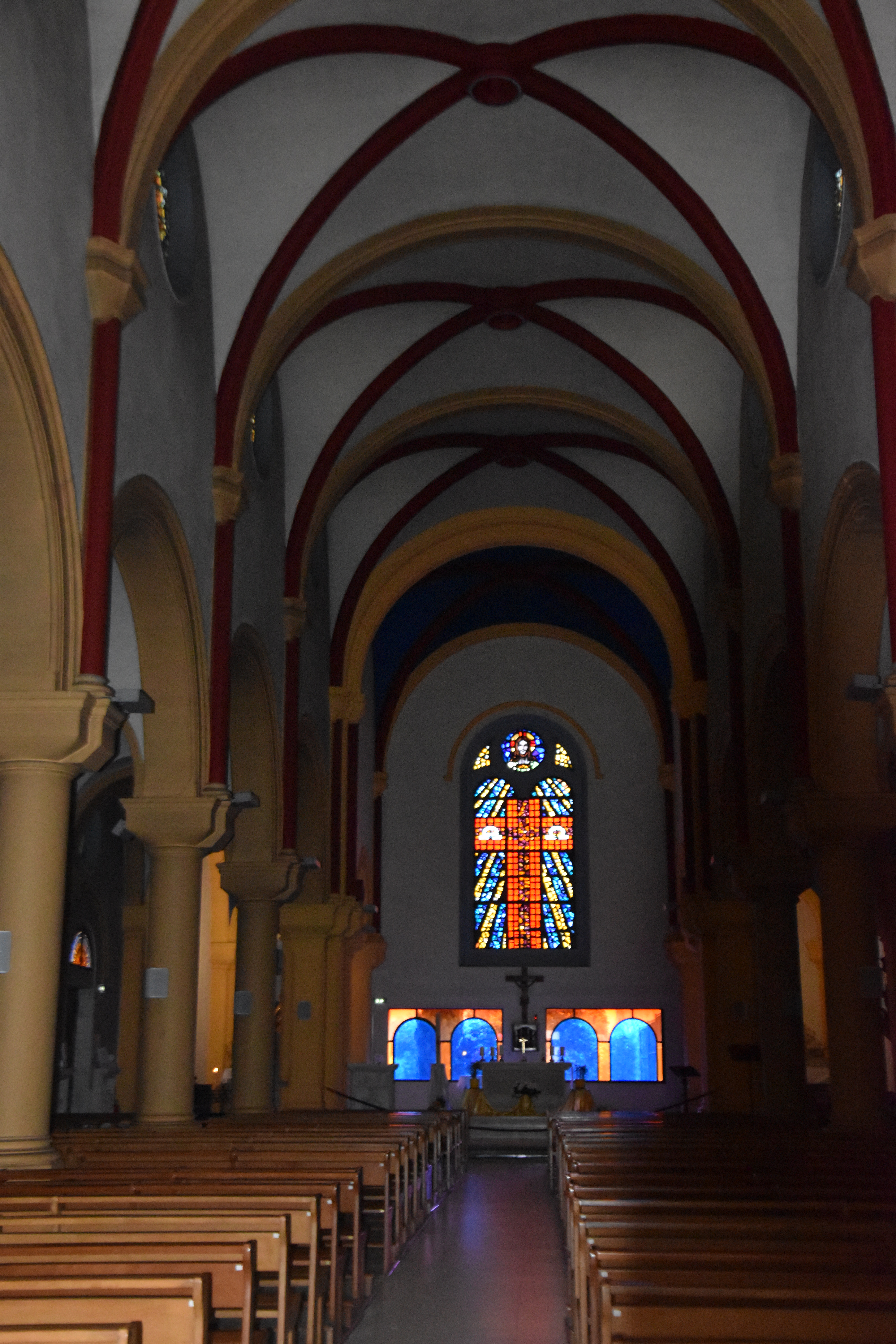
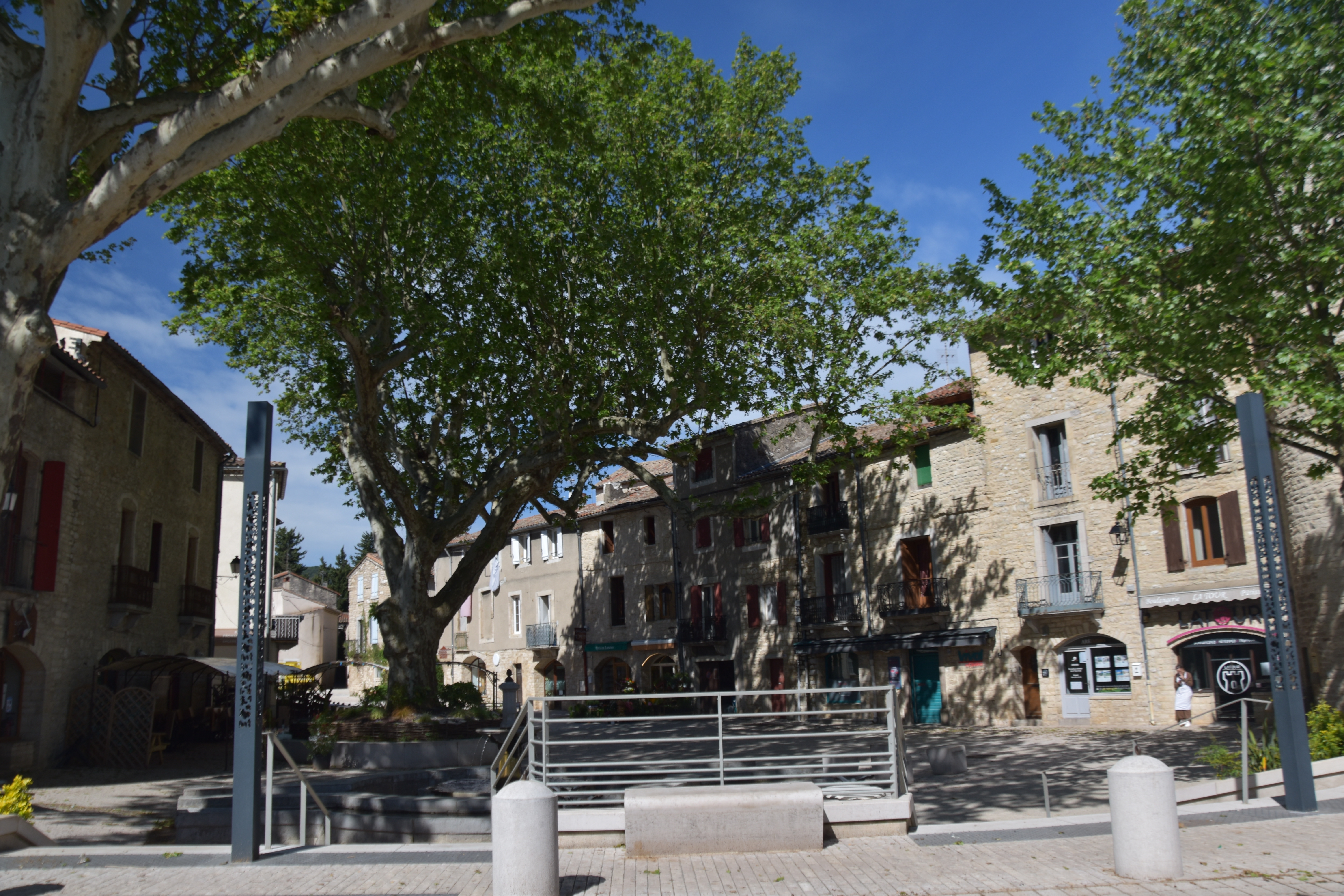
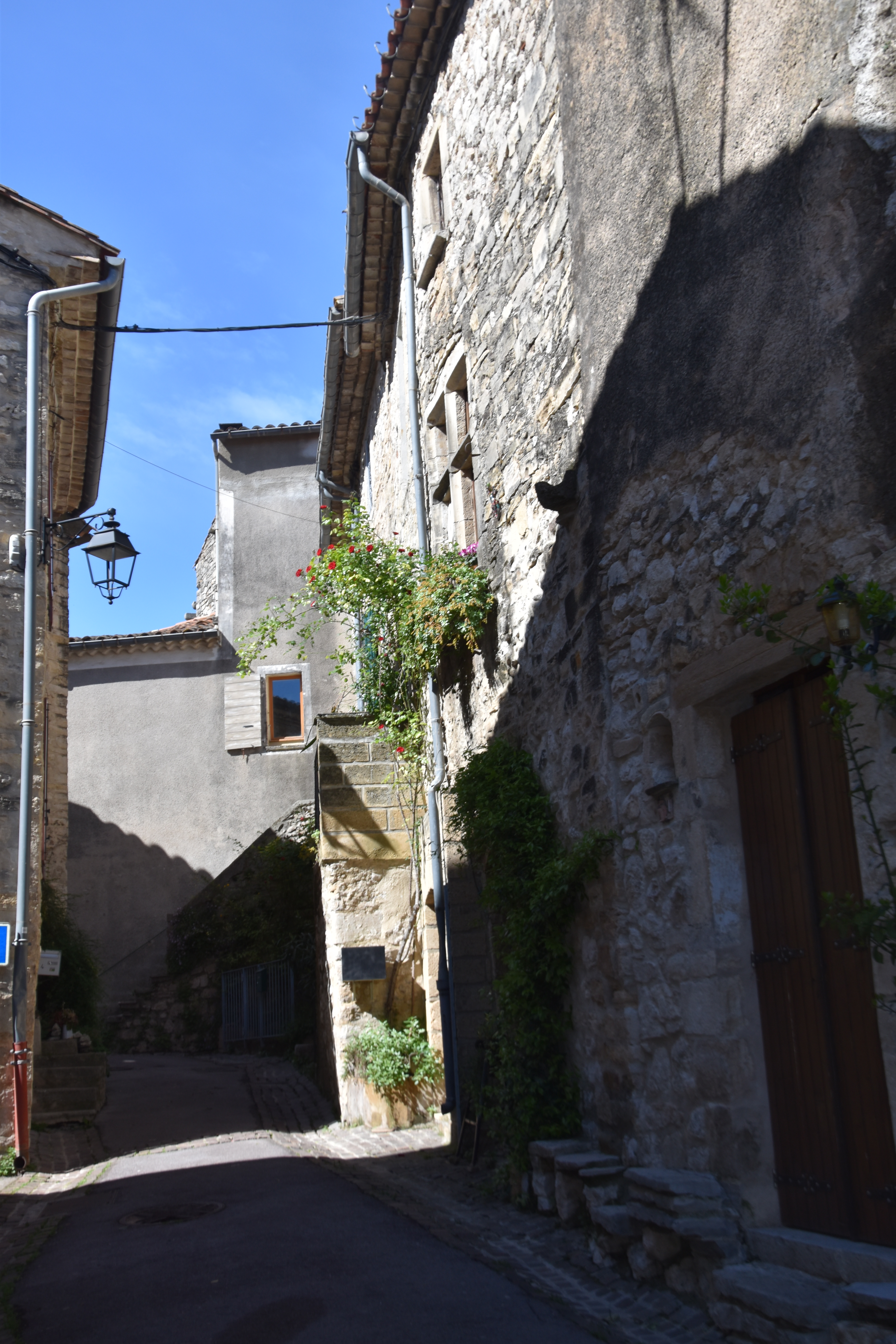
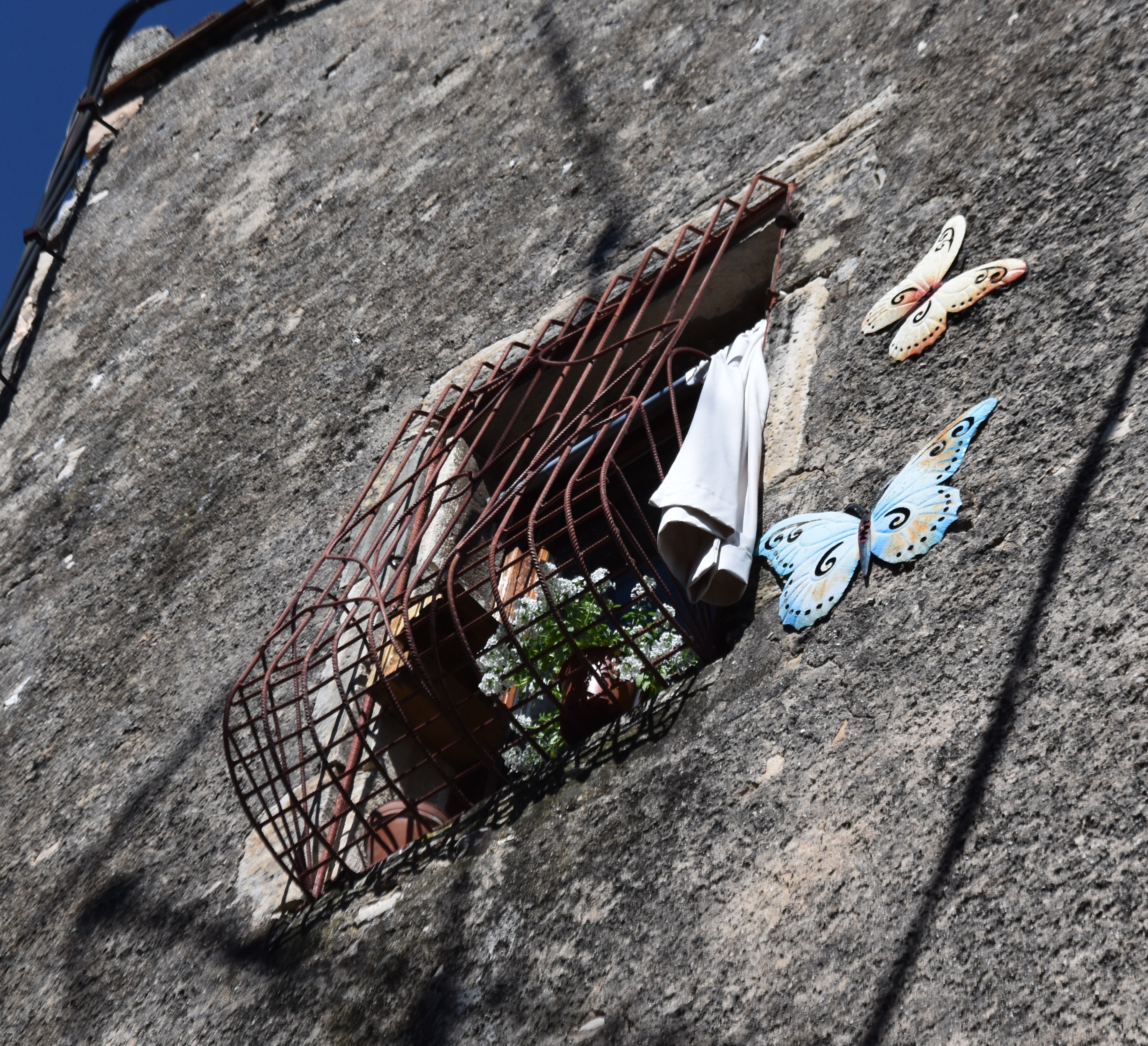
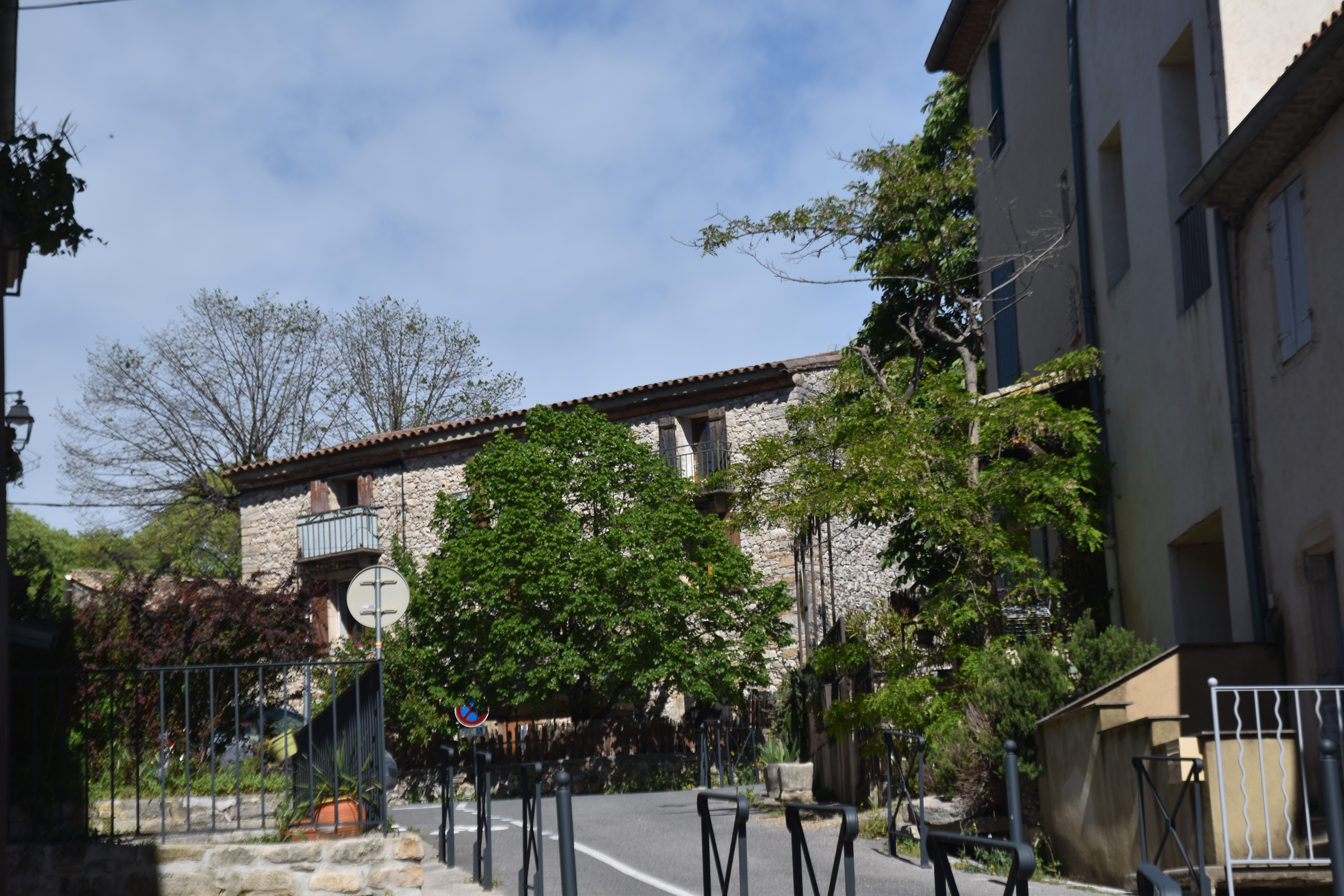
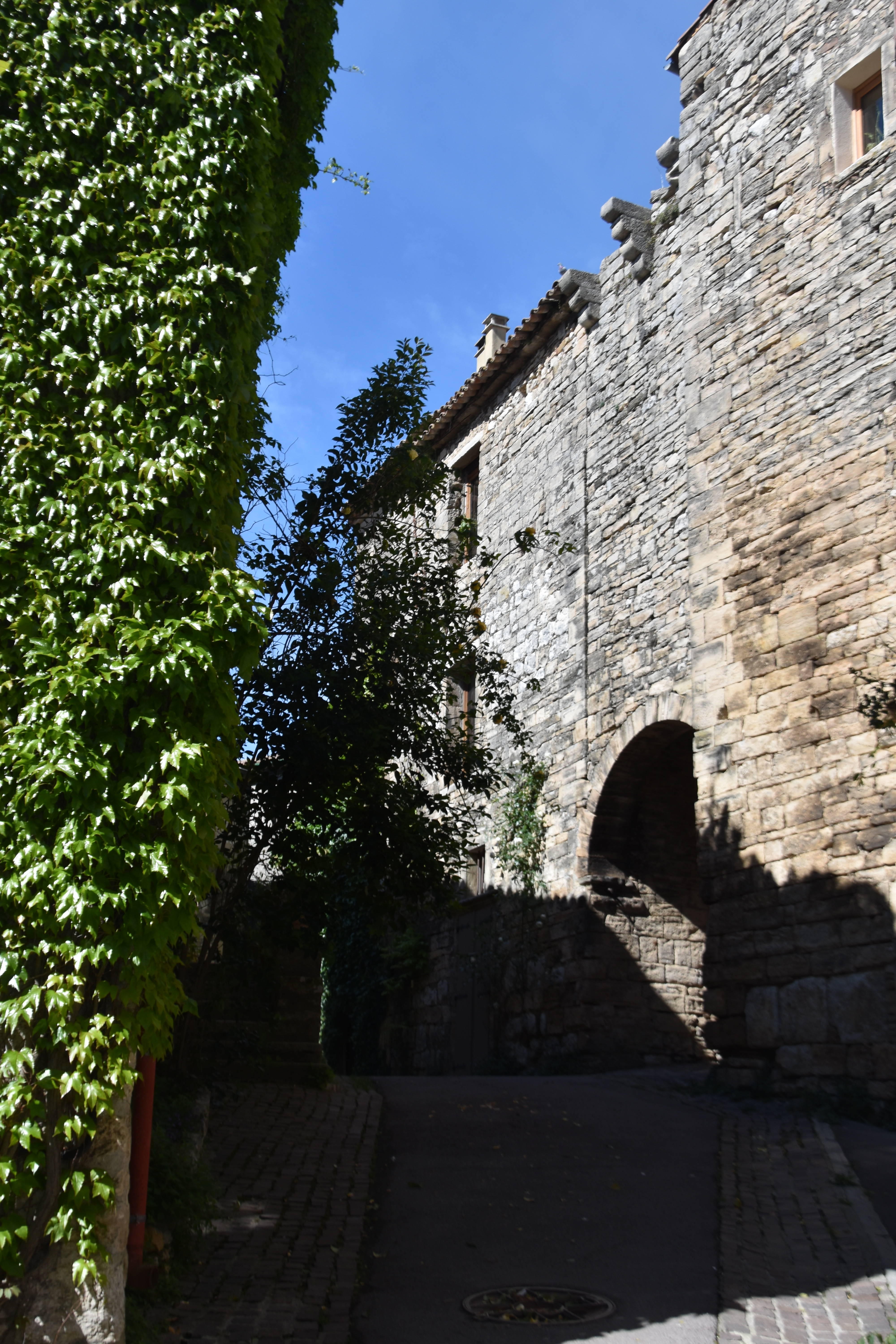
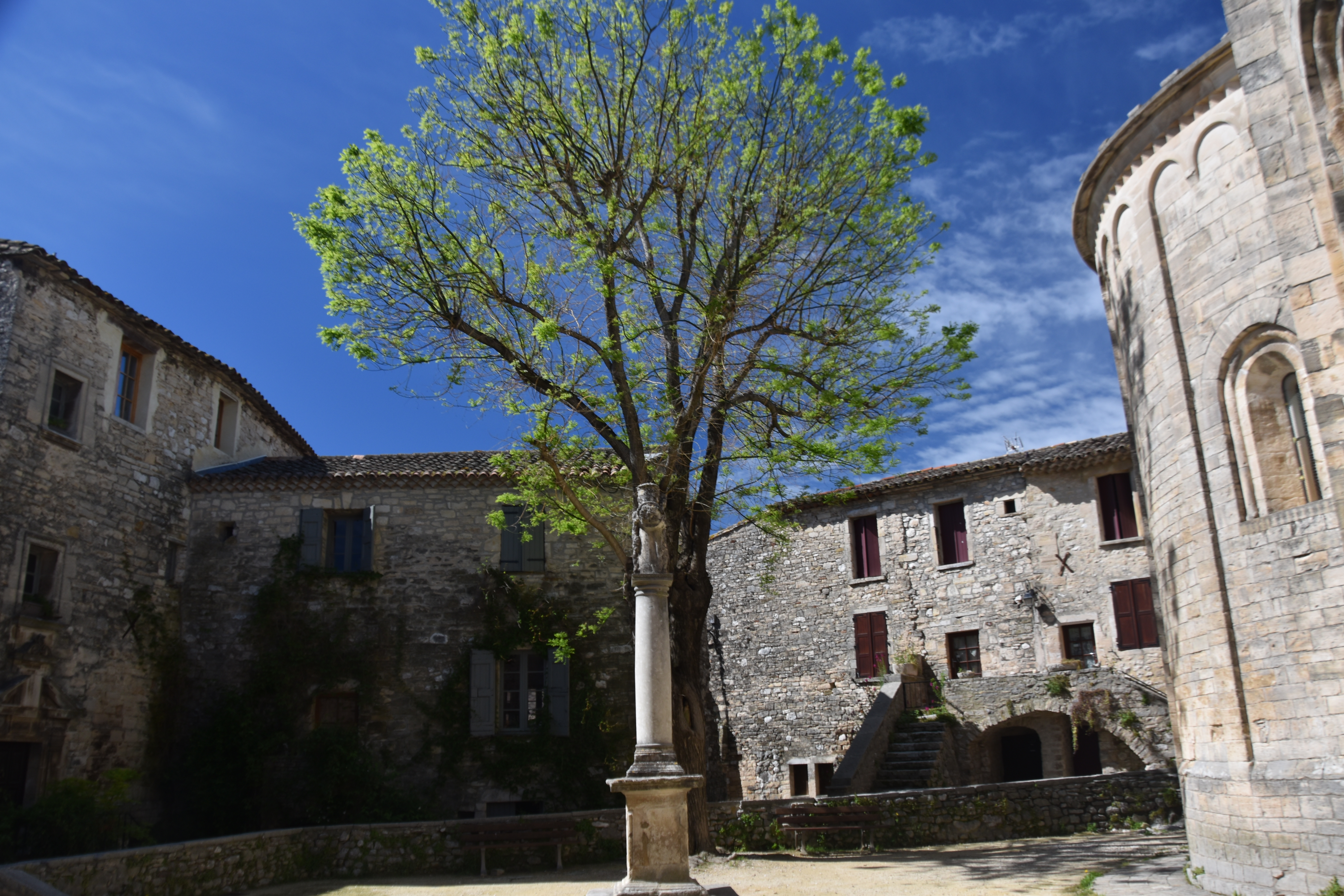
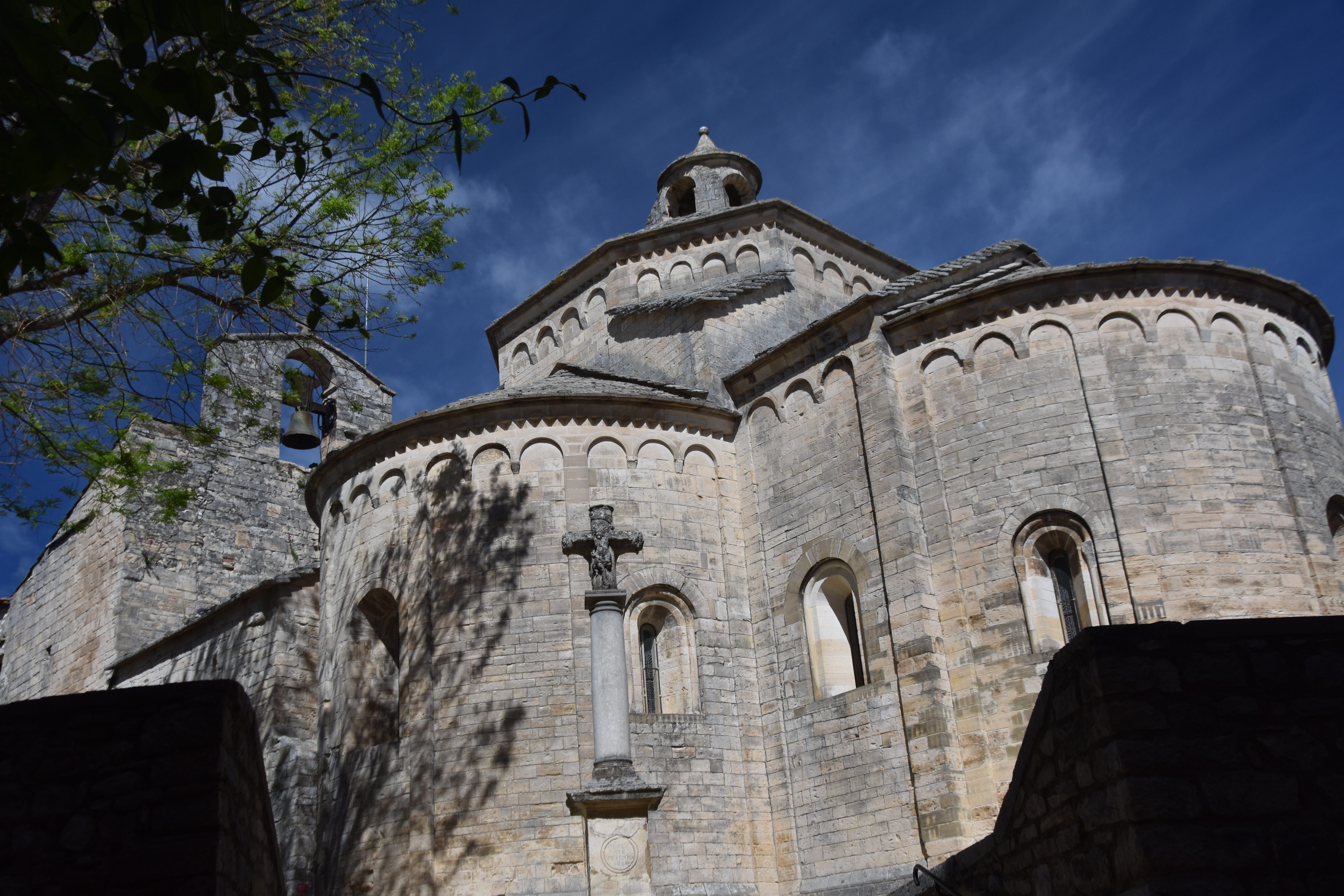
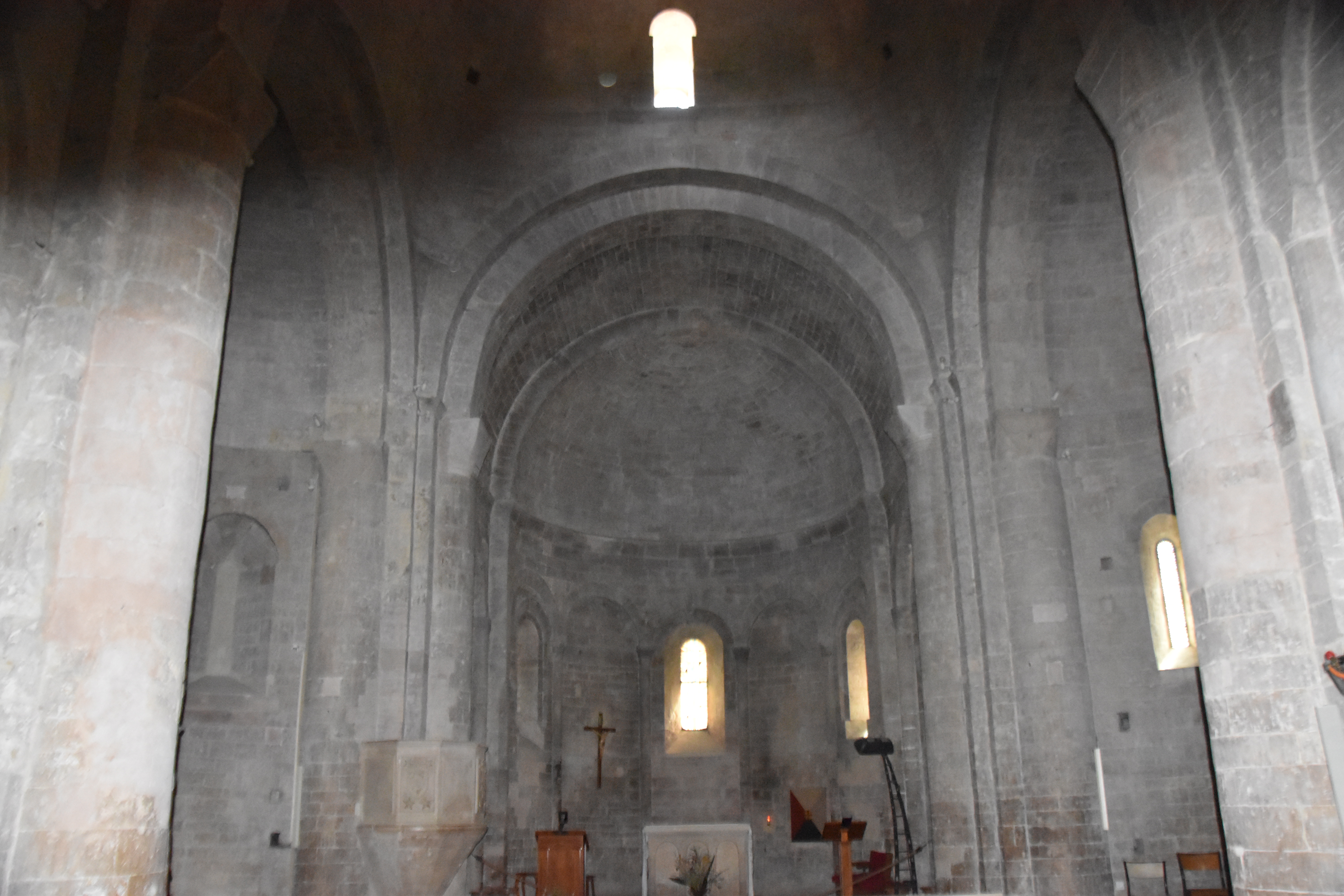
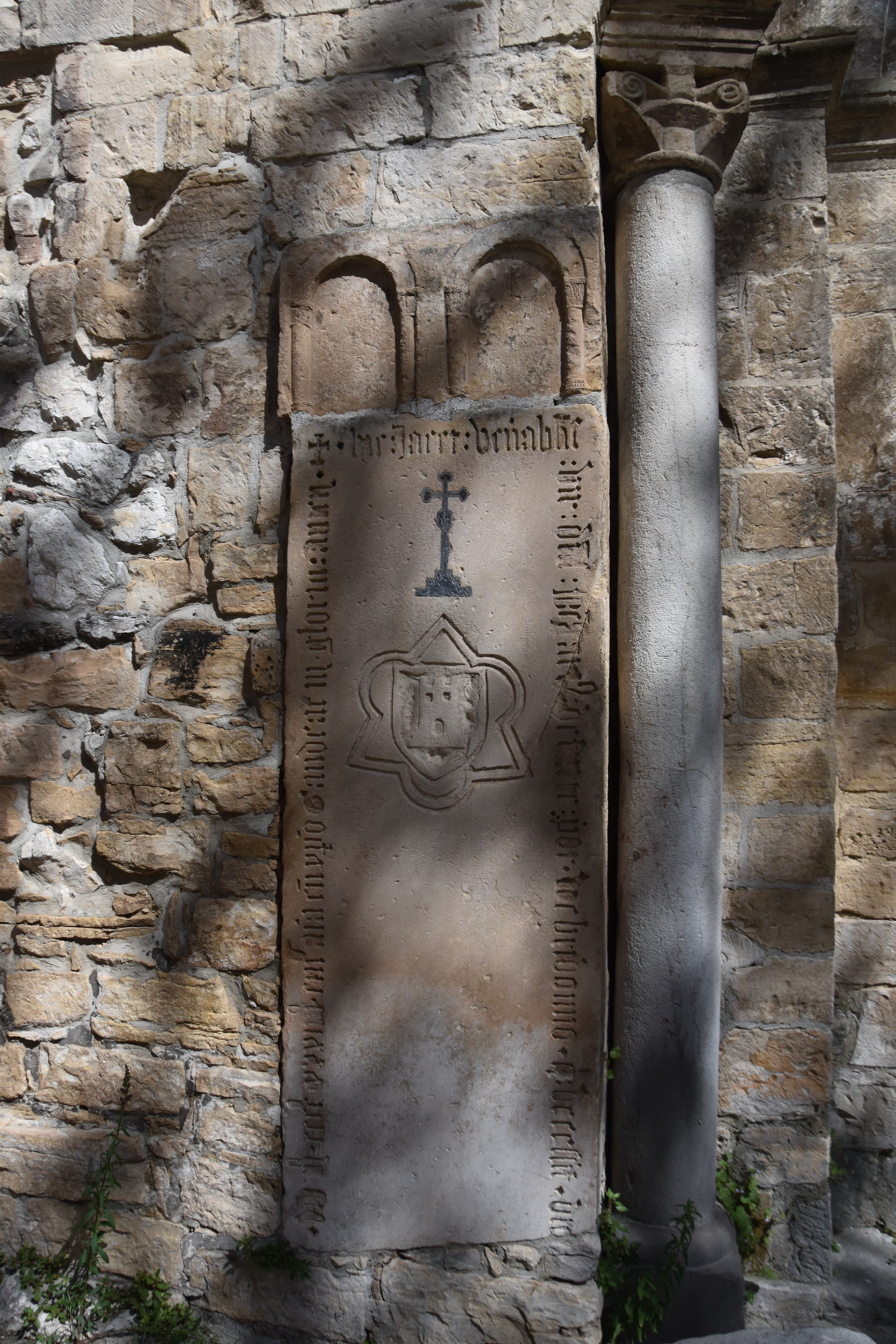
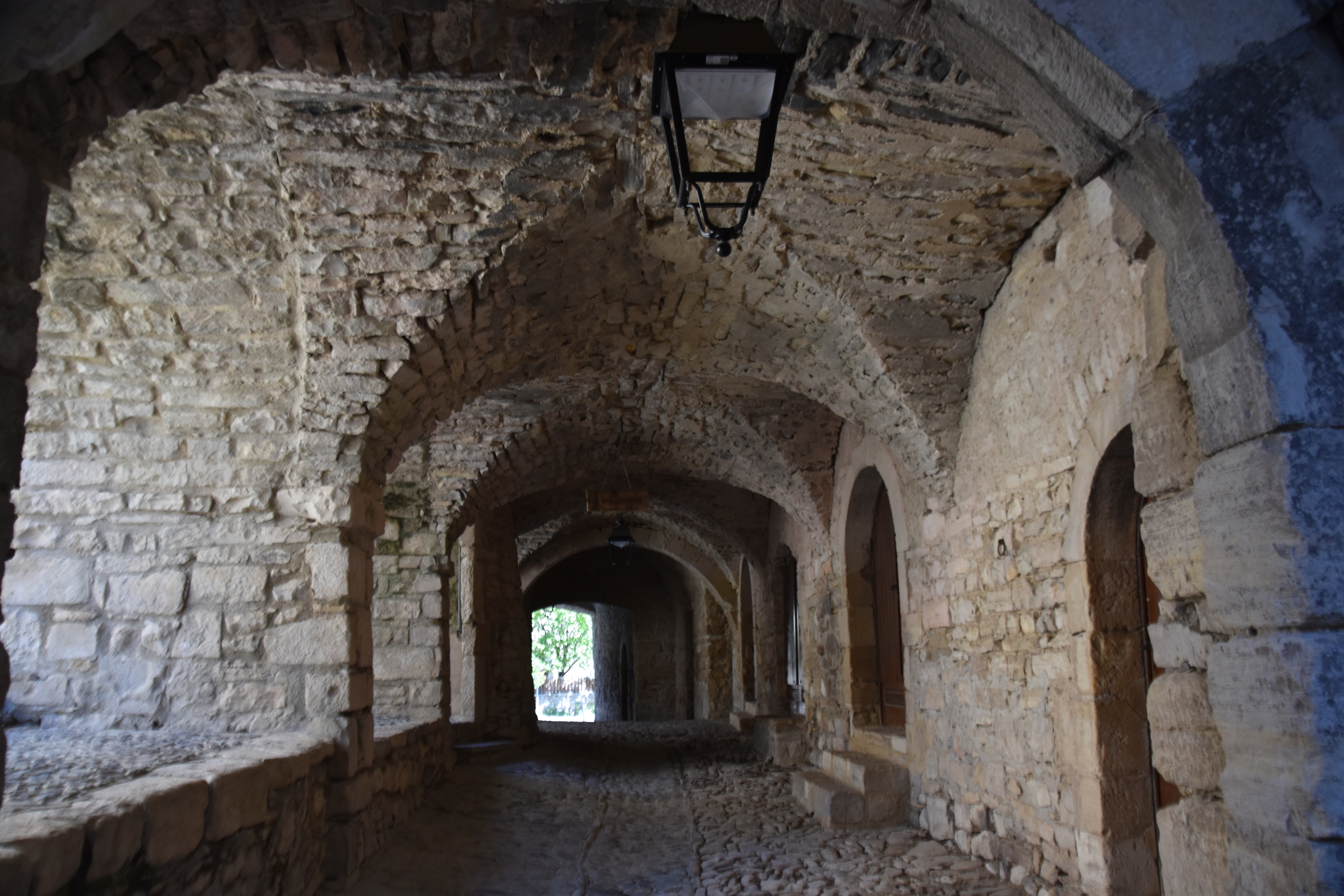
3rd. After breakfast we headed up into the village and were repeatedly delighted by the cobbled streets, narrow passageways, arches and stone houses. The cross in the church square was dated 1024, the church interior was typically simple Romanesque style. One of the two bell towers was of a distincly Spainish flavour. The “shopping arcade” was well preserved and the little streets gave interesting glympses of everyday life.





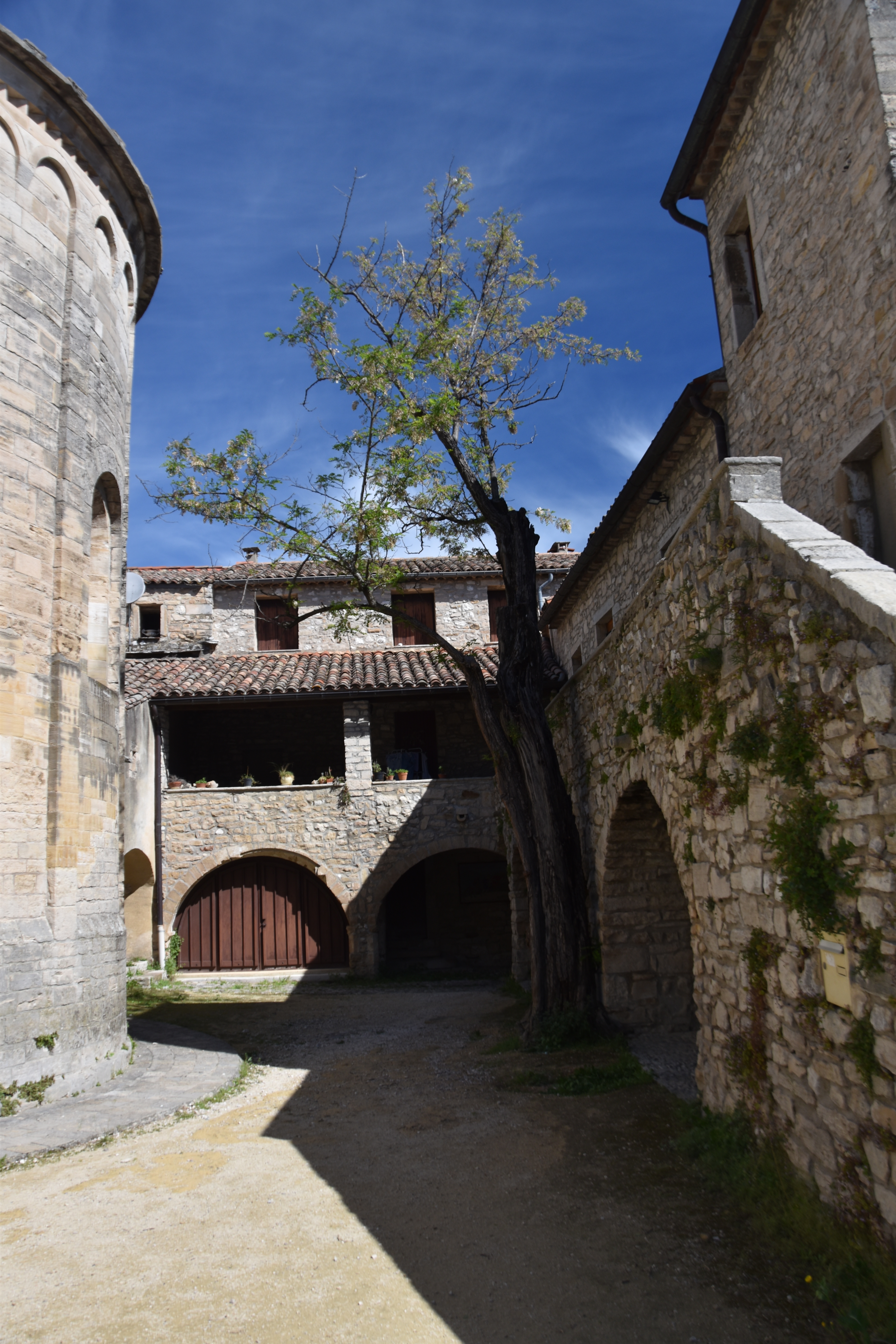
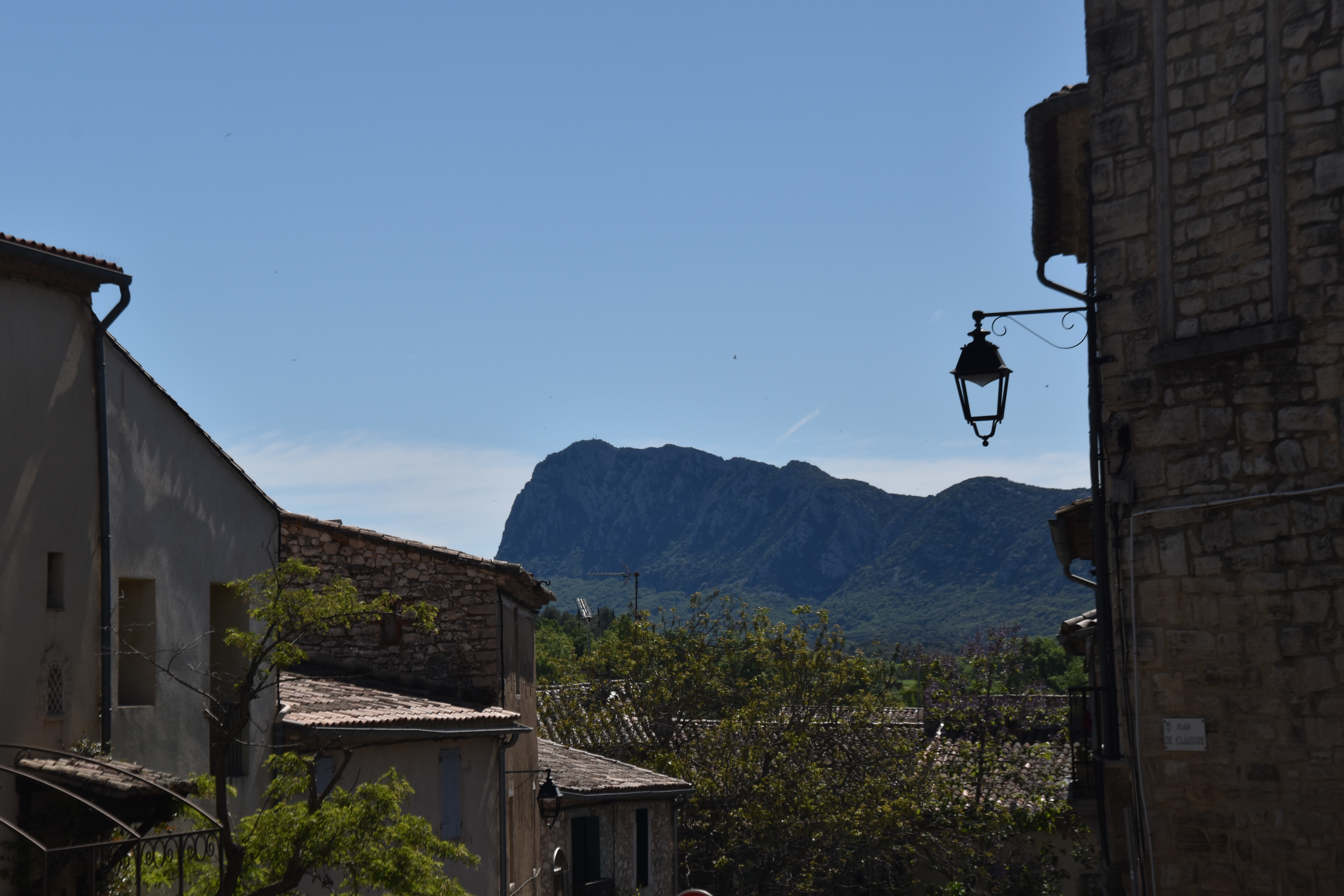
4th. We set out across country toward Uzies, first port of call on the way to the Pont du Gard.
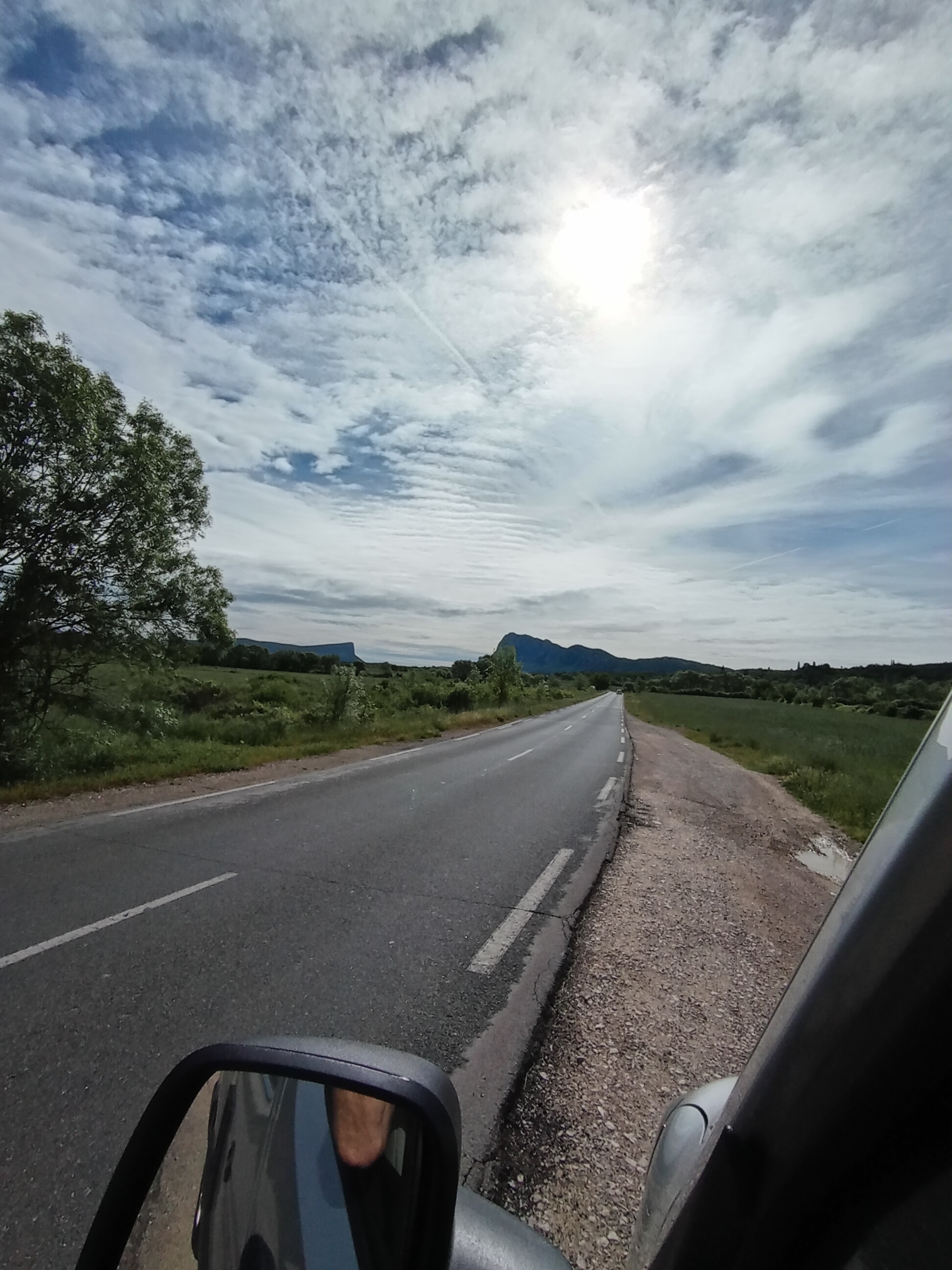
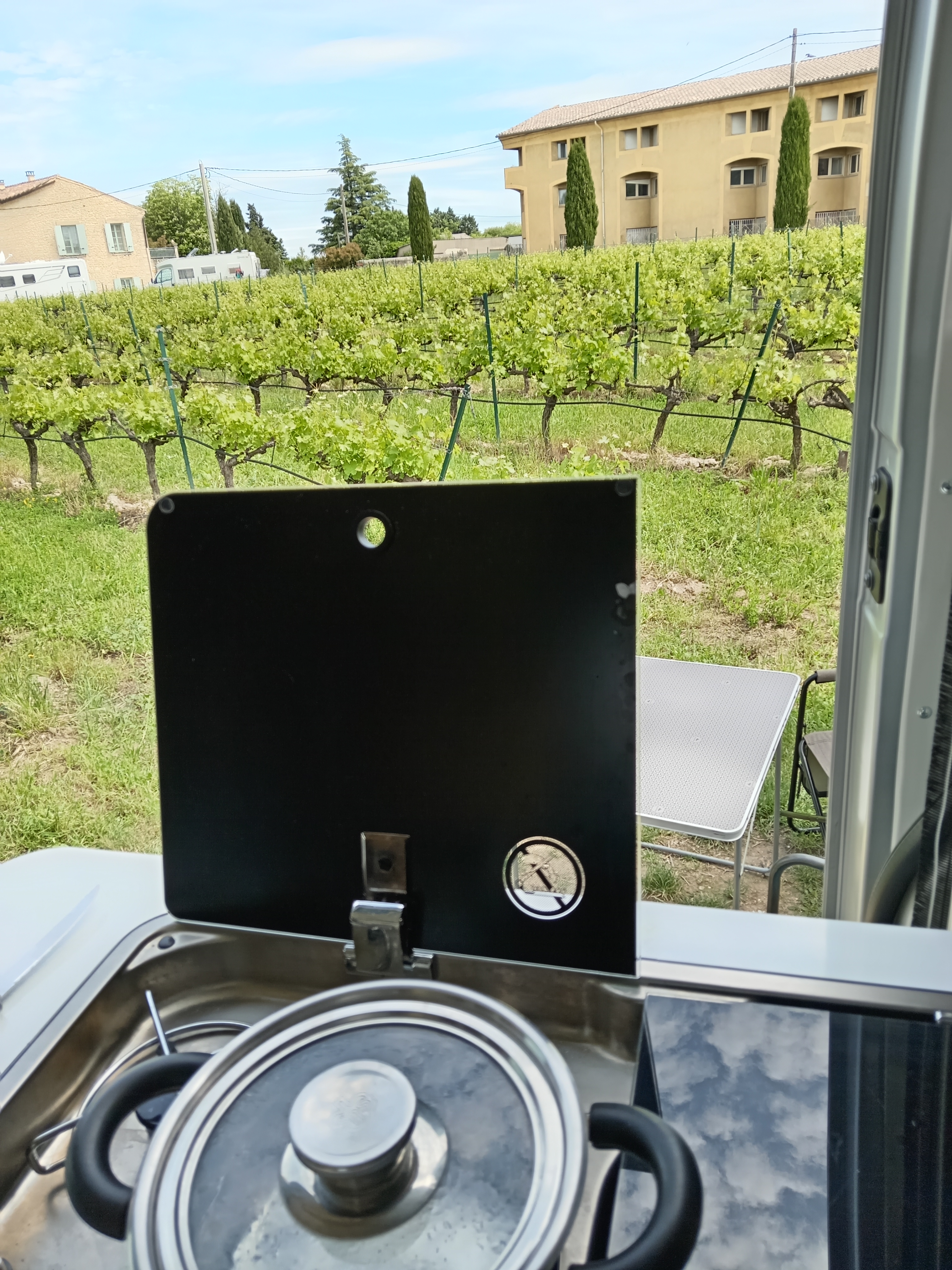
Stopping on the road for wine tasteing before arriving at the Aire on the edge of town which is located in a vineyard. This afforded me a grand view as I cooked lunch!
The town was very attractive but being a tourist hot spot close to a few large towns and this being Saturday it was rather crowded. The streets and squares were lined with shops and café’s.

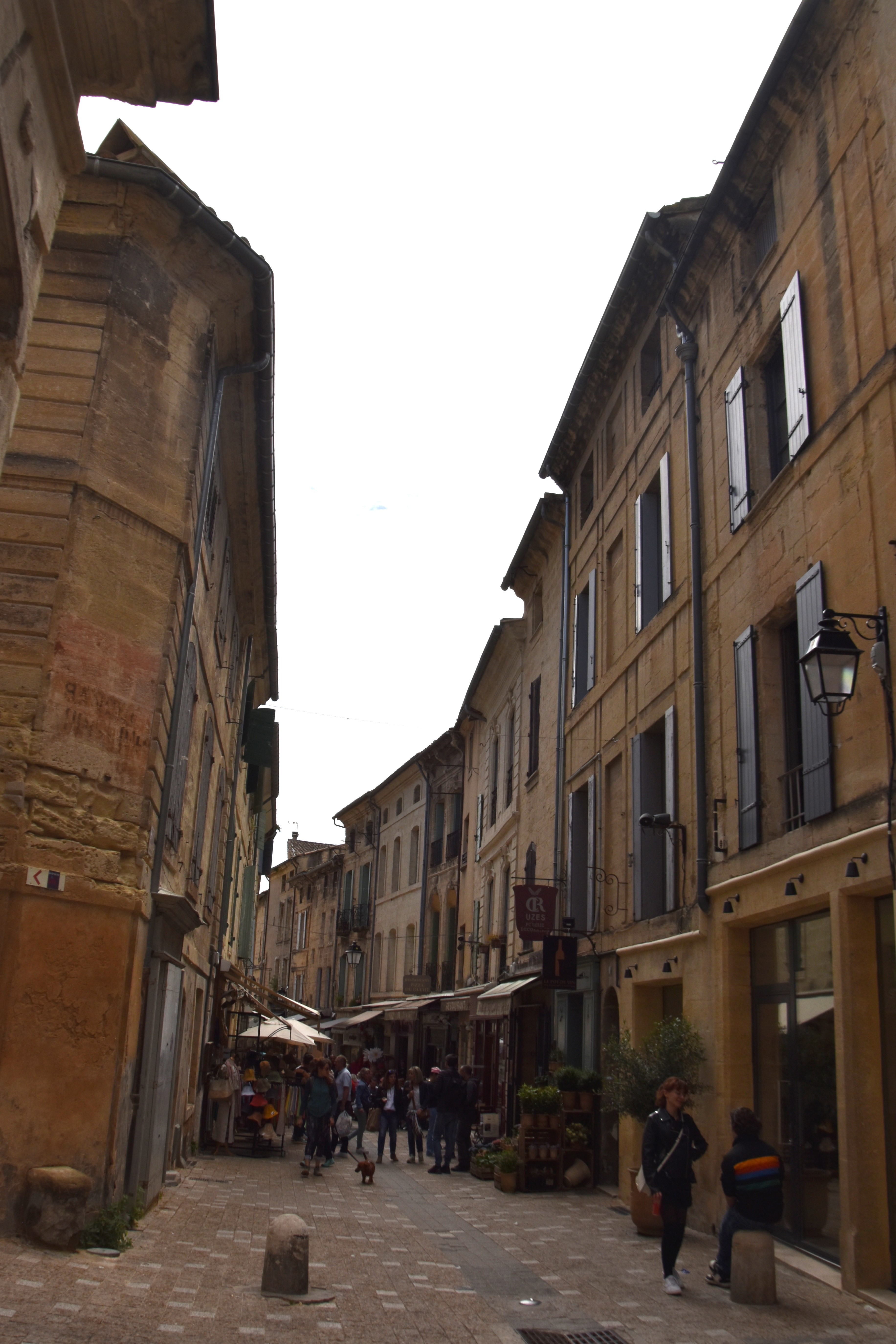

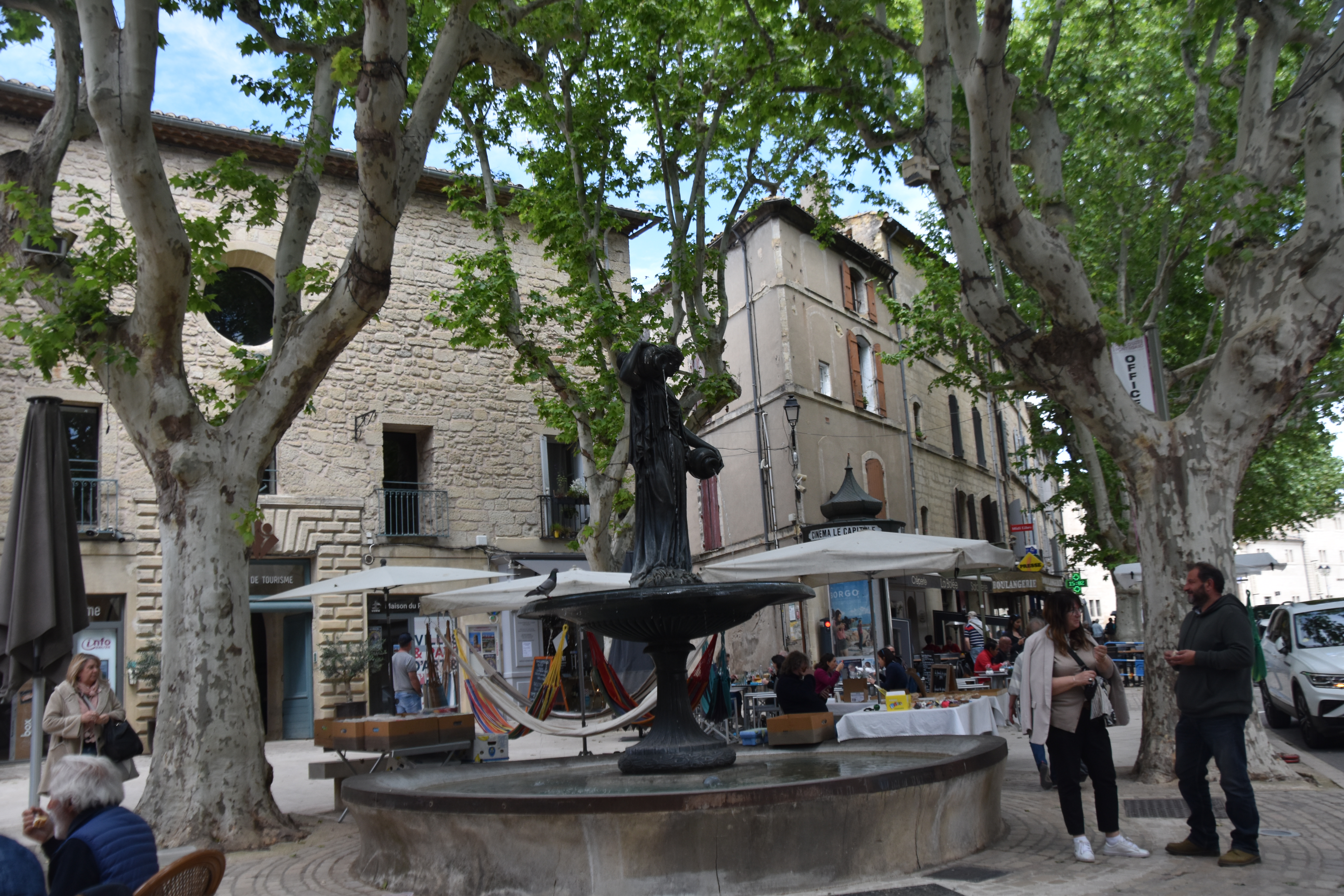

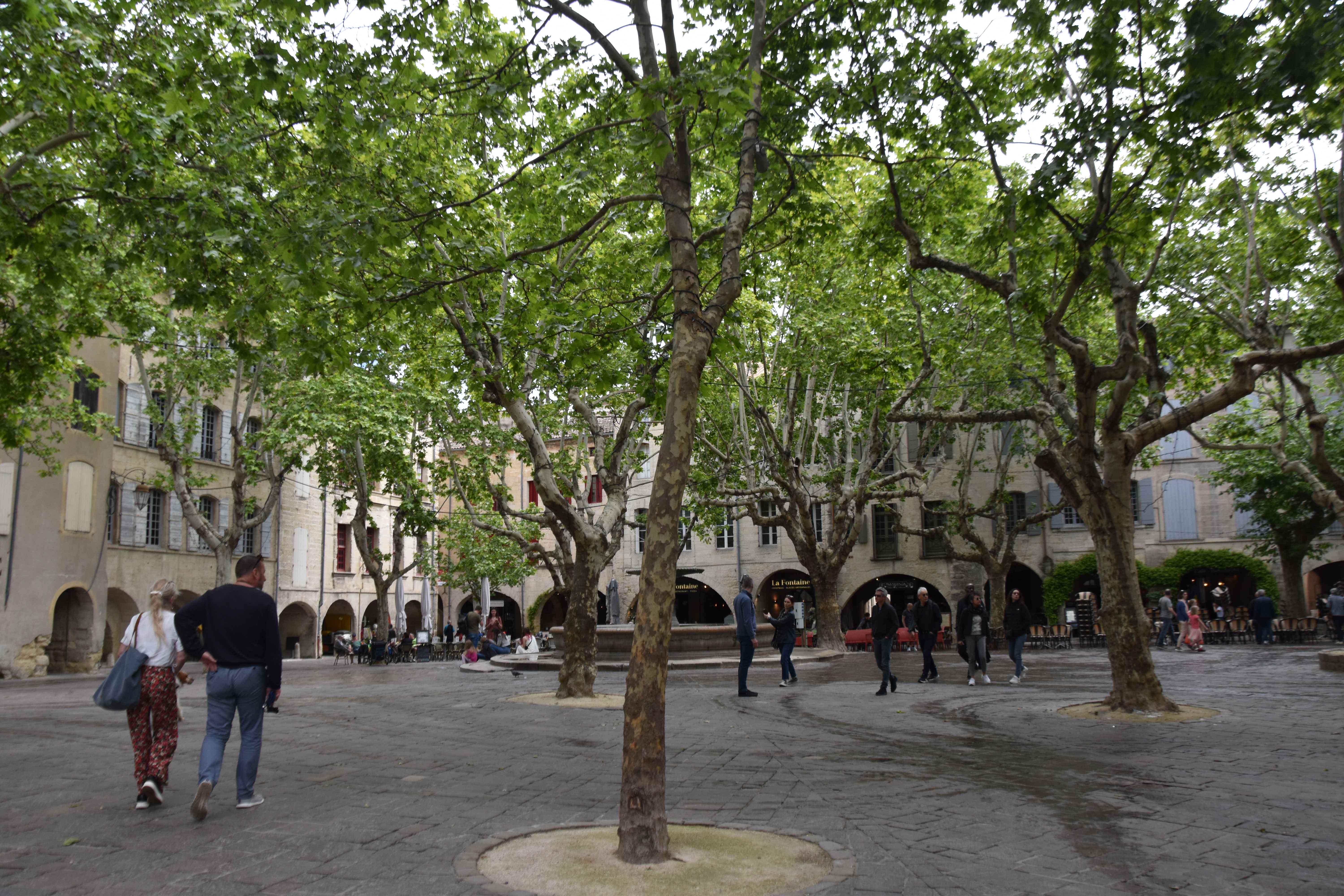
The largest square was lined on all sides with arcaded shops. A style dating back to Roman times
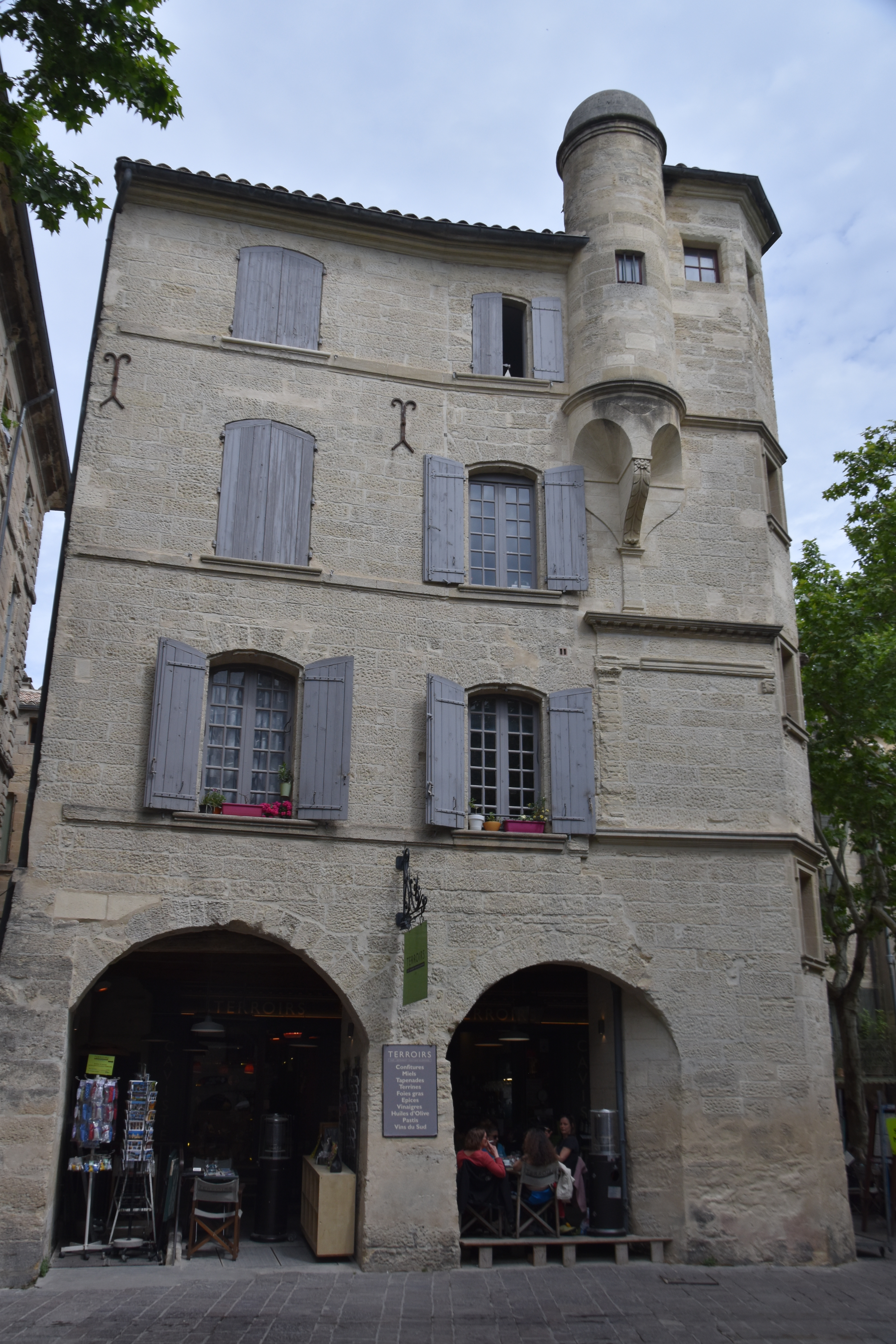

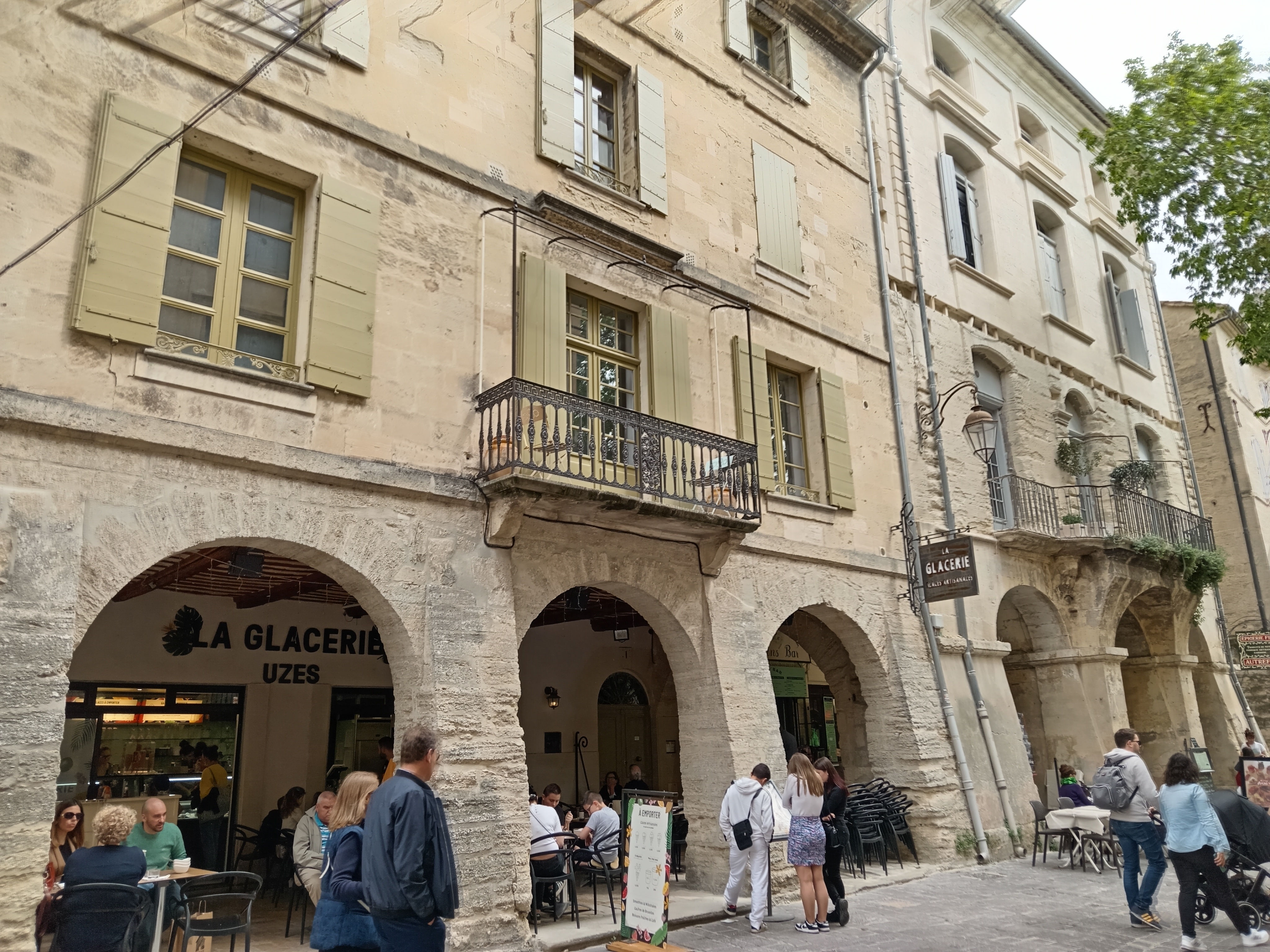
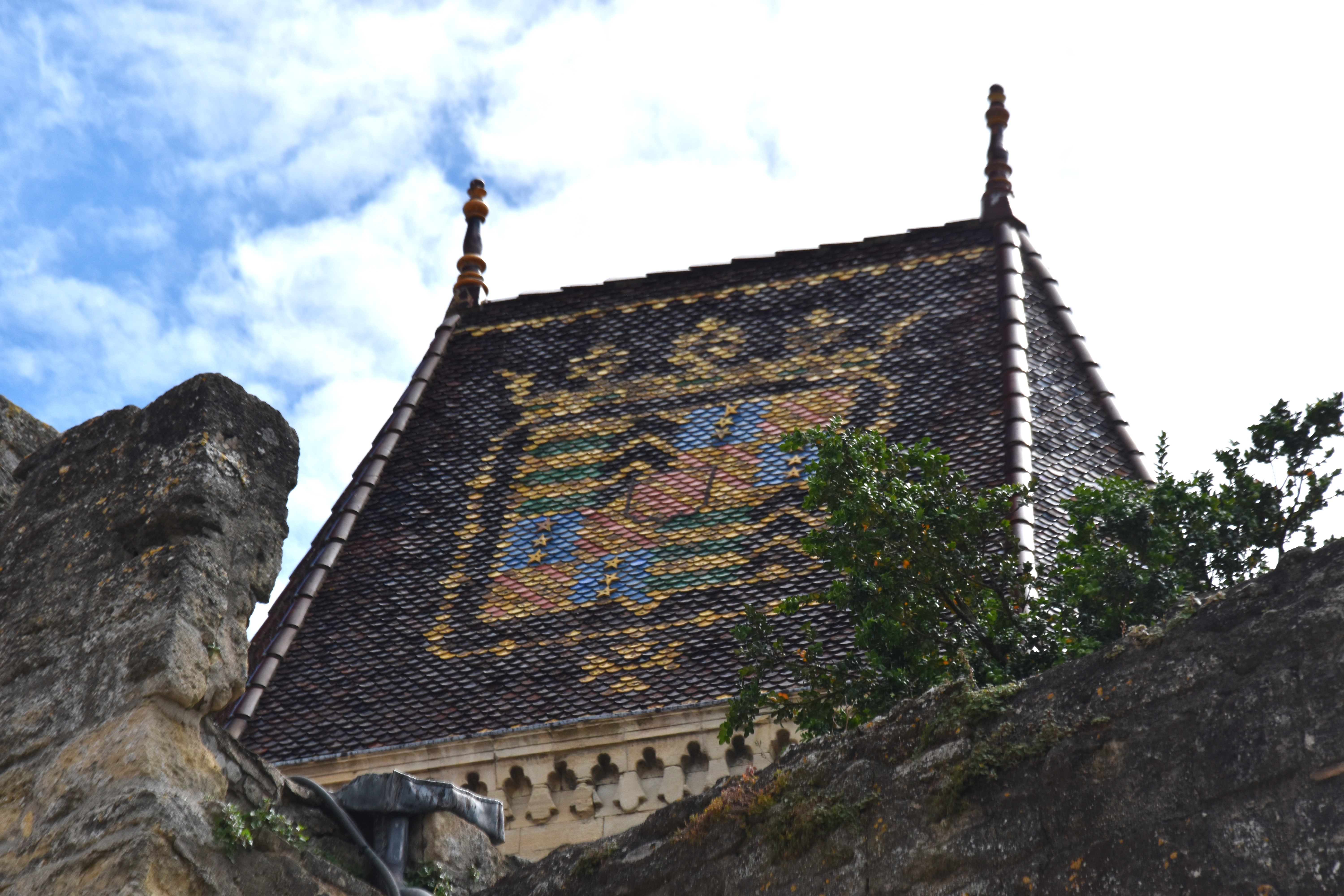
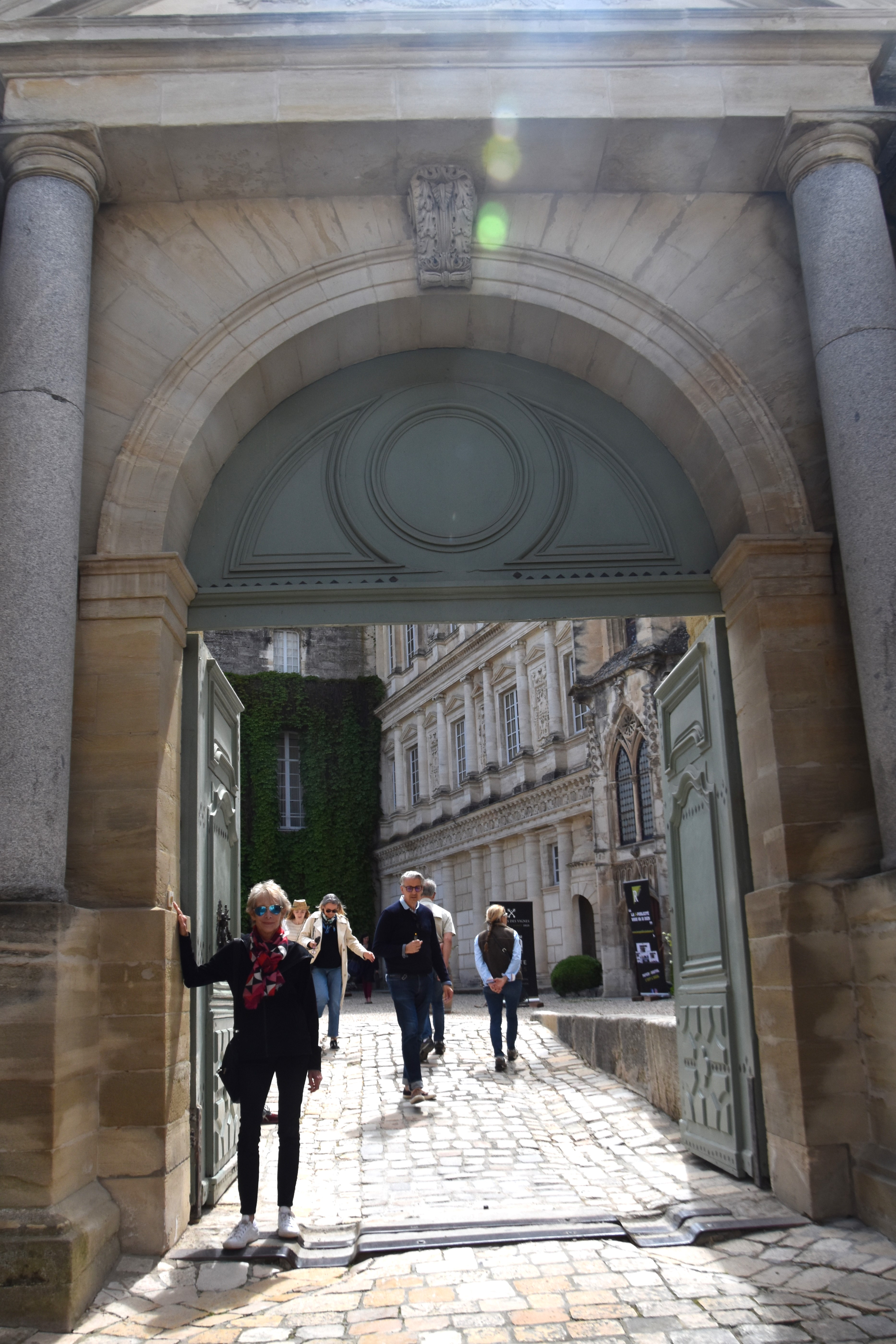
We could not go further than the entrance courtyard in the Ducal Palace because they were holding a wine salon but this still afforded us a good overall impression of the way in which it has been added to over the centuaries with the C12 Donjon and the C17 Renaiscence halls. The was also a roof finished in coloured tiles reminiscent of the Burgundy style.
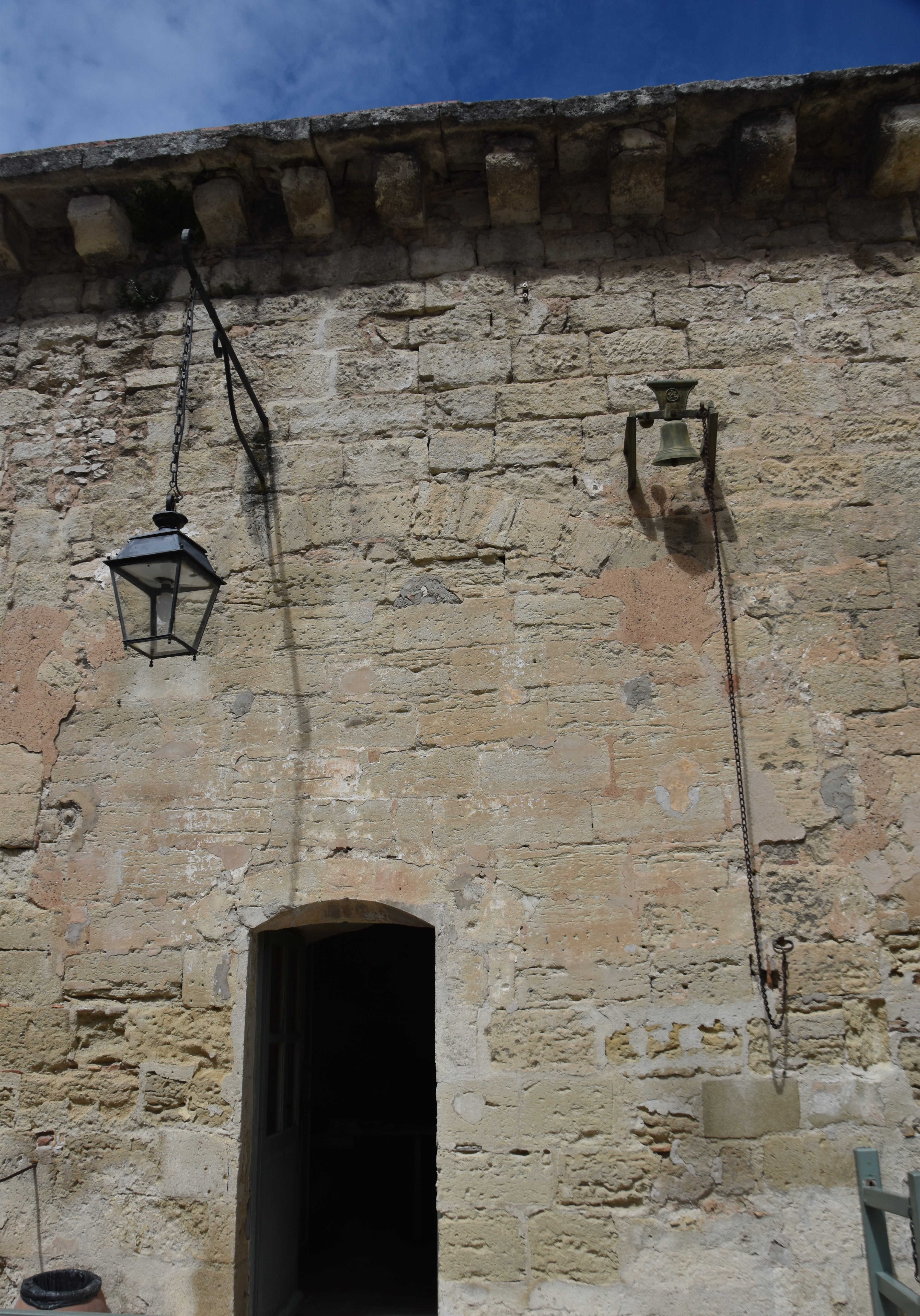
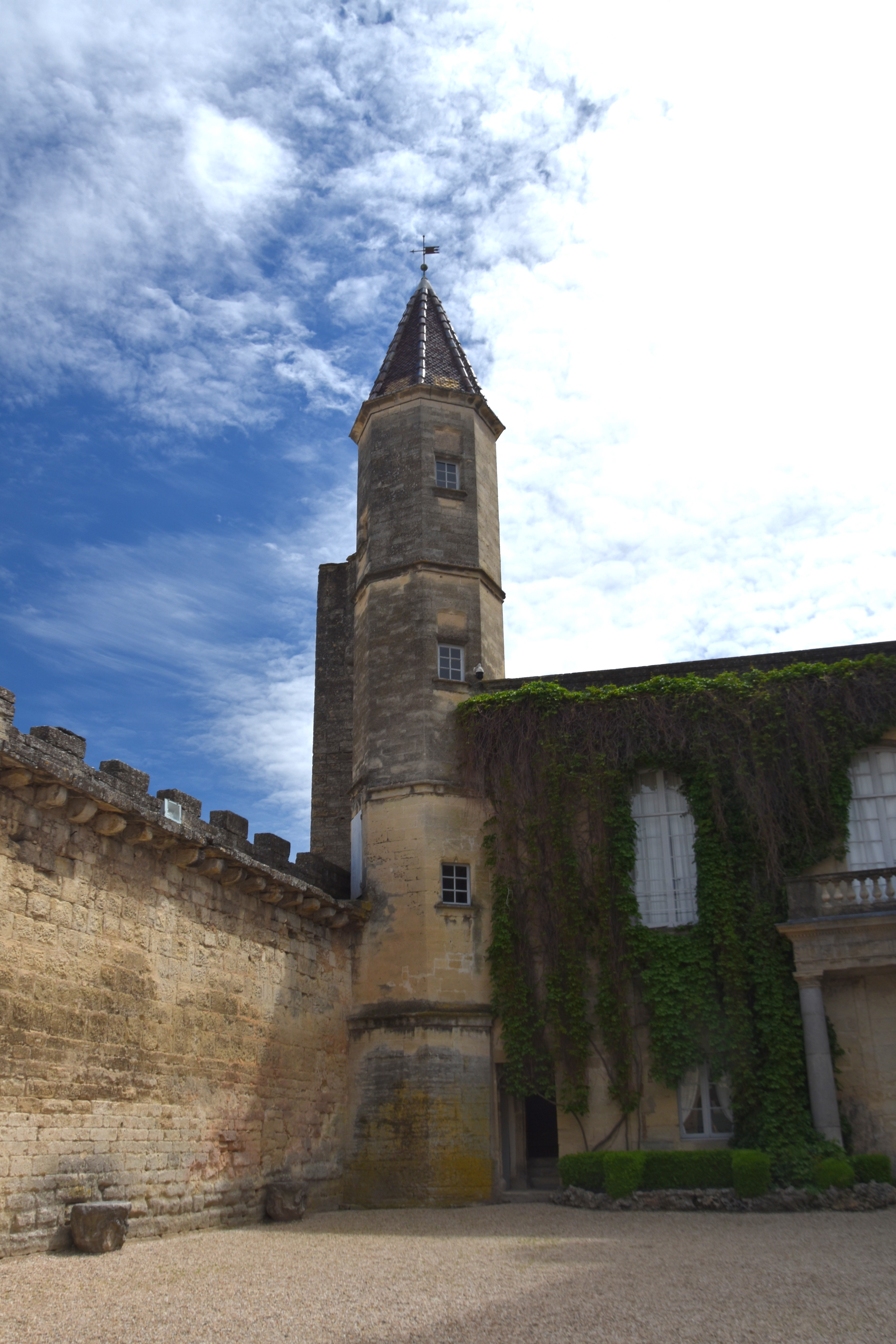
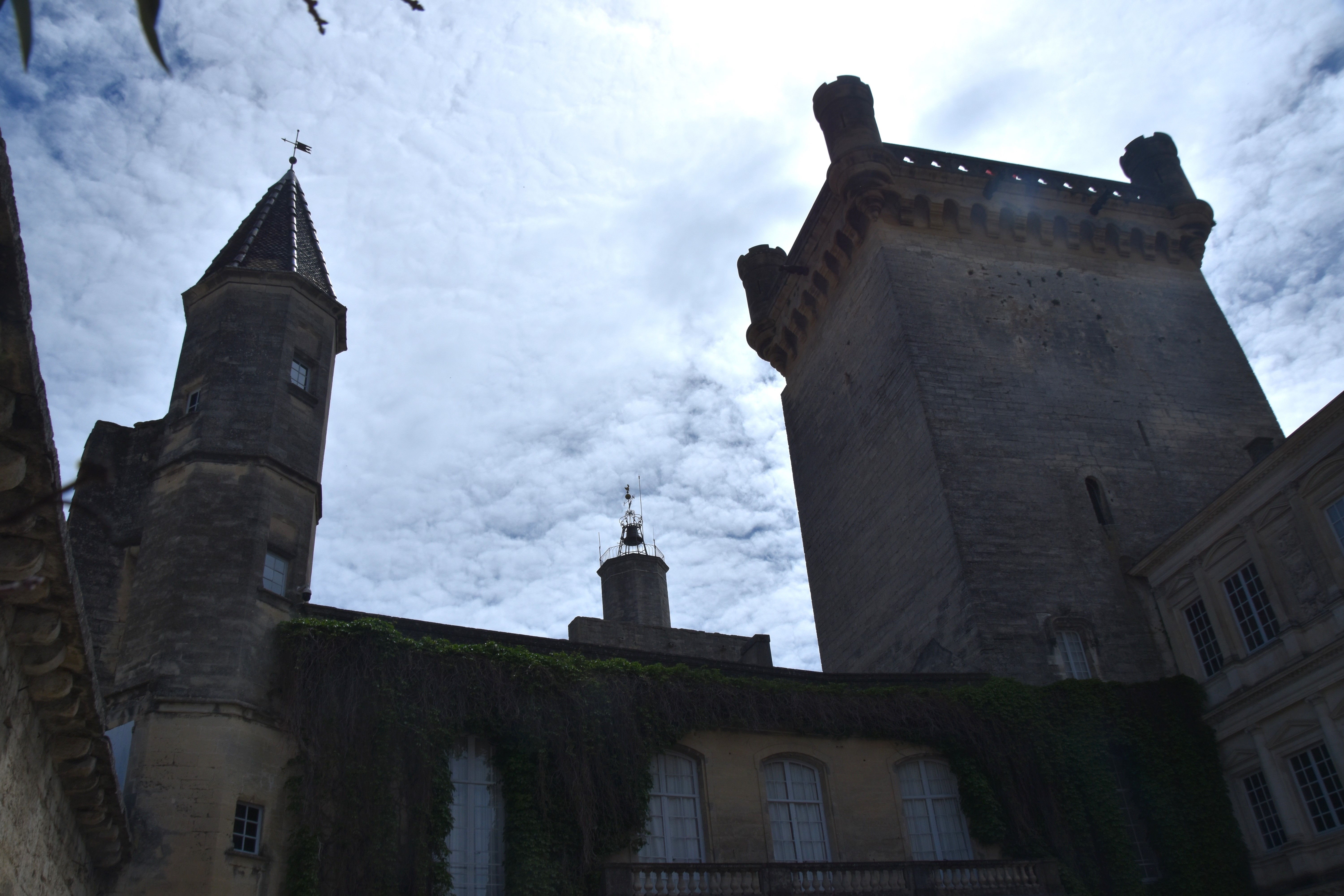
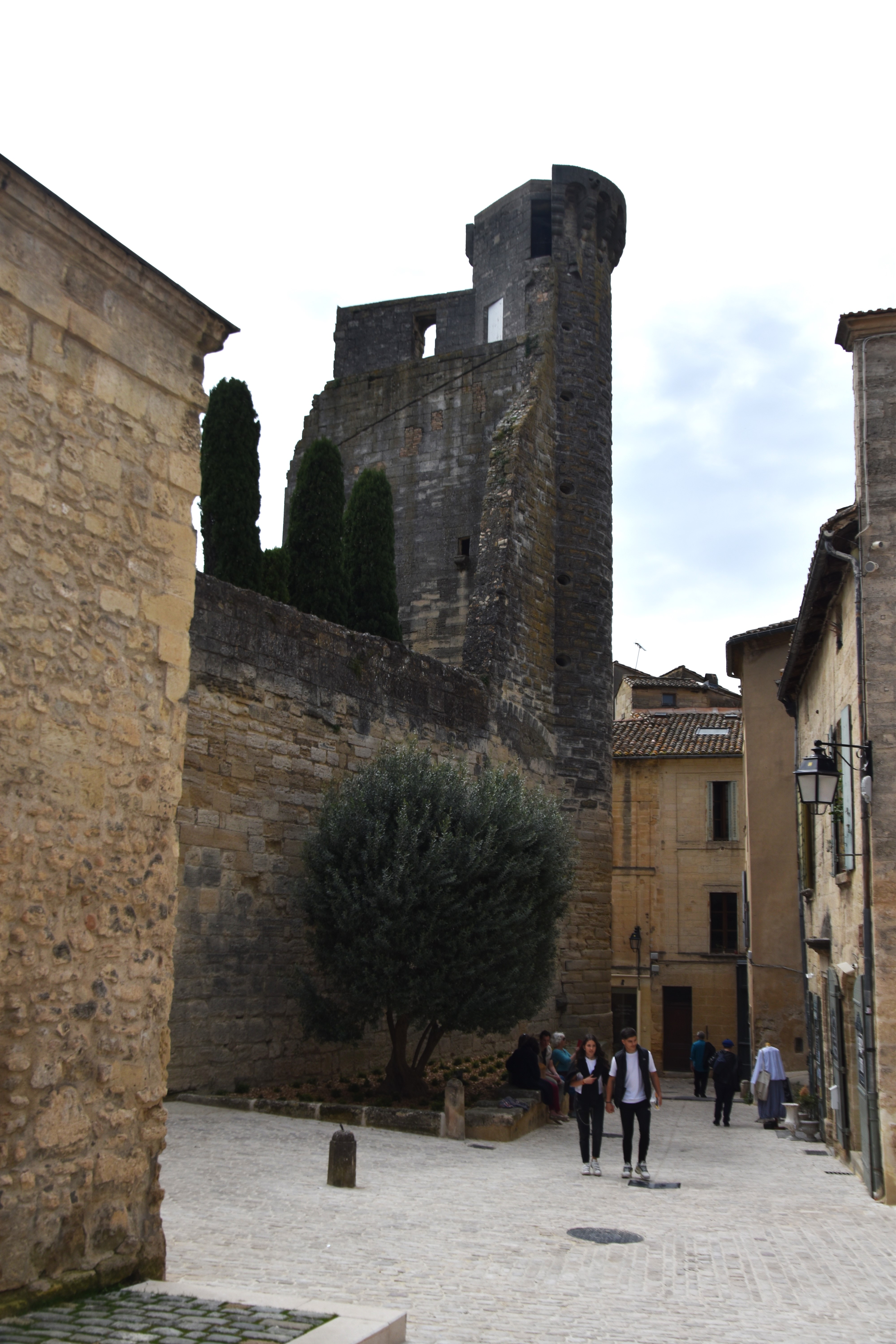
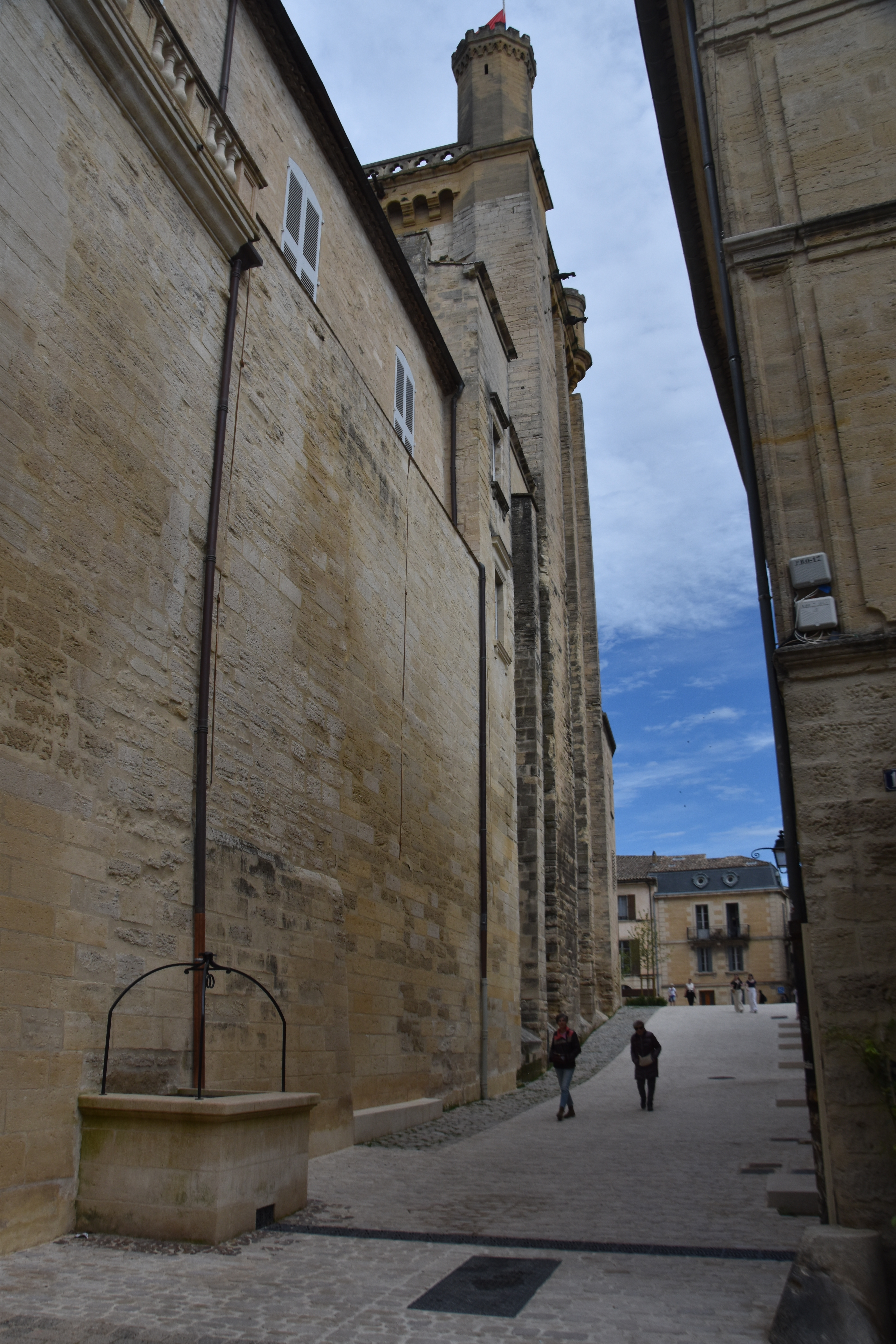
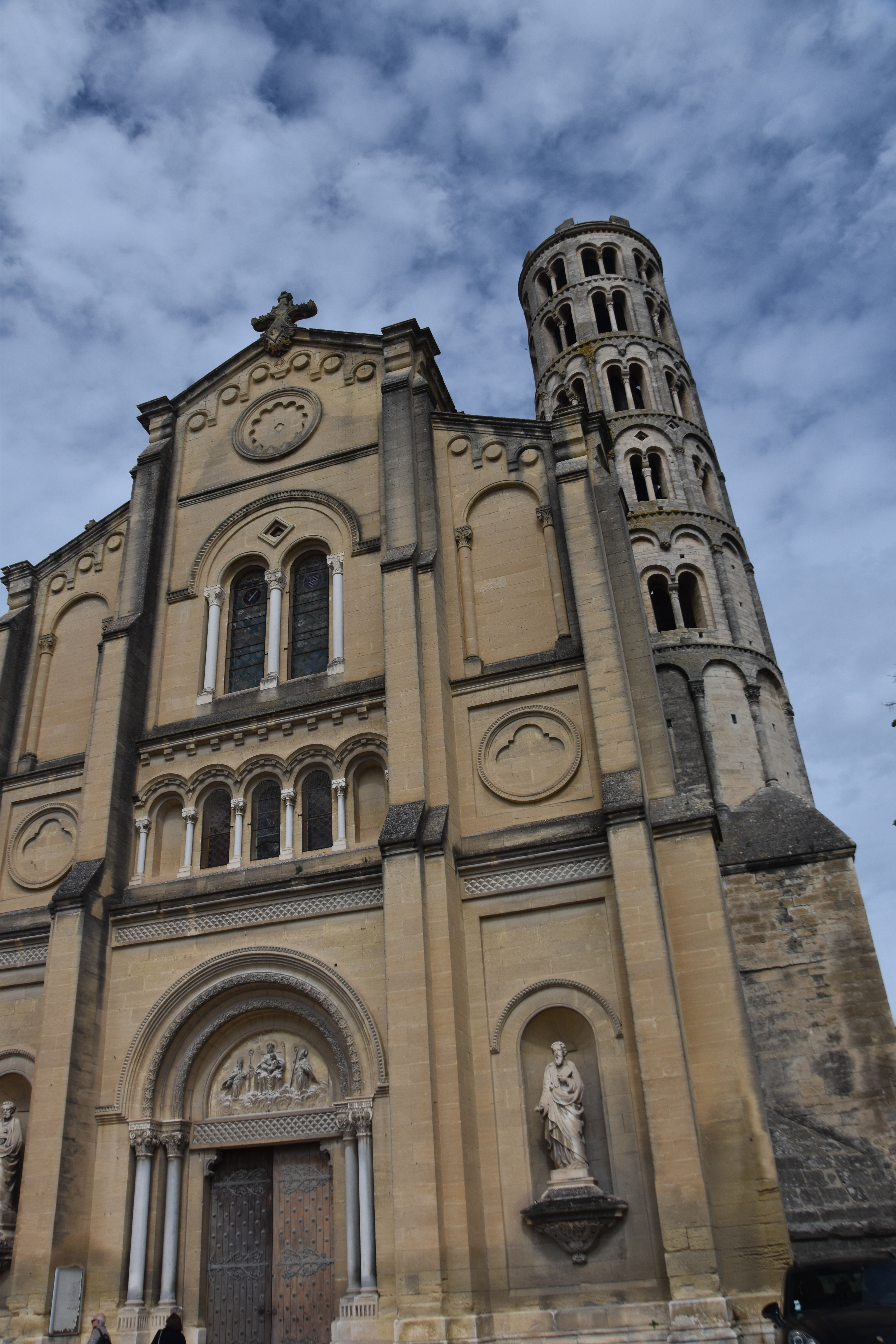
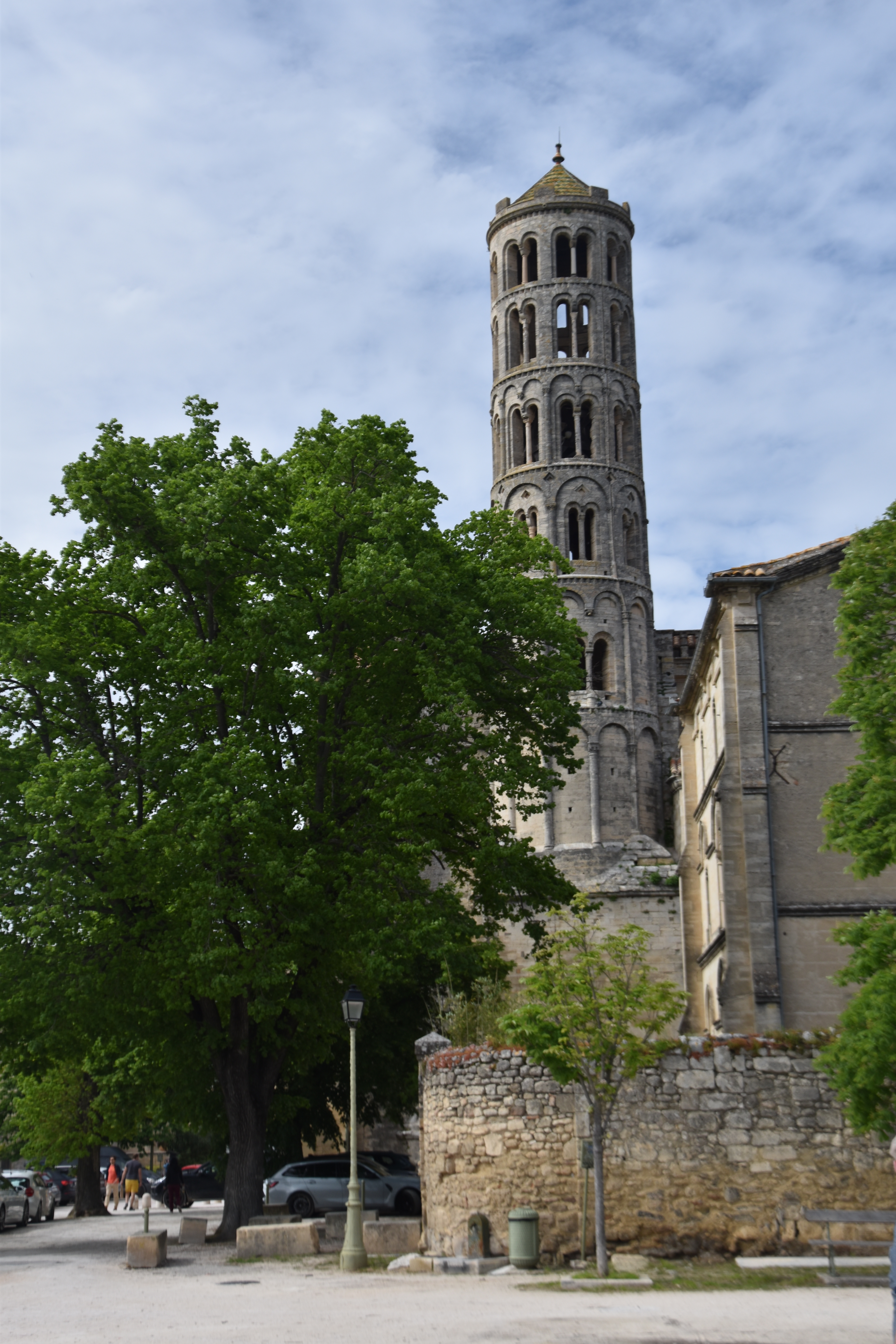
By contrast I found the Bishop’s Palace rather brutish and forbidding with the exception of the round bell tower attached to the side like a “Folly”. It is not my photography, it really does have a bit of a lean on!!
5th. We made an early start to go and browse round the Brocant before leaving town and heading to The Pont du Gard.
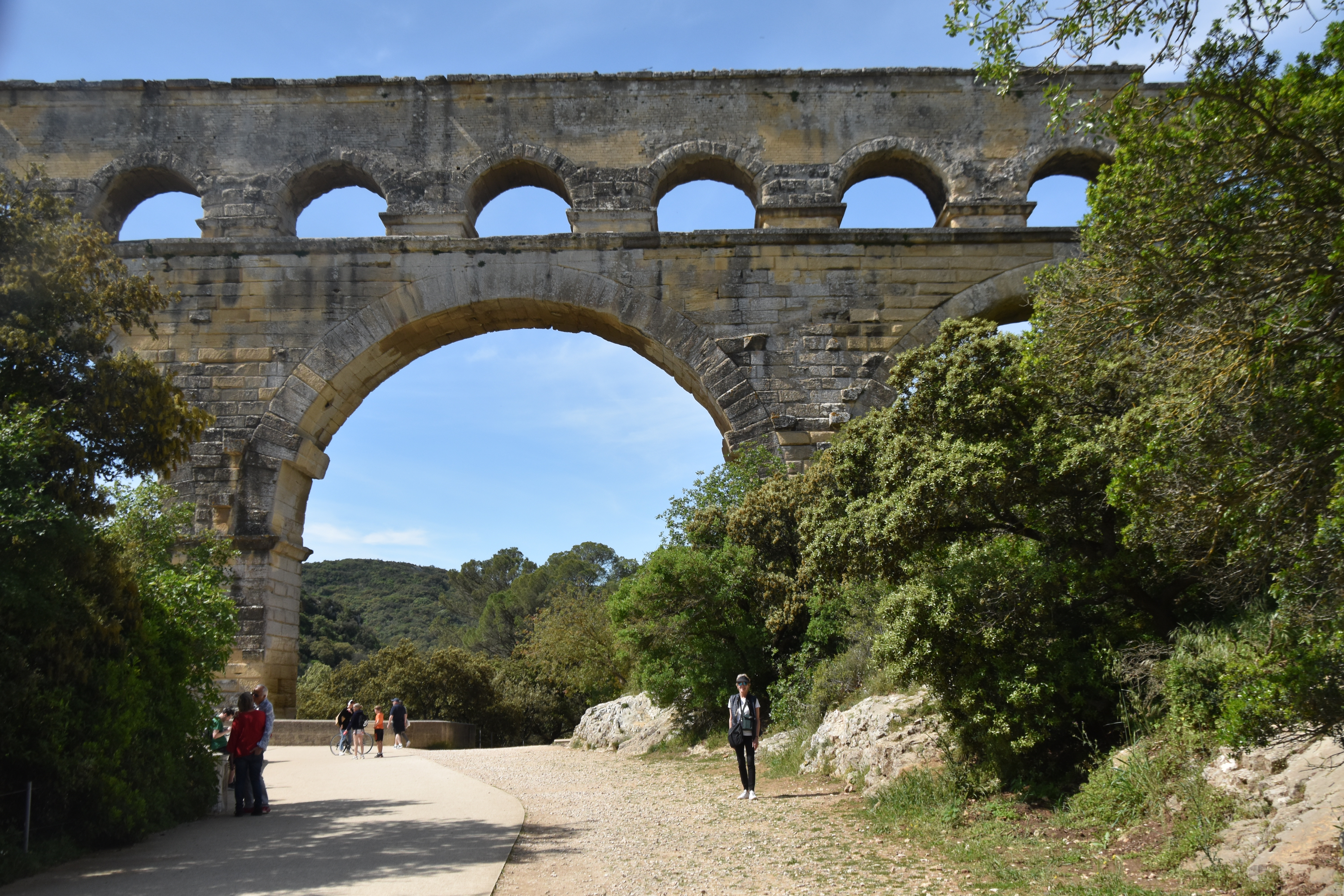
This amazing Roman aquaduct is over 2000 years old and a UNESCO heritage site. The Romans considered it their best testimony to the greatness of their Empire and never surpassed it in terms of size. It is 49m high and 275m long. It carried water on the top most of its three tiers from fresh springs at Uzes to Nîmes. It is stone built with some of the blocks weighing over 6 tons. These were hauled into place by slaves using an ingenious system of pullies.



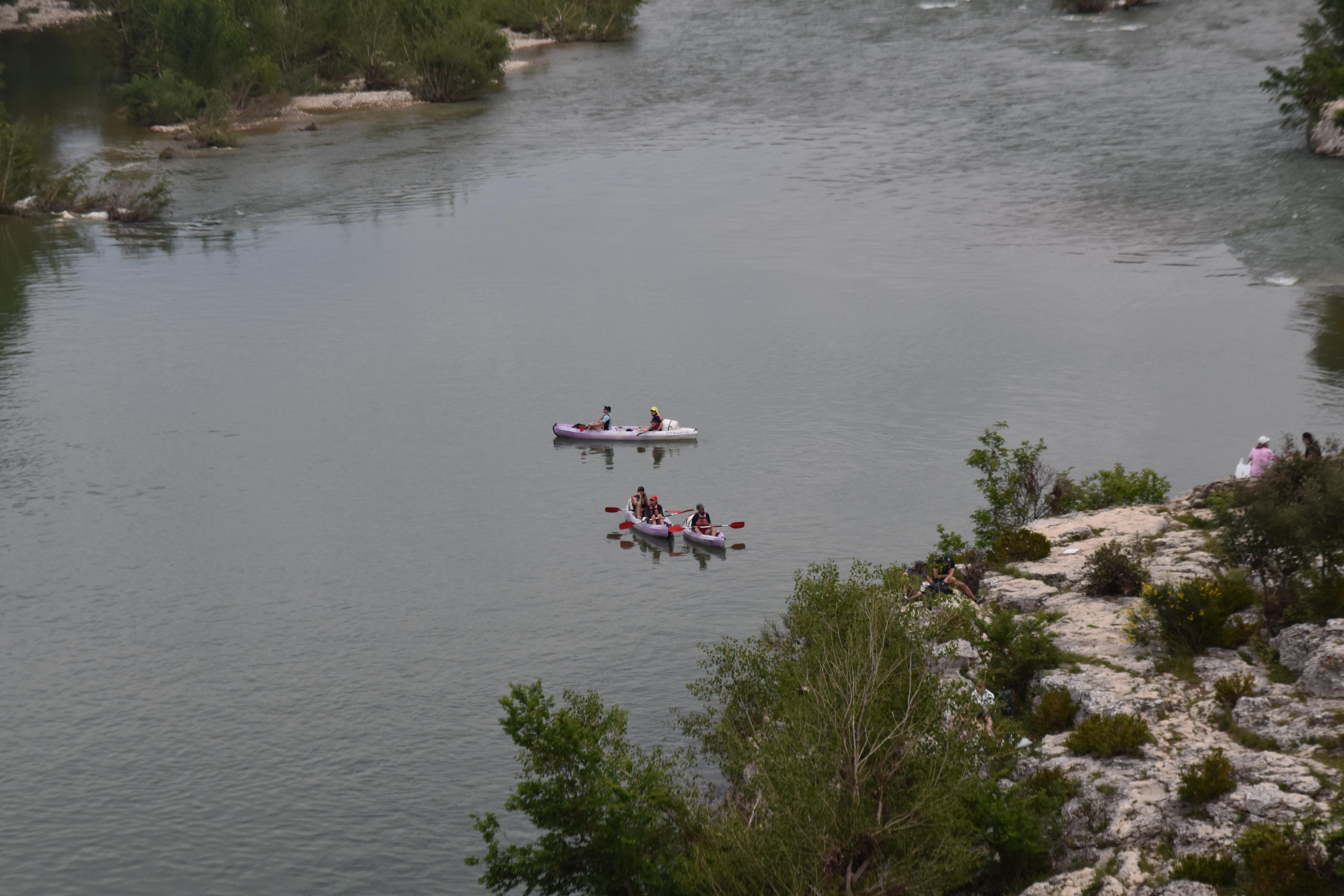
It was possible to canoe to the bridge from Remoulins but we decided that the water was probably too cold to take the risk of falling in! Some intrepid people did though.

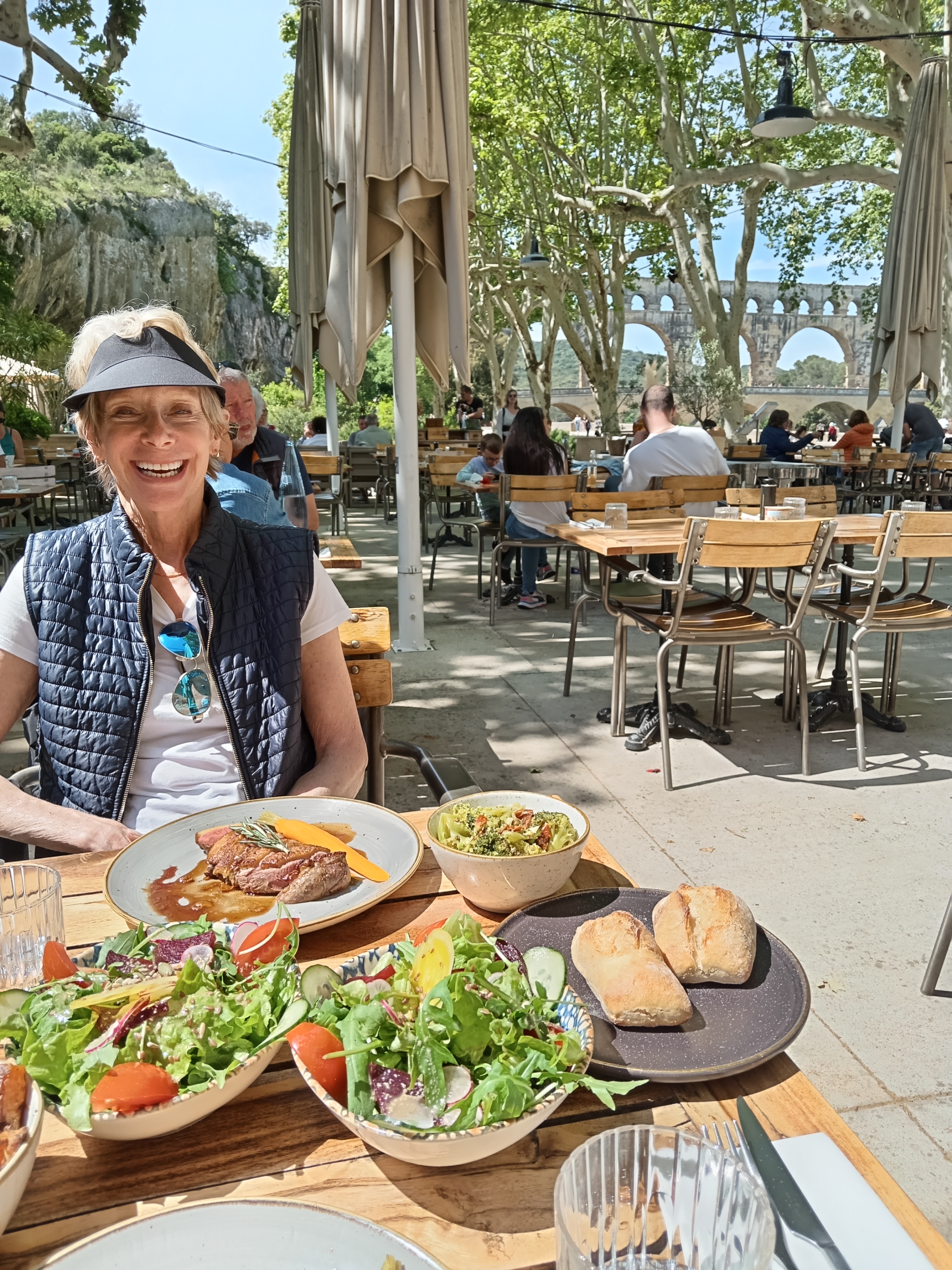
We had a really good lunch with a view of the bridge before moving on to the Aire.
6th From Pont du Gard we drove to Aigues-Mortes. This medieval Town has been recommended to me by many people. The area has been inhabitied since pre-history and before the Romans founded the site of the current town, the Greeks were here. The current town was founded by the Roman general Gaius Marius in about 102BC and named the Latin for Dead water, “Aqua Mortua”. Another Roman, Peccius, cultivated the first salt marsh which added to the wealth and importance of the town.
In the middle ages it became an important port of departure for the crusades largely at the instigation of Louis lX who was also responcible for a lot of the important building.
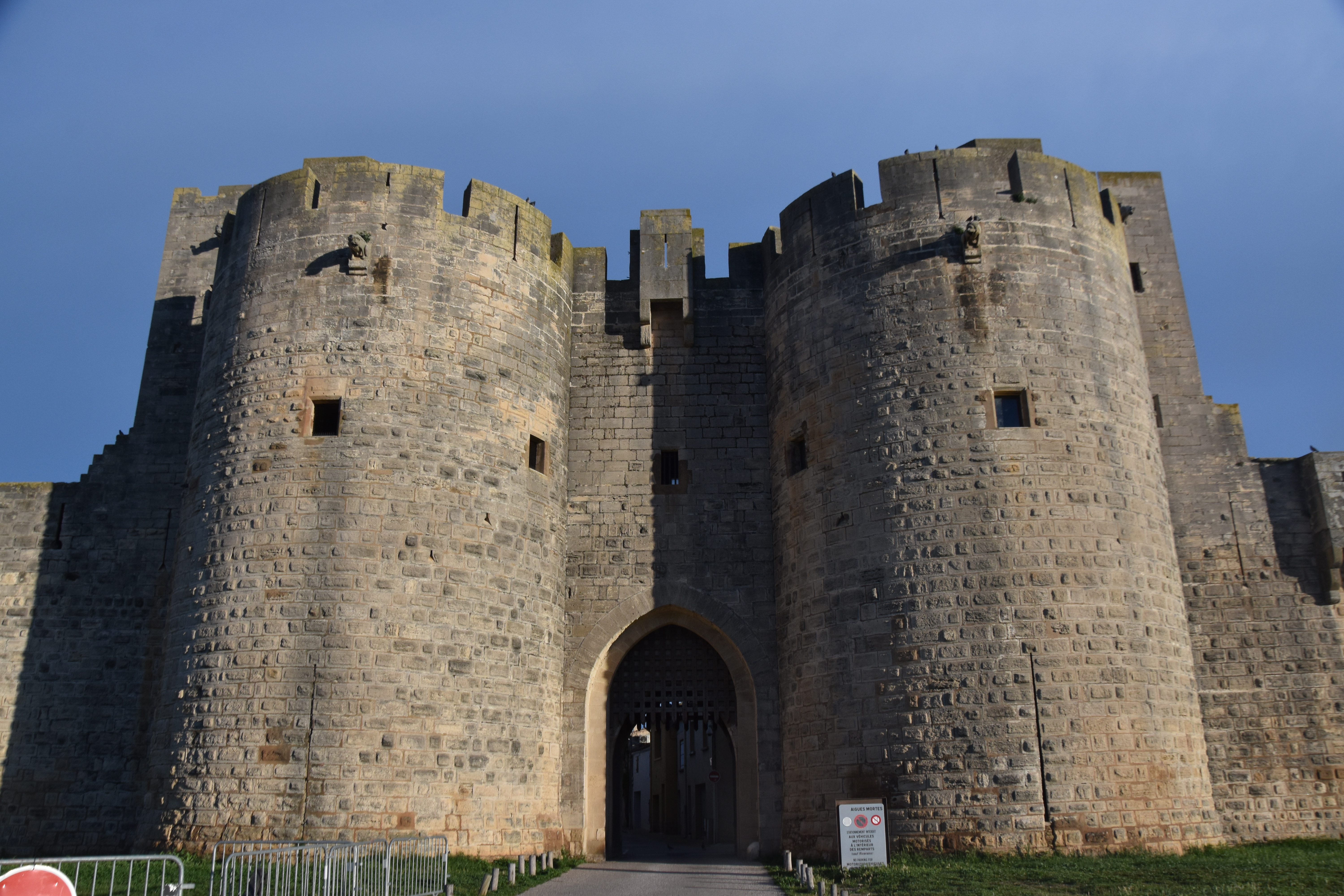
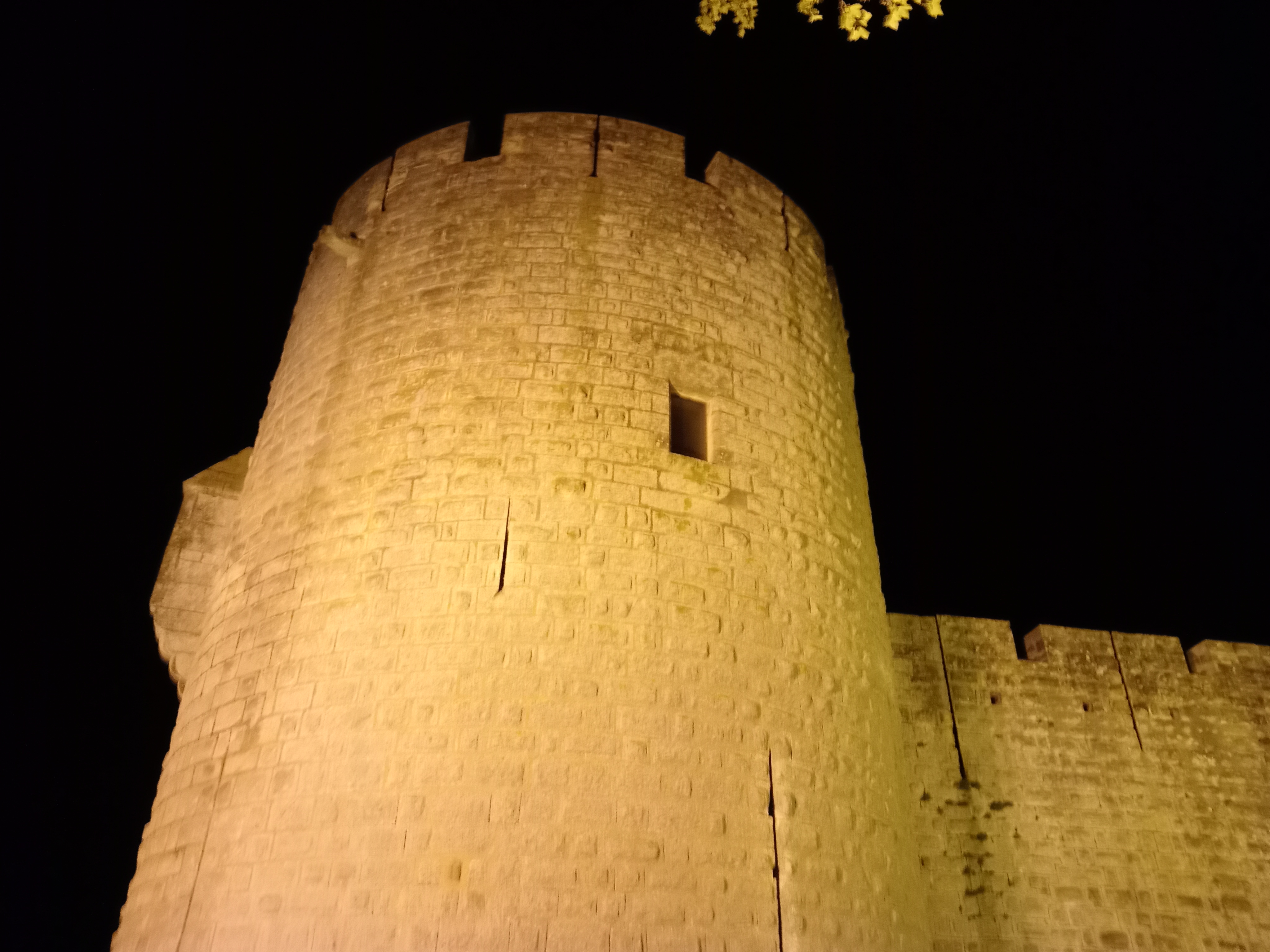
Today the impressive walls with multiple gates and towers are well preserved.


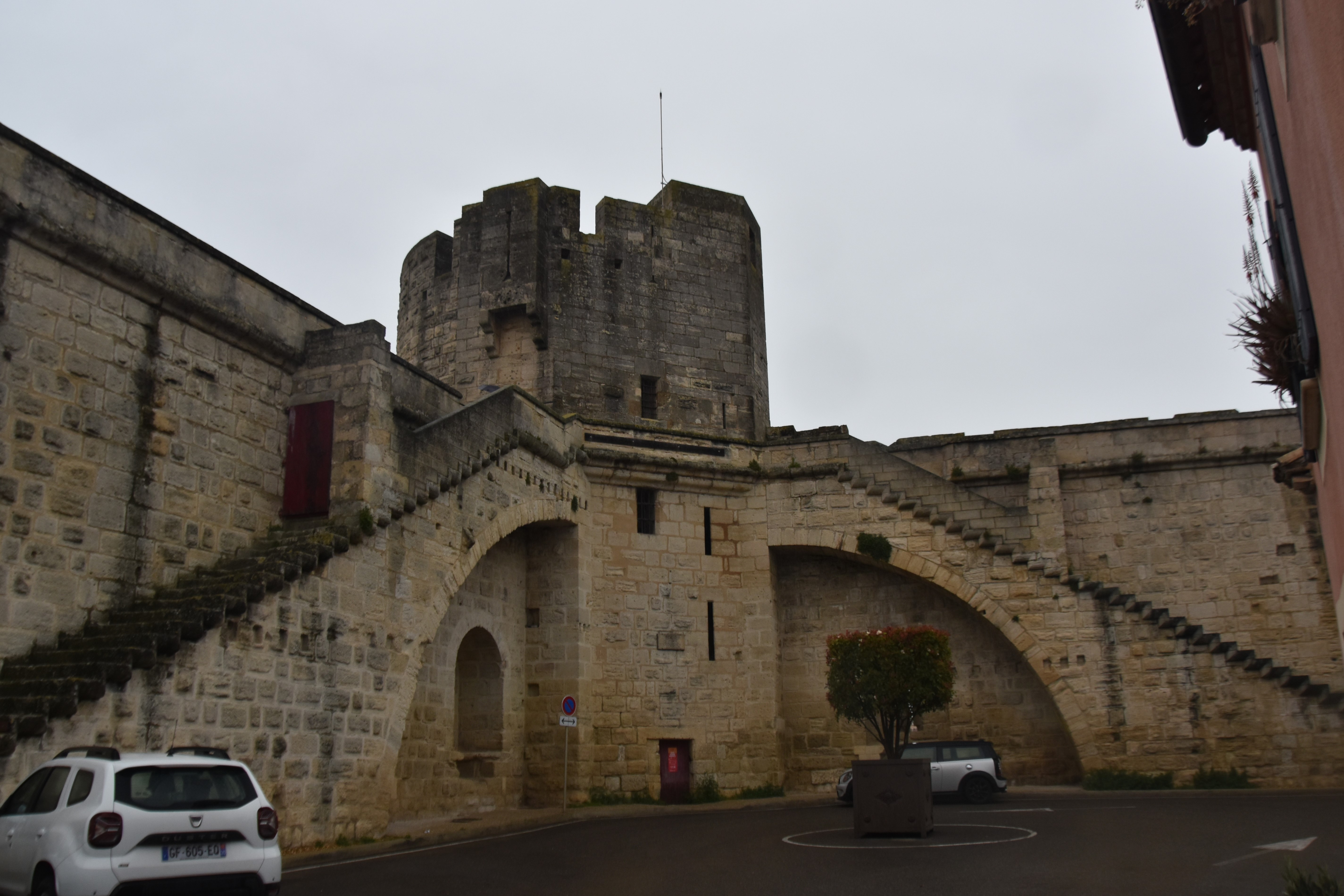
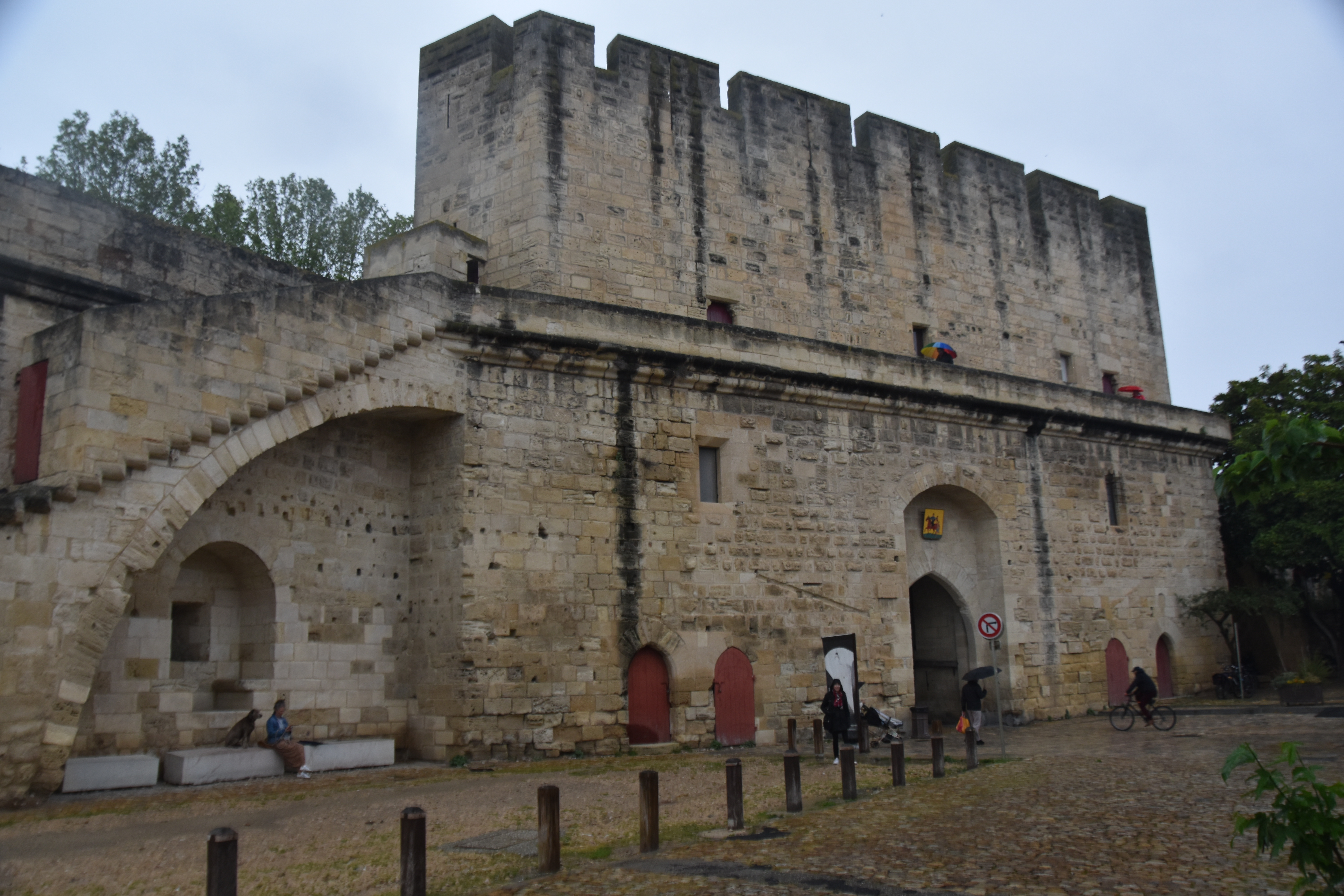

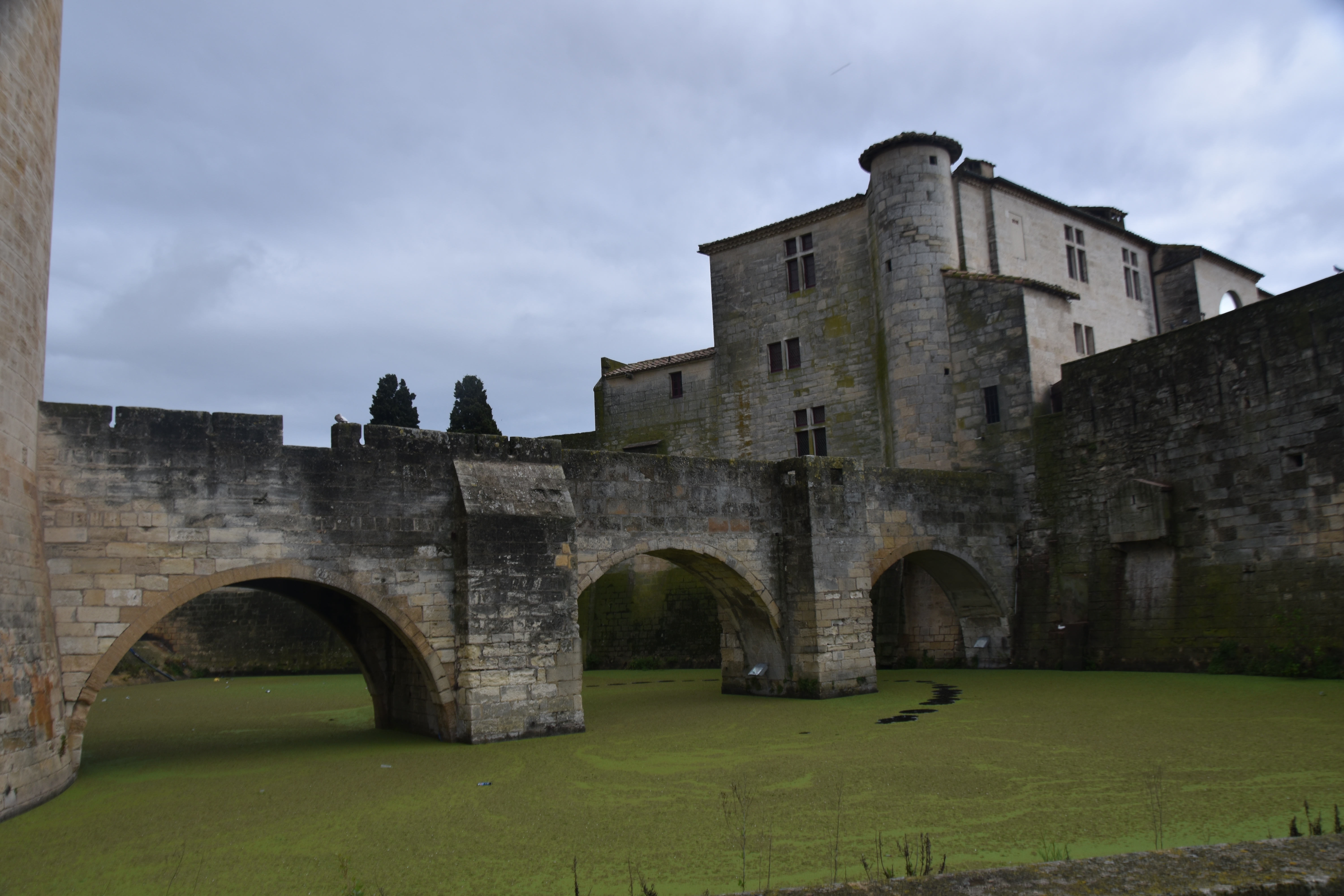
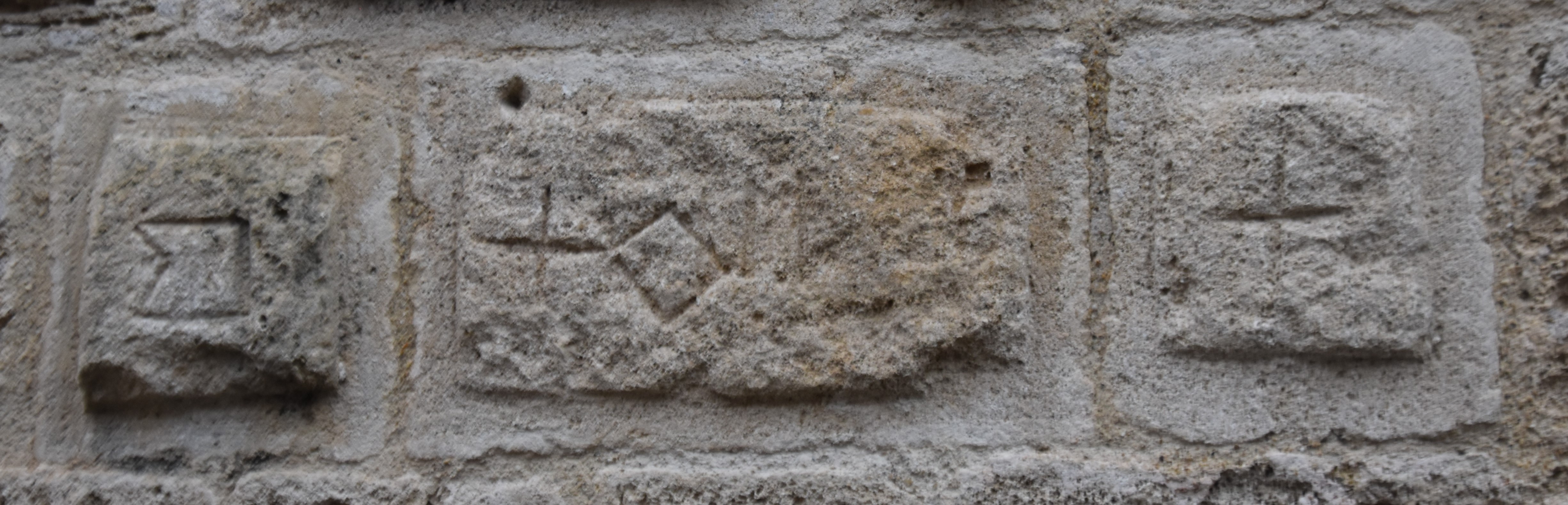
A small fascinating aspect of the walls is the masons marks. These were made by the masons who cut the stones in the quarry in order to have their pay calculated on the basis of the work they had undertaken. I first encountered these on the canal bridges of Bath, Somerset, England.

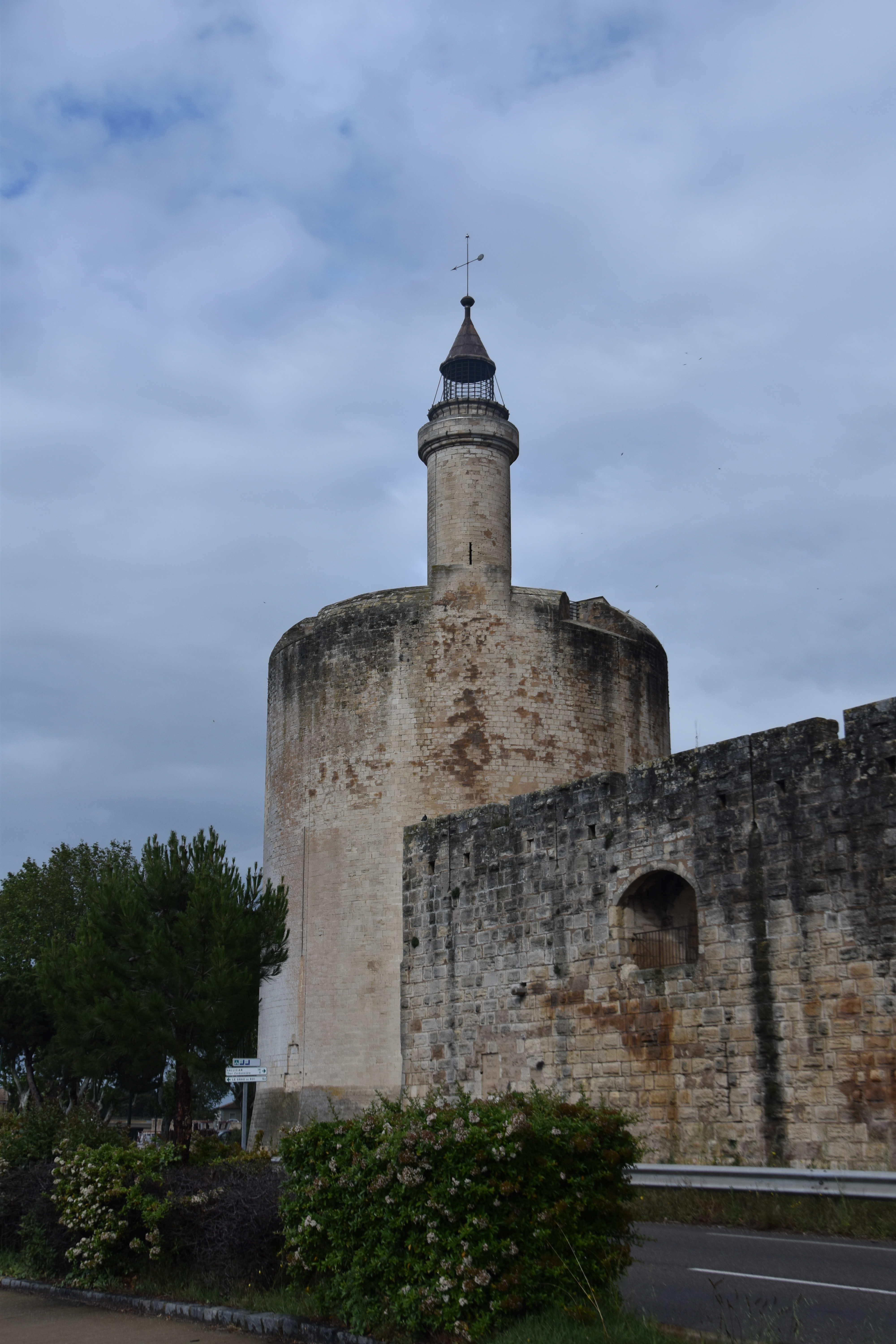
The C13 Constance Tower has been used as a residence and a prison. Both the Protestant Hugonot’s and the Knights Templar were persicuted in this period. However the most interesting thing about the tower is the fire box on the top that allowed it to function as a lighthouse. The Town after all is on the junction of many waterways.

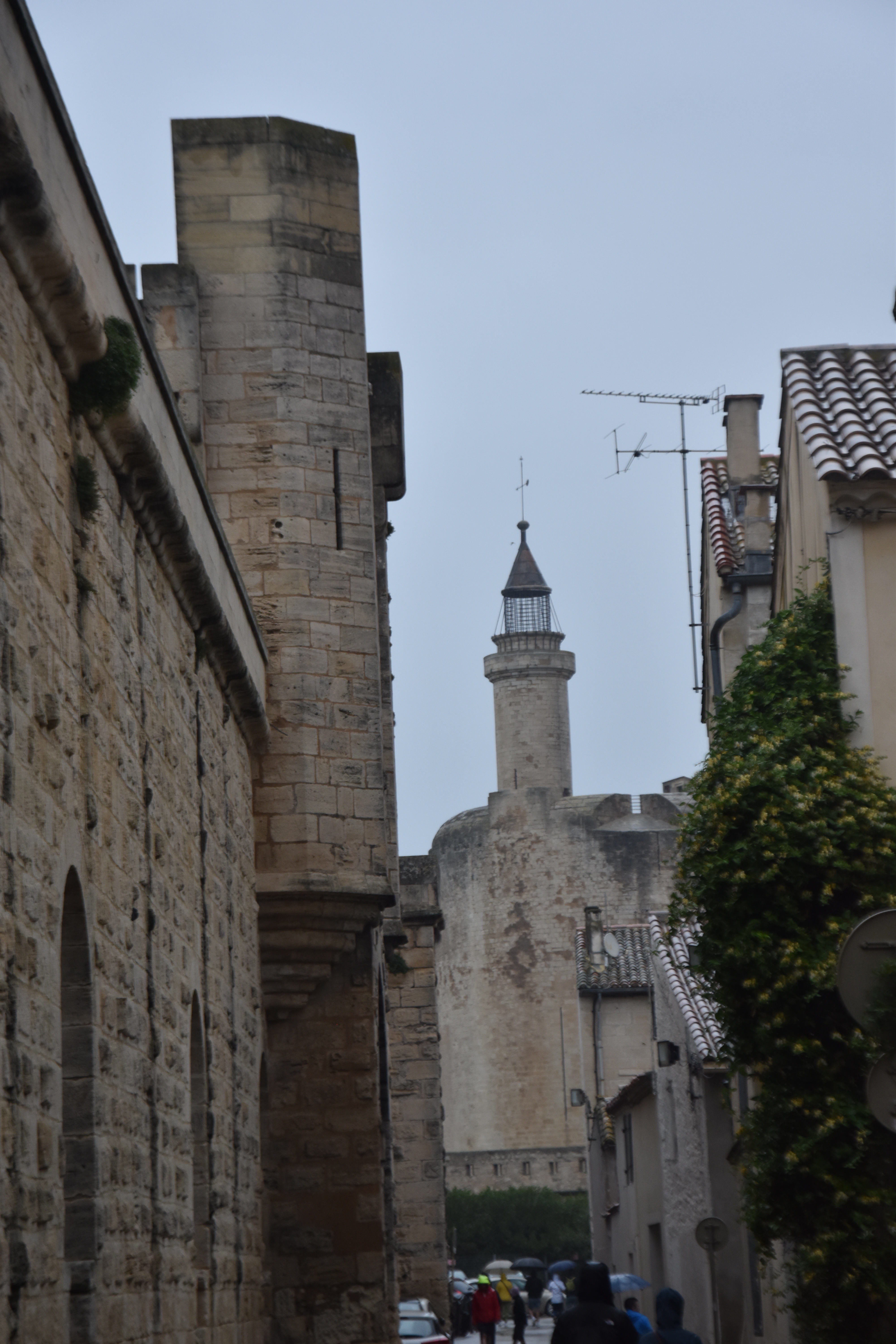
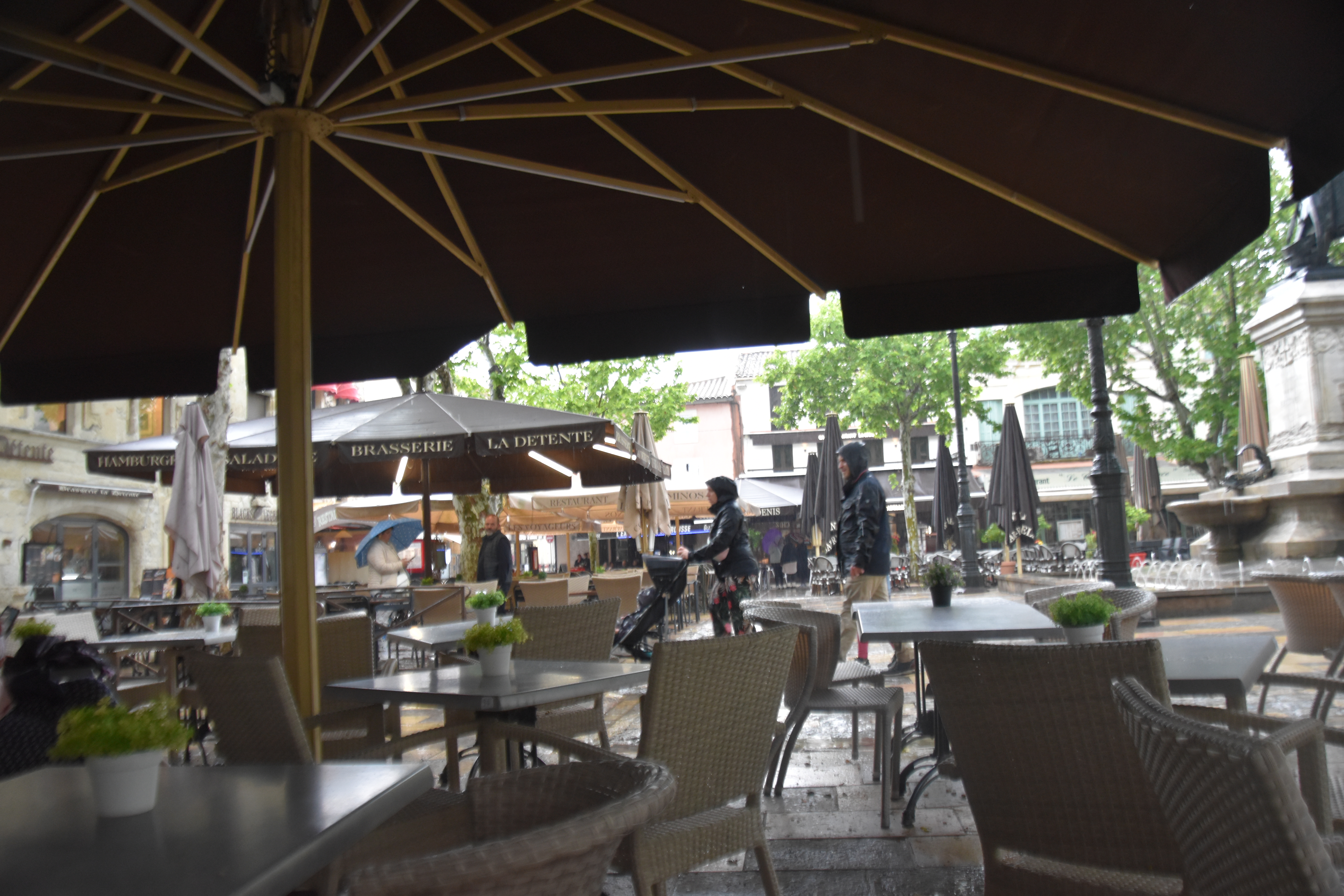
The town is laid out on a grid pattern with squares and open spaces. The weather was rather changable and we sheltered in the main square unter the umbrellas of one of the many cafes.
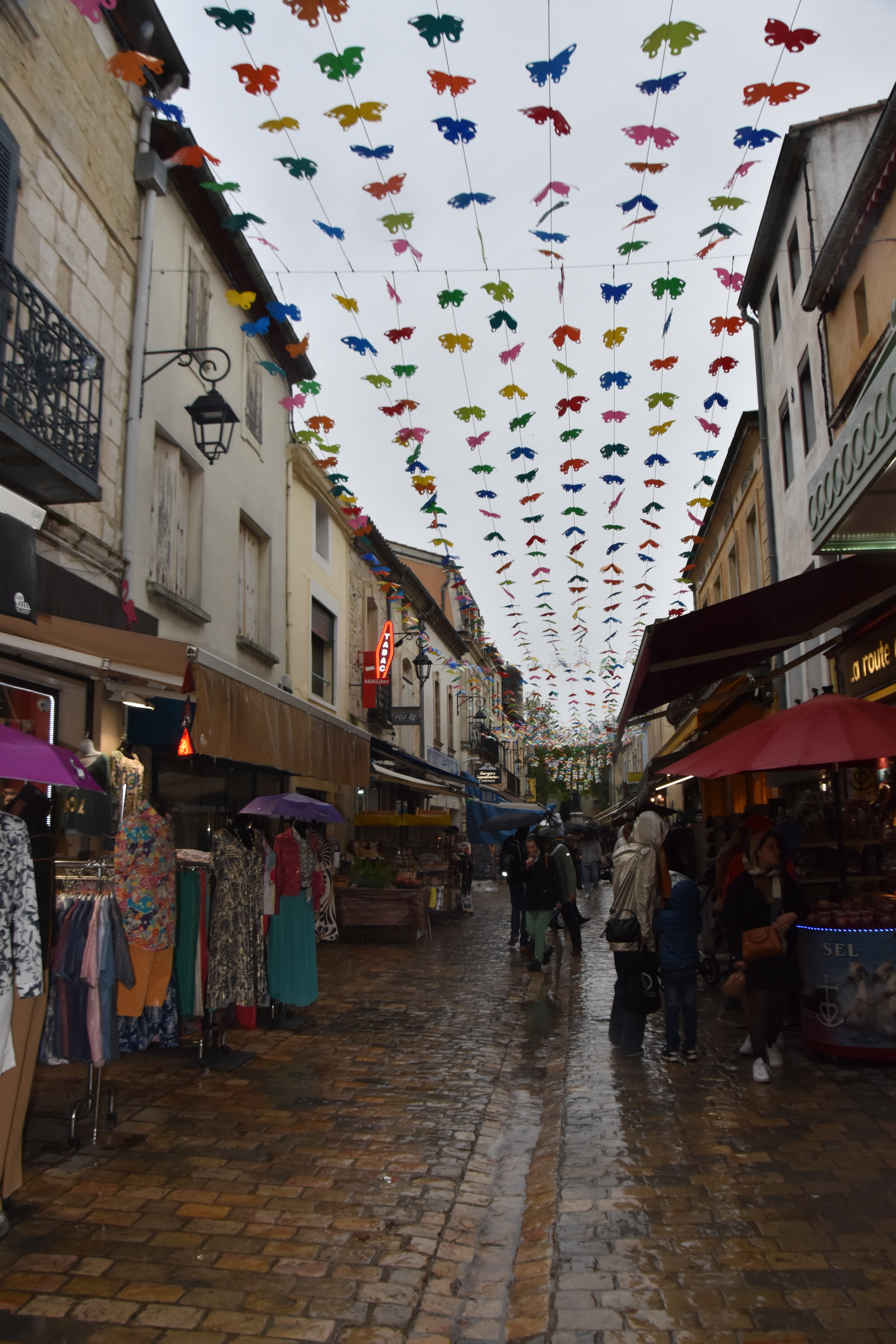
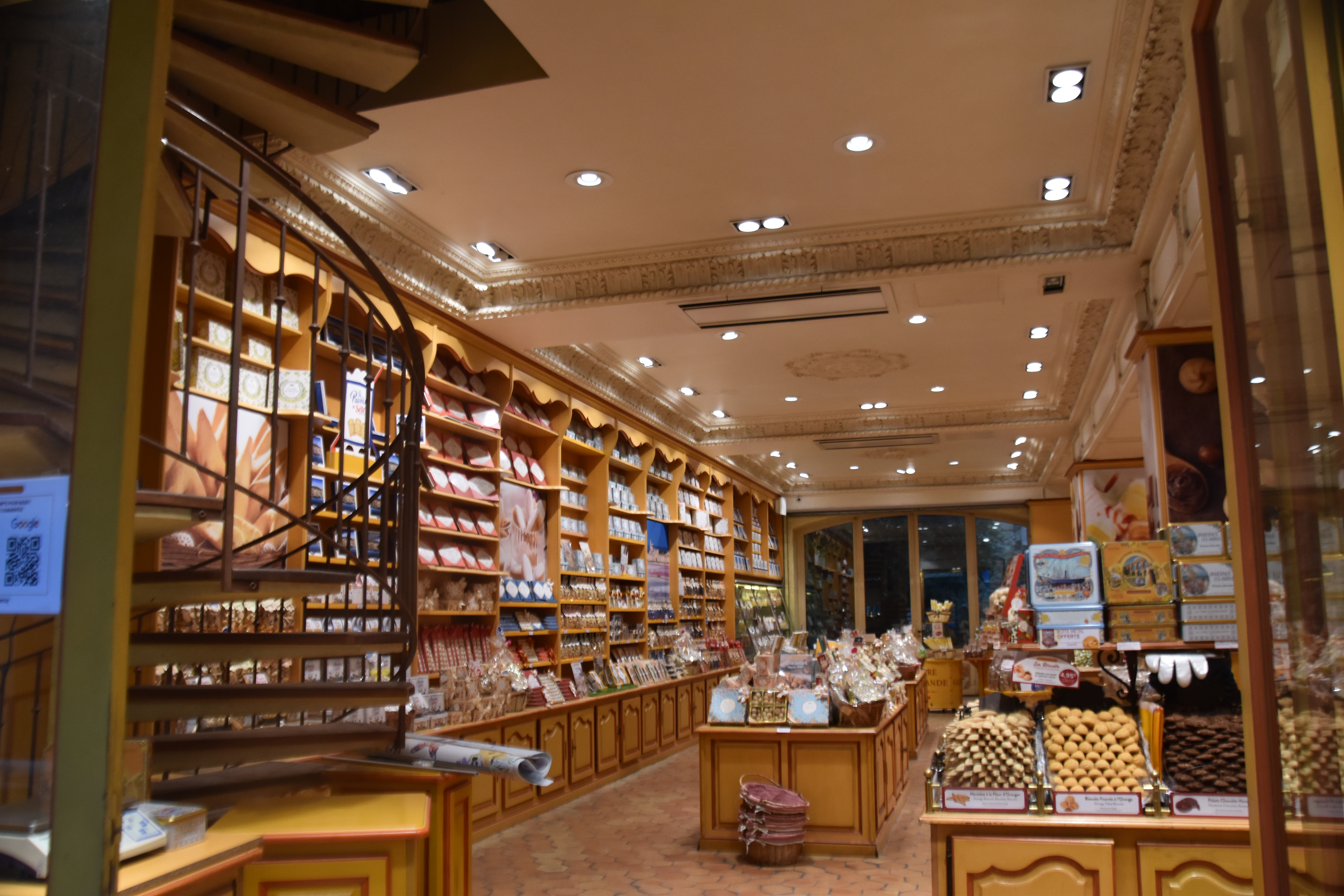
An absolutely imprevative stop is Le Cure Gormande, a sweet shop “sans comparrason”
We took a walk out in the evening to see the town floodlit.
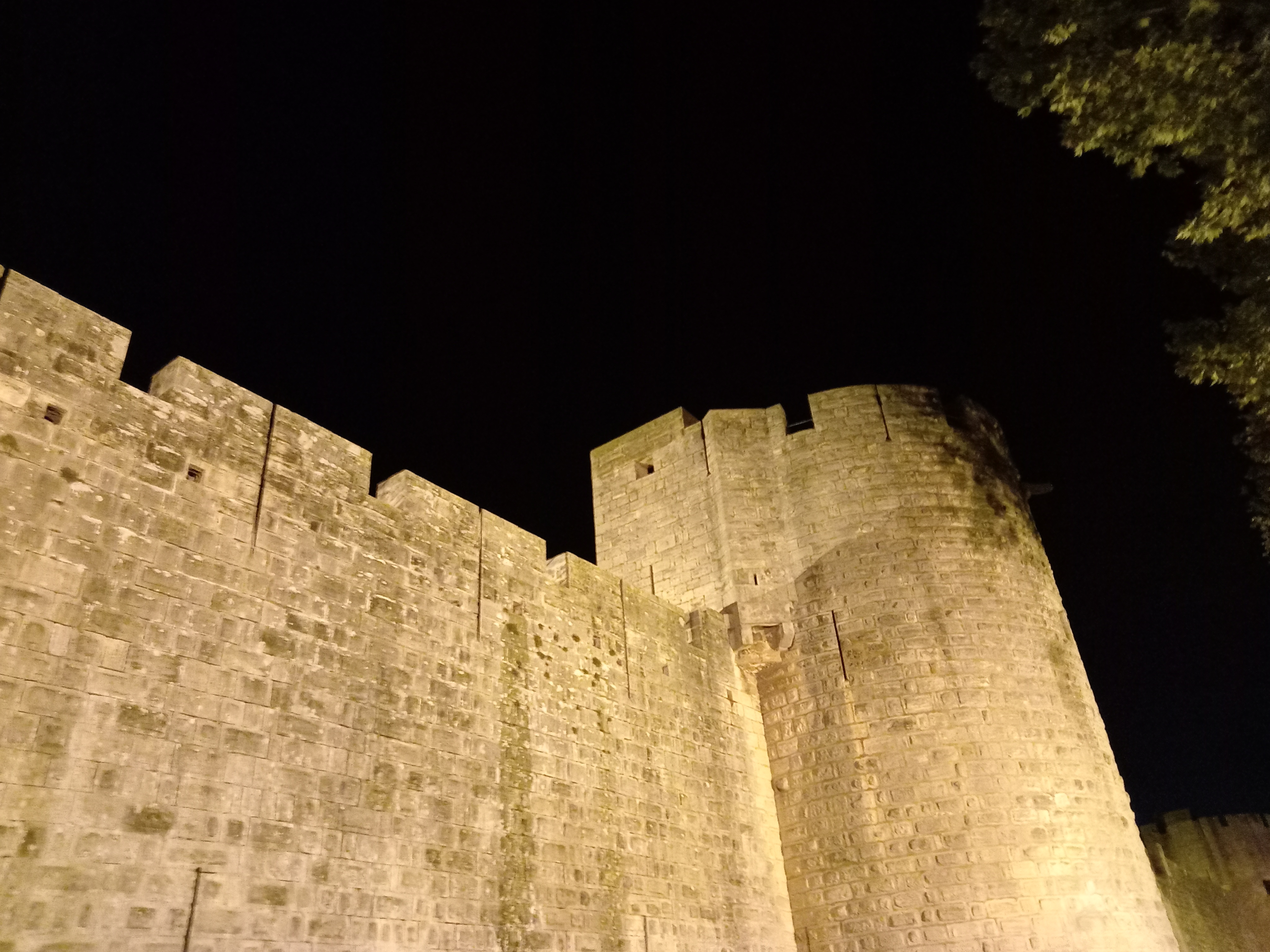

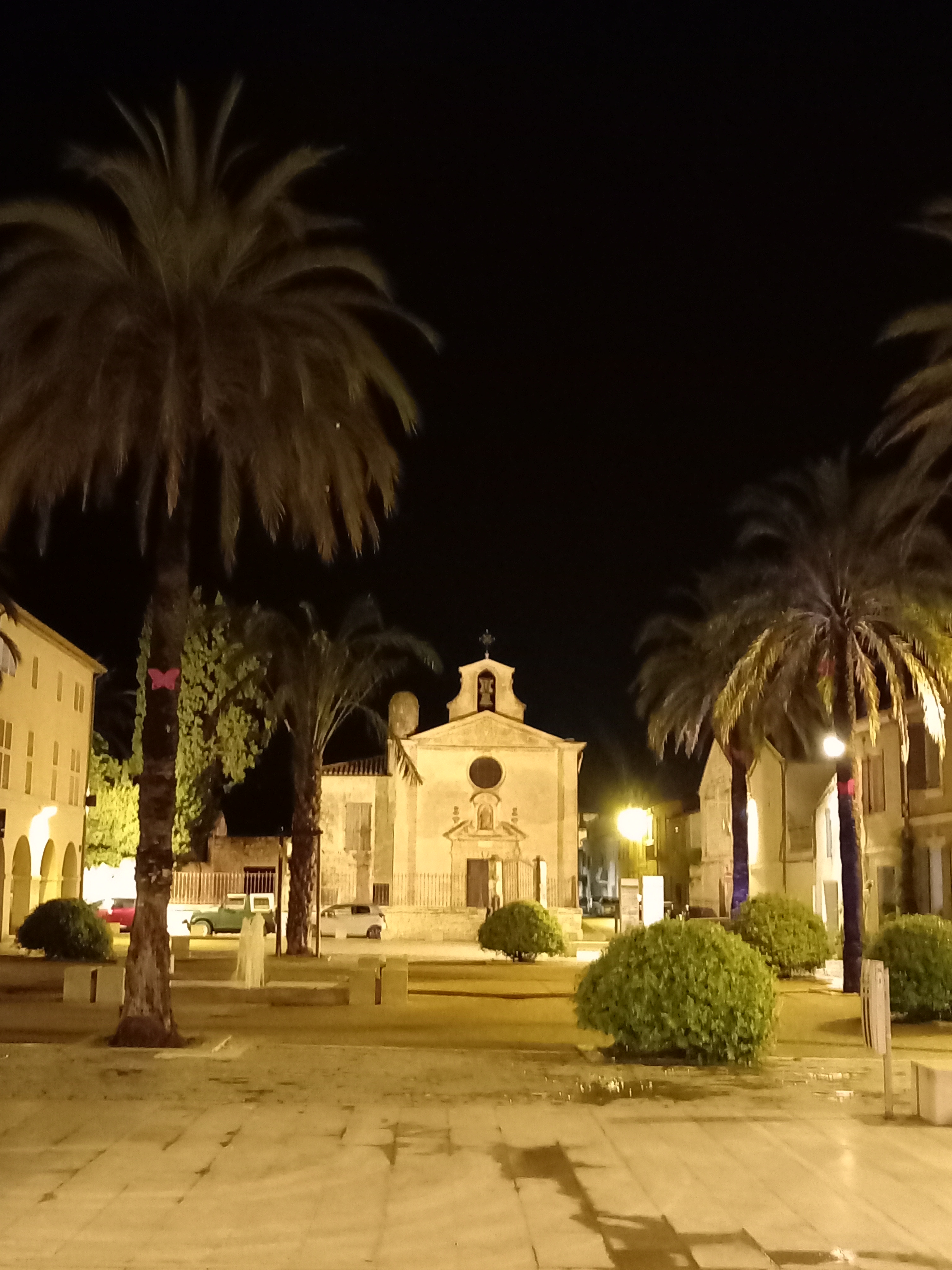

7th. We decided to take a boat trip today which promissed to take us past the salt works and to witness bulls being worked on horseback using Carmargue horses. So we went down to the port to see what was on offer.
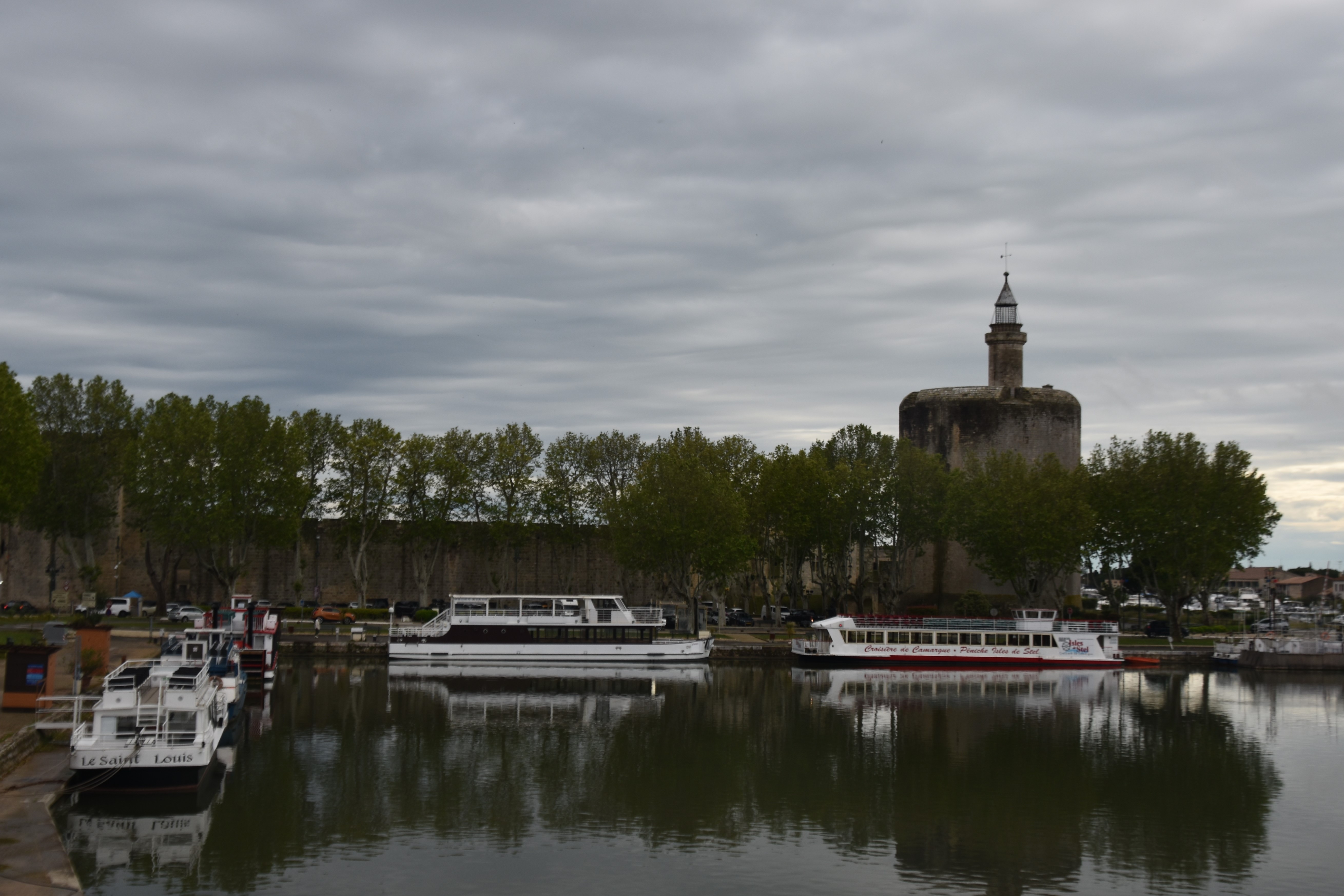
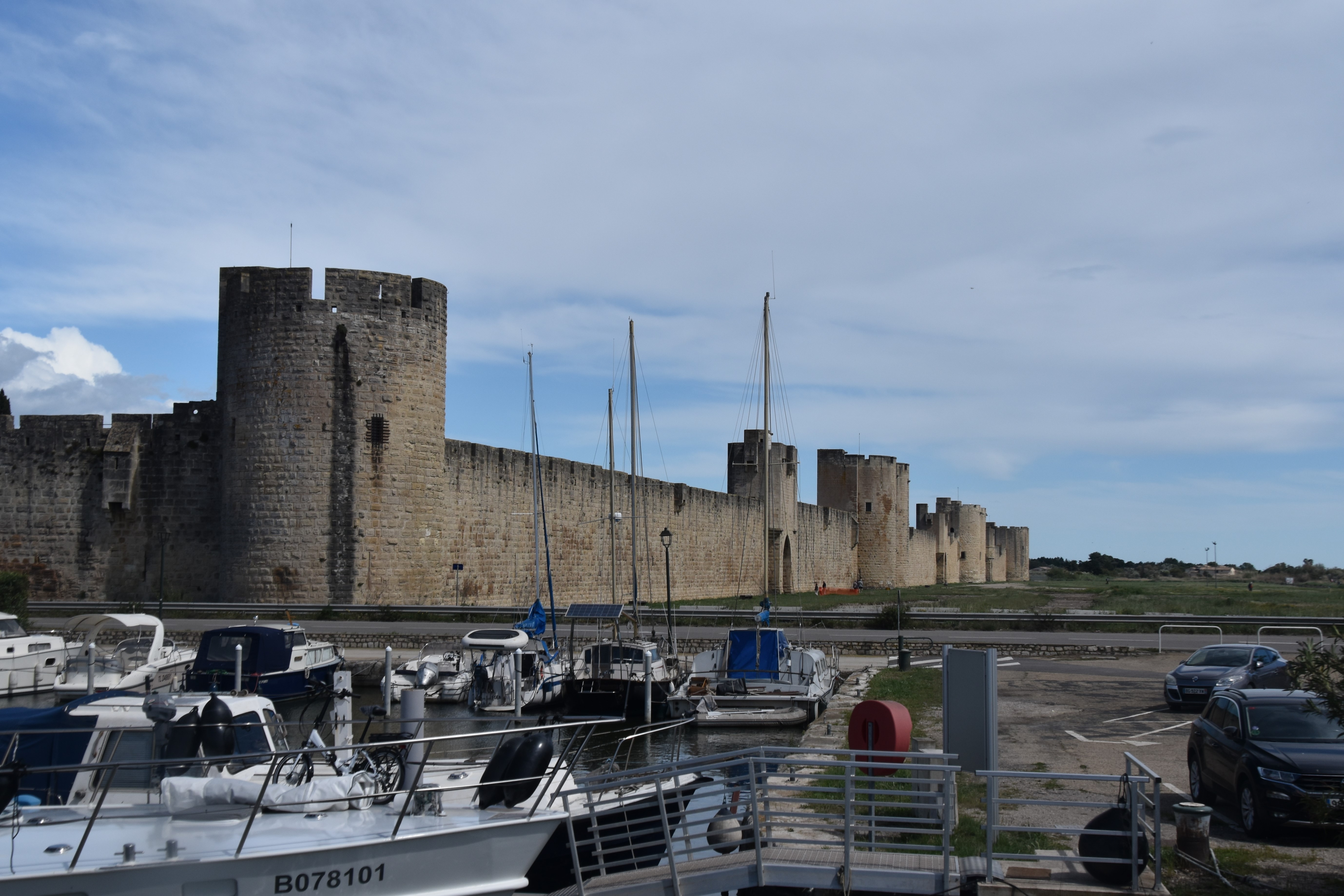

The Bull farm was interestingm featuring as it did two of the three most embl;;amatic creaturtes of the area, Bulls and Horses.

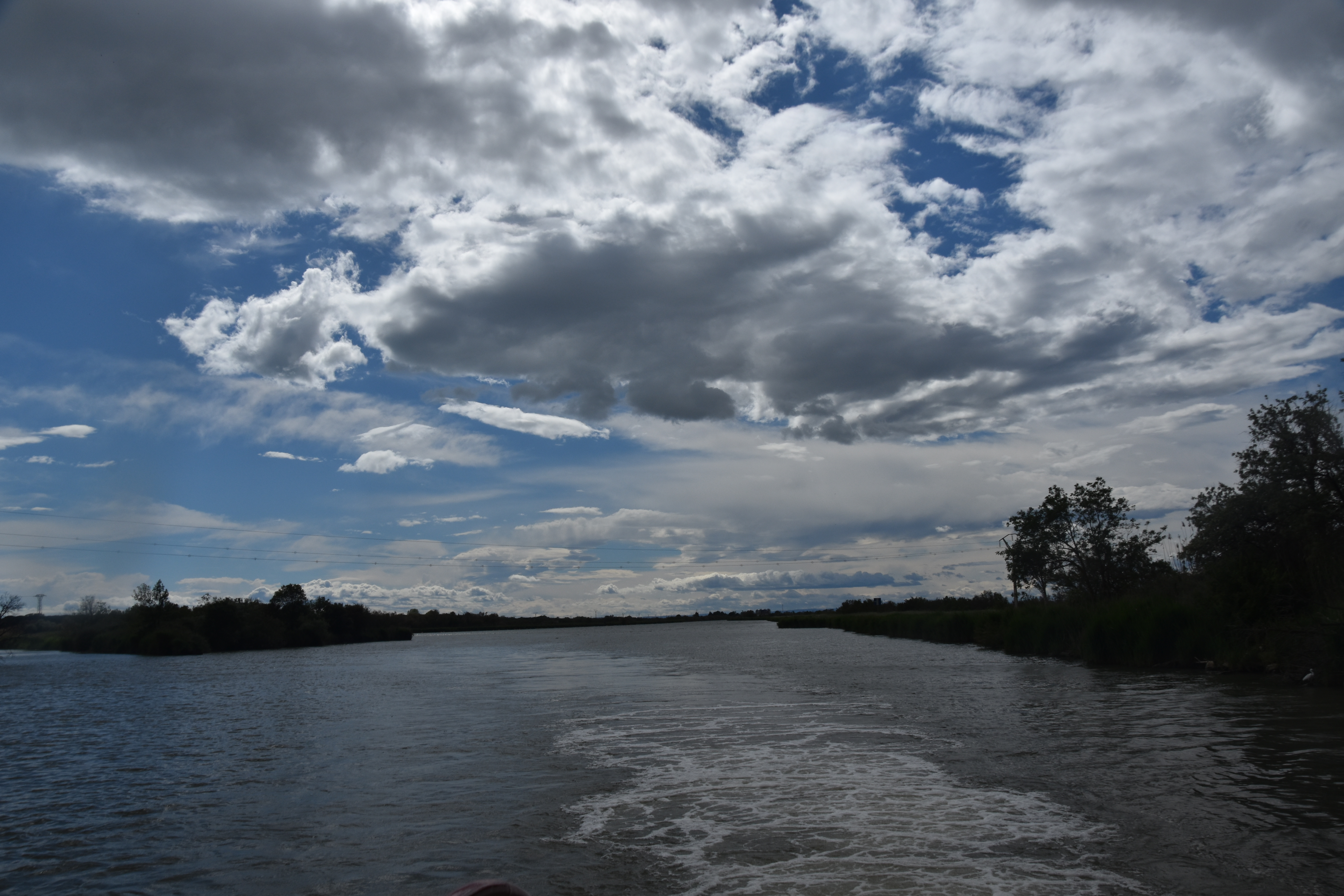
We cruised back to town along the canal Rhône a Sete.
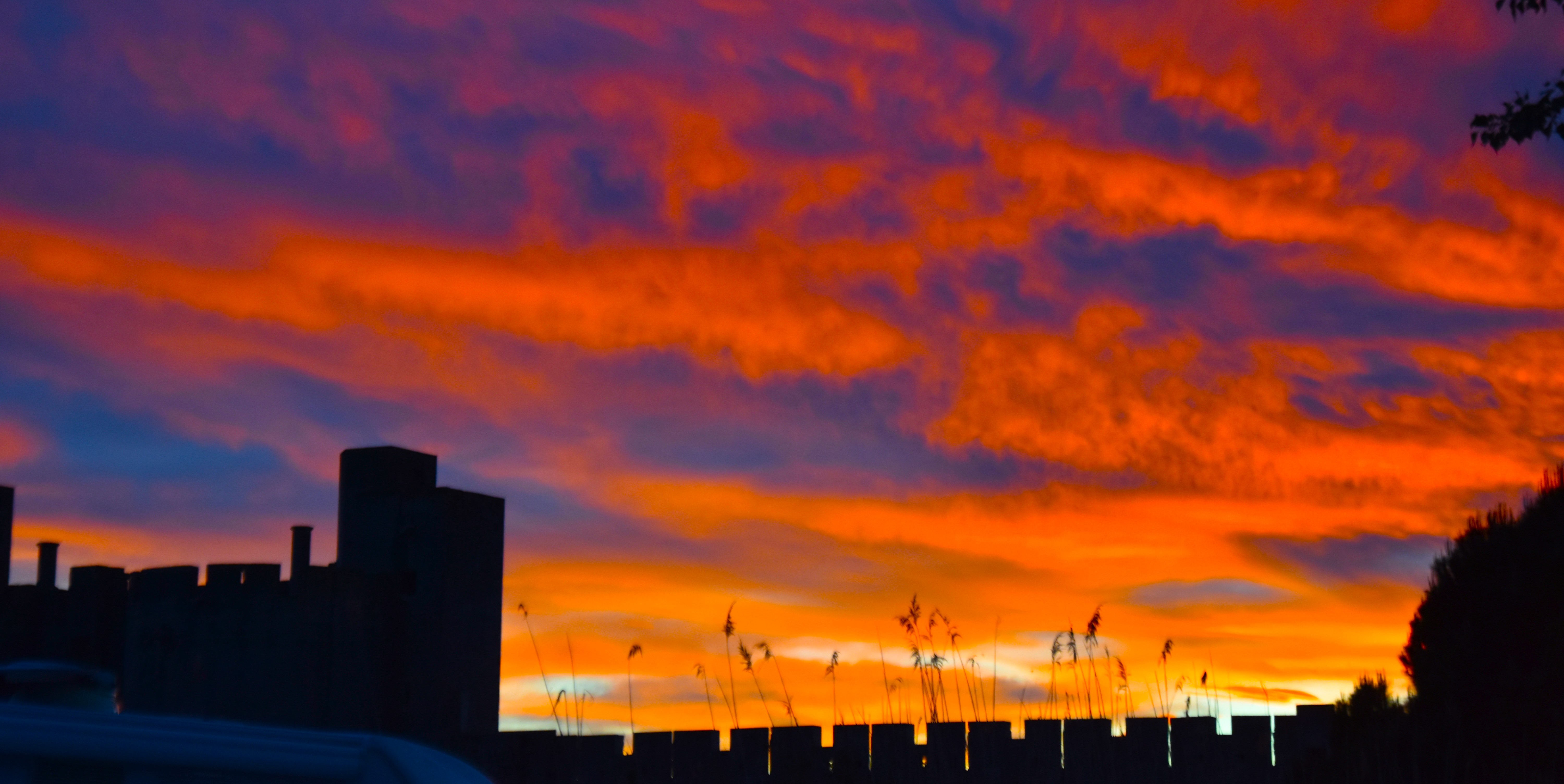
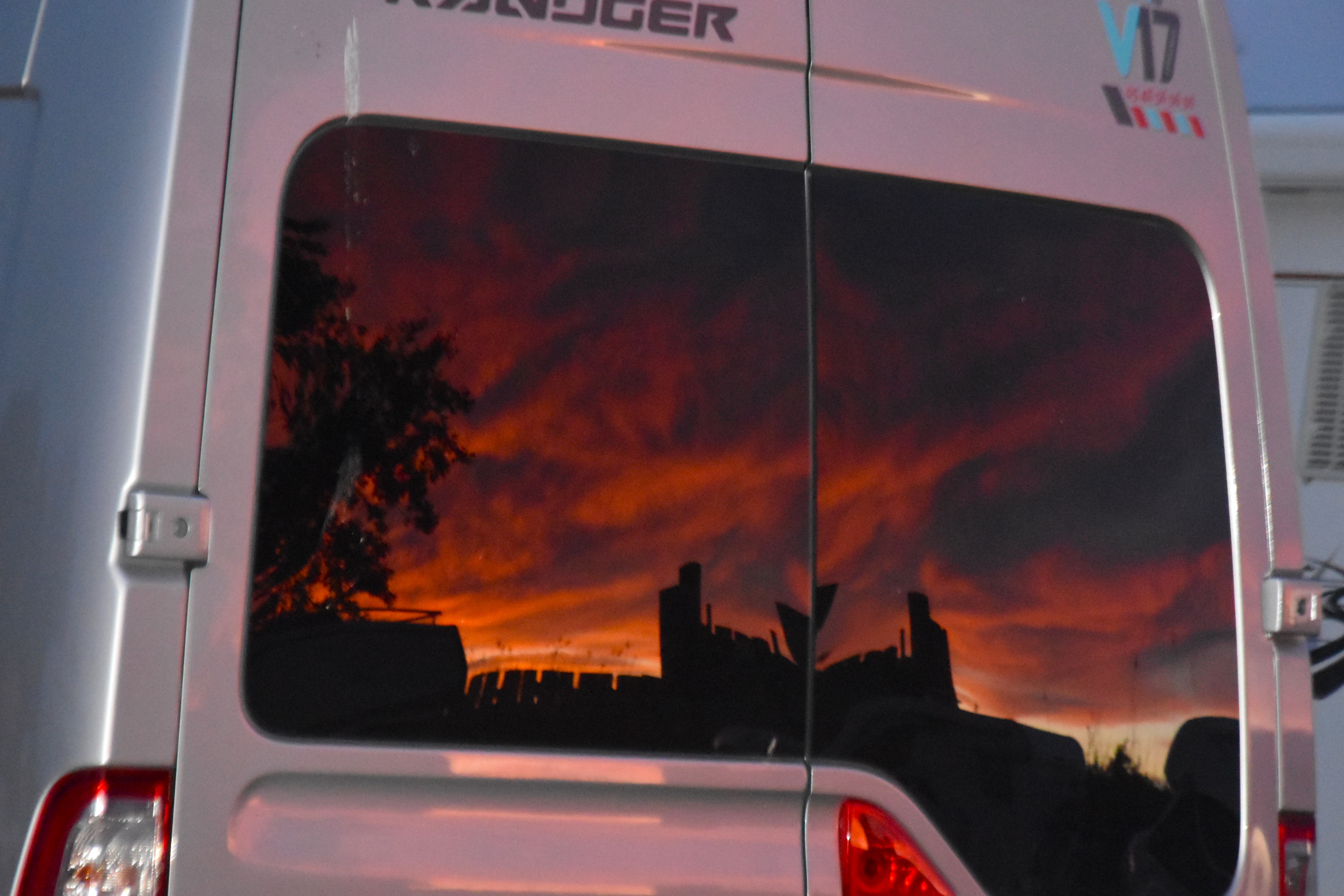
That evening we were treated to a blazing sunset.
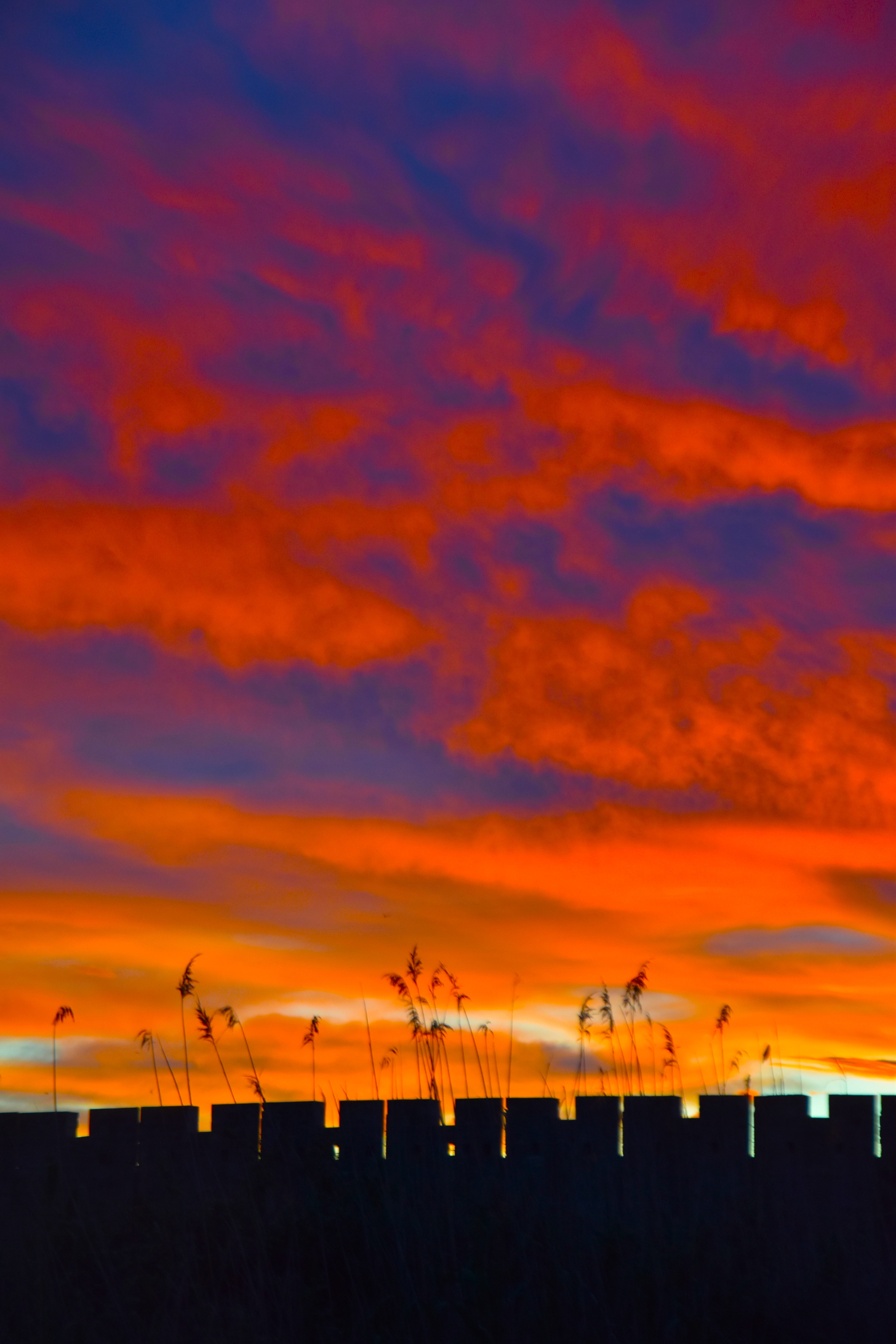
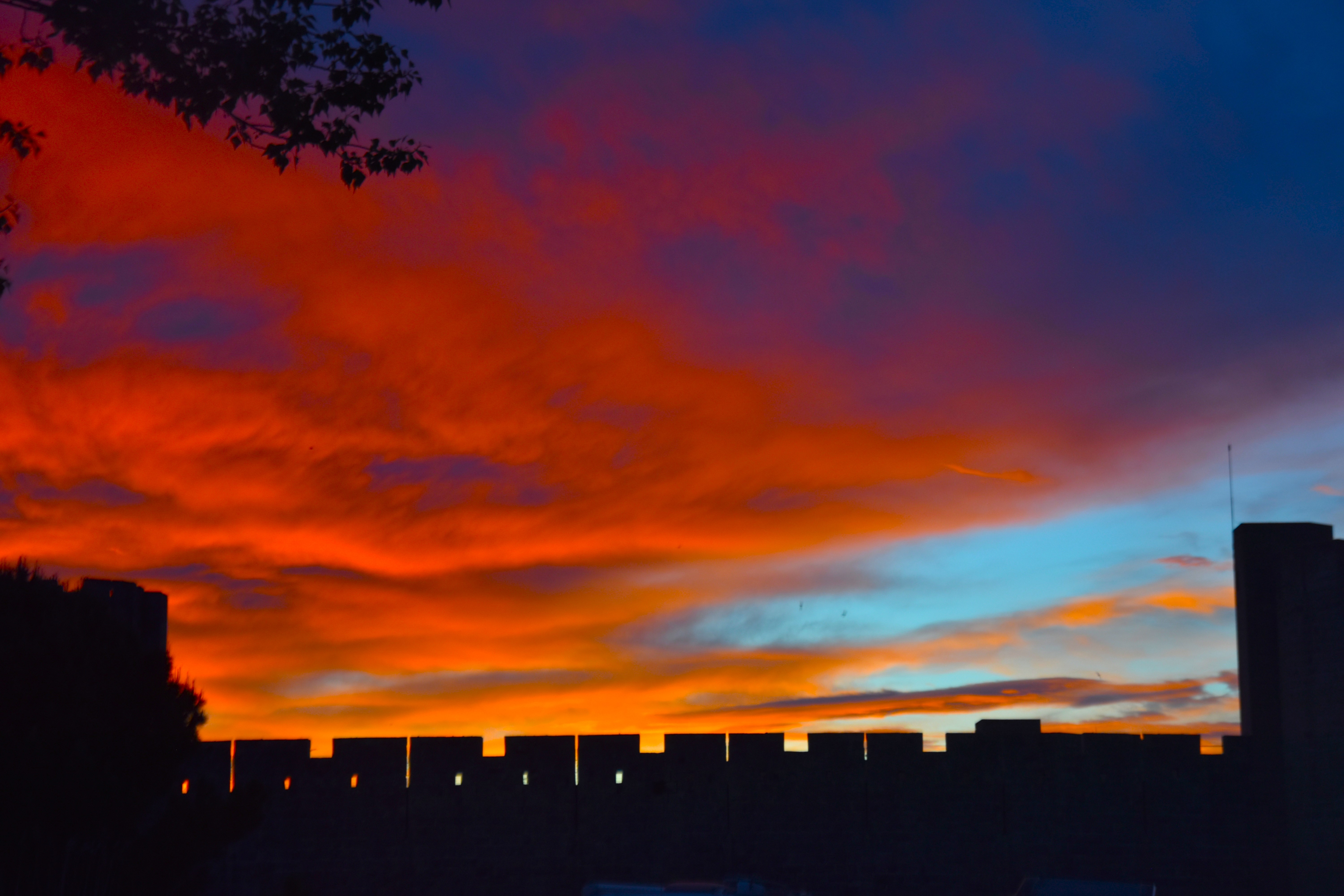
A reflective moment.
8th. This morning it was a major re-organisation of the van and packing for Vicky. I took an early walk with Cassidy and noted an interesting phenomina vis restoration work. My cousin and I had reflected on what was the better aproach. Make it obvious what is new work ( as the Japanese have done at Ankar Wat or try and pass new work off as the original (vis much of the Chinese restoration work “Ming Tenples”) Here in Aigues-Mortes they seem to have done both within an arms reach of each other – bizaar!
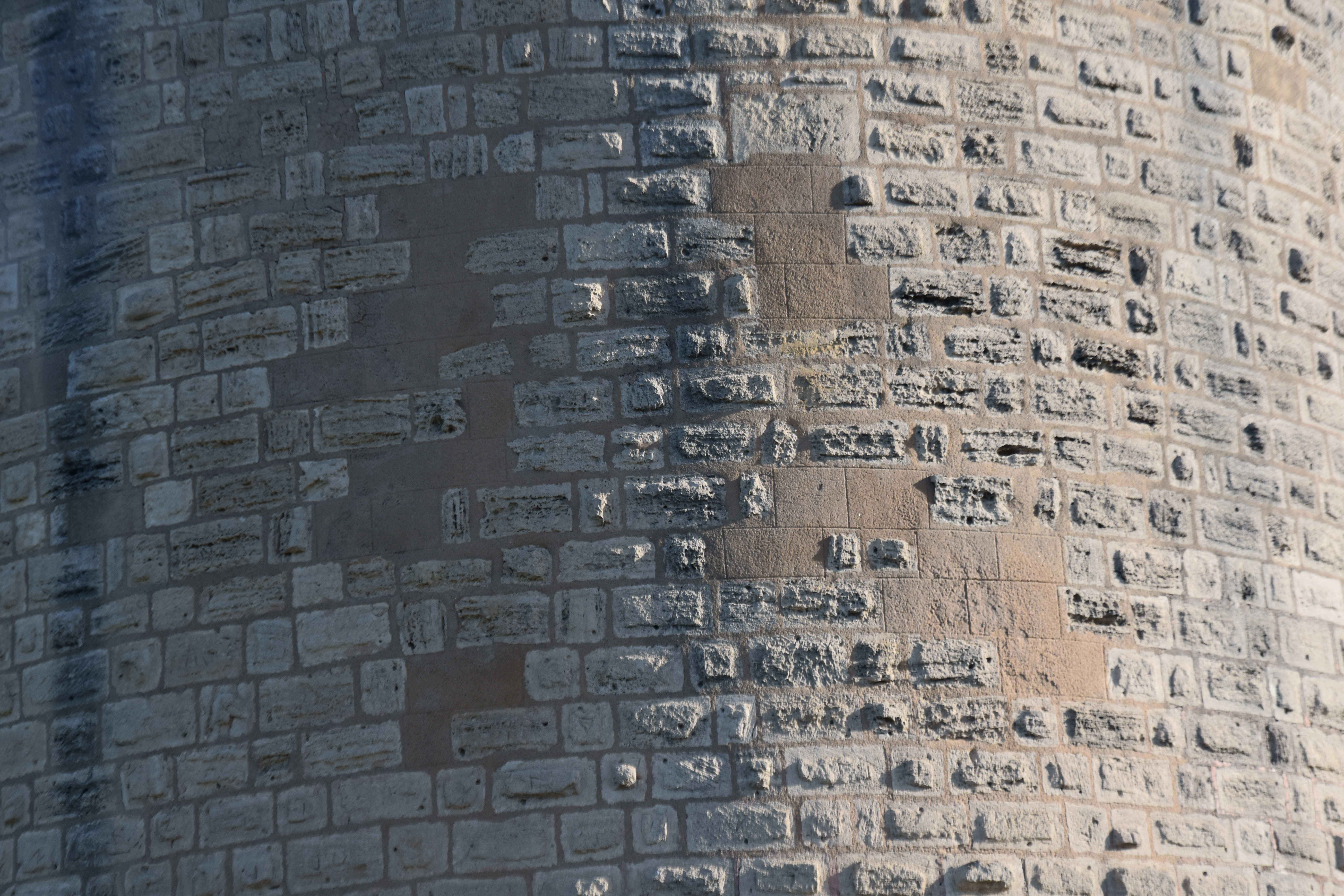
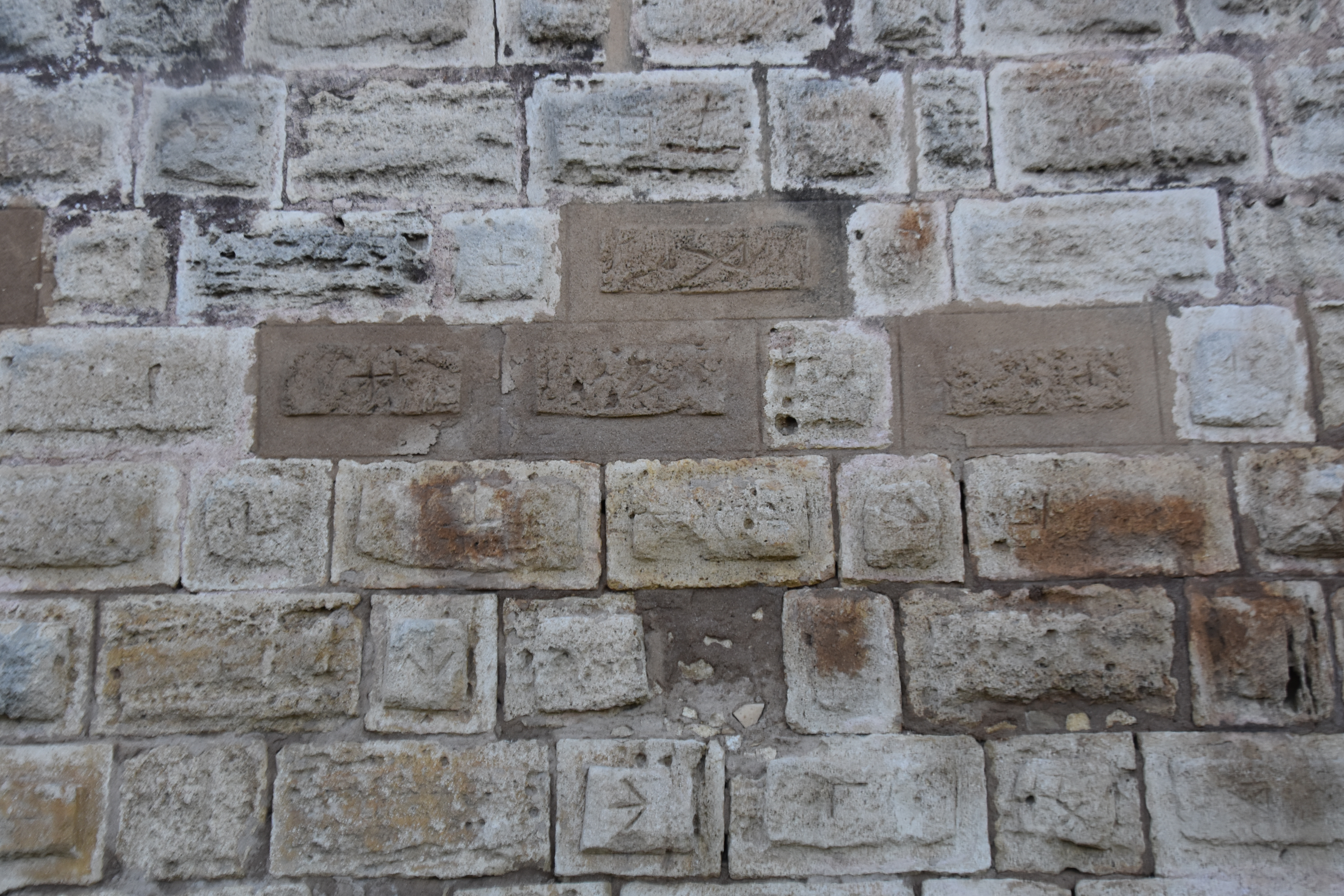
Photo 2, complete with masons marks – Tsk, Tsk!!
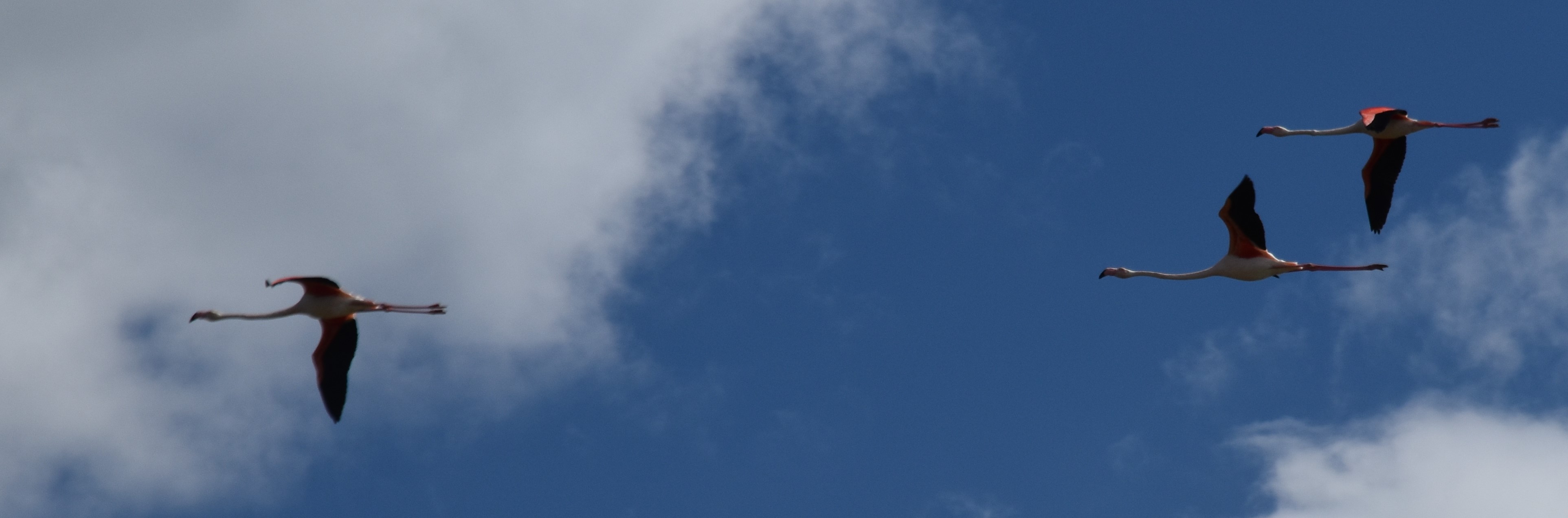
We found the second Aigues-Mortes Aire just outside town and I booked in so that I was secure about where to stay for the next couple of days while I catch uo on a load of paper work (tax return! ) and had lunch. On a last walk with Cassidy for “Aunty” Vicky we were lucky enough to see a scien of flamingoes fly overhead.
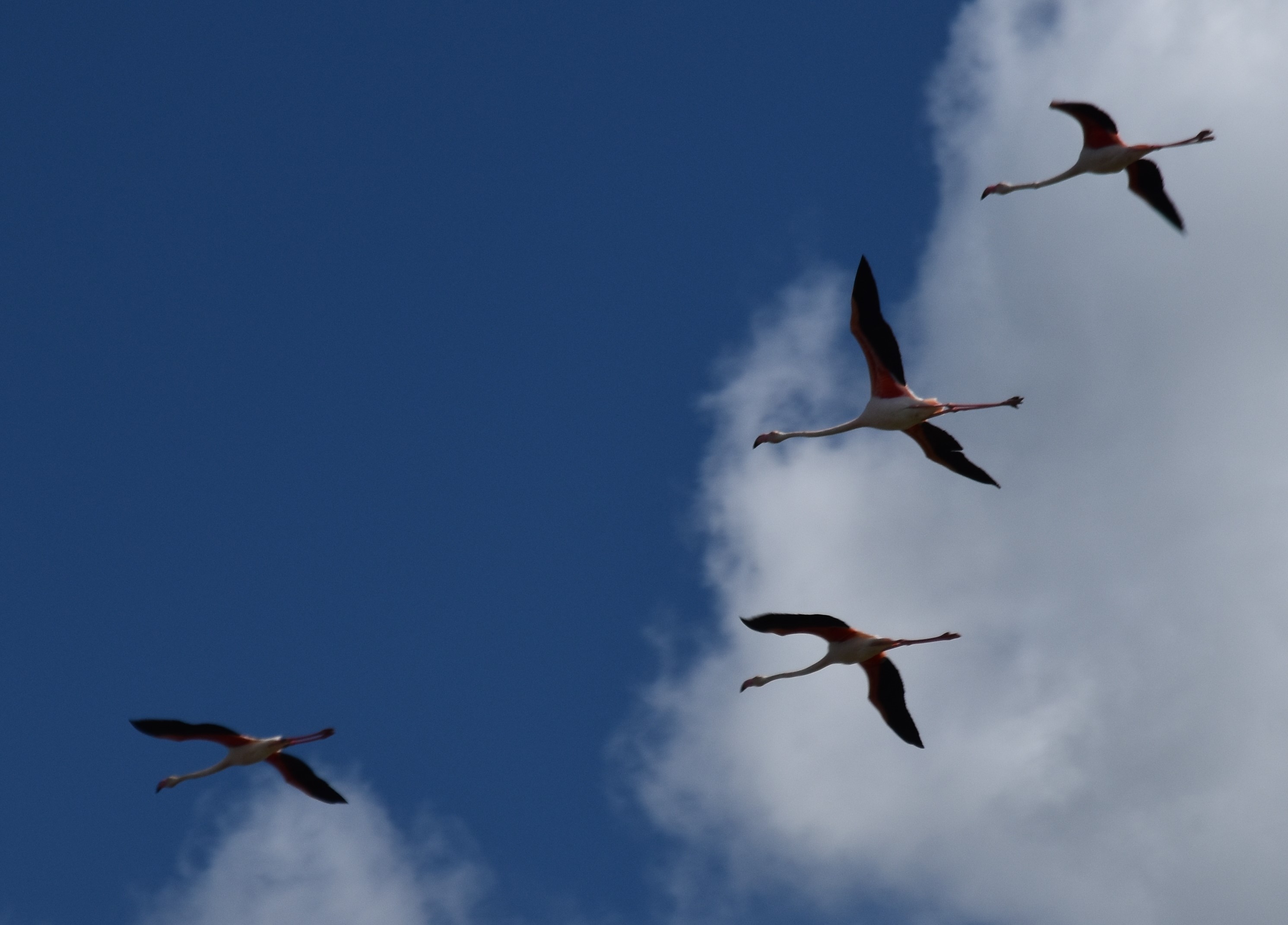
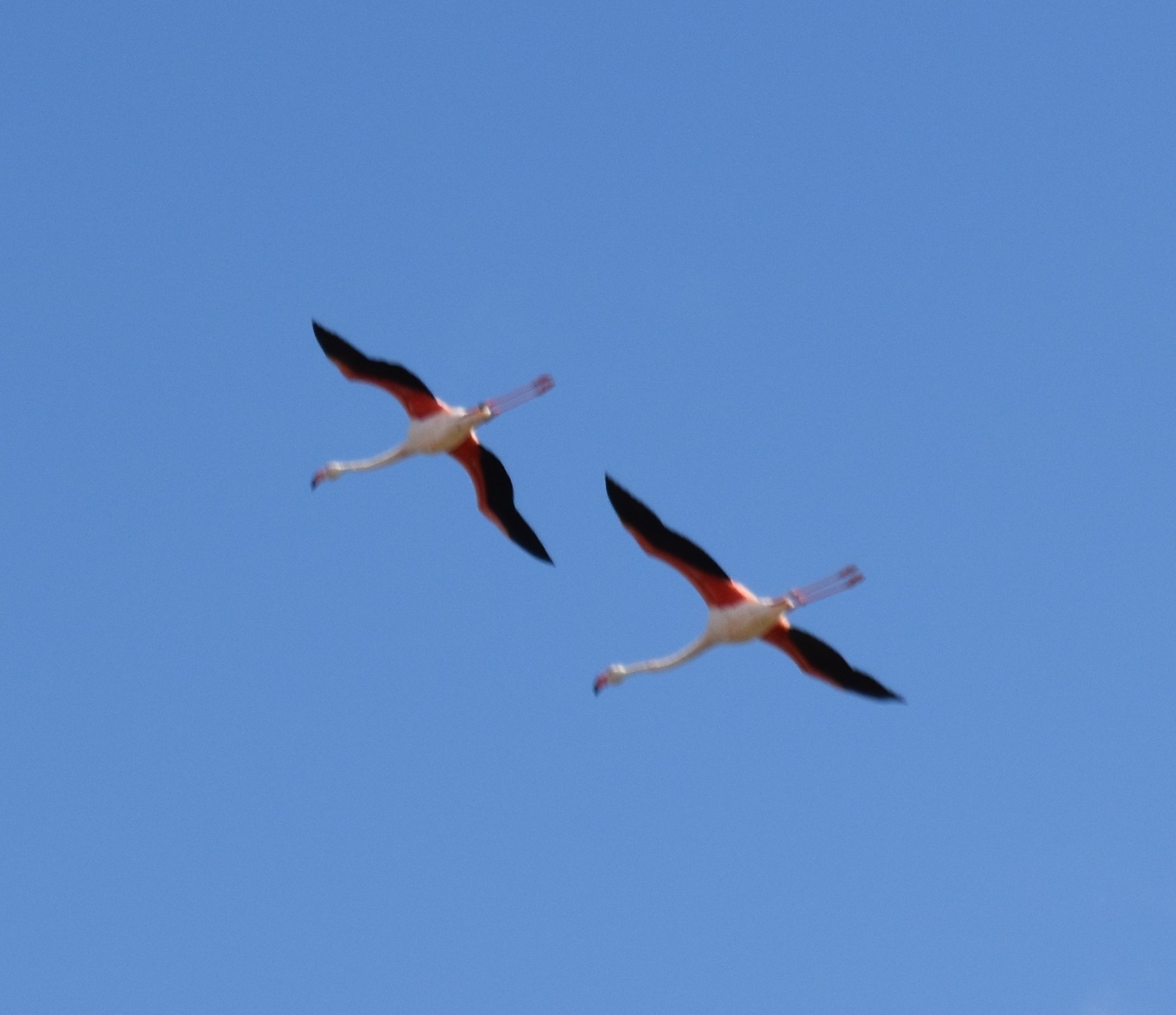
Then off to the airport. Vicky has been the perfect travel companion and will be missed by both of us. I do hope she will come back for another adventure.
9th. After walking Cassidy I spent the best part of the day completing and submitting my tax return; paying (on line) my PAYE for last month; reconciling my bank statment for last month and getting the Home Owners Association accounts up-to-date and e-mailed to the president. So a fun day – NOT!
10th. Set off for Arles early as I will have this weeks client valuations to do tomorrow and as the Aire boasts a washing machine, laundry to do. However “Best laid plans….” etc. As the GPS had let us down a couple of times with coordinates I decided to imput the street address which was 67 route de Grau. However this was a VERY long road and it seems that the numbering system repeated itself as the road went through varios outlieing suburbs. I got the Aire on the third try. In addition to adding an additional 20k to the trip I did not arrive much before lunch time.
After lunch, with laundry done and half of it hanging below the awning to dry, Cassidy and I set off to town.
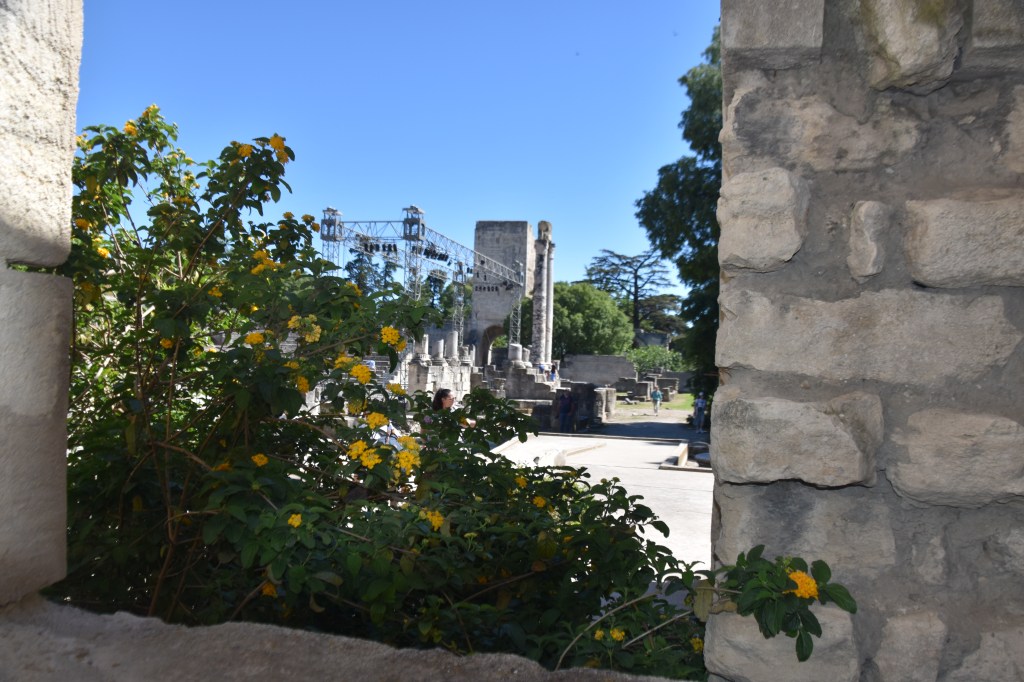
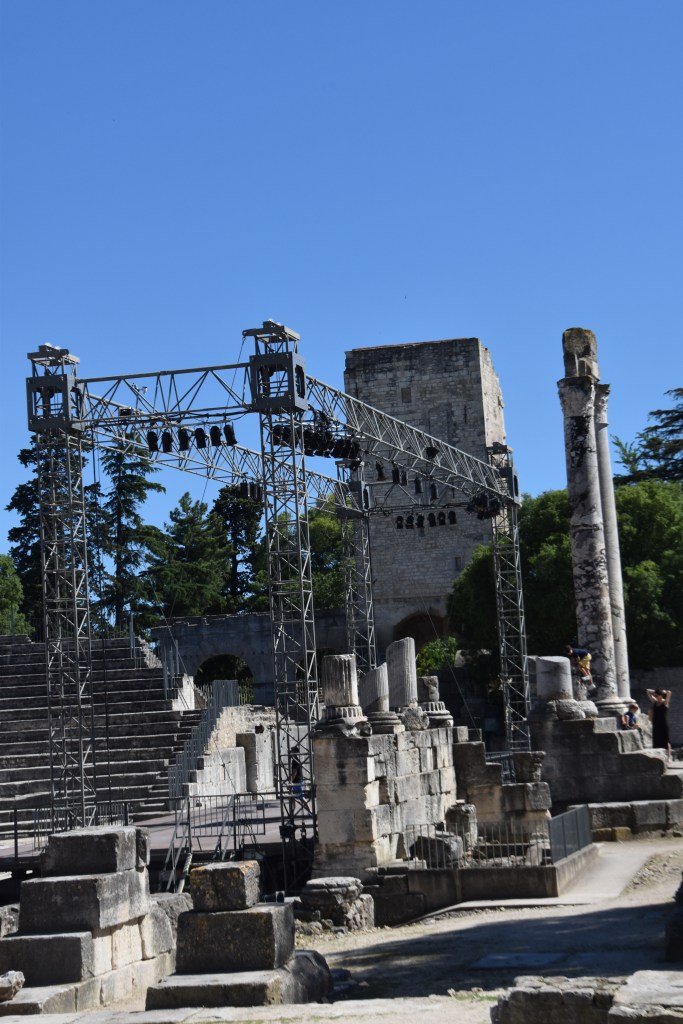
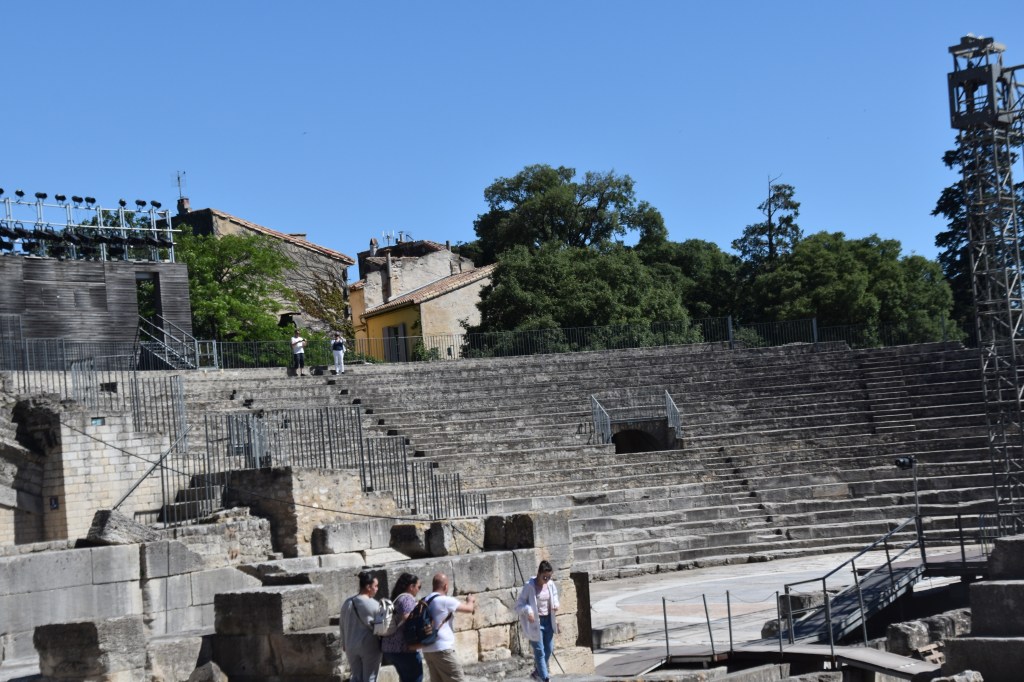
Arles is like a miniture Nîmes. It has \roman bathsm amphitheatre and theatre. |I tried to visit the last two but found that, even though they are outdoor venues, Cassidy was not allowed in. We enjoyed a wander about before returning via the Artisan Park, which is full of old, disused factories.
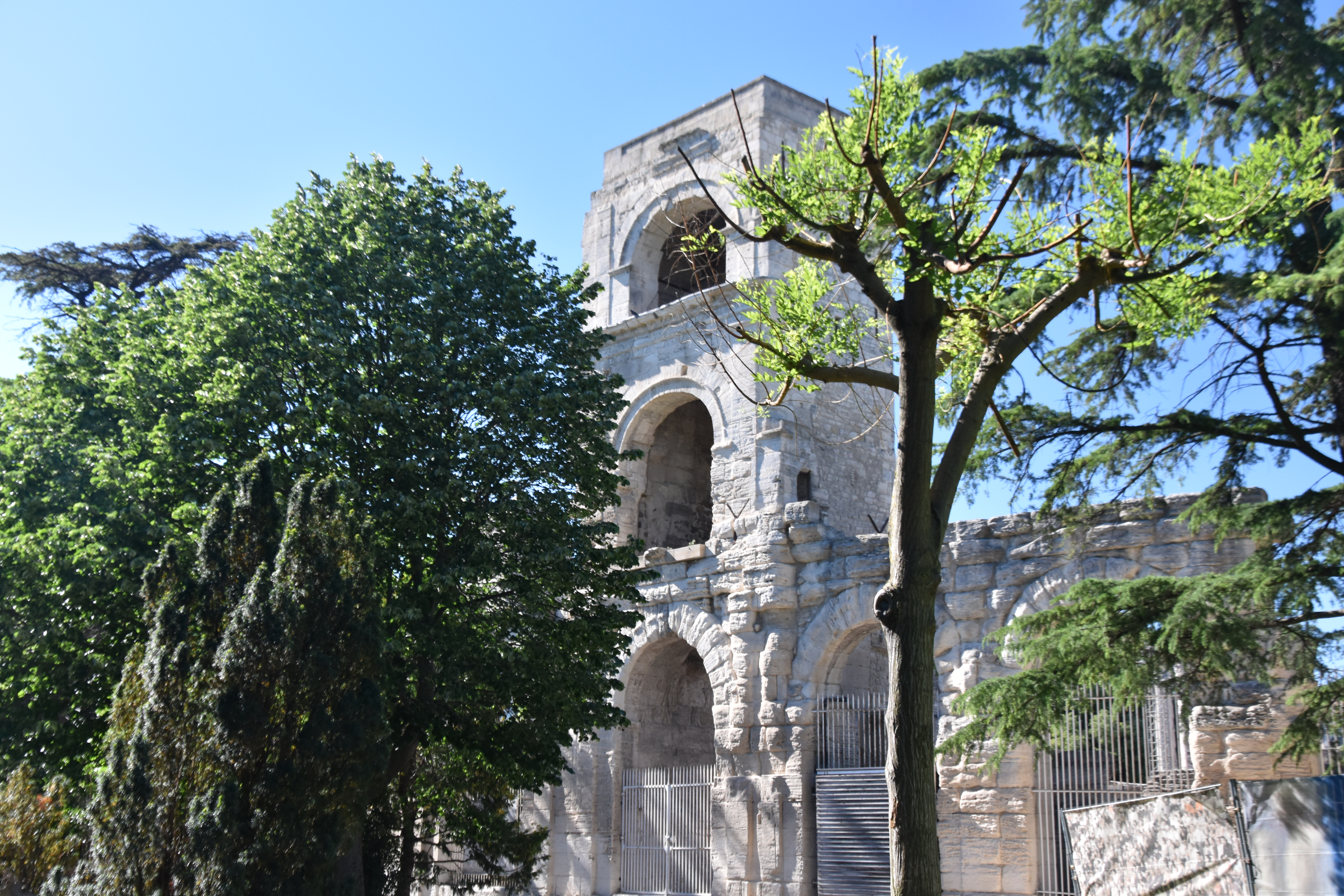
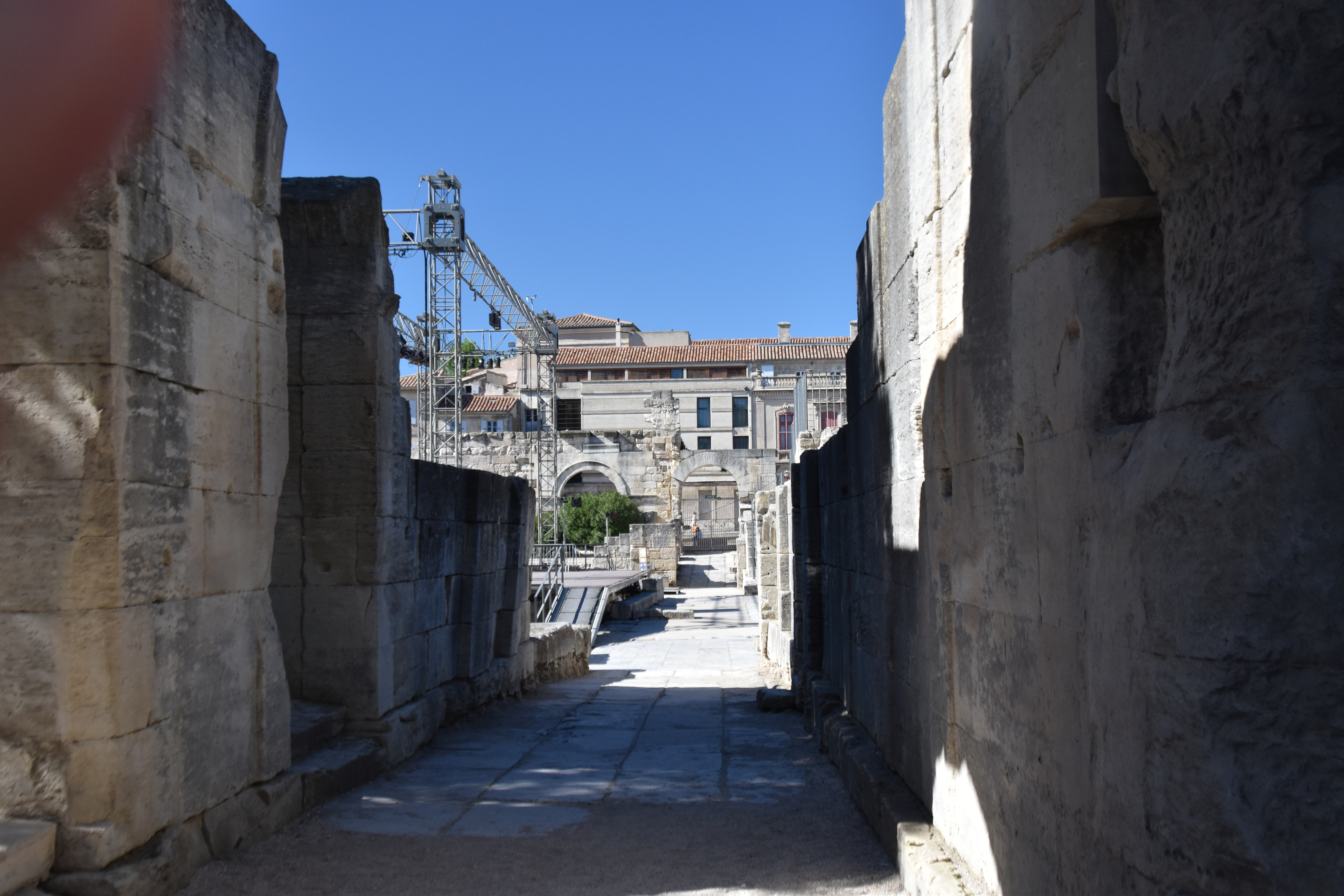
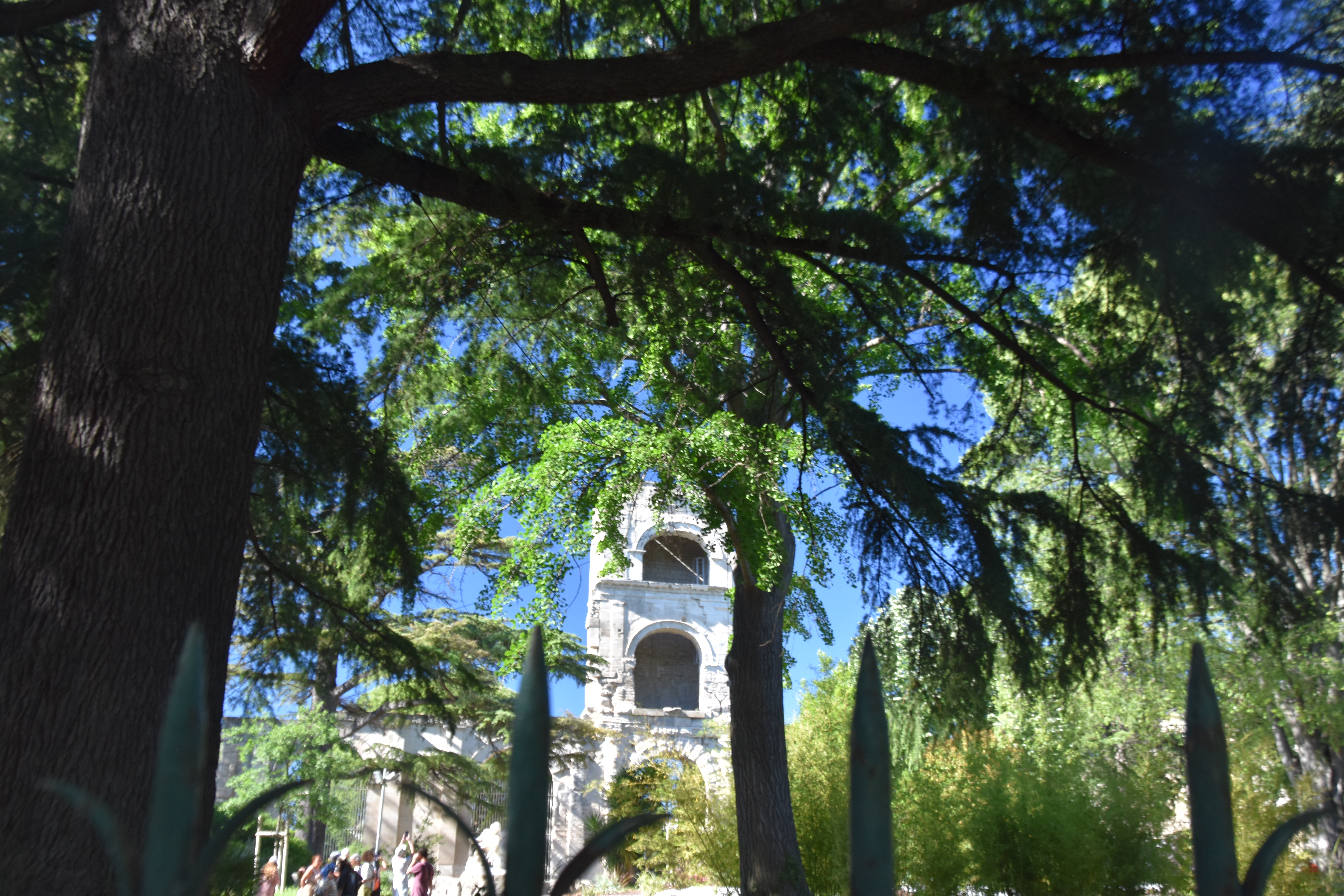
The Theatre
The Theatre has been sensitively restored and it is clear what is old and what is new. It is still in use today for concerts, plays and festivals as attested to by all the stageing equipment.

Apparently the acoustics are amazing, but both the Greeks and Romans were famed for that.
And they were both here. Only a pair of the original pillars remains

The Amphitheatre

Not being permitted entry we had to satify ourselves with walking round the periphery.
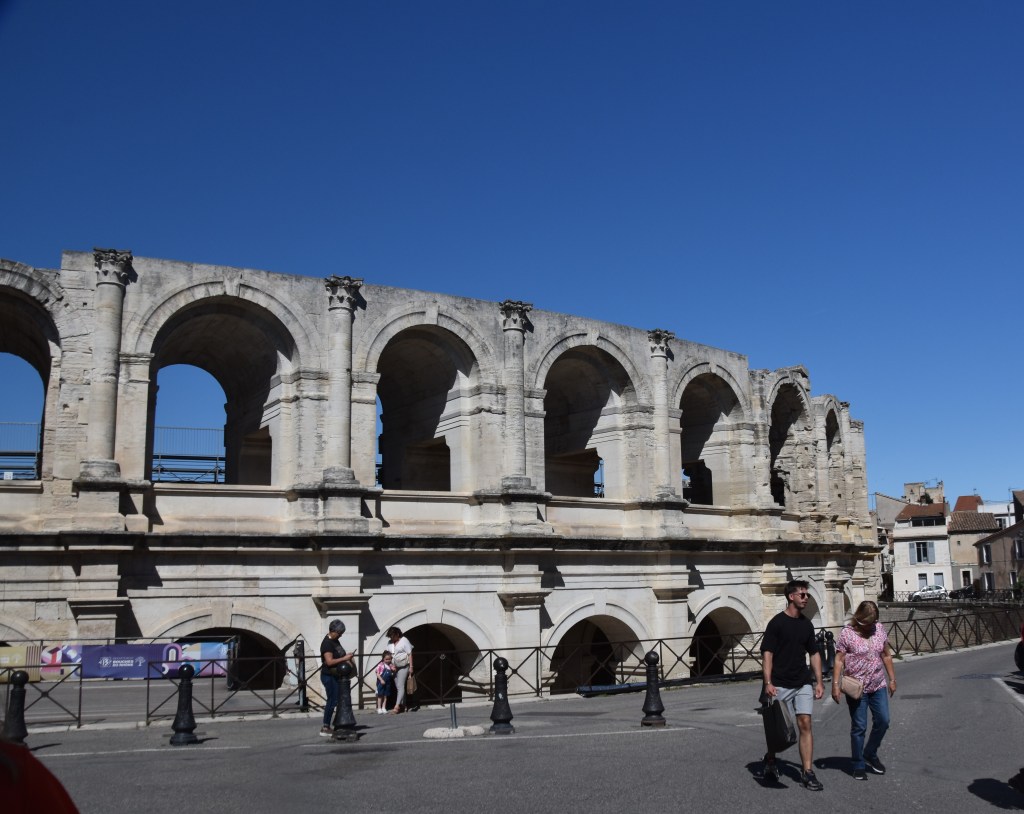
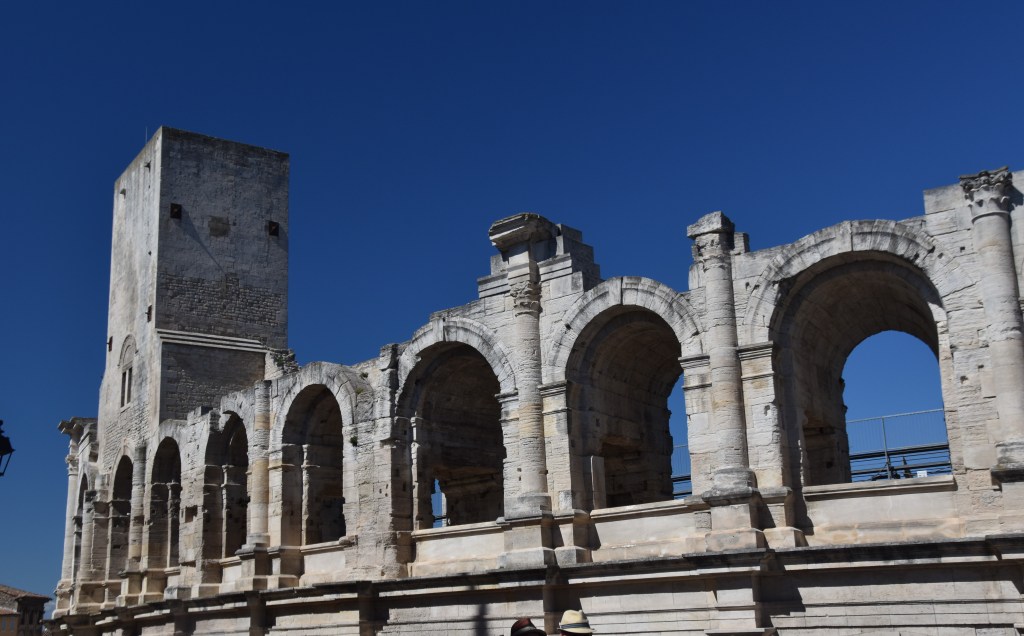

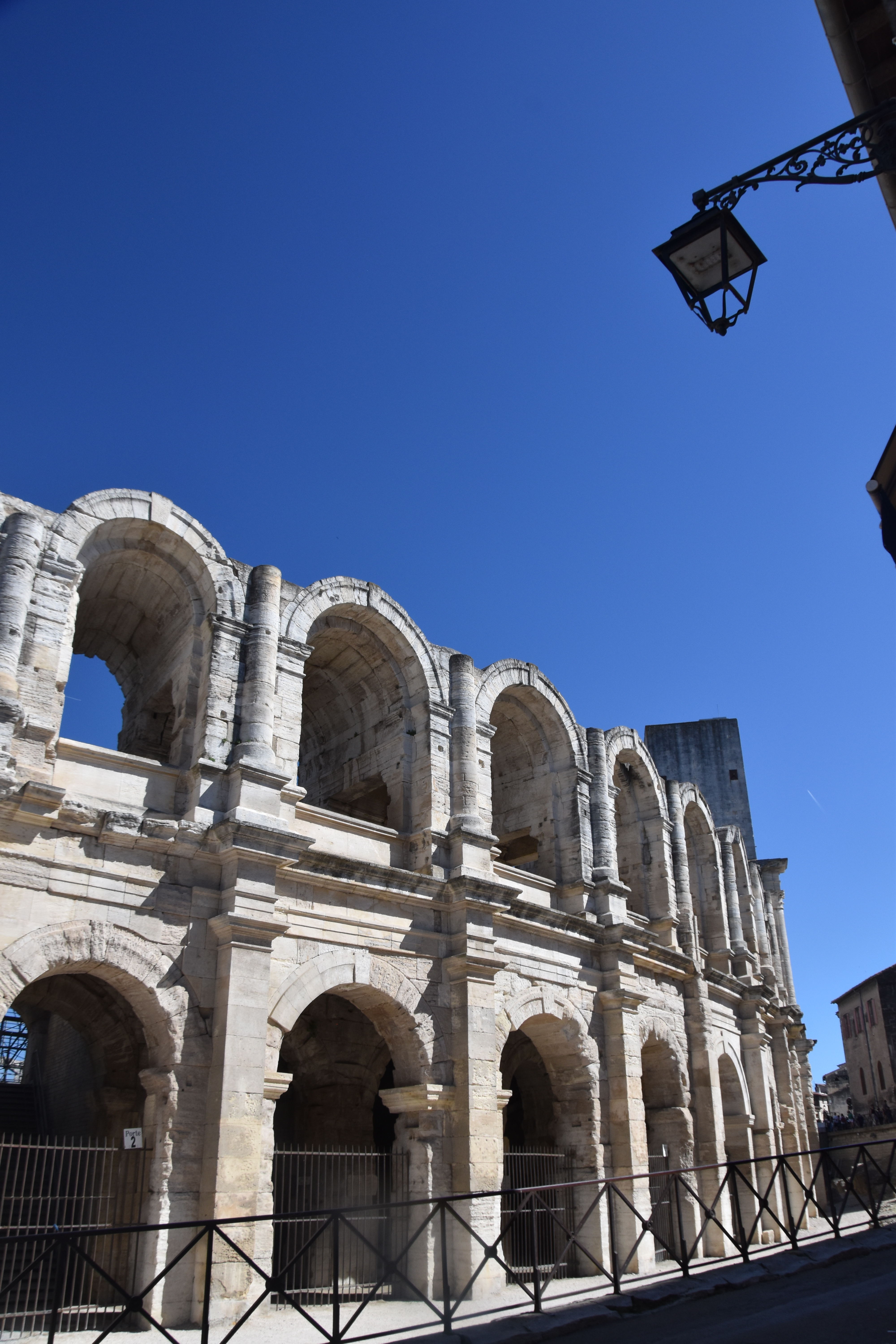
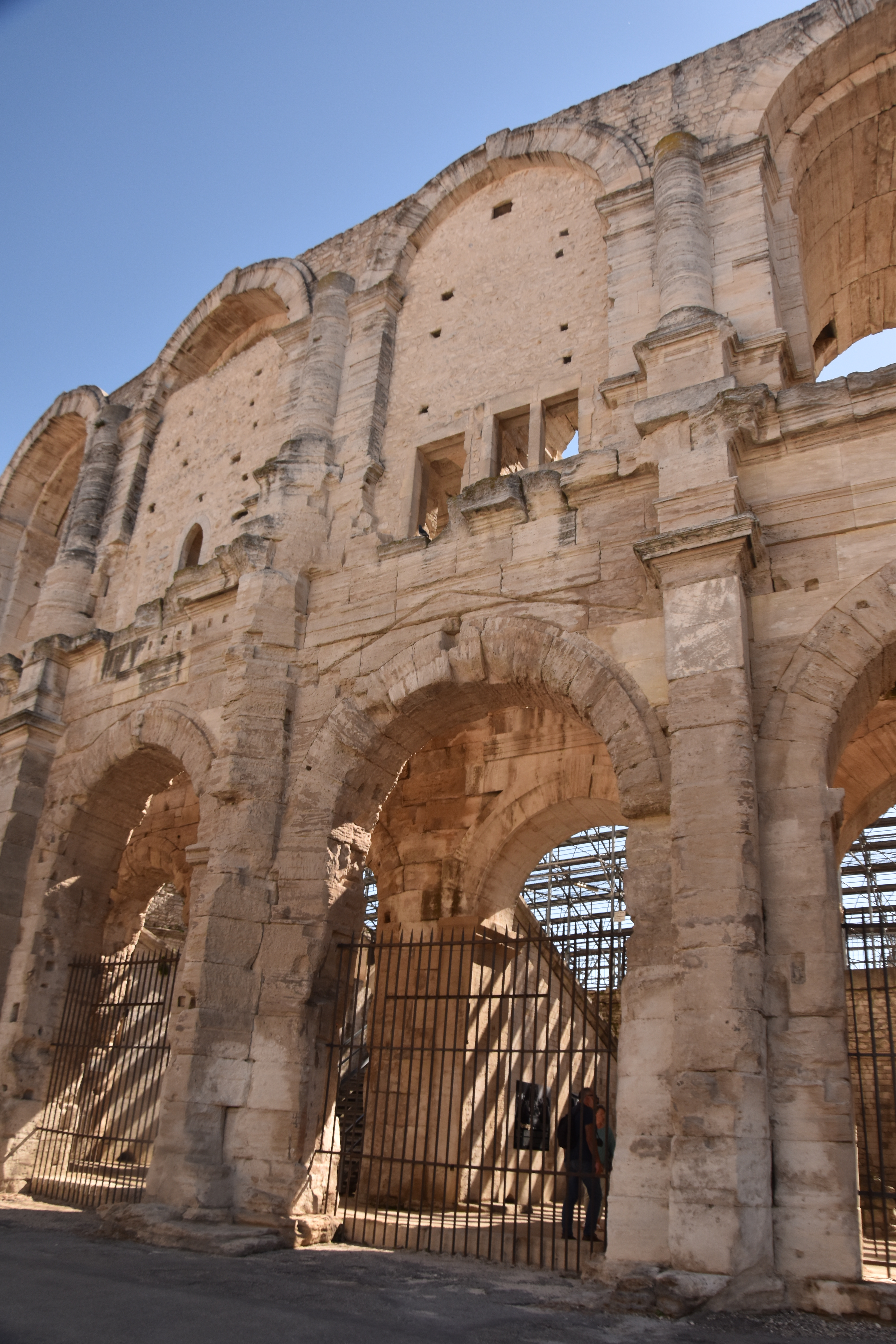
In the summer Bull Contests are held in the 21,000 seat arena. A new glass roof has been added above the existing structure to protect it and provide cover for performers and spectators alike. It can be seen below.
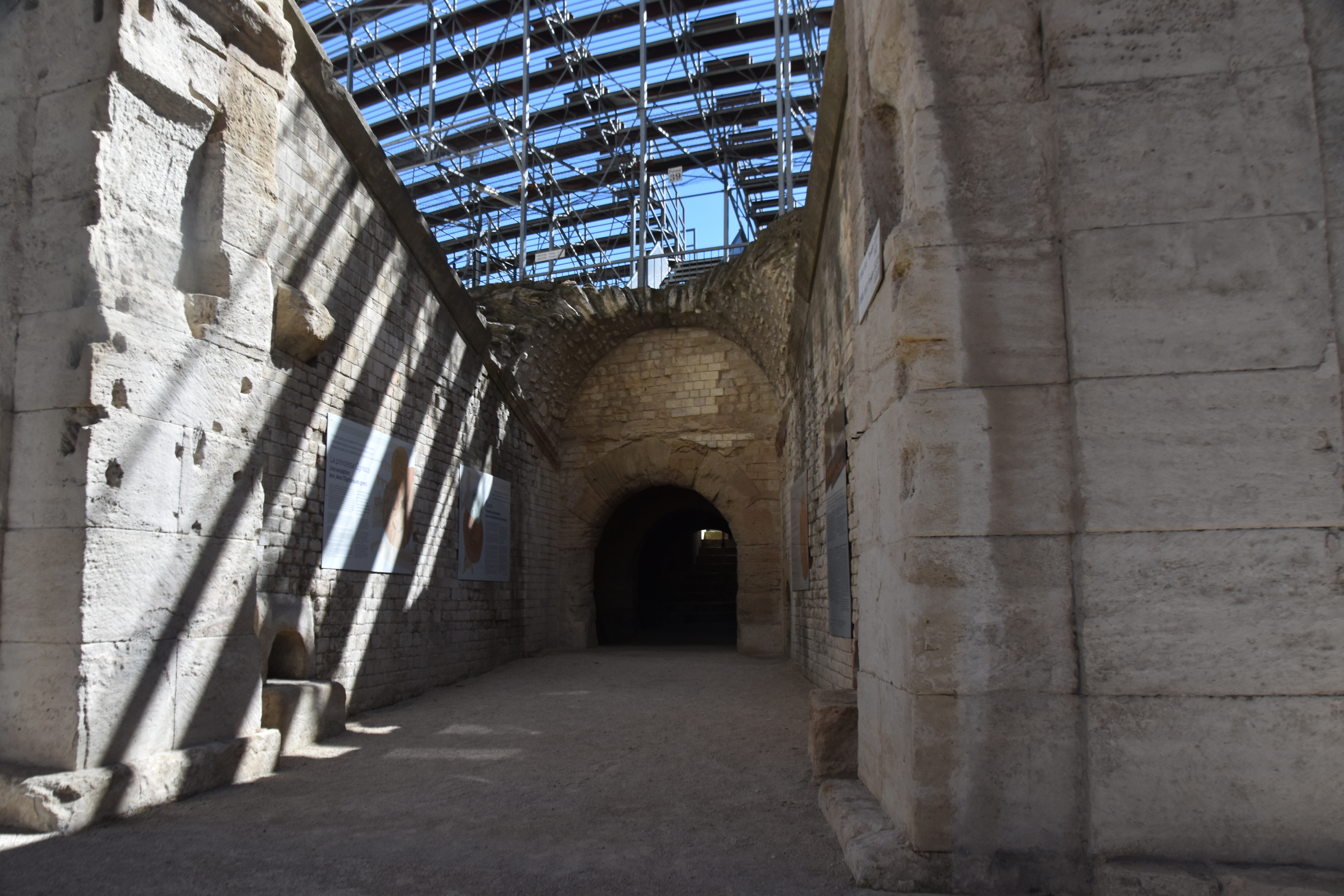
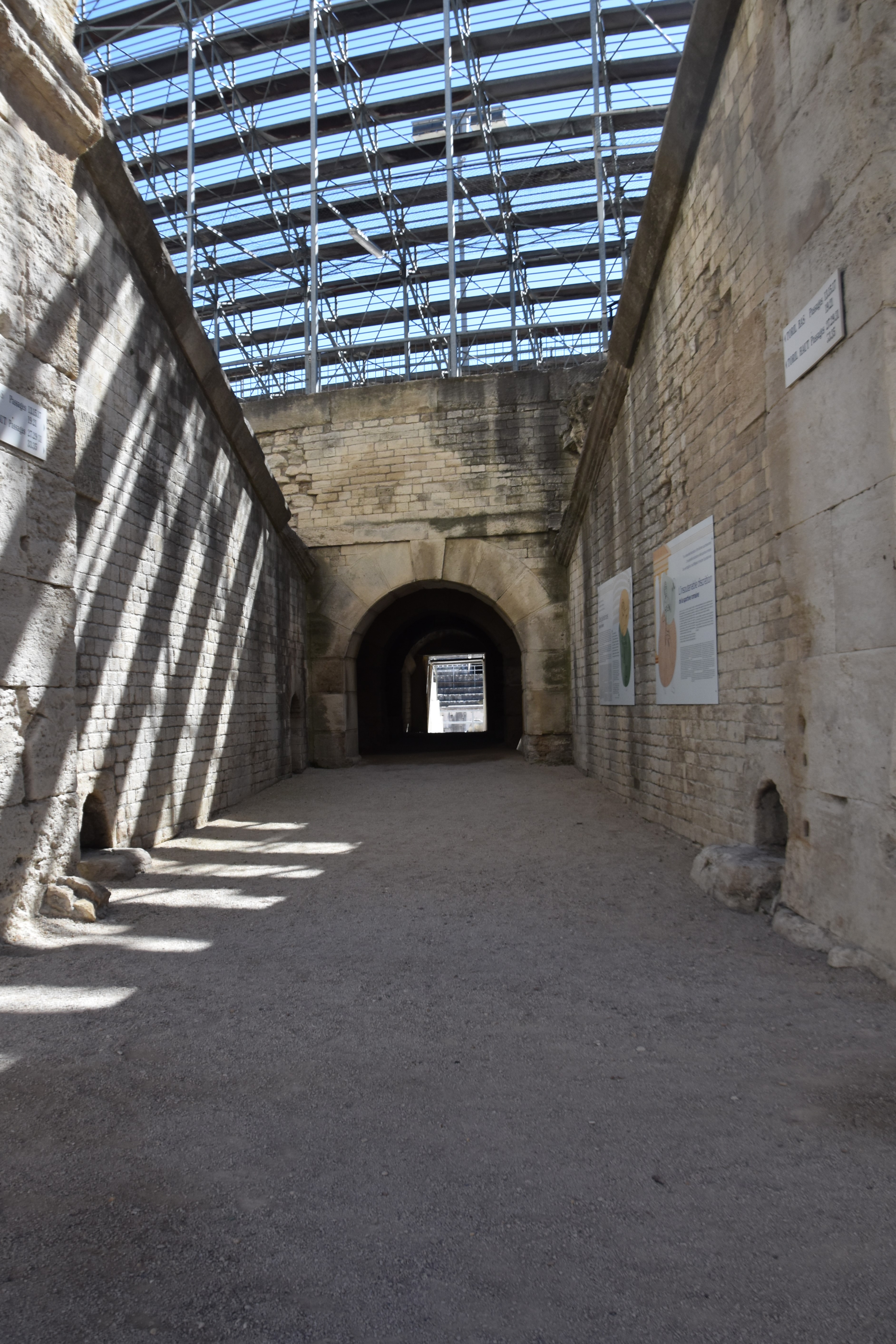
It is one of the best preserved Amphitheatres in Roman Provence with each arch supported by Doric and Corinthian pillars.


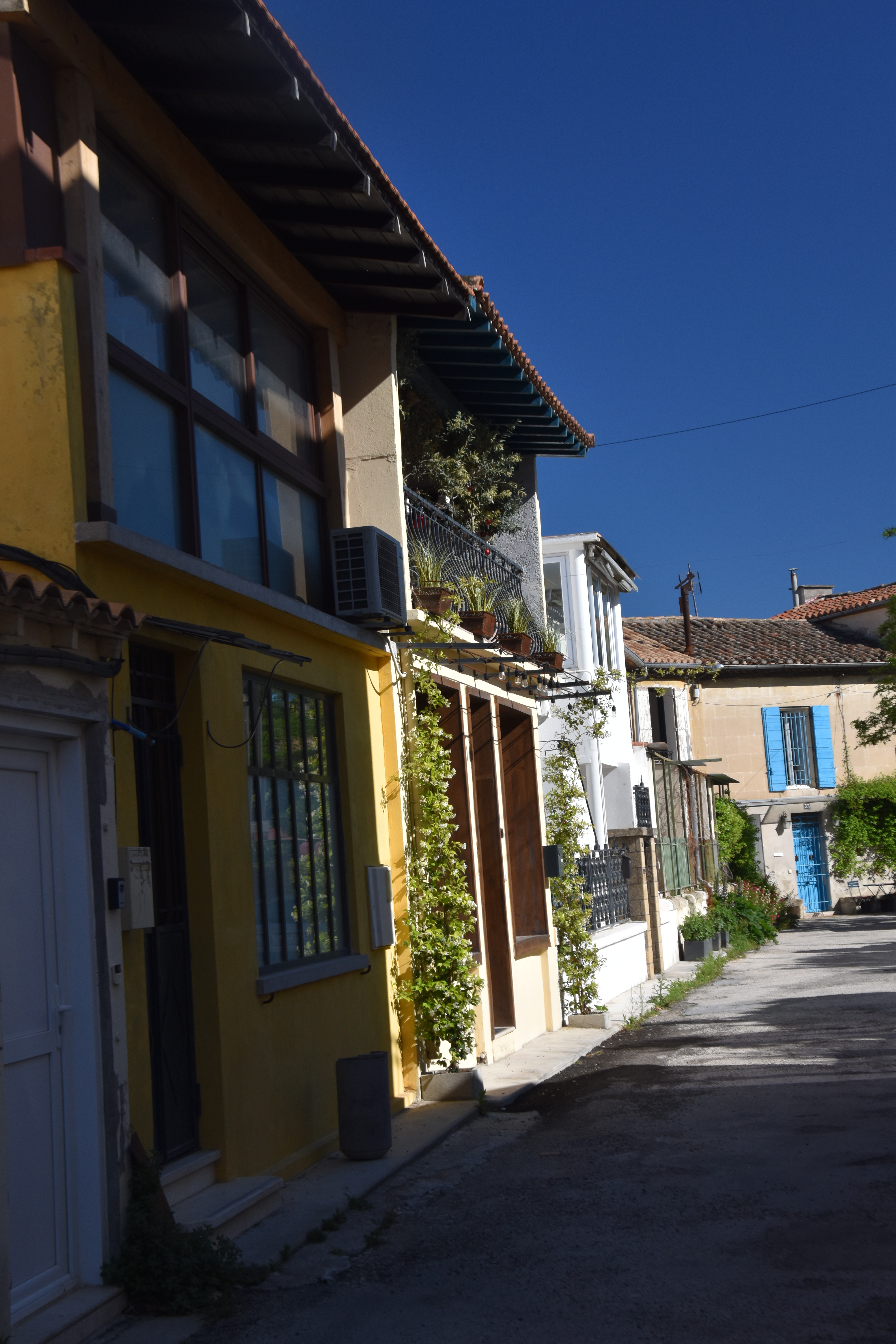
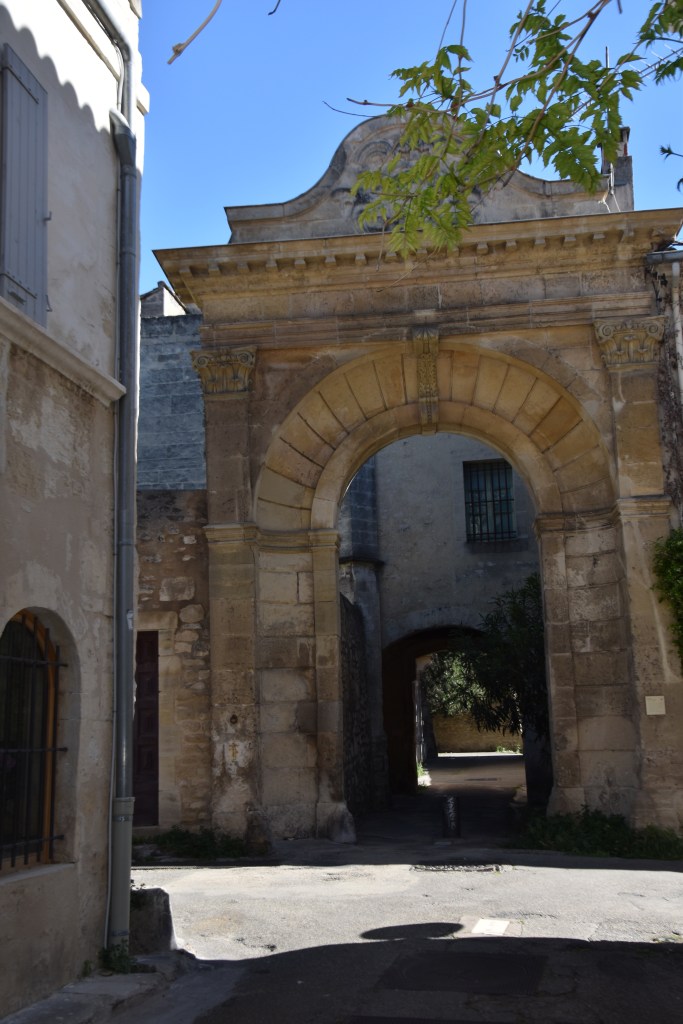
The town has a very mediterainian feel to it with pretty and colourful cobbled side streets.

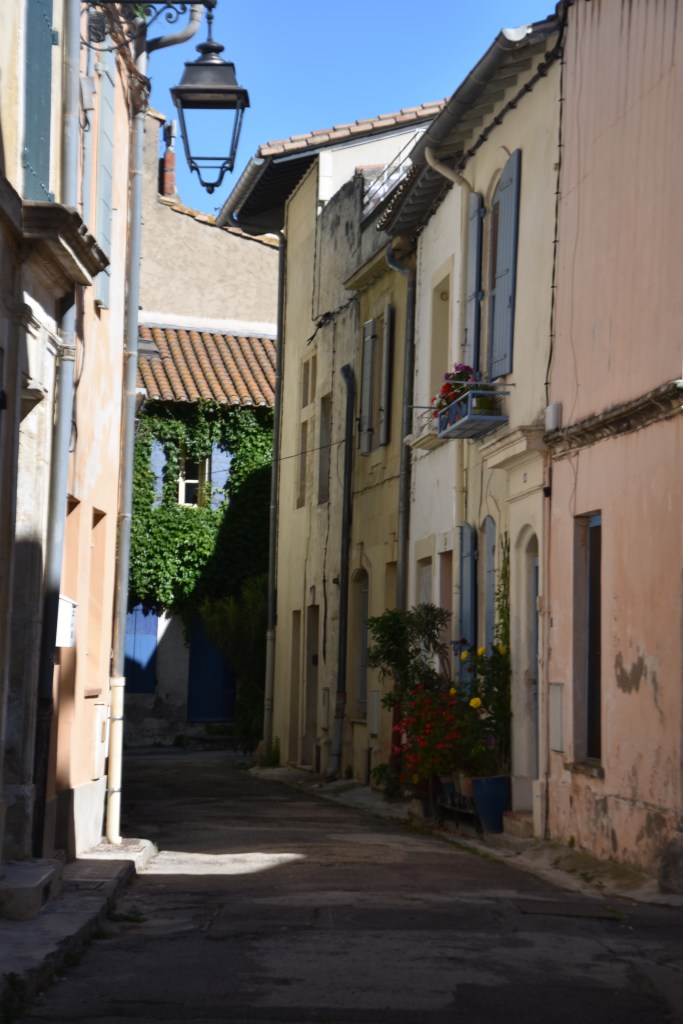
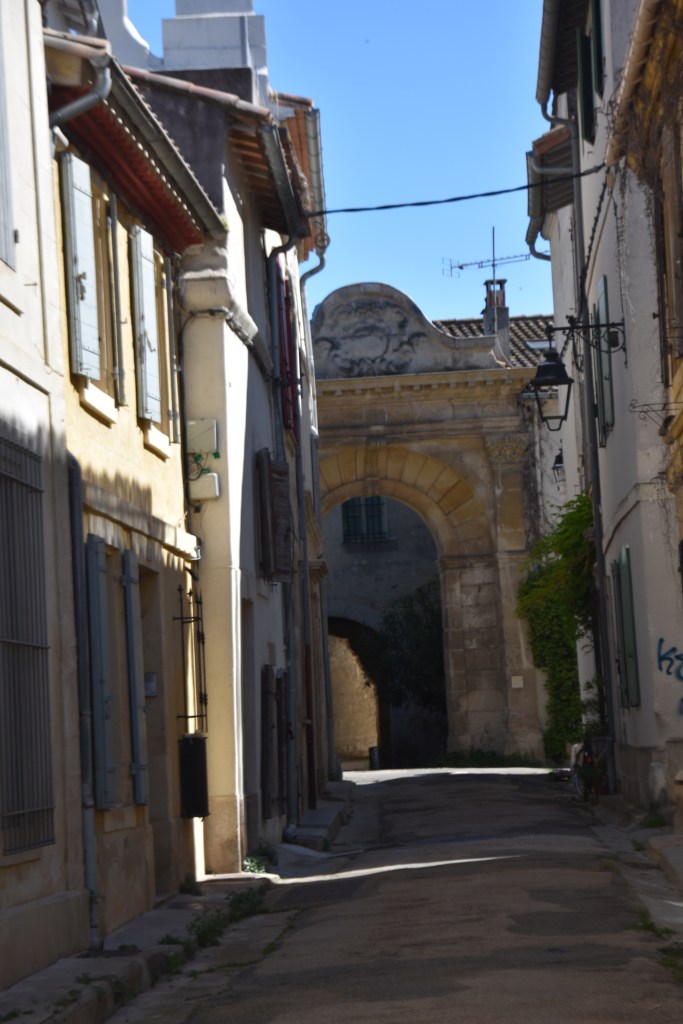
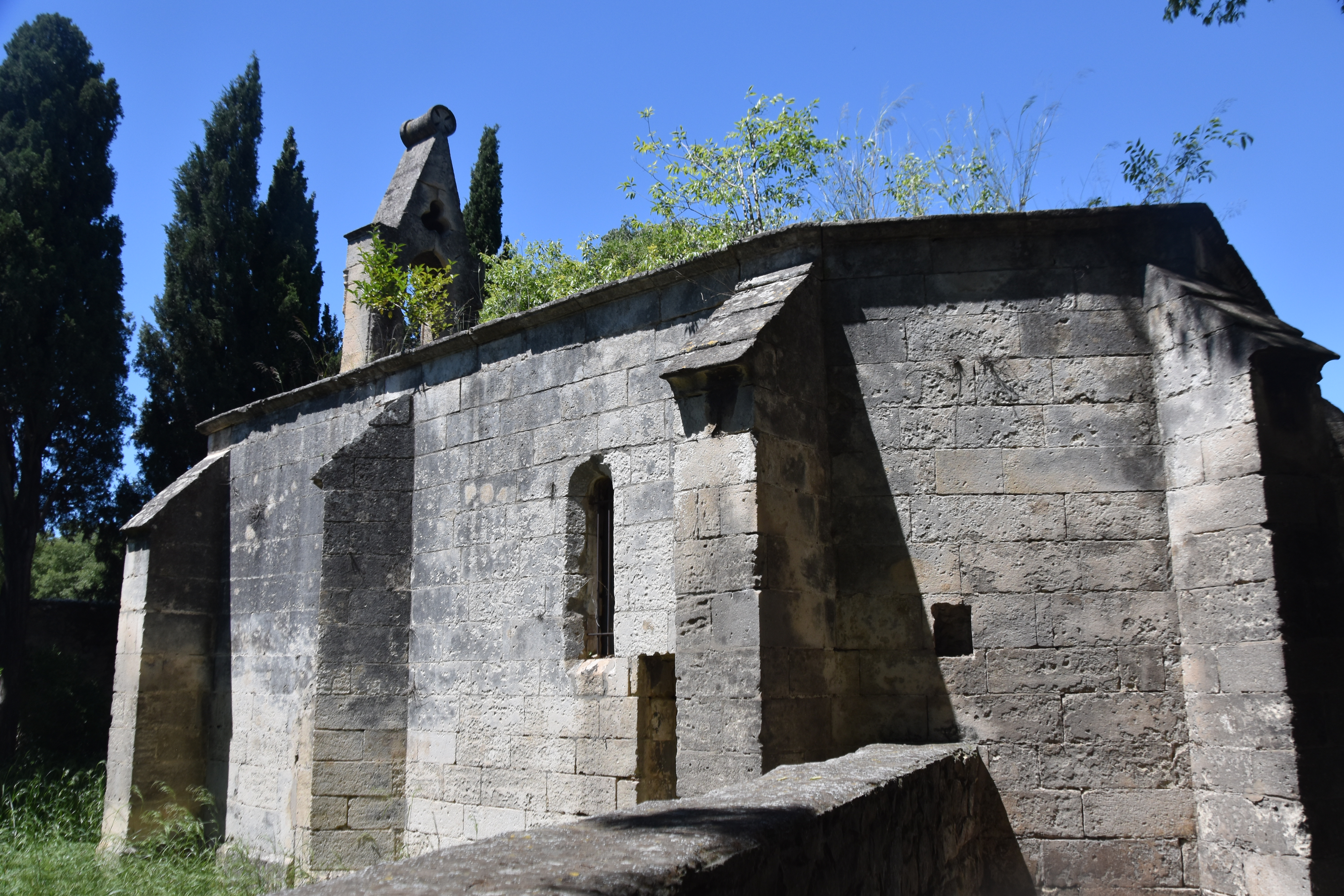
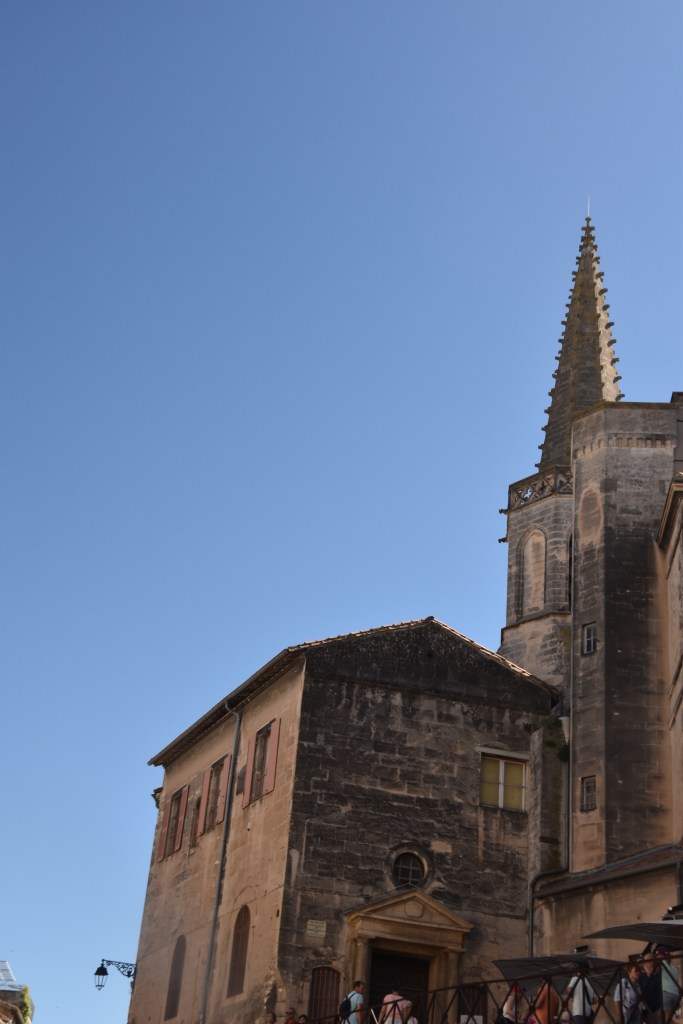
In the small city block that I explored there were no less than 5 chur ches, not all of them in service.


It is worth talking about the agriculture of the Carmargue. We have already seen the use to which the sturdy white and grey Carmargue horses arr put to use for working with the bulls, both on the farm and at the bull competitions. The menus have undergone a substantial change with beaf in various forms replaceing the many seafood dishes on offer. On the drive between Aigues-Mortes and Arles yesterday it was almost exclusively rice paddi farming. So in addition to the tourism industry the local economy is supported by commercial salt production, raising beef cattle and growing rice.
11th. After various housekeeping chores etc Cassidy and I headed into town via the Parc d’Atiliers and the Luma Tower. Alsa this was yet another monument that Cassidy and I could not enter but we did manage to get a leaflet and find out more about it and the adjascent Parc des Ateliers.
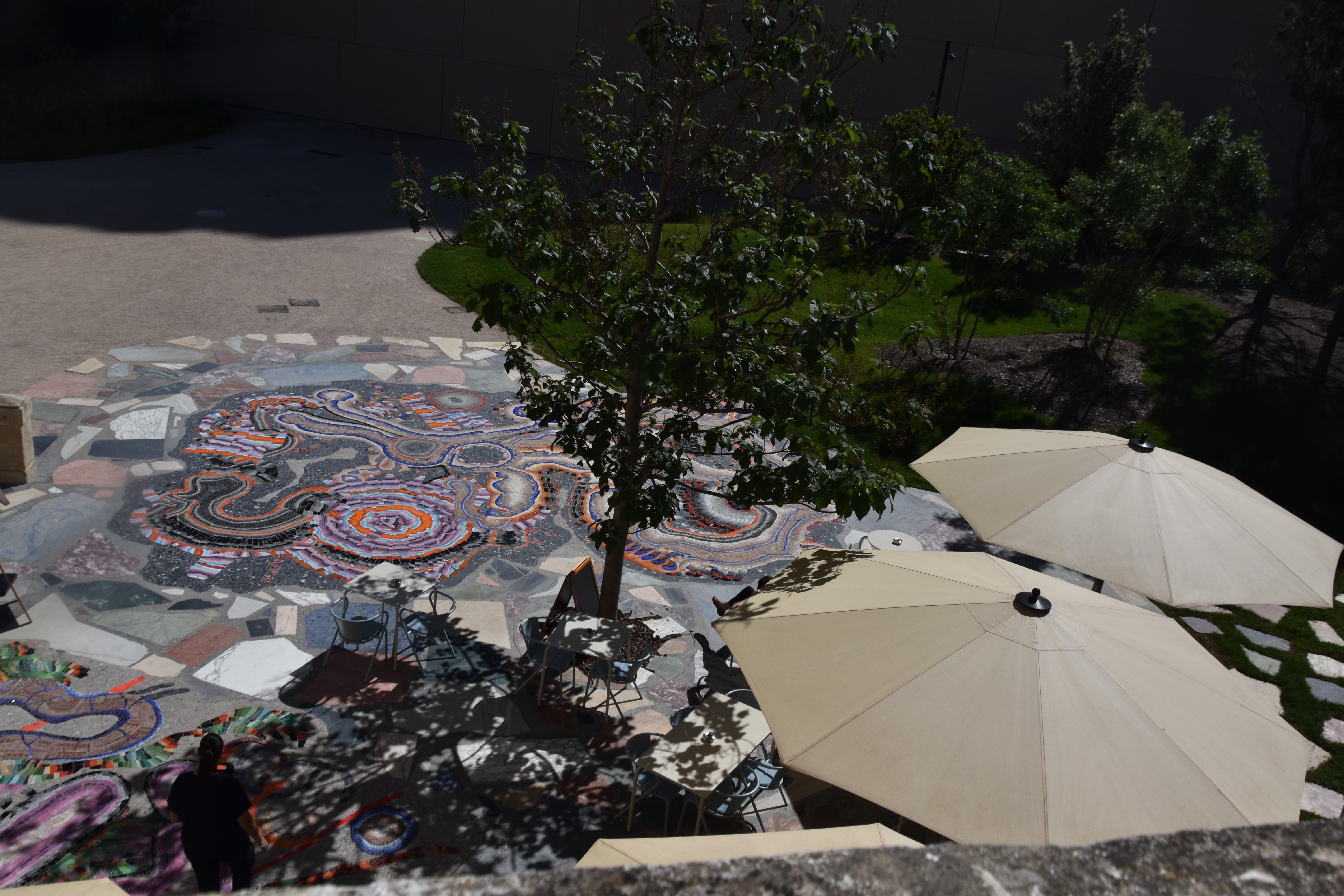
This had previously been a flat, concrete, industrial site housing factories and workshops dedicated to the manufacture and repair of steam locamotives and running stock. The buildings have been repurposed as outlined previously and the flat platform transformed into a beautifully landscaped garden. The pond and senitive planting make it a microcosim of biodivercity. The area is dotted with cafes, this one with a mosiage nod to the Roman history of the town.
The tower itself was designed by Frank Gehry and although his other work that I saw last autumn in norther Spain left me cold, this one really resonates. Again a nod to antiquety with the Huge “building blocks” in metal being carried right down into the interior of the ground floor.
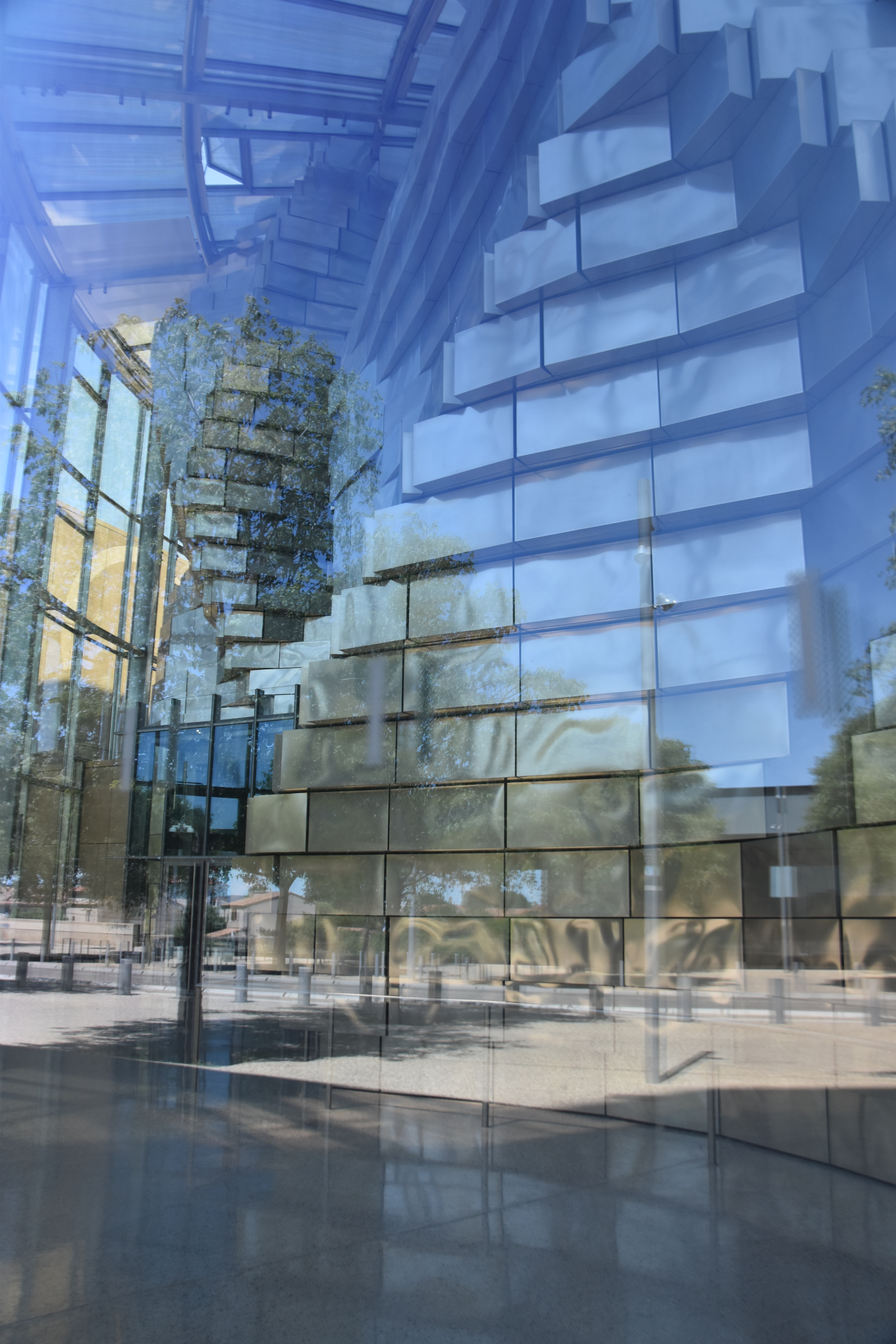
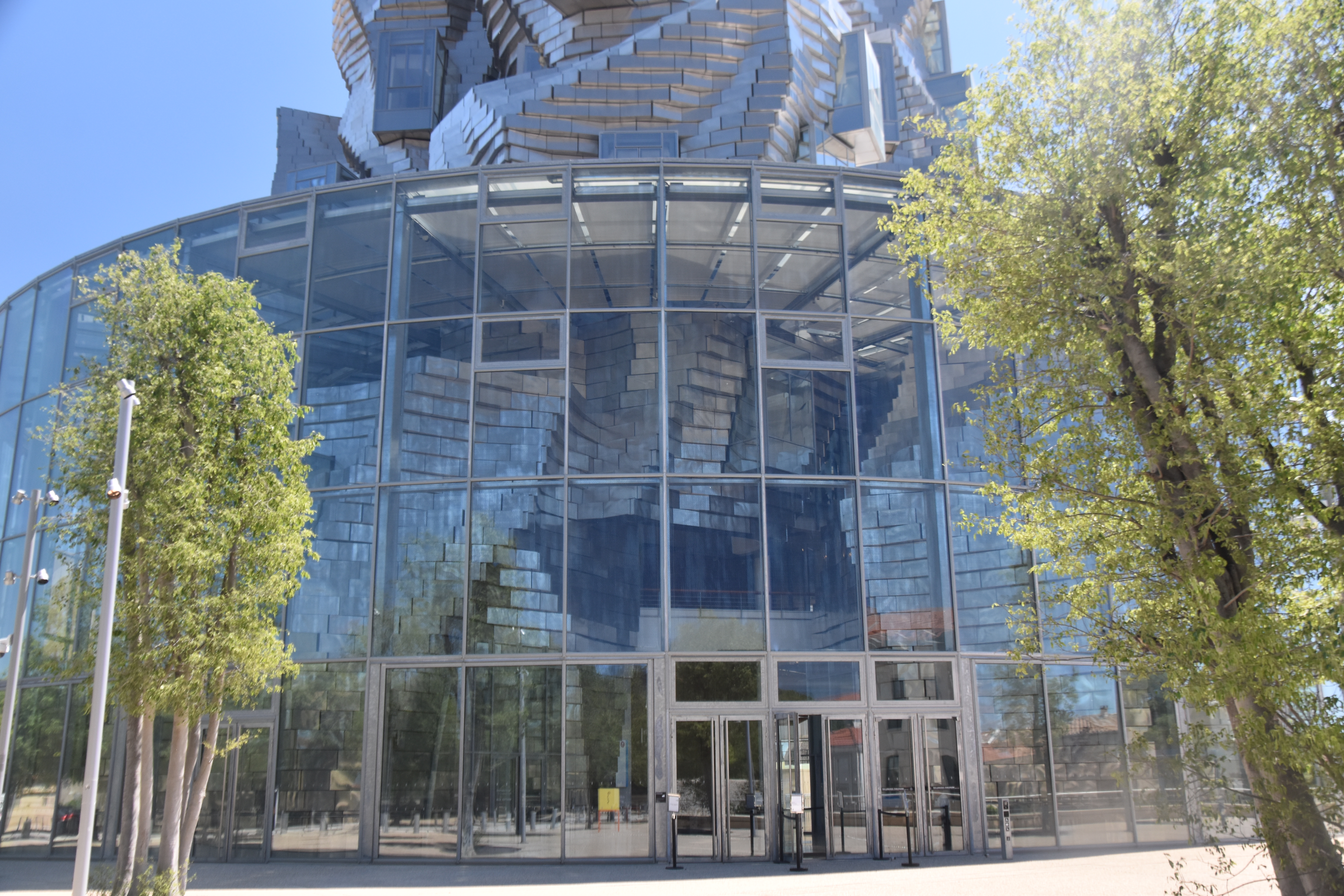
The building currently houses exhibitions dedicated to design.
Moto for the day – exhibited in the cafe in one of the re-purposed workshops.
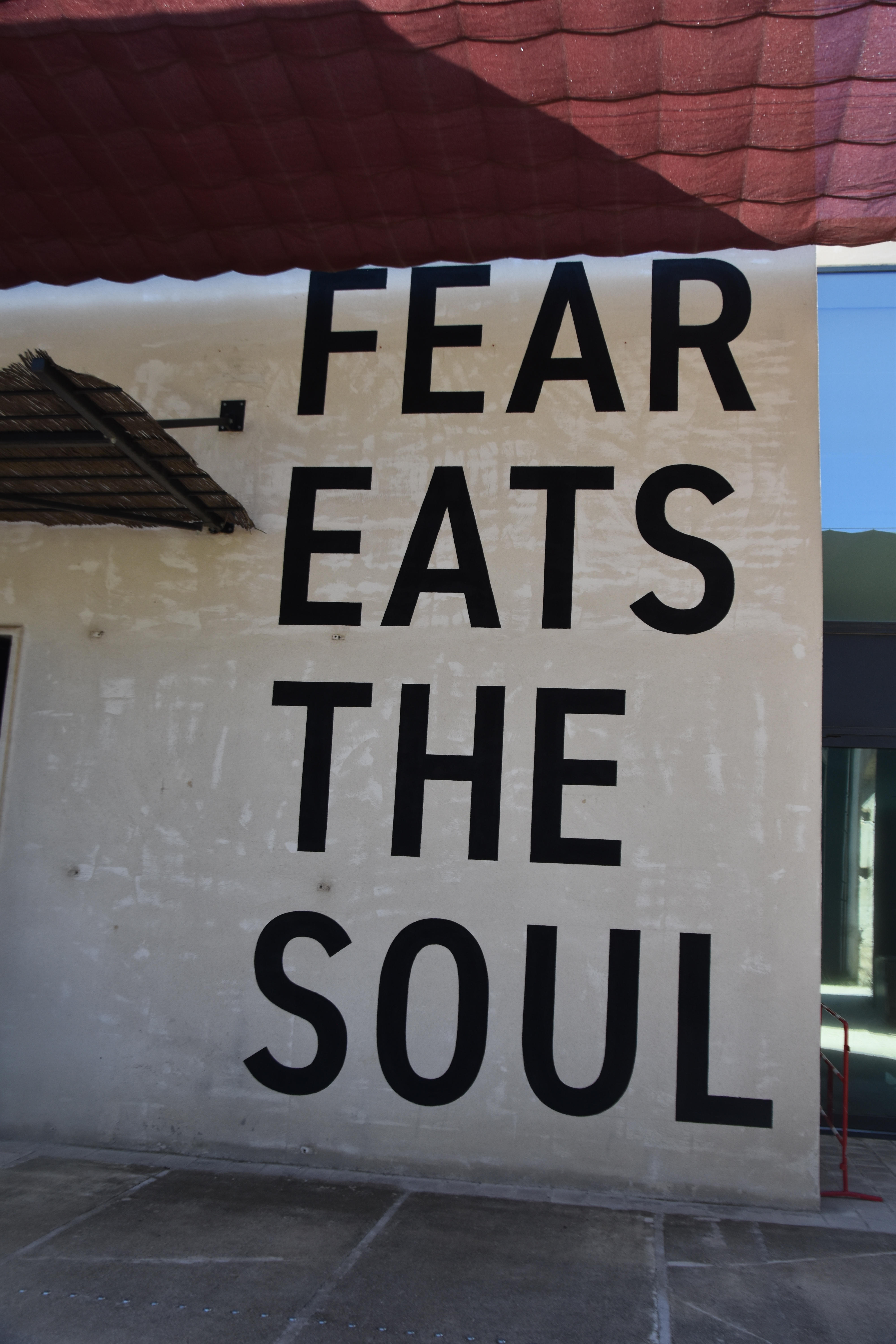
Worth reminding ourselves of, I think.
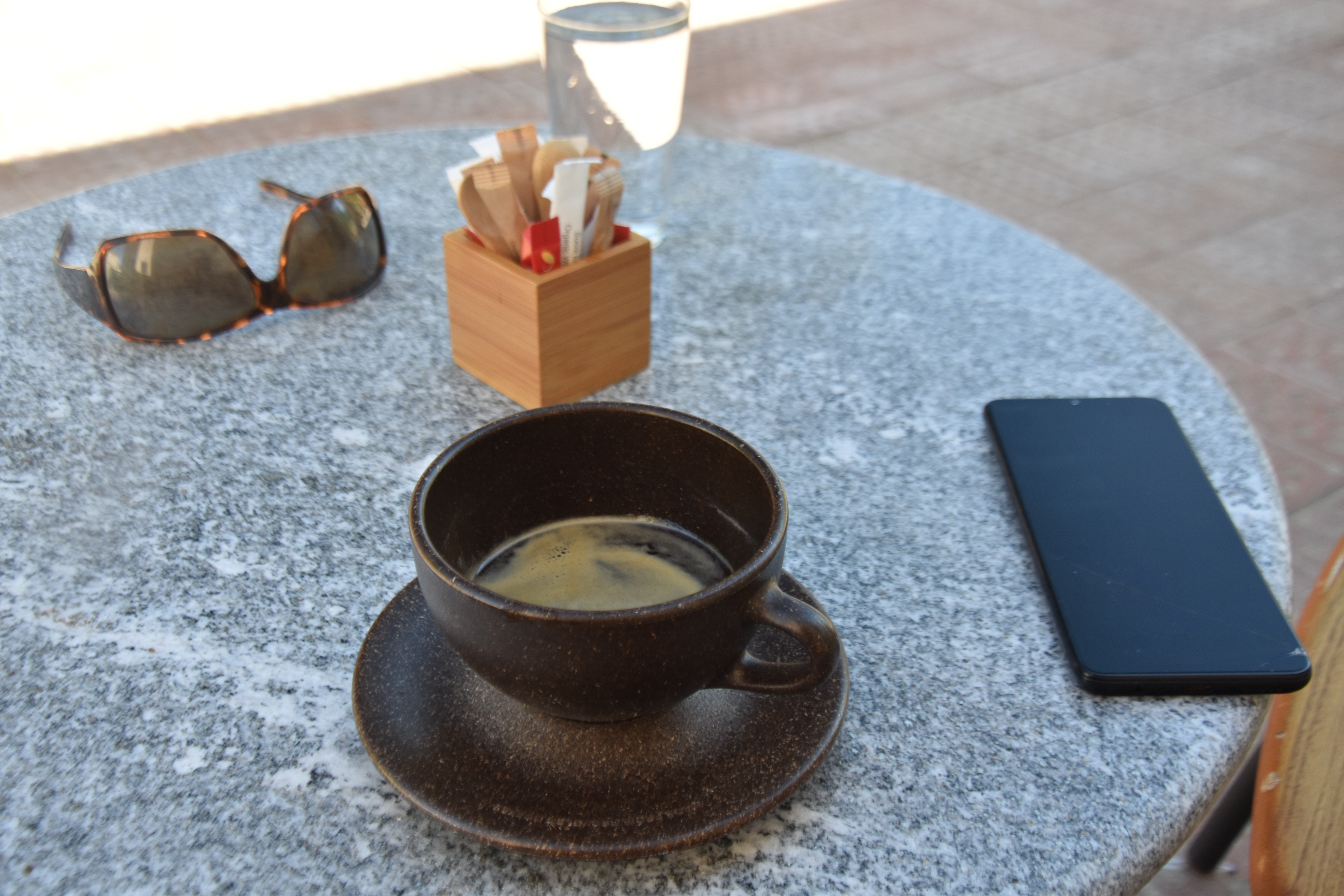
I stopped at one of the other cafes for a coffee before leaving the park and was amazed at how ight the cup was. It was made from a mix of recycled plastic and coffee grounds.
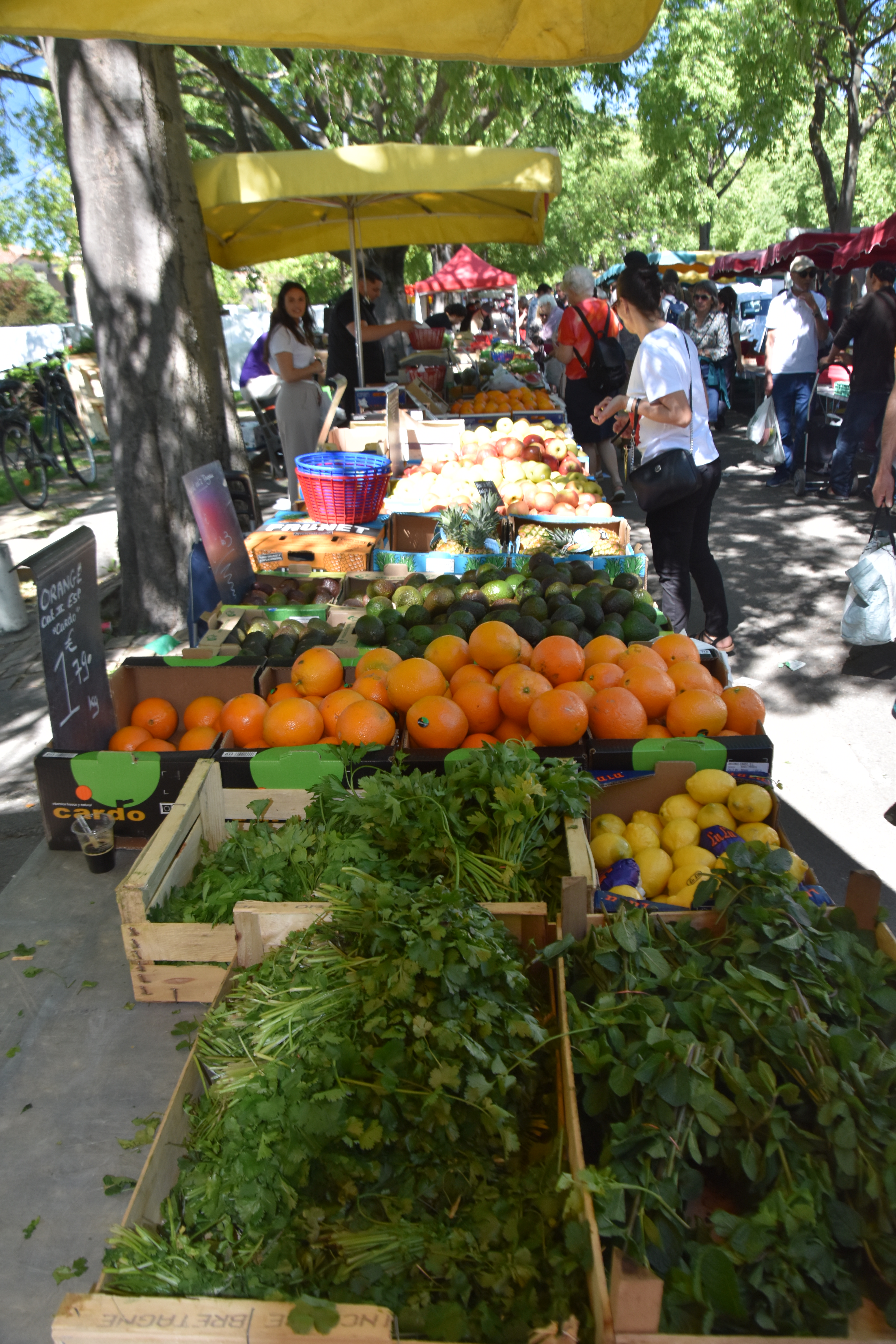
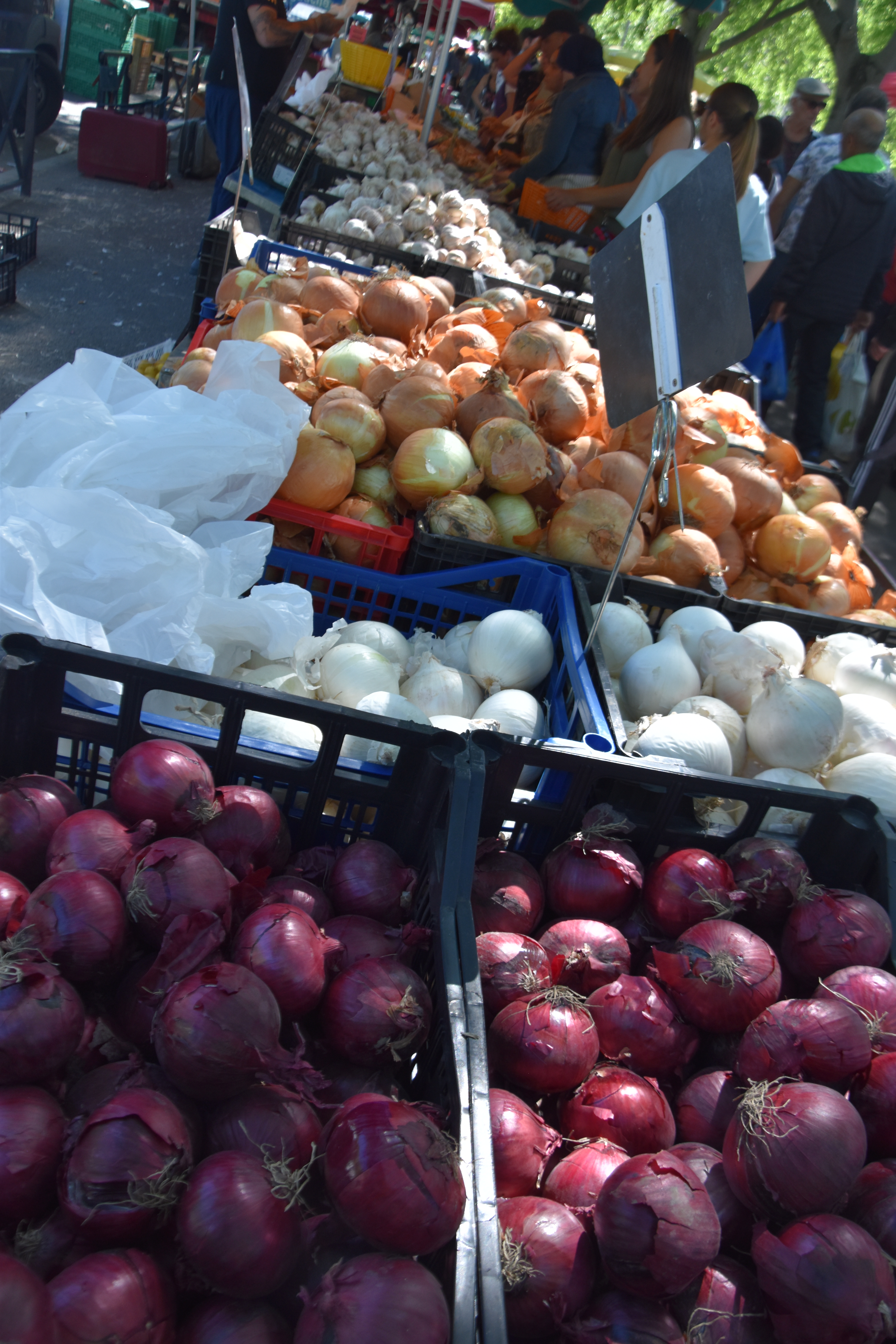
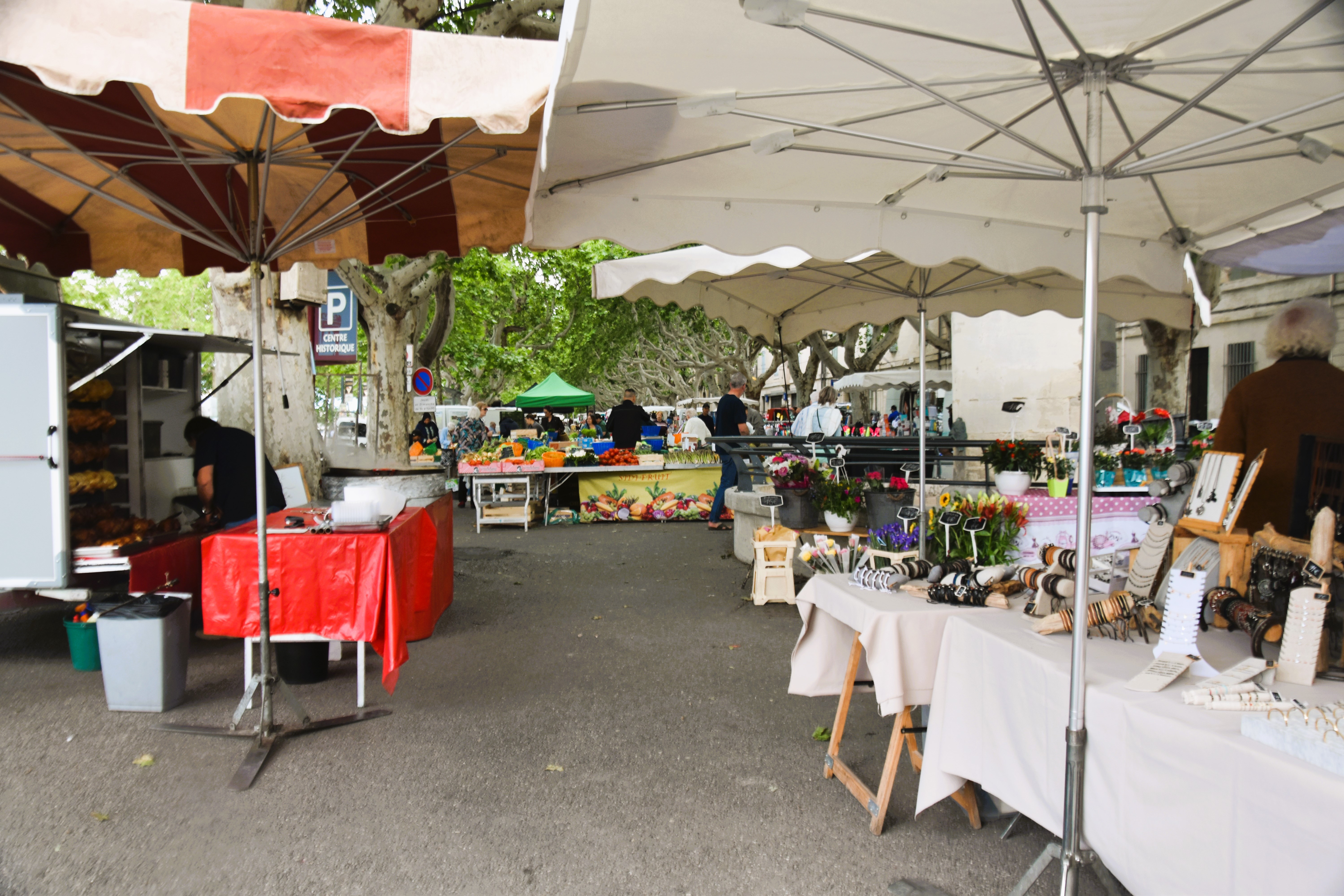
Coming out into the street I was asailed by the sights, sounds and smells of the Saturday market. It was emormous and buzzing. The range of good for sale was broad in scope as to both type of goods and international flavour.

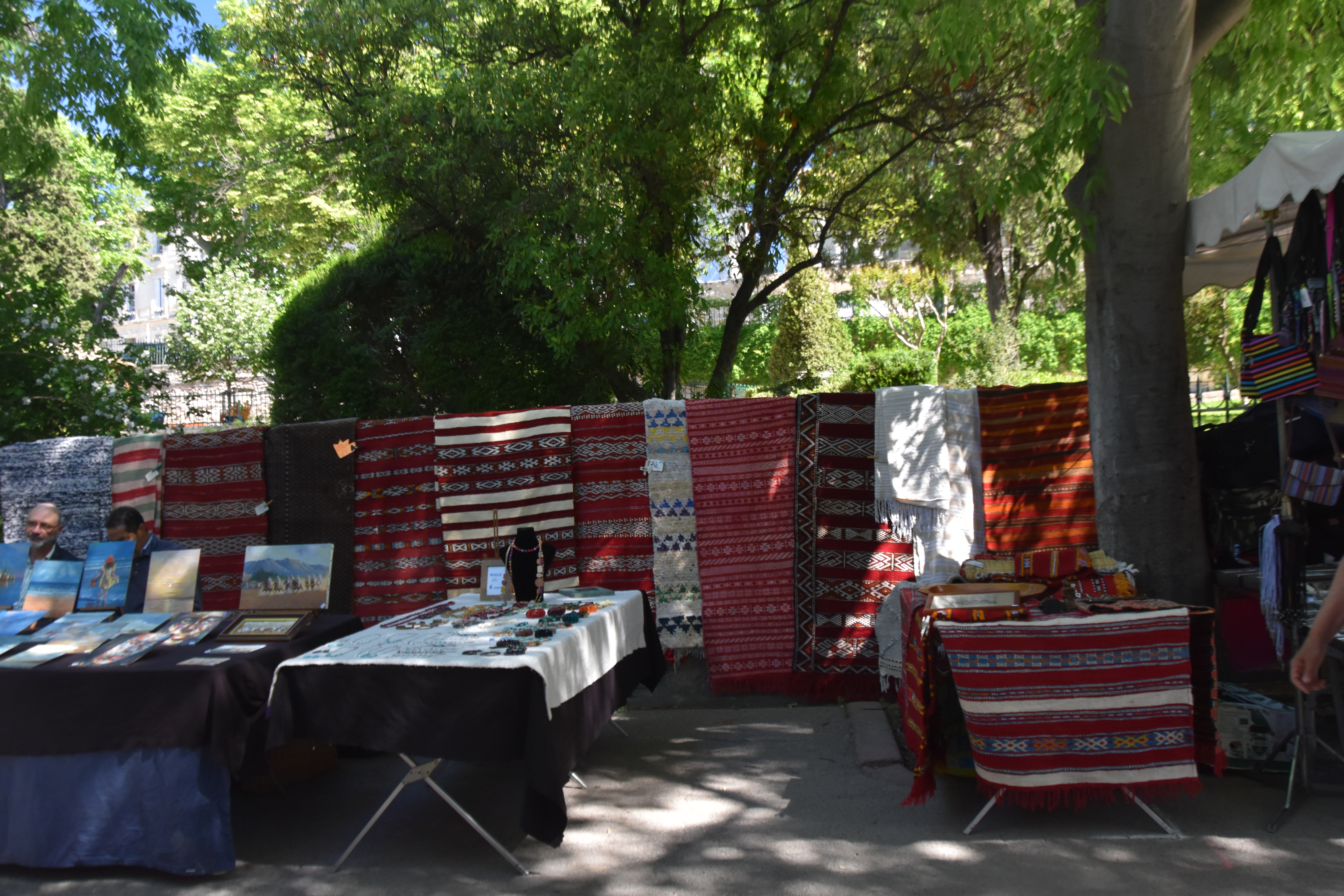
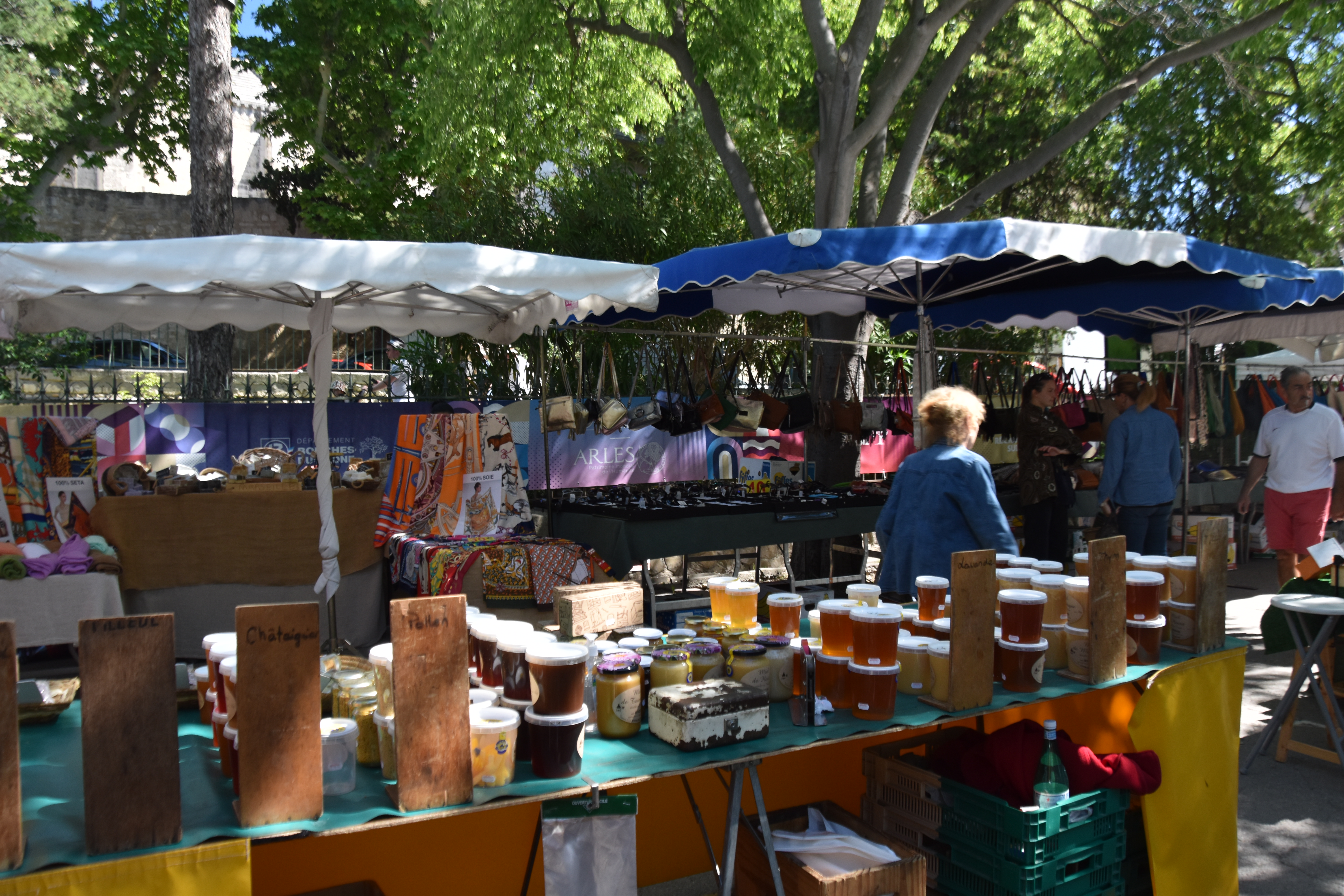
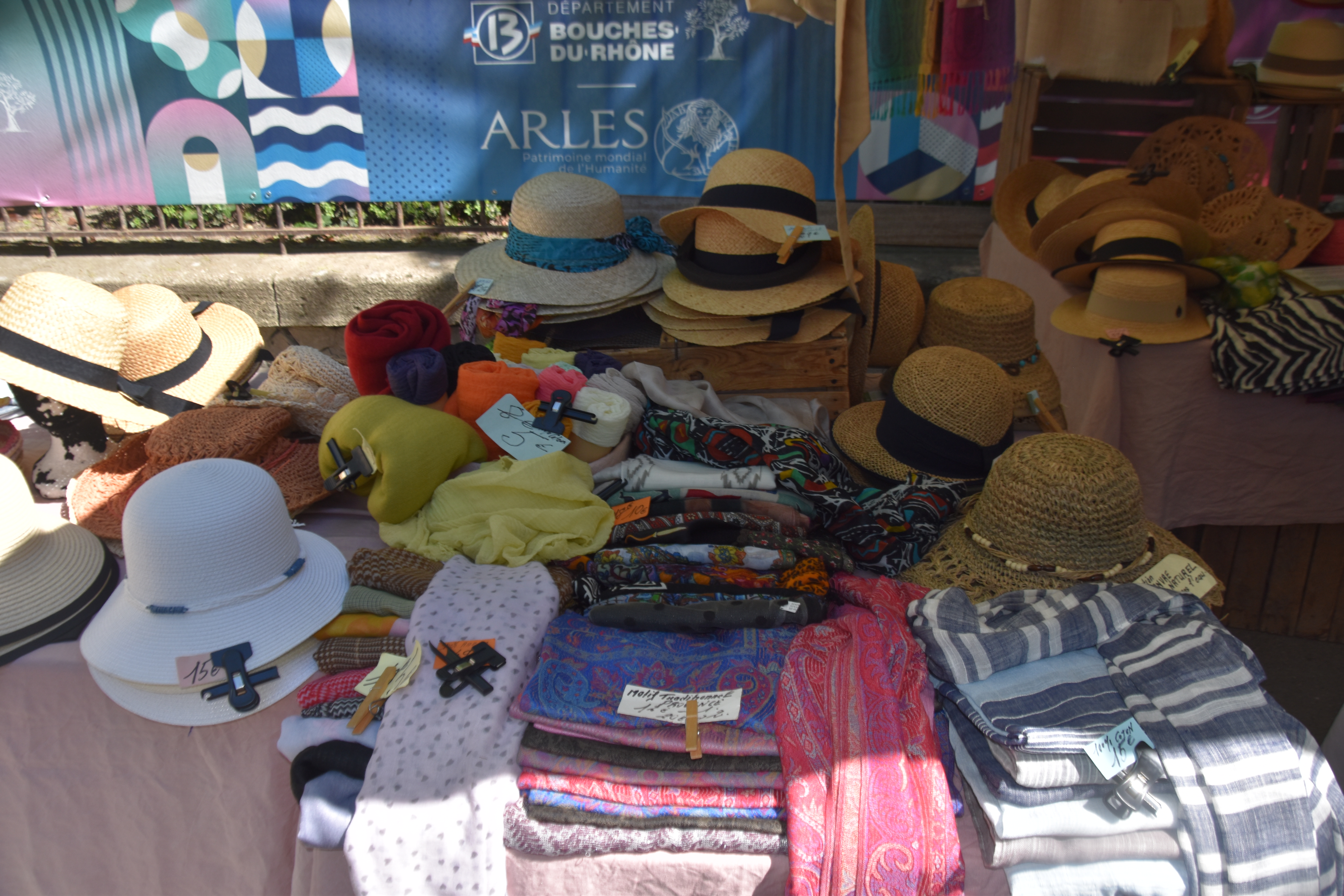

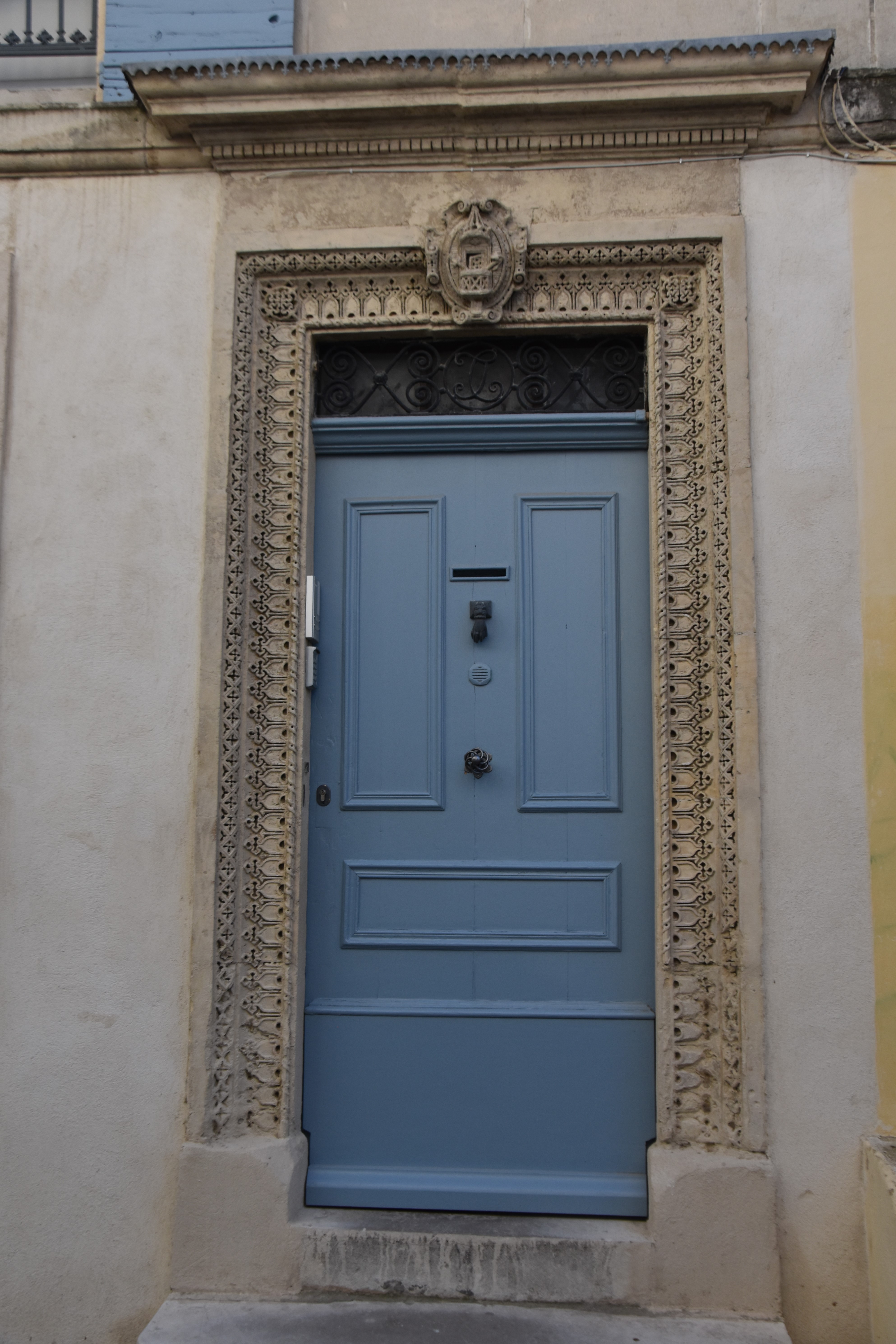
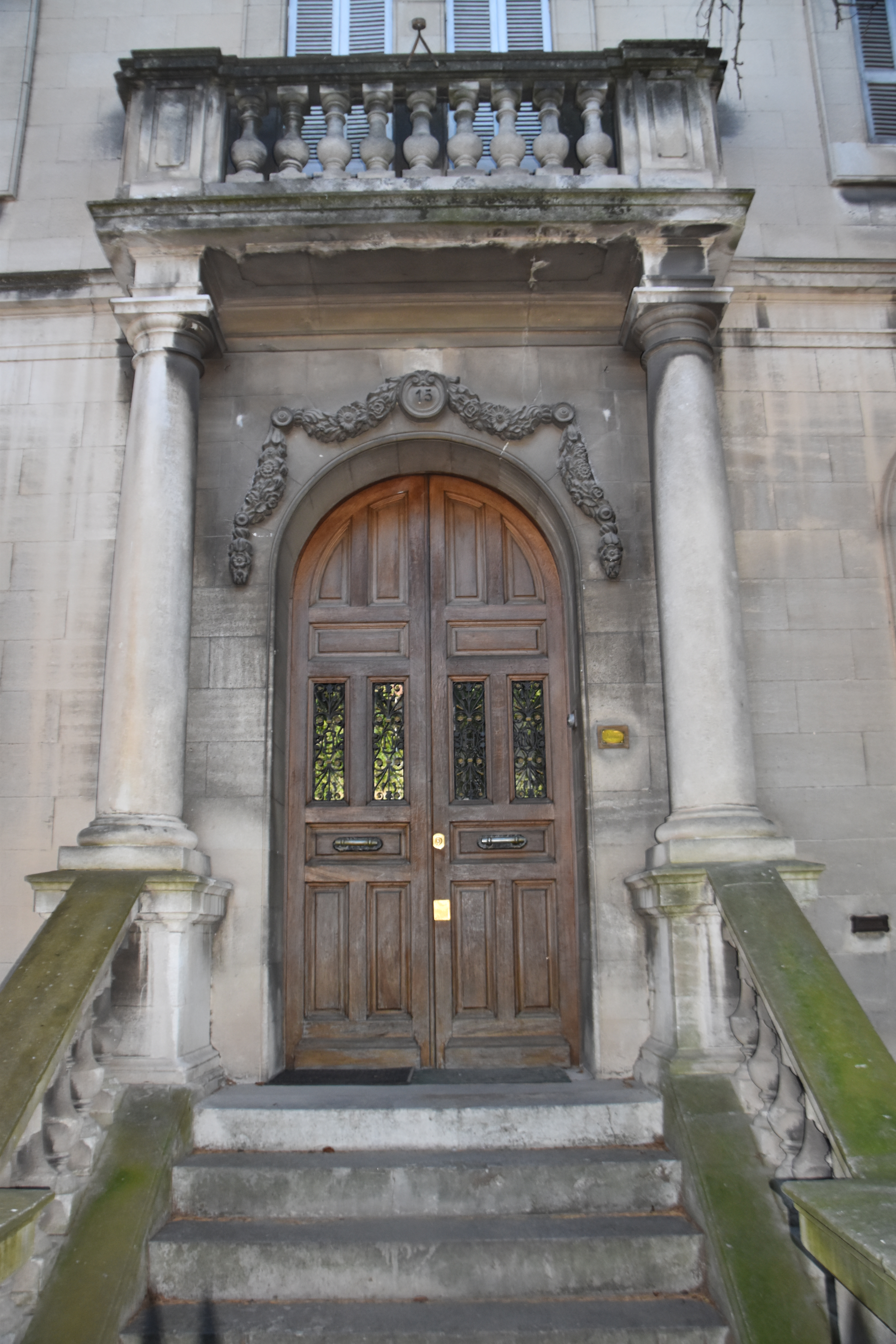
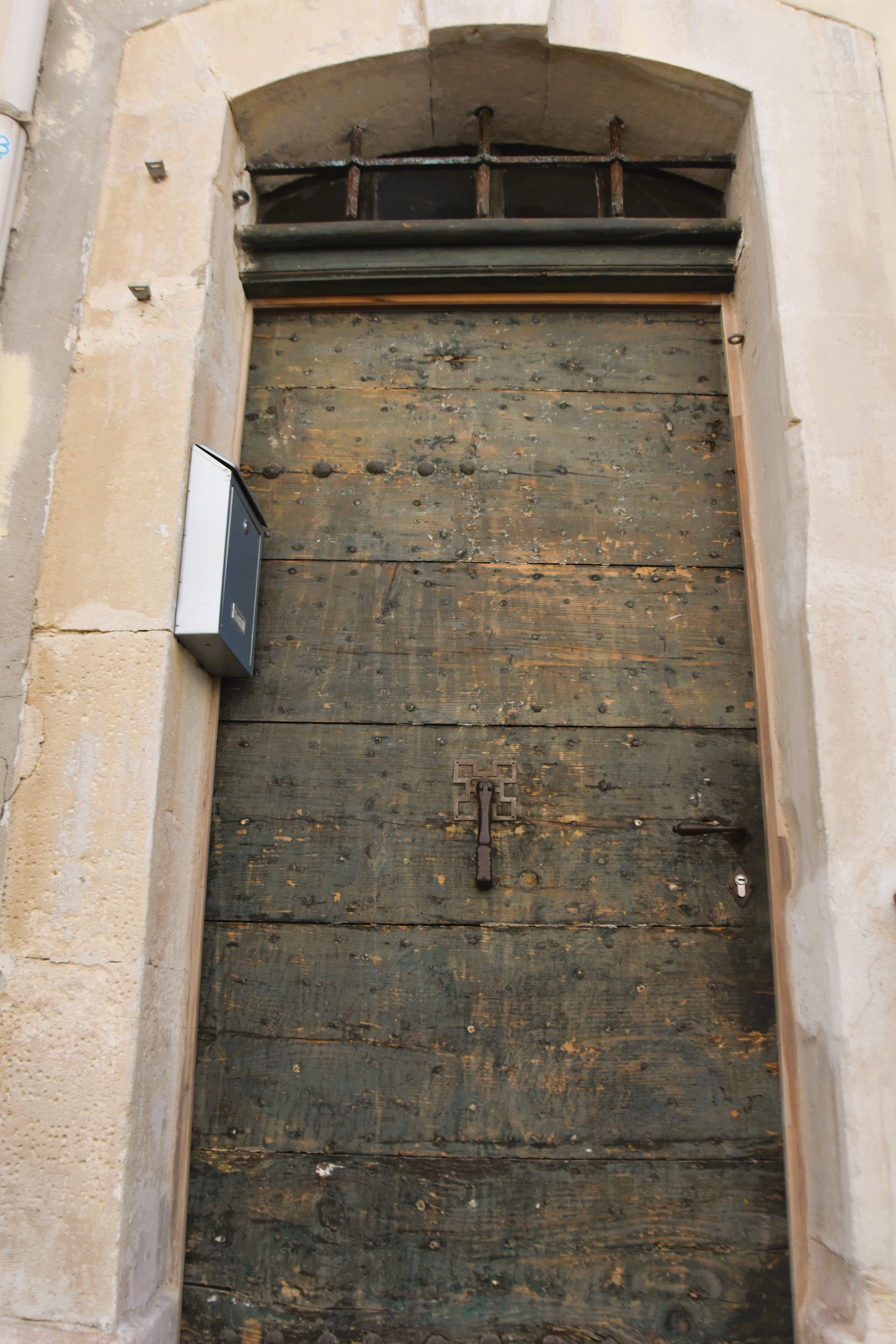
On my way across town to the Constantine bath house I took in some more of the detail
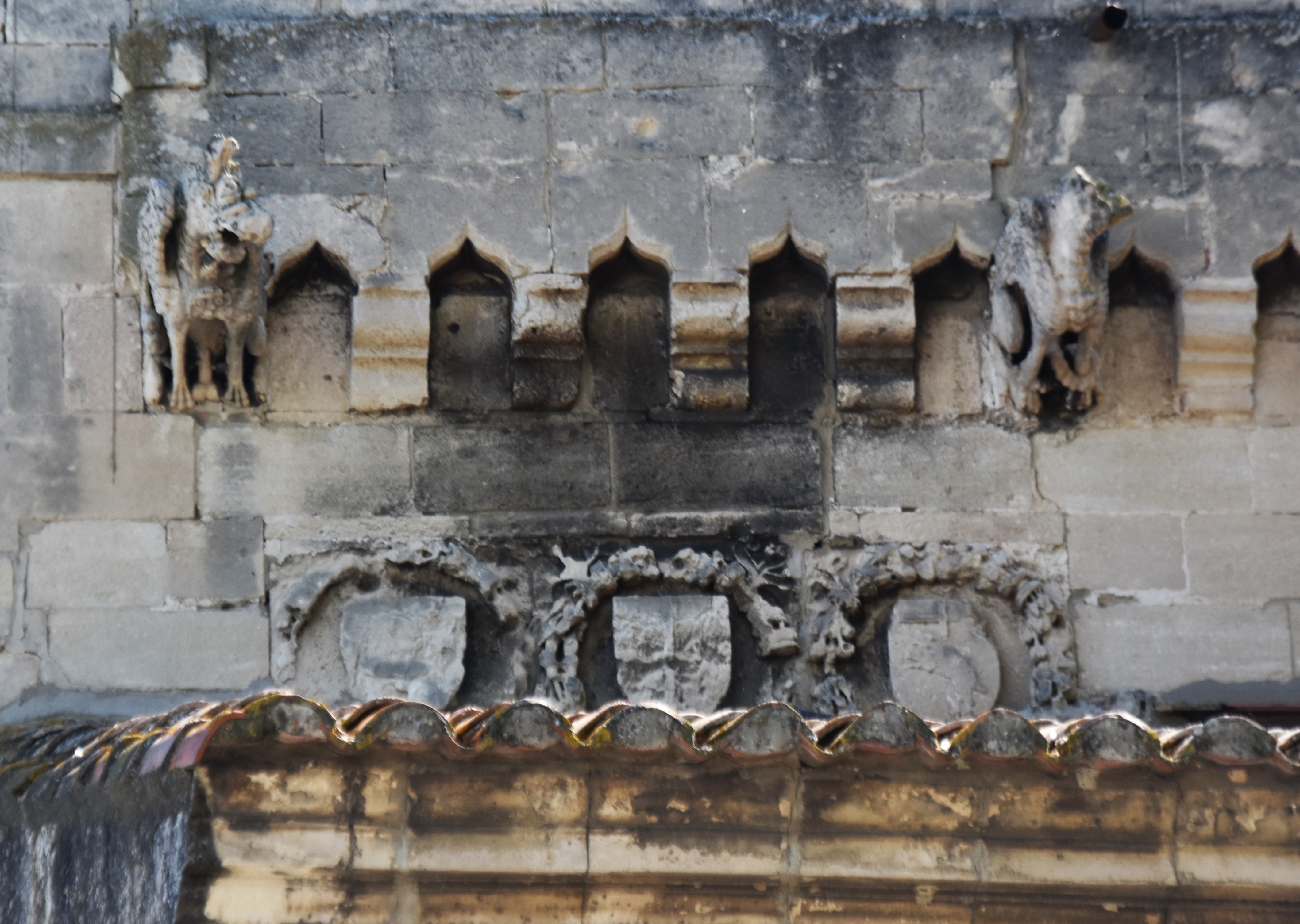
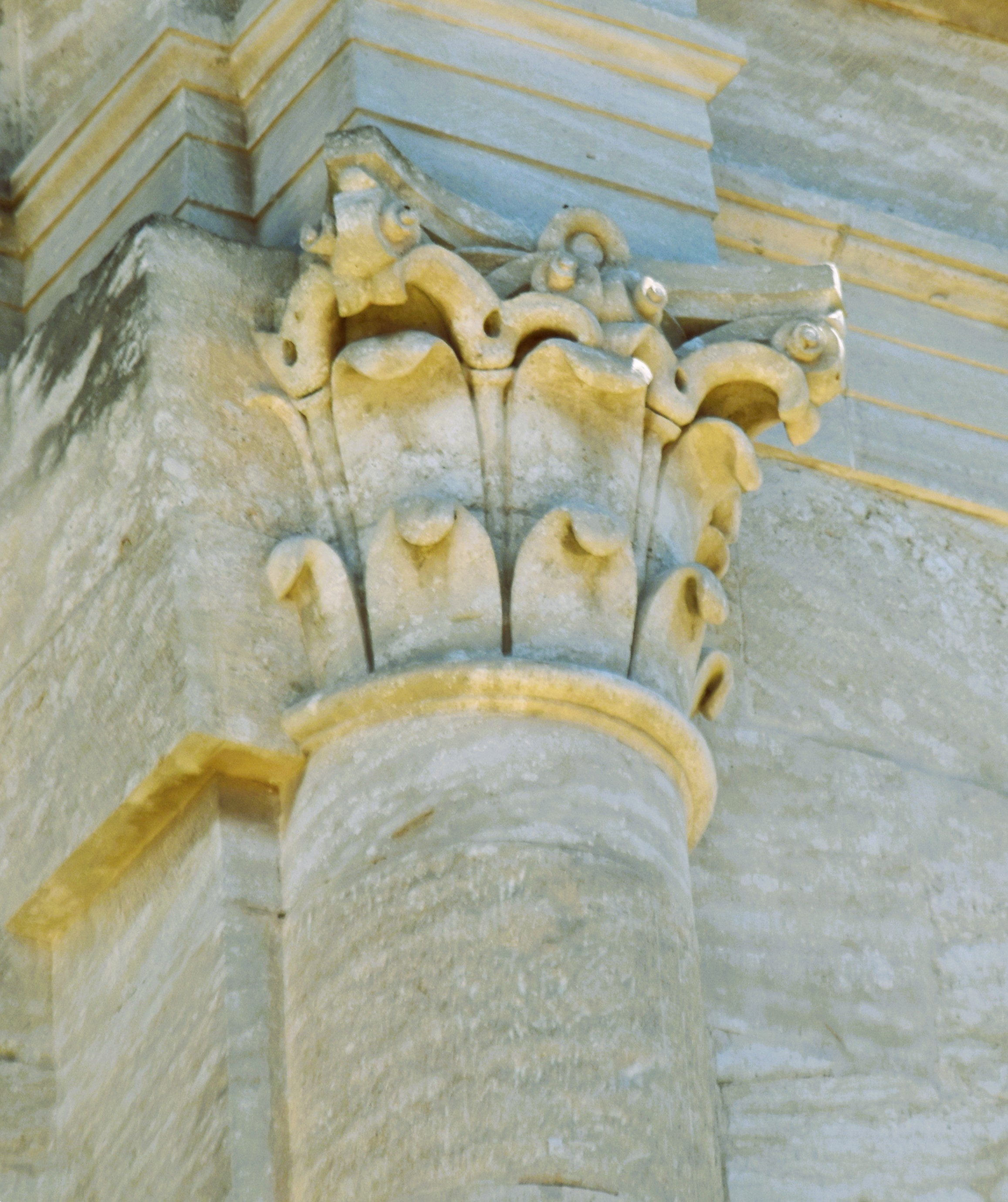

Including doors and shutters.
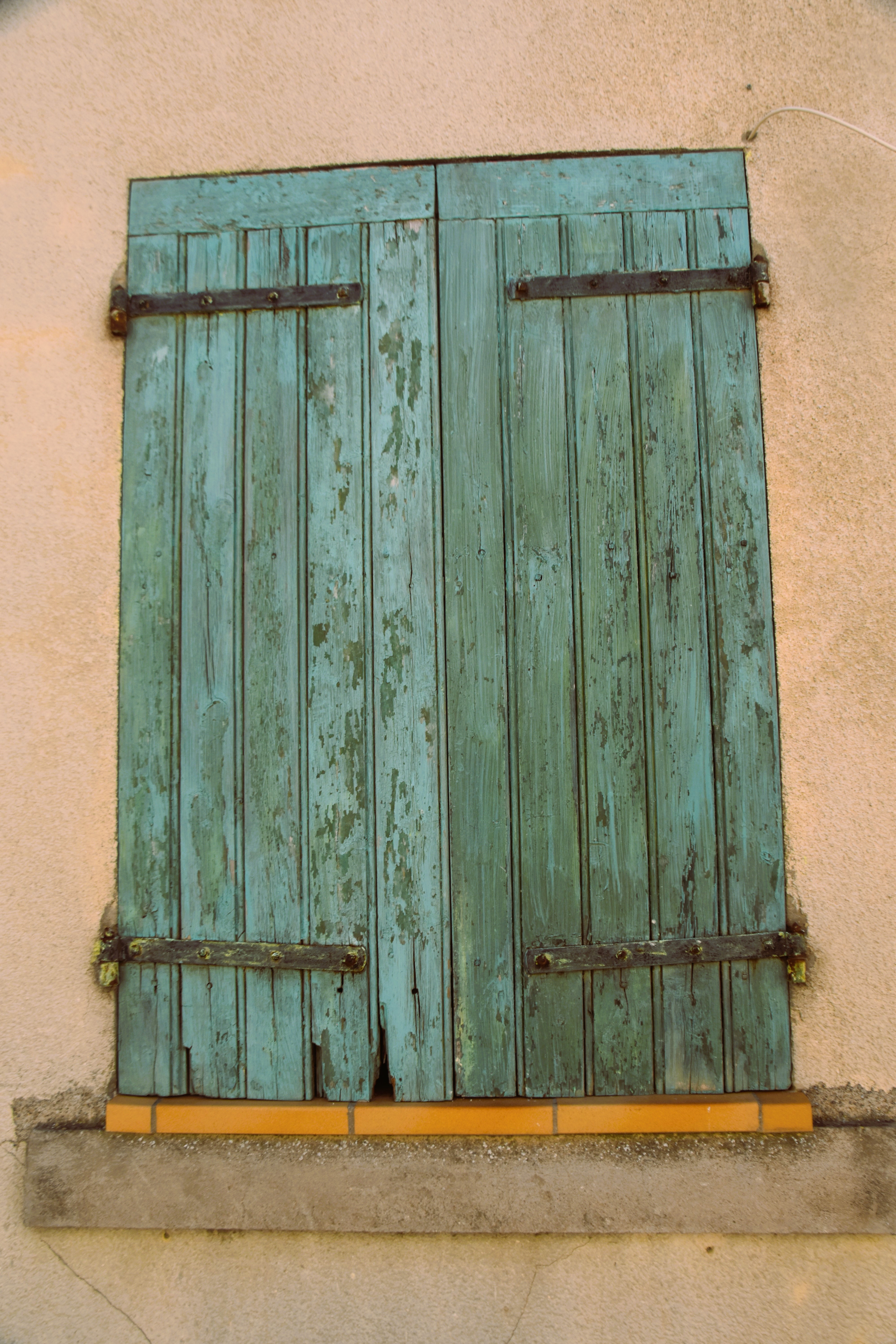
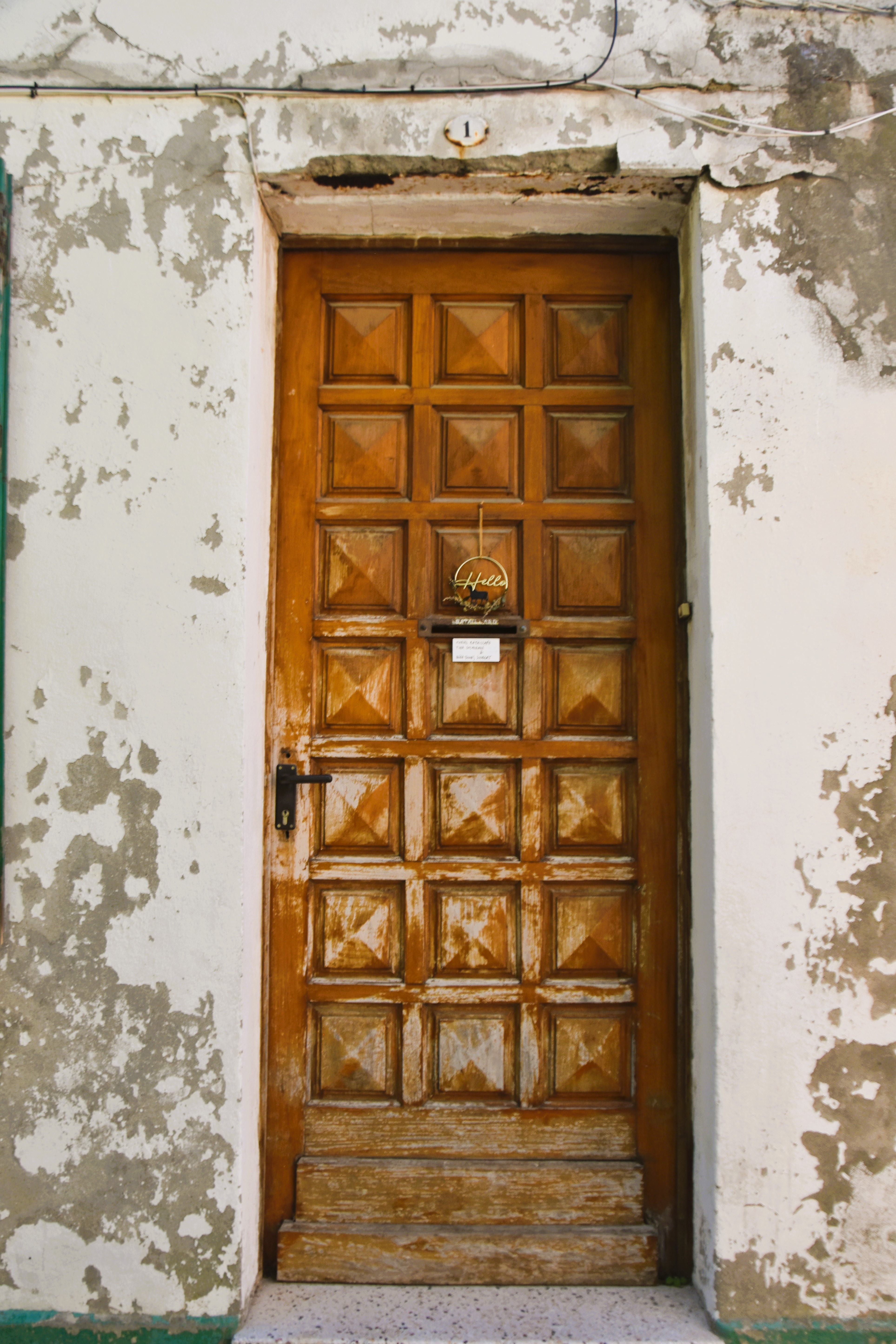
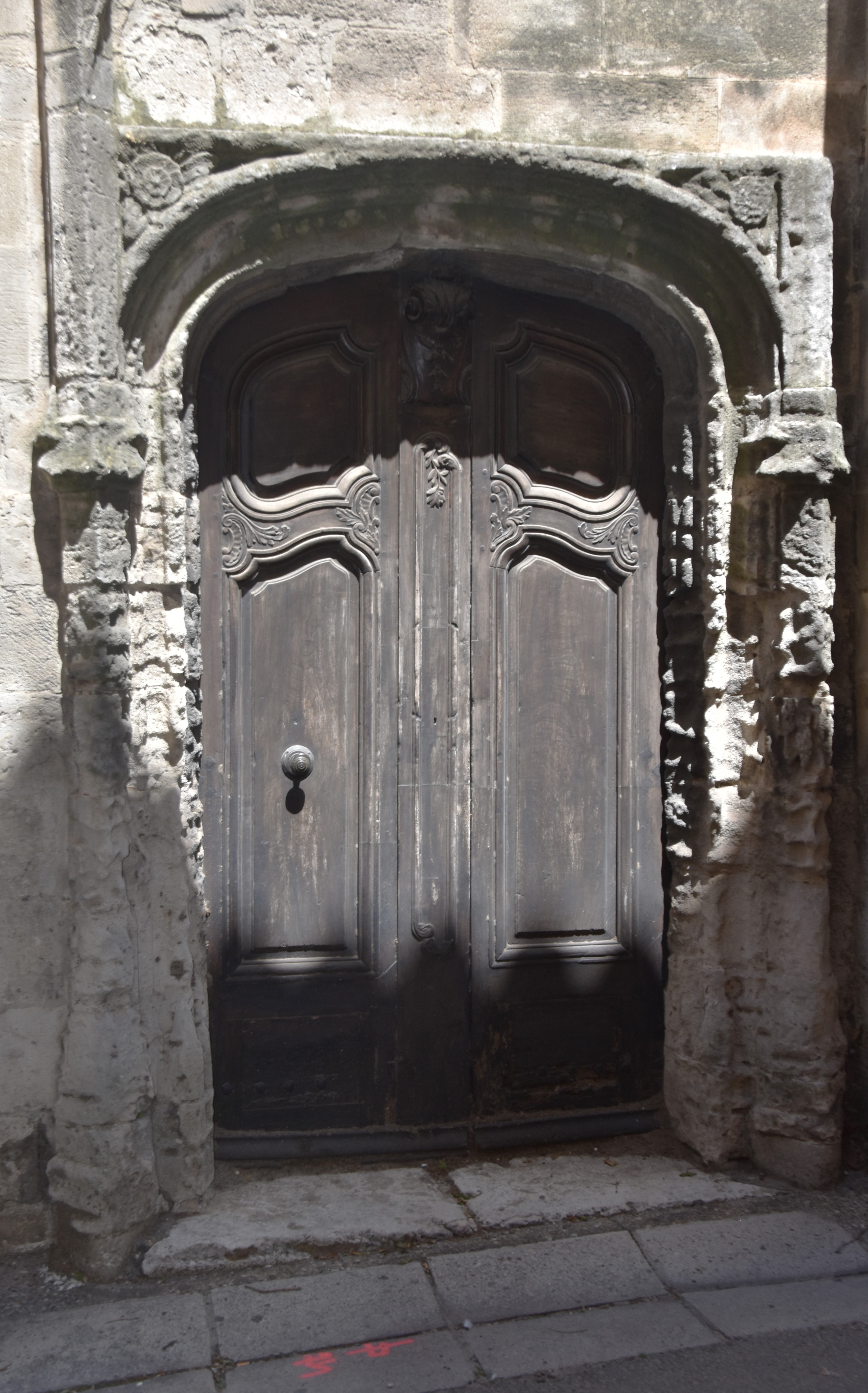
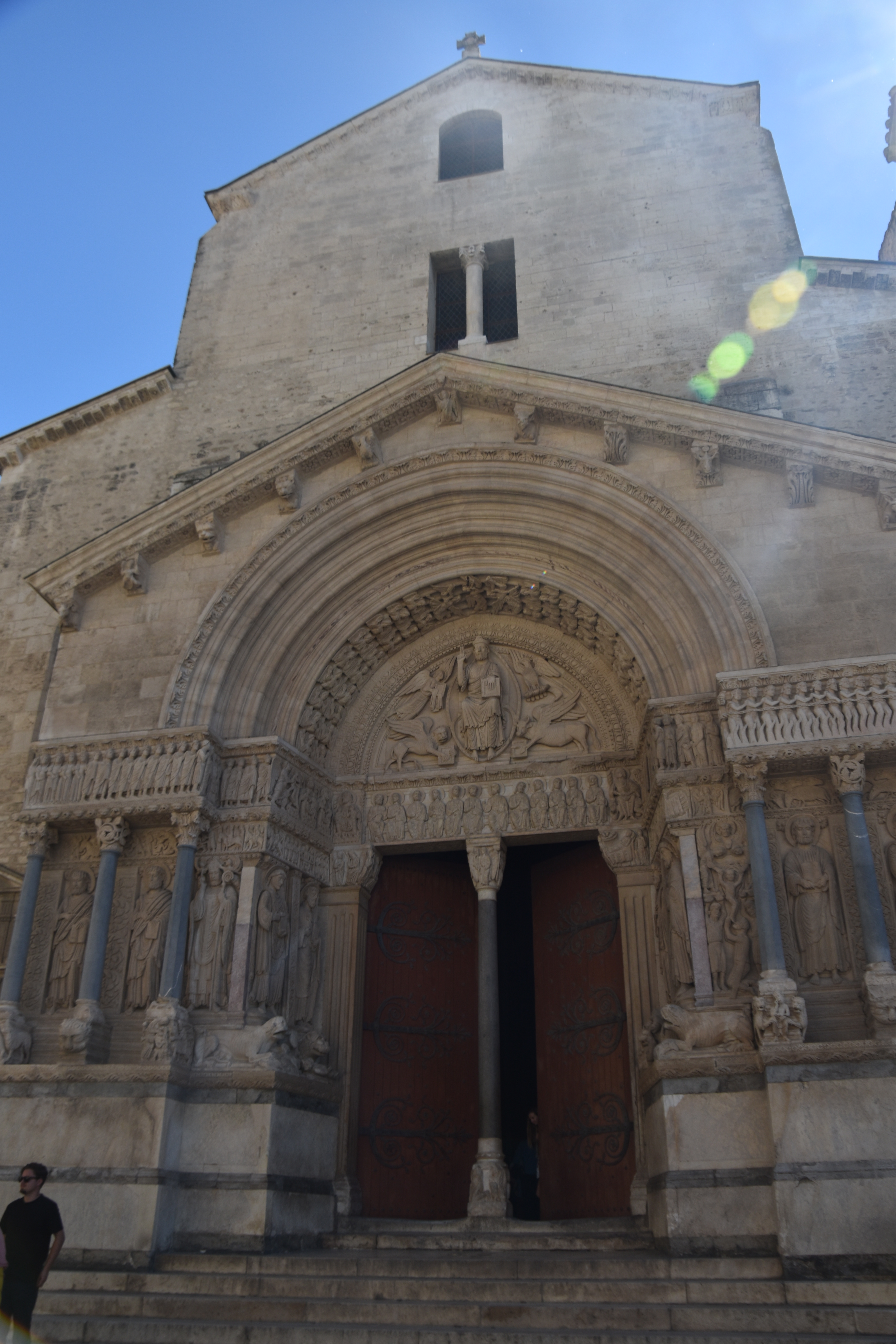
On the way passing through Place de la Republic with the impressive Church of Saint Trophime and its cloisters.
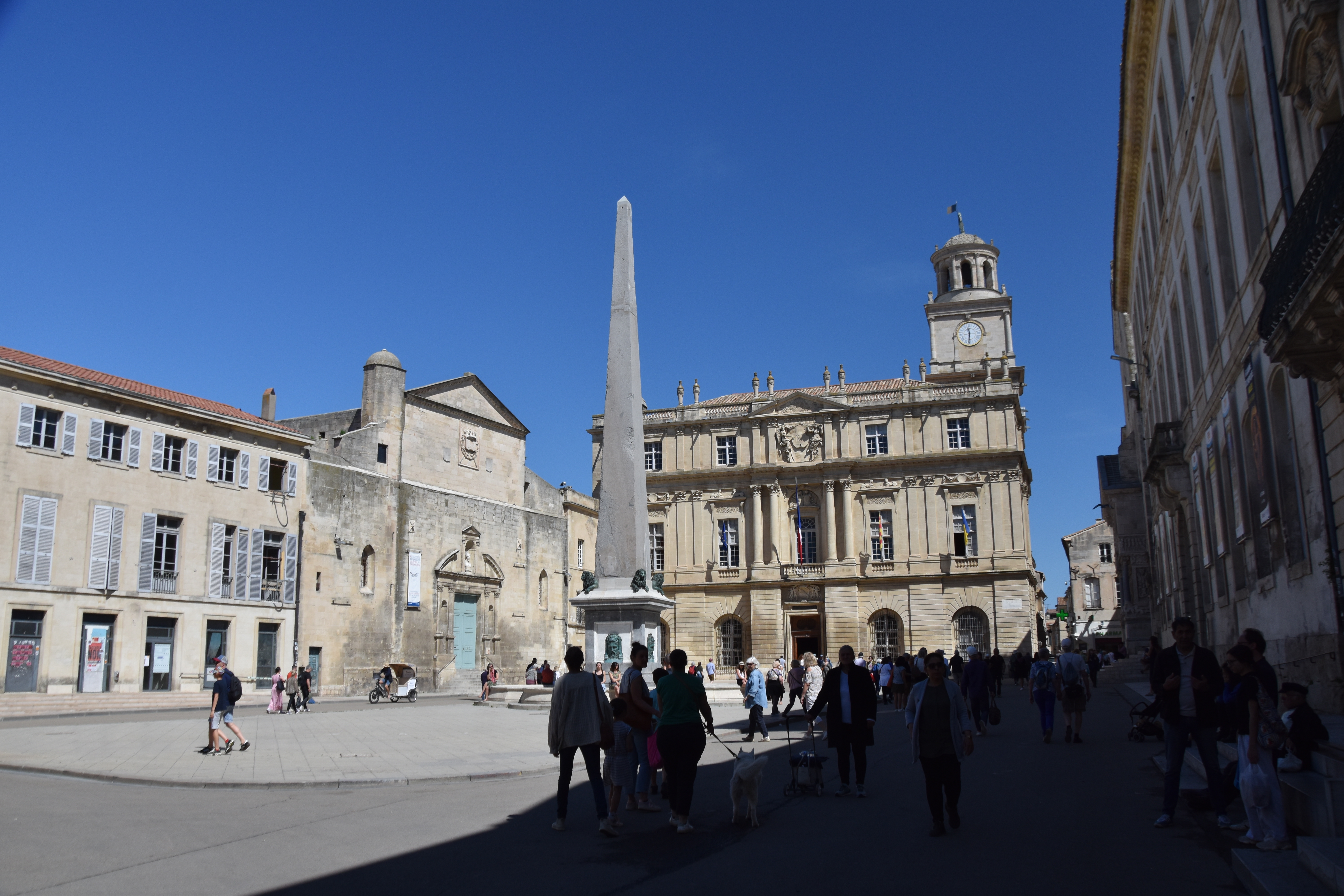
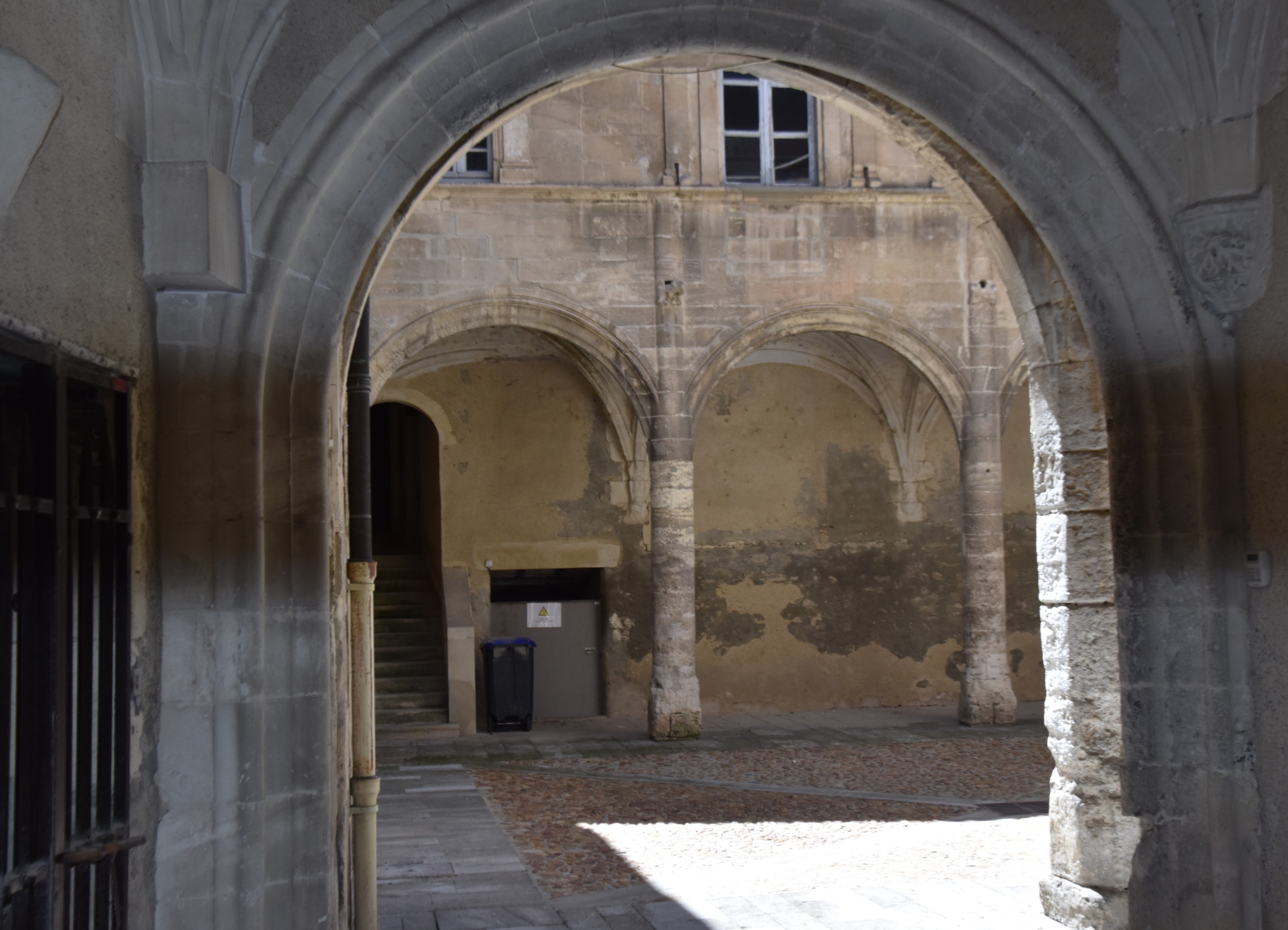
And many more squares and streets on the way down hill towards the Rhône.
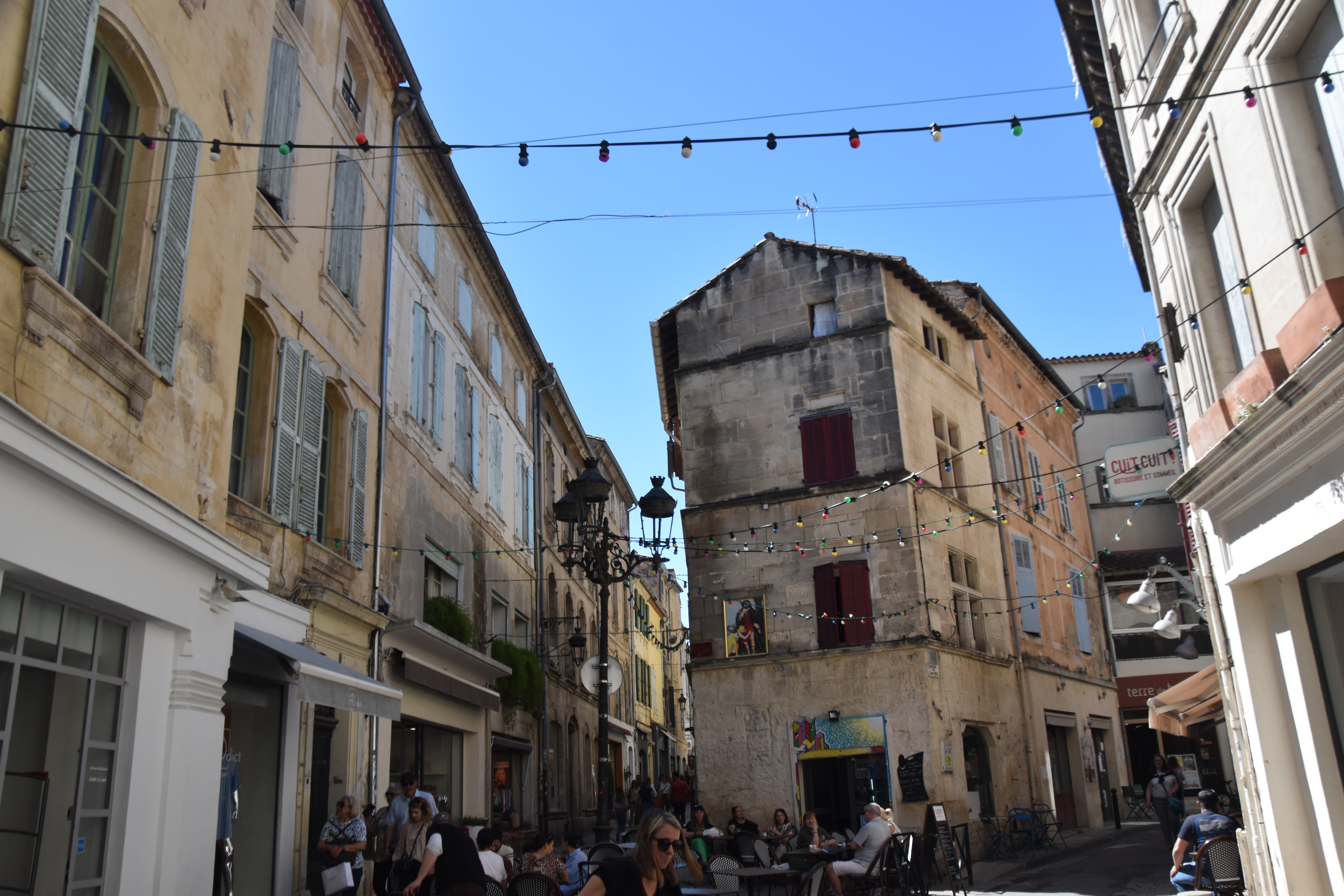
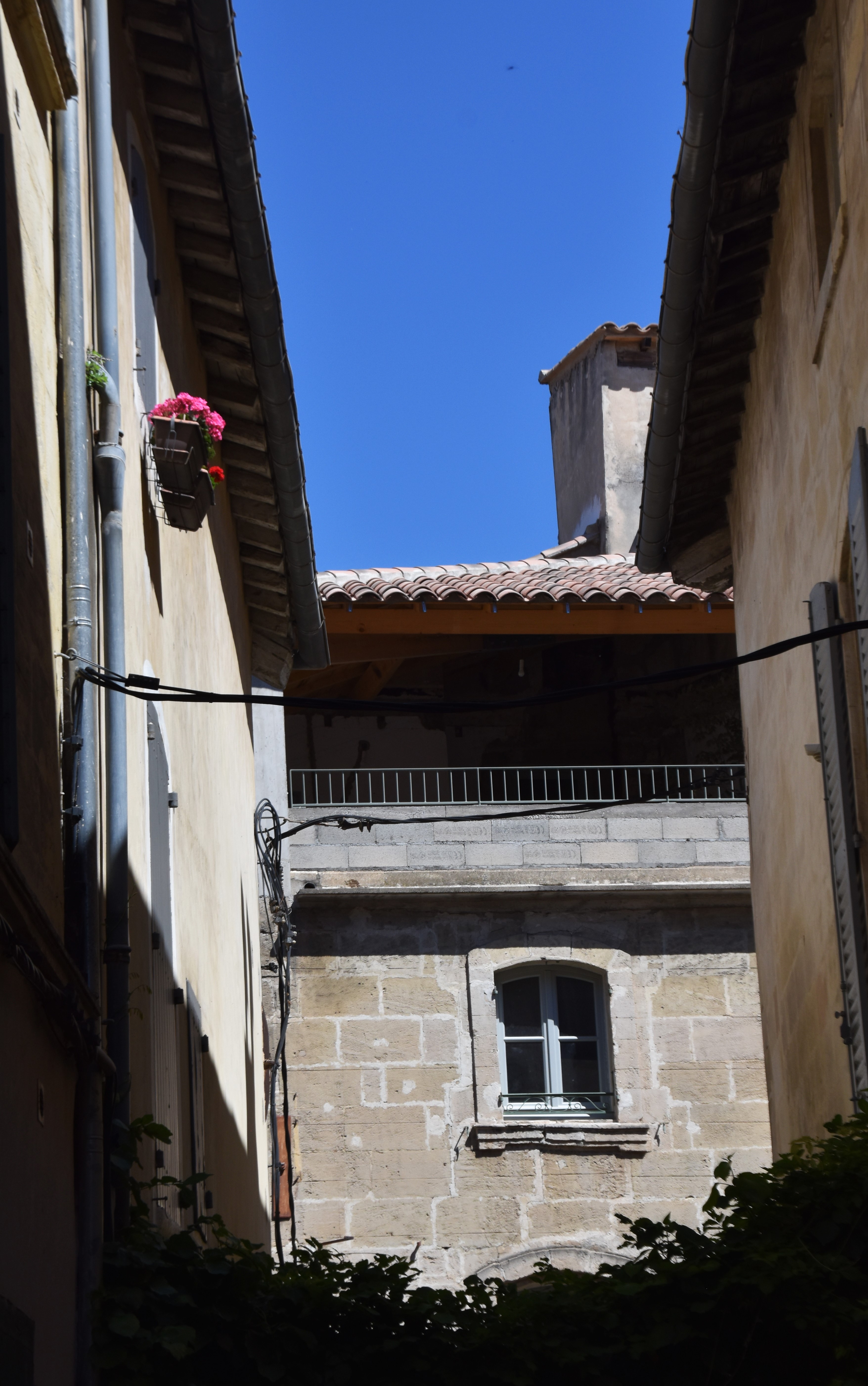
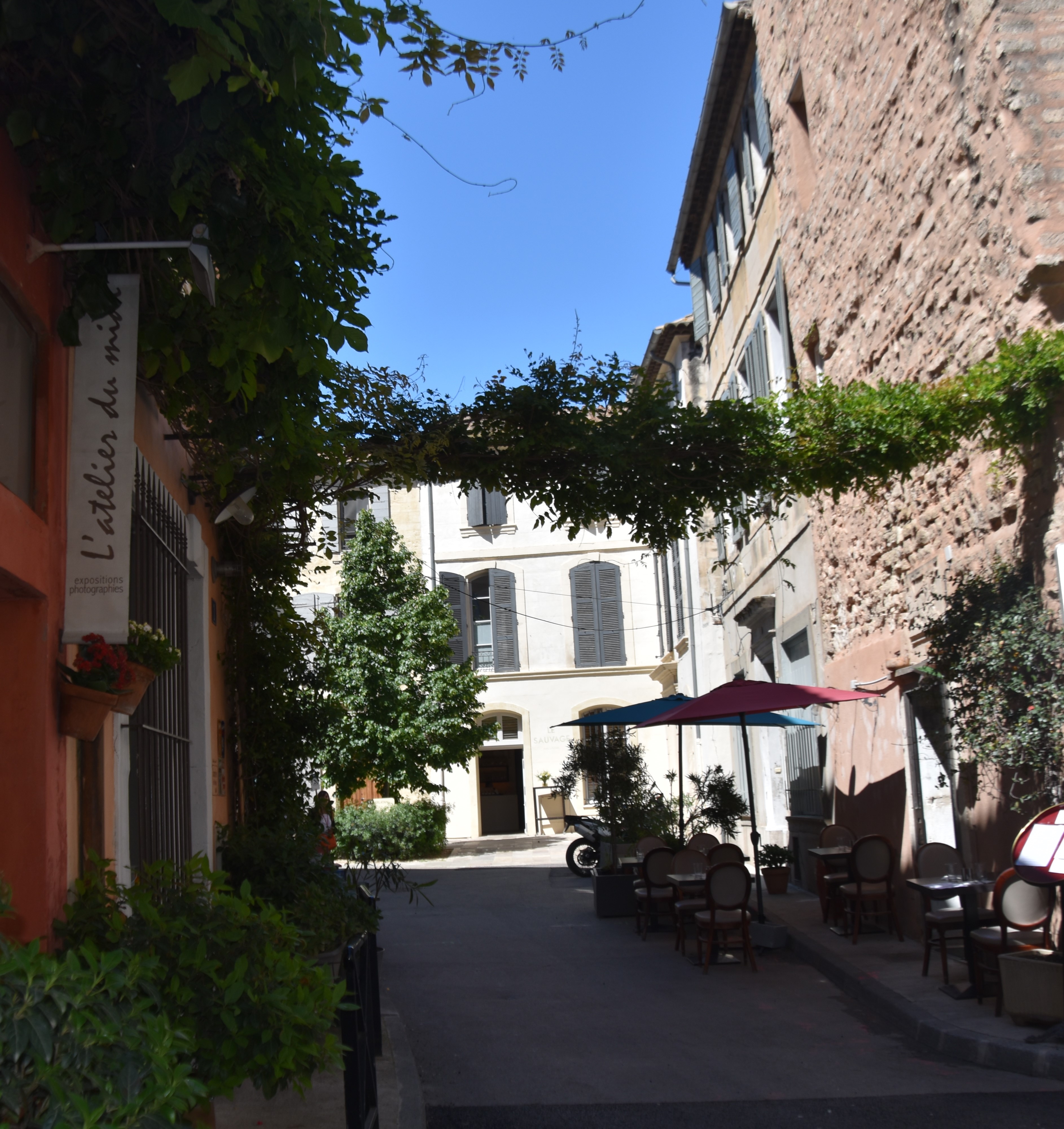

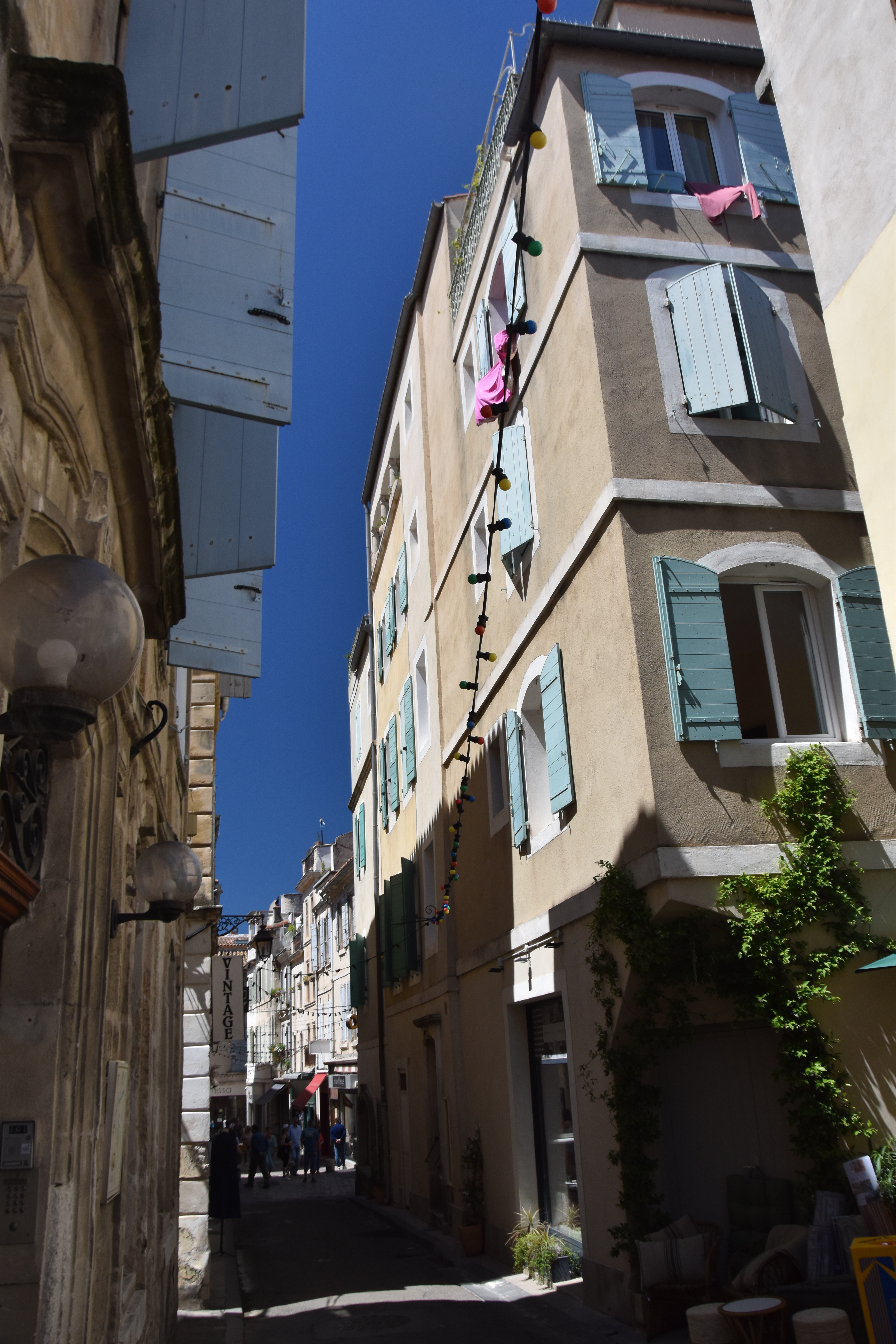
Where bedding was being aired and life was being lived
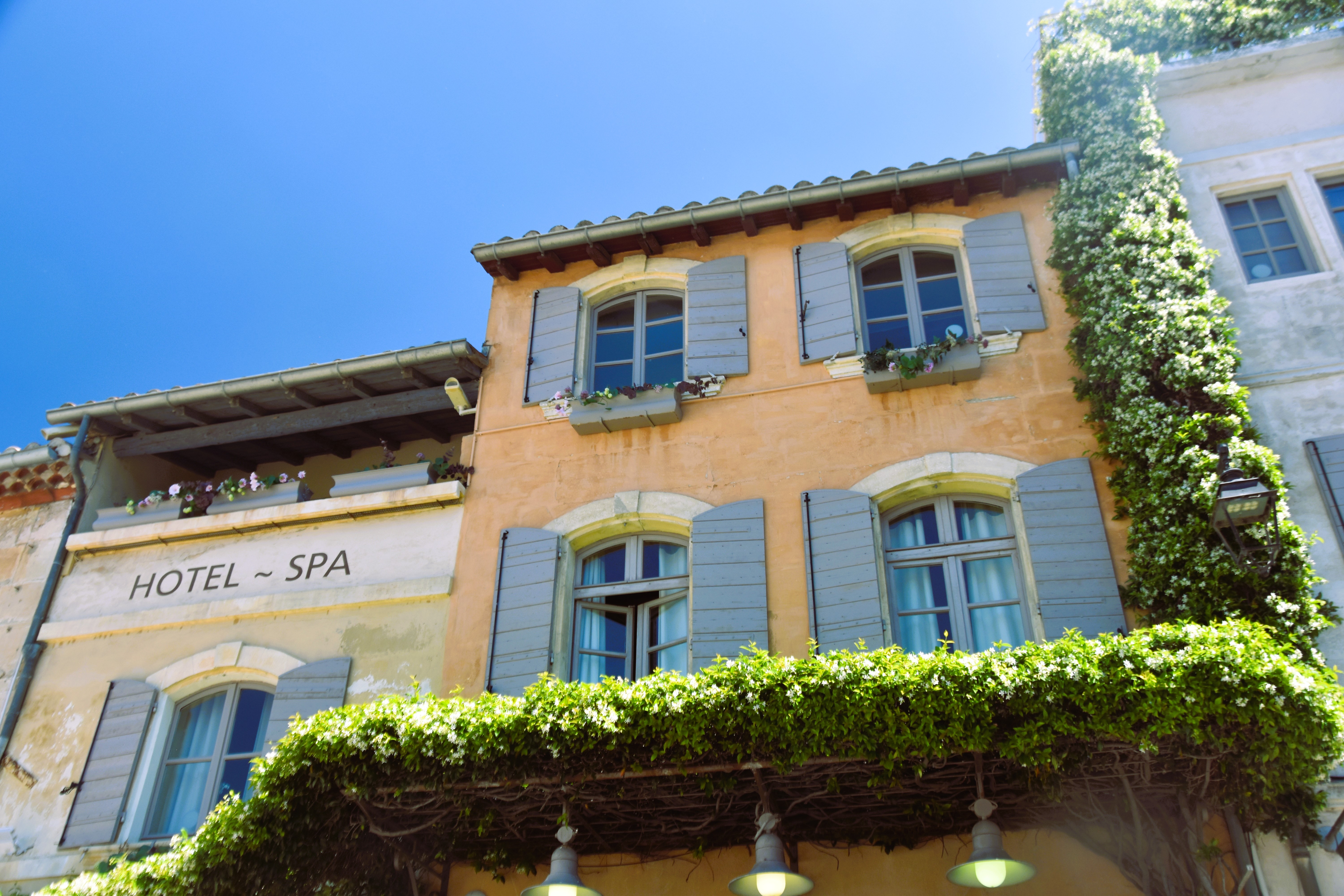

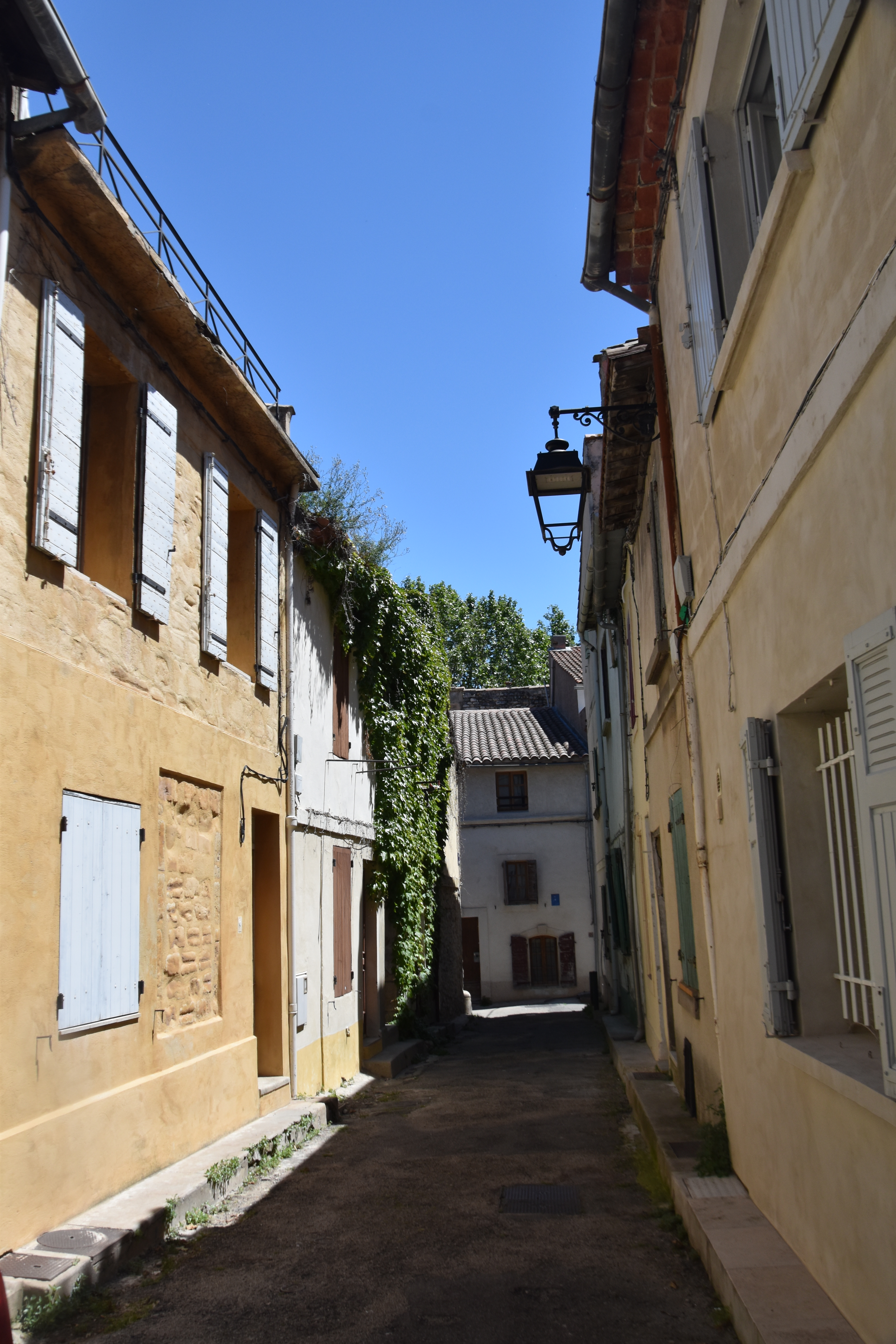

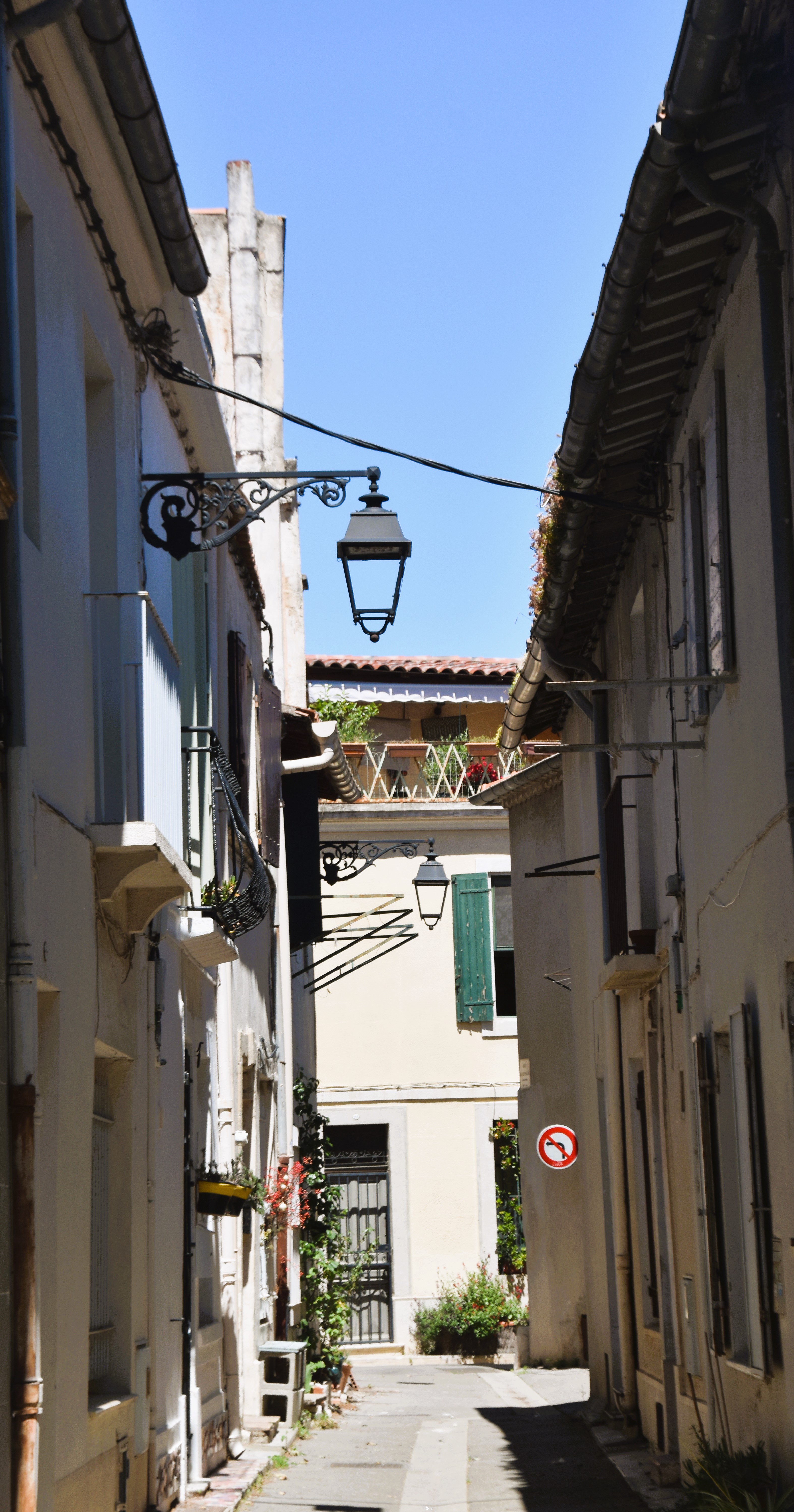
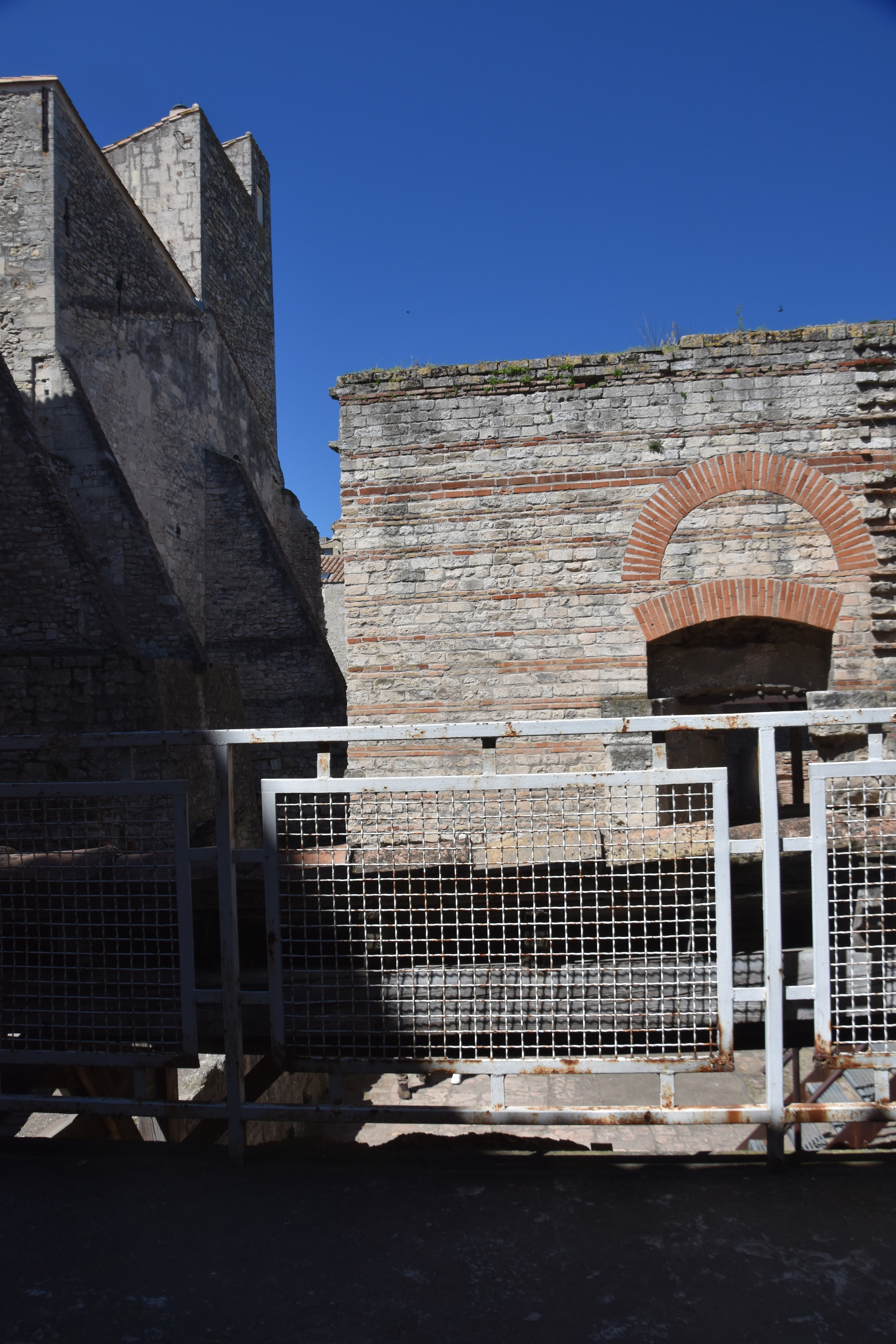
As anticipated we couldn’t enter Constantine’s bath house either so had to make do with views from the outside.


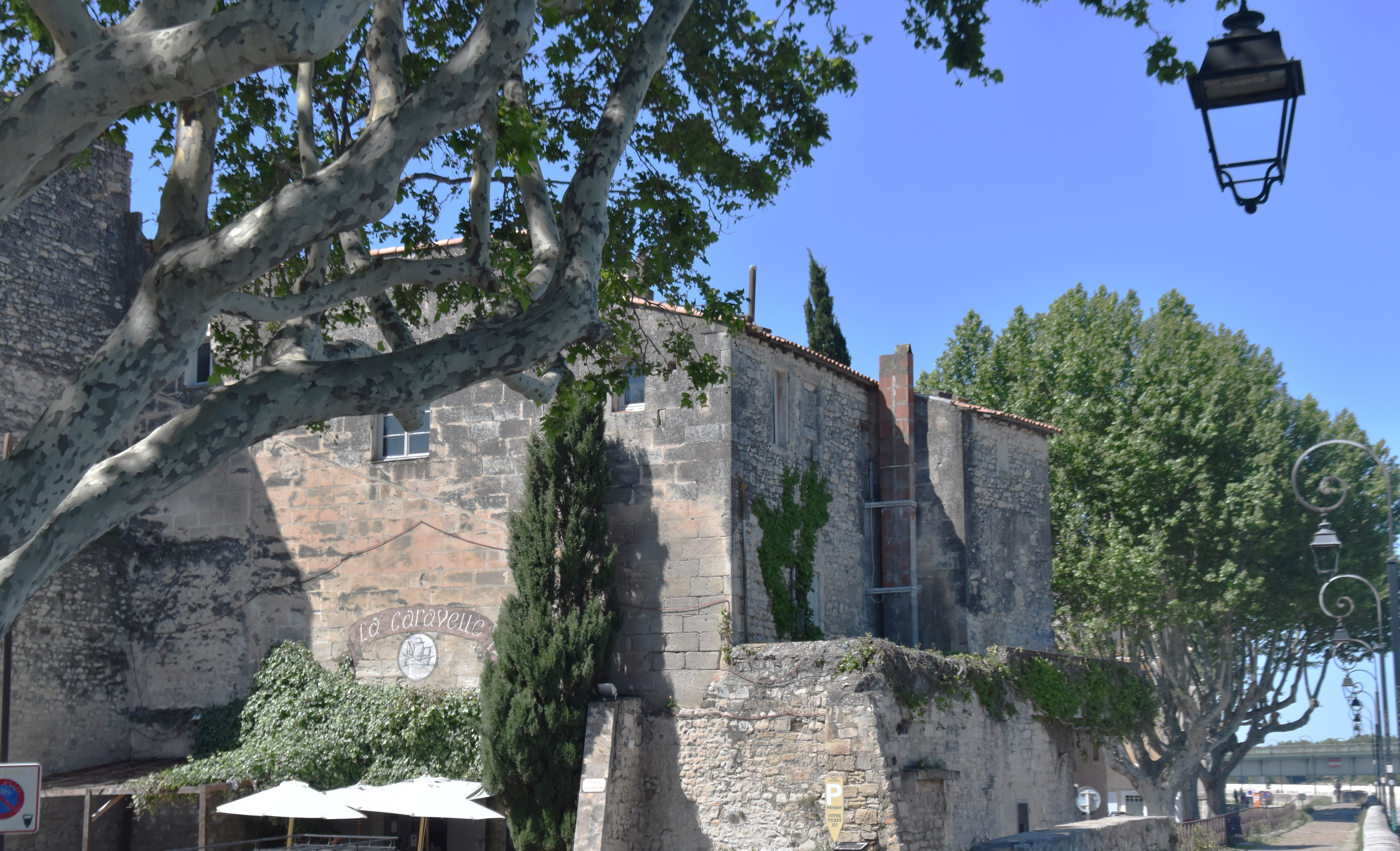
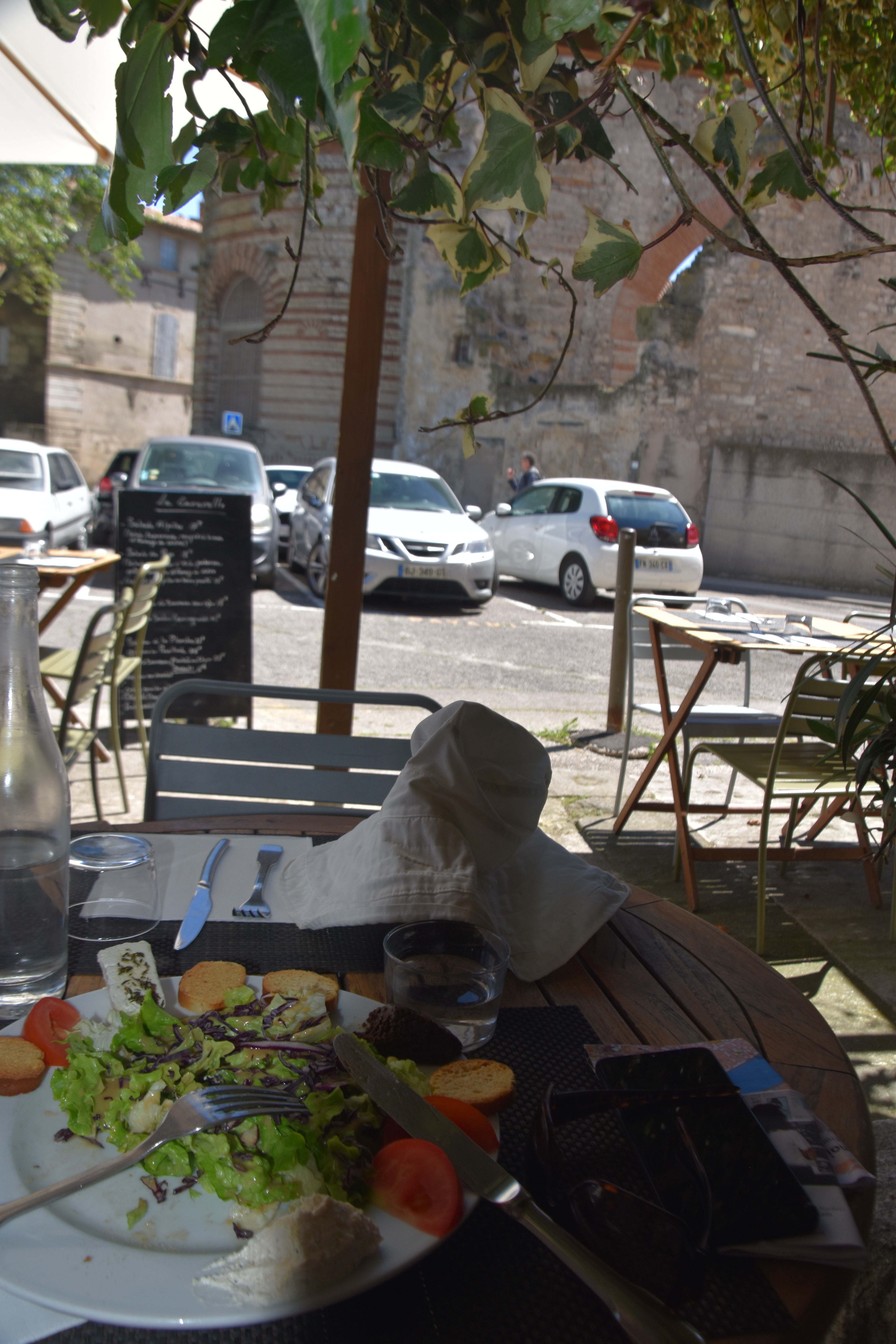
But were amply compensated with a good lunch at a charming restaraunt over looking it.
Then swinging by the broad sweep of the Rhône before returning to the van and a siesta!
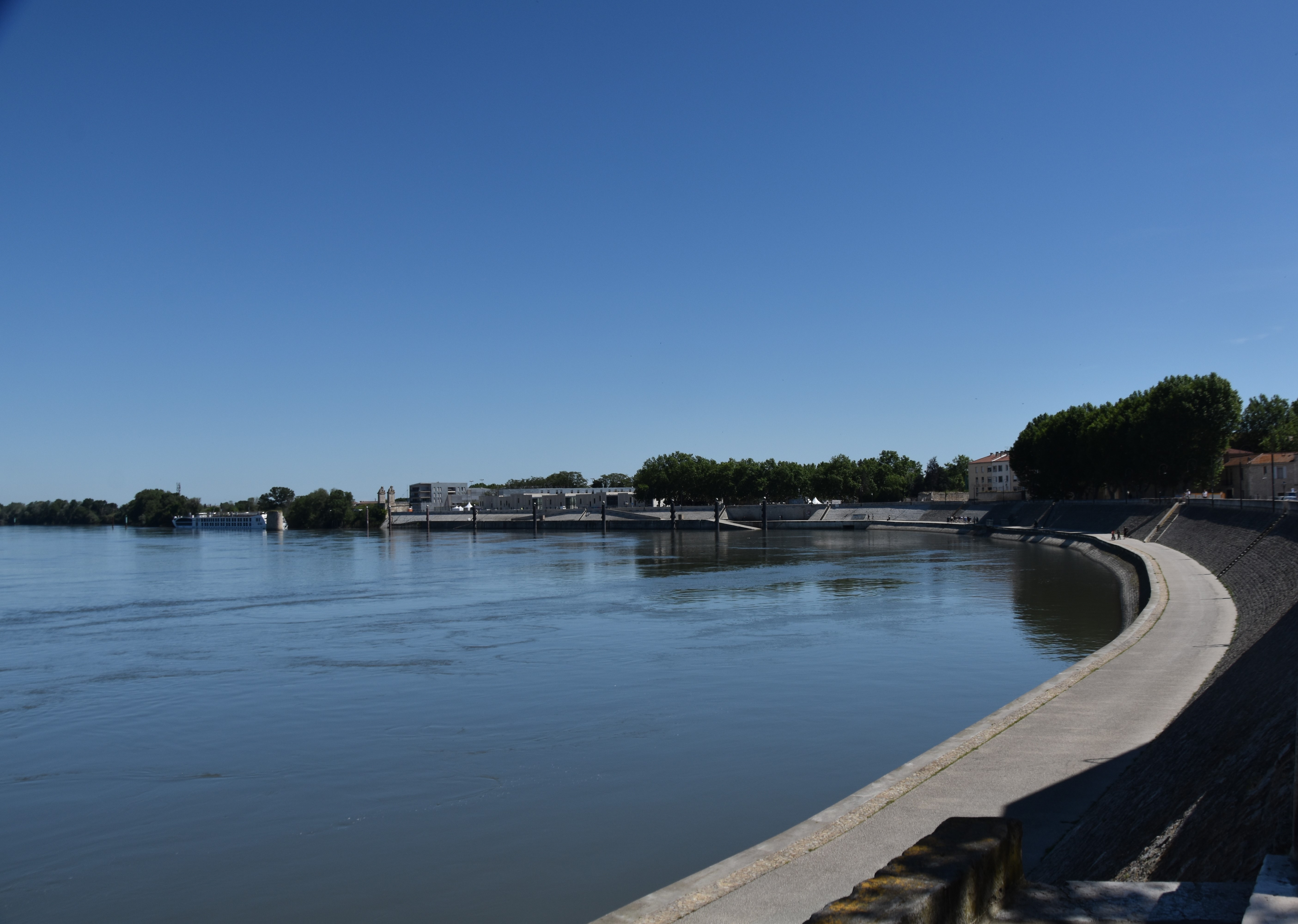

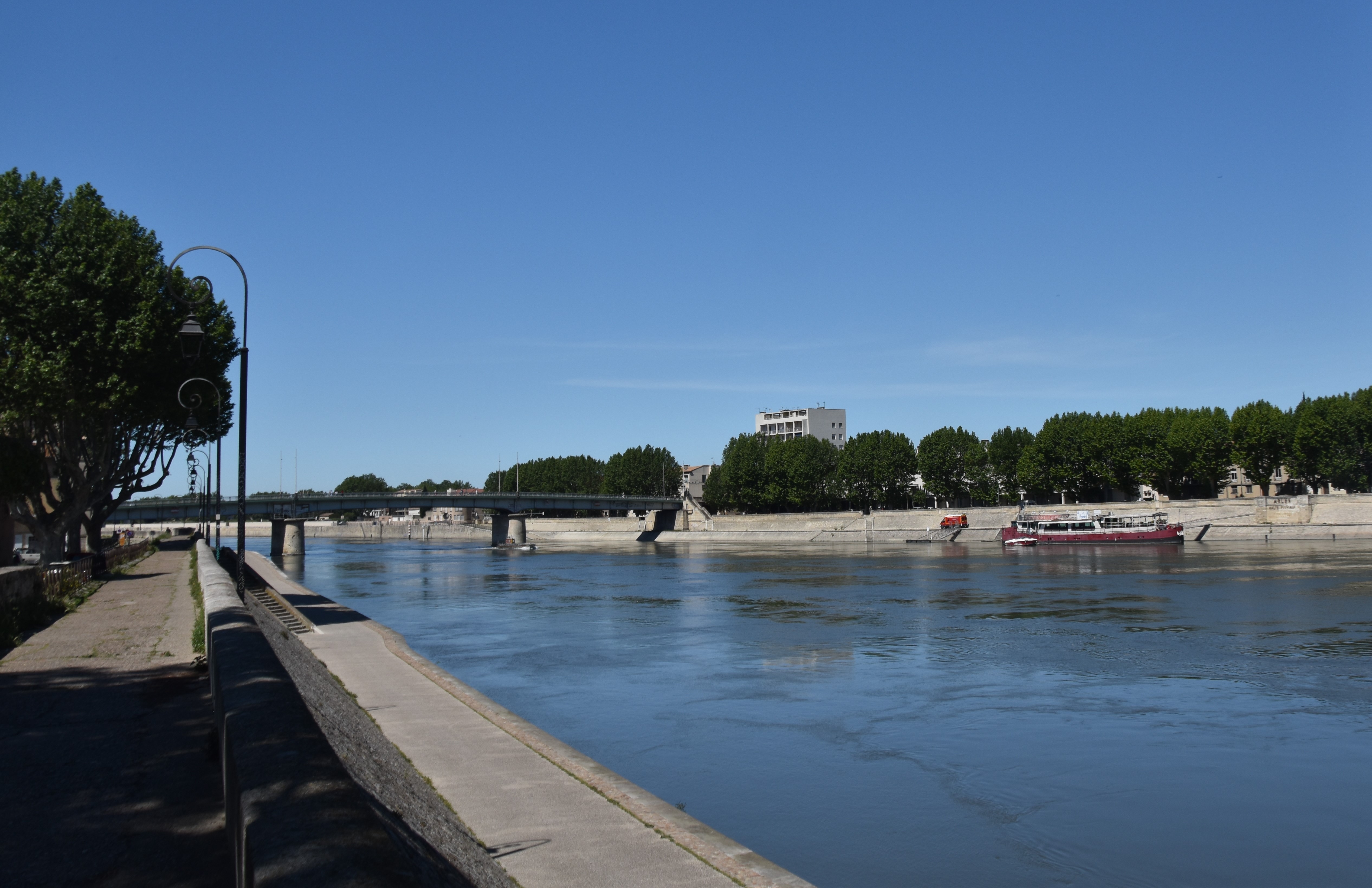
12th. Set off nice and early with a vague plan to go to Beaucaire and from there on the the troglodyte Abbaye Saint-Roman and perhaps Tarascon – however another case of “The best laid plans” – ganging very much awray. I got into Beaucaire and glympst Tarascon across the water with the turrets of the Chateau Royal de Provence in the background but it was total chaos. Even though it is the last day of the long weekend taken in addition to VE day on the 8th I was not expecting this much mayhem. And oh! so much impatients and agression. So after a brief walk round the port and market I was ready to head for the hills.
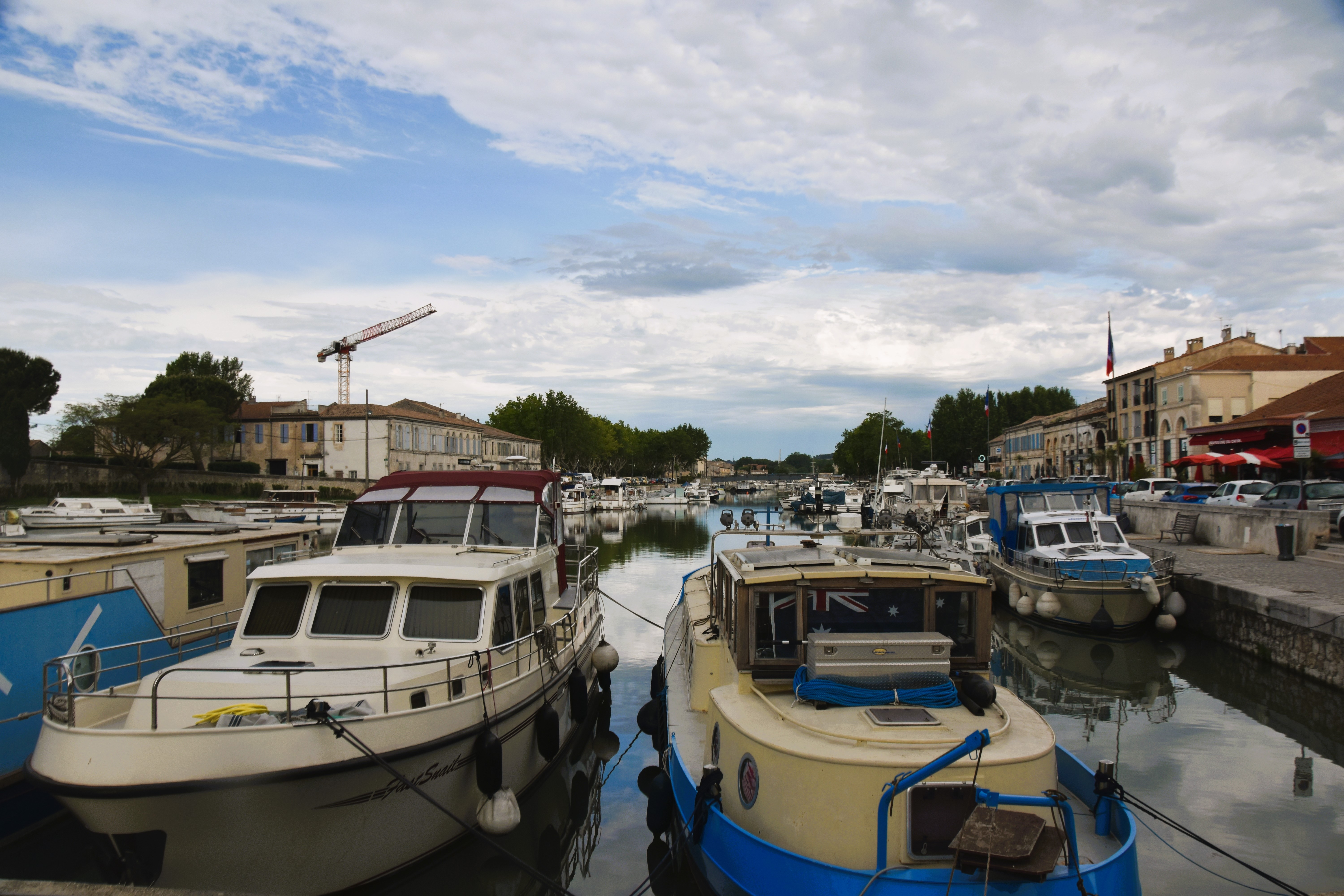
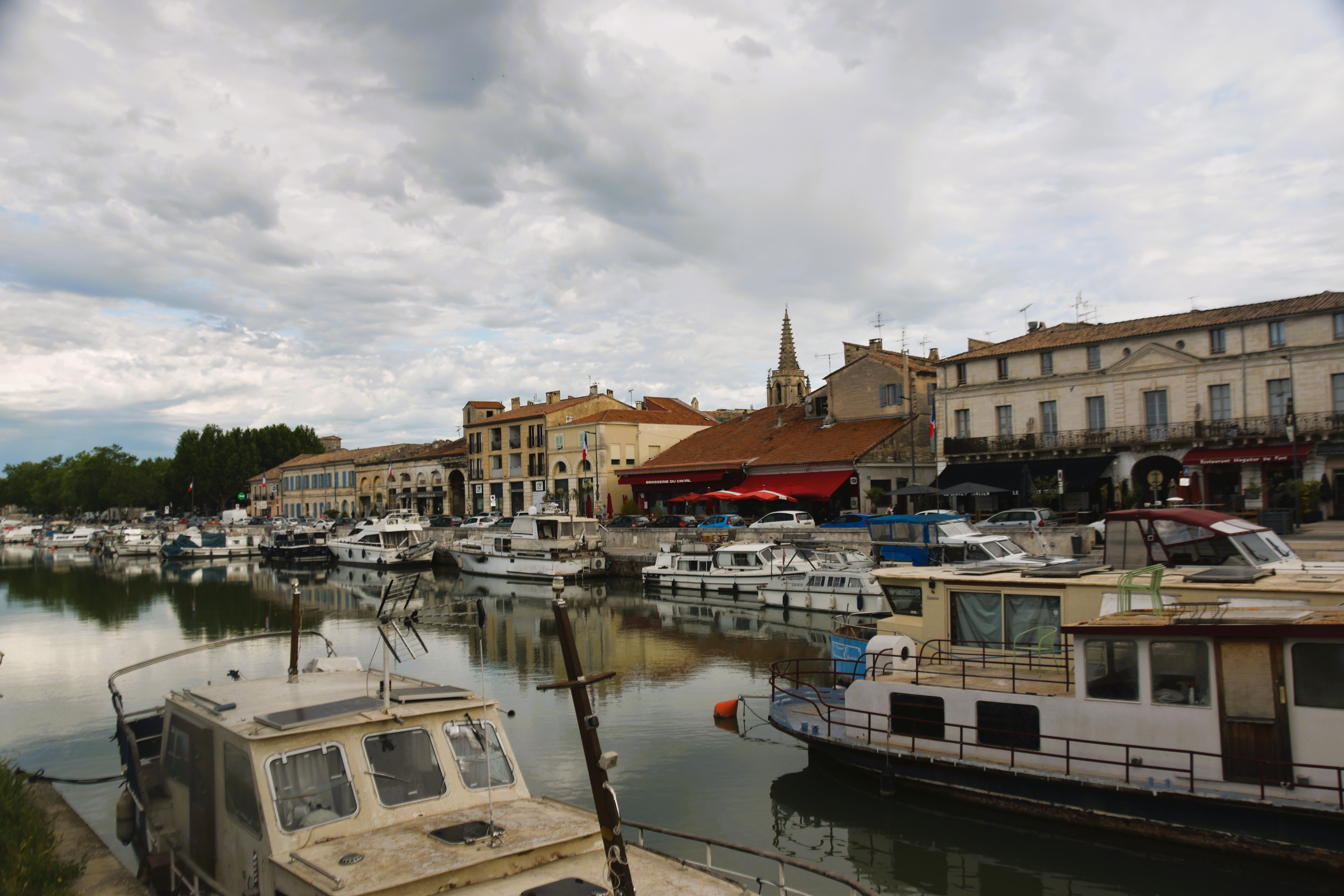
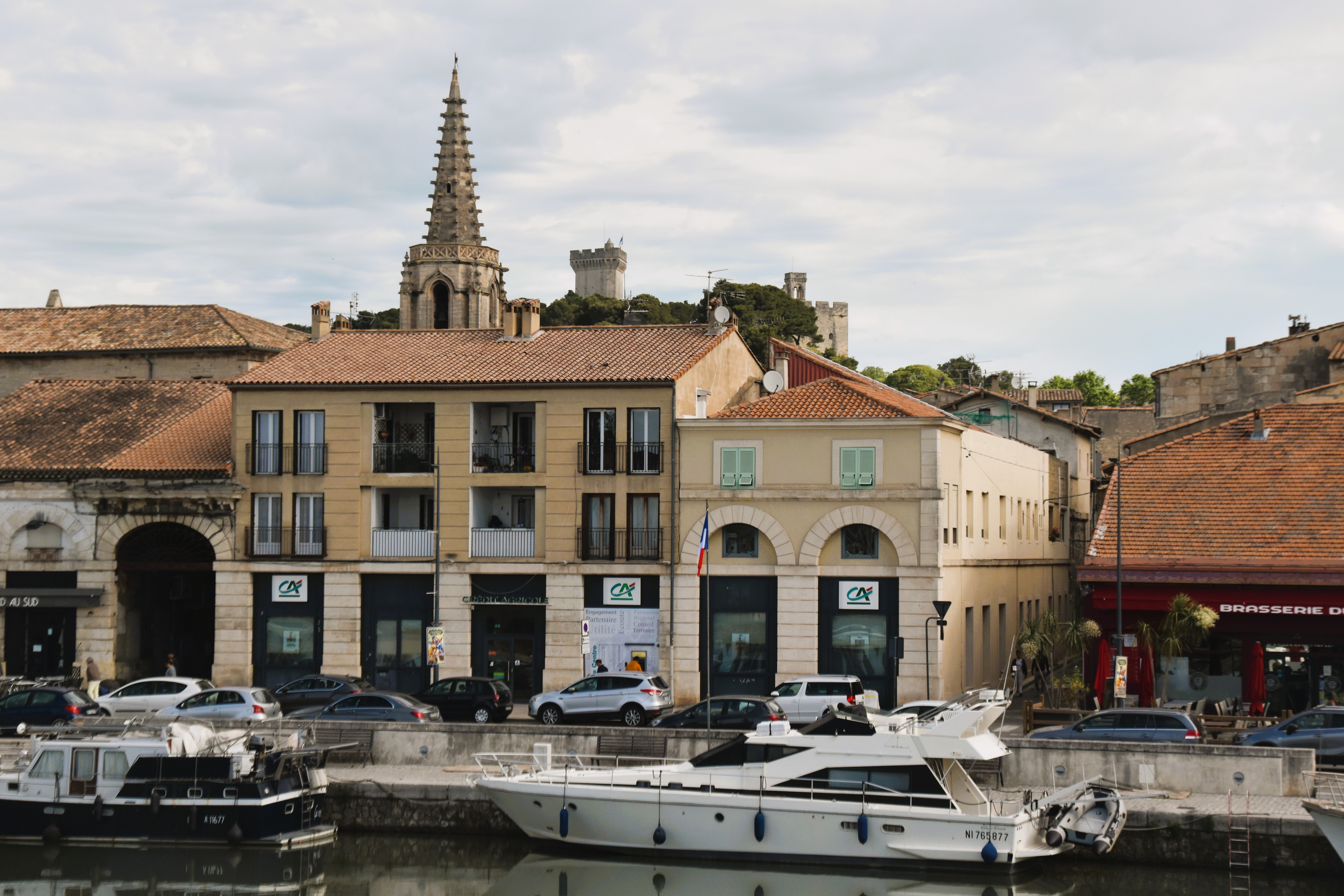
Turrets of Chateau Royal du Provence in the background

The attempt on the troglodyte Abbaey was no more fruitful. I eventually found myself on a very narrow unpaved road that also had a low bridge. It was a further 2.5k to the site via this gravel road and I did not think that Cassidy would have relished the 5k round trip in the heat and I couldn’t leave him in the van. So I bought half a cooked chisken – as one does!!! and headed for the tiny village of St Etienne-du-Grés where I found a charming wooded campsite with a very voiciforous Nightingale in residence. As the custodian booked me in he said that the reason that it was so chaotic out there is that the Olympic Flame is passing through the area today. When I told him I had just missed the bakery, the ANGEL made me a hot, fresh baguette in his machine. BIG SMILE.
13th. What a day!
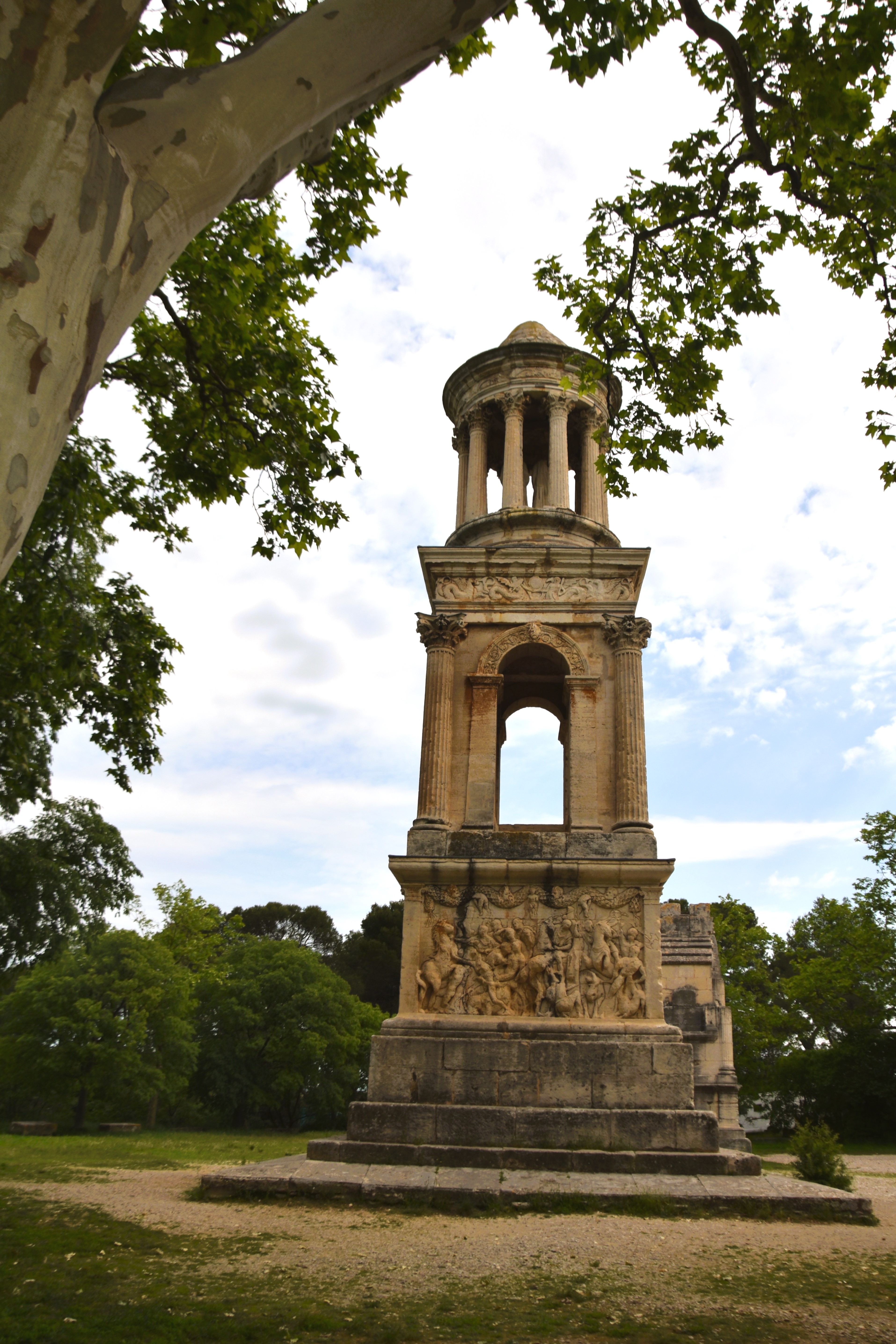
A short drive along the valley to us to St Remy-de-Provence where we headed straight for the remains of the Roman city of Glanum. Chosen by the first permanent inhabitants in the CVII BC for its sheltered position surrounded by high rock walls . Prosperity was bought to the town by Hellenistique occupation around C1st & C2nd BC with the addition of many traditionally Hellenistique buildings and monuments. In the early part of the reign of Ceasar Augustus, about 63AD it became a roman colony and the Greek buildings were added to while new Roman architecture started to appear.
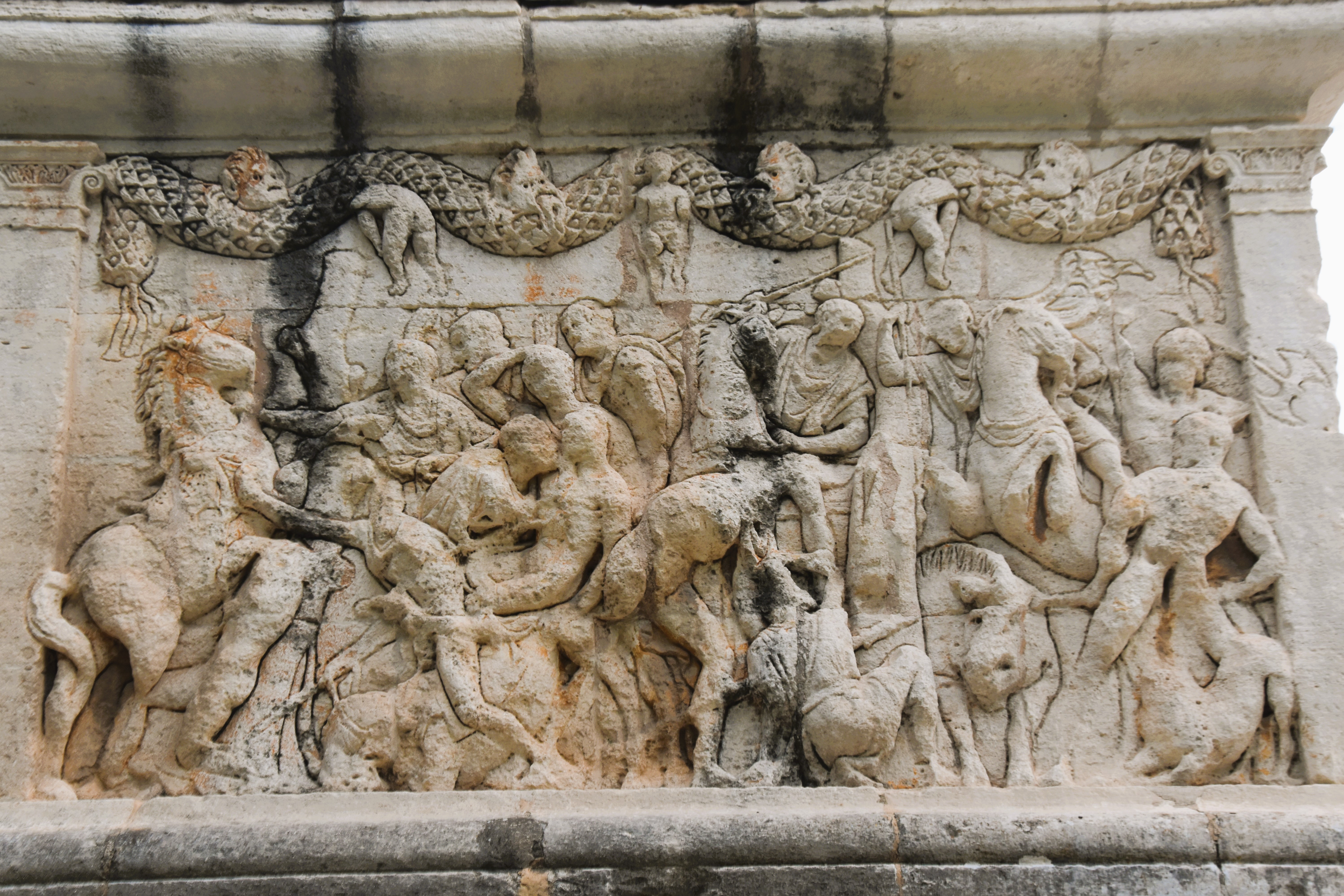
The entry to the town is marked by an well preserves Mausoleum with carved panels on its four sides


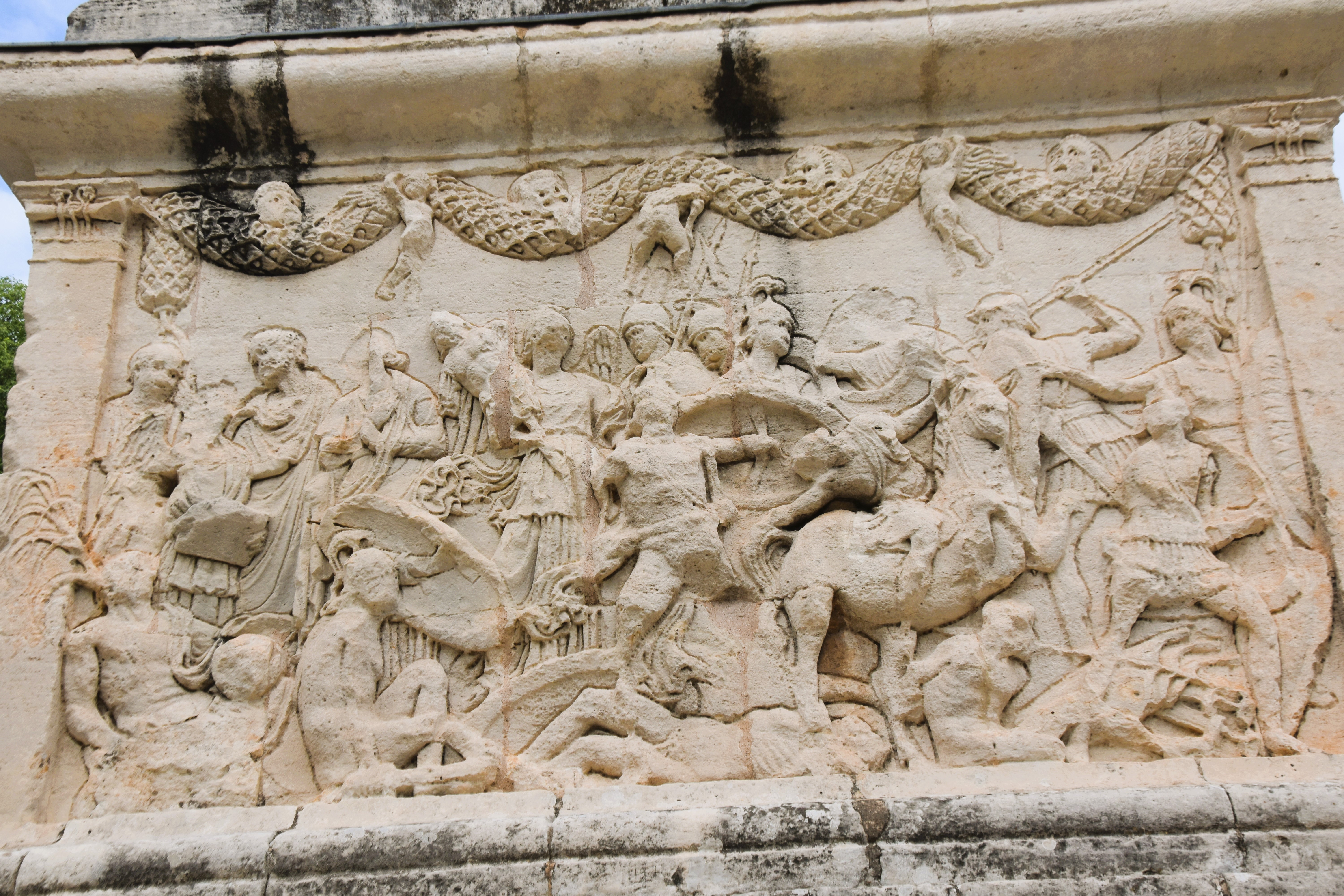
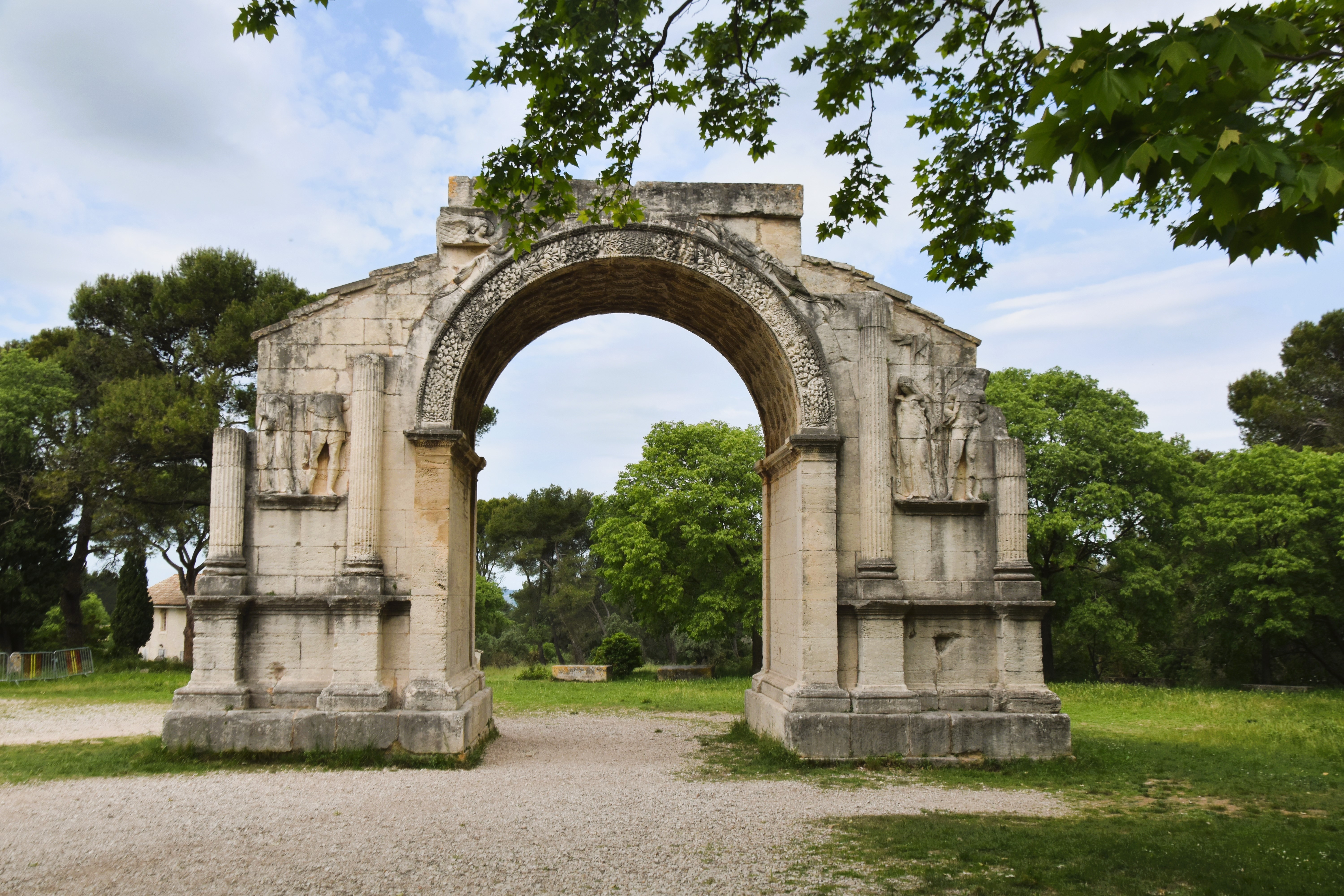
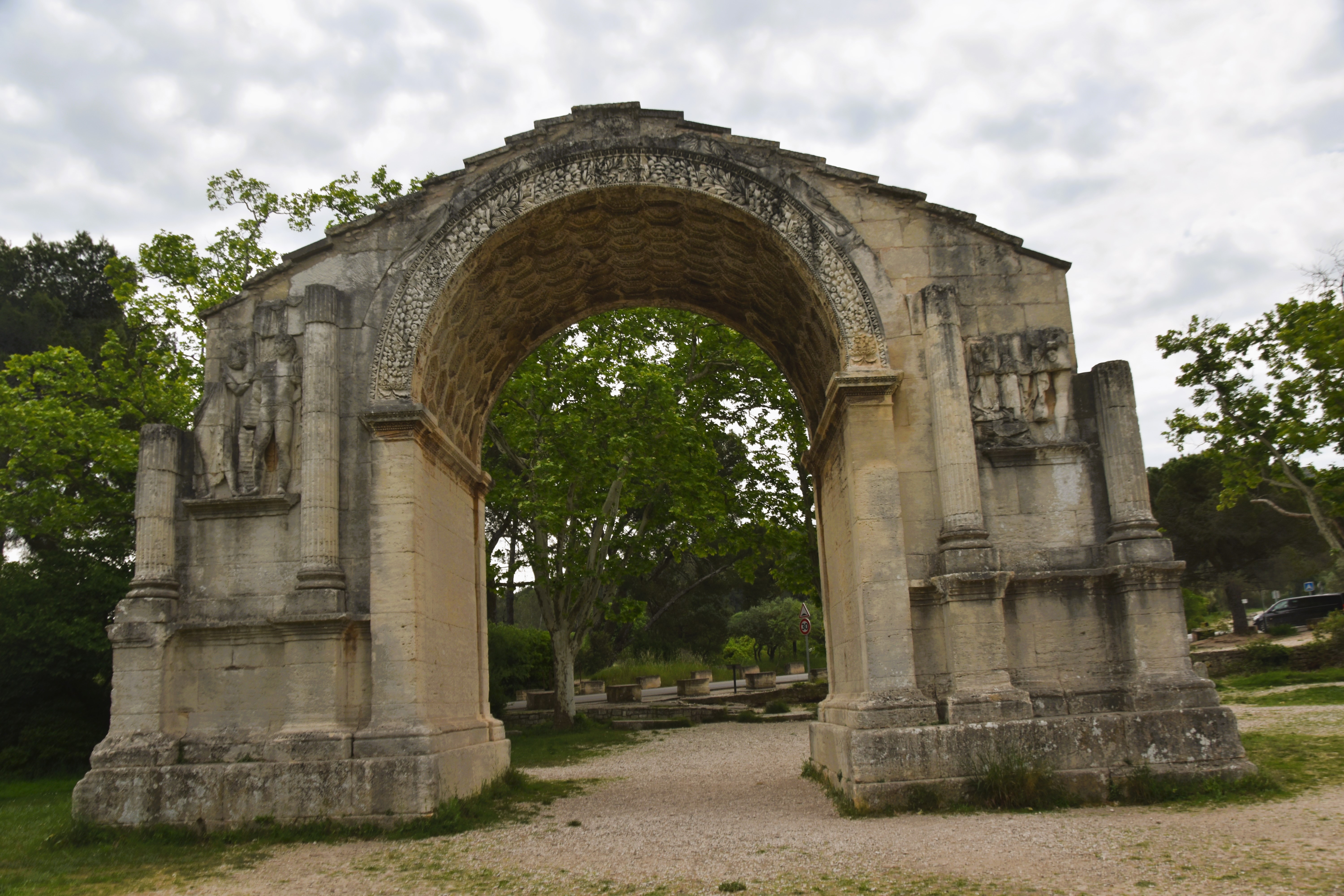
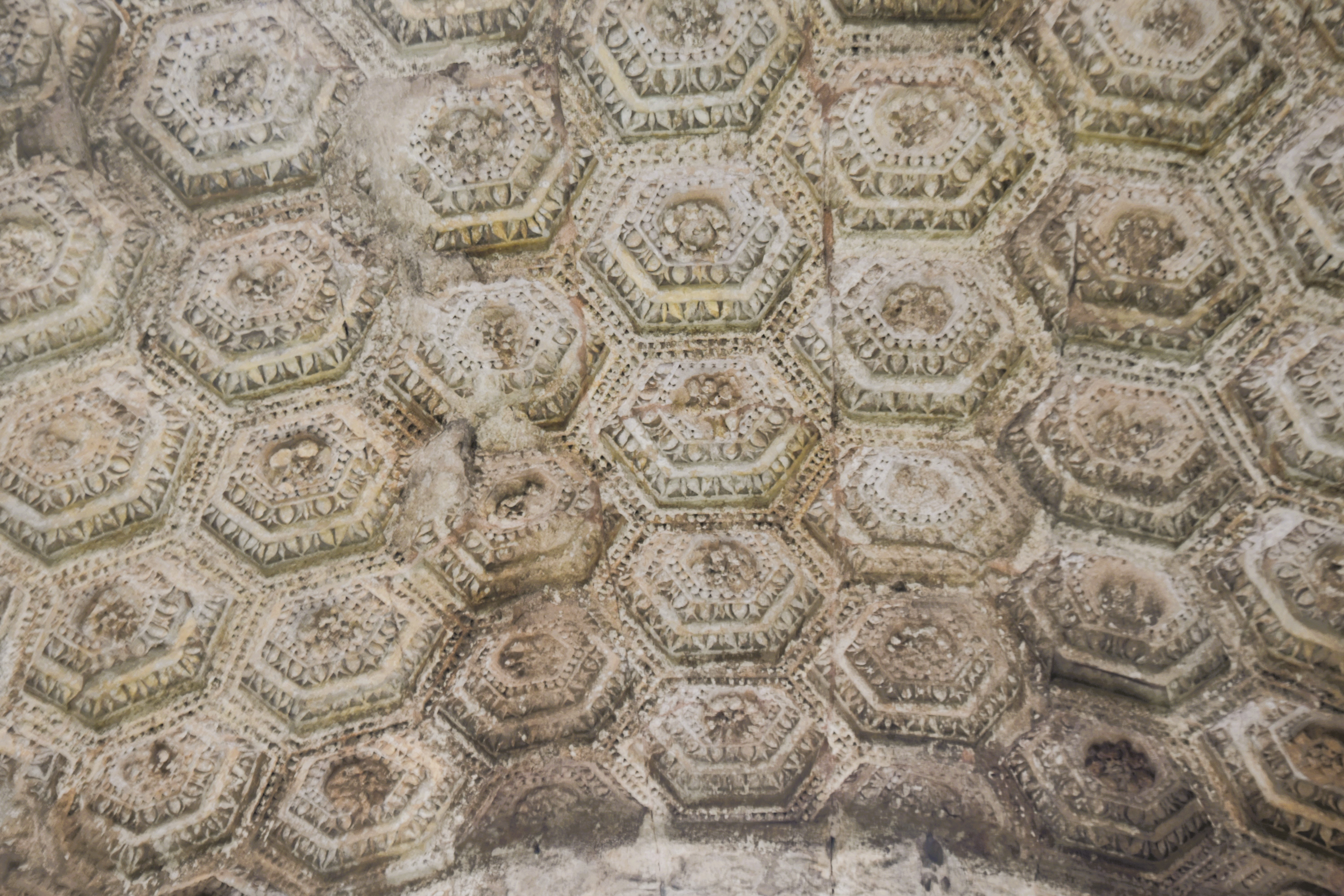
And a triumphal arch the cieling of which is wonderfully decorated.
All in this wonderfully secure setting
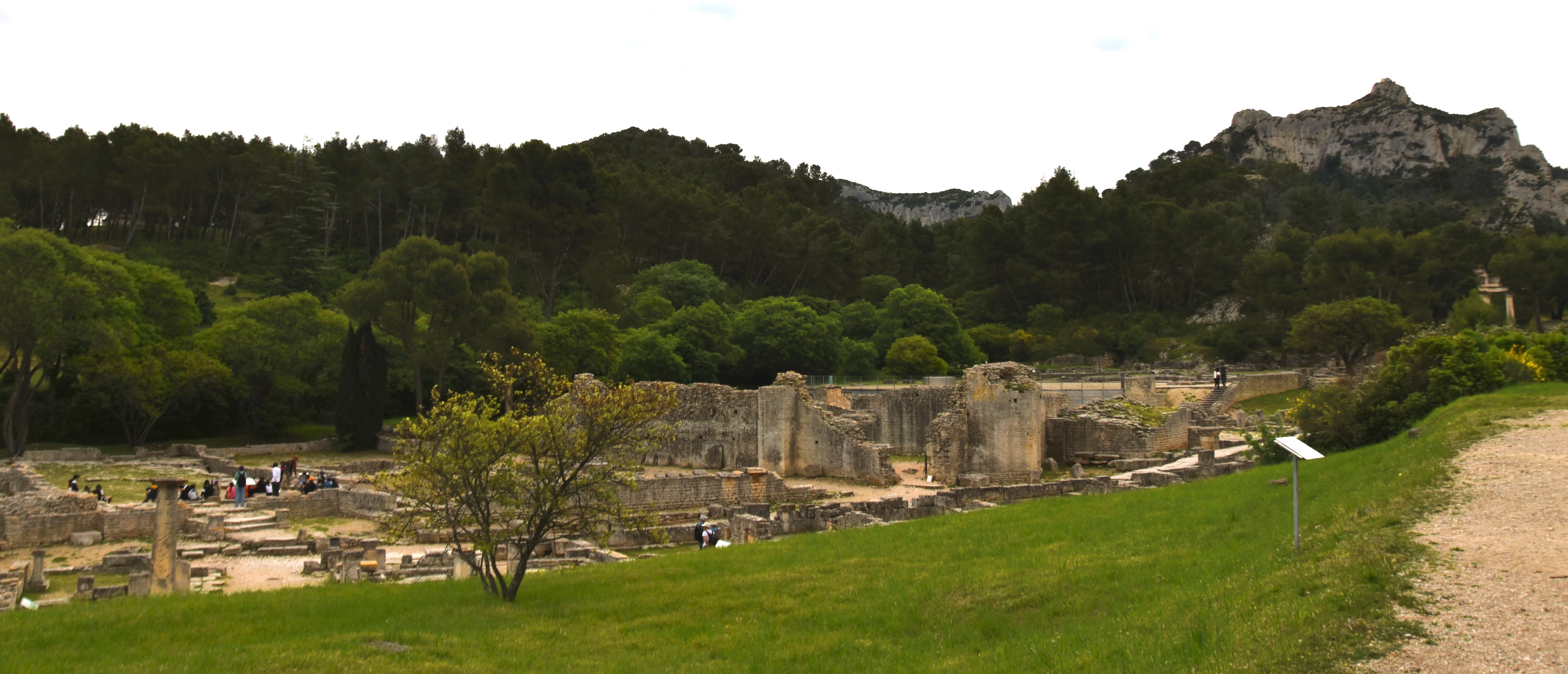
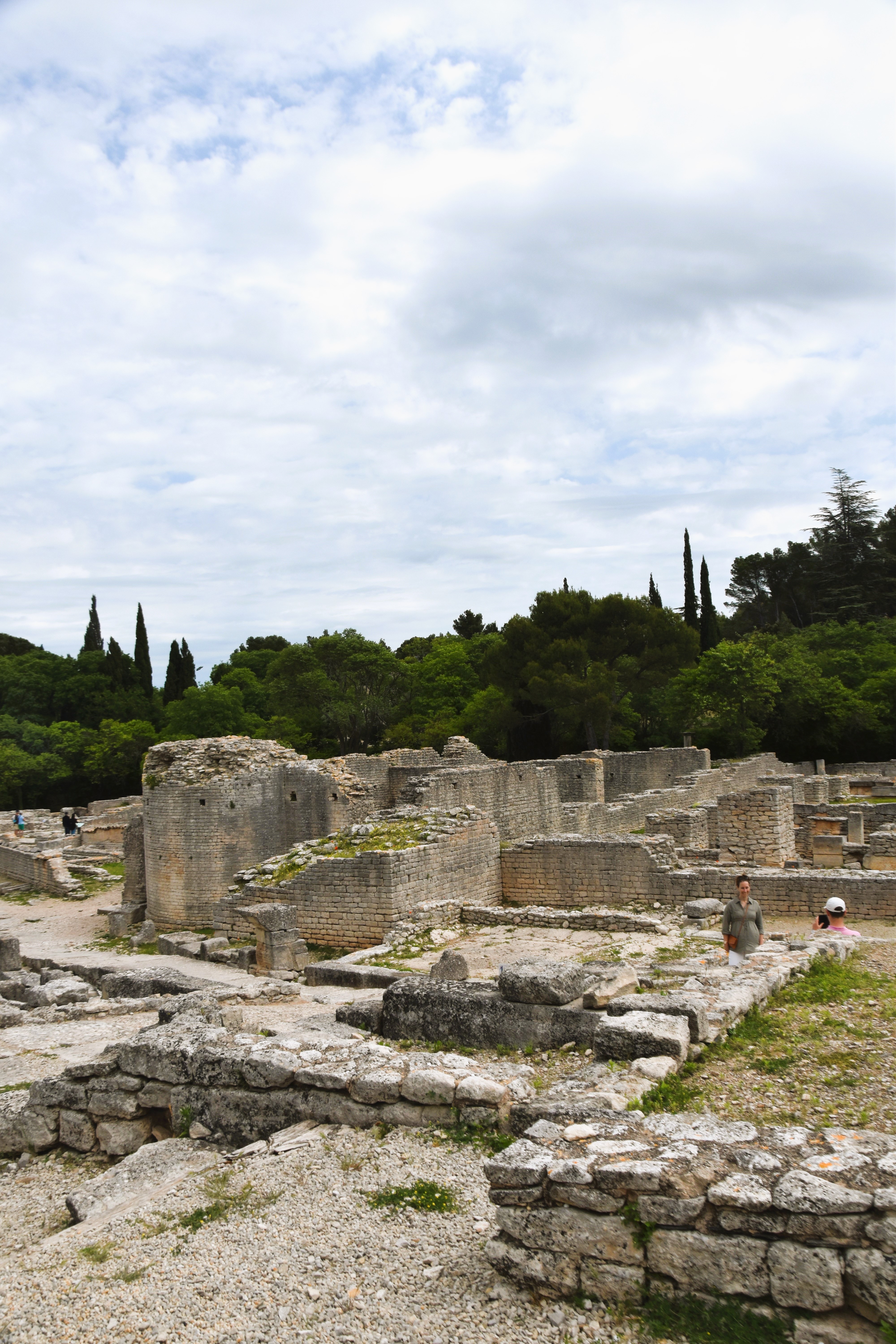
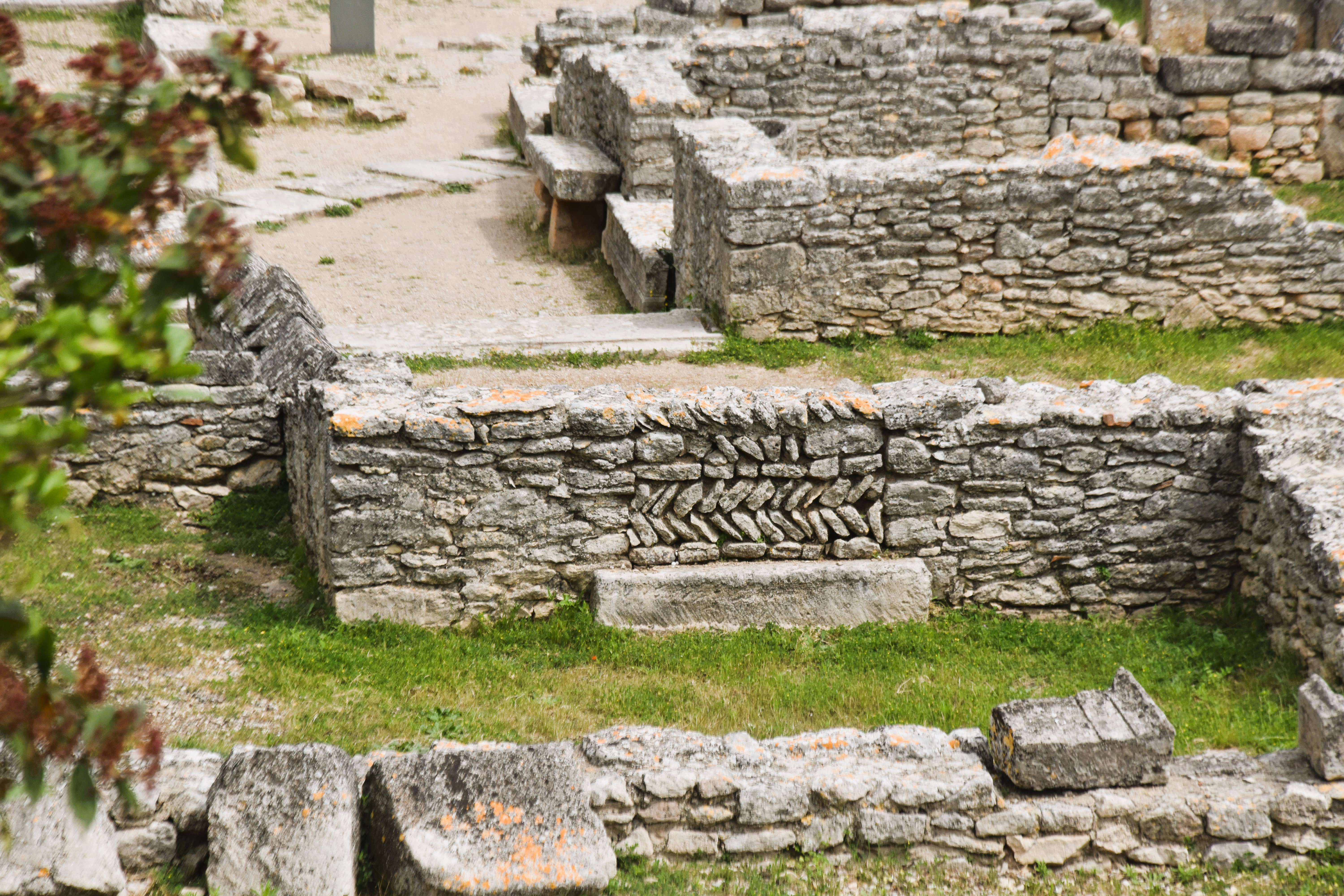
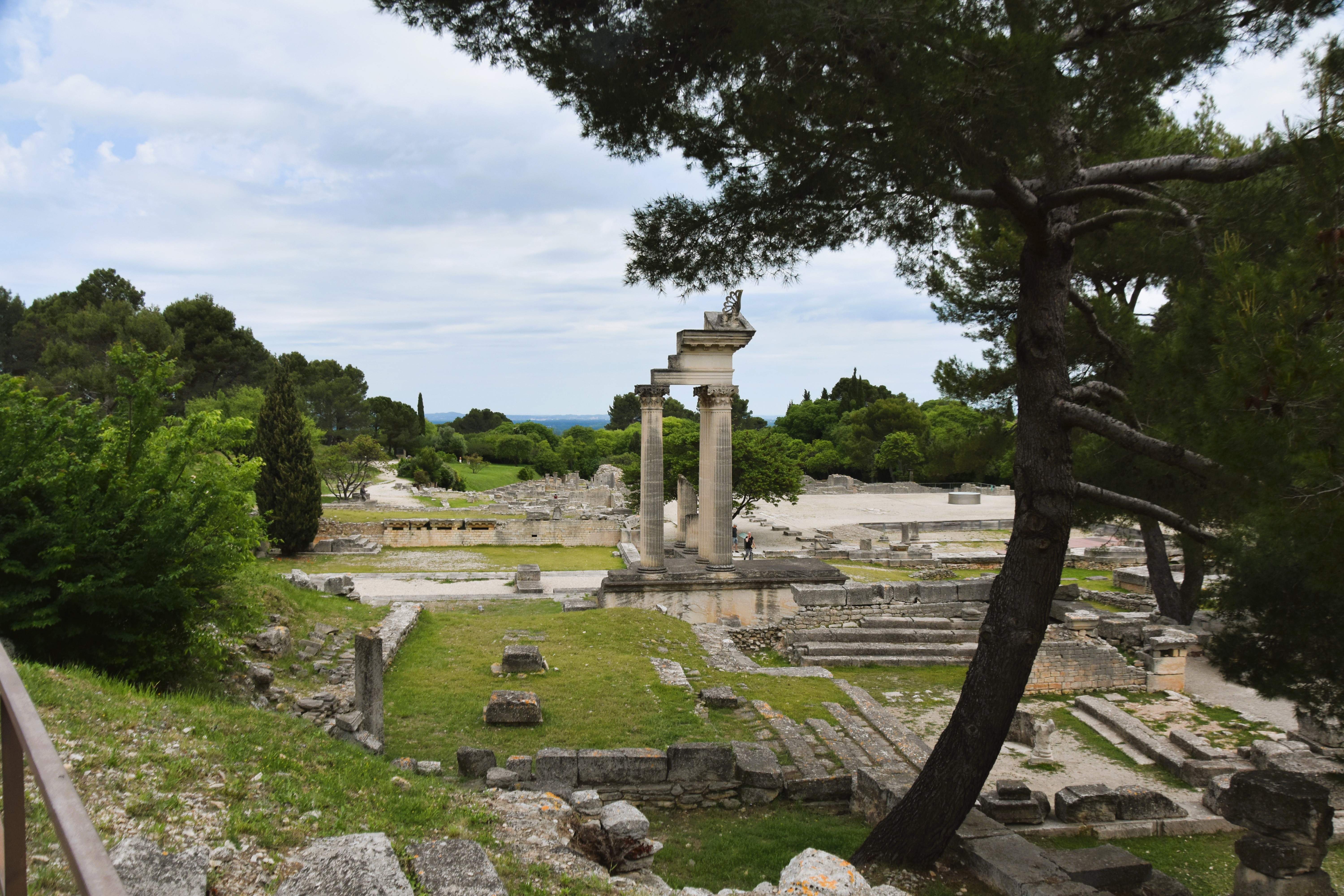
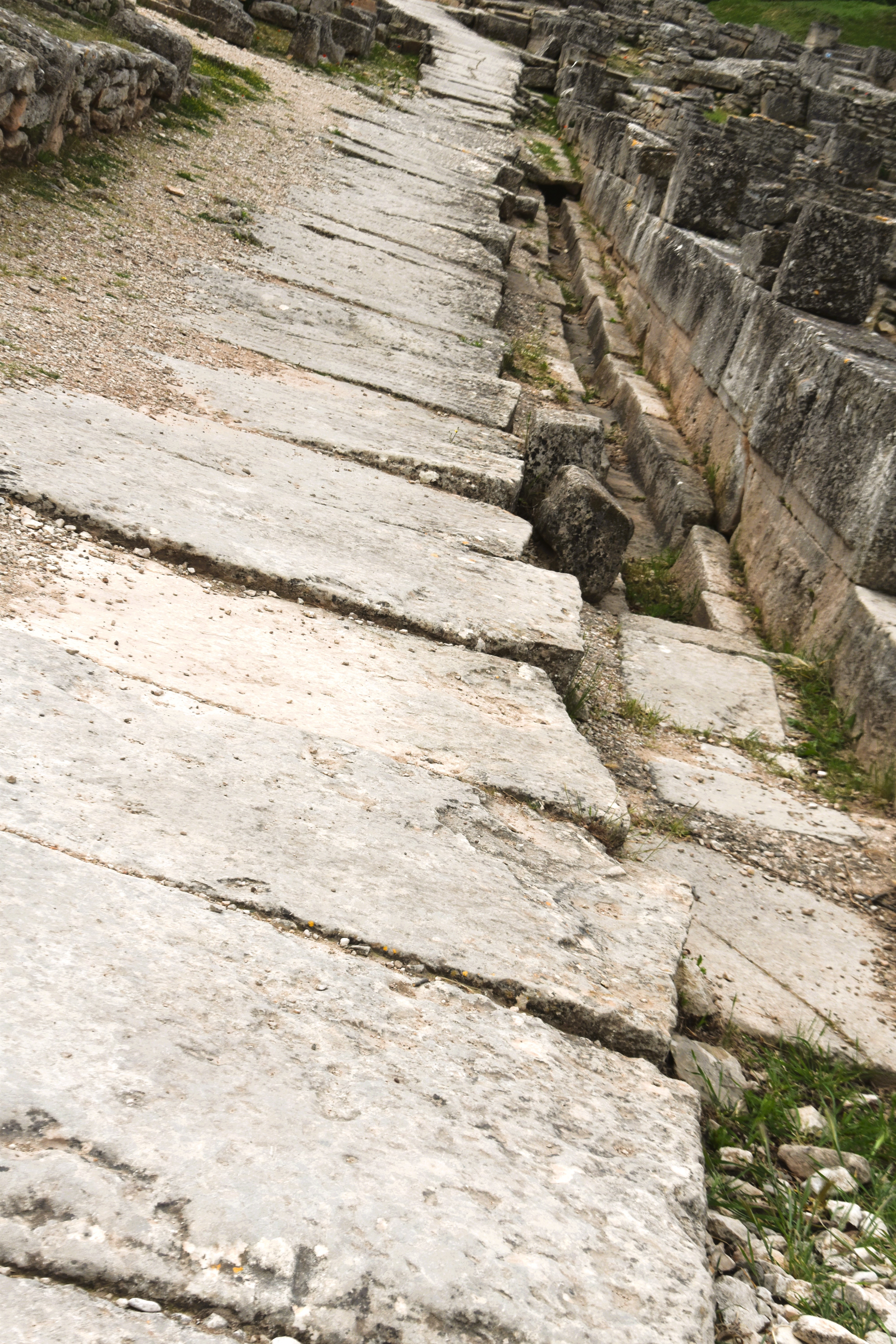
They certainly enjoyed all mod cons with the waste water and rain water being carried along a large culvert the length of the north/south orientated main street and fresh water being delivered by a smaller culvert running in parallel. The whole lot hidden under large paving slabs.

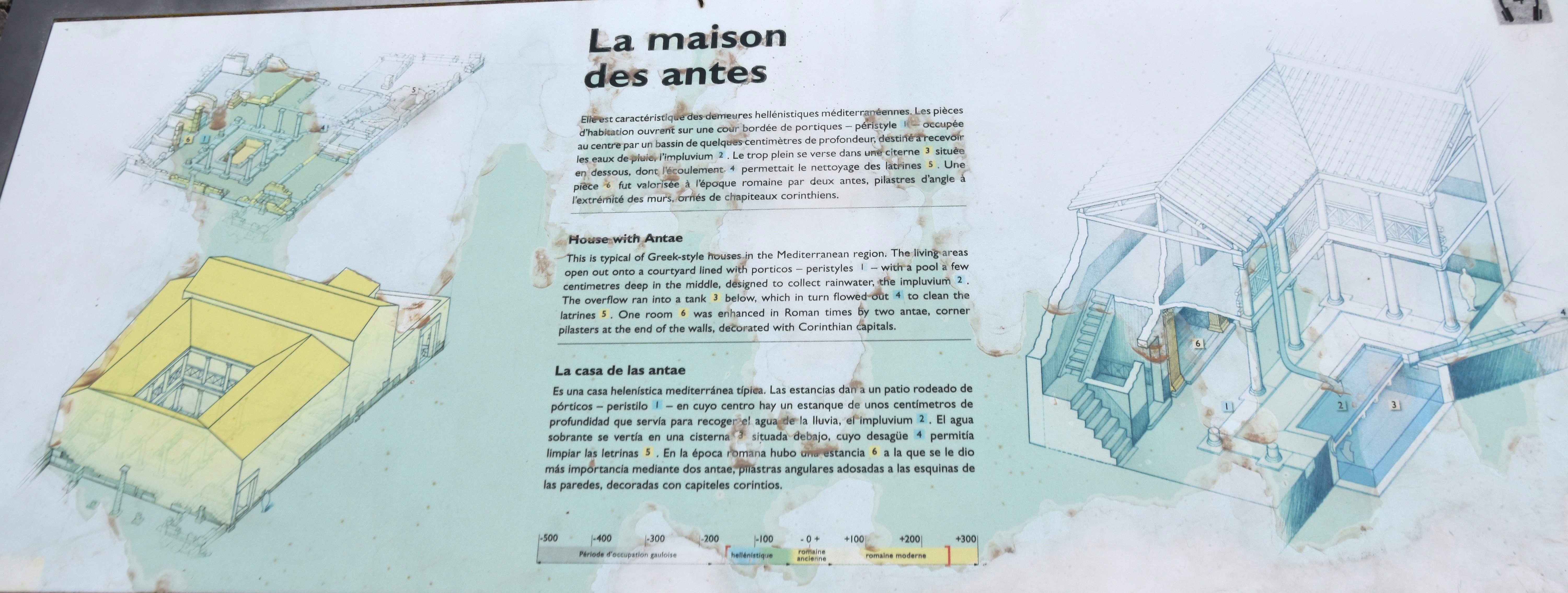
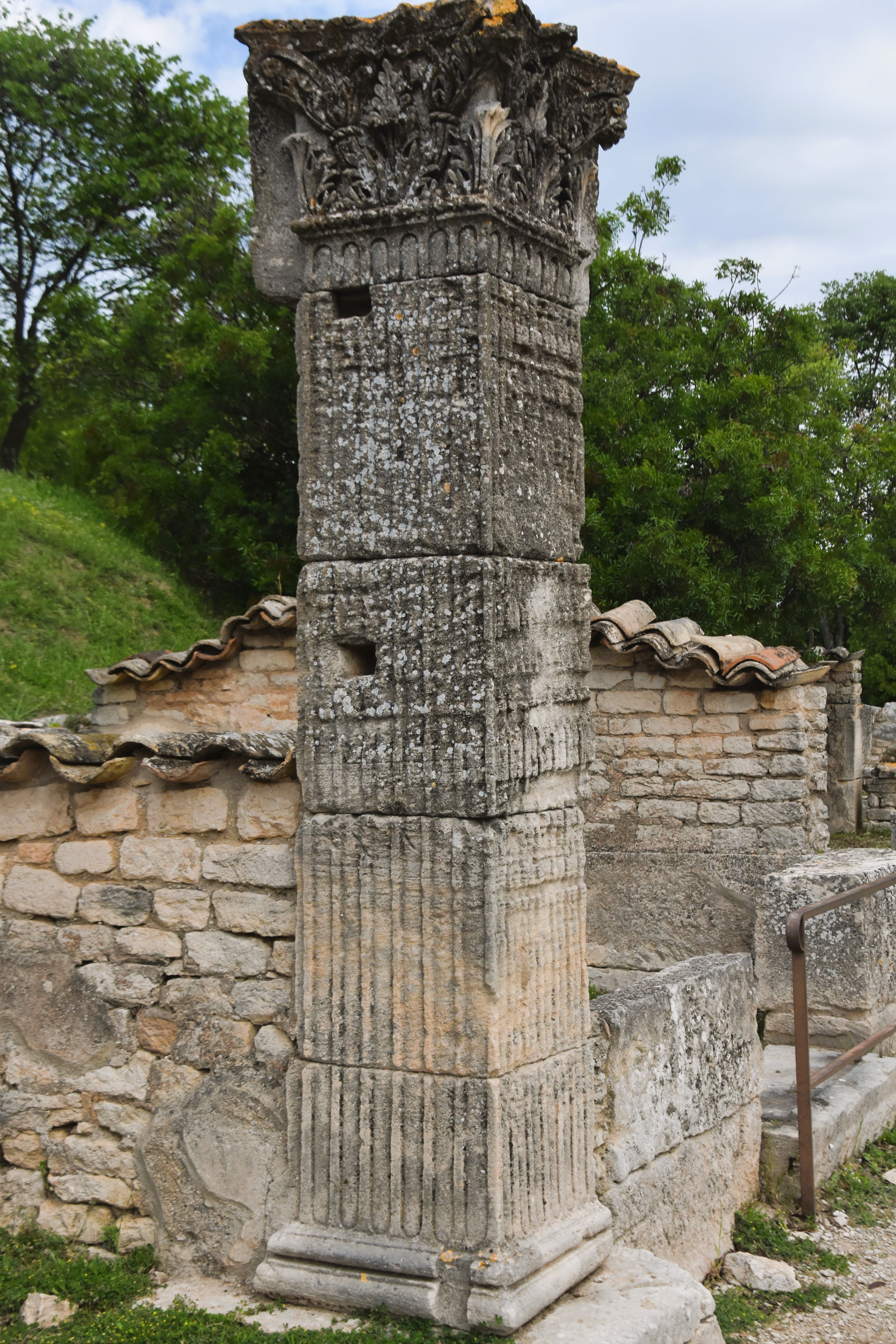
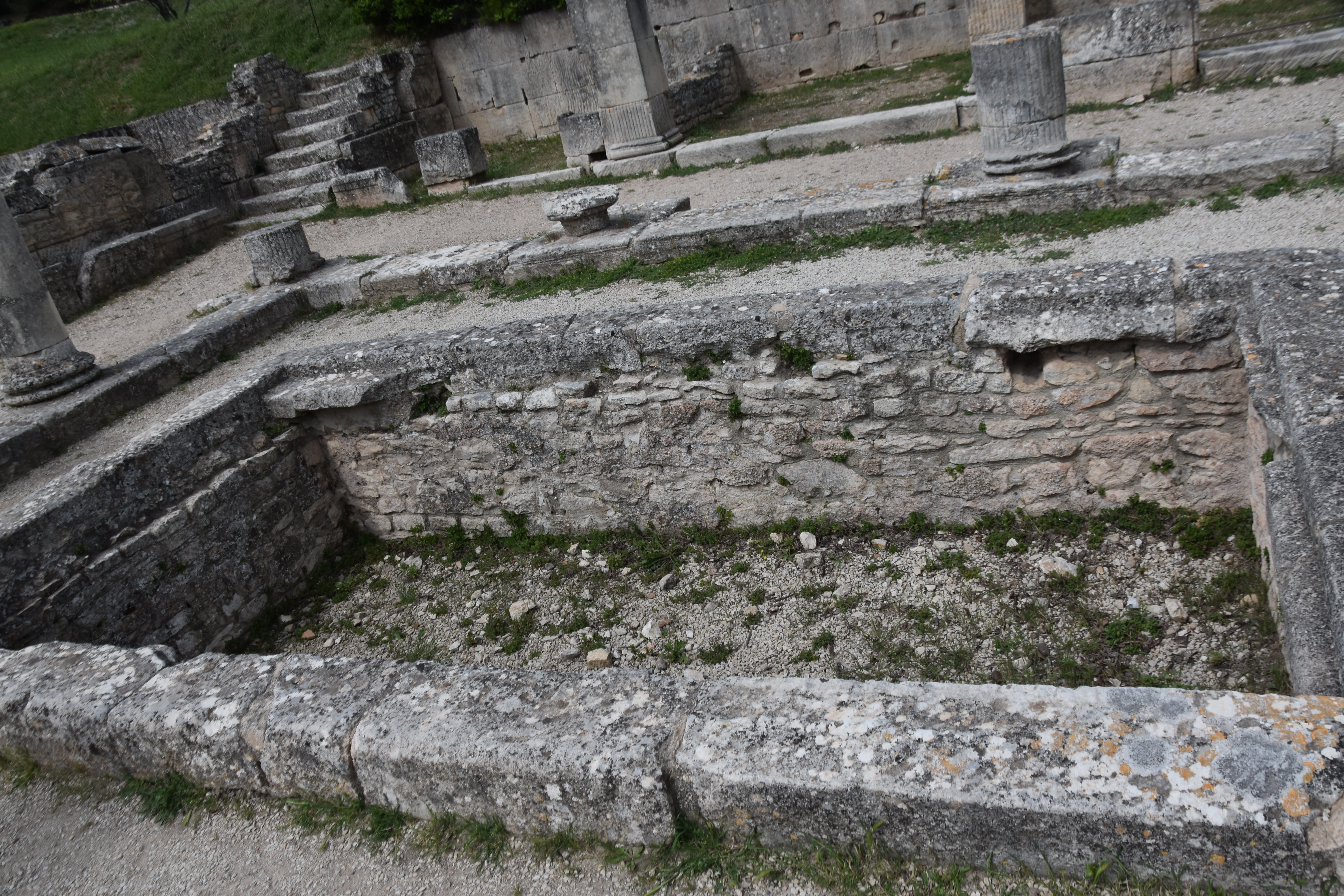
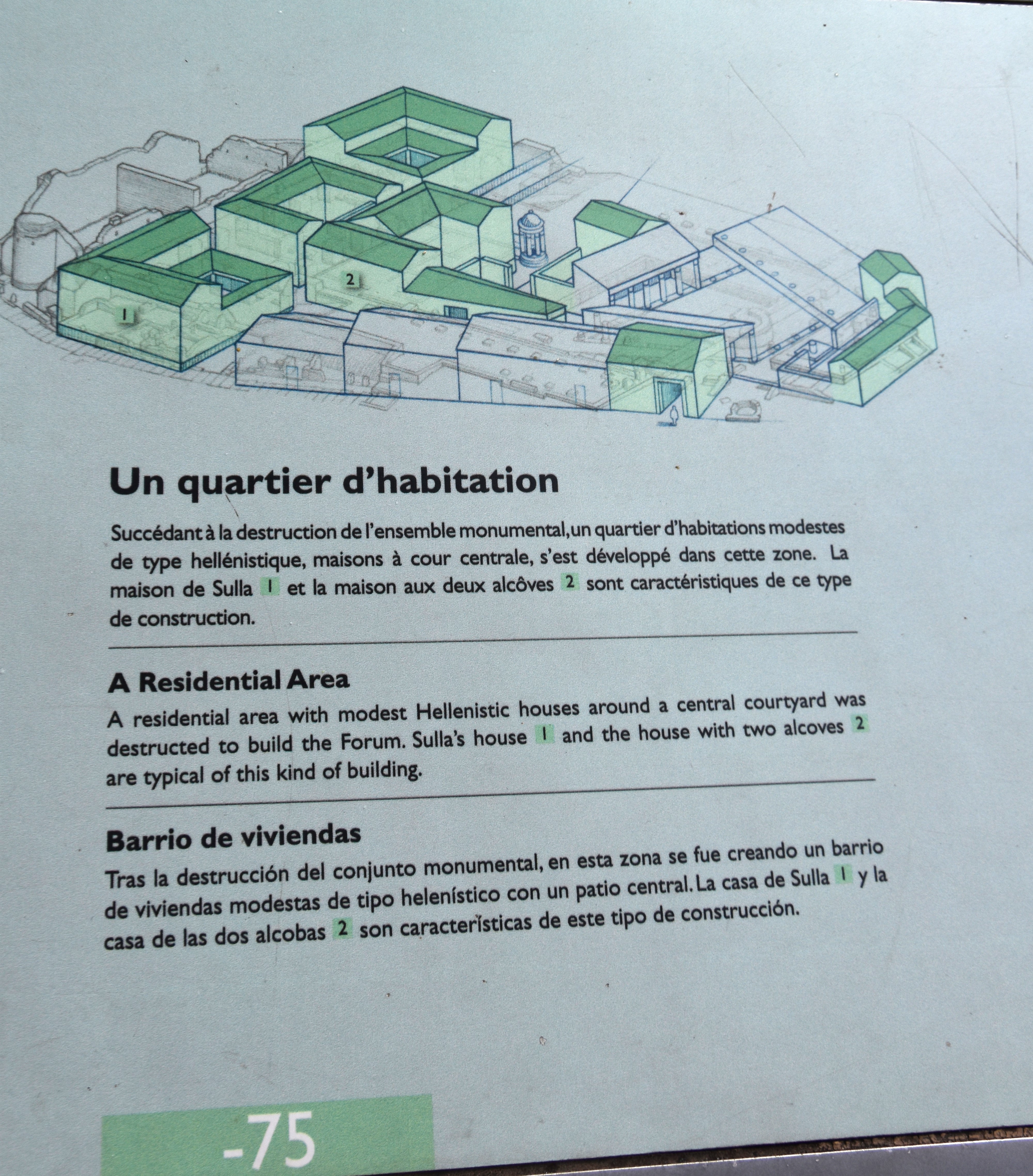
This is a typical Greek House which has been added too with square Roman columns. The tank in the central courtyard is designed to collect rainwater

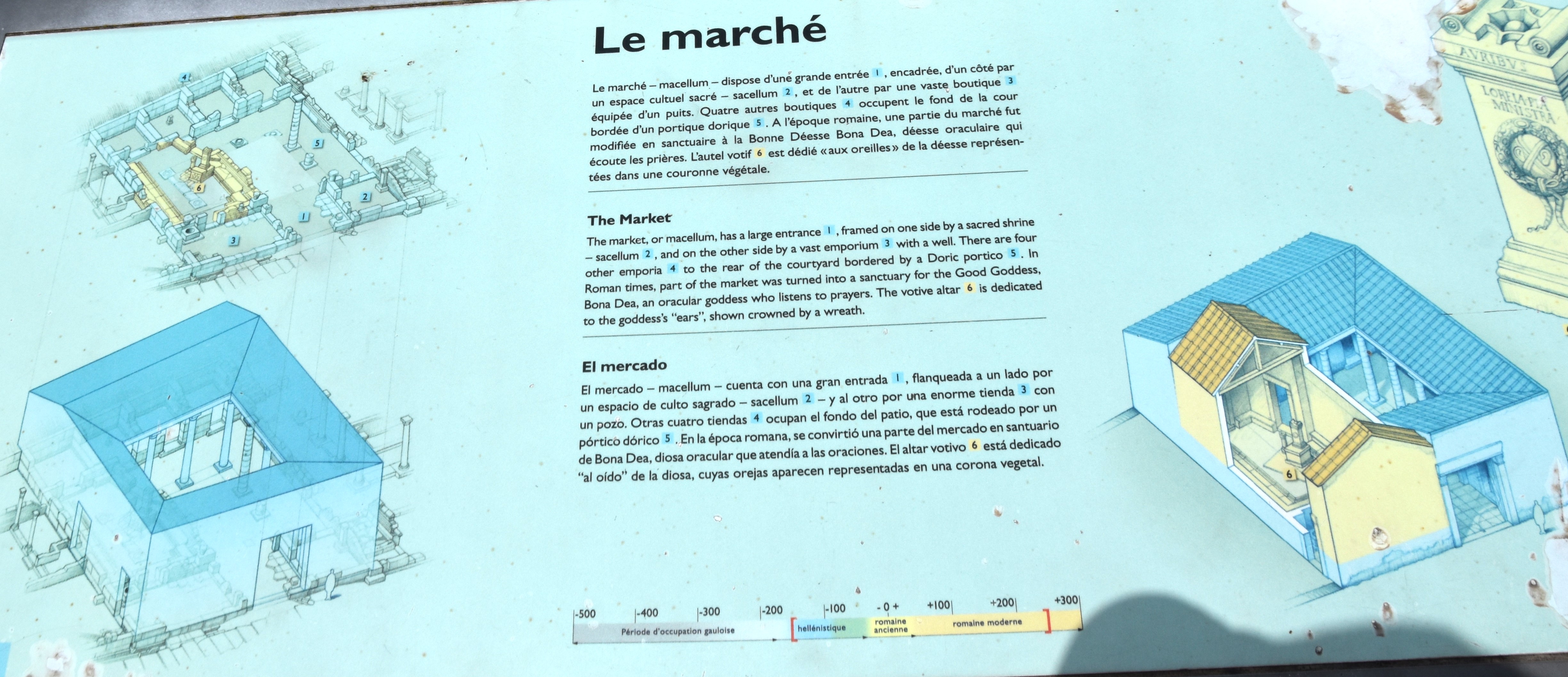
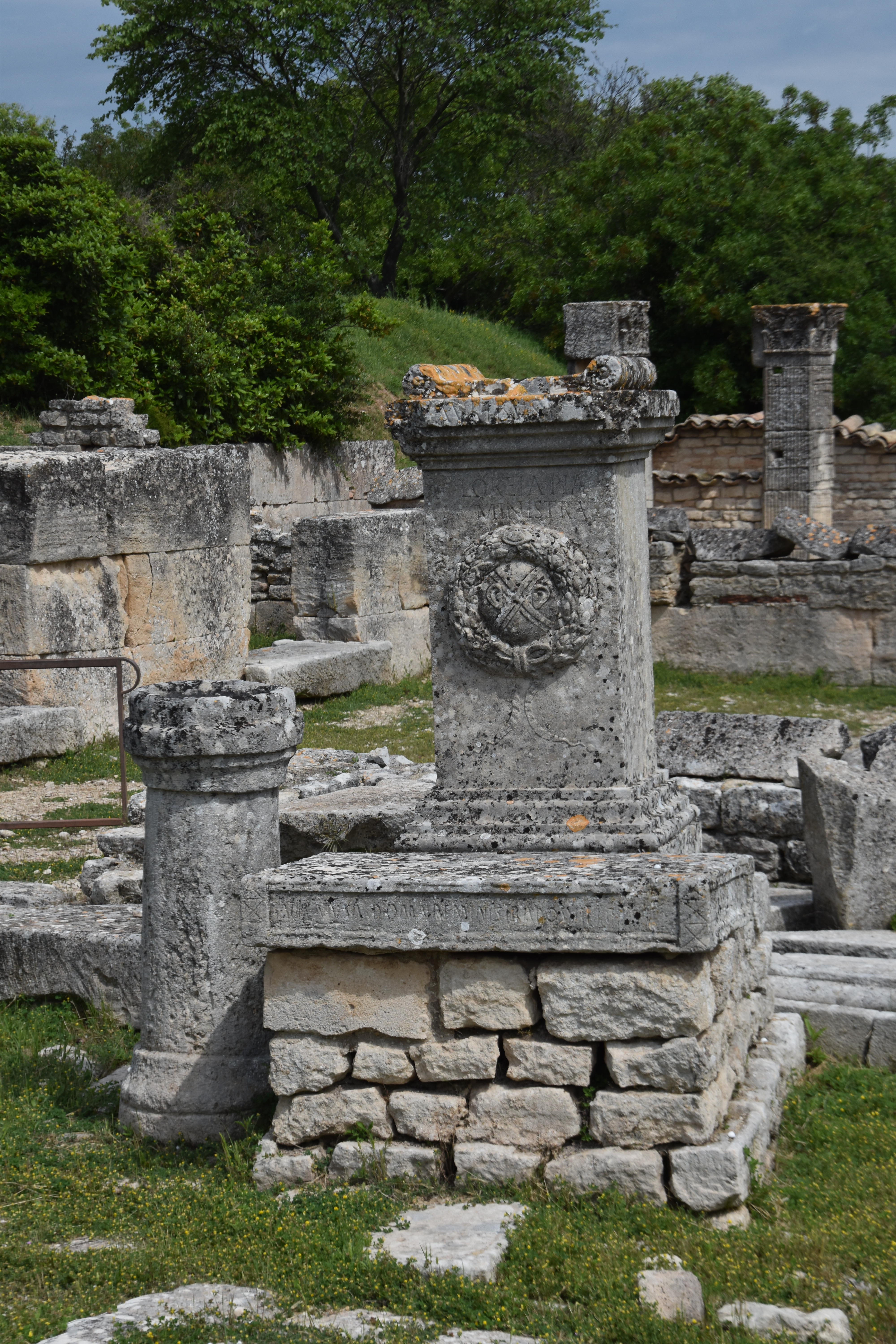
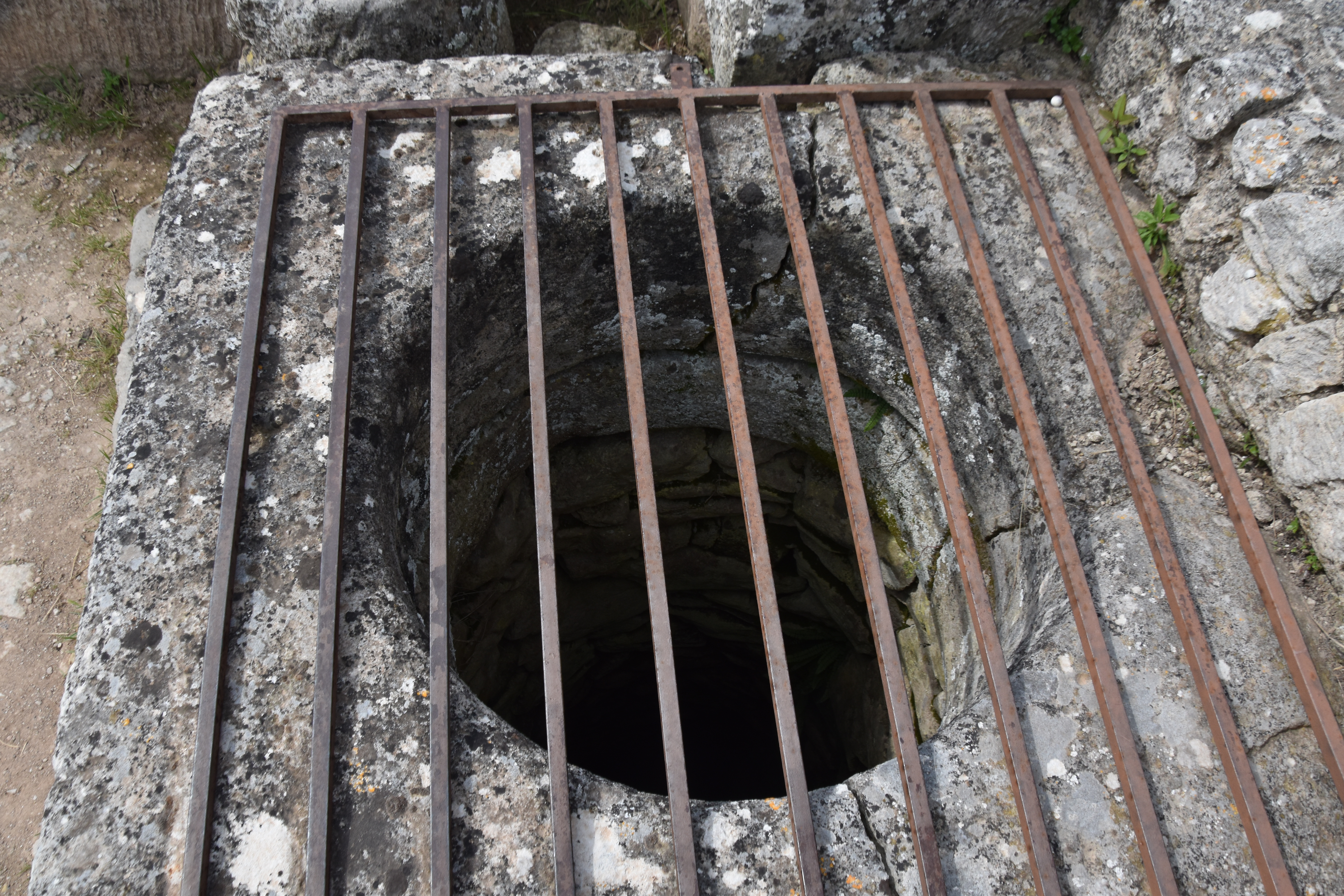
The Market has a sacred shrine and a well in addition to the usual shops (emporiums)
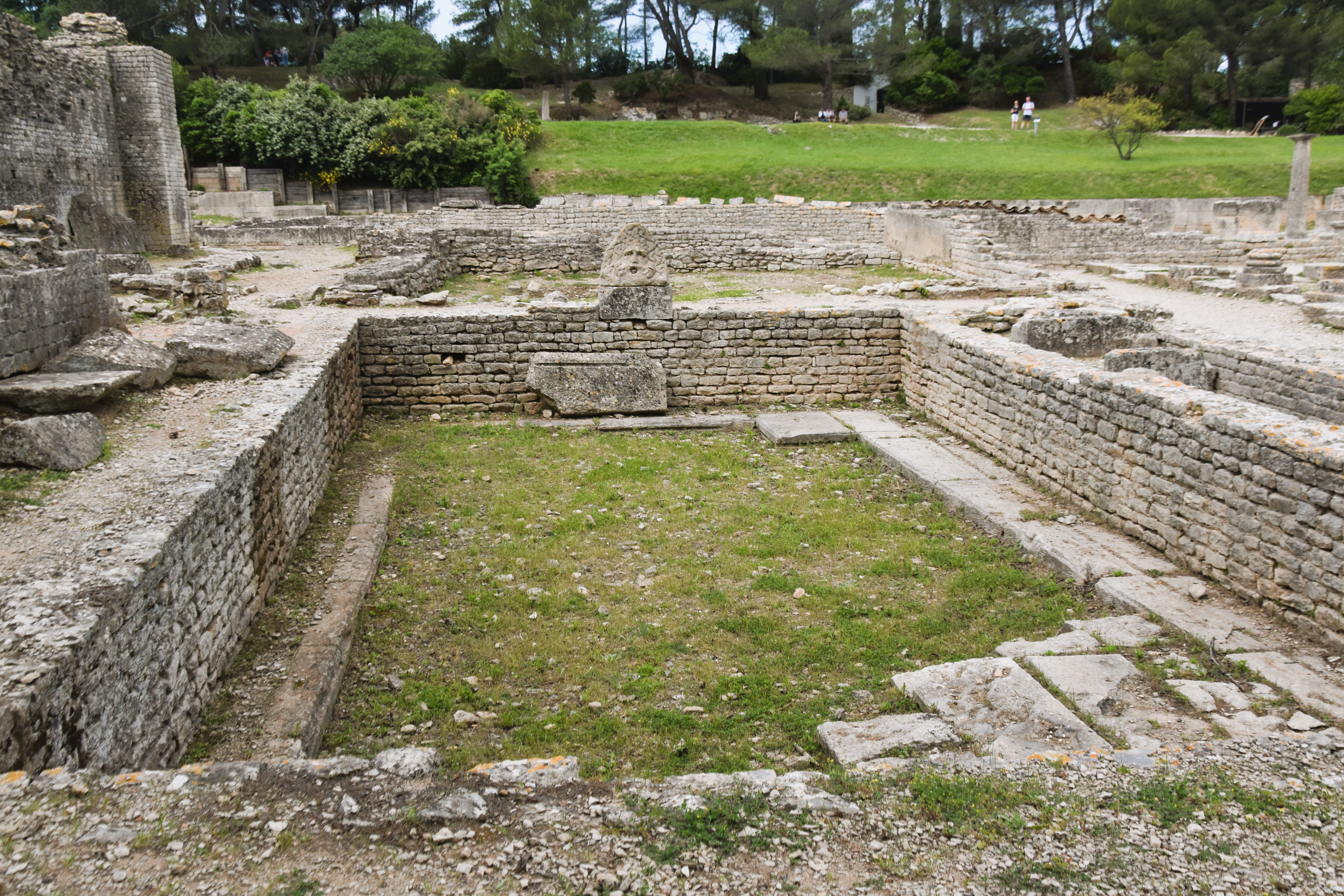
The Bath House is large, would have had baths of different temperatures and a gymnasium. The water was heated by furnaces and the space was heated by hot air circulating in the floor and wall cavities.

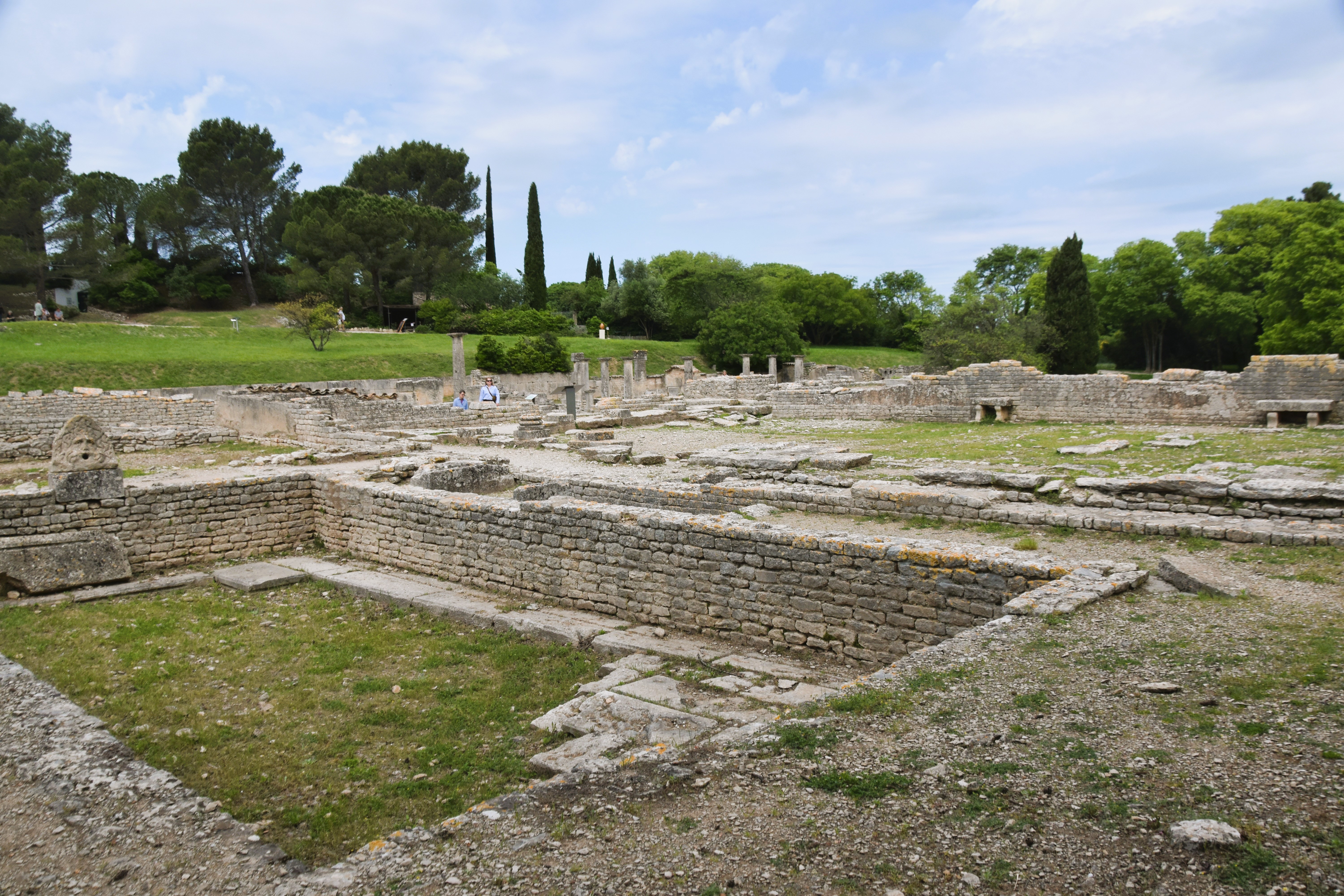
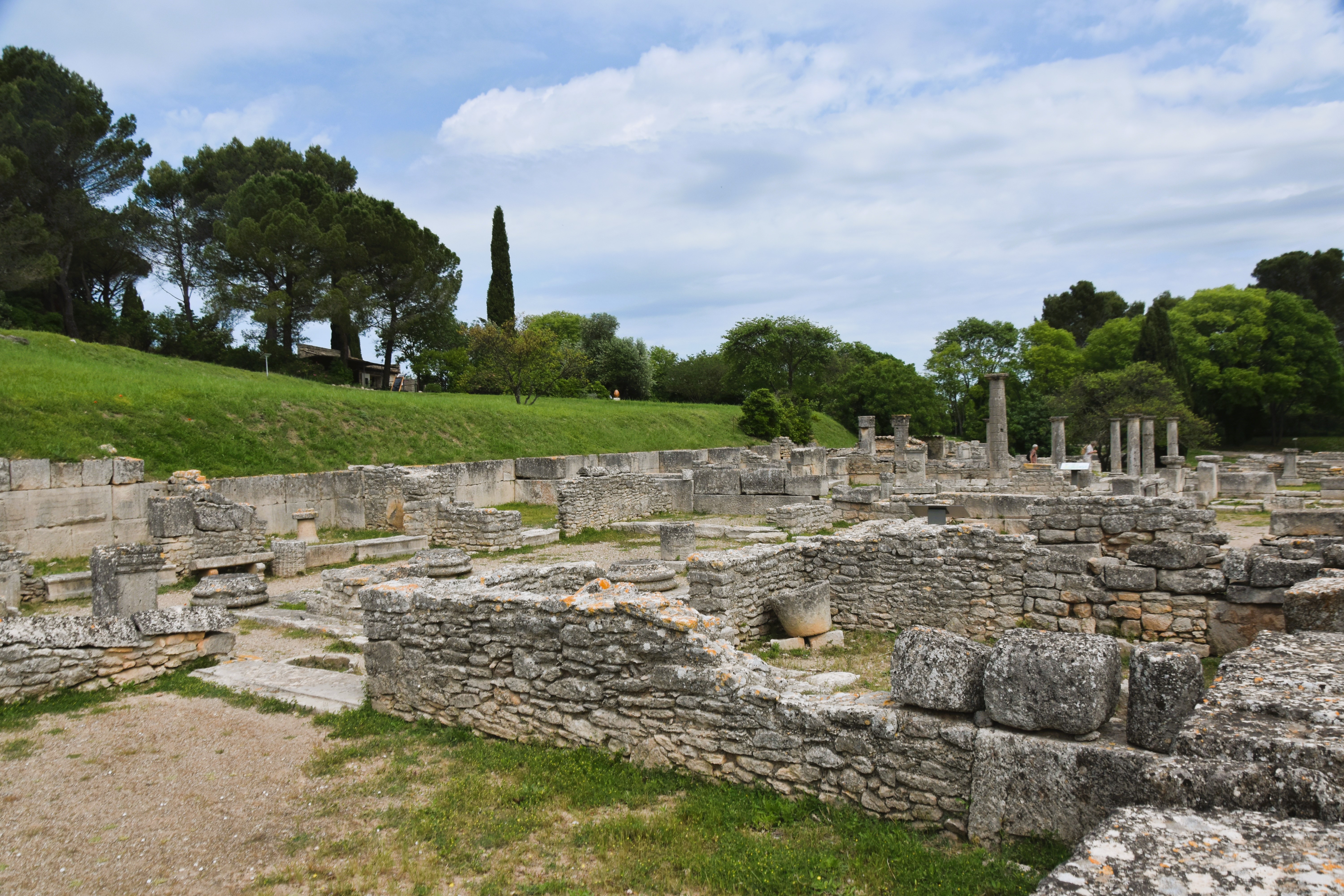
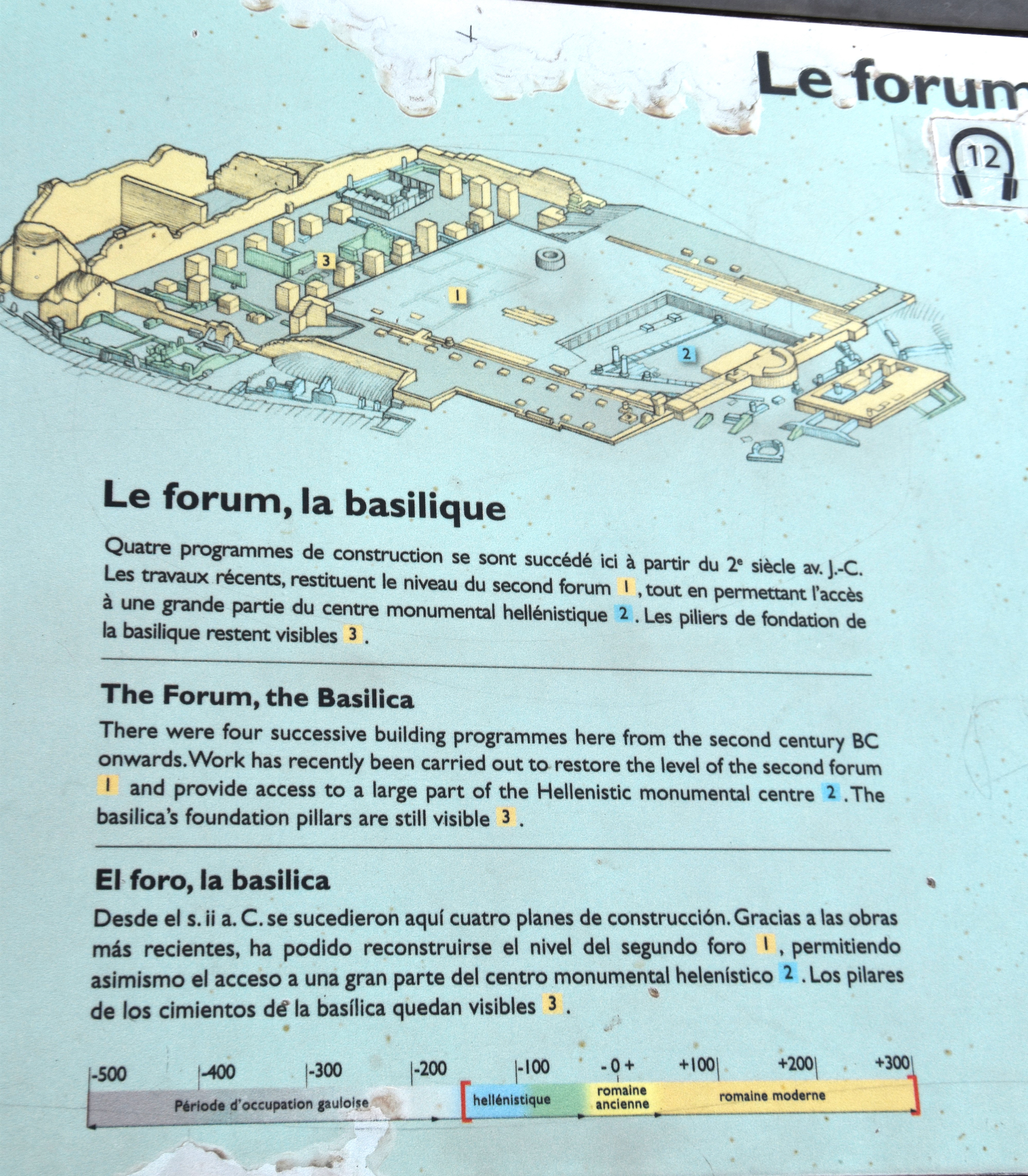
This major site evolved from the original Greek Monument Centre constructed around 75BC to the Roman double Forum of around 75AD and finally the basilica of the C2nd & C3AD..





The twin temples were dedicated to the cult of the imperial family many details have been partially restored
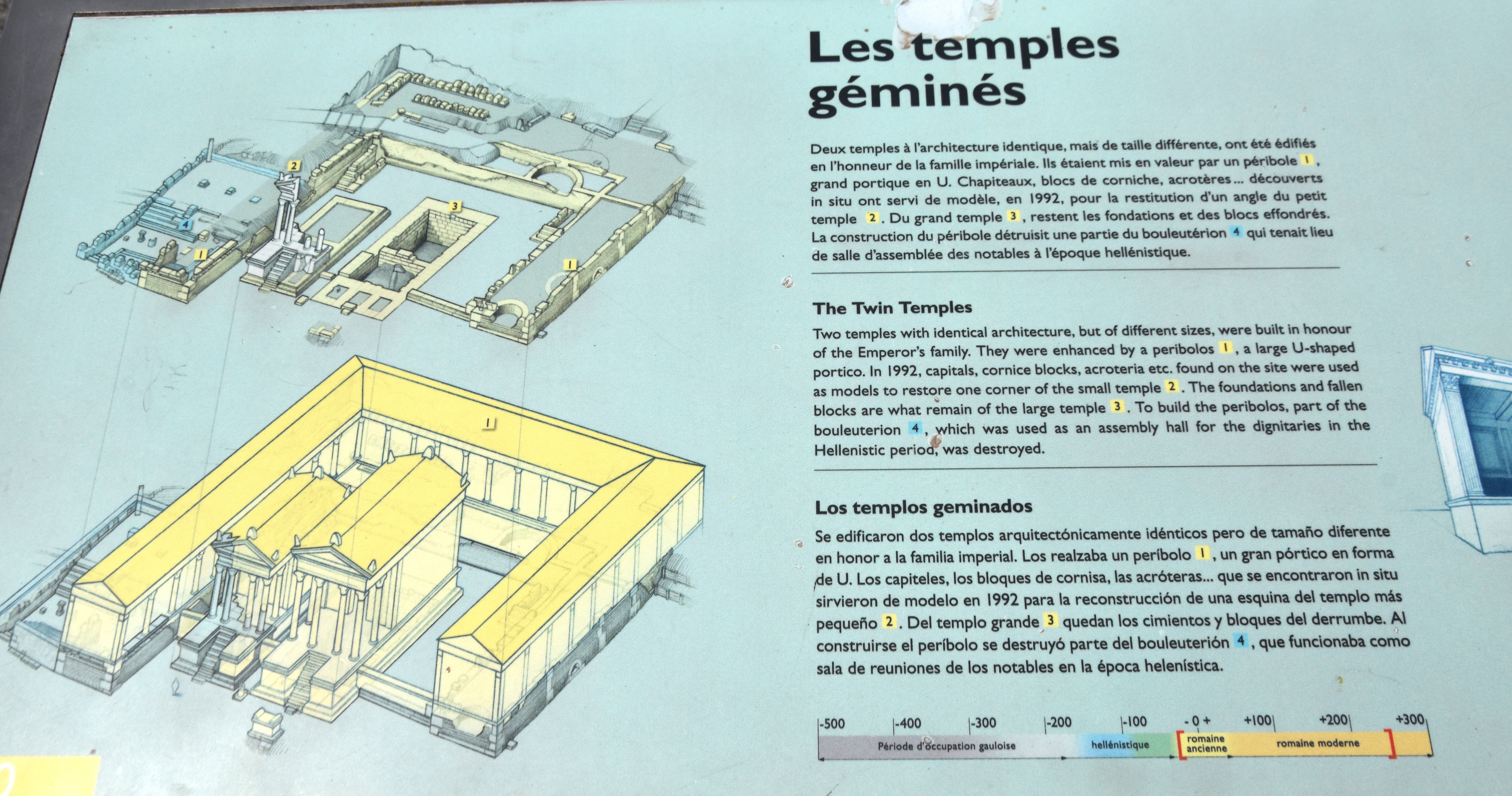
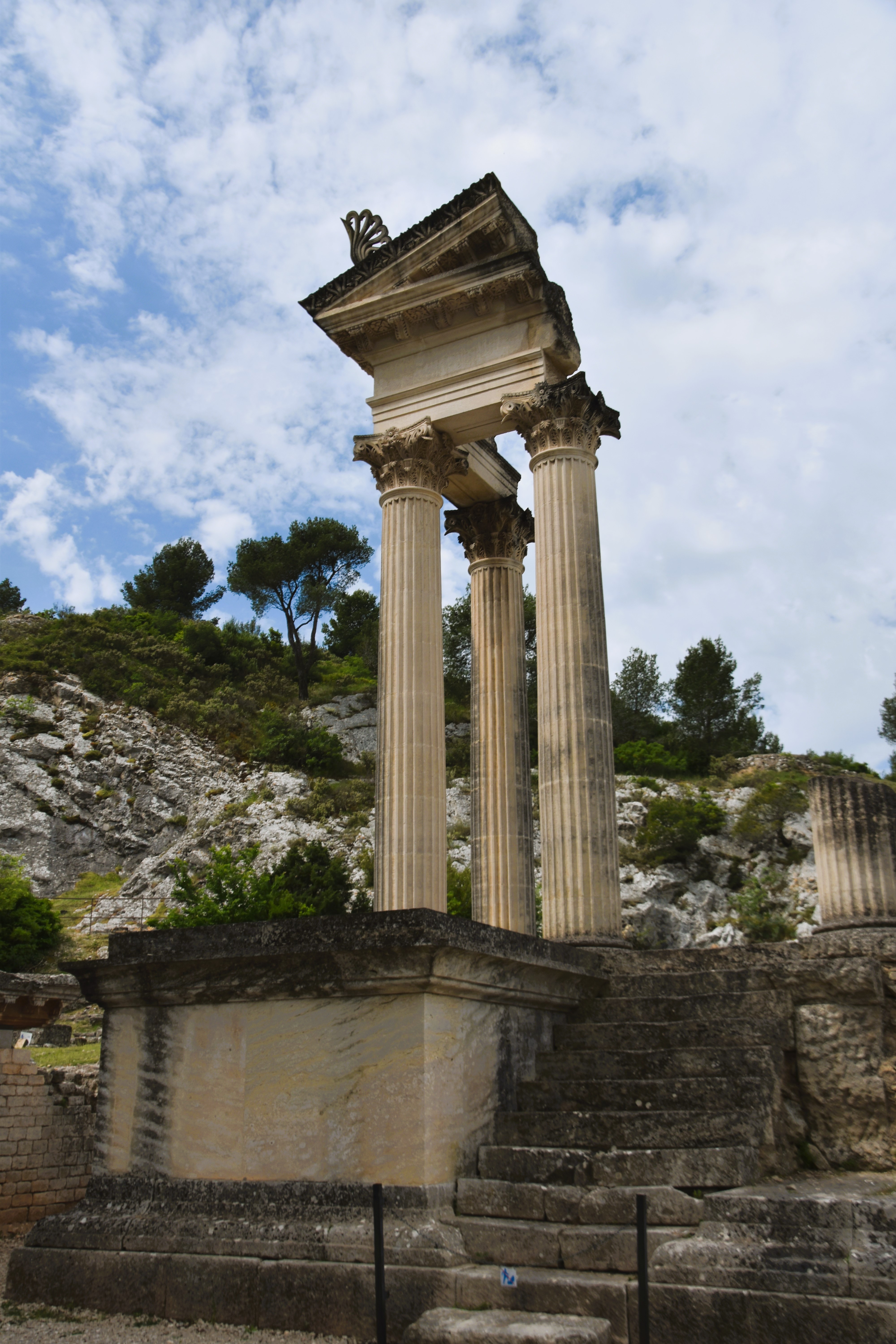
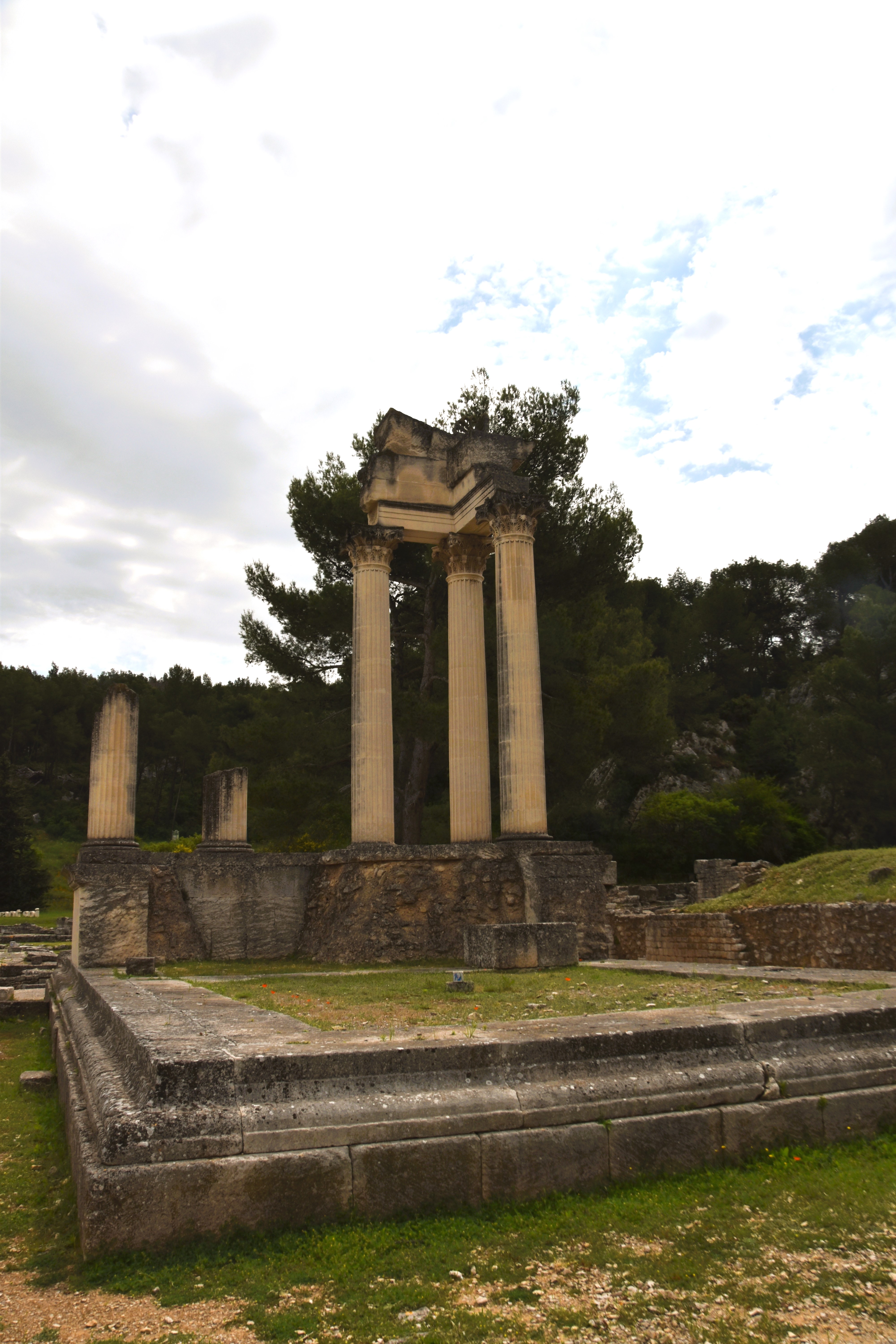
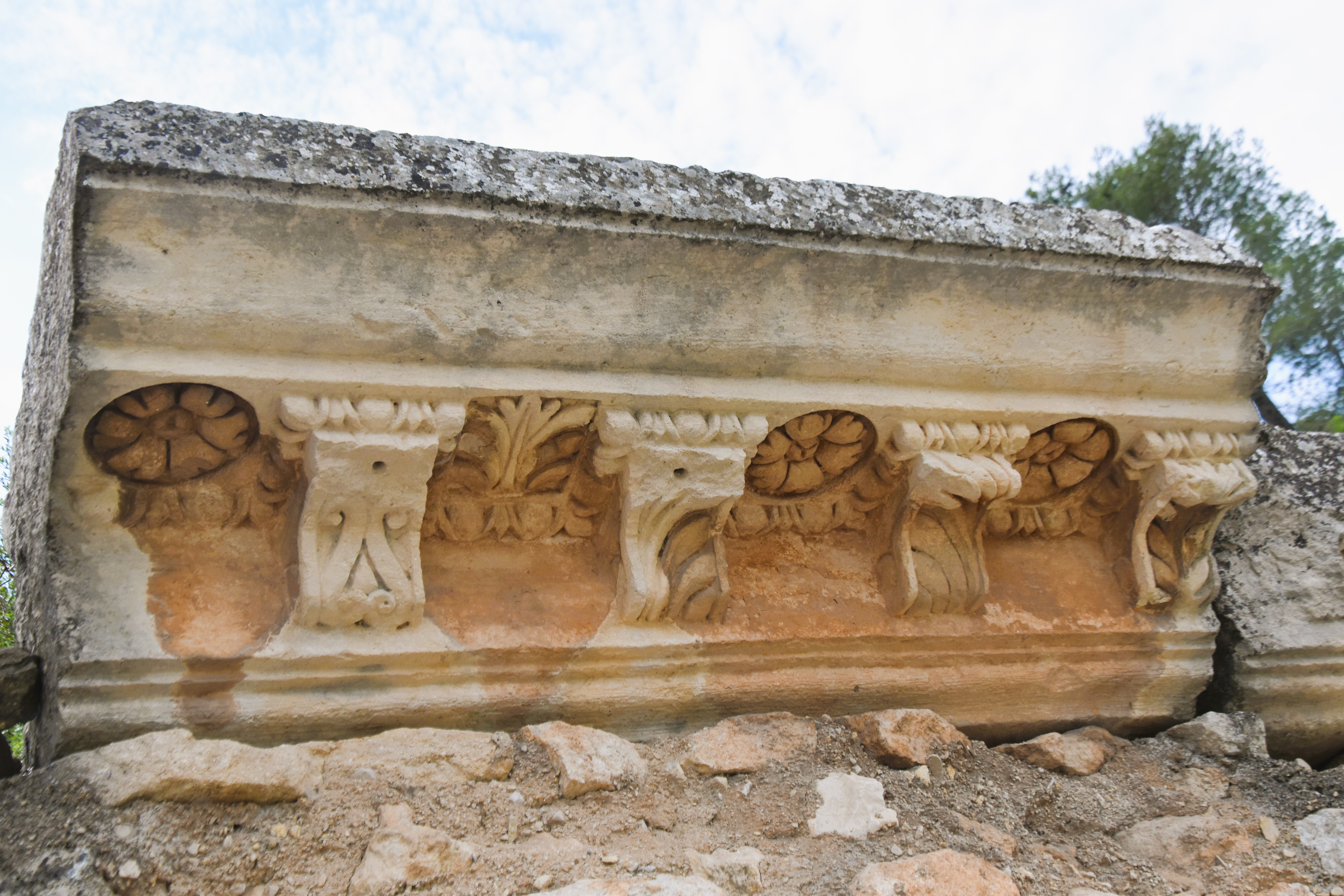
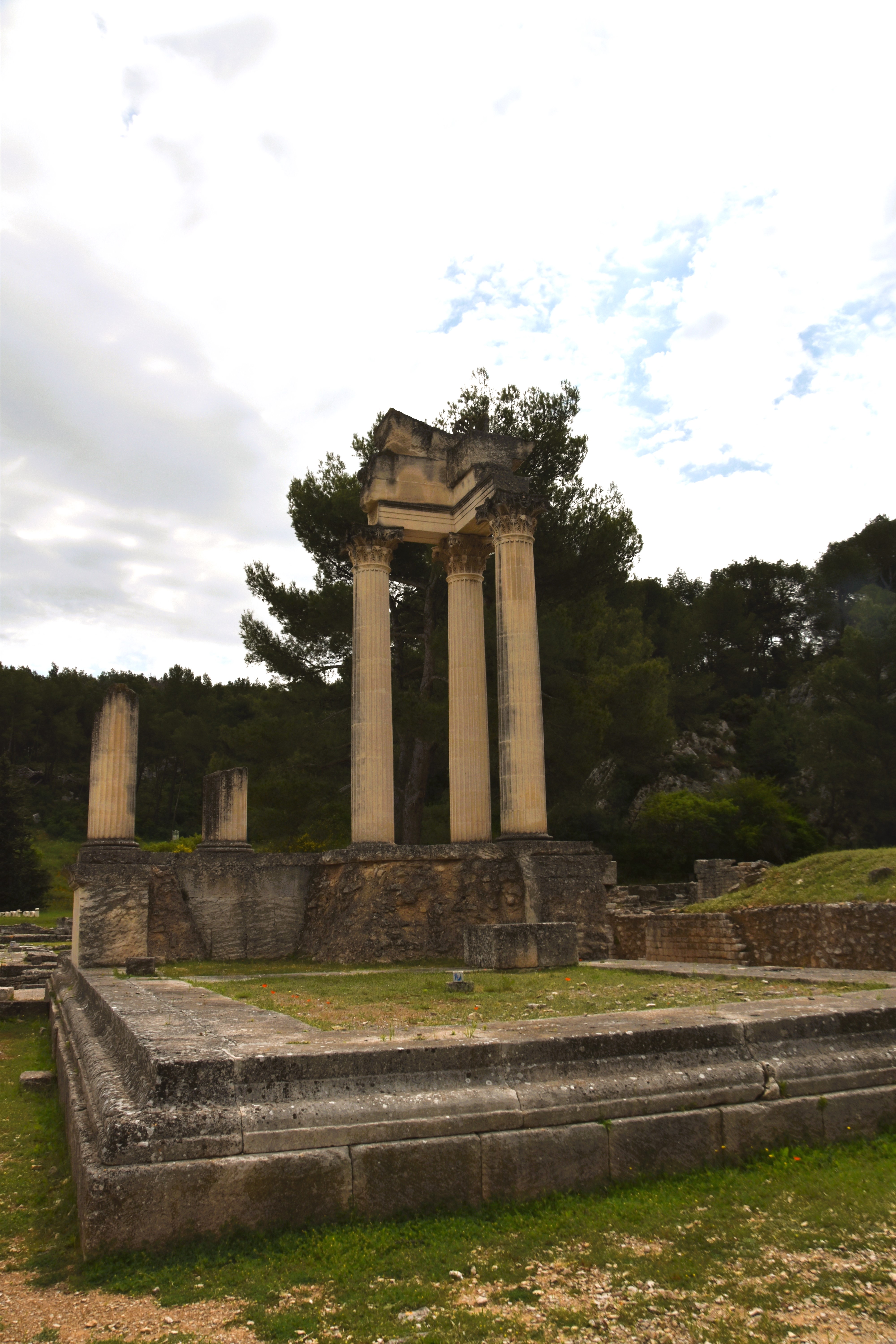
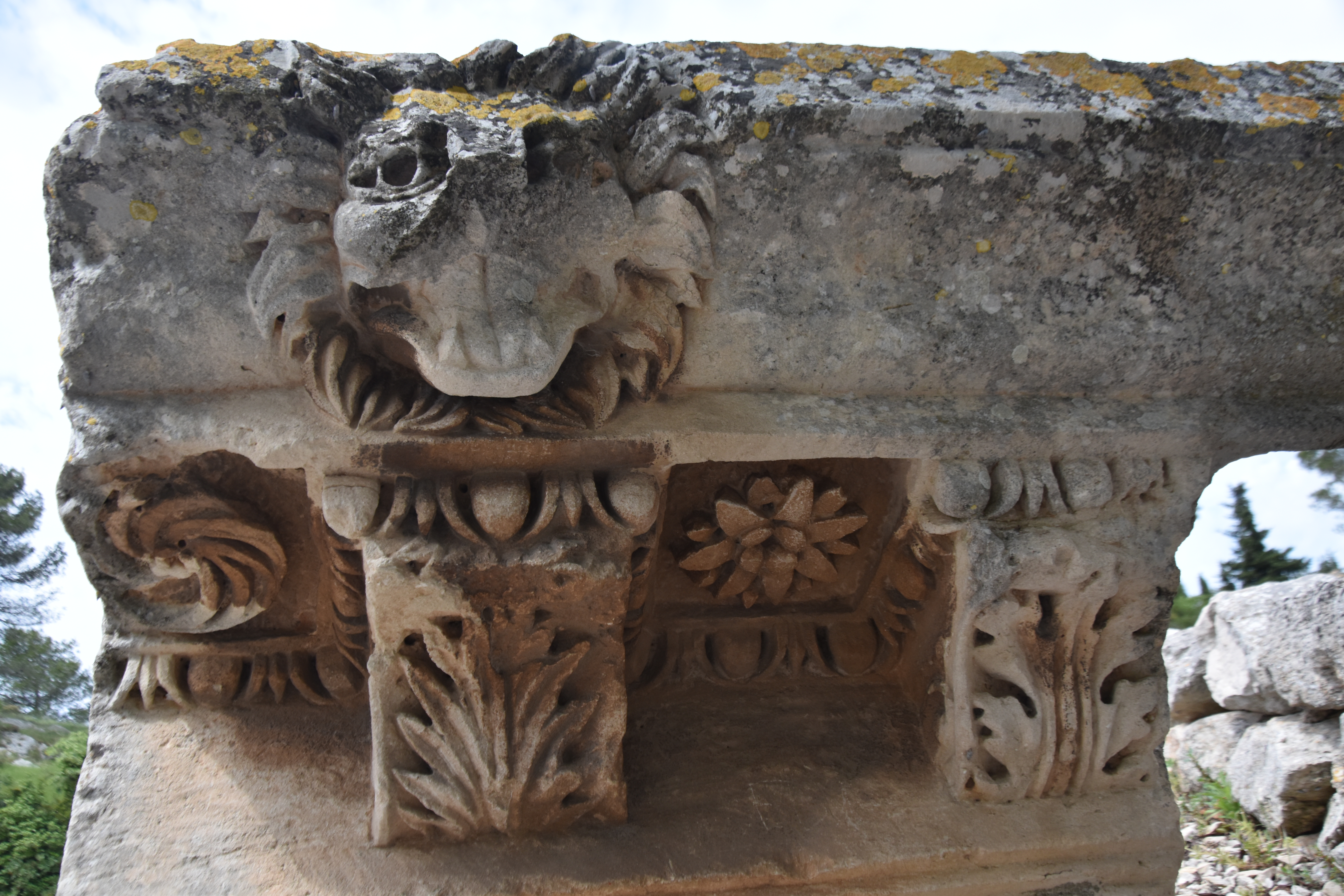
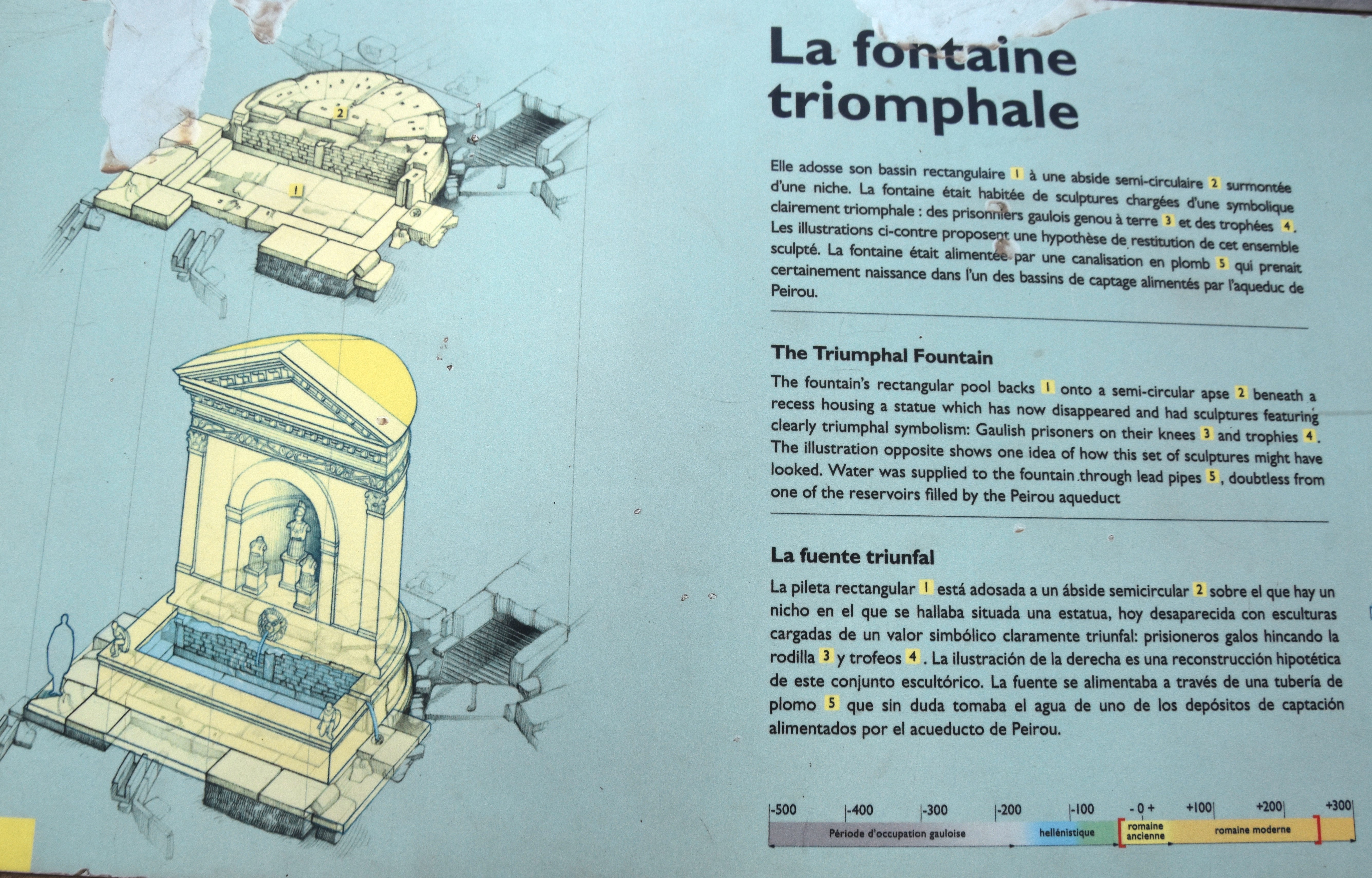
The Triumphal Fountain would have been constructed, probably at the instigation of either the current Ceasar or the General concerned, to celebrate a victory.

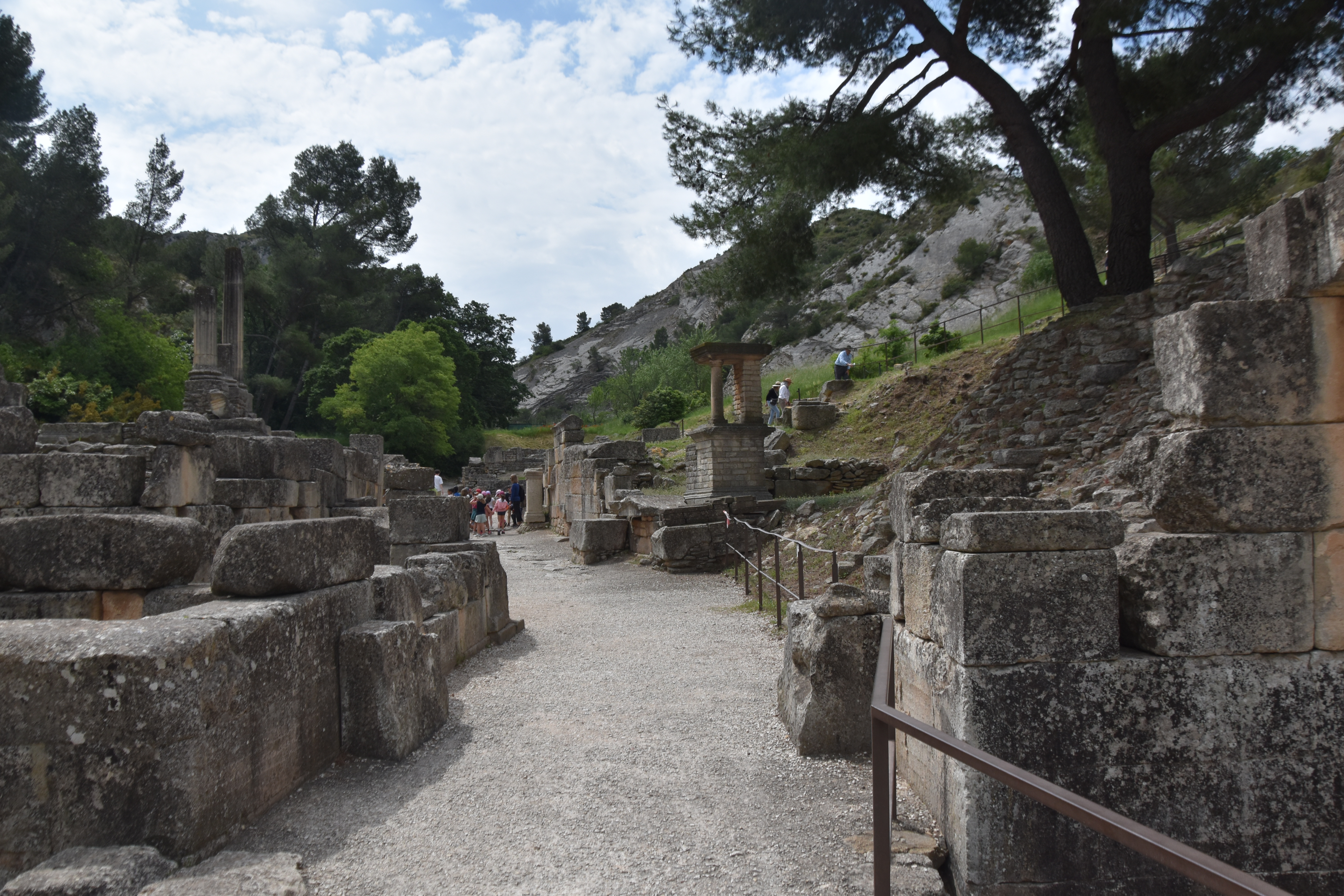
The walls protecting the entrance would have had gates for vehicles and pedestrians

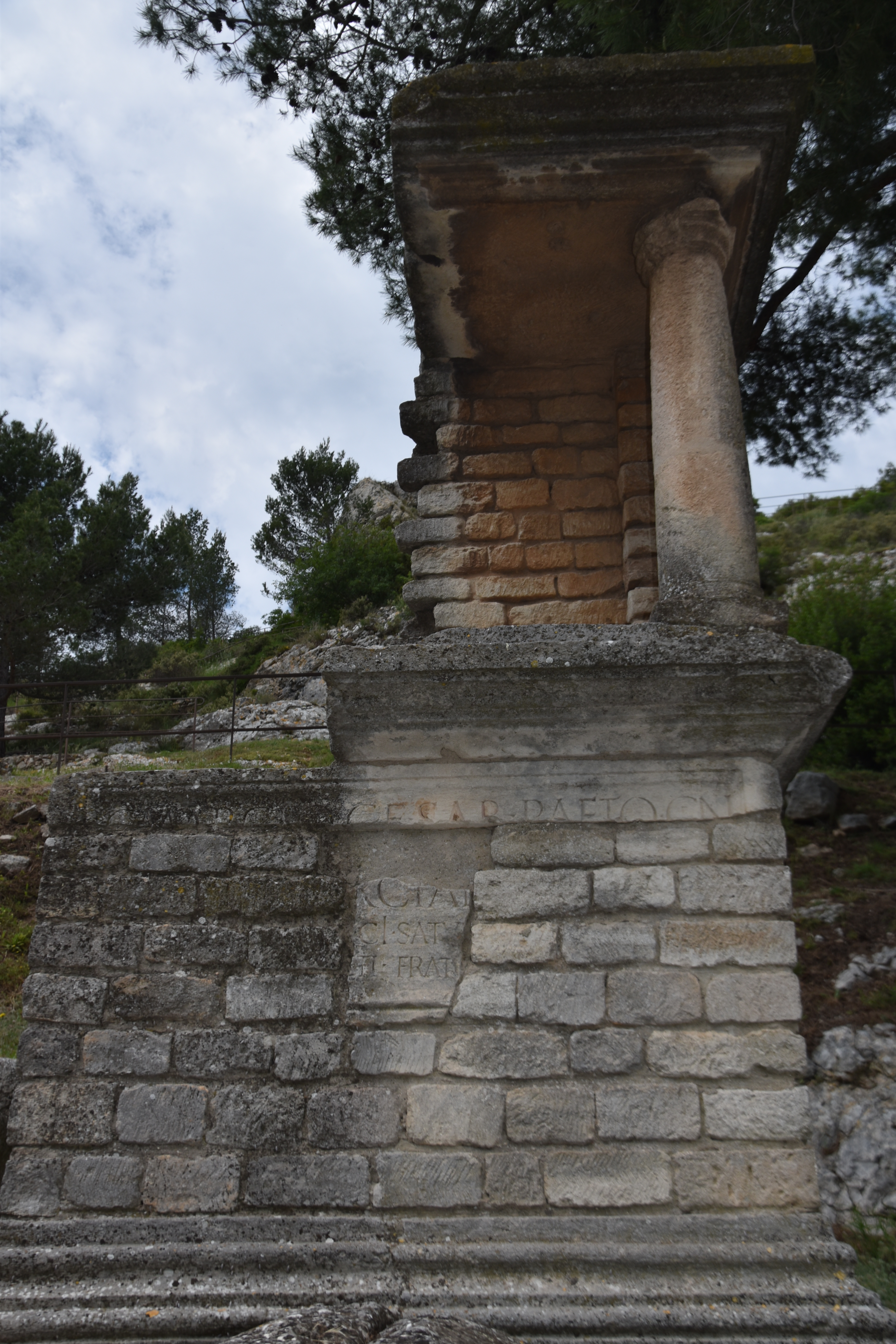
A small Corinthian Temple (Greek)
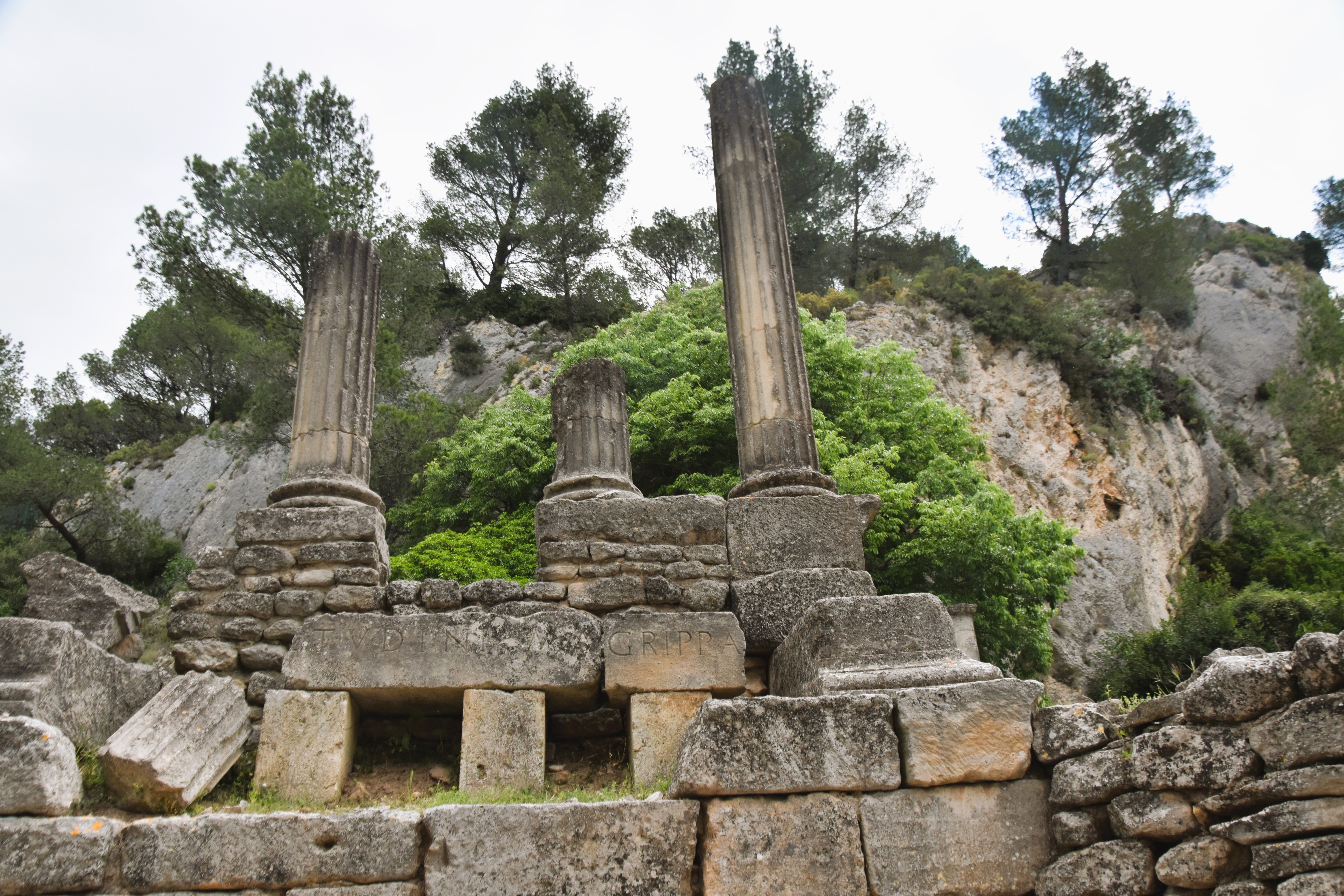
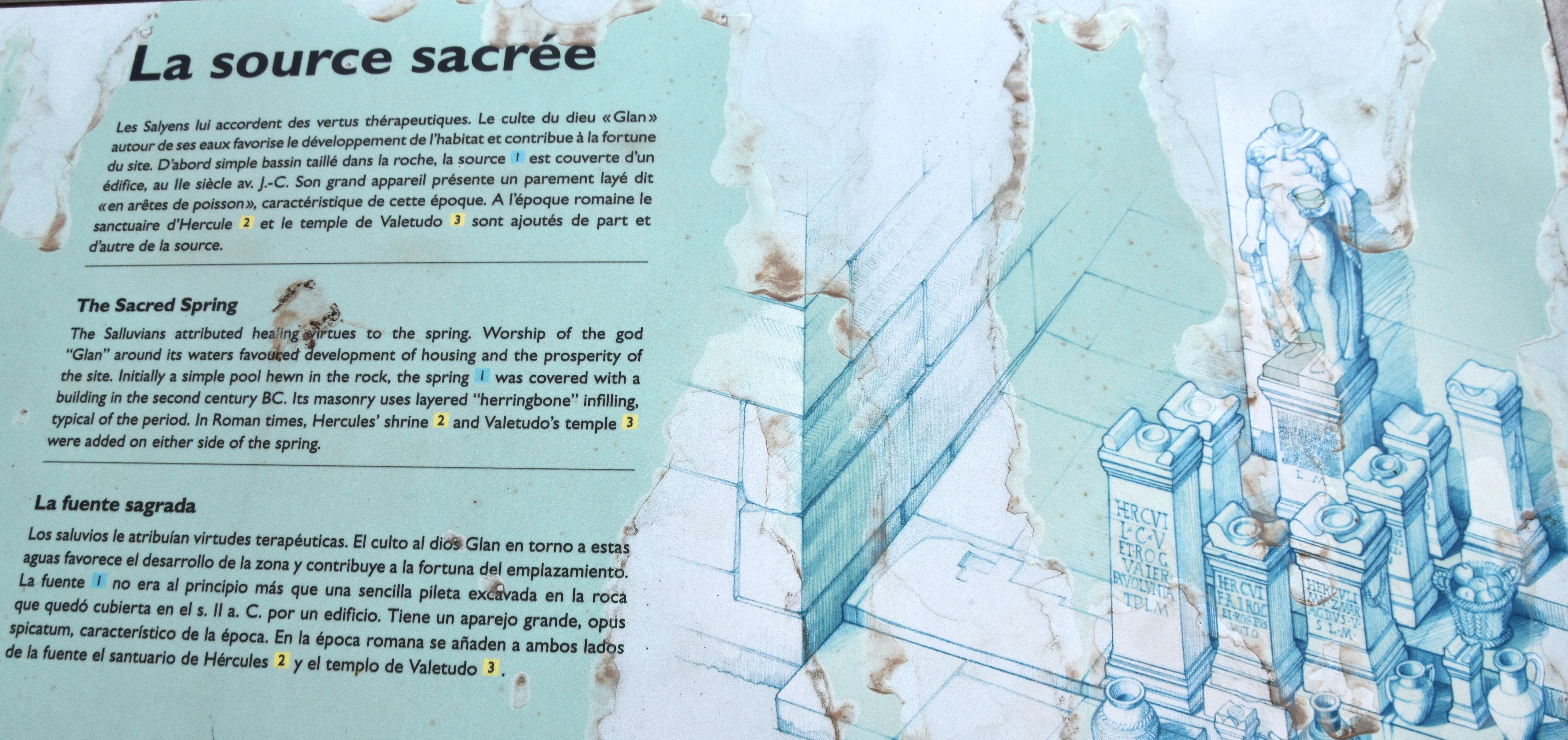
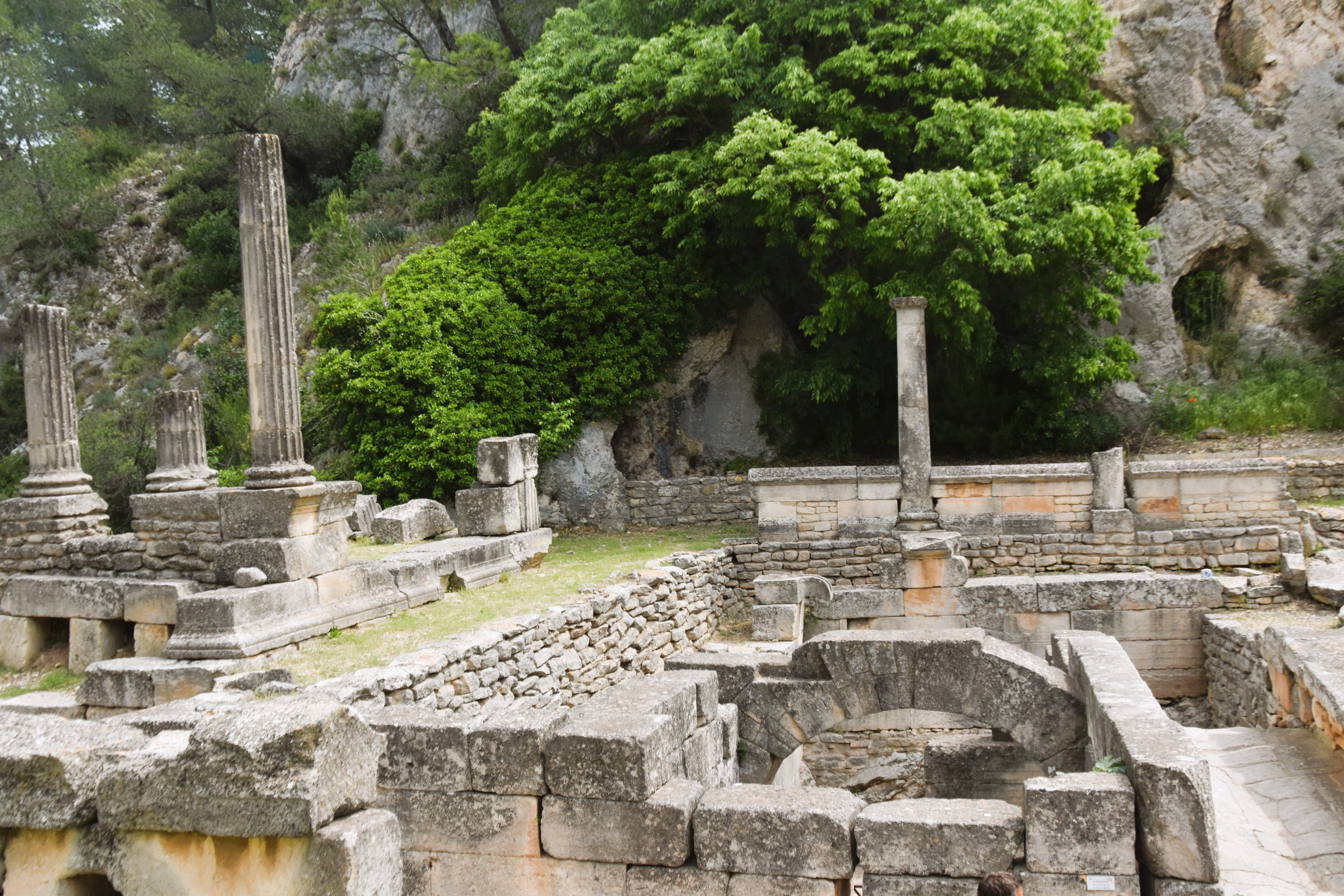
The spring was revered and its importance is reflected in the many inscribed stones placed around it and the Herculian and Valetudian temples to either side of it.
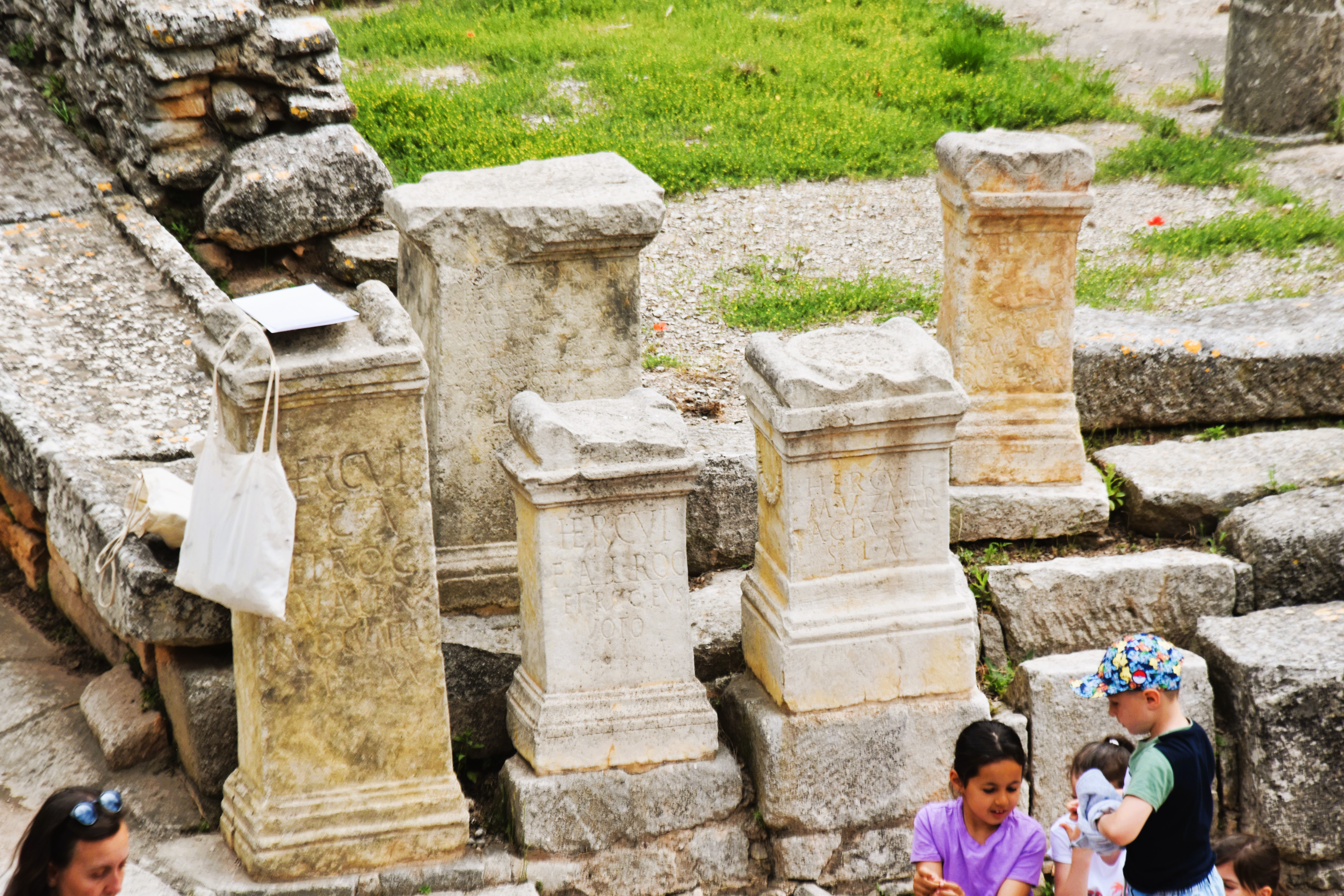
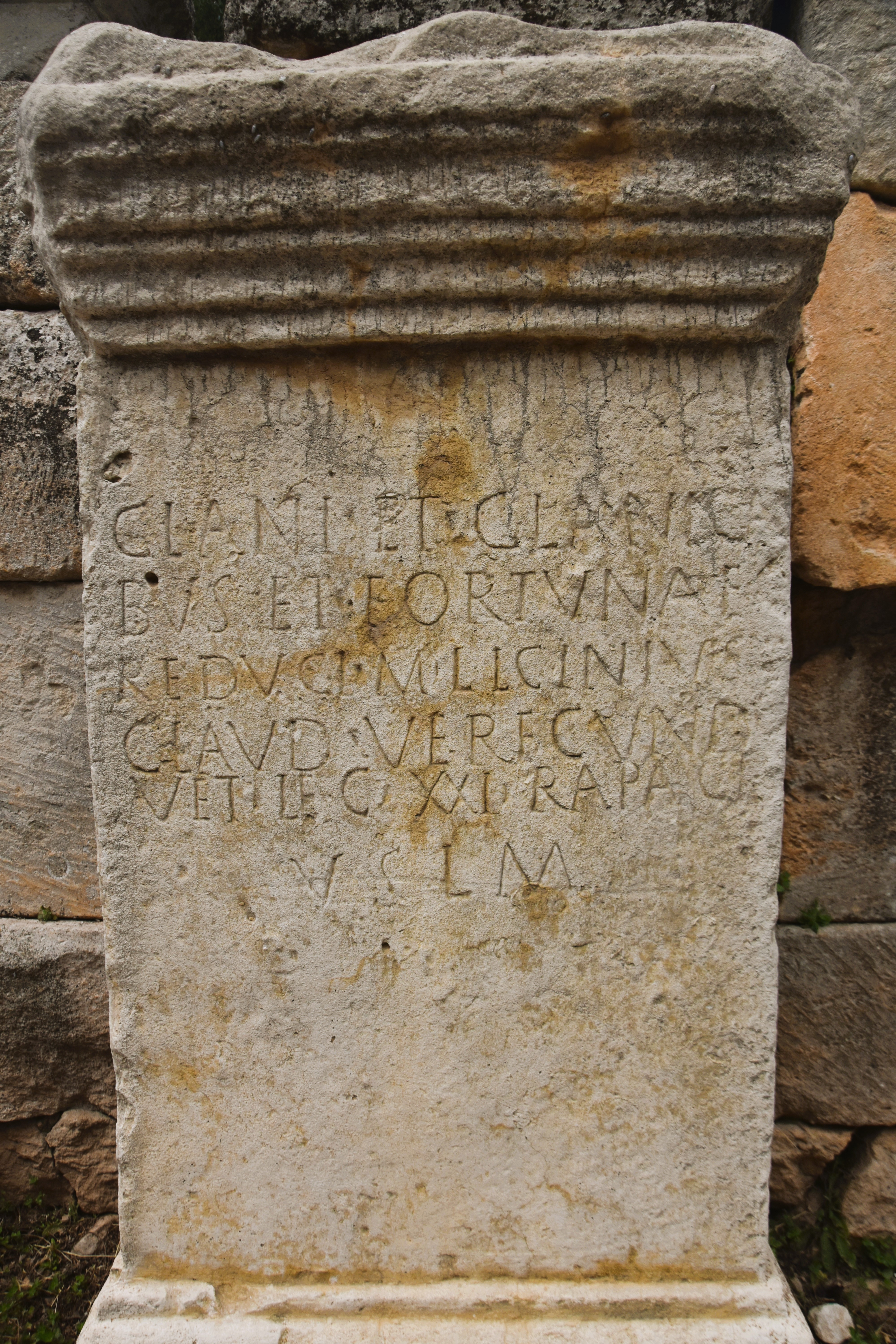
Only Roman citizens were permitted to live within the city and the location of their houses would have been decided on rank with the most “worthy” and high ranking living closest to the Forum. The indigenous population would have lived outside the walls.

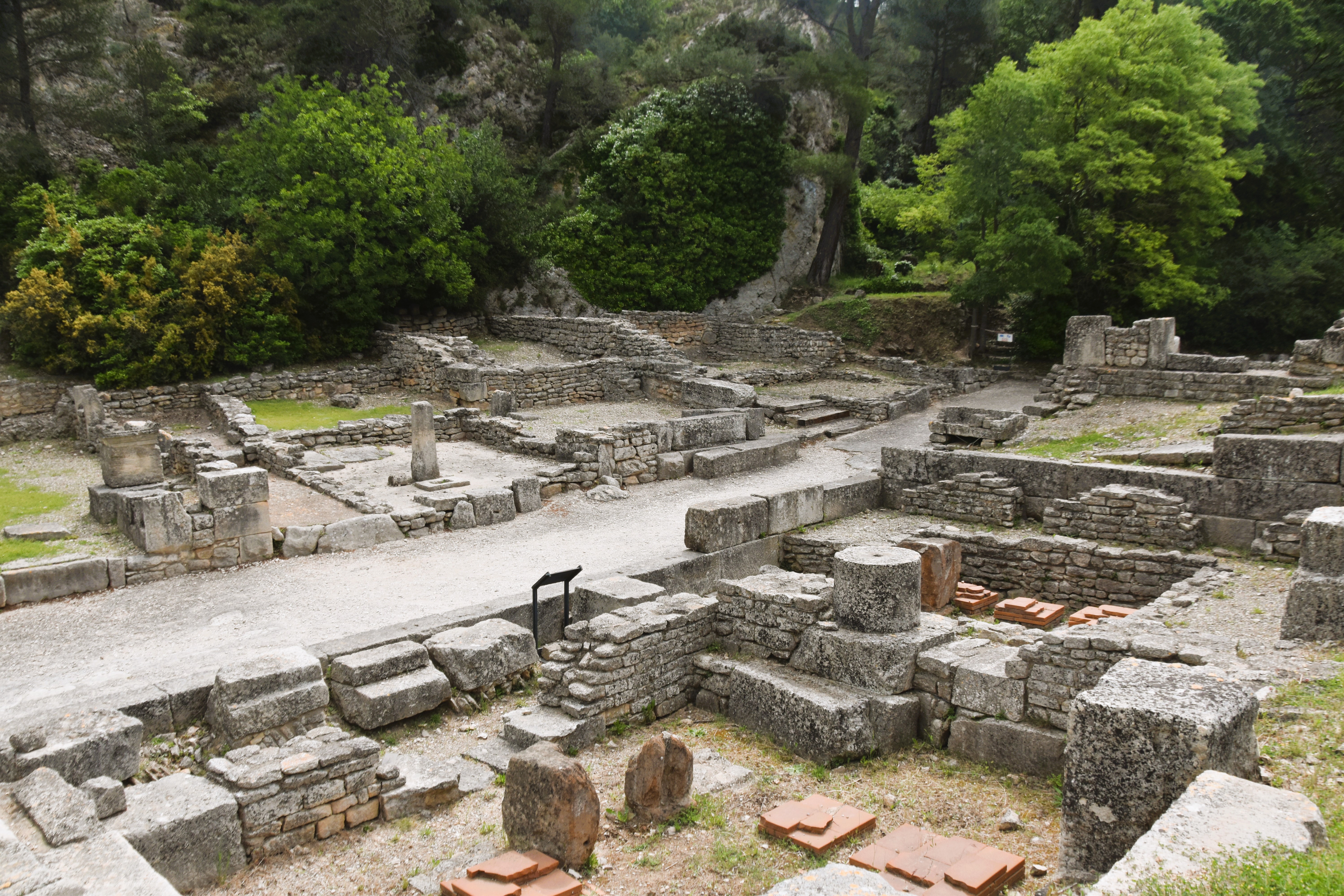
This compact and perfect little town with all the requisites of a Roman colonial settlement endured till 260AD when it was sacked by the Goths.
After this informative and interesting visit it was time for lunch so I decided to drive the 7 short, if winding, kilometers to Les Baux-de-Provence which has an abandonedcitadel on its rocky sumit. the photos from the aproach road offered a tempting preview.
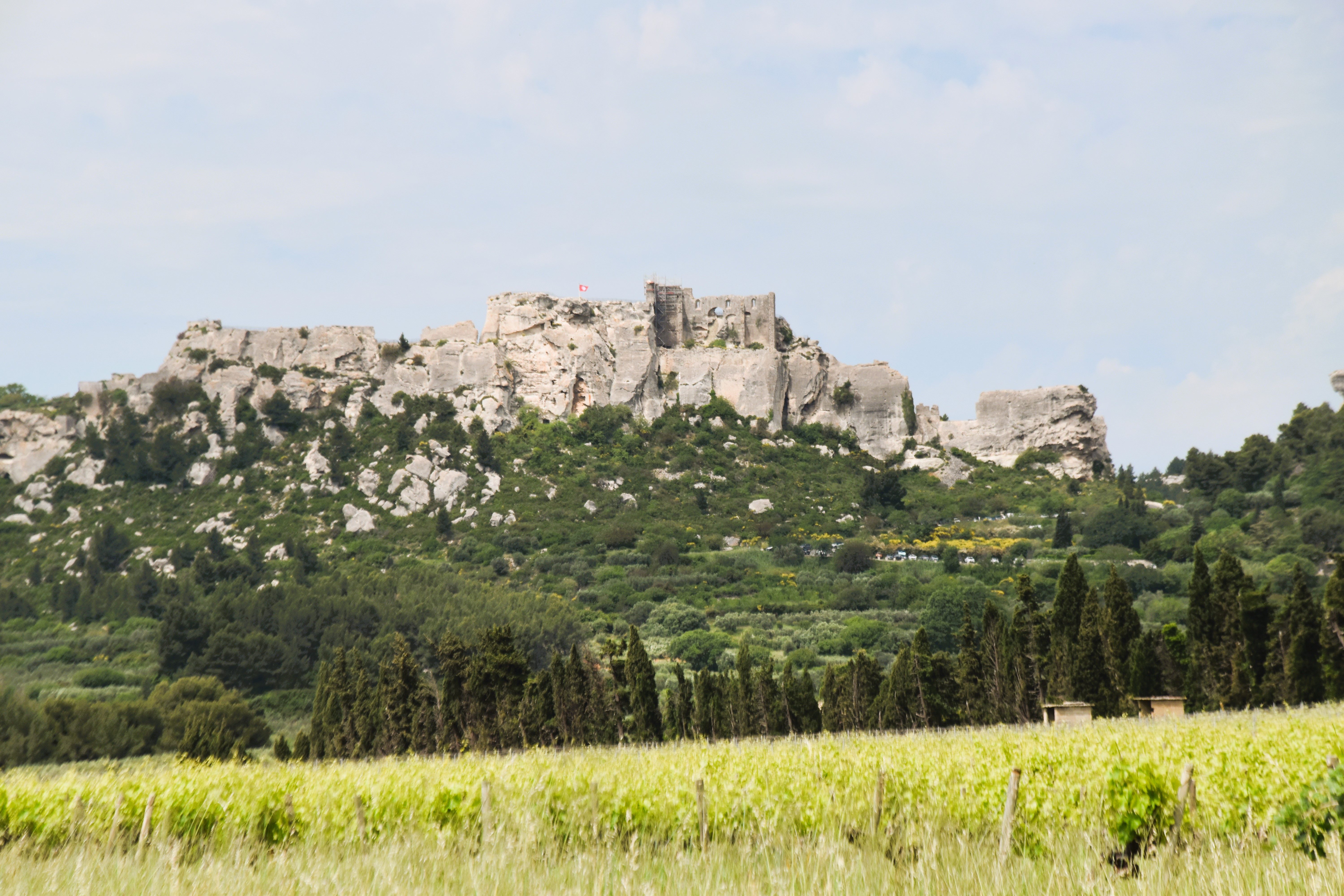

I was hooked and continued closer in high anticipation. The road became ever steeper and narrower, not helped by parked cars that hardly fit within the perameters of the small parking spaces, no chance for a campincar. A series of marshals kept waving me on and I was a good way down the other side before I found a flat place to stop.
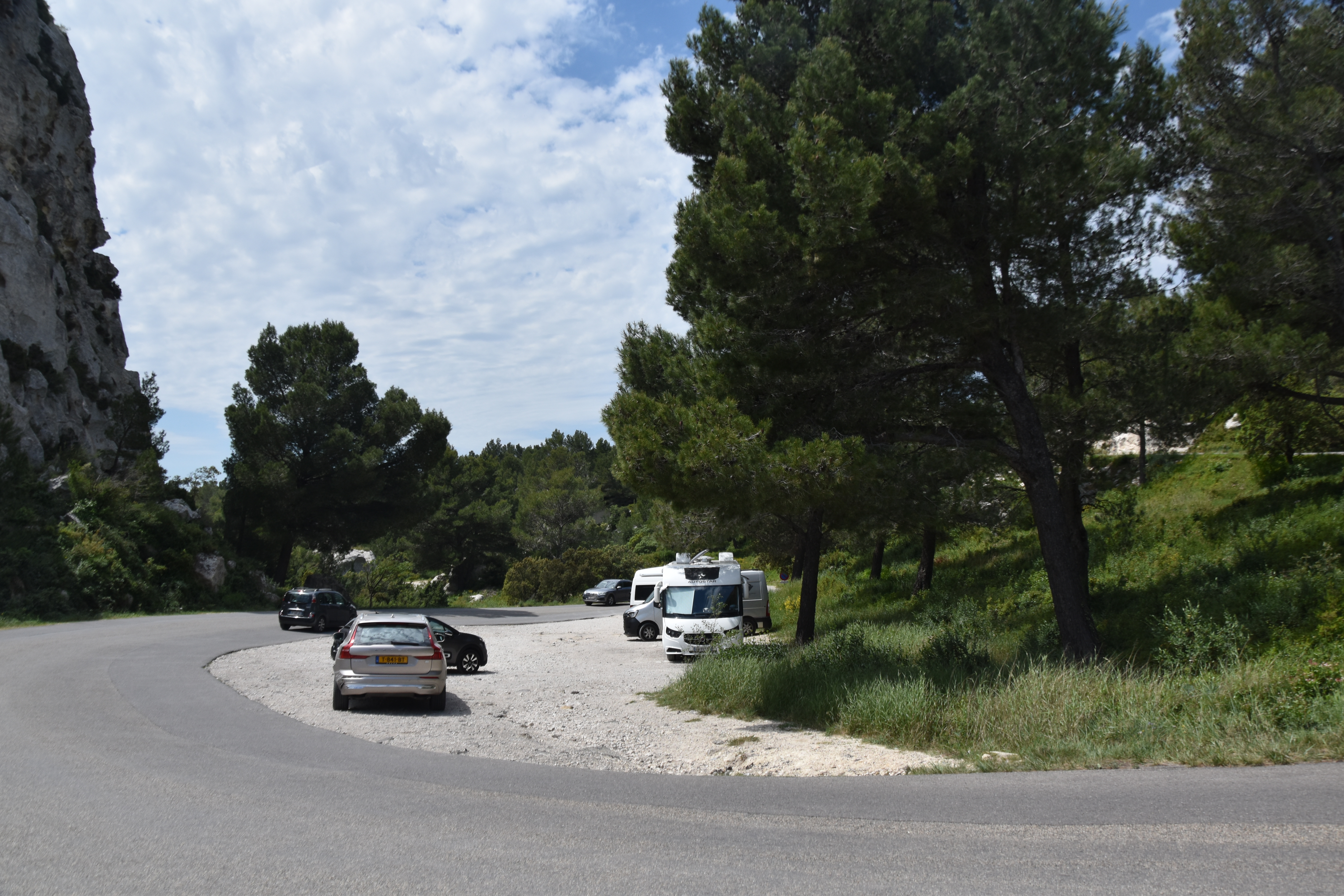
After lunch and a nap I crossed to road to see just how far away it was back to the citadel. The views across to the high plateau and the village clinging to the hillside were impresive.
The citadel had become a Protestant stronghold and in 1632 its destruction was ordered by Louis XIII.
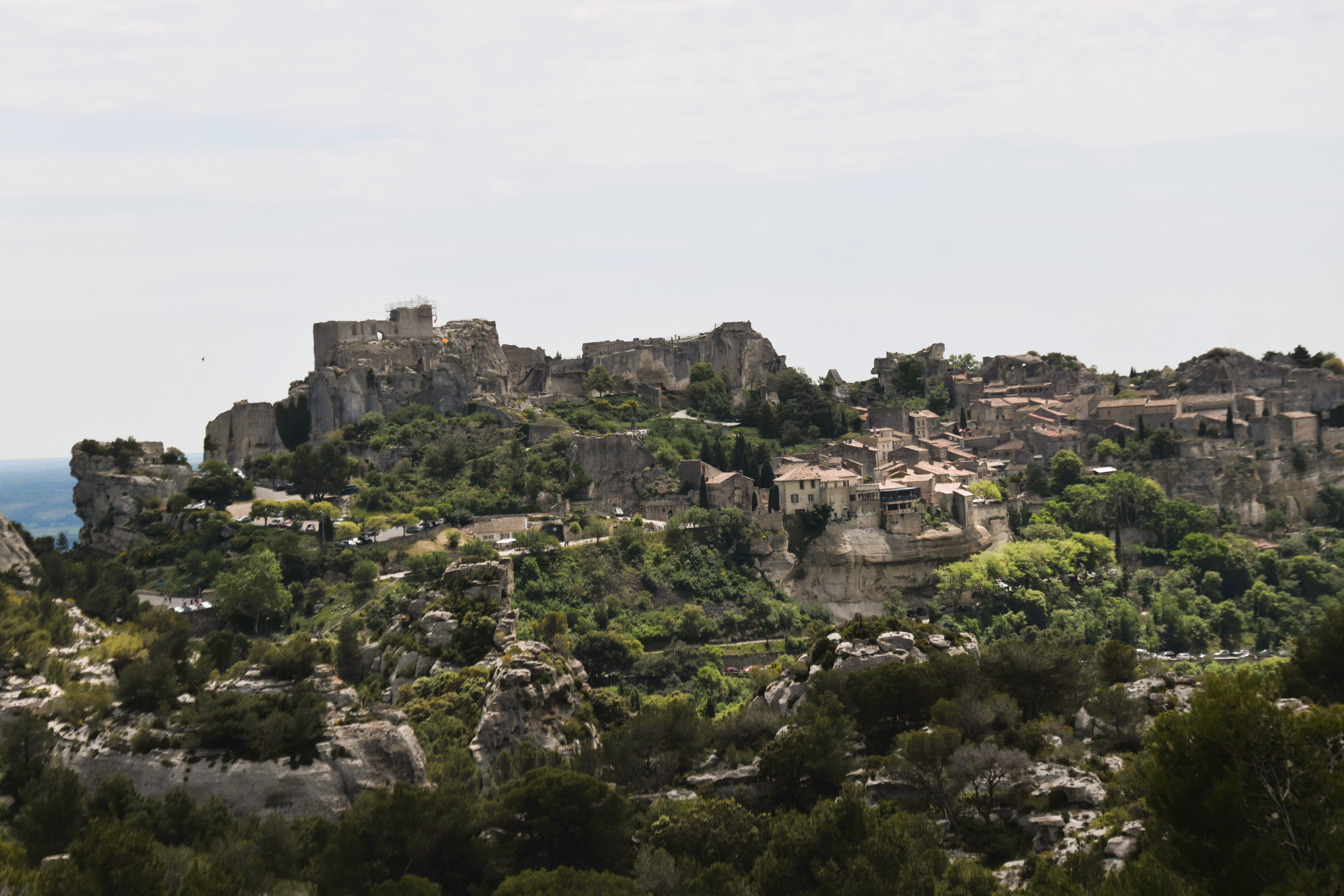
But it was obviously not a walk away on this road with no pedestrian walkway and a dog in this heat. So I zoomed in for one last shot and headed back to St Remy and a campsite.

14th Woke to light rain this morning but with more promissed by the end of the day and for tomorrow. Although Van Gogh spent a year here, 1889 – 1890, in the St Paul-de-Mausole hospital and produced 150 works during this period I was not tempted into town in the rain on thr off chance of a good exhibition of his work. Instead I decided to take advantage of the probability of less traffic on the roads to drive the 85k to Apt. This involved driving back over the pass on the road to Les Baux again and down into the valley of the Luberon, partially along the canal Le Grand Barbegal, through mixed forrest and many olive groves then the pass over Montagne du Laberon. Stunning views for which you will have to take my word as neither the weather nor the opportunities to pull off, lent themselves to photography.
15th. A lot of rain in the night and persisying into this morning. I hauled out the long pants again and was wondering if perhaps I might have been a tad too optimistic in shring wrapping all the winter stuff. It is nippy this morning.
Short 38K drive to the bus parking at the perched village of Gordes. The surrounding countryside is so “Provbencial” with its cypres trees, rugged, rocky outcrops, golden stone buildings and red tiled roofs. One can see why it ghas inspired so many artists over the centuraies.
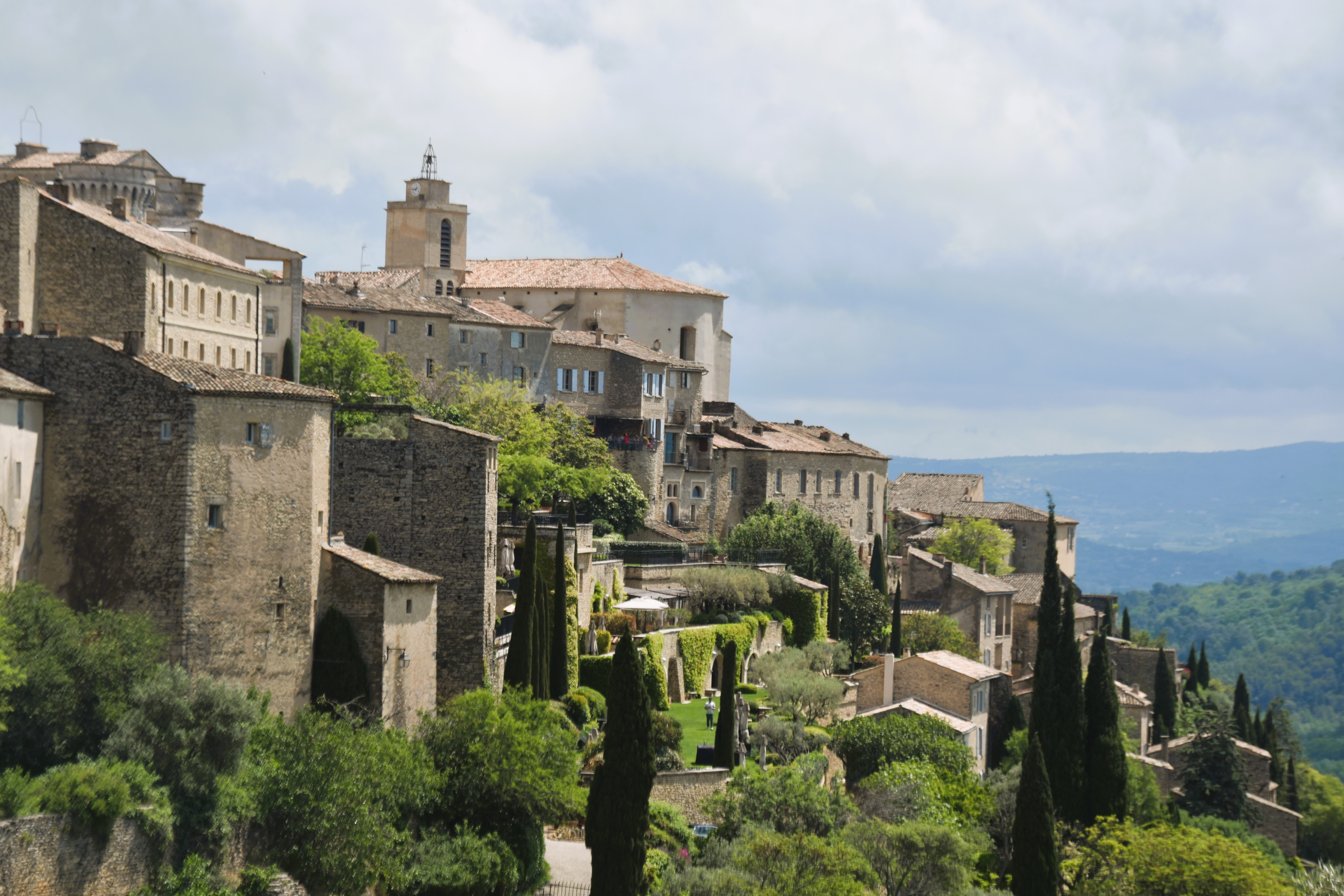
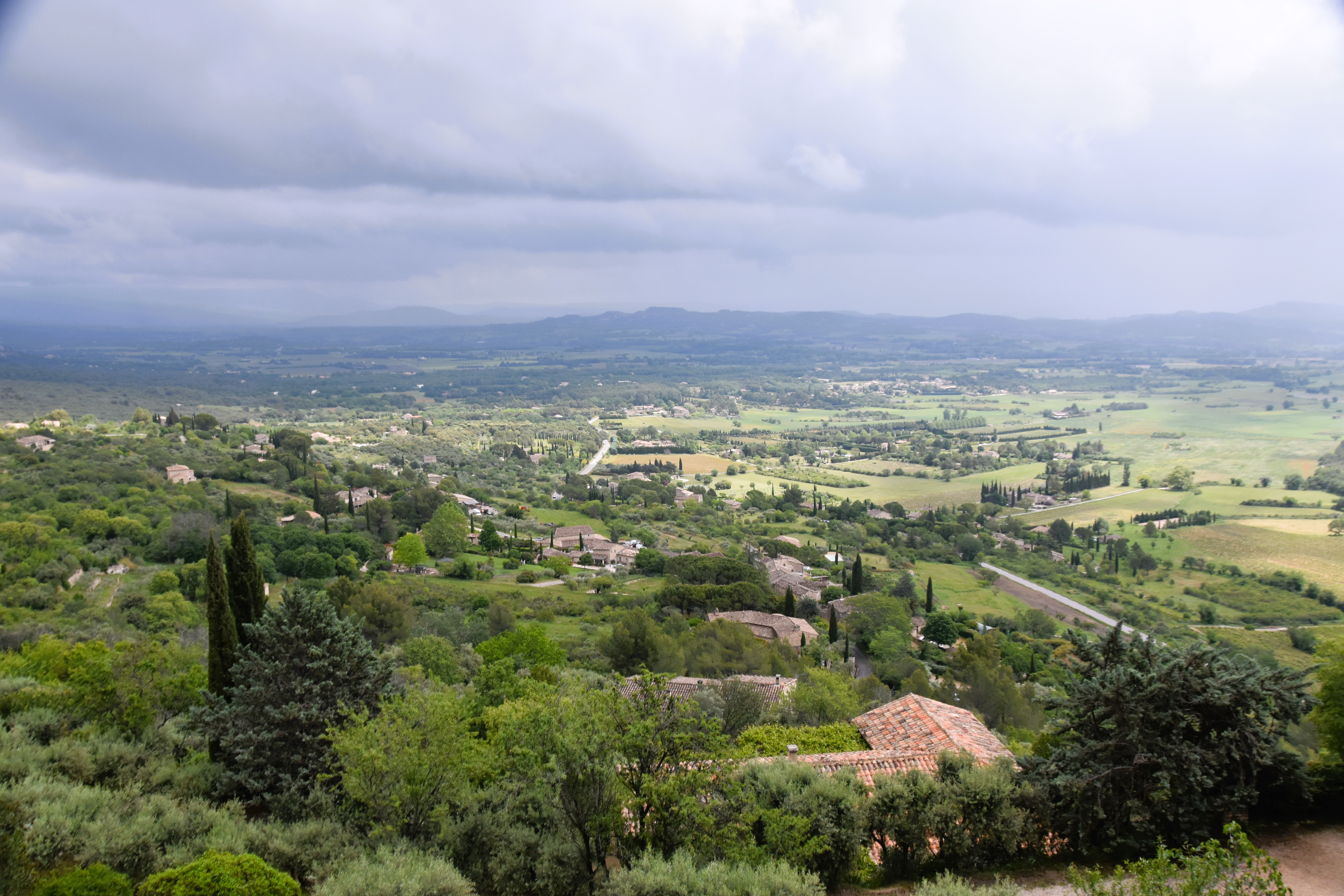
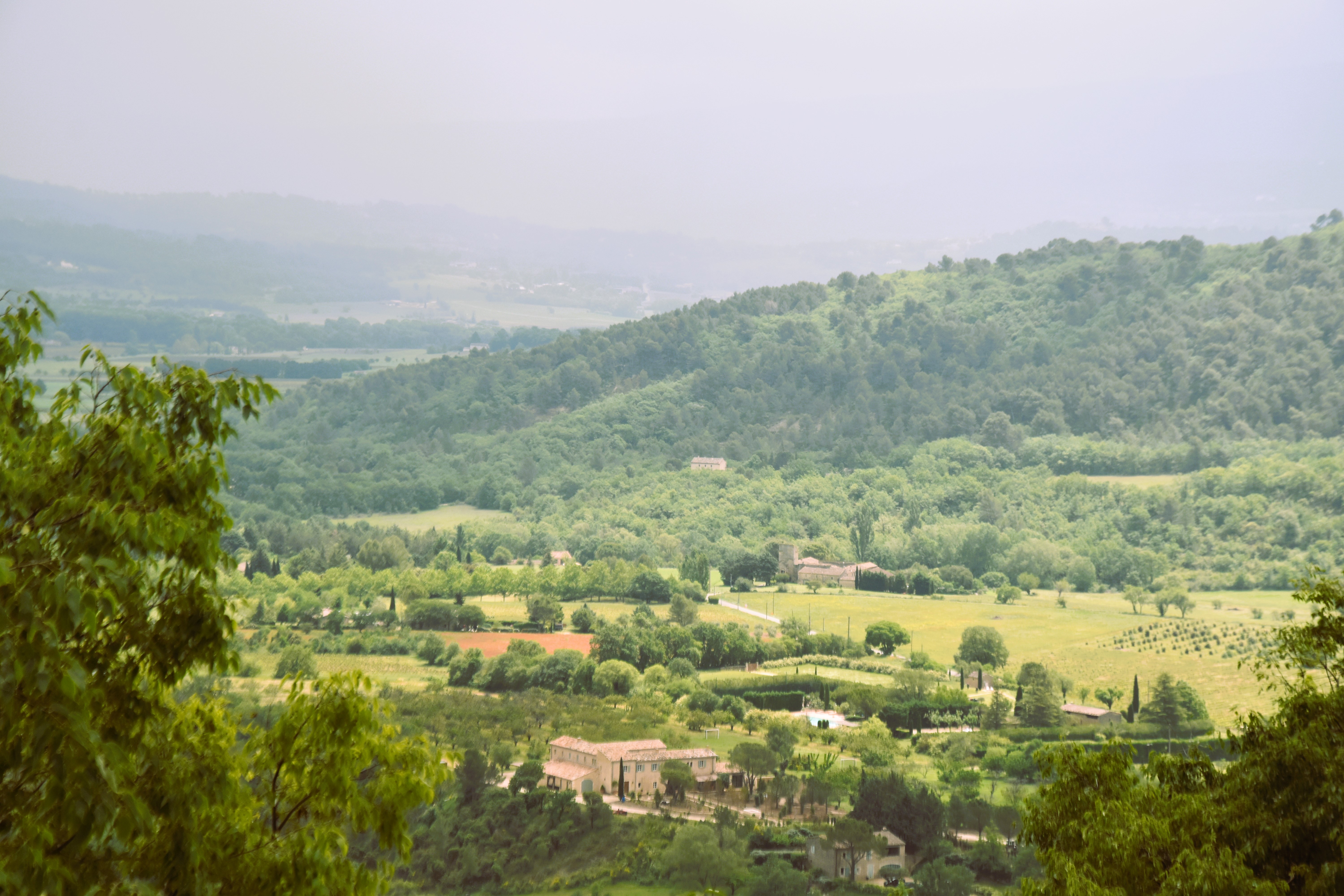
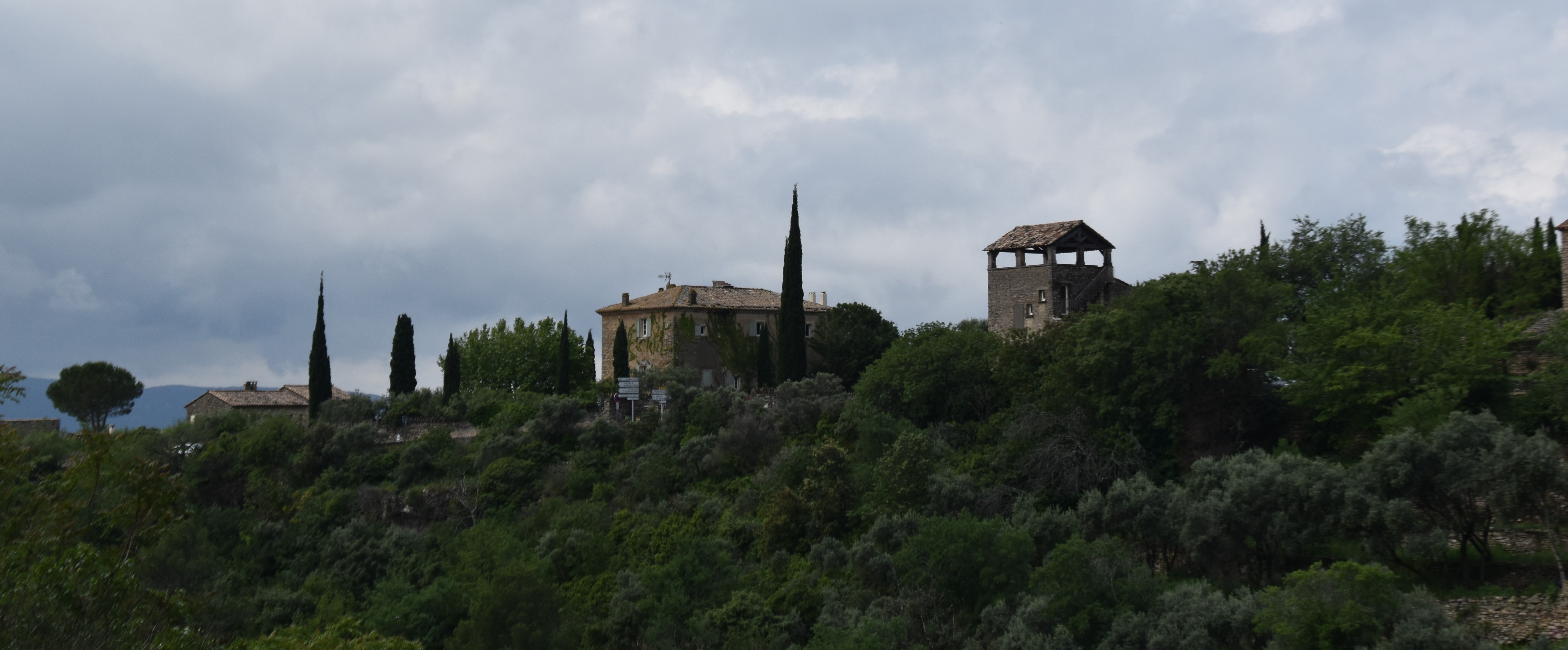
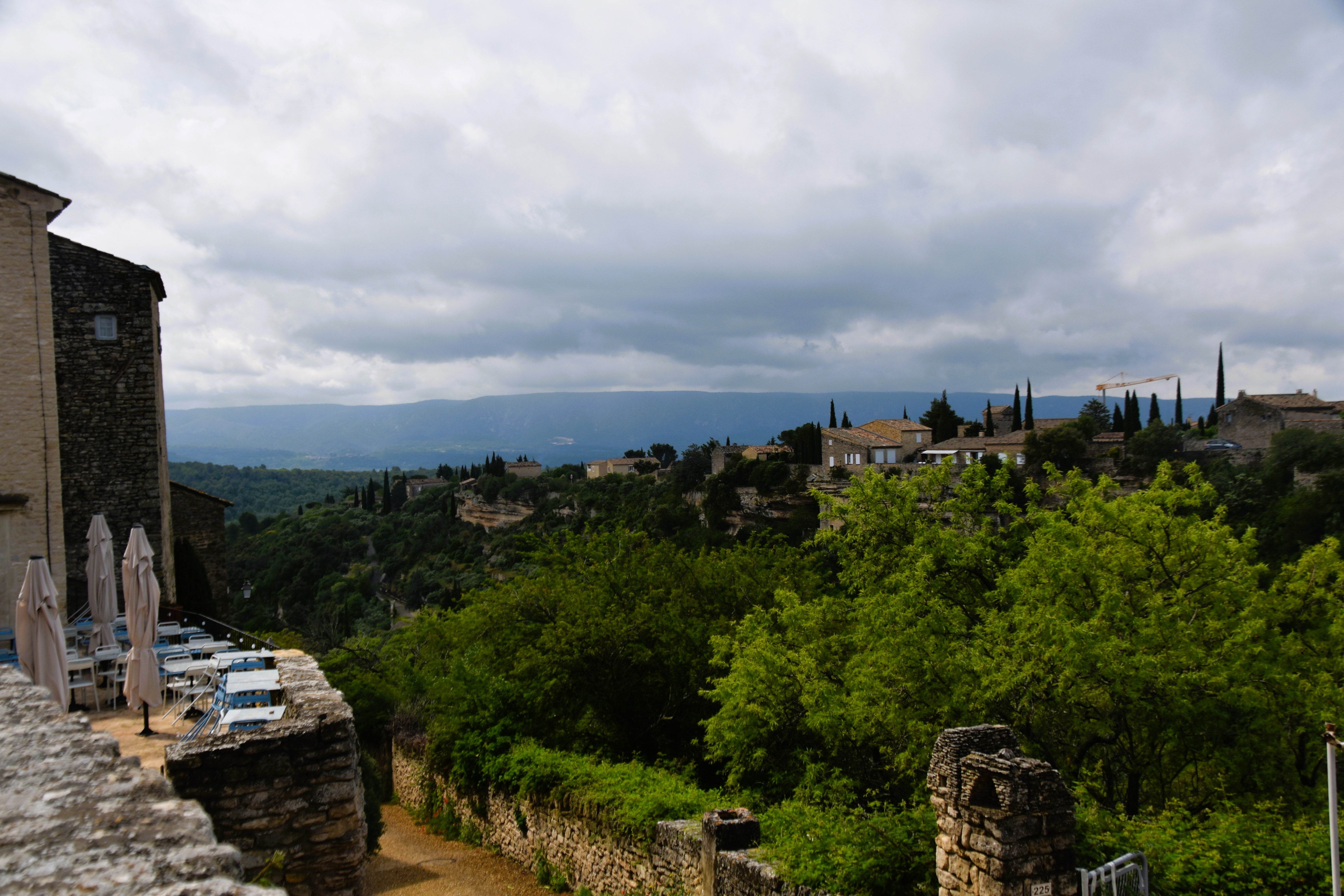
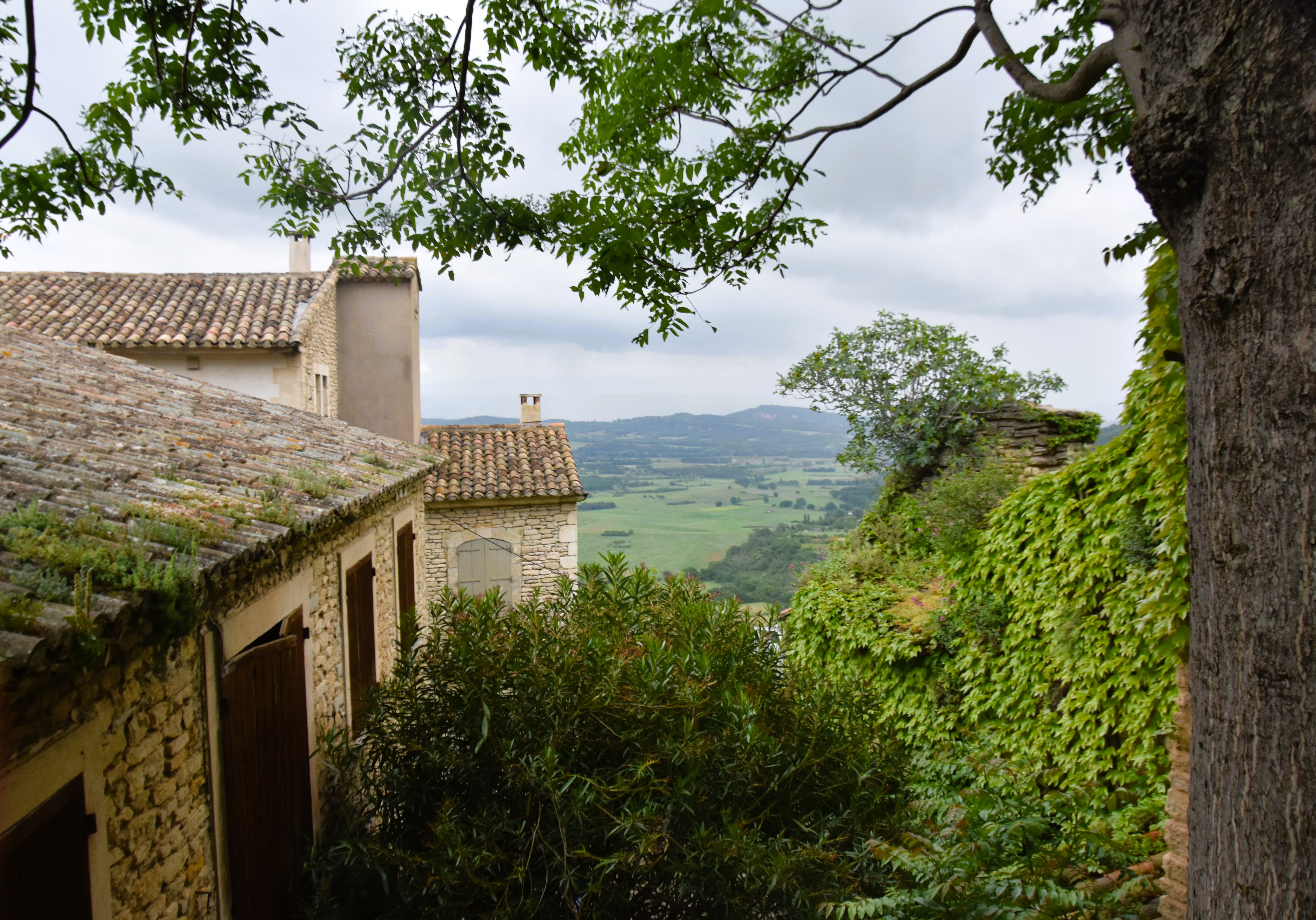
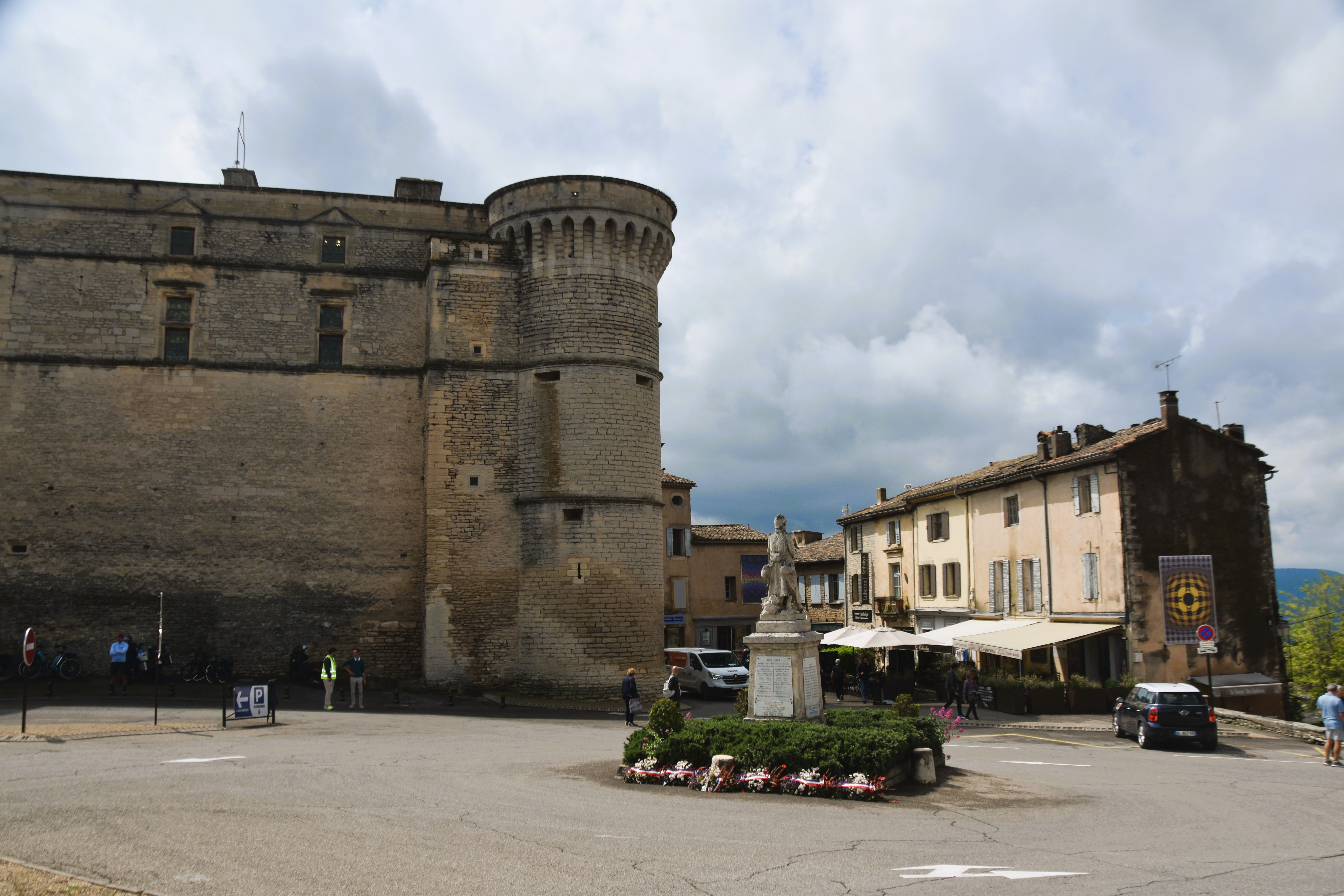
The village has a smart Chateau which is currently used to host exhibitions
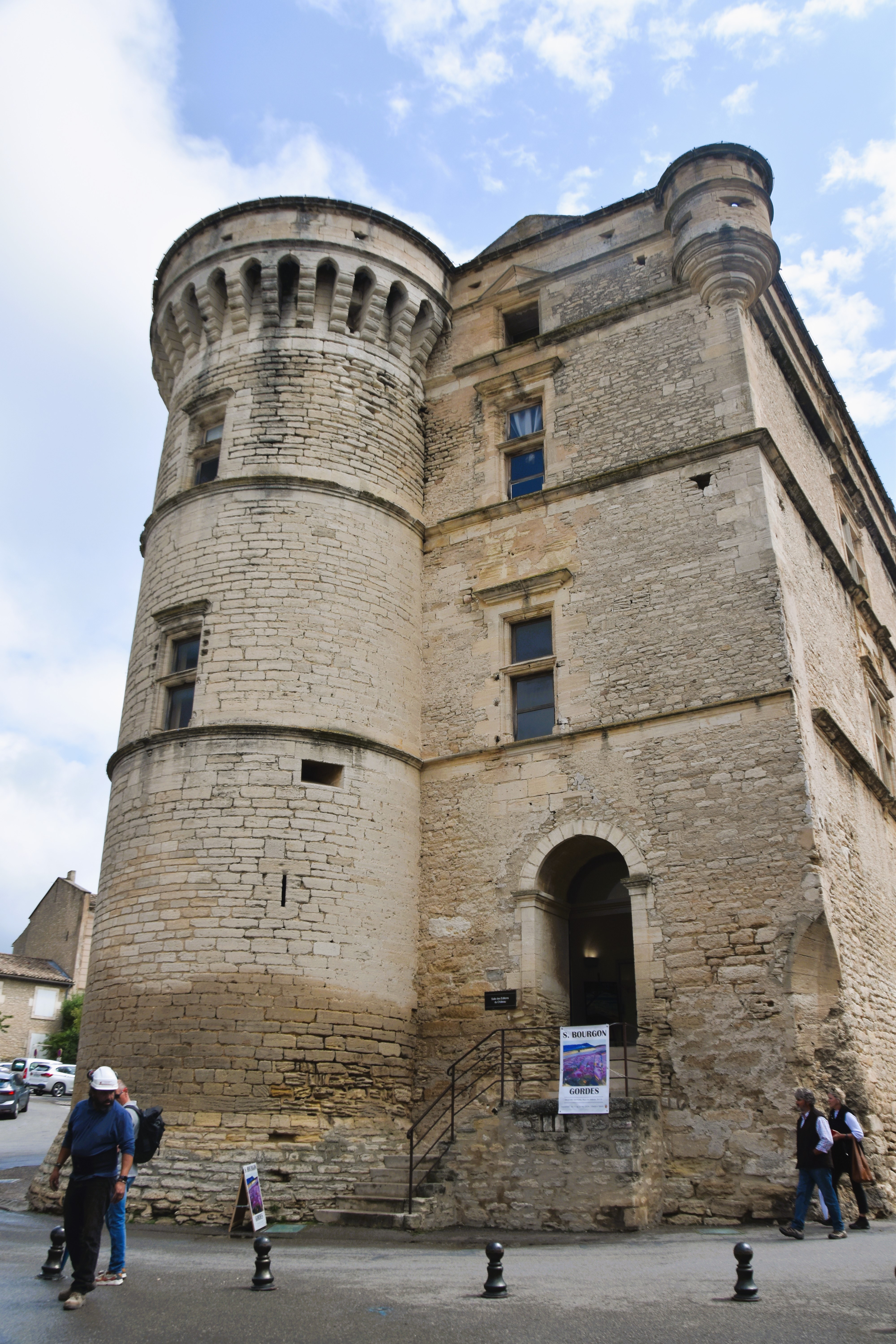
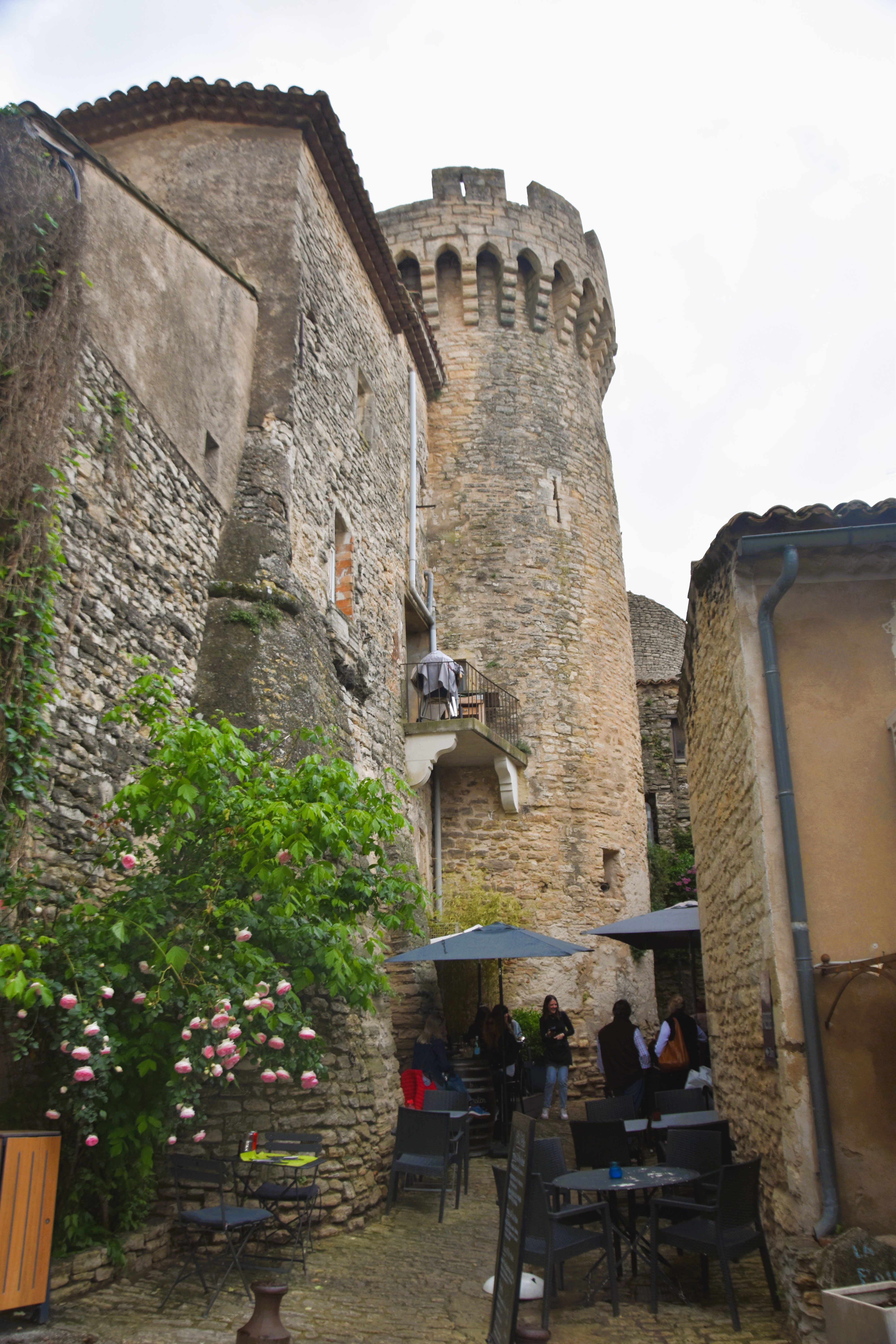
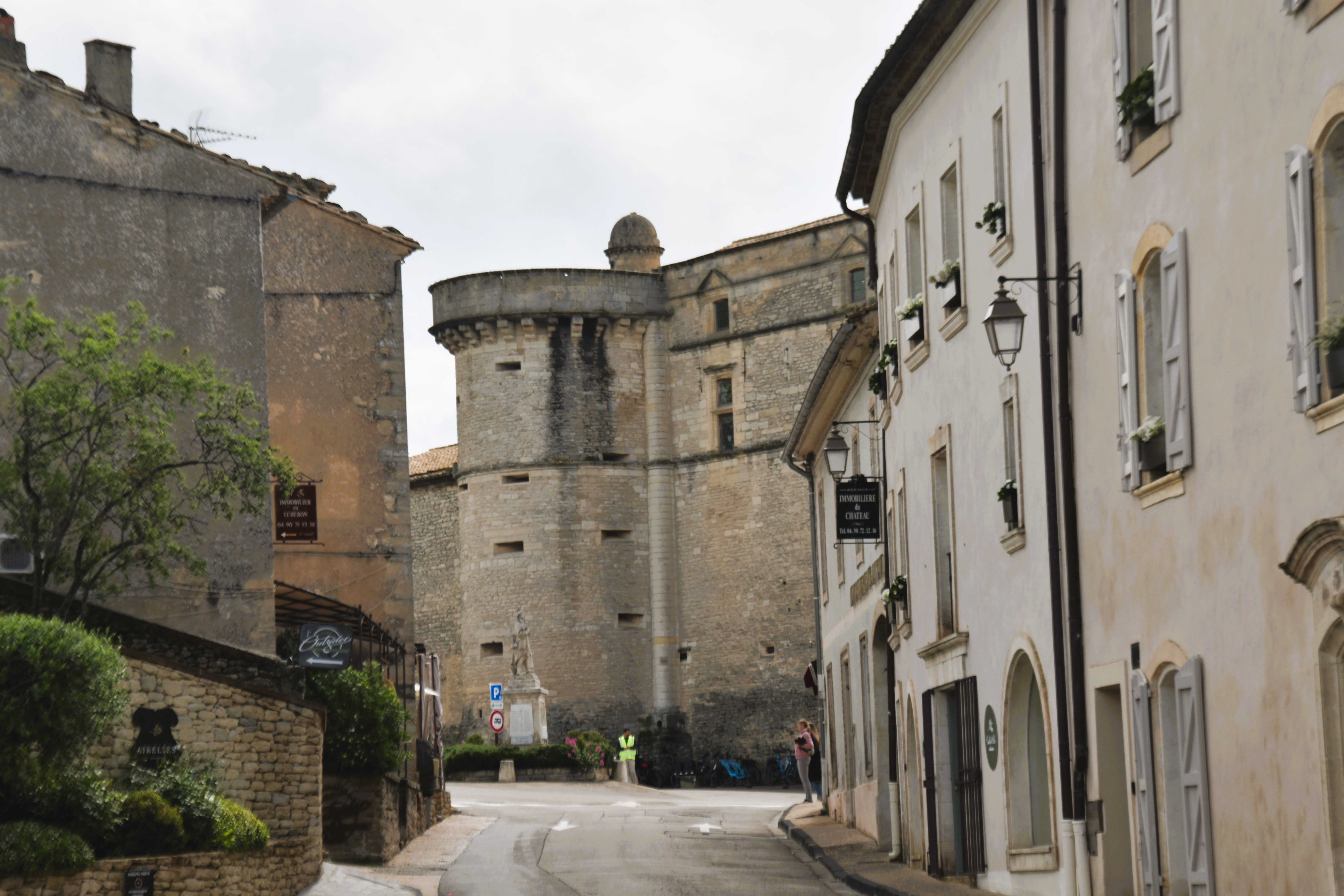
and the usual cobbled streets and lively squares. There was a range of boutiwues selling local produce and many small cafes. We stopped for lunch at one of them
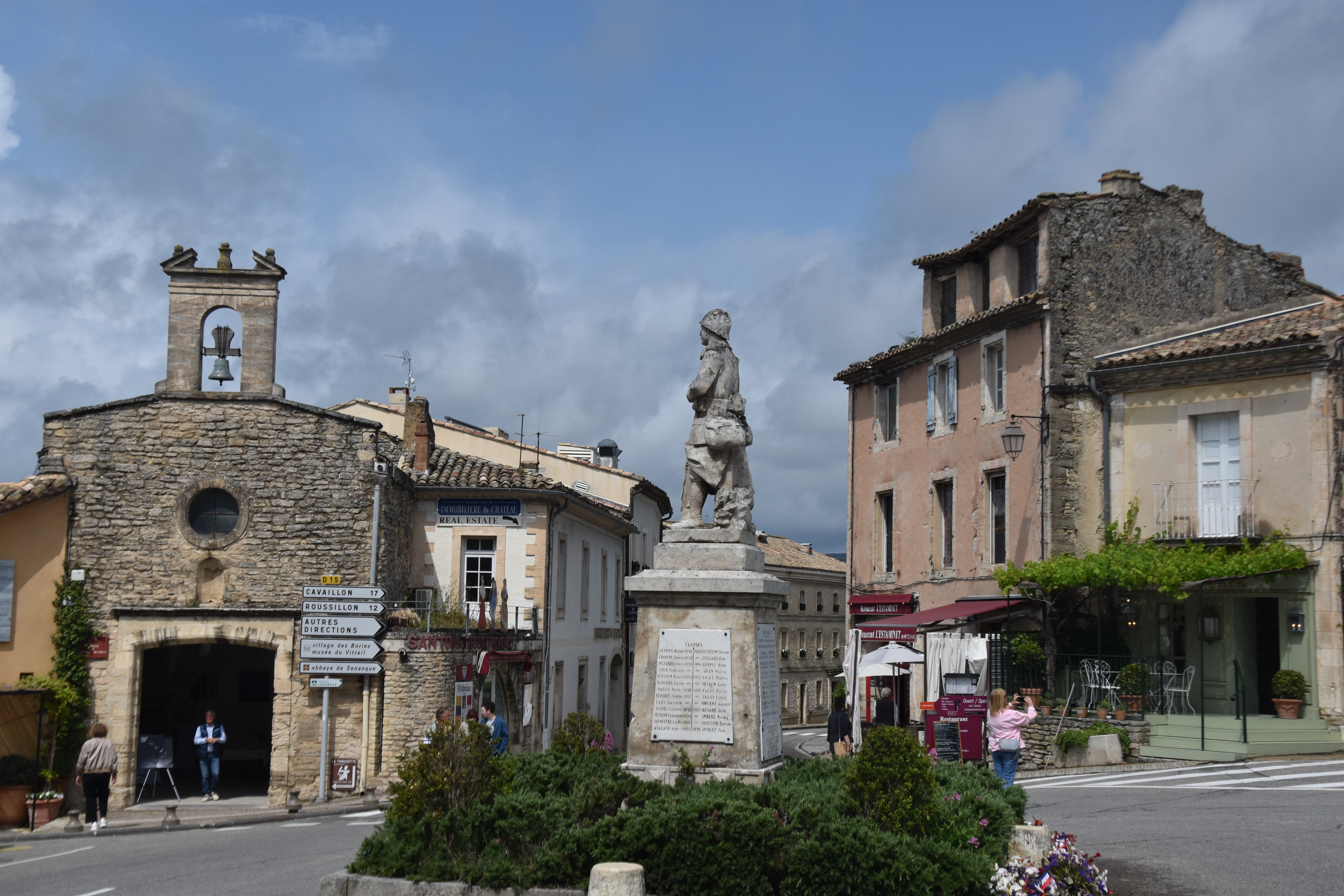

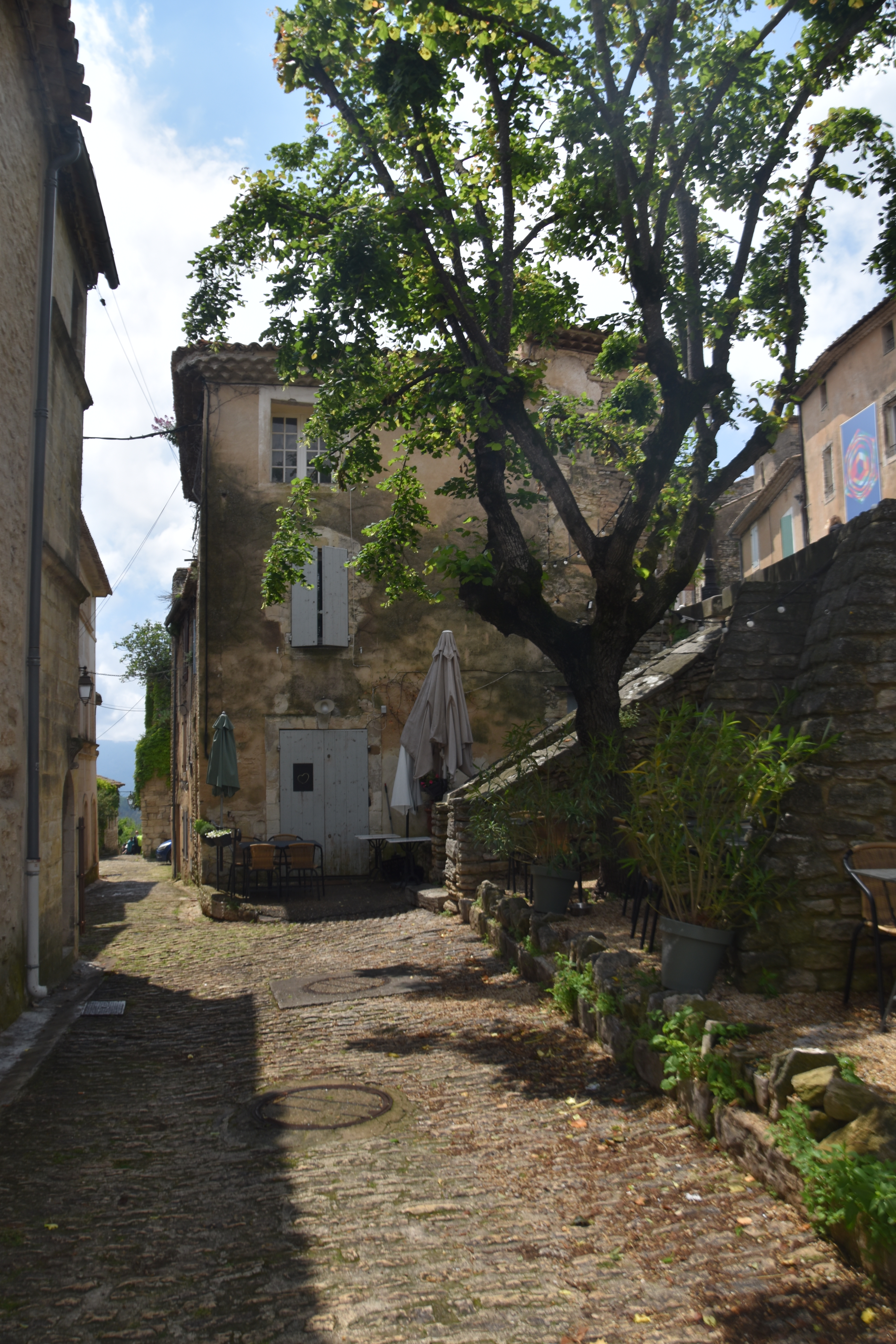
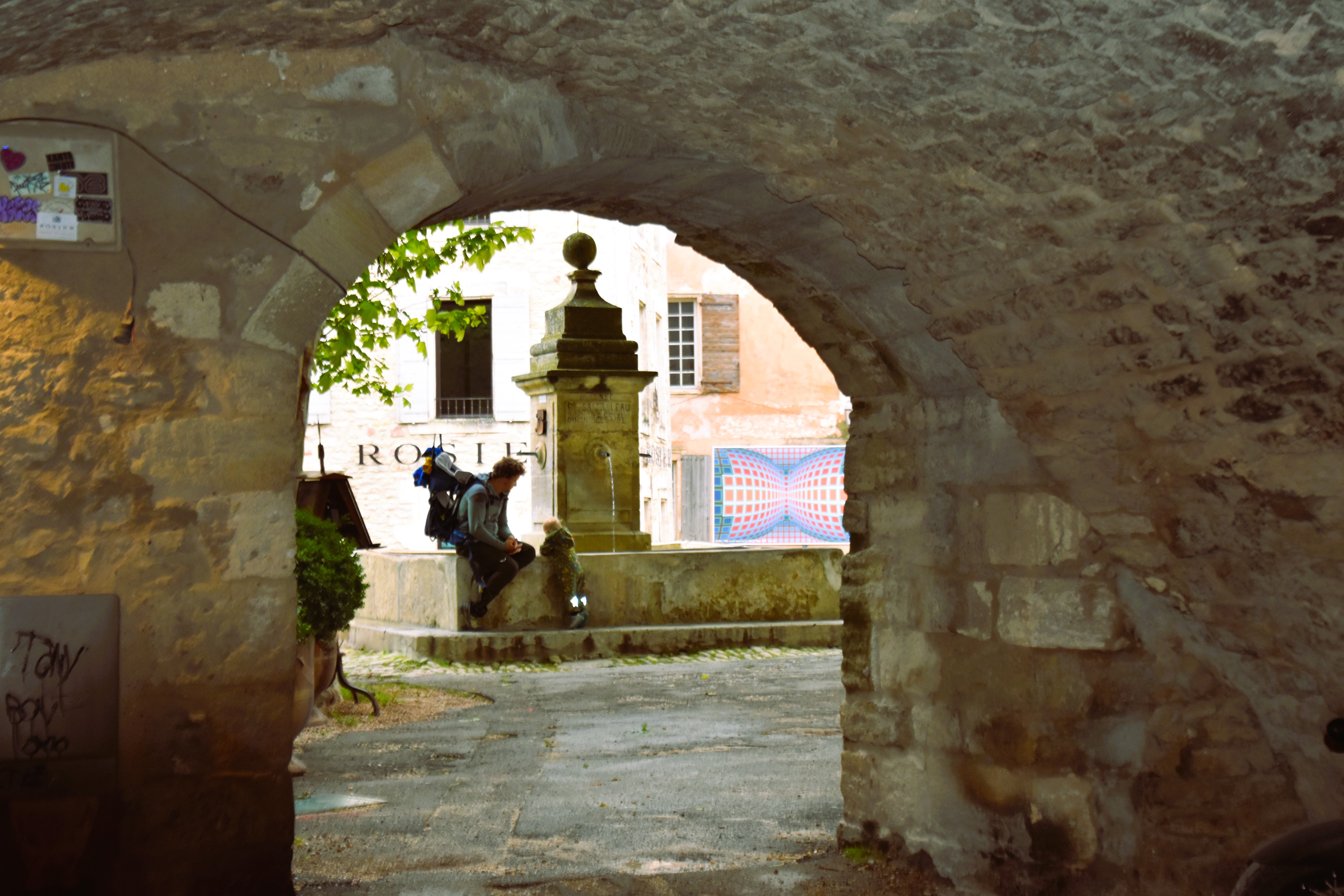
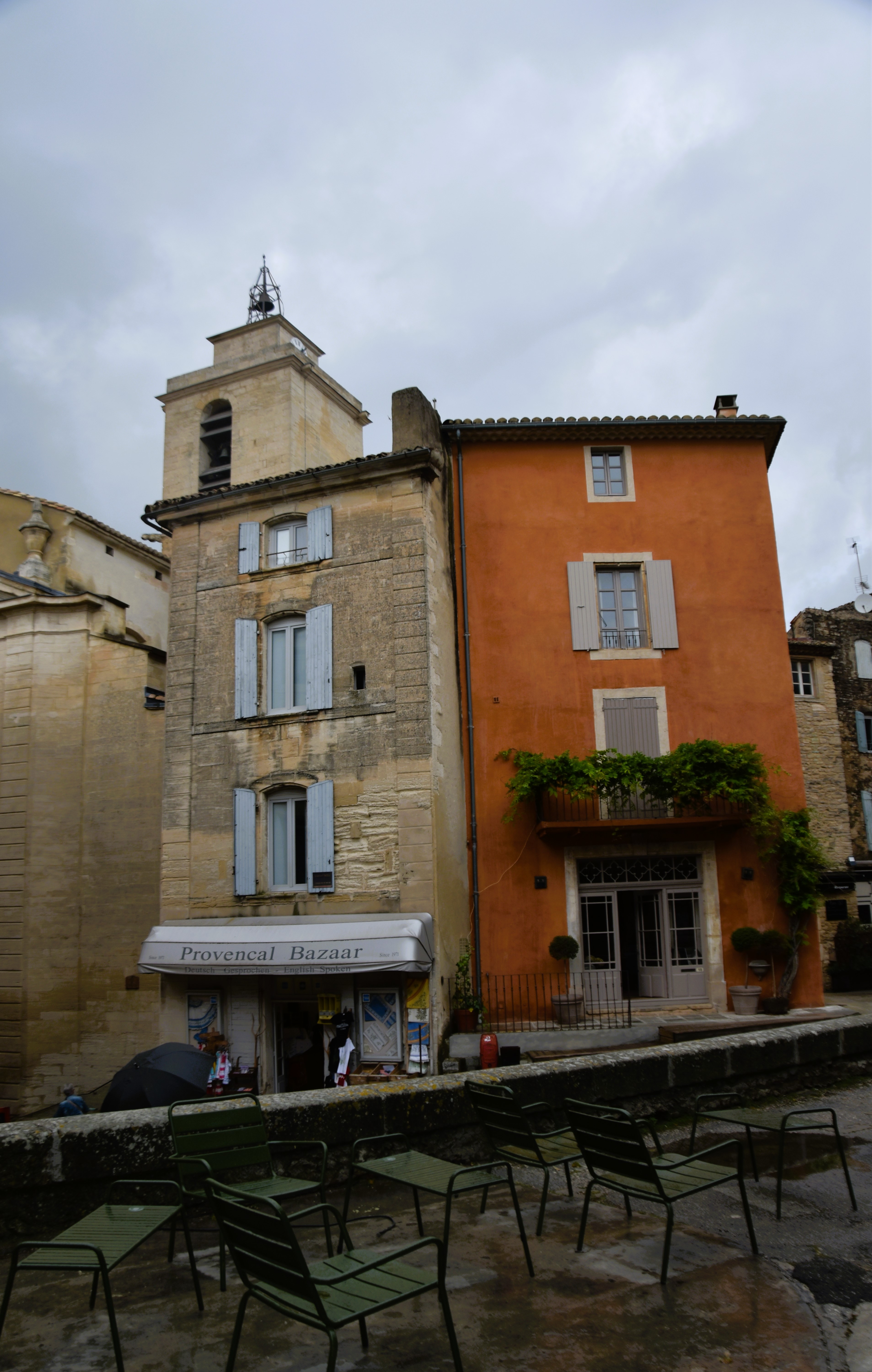
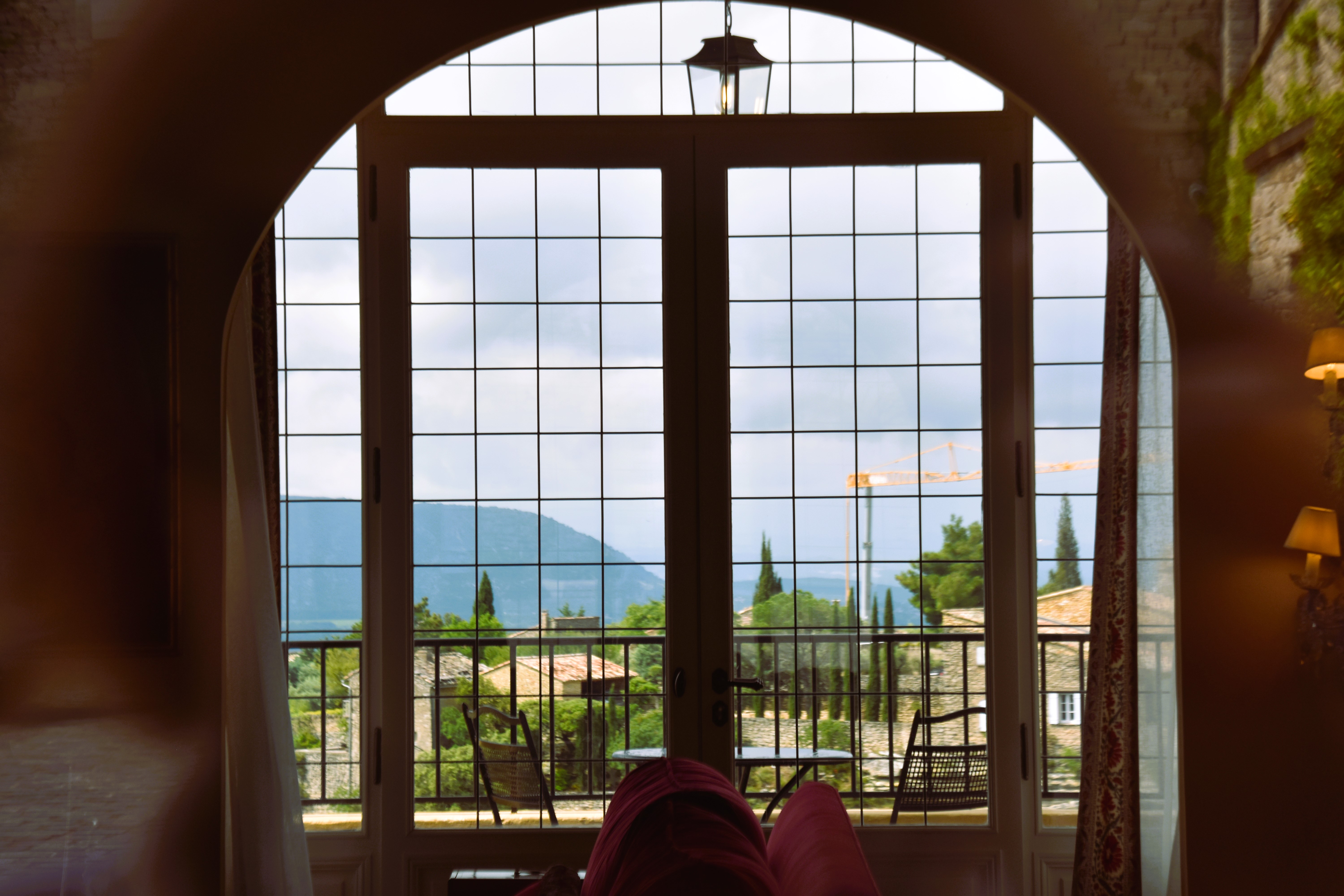
On the way back to the van, took a peek into the windowm of the smartest hotel in town, through the salon set with chess sets and out of the windown to the view on the otherside. They do have it tough, the poor darlings! Ha! Ha!
I will stay put for tonight before heading a couple of k down the road to le Bories with it stone beehive huts.
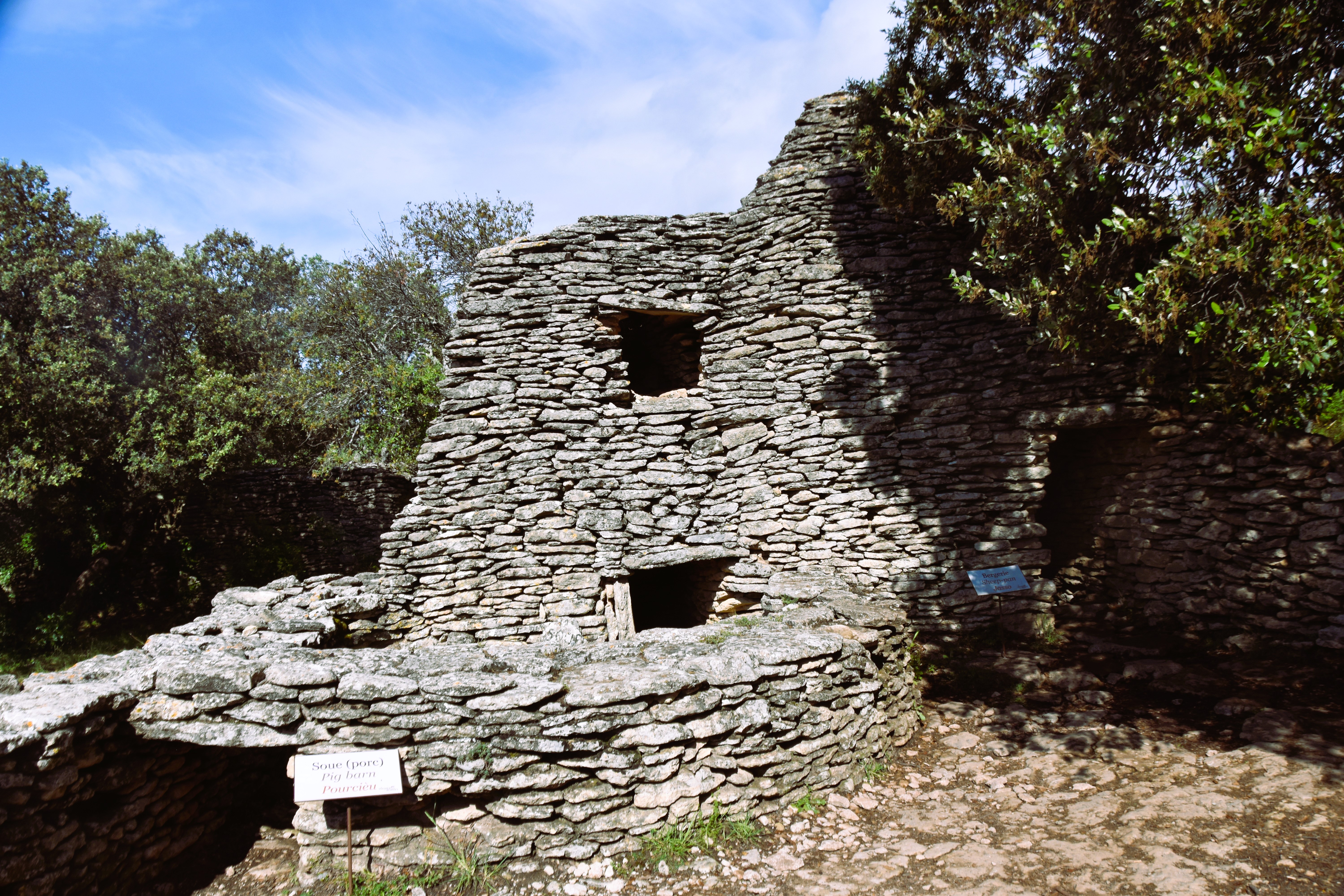
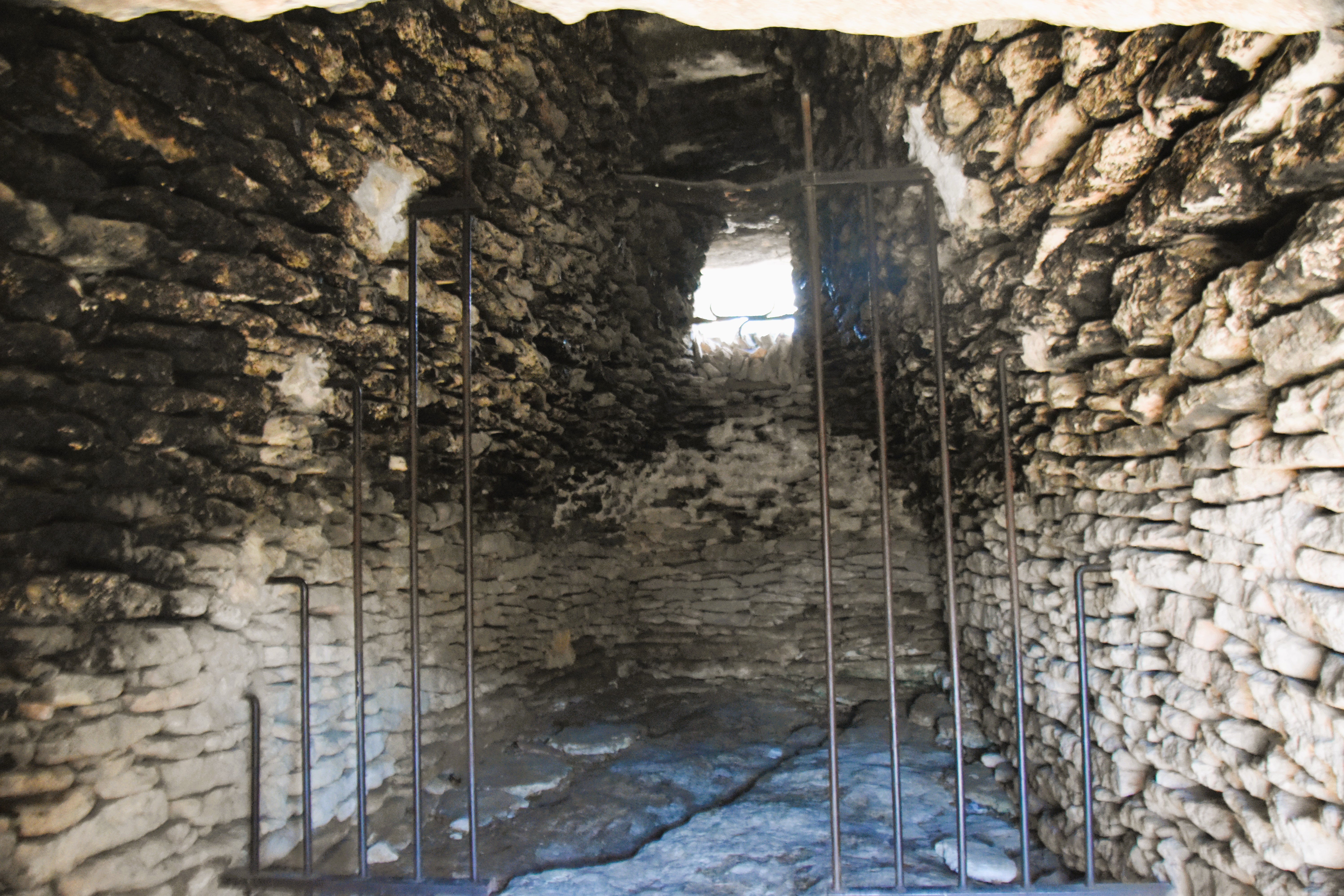
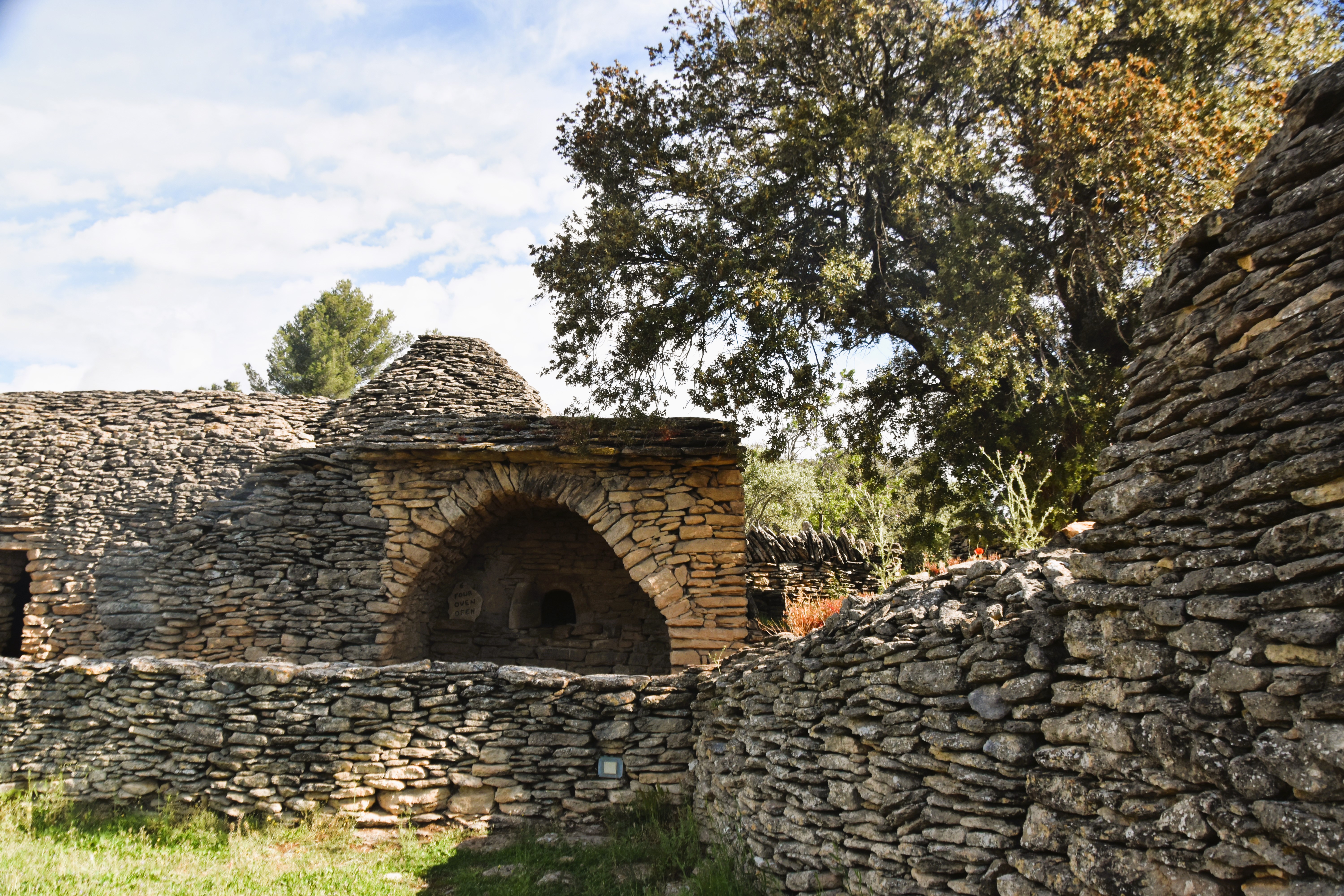
The village is constructed of individual compounds with each one having its own walled area comprising a “dwelling”, animal enclosures, outdoor oven, barn and wine store.
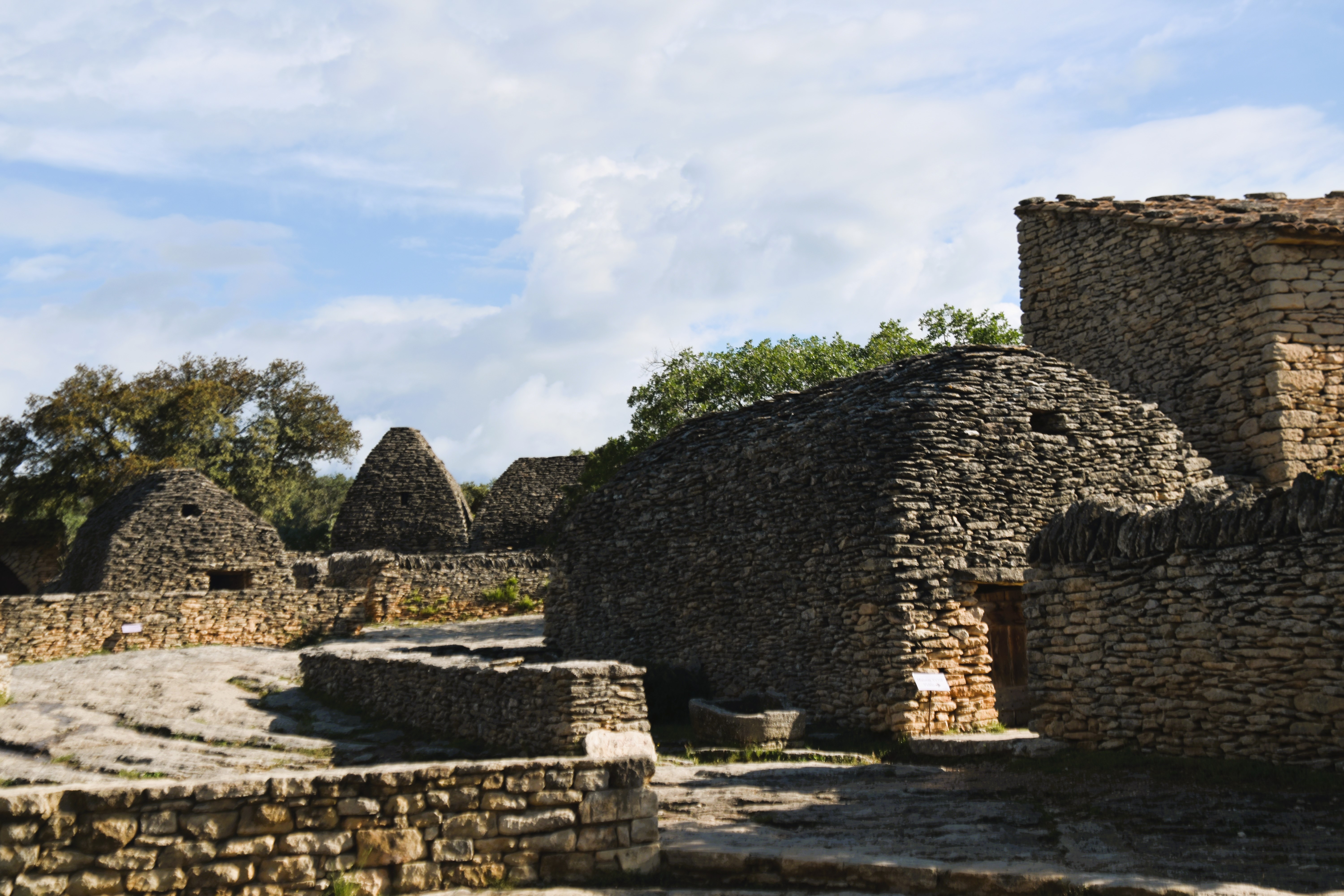
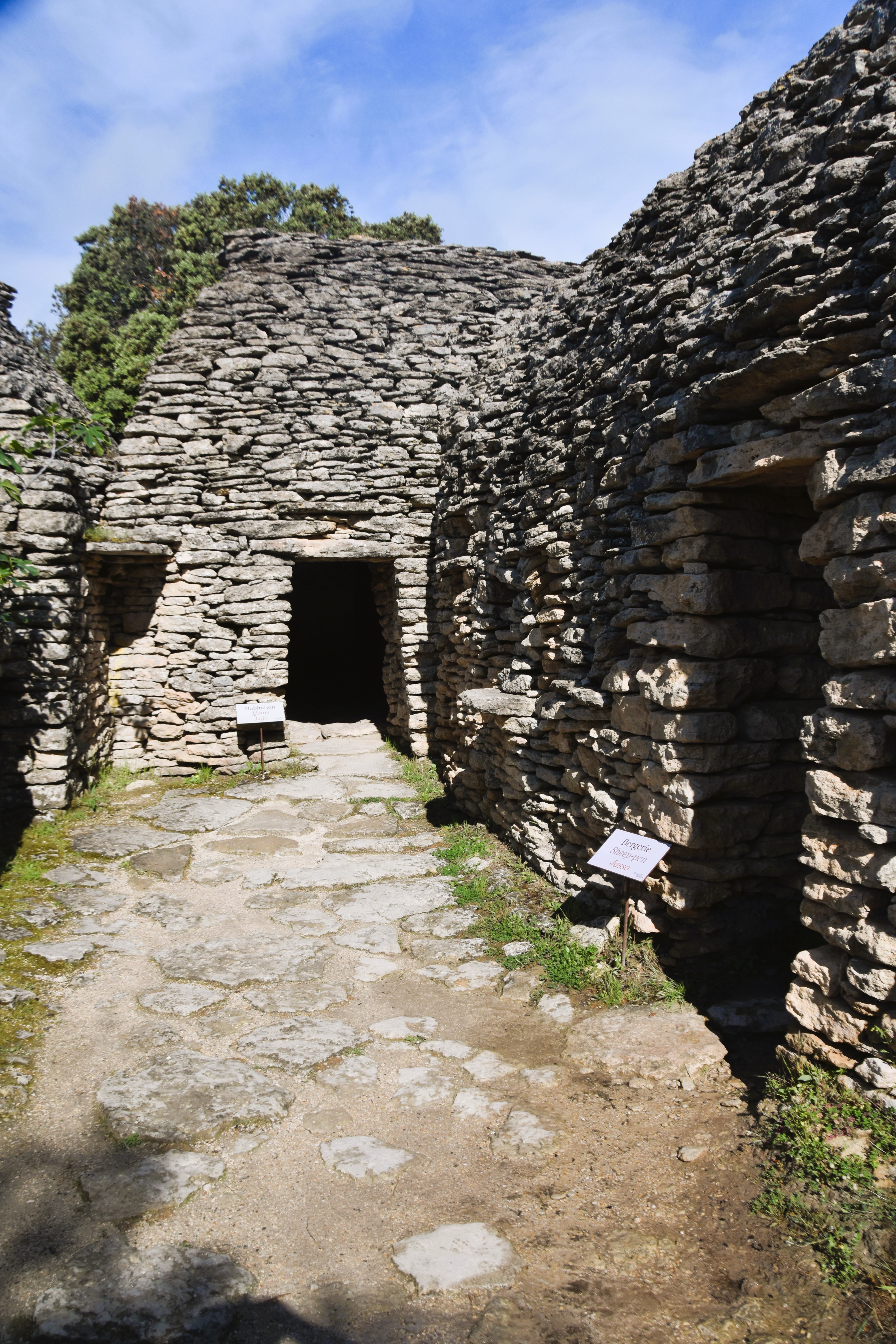
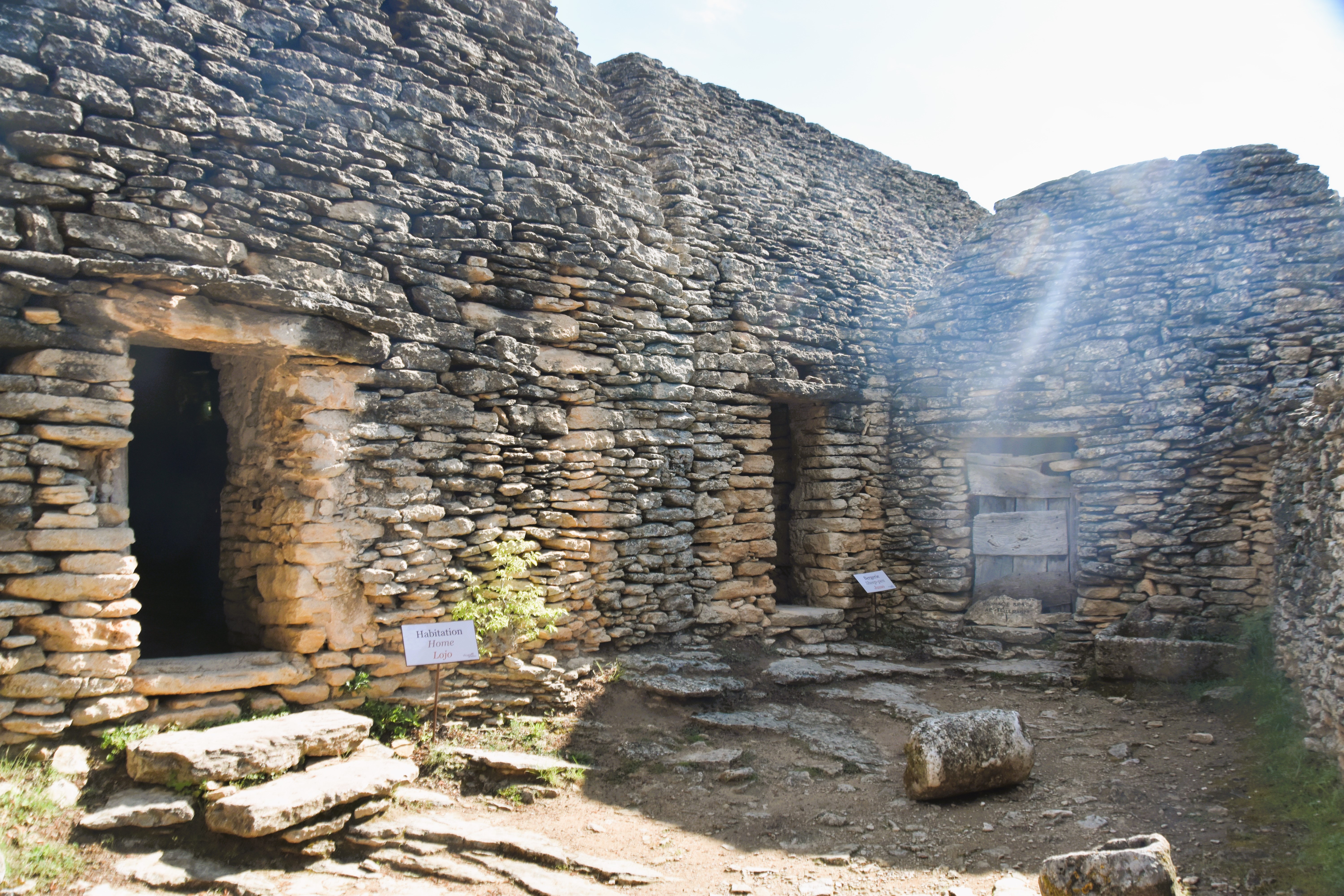
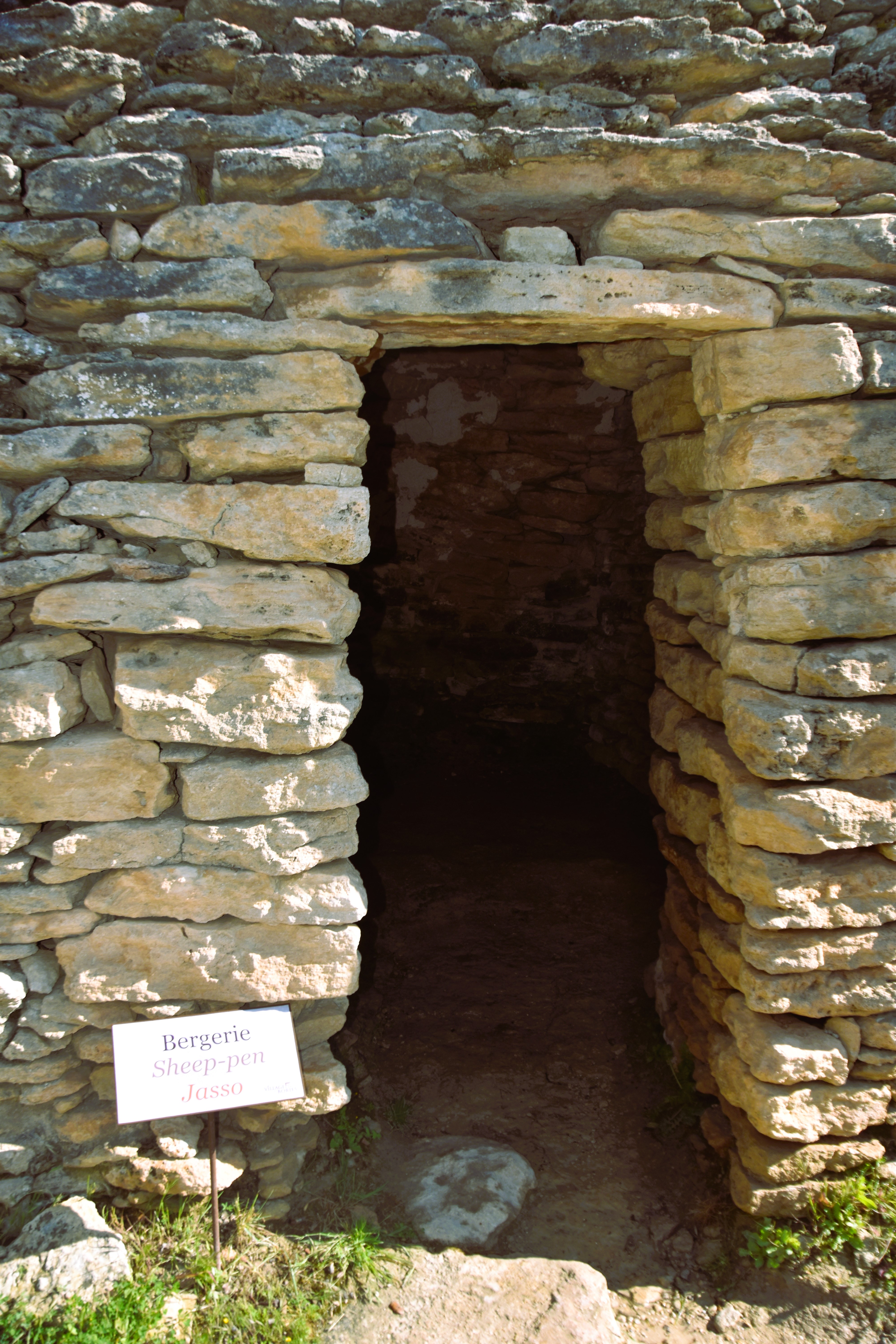
Sheep shelter, outside and in.
Compounds came in different sizes.


Barn, wine store and oven.
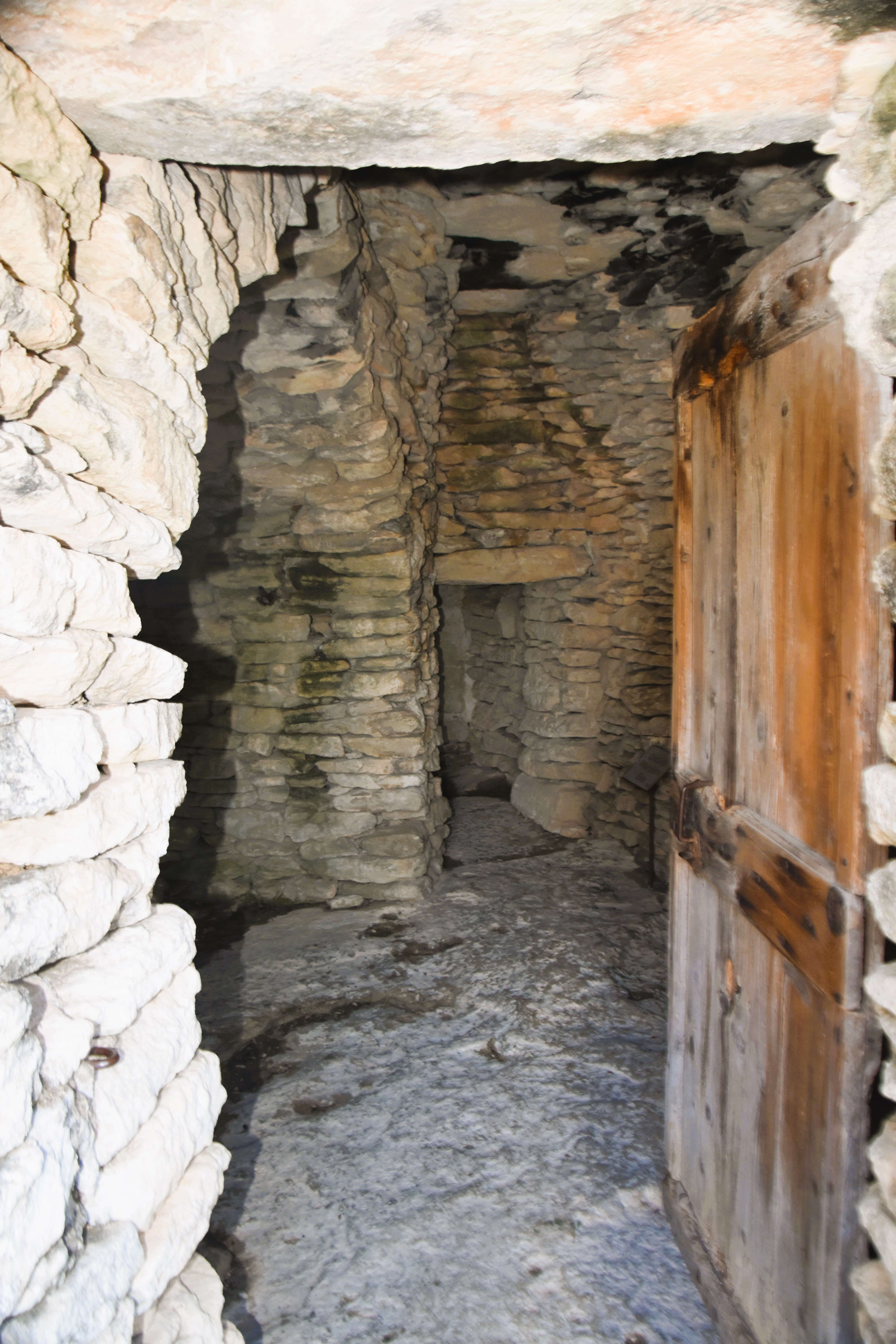
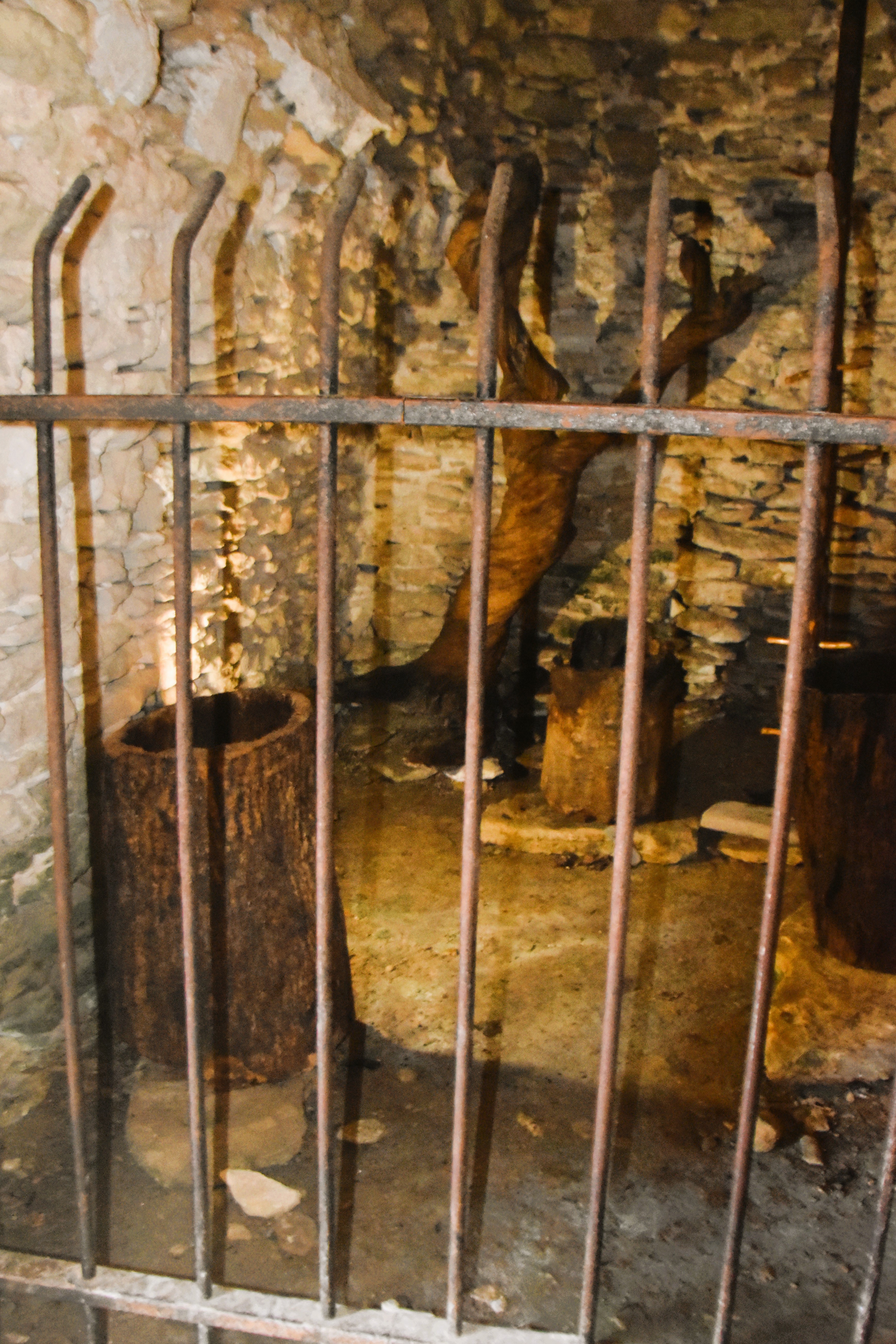
Barn with storage barrels. There were definately vines and olive groves. It is known that wine was produced and doubtless olive oil too. In the second photo you can see the mantle piece of the fireplace and the mezanine floor

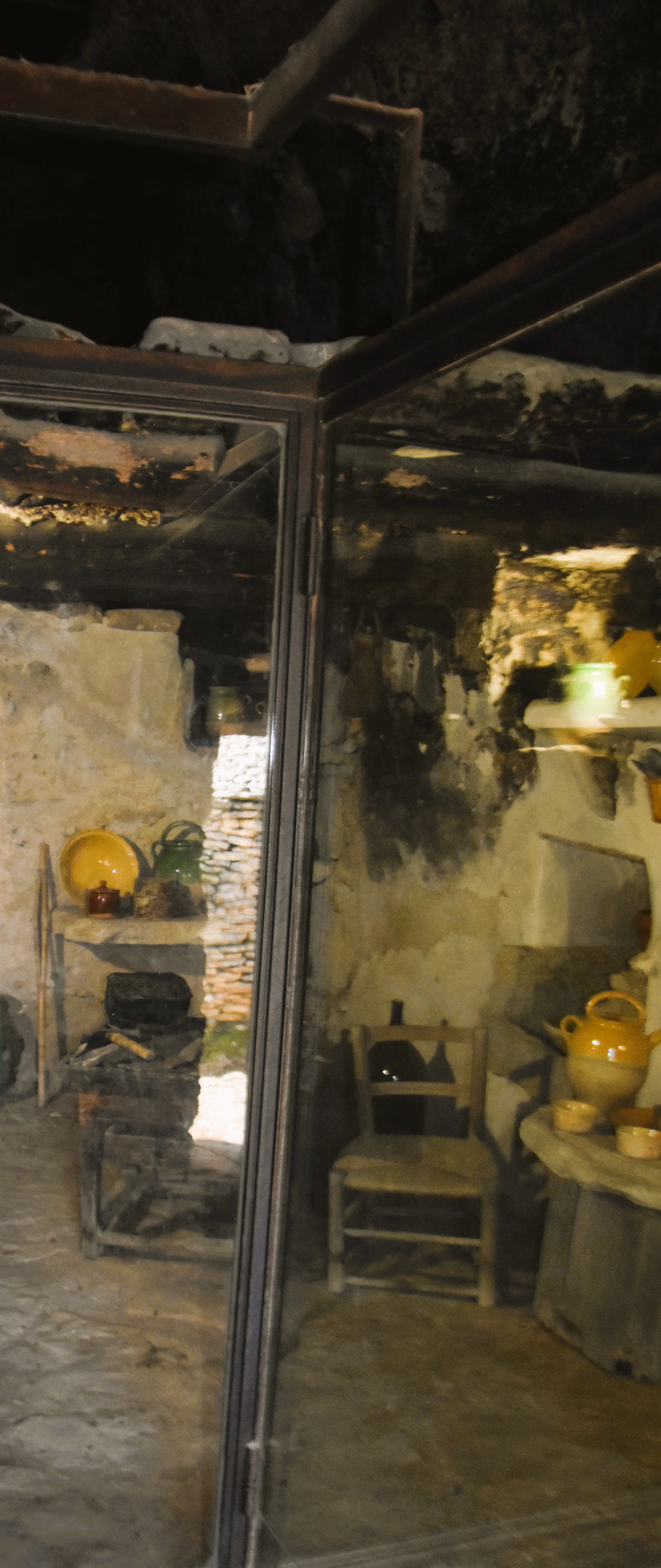

All the dwellings have afire place and a mezanine floor, probably for sleeping
The largest dwelling is of two full stories and has been tastefully turned into a mini museum

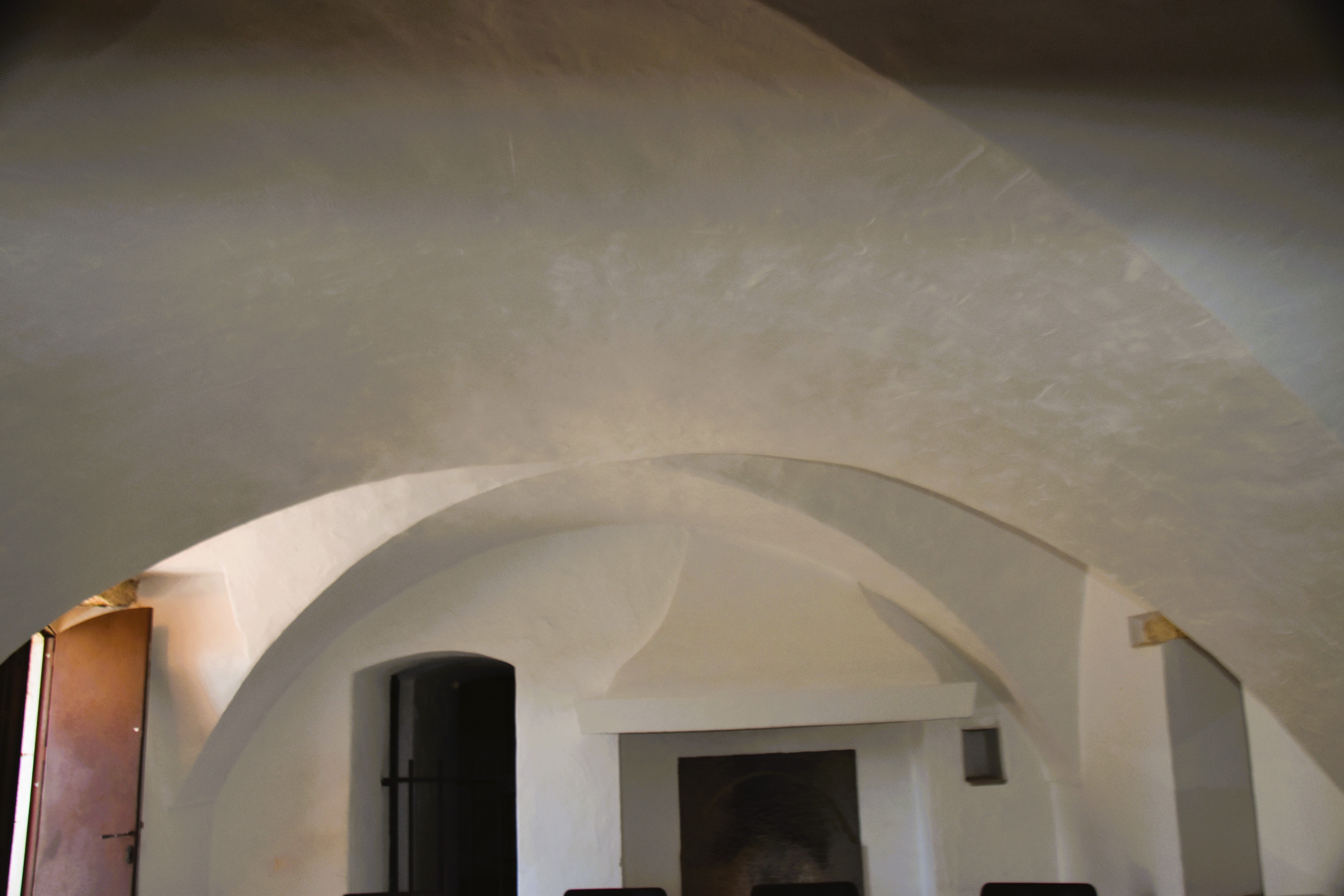

There is a walled entranceway into the village and one supposes from this that the whole must have been enclosed within a wall at one time.


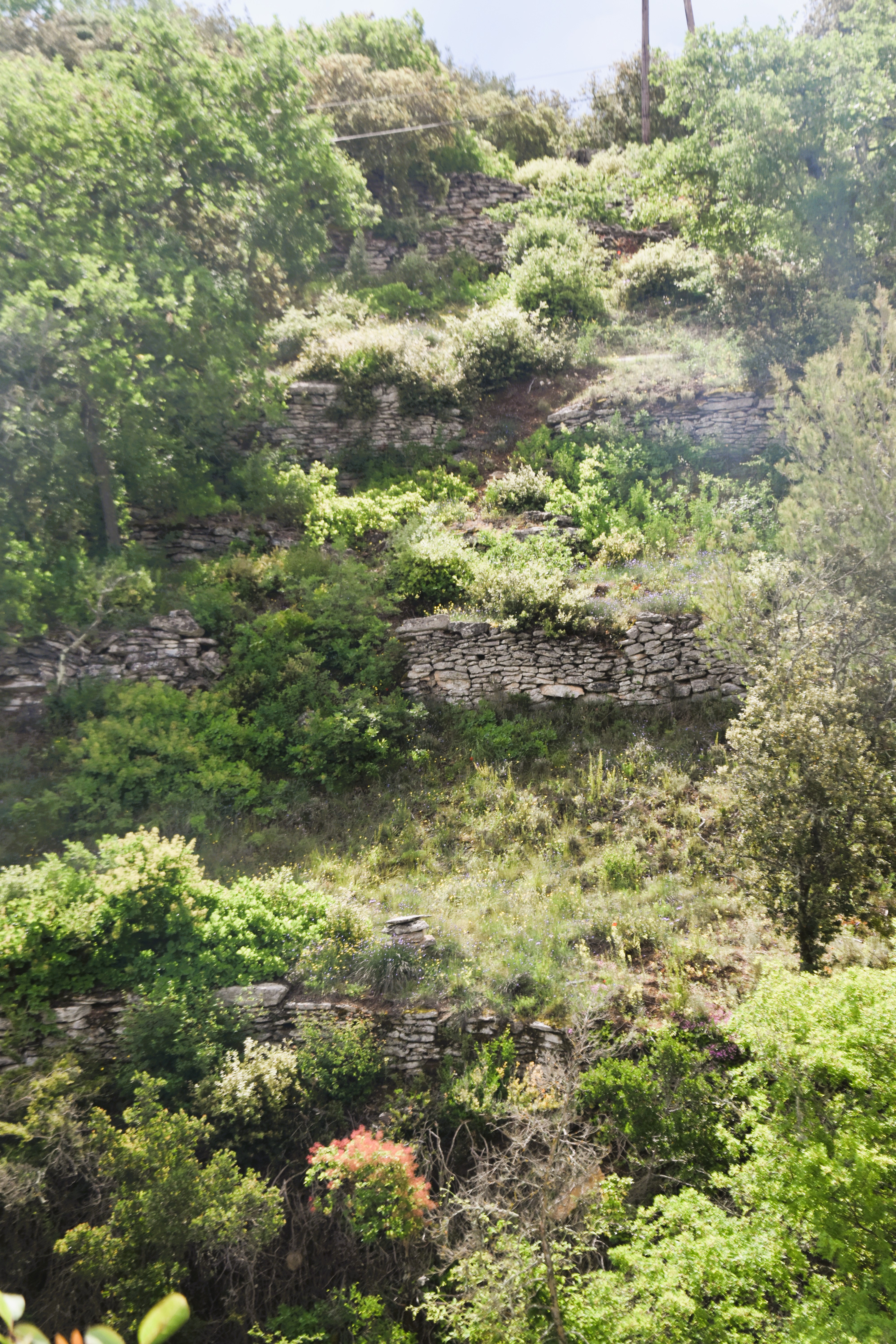
The bories were abandoned, along with some of their agricutural assets like the olive grove above, in the C19th.
Returned to the van in the nick of time. As I arrived the skys opened releasing a substantial rain storm. I decided to move on the short distance to Fontain de Vaucluse and establish myself in the Aire.
When it finally stopped raining in the early afternoon we walked into the village with the aim of following the river to its source of the Sorgue.
The first item of interest we encountered was the lavoir

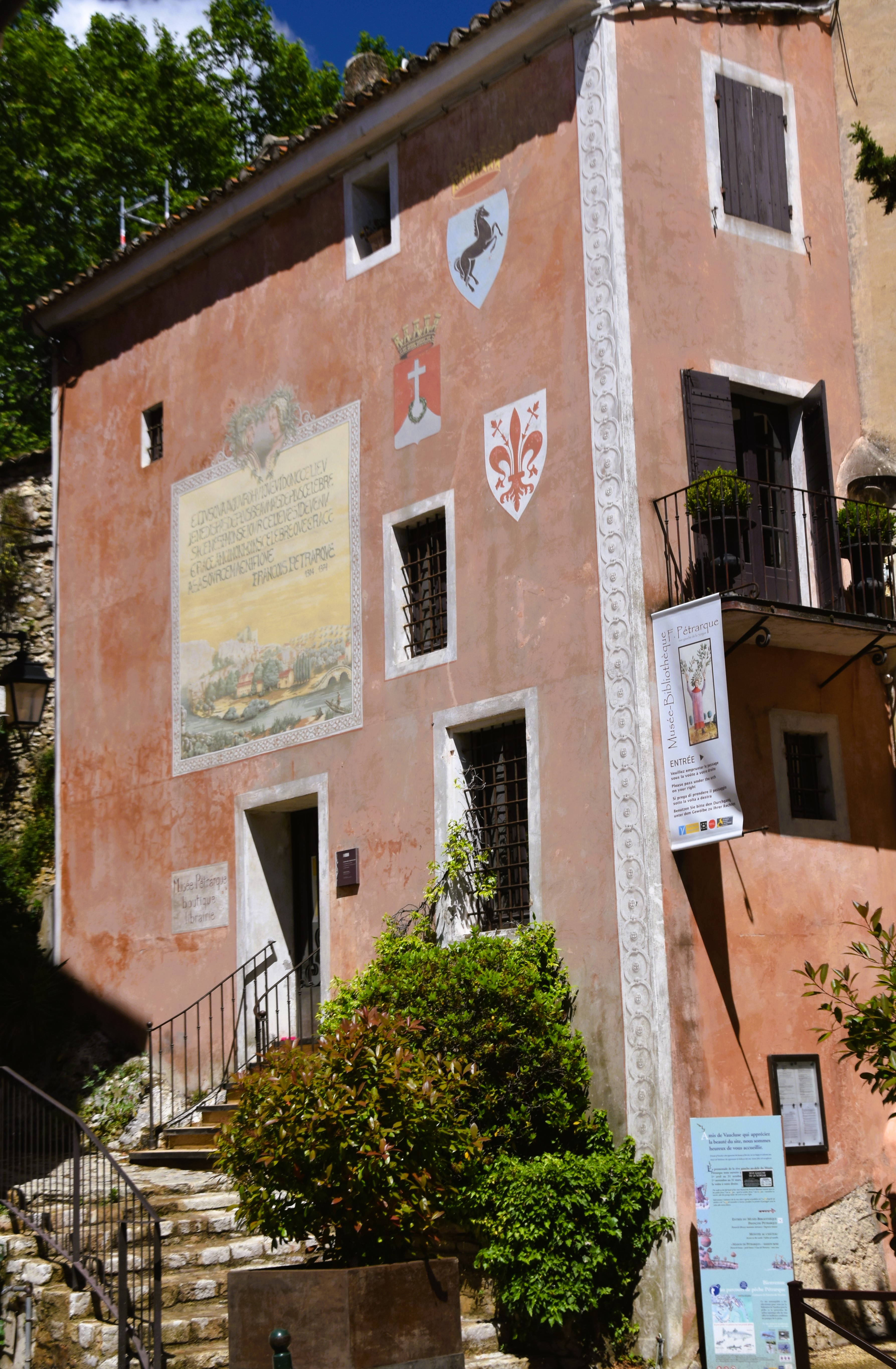
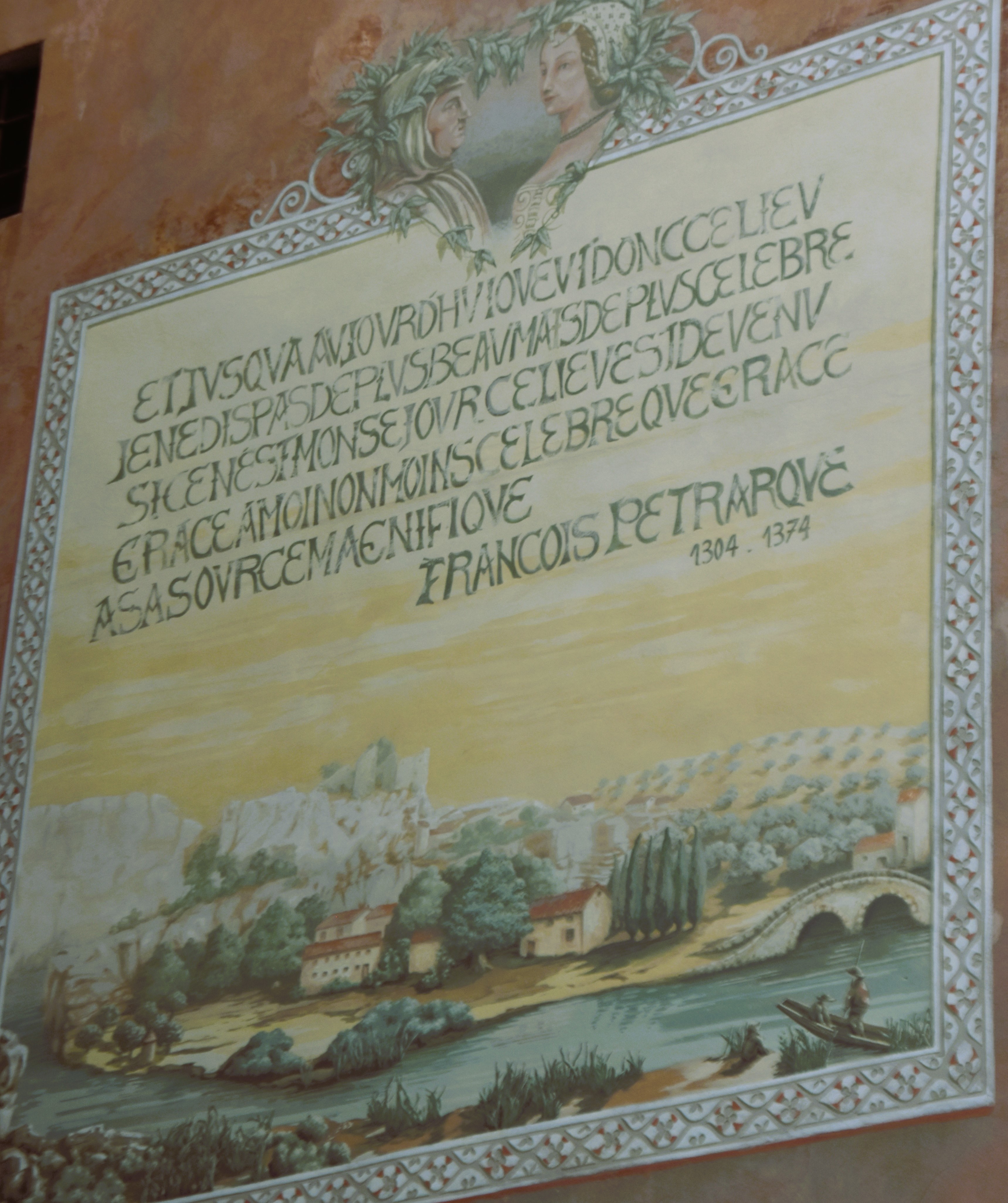
The second Petrach’s house. Petrach, born Francesco Petrarca in Tuscany in 1304, he moved to Avignon as a child. He first studied law at the behest of his father. After his father’s death he felt free to follow his passion for classical literaturem especially thsat of /greece and Rome. He became a cleric and it was while travelling as a diplomatic envoy for the church that he had a posting in Fountains. He was also a philosopher and humanist. Best known for his poems, in the renaissance style, on courtly and unrequited love, he became Rome’s poet laureate in 1341.
The town and the source are at the end of a cul-de-sac formed by an escarpment of high cliffs

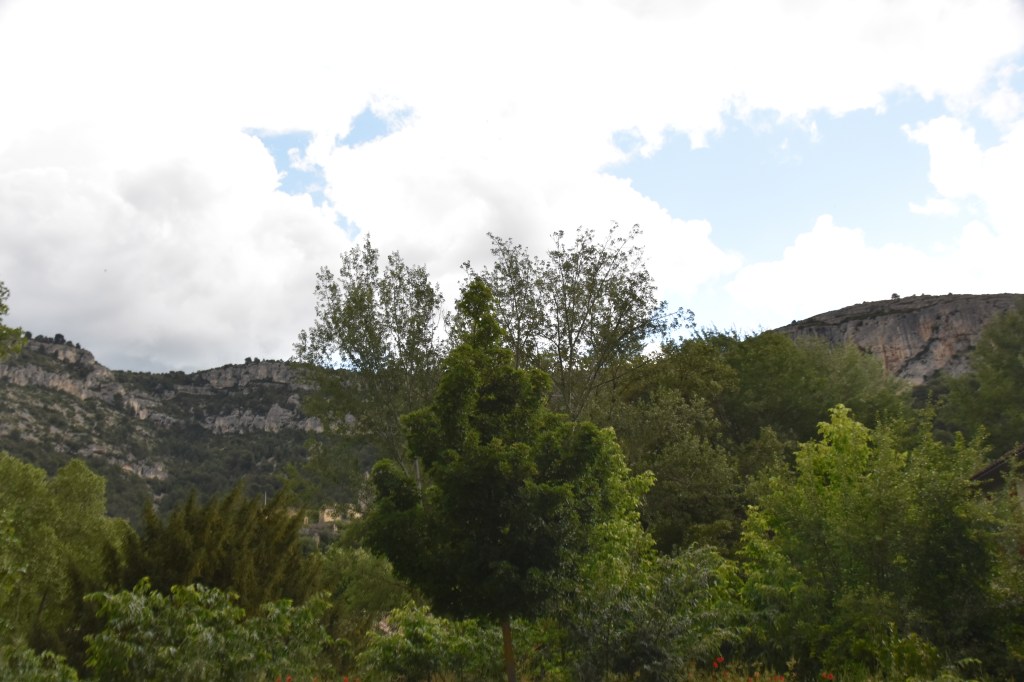
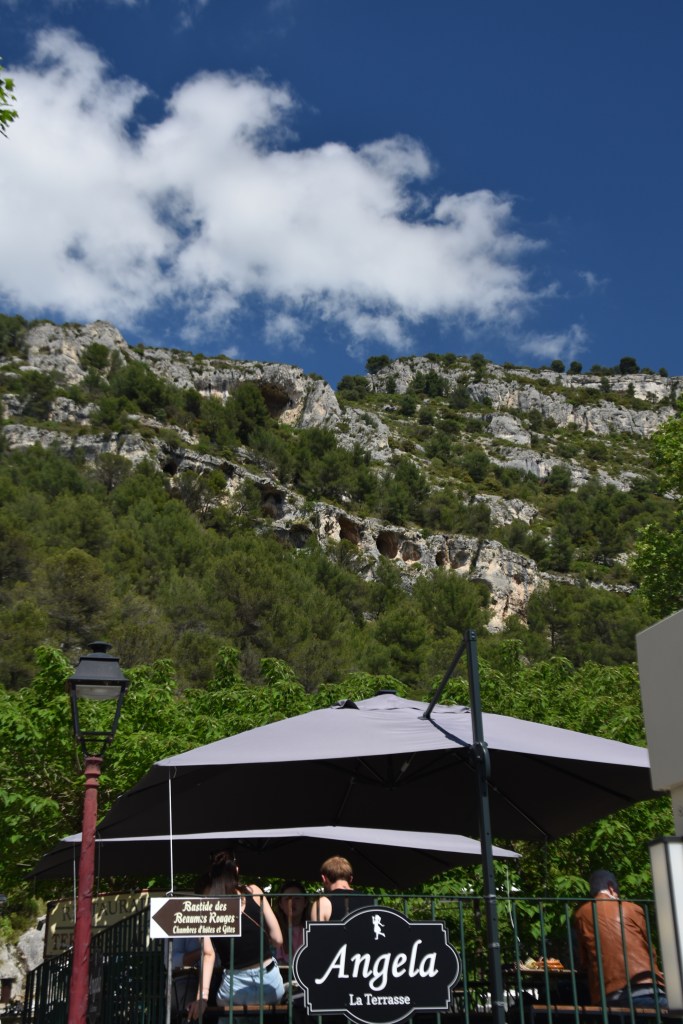
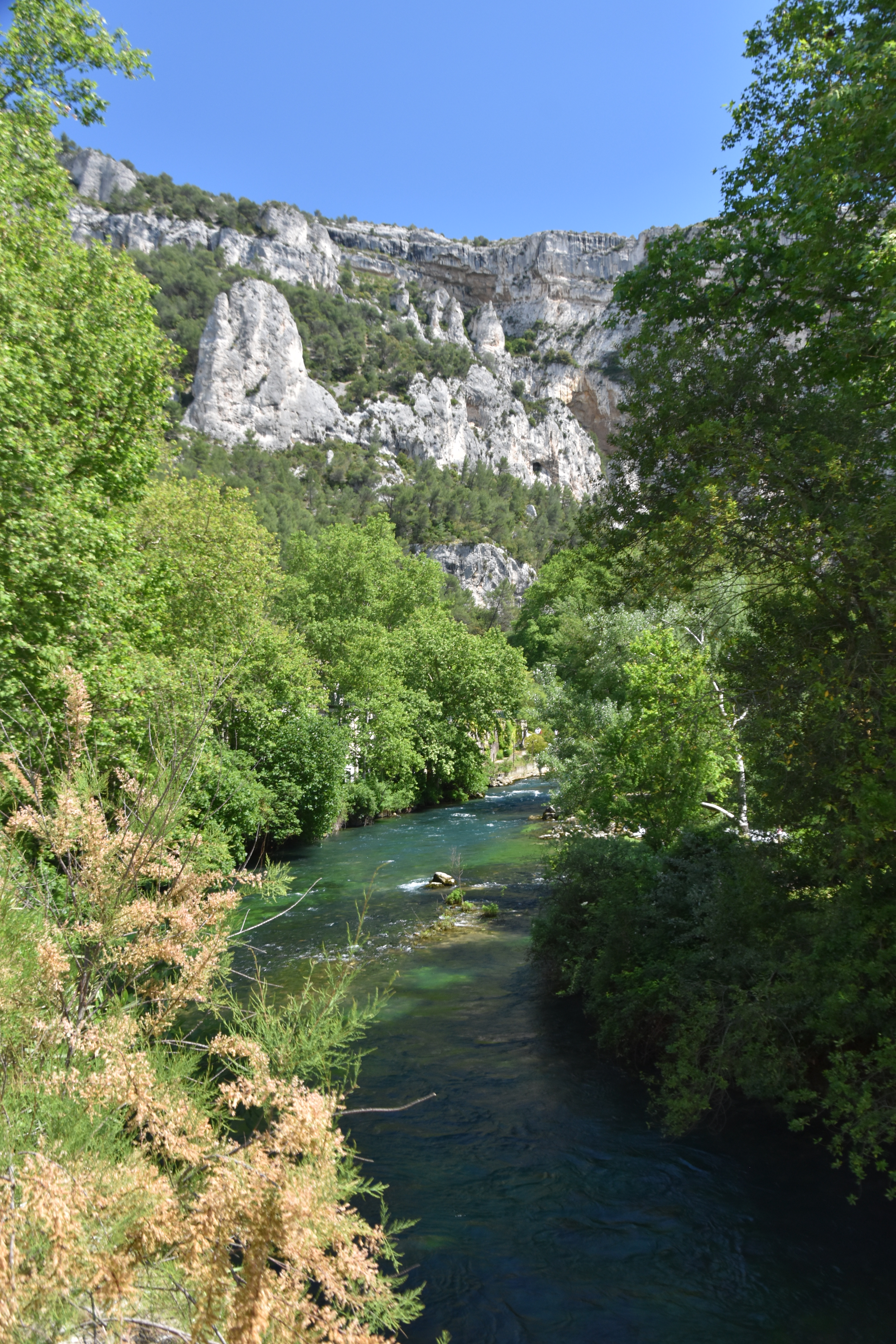
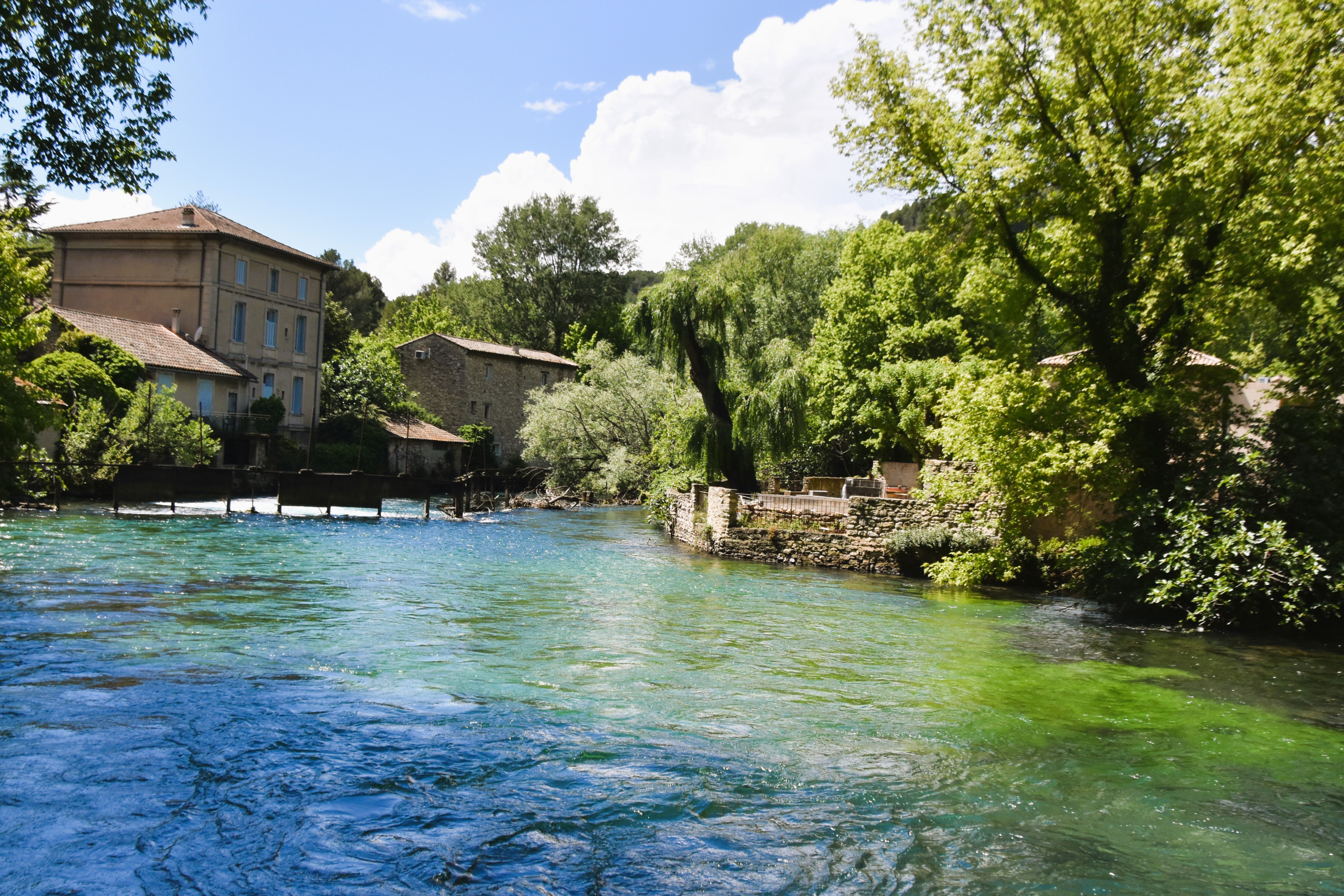
The village centre is dominated by the fast flowing rive. The spring is the most powerful in France gushing at up to 90,000Lt per second.
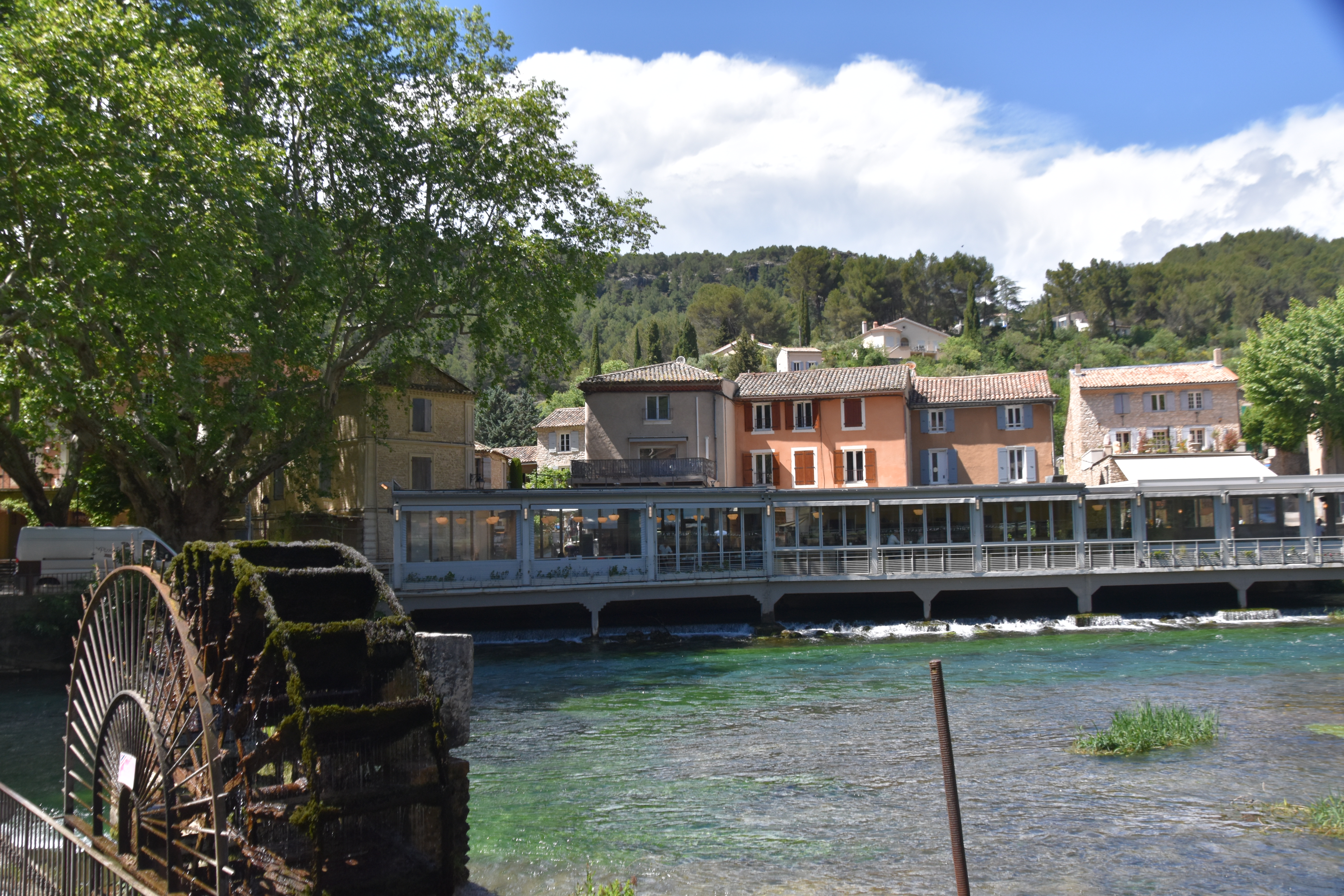
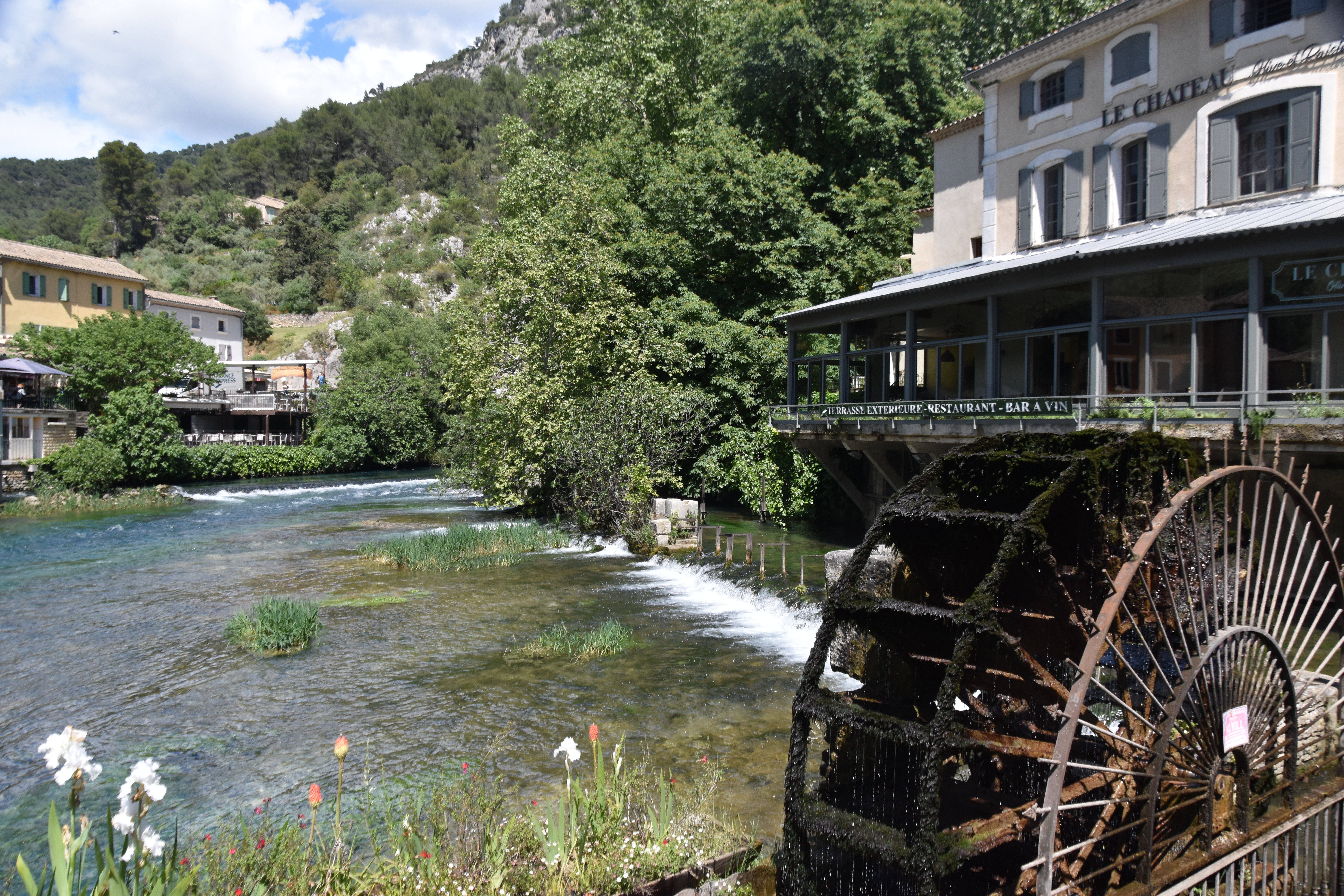
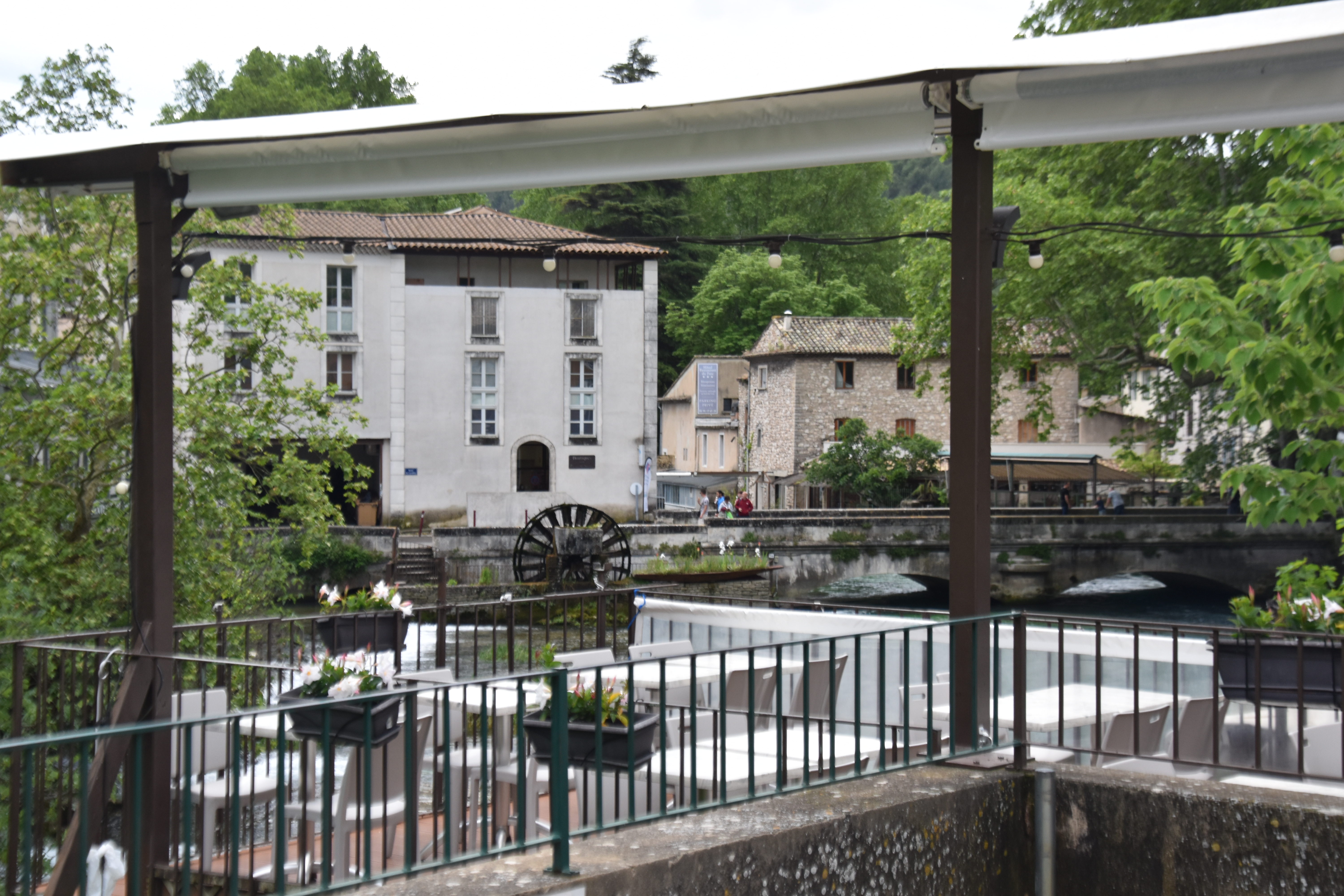
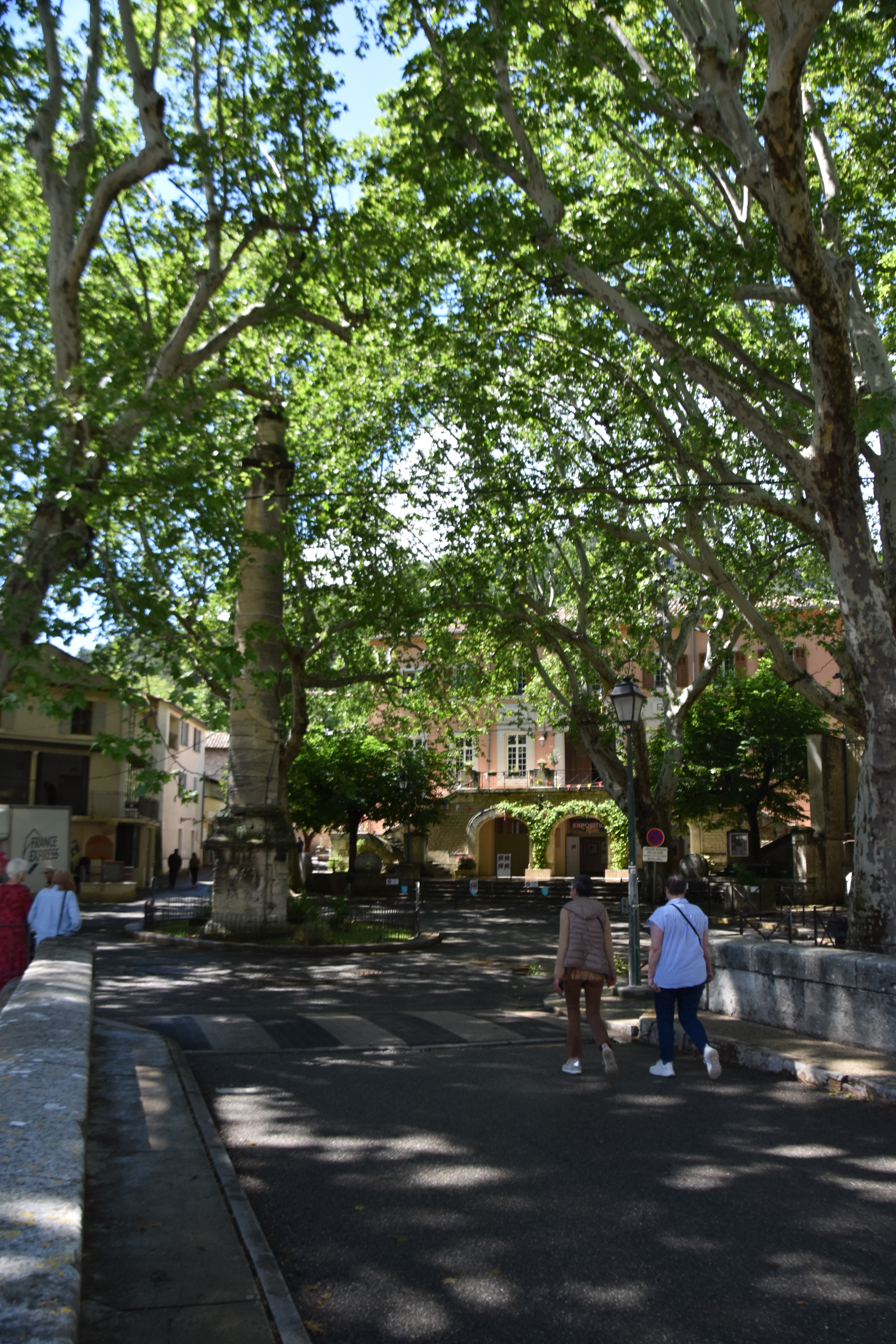
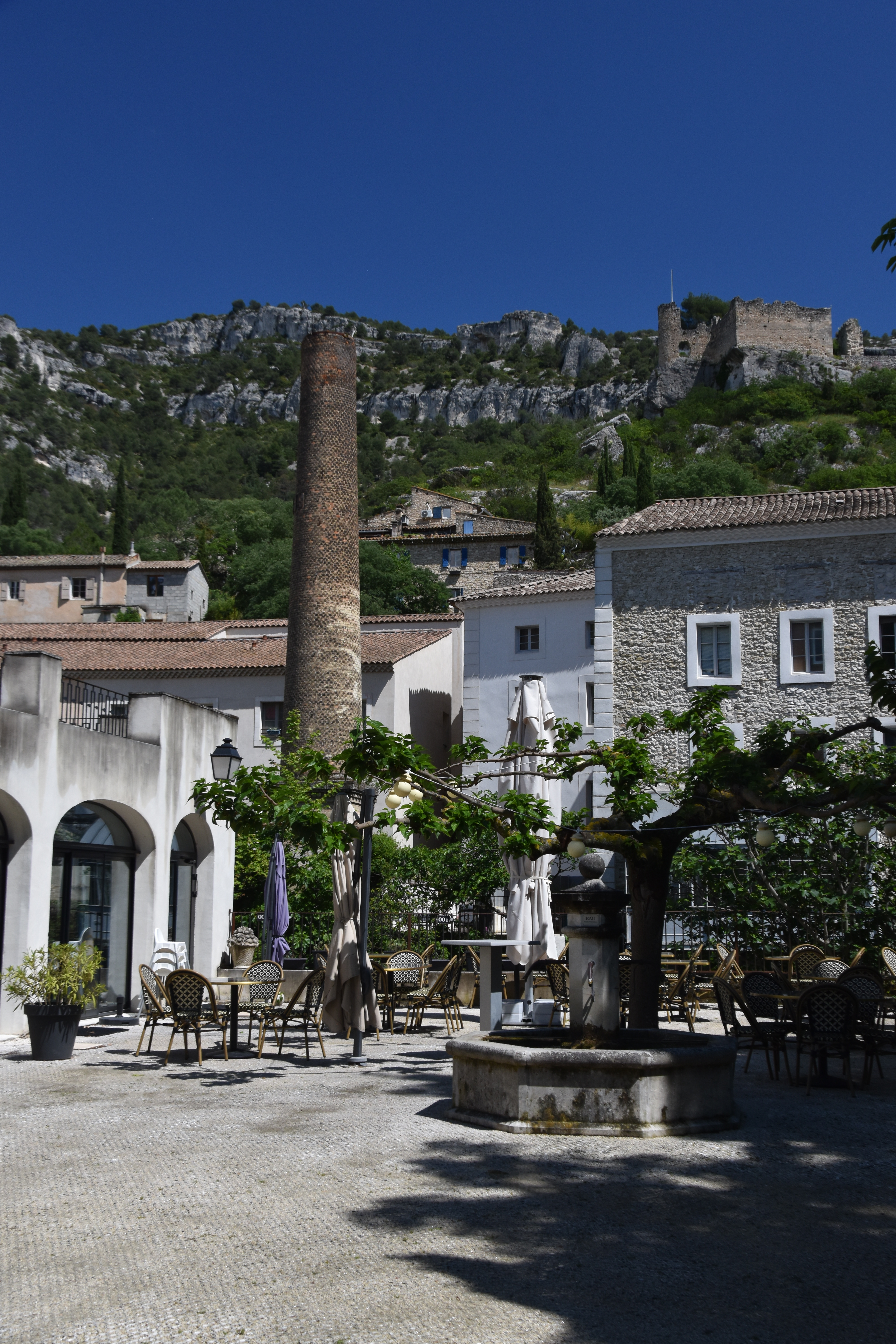
The water is astonishingly clean and clear.

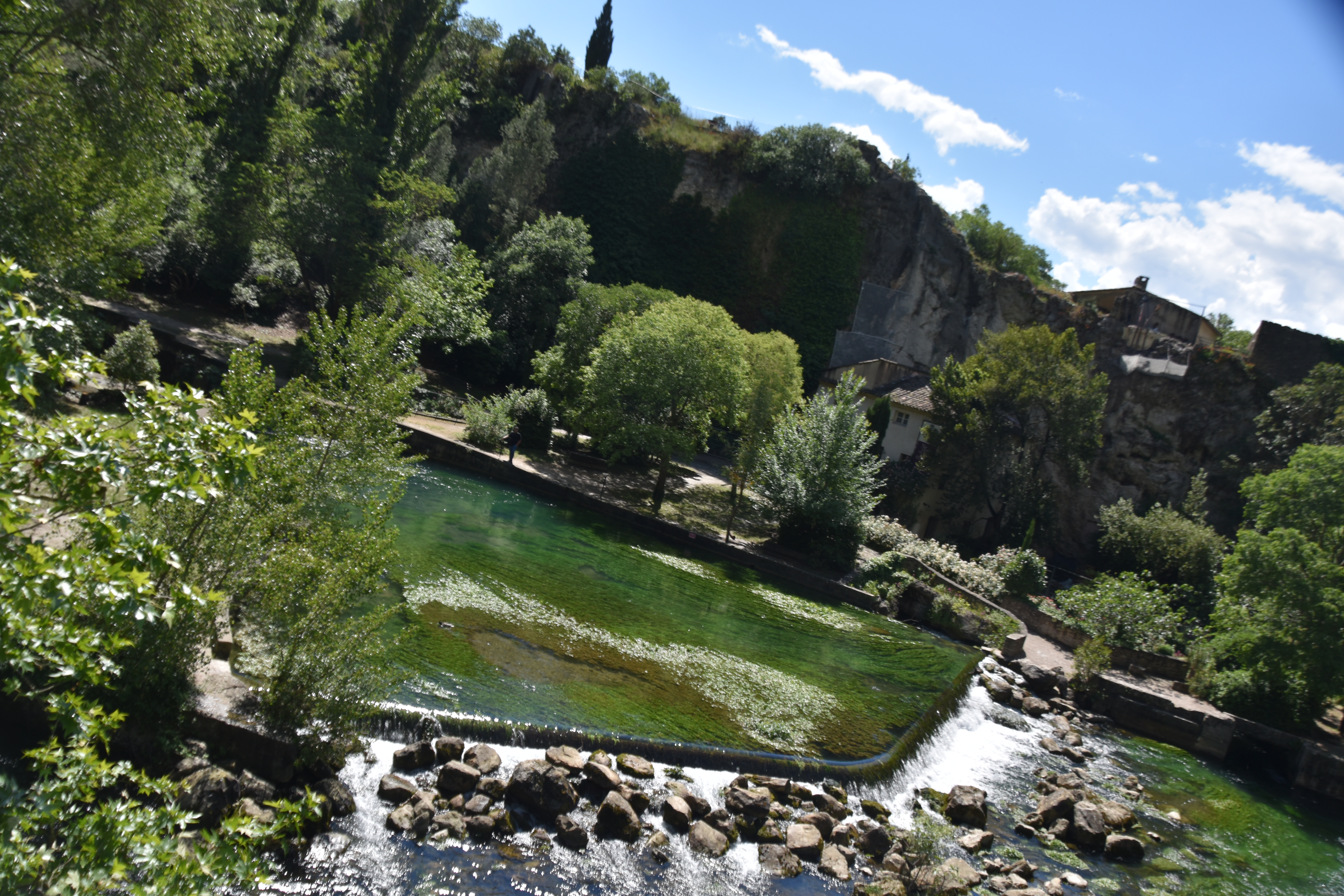
Getting closer to the source the river gets narrower and faster and has many wiers


Just before the point where it rises from the earth the road is blocked, one felt rather cheated.

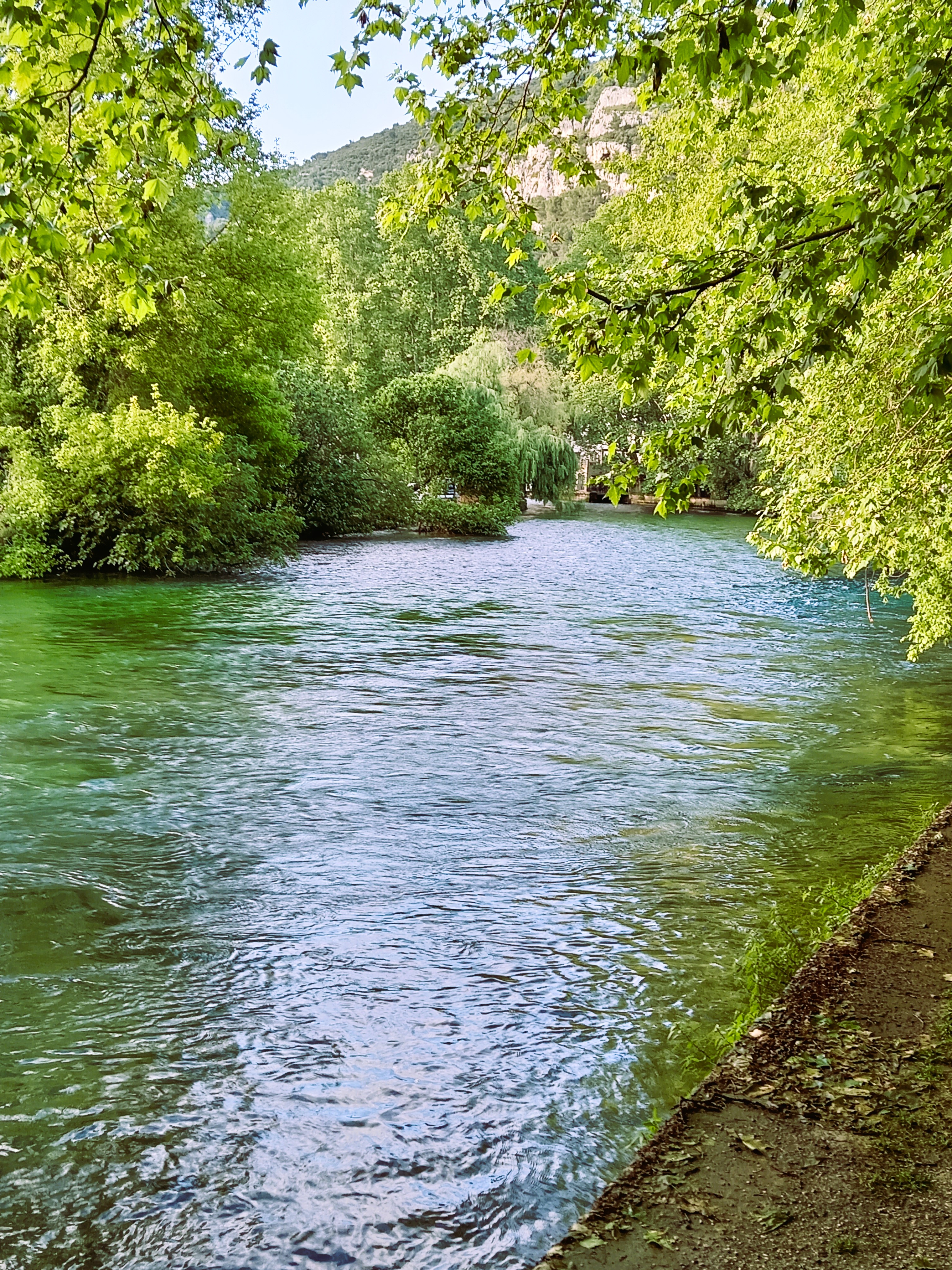
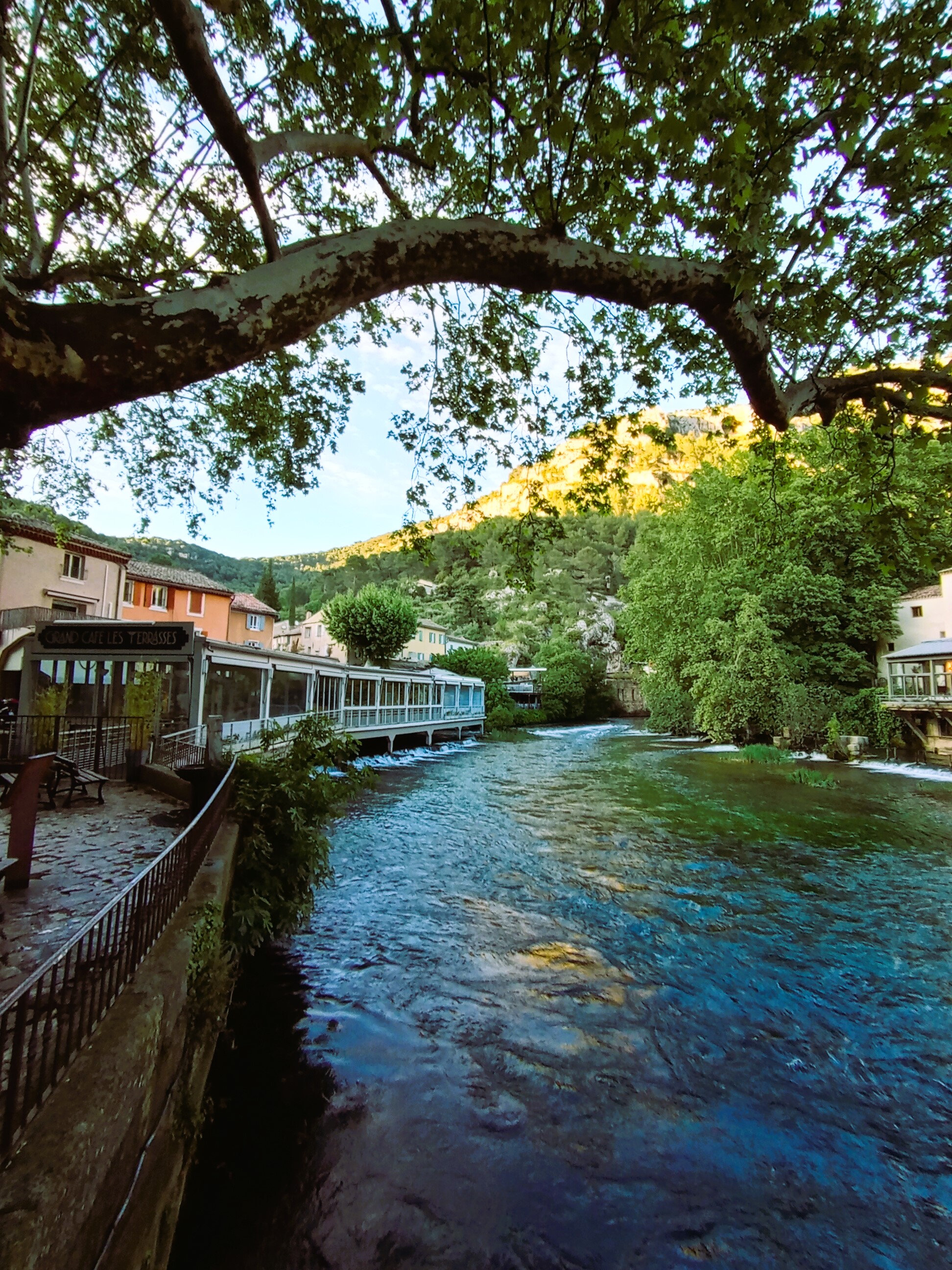
We shared a compensatory icecream. Well I had the icecream and Cassidy got the pointy bit at the end of the cone, biscuit only! Got back to the van again just as the next rain storm rolled in. Just a few shots of light on water from this evenings walk. it was so luminous as to be irrisistable.
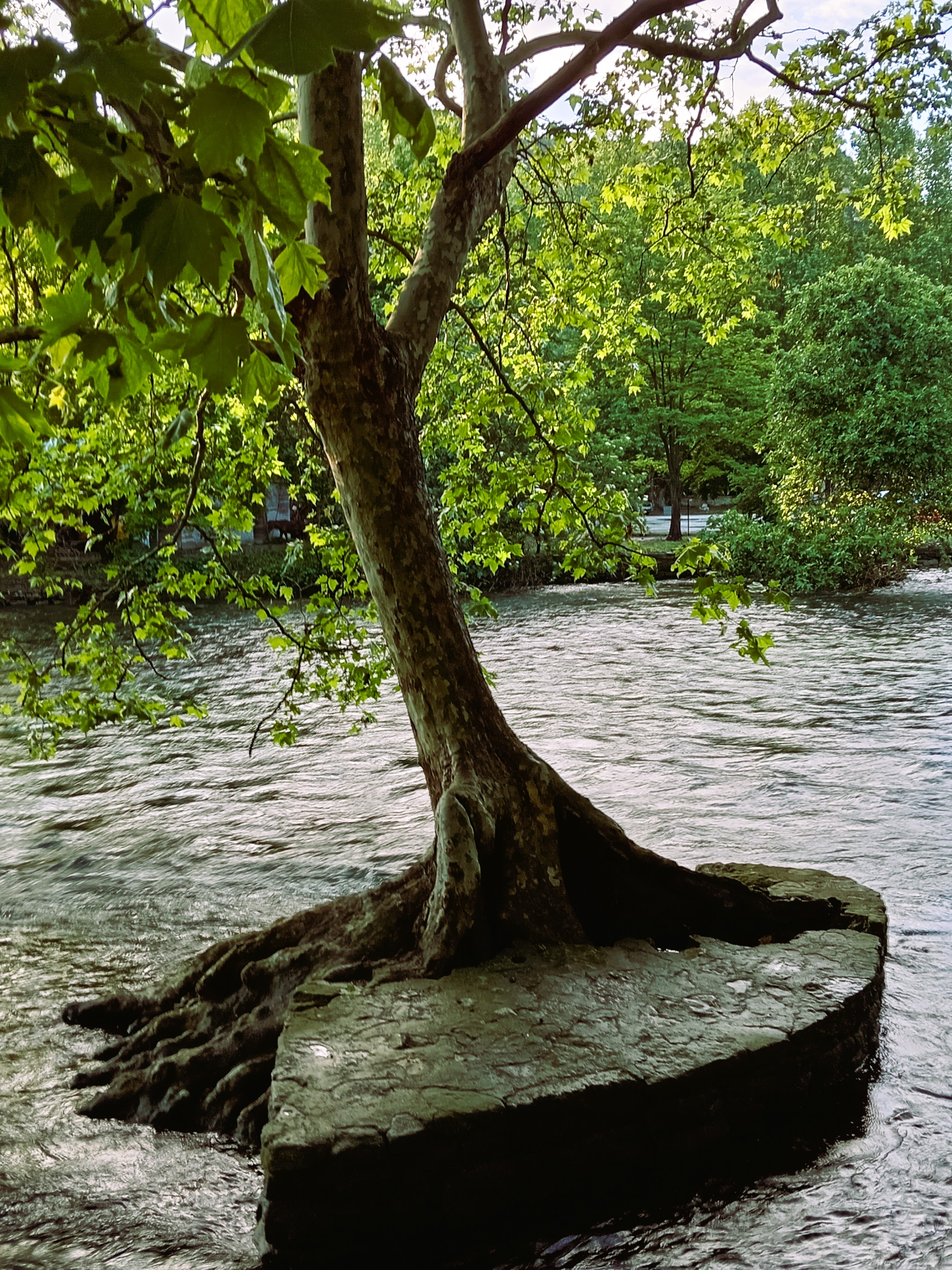

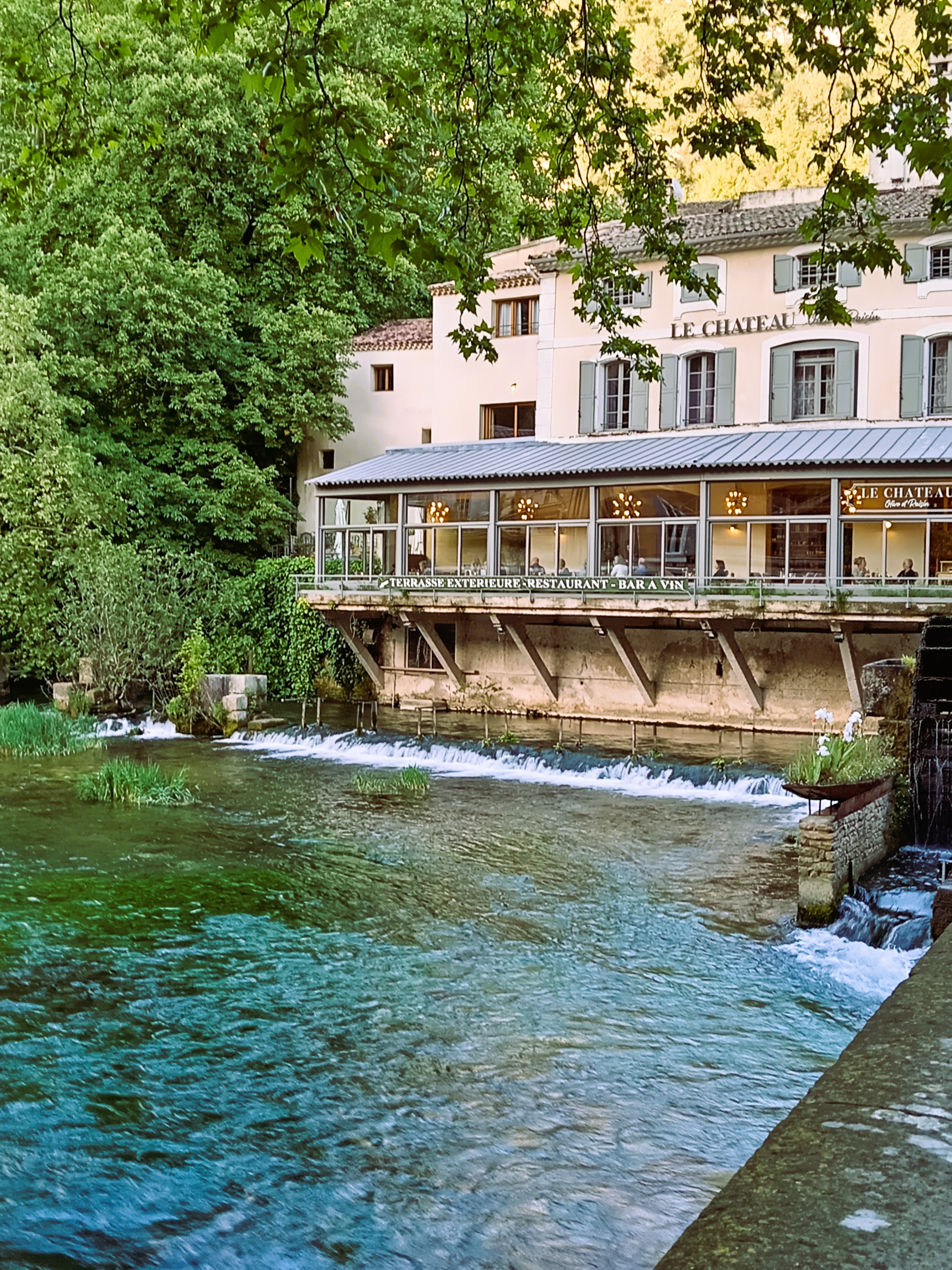
17th. Drove to Orange today. Will stay two nights as I have work to do tomorrow and a proper shower would be nice. Had to pop out to the bakery first though and grab a couple of shits of the |Roman victory arch.
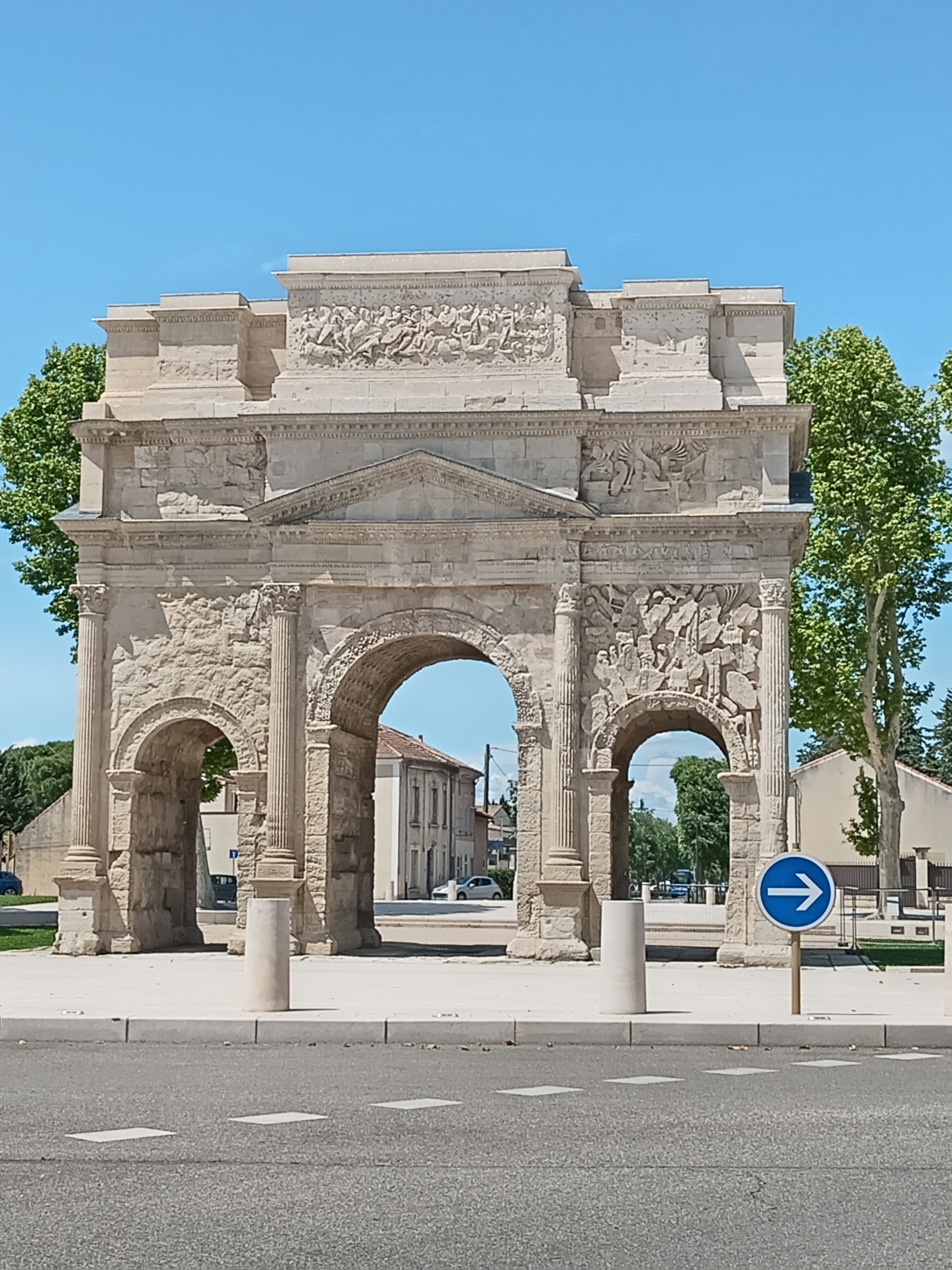
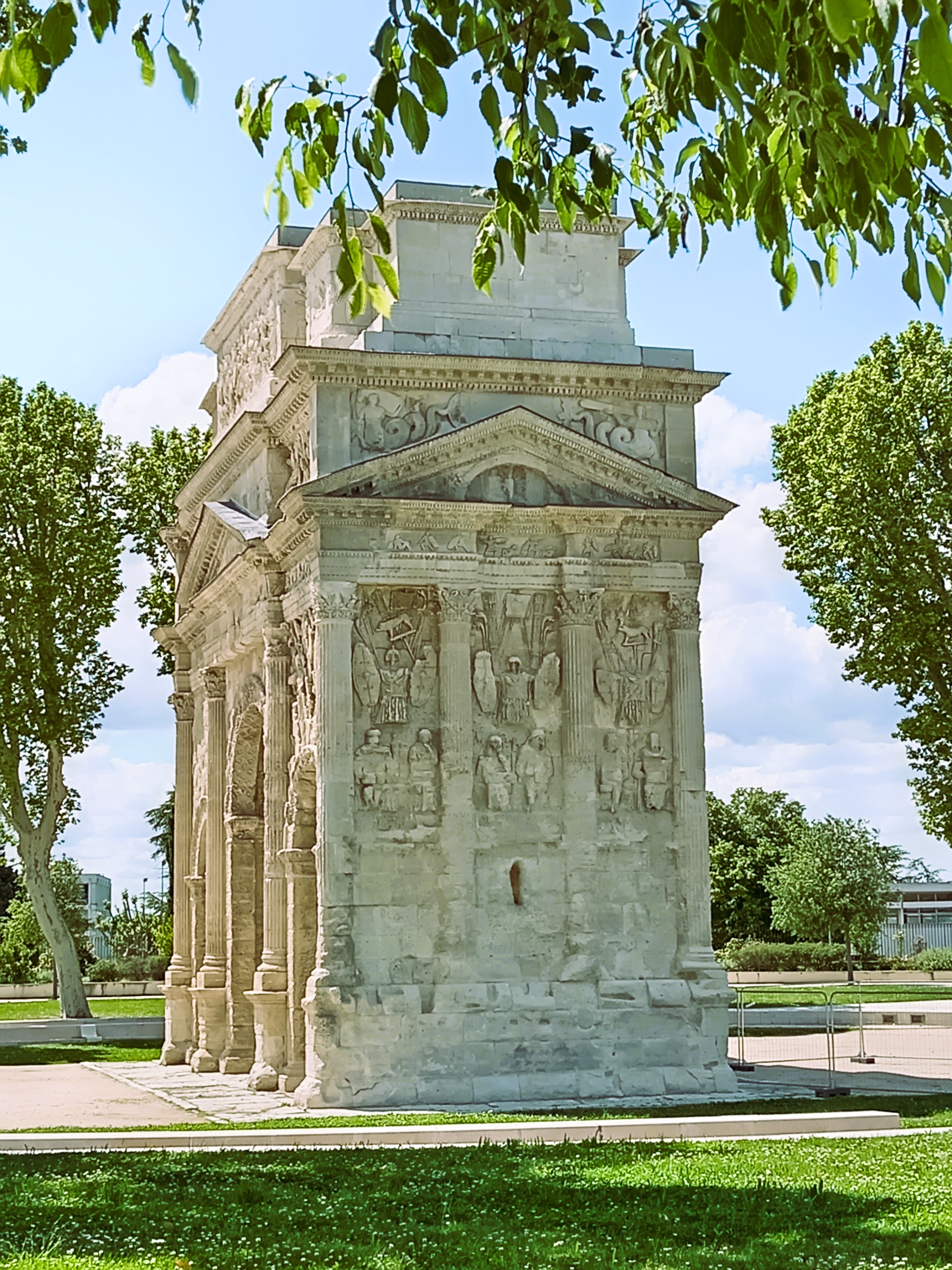
18th. Work day.
19th From Orange I drove down towards the coast and as I did so it became progressively warmer and sunnier. We pulled into the canalside Aire at bellegarde in time for lunch but we would have gone further and arrived at the same time if it wasn’t for an unsceduled detour. Put it down to out of date maps, bad signage and a stuborn streak in respect of the satnav! What is that I hear you mubbling about bad workmen blaming their tools?
The Canal de Rhône à Sete offers a halt here on the long straight route and a cafe in the Old Port office.

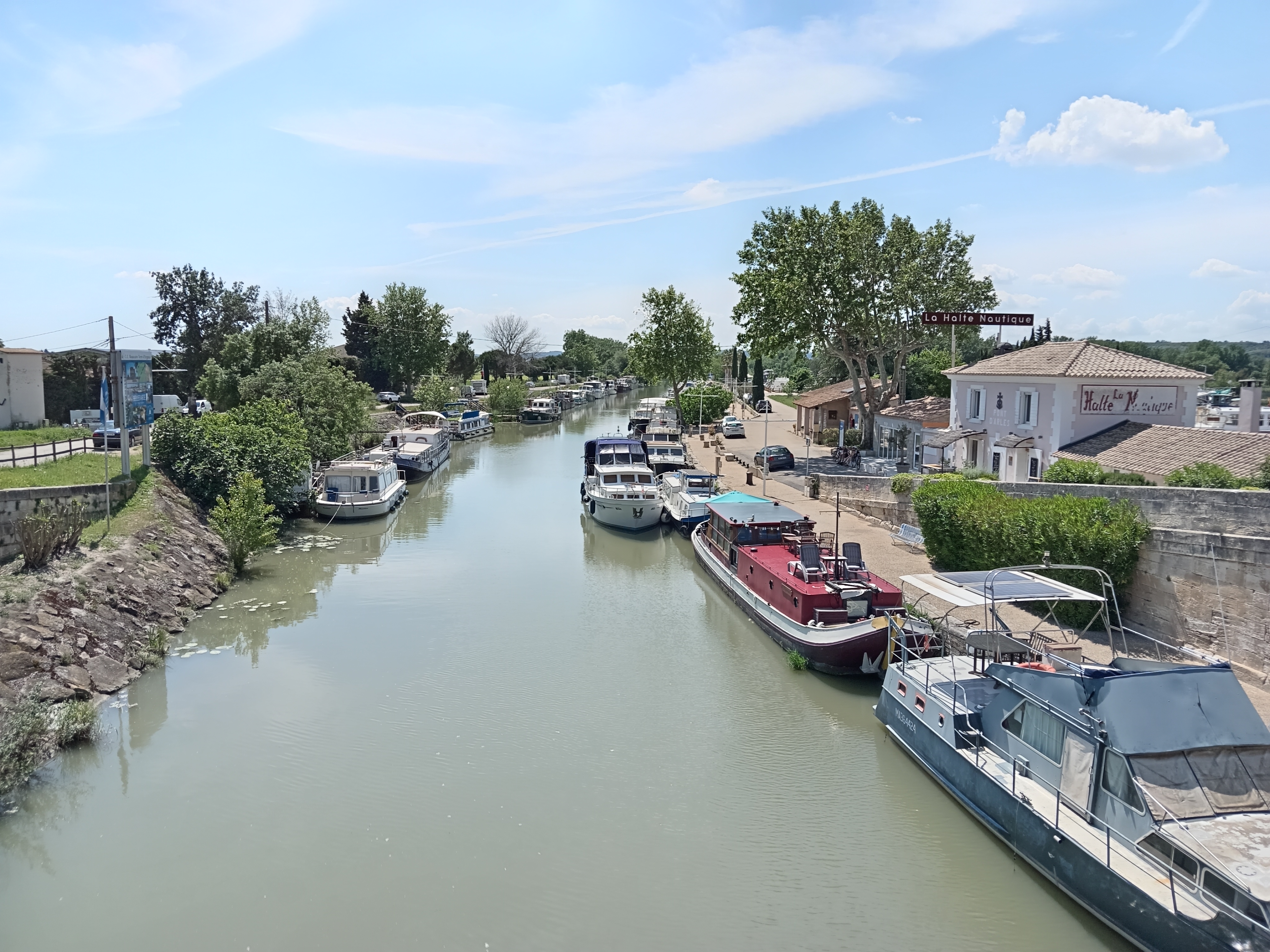
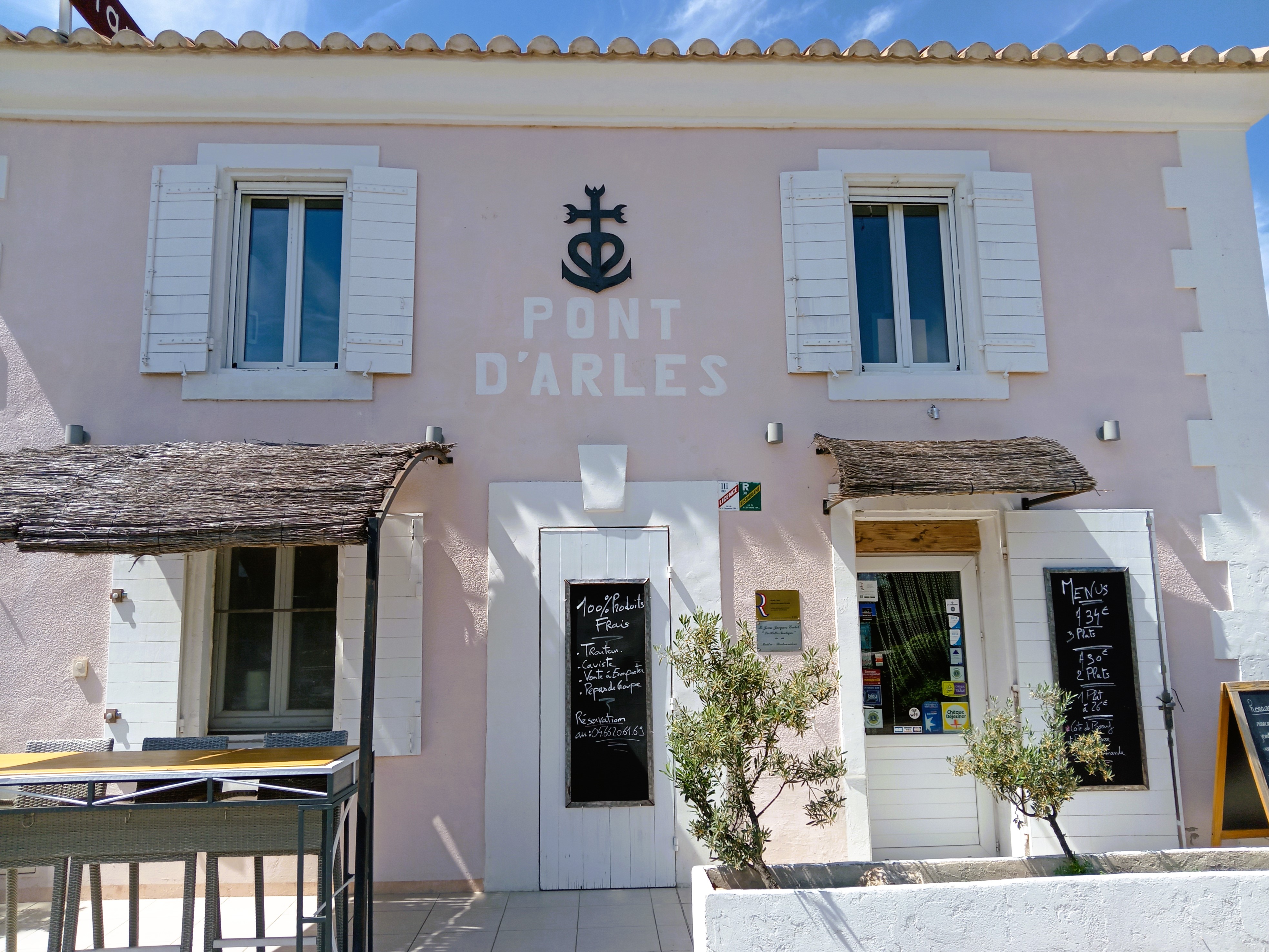
20th. This morning I set off down the coast with no clear objective in mind but a general direction. Stopped en route to do a sizable shop and found myself at Palava-les Flots as lunch time approached. So here we are at a campsite with the ocean (well the Med actually) on one side and the salt flats, complete with flamingos, on the other. Cleaning out and re-packing the fridge and laundry are in prospect so it remains to see if we will stay an extra day on head on.
21st. Caassidy had a treat this morning as we walked into the village via the beach and he was able to run free for a change. We aproached the village via the Yatch harbour
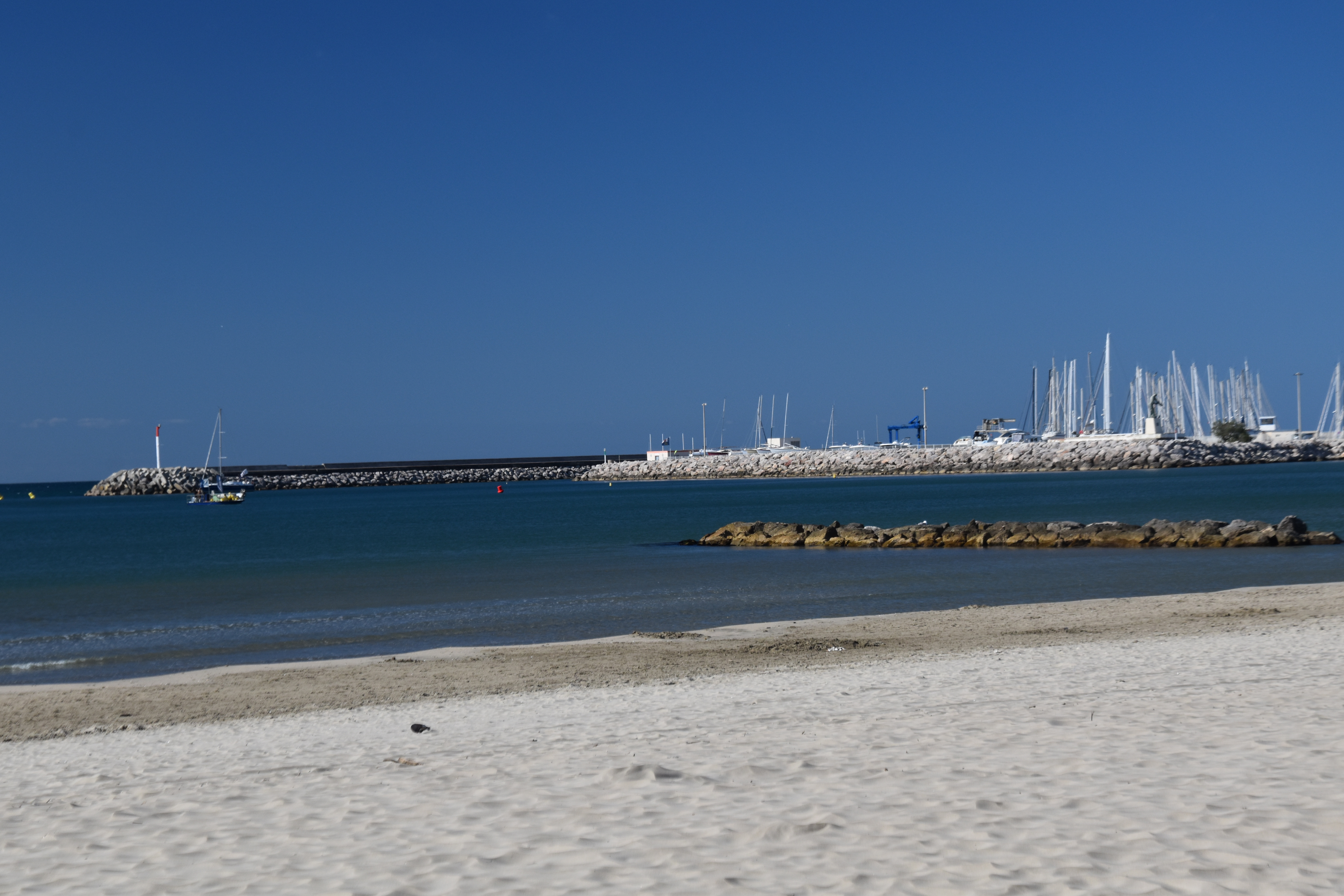
Then a walk along the Fisherman’s quai where the catch of the day was being sold and nets were being repaired.
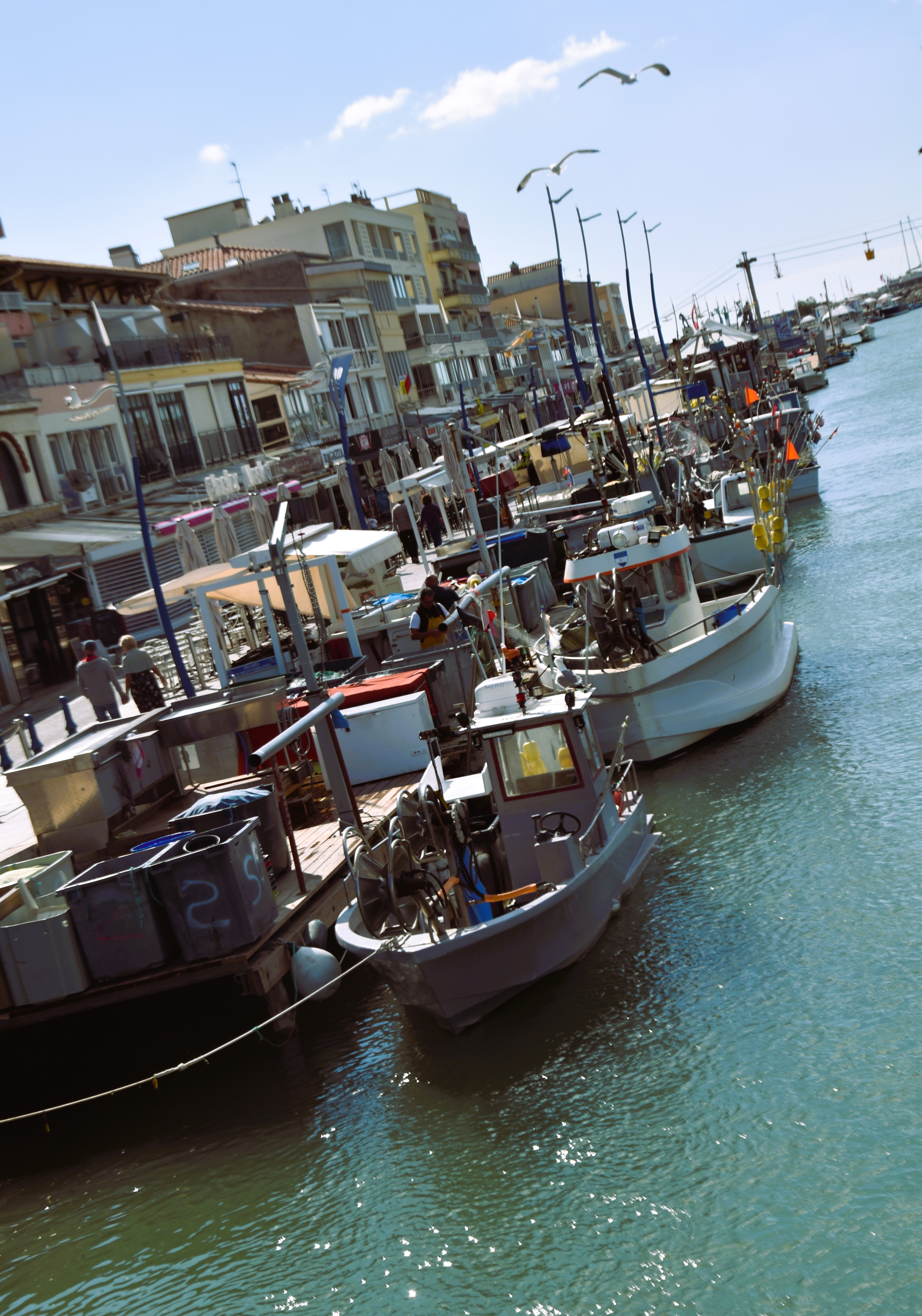
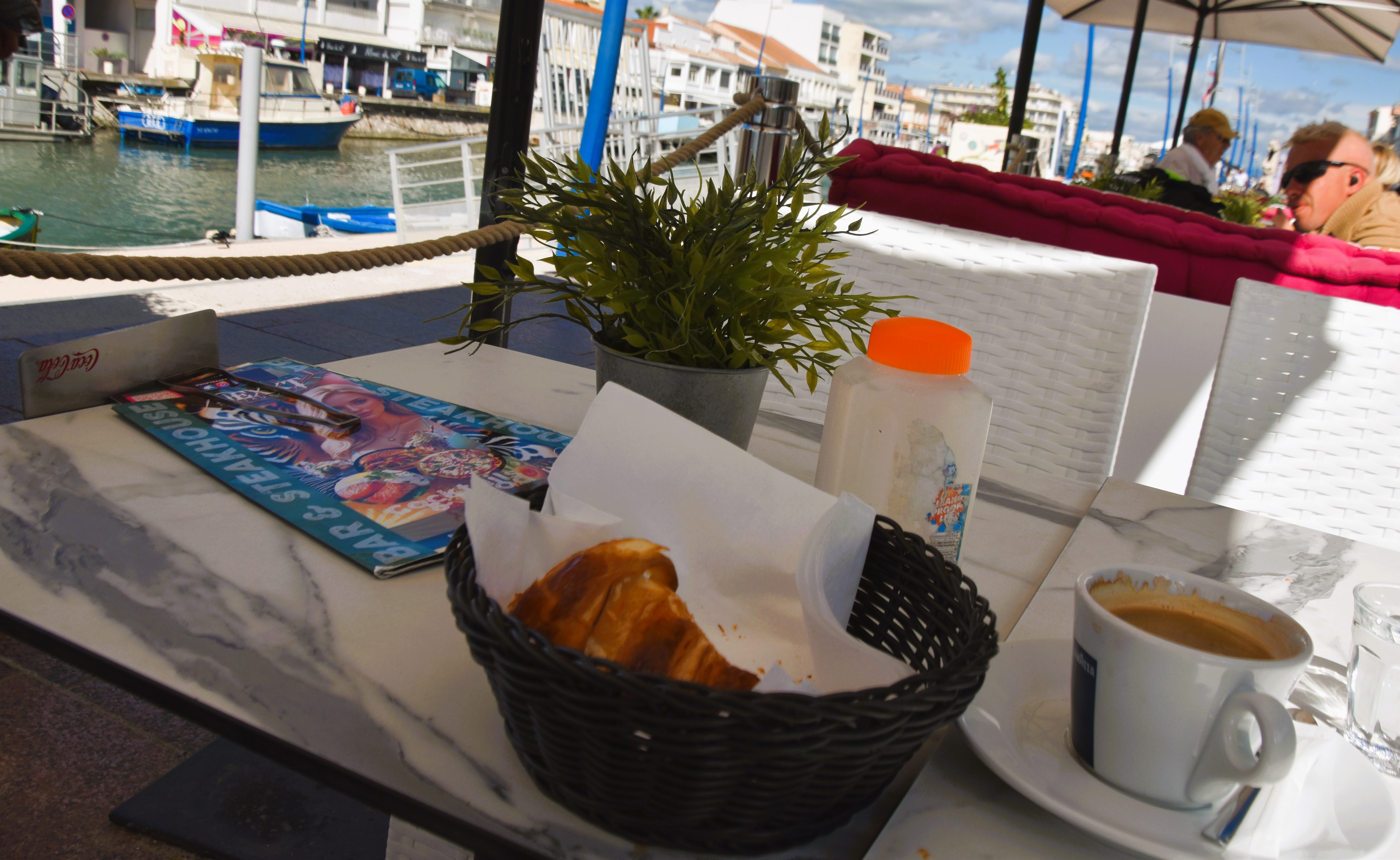
and where we took coffee before popping round the corner to take a photo for Vicki of the venue where she was introduced to Moulle Frit! in better weather than our first vidit!
And then on the way back to the van there was this statue inscribed Saont-Exuprey & The Little Prince?
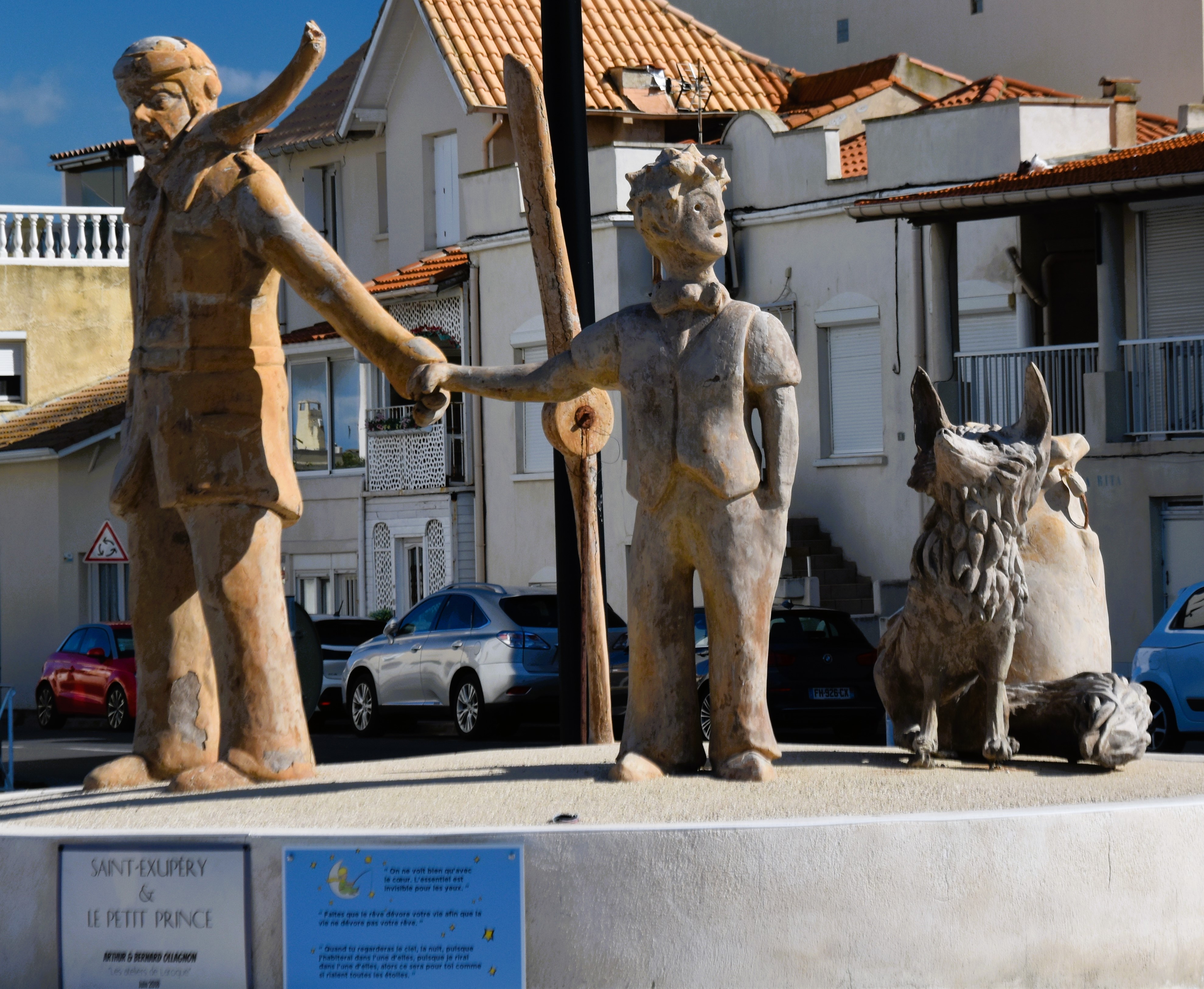
Antoine de Saint-Exupréy born Lyons,1900, was in his own mind first and foremost a pilot. He flew everything from cartography missions to commercial airlines and was a WW11 pilot until Germ,any occupied France. At this point he was forced to give up flying and flee to New York where he wrote The Little Prince.
In 1943, at the age of 44, he went to Algiers where dispite his age he was accepted to fl;y with the Free French Airforce but his physical (as a result of his many crashes) and mental health were deteriorating. On the 31st July 1944 his plane did not return from a mission and he was never seen or heard of again.
The mistory was resolved to a degree when in 1998 divers found the plane, a P-38 lightening F5B, along with some of Saint-Axupréy’s personal effects, at Gand Congloué in the Mediterranean Sea off Marseille.
The dog in the statue is moneled on the Fennic, dessert Fax of the Sahara, which features in the book and in his writings of his flying experiences when he crashed in the desert.
22nd Today I drove to Béziers and settled in to a delightful , quiet aire nestled between the canal du Midi and the river Orb. After lunch we walked into town initiallt along the canal tow path with plenty of hire boats moving about and this rather grand Burgundian style house with tiled roof and wall decorations.
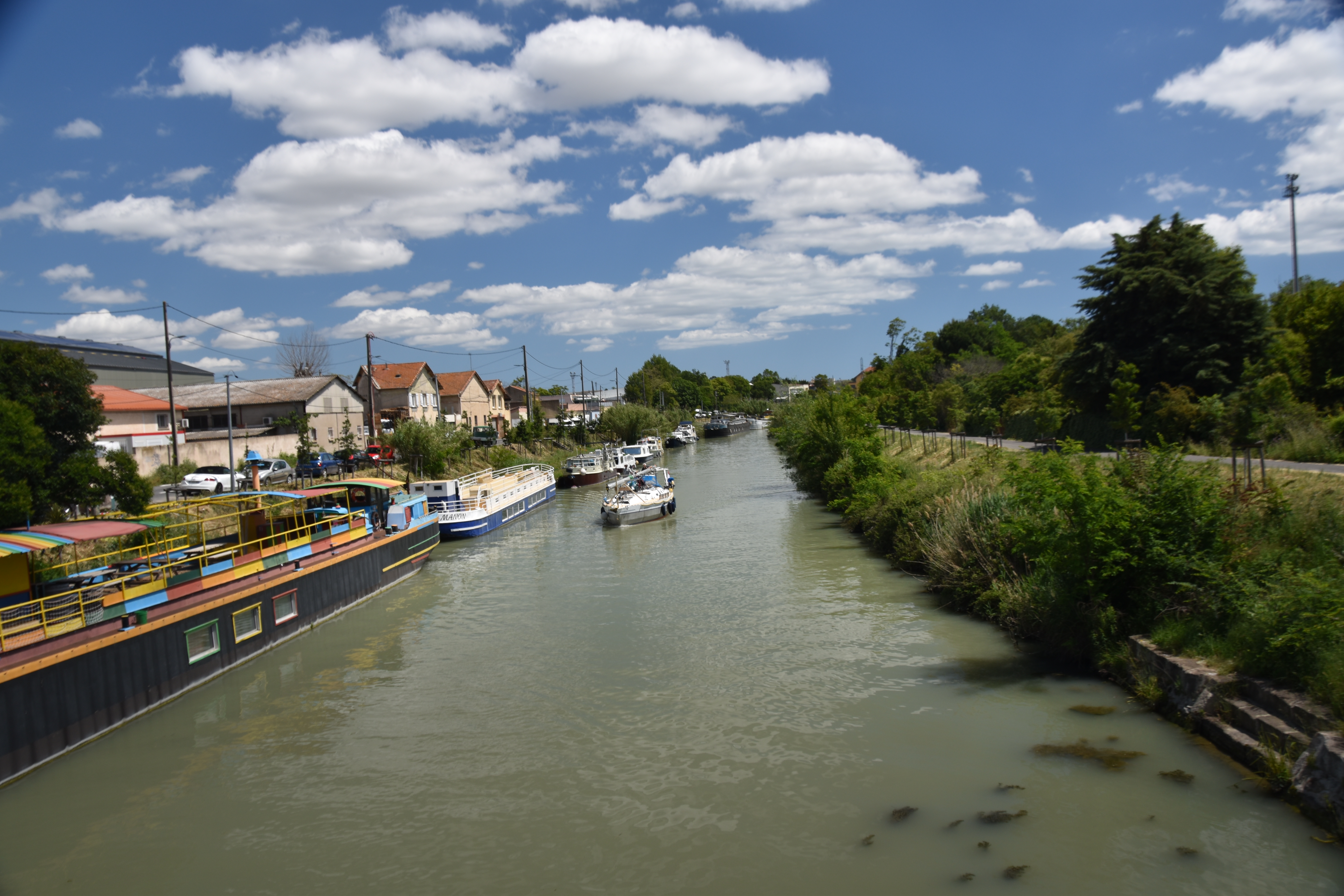

We then switched to the river bank at the point where the canal crosses the river on an aquaduct.
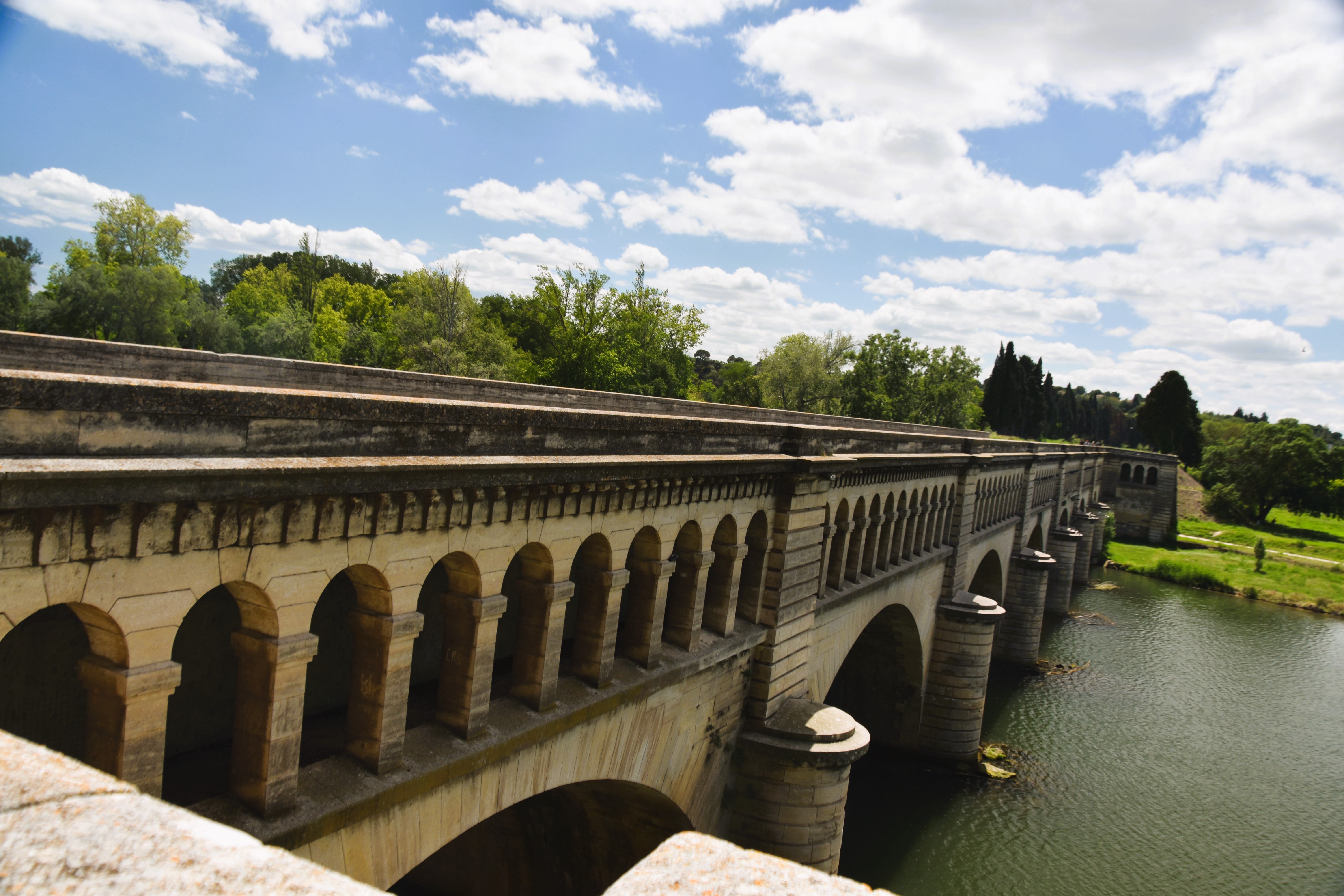
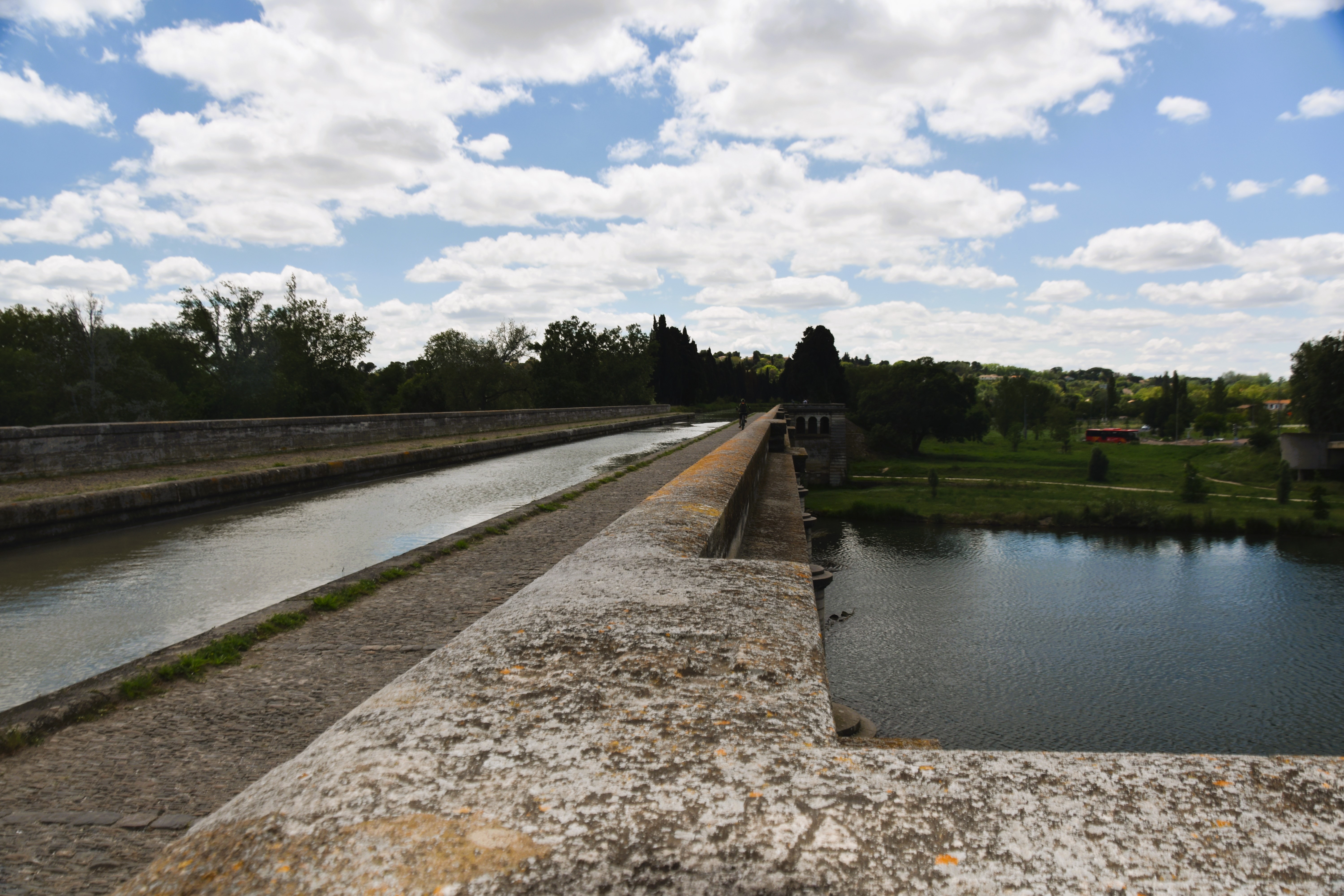
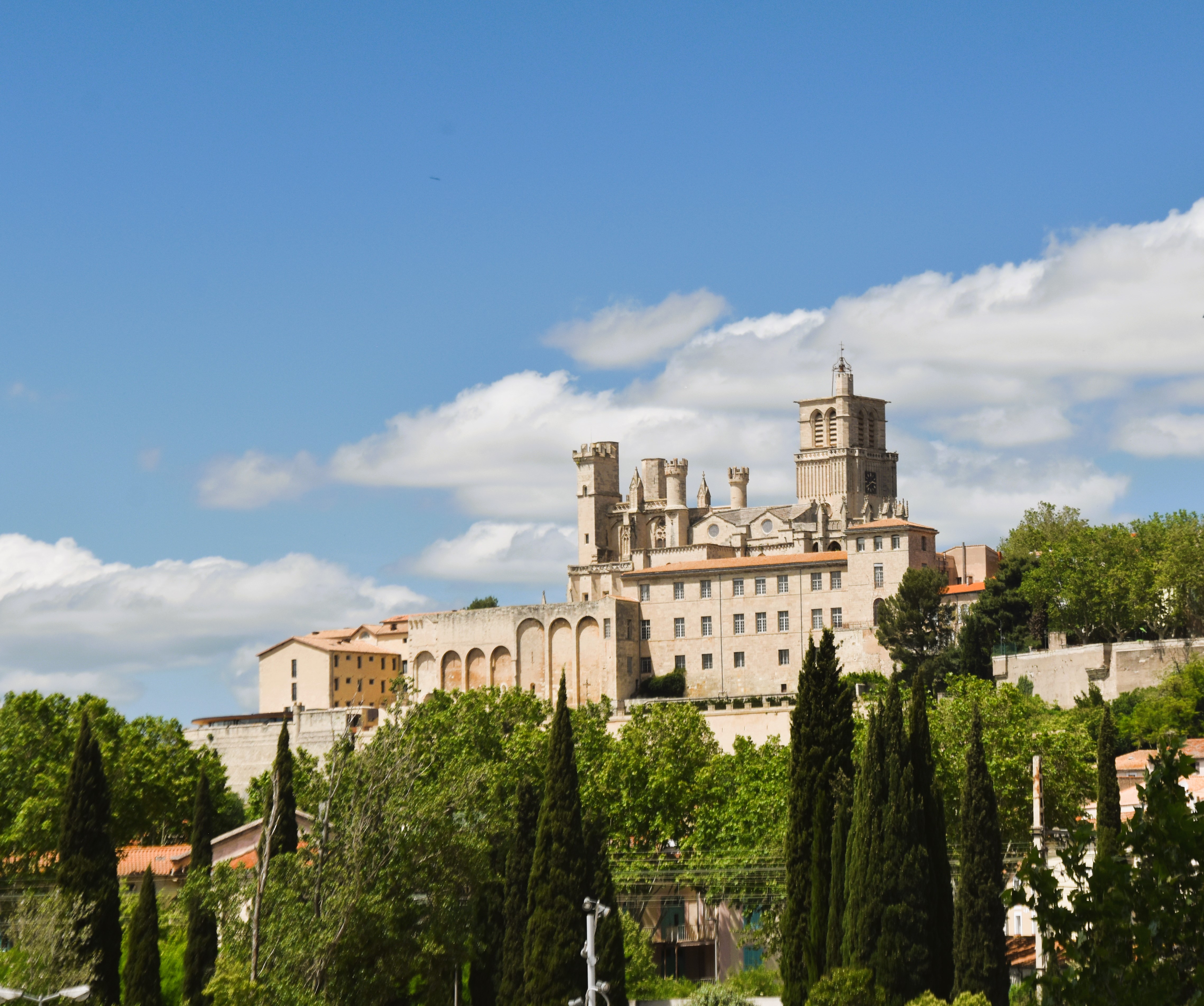
here I was afforded my first view of the cathedral of Saint-Nazaire
Because of the railway line there are limited ways to cross to the old town, one of which was by this pedestrianised C14th bridge.


Having gained the other side there was a series of four lifts to take you up to the top where there is a lovely view out ofver the surrounding countryside.
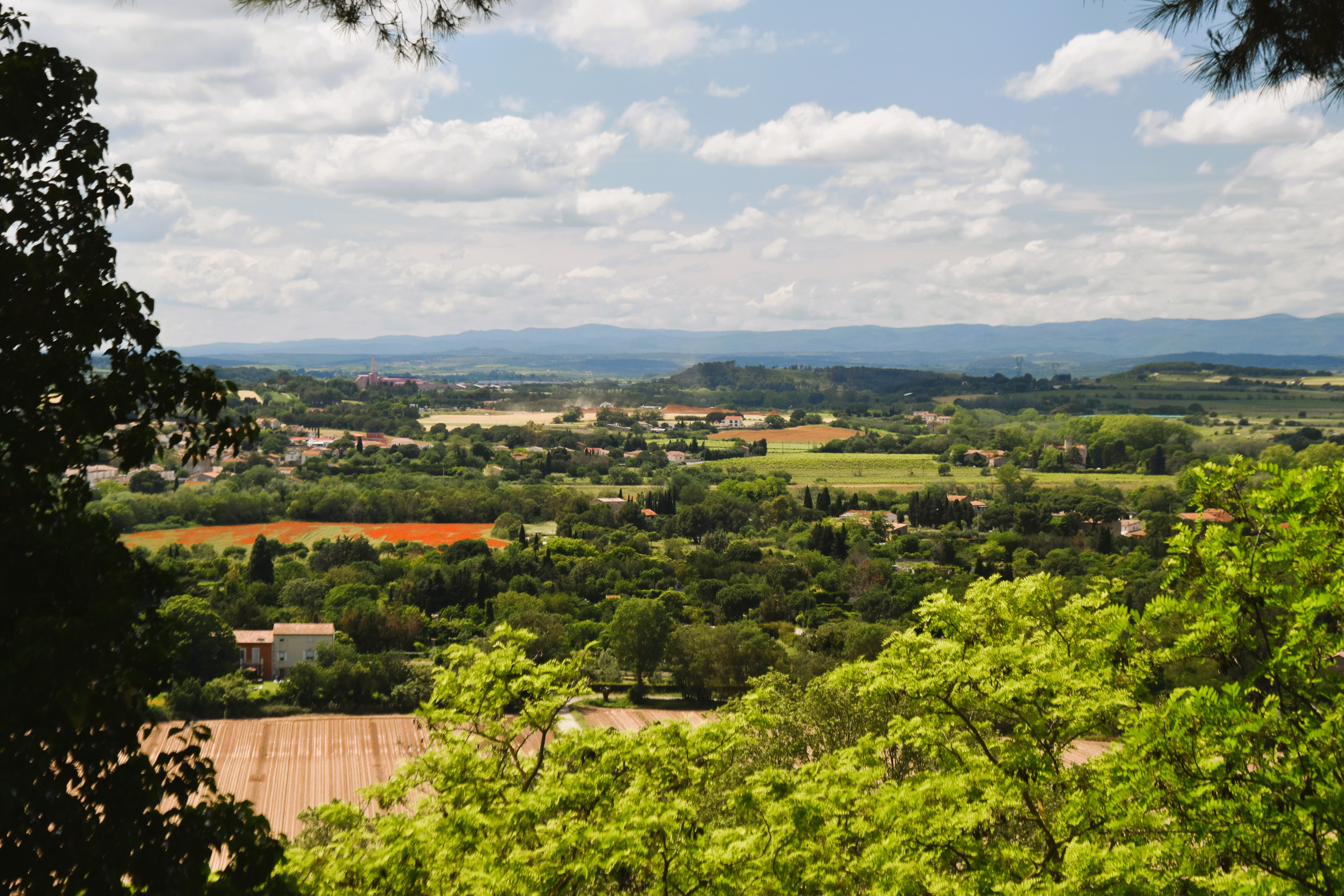
So we have a C13th cathedral and a C14th bridge but there are also the remains of a Roman theatre. So what happened in between? The Albigensian Crusade happened.
On 21st – 22ne July 1209 Béziers was attacked and pretty much destroyed and 20,000 inhabitants slaughtered in a crusade against “Heretics” called by Pope Innocent 111. Not all the 20m000 victims were Cathars, Catholics were included in the slaughter, a papal legat when asked how the crusaders would dictinguish between the Cathars and good catholics, allegedly said “Kill them all. God will know his own”. Albigensian after the town of Albi which was thought to be the headquarters of the Cathar movement. By this time crusades were less about controling Jeruselem and the levant and more about combating heresey at home.
The cathars were founded sometime between 1000 and 1050 and established their own church in 1140. By the late C12th they had 11 bishops in France and Italy and very strong support in the Languedoc. They believed in two “Gods” a less powerfulm evil one who had created the world and a Greater embodyment of goodness, they denied the divinity of Christ and the quthority of the Pope. In 1176 the Catholic church declared them to be heretics. Although the crusade in Béziers was a success it did not spell the end of the Cathars and the crusade continued for another 20 years.
At root this crusade was more political than religeous. It pitted the staunch Catholic nobles of the North against the more tolerant nobles of the South. One such was Raymond 111 of Toulouse who was excommunicated for his troubles. His relatives at Carcasonne were also targeted. One of the comanders on the side of the Church and here you can use the State interchangeablit, was Simon de Montford who had been on Crusade to Jeruselem with Louis V11, husband of Eleanor of Aquitaine, he was killed in one of the sieges of Toulouse. The crusade did not eleminiate Catharism but what it did do was enable the King to establish his authority in the South.
The of course Eleanor upset the applecart by ditching the French king and marrying Henry 11 of England!
No wonder this is such a fascinating area to travel in with all this history.
23rd. I decided to steer clear of the city today and have a nice walk along the canals to view the Fonseranes flight of nine locks. Although in number the flight is not that significant when compared with some of the Uk staircases, it does raise boats 30, in a distance of 300, thus making the average lock depth 10m. Unsurprisingly they are managed by lock keepers.
Starting at the bottom of the staircase.
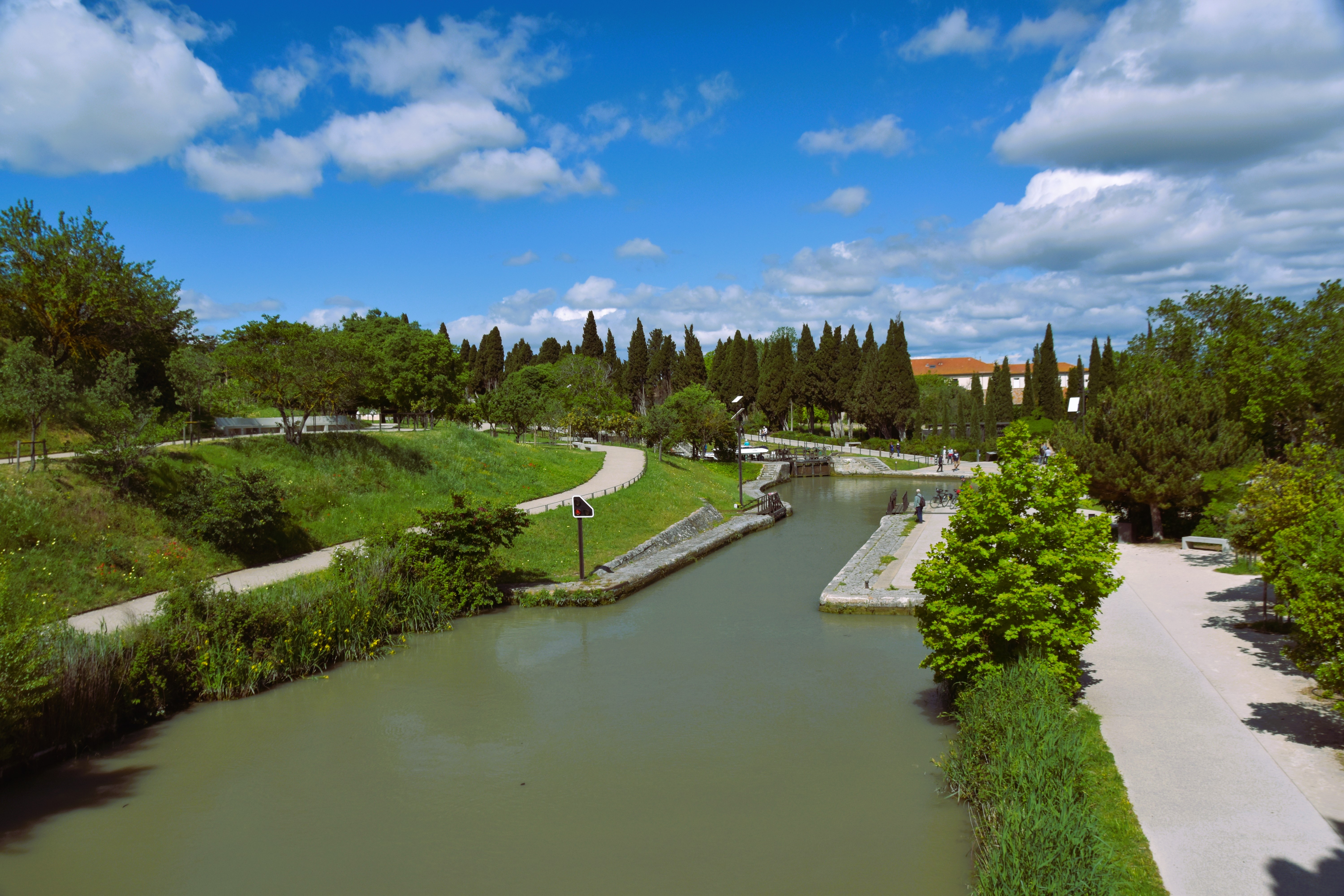

The view from here back towards the cathedral is the reverse of that taken yesterday from there and features the same field of red poppies in the centre/left of the frame.

Looking up and down the flight
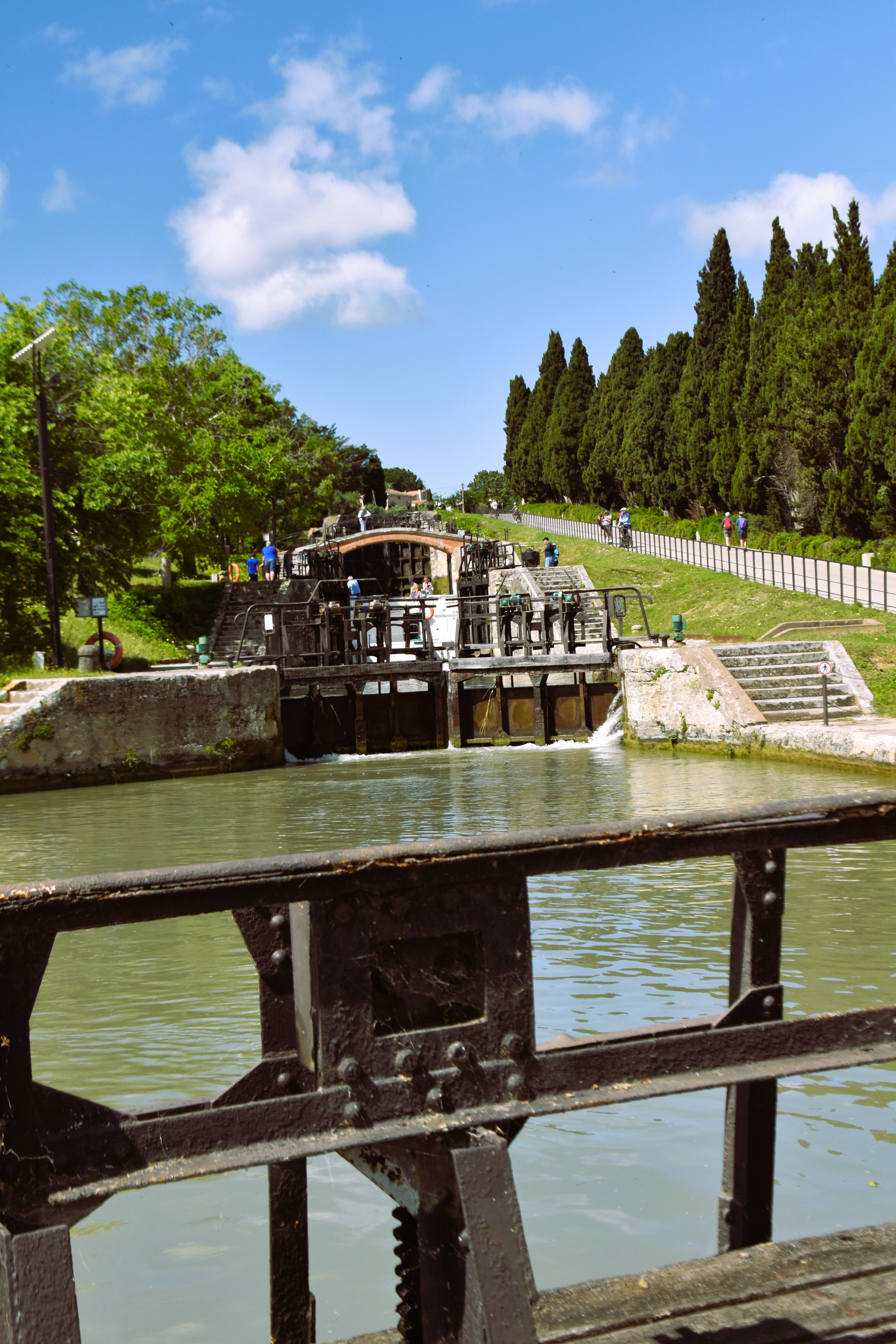
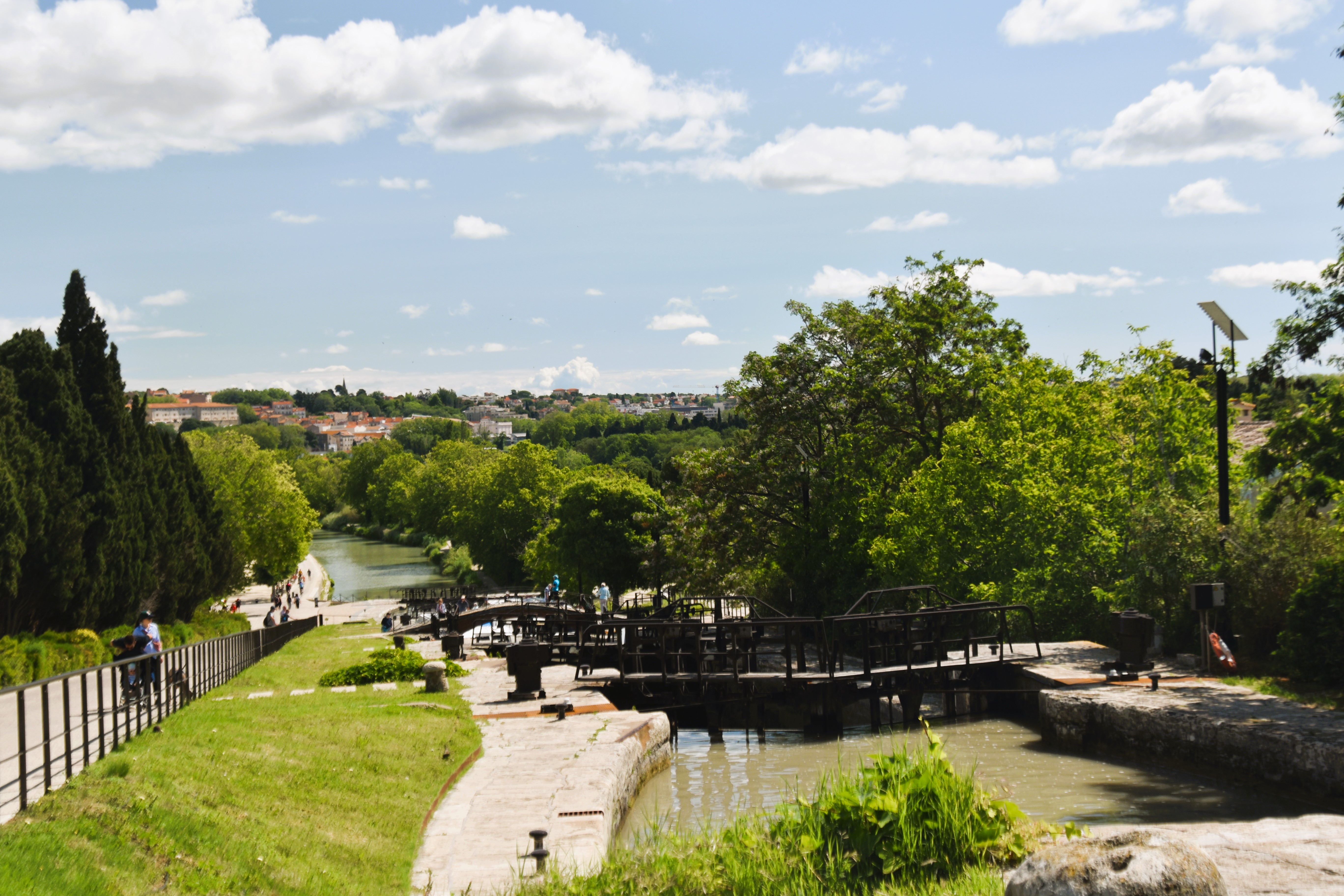
Attractive lock bridge
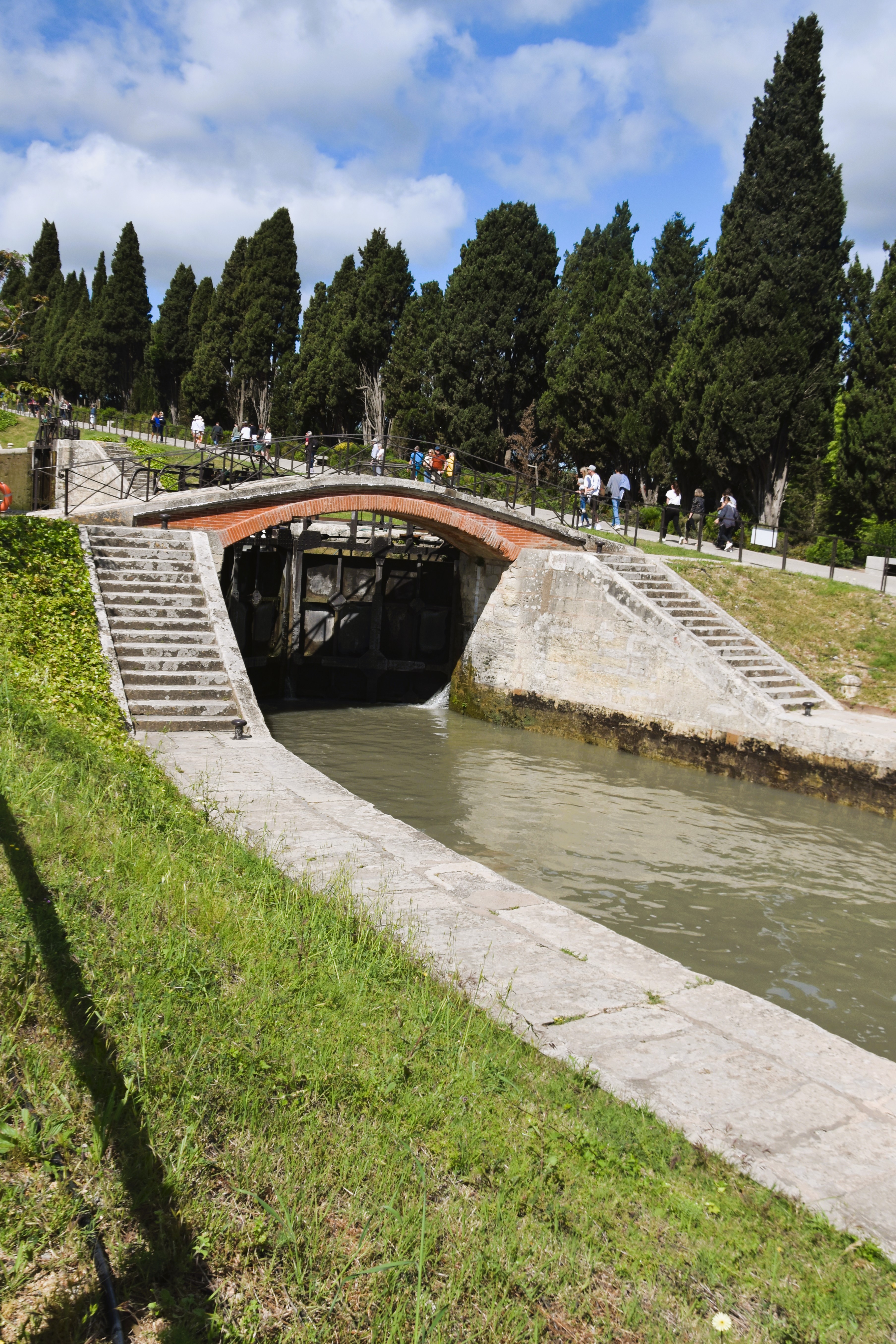
Also on site and of interest to all boaters is an incline plane. It was constructed between 1980 & 1983. it oopened for use in May 1984 but within weeks a number of technical issues arose and it had to be closed again. It took untill 1986 to resolve the technical, contractual and insurance issues. However these were never fully resolved and in April 2001 the project was abandoned. The earlier technology of locks and pounds proving that simple is better!
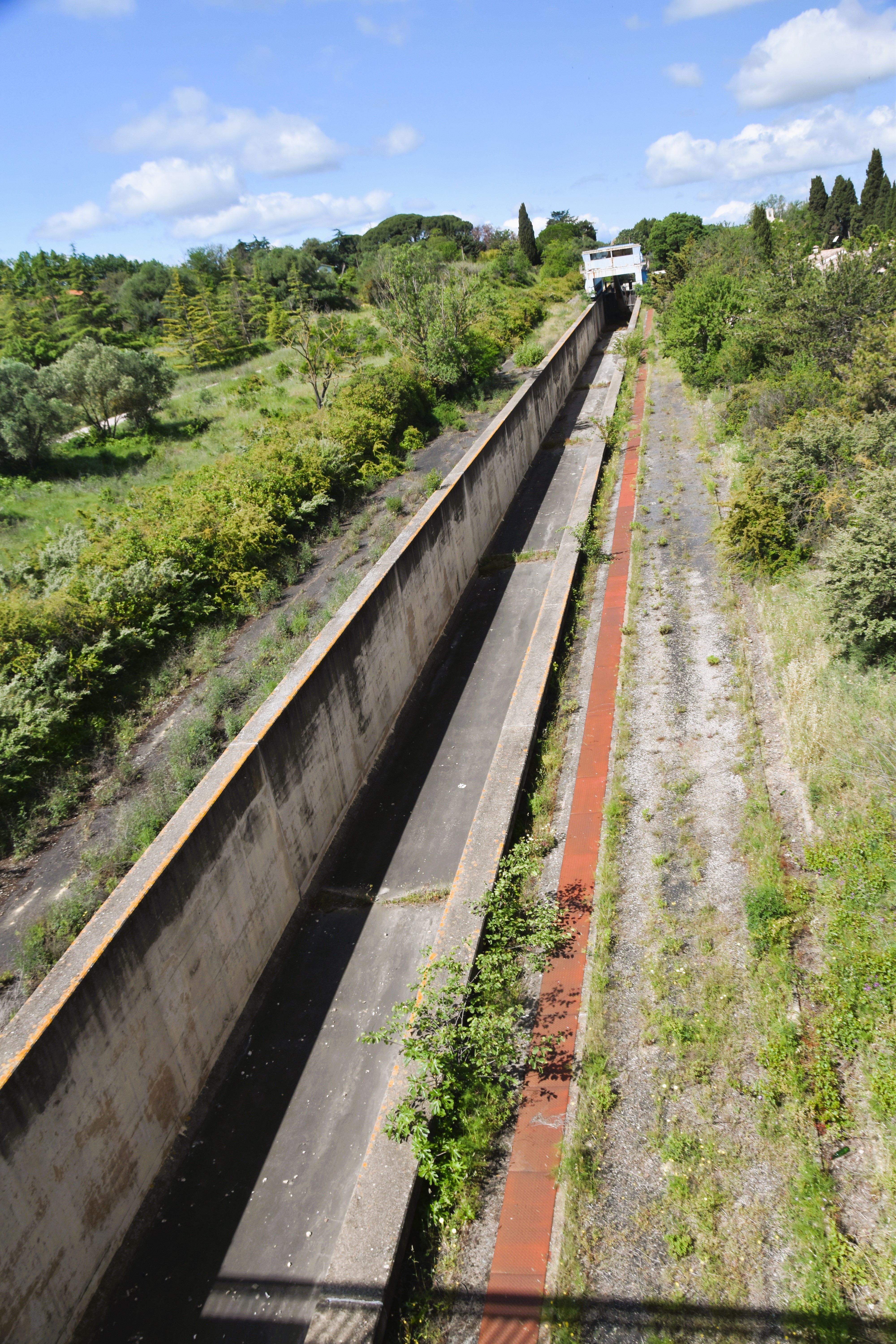
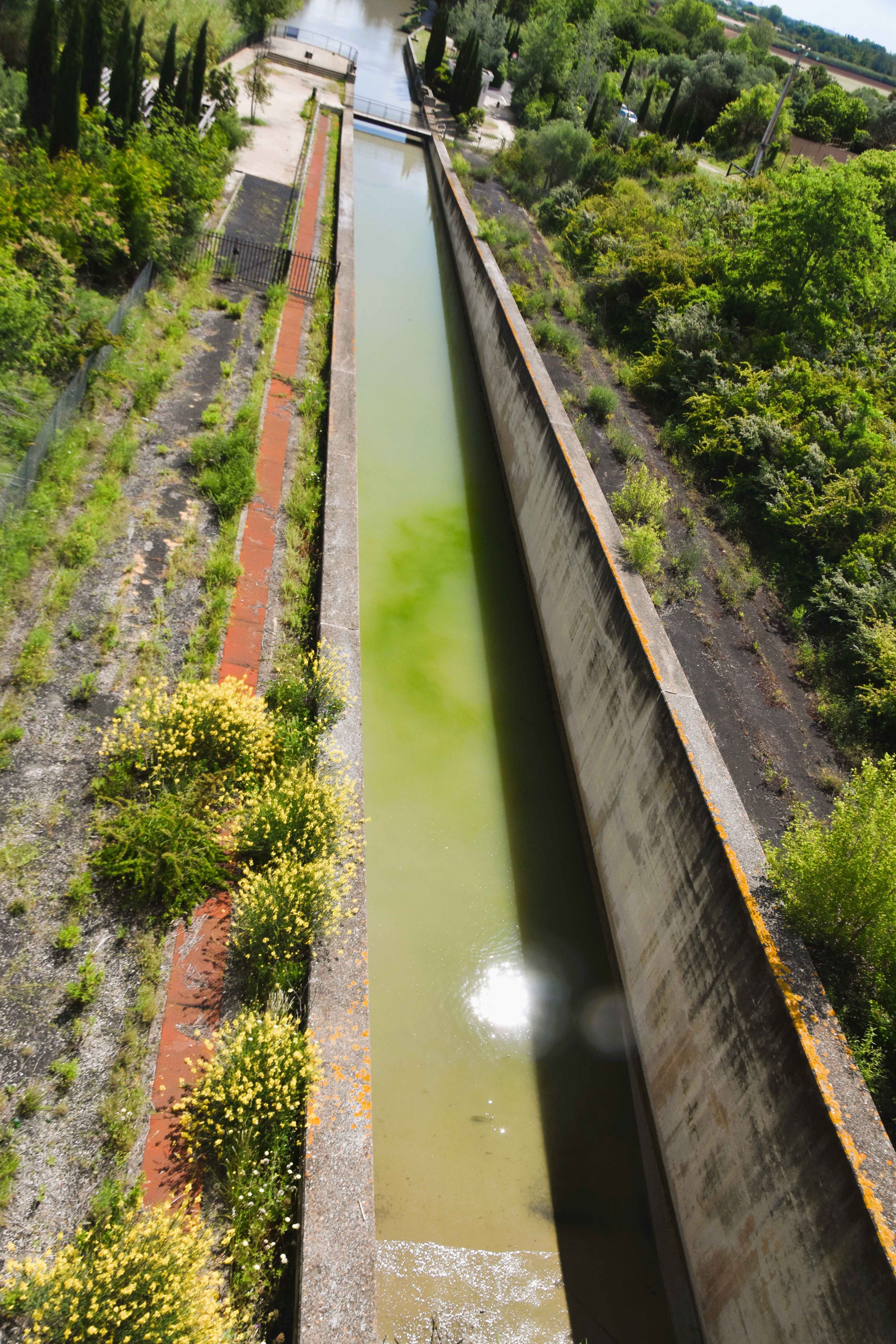
I stopped for coffee and crépes at the cafe before heading back to the van. There was an interesting plaque on the wall outside.
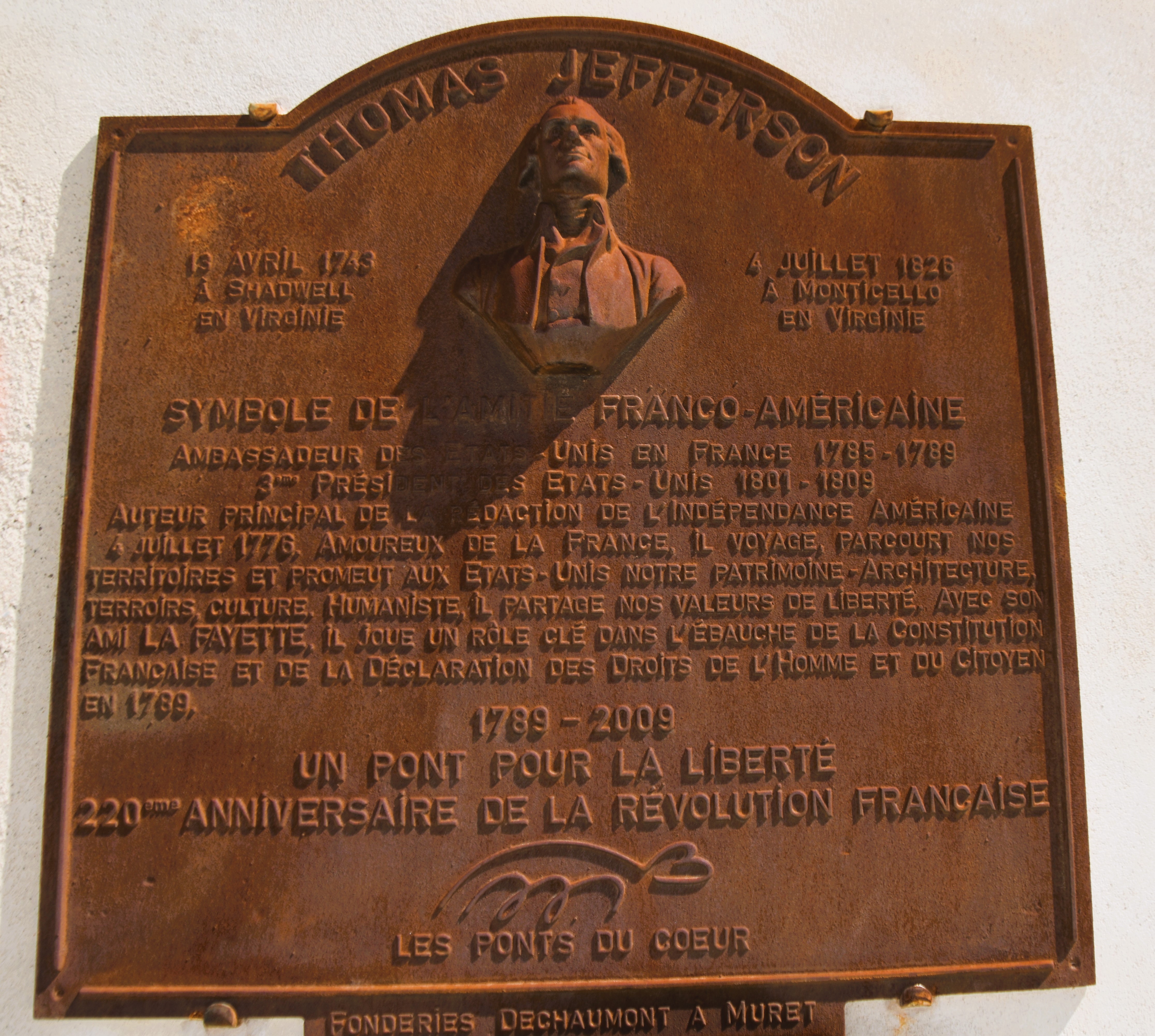
Back at the Aire I met a Dutch couple with a 2005 Landrover Defender in beautiful condition. I told them that I had owned and driven one in Africa for ten years and then sold it for the same amount I had paid for it. They said that if I still had it today I would be able to double my money!
24th. Made an early start with the intention of settling into Port-la-Nouvelle for two nights. One because it is on the Med coast and two because I will have to up-date client work. However it turned out to be a heavily industrialised area and an unattractive Aire so I had lunch and moved on. After a few stunning sunny days this morning was veyr wet and grey so I have pulled into Le barcarés to check on the weather forecast and decide what next. There is not a lot of point in exploring the vermillion coast in crappy weather. To add to the grey skies, Martine messaged me to say a speeding fine had arrived in my mail box. Zut Alors!!! €90.00 for being 2k over the 50k speed limit. The French Fuzz, or Flik as they are known locally, don’t mess about!
25th. Got up to blue skies this morning so continued South. First stop Lidl for some chipatta bread to go with my tomatoe and mozarella salad at lunch time. Then dropped into Chateau L’Esparrou for some wine tasteing. It was a funky cellar with a charming hostess who thought nothing of opening two new bottles to let me try both of her dry whites, the Shiraz was already open! left with 4 bottles. The tasteing is now done in the celler at the Chai, the Chateau having been abandoned as too expensive to keep up.


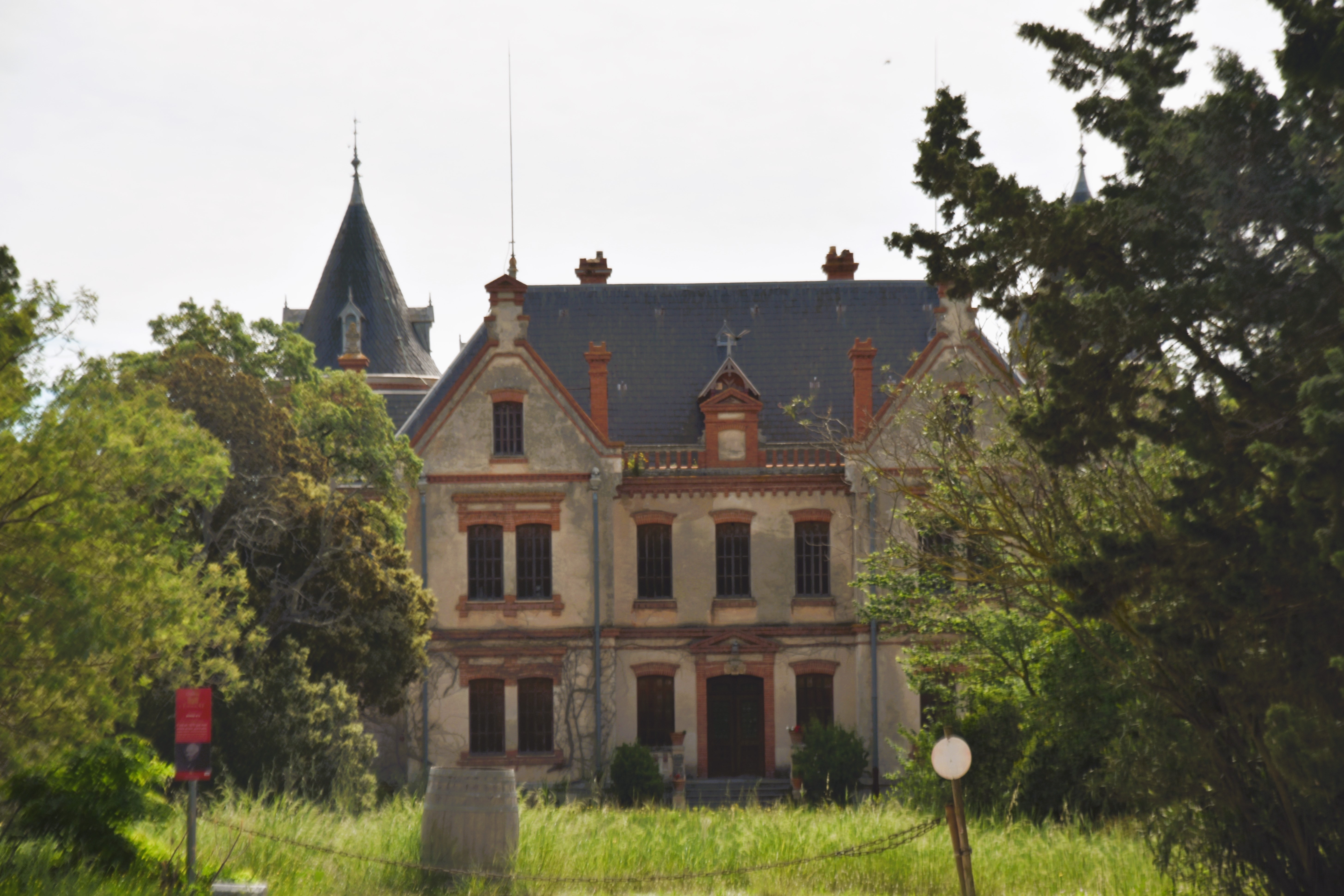
I drove on to Port Vendres and was lucky enough to find a good sized parking bay, under trees in a parking lot overlooking the port.
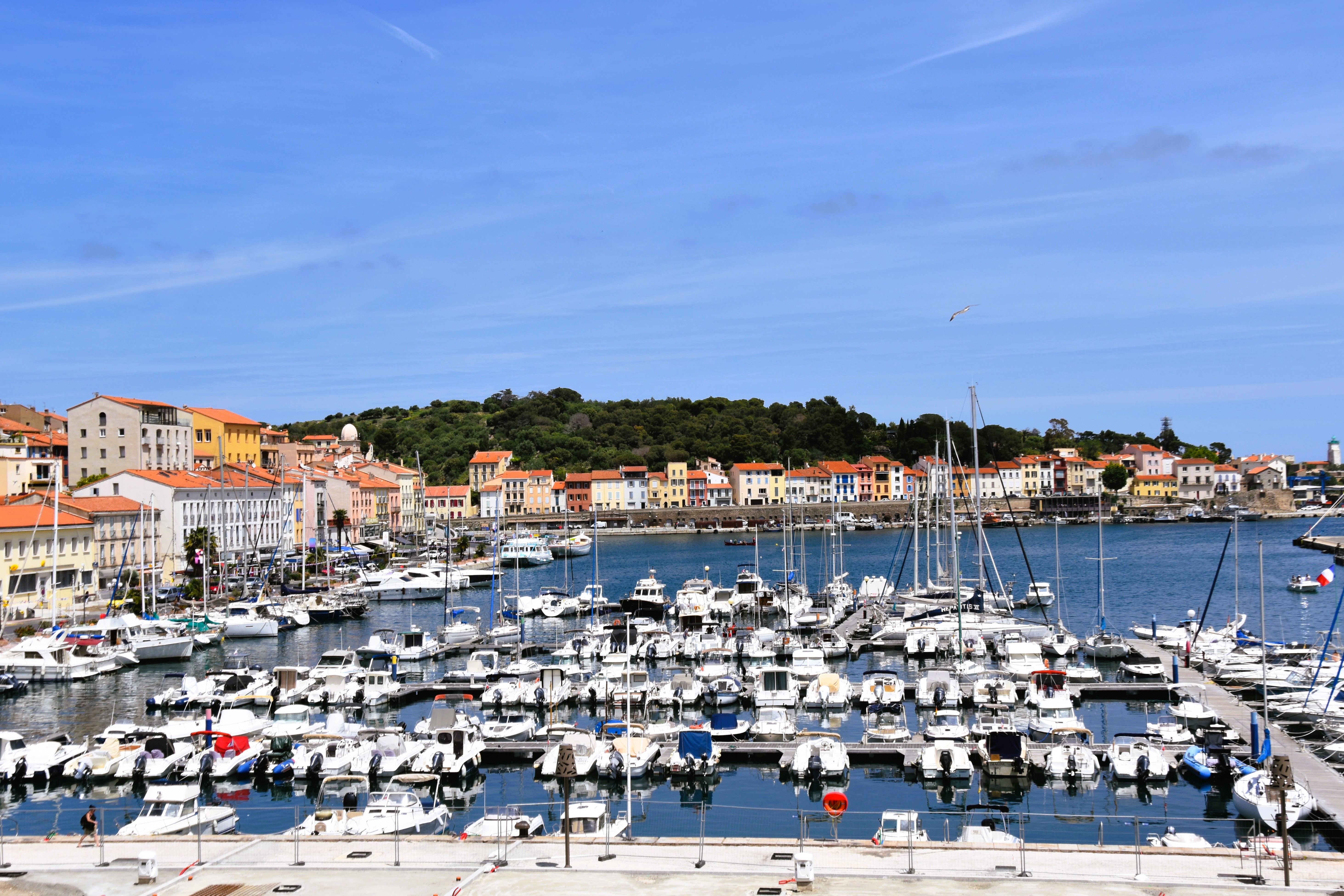

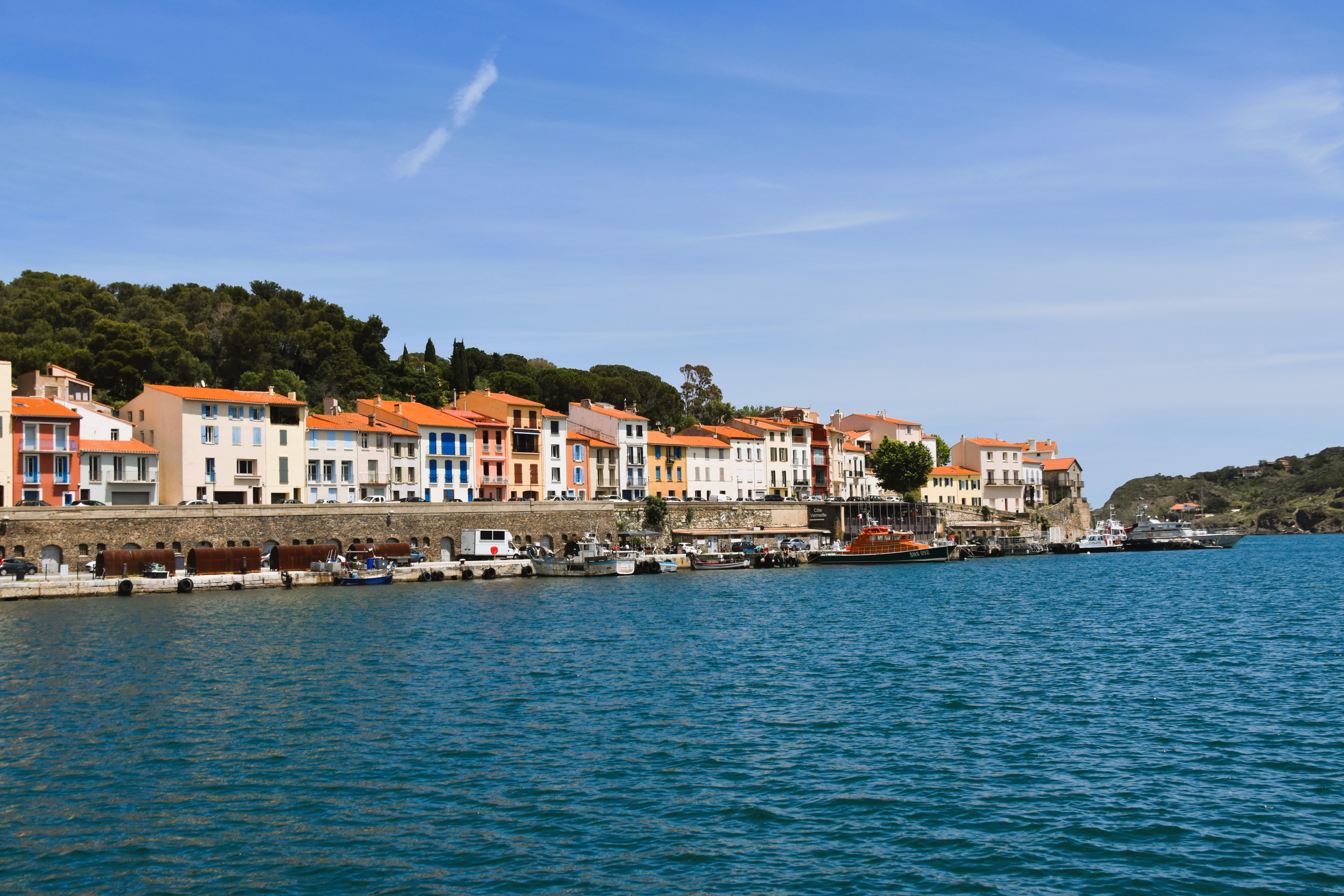
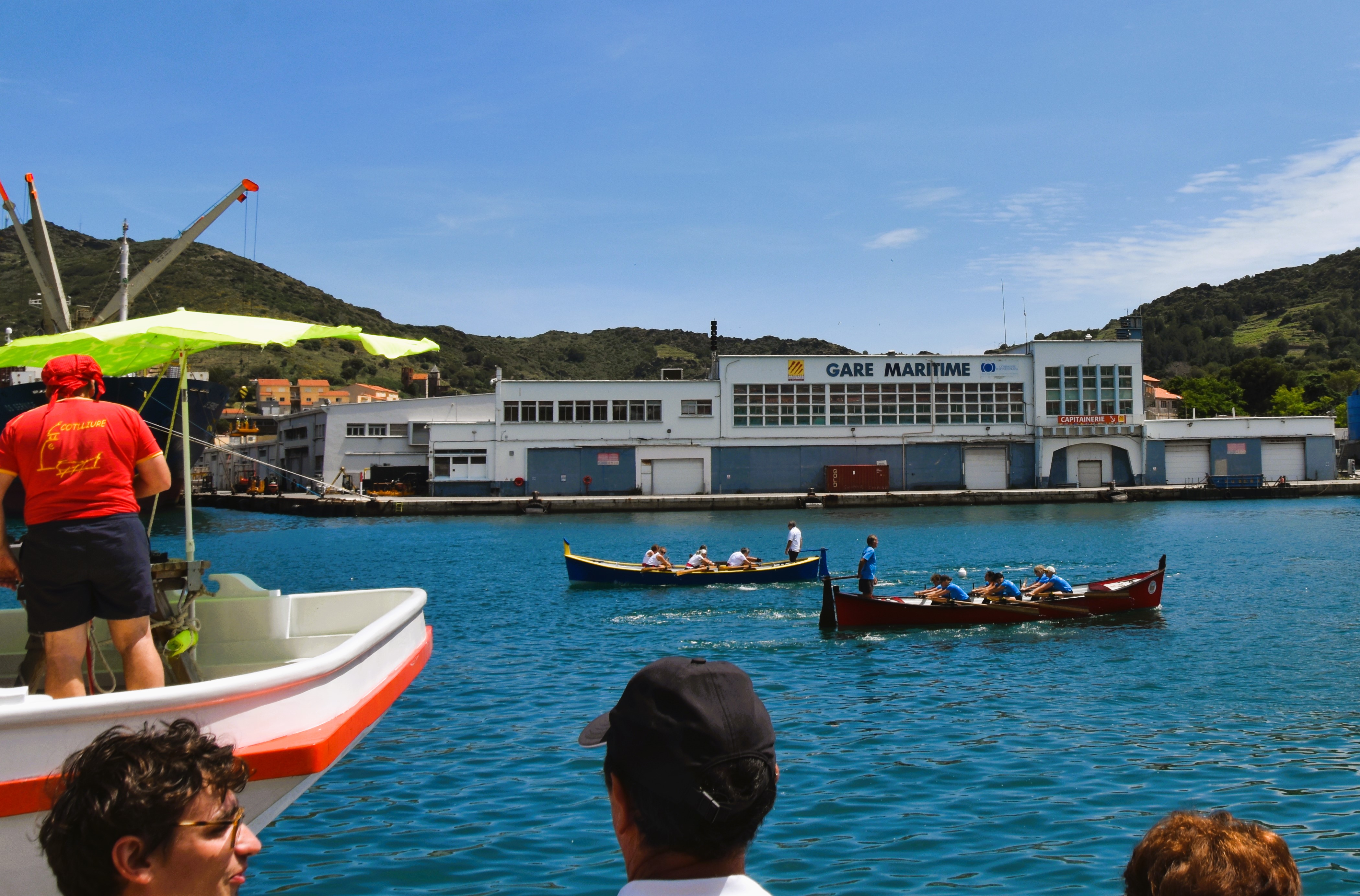
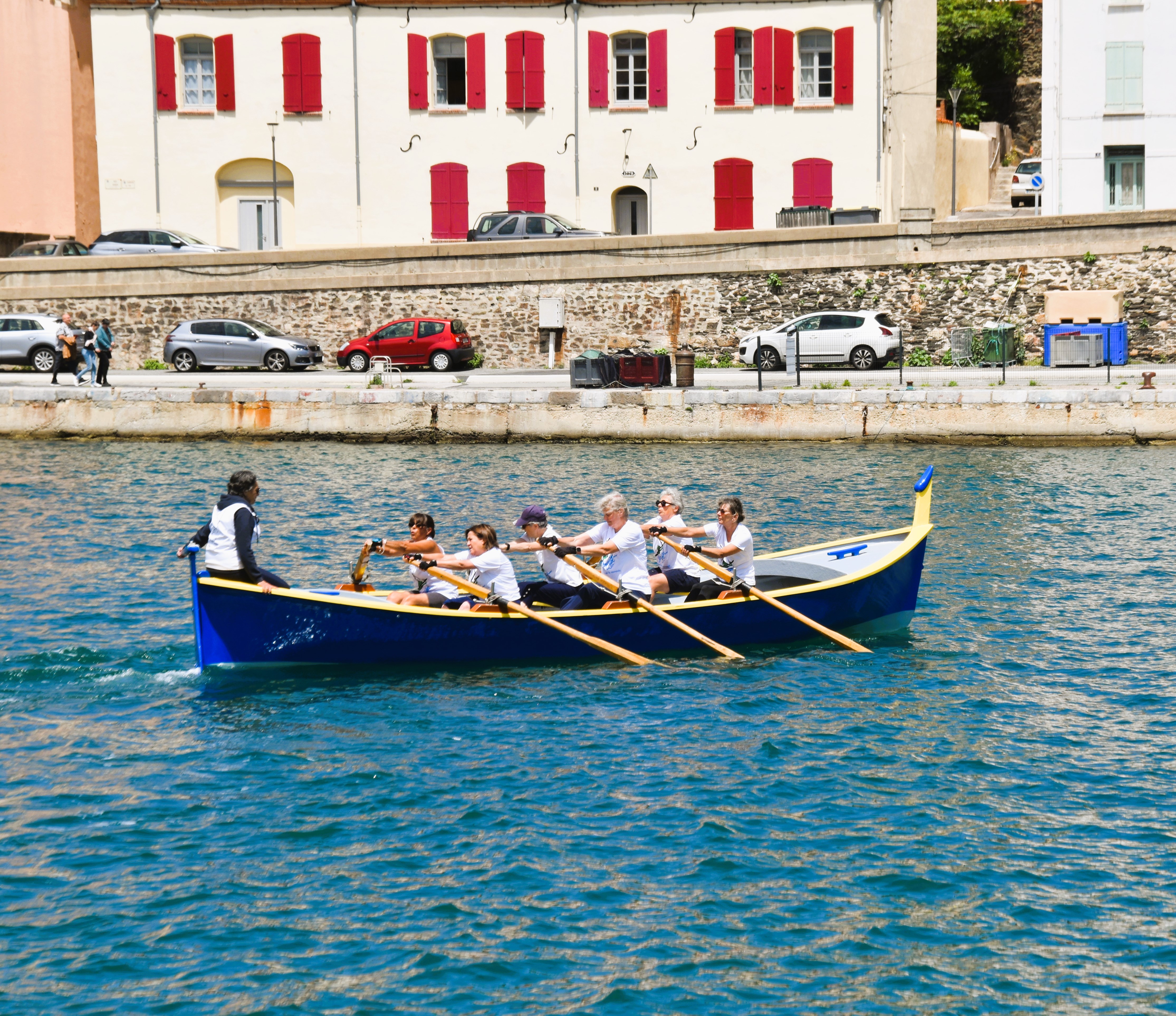
After lunch I headed down there. I was lucky enough to have arrived just as a little local regatta was about to start between teams from across the region competing in “Trainera” traditional Catalan rowning boats.
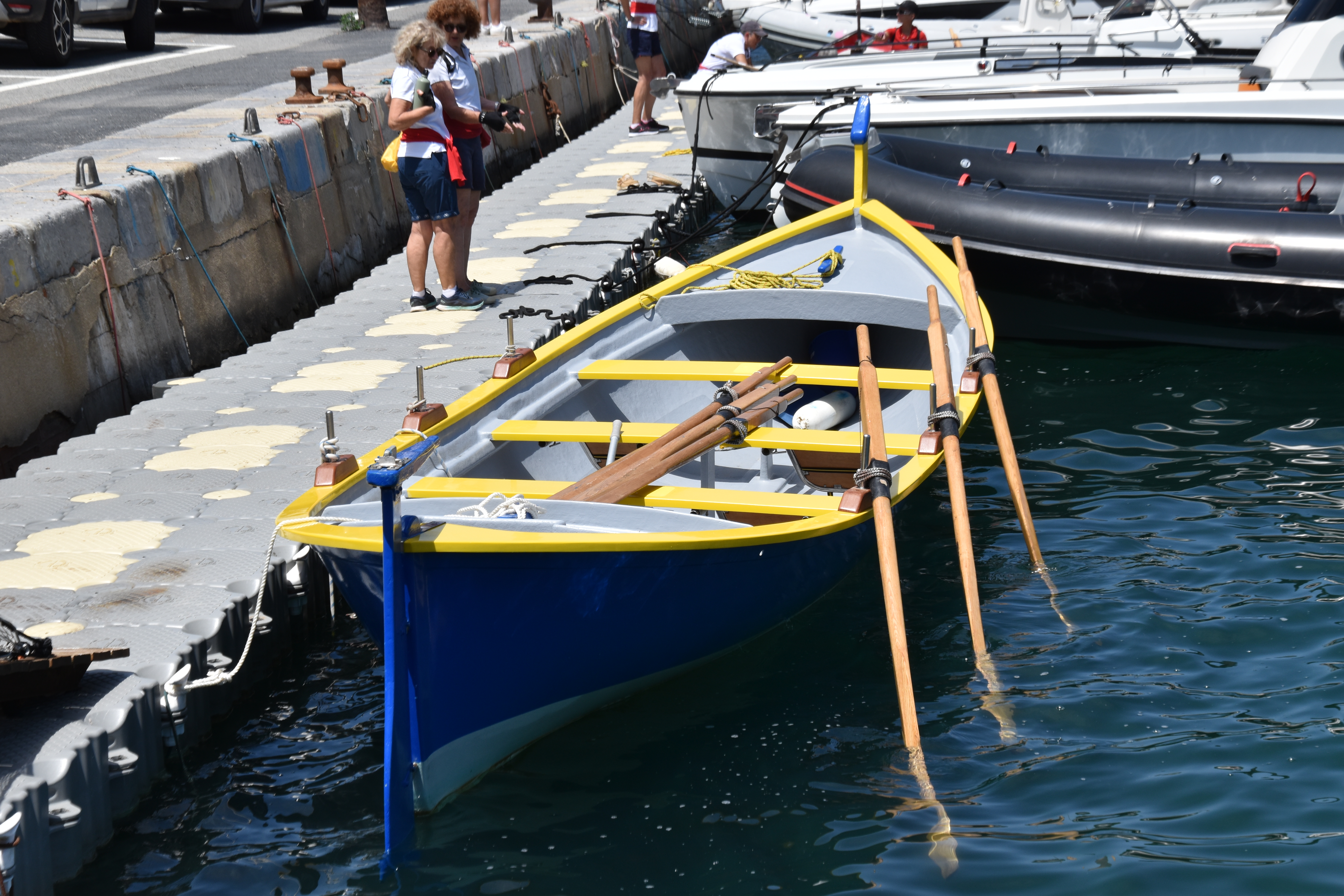

The competion boats wre a shorter version only using 6 oarsmen and a stearer. There were three bouys lined up in a row and only two teams competed at once. They both start at the centre bouy but facing in opposite directions. They then row a firgure of 8 round the two end bouys and they win by doing it in the shortest time.

Leaving the waterfront we headed for the Aire which is at the business end of the Port.
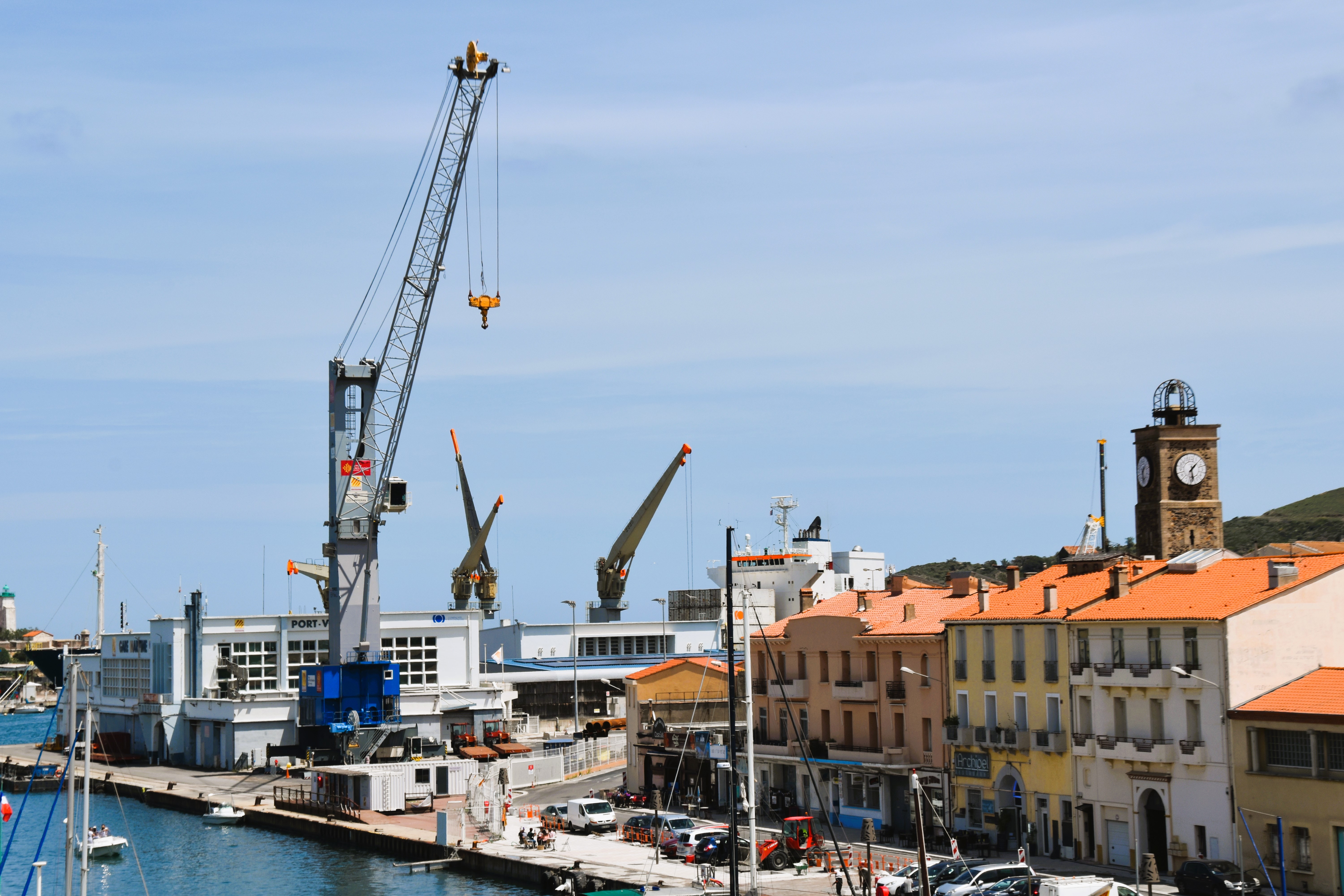
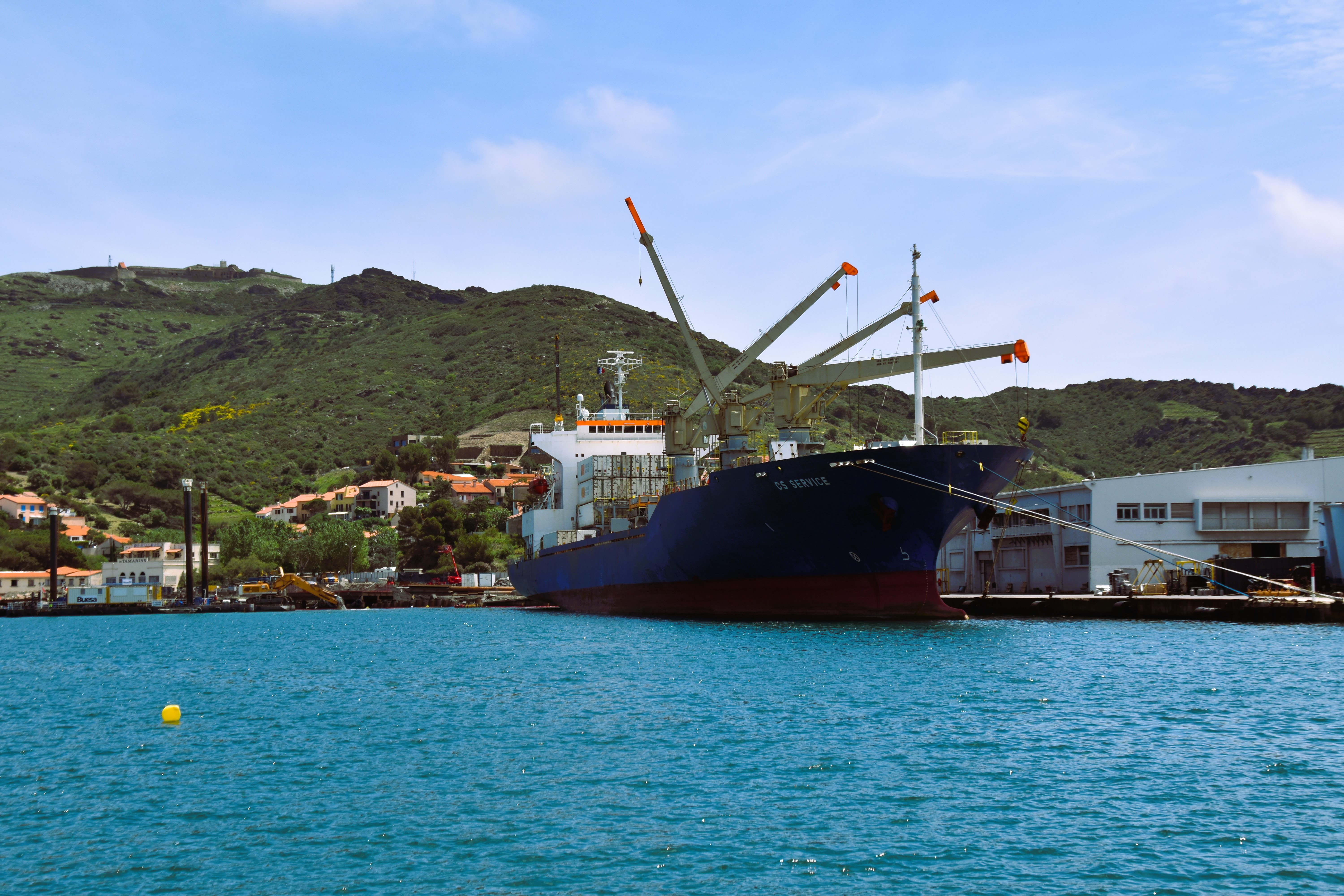
before turning in Cassidy and I went for a l;ast walk at sundown.
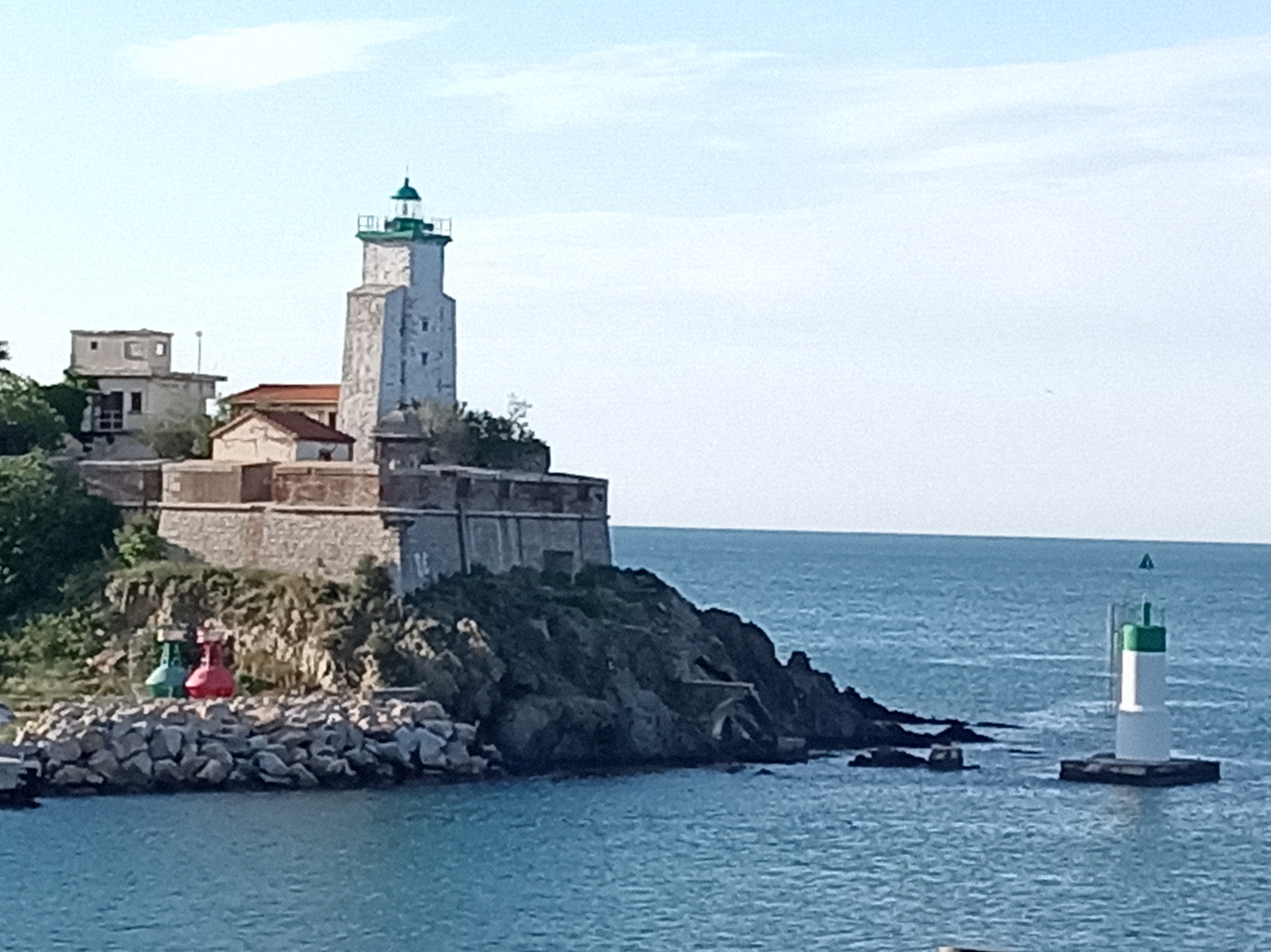
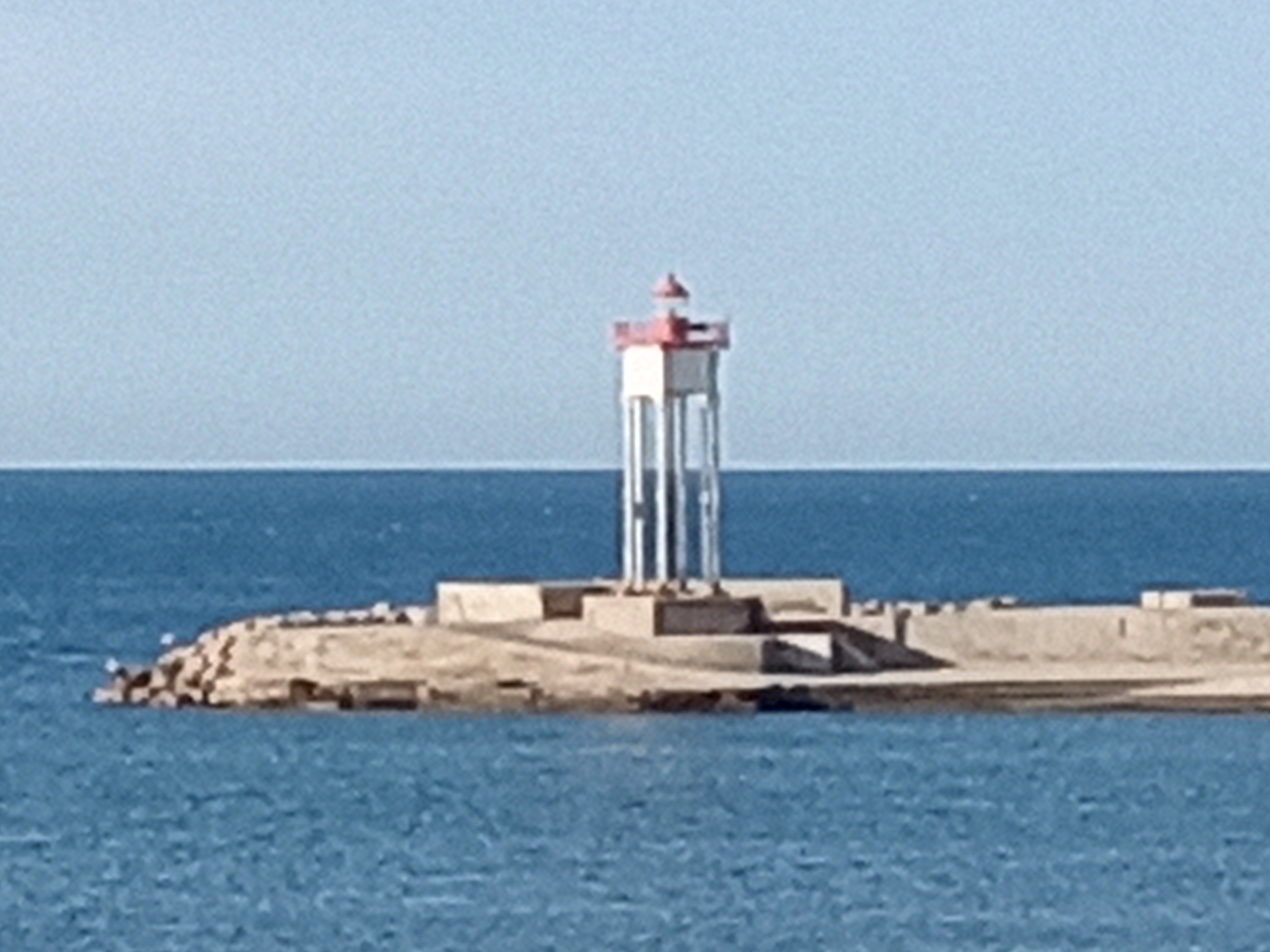
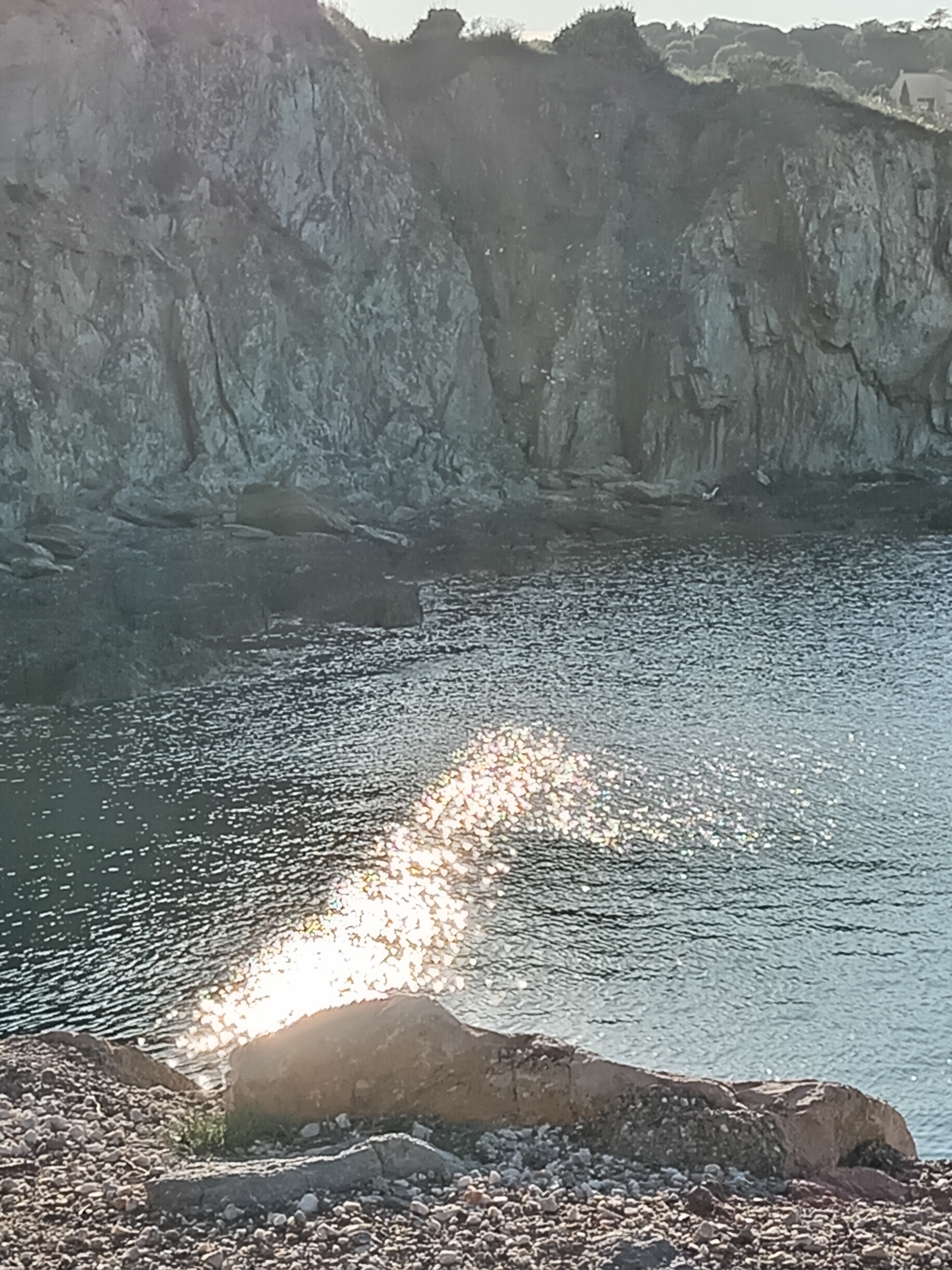
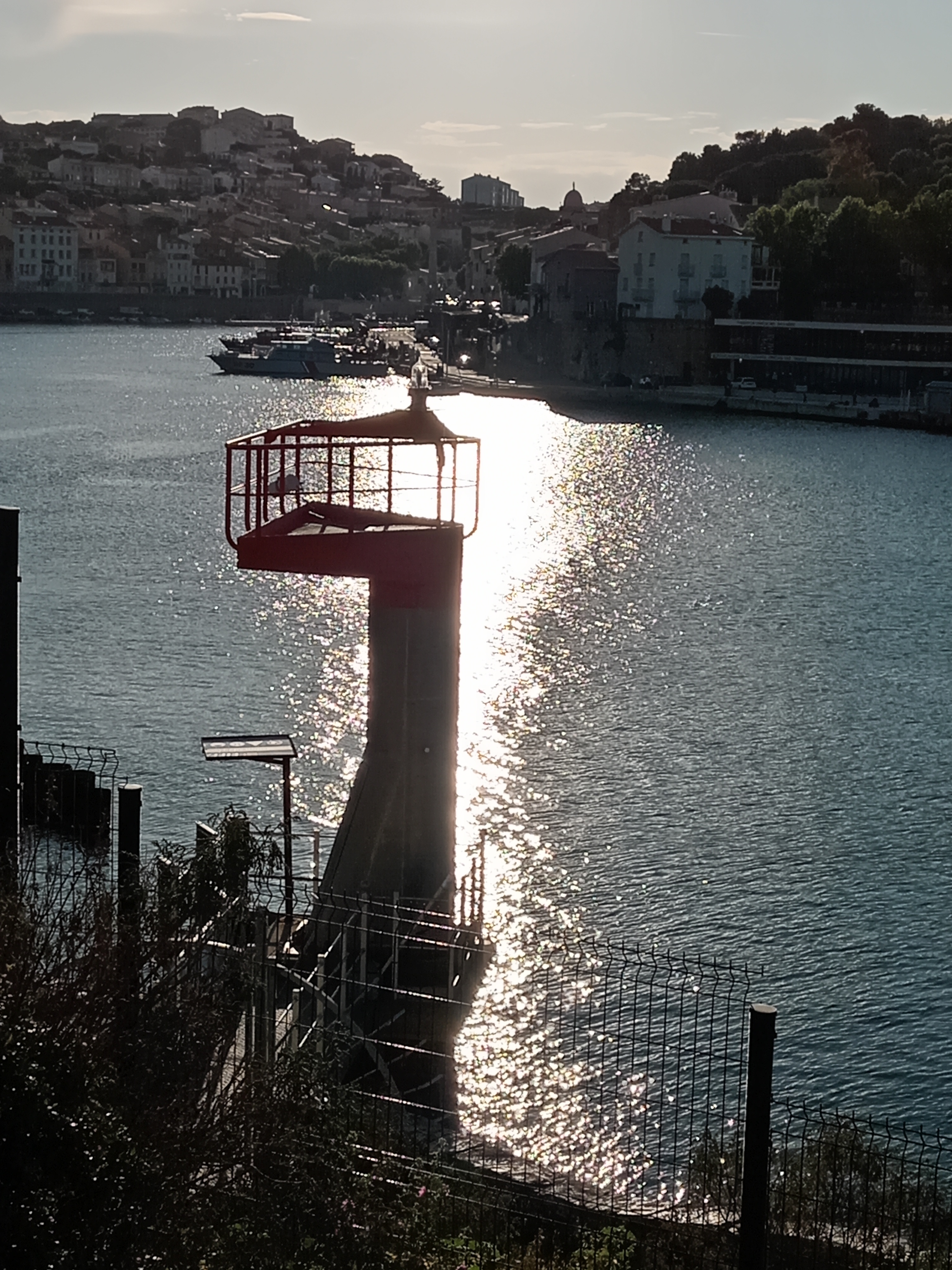
Which afforded us views back into the town from the mouth of this excellent natural harbour.


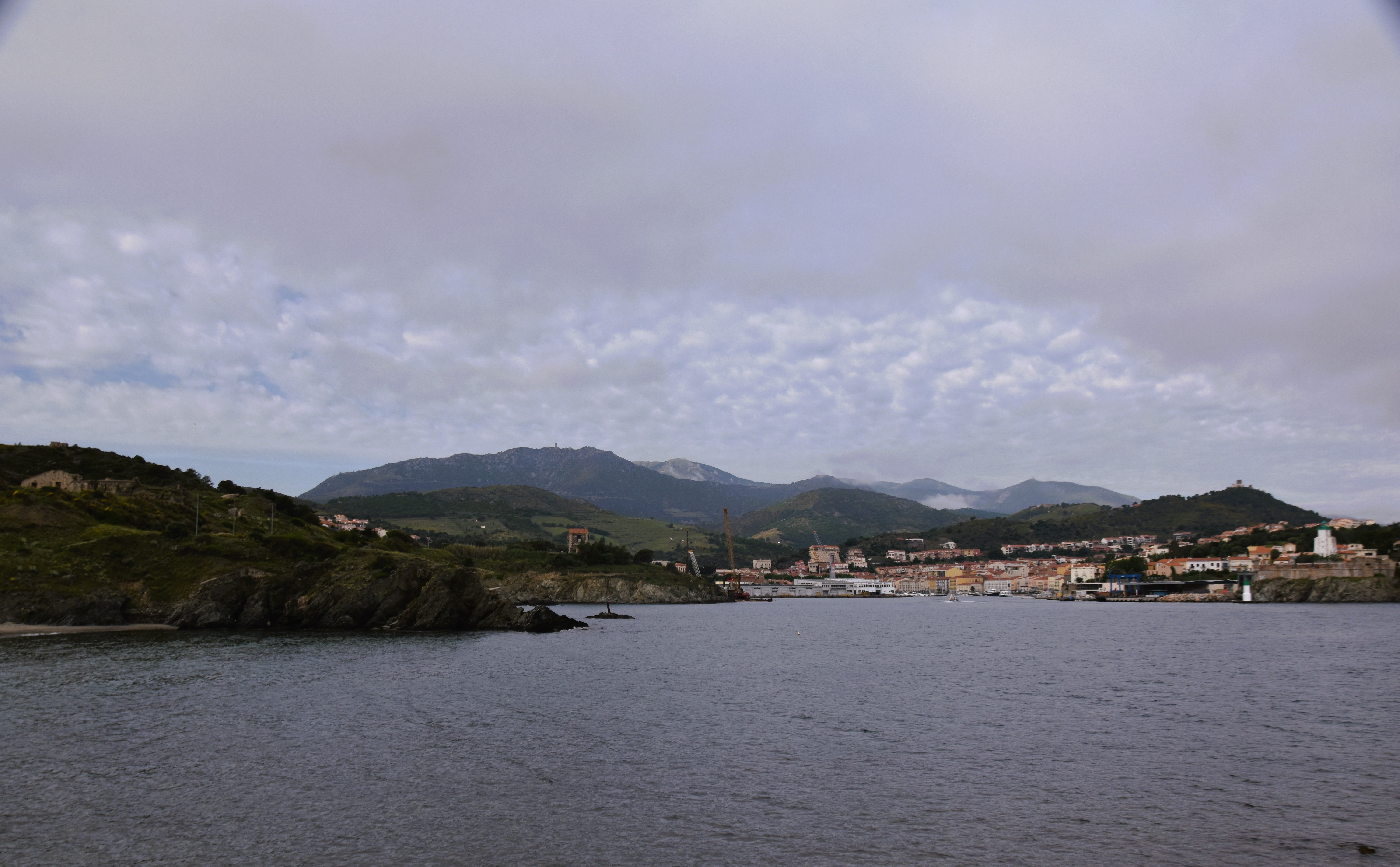
Weather permitting there is a short hike out to Cap Béar which I would like to do tomorrow.
26th. After breakfast, in the cool of early morning we set off to do the hike.
Hoever it soon became apparent that it was not going to be suitable to take Cassidy along. The paths were too narrow and steed and if he took it into his head to chase something we would both be over the cliff.


So I took him back to the van abd set out again. Although the climbs were manageable I recalled, from my years hiking in the Cape, that coming back down was often more challenging than going up, especially with slightly dodgy knees.
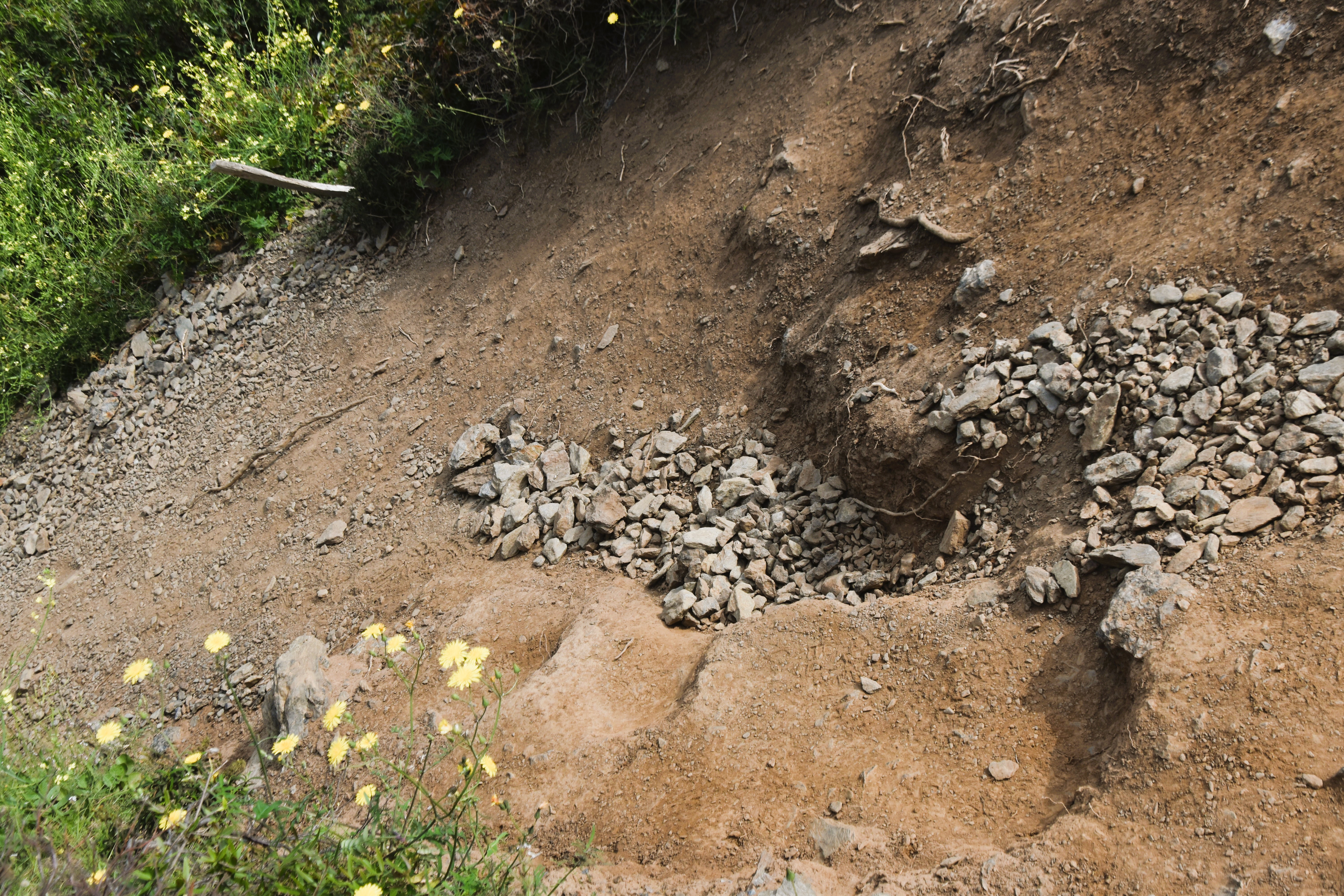
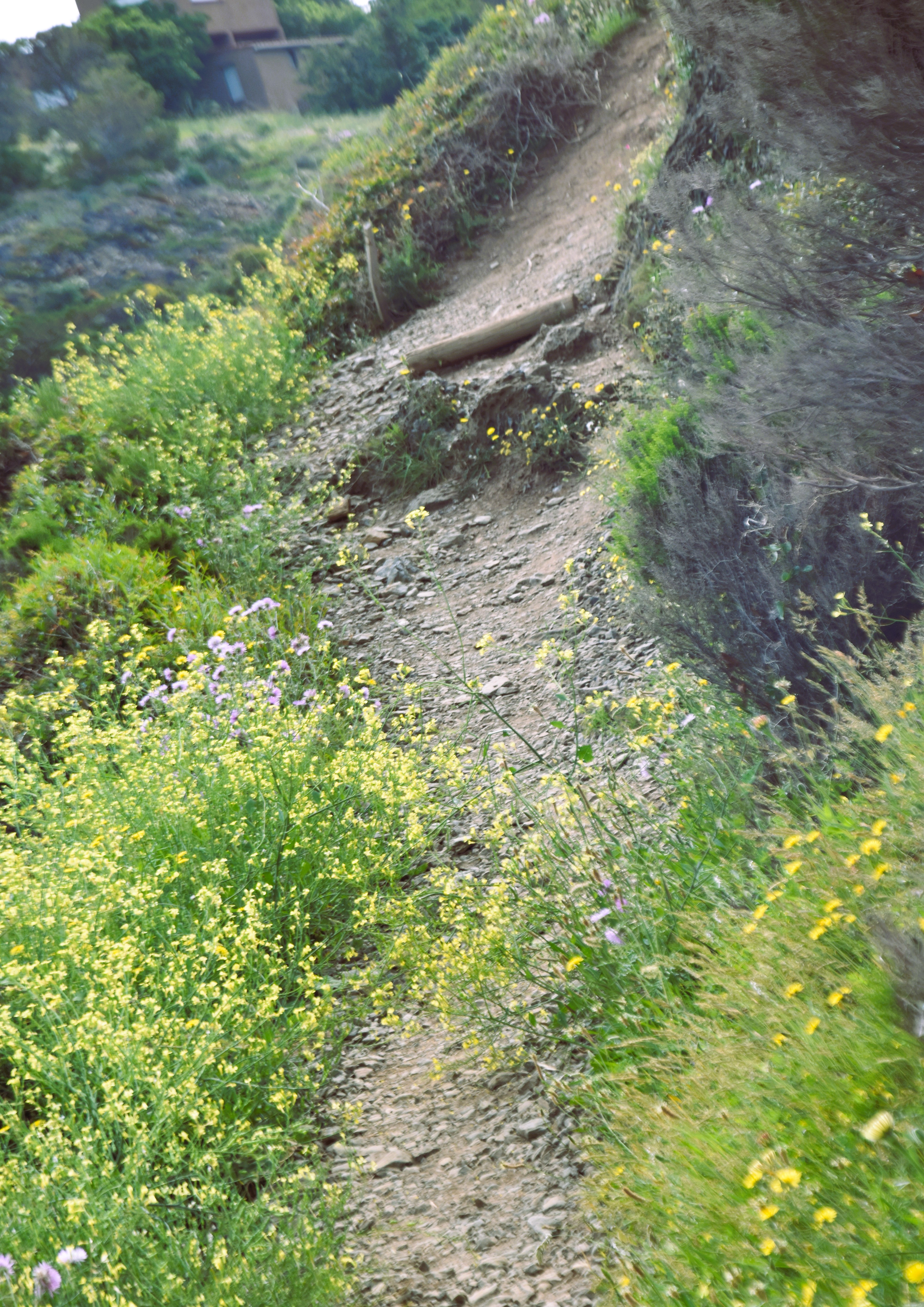
So discretion became the better part of vallor and I decended carefully. Picking Cassidy up I headed towards the village in search of coffee and thus begun Serendipity Sunday………
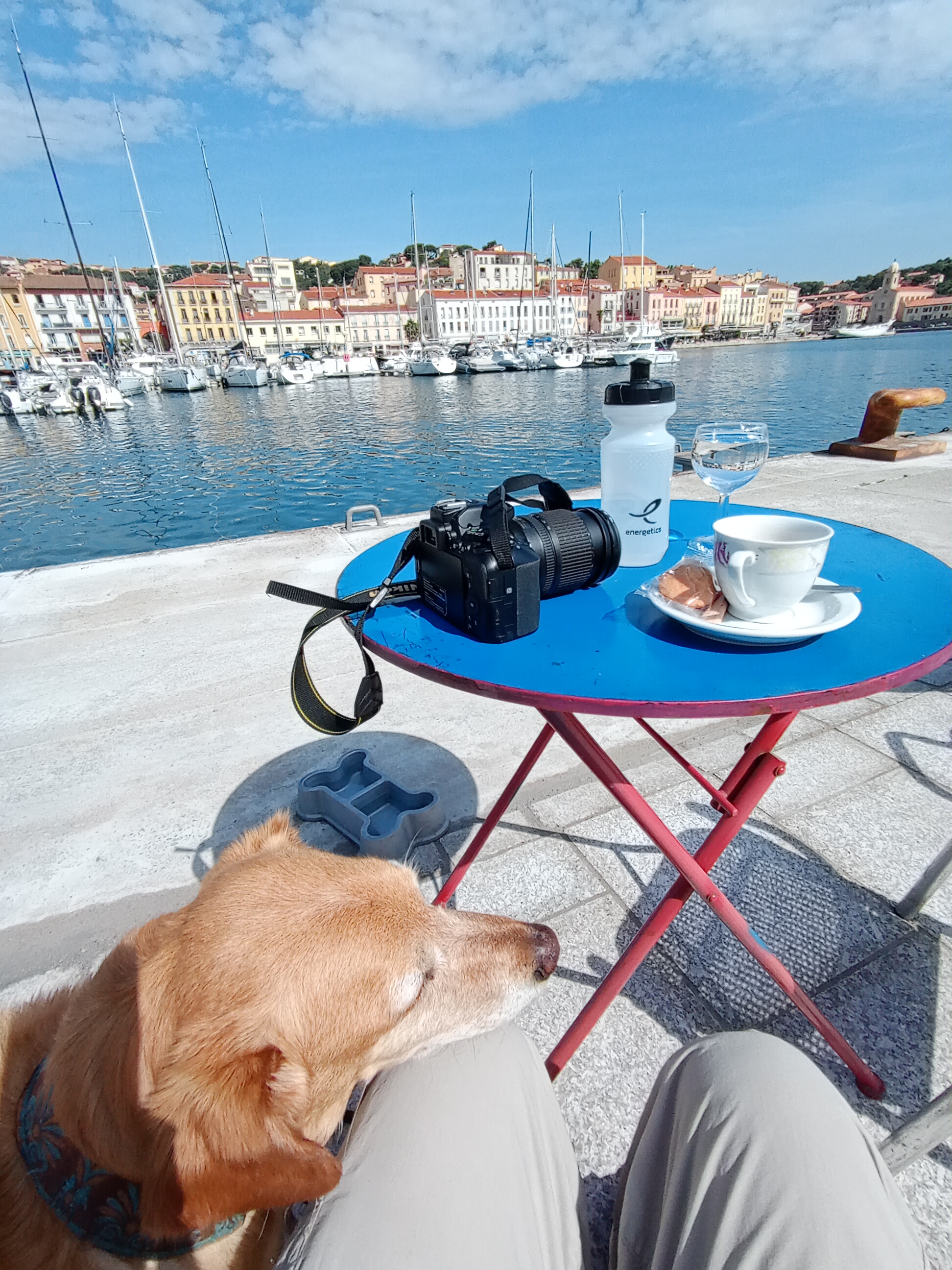
Round the corner was parked an enormous rig with Latvian number plates. The driver not being allowed to take it on the road today being Sunday, approached me and asked via Google Translate, “Is there a beach nearby?”, from the cyrillic script it was obvious that he was Russian speaking. As noted earlier the Aire is at the industrial end of the harbour so the first “hole-in-the-wall” cafe I stopped at was less than elegant! However I was enthralled by the sound of a nightinggale singing apparently from the roof, not an accustomed environment for this shy little bird with no tree cover in sight. I asked if he served coffee and was directed to a few sunlit tables next to the water. When he arrived with coffee, a medeline cake and water I asked if he was aware that there was a nightingale singing from above his shop. “Oh yes”, he said “that is my nightingale”. My first horrified thought was — caged bird. But no. It is a recording he plays to enhance the ambience. A short while later this aged hippy, now topped with a purple cowboy hat and carrying a guitar came and sat at one of the other tables. He had meantime bought water for Cassidy and asked both the dog’s my my names. A tall, rangy and taciturn Englishman arrived and was introduced to me as “John”, also carrying a guitar. In short shift the pair were strumming away gently to a selection of country and bluegrass. More than an hour was wiled away in this gentle comapny all for €1.50!
In 1923 Glasgow born architect, designer and artist, Charles Rennie Mackintosh (1868 – 1928) moved to France where he spent his last years painting. Some of the work he executed locally is displayed on panels round the town.

and here’s a thing. The last word in vending machines for an area of the Mediteranien coast where diving is so popular, an air dispenser for topping up your SCUBA tank!
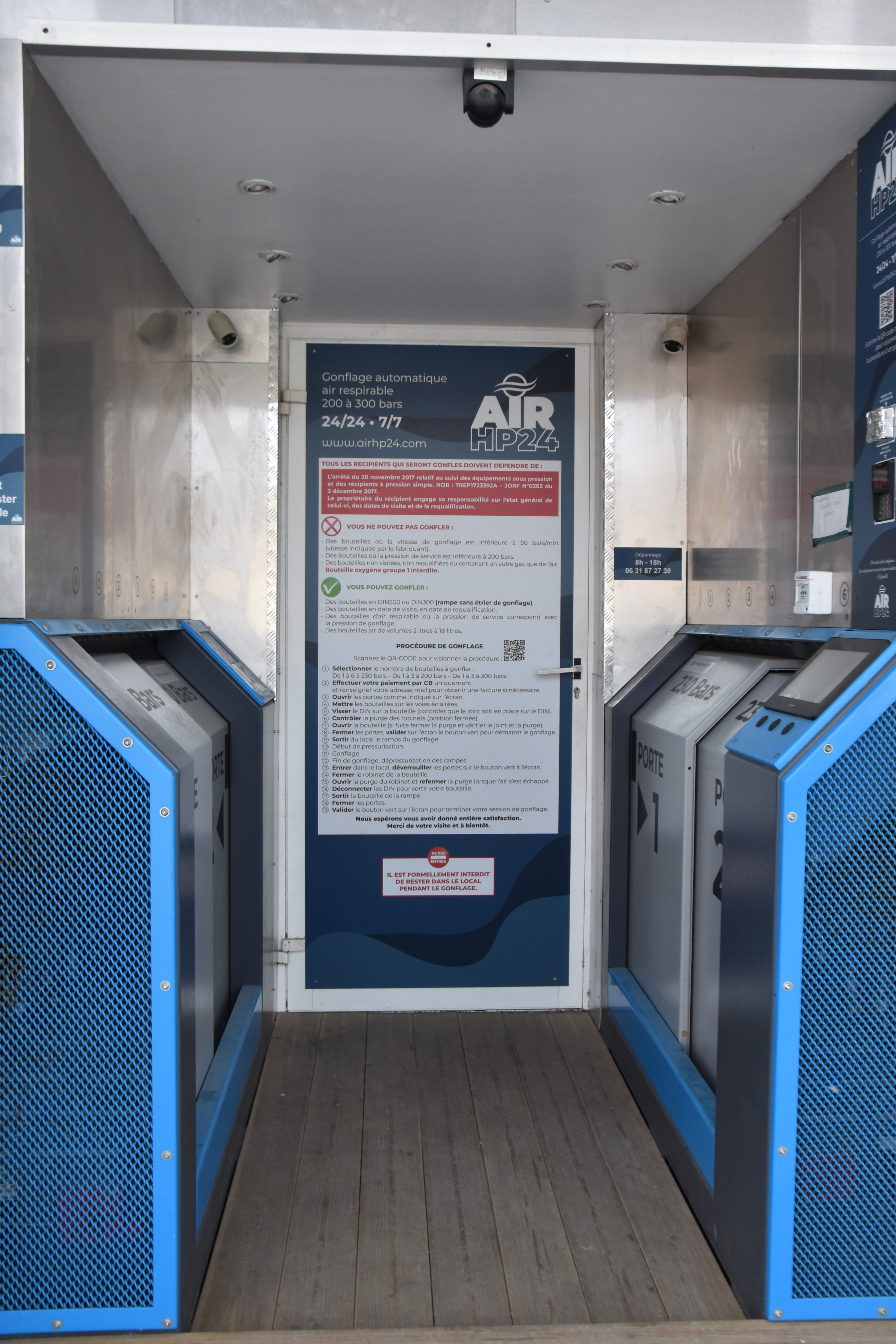
May life never cease to amaze me!
27th. It was grey and heavily overcast this morning and cool enough to go back to long pants! Especially as I have decided to head inland and into the Pyrénees today. I had thought of continuing south along the coast and crossing into Spain but the road concerned was a fast road with a lot of heavy vehicle traffic in a big hurry so I decided to take smaller roads with the hope of at least being able to see the scenery. First stop was Le Boulou. I had coffee in the town centre and looked at the 2 Aires. One has been shut down and the second further out of town has been enhanced to include electricity and a higher overnight fee! The town itself was less than awe inspiring, its best feature being a fortified Romanesque church.
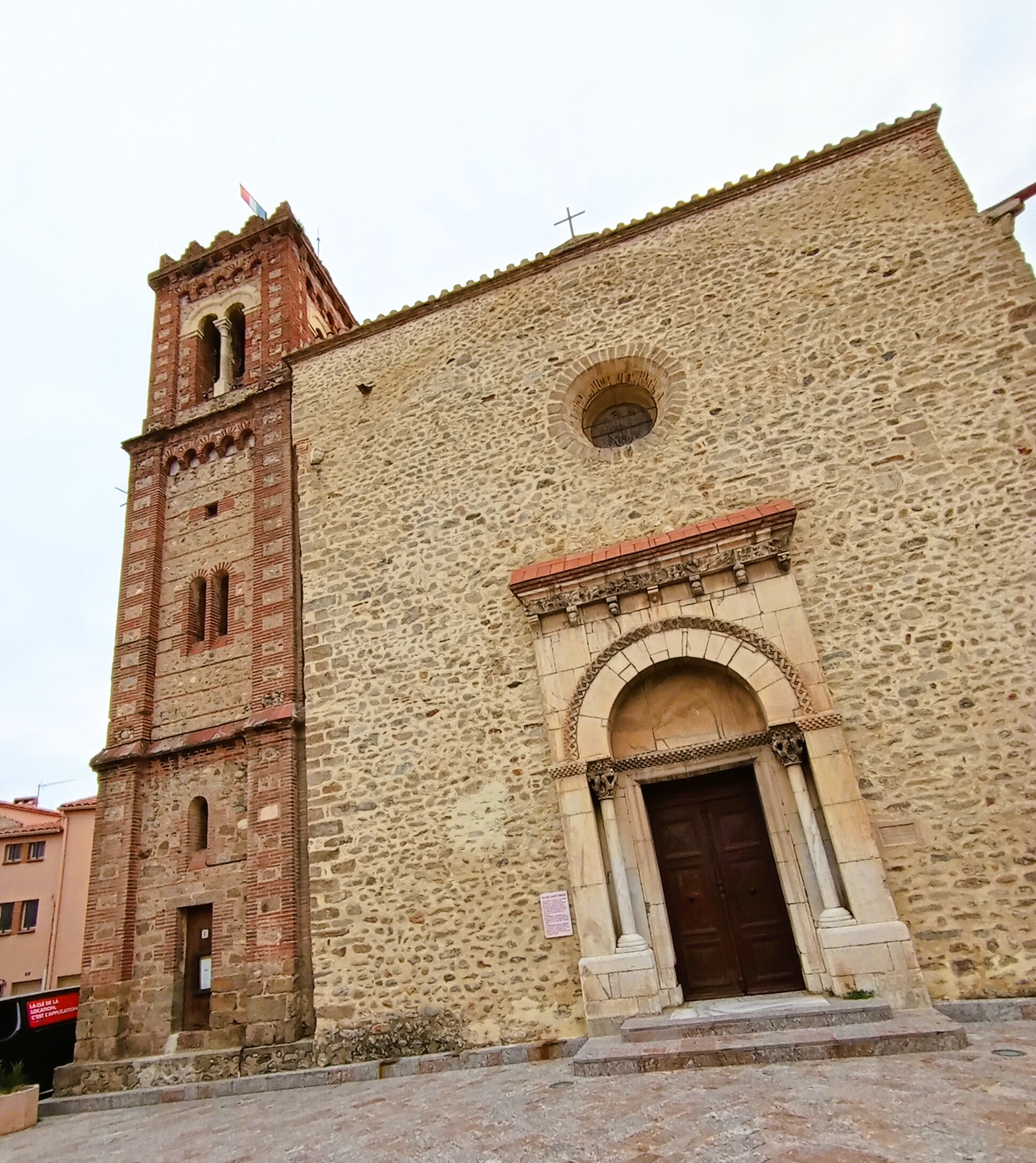
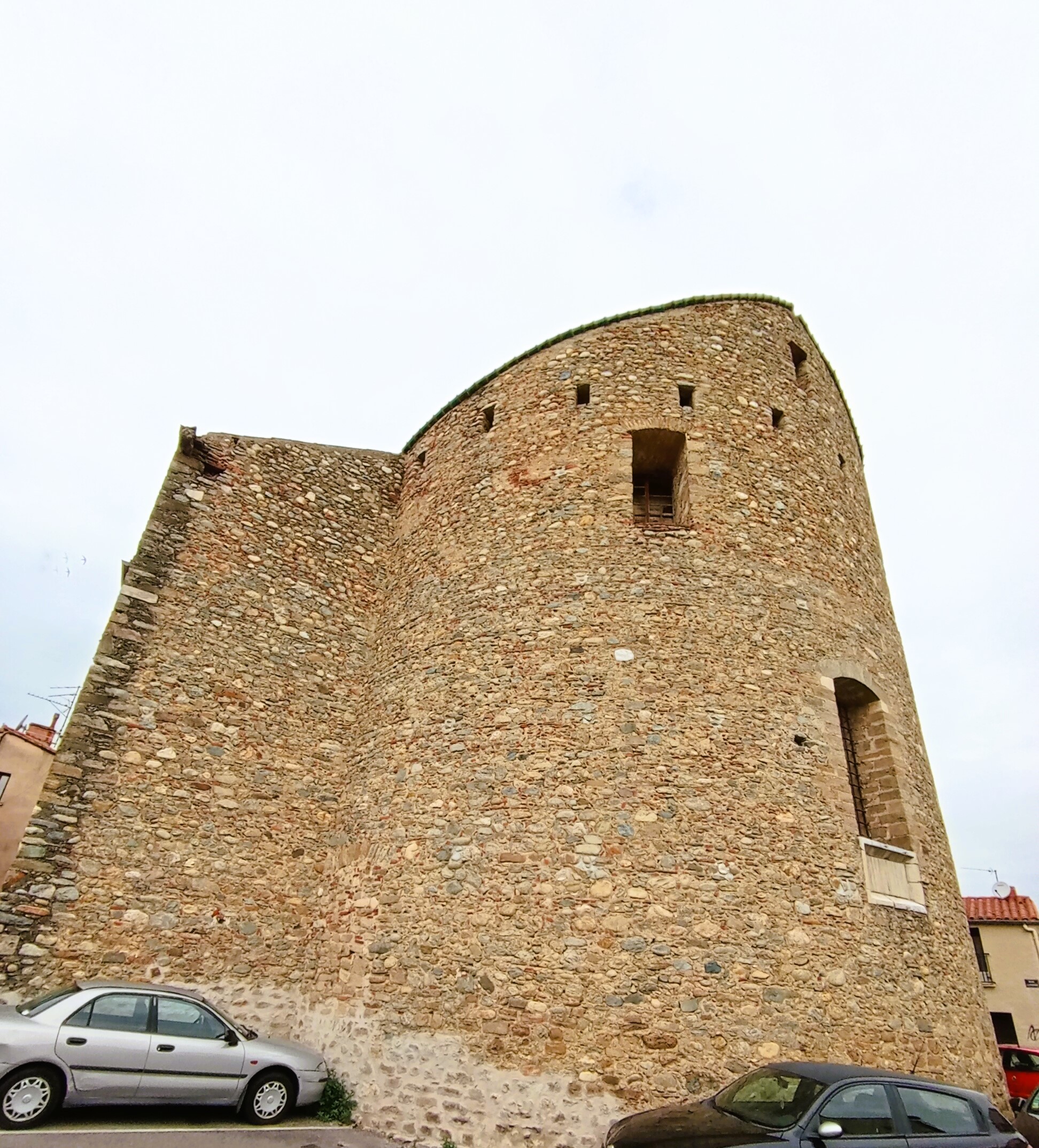
Th town is on the river Tech so I took Cassidy for a walk along it banks before heading back to the van and on to Amélie-les-ains/Palalda.
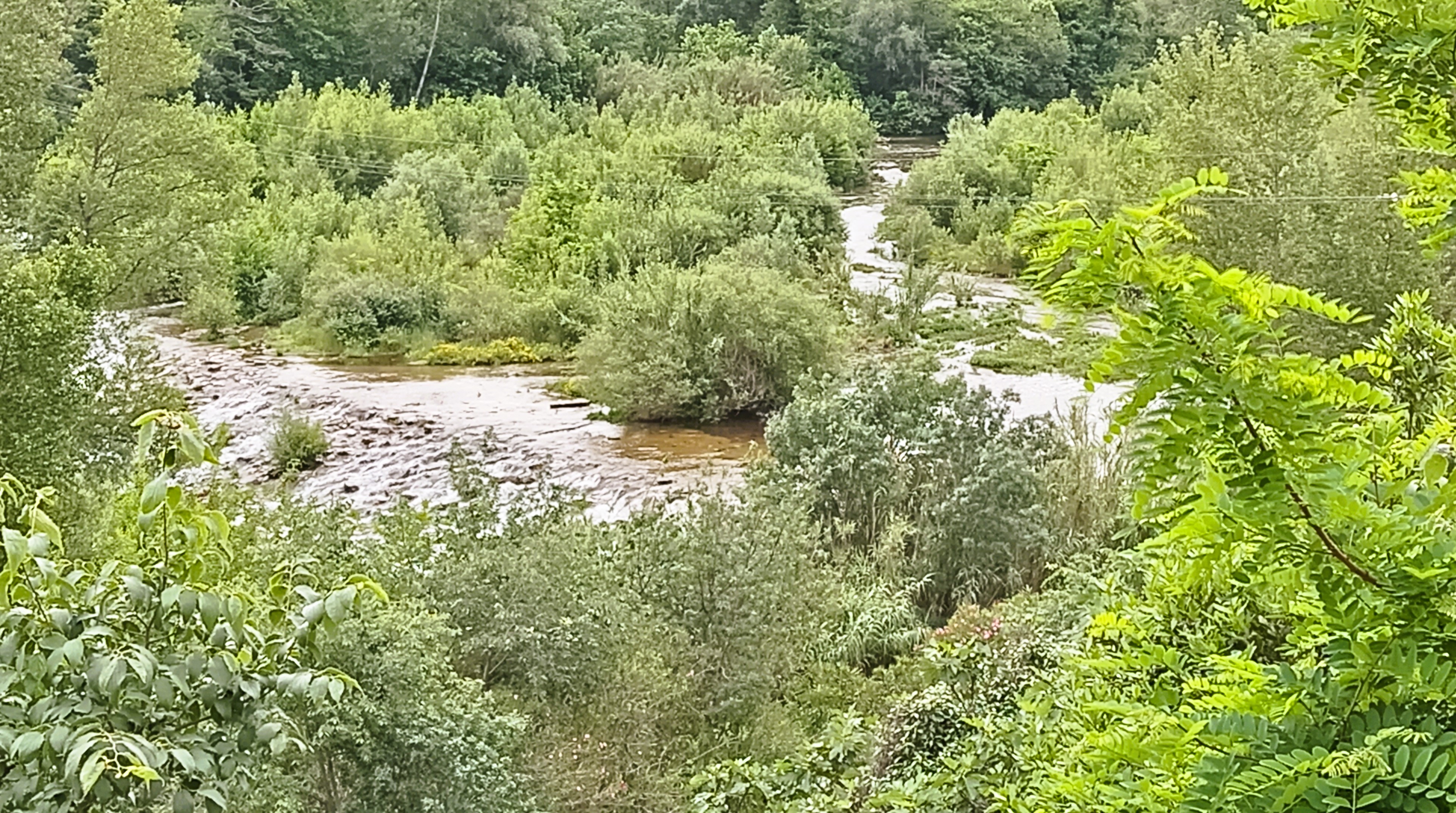

28th Spent the night in the Palalda Aire which is about half wsy between Amilie and Palalda with not a lot to see in the immediate vicinity. Woke up this morning to clear skies which put the seal on tackling the D618 from Palalda to Bouleternére and from there a short hop on the N116 to the Aire at Vinca.
Well if anything was designed to cure my wimpishness over challenging drives – this was it. It took me the best part of 2 hours to cover the 51K. The road is tortourous but the sceneery is stupendous, on the odd ocassion when you can take your eyes off the road momentarily. St. Marcel was at the peak of the climb, overlooked by the magnifiscent Pic-du-Canigou.

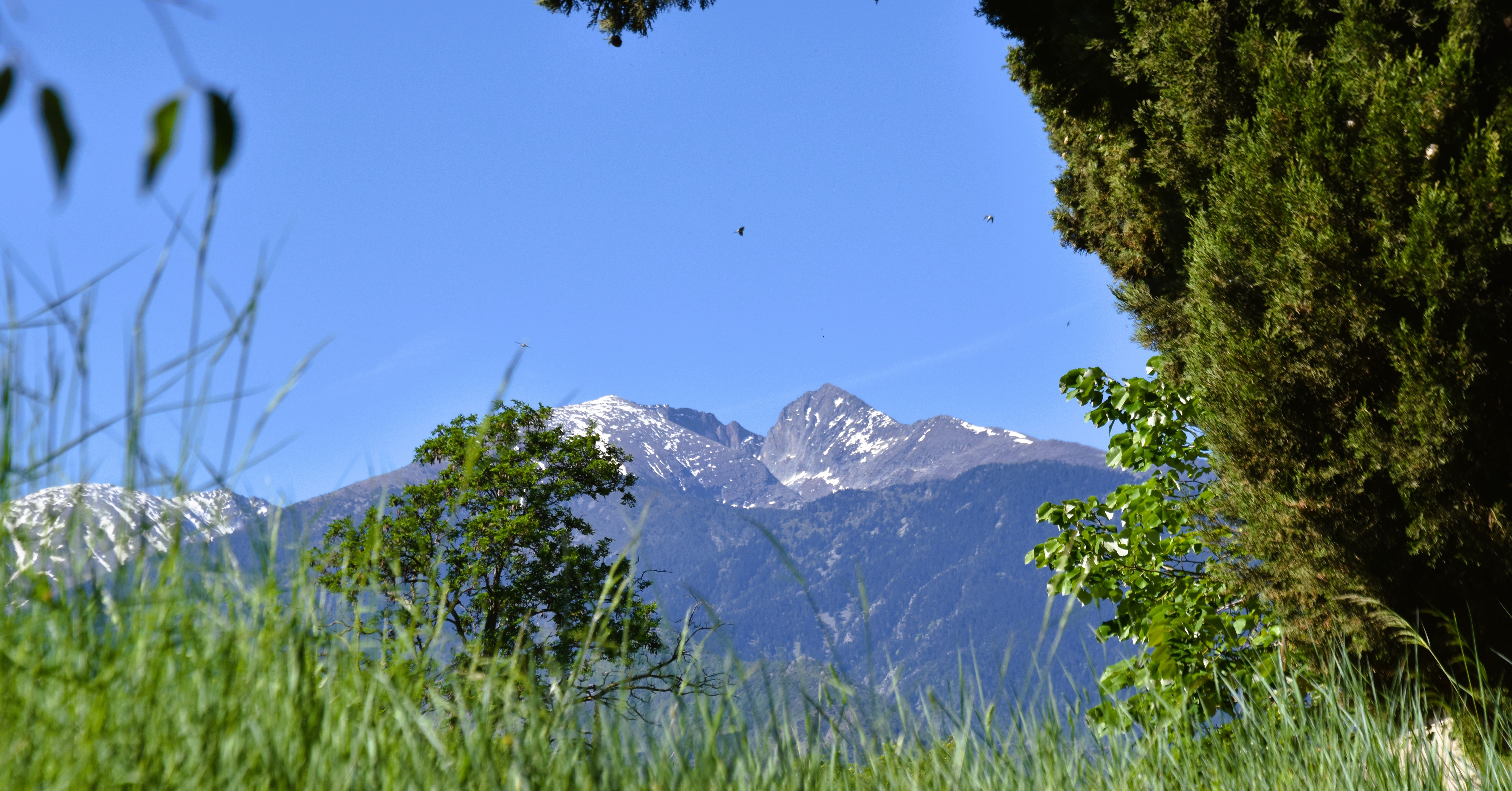
Arriving it the village of Vinca, with a rather smug feeling of, “what doesn’t kill you, makes you stronger”, my priorty was coffee!!! with the best of both worlds, croisant and pain au raison – albeit minis!

Vinca is a handsome little town. There is a change in the building materials with a predominaence of brown stone and with the paucity of flat space tall and narrow is the order of the day.
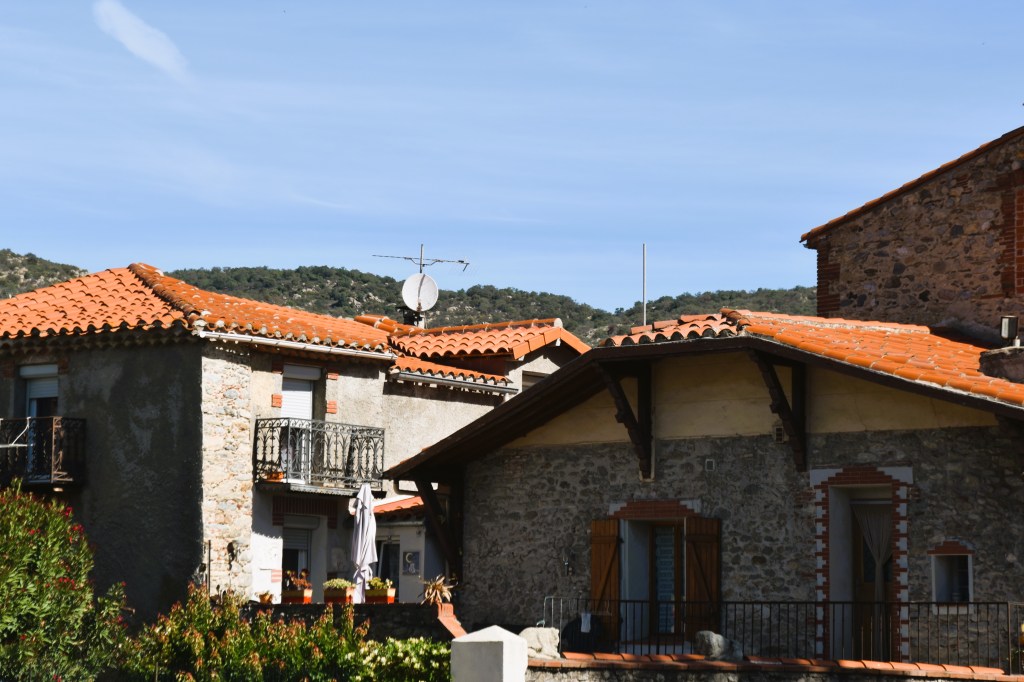
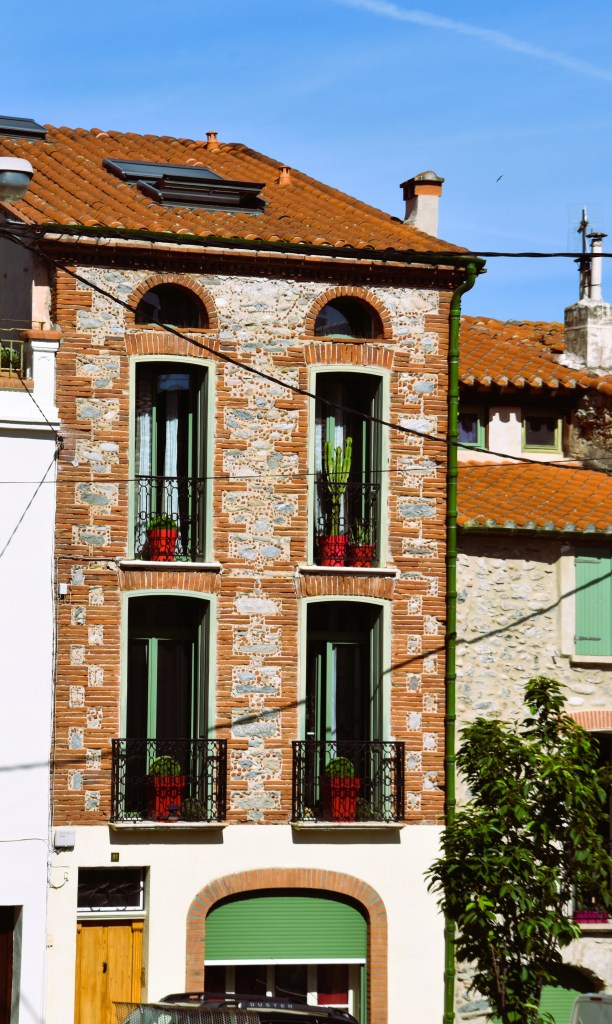
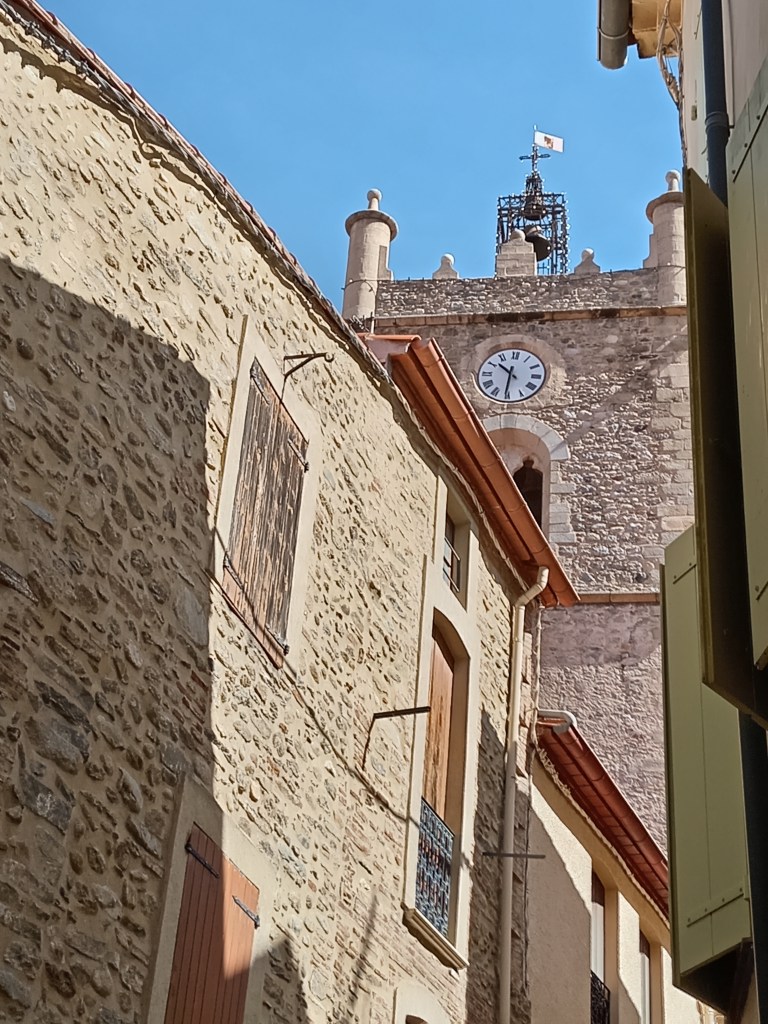
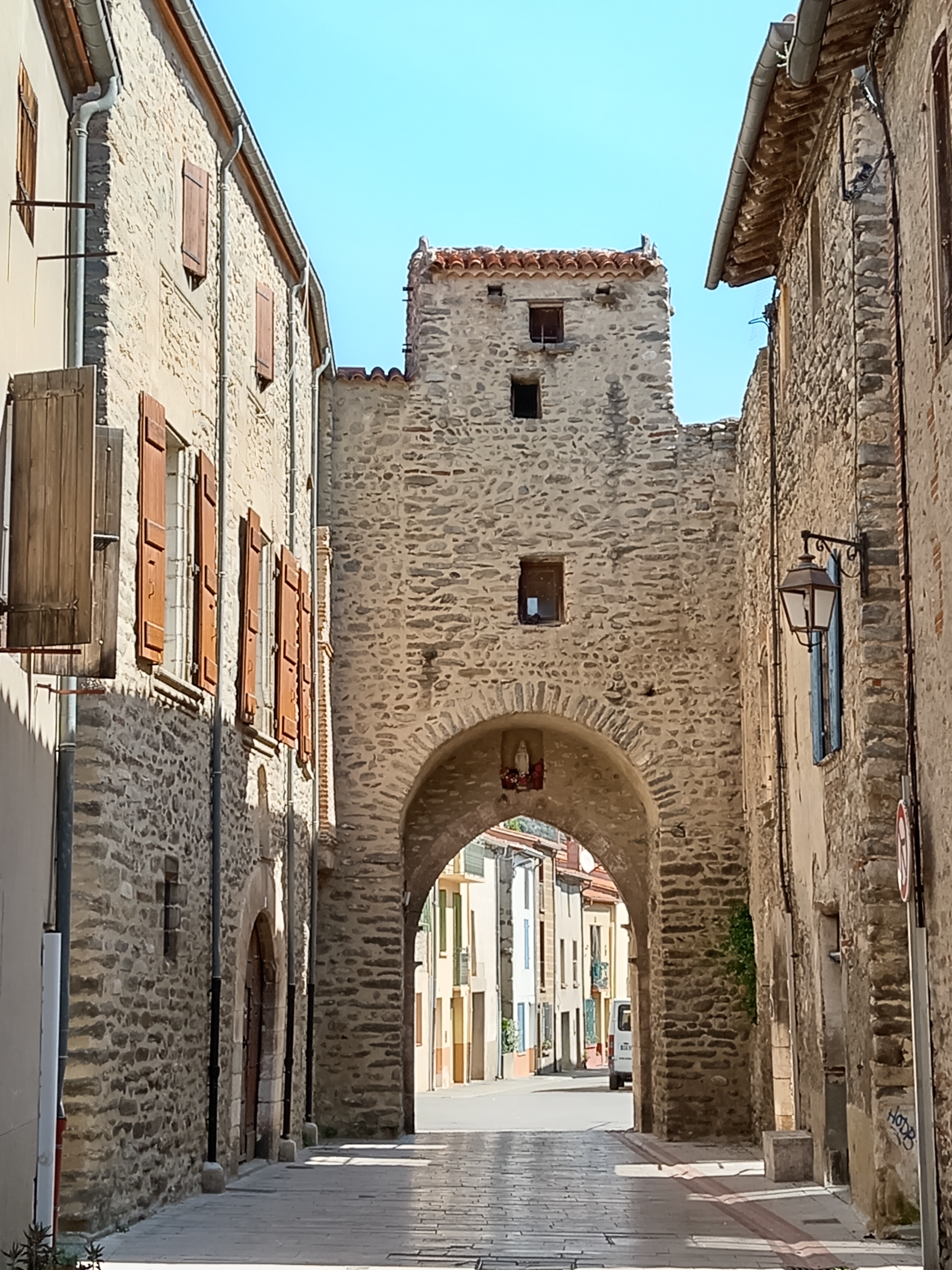
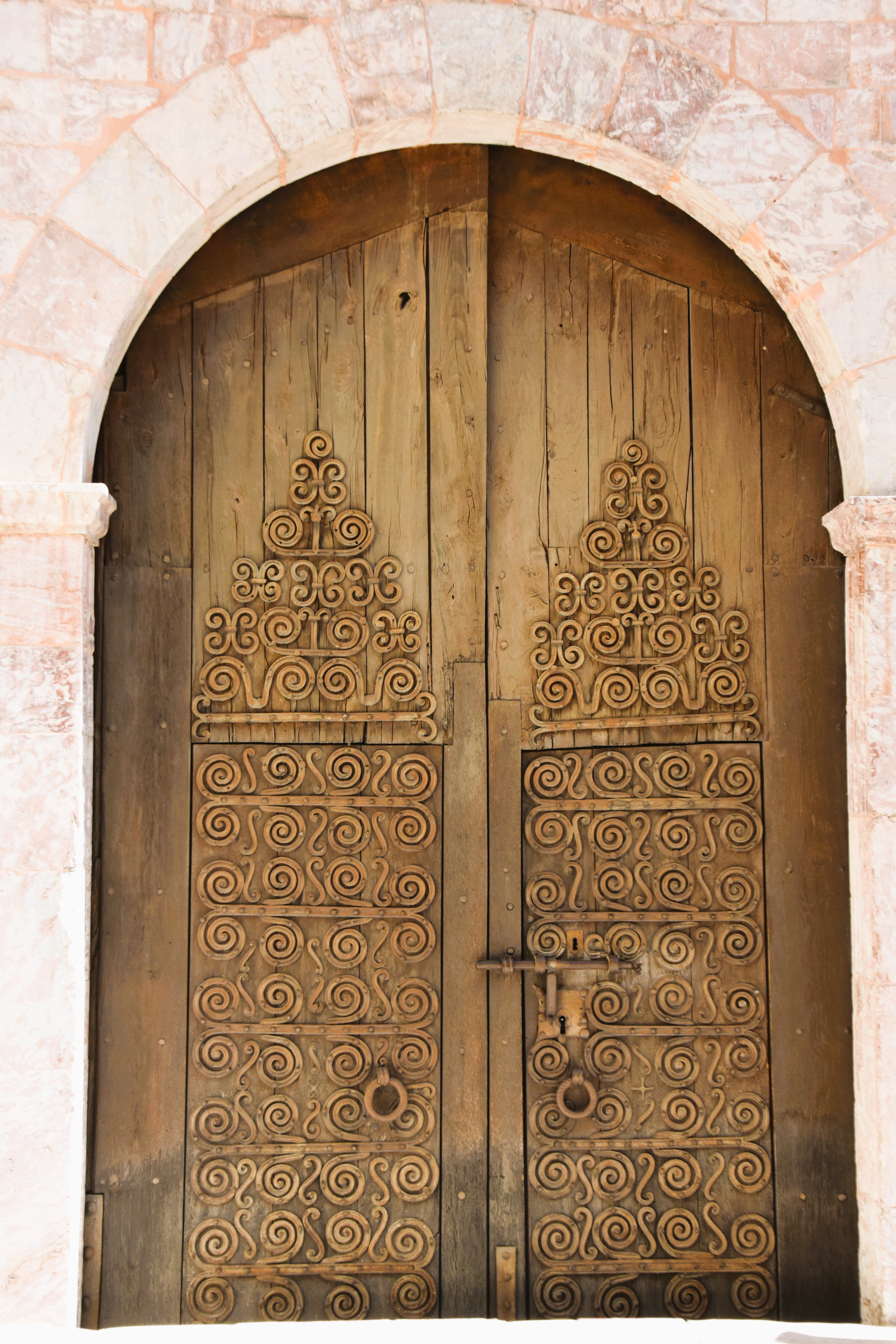
The church has a lovely decorated door.
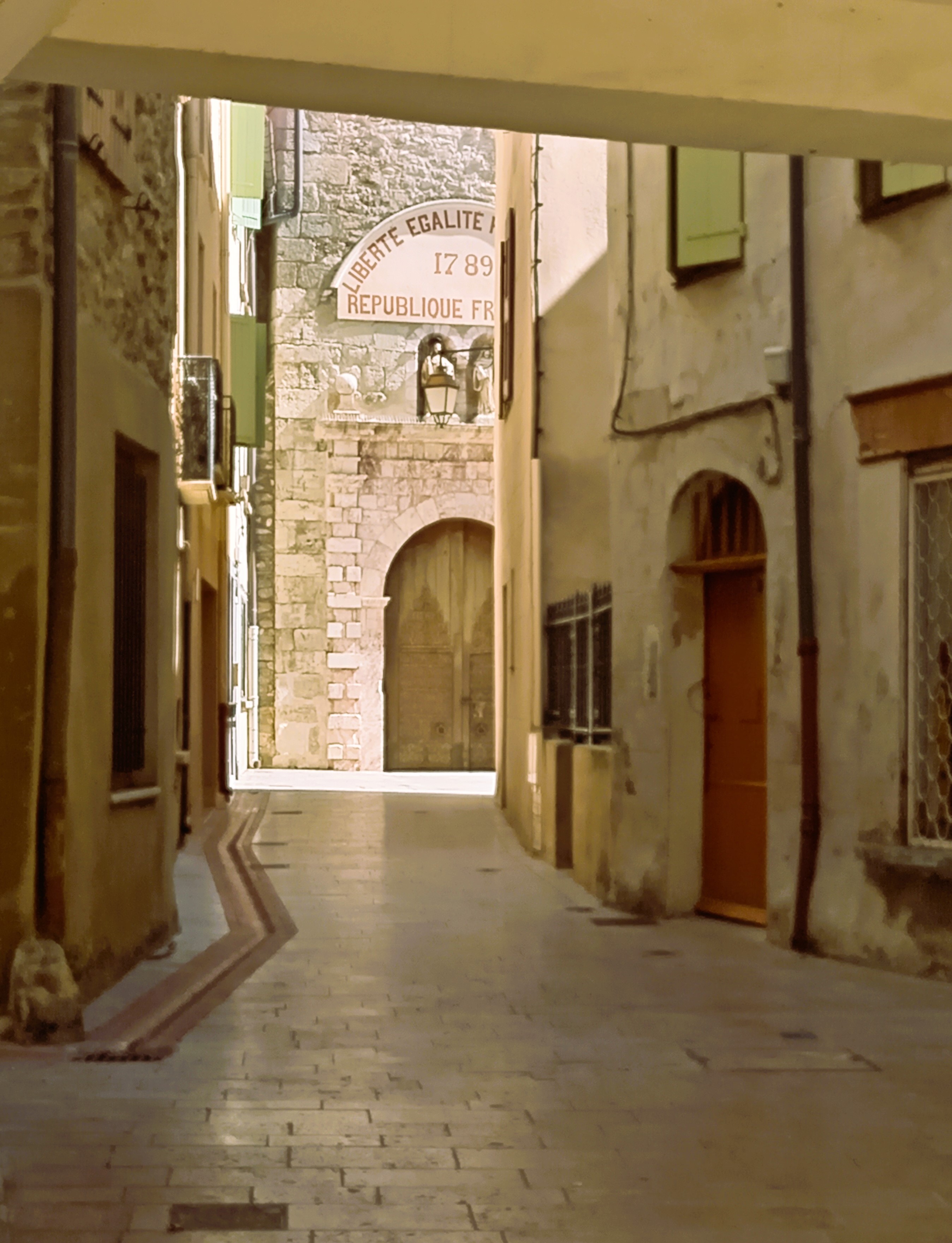
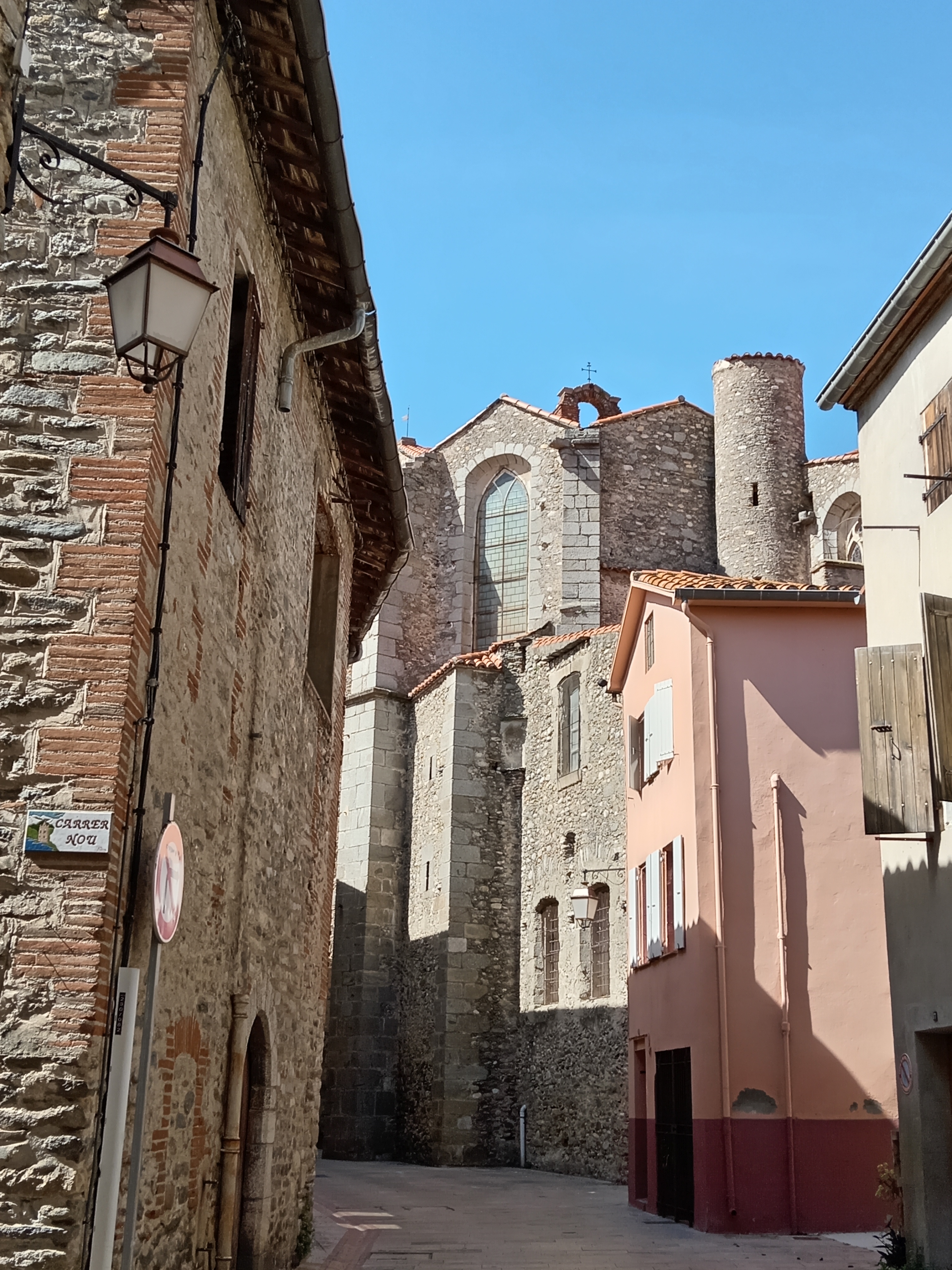
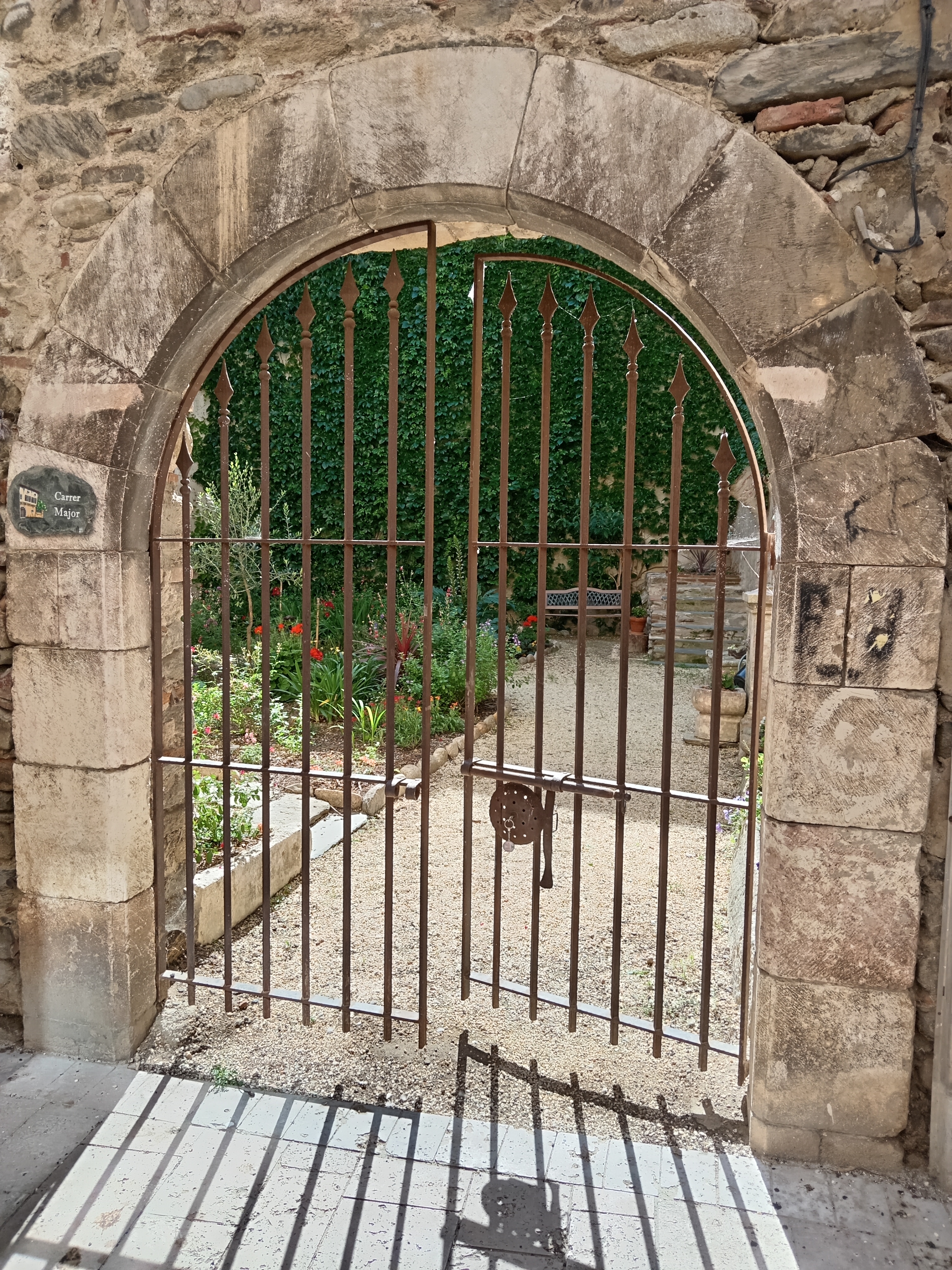
There is a secret garden and views of the Pic up the side streets.
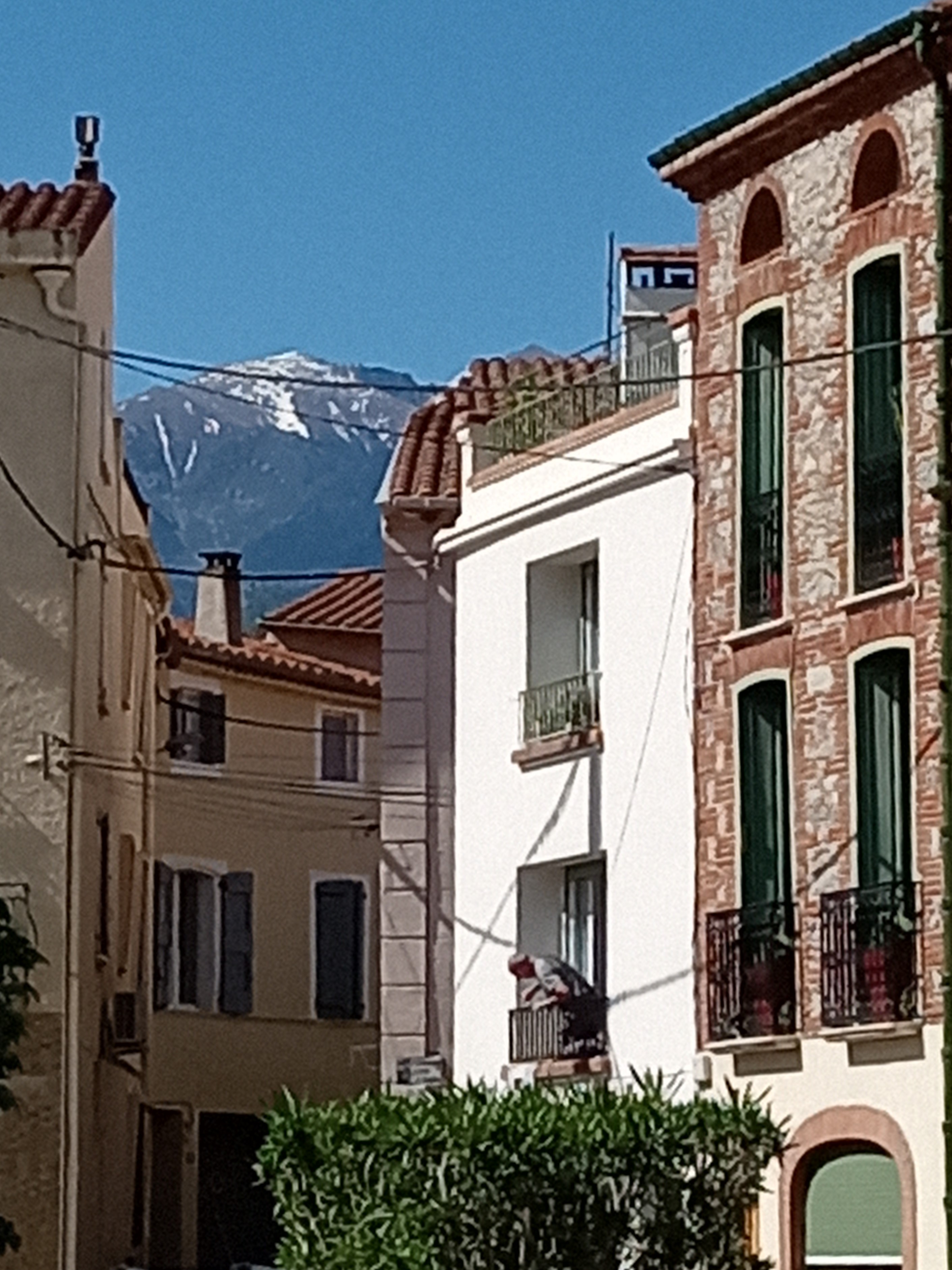
I bought half a roast chicken, roast potatoes and celery at the market in the square and went back to the car park for lunch in the van.
The lake at Vinca.

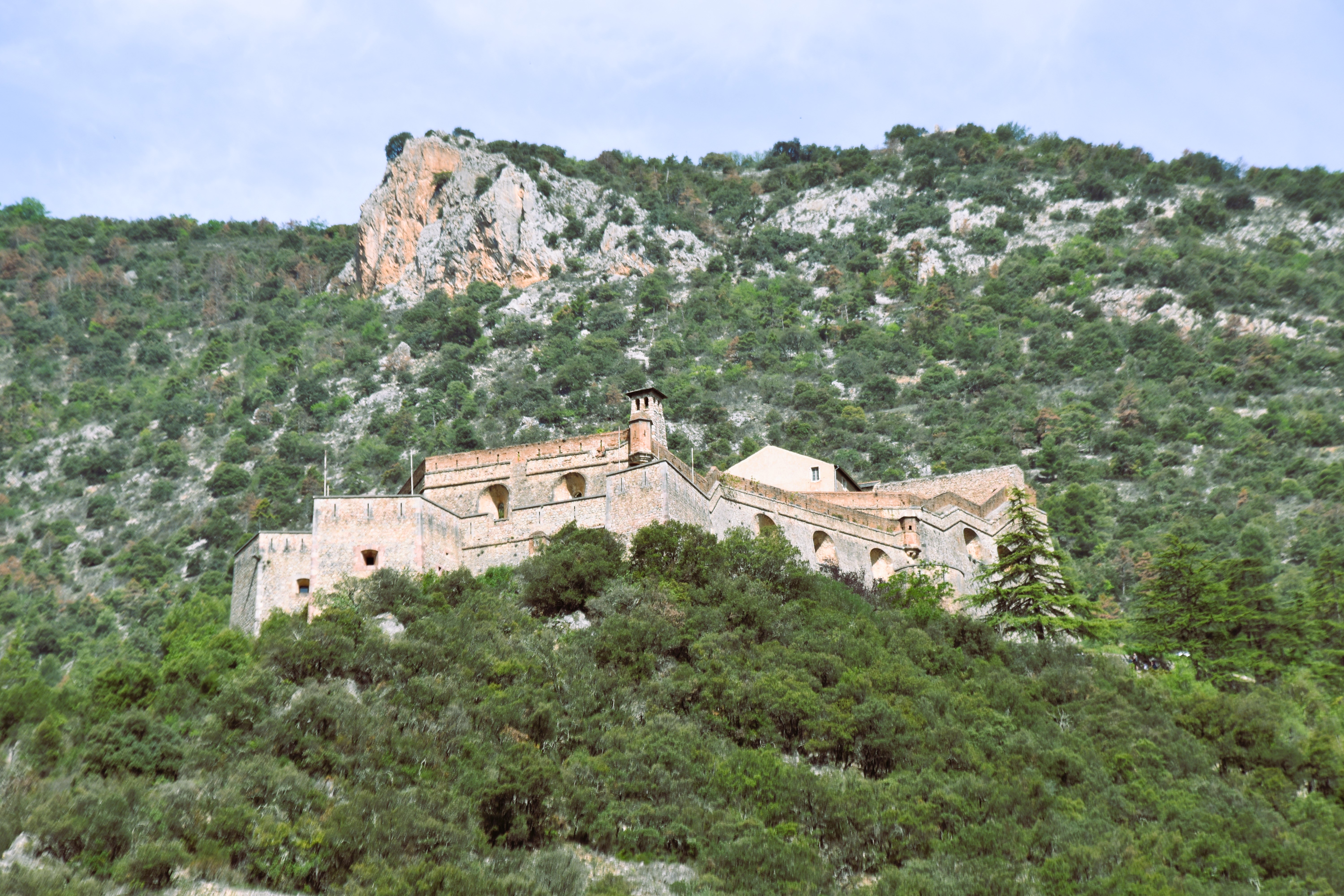
29th. Set off one the N116 with the first stop being off the main road to an Abby near Prades but as it did not open for another half hour I decided I could live without it and moved on to Villfranche-de-Conflent and the Vauban Fort Liberia. It was quite a busy spot so I left Cassidy in the car and just had a quick look around.
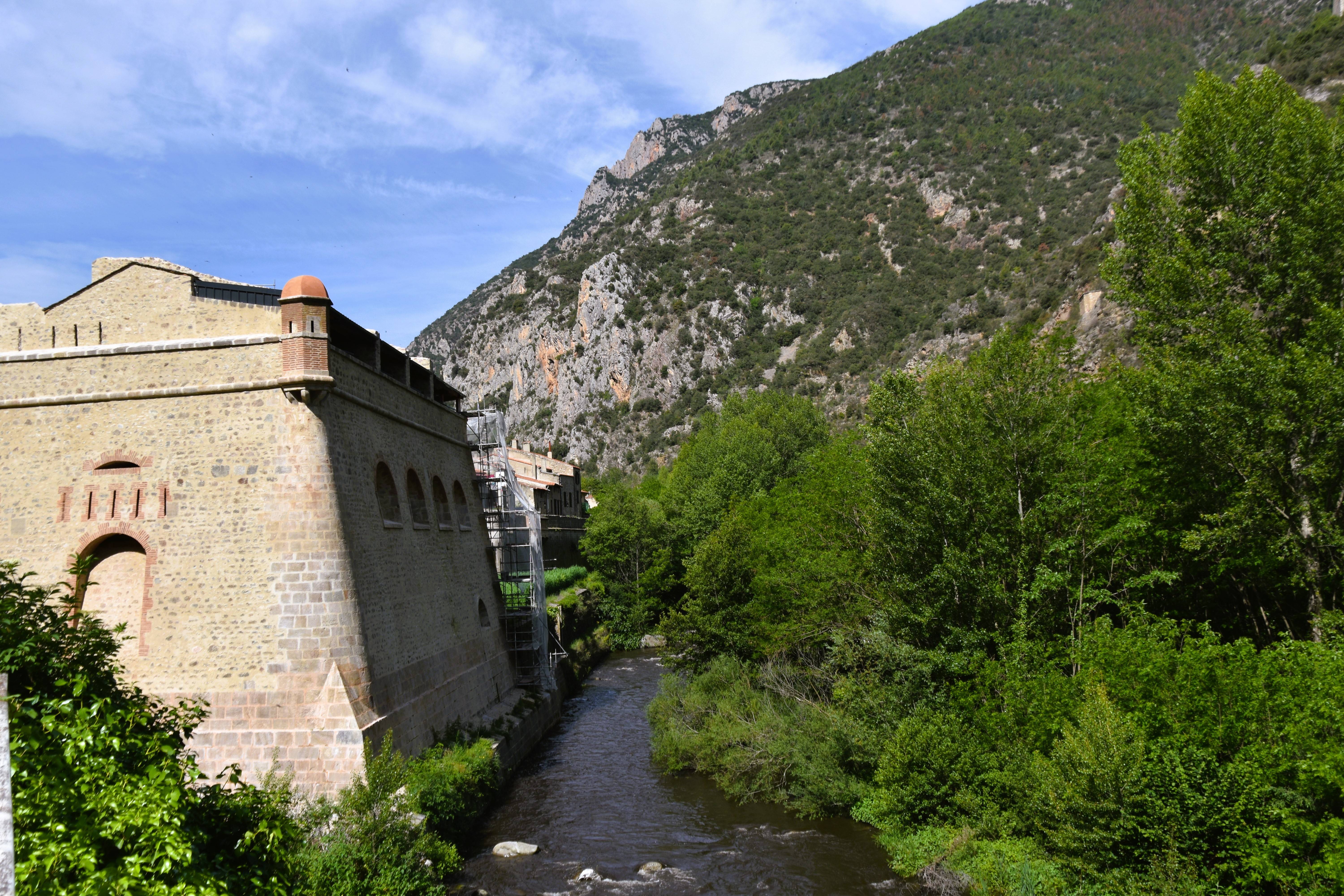

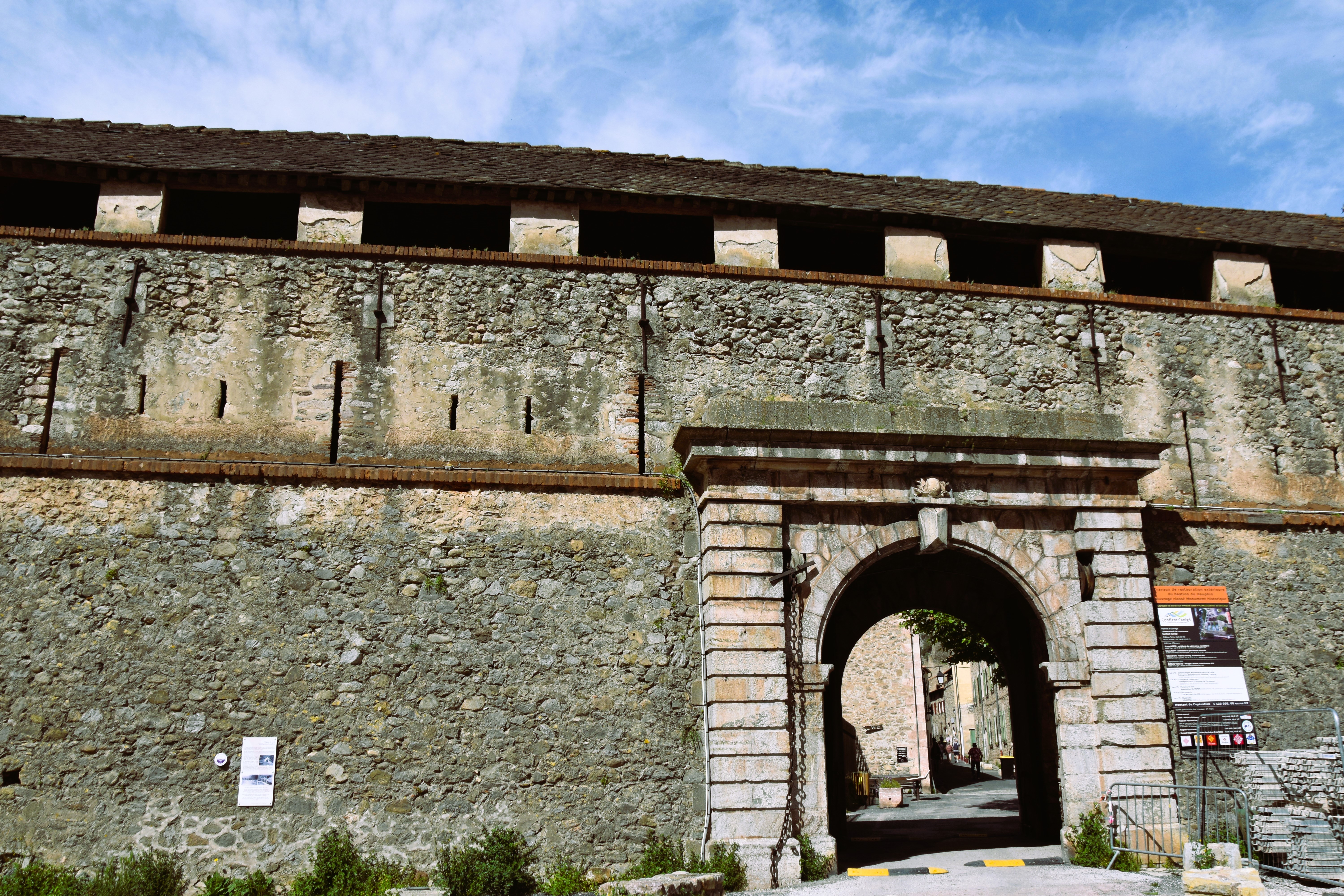
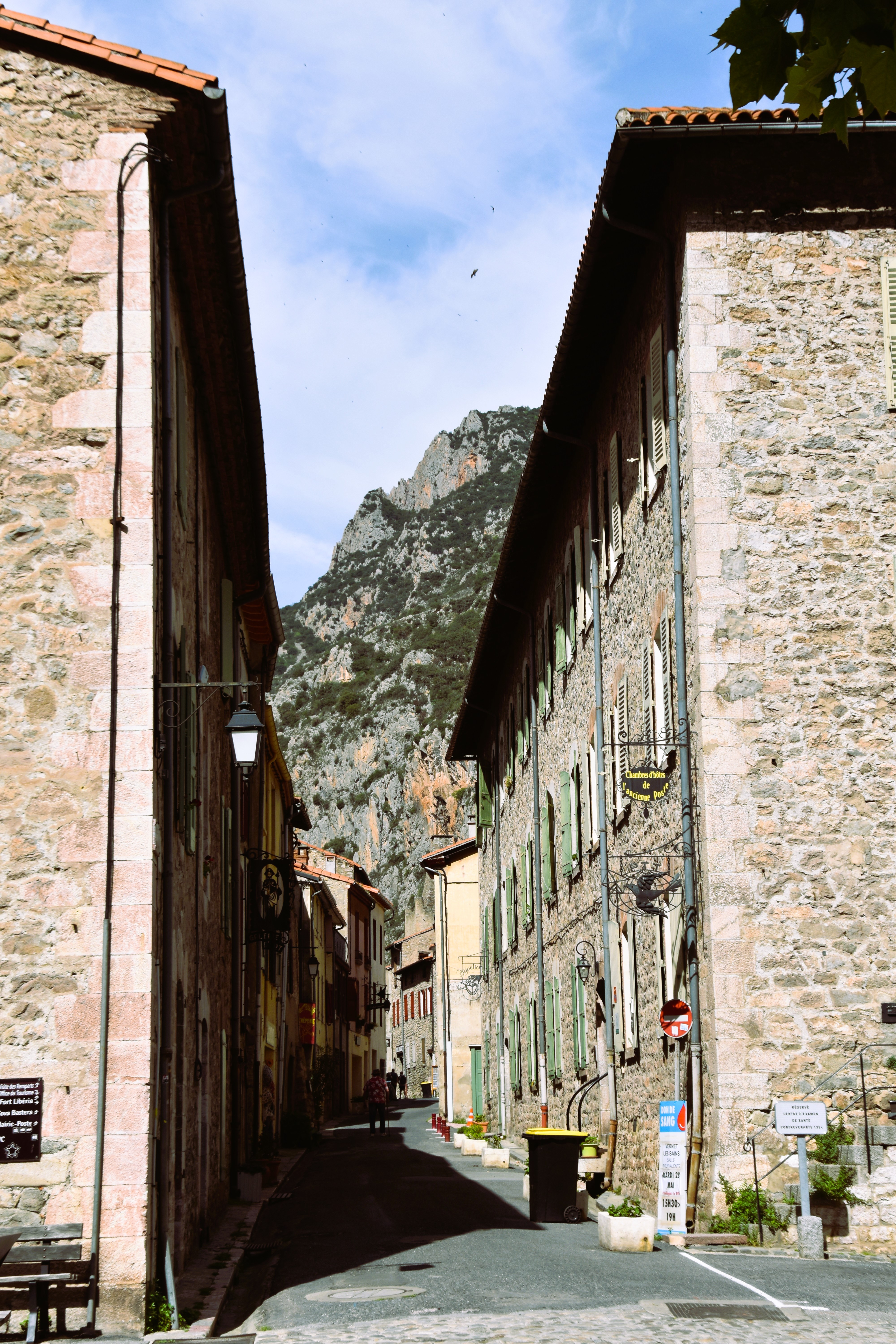
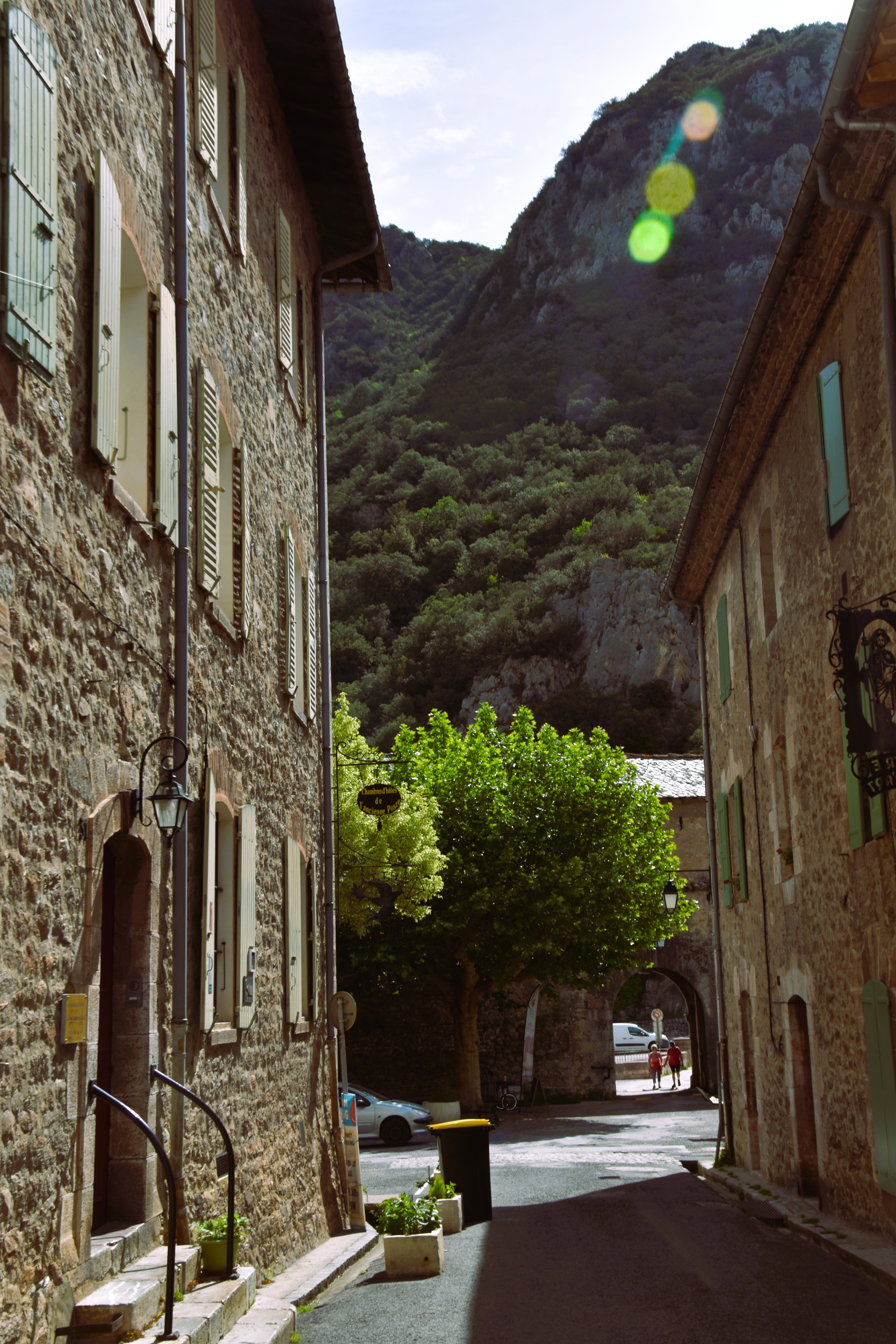
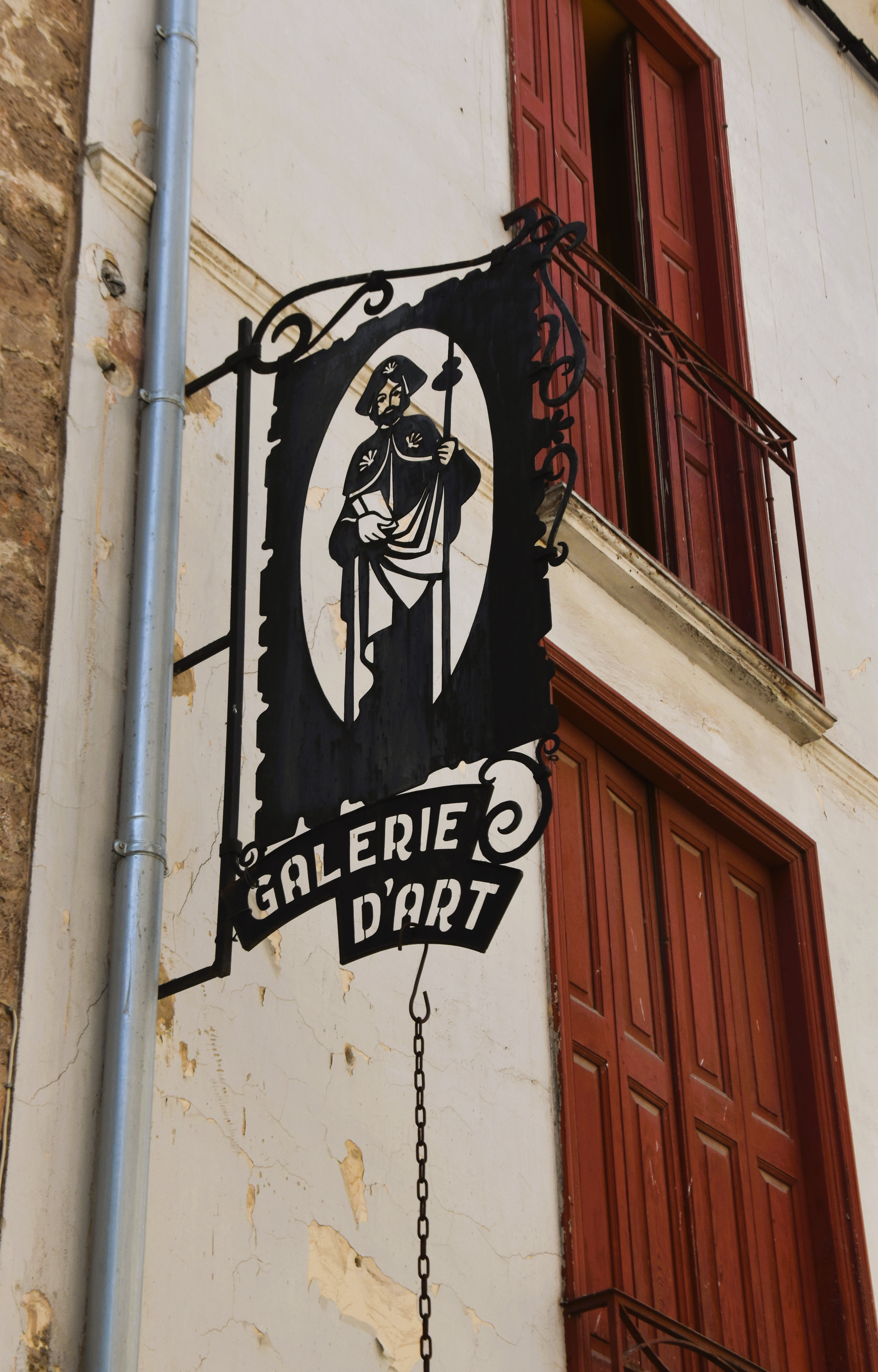
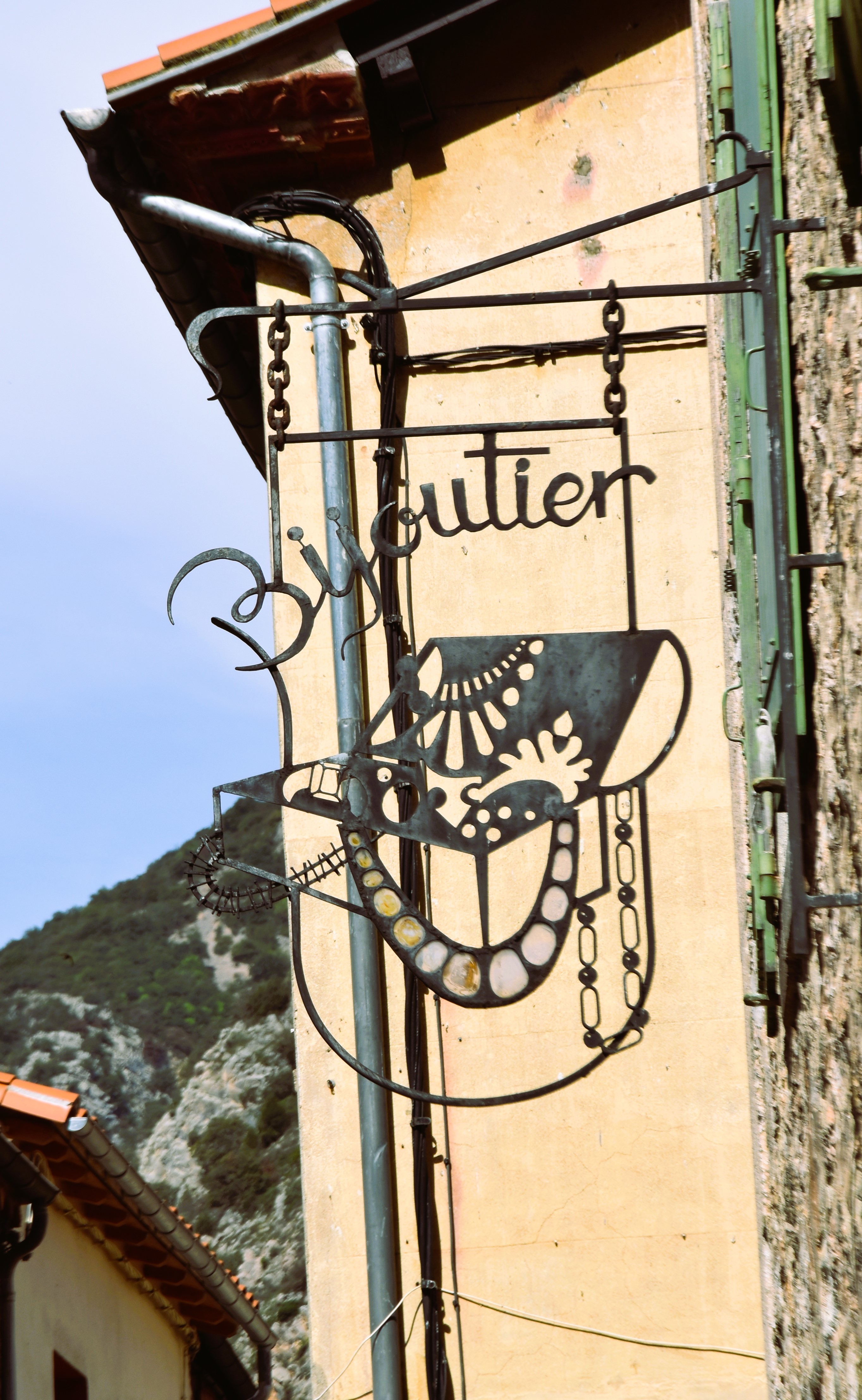
Inside it was much like all the others, loots of tourist outlets! But it did also hve some ni ce shop signs.
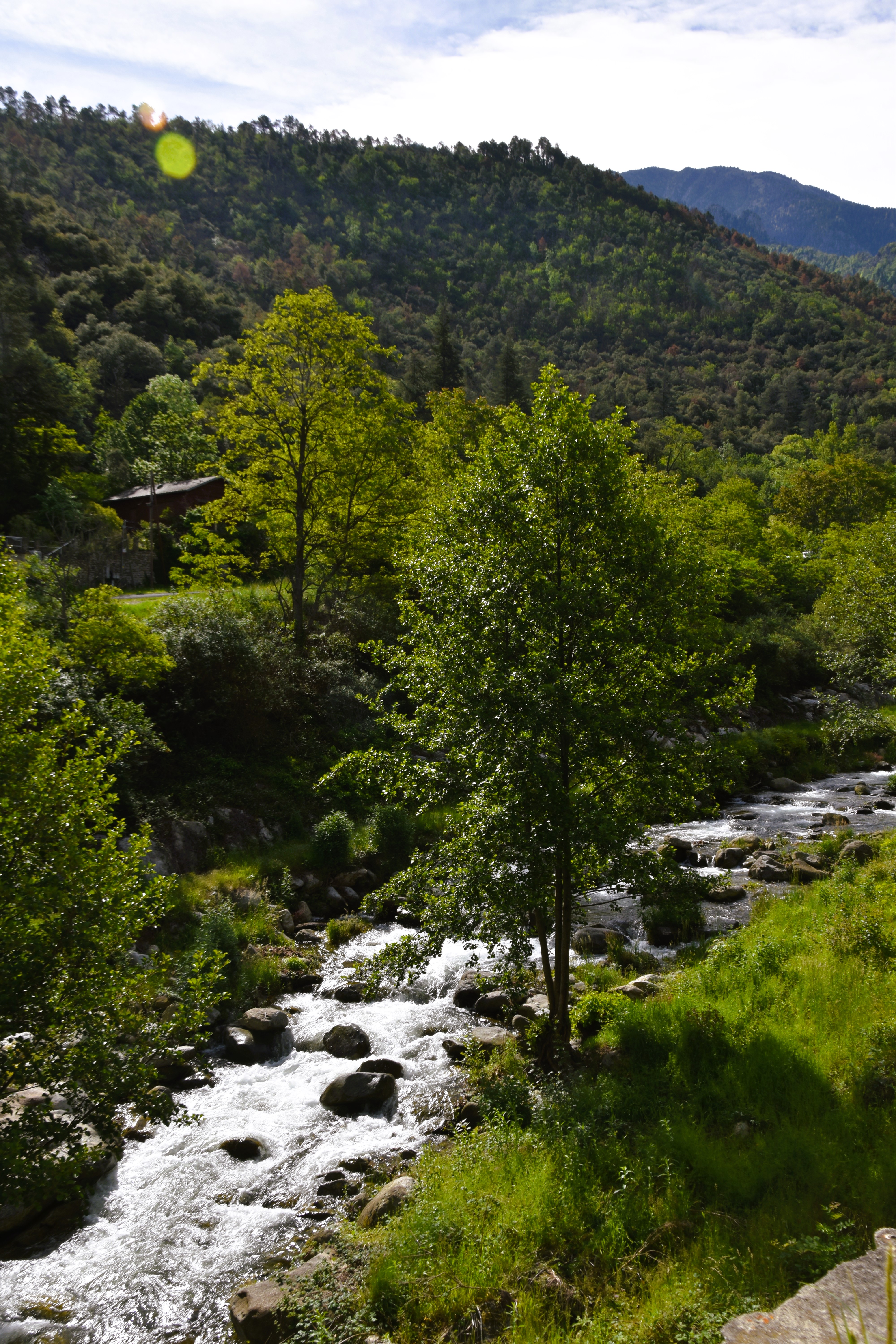
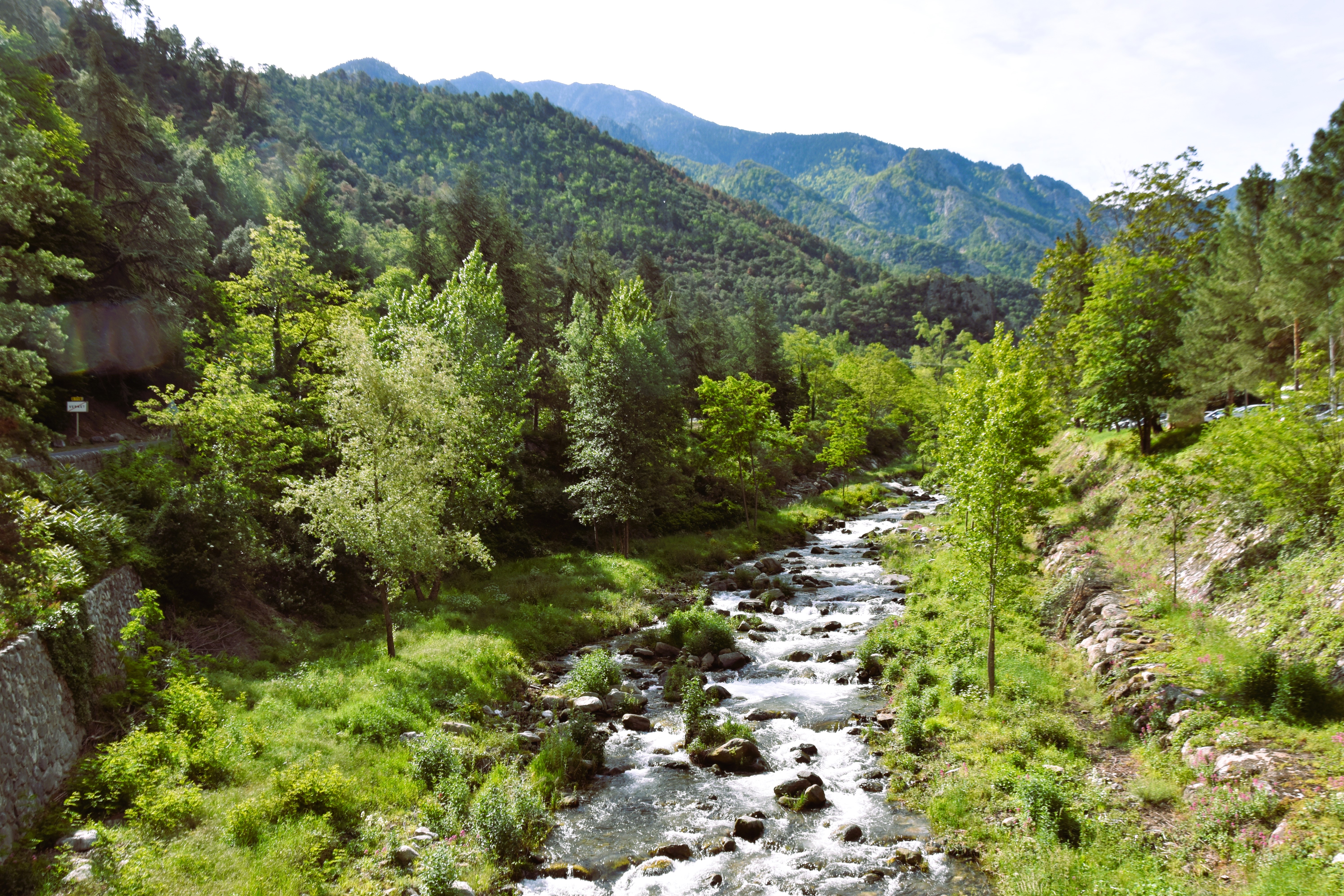
La Têt is the river running along this vally, views from the town bridge.
And the impressive Abby of St Martin-du-Canigou can be seen on the hillside above the town.
I was thinking of staying at the Aire here but was not impressed with it and as there was colder and wetter weather coming in late on Thursday I decided that it would be better to press on the 34k to Mont Louis. The road was good but we are climbing to 1575m so it is also steep and vety winding. I got really pissed off with impatient drivers hooting agressively because they did not think |I was going fast enough!
Parked in the Aire at Mont Louis with stunning views.


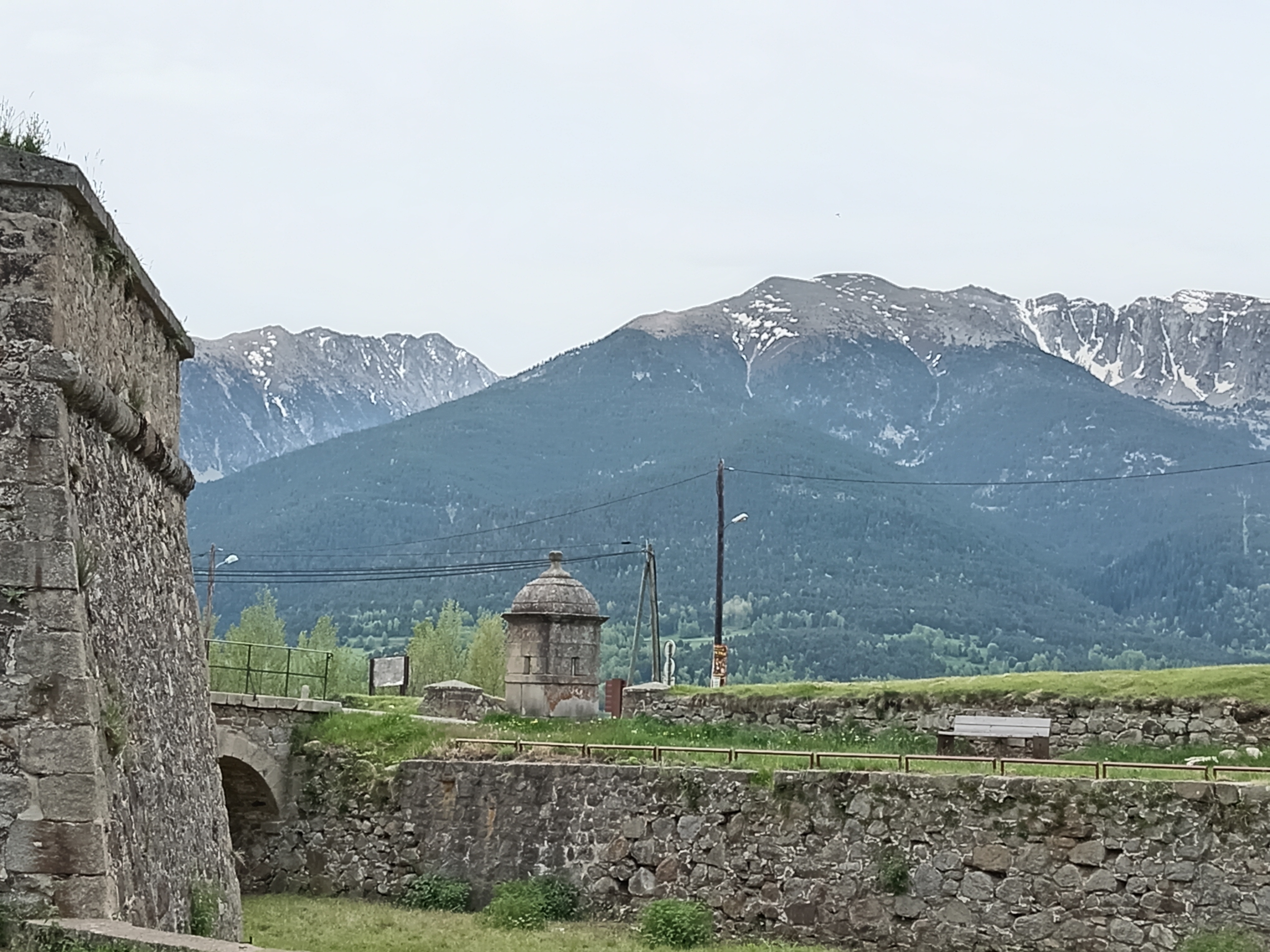
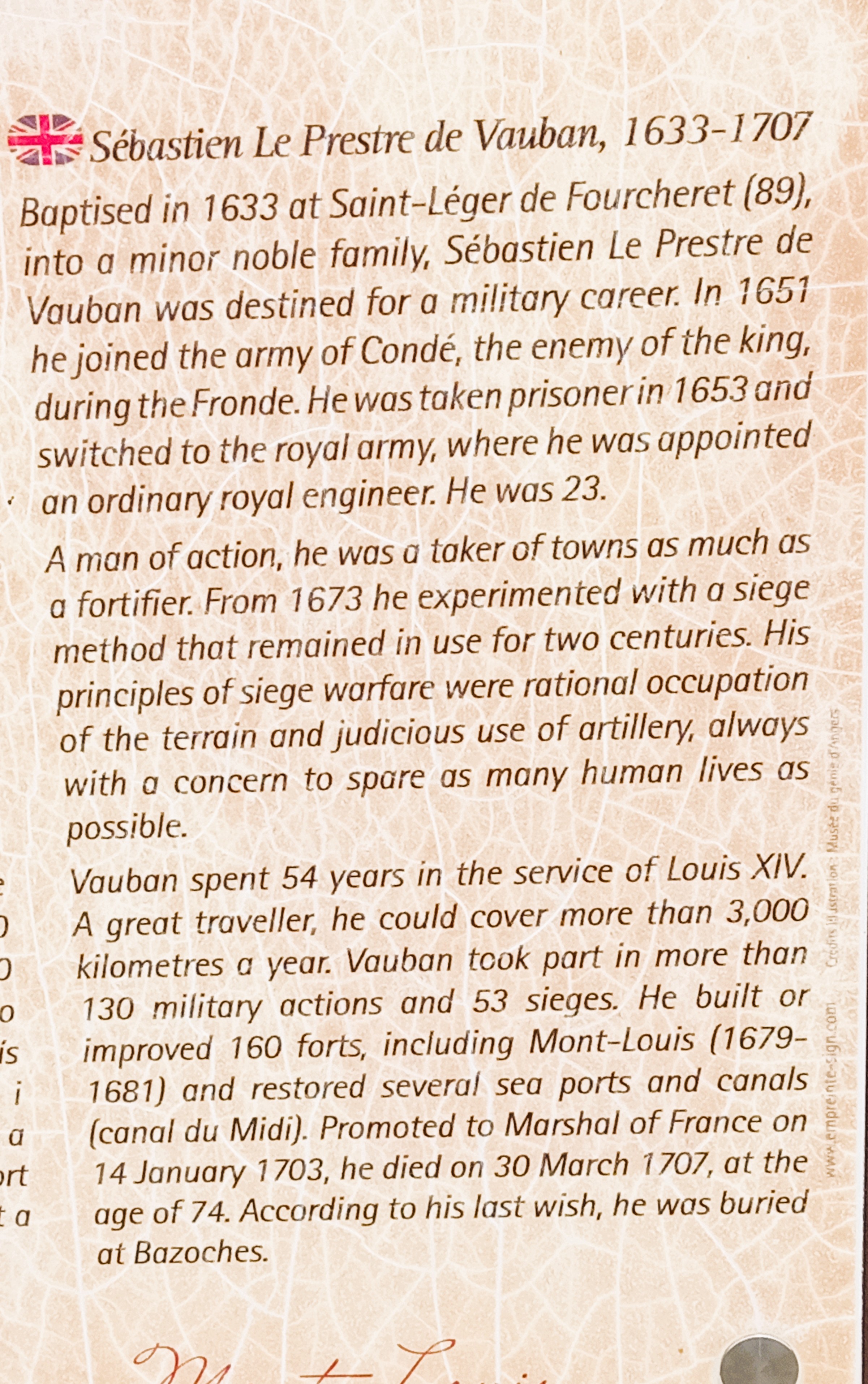
Of course it is another star fort designed and built by Vauban, forts that are found all over France and in Mombassa and Cape Town and doubtless a lot of other places. It is worth considering this man for a moment.
And this is a bit different from the nomal as it is in two parts. The lower is a lived in town and the upper section, also in star fort configuation is currently a Commando training establishment.
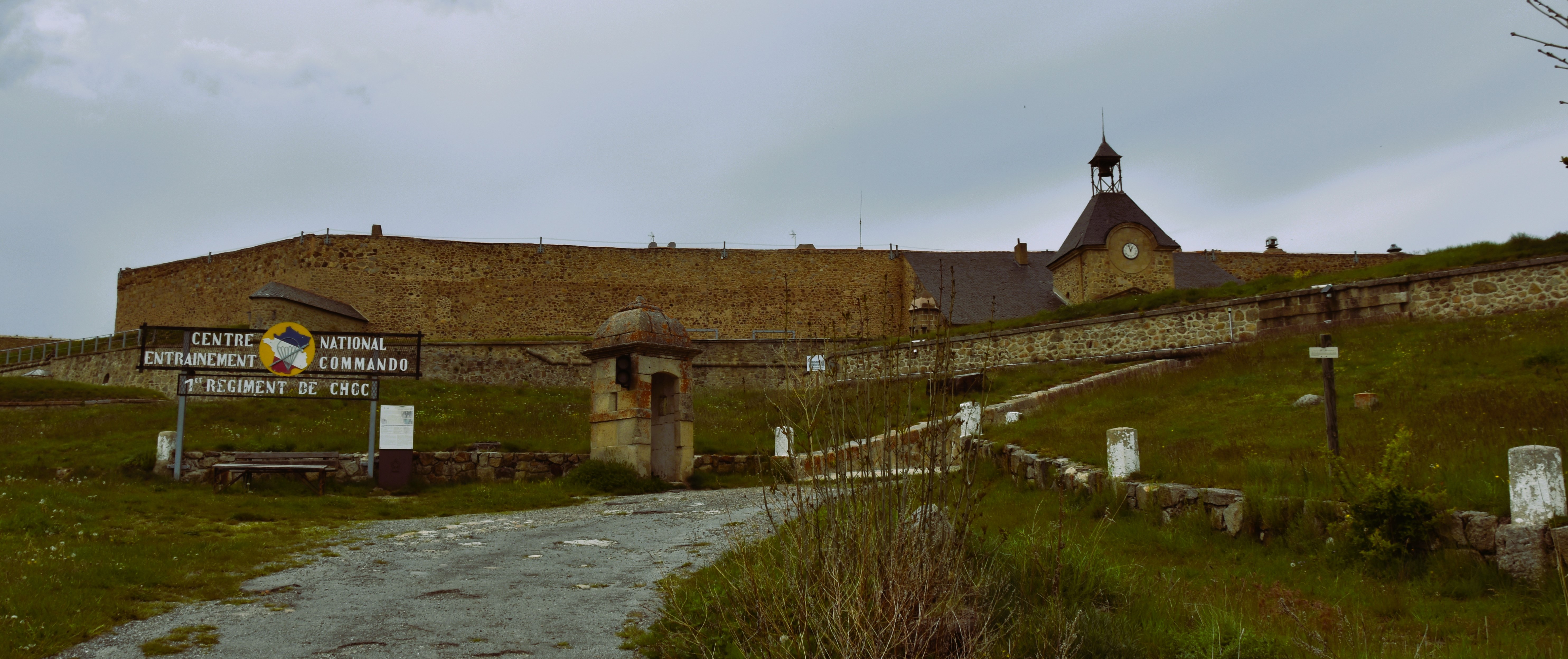
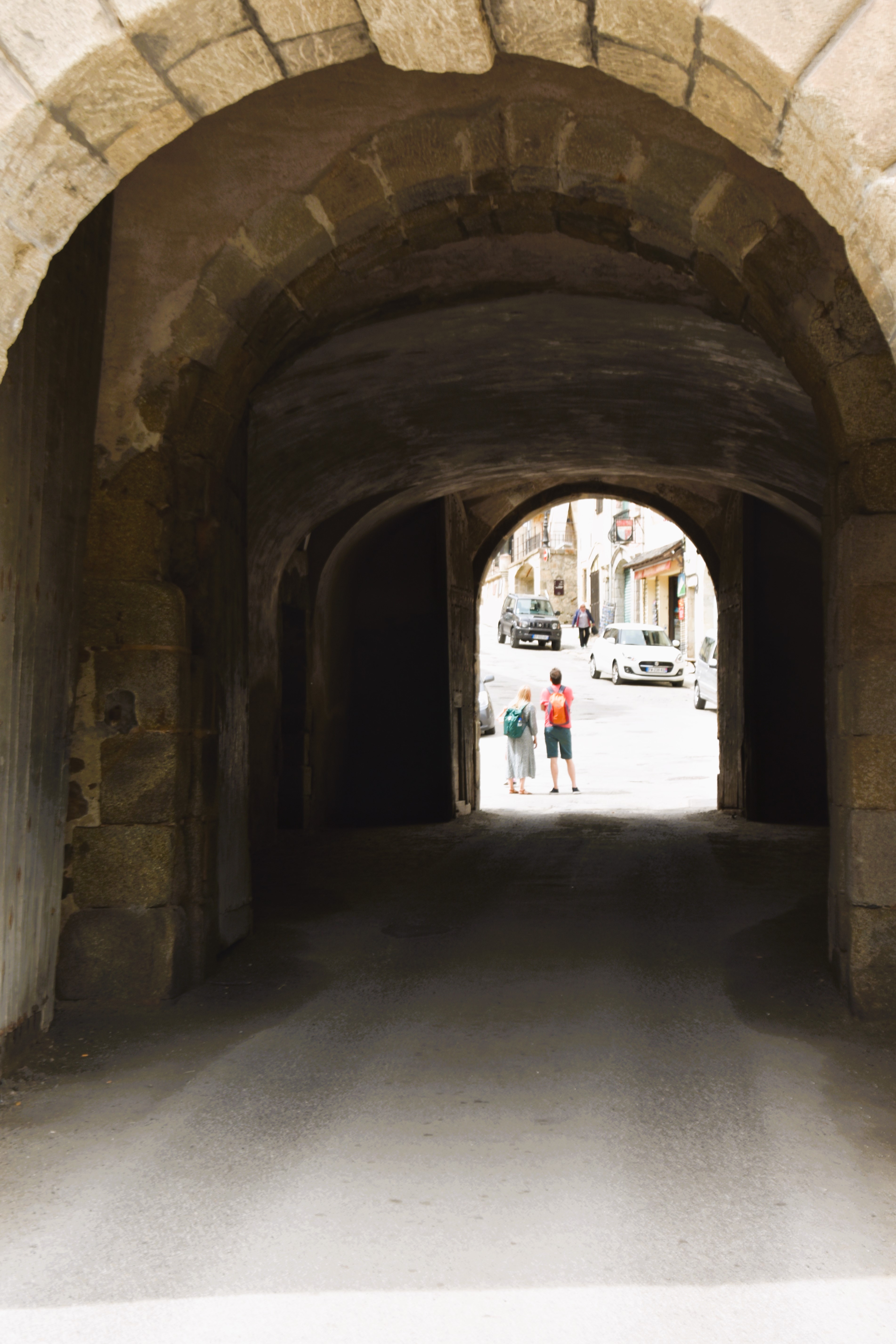
The lower town has a really impressive entrance
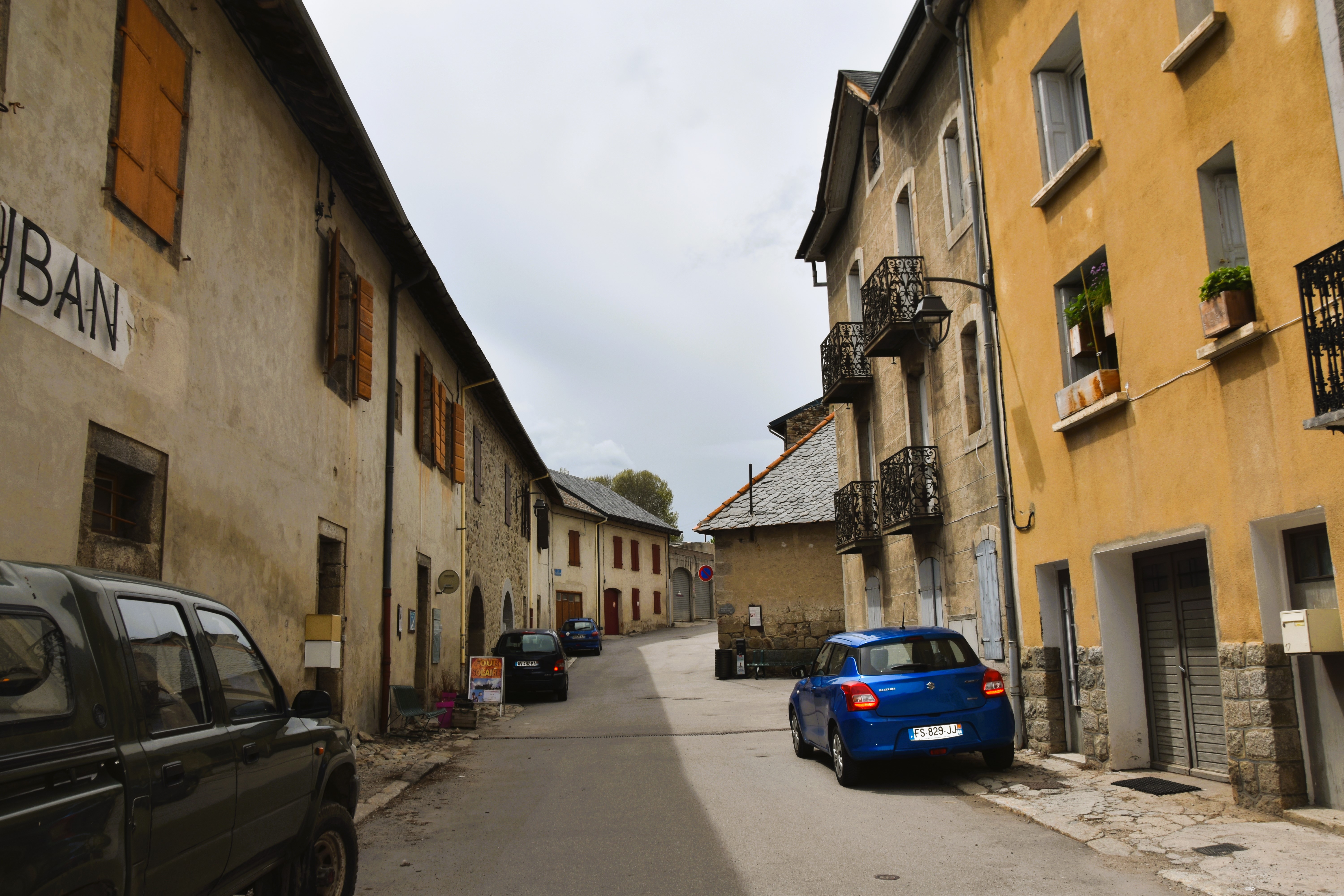
You couldn’t call this town a tourist trap. It is “lived-in”
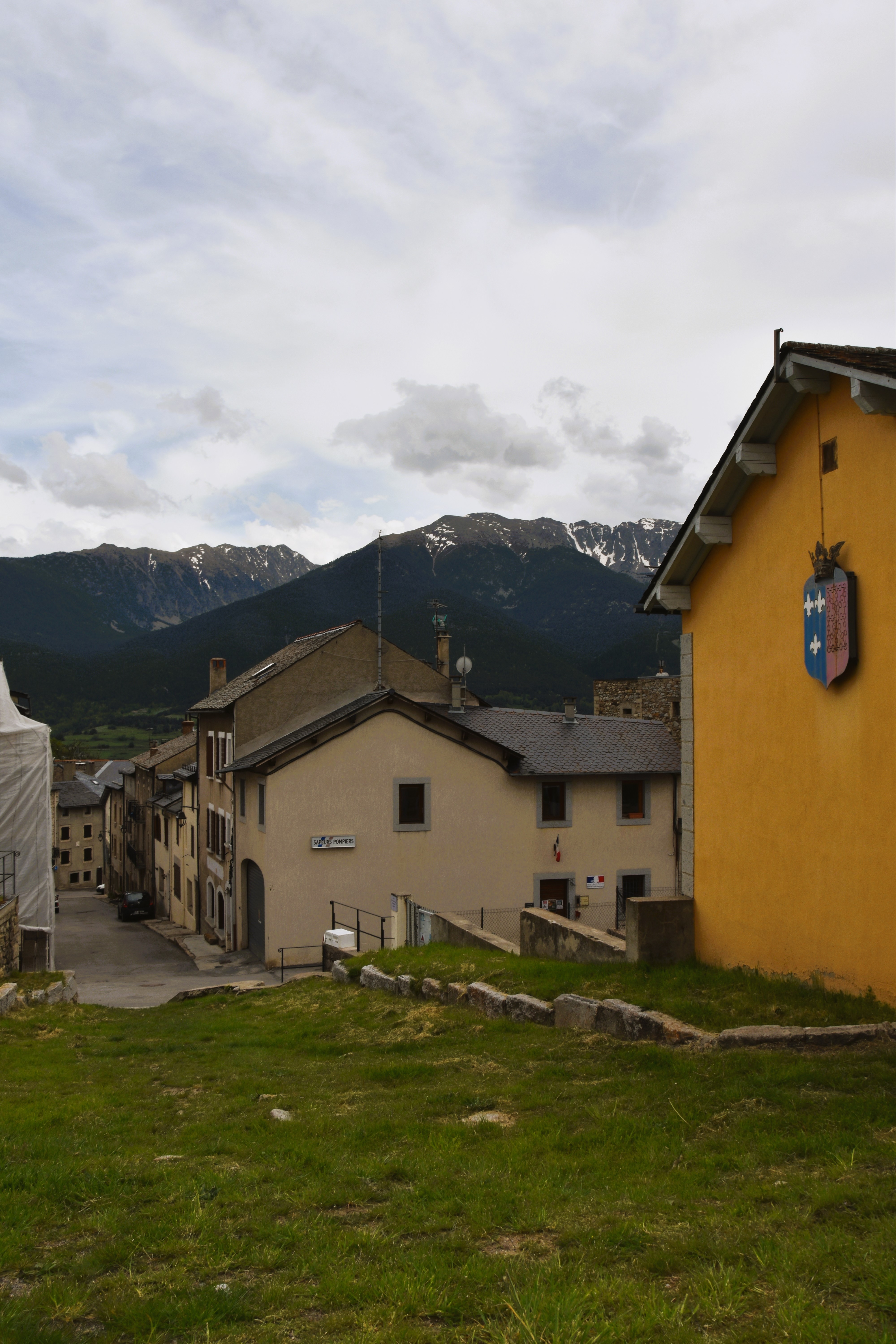

with a solid church, some nice wroght iron work and a ski hire shop, it probably looks a lot more romantic with snow!
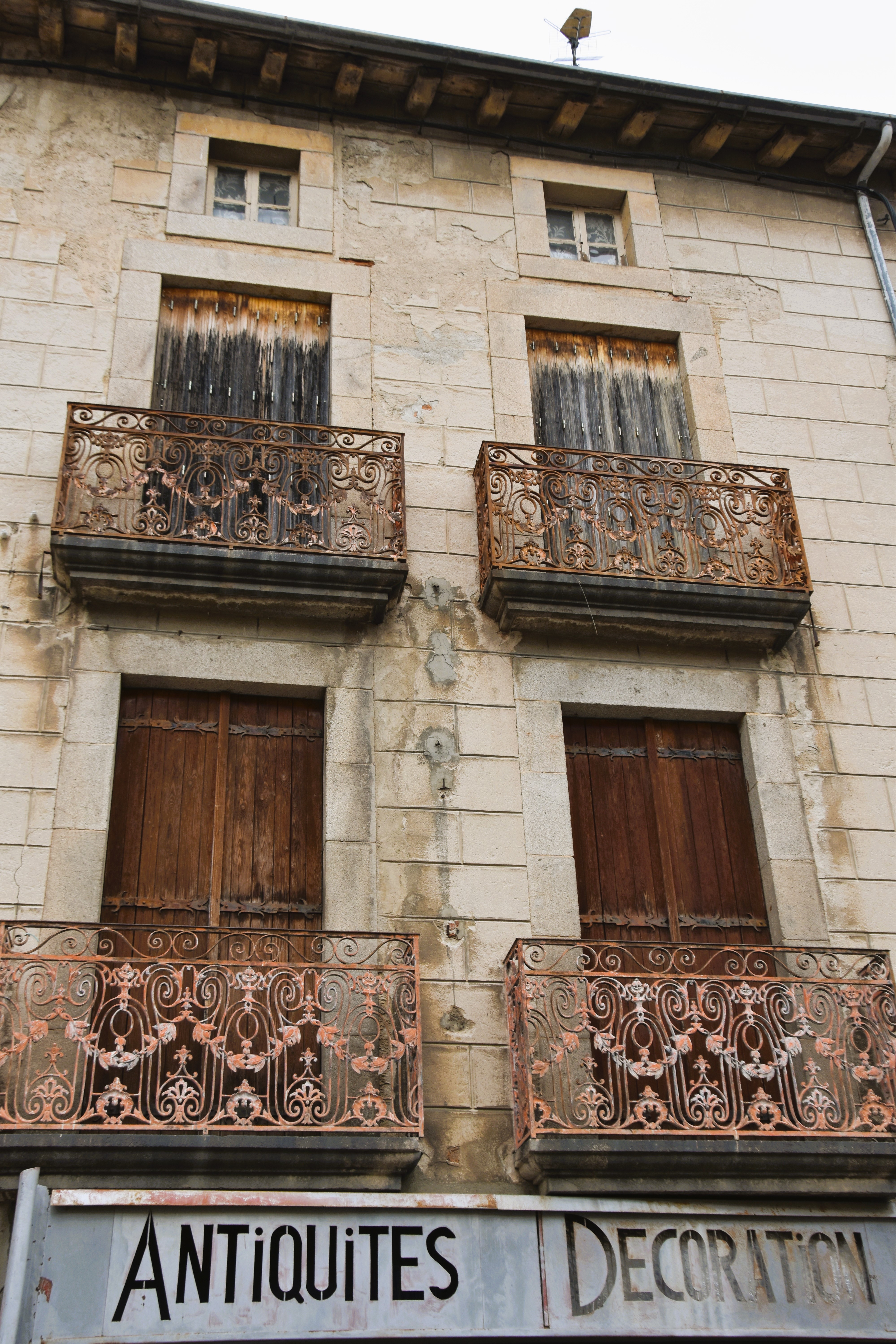
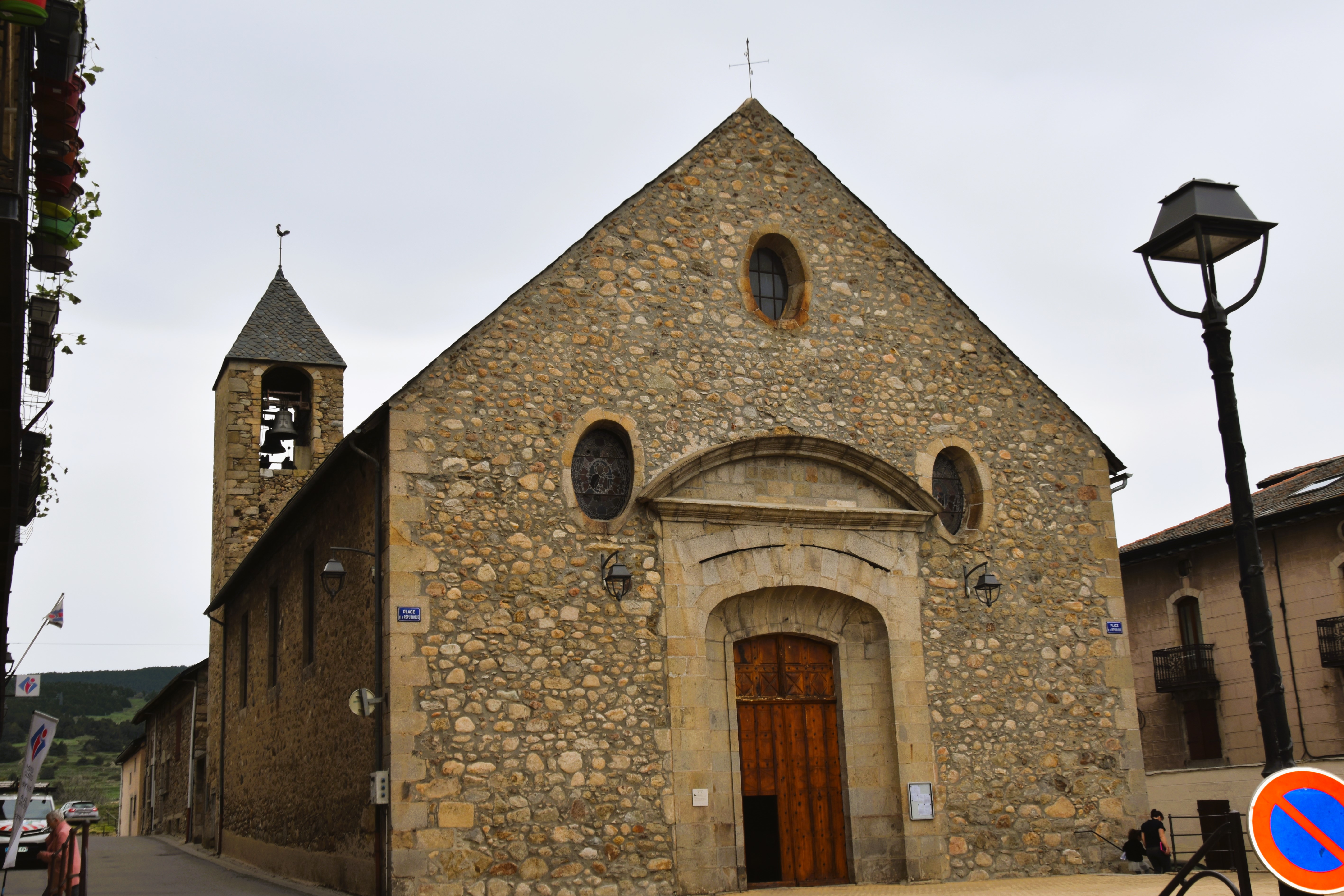

30th . I thought I had it all sorted out in terms of how to most easily get down from the dizzying heights and selected the D118 that would eventually take me to Limoux. This is not the major rod where I am likely to annoy other road users with my slow and steady speed. It descends gently from the ski resorts on the high plateau through the gorges of the Aude and St george and having left early I felt confident of a relatively easy drive. However “the best laid plans” syndrome struck again. Just as I started to descent off the plateau I encountered a “Route Barre” sign and a “deviation” heading sharply off and back up to the right. The next portion on the D17 was tortourous, narrow and steep. The sceenary was stupendous but you will have to take my word for that.
Back in Limoux, Vicki and I were here earlier in the trip, Cassidy and I took a walk into the town centre. First stop coffee and a really good chocolate and nut laden cookie. Second stop the Tourism Office as this time I want to visit some local vineyards and taste the Fizz for which the area is famous. Then a walk round the main square, handsome and arcaded on all sides, through the church ally down to the river and the medieval bridge then back to the van.


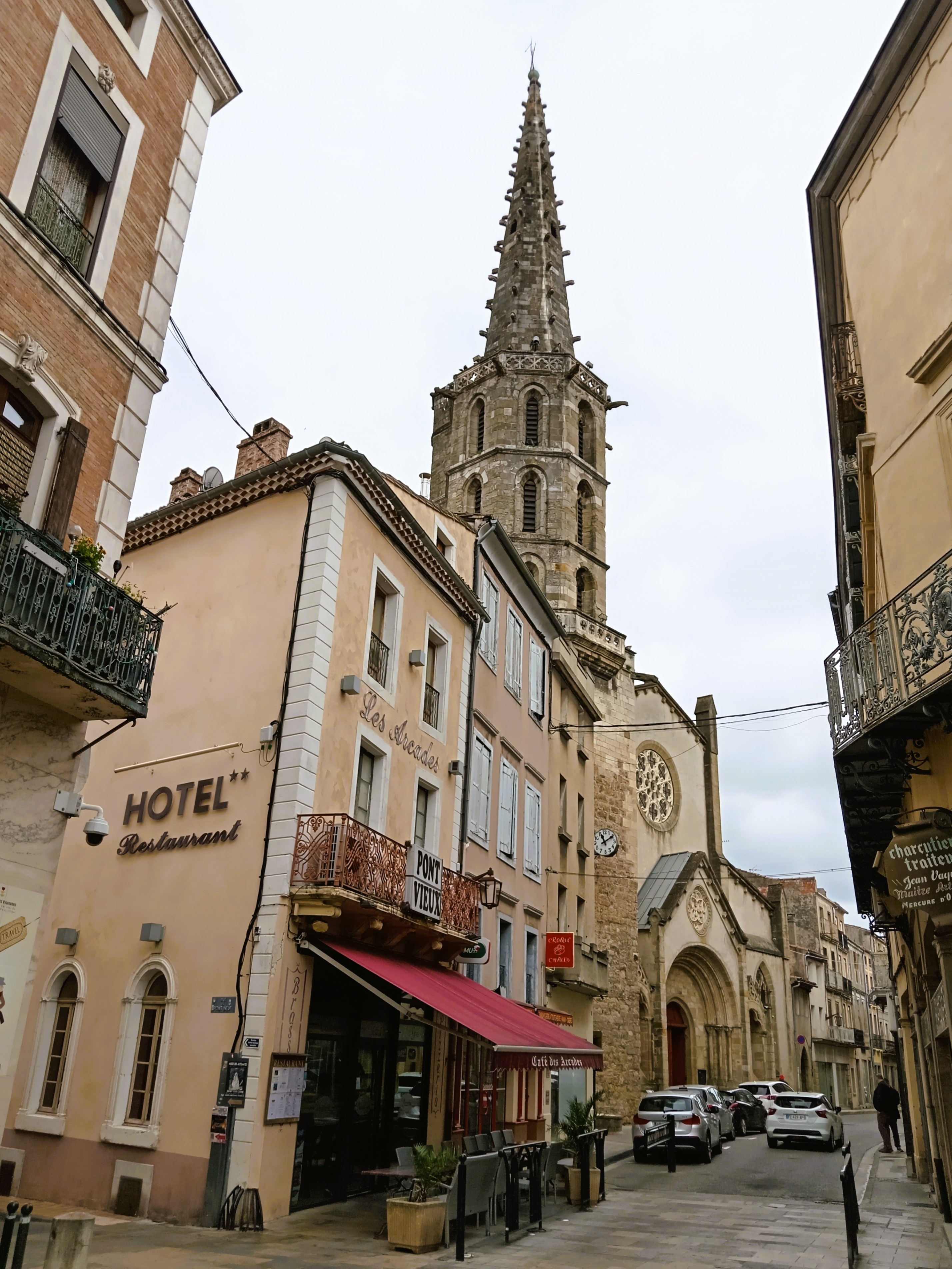
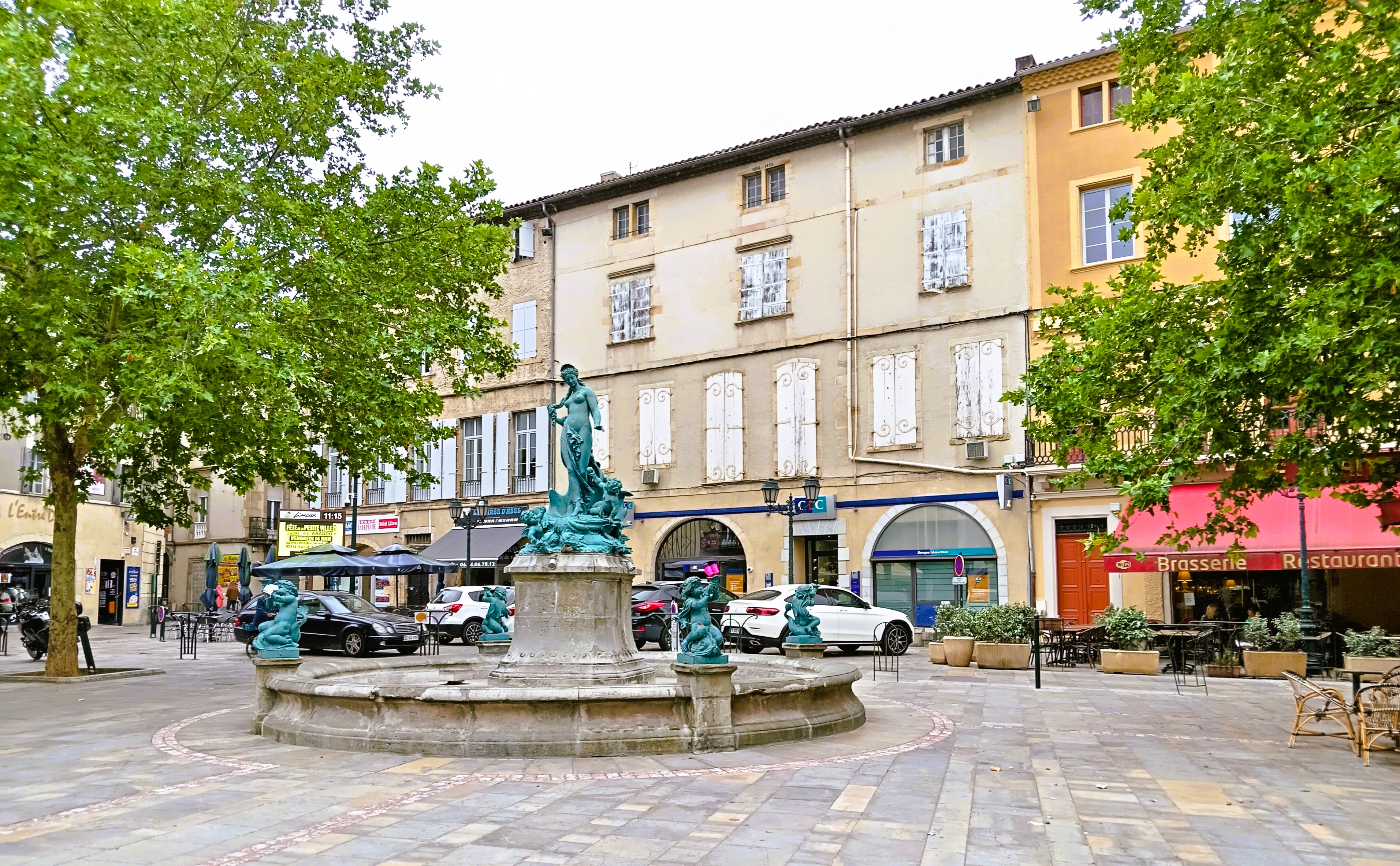
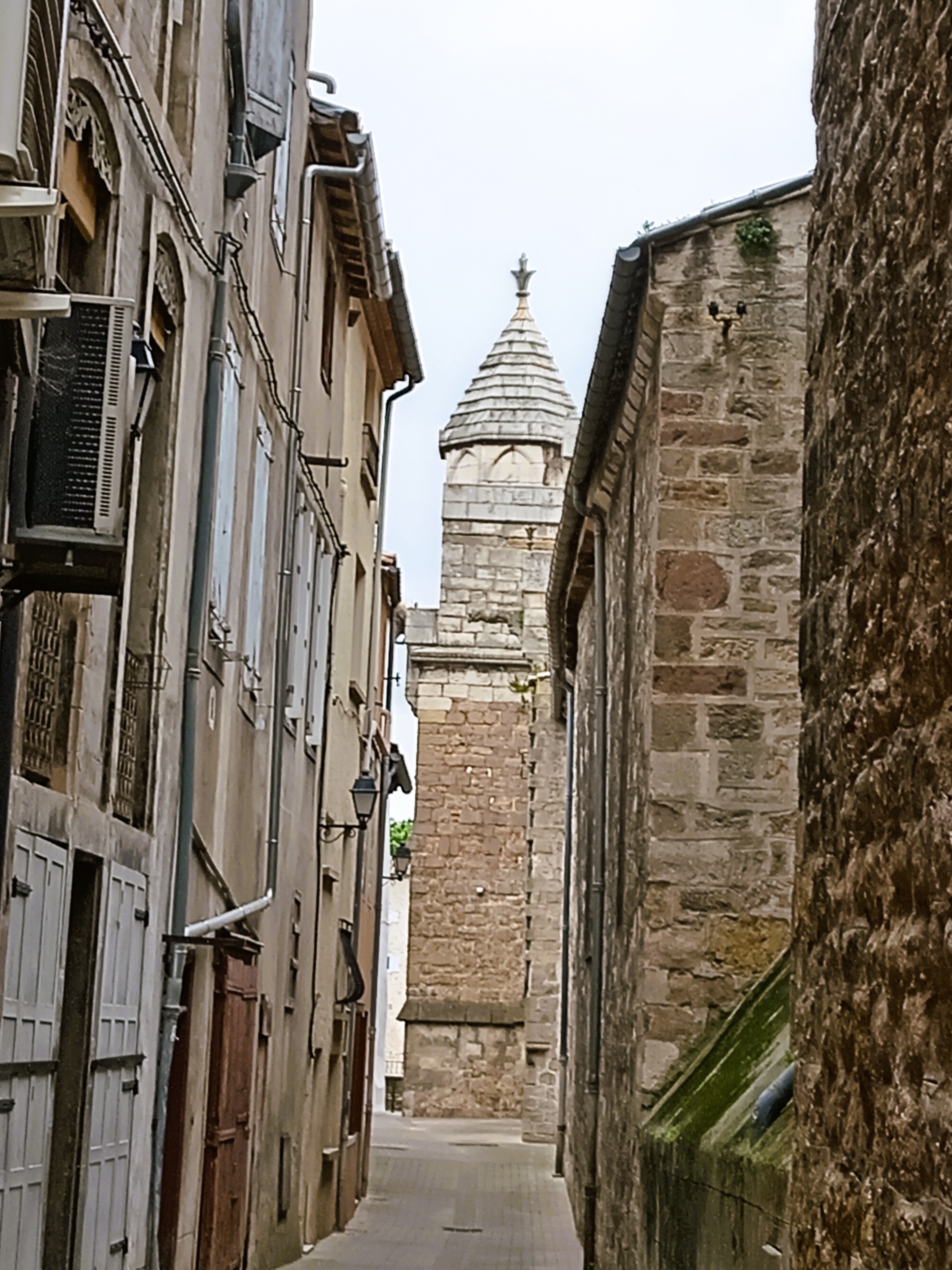
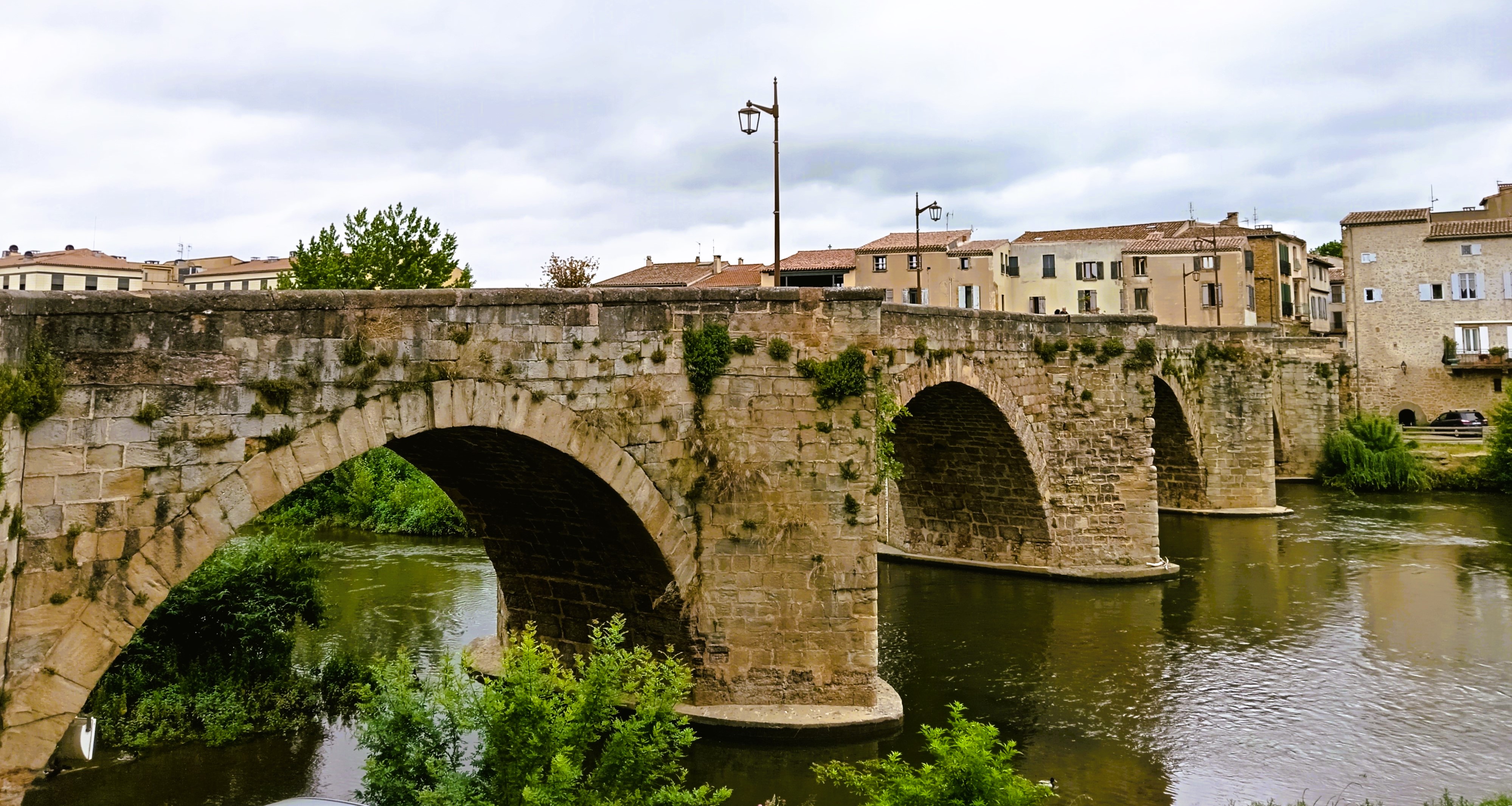
Now for some research and trip planning to take in the vineyards and anything else of interest in the new ground that I will cover over the next several days.
31st. Made an early start and first stop at St Martin de Villeréglan for a vineyard visit at Domaine de Matibat, a family owned and run vineyeard that has been in the family for multiple generations. I was well looked after by the Father of the current generation of managers and bought a few bottles of a rather nice red.
From here I dropped into the medieval town of Fanjeaux. Once a Cathar stronghold till Simon de Montfort sacked the town and reclaimed it for catholocism leaving not a trace of the Cathars left standing. It is a liven in town rather than a tourist trap and has the usual cobbled streets and a large covered market.


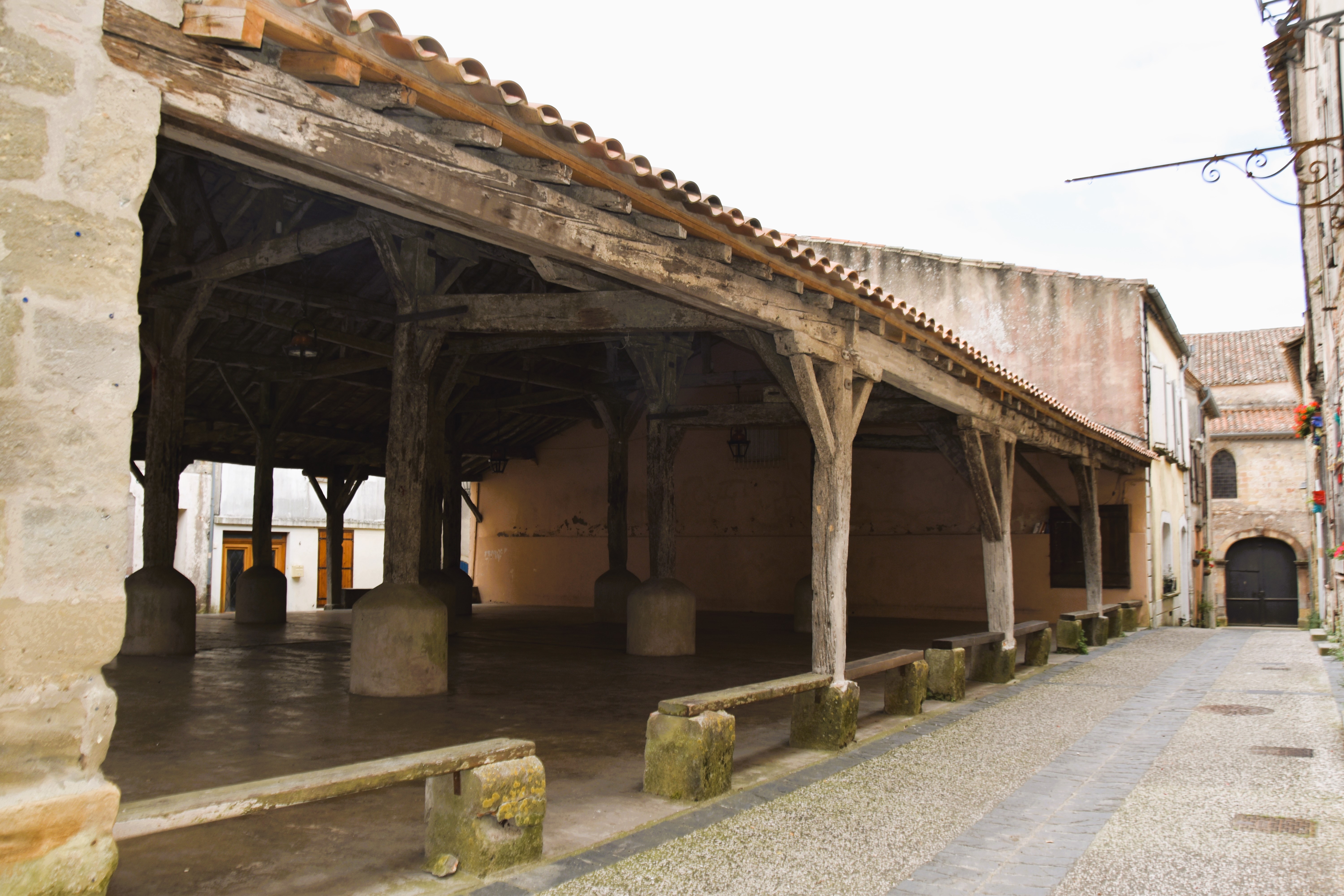
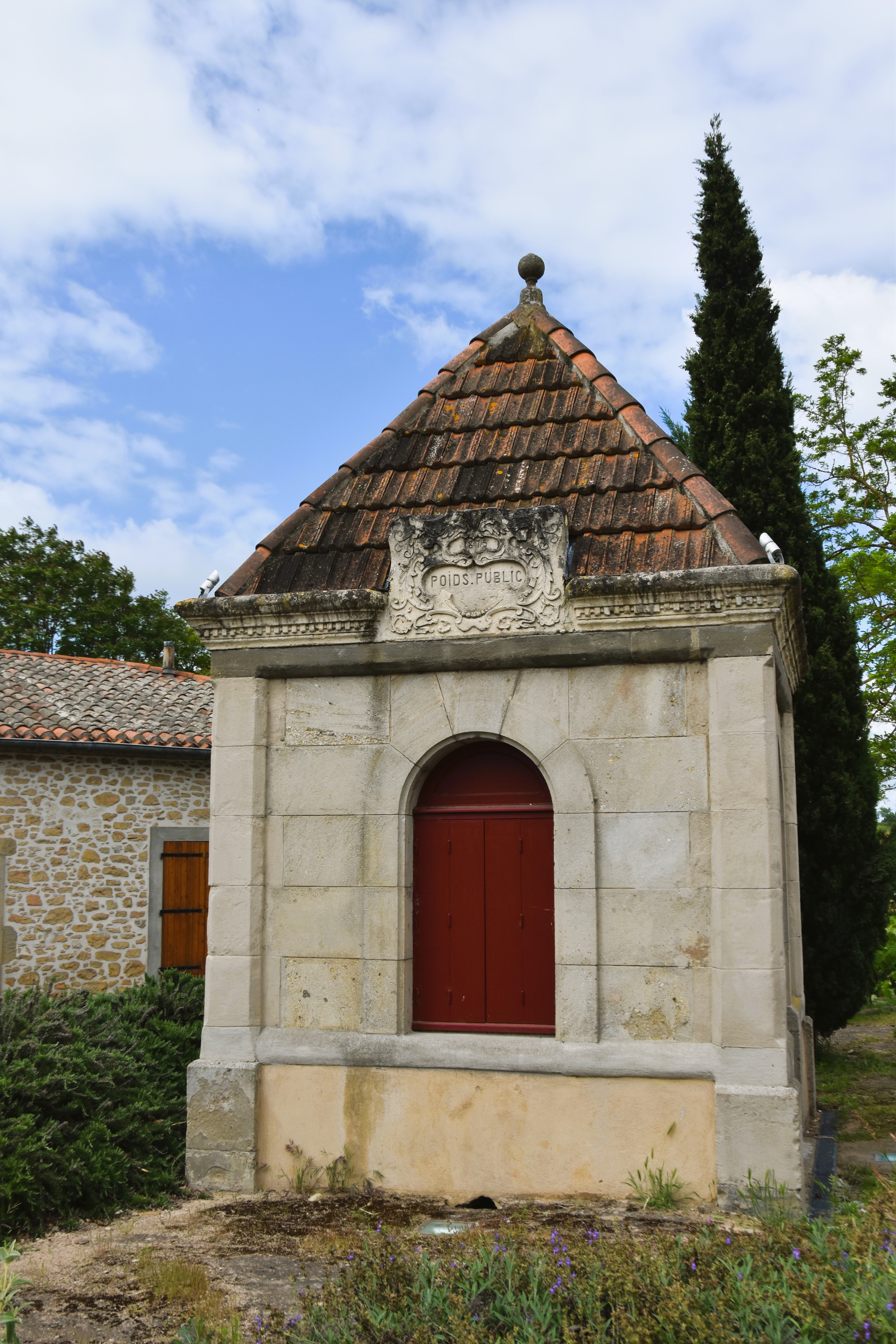
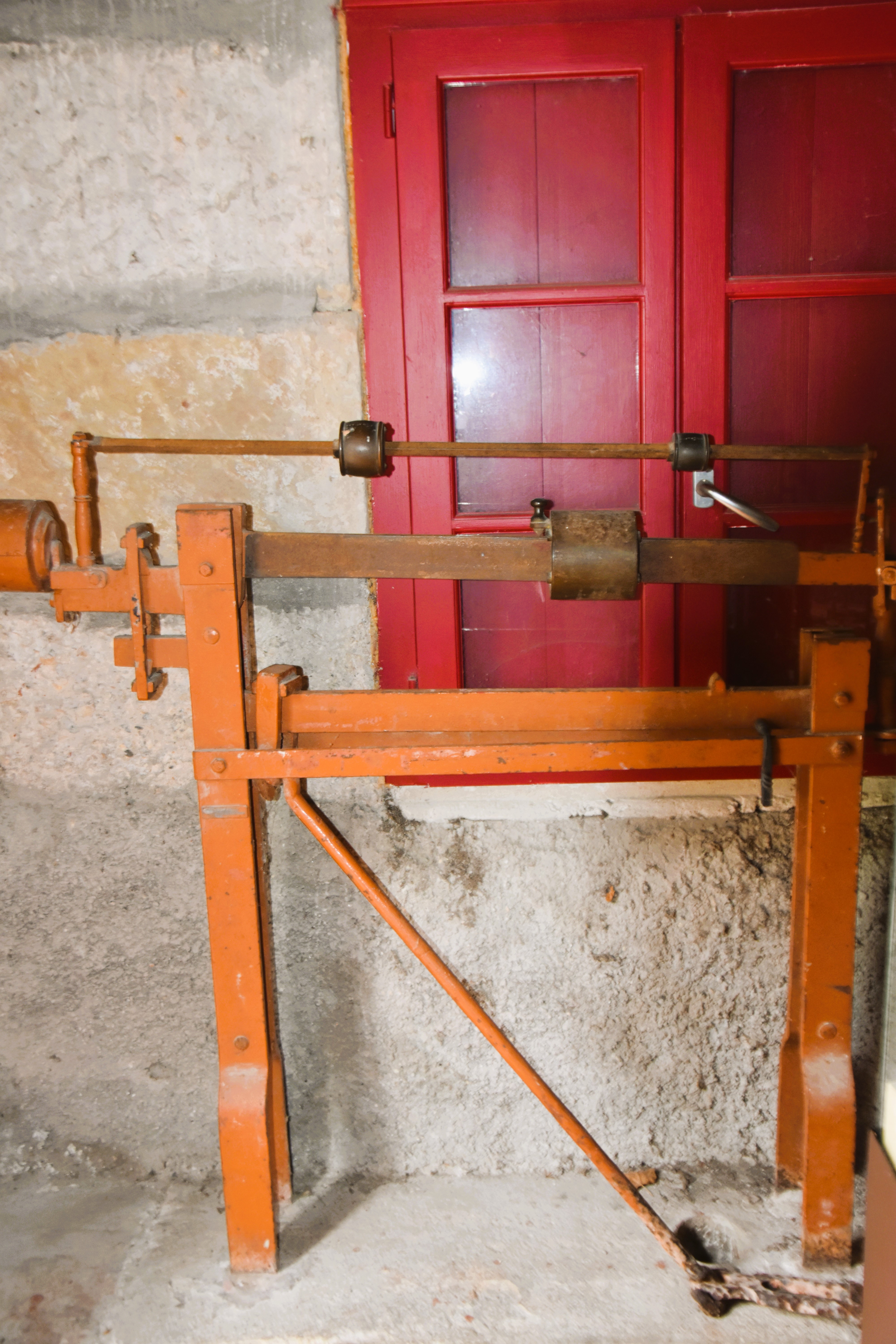
The is a late nineteenth weigh station
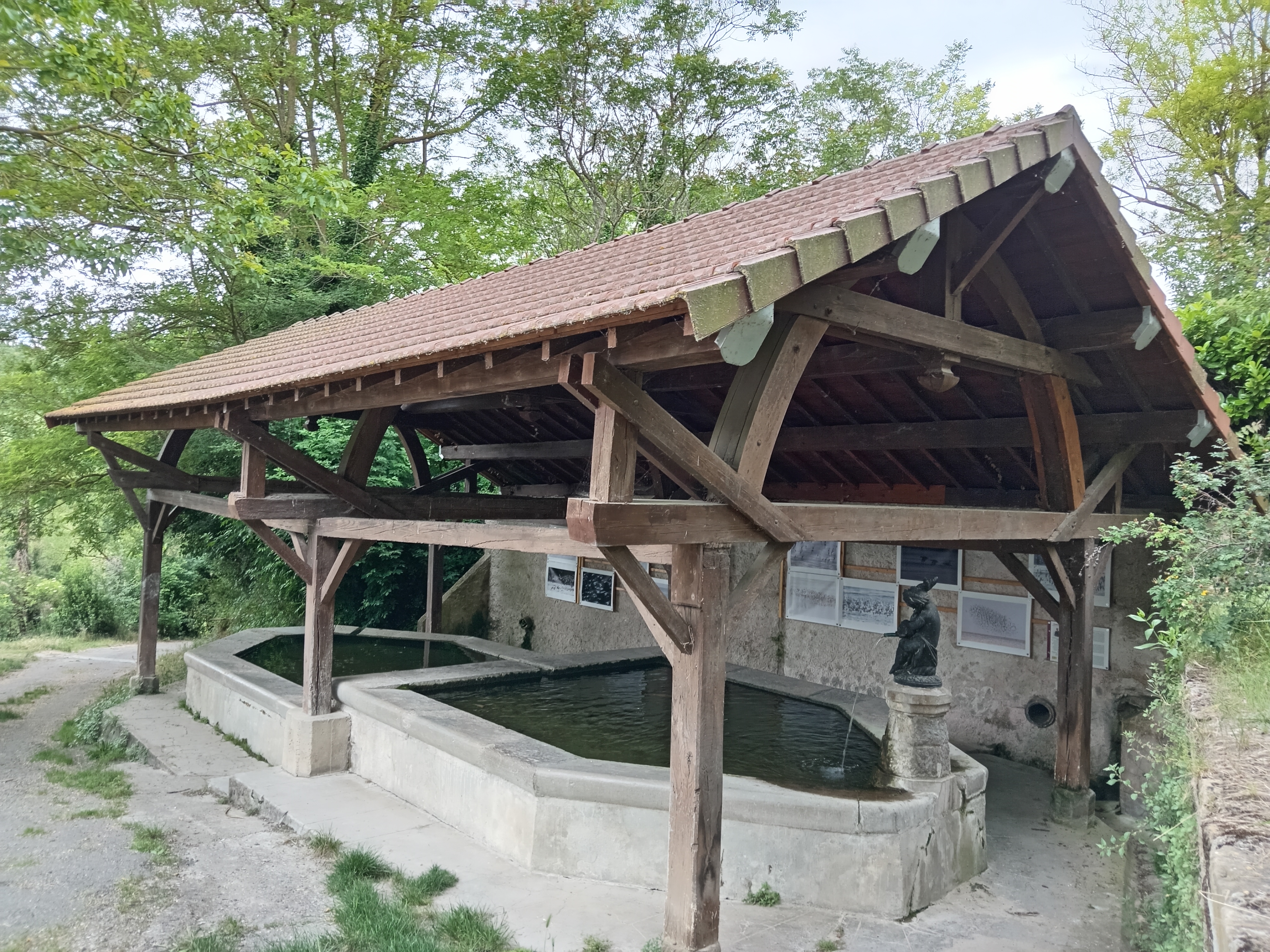
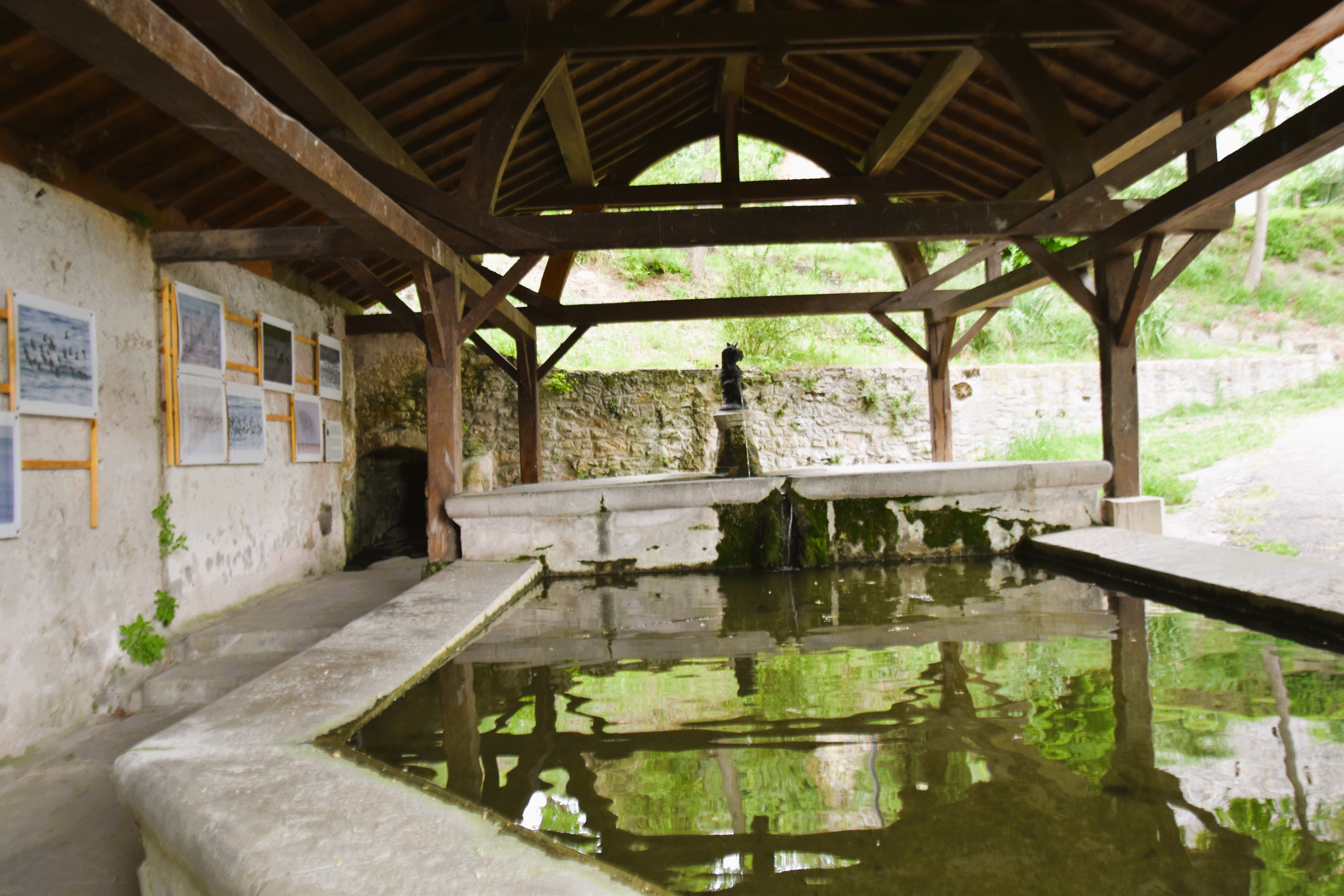
and a rath lovely lavoir
At Castelnaudary, it's all about the Canal du Midi. The good aire is right on the canal, so what better place to park for a couple of days to catch up on walks and take Cassidy out for nice towpath walks in between. Once installed, we set off down the towpath to find a canal-side place to eat. We had a very good lunch at the place on the bottom left, a restaurant run from a canal boat.

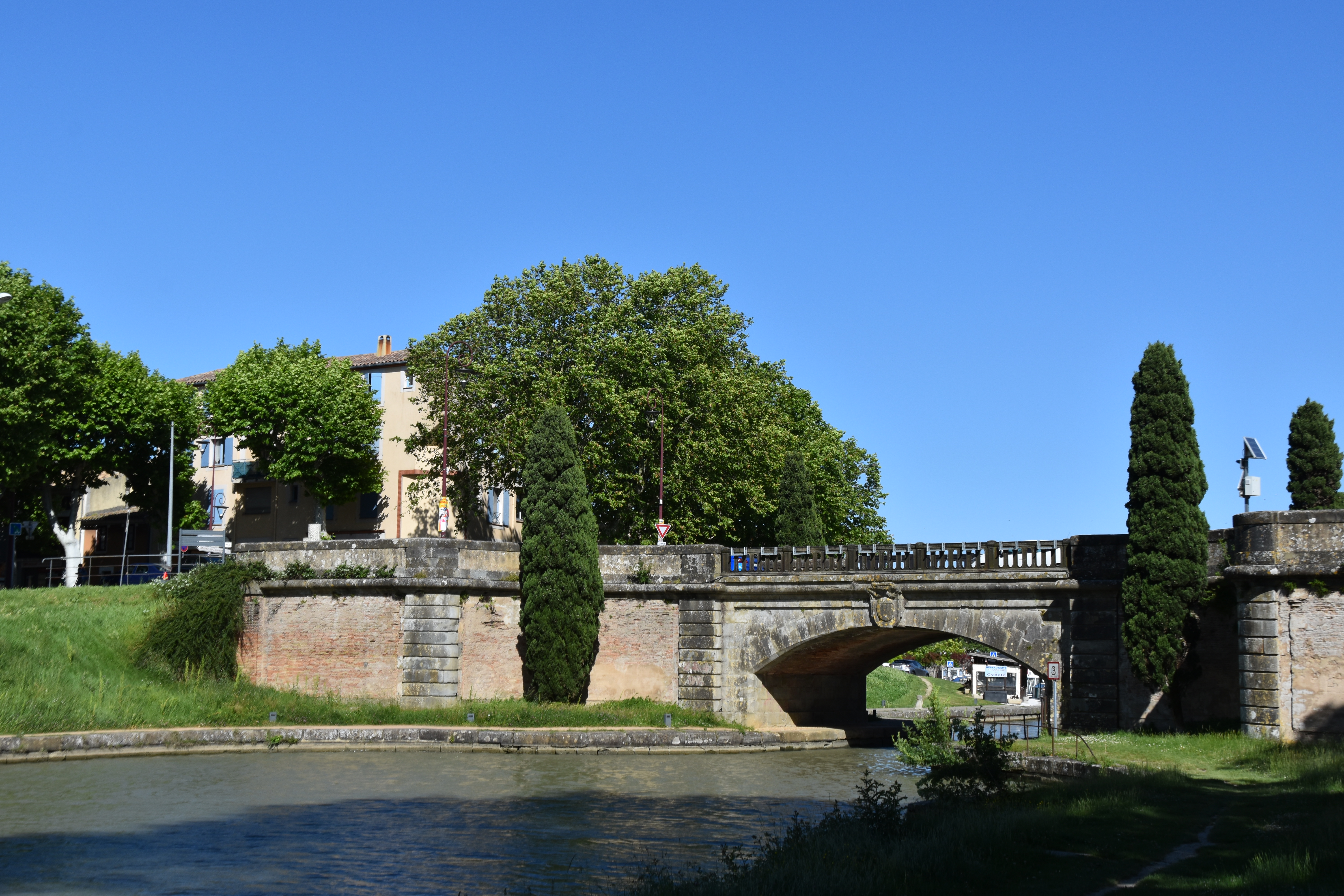
There are two attractive bridges
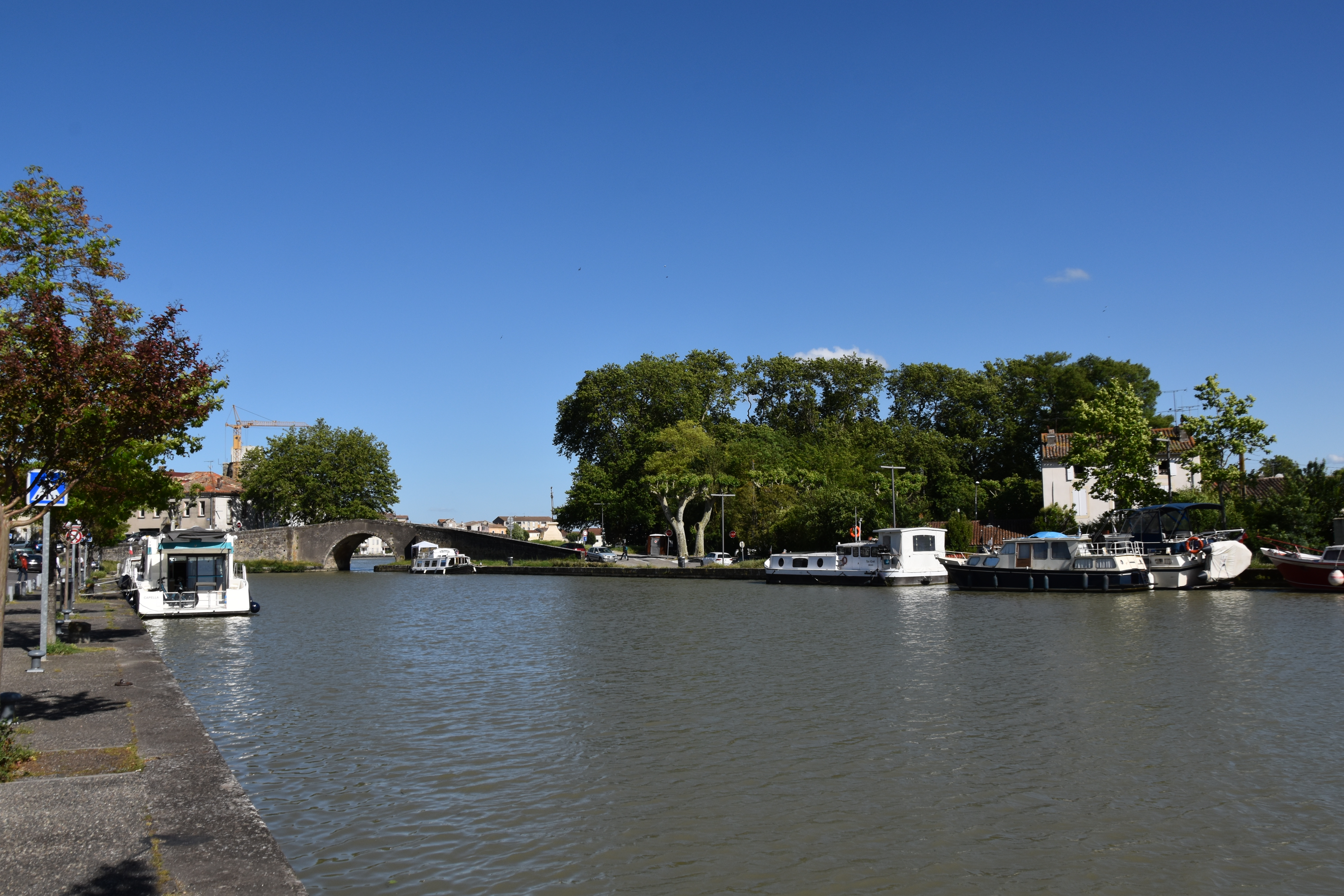
and a grand basin
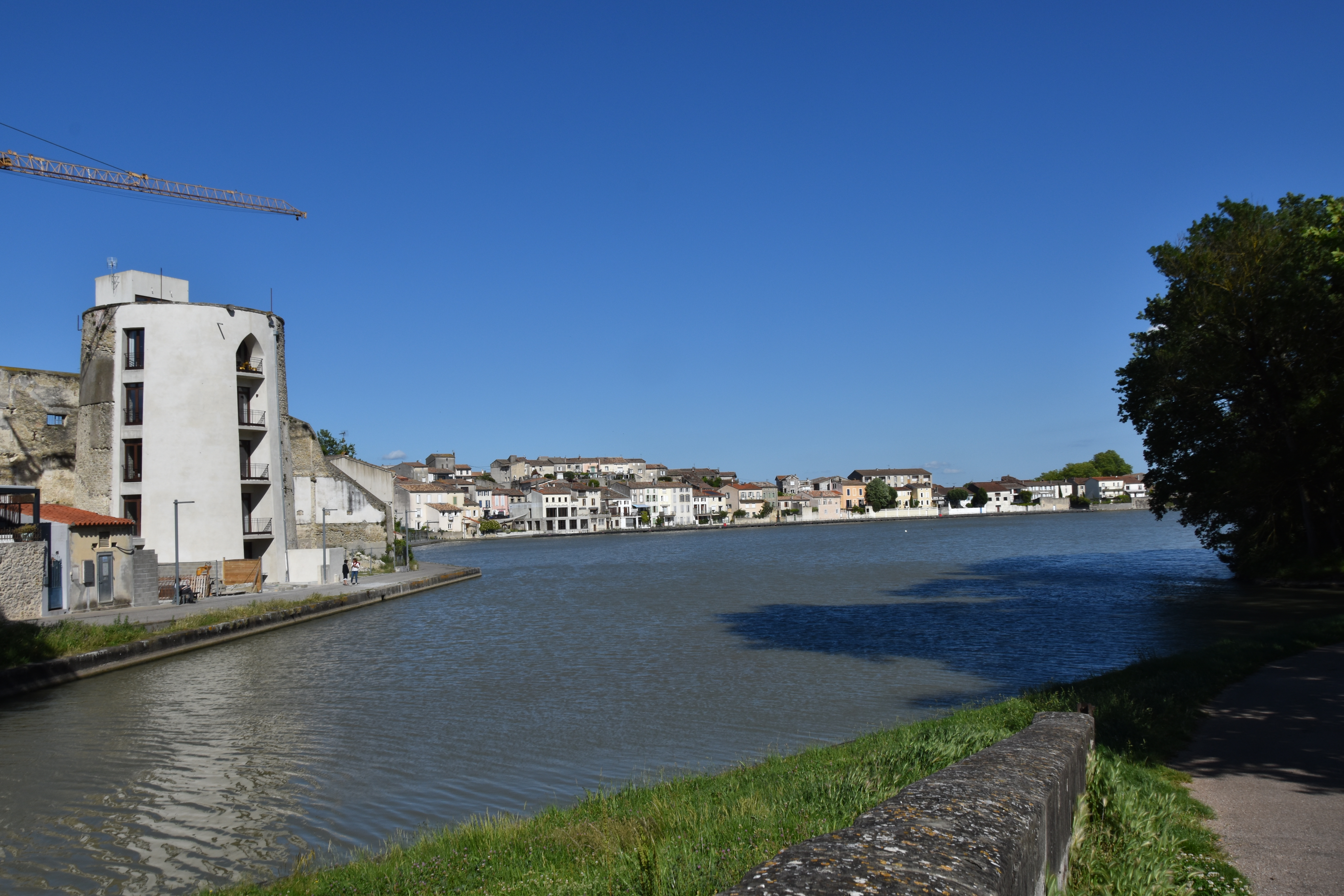
And of course everything looks more lovely in evening light
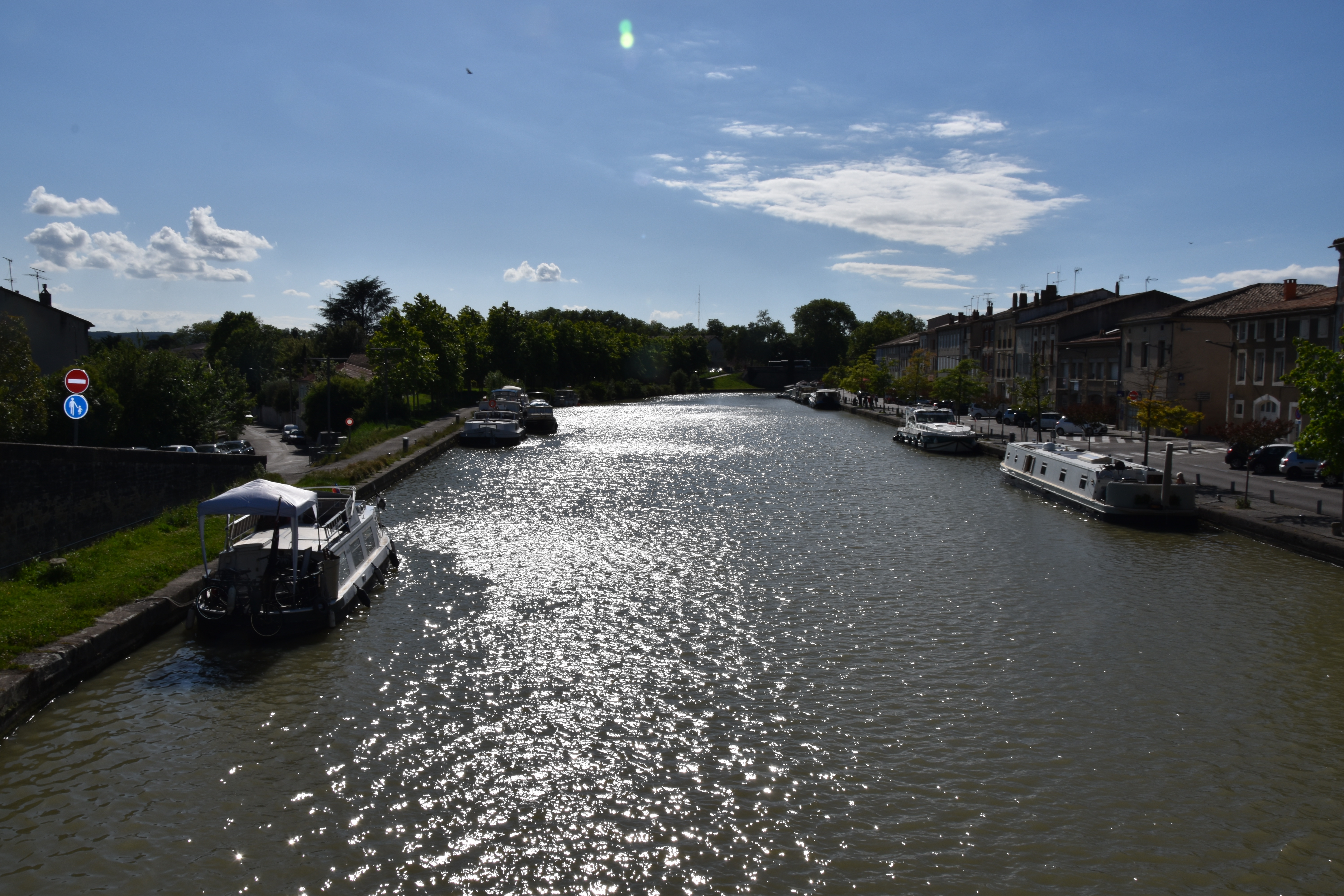
 capetocarpe